


By Johnny Hunkins – Photography By the Author
For 62 years, the SEMA Show has been the heart of the hot rodding community where the aftermarket charts its course, builders experiment with new ideas, and the industry determines the future. In a world mainly shaped by Chevrolet and Ford, Mopars have always been the scrappy outsiders, fewer in number but impossible to overlook. The 2025 SEMA show highlighted that contrast even more. An Australian-made ute, two radically reimagined Chargers, a junkyard‑rescued Warlock, a luxury‑themed Road Runner, and a reigning Battle of the Builders champion formed a five-car lineup that stood out for attitude, ingenuity, and unapologetic originality. These weren’t just Mopars on display, they were reminders that the brand’s best work often comes from the fringes, where creativity flourishes and conformity is left behind.
Aussie 1971 Valiant Wayfarer
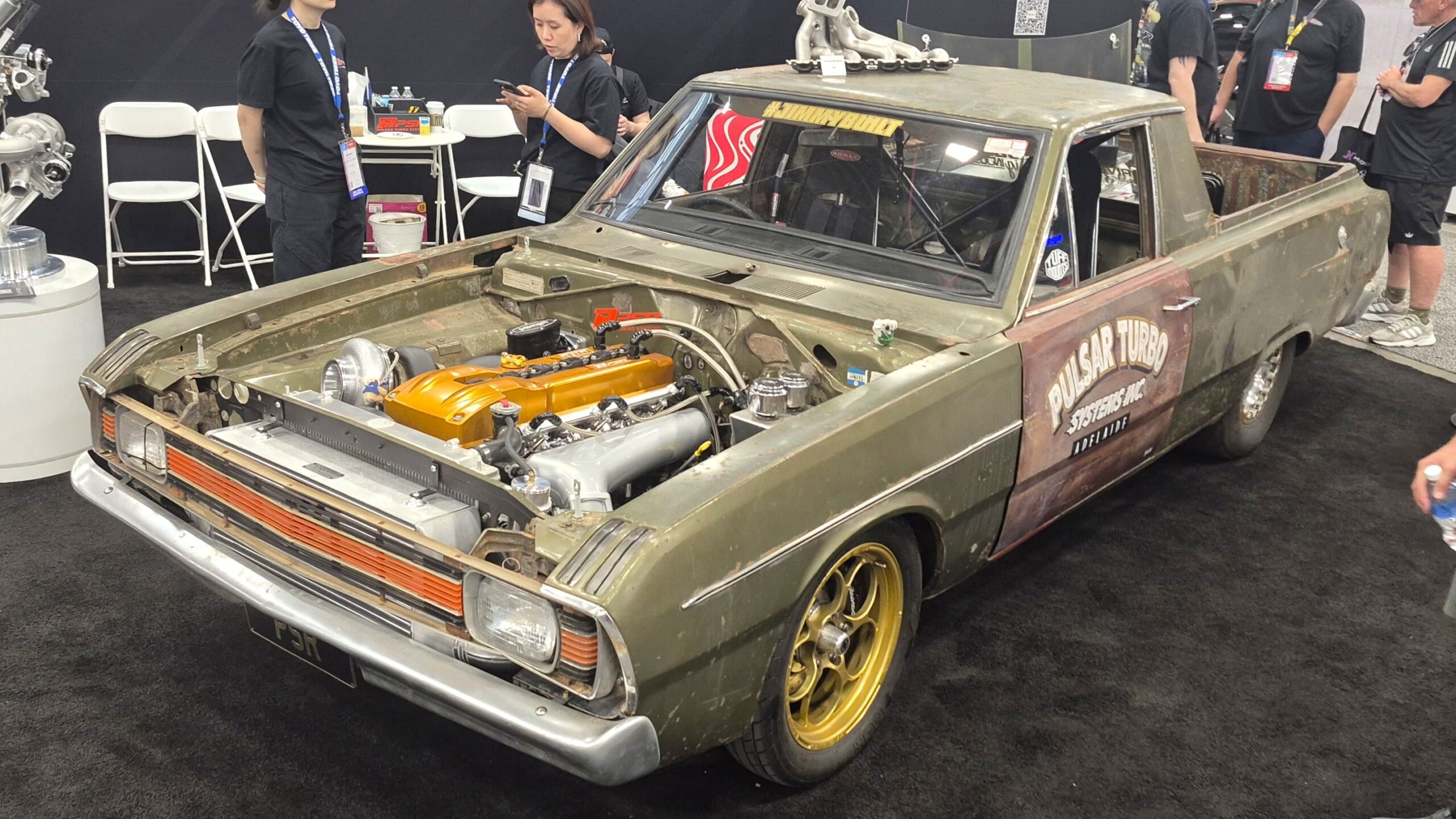
The 1971 Valiant Wayfarer that arrived in Las Vegas for the 2025 SEMA Show is the kind of cross-cultural hot rod story that makes people stop in their tracks. Built and owned by James Lynch of Adelaide, South Australia—who also happens to be the Australian distributor for Pulsar Turbos—the ute combines unmistakably Australian sheetmetal with a powertrain that’s pure Ford rebellion. As part of Chrysler Australia’s A-Body lineage, the Wayfarer shares DNA with the Plymouth Valiant but features the distinctly Australian ute profile that never reached American dealerships. Lynch’s example arrived in the U.S. as a fully sorted drag machine, with its sunbaked patina left untouched to contrast with the mechanical intensity beneath. The star of the build is the Barra inline-six, a 4.0L DOHC engine developed for the Ford Falcon from 2002-16. Renowned for its cast-iron strength, turbocharged potential, and near-mythic durability, the Barra has earned a global reputation for surviving—and thriving—at four-digit horsepower levels.


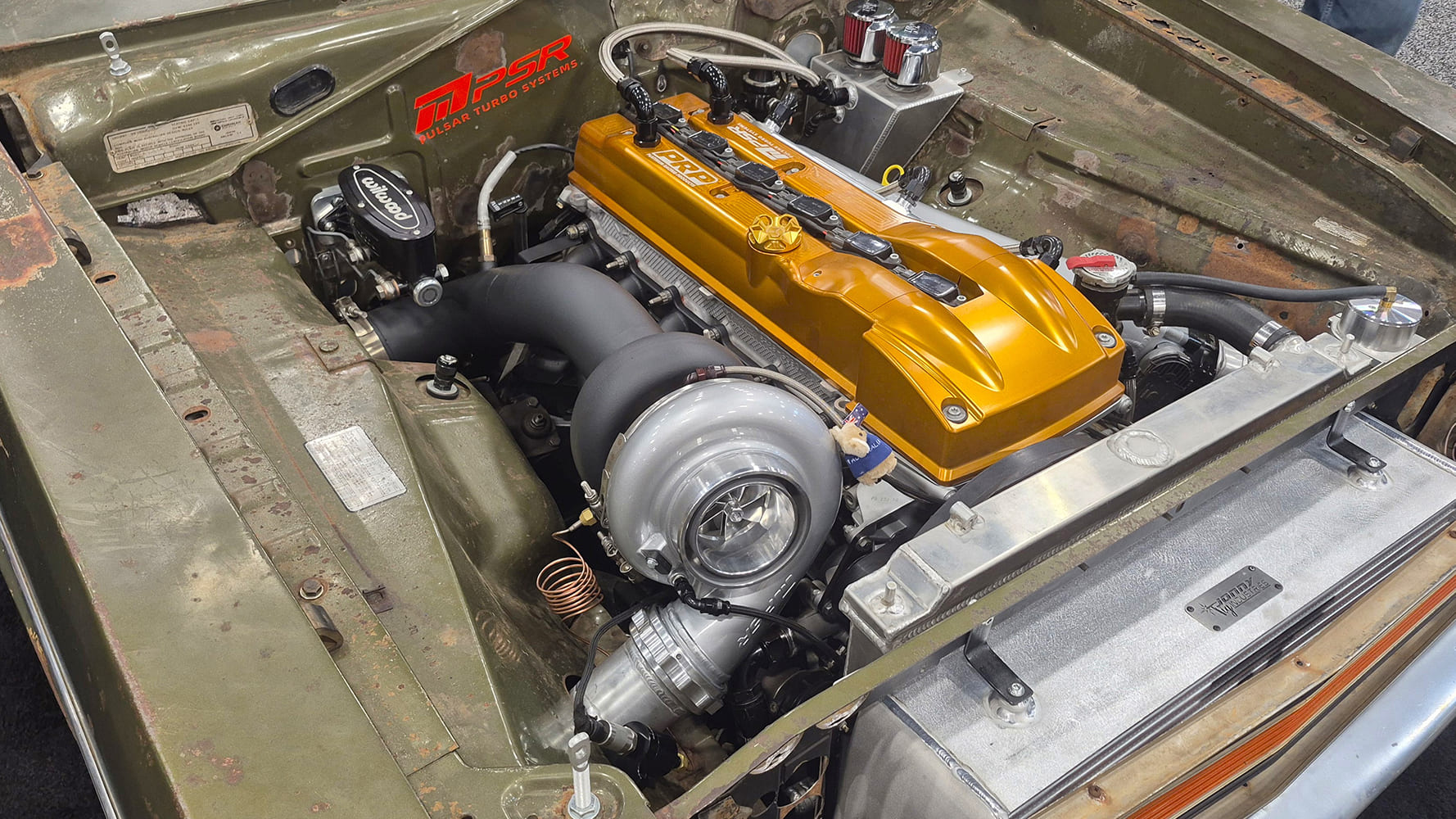
Lynch didn’t just bring a conversation piece, he brought a weapon with receipts. “It’s a drag car and the engine makes 1,300 at the rear wheels,” he says. “The first and only time we took it out, it did an 8‑oh at 172 mph.” That kind of performance comes courtesy of a Pulsar‑equipped turbo system feeding the Barra’s famously stout bottom end, a dramatic leap from the factory’s 322- to 436hp output. The ute’s mechanical layout is unapologetically functional, with the turbo hardware, plumbing, and supporting systems displayed openly—an intentional choice that fits the raw, industrial character of the build. It’s the sort of engineering excess that defines Hot Rod Alley and draws crowds three‑deep around anything wearing a parachute and a patina.
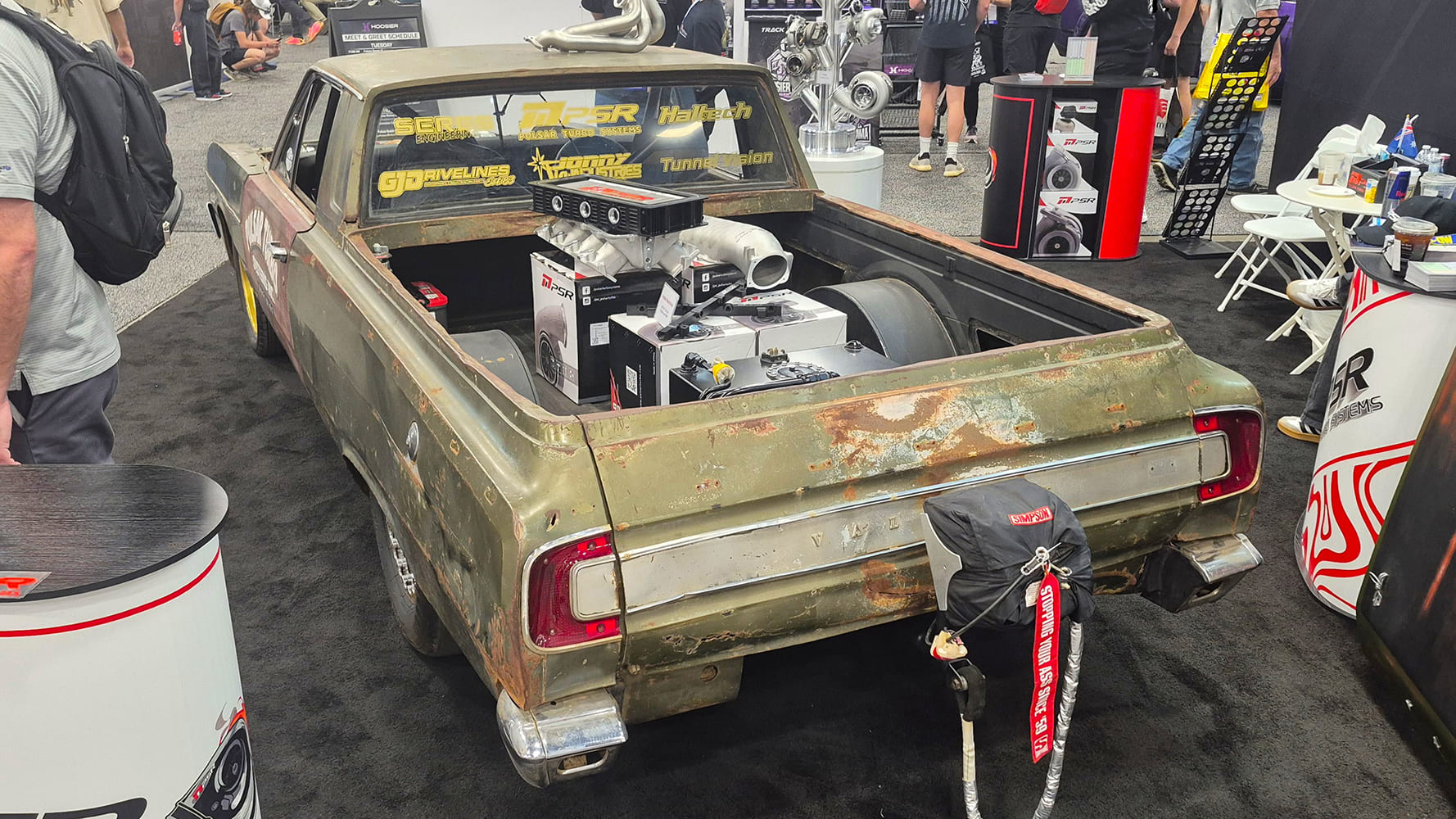
Displayed prominently in the Pulsar Turbo Systems booth in Central Hall, the Wayfarer became a bridge between hemispheres—an Australian workhorse turned American showstopper. Its Mopar badge, Ford power, and aftermarket ingenuity form a combination that shouldn’t make sense but absolutely does in the context of SEMA, where creativity outranks convention every time. Lynch’s ute embodies the global language of speed: a machine shaped by culture, refined by engineering, and celebrated by enthusiasts who appreciate audacity as much as craftsmanship. In a show filled with polished perfection, the Wayfarer stood out by being honest, fast, and unmistakably Australian.
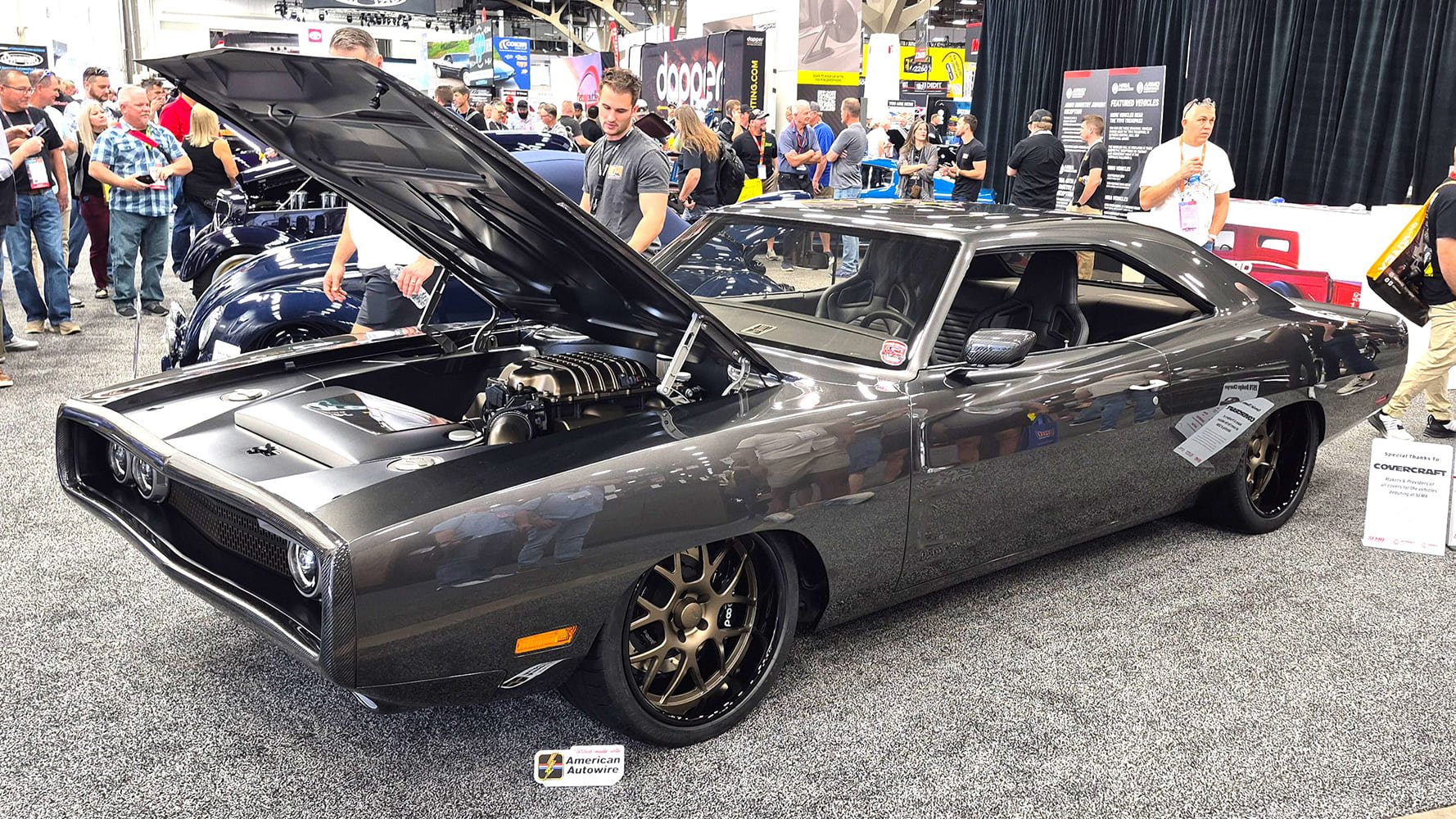
Sanders Street Rods’ 1970 Dodge Charger
The 1970 Dodge Charger shown at the Hot Rod Industry Alliance (HRIA) booth bore the unmistakable signature of Sanders Street Rods run by brothers Derek and Joshua Sanders. Owned by Randy Goodwin, the car blends classic B-Body presence with a thoroughly modern mechanical foundation. Its graphite paint, Rushforth Night Train wheels, and Michelin Pilot Sport tires, give it a clean, contemporary stance, while the Art Morrison chassis with independent front and rear suspension brings the Charger into modern‑handling territory. Underhood sits a supercharged Hellcat Hemi V-8, though “underhood” required some creative thinking.

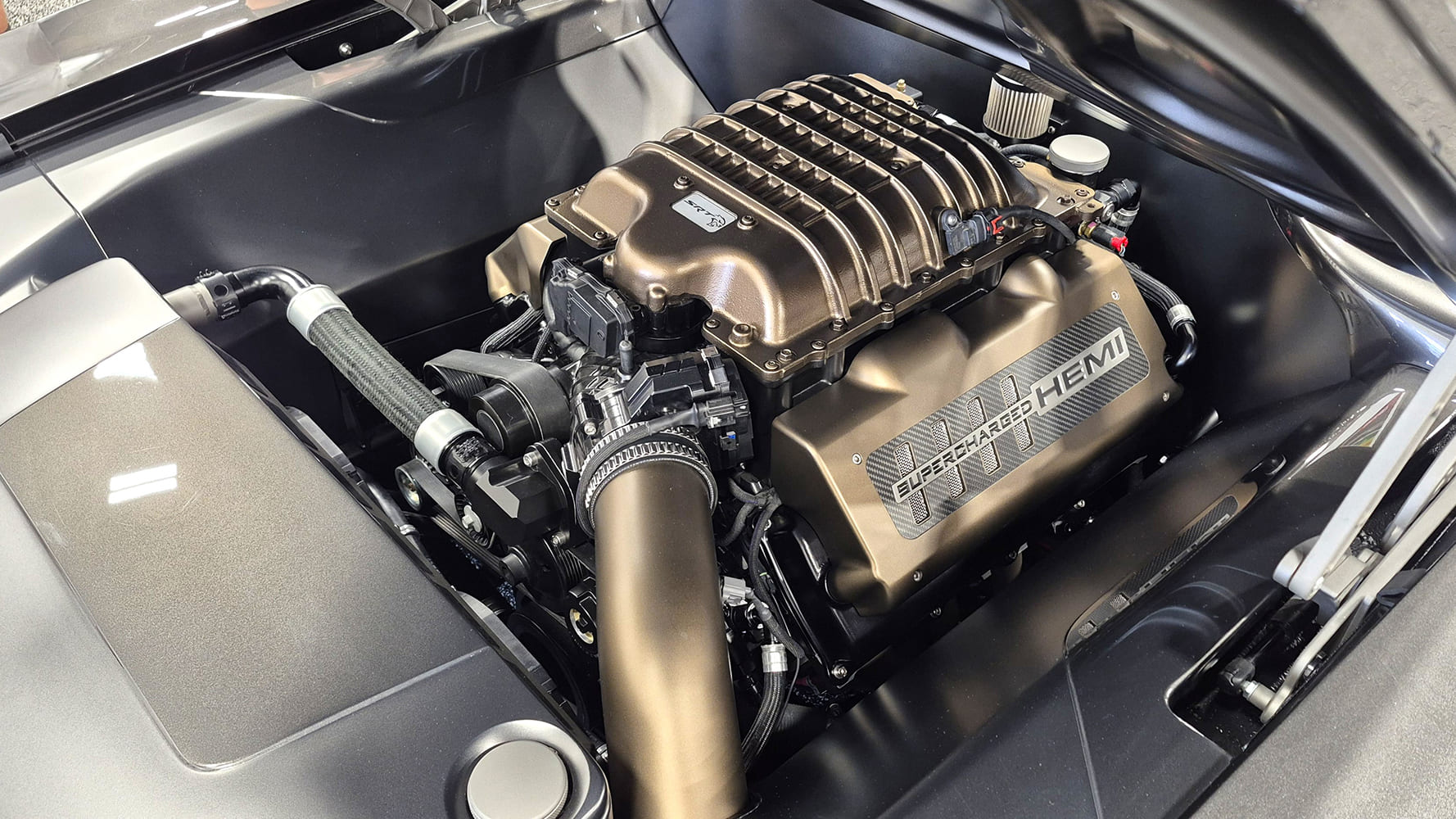
Joshua Sanders explains that the team pushed the engine back roughly 6 inches into the firewall to retain the stock hood profile while lowering the car and maintaining ground clearance. That single change set off a chain reaction of fabrication work: a one‑off firewall, a reengineered rear hood section, a custom pedal system, and bead‑detailed aluminum inner fenders that visually tie the bay together. Derek adds that the car is packed with custom billet components, many of them machined in‑house, giving the Charger a cohesive, purpose‑built feel without straying far from its original identity.
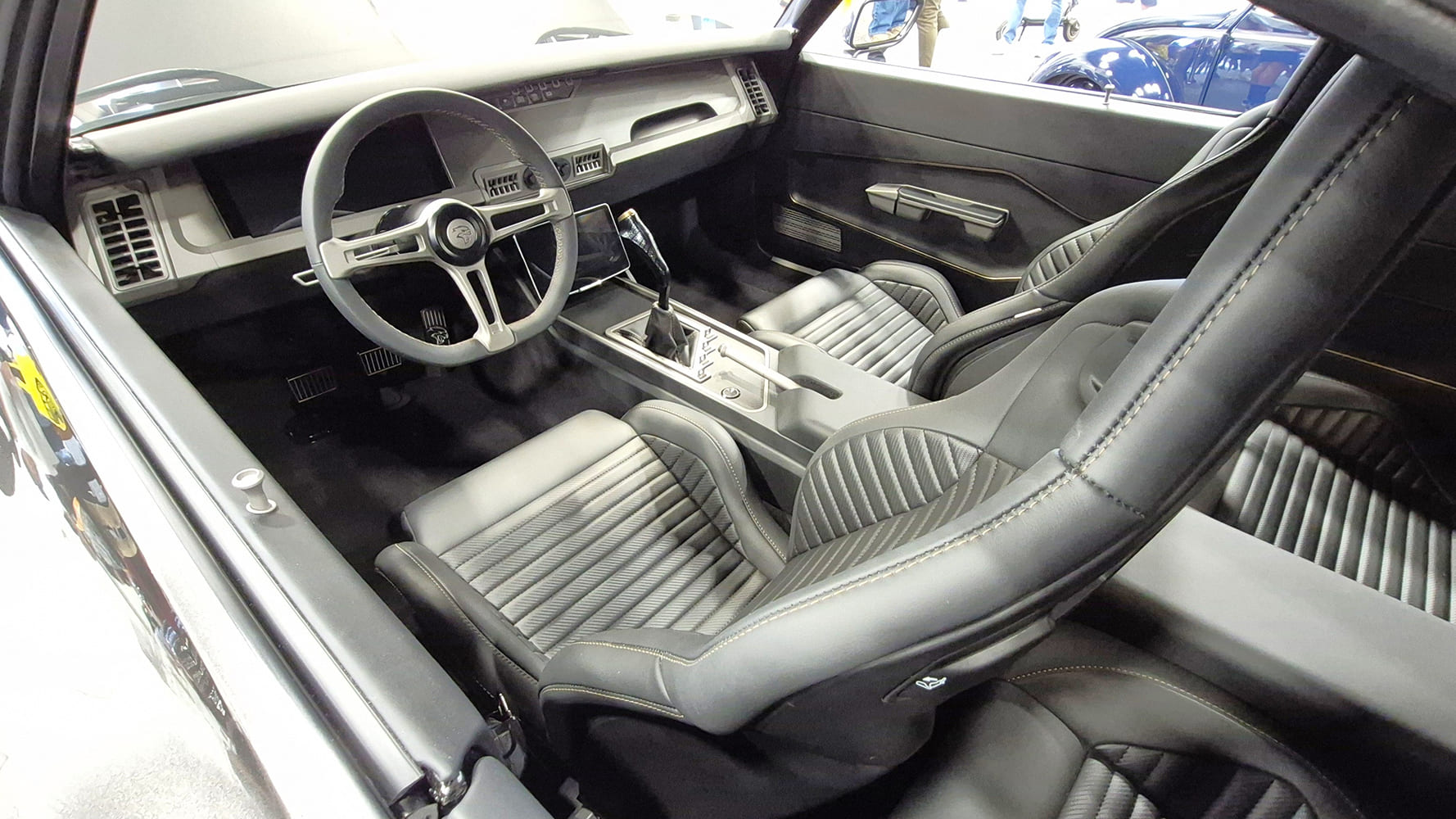
SEMA also provided the Sanders brothers with a preview of a new product they developed—a bolt-on door-handle system that transforms the factory push-button mechanism into a pull handle while keeping stock latches. Joshua describes it as a subtle yet meaningful upgrade that improves the OE look without needing major modifications. It’s the kind of detail-oriented part that reflects the shop’s overall approach to the Charger.
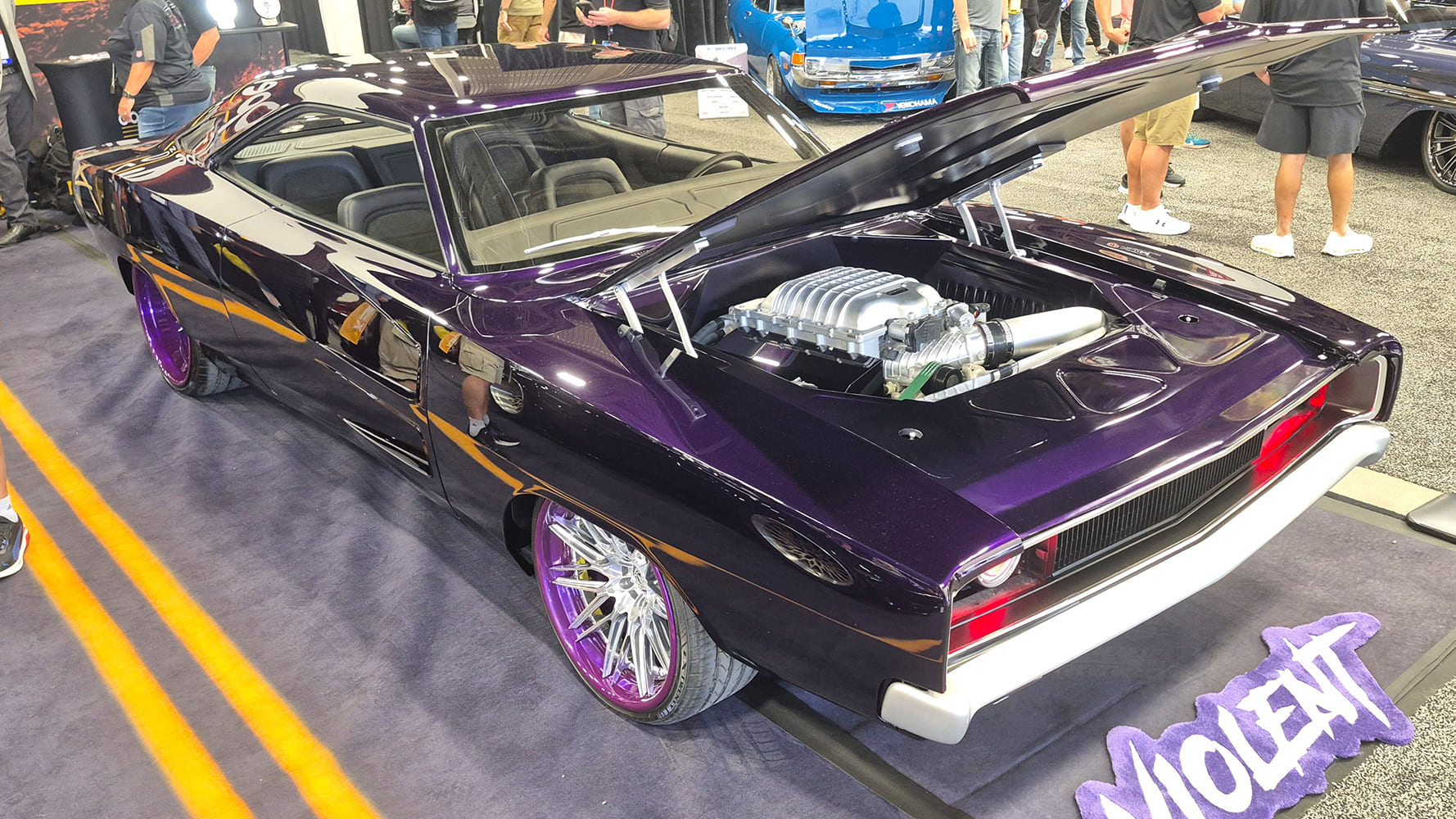
“Violent” 1968 Dodge Charger
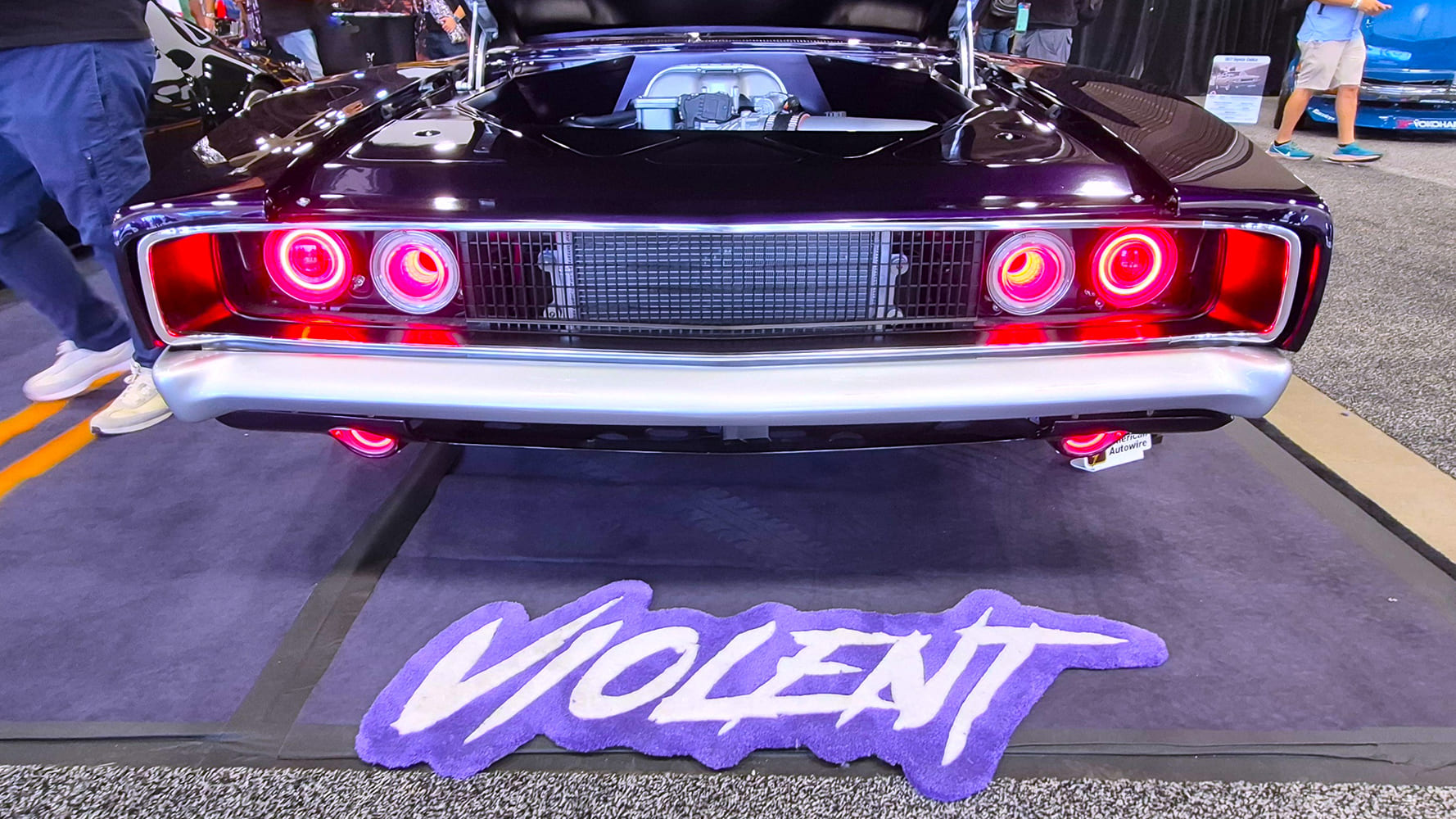
“Violent” emerged as a ground-up reimagining of one of Mopar’s most iconic shapes. Built by Dustin Hacker of Nostalgia Hot Rods in Cedar City, Utah, the project started with a simple phone call from the owner about 18 months earlier: he wanted a purple Charger with a Hellcat engine and a full independent-suspension chassis. Hacker involved designer Chris Horton to visualize the concept, and the build evolved into a complete redesign of the car’s proportions. The Charger now rides on a Speedtech Performance chassis with IRS and a push rod cantilever setup, paired with a Gearstar-built 4L80E overdrive transmission with a Reed case and bellhousing.

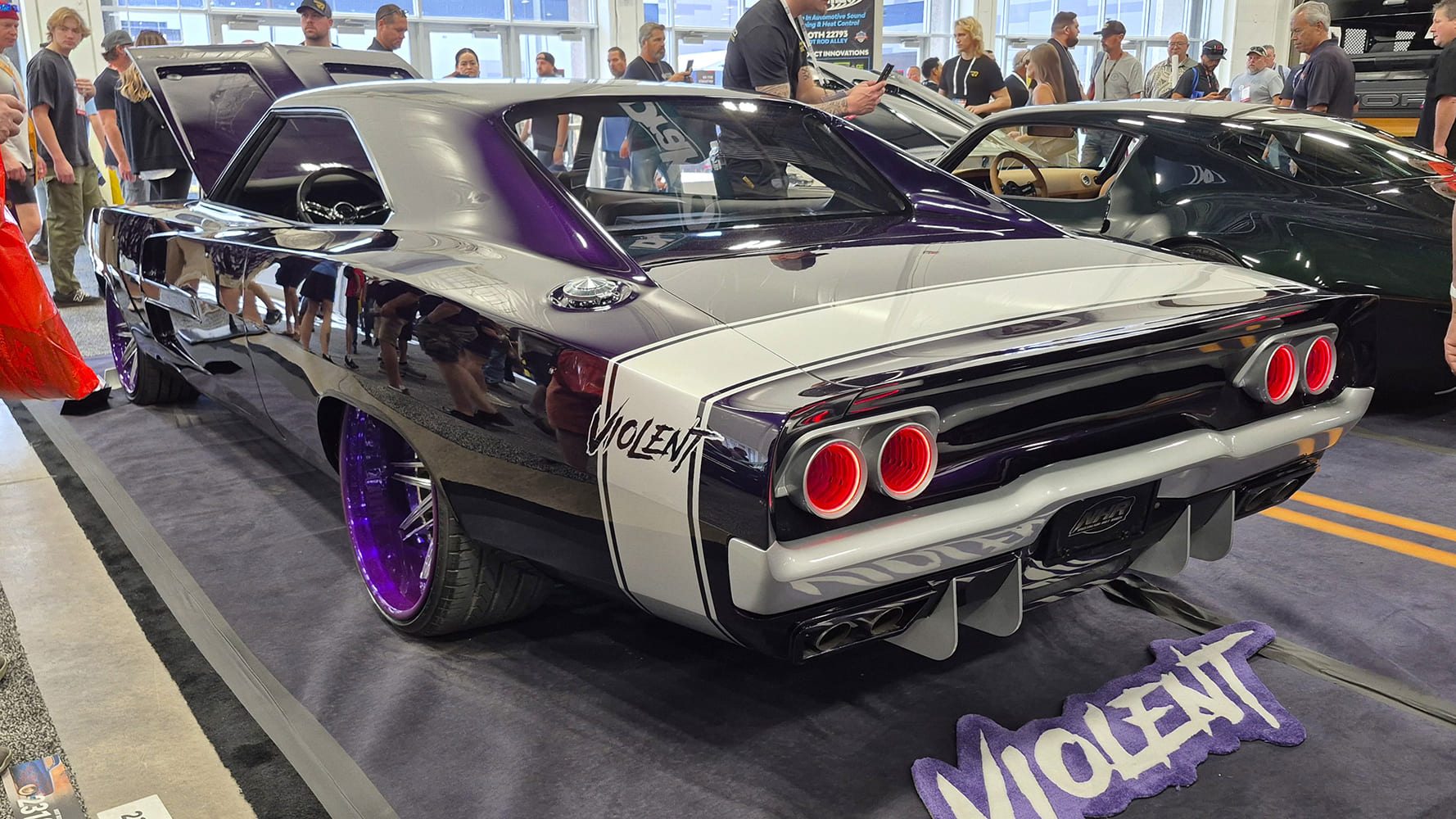
The bodywork is where the project makes its biggest leap. Hacker (you gotta love this guy’s name!) widened the car 6 inches in the front and 7 in the rear, reshaping the quarter-panels, doors, and fenders instead of relying on add-on flares. The roof was lowered by 3/8 inch, and the team fabricated handmade doors and custom hinges to clear the new fender lines. Hacker highlights the point where the door’s two major bodylines meet as his favorite detail, an area that’s barely 1/4-inch deep on a factory Charger but now measures 1-1/2 inches, visually giving the car a wider stance. A carbon-fiber hood, unique AL3 wheels, and Wilwood brakes with 14-inch rotors and six-piston calipers finish off the exterior updates.
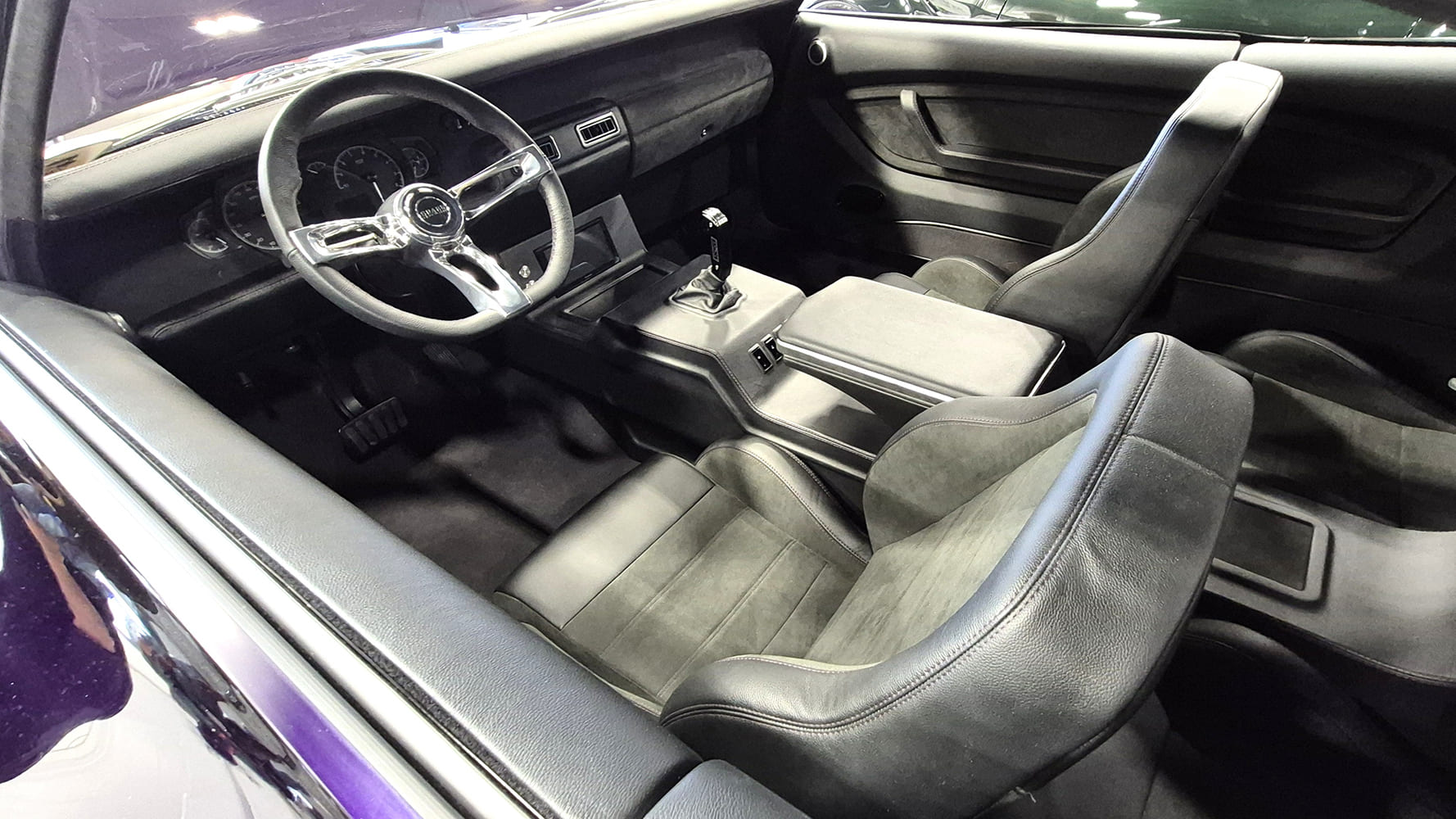
Inside, the Charger features a handmade interior anchored by a Dakota Digital instrumentation package, blending modern function with custom craftsmanship. Dapper Lighting “Infinity” taillights add a contemporary signature to the rear, contrasting the car’s vintage silhouette. Despite the extensive fabrication, the car arrived at SEMA with just 8 miles on the odometer—finished only two days before the show.
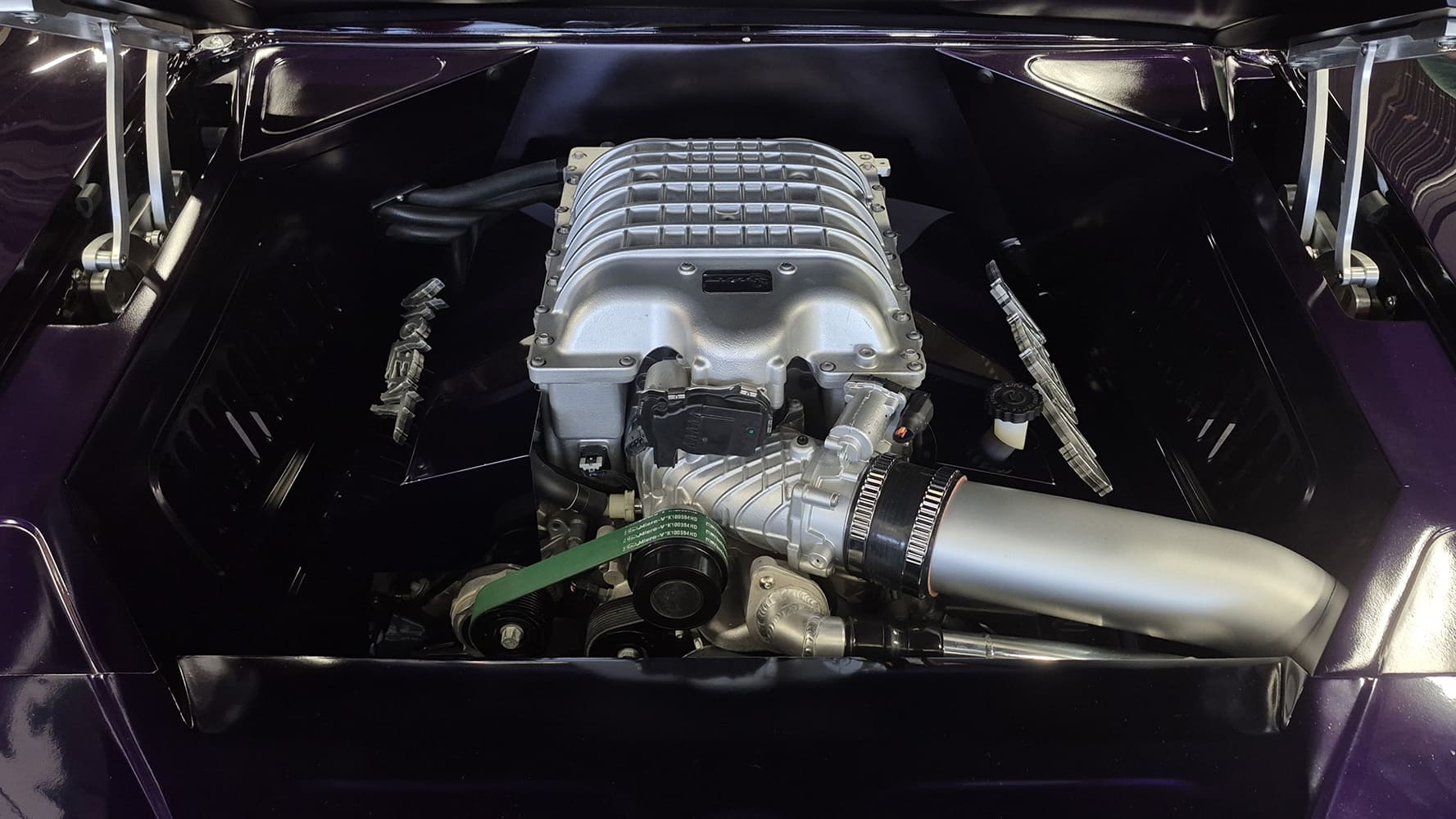
Hacker plans to put 500 miles on the car before delivering it to the owner, testing every system from the air conditioning to the power windows. As he explains, widening a
Charger by 7 inches without making it look “over‑ridiculous” was the toughest part of the build, but the result shows the level of detail needed to redesign a classic while keeping its identity.
1977 Dodge D-100 Warlock Hellcat Conversion
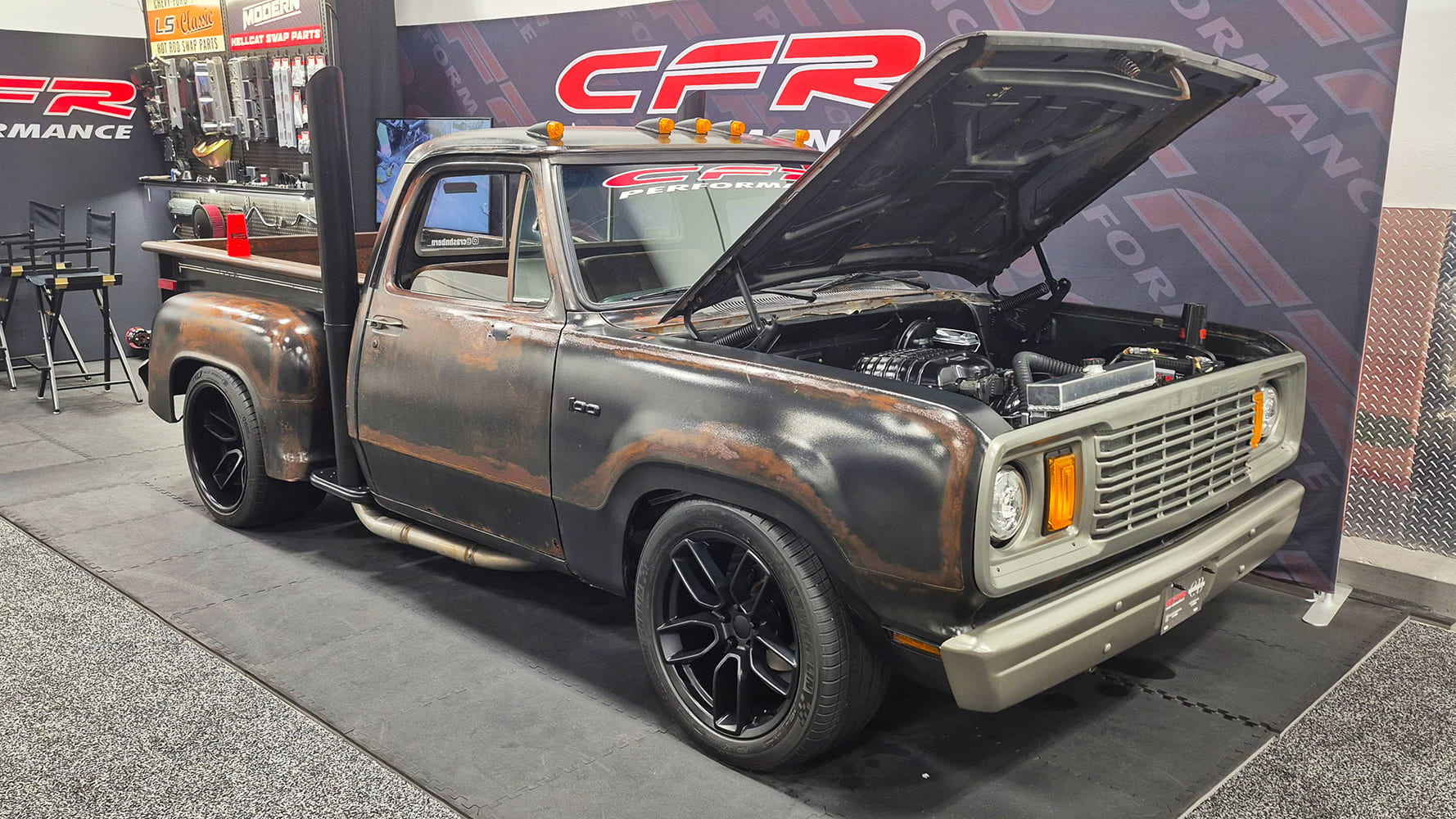
The 1977 Dodge D-100 Warlock at the CFR Performance booth highlights a connection between Mopar history and modern Hemi innovation. The original Warlock was part of Dodge’s late-1970s “Adult Toys” lineup—factory-custom trucks that included the Street Van, Macho Power Wagon, and the later Li’l Red Express. Built on the short-wheelbase Utiline Stepside platform, the Warlock came with bucket seats, wide tires, gold wheels, and oak bedrails—an aesthetic that was ready for shows straight from the lot. Bernie Charles found his truck not stored in a collector’s garage but abandoned in a junkyard corner. The patina was perfect; the price was right, $500, and the truck became the base for his next SEMA project.
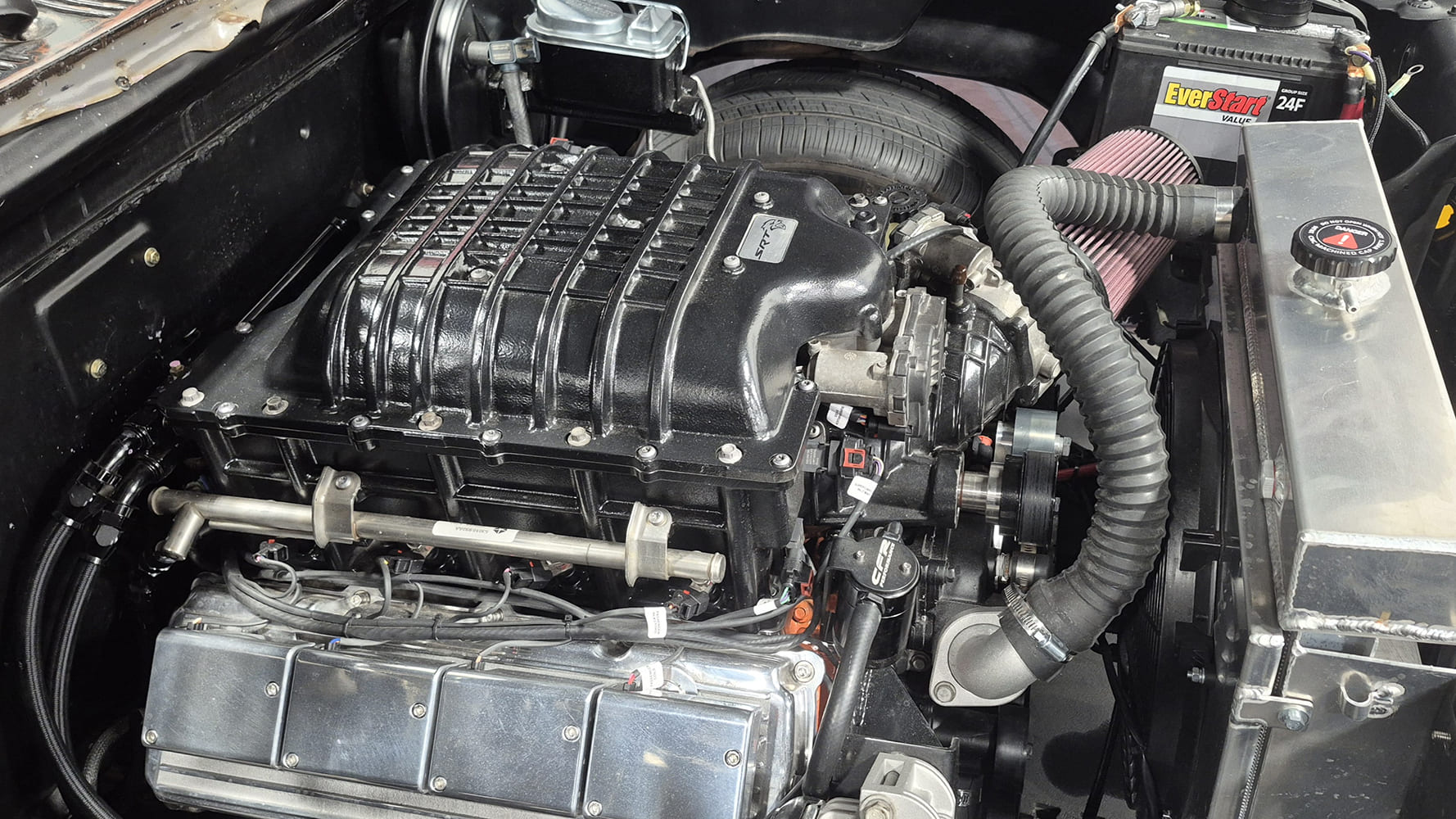
Displayed in the Central Hall, the Warlock naturally aligns with CFR Performance’s focus on Hellcat supercharger conversions for Hemi V-8s. Charles built the truck around a 392ci Hemi from a 2019 Scat Pack Challenger, topped with a 2.4L Hellcat blower and CFR’s conversion hardware. Power goes through an 8HP70 TorqueFlite to a 3.55‑geared Dana 60, while the suspension and brakes mostly stay stock with D-100 components—11.75‑inch front rotors and 11‑inch rear drums. Out back, 11‑inch‑wide three‑piece Widebody Redeye‑style wheels help the shortbed pickup deliver its newfound power. Charles says he wanted something different from the six‑figure SEMA builds: a truck he could build himself, quickly, and with character intact.
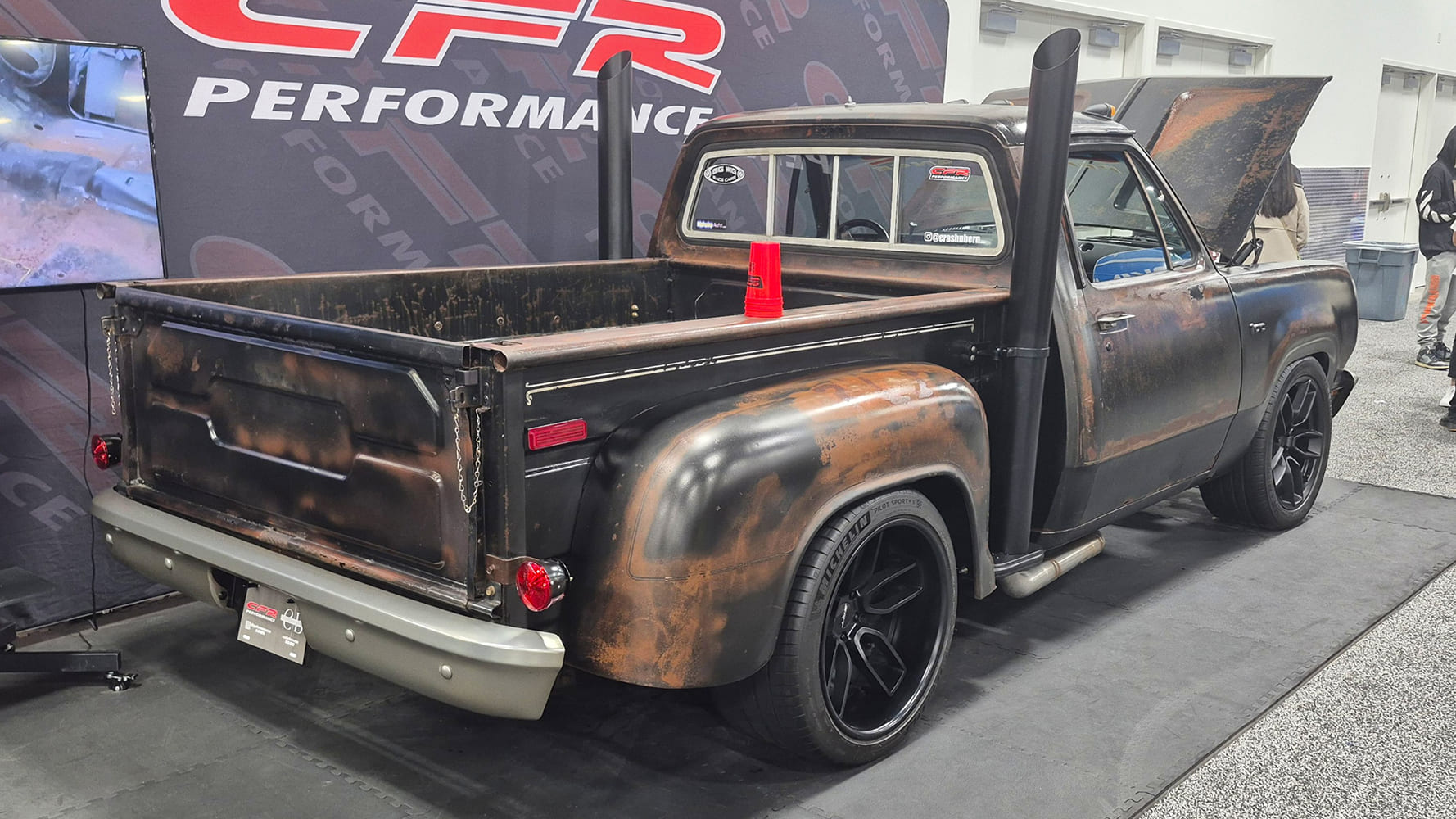
The build took four months, starting from the moment the truck rolled off the tow rig. Charles stripped it down to the frame, had the chassis blasted and painted (except for the vintage C10 rear bumper!), and rebuilt the truck from the ground up. He also embraced the truck’s quirks, most notably the vertical exhaust stacks. While not a factory Warlock feature, the junkyard truck already had cutouts in the steps, suggesting a previous owner’s unrealized plan. “Naturally, I wanted to pay homage to their vision,” he says.
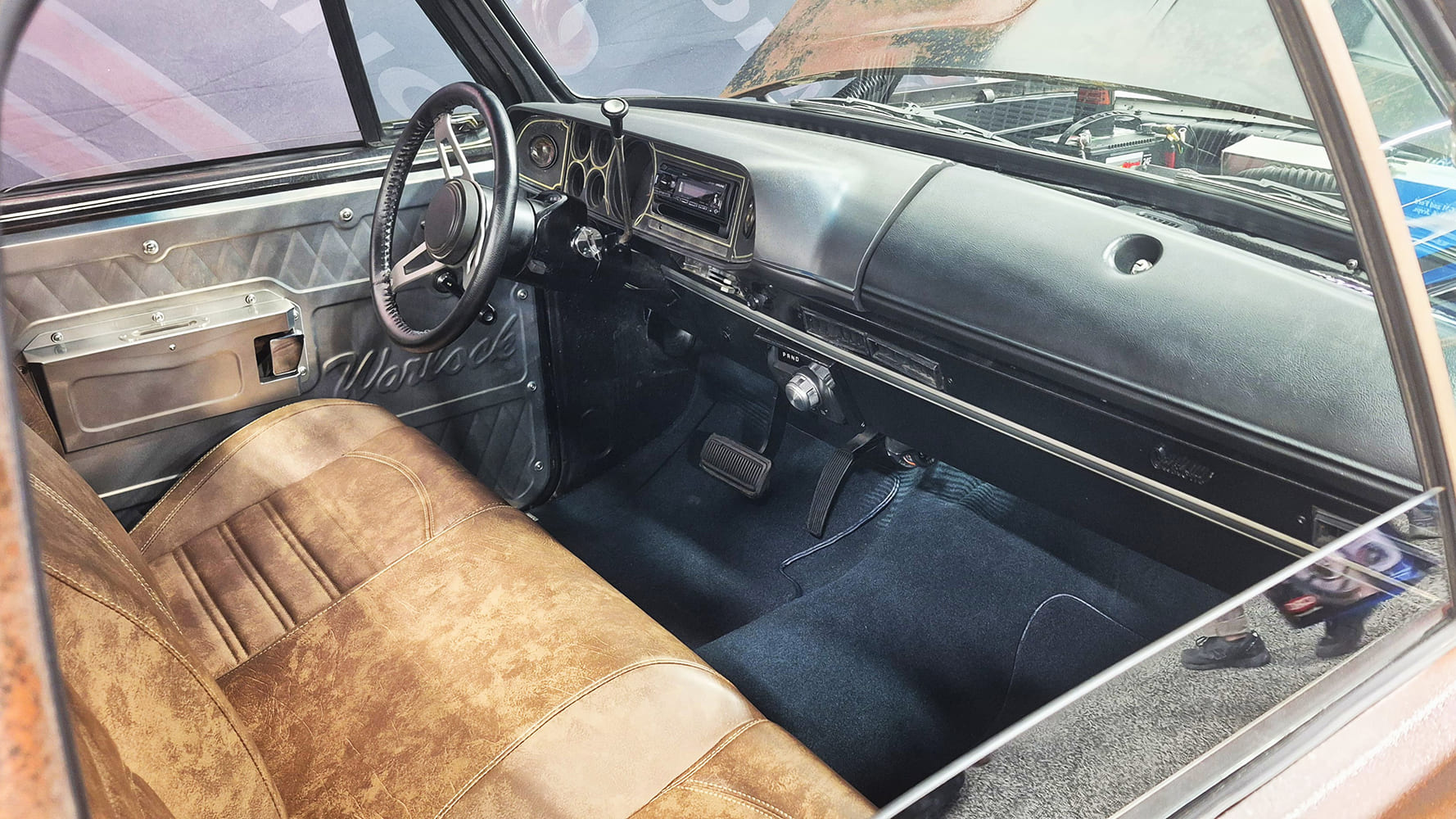
On the road, Charles reports that the truck “drives like a bat out of hell,” aided by wide tires and refreshed suspension components. Support from companies like HotWireAuto, Holley, LMC Truck, Big Wig Race Cars, and CFR Performance made the quick build possible. For Charles, the Warlock fills a gap in the Mopar world: a ’70s Dodge truck gaining the performance attention usually given to Ford and Chevy pickups. It’s a junkyard rescue turned Hellcat‑blown statement piece—exactly the kind of grassroots energy that keeps SEMA interesting.
Classic Car Studio 1968 Charger
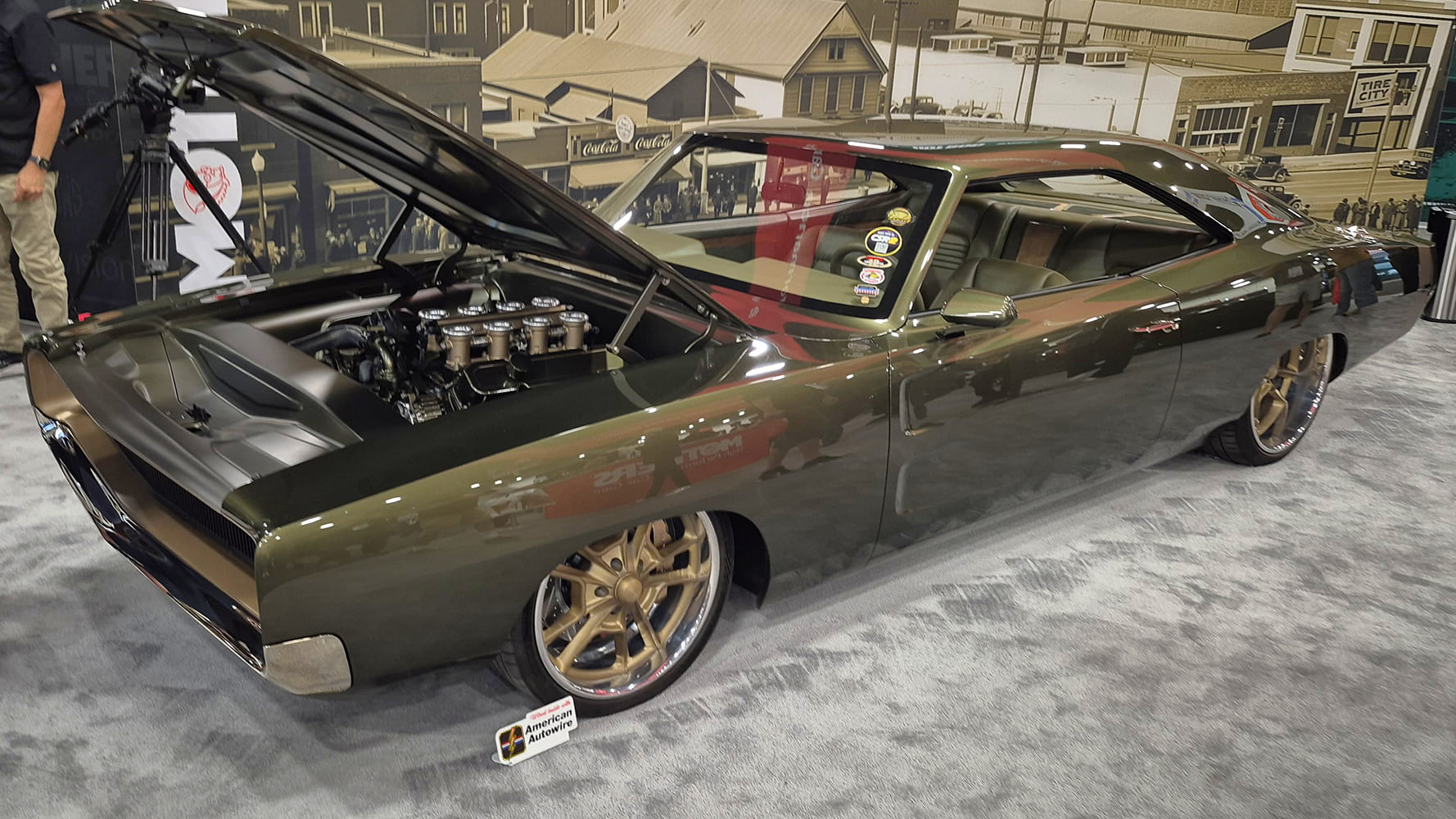
Classic Car Studio’s 1968 Dodge Charger made a strong comeback to Las Vegas for 2025, carrying a level of momentum rarely seen in custom builds. Coming off its overall victory in the 2024 Battle of the Builders—where it outperformed 174 competitors—the Charger’s presence is a showcase of modern craftsmanship applied to a classic Mopar design. This year, it was showcased in the Mothers booth, a key space for hot rod design and styling, highlighting the car’s growing influence in the custom car scene. Builder Noah Alexander and his St. Louis–based team didn’t just update a classic; they reimagined it from the ground up while keeping the iconic look that made the 1968 Charger legendary. Owner Ed Houston, who bought the car about 20 years ago after owning one in high school, originally requested paint- and bodywork. After visiting the shop, he gave Alexander a new challenge: to create the ultimate Charger.
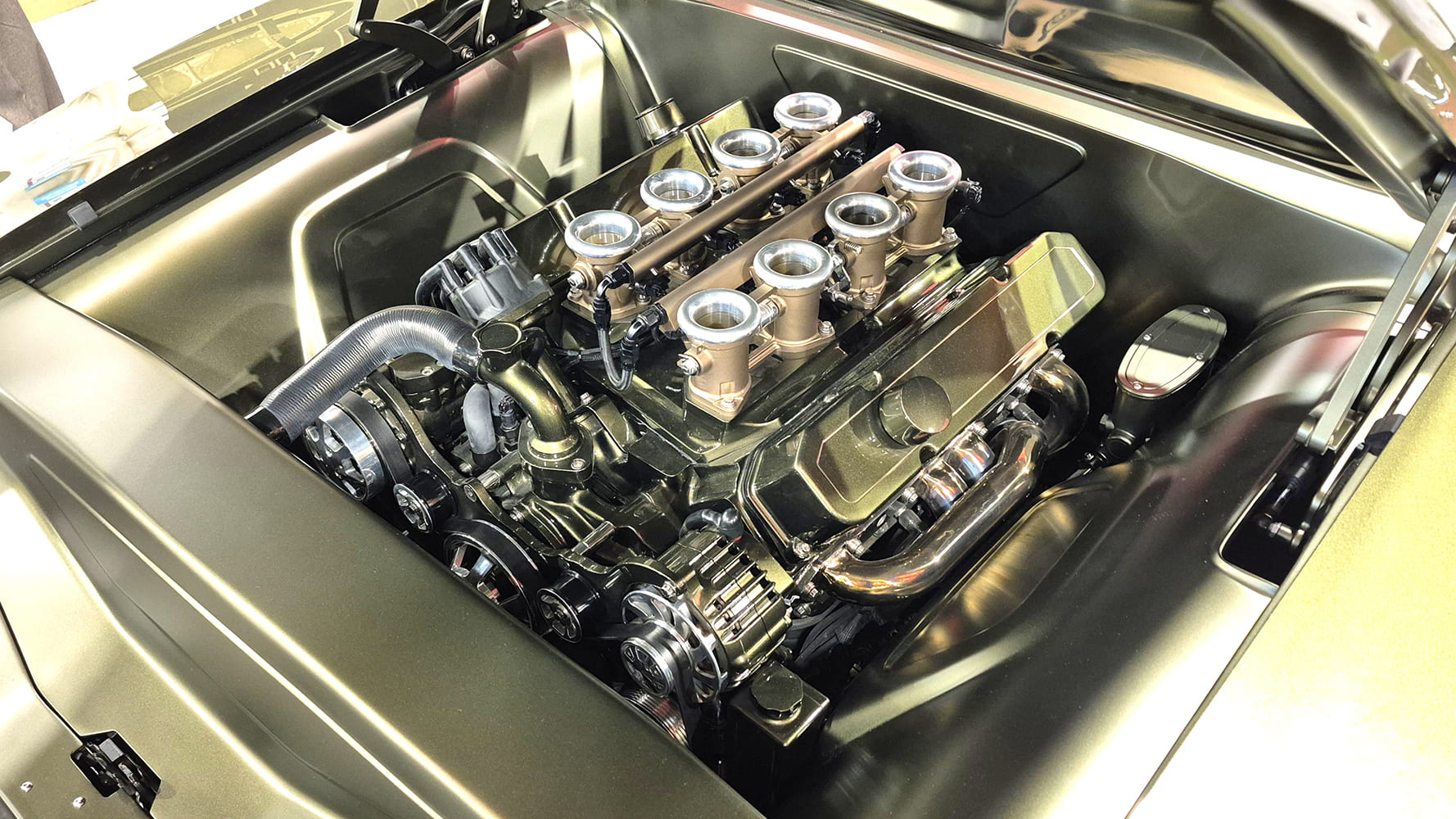
Underhood, the car keeps its soul—a 440 Chrysler wedge originally built by drag racing icon Dick Landy. Classic Car Studio rebuilt the engine and paired it with a Borla stacked injection system, Holley Terminator-X management, and a custom Hogan intake, transforming the old-school big-block into a showpiece. A Bowler-built 4L80E automatic supports it, powering a Ford 9-inch rearend. The Roadster Shop Fast Track chassis, complete with IFS and a four-link rear, improves the Charger’s handling, while Ridetech coilovers and Baer six-piston brakes provide the precision of a modern performance car.
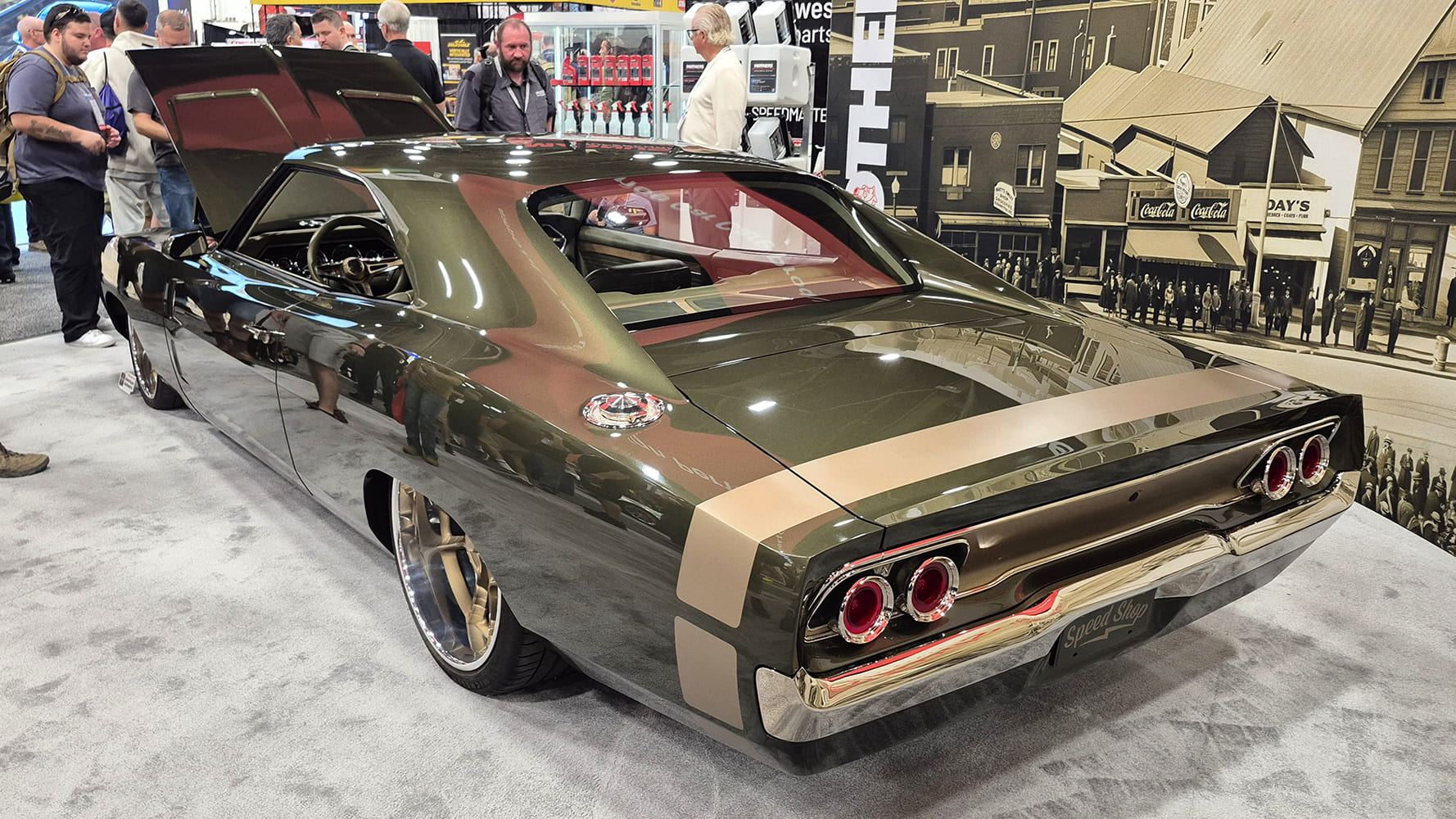
Visually, the car is a showcase of restraint and detail. The BASF Glasurit green—chosen despite Houston’s original request for “anything but green”—became the build’s signature. Every body line was sharpened, the wheelbase extended 3 inches forward, and the bumpers were meticulously hand‑fitted before being plated to a nickel finish. Flush‑fitted glass, shaved driprails, and a seamless belly pan conceal every wire, line, and mechanical component, leaving nothing but sculpture from every angle.
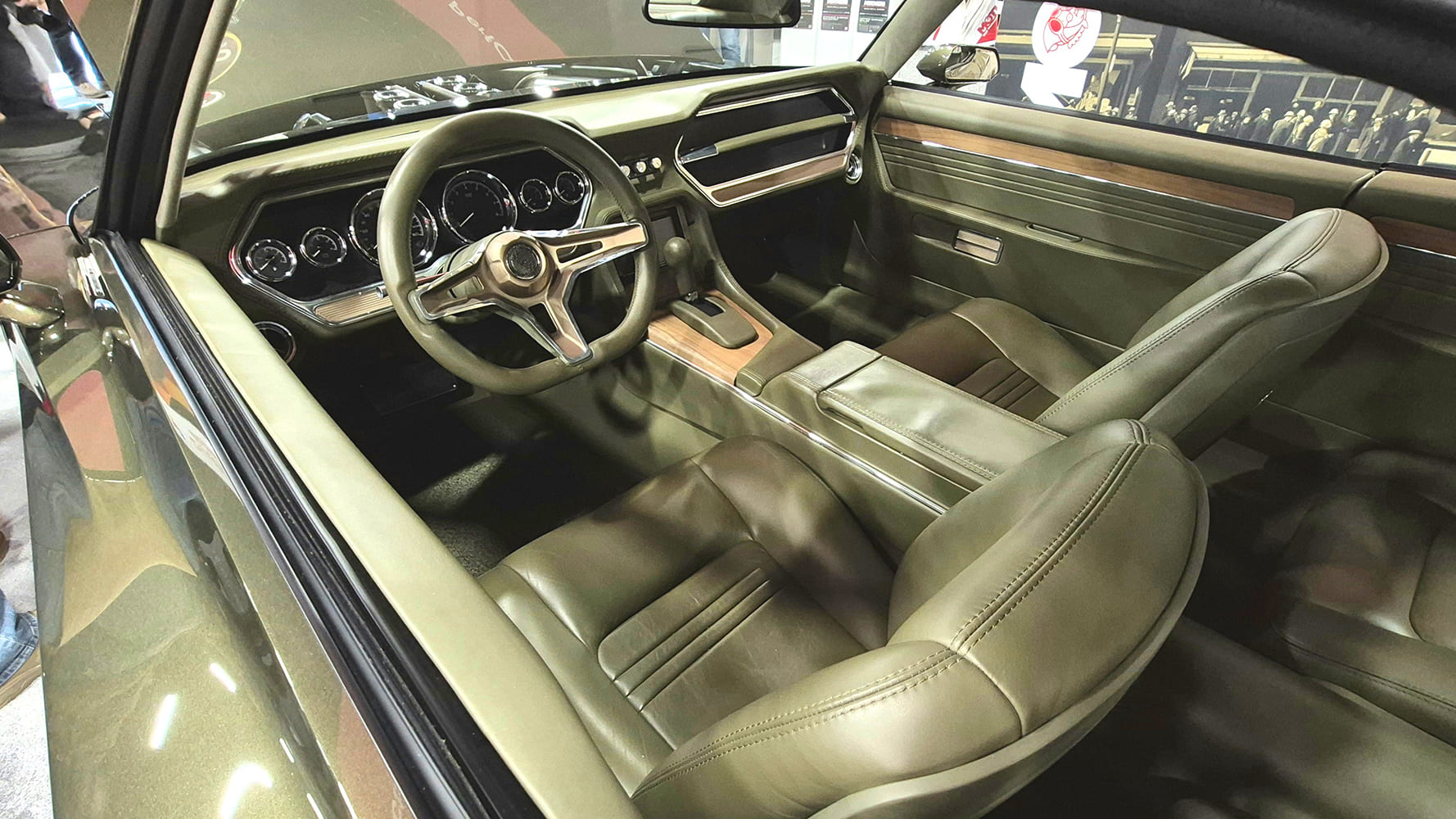
Inside, the Charger blends luxury and purpose with a Relicate leather interior, Dakota Digital gauges, Vintage Air climate control, and Kenwood audio. With only a few hundred miles on the completed build, Houston continues to show the car while Classic Car Studio enjoys the final glow of a project that pushed its 20‑person team to new heights. At SEMA 2025, the Charger stood not as a debut but as a benchmark—proof of what happens when vision, talent, and a customer’s trust align.
“Haraka” 1970 Plymouth Road Runner
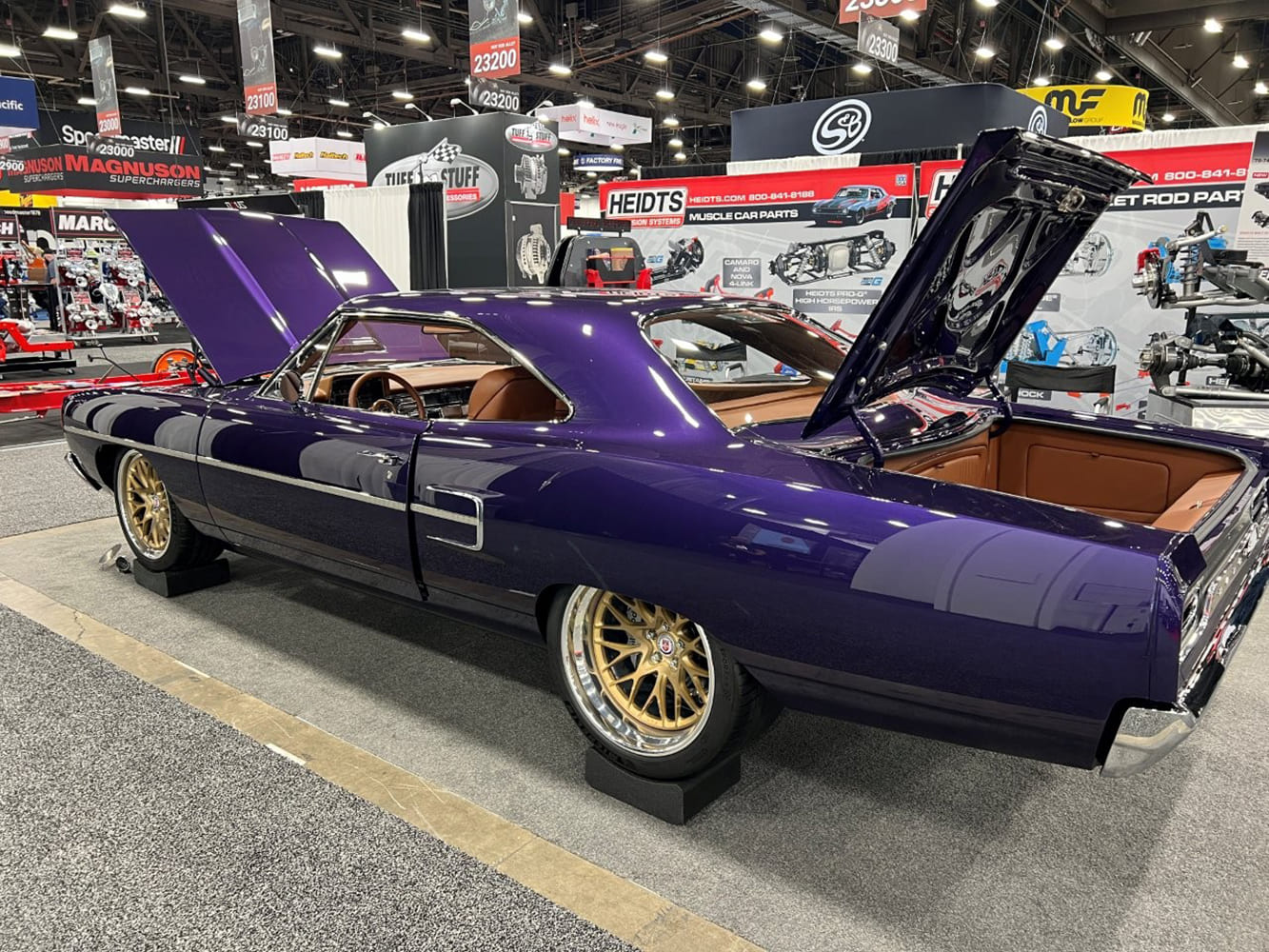
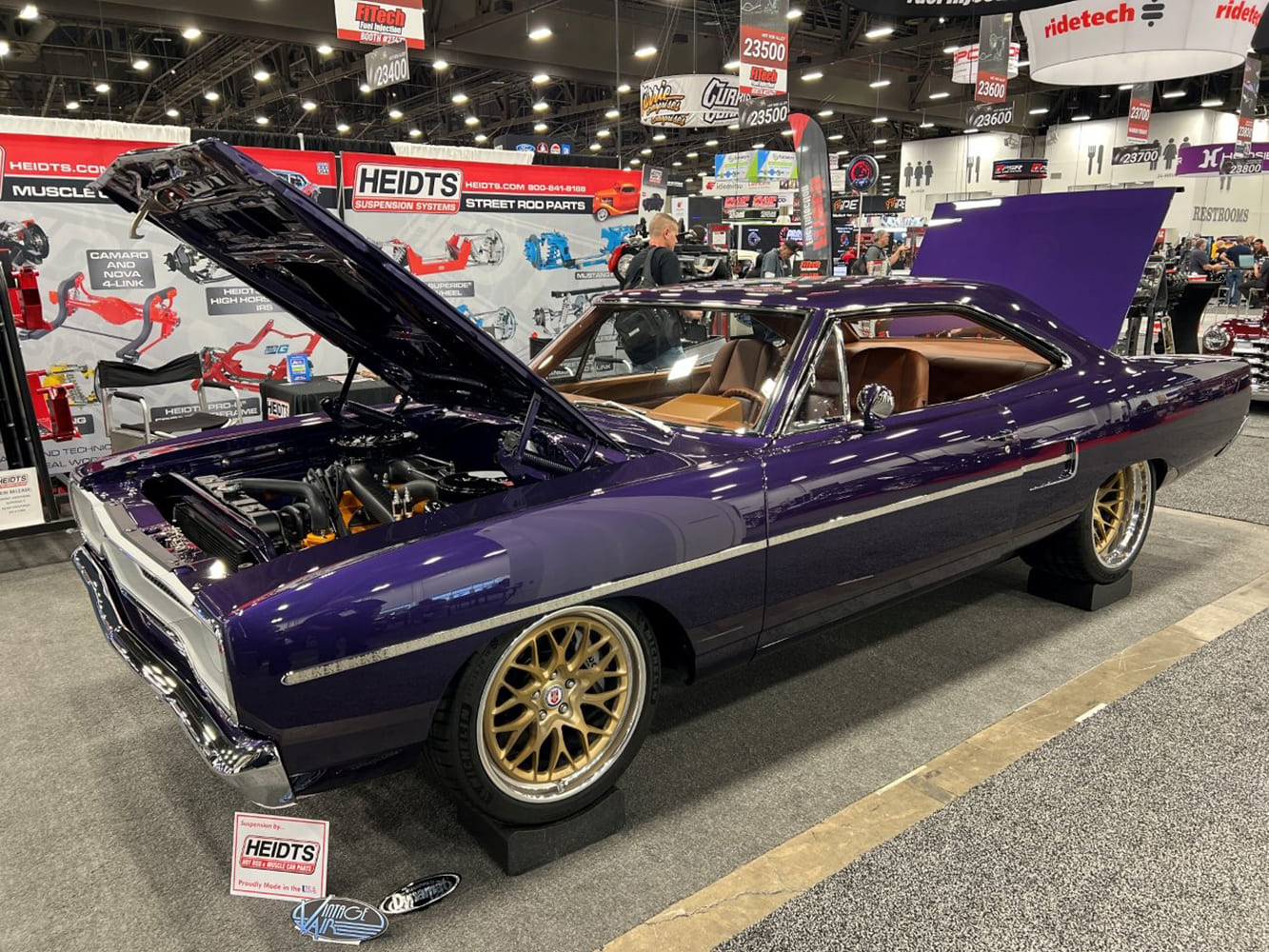
Pure Vision’s 1970 Plymouth Road Runner—nicknamed “Haraka,” Swahili for speed—was one of the most conceptually rich Mopars at the show. Builder Steve Strope has long been recognized for blending muscle car heritage with unexpected influences, but Haraka pushes that idea into new territory. The car started as a factory Plum Crazy Road Runner, yet Strope and painter Mick Jenkins created a deeper, moodier shade called Inkwell Violet, setting the tone for a build that draws from high‑end menswear and luxury watches as much as from Chrysler’s B‑Body lineage. The result is a Road Runner that feels both unmistakably Mopar and unmistakably Pure Vision.
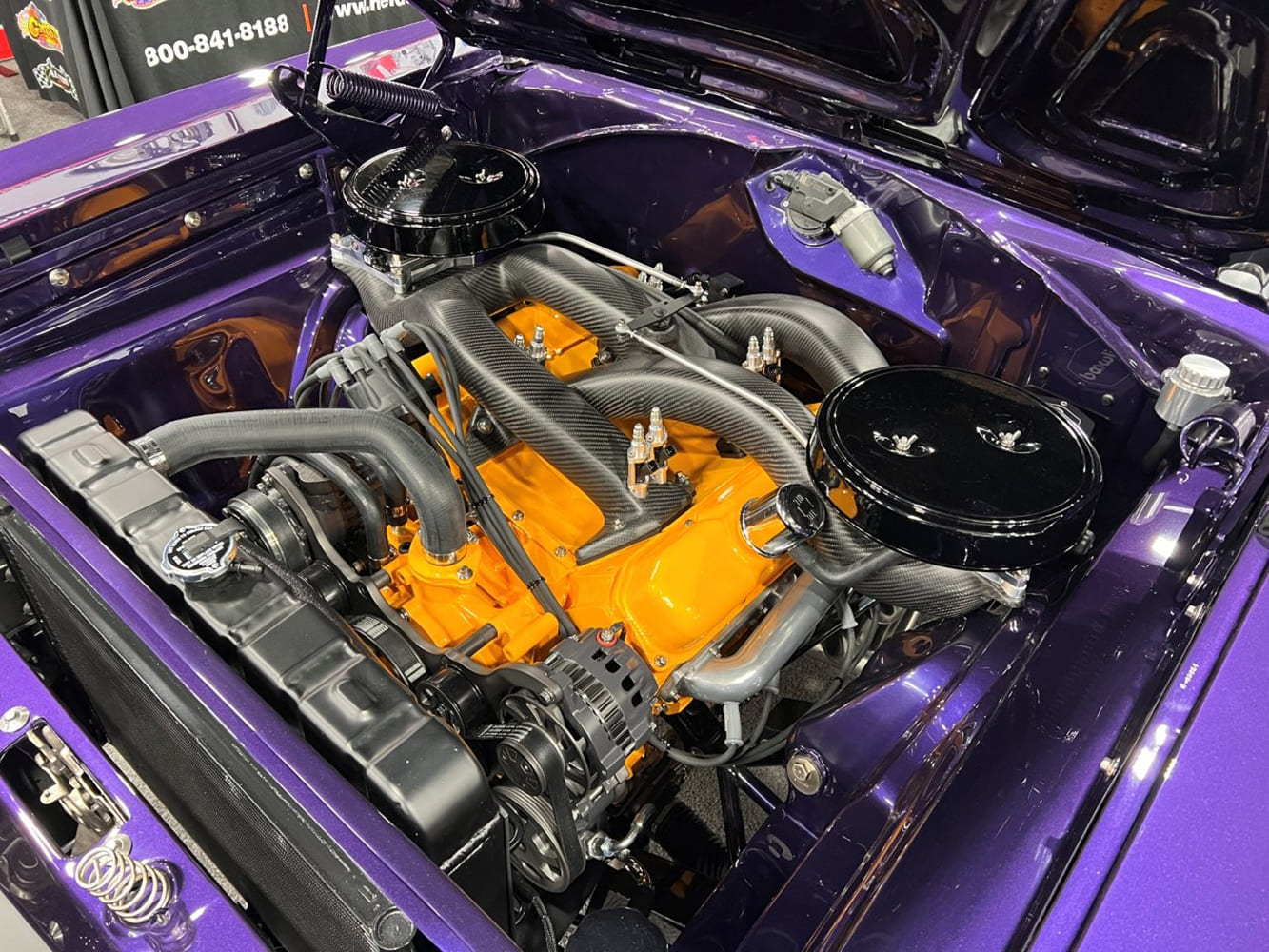
Underhood, the car stays true to its roots with a stroked 494ci big‑block wedge built from 440Source components and topped with a custom carbon-fiber cross‑ram induction system managed by MoTeC. Strope intentionally avoided the predictable Gen III or 426 Hemi route, opting instead for a torque‑rich, street‑friendly package expected to produce around 550 to 600 hp. A TREMEC TKX five‑speed and American Powertrain bellhousing keep the driving experience traditional, while a Rick’s Tanks fuel system and Wilwood brakes—including the company’s new electric e‑brake—bring modern updates where they matter.
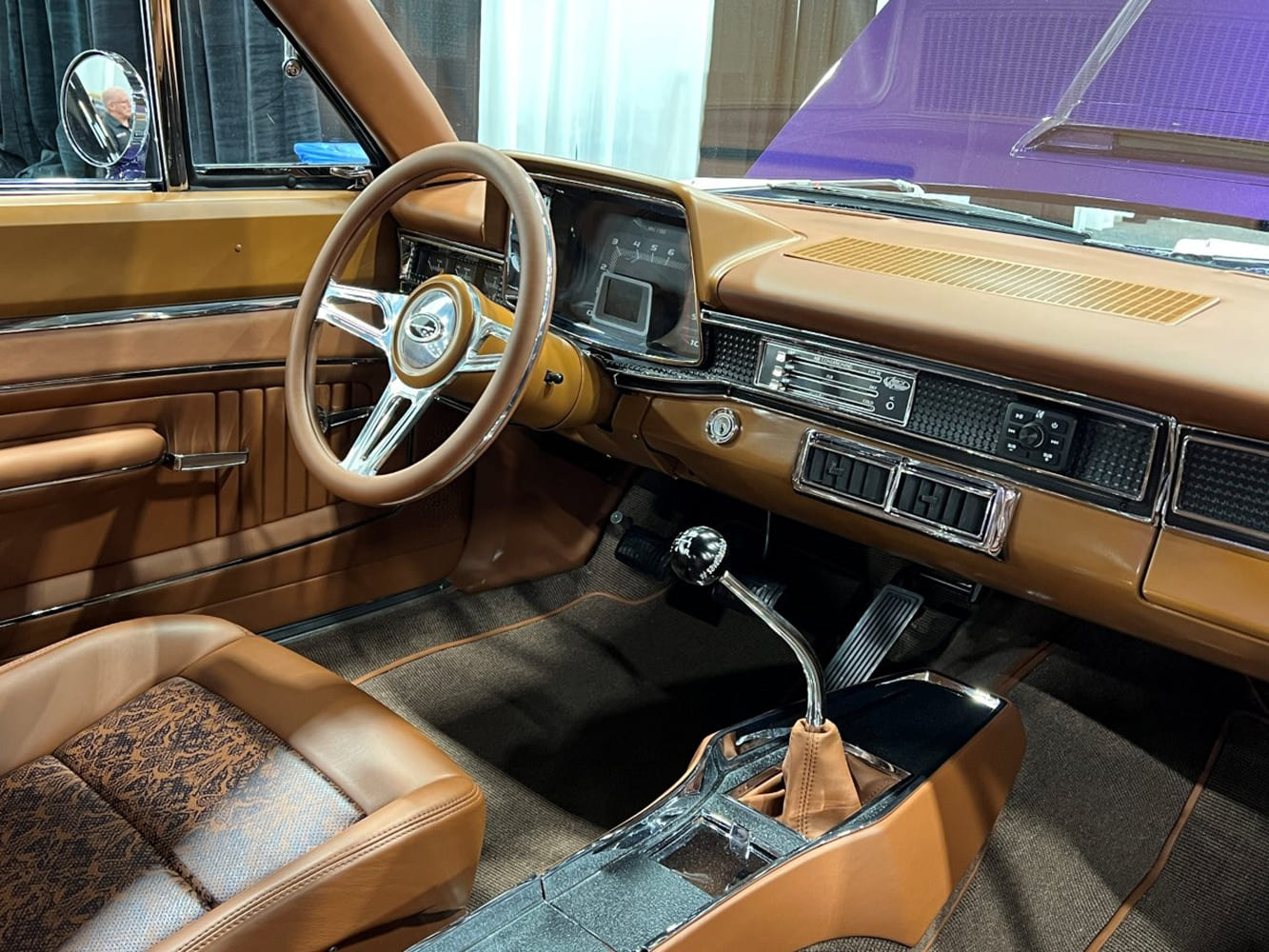
Inside, Haraka becomes a showcase of craftsmanship and cross-disciplinary design. Strope reimagined the cabin by narrowing a 1966 Plymouth Fury dash by 6 inches and reshaping it to echo the dramatic cowl of a Lamborghini Aventador. Dakota Digital crafted a custom gauge cluster, while Gabe’s Upholstery covered the interior in Italian-printed leather featuring a laser-rendered Robert Graham pattern. Porsche Panamera seats, a 1972 Duster console, and a 1973 Barracuda overhead console complete a cabin that feels curated rather than simply customized.
Beneath it all lies the debut of Heidts’ new Pro-G IFS and IRS for Mopar B-Bodies—a major reason the car appeared at SEMA. Mini-tubs, subtle GTX trim cues, and reworked bumper details complete a build that honors the Road Runner’s heritage while elevating it to a higher level of refinement. Haraka will continue its journey at the 2026 Grand National Roadster Show, where its mix of Mopar legacy and luxury design is sure to connect just as strongly. MR