


By Jesse Kiser – Photography by the Author
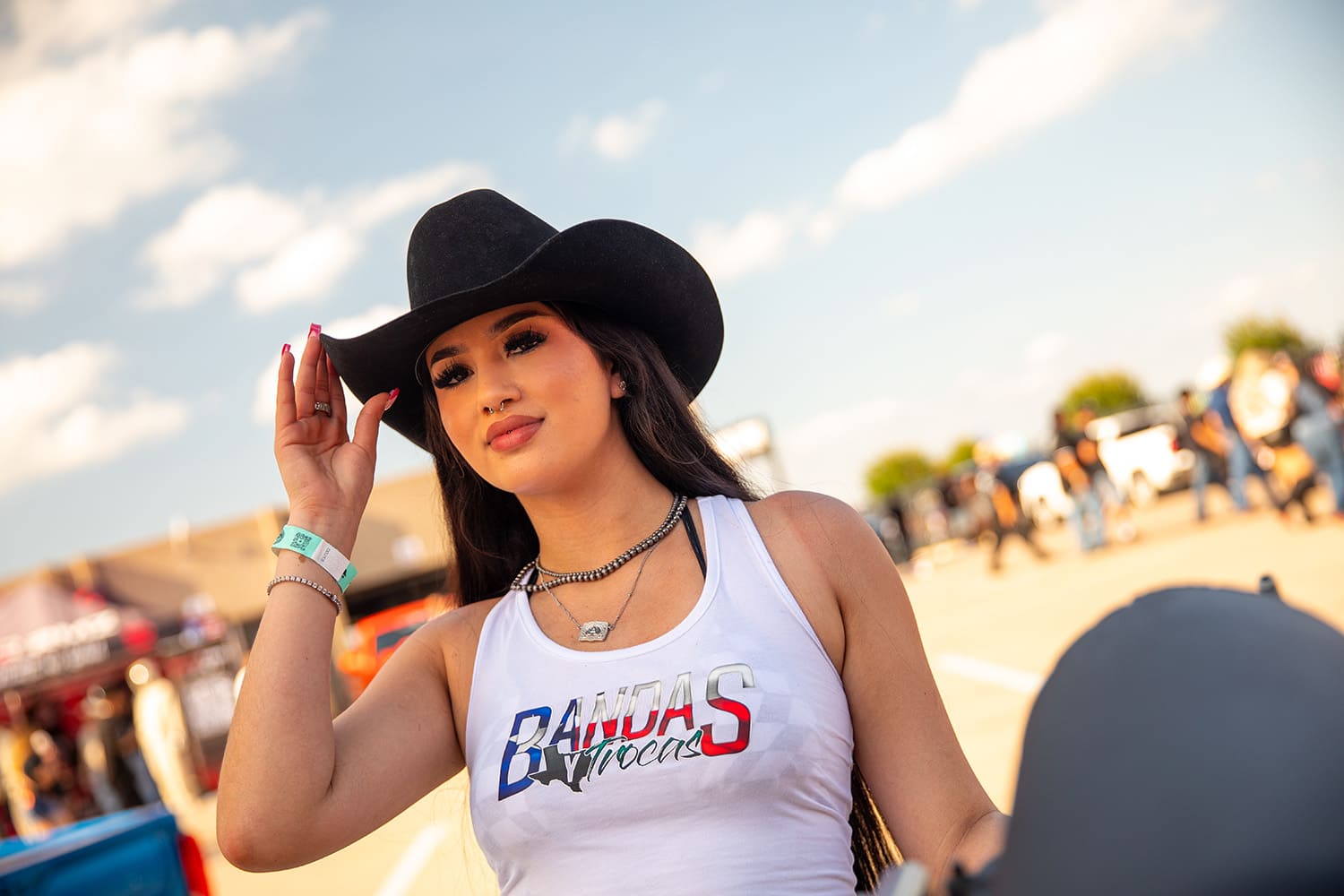
In English, Bandas y Trocas means bands and trucks, which is pretty obvious. But you don’t need a passport to be bilingual, or a nice truck, just an open mind to experience this gigantic one-day custom truck show. For this white guy, it was an eye-opening experience to see Chicano truck culture in full swing.
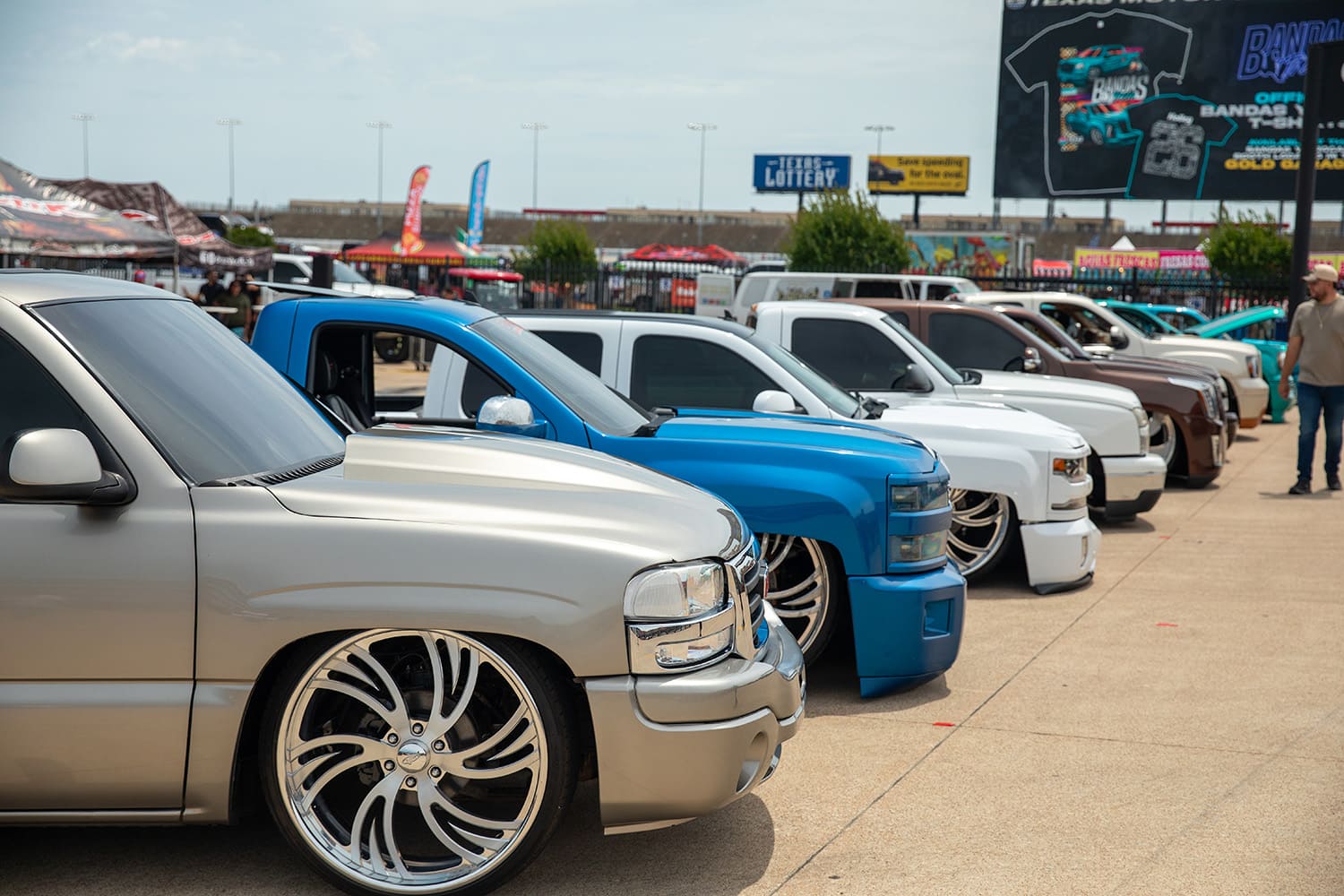
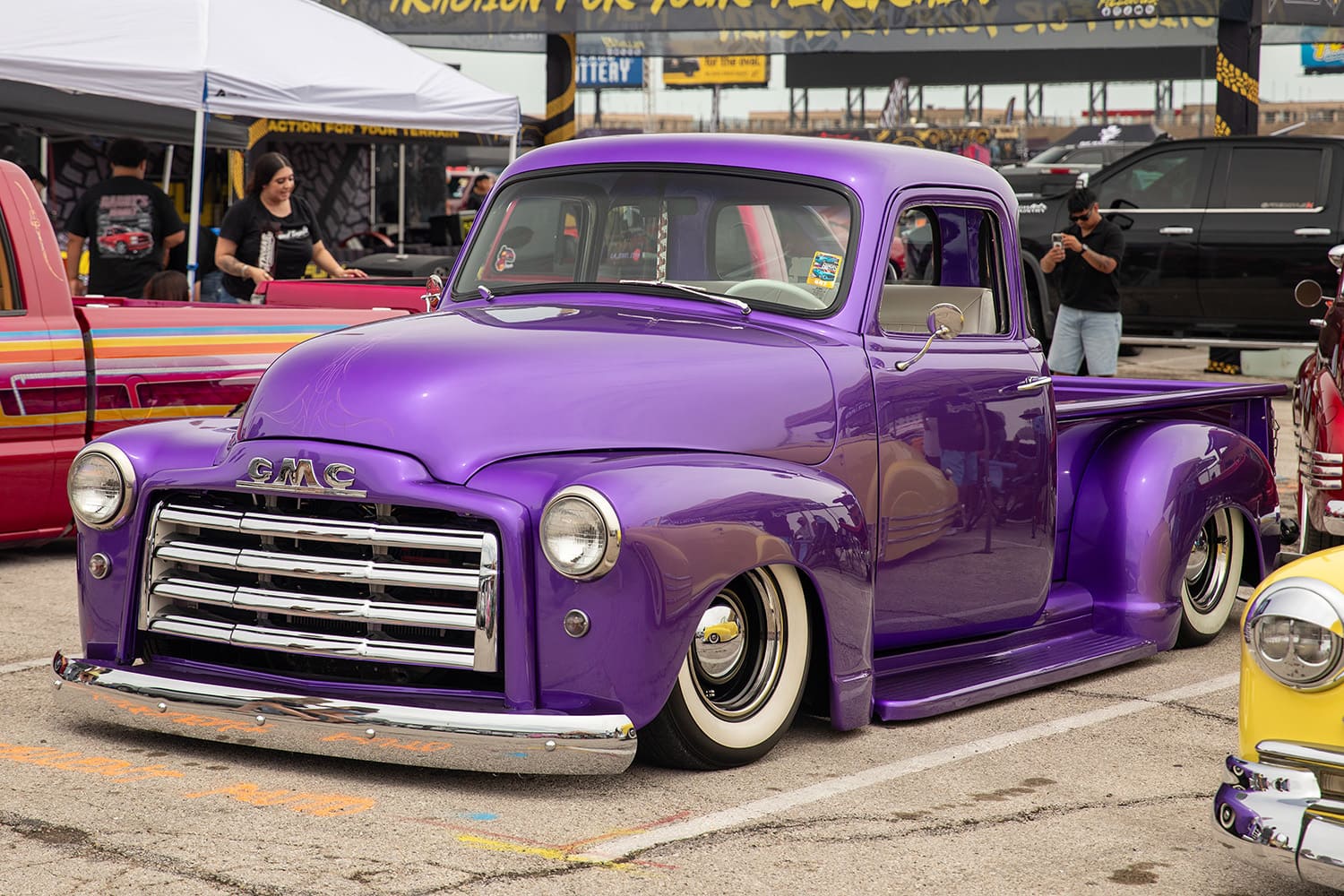
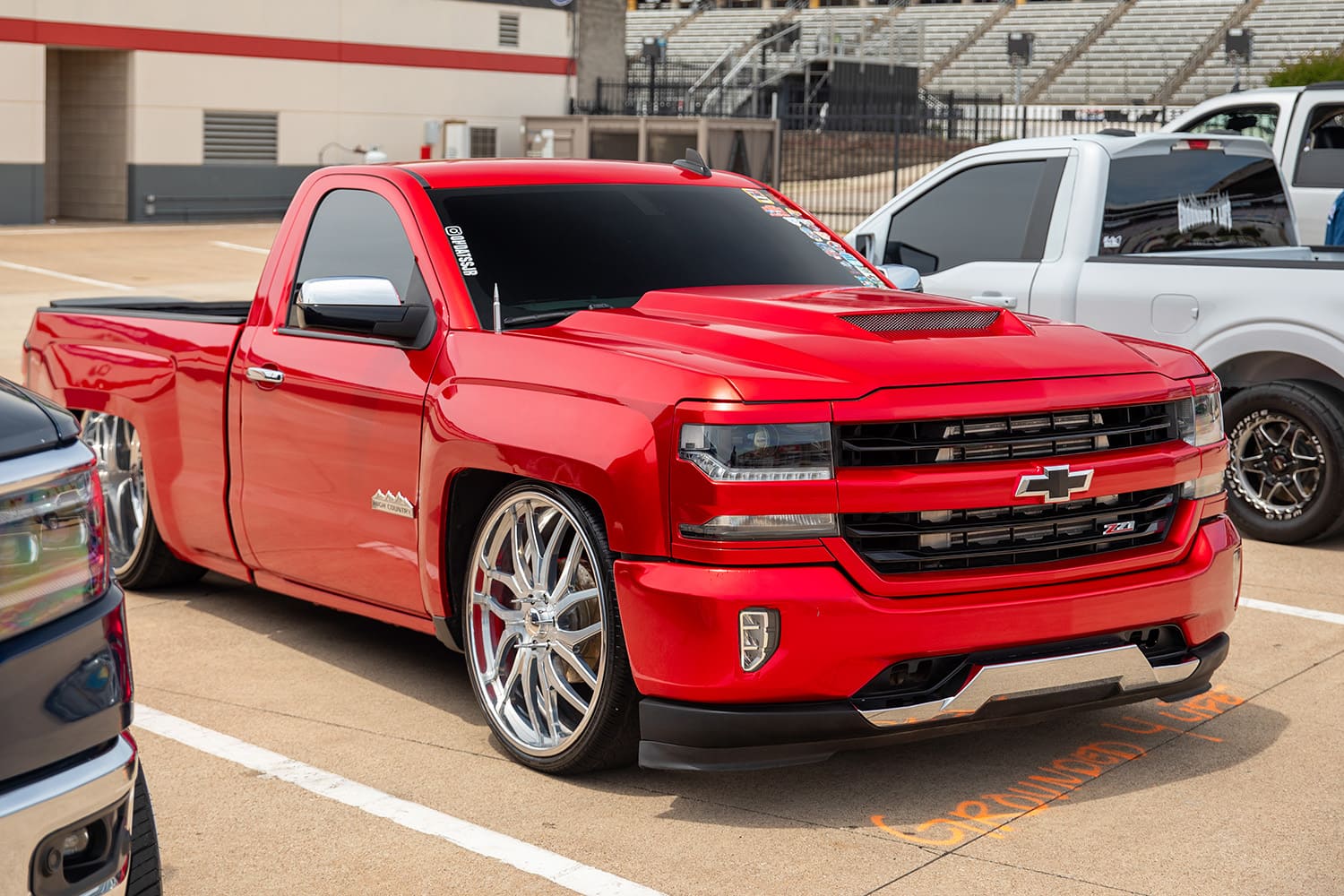
At Texas Motor Speedway, that meant rows of polished pickups, lifted late-models, laid-out classics, big rigs, and burnout trucks. It was part truck show, part concert, and part parking-lot family reunion.
ONDGAS
Before ONDGAS had a big following, they started with a guy they call Beto ODG and Houston Performance Trucks.
That was back in the forum days. Beto saw what the Rio Grande Valley had built with its own truck community and wondered why Houston did not have the same thing. So, he started one.


The first gathering was held in Sealy, Texas, as an HPT versus RGV event. From there, the custom truck show moved to Houston Raceway Park and it kept growing.
So did the brand. ONDGAS was building cool trucks and had a big YouTube following. Eventually, Houston Raceway Park could not keep up with the crowd. Moving to Texas Motor Speedway gave Bandas y Trocas the space to stretch out.
The show still has the same basic idea: provide good music, good atmosphere, and trucks, and the people will come. It’s now in its 10th year.
Bandas Y Trocas Custom Truck Show
The show is somewhat unique in that it combines a big concert, vendors, and shared show spots. Here, you can gather a few friends, customers, or family, and reserve a space to show, cook, play music, or enjoy the show.
The truck scene works because it is not one thing. Some owners showed up with fully built shops and matching tents. Others came with friends, lawn chairs, and coolers. There were families walking the rows, kids posing by wheels taller than they were, and groups camped out beside the stage like they had claimed the best spot at a neighborhood barbecue. That is what made Bandas y Trocas feel different from a normal show.
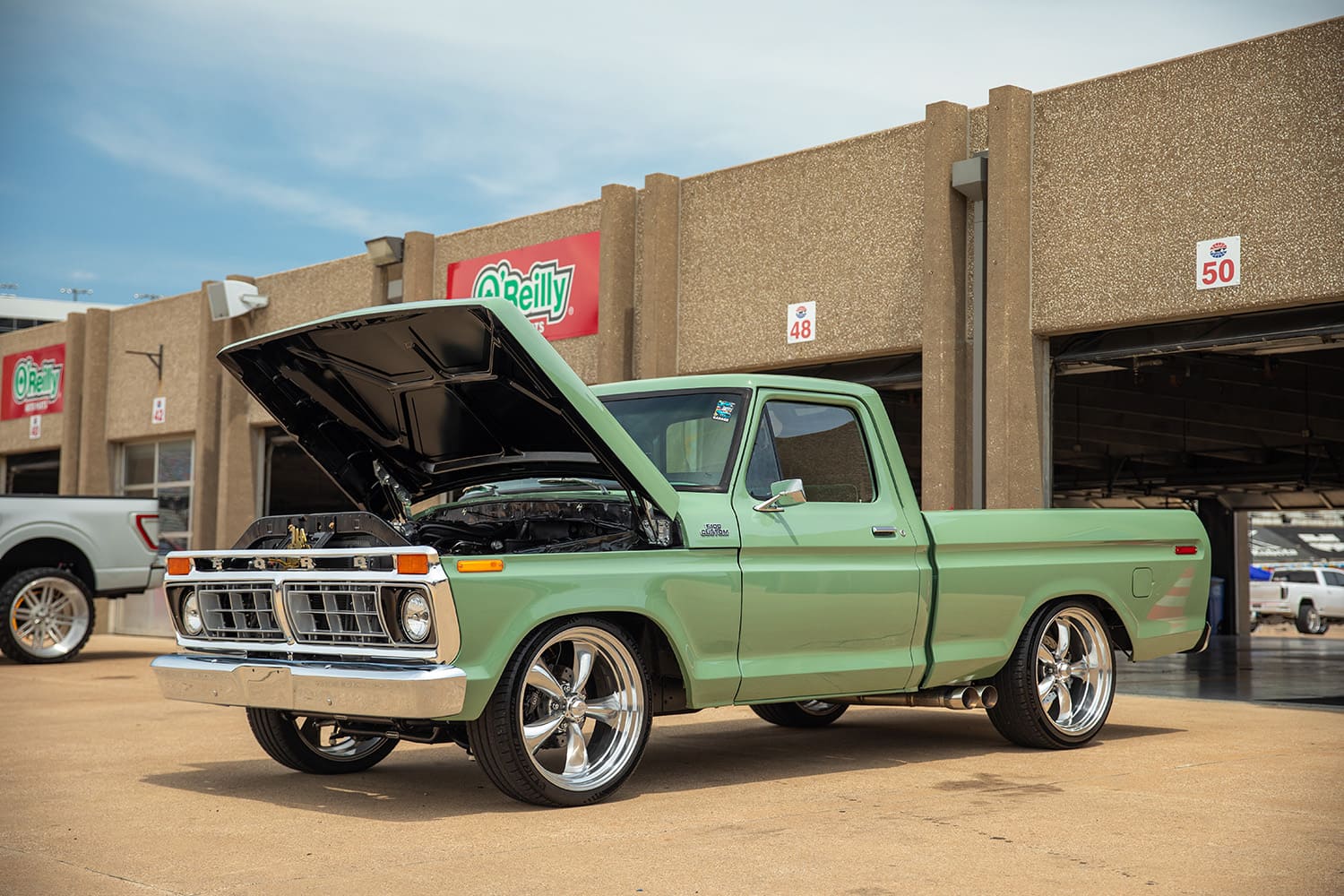
Here are a few of our favorite custom trucks at the show.
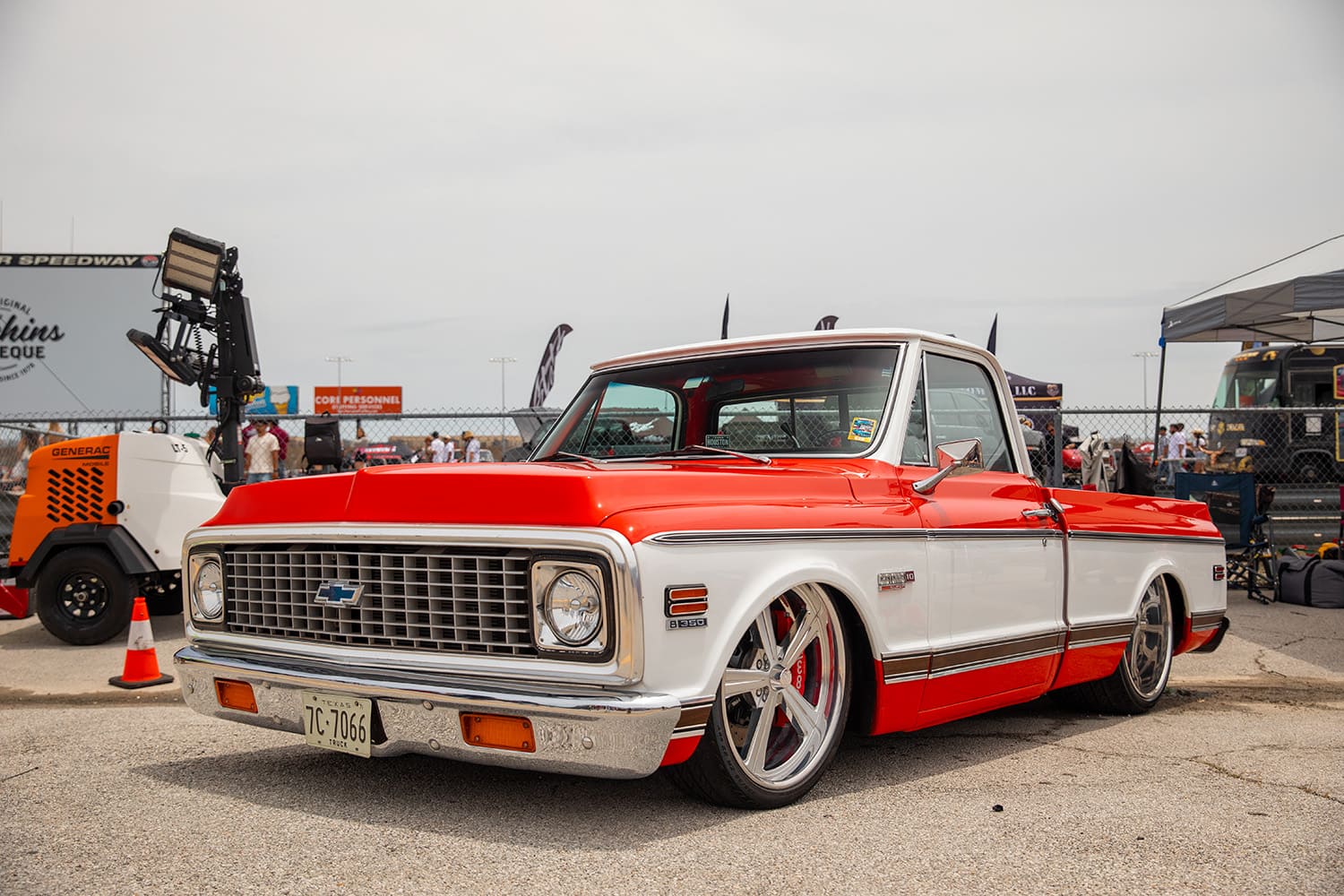
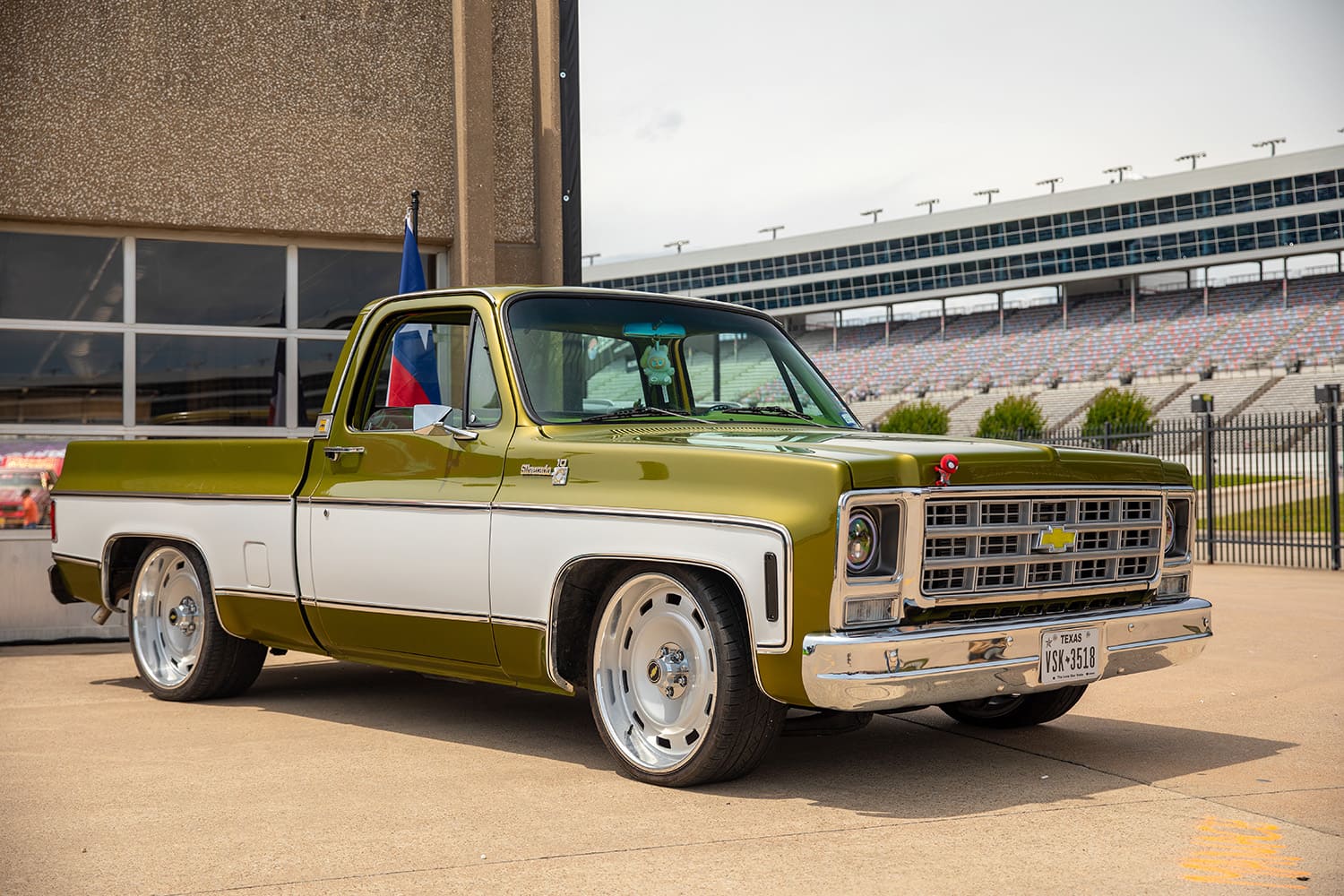
Juan Hernandez’s 1971 Chevy Super Cheyenne
So much of hot rodding came from aerospace—like mechanical fuel injection, fabrication techniques, and design inspiration.
Juan Hernandez, aka the Jet Doctor on social media, spent over a decade building his 1971 Chevy Super Cheyenne. Piece by piece, from eBay parts and homemade items, working mostly evenings after his shift of working on airplanes. His same aircraft-mechanic habits transition over to the truck, creating an incredibly clean pickup with quality fit and finish.
Underhood is an LS3 from a Corvette, running the original computer and automatic. Hernandez kept the driveability part of the build in mind, too. He said the truck rides well and is driven more than a show field might suggest. Most of the time it is for cruising and events, but every now and then he takes it to work at the airport.
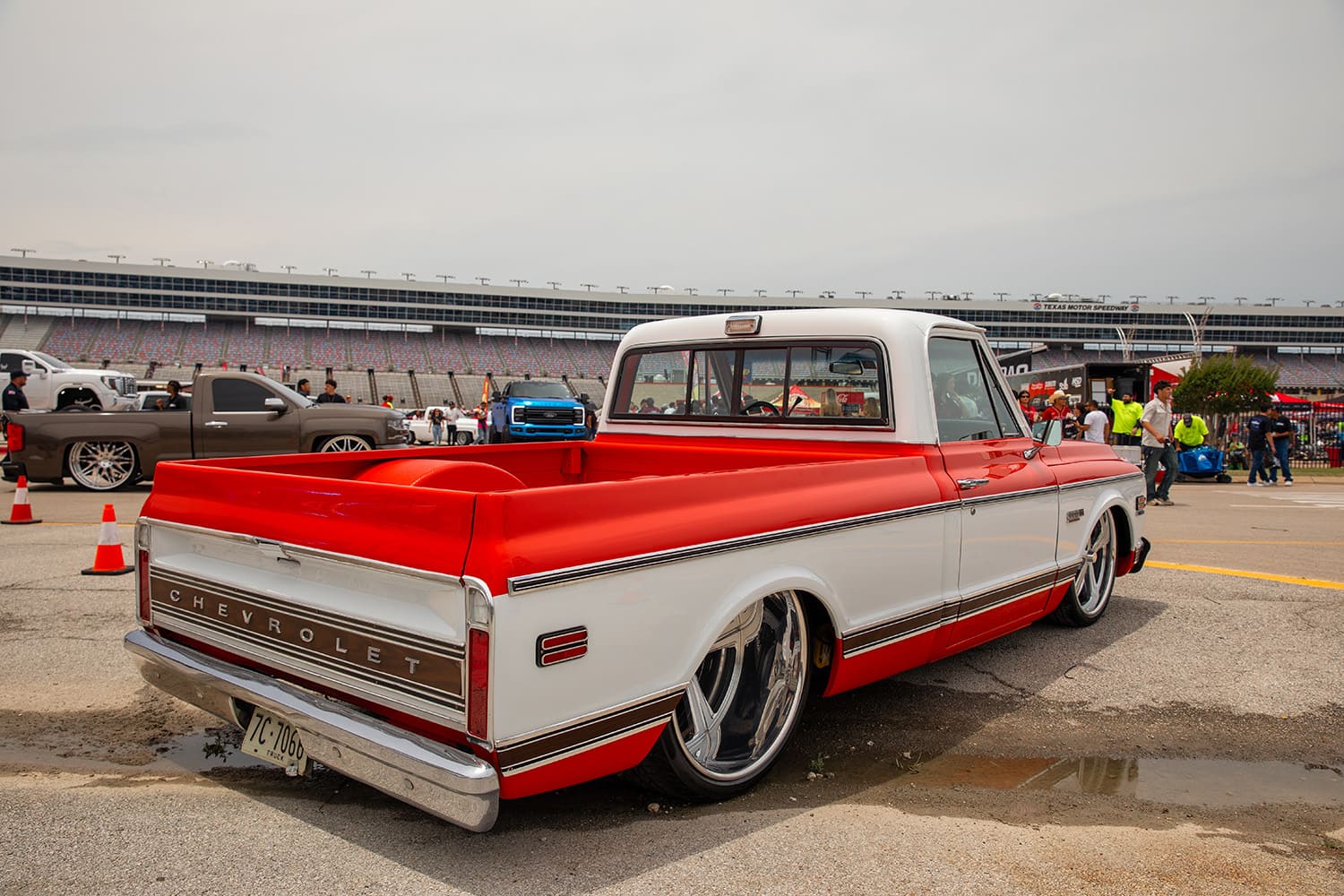
The stance is harder to miss. The Super Cheyenne sits on 22×9 wheels up front and 24x15s in the rear, with six-piston Wilwood brakes all the way around. It is a big-wheel, big-brake, LS-powered C10, but the older paint keeps it from feeling too freshly polished. Hernandez said the color was already on the truck when he bought it, and the paint is more than 15 years old. He left that part alone and redid the interior instead.
That combination gives the truck some honesty. It is clean, detailed, and carefully built, but it still feels like something that came together over time in a garage, not something assembled overnight to chase a trend.
Juan Silva’s LT-Powered Pair
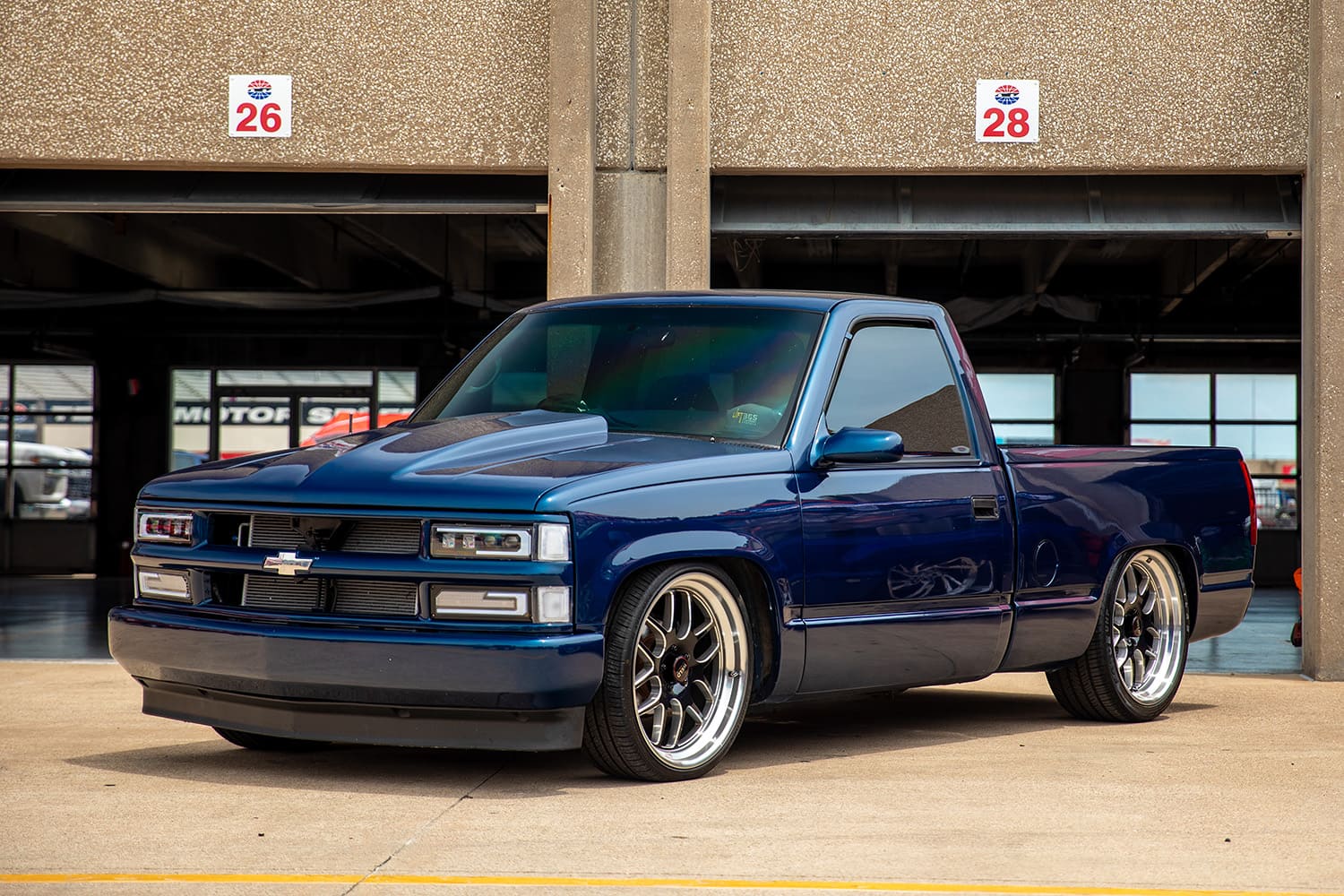
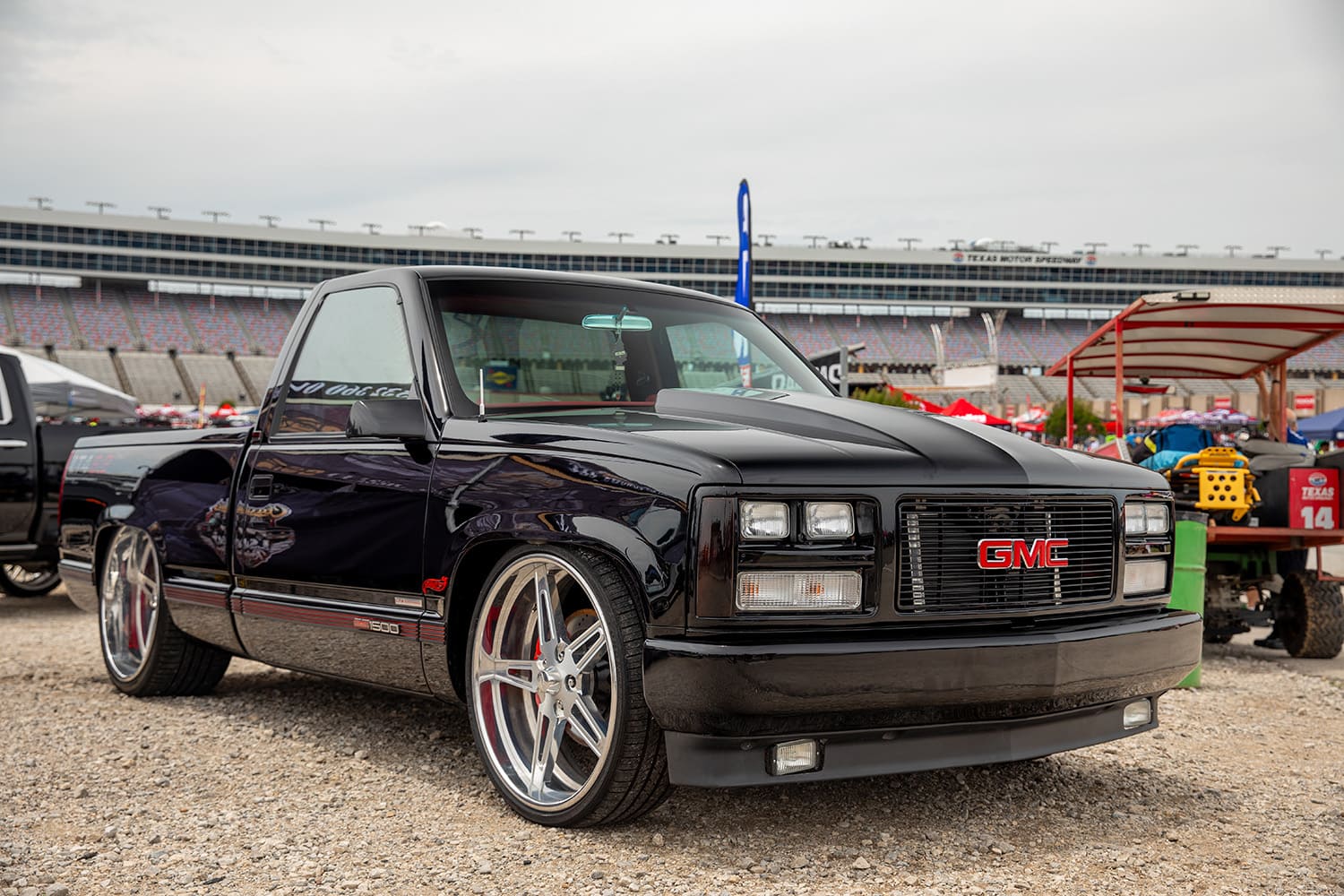
Juan Silva’s black 1989 OBS GMC was the first one to stop us. At a glance, it has the right attitude of a 454 SS–style street truck, but Silva was quick to point out it did not start life that way. He built it in his own style with custom LT4 6.2 badging in place of the 454 SS logo.
Underhood is an LT4 6.2L and 10-speed automatic combo still running on the factory computer. The swap uses Holley hardware, including the oil pan, engine mounts, and an in-tank fuel pump, and Silva said the 10-speed fit without cutting the transmission tunnel.
The truck rides on QA1 suspension with 14-inch Wilwood brakes at all four corners, and it was not built just to show what the shop could do. The truck sits like a classic, but rides like a modern muscle car.
Silva built this one as a graduation gift for his son, Mason. A heck of a first truck, but it wasn’t the only one the family brought to Bandas.
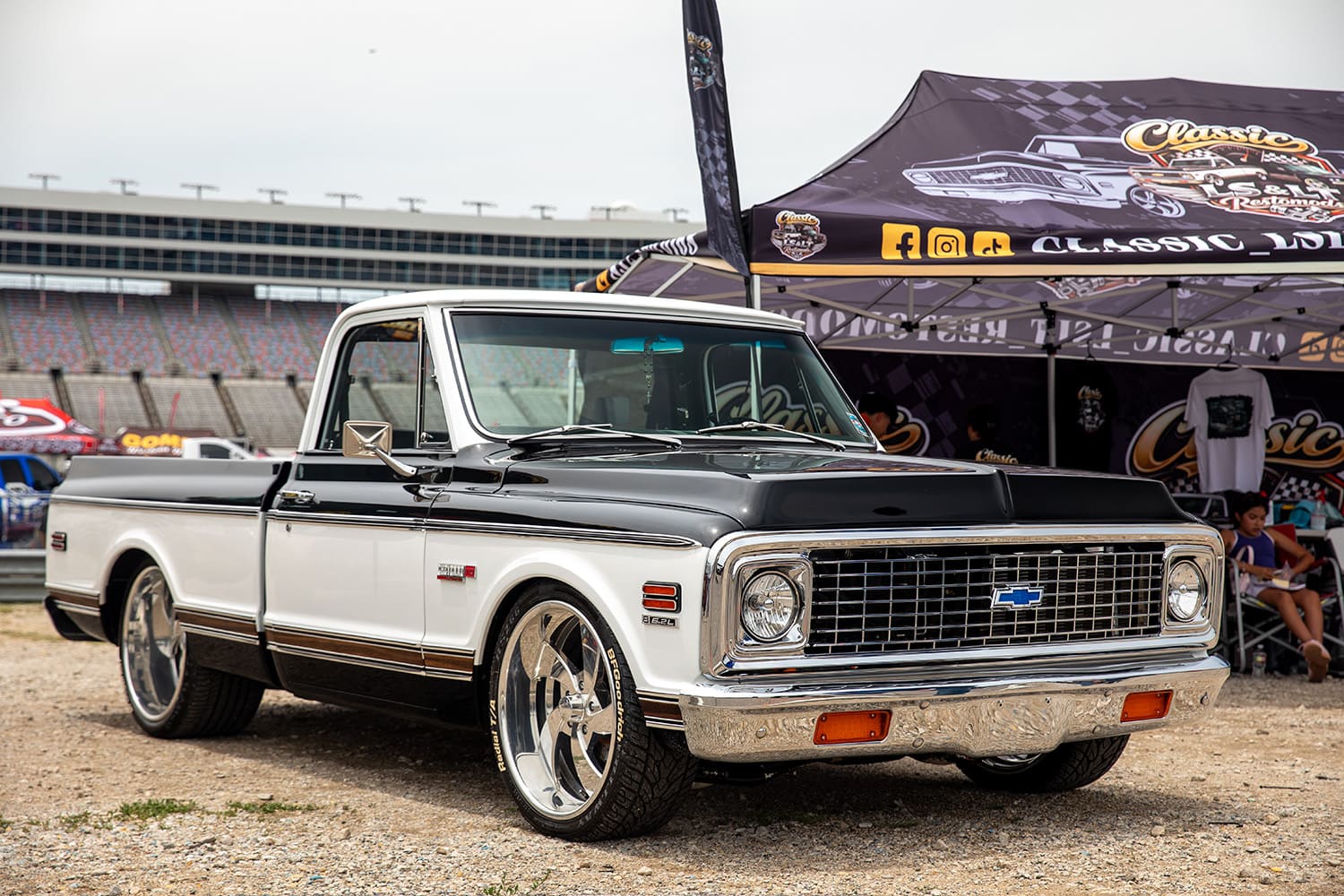
Parked with it was Silva’s 1972 Chevy Super Cheyenne, another LT4 and 10-speed build, this one starting from a real Super Cheyenne found in Waco, Texas. It follows the same basic language as the OBS: modern supercharged LT power, clean paint, serious brakes, Hydroboost, QA1 coilovers, and a beautiful interior.
Silva worked in the refineries, but when COVID-19 hit, his wife encouraged him to open his own shop, Classic LS/LT Restorations.
He is not done, either. There is a Squarebody at home, plus an ’06 SS clone in the works, both planned for the LT4 treatment. Next year, Silva said, the goal is to bring four trucks instead of two.
Honorable Mention: Jayleen Solis’ 2007 Silverado
A 2007 Silverado is not exactly classic truck magazine material, although at nearly 20 years old, it is getting closer than any of us may want to admit.
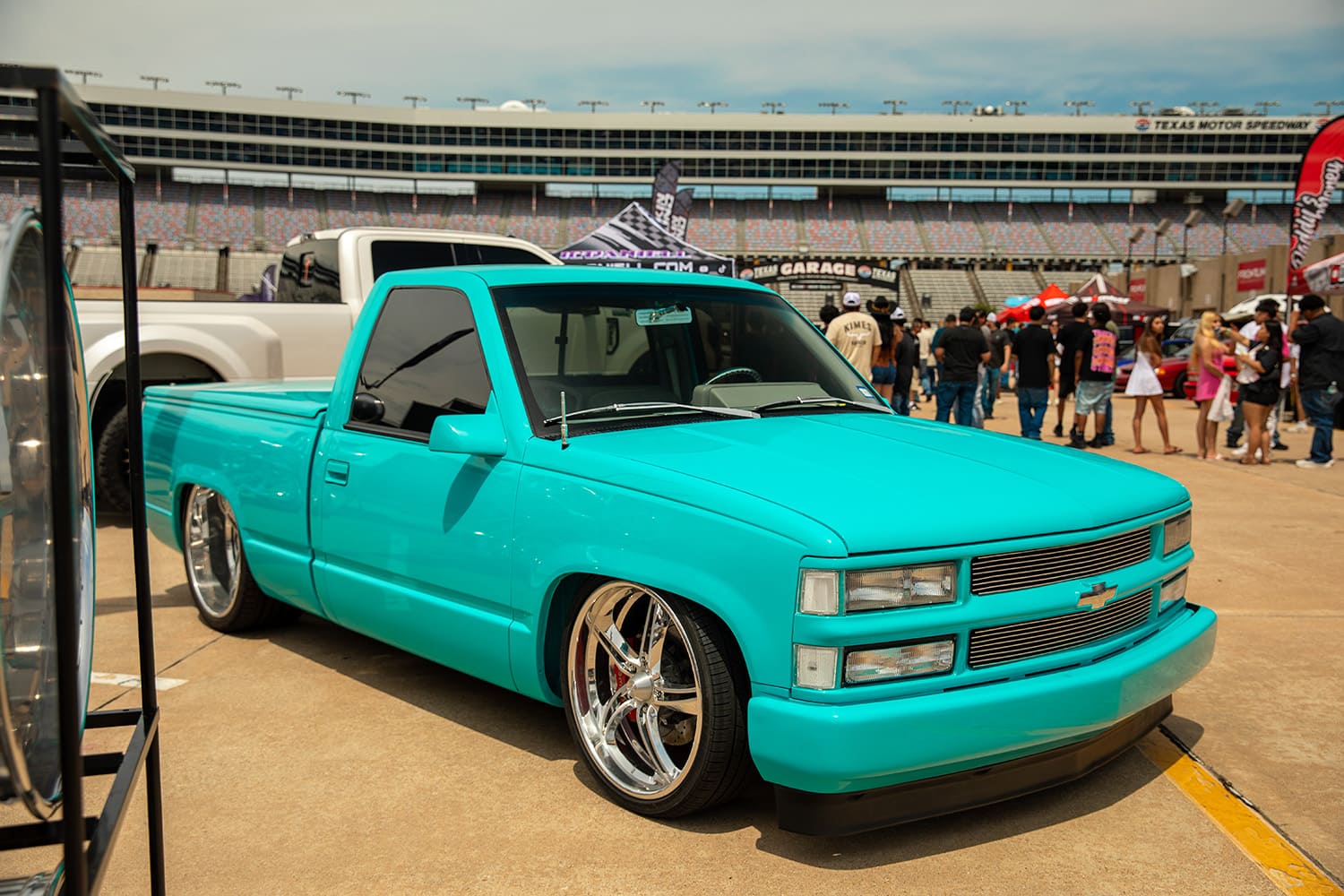
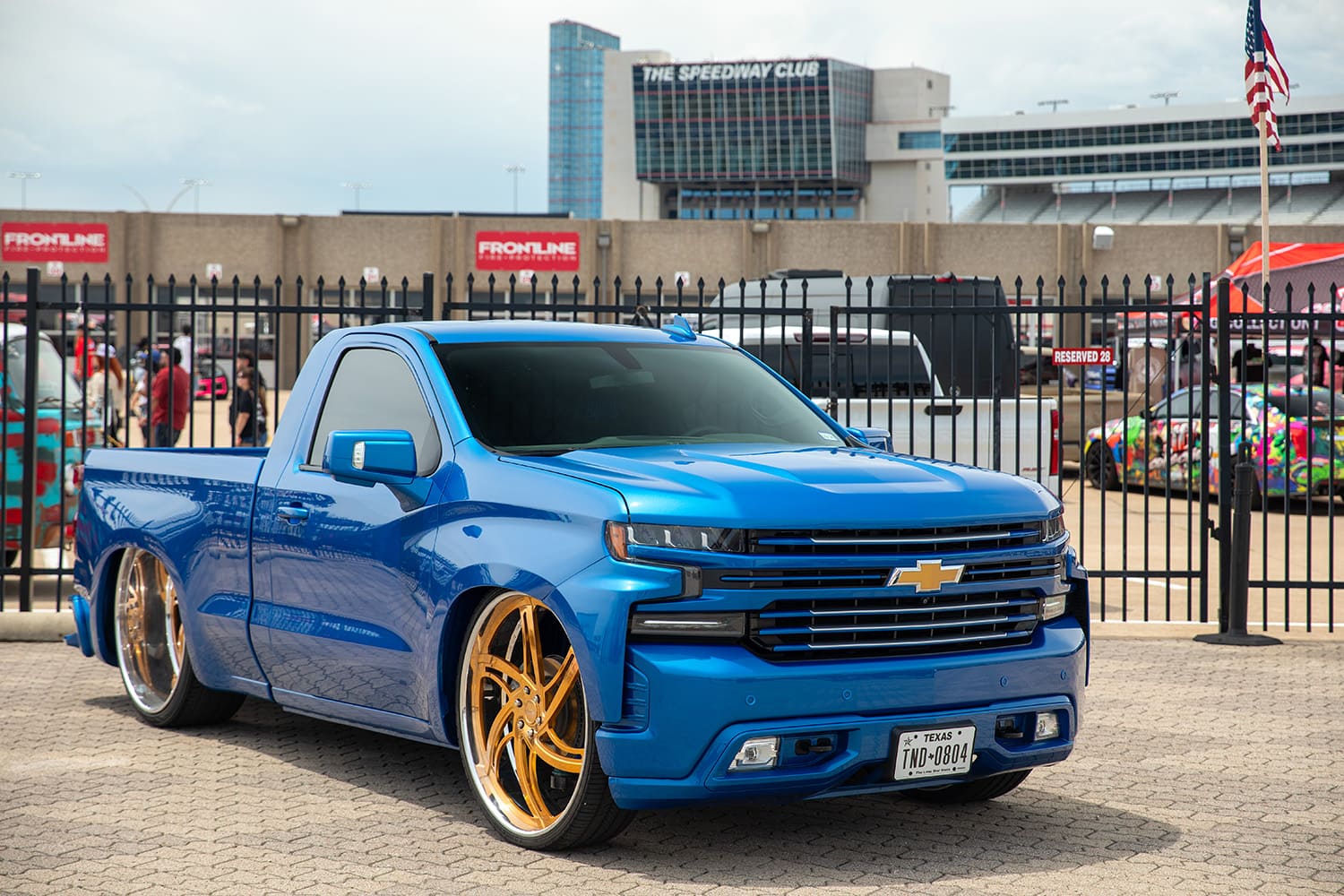
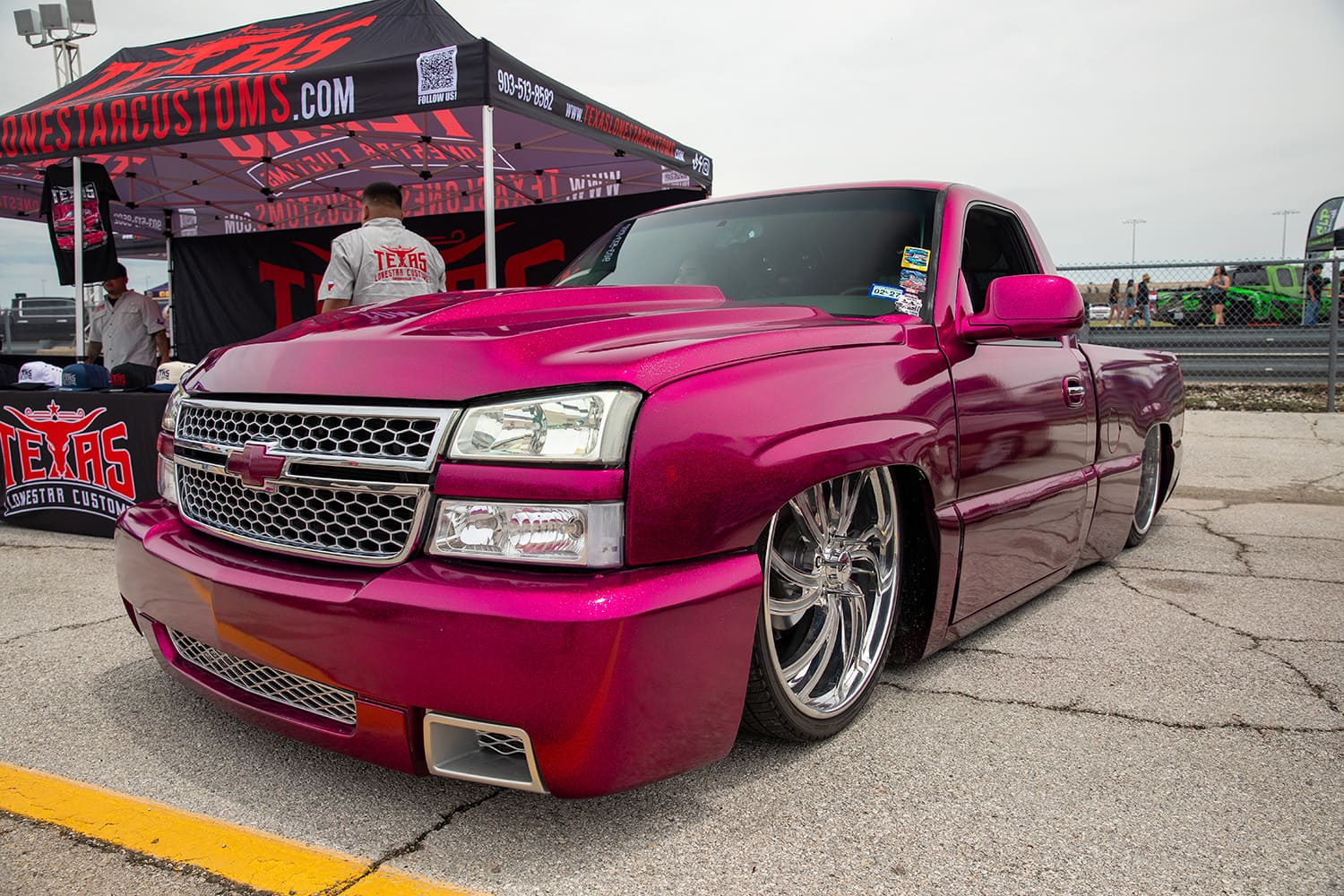
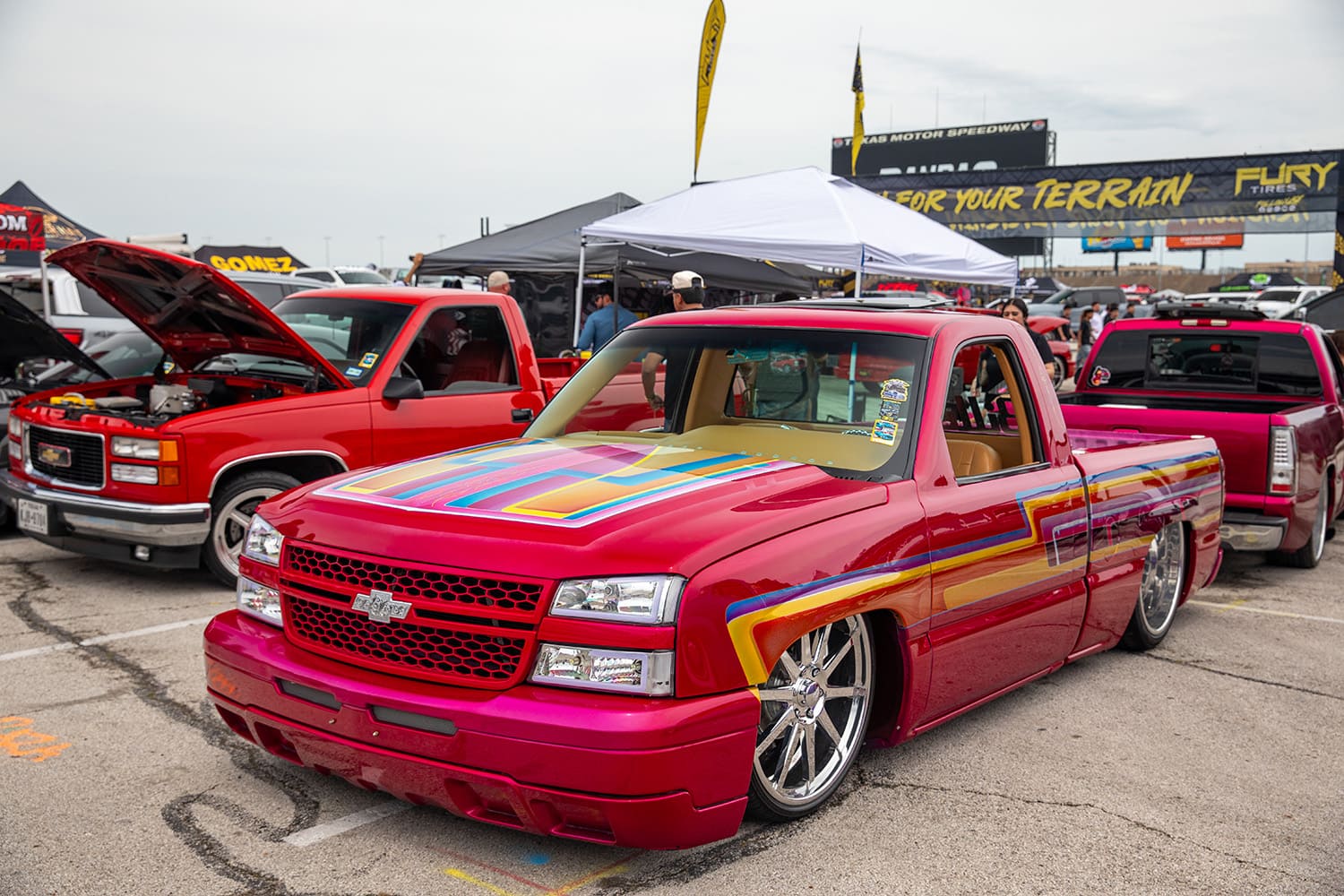
Jayleen Solis’ single-cab shortbed Chevy still earned a mention. The truck started as a plain-Jane V-6 but now sits on full air suspension over 26-inch Intro wheels, with an SS front end, cowl hood, and custom fuchsia paint carrying tons of flake.
The best part is where the color came from. Solis said it was matched to her quinceañera dress, which is exactly the kind of detail that makes a truck feel personal instead of just expensive. She is 15, still in high school, and already talking about building another cat-eye race truck someday.
So no, it is not technically a classic. Give it a few years. The kid is already ahead of schedule.
Burnout Competition
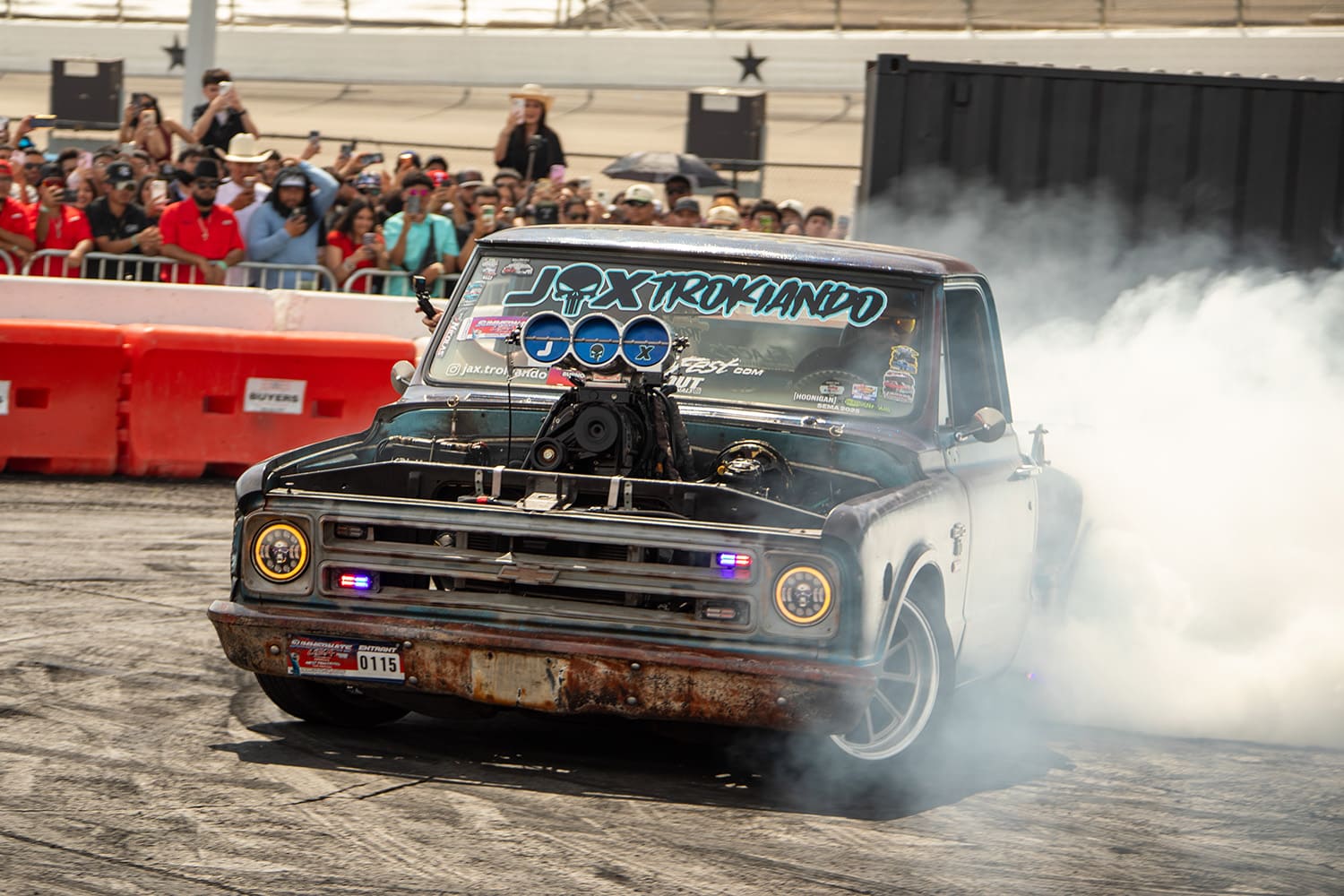
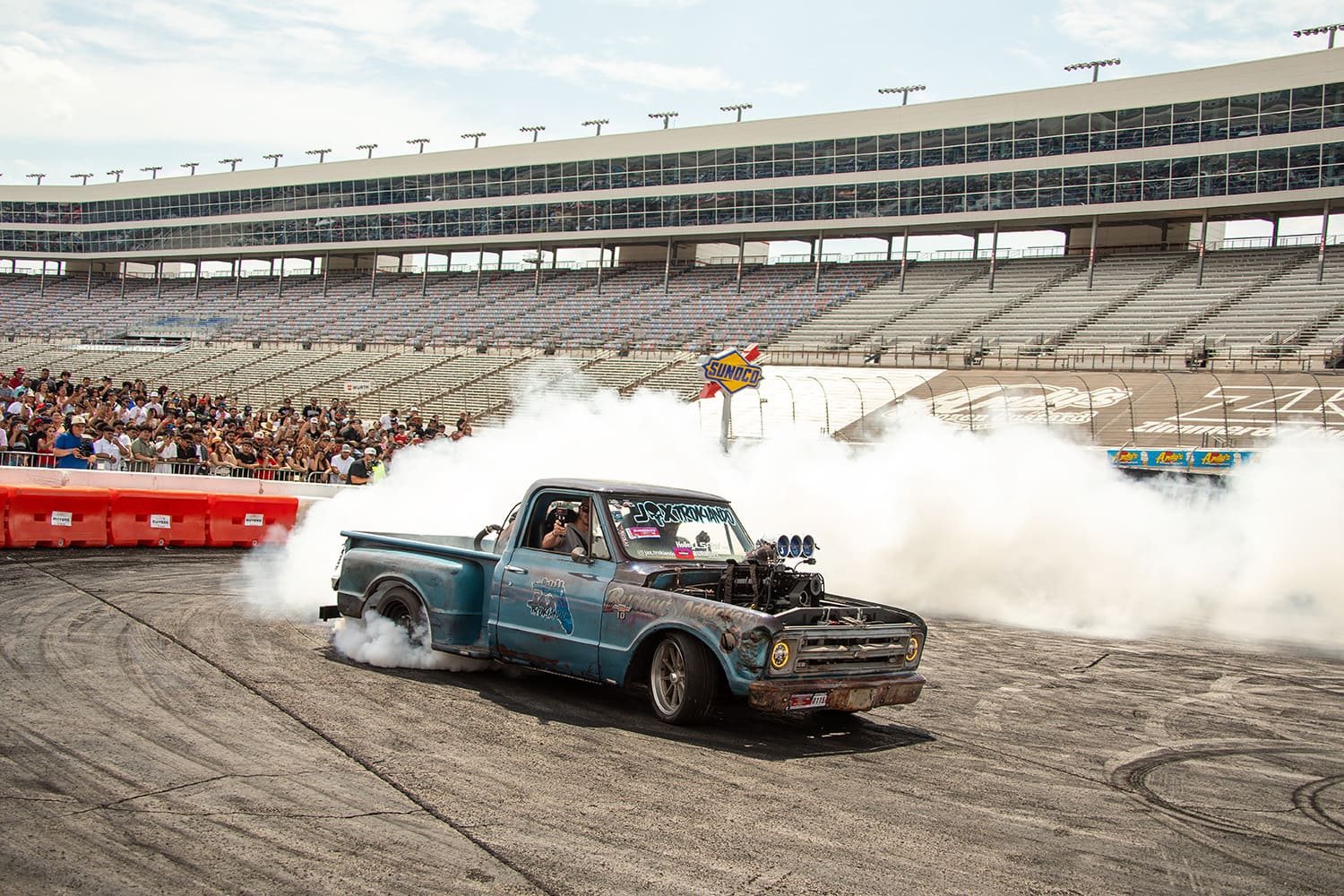
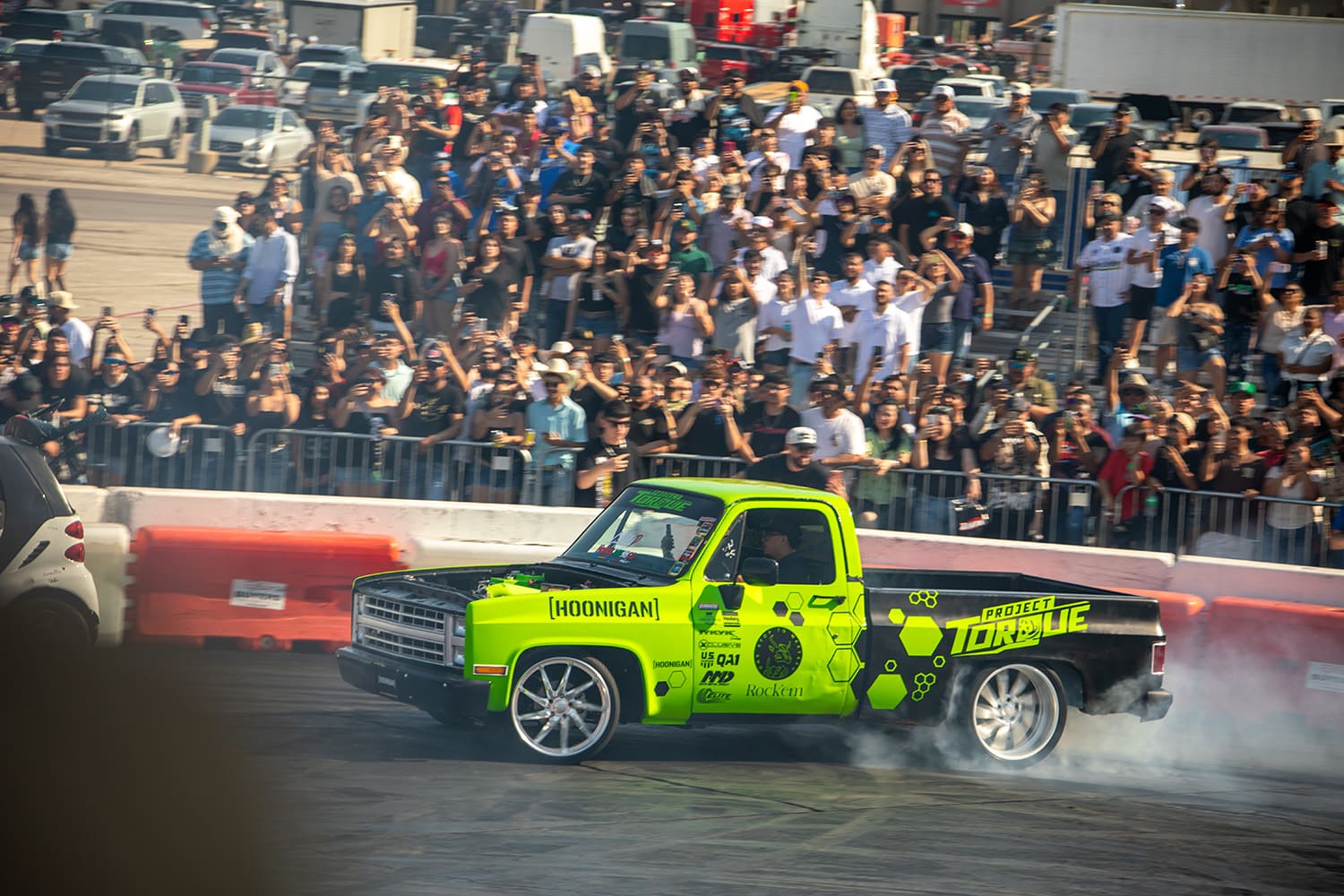
The Outlaw Showdown, presented by Flowmaster, was featured in a large burnout pit at the far end of the track. It was one of the biggest turnouts for burnout competitions I’ve witnessed.
The burnout pit brought out the kind of trucks built to live at wide-open throttle. It was loud, messy, and hard on parts, which is exactly why the serious trucks are built more than just showpieces. Project Torque brought several serious trucks, including their flame-throwing green pickup.
That is the funny thing about a good burnout truck. From the stands, it looks like chaos. Underneath, the ones that survive usually have a plan.
Concert
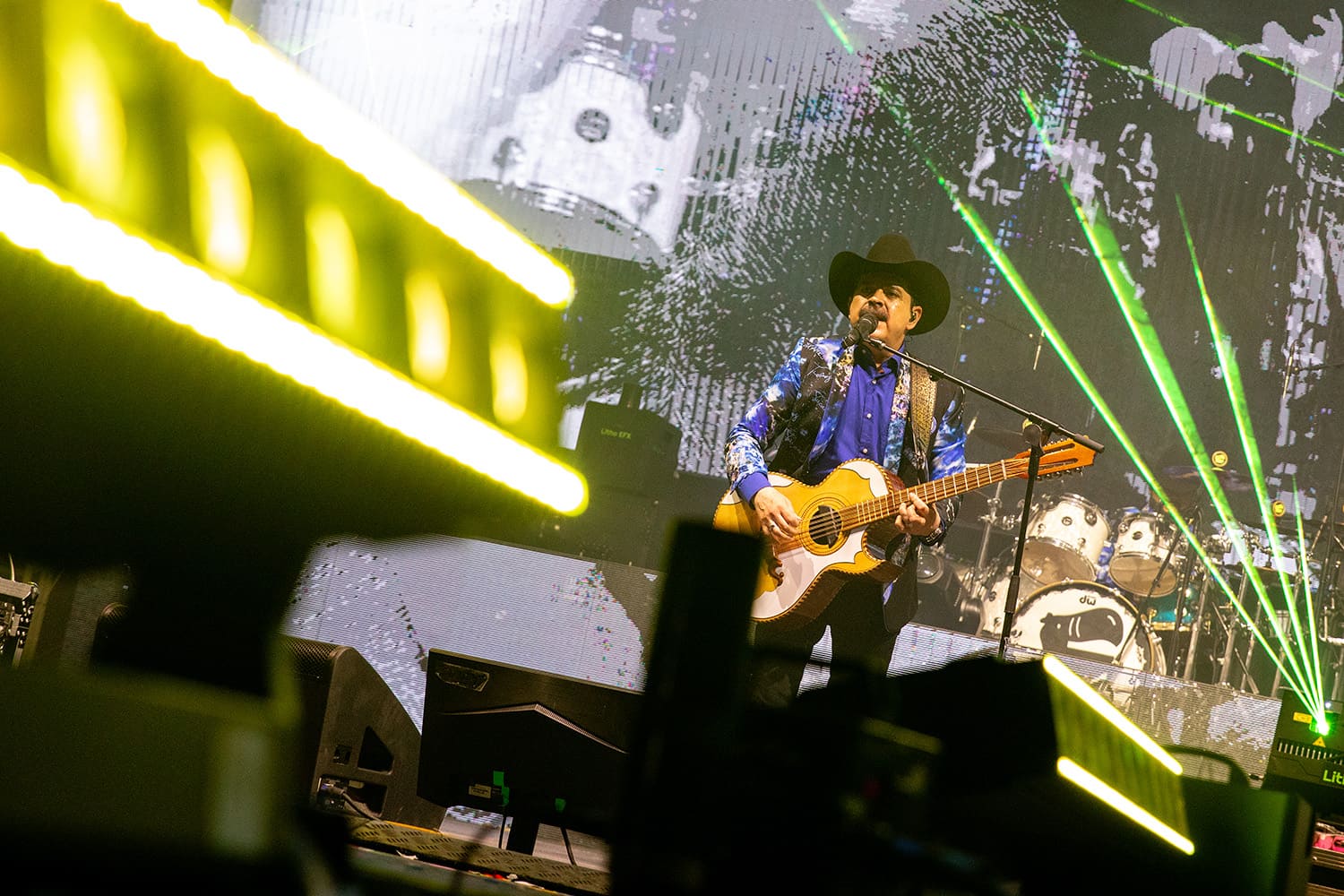
By 6 p.m., the show field had started to loosen up. The night’s lineup included Los Gemelos, Los Farmerz, Los Belicos, and headliners Los Tucanes de Tijuana. Formed in Tijuana, Baja California in 1987 and led by Mario Quintero Lara, Los Tucanes have spent decades as one of the major forces in norteño music, helping push the sound into a harder, rowdier direction alongside groups like Los Tigres del Norte.
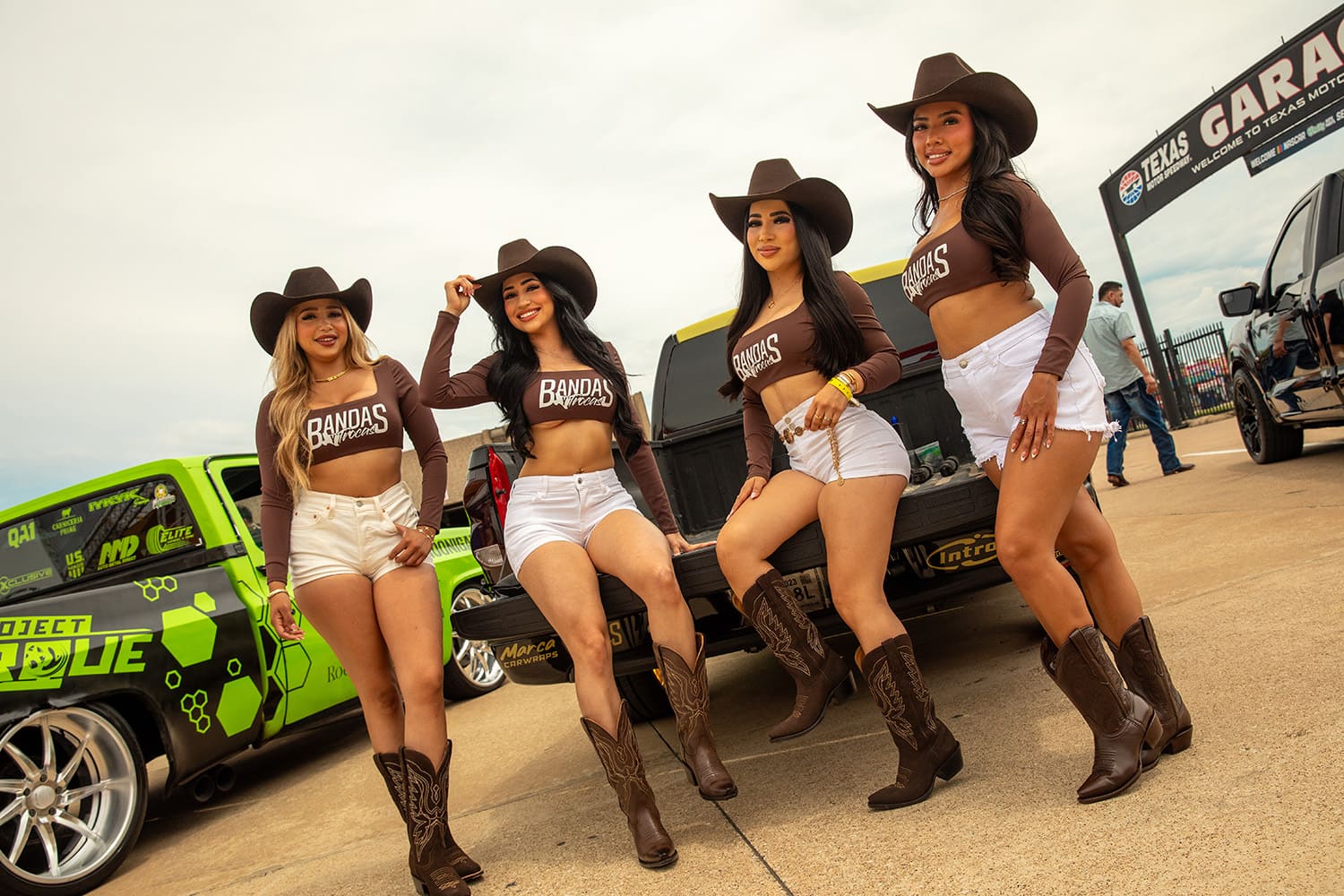
By the end of the day, Texas Motor Speedway felt less like a venue and more like proof that truck culture is not shrinking into one narrow definition.
That is what Bandas y Trocas does well. It does not ask every truck to fit the same mold. A clean Super Cheyenne, an LT4-swapped OBS, a 15-year-old’s flaked-out Silverado, and a purpose-built burnout truck can all make sense in the same place.
For a one-day show, it covered a lot of ground. Some of it was polished. Some of it was loud. Some of it disappeared into tire smoke. Most of it felt like the truck scene being honest about what it is: a little bit show, a little bit performance, a little bit family, and a whole lot of people building what they like.
More truck show coverage and news here.