


By Richard Prince – Images by the Author
In June of 1957 all the major American car companies signed onto the Automobile Manufacturers Association (AMA) factory racing ban. In the ensuing years management at Chevrolet, Oldsmobile, and Pontiac devised clever ways to get around the agreement, including through high-performance option packages that made cars nearly race-ready right off the showroom floor and covert “heavy-duty parts testing and developing” support for privateer racers. Initially, Ford and Chrysler were slightly more faithful to the AMA ban but by the early ’60s they too effectively ignored the agreement’s prohibitions, pouring huge amounts of money and technical resources into many different forms of racing.
The de facto abandonment of the 1957 AMA racing prohibition set the stage for one of the most competitive and entertaining racing series of all time. When created in 1966 it was called the Trans-American Sedan Championship, but the following year “sedan” was dropped and it was thereafter known as the Trans-American Championship, or simply the Trans-Am Championship.
Trans-Am was open to any FIA Group 1 and Group 2 cars, which in 1966 included Ford Mustangs, Dodge Darts, and Plymouth Barracudas. Ford won the 1966 Over 2-Liter class championship on the strength of four wins in the seven-race series. The schedule expanded to 12 races in 1967 and Ford again won the large-displacement championship, but there was a new competitor that put Dearborn on notice that its dominance was in jeopardy moving forward. That new entrant was a Chevrolet Camaro, but it was no ordinary Camaro—it was a Z/28 and it was fielded by Roger Penske and driven by Mark Donohue.

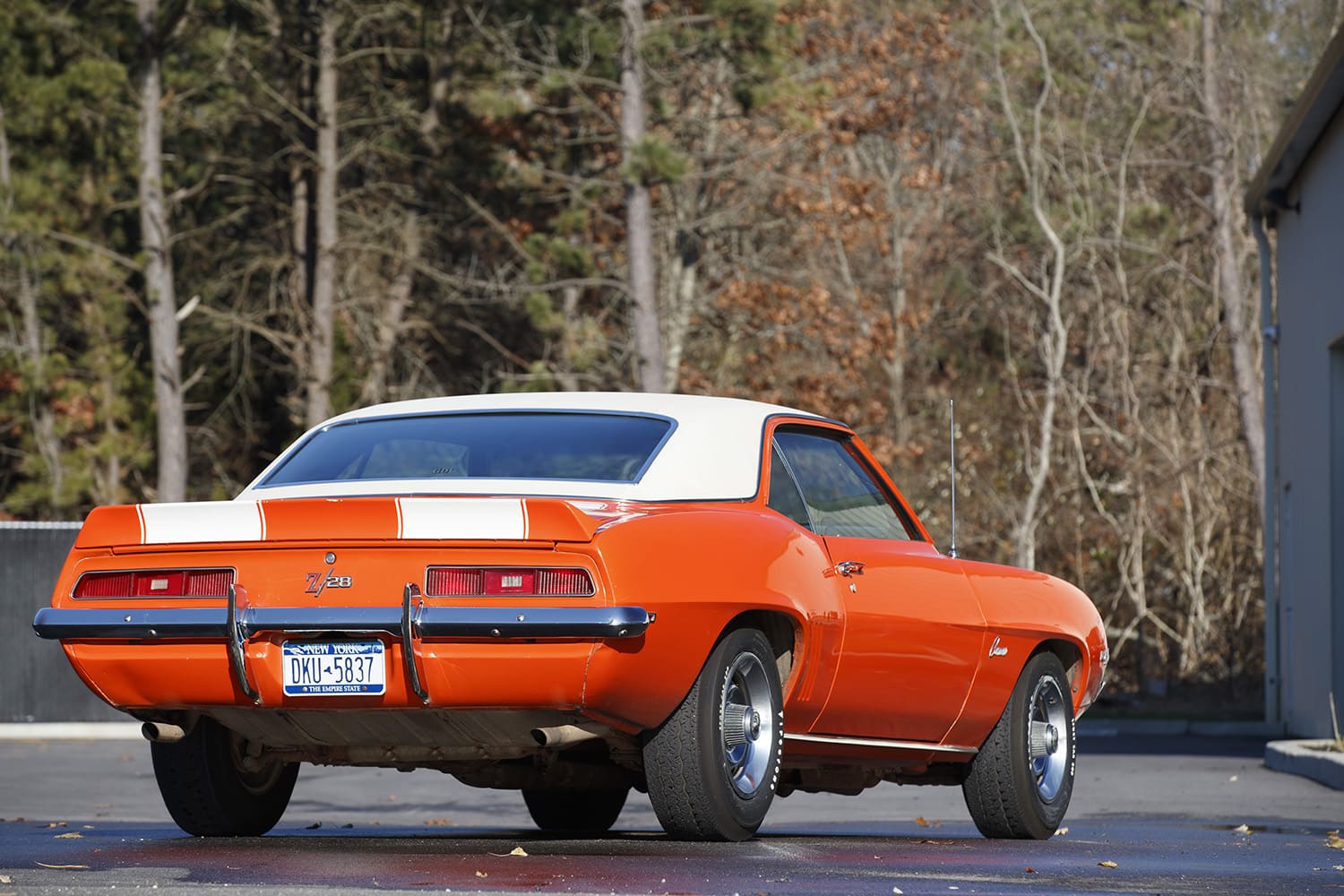
The origins of the Z/28 go back to 1966 and a man named Vince Piggins. Piggins was Chevrolet’s product promotion manager, which was a thinly disguised euphemism for its racing manager. He knew that Ford, Chrysler, and American Motors were going all-in with the new Trans-Am series and recognized that Chevrolet risked falling far behind its competitors in the exploding ponycar market if it didn’t join them. To that end, he advocated for the development of a comprehensive option package that would make Camaros competitive in Trans-Am racing.
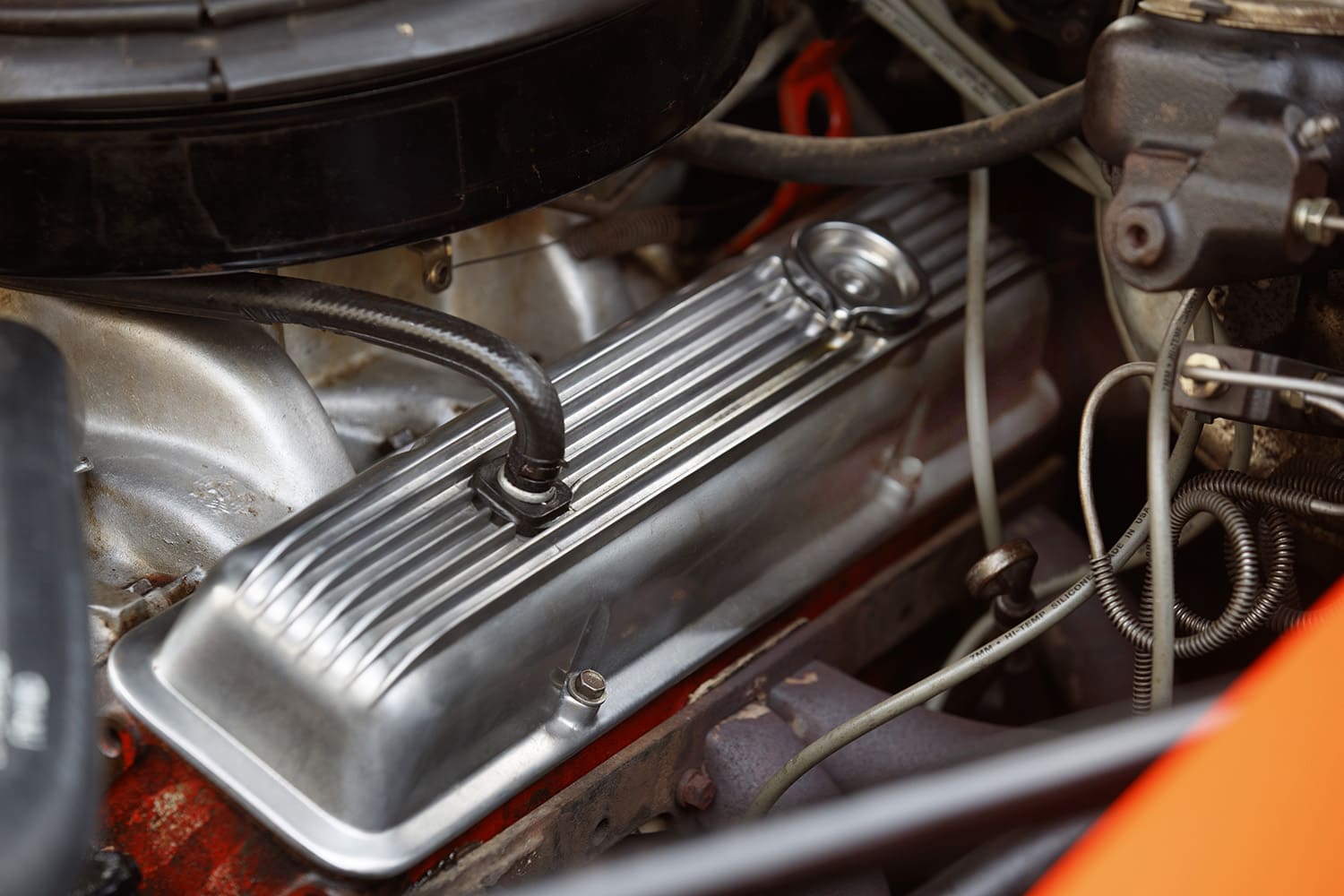
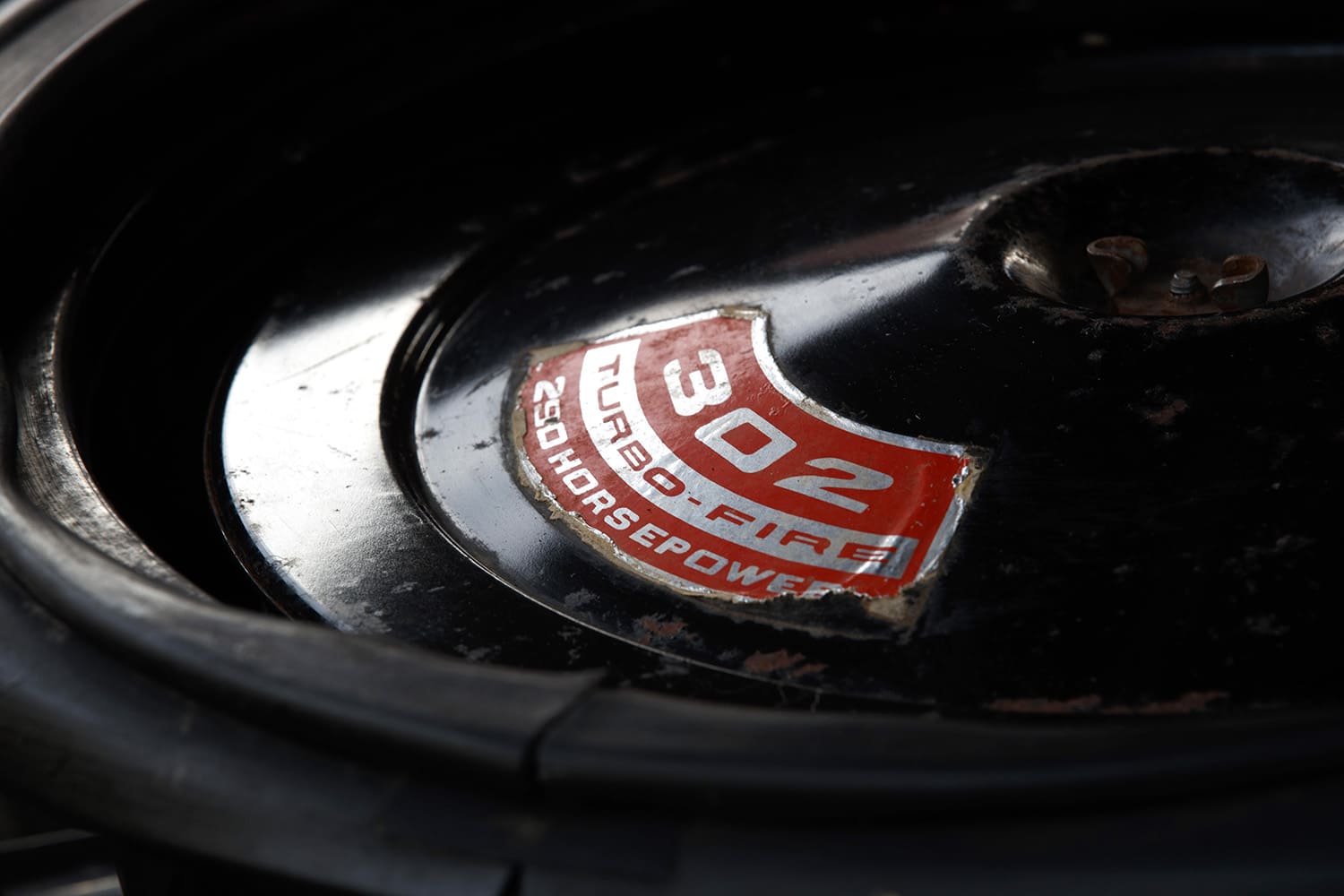
Thus, the Z/28 was born. To comply with series’ rules dictating a maximum displacement of 305 ci, Chevy mated its 327 block with its 283 crankshaft, which yielded a high-revving 302ci engine. The 302 had to be coupled to either an M20 wide or M21 close-ratio four-speed. Beginning in 1968 buyers could also choose an M22 heavy-duty close-ratio gearbox. Performance enhancements beyond the engine and transmission continued throughout. All Z/28s were equipped with dual exhaust, heavy-duty radiator, 15-inch wheels, Positraction, power front disc brakes, heavy-duty front and rear springs, and heavy-duty shocks. A number of other regular production options could be added to a Z/28 order to make the car even more competitive, including a rear spoiler (starting in 1968) and four-wheel disc brakes (beginning in 1969).
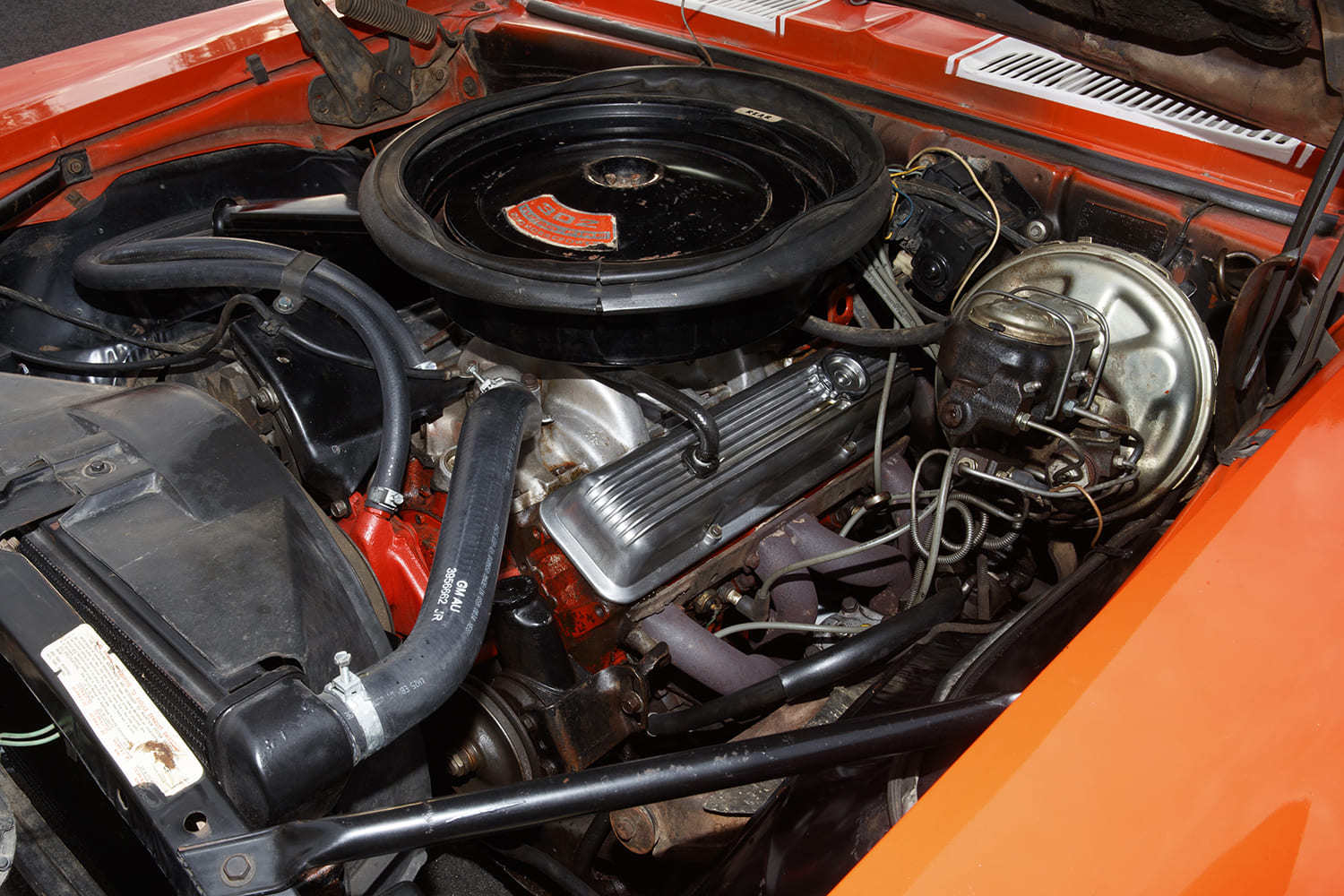
Beyond Z/28’s high-performance assembly line components, Chevrolet made available special service parts designed for racing. By offering these as genuine Chevy parts they were within the Camaro’s FIA homologation envelope and thus legal for use in the Tran-Am Series. Among these were a more aggressive camshaft, tuned headers, a dual-quad, cross-ram induction setup, transistorized ignition, surfaced-treated steering components, stronger differential and axle components, magnesium wheels, and higher rate springs.
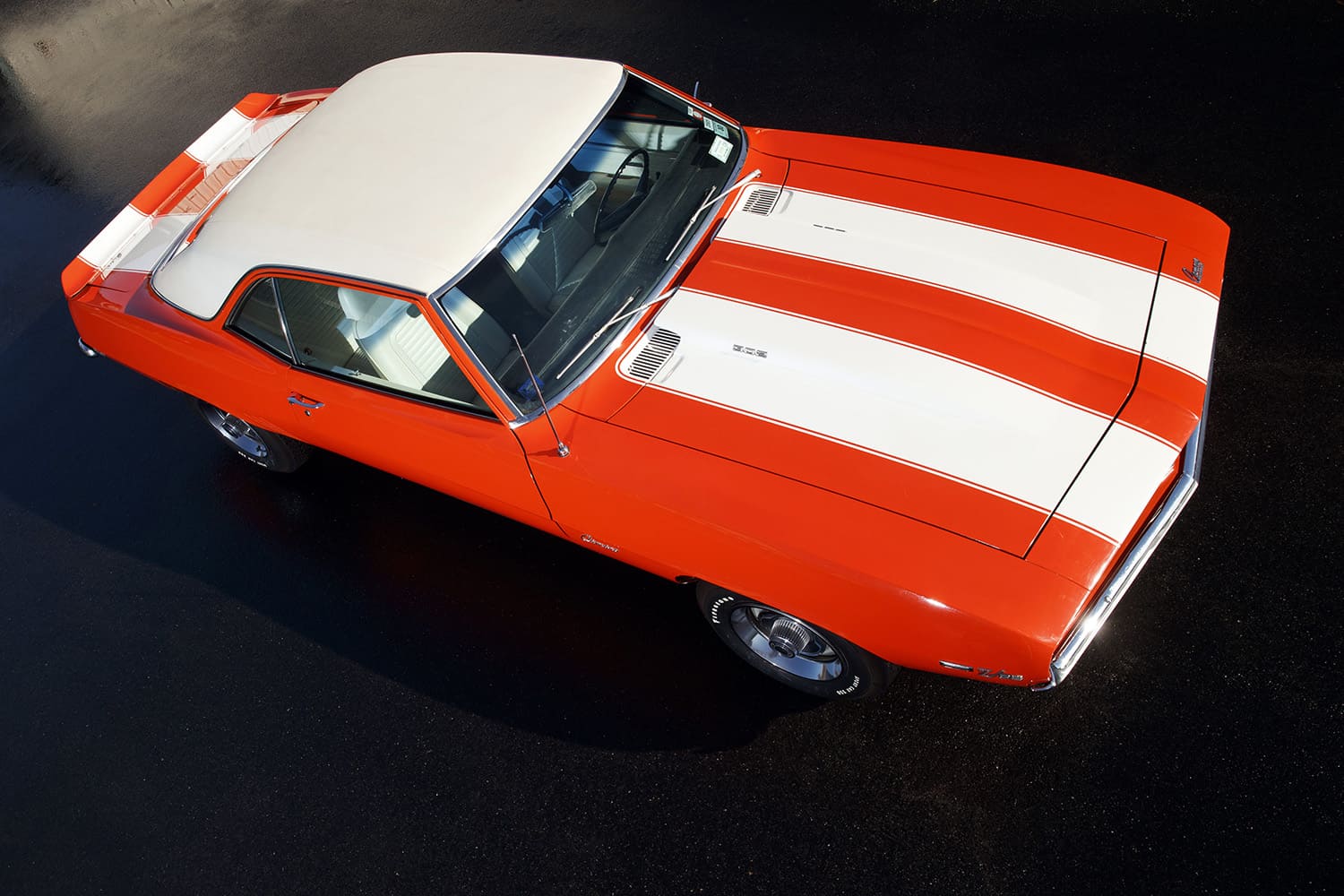
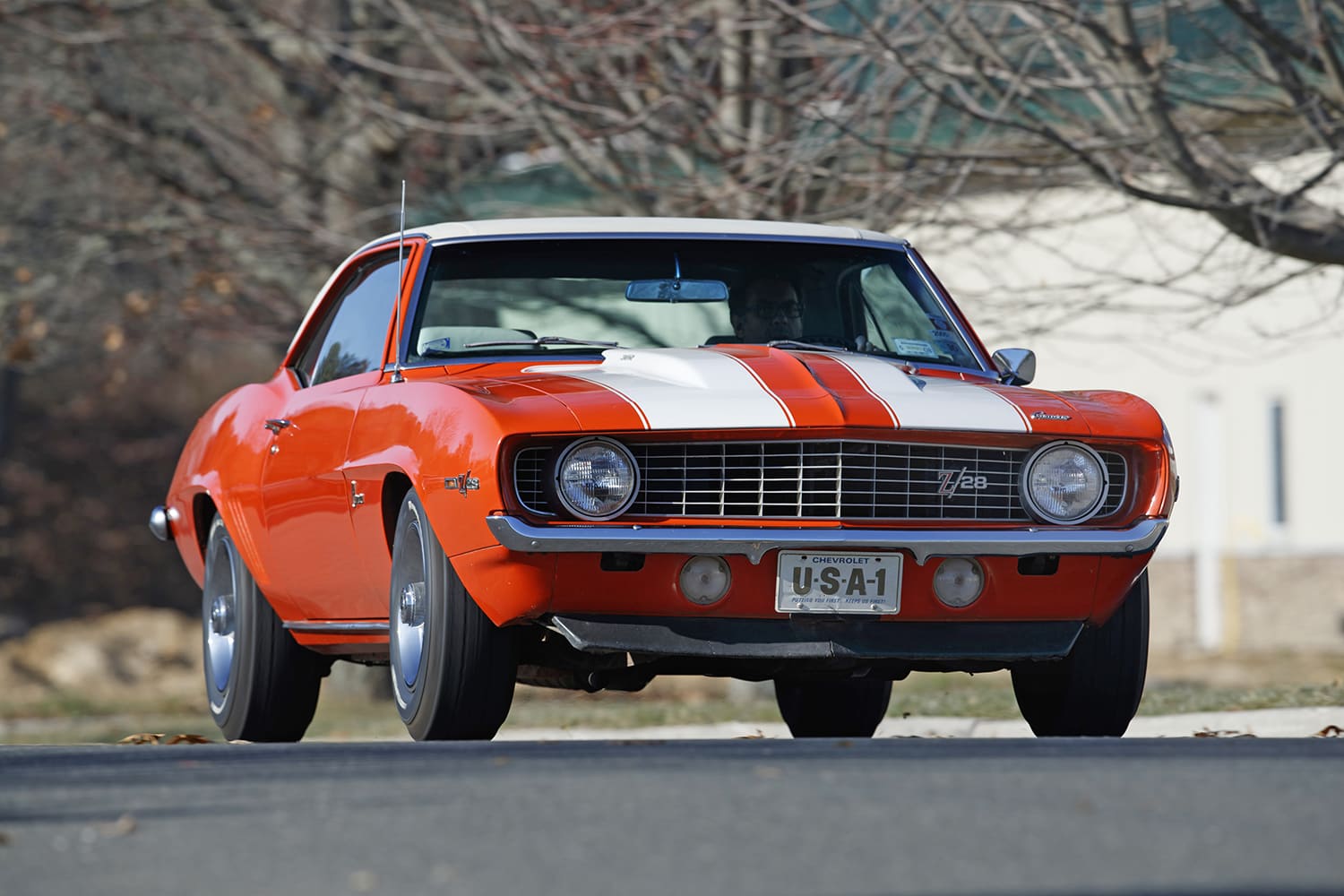
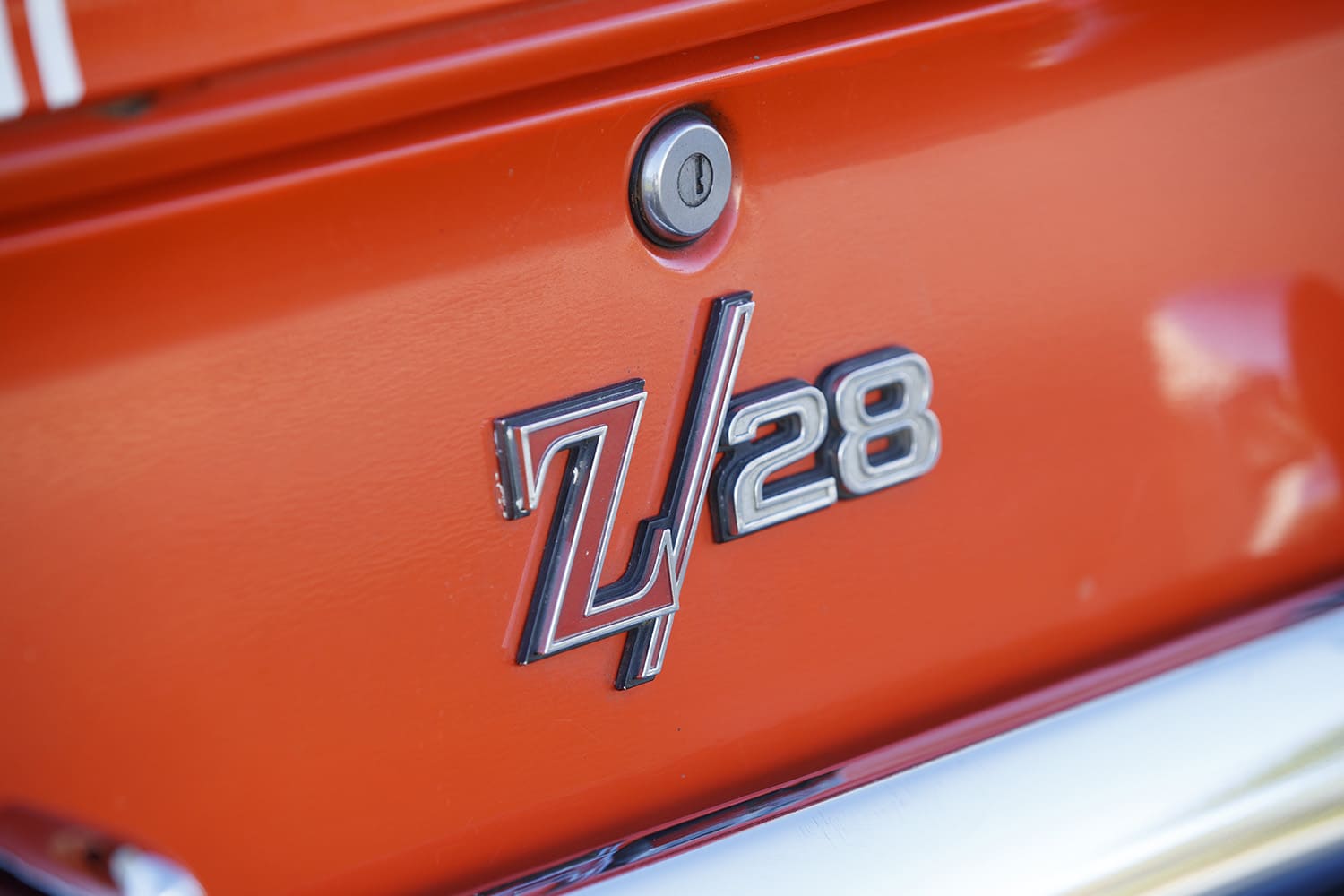
Chevrolet earned the Trans-Am championship in 1968 and 1969, cementing Z/28’s legendary status for all time and helping Camaro sales stay strong. Z/28 sales skyrocketed, rising to an impressive 20,302 units in 1969. Though ’69 Z/28s are obviously not rare, unrestored examples in excellent condition, like our feature car, definitely are.
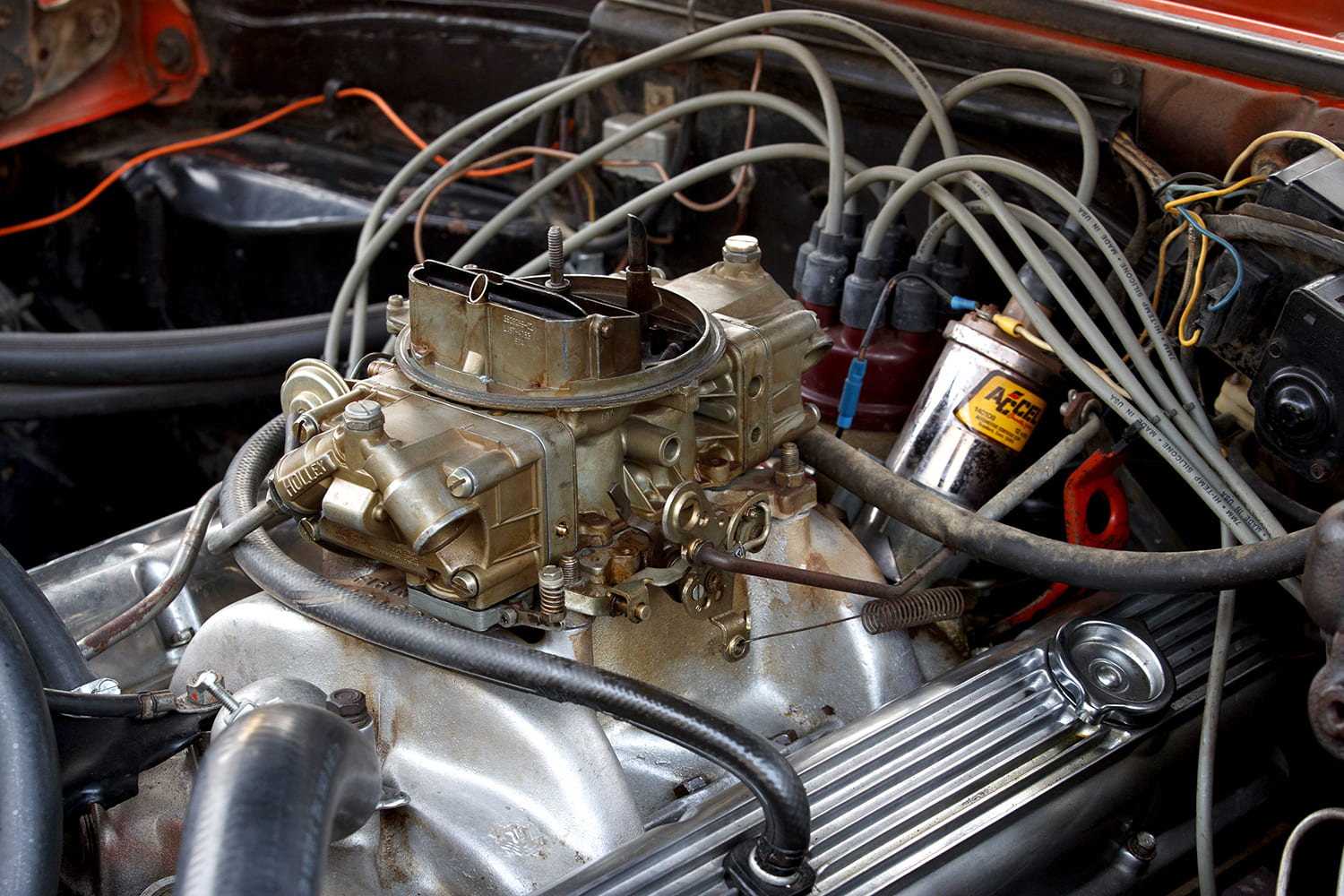
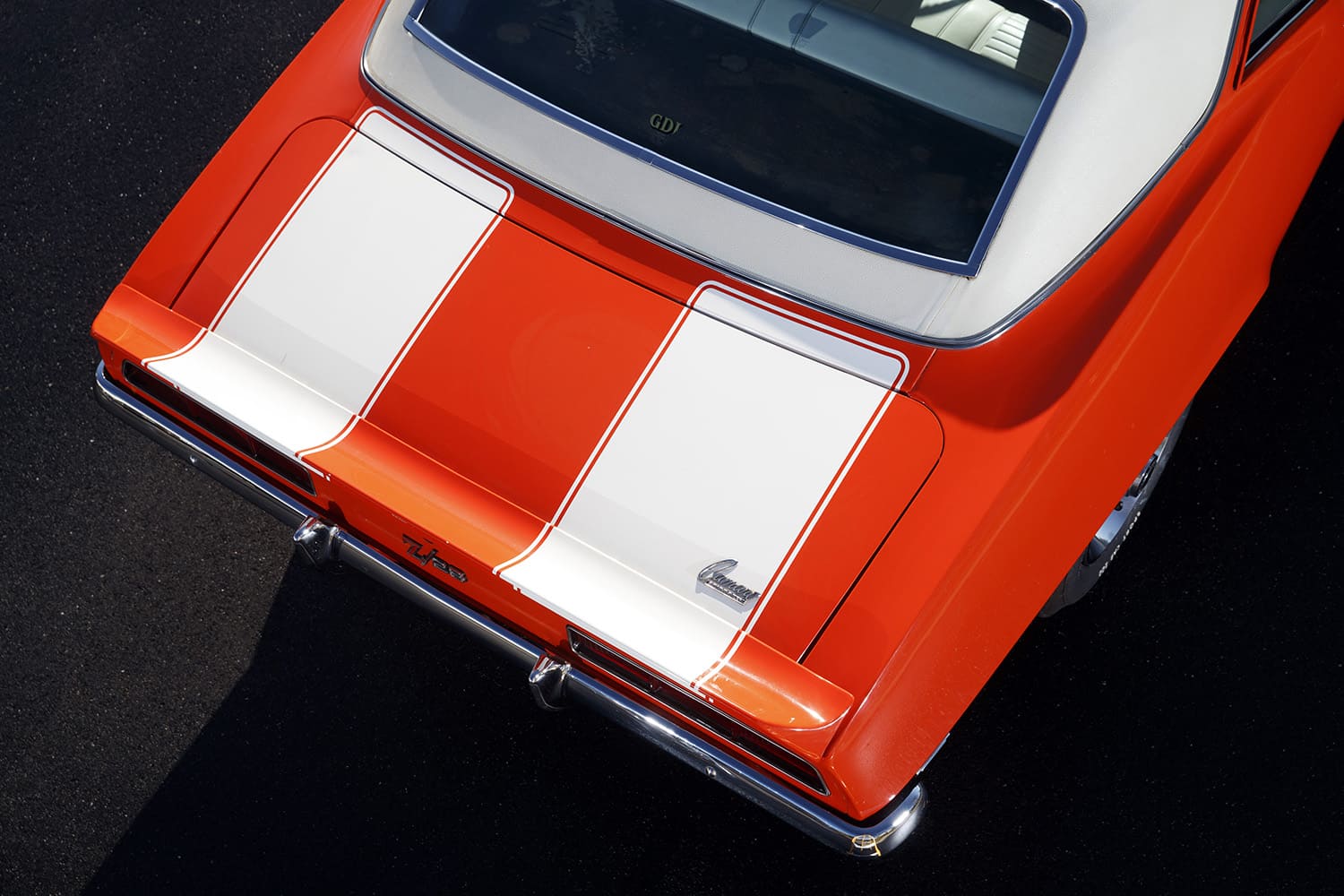
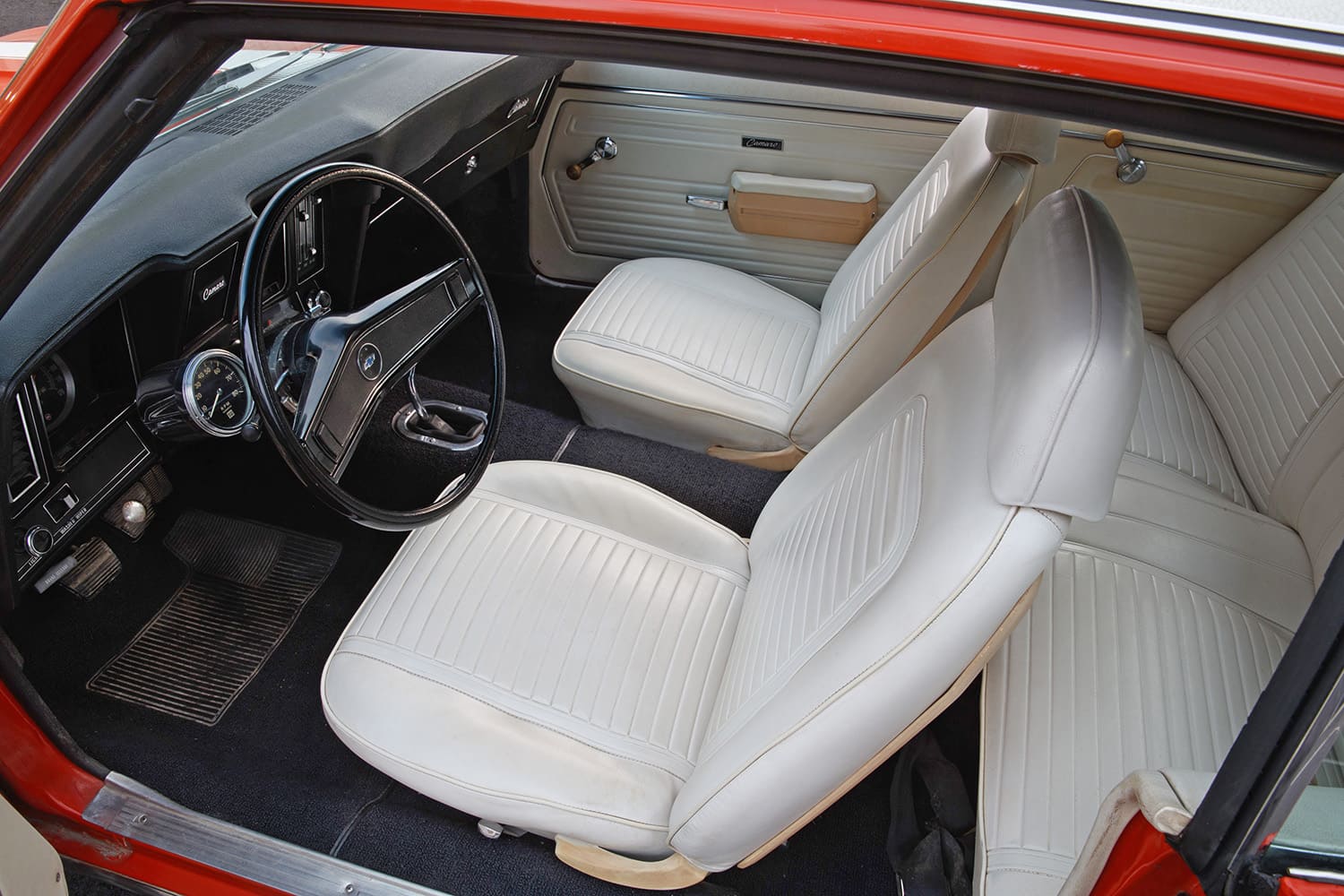
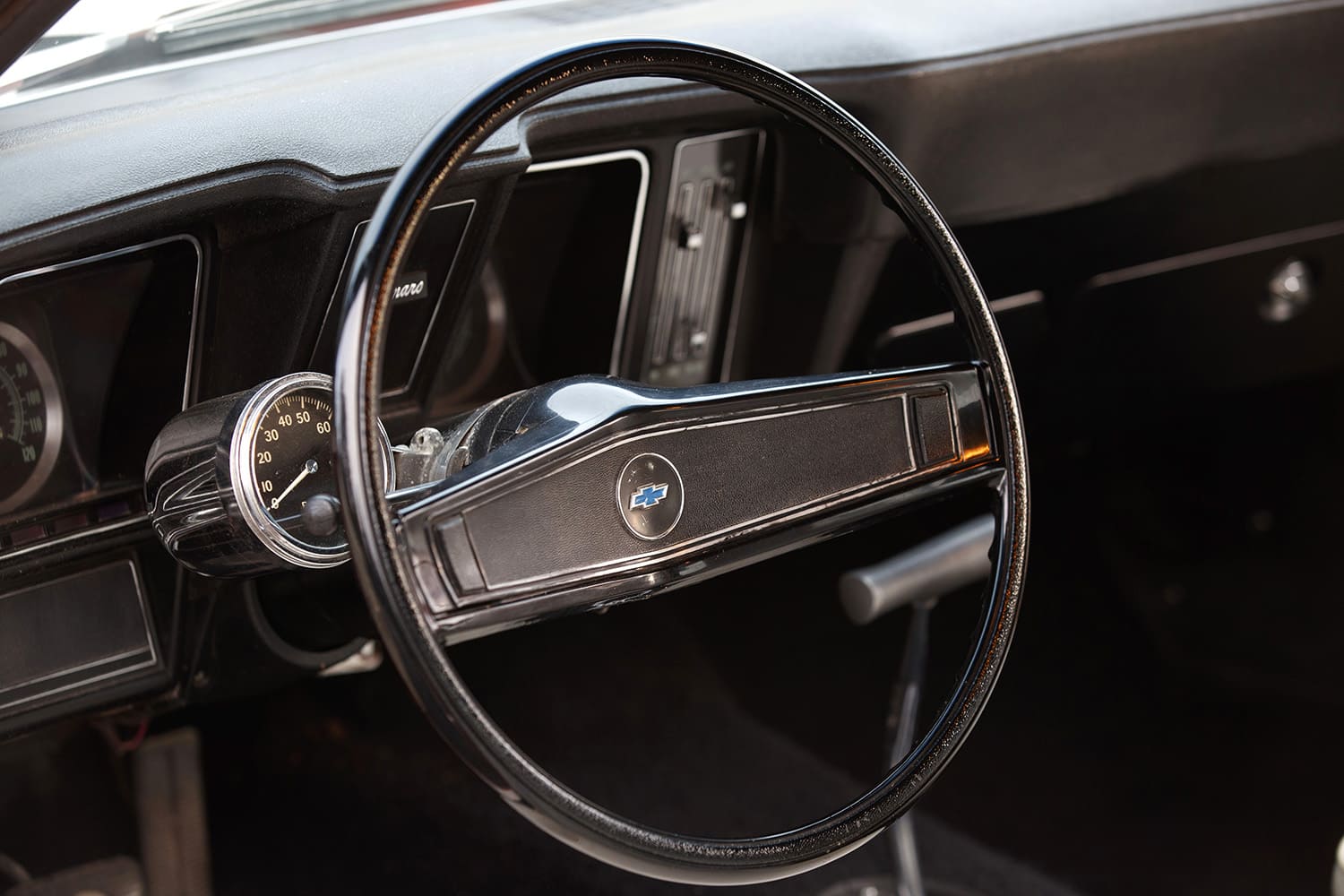
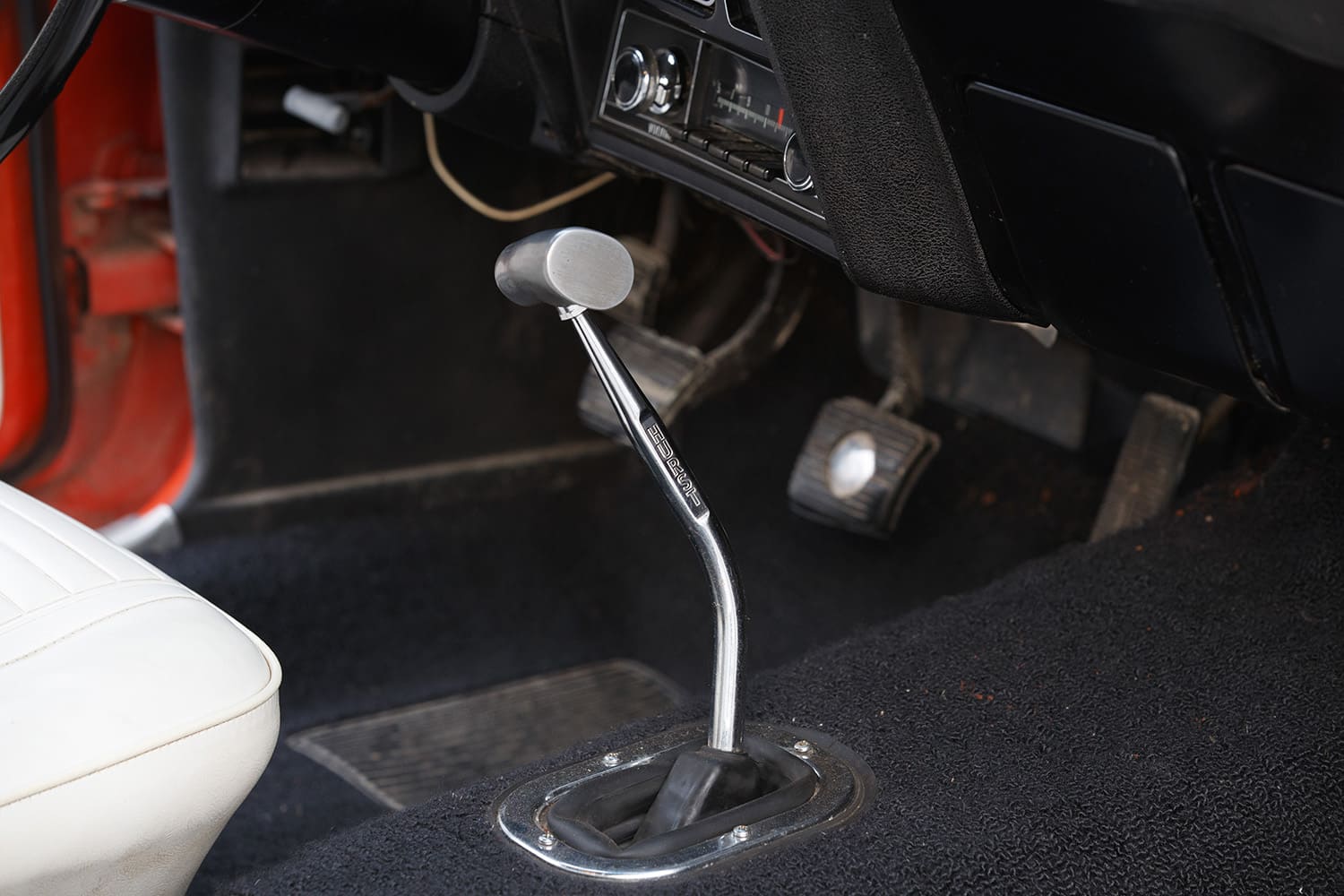
Aside from normal service items such as the battery and a handful of Day Two modifications, including headers and a Mallory distributor, this Hugger Orange Z/28 retains all of its original parts as well as its original paint, interior, and chassis finishes. For the first six months of its life it was driven by the manager of Liberal, Kansas, Chevy dealer Hood Chevrolet-Buick On July 11, 1969 that man, Dean Bennett, sold the car to its first retail owner, Dan E. Strickland Jr. of Turpin, Oklahoma. Though he was the buyer on paper, Mr. Strickland was not the Z/28’s actual owner. That honor went to his son, David Lee Strickland, who couldn’t get financing to buy the car because he was too young, at three months shy of his 17th birthday.
David had been introduced to joys of Chevy’s potent 302ci-powered championship winning ponycar by his good friend Alvin, who ripped around town in a 1968 Z/28. David worked hard and saved his money in order to buy his own Z/28 and quickly pulled the trigger when he saw our feature car at Hood Chevrolet-Buick in July of 1969.
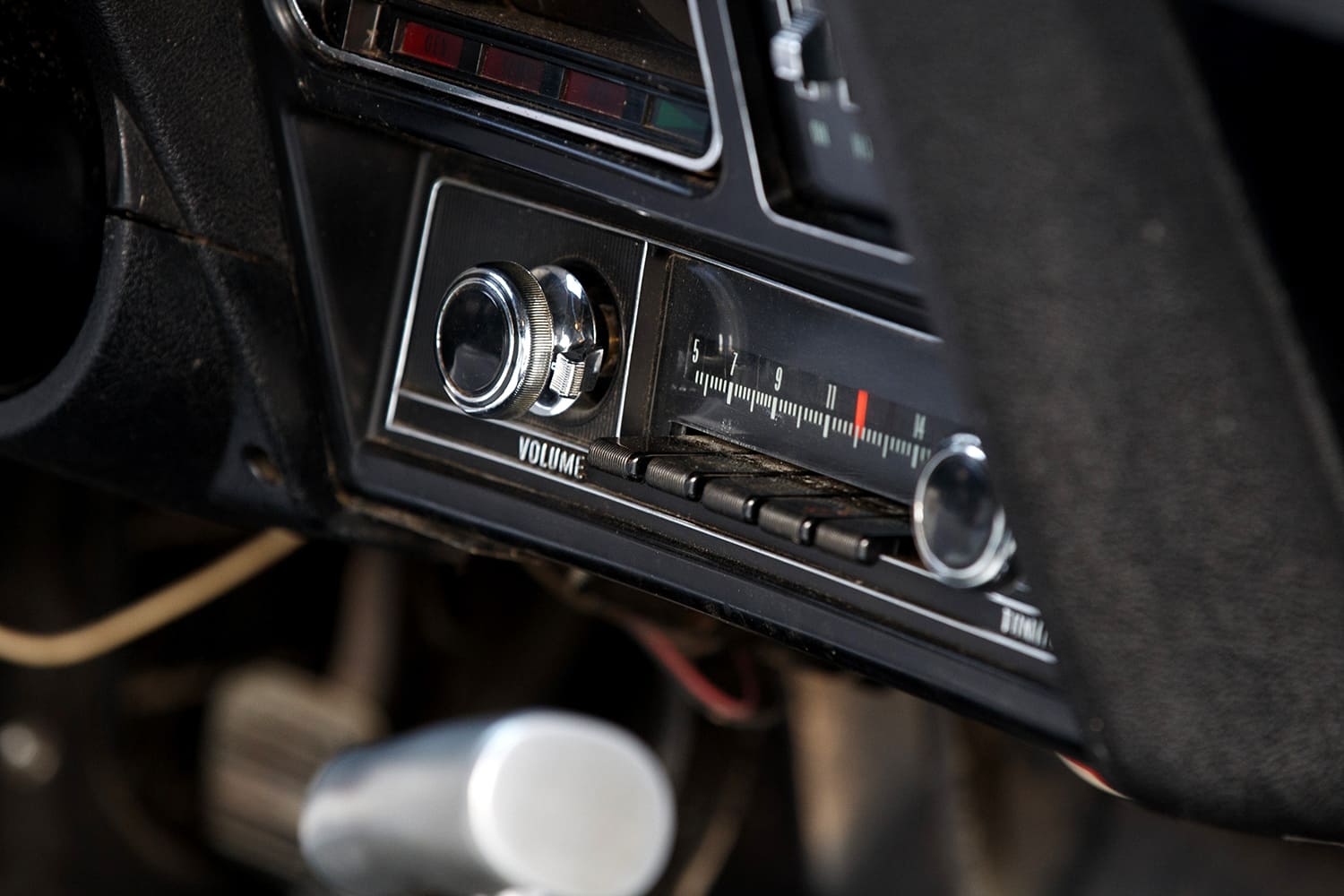
As confirmed by the car’s original window sticker, it was ordered with $1,178.20 worth of options, including vinyl roof, Positraction, four-speed, power front disc brakes, tinted glass, power steering, chambered exhaust, cowl induction hood, AM radio, and of course, Z/28 “Special Performance Equipment.” All the extras, in combination with the $2,727 base cost and $108.25 destination charge, added up to $4,013.45, but that was discounted to $3,150 because the dealership’s manager had used the car for six months.
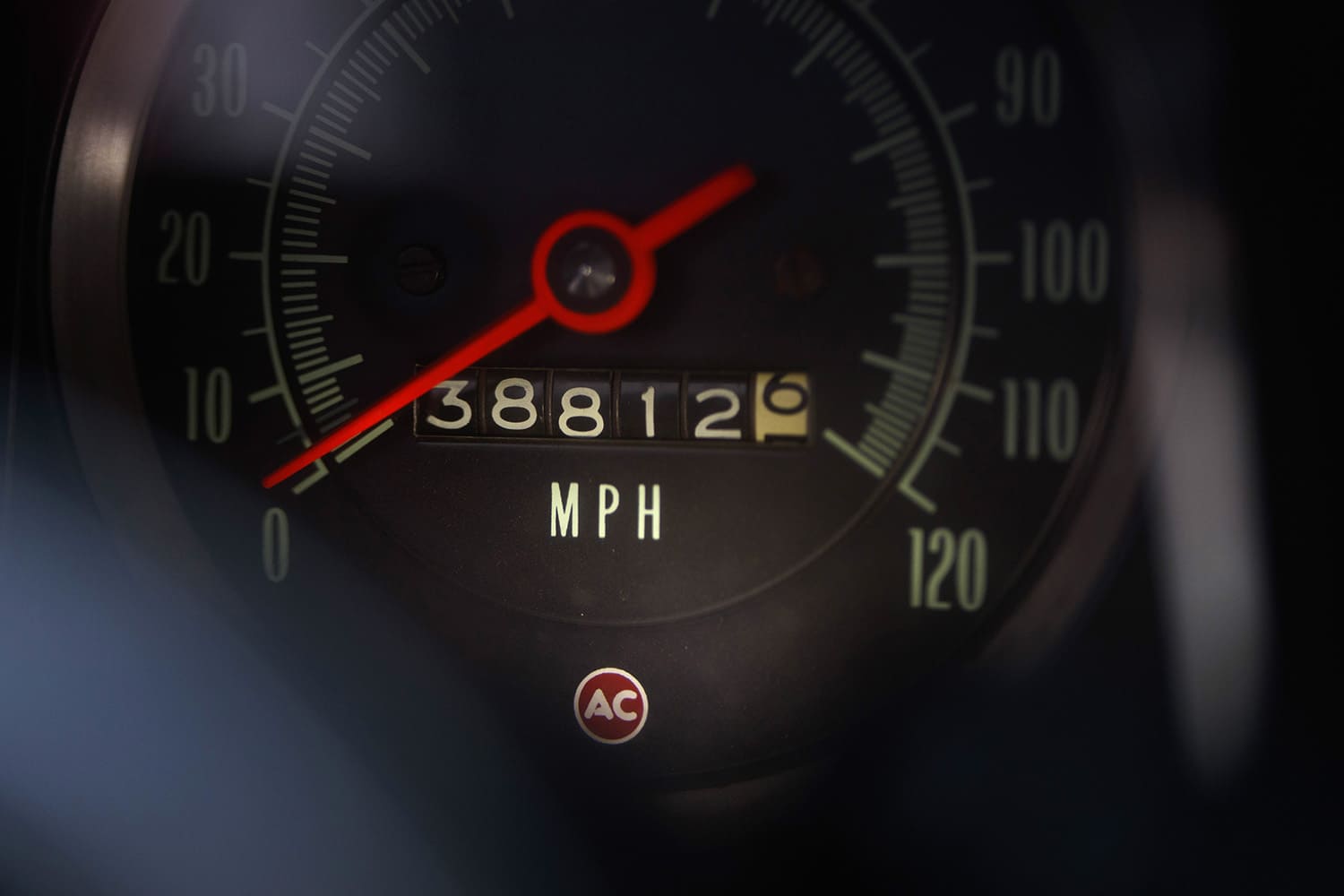
Over the next few years David happily and carefully drove his Z/28 but by the mid-1970s family and work obligations took an increasing bite out of his time and the Camaro was put into long-term storage with about 38,800 miles on its odometer. Thirty years later David decided to sell the car and advertised it on an Internet auction site. Spiro Nikolopolous adores low-mileage, unrestored cars and was specifically looking for a fully documented, Hugger Orange ’69 Z/28, so he was absolutely delighted to acquire this special car, complete with its original window sticker, dealer invoice, and so on. Over the 20-plus years he’s owned it, Spiro has kept its fluids fresh and driven the car very sparingly in order to keep everything functioning properly, but out of respect for its incredible originality, he has otherwise left the car untouched.
Check out this story in our digital edition here.
TECH CHECK
Owner: Spiro Nikolopolous
Vehicle: 1969 Camaro Z/28
Engine
Type: Chevrolet iron-block V-8, four-bolt main, nodular iron bearing caps
Displacement: 302 ci
Compression Ratio: 11.0:1
Bore: 4.002 inches
Stroke: 3.005 inches
Builder: Chevrolet
Machine Work: Chevrolet
Rotating Assembly: Chevrolet forged steel Tufftrided crankshaft, forged steel shot-peened connecting rods, Chevrolet impact extruded, full-floating aluminum pistons
Valvetrain: Stock 2.02-inch intake and 1.600-inch exhaust valves
Camshaft: Stock Chevrolet “30/30” PN 3849346, 0.485-inch intake and exhaust lift, 346 degrees intake duration
Cylinder Heads: Chevrolet cast iron PN 3927186
Induction: Chevrolet aluminum Winters PN 3932472 cast intake manifold
Carburetor: Holley four-barrel, 780-cfm, Chevrolet PN 3923289, Holley list PN 4053
Exhaust: Four-into-one long-tube headers, option NC8 chambered dual exhaust
Valve Covers: Chevrolet finned aluminum
Accessory Drive: Stock Chevrolet
Ancillaries: Mallory ignition distributor and Accel coil
Output: 290 hp at 5,800 rpm, 290 lb ft at 4,200 rpm
Drivetrain
Transmission: Muncie M20 wide-ratio four-speed
Clutch: Stock 10.5-inch GM
Rear Axle: Stock G80 12-bolt Positraction axle, 4.10:1 ratio
Chassis
Front Suspension: Stock upper and lower A-arms, coil springs, monotube hydraulic shocks, 13/16-inch antisway bar
Rear Suspension: Stock four-leaf springs, staggered monotube hydraulic shocks
Brakes: Stock J52 power-assist single-piston front disc with 11-inch rotors, rear 9.5-inch drums
Wheels & Tires
Wheels: Stock Rally 15×7
Tires: Firestone F70-15 Sport Car 200
Interior
Upholstery: Stock ivory and black vinyl
Seats: Chevrolet front bucket, rear bench
Steering: Chevrolet standard steering wheel
Shifter: Stock Hurst with T-handle
Dash: Stock
Instrumentation: Stock Chevrolet, Stewart-Warner column-mounted tachometer
HVAC: Stock Chevrolet
Entertainment System: Option U63 AM radio
Exterior
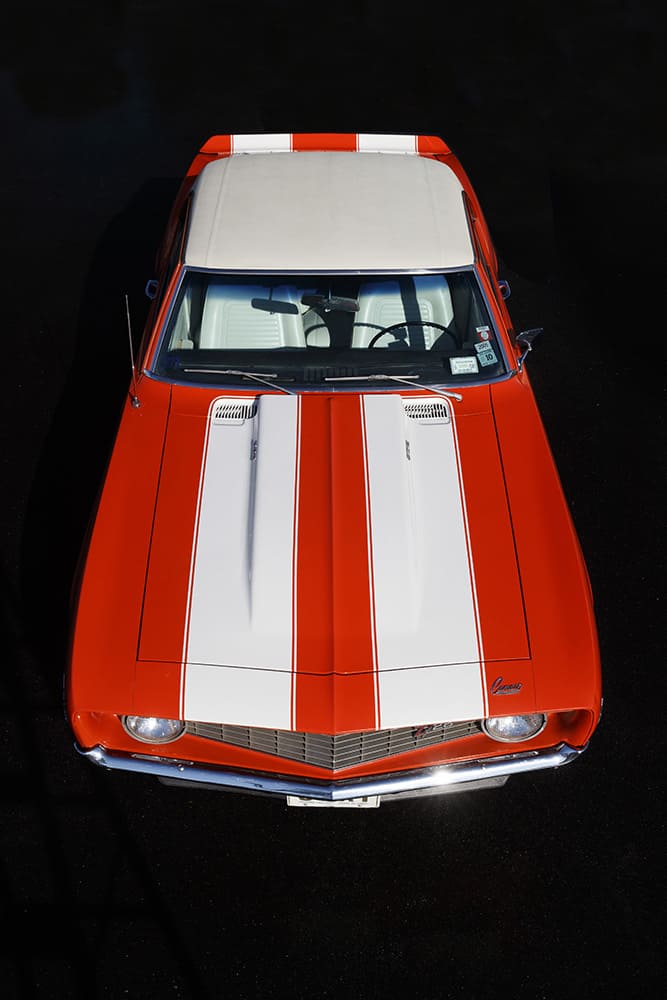
Bodywork and Paint: Stock Chevrolet, option C08 vinyl roof cover
Paint: Stock Chevrolet, 72-72 Hugger Orange
Grille: Stock
Bumpers: Stock Chevrolet
Headlights and Taillights: Stock Chevrolet