



BY NICK LICATA
Back on August 1, 1981, at 12:01 a.m. Eastern Time, MTV debuted in the United States, launching with the now-iconic “Video Killed the Radio Star” by the Buggles. To be fair, video never did kill the radio star, but it did introduce a powerful platform that pushed rock and new wave acts to focus more deliberately on image and eventually video production. That worked great for some acts while not so much for those artists who lacked the personality or image geared toward MTV’s younger demographic. Unfortunately, or fortunately, depending how you look at it, hardly anyone noticed when MTV shape shifted to whatever it is now on December 31, 2025. To most Gen Xers, the demise of MTV actually came years ago with the arrival of YouTube and similar Online outlets, which allowed users to watch their favorite videos whenever they wanted. I guess you could say YouTube killed the music video channel.
In a similar vein, technology has quietly highjacked one of my favorite in-dash audio platforms, but before I get into that, let me offer a little history on automotive listening devices. When it came to bringing along our favorite tunes in cars, Chrysler introduced the Highway Hi-Fi system as a factory option in select 1965 models. Built by CBS and RCA, it played special 7-inch vinyl records mounted under the dash. The tonearm was spring-loaded and designed to withstand bumpy rides without sending the needle screeching off the record. Temperamental in nature, it vanished by 1959.
A more practical 4-track in-car tape player was introduced a few years later. By the mid-1960s the 8-track tape player came along. It was somewhat clunky and the tapes eventually wore out, but it was considered revolutionary for the time.

In the late 1970s the smaller, recordable cassette player took the reins of automotive hi-fi, bringing along better sound quality while offering us the ability to record our favorite tracks off of our LP records to create endless miles of personalized mixtapes carefully curated to set the mood while cruising in our muscle cars or commuters. Ahh, the good old days!
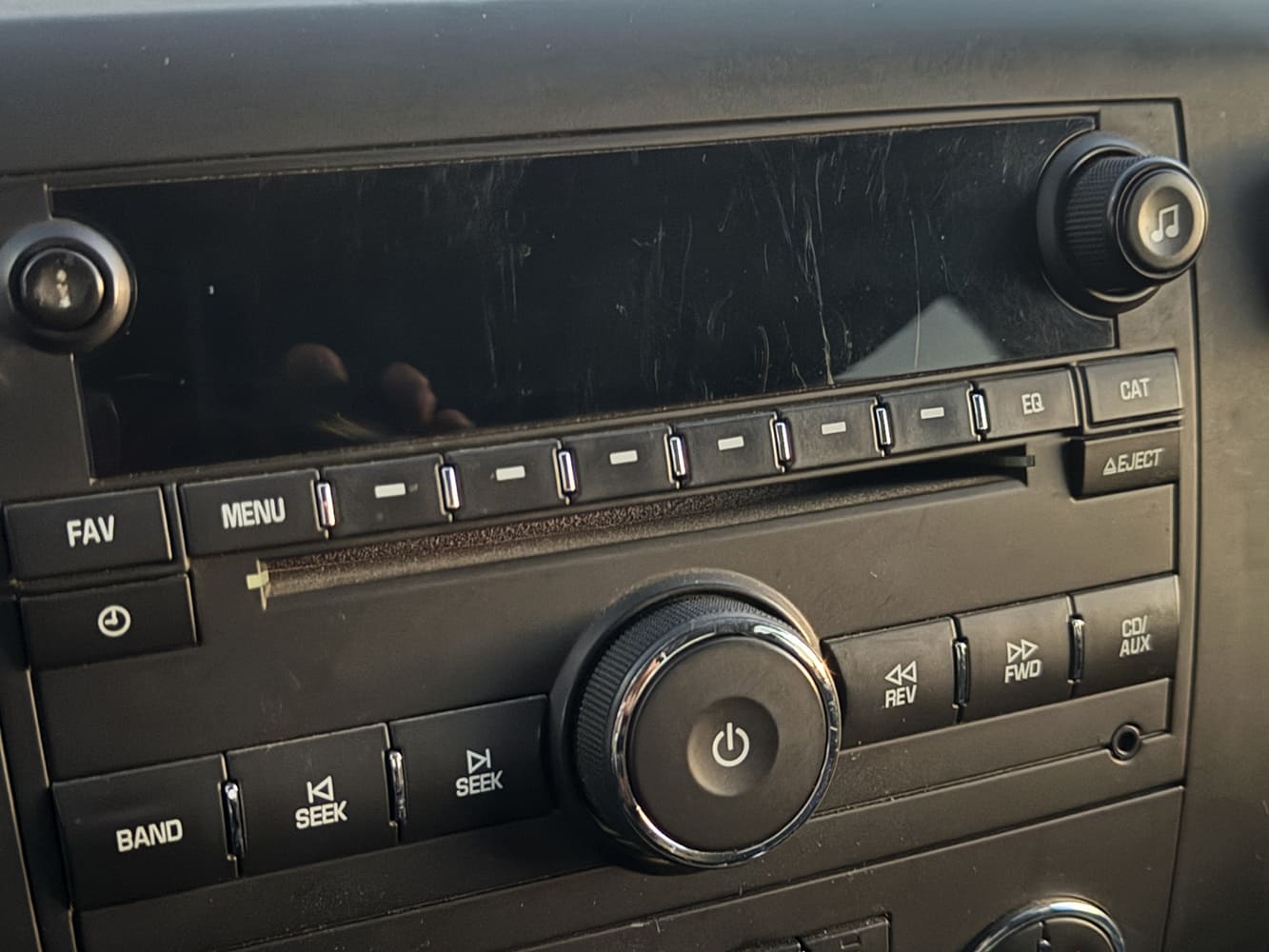
In the early 1980s, sound quality drastically improved with the arrival of the Compact Disc player. The CD player was a welcomed platform. The discs were easy to use, required little-to-no maintenance, and we no longer had to deal with tape hiss, sometimes warbly sound, and live in constant fear of our cassette players randomly eating tapes whenever if felt like it. I’m sure many of us remember using a yellow Ticonderoga pencil to manually wind the tape back into its translucent, plastic shell. Good times!
Fast-forward to today and when no one was paying attention, new cars came without CD players! Now I get making way for progress, and I understand CD sales have declined over the past 20 years, but c’mon, man! I still have hundreds of CDs that I regularly listen to at home–many of which I’d like to listen to while driving my commuter. Yes, I know I can download CDs to my smartphone, but the compressed sound quality of MP3s leaves much to be desired. I also have the standard streaming apps, but once again the sound quality is below average.
With today’s advancements in mobile audio technology, would it be too much to ask the car companies to bring back that tiny little Compact Disc slot as part of that massive infotainment screen so us “experienced” drivers can listen to our music the way it was intended: loud and clear?
Sometimes we need technology to take a short step back and give us some of the good stuff that came out of the ’80s. Feel free to keep that sunvisor-mounted CD organizer thingy. I don’t need that. I just want to slide in one of my favorite CDs and crank it up.
You in?