


By Johnny Hunkins Photography by Brian Brennan
Ford’s presence at the 2025 SEMA Show carried its usual weight, with builders pushing both heritage and innovation across a widespread of Mustang platforms. Early fastbacks, late ’60s SportsRoofs, and modernized interpretations of Shelby themes formed the backbone of the year’s most compelling Blue Oval builds, each one shaped around contemporary performance hardware like the Coyote, Godzilla, and even a Kaase-built Boss 429. The lone outlier was Chip Foose’s 1956 Lincoln Continental for BluePrint Engines—a car that stirred debate for its LS-compatible foundation but ultimately won over Ford loyalists through Foose’s unmistakable design language and long-standing connection to the brand. Together, these five vehicles capture the range of ideas, craftsmanship, and technical ambition that continue to make Ford projects a defining part of the SEMA landscape.
Godzilla-Swapped 1965 Shelby G.T. 350 Mustang
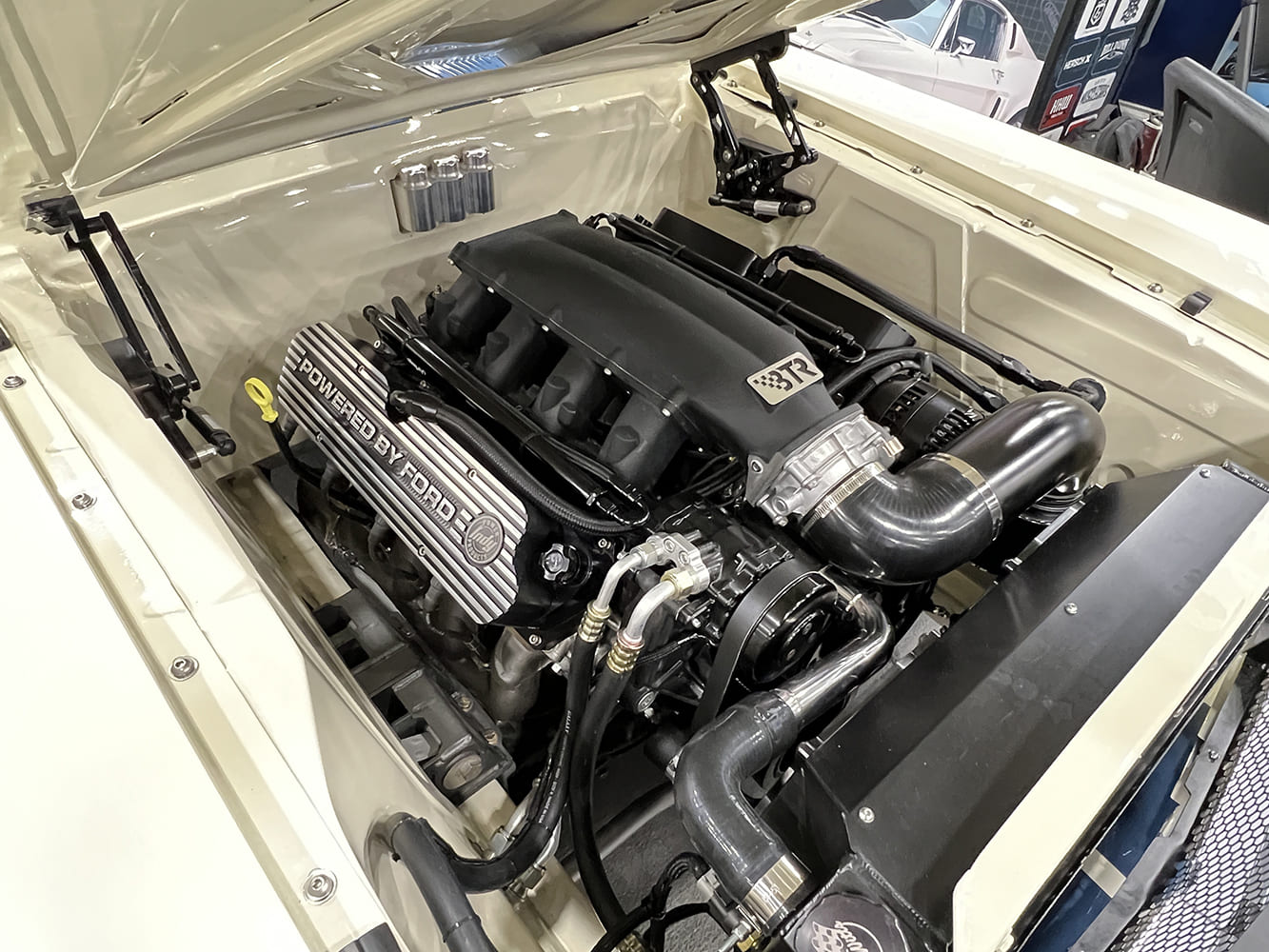
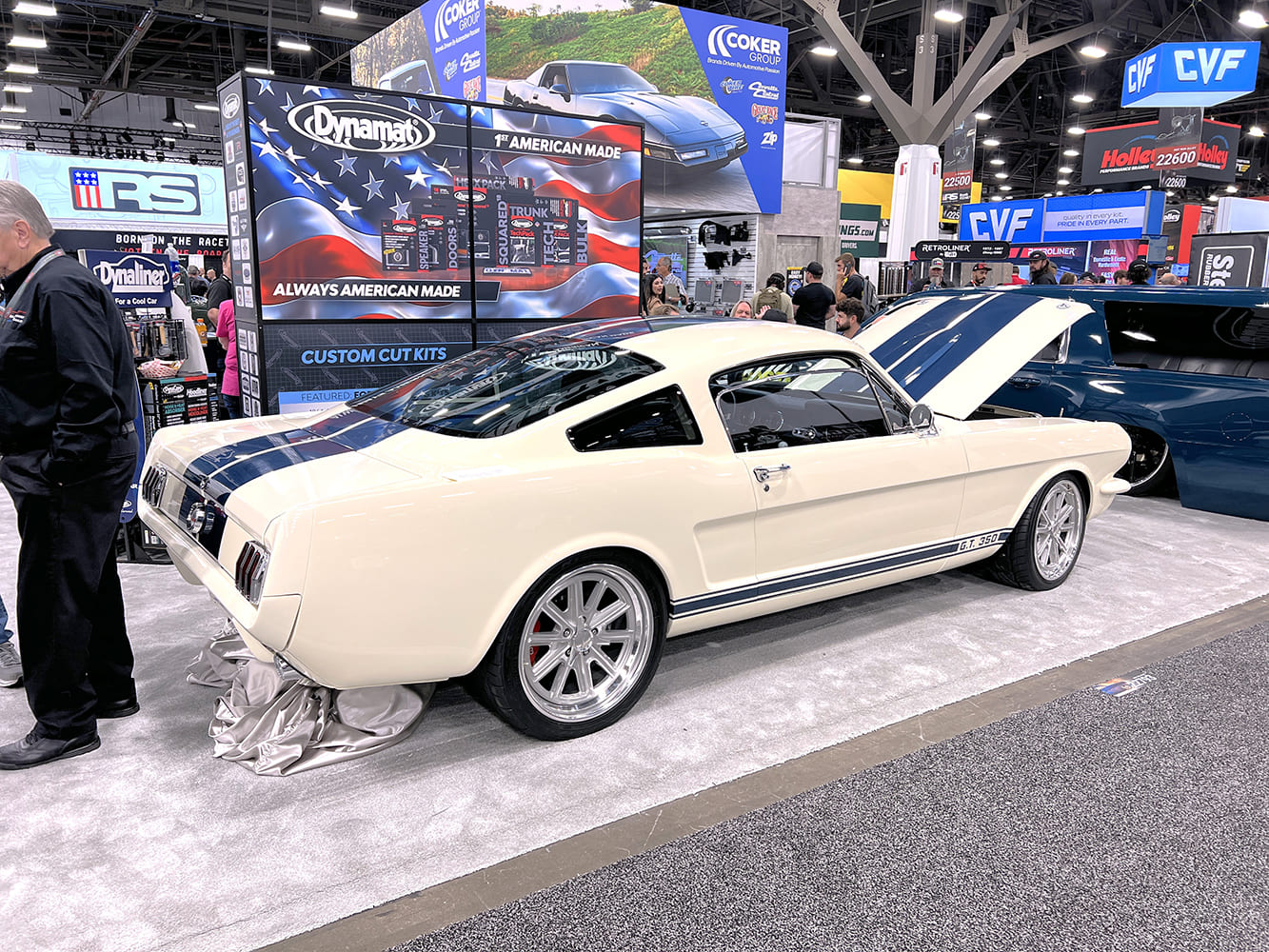
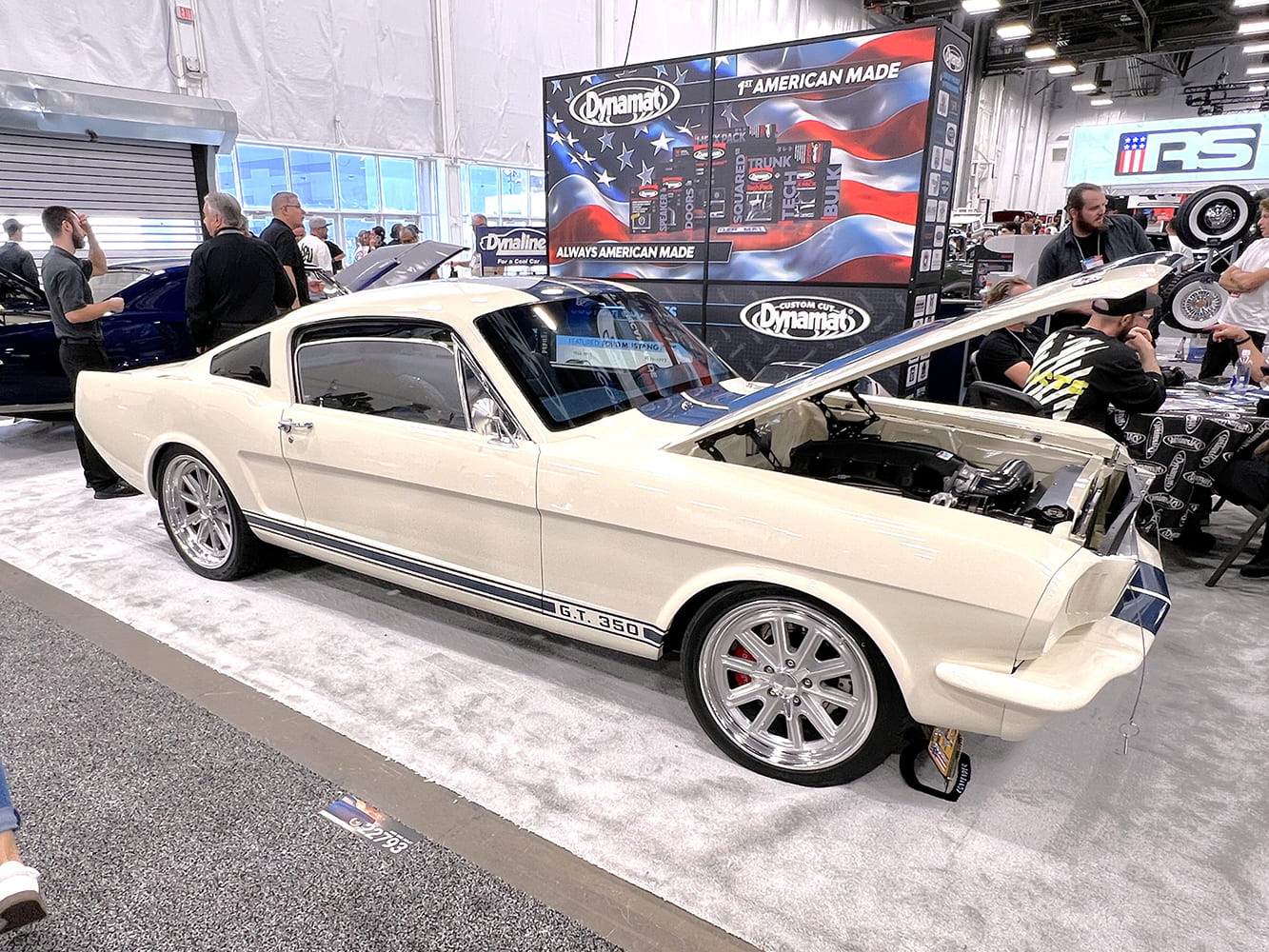
The Dynamat booth at the 2025 SEMA Show showcased one of the event’s most culturally meaningful Ford builds: a 1965 Mustang fastback redesigned as a Peter Brock–inspired modern Pro Touring Shelby G.T. 350. Built by Mike Staveski of Resto Mod Vette for owner Jay Verhulst, the car blends admiration for the original G.T. 350 with today’s high-performance restomod standards. Under its Brock-designed hood is a Ford Performance Godzilla crate engine upgraded with Mast Motorsports heads and cam, a BTR Trinity intake manifold, OBR engine management, and Holley’s mid-mount accessory drive—producing about 625 hp. A TREMEC TKX five-speed, Ford 9-inch rear, Tanks Inc. fuel system, and Pypes exhaust round out the drivetrain, while 18-inch Halibrand-style wheels wrapped in Nittos maintain a period-correct look without sacrificing grip.
The foundation is a Roadster Shop SPEC chassis, chosen for its packaging advantages and modern geometry. Staveski notes that the “body drops down over the chassis,” allowing the Mustang II–style IFS, Wilwood Pro spindles, and Detroit Speed mini-tubs to fit neatly beneath the Fastback shell. Wilwood brakes—six-piston front, four-piston rear—provide modern stopping power, while Vintage Air, Dakota Digital gauges, a Hurst shifter, and Douglas Interior Products leather enhance the cabin without losing the car’s Shelby DNA. The BTR Trinity intake is essential to make the Godzilla swap work under a stock-profile hood, addressing the packaging issues caused by the truck engine’s tall, upswept factory manifold.
What sets this G.T. 350 apart from a high-priced restomod is Peter Brock’s direct input into its design. Staveski and Brock met monthly, bringing back Brock’s original but unused 1965 proposals: the front fascia, the hood, the integrated bumper design, and the dual-stripe identity. Flush-mount glass, shaved driprails, and a flush-fit rear bumper give the car a modern look without losing its core heritage. With more Brock-influenced Mustangs already in the works, including a Coyote-powered version, Staveski’s shop is quietly creating a new chapter of Shelby-inspired craftsmanship for today.

Coyote-Swapped 1969 Mustang SportsRoof
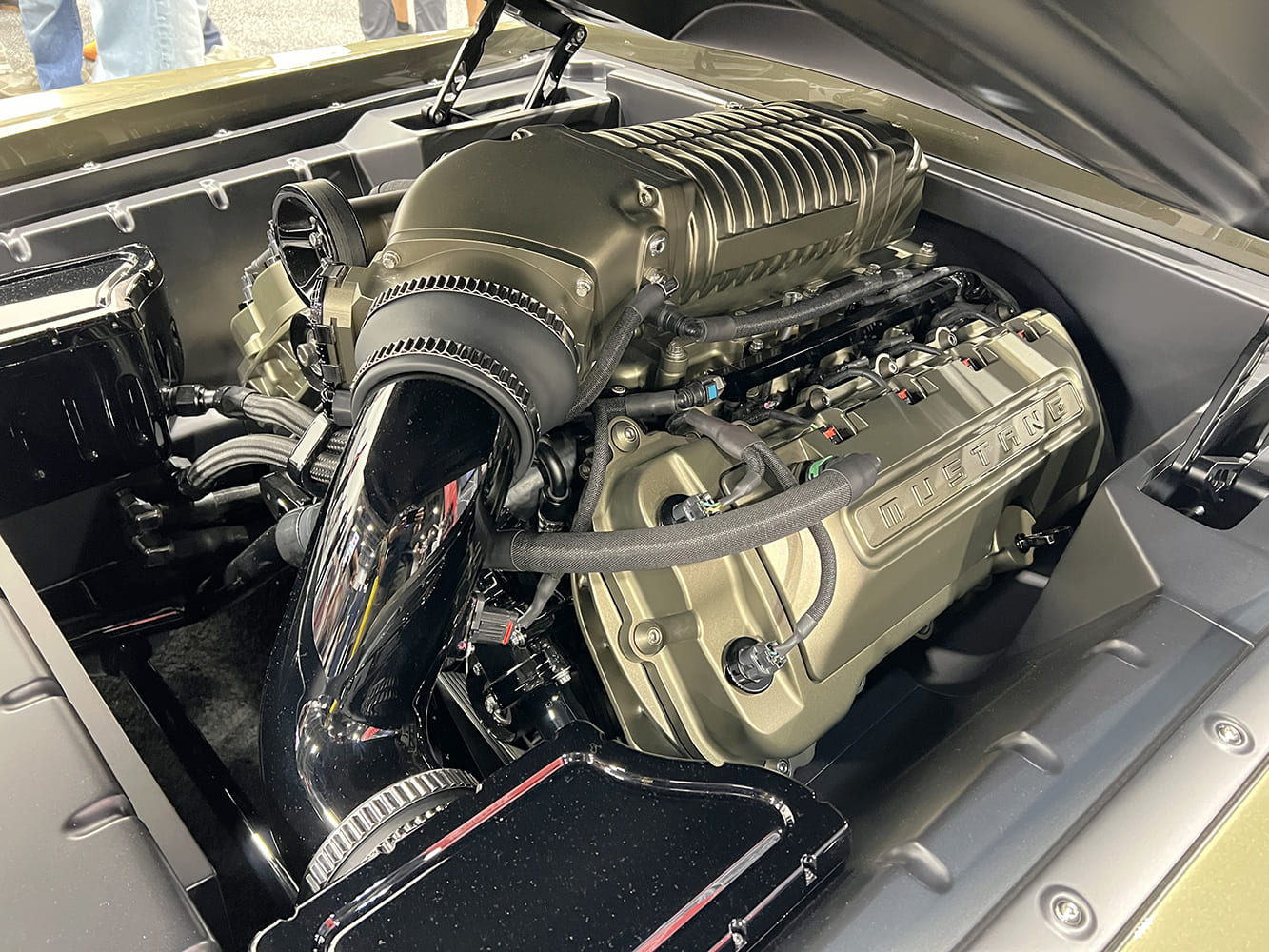
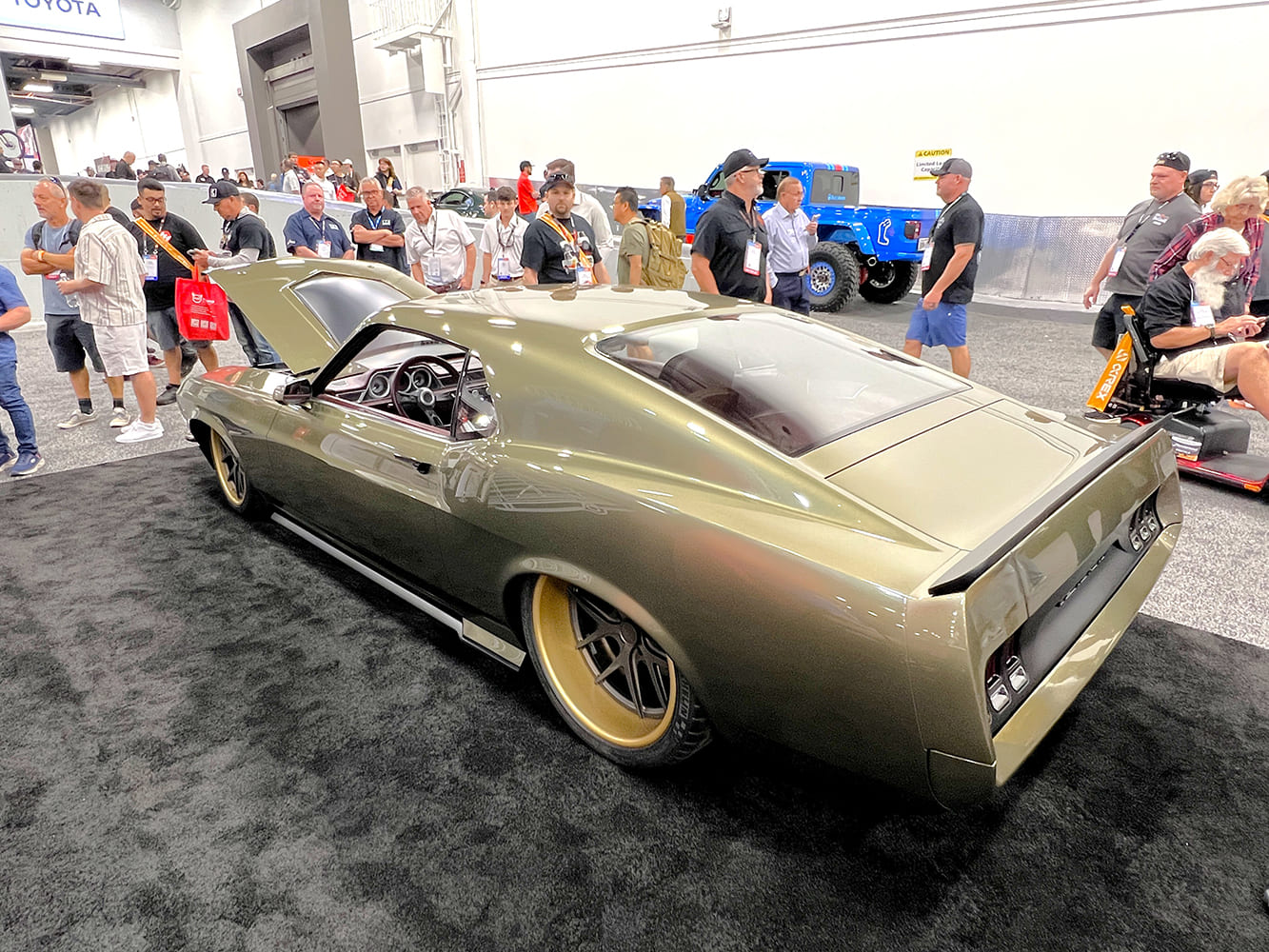
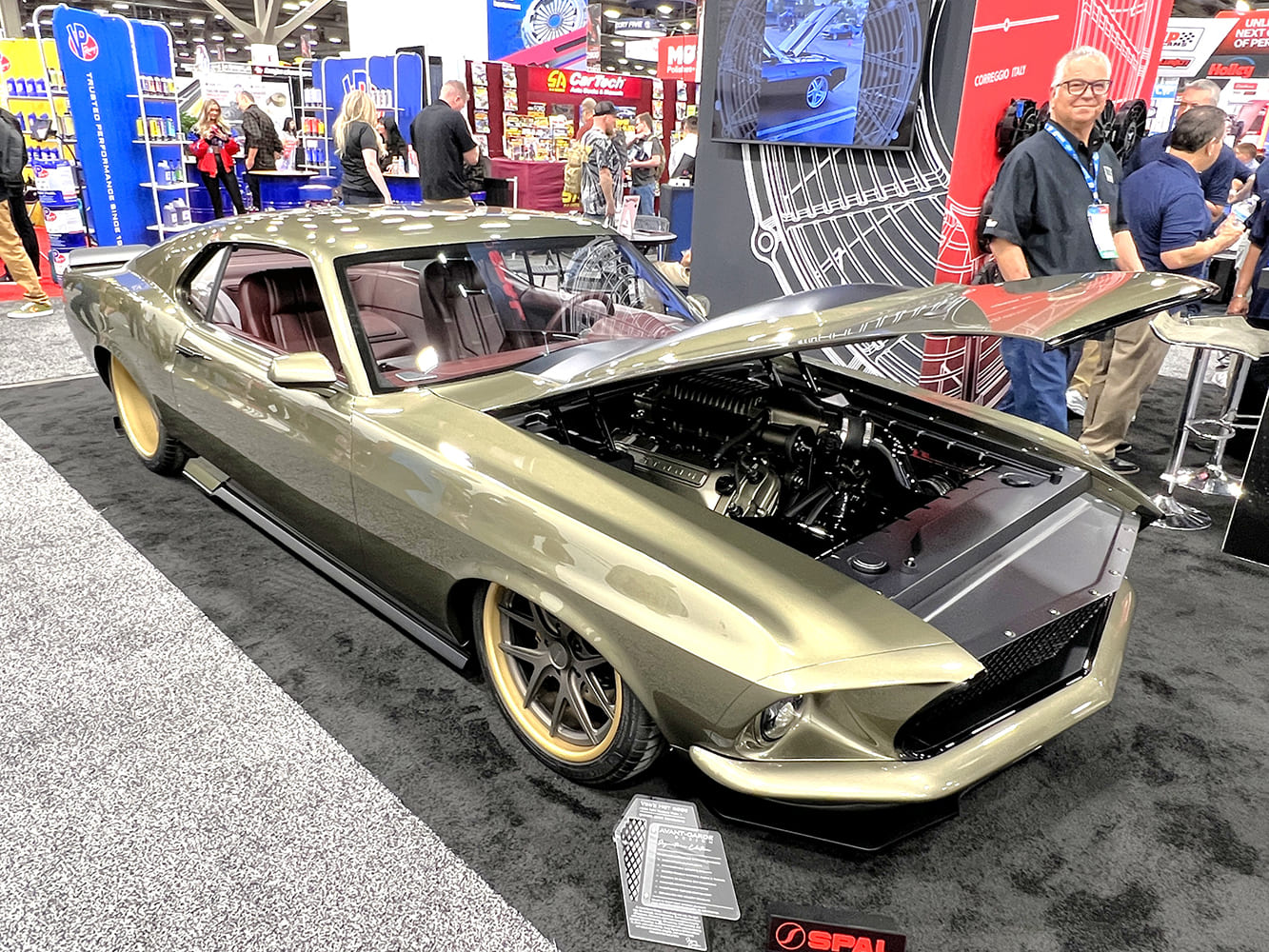
The 1969 Mustang SportsRoof built by Vini’s Hot Rod Shop for owner Dave Burroughs carries the layered history of a project that paused, shifted meaning, and eventually found its way back with a new sense of direction. Burroughs originally began the car with his father, and after his father’s death, the Mustang sat untouched for years before Vini Madrigal and his team committed to a complete reimagining. The foundation became an intercooled Magnusonsupercharged Coyote V-8 paired with Ford’s eight-speed automatic overdrive. An Art Morrison Max G chassis set the car’s posture and intent, giving the SportsRoof the low, modern, high-capacity footprint Burroughs wanted. Only after the build’s identity was fully established did the Mustang head to Las Vegas where it appeared in the SPAL booth at the 2025 SEMA Show as one of the most thoroughly updated interpretations of a 1969 Ford on the floor.
Madrigal’s crew reshaped the car with a level of fabrication that touches nearly every exterior surface. The hood, rockers, front and rear valances, and tail pan are all scratch built. Jesse Greening machined the taillights, while the quarter windows were converted to fixed, flush-mounted glass. Glass Guy Chicago assisted in flush-fitting every piece of glass after the driprails were removed, sharpening the car’s profile. The engine bay is entirely hand-formed aluminum, including the tanks, intake tube, and custom valve covers. Alumicraft Grilles supplied the bespoke grille, and Vini’s team created the trim rings and headlight interfaces. Extended rockers, a reworked rear deck, a custom rear wing, and a smoothed underside of the hood, clearanced symmetrically for the blower, give the SportsRoof its compressed, high-energy posture without altering the roofline or sectioning the body.
Design direction originated from Sean Smith Designs, influencing both the exterior updates and interior architecture. Smith determined the layout and surfaces, while Avant-Garde brought it to life with a fully 3-D-printed cabin that replaces all original Mustang components. The dash, console, door panels, and trim were crafted as a unified system rather than separate parts, giving the cockpit a cleaner look and enabling the seating position and sightlines to be customized around the Art Morrison chassis instead of the stock framework. The materials and shapes reflect the car’s modern mechanical setup, resulting in an interior that feels like a contemporary performance vehicle rather than a retro callback.
Trick Rides “Scorched” 1969 Mustang SportsRoof
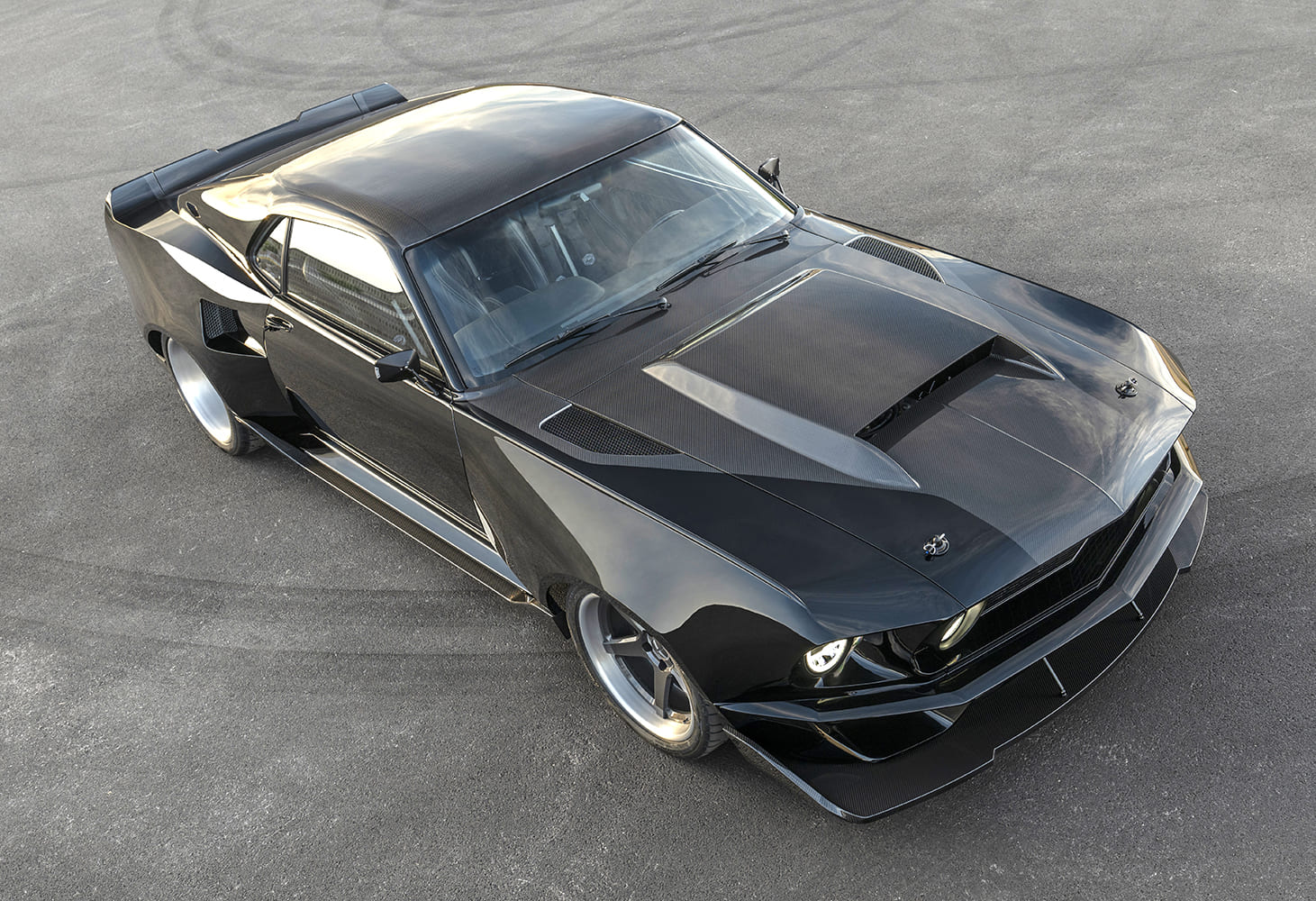
Trick Rides’ 1969 “Scorched” Mustang SportsRoof debuted at the 2025 SEMA Show as a custom exhibition piece for TMI, but its journey to the booth was anything but smooth. Jason Engel discovered the car as a rough field find just 18 months prior to the show, and he and partner Jared Morris rebuilt it from scratch to showcase what their Yukon, Oklahoma, shop could create with a blank slate. The project also marked the start of a limited run of serialized Scorched Mustangs—20 cars total, each featuring full carbon-fiber bodywork and unique variations. Since the show, Trick Rides has already taken orders for eight more.
The structure beneath the carbon skin is a full Roadster Shop chassis, a choice Engel makes on every build because of its predictability and packaging benefits. The original unibody constraints disappear, replaced by a bolt-in foundation that simplifies drivetrain installation and suspension geometry. This stability allowed Engel to go with a more traditional powerplant: a Jon Kaase–built Boss 429, iron-block, topped with Holley Sniper EFI and equipped with a Billet Specialties front runner drive. Ultimate Headers contributed a custom set of 2-1/4-inch stainless primaries, built on short notice and now scheduled for production as more Boss-powered Scorched cars move forward.
The carbon-fiber exterior is finished—every outer panel is replaced, reshaped, or reinterpreted using composite material. The inner structure stays steel, providing the car with the rigidity of a traditional build while allowing the exterior to shed weight and feature sharper contours. Forgeline 18-inch wheels, Continental 295/335 tires, and Baer Pro-Plus brakes complete the mechanical setup, ensuring the car remains grounded in Pro Touring performance rather than just show.
Inside, TMI used the project to debut new seating and upholstery patterns, including double-diamond stitching, Alcantara inserts, and a silver carbon-fiber accent strip. Engel has worked with TMI for two decades, and their collaboration is evident in the level of detail—from the seat shapes to the German square-weave carpet. For a car built on spec, Scorched demonstrates the kind of execution that signals Trick Rides’ intent for the remaining serialized builds: limited, distinct, and engineered with a clear point of view.
Ringbrothers’ Kingpin 1969 Mach 1
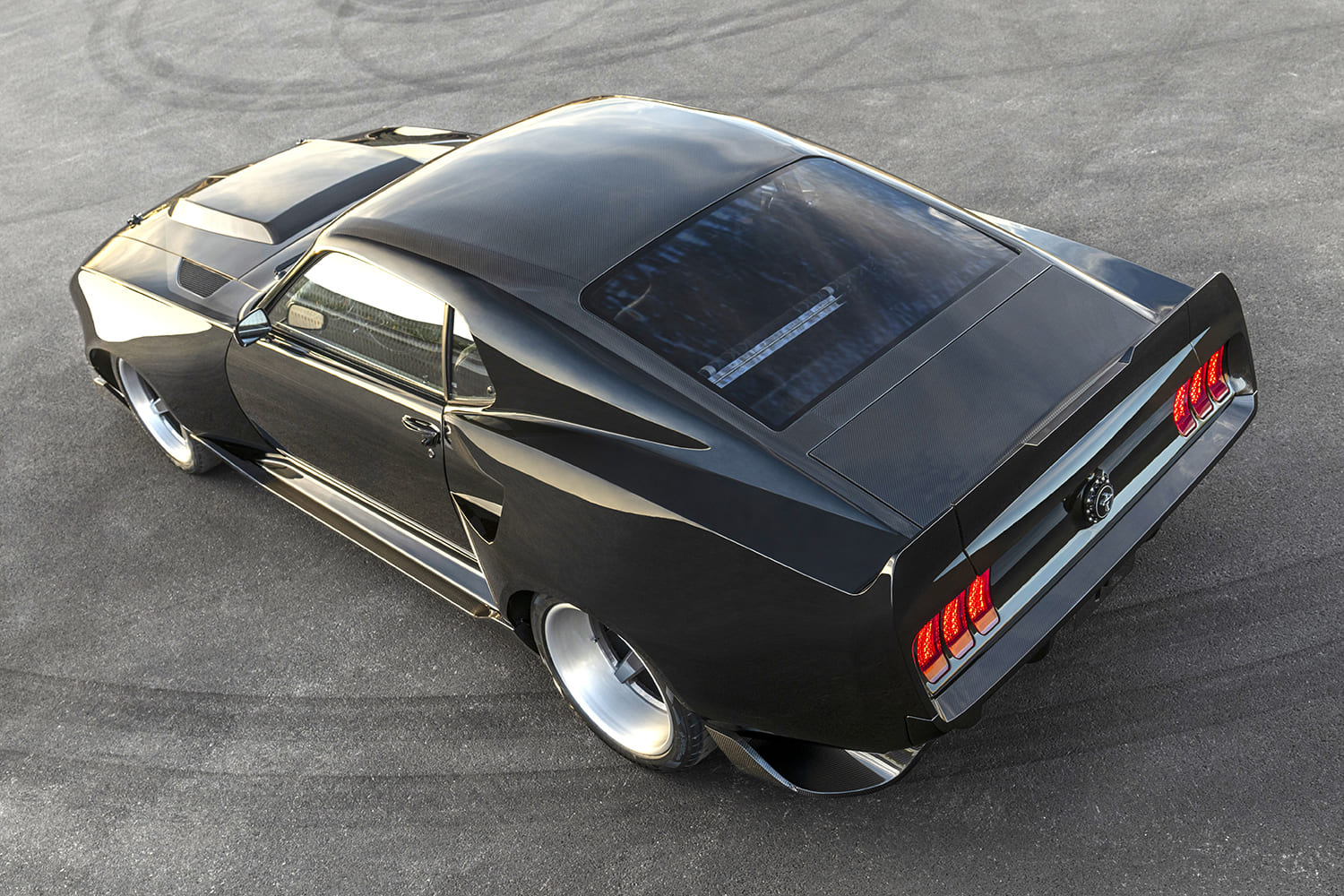
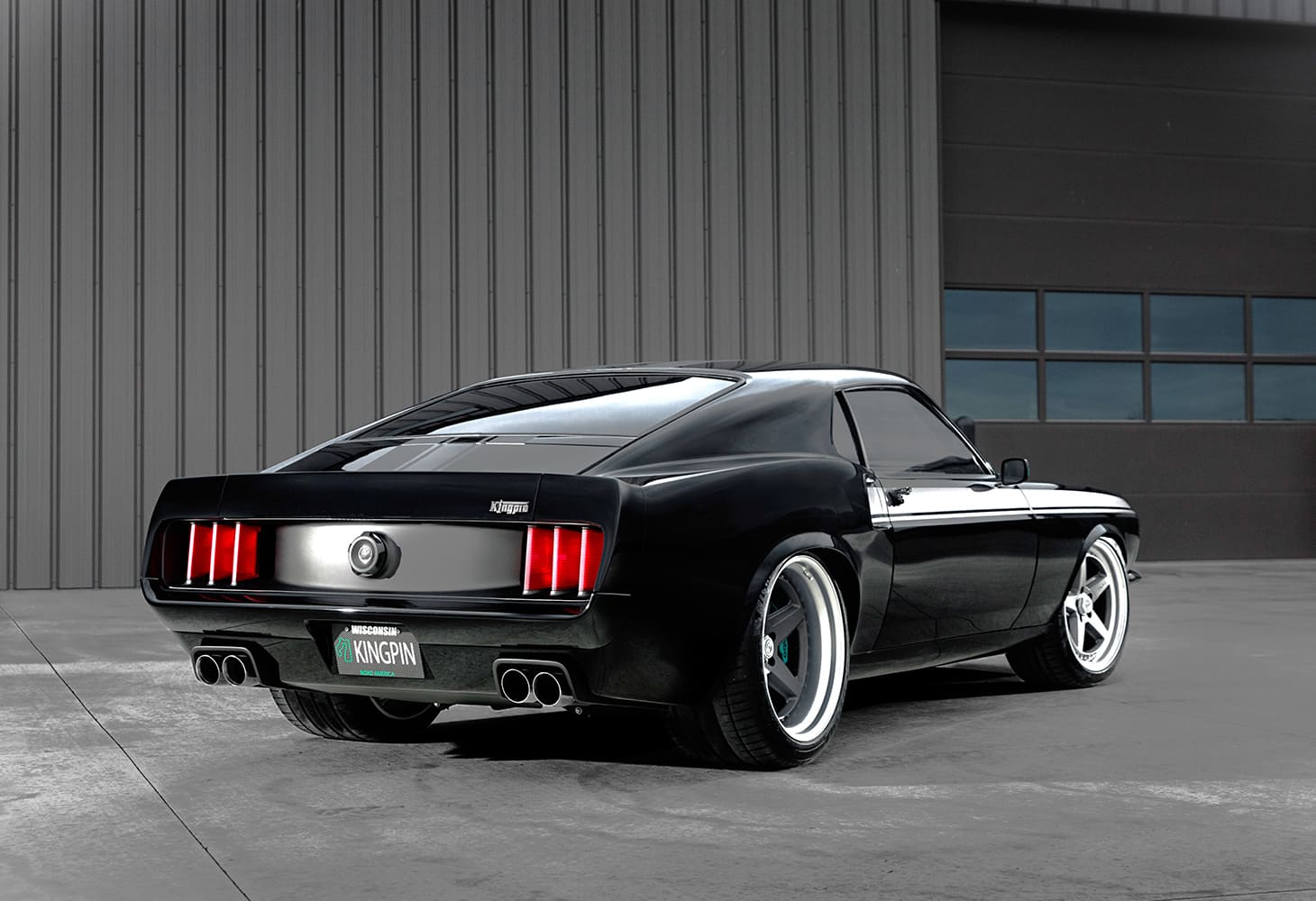
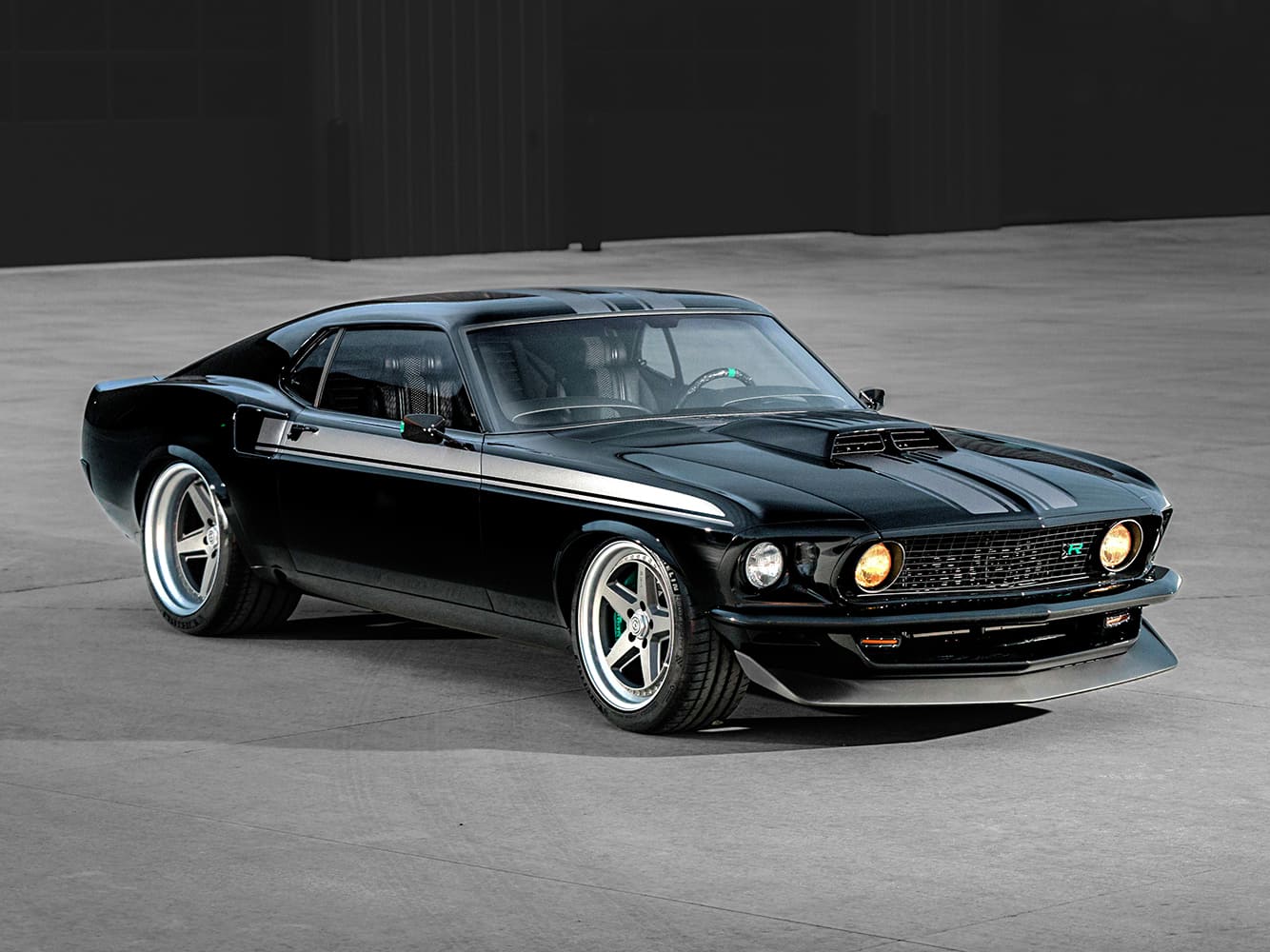
Ringbrothers entered SEMA 2025 ready to prove themselves. After a vocal segment of the Internet claimed their earlier Octavia project—a 1971 Aston Martin DB5—looked “too much like a Mustang,” the brothers responded in true Ringbrothers fashion: by building a Mustang so bold, so reengineered, and so unmistakably Ford that the comparison became irrelevant. Kingpin, their 1969 Mustang SportsRoof, is that rebuttal. Designed by Ragle Design and shaped over 5,500 hours, it’s a Pro Touring showcase that reinterprets the Mach 1 lineage with modern engineering and a sharper design language.
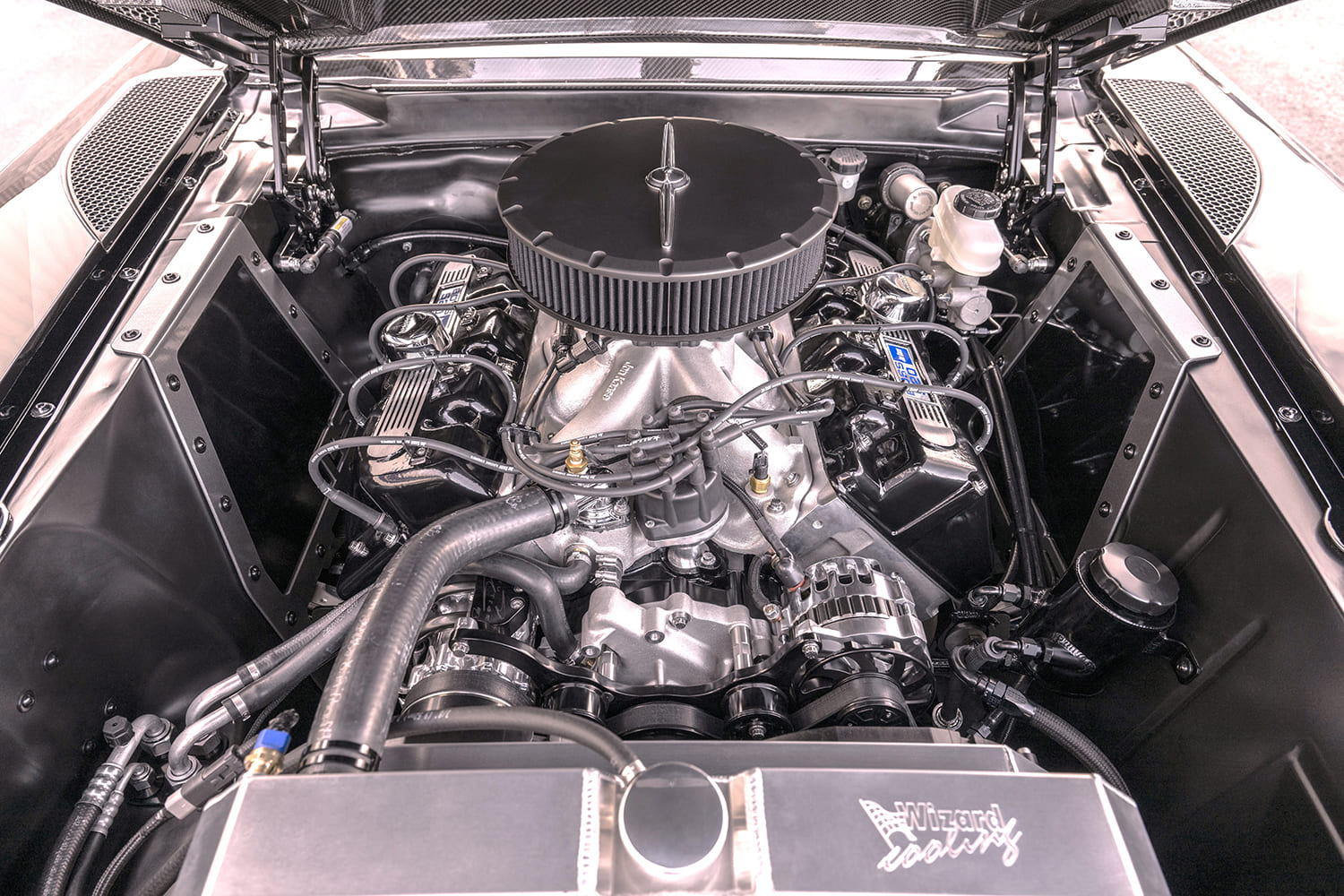
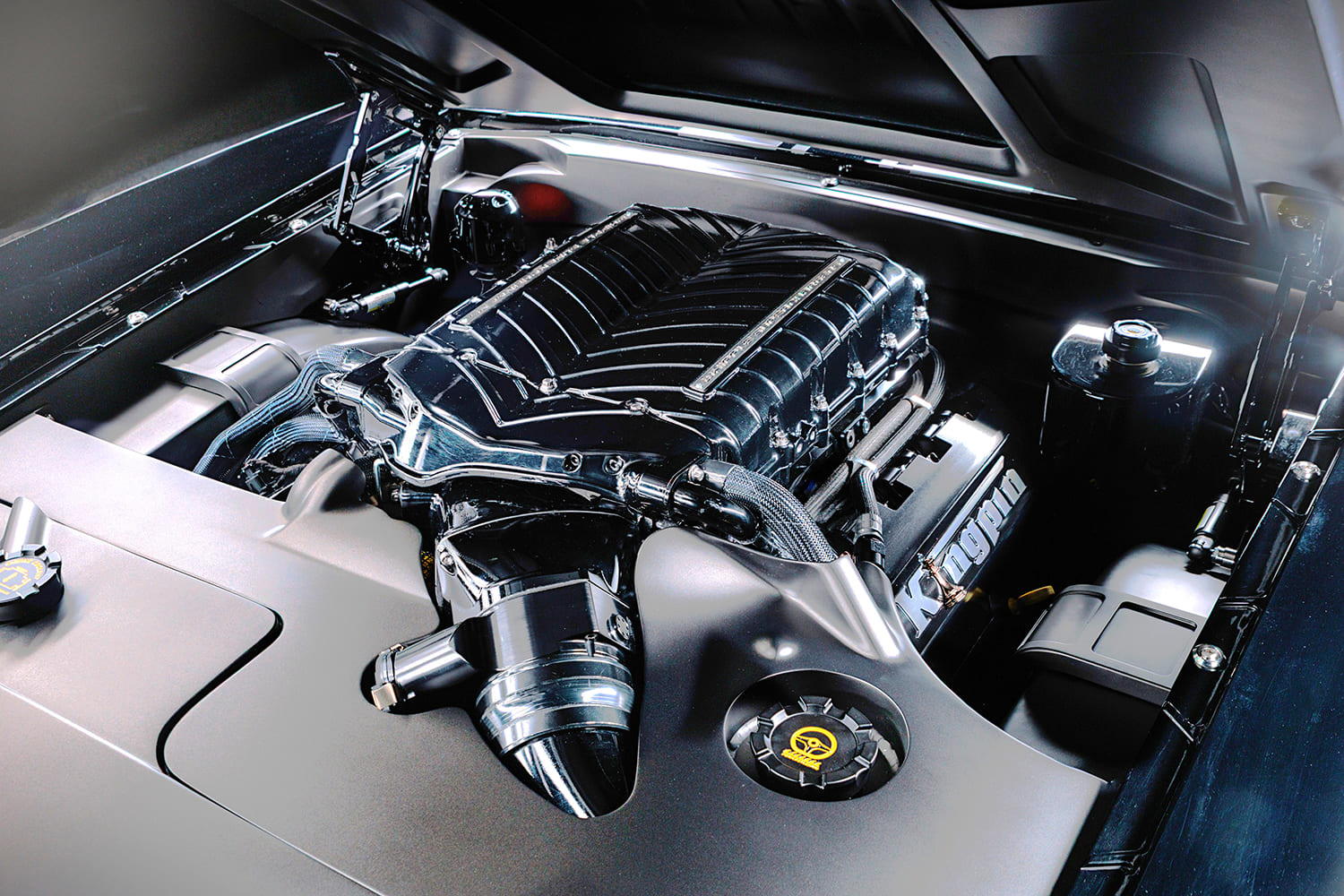
The mechanical package highlights that intent. A Wegner Motorsports 5.0L Coyote V-8 topped with a Whipple supercharger delivers over 800 hp, paired with a Bowler six-speed manual for a driver-centric experience. The Roadster Shop Fast Track Stage III chassis—converted back into a unibody—anchors the car’s structural transformation, complemented by Fox RS SV coilovers, an independent rear suspension, and a 1.25-inch splined front sway bar. Custom Ringbrothers headers feed a Flowmaster Super 44 stainless system, while Michelin Pilot Sport 4 S tires wrap staggered HRE Vintage Series 517 wheels. Brembo six- and four-piston brakes ensure stopping power matches the output. The widened bodywork, extended wheelbase, integrated rollcage, and extensive carbon-fiber fabrication reflect a build that prioritizes capability as much as aesthetics.
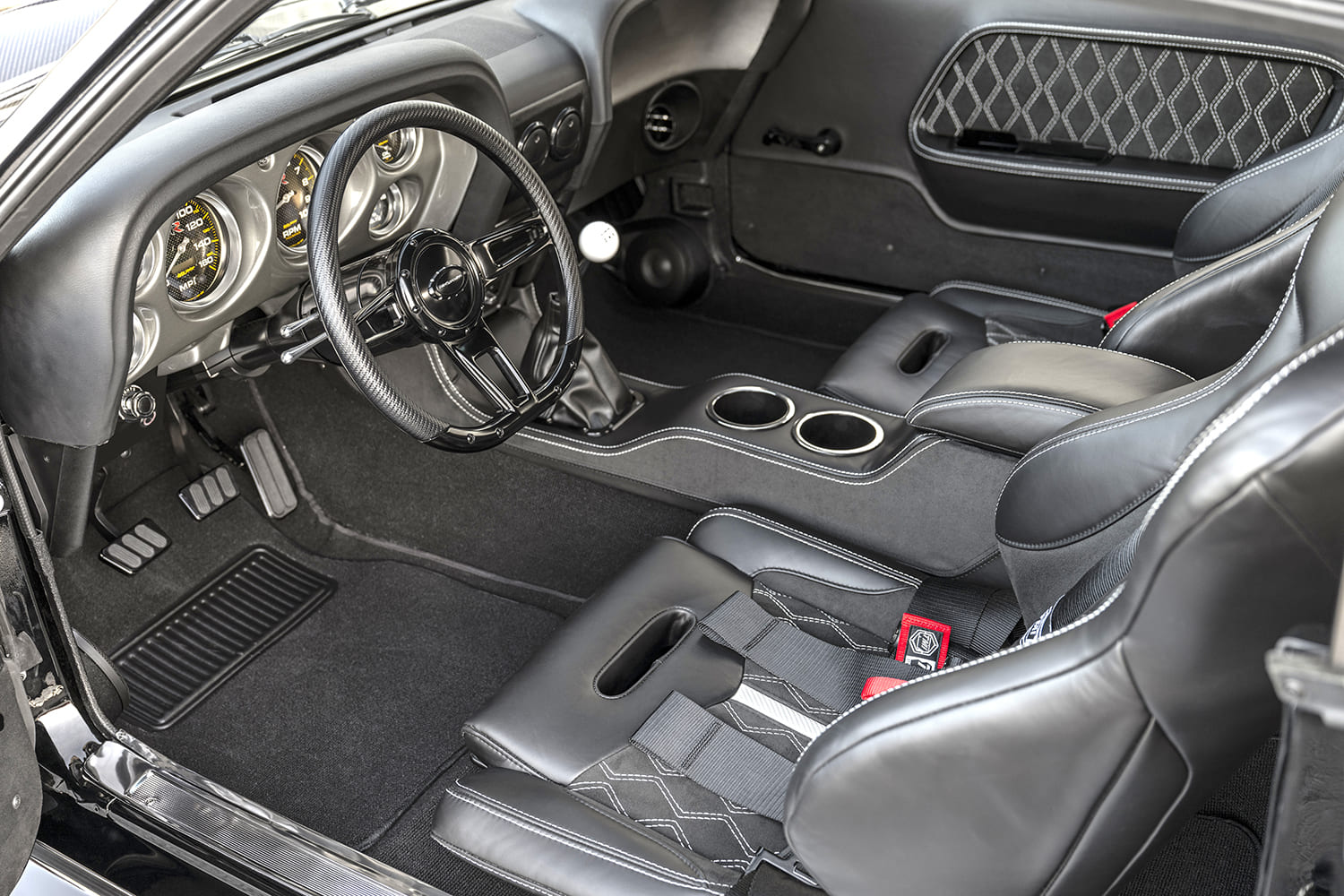
That aesthetic, however, is impossible to ignore. Draped in BASF Glasurit Bootleg Black with Grab Her Green accents, Kingpin leans into a darker, more theatrical identity. One-off carbon fiber components, including the hood, diffuser, grille surround, and rear tail panel, give the car a bespoke presence, while lowered rear quarters and mini-tubs subtly reshape the Mustang’s proportions. Inside, Steve Pearson of Upholstery Unlimited blended machined, 3-D-printed, and hand-stitched elements around Dakota Digital instrumentation, a Gentex auto-dimming mirror, and Ringbrothers’ crushed-carbon ENYO steering wheel. Supported by partners like BASF, Gentex, HRE, and a long list of product sponsors, Kingpin stands as the Mustang that ends the debate—an unapologetic, meticulously executed reminder of what Ringbrothers can do when they build the real thing.
Foose 1956 Lincoln Continental Mark II
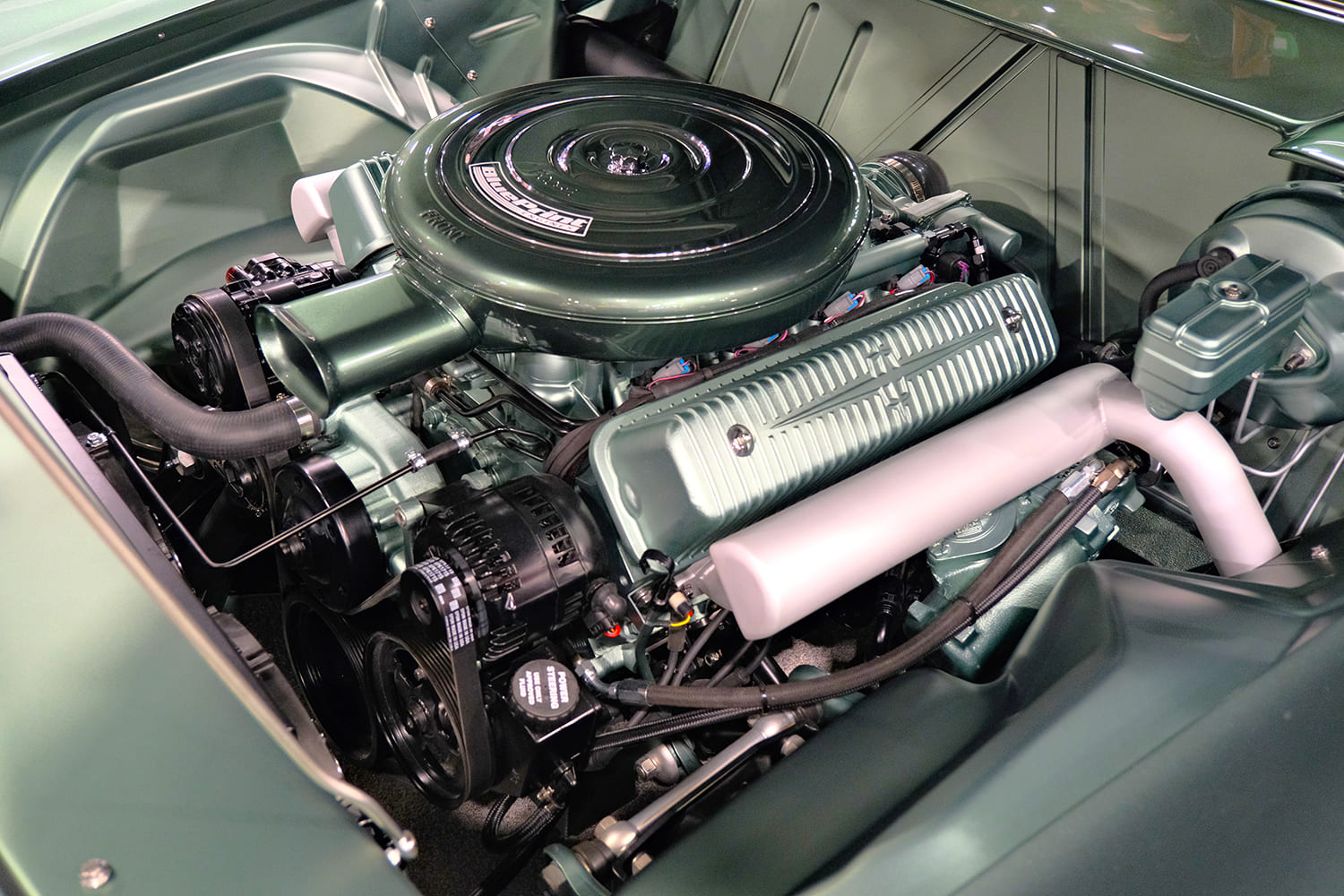
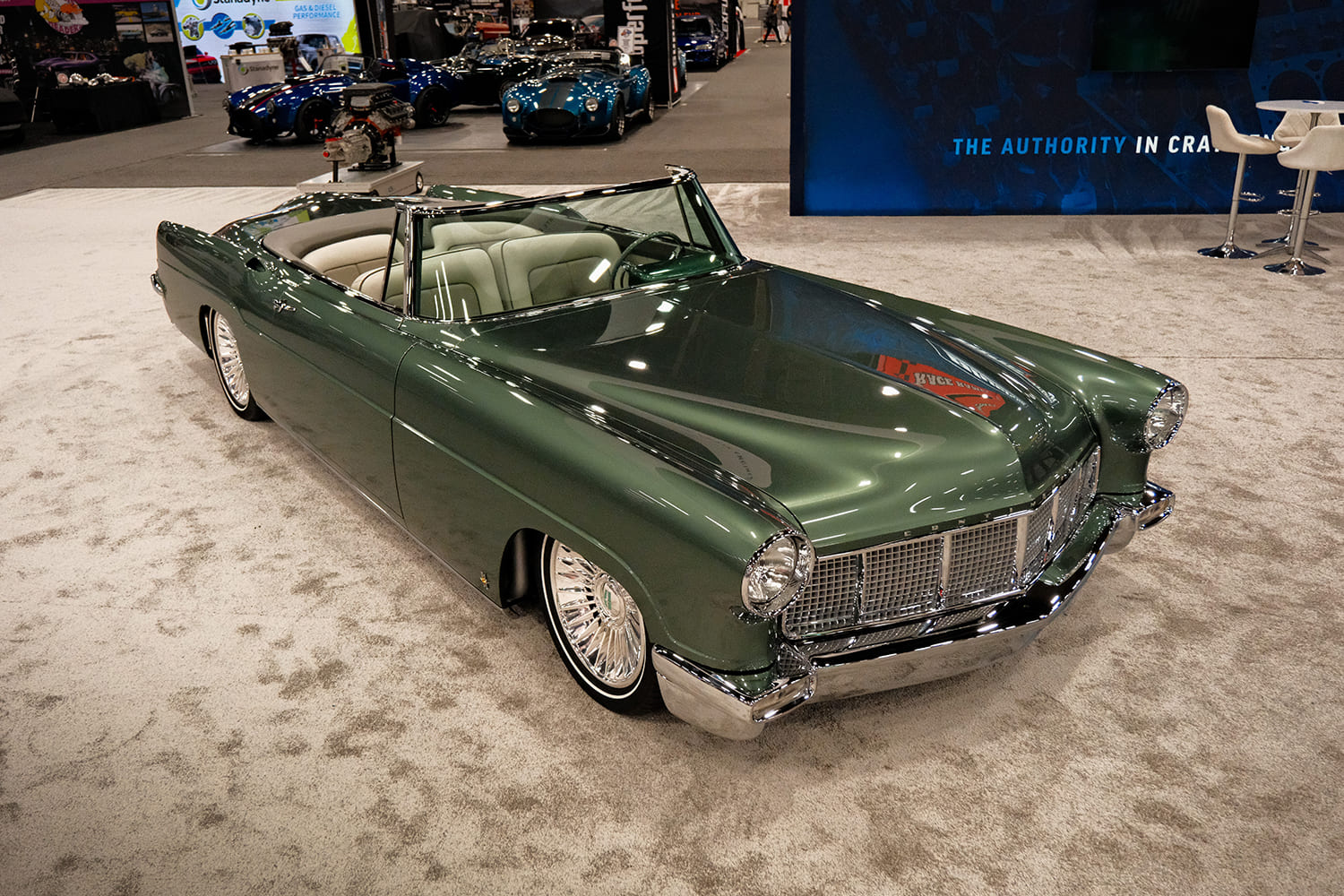
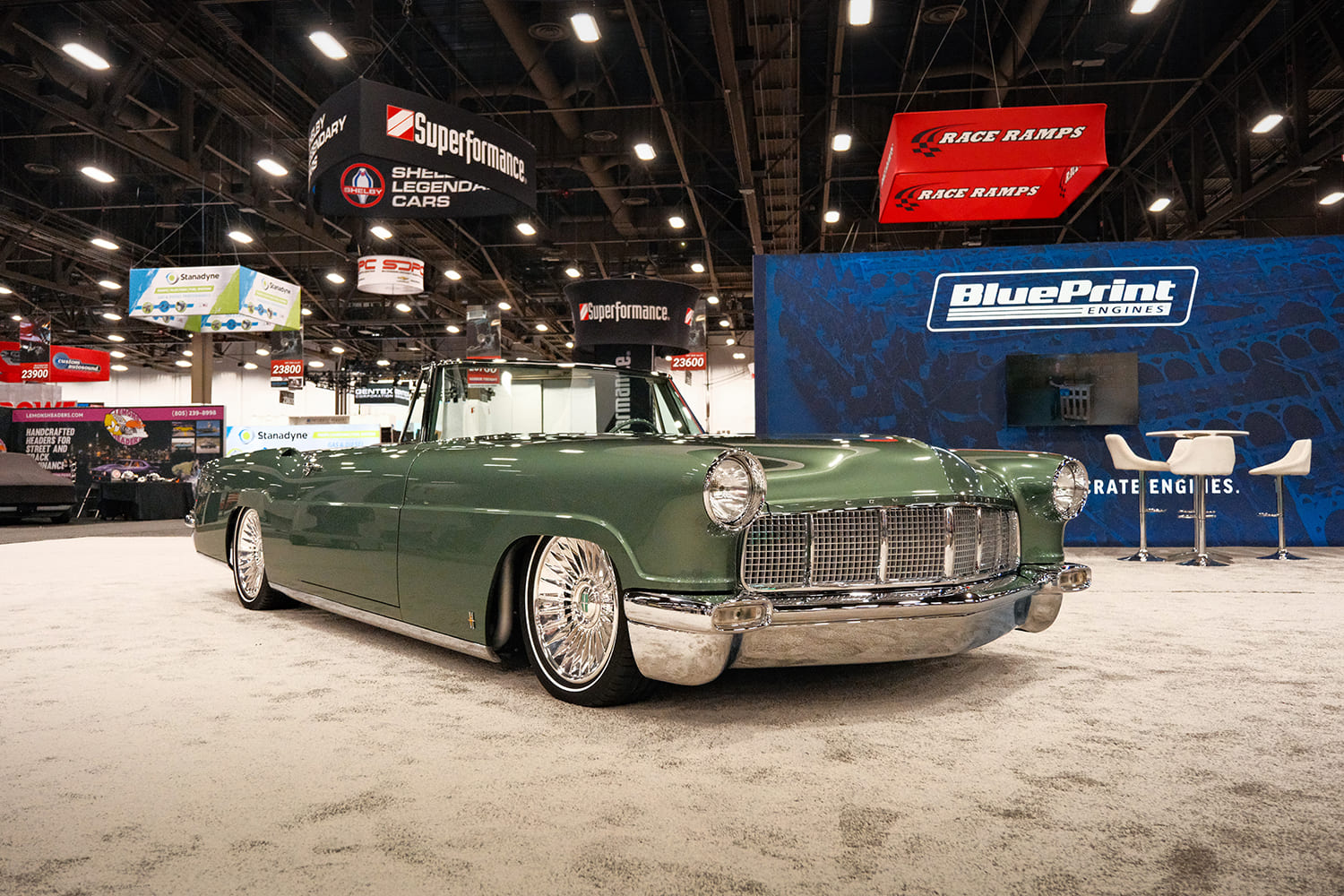
Chip Foose’s 1956 Lincoln Continental for BluePrint Engines became one of SEMA’s most polarizing builds, not because of its design but because of what lay underhood. Some Ford traditionalists balked at the idea of an LS-style architecture powering a mid-century Lincoln, but the criticism misses the point: BluePrint’s new 376ci Pro Series LS Compatible long-block isn’t built from GM components at all. The engine is a clean-sheet, fully BluePrint-engineered package, centered on the company’s new cast-iron LS Compatible block and new LS3 Compatible aluminum heads, delivering a dyno-verified 530 hp and 495 lb-ft. Foose disguised the modern powerplant beneath stock-style air cleaner and valve covers to echo the Continental’s original 368ci Y-block, turning the car into a clever demonstration of how modern performance can coexist with period-correct presentation.
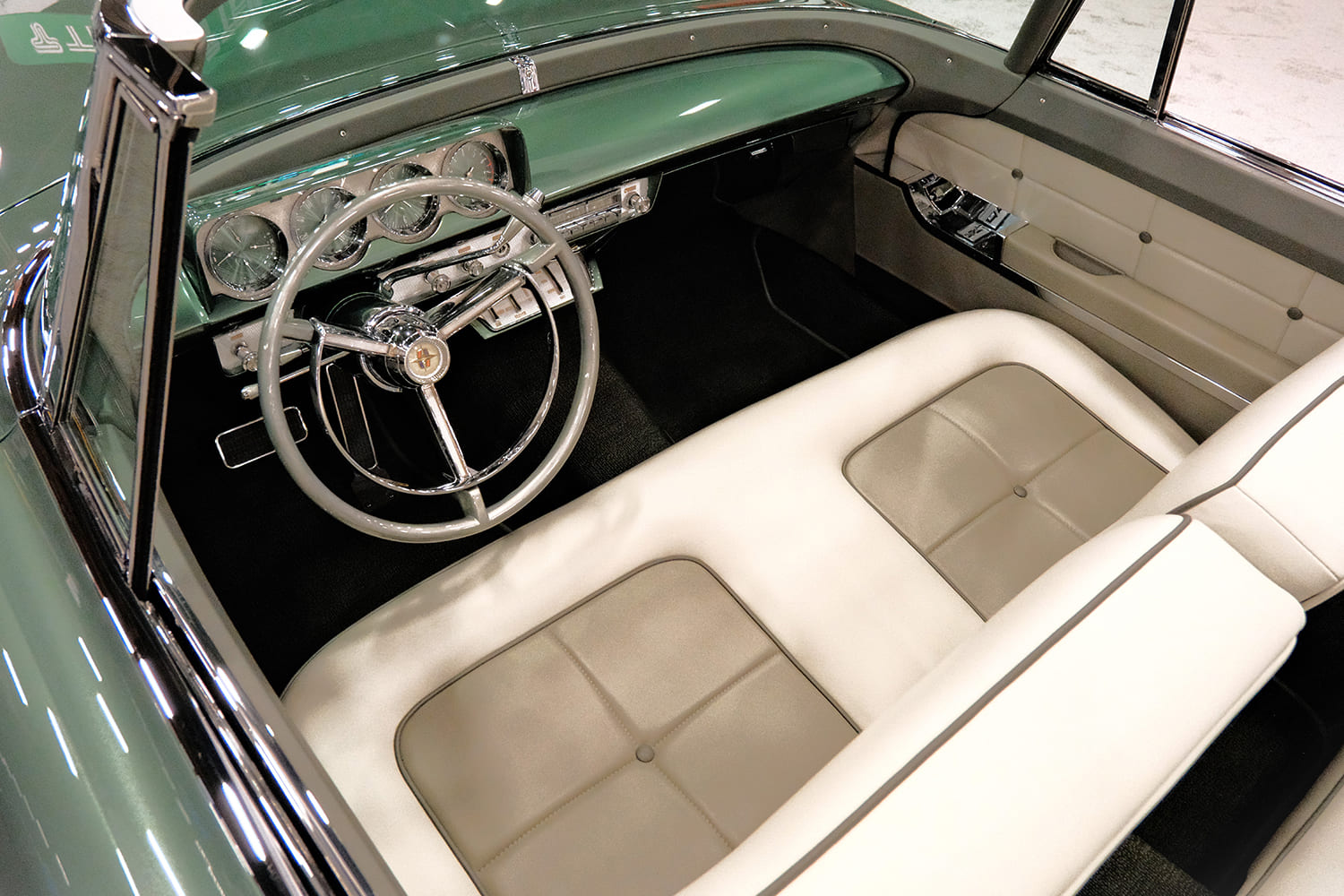
Foose’s transformation of the Continental itself is equally ambitious. He reimagined the coupe as an open-air grand tourer, removing the roof and reshaping the door openings to emphasize proportion and flow. A 1964 Thunderbird rear seat integrates smoothly into the revised cabin layout, while subtle fender modifications, a refined body sideline, and recontoured bumpers enhance the car’s stance. Up front, the headlights are set back and lowered, the hood is smoothed and free of emblems, and 1956 Ford truck door handles add a purposeful, simplified look. The rear decklid opening was reengineered, and the signature spare-tire hump was lowered 3 inches, giving the car a sleeker, more Foose-like profile. Reworked front spindles and rear lowering blocks set the ride height, with Master Power Brakes discs and custom Wheel Pros wheels completing the updated chassis.
Inside and out, the Continental combines mid 20th century luxury with modern craftsmanship. BASF paint mixed by Steve DeMan gives the car a deep, tailored finish, while custom moldings and rocker trim unify the revised proportions. Bill Dunn Interiors crafted a cabin that pays homage to the Lincoln’s heritage but benefits from contemporary precision, with the disguised BluePrint engine underneath maintaining the illusion of factory authenticity. The result is a Foose signature piece—respectful, imaginative, and technically sharp—while providing BluePrint Engines with a compelling, high-style platform to launch its new Pro Series LS program. MR