1932 Ford Highboy Roadster has Coming Out 27 Years Later
By Kev Elliott
Photography By The Author, Pete Chapouris III, Tony Thacker & the Veazie Bros.
Illustration By Eric Brockmeyer
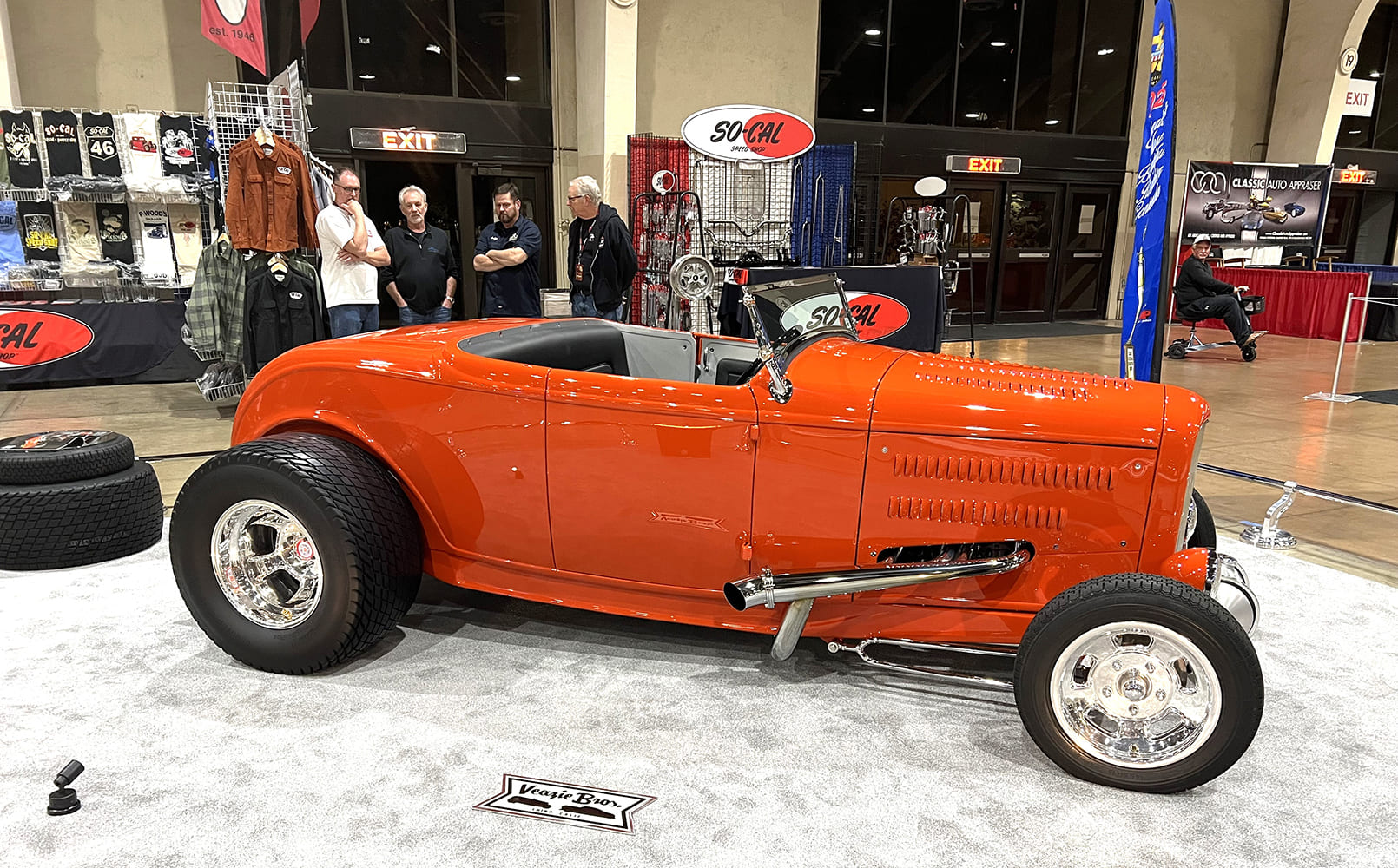
Twenty-seven years, that’s how long this roadster project took to complete. Considering it has had two owners and gone through three shops during that time, it has turned out remarkably close to its original design.
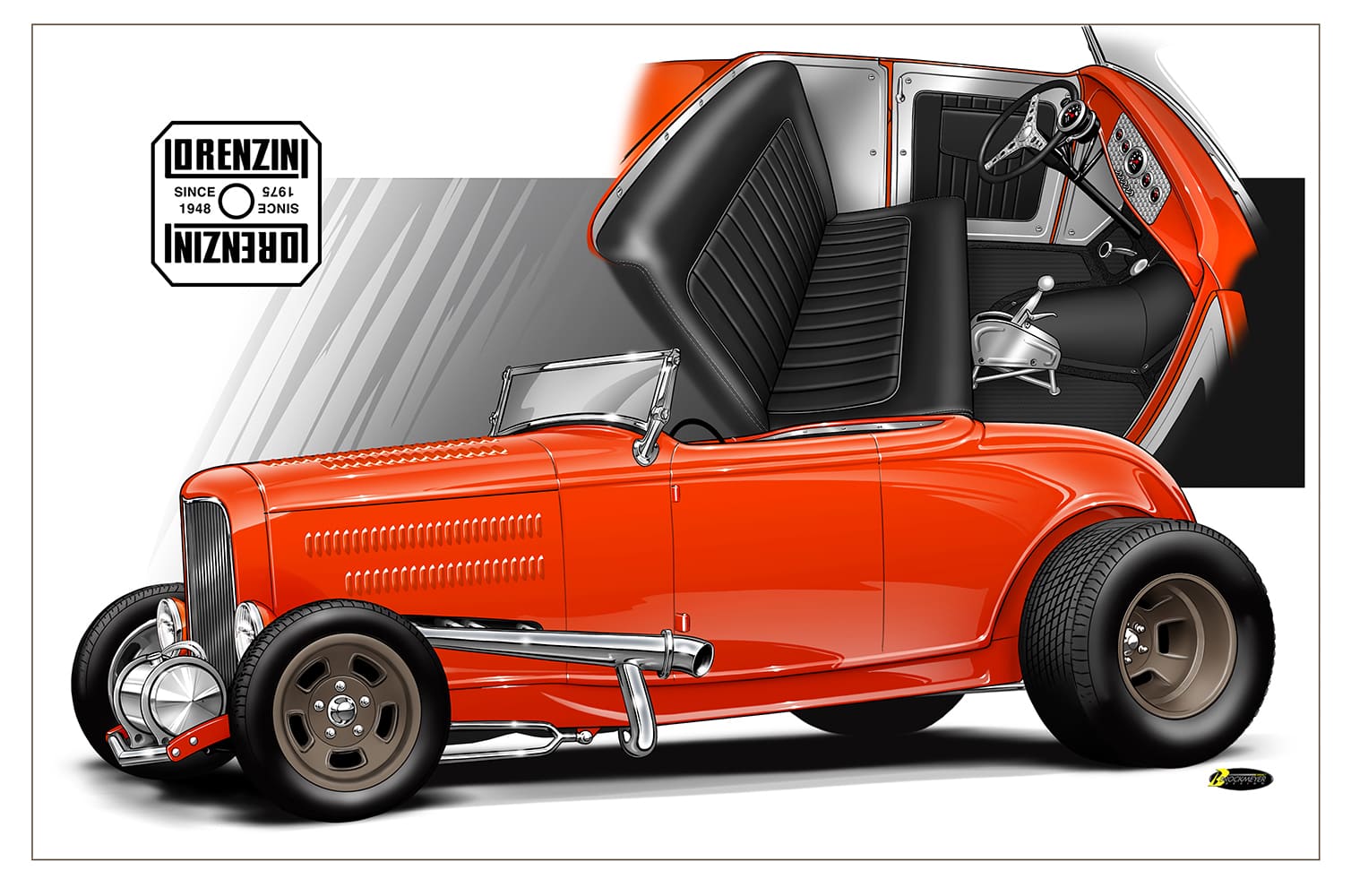
It was in the Oct. ’25 issue of Modern Rodding that Scott Lorenzini’s 1932 Ford highboy roadster and Larry Jacinto’s 1941 Willys pickup graced the cover. The roadster was shown with original magnesium Halibrand wheels, polished on the passenger side, and “as-cast” on the driver side. (Illustration by Eric Brockmeyer.)
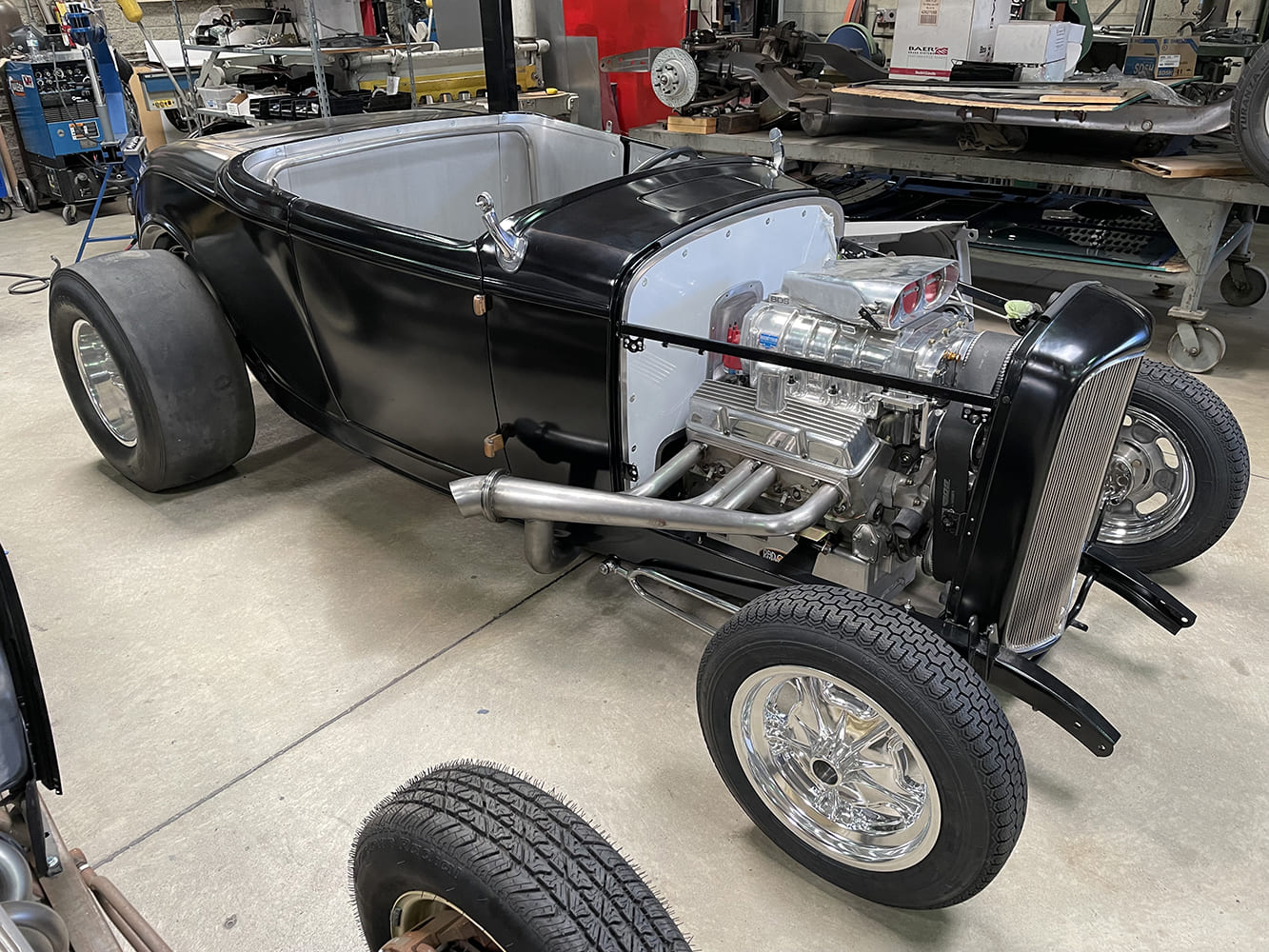
The project was initially started by SO-CAL Speed Shop, using one of the company’s prototype Step Boxed frames, for Bob Garibay as a clone of “Limefire.” The current owners, Scott and Gary Lorenzini, had Veazie Bros. Fabrication finish it, adding a few tweaks and their own ideas. Evin and Justin Veazie, both former employees of SO-CAL Speed Shop (now own Veazie Bros. Fabrication, located in one of SO-CAL’s former buildings), were the perfect choices to handle the build, as they knew exactly how a SO-CAL–style 1932 comes together, having built several.
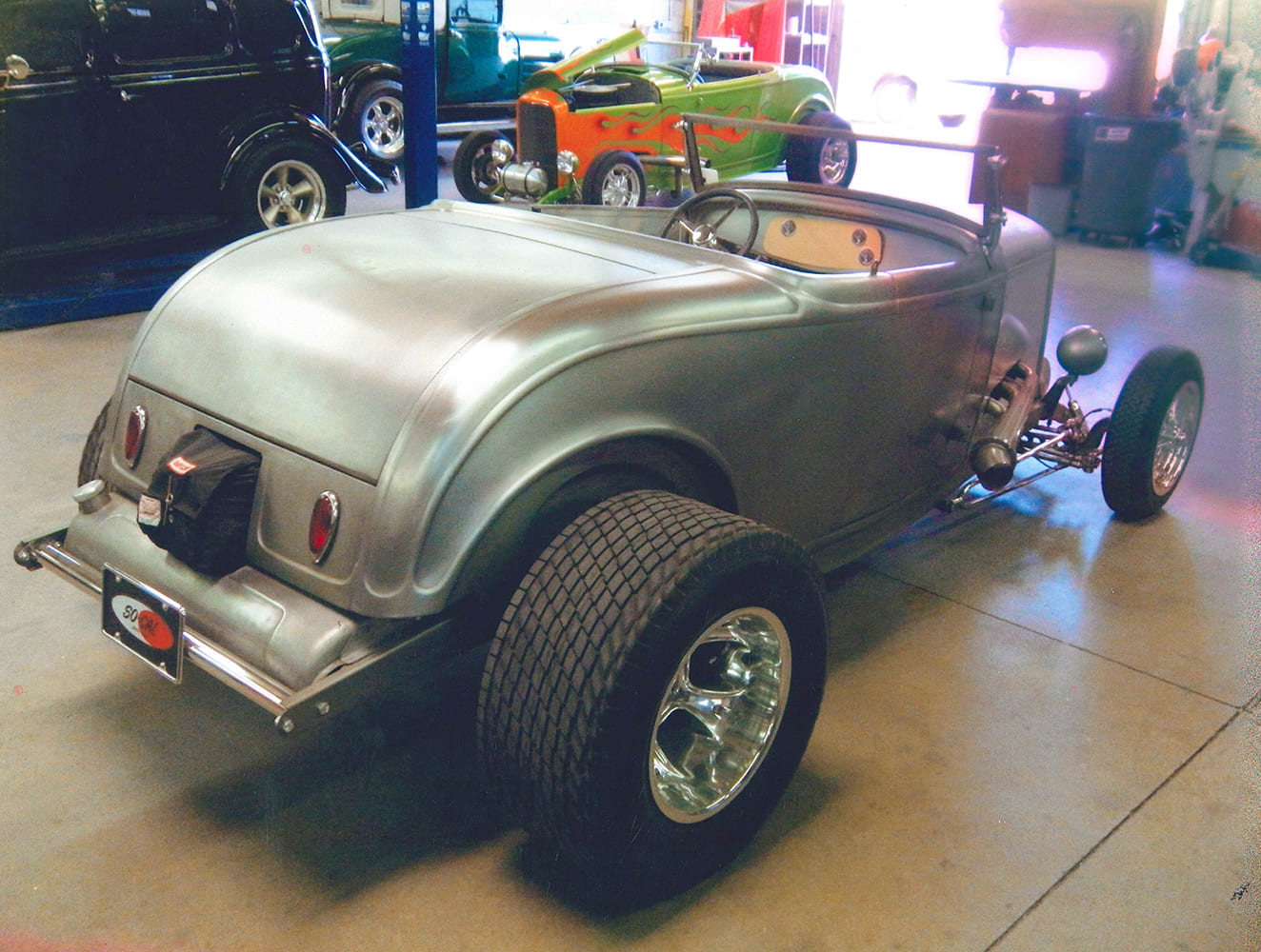
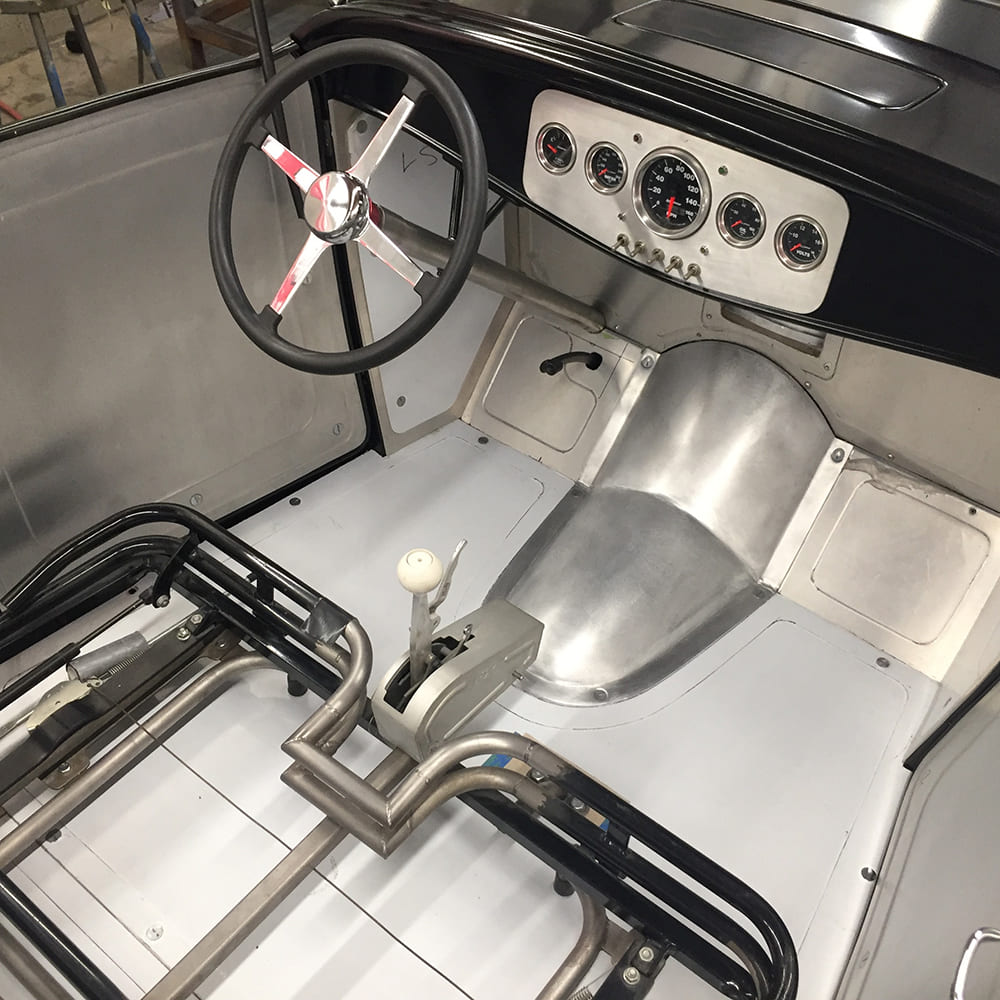
Almost twins! Still in the build stage at SO-CAL Speed Shop—the dash layout is being mocked up here—“Limefire” sits in the background.
The roadster debuted at the 2025 Grand National Roadster Show and even competed for the America’s Most Beautiful Roadster award. This elevated the build and detailing to the next level. Here’s how an almost three-decade-long project evolved into a street-driven hot rod that more than holds its own at indoor car shows. MR
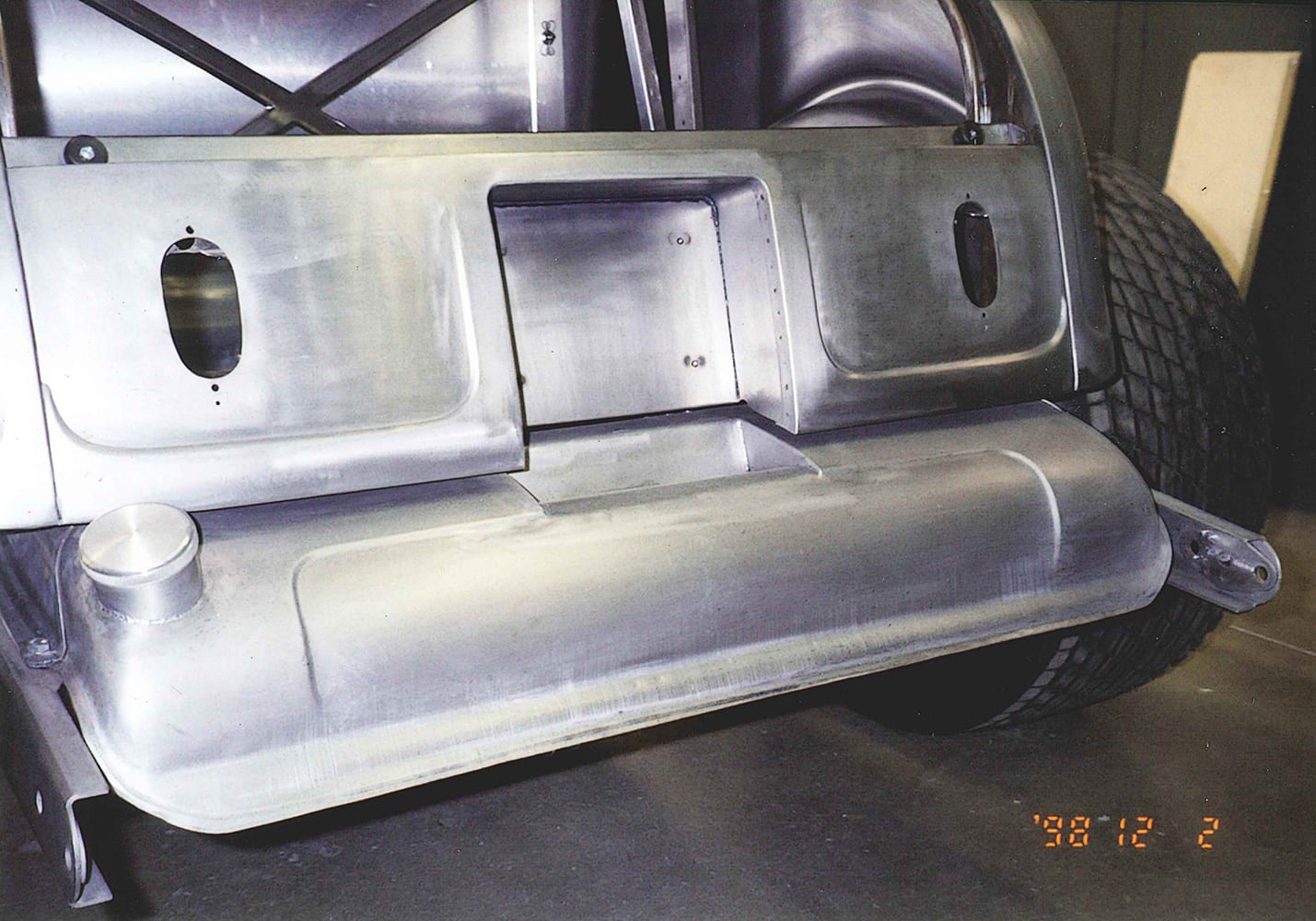
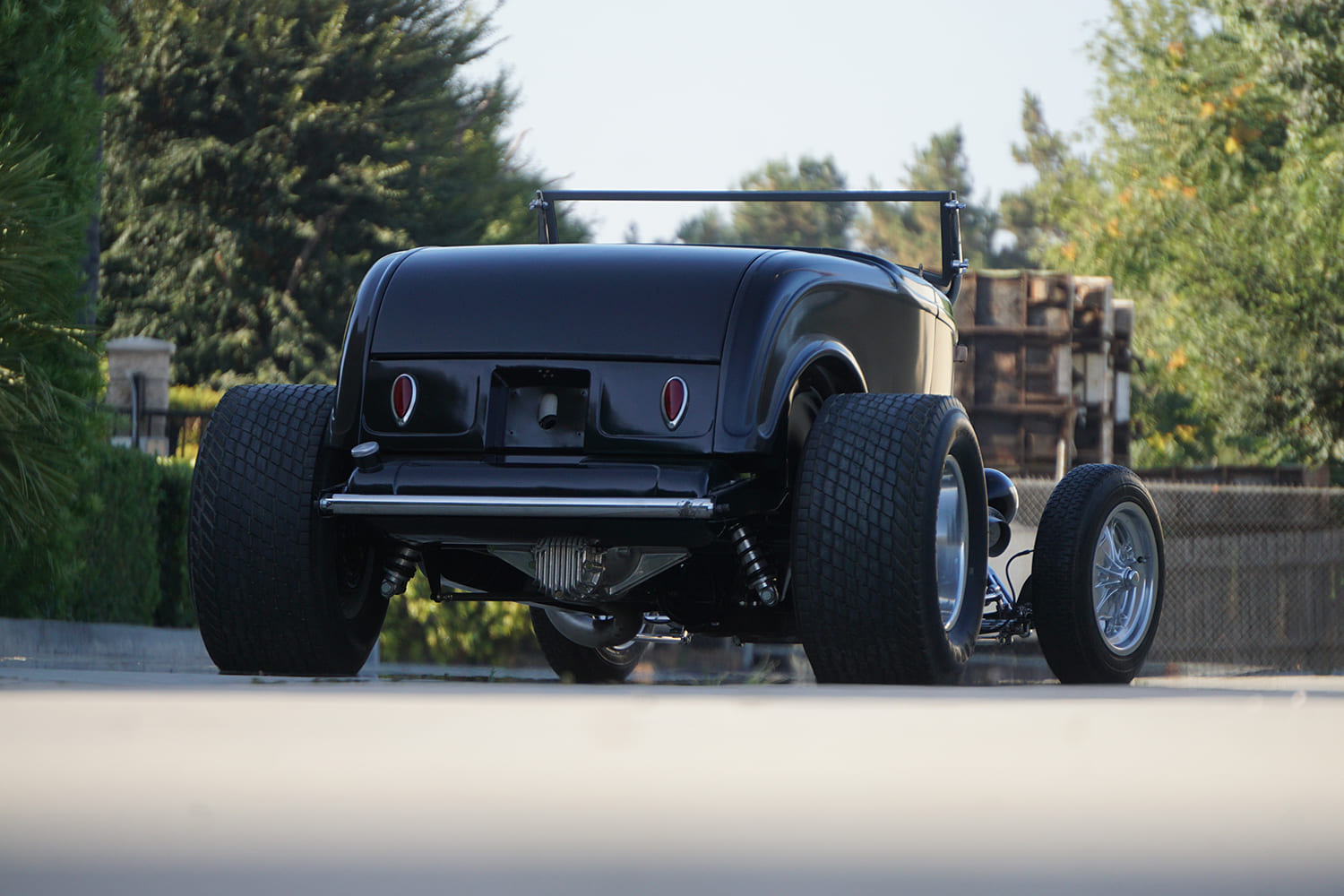
With original owner Bob Garibay aiming to race the car at Bonneville, a parachute mount recess was added into the body and on top of the gas tank.
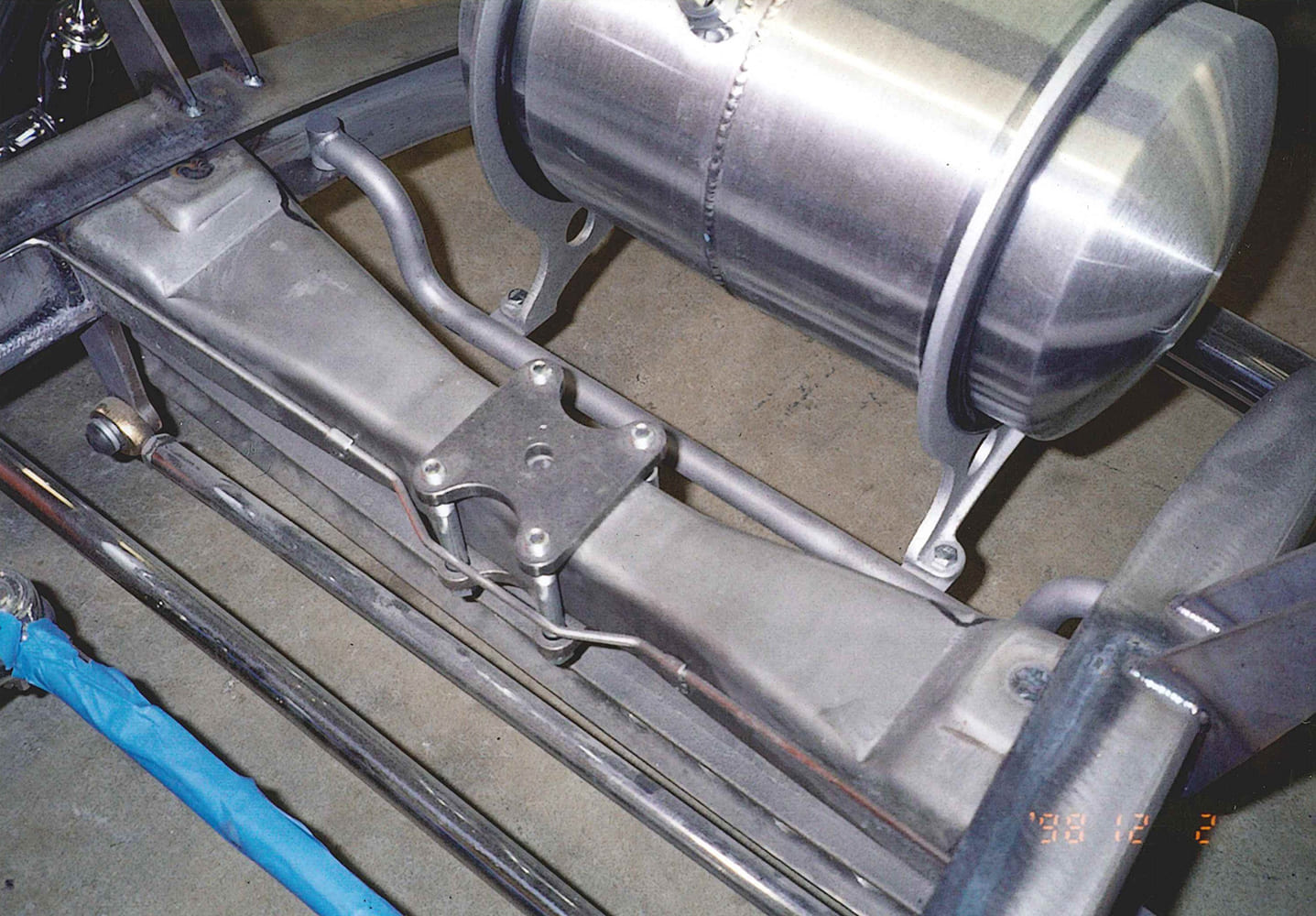
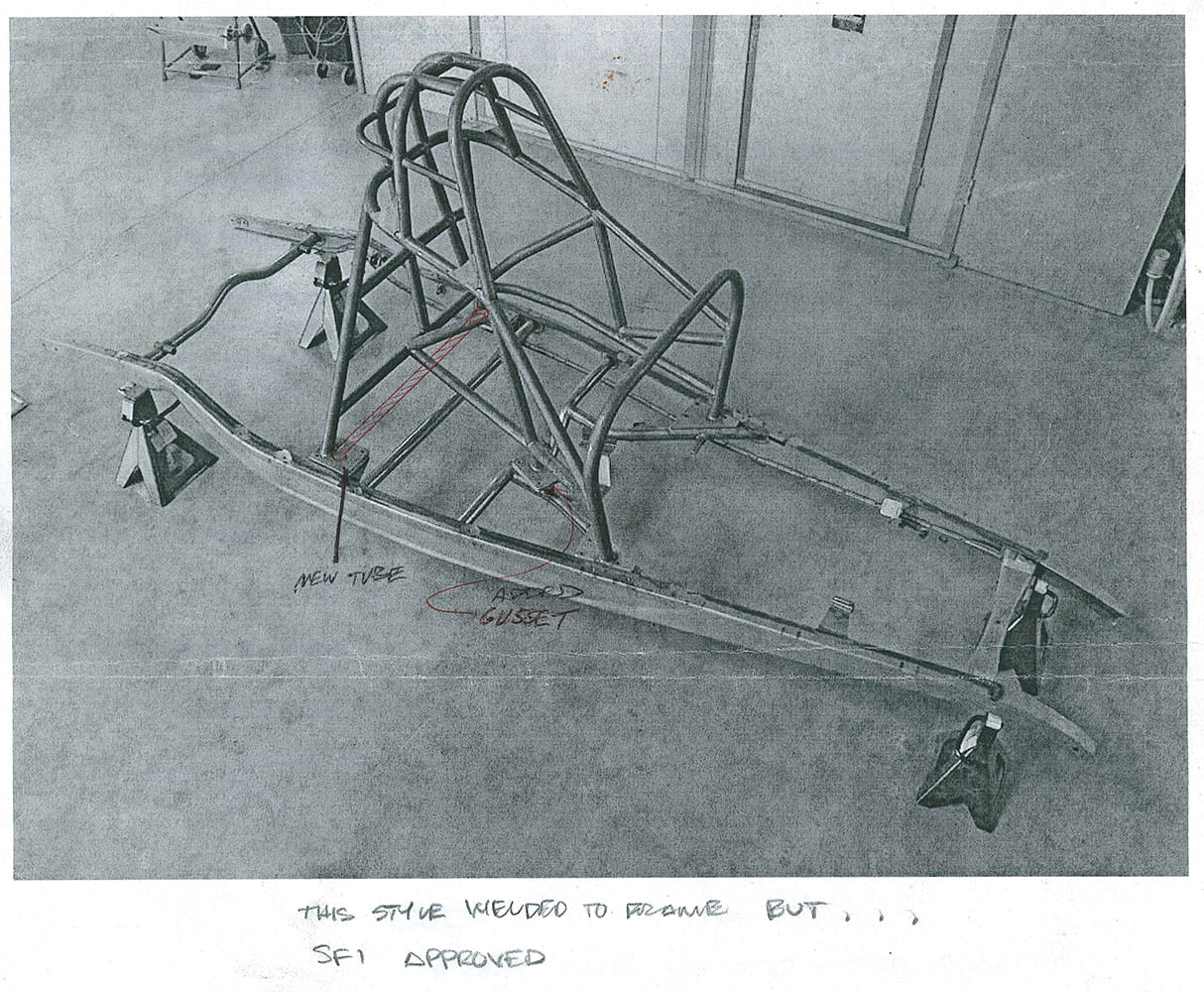
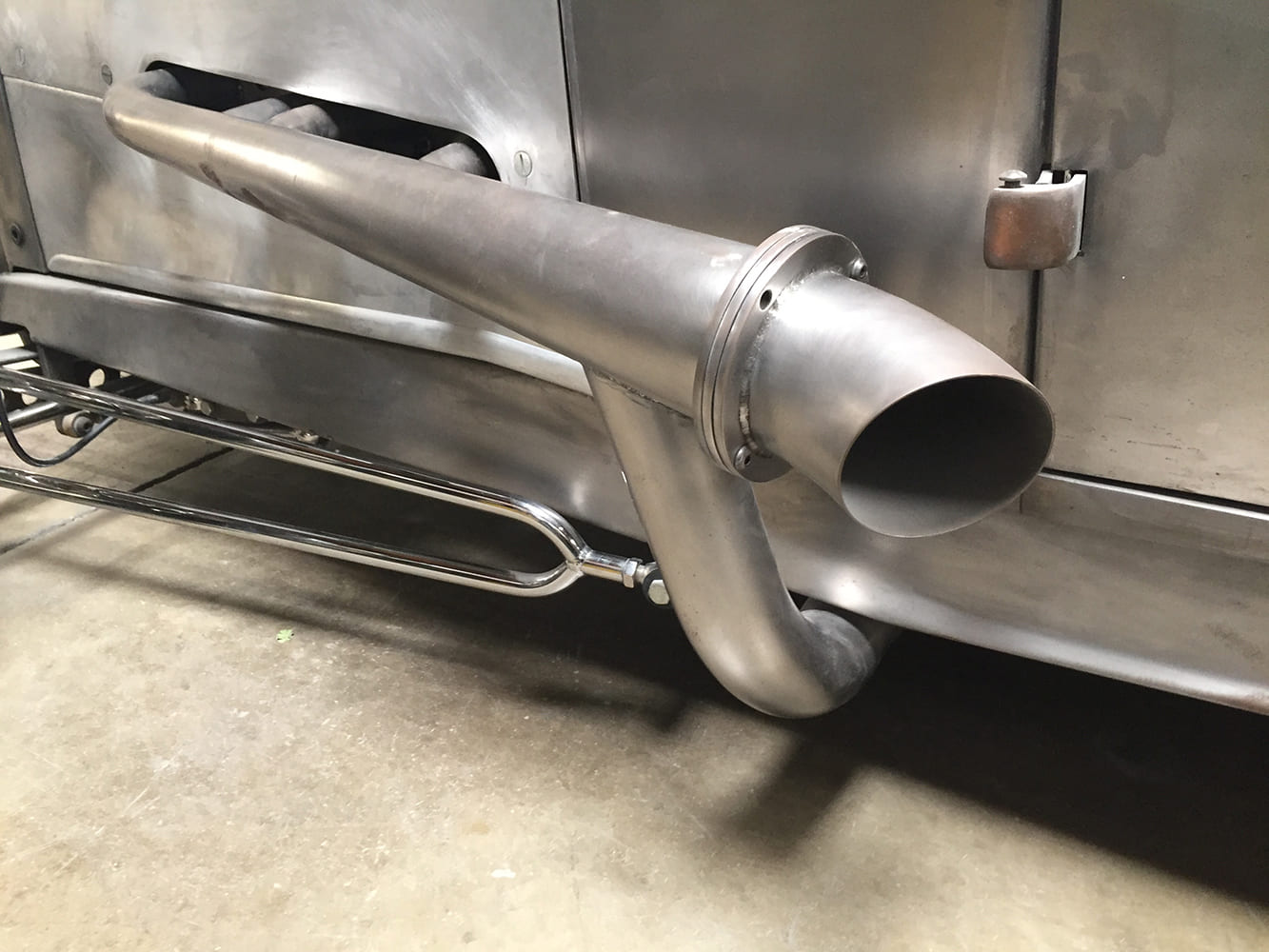
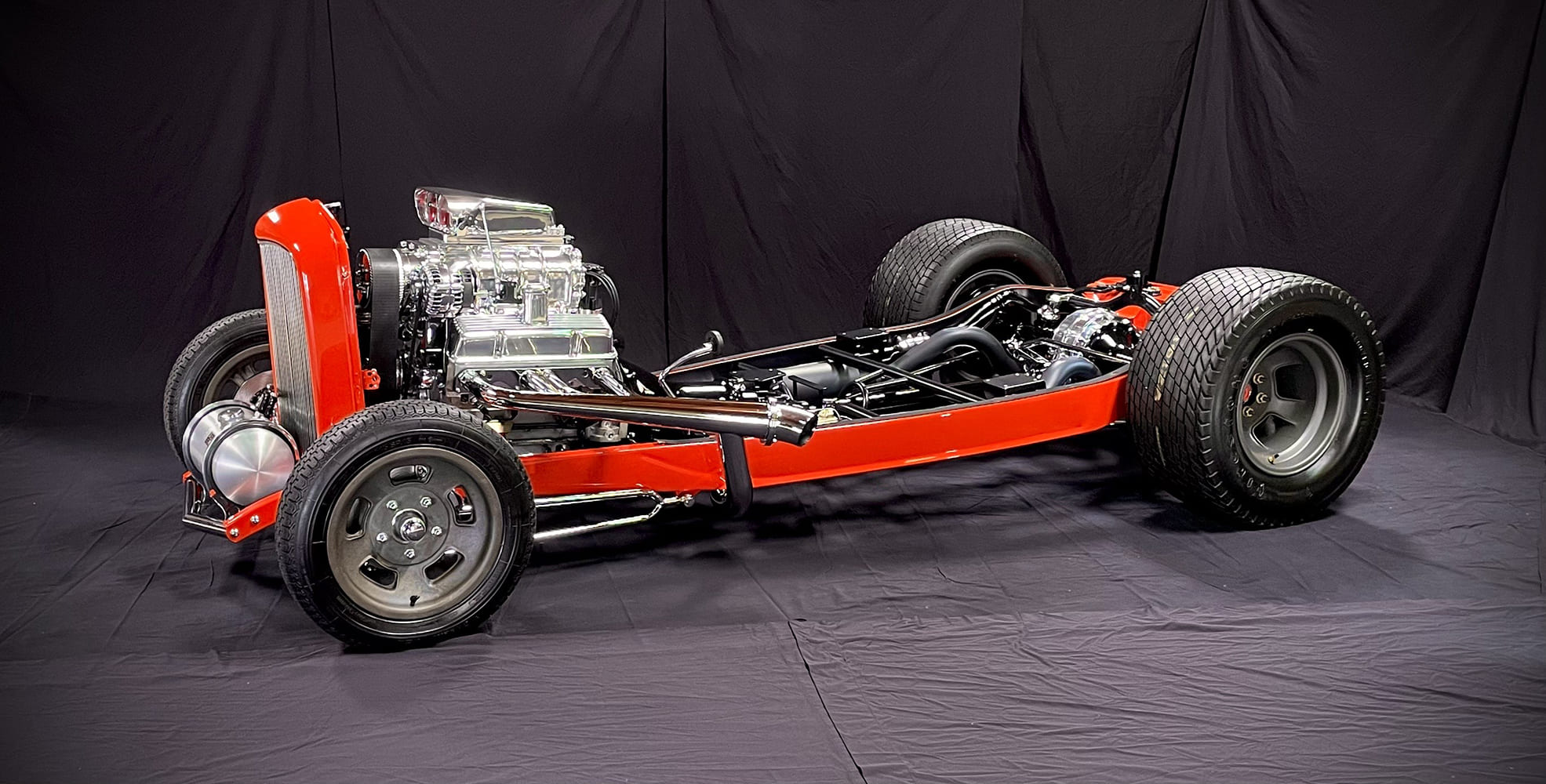
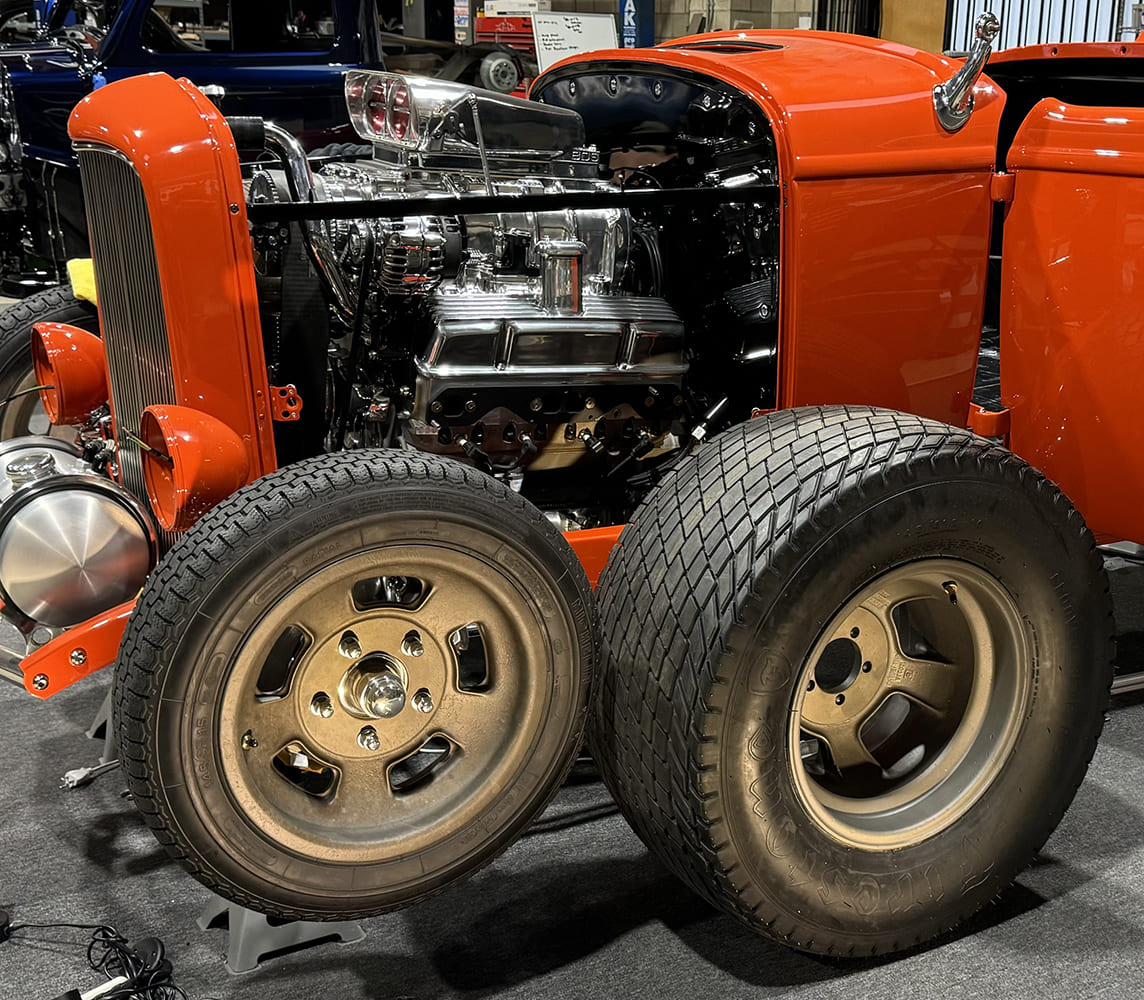
A tubular mount was added forward of the front crossmember for the Moon tank, which serves as the coolant overflow tank. The roadster features a prototype SO-CAL Speed Shop Step Boxed frame.Part of the Bonneville racing plans called for a rollcage. This Funny Car–style cage was built to bolt onto the frame. Scott still has this cage, minus the cowl hoop, but since he’s significantly taller than the original owner Garibay, it no longer fits him.With more than a passing nod to Limefire’s headers, larger primaries and collectors feed a 3-inch system that snakes its way under the framerails, over the ladder bars, and under the rearend.
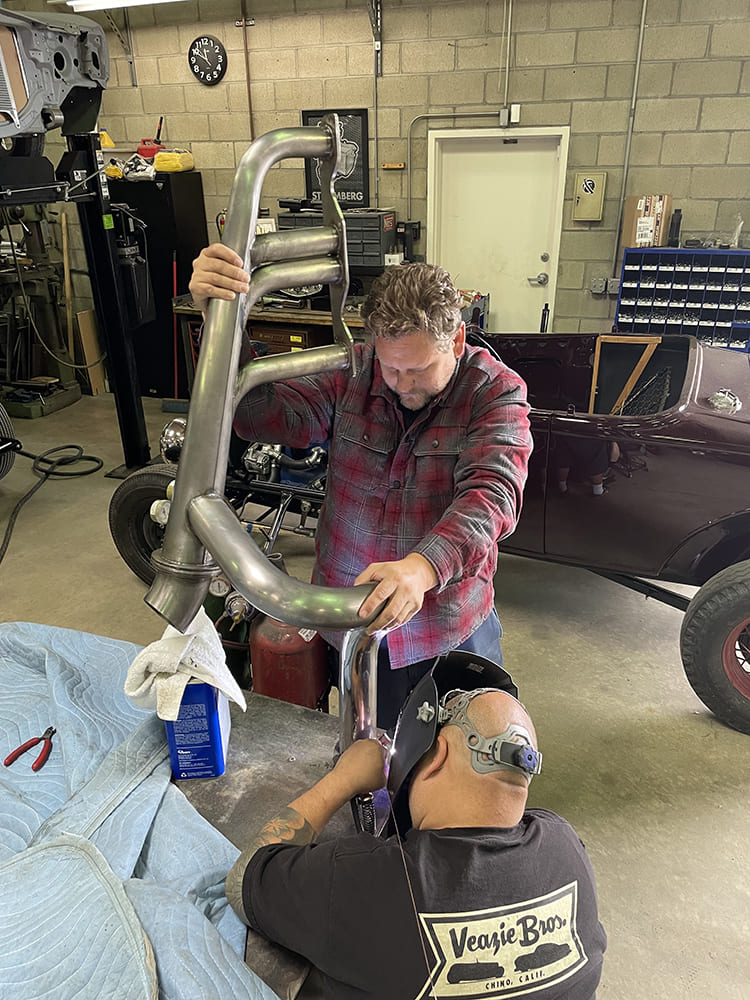
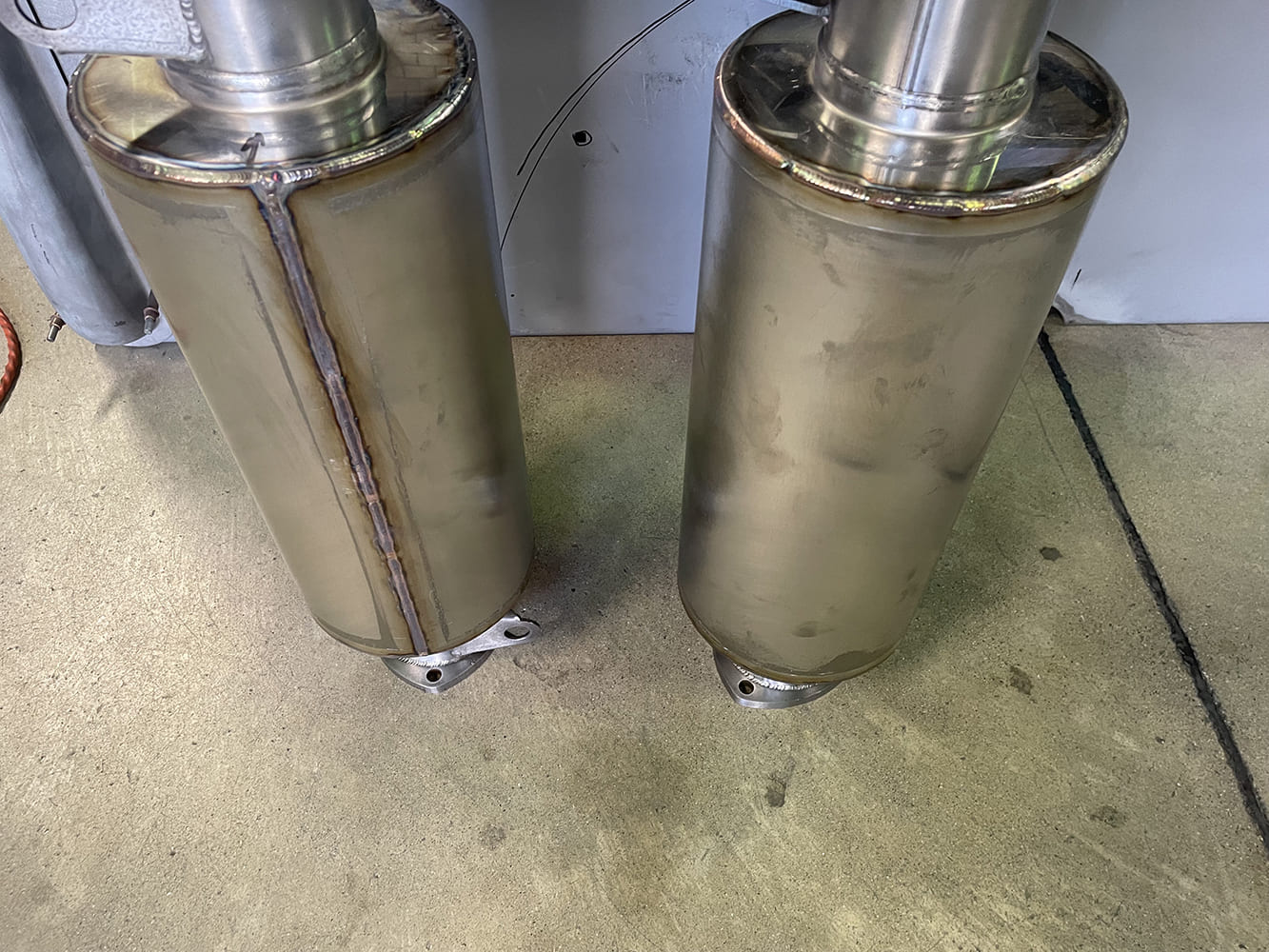
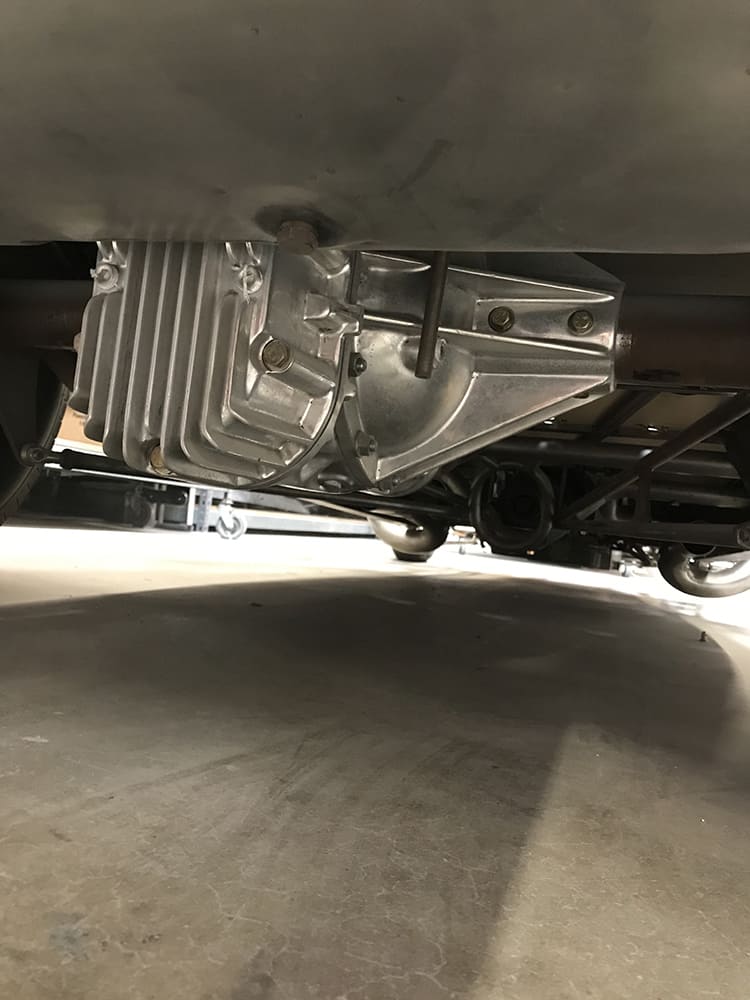
Evin Veazie supports the passenger side header while Greg Hirota TIG welds the flange where it connects to the muffler.The mufflers are from MagnaFlow, and they were wrapped in 18-gauge stainless steel to hide the stamped branding, then polished.An N.O.S. Halibrand 301 Champ from the 1970s, modified to accept later 31-spline axles, a positraction differential, and bell axle housings.
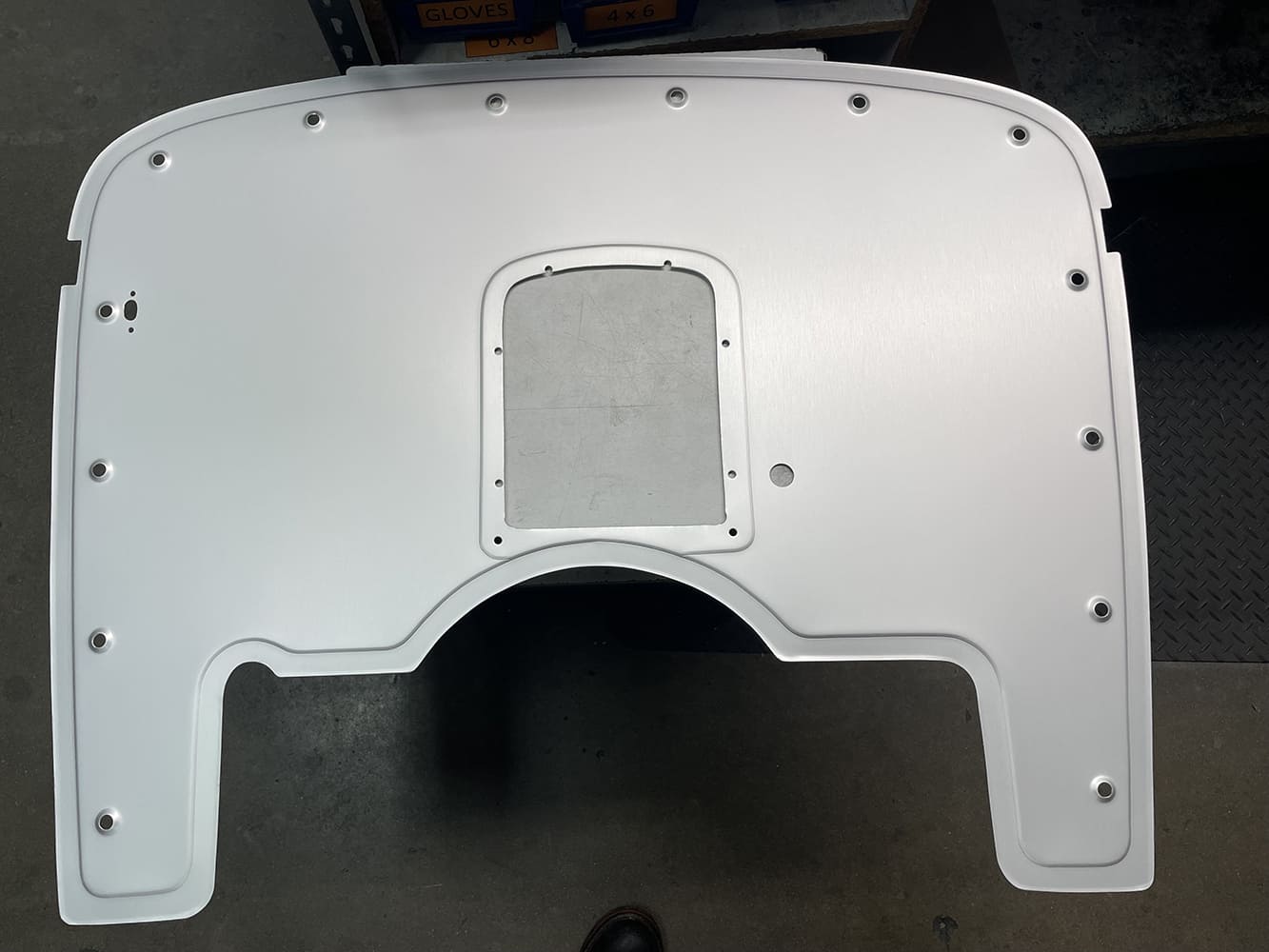
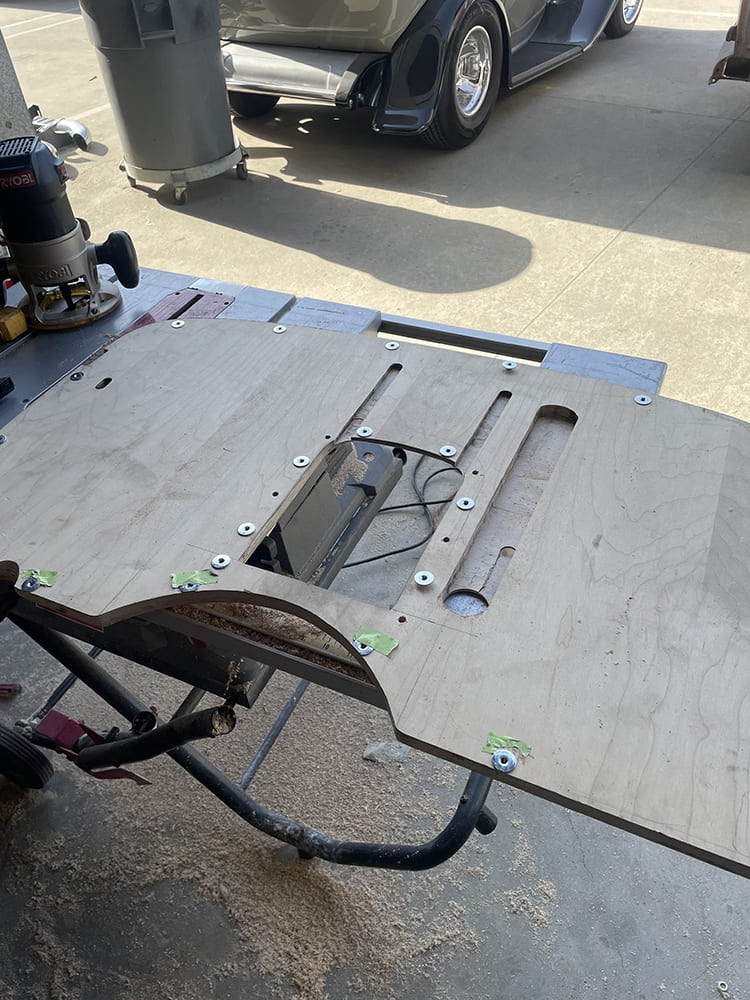
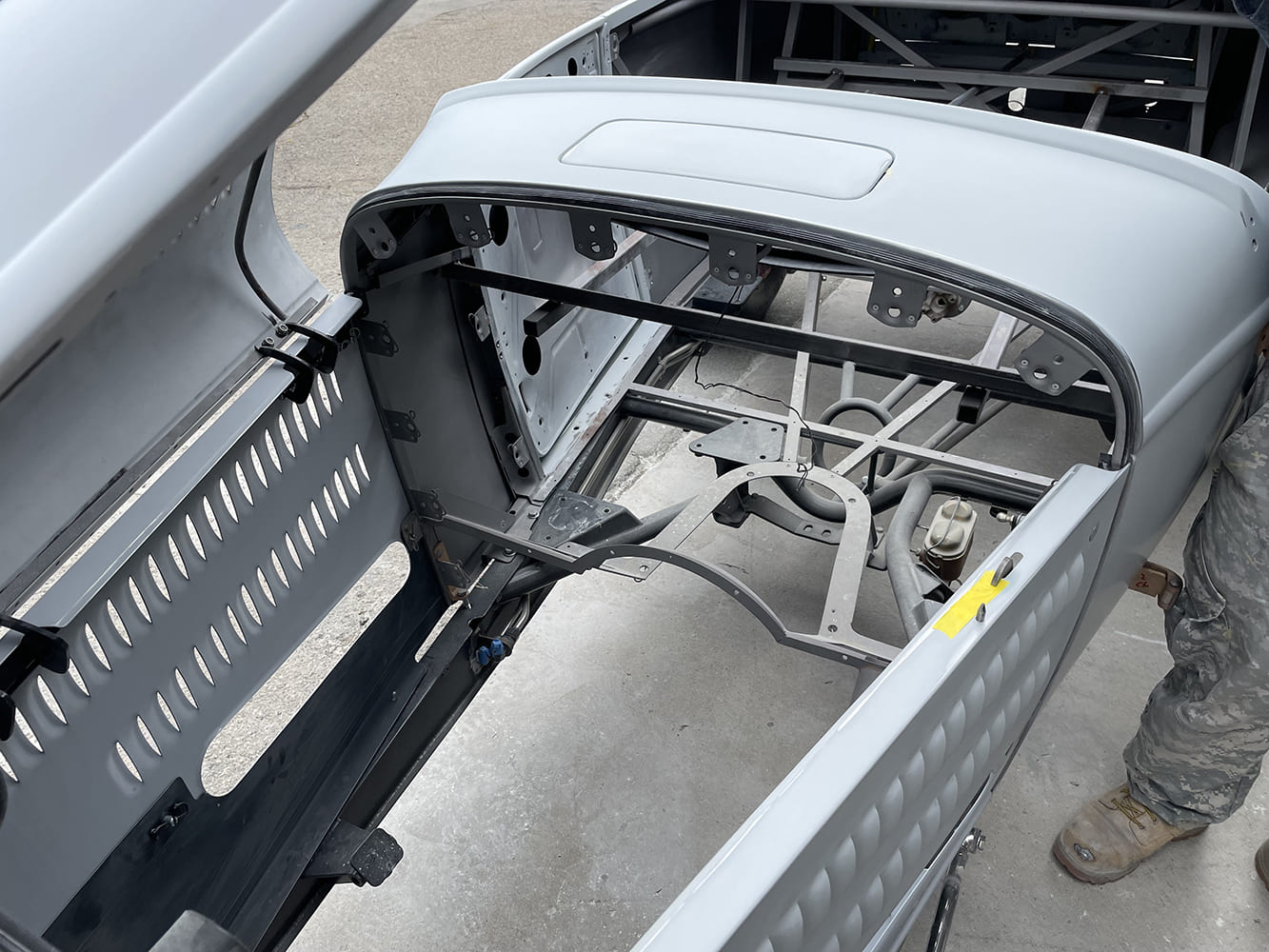
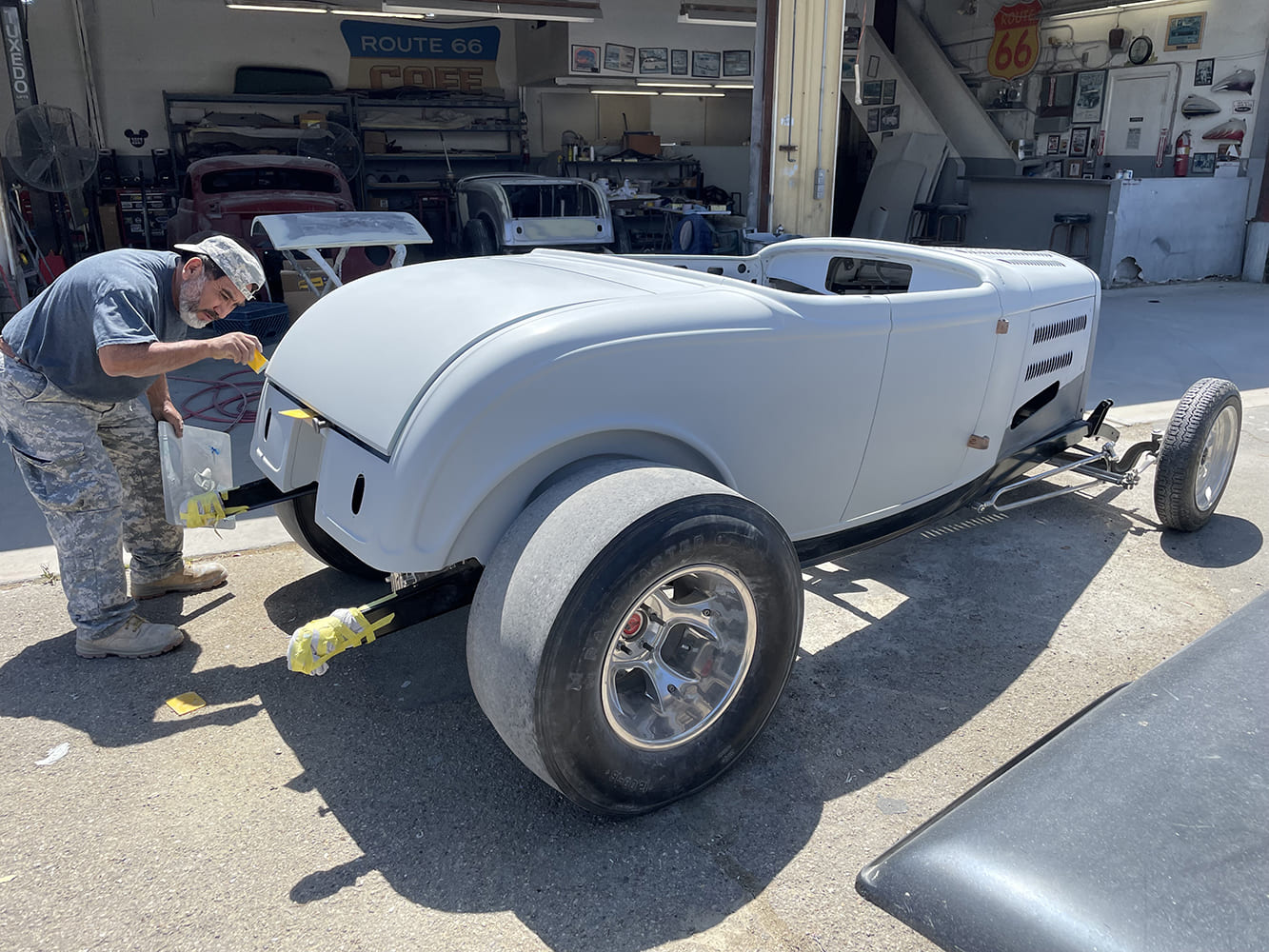
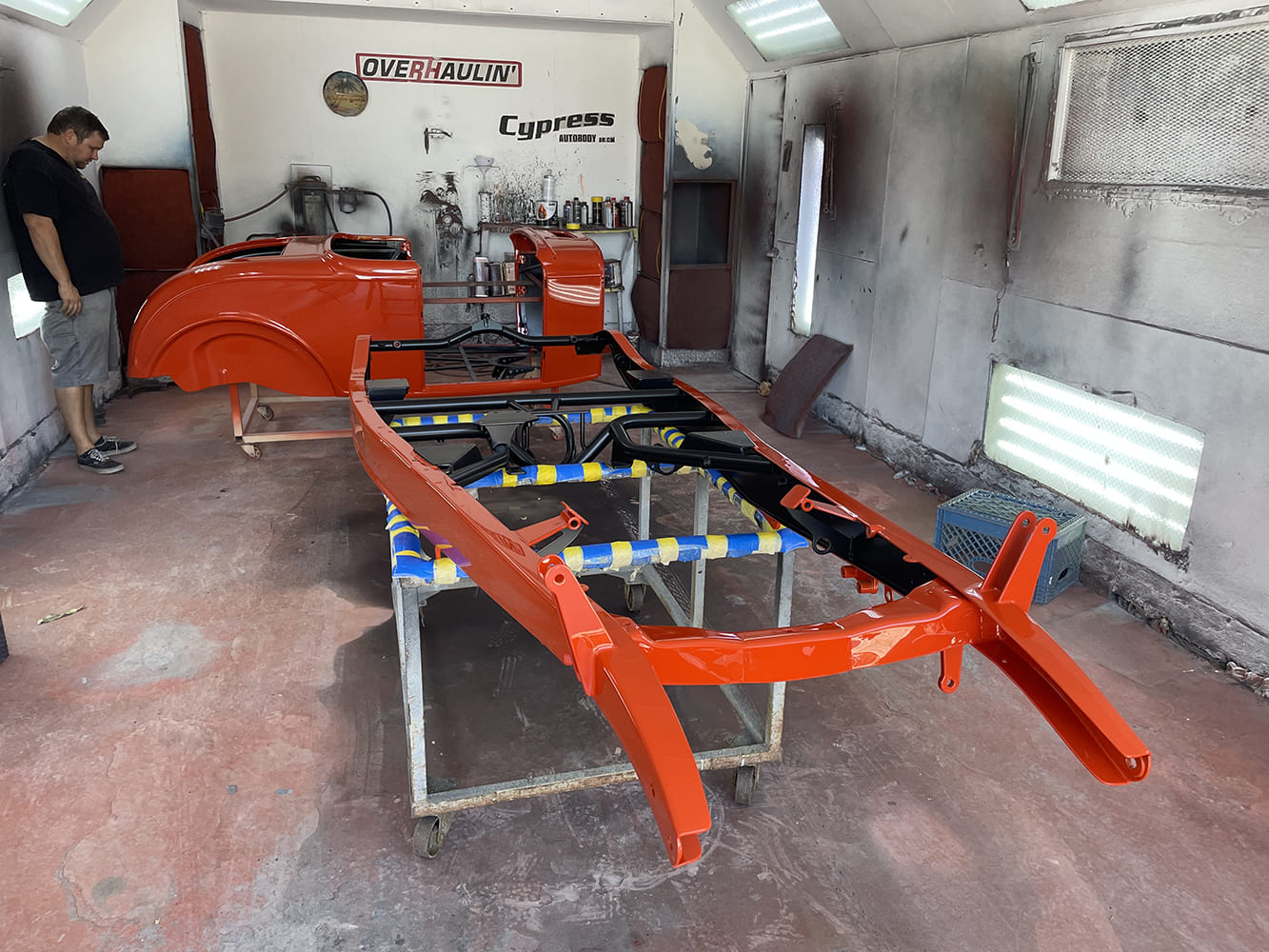
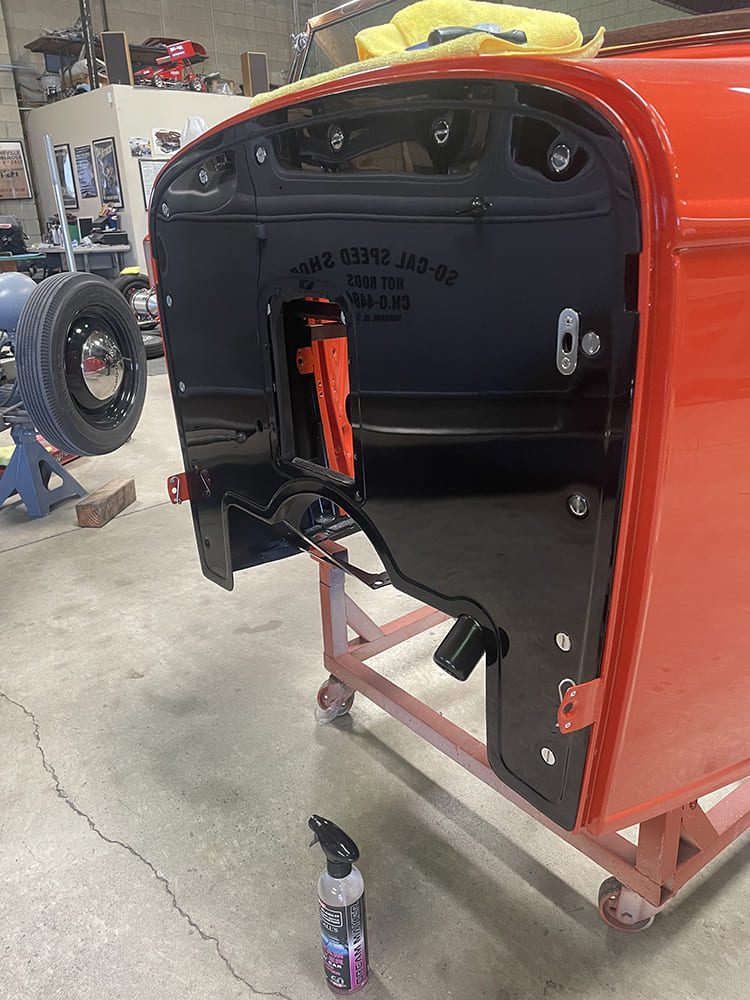
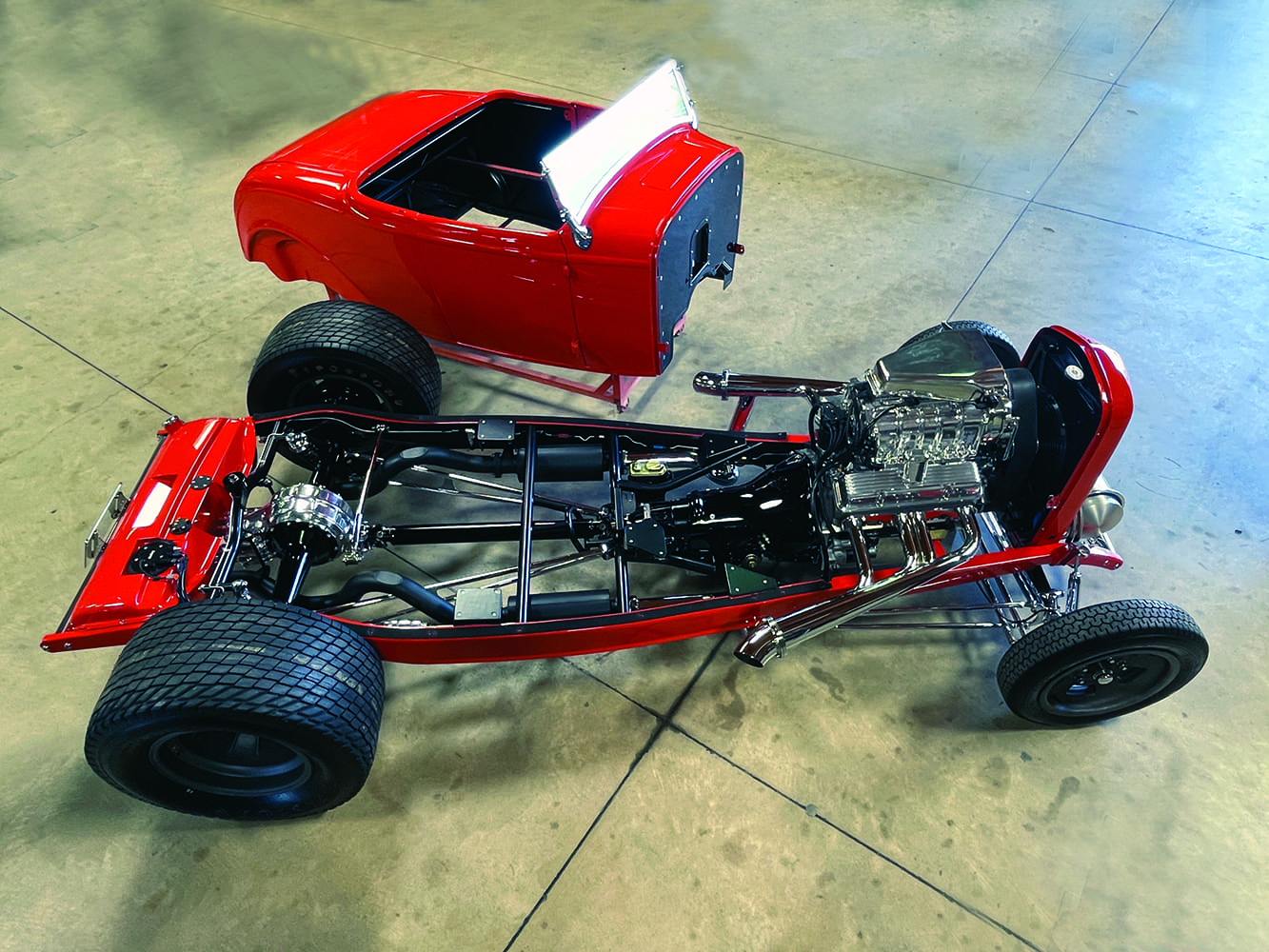
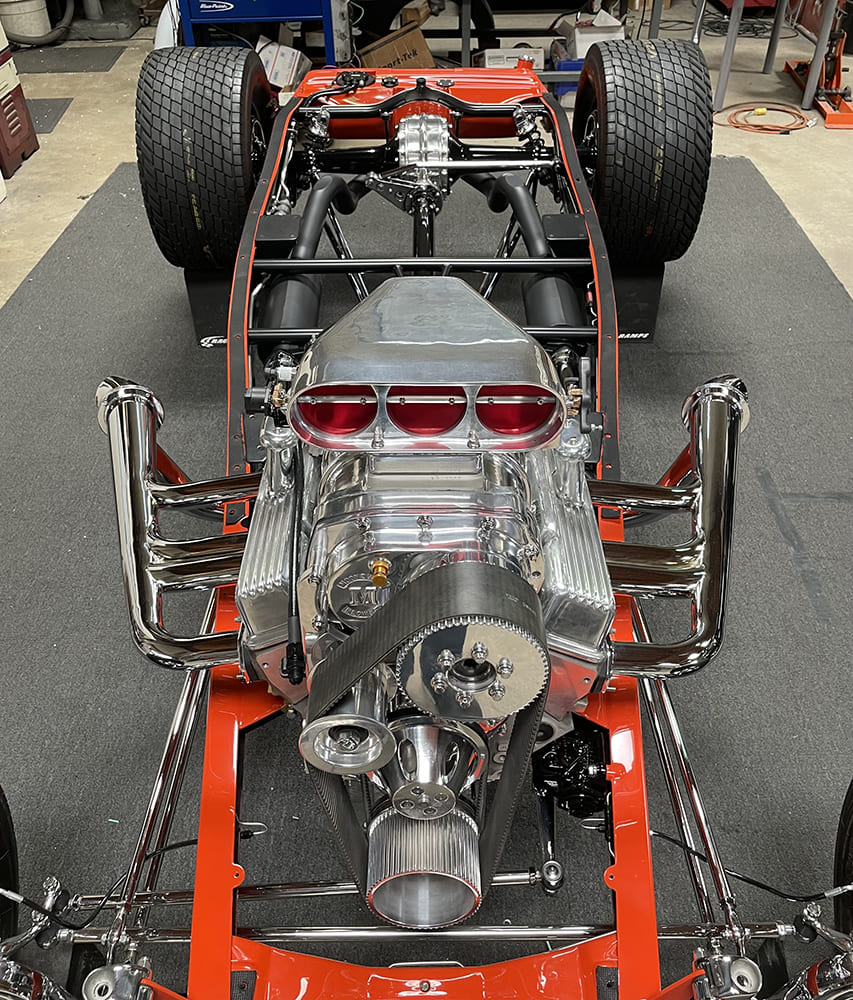
The firewall is made from two aluminum panels sandwiching plywood. This is the outer panel, built by Pauly Rivera, viewed from the rear. It attaches using Dzus fasteners to tabs welded to the body. A bolt-in recessed centersection clears the distributor and provides access.The inner firewall panel bolts to threaded inserts in the plywood, which was routed to allow the wiring to pass through but enter at the top on the inside and exit lower, behind the engine, making for a clean appearance on both sides.After a protracted build at SO-CAL Speed Shop, Mick’s Paint took over the project following Pete Chapouris’ untimely death, a process which involved pushing it across the yard from one building to another.Mick’s Paint nearly finished the roadster for paint, with it sprayed in black sealer, until Garibay took it home. The project had been 25 years in the making by this point, when Scott and Gary Lorenzini purchased it and delivered it to Veazie Bros. Fabrication.While the roadster was nearly ready for paint at this stage, Scott wanted to make some adjustments, some to give it a distinct identity apart from its Limefire clone roots, and others out of necessity. We’ve already noted that Scott is taller than the original owner, so the modified seating was replaced with a lower, custom setup, and the shifter was moved to the right side of the Rivera-fabricated transmission cover.The technology has progressed somewhat since this project began, so the original EFI system was replaced by an injector plate machined by Matt Carricaburu, using 80-pound LS injectors. It was connected to a Holley HP ECU and a dual-sync MSD distributor, with hidden wiring exiting at the rear.With the roadster stripped down, the firewall and interior panel Dzus fastener tabs are visible, along with the internal toeboard, tunnel, and floor framework. The rollcage mounting plates can also be seen on the frame.Cypress Auto Body got the nod to complete the final body prep and paintwork, with the body mounted and shimmed to the rolling chassis to ensure no issues with panel gap interference once painted.Although you might think the orange hue was chosen as a nod to the flames on Limefire, the custom-mixed burnt orange was actually selected to match Scott’s Gretsch drum set. Note that while the perimeter of the frame is body color, the crossmembers and Step Boxed plates are satin black.Back at the Veazie Bros. shop, with final color sanding and buffing completed by Serafin Patiño, final assembly can begin, starting with the gloss black outer firewall, complete with distributor access panel.The roadster was later debuted at the Grand National Roadster Show and would compete in the America’s Most Beautiful Roadster competition. To meet the requisites for a “Build Book,” the assembled rolling chassis was photographed in a makeshift “studio” inside the Veazie Bros. shop.Similarly, the body and chassis were photographed together before mating the pair. This means many details, such as the painted scattershield on the TH400, are hidden from view once the body is installed.
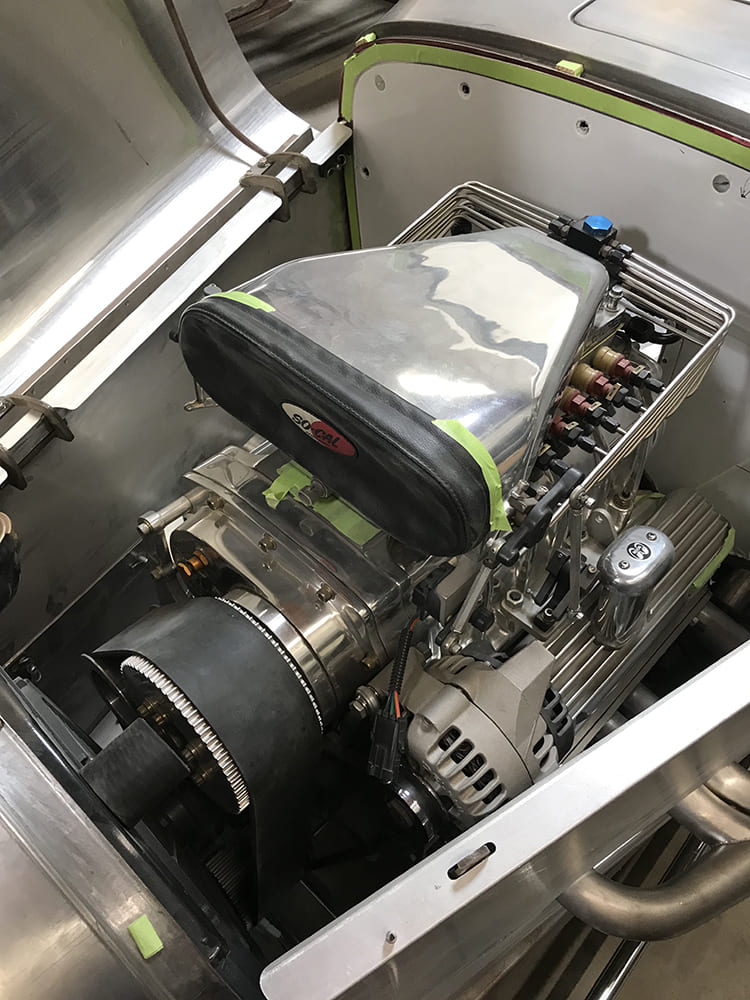
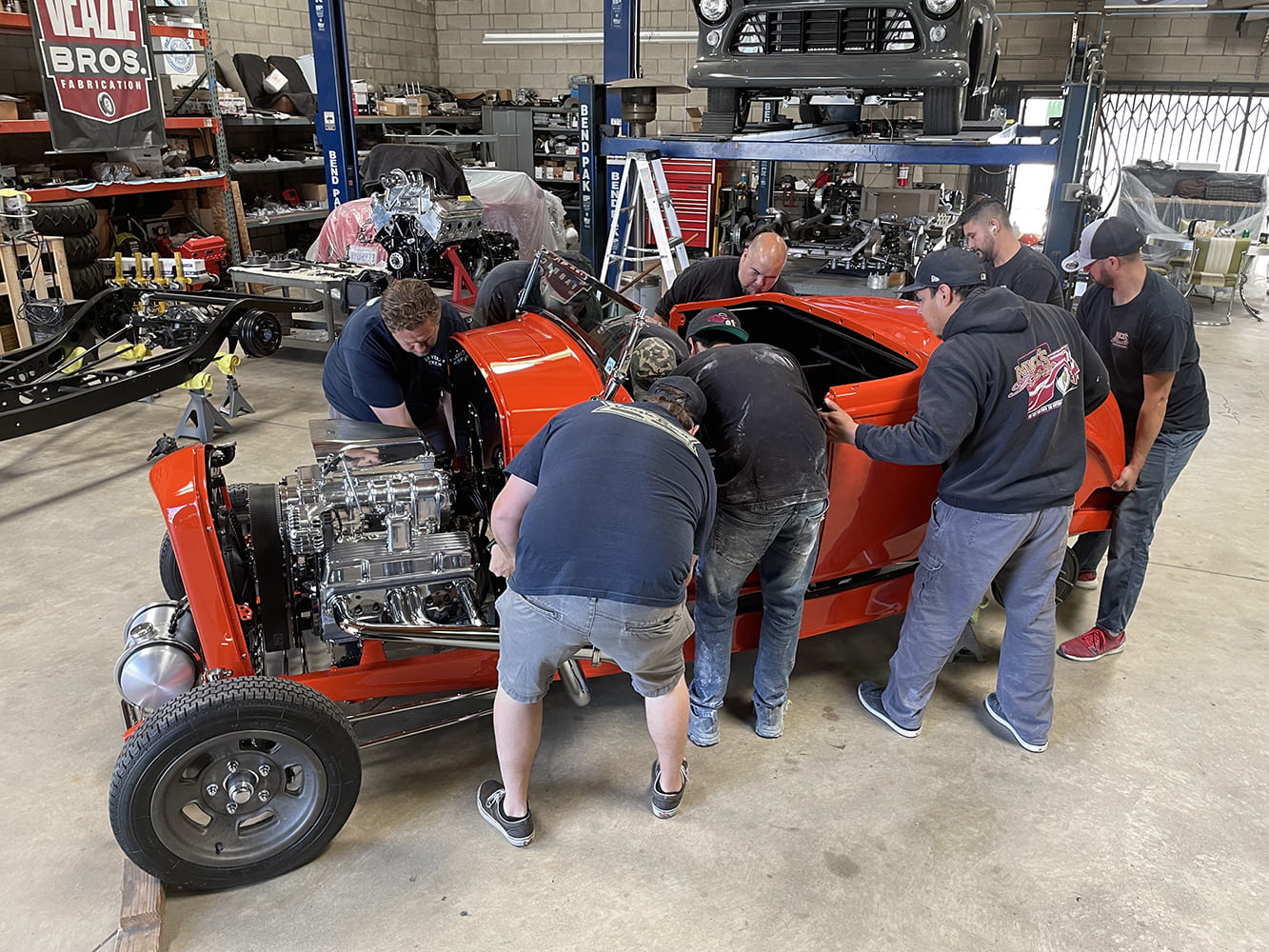
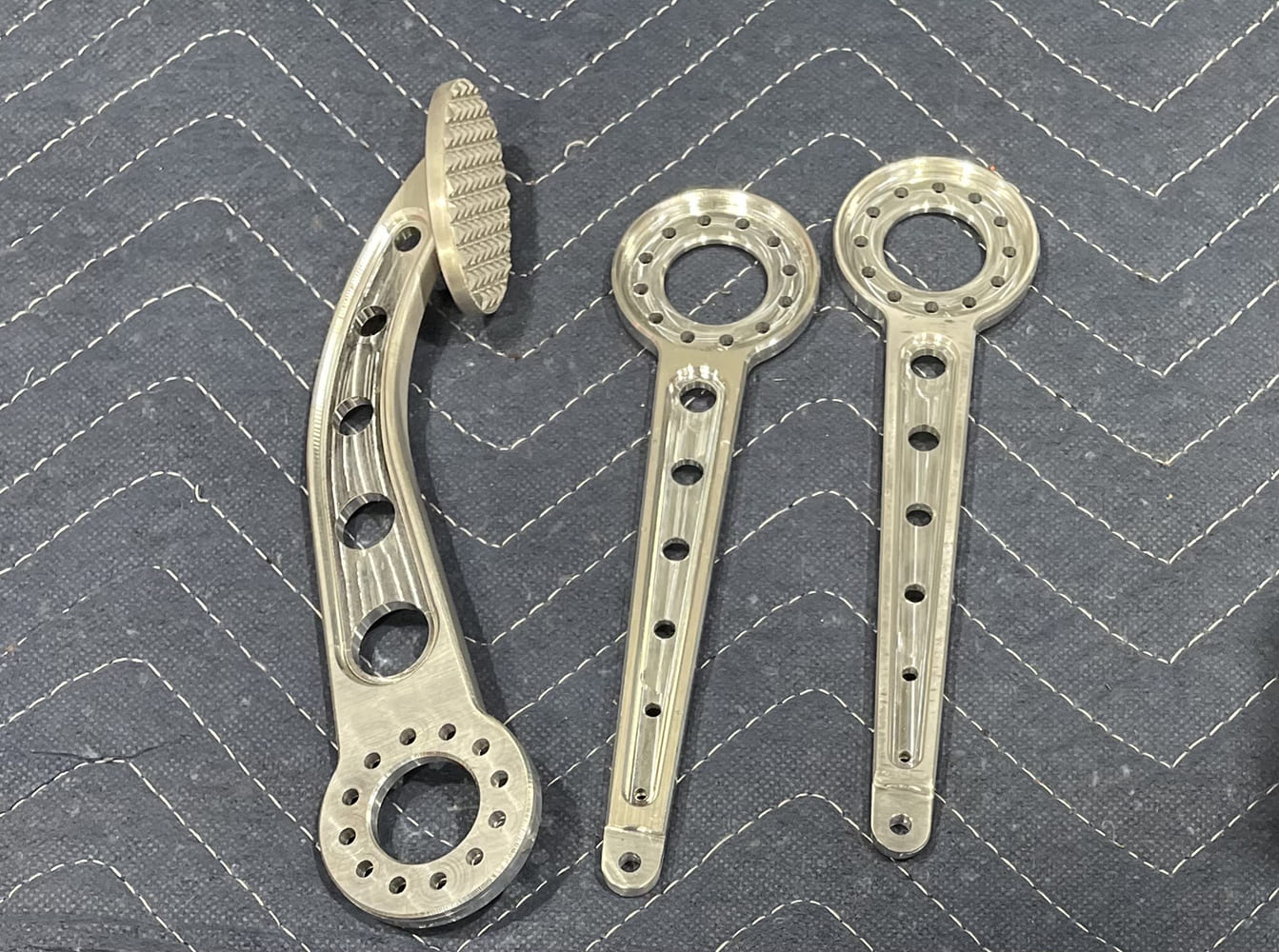
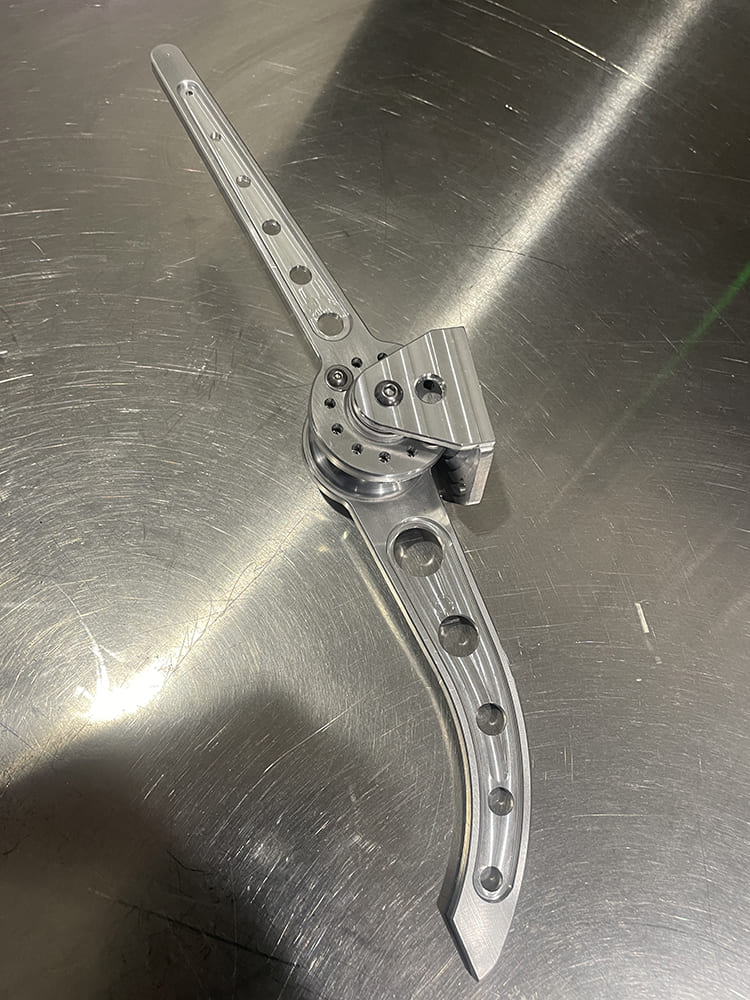
Using an aluminum Donovan block paired with a Teflon-lined Mooneyham 6-71 blower, the 383 engine made 660 hp and 533 ft-lb of torque on the Westech dyno. Notice the symmetry of the headers and the nearly hidden engine wiring. The throttle position sensor (TPS) is mounted on the bug catcher blade shaft.Many hands make light work, and sometimes there’s just no substitute! With a group of guys from Mick’s Paint helping the Veazie Bros. crew, the body was installed without any issues.The throttle pedal showcases the level of detail throughout the roadster, despite its simple look. Scott’s longtime friend Johnny Kaiser designed and machined the pedal parts, with both pedals finished by Matt Carricaburu after Kaiser’s untimely death.
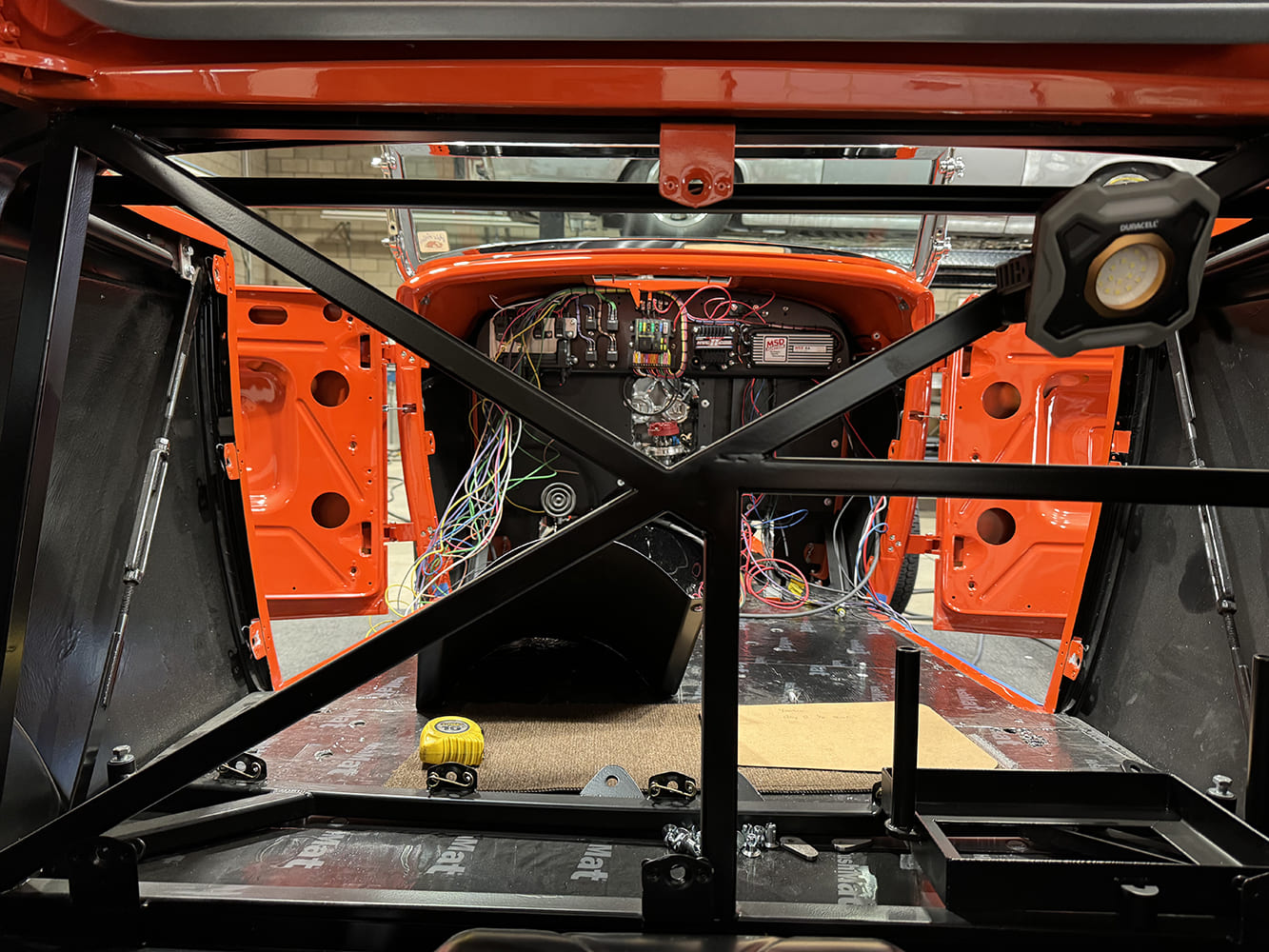
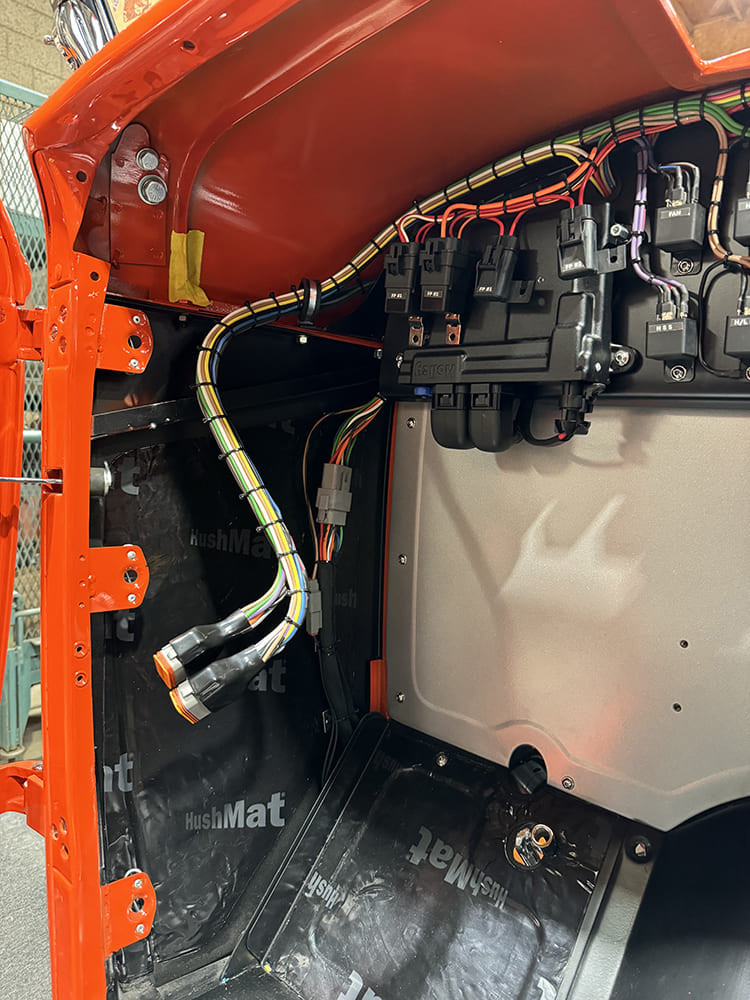
The X-brace that Veazie Bros. always installs on any 1932 they build has a cutout for accessing the battery from the trunk, as the roadster features a one-piece aluminum panel wrapping around the seat from B-pillar to B-pillar.The Holley ECU, American Autowire fuse panel, and MSD 6A and Blaster II ignition components are mounted on a dedicated panel inside the foot of the firewall. With help from JAX Motorsports, Justin Veazie installed the wiring with removable harnesses.
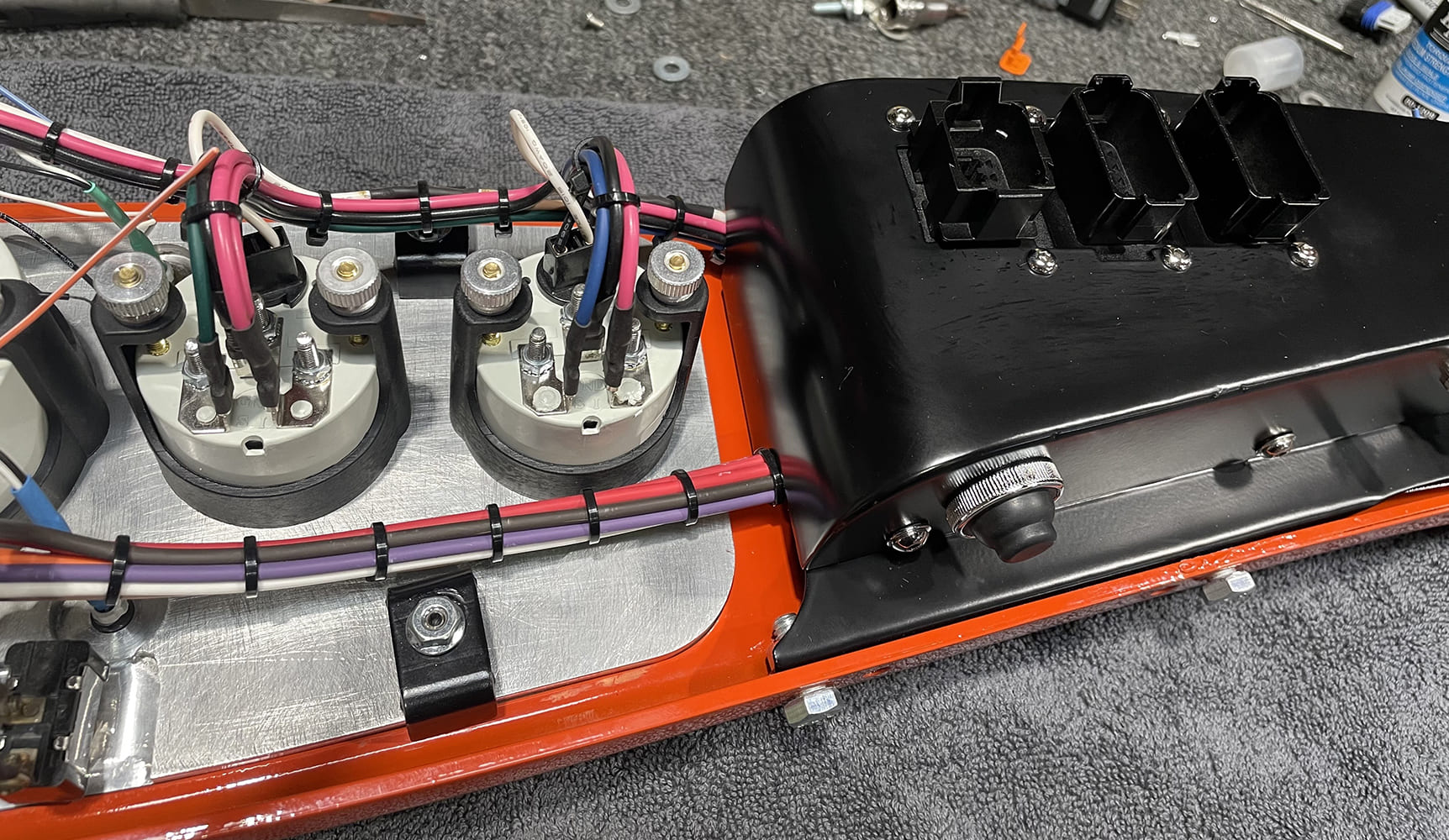
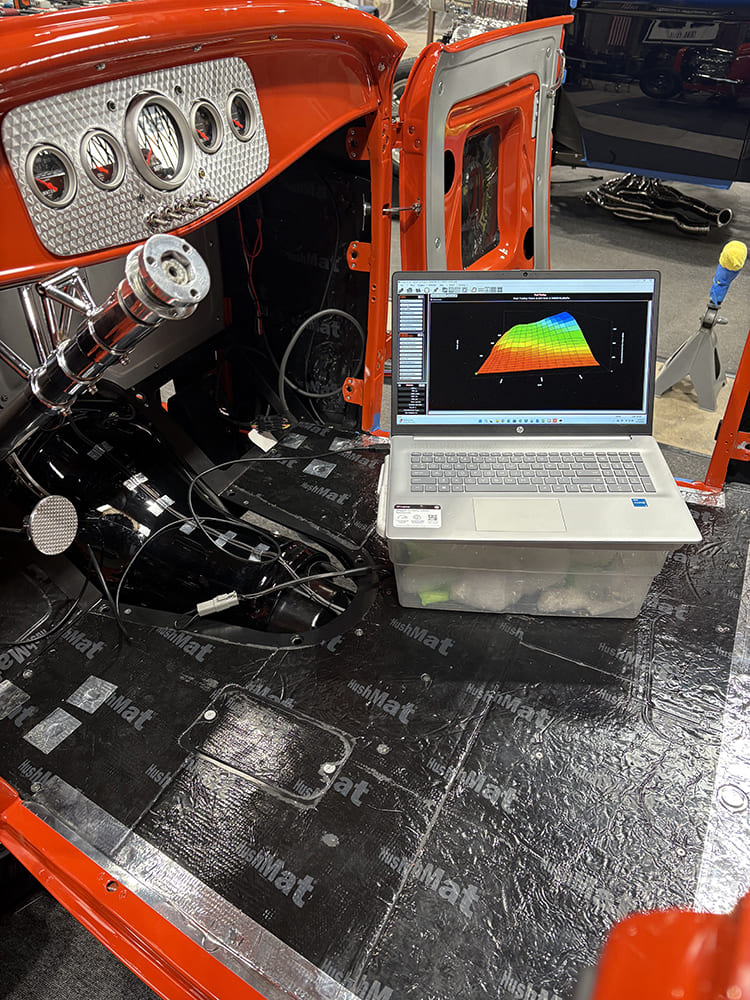
The wiring connectors shown in the previous picture connect to this fabricated cover, making it easy to remove the dash. This includes the wiring for gauges, ignition, lights, and horn.Unless you’re building a car without ECUs or any computers, tuning a new build usually looks like this. Steve Sbelgio used his laptop and extensive knowledge to get the blown and injected 383 starting and running perfectly.Scott drives the roadster with these original 15×4 and 16×11 single-bolt pattern magnesium Halibrand Sprints, wrapped in Michelin and Firestone rubber, respectively. This is how the world sees the roadster when Scott has the roadster out and running.
We use cookies to ensure that we give you the best experience on our website. If you continue to use this site we will assume that you are happy with it.