Regardless of whether you’re working on a fresh build or making provisions to improve your existing ride, one of the most important decisions you can make is how to address the interior seating. Picture your Chevy with its buckets or bench removed and study the real estate left within the cabin. This gives you the opportunity to examine the area and make decisions with regard to the vast options available through the aftermarket to give it a timeless new look. Choosing between a custom look, OEM-style, or something in-between offers an endless stream of possibilities regarding colors, textures, and materials available to set the vibe.
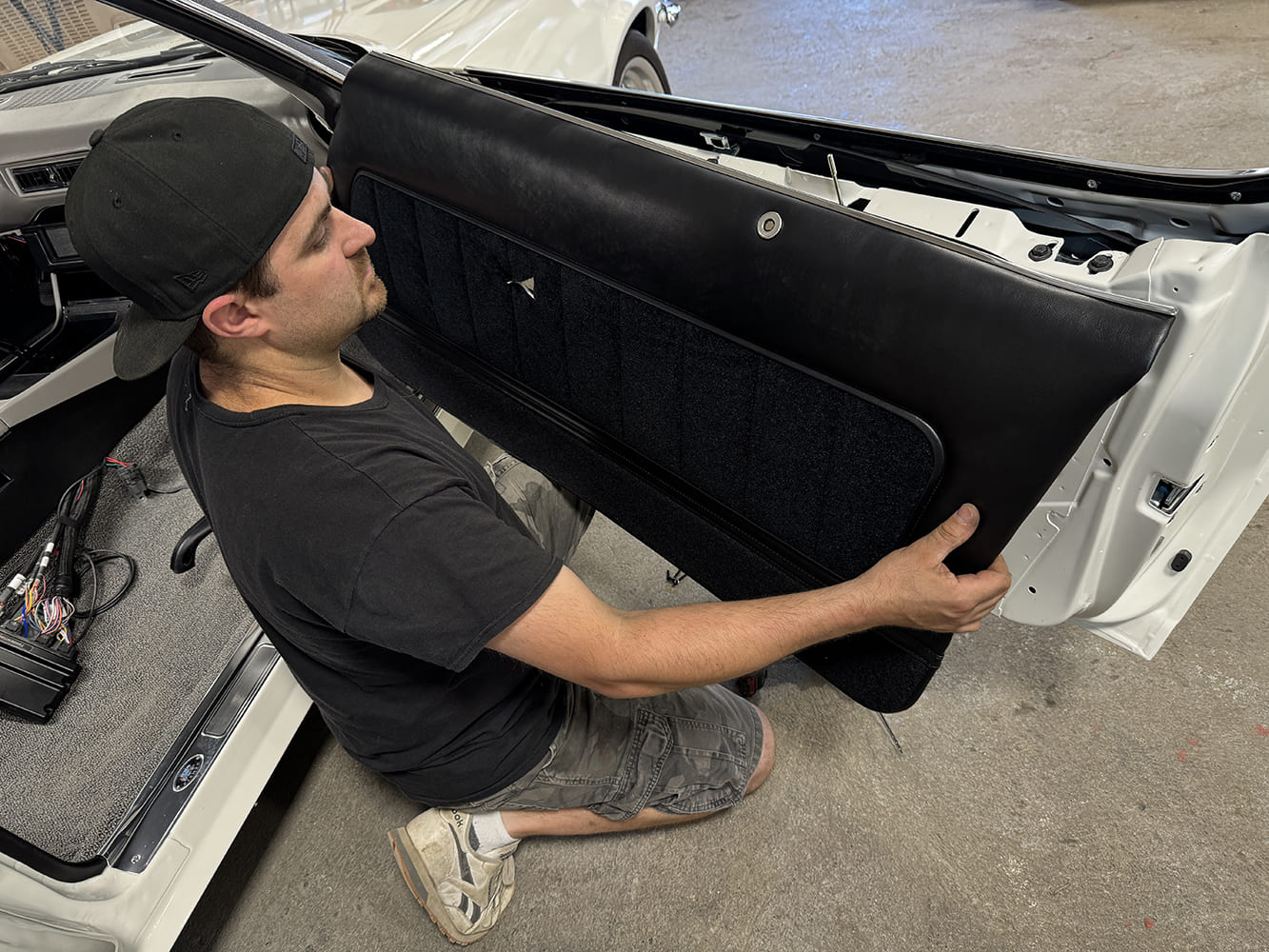
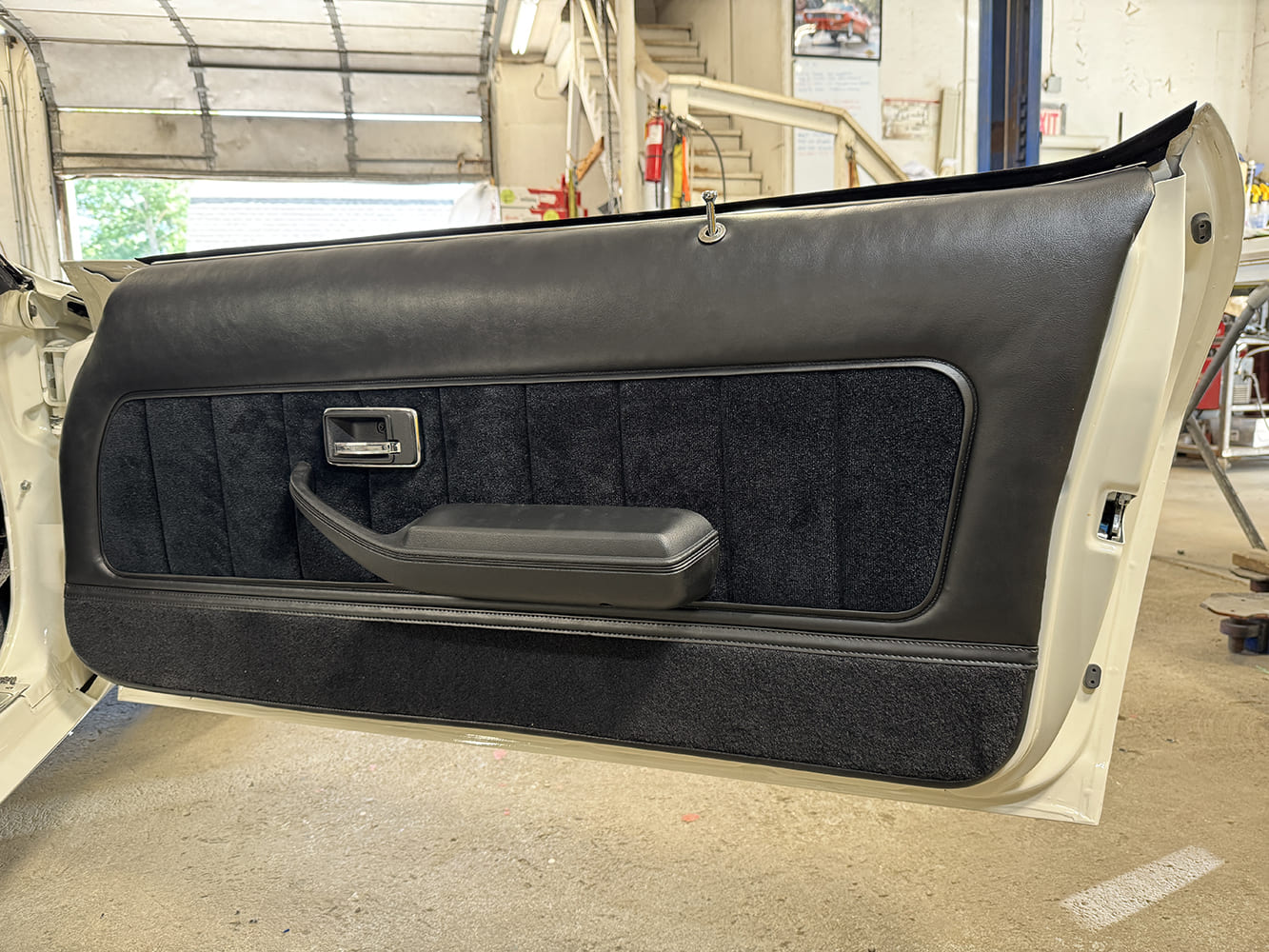
Preparing the new PUI door panels, sourced through Classic Industries, for installation, Pat O’Brien of Procision Industries started by cutting the perforated access holes on the back of the panel for mounting access to the door handles and armrest pads. Slight updates were needed since he modernized the look with one-piece panels from the 1978-79 Type LT/Berlinetta models with the custom cloth interior option. He followed by adding the OER reproduction nylon door panel clips to secure the panel to the door shell.
Familiar to many of our regular readers, we’ve covered the buildup of this 1971 Camaro over the past few years in All Chevy Performance magazine. Commencing with a bare shell, it’s taken us on a journey through all aspects of the build, including suspension and brakes, LS engine, cooling, exhaust, sheetmetal, wiring, and insulation just to name a few. Featuring a scorching 5.3L LC9 linked to a T-56 six-speed manual transmission, it’s a perfect power combination for hitting the streets. This time we’re completing the business office with new material and seating to make driving a dream.
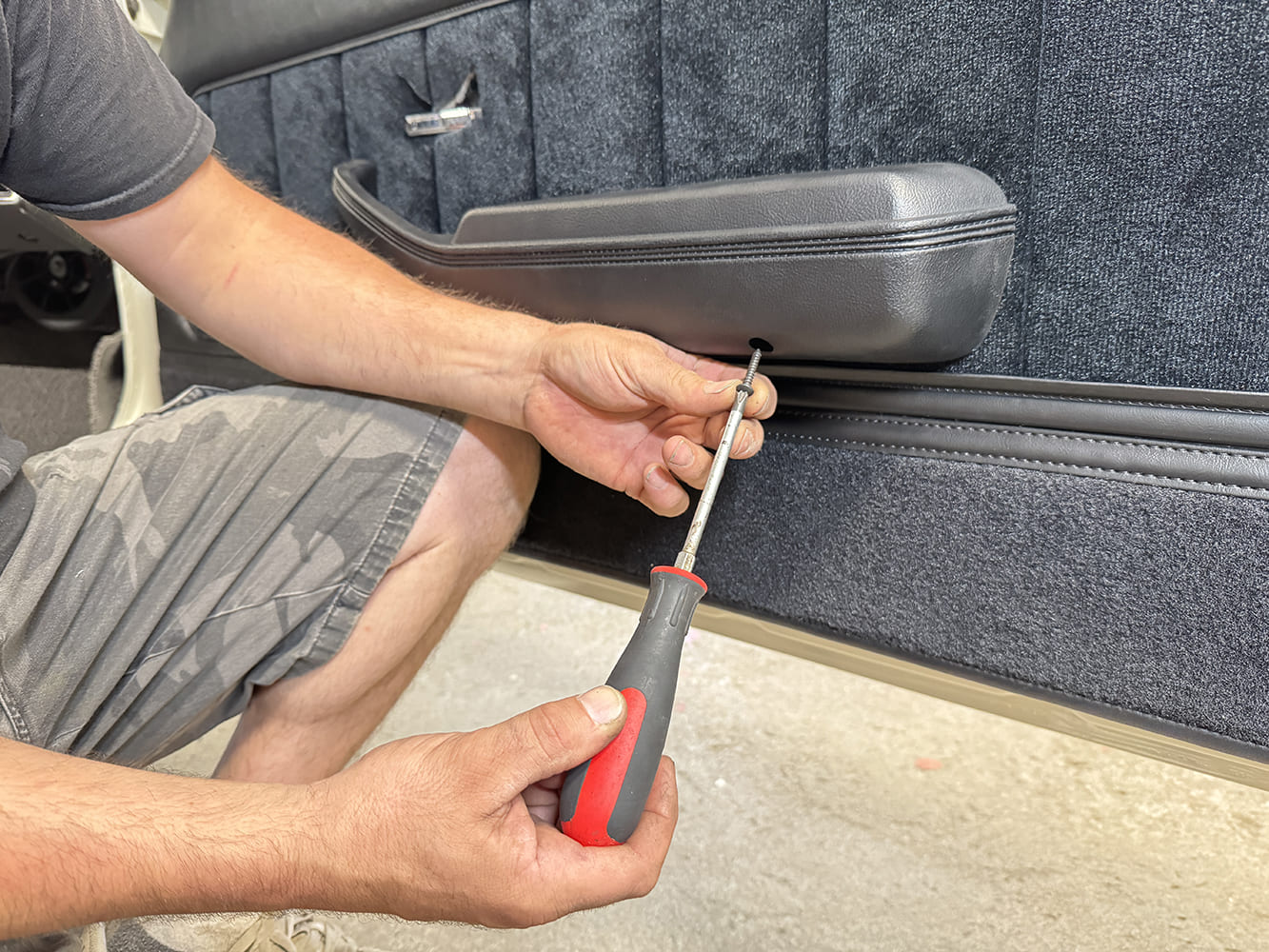
Next, he installed the OER armrest assembly using an AMK Products Arm Rest to Door hardware set and a Phillips-head screwdriver.
We stopped by Procision Industries in Taunton, Massachusetts, where shop owner, Pat O’Brien was ready to move forward by selecting the ideal components to bring just the right amount of style and comfort to the cabin. He contacted TMI Products to check into their numerous offerings of high-quality interior components, including everything needed to retrofit the Camaro, including seating, consoles, floor coverings, door panels, and headliners. There’s also the opportunity for plenty of customization if needed as everything is handled in-house by their skilled team.
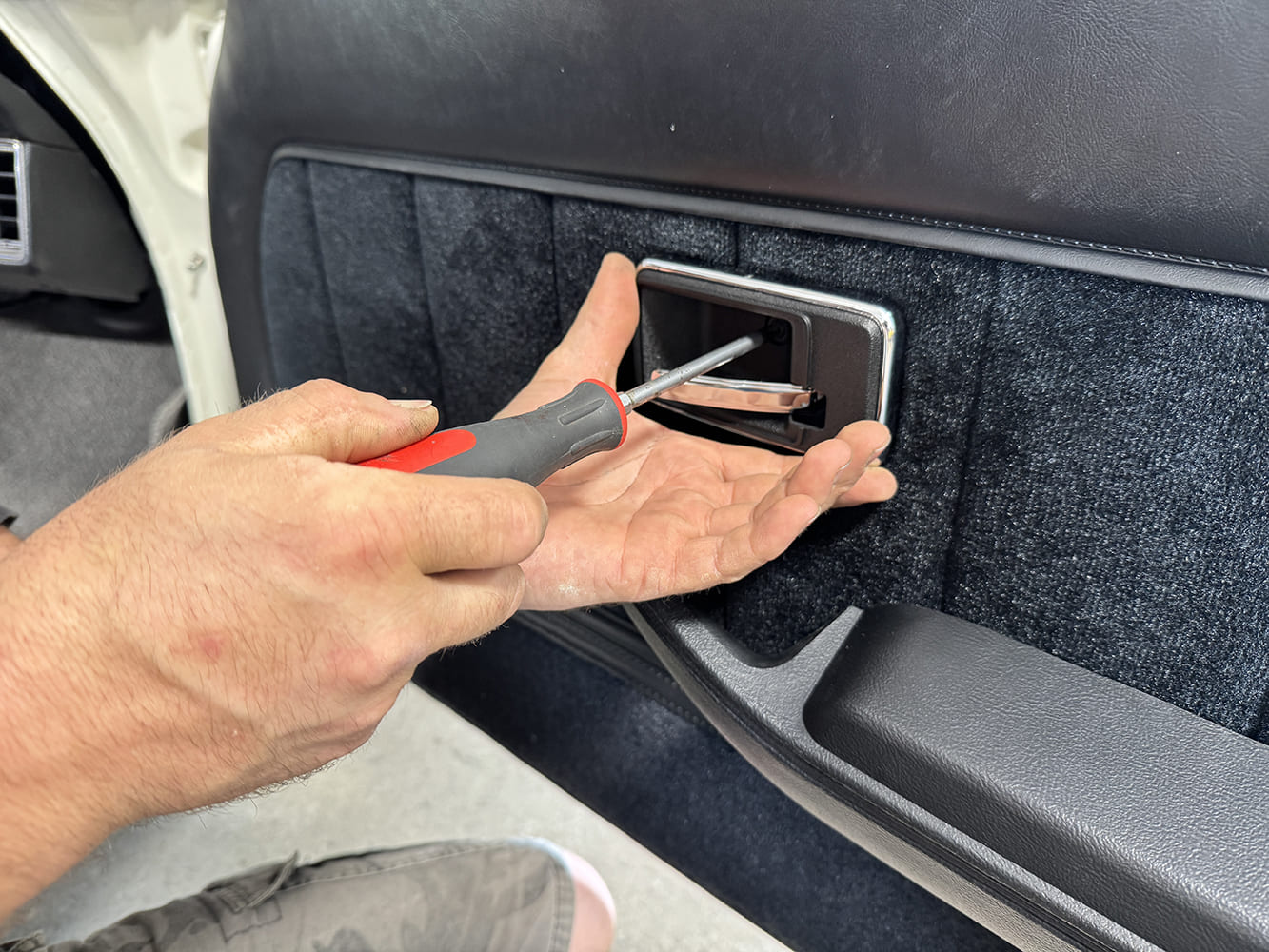
The OER reproduction inner door handle escutcheon was set in place with hardware from AMK Products.
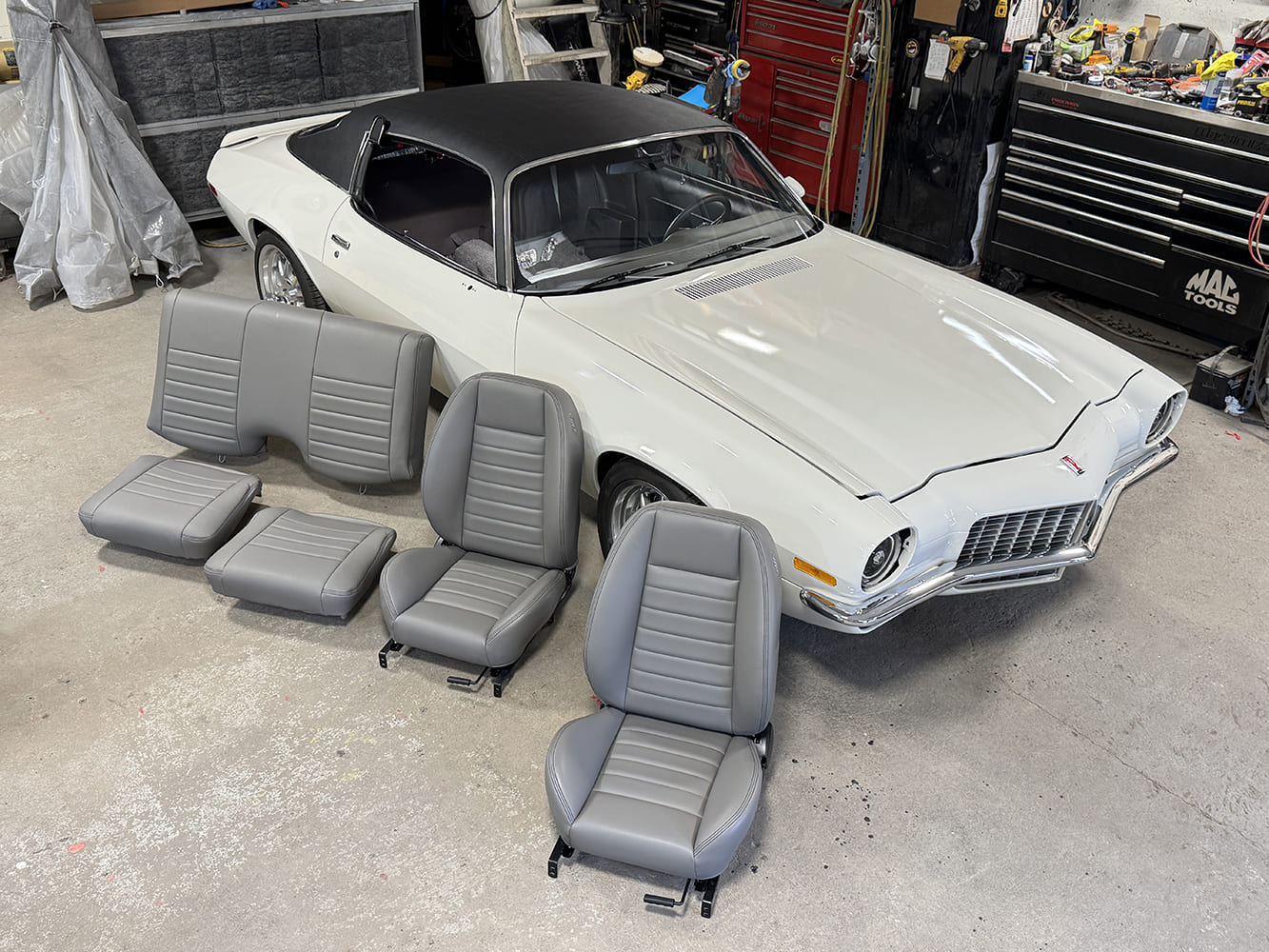
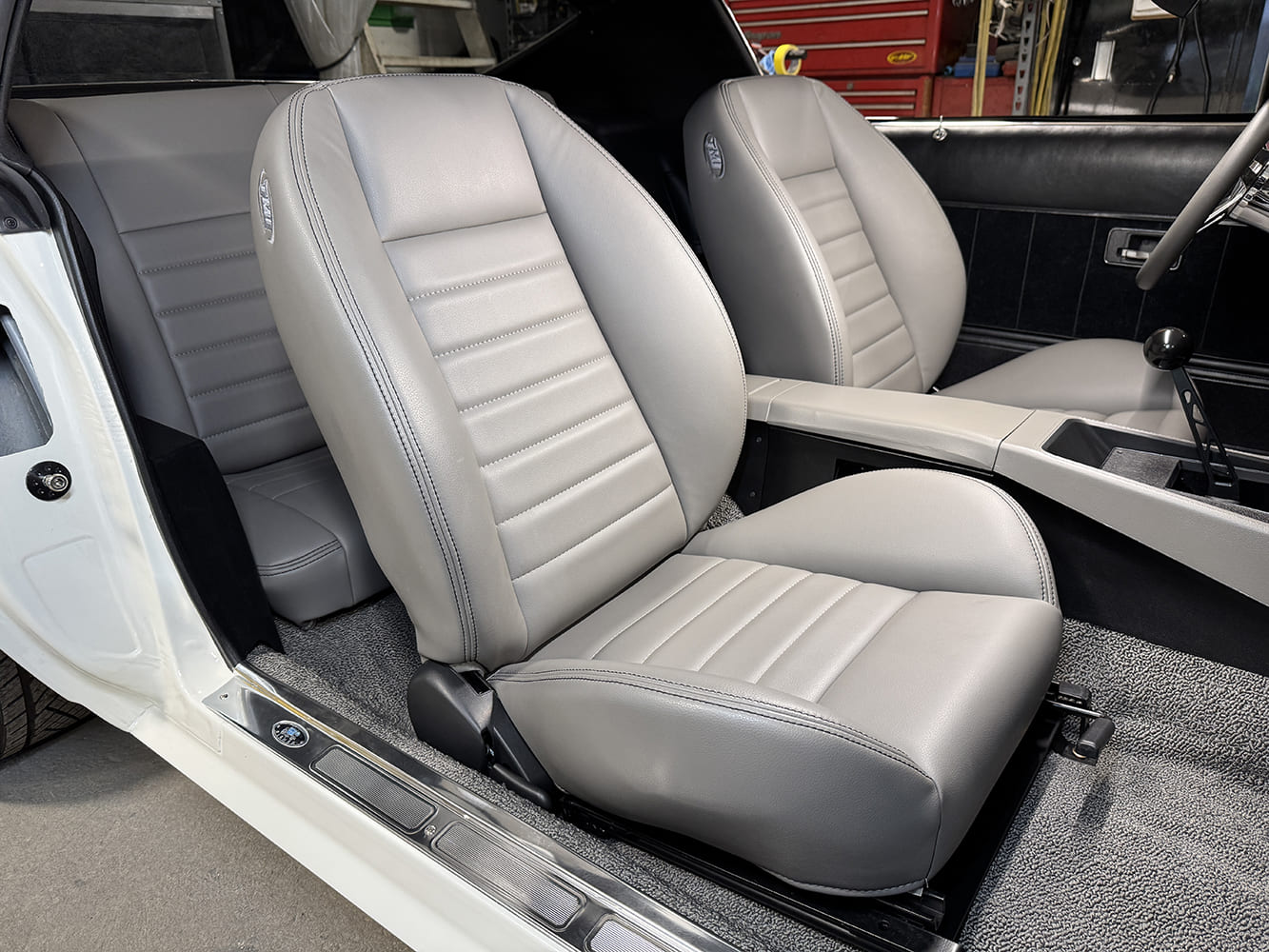
After reviewing all the options, O’Brien selected their Cruiser Collection Pro-Low Back front seats and matching rear seat upholstery kit, which is now available in five different color choices including black, gray, red, brown, and tan. The seats come fully assembled and ready for installation showcasing a fully welded 1-inch-diameter mandrel-bent tube frame, full reclining seat backs, and easy-sliding seat tracks.
The completed door panel installation adds a perfect amount of class to the interior thanks to the updated look of the 1978-79 custom cloth interior option. A new set of OER chrome door lock knobs completes the look.
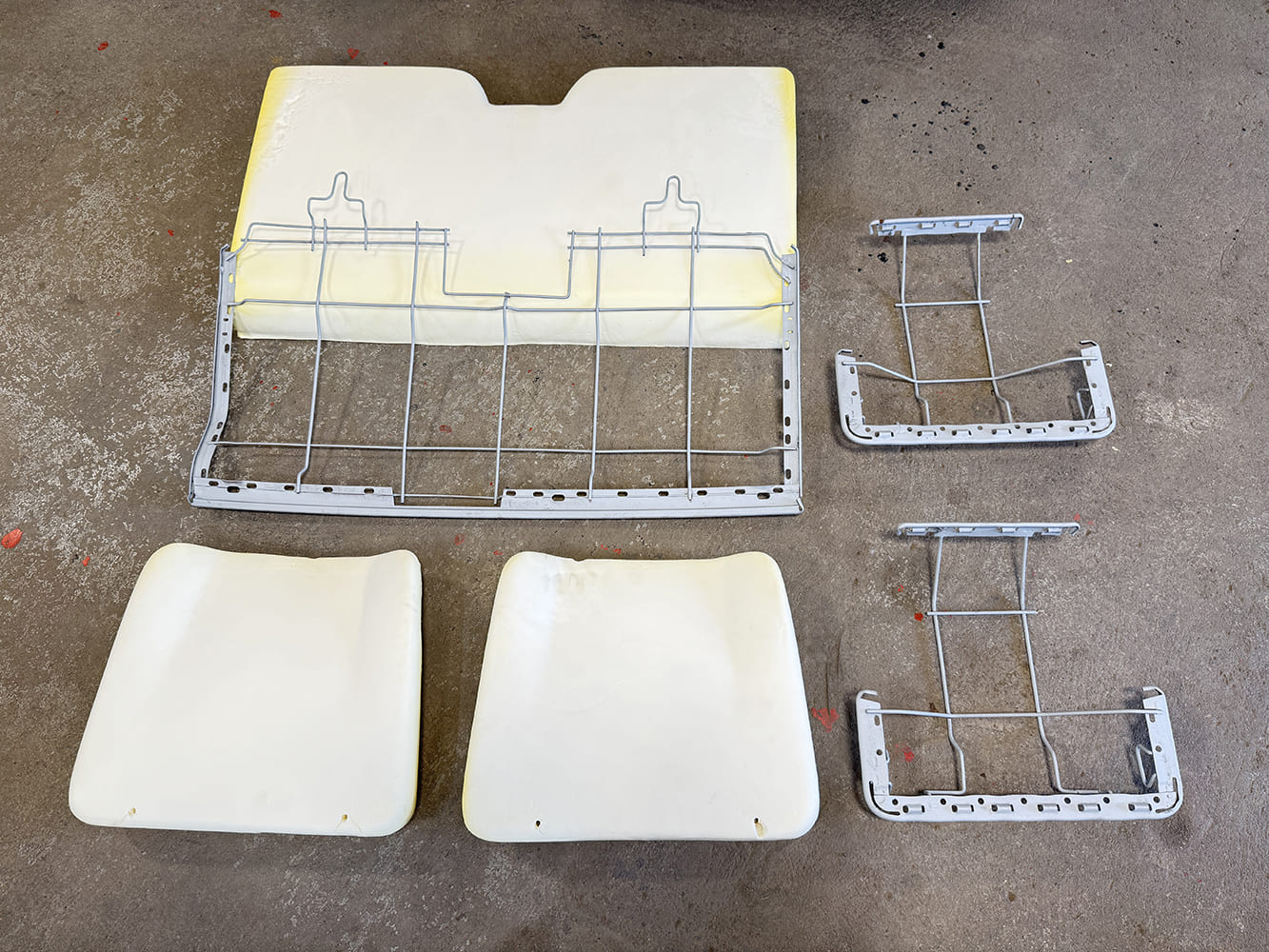
To complete the project, Classic Industries offers everything needed to help reupholster the back seats, including new rear seat foam sets and necessary hardware to handle the job. In addition, Classic Industries supplied all the related components, including a vast selection of door panel choices from PUI, front kick, and rear side panels from OER, as well as hardware from AMK Products to help with the installation.
Let’s follow along as we work to complete the interior!
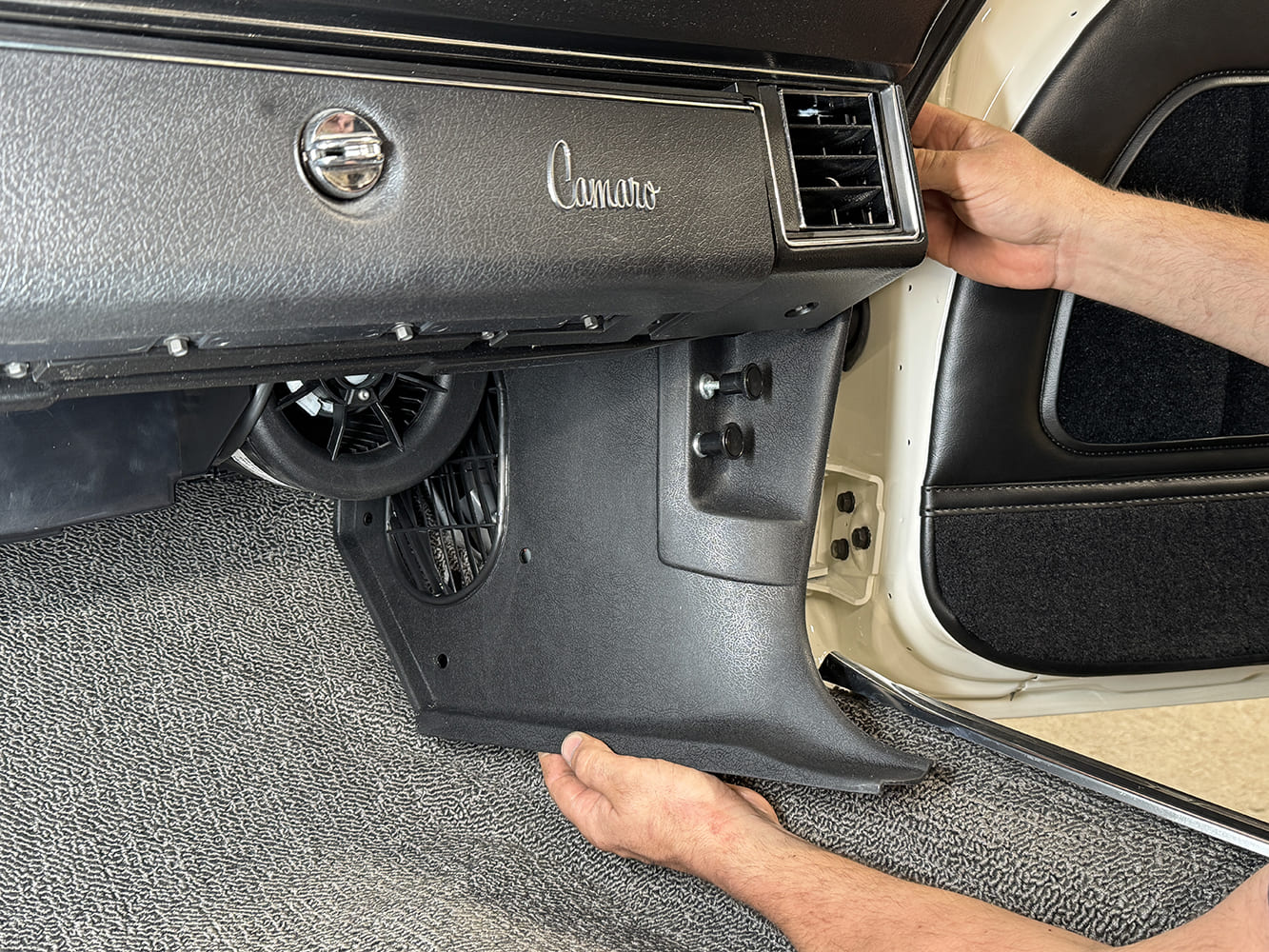
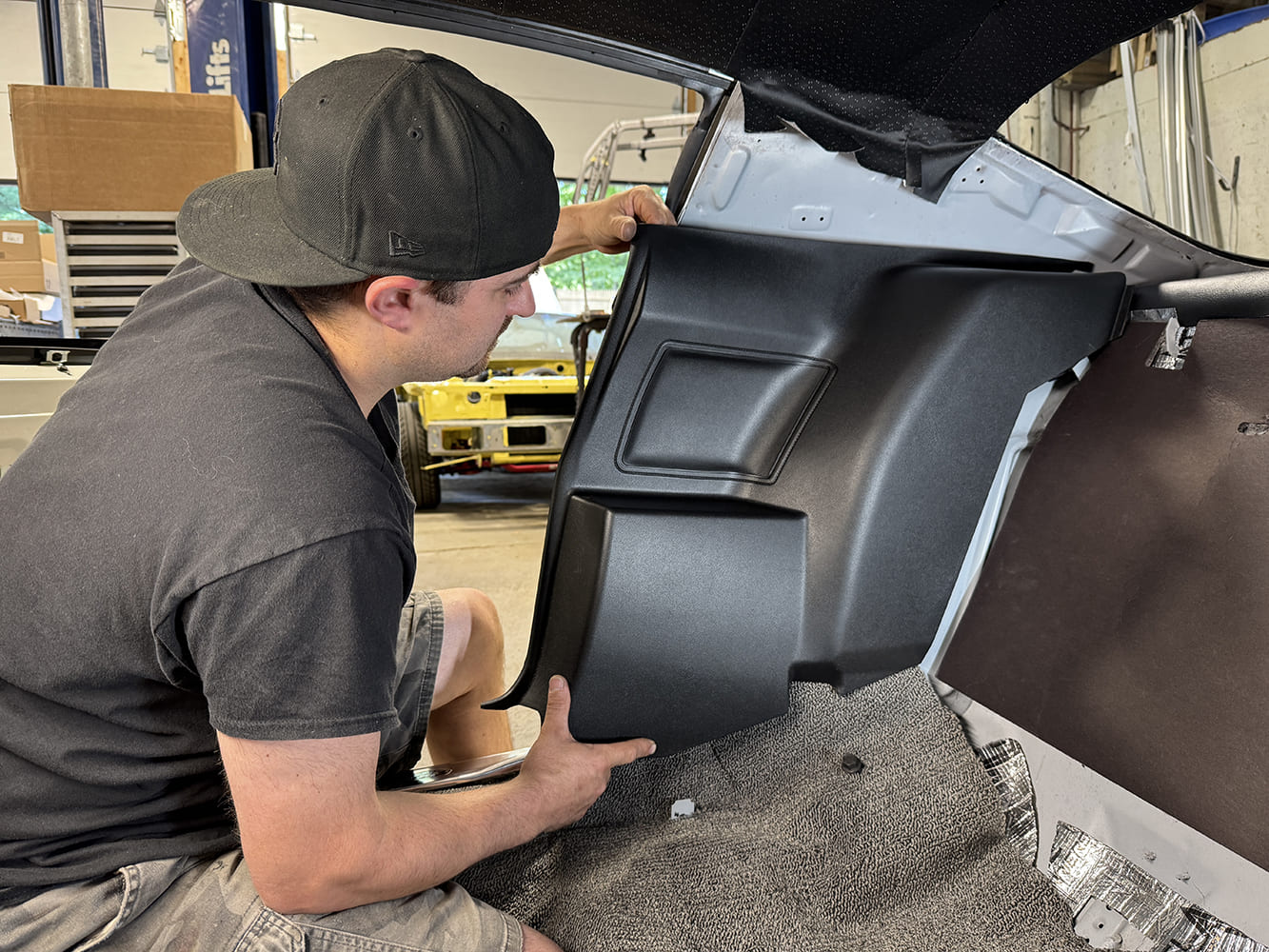
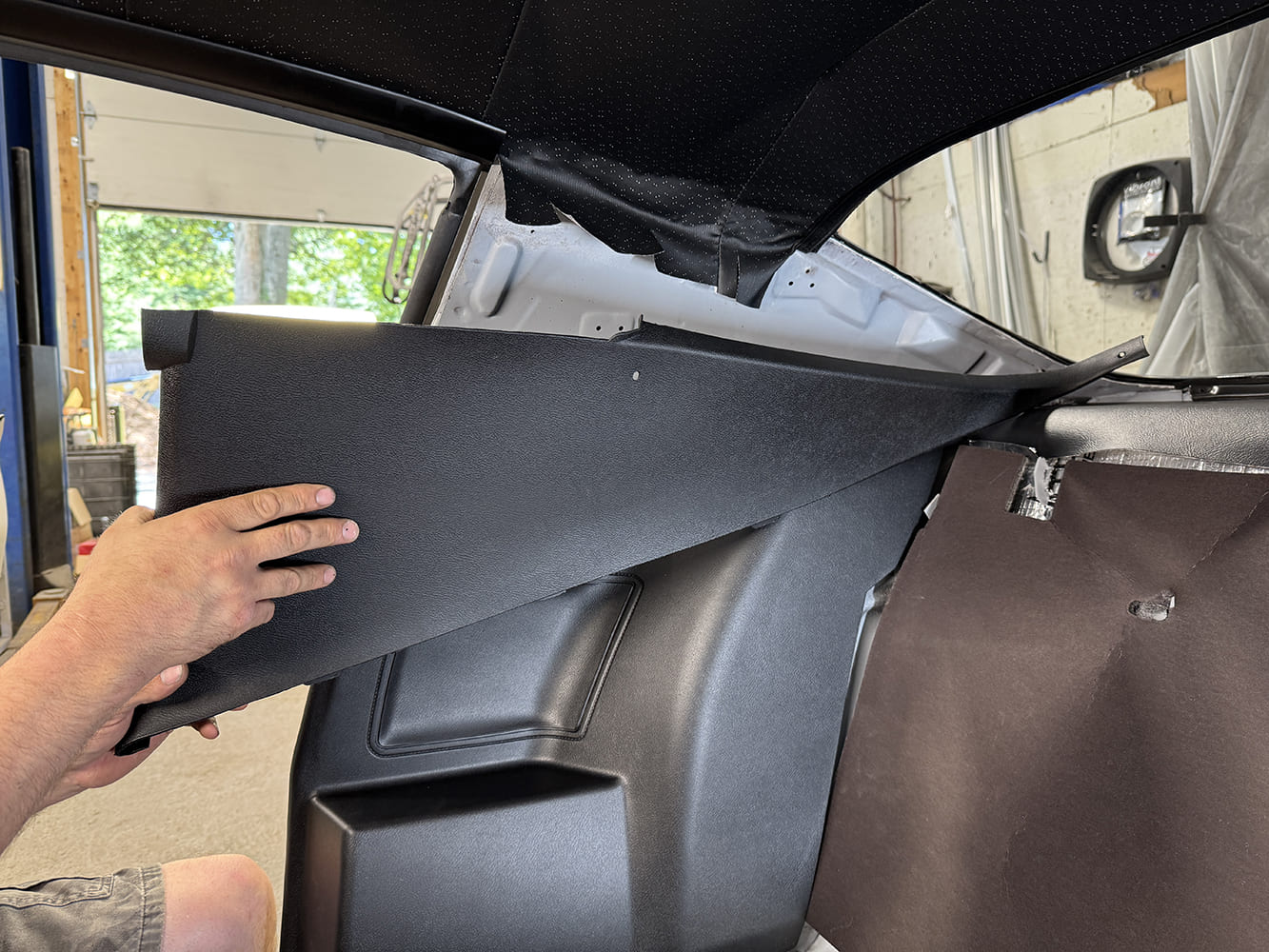
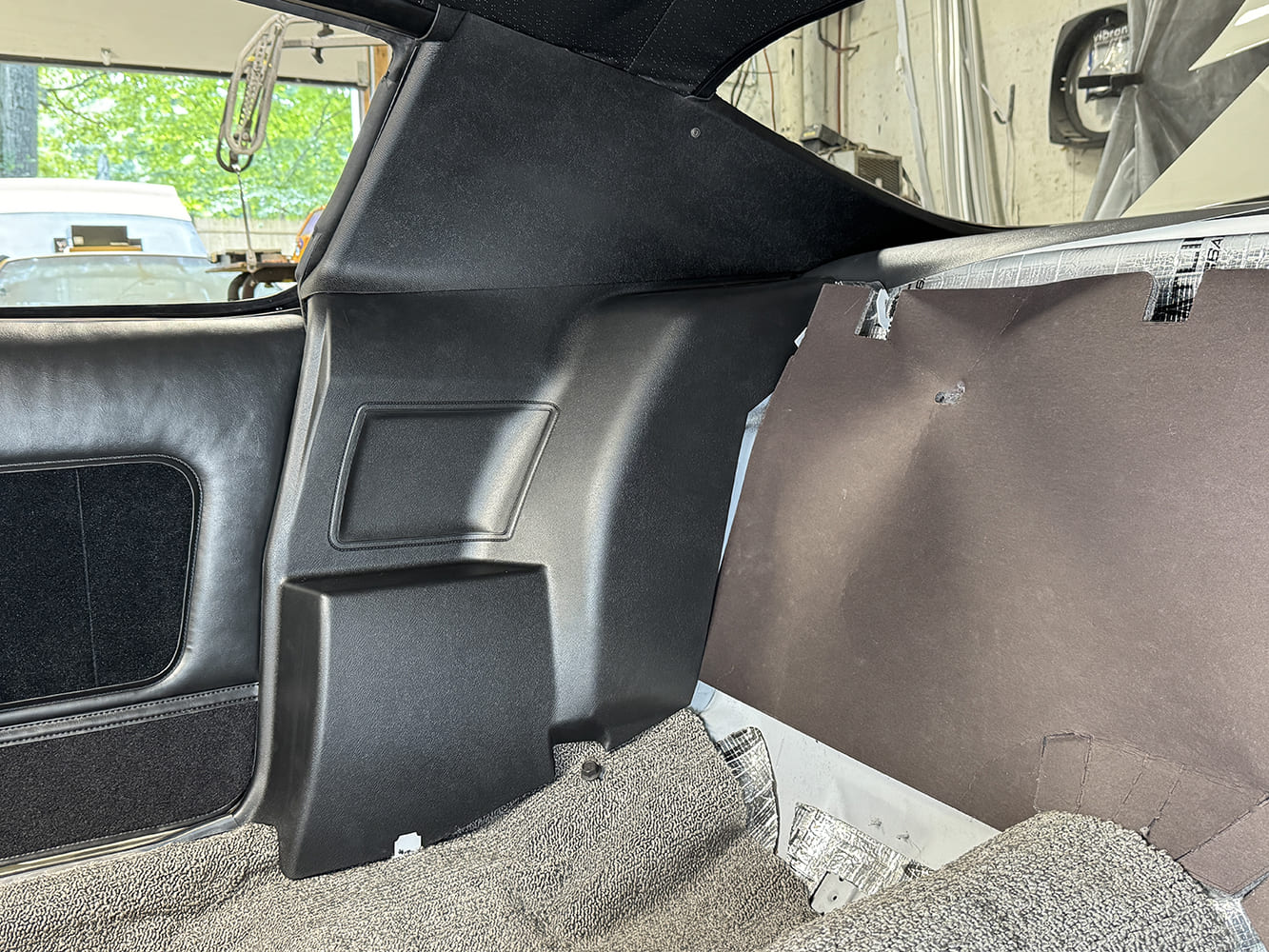
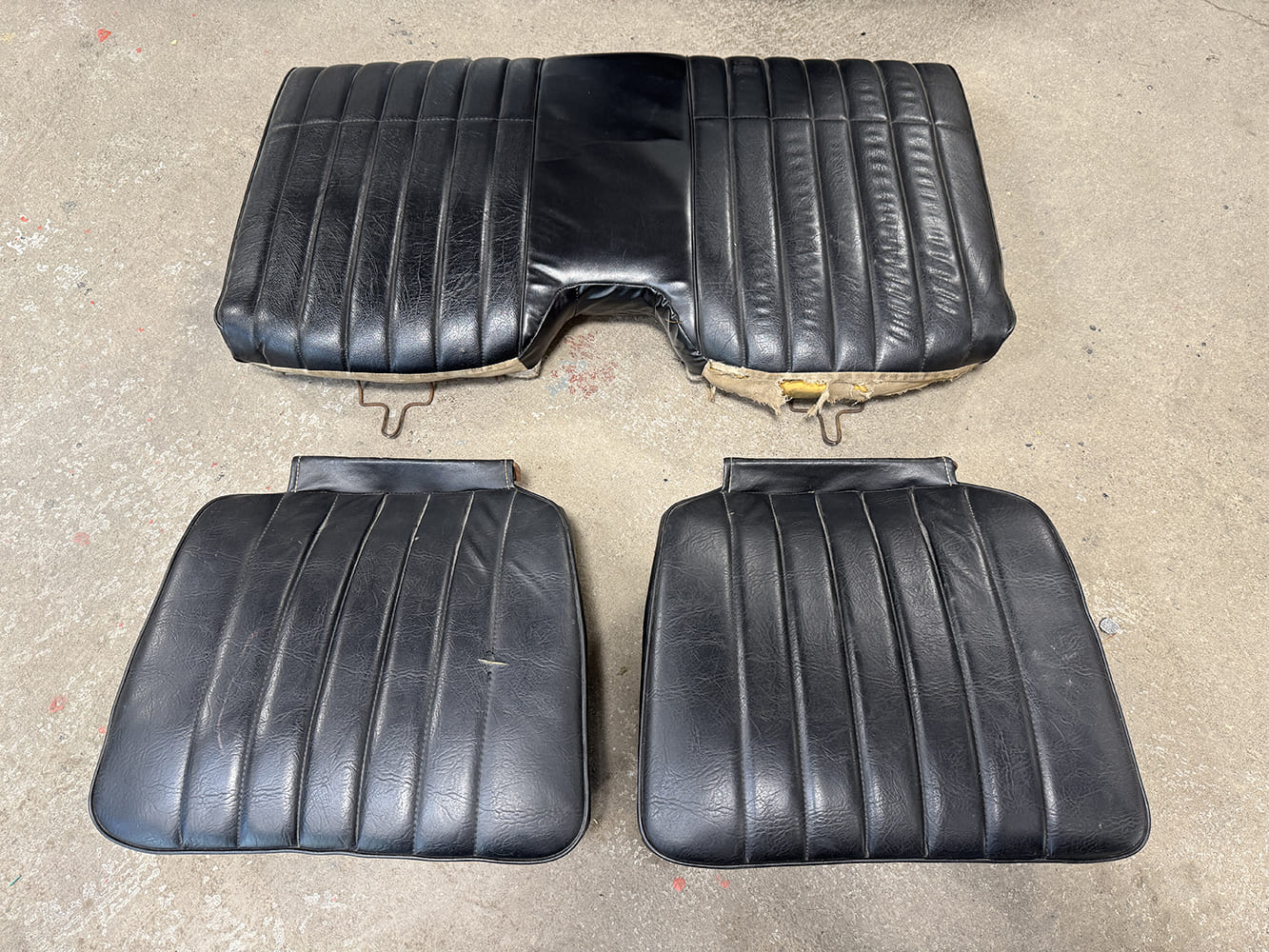
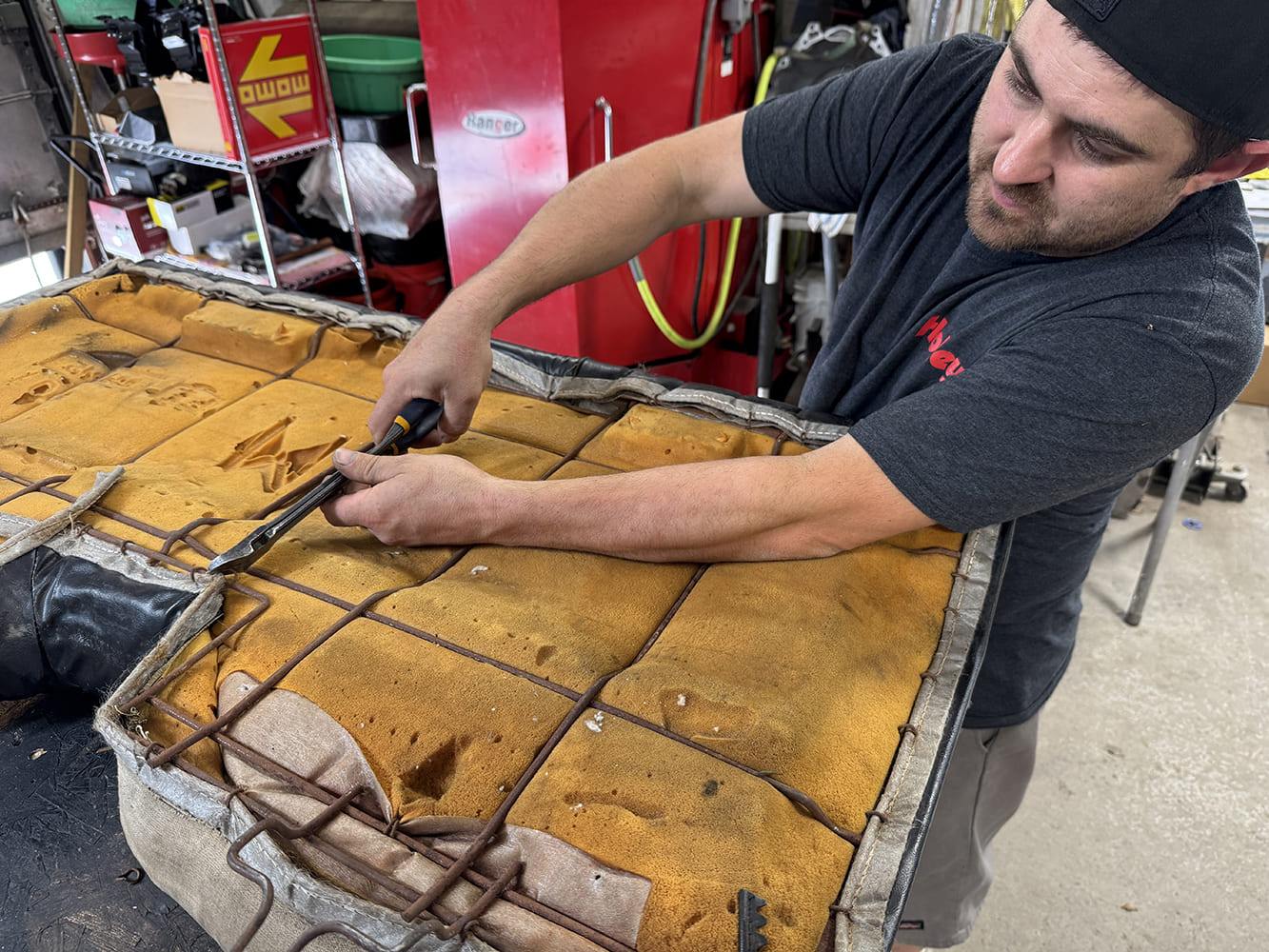
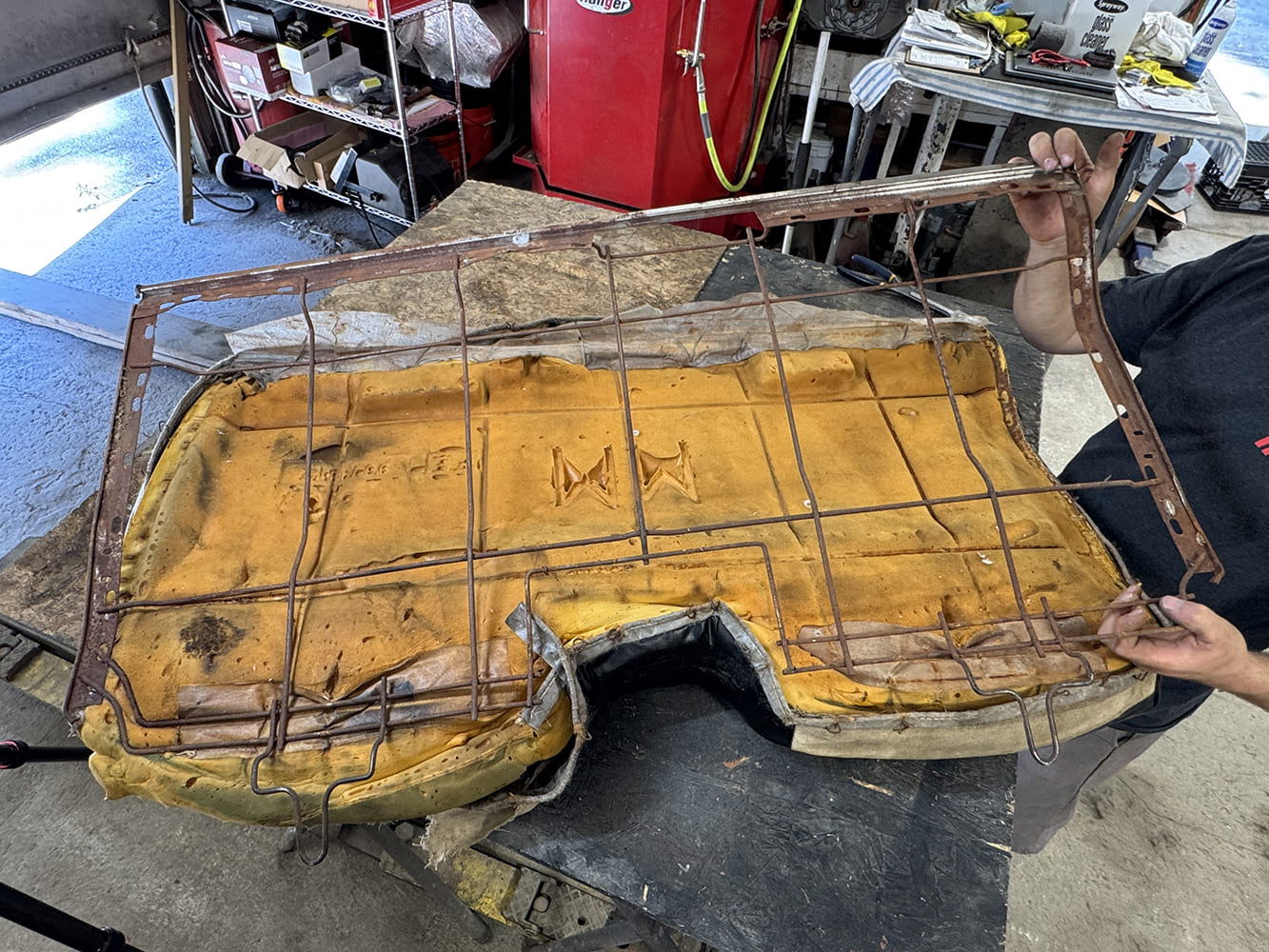
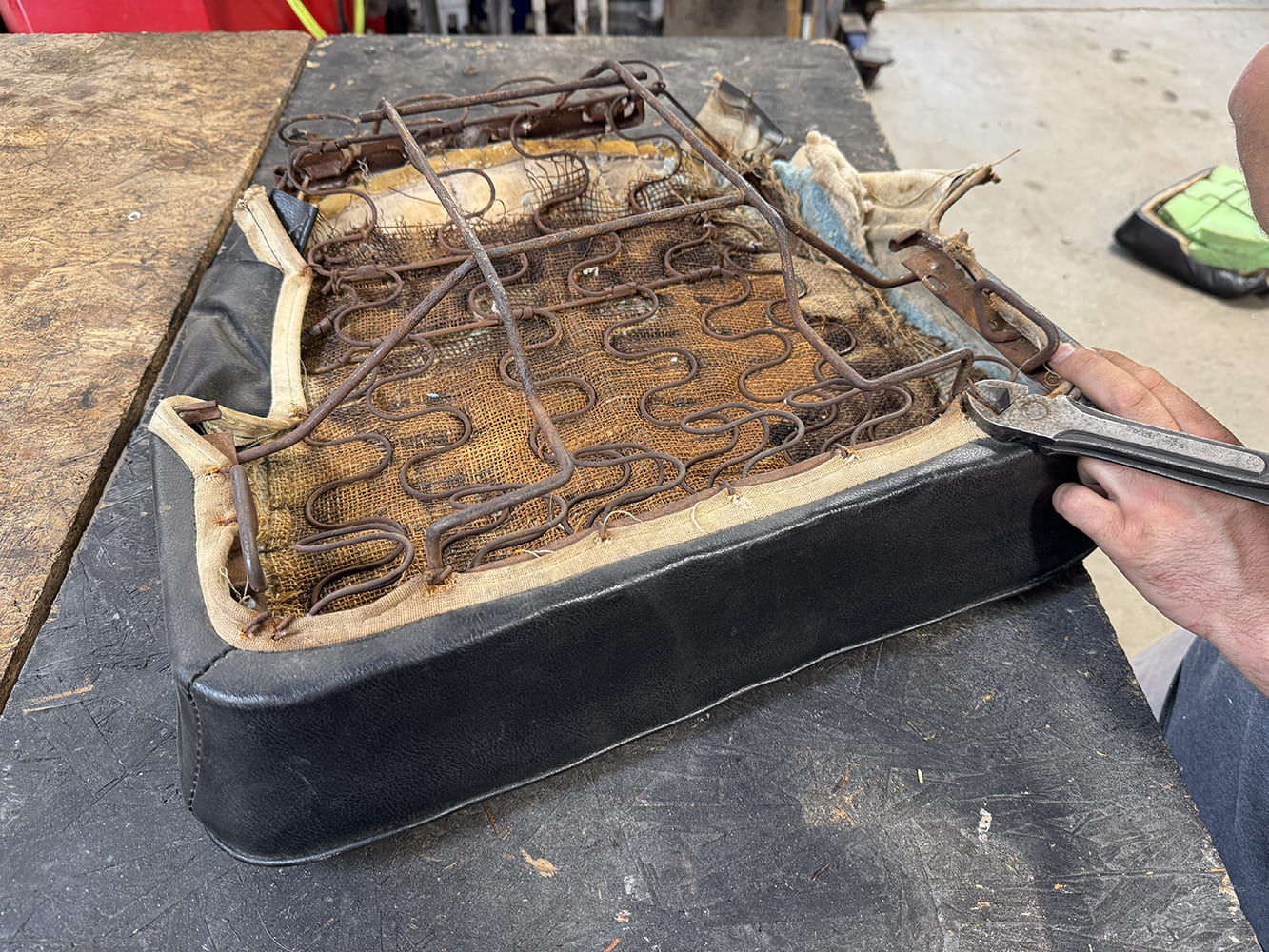
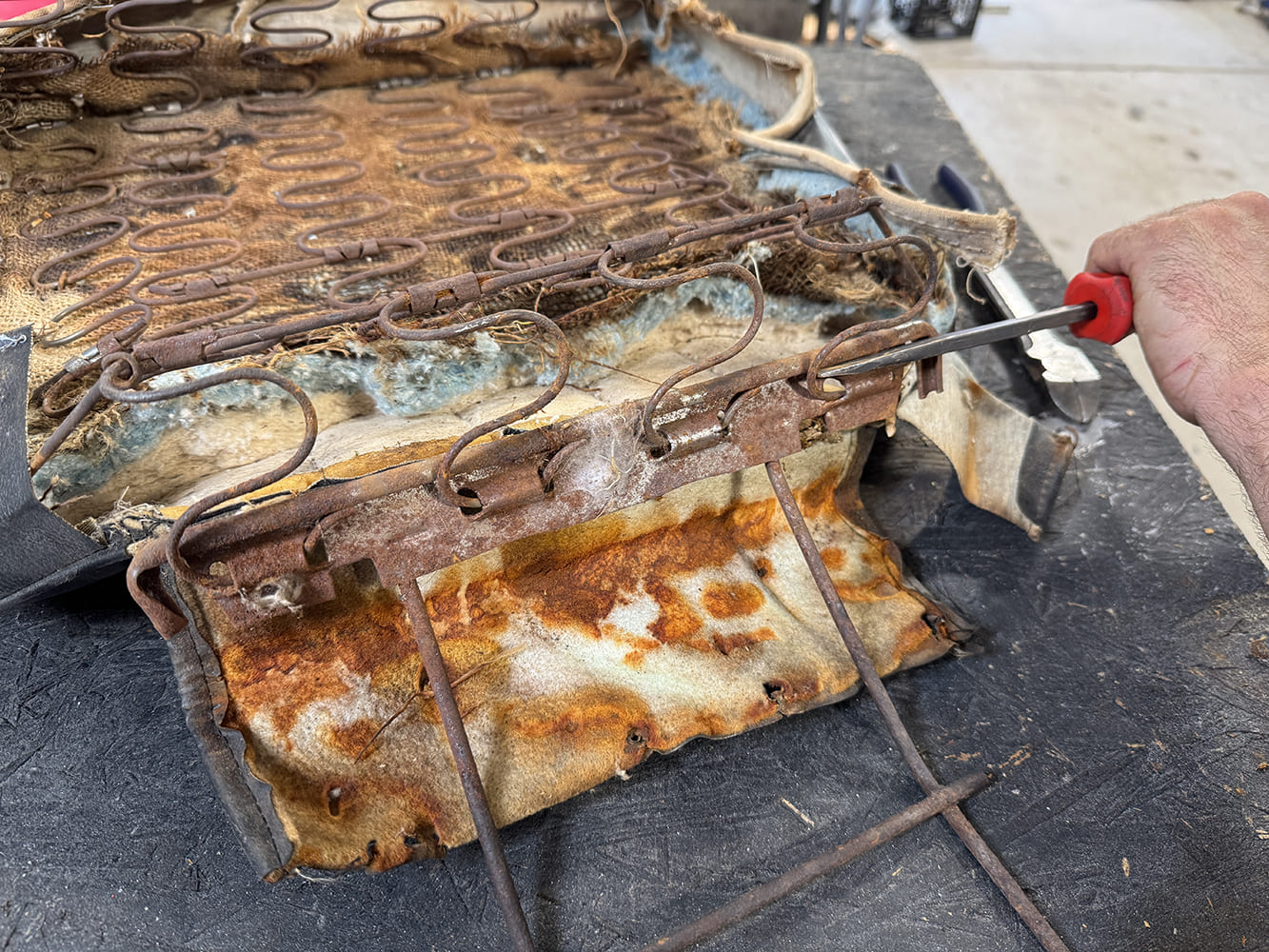
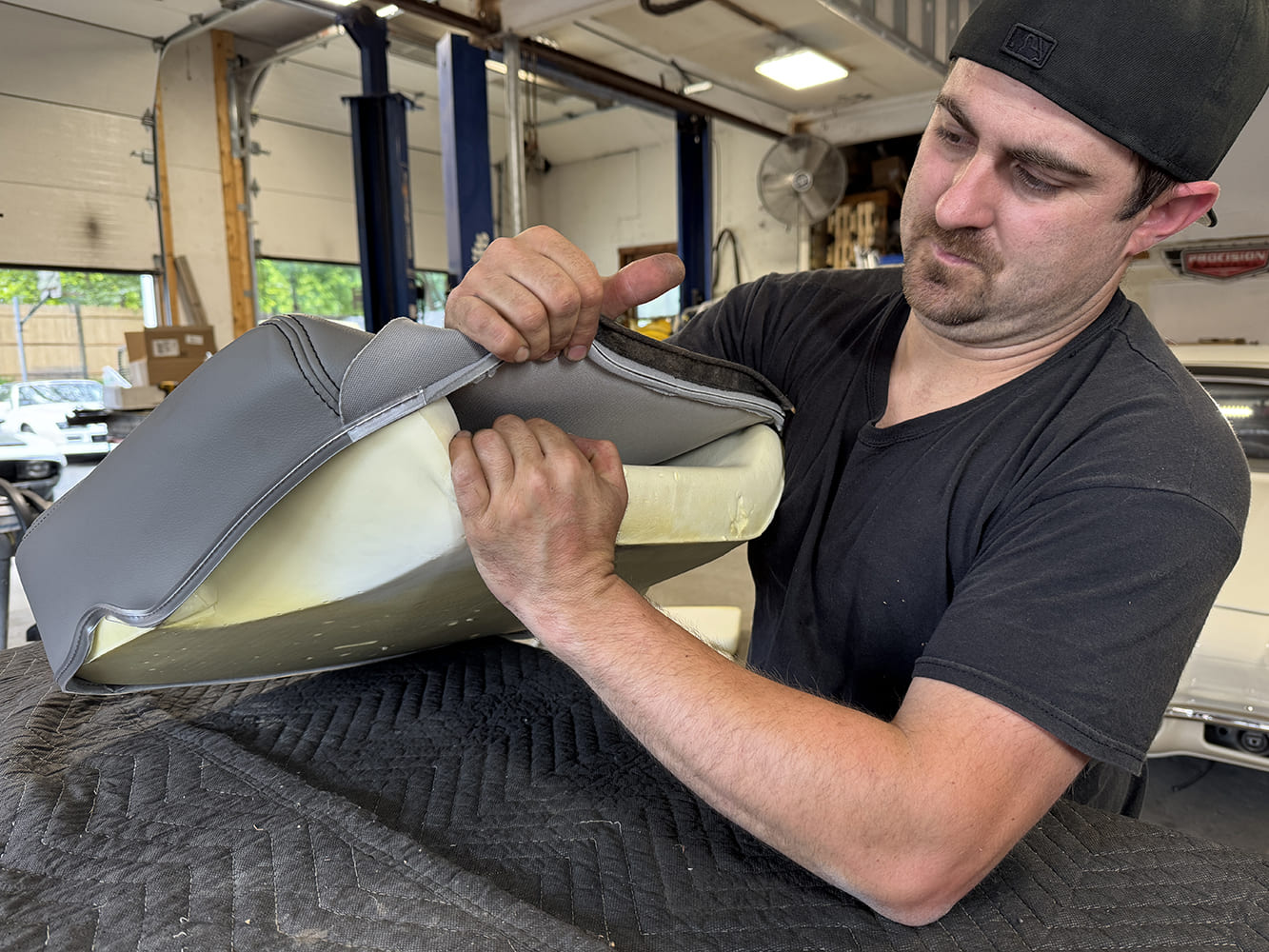
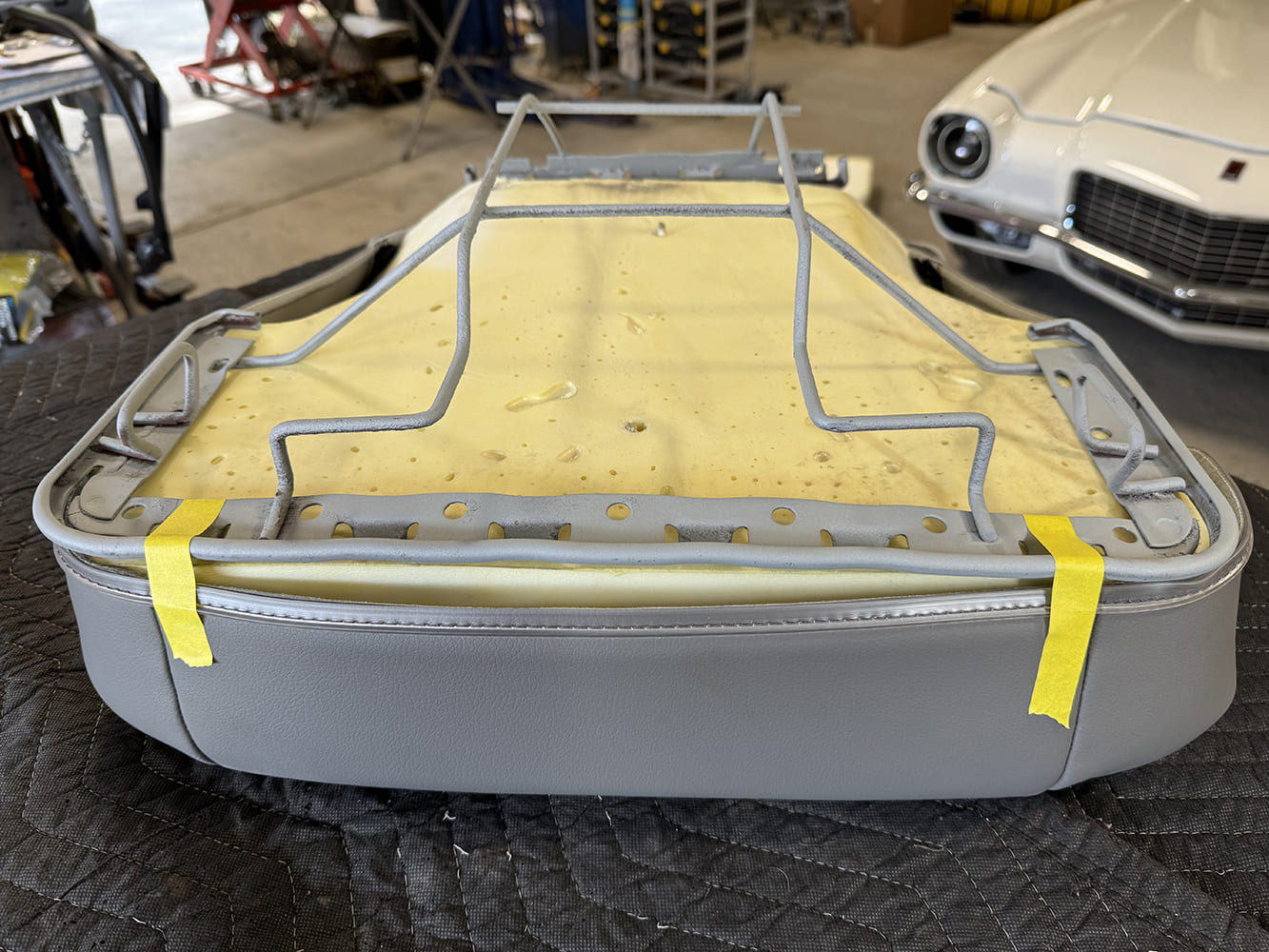
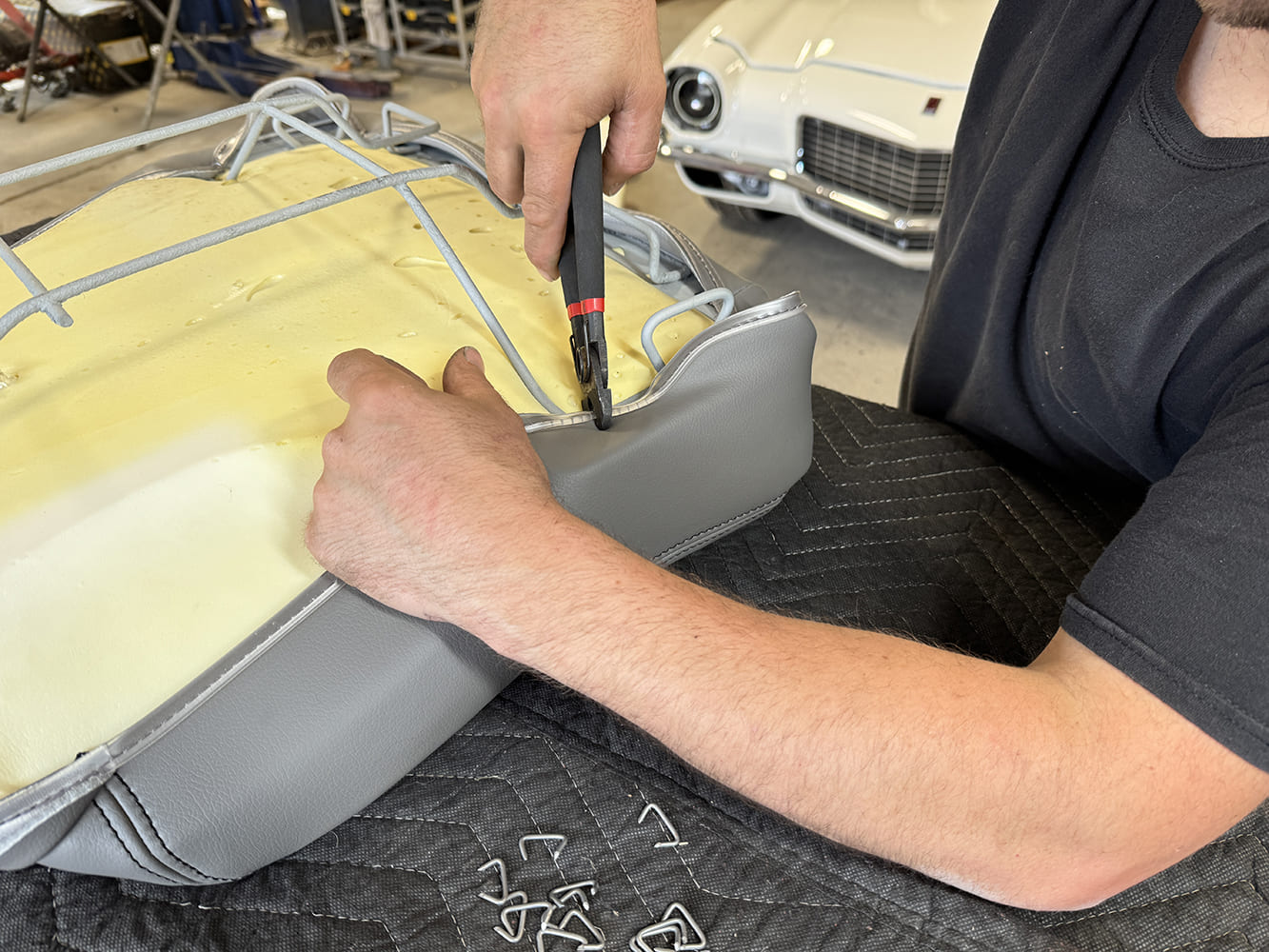
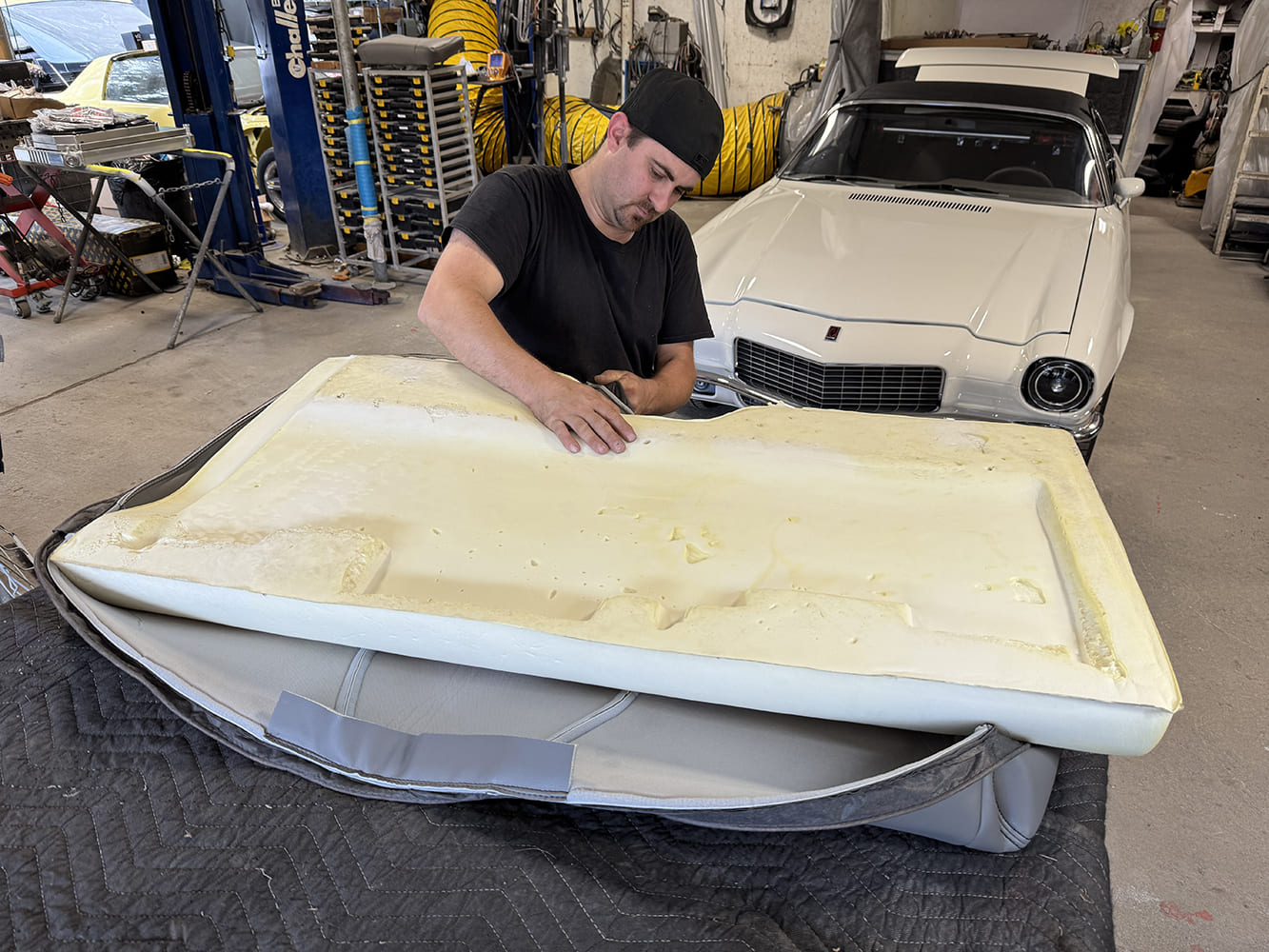
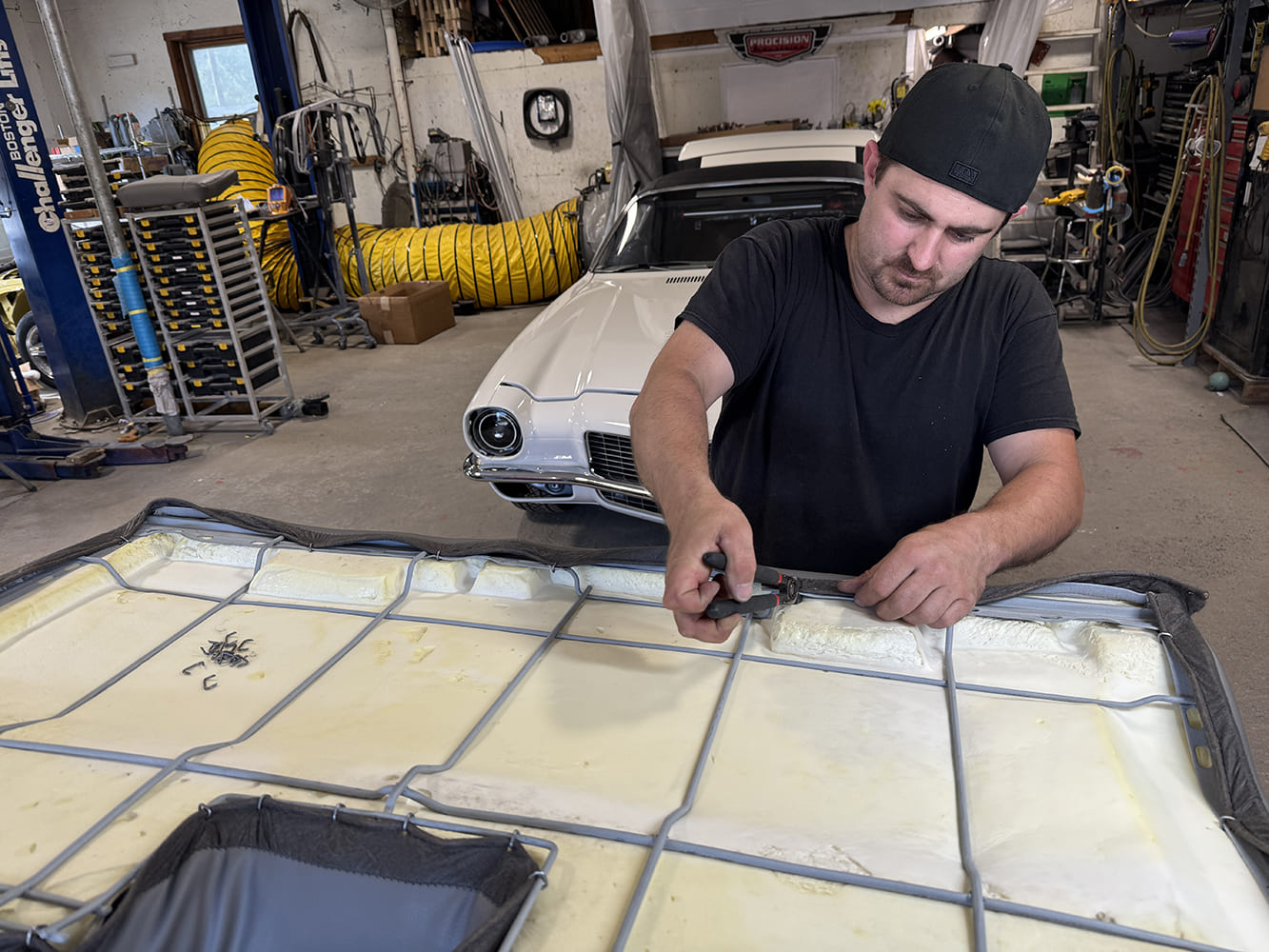
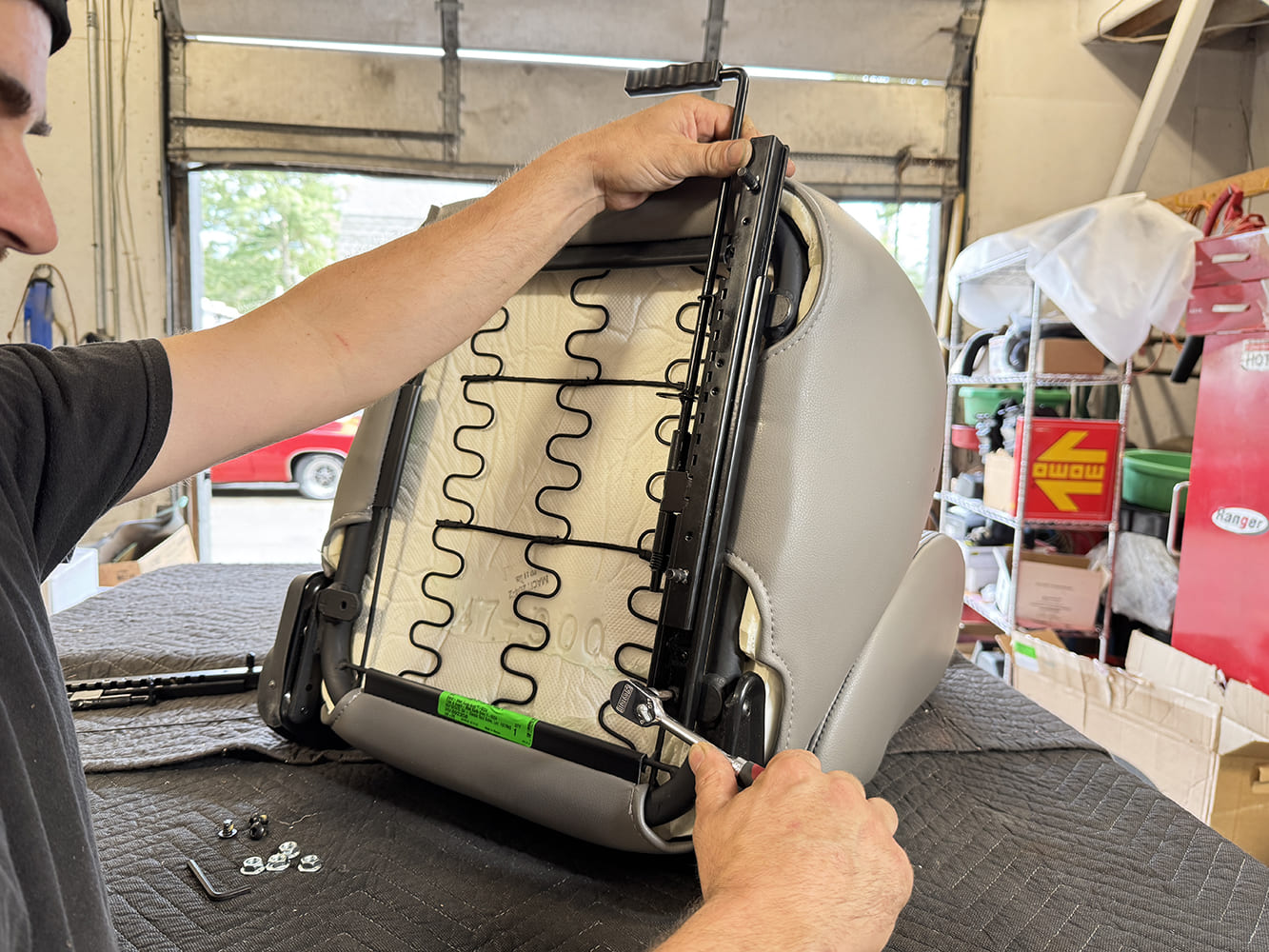
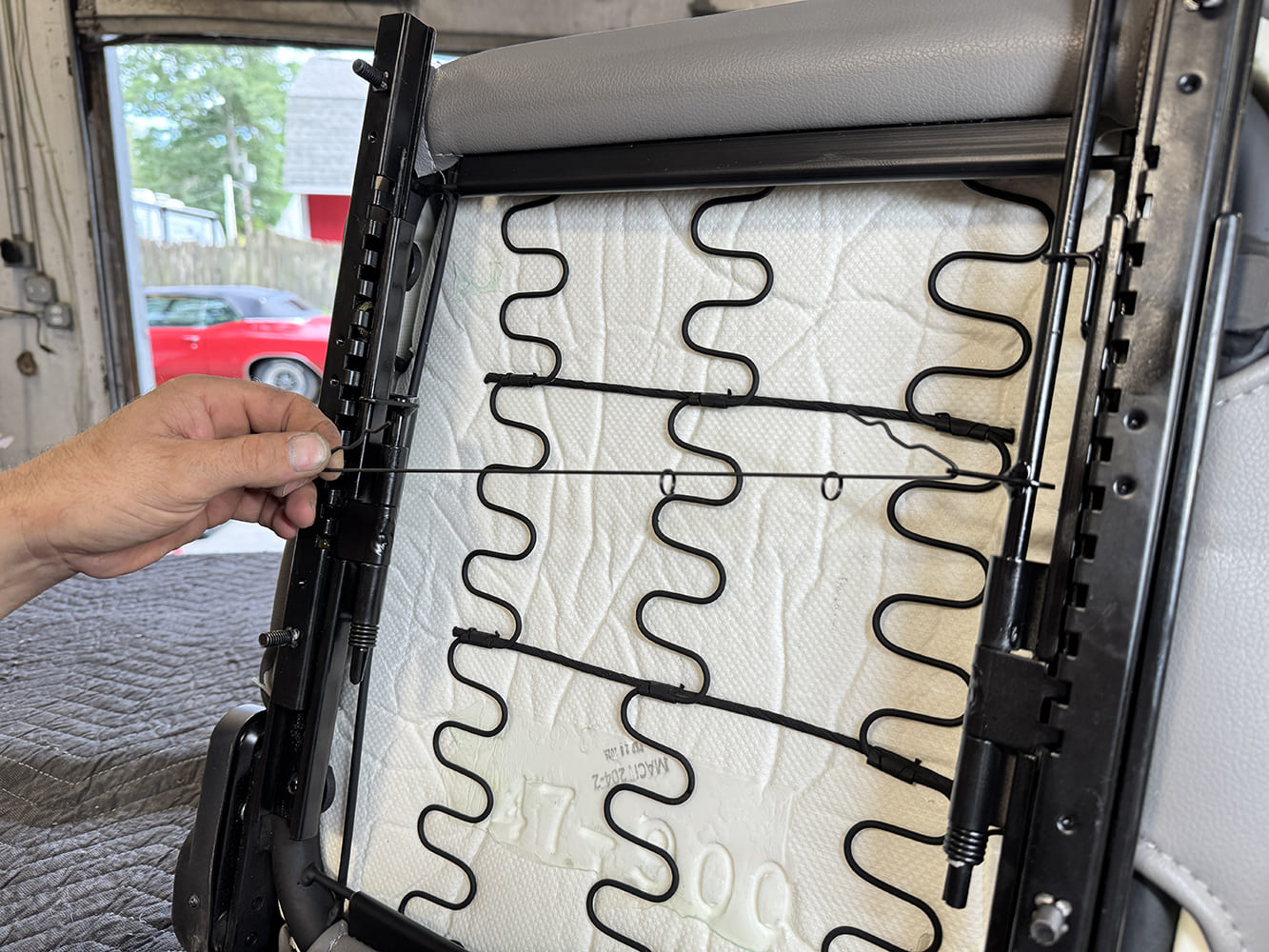
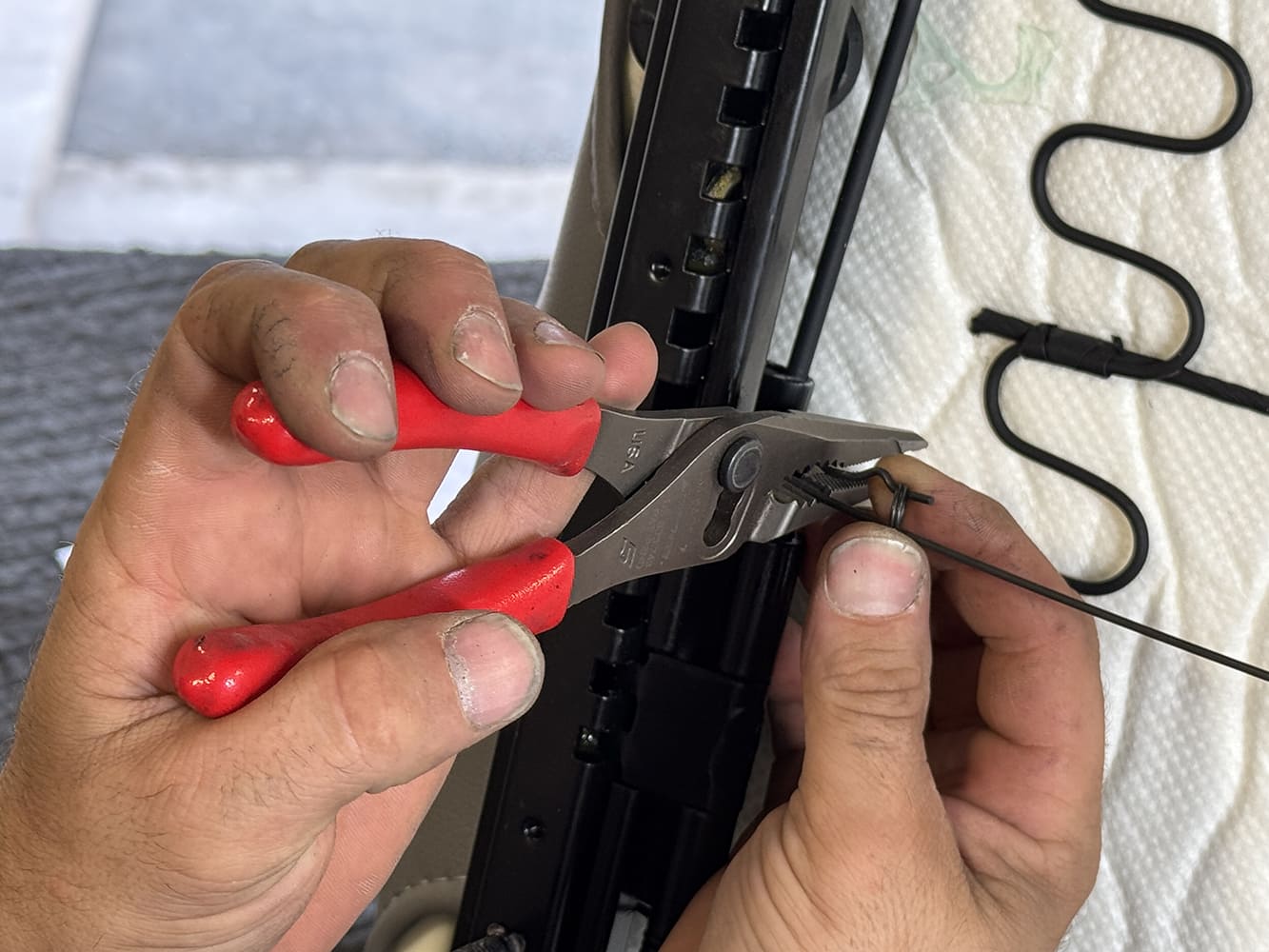
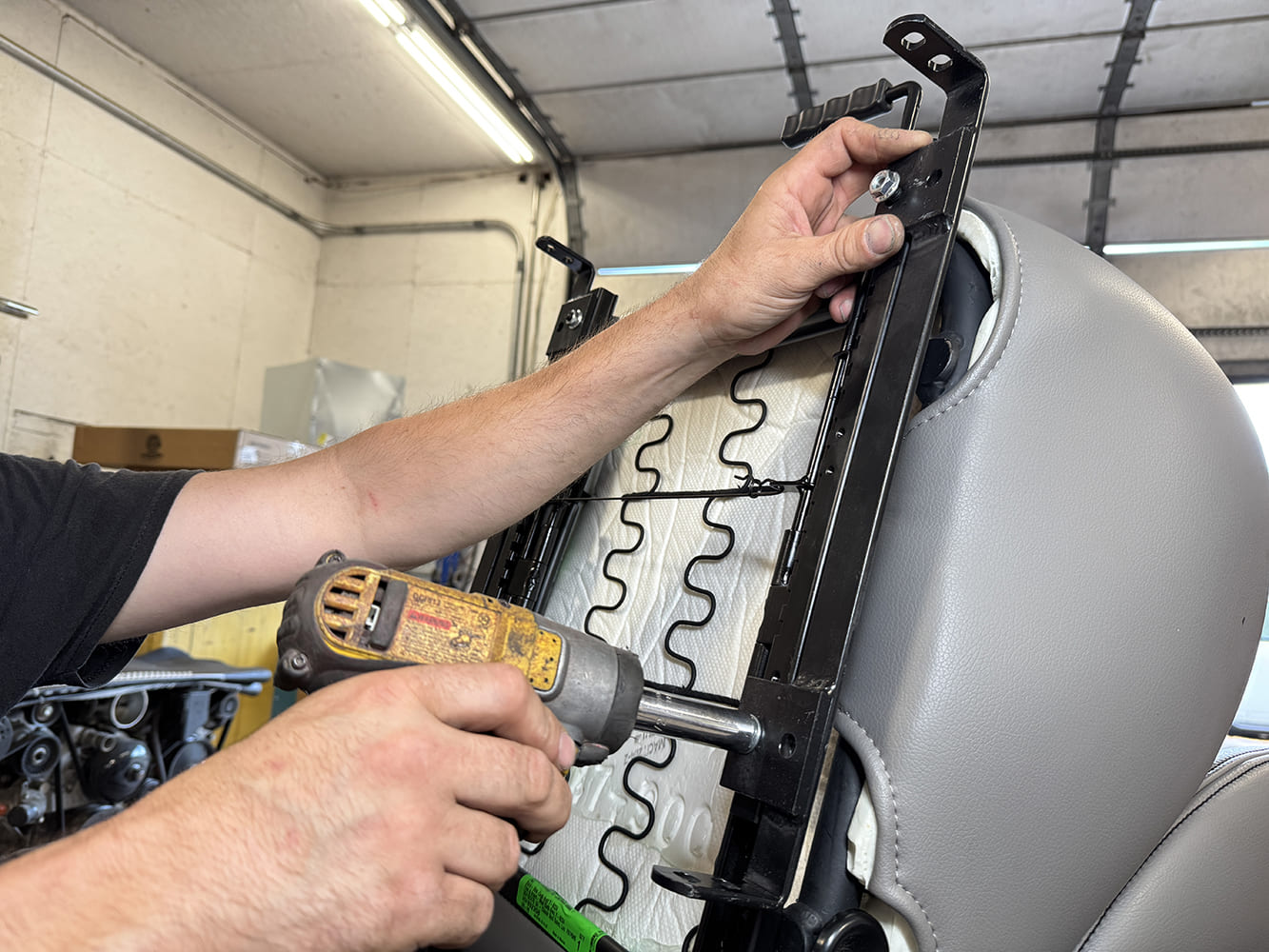
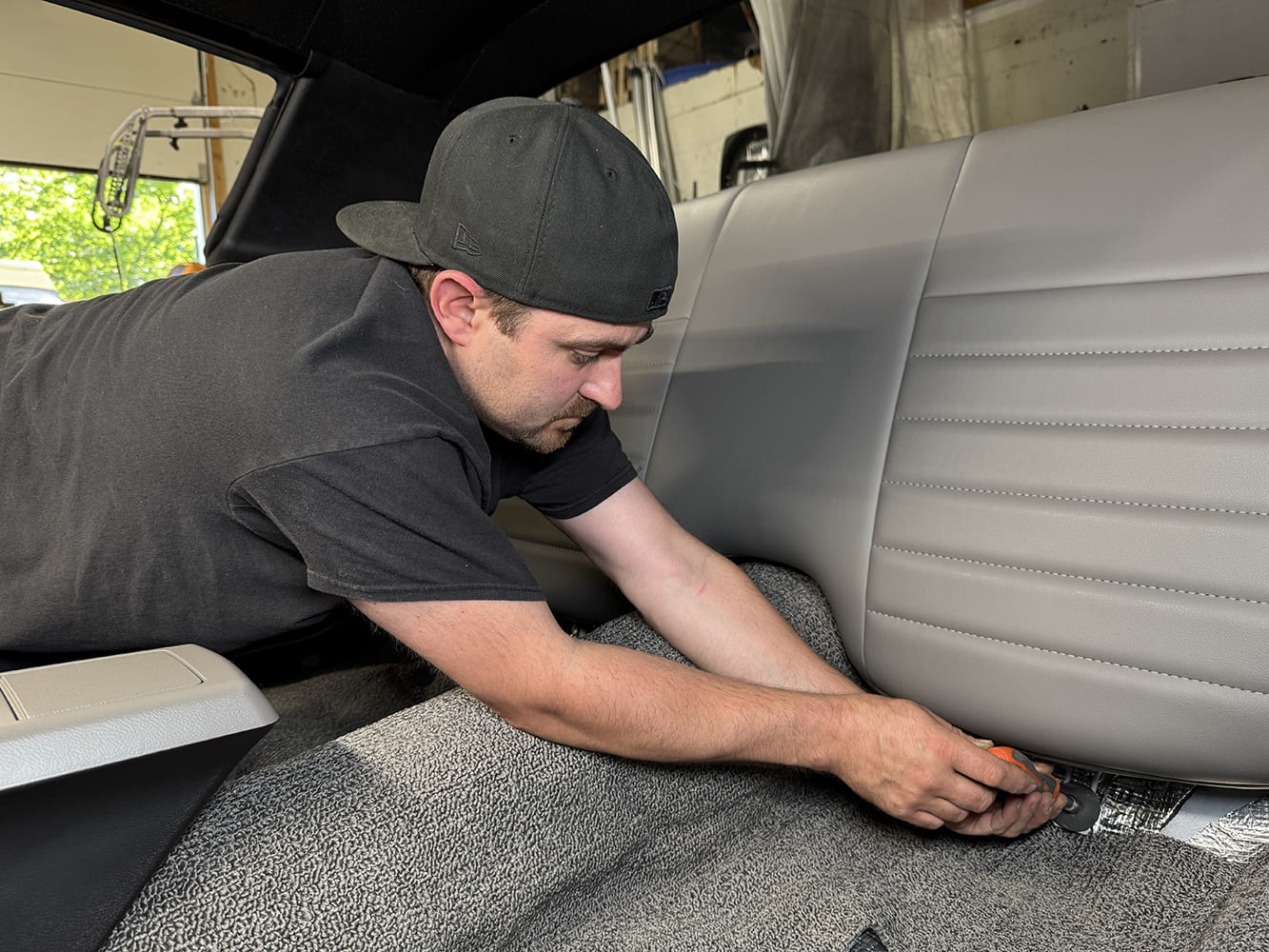
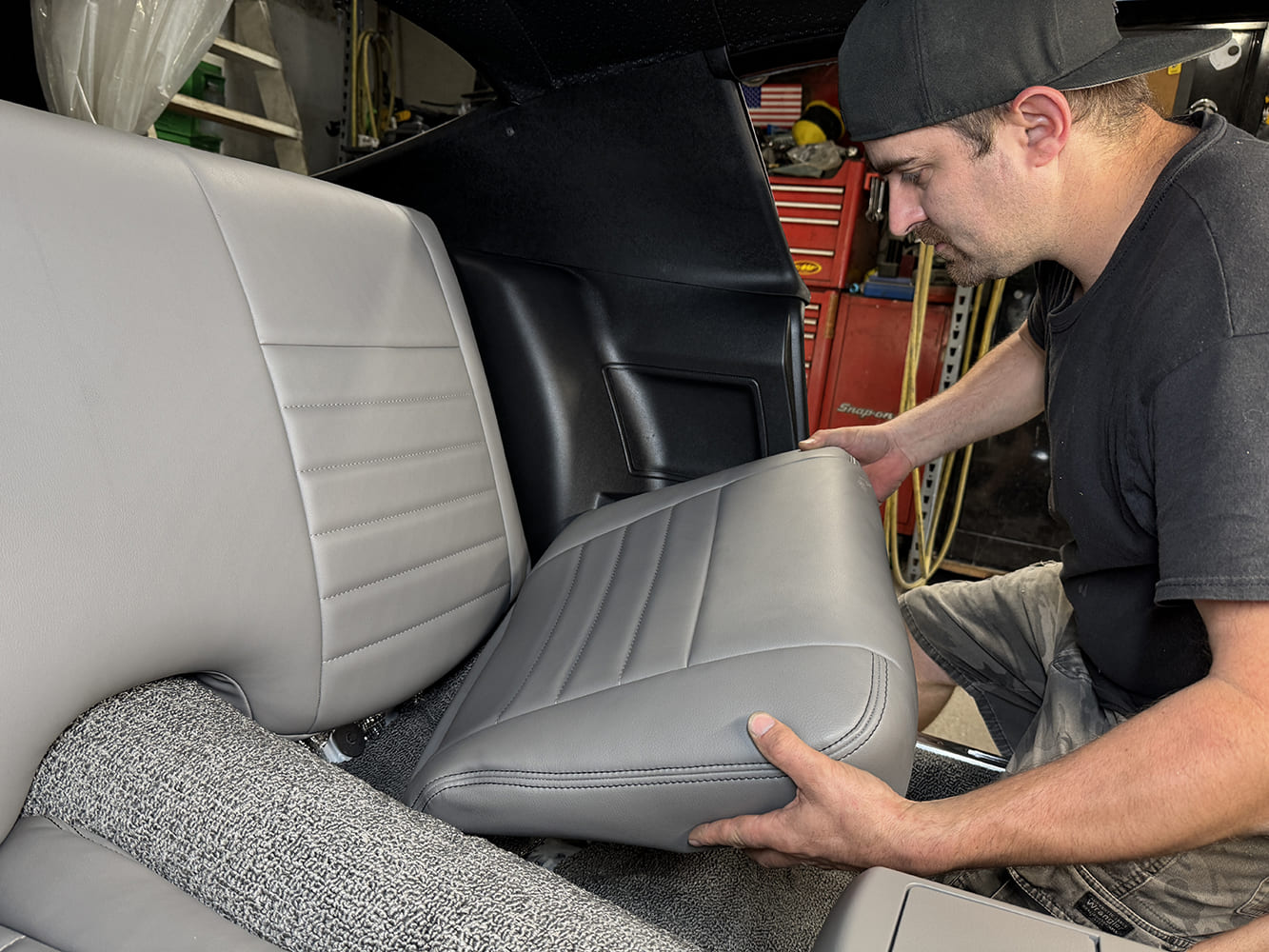
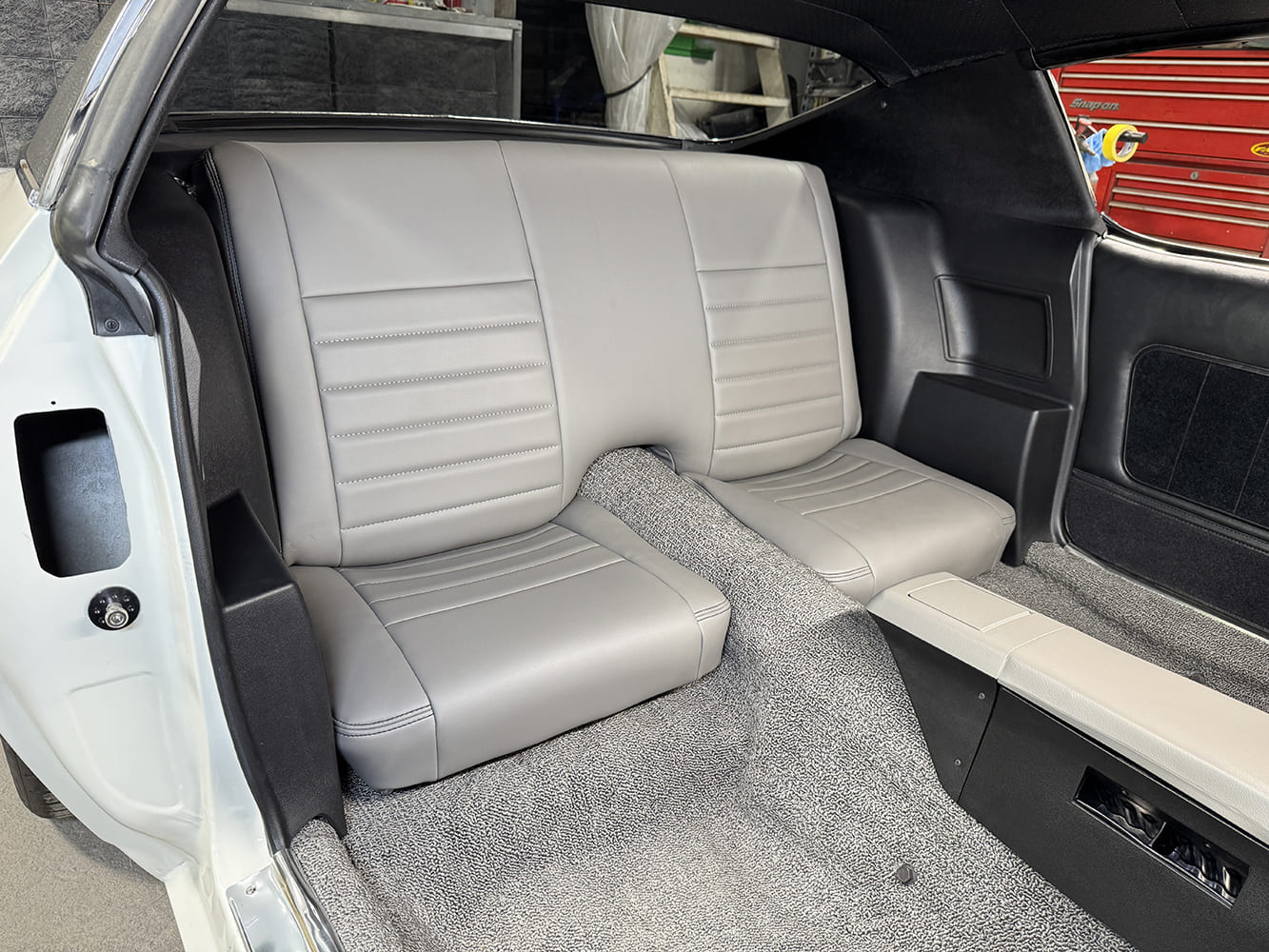
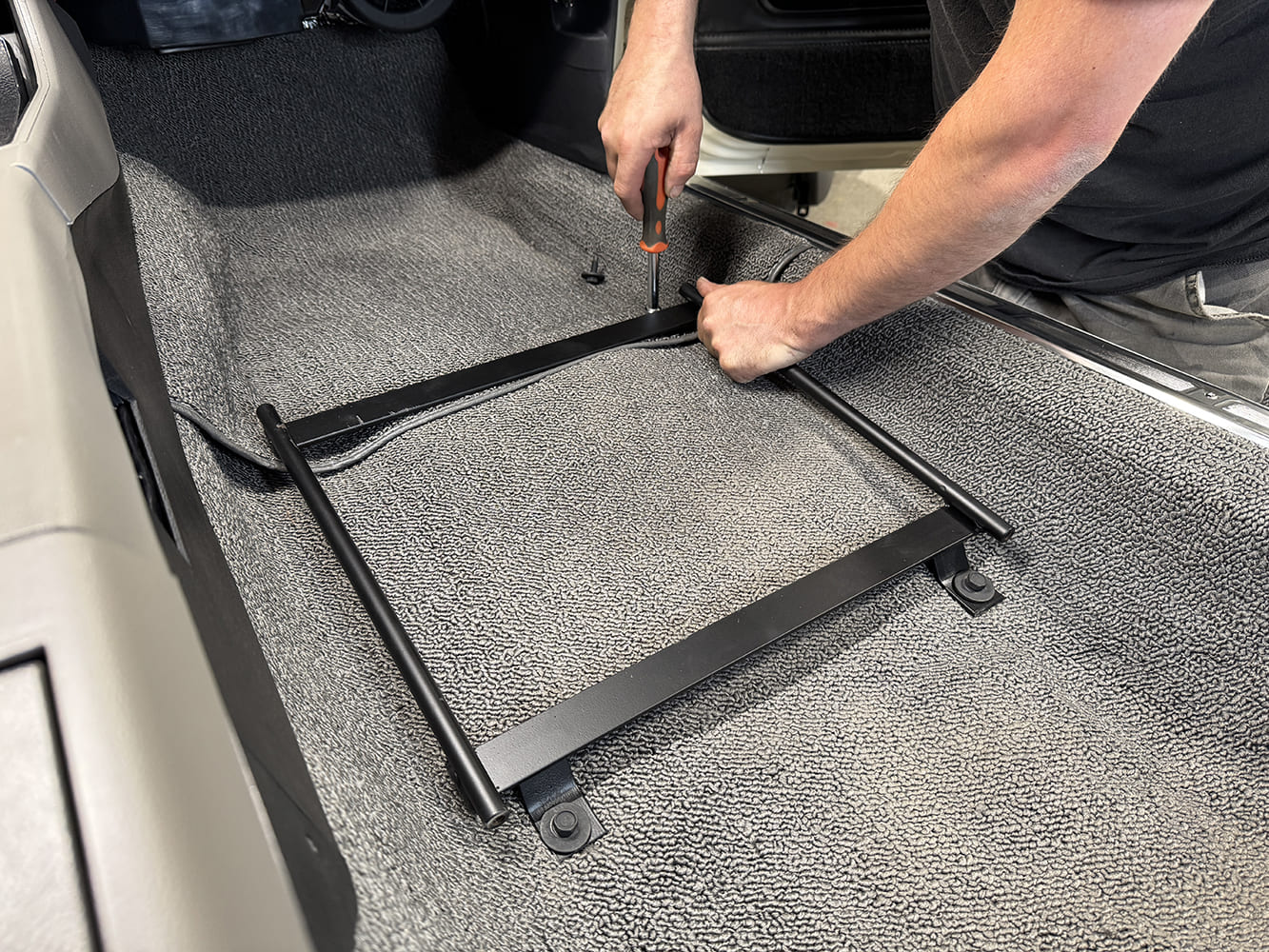
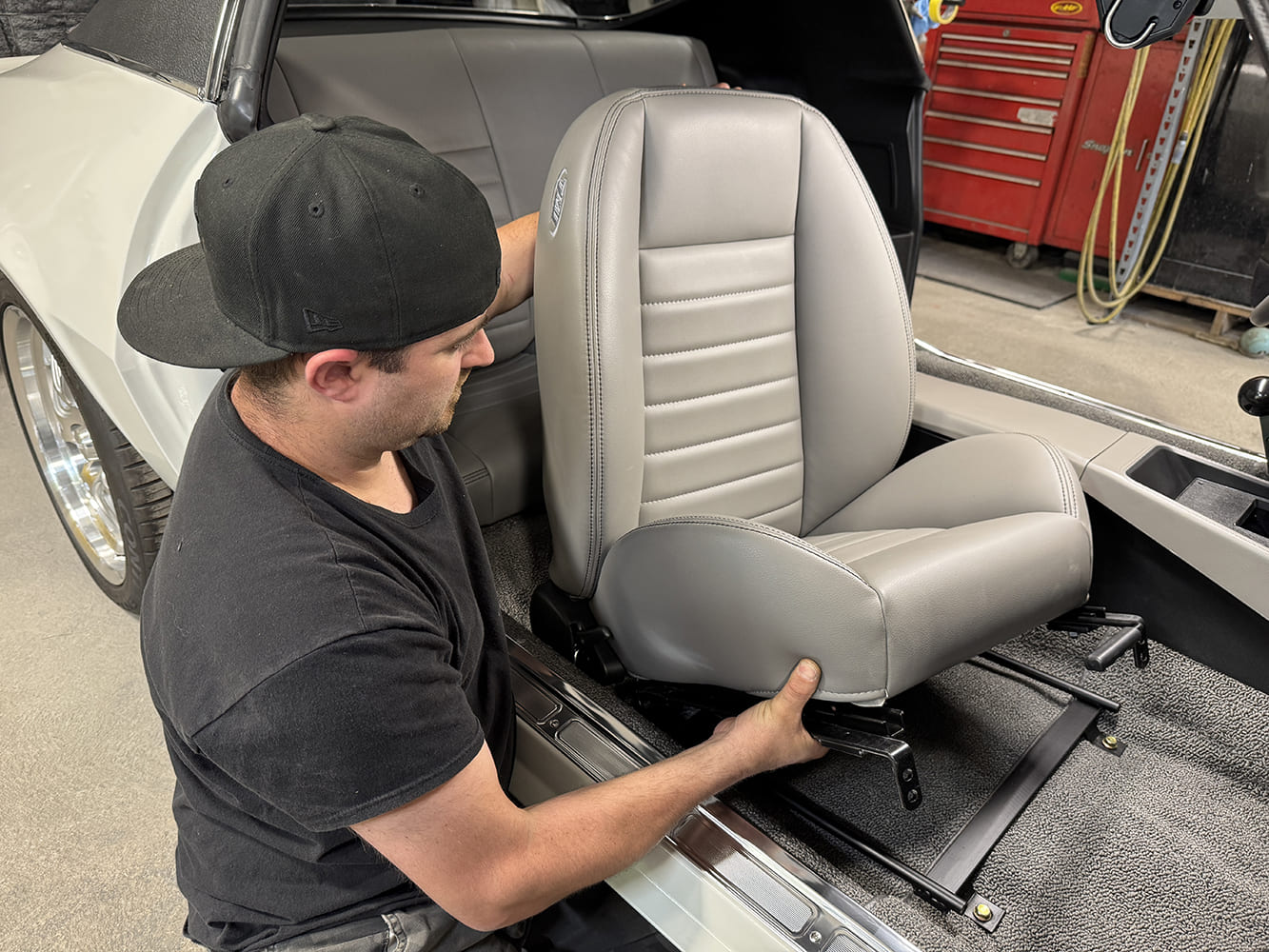
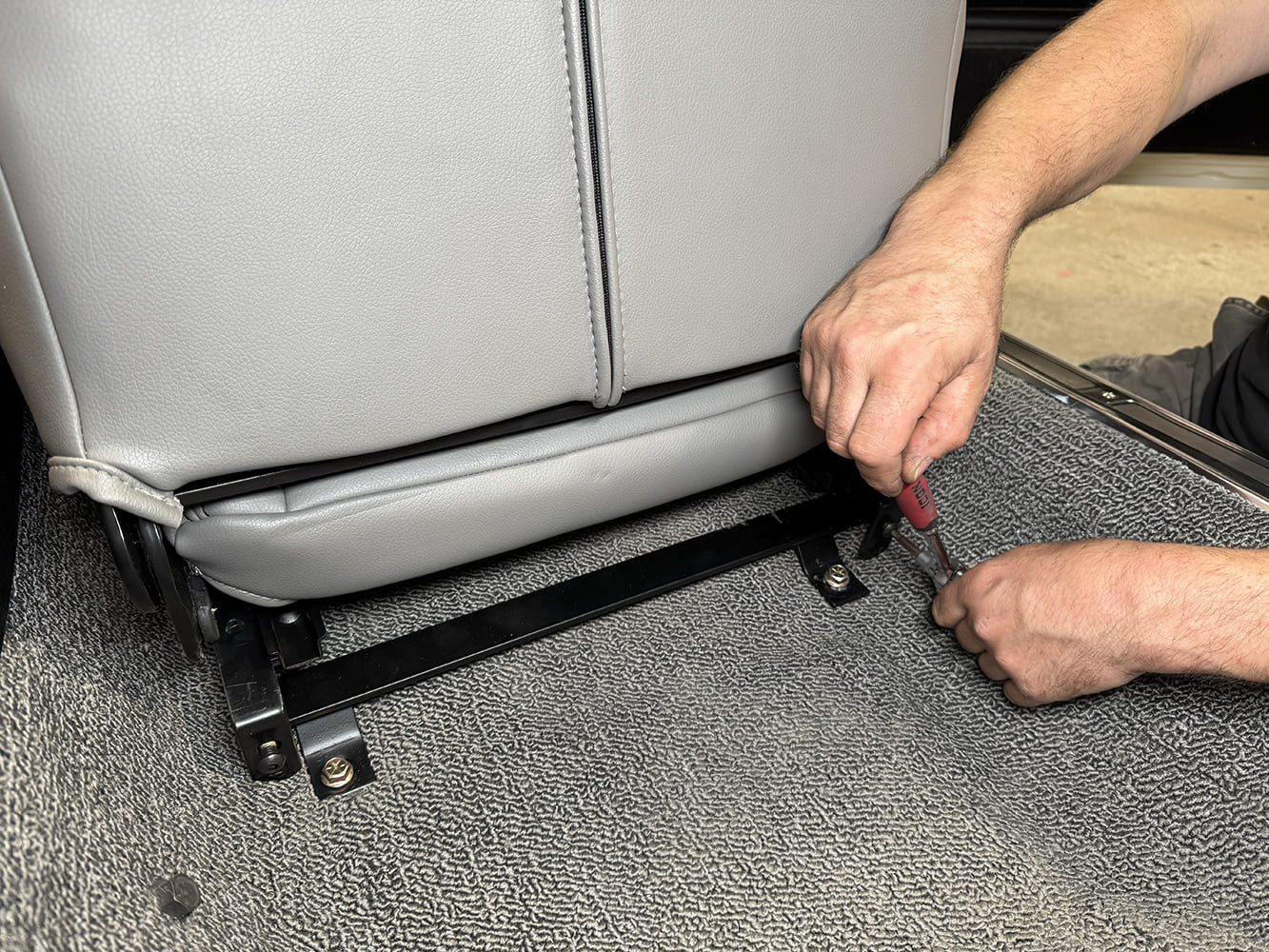
The new kick panel (without A/C) was connected and set in place using the supplied hardware.Moving rearward, the lower rear side panel was secured in place using the factory tab guides.Next, the sail panels were mounted using the lower locking tabs to the upper section of the lower side panel. The upper panel was then secured.The completed rear panels showcased the high-quality reproduction parts, making it factory-fresh and waiting for the new seating to complete the look.The original factory rear seating had served its purpose over the past decades and had seen far better days, so it was time for a refresh.Starting with the rear seat backrest, O’Brien began the teardown process by first removing all hog rings, which secured the upholstery to the back of the seat frame.From there, the seat frame was separated from the foam cushion and upholstery.Continuing to the seat bottoms, the factory hog rings were removed from the seat frame and original upholstery.To complete the removal process, the inner support frame was separated from the inner springs by using a hammer and standard screwdriver.With the seat frames blasted clean and treated to fresh paint, it was the perfect way to start, especially when matched with the new three-piece molded rear seat foam set from Classic Industries.TMI Products supplied the rear seat upholstery kit from their popular Cruiser Collection in Medium Earth Gray vinyl. Starting with a padded bench top to protect the new upholstery, O’Brien began installation of the cover to the foam insert, ensuring that it is equally stretched to fit all corners.Flipped upholstery side down, he followed up by lining up the seat frame to the front of the seat pad, using masking tape as a guide to ensure all seams are properly matched to the frame.Using new hog rings, O’Brien secured the new TMI Products seat cover to the seat frame using a pair of hog ring pliers.With the seat back upholstery laid out face down he began the fitment of the molded seat foam to the cover. Be sure to stretch the fit to each corner equally.He then lined up the seat frame to the seat foam and pad, proceeding to equally stretch and installed the pad to the frame using a set of hog ring pliers and hog rings until completed.To prepare the new front seats for installation, O’Brien started with a padded bench top to protect the new upholstery. Next, he installed the included left and right seat slider brackets to the seat frame with the supplied button head bolts.Next, the O-rings (two) slid onto the wire rod supplied in the slider kit. Each side was anchored to the designated holes on the slider.Using a set of pliers, he completed by squeezing the wire rod ends together to slide the O-ring into place, locking the wire rod to the sliders on both sides.The seat adapter plates were then installed to the slider bracket studs using the supplied 5/16-inch flanged hex nuts.O’Brien then installed the rear seat back rest into place using the factory 7/16-inch bolts.The rear seat bottoms were then secured in place to the factory mounts.Here you can see just how nice the rear upholstery upgrade looks, especially with the fresh black side trim for accent.Engineered for a perfect it, the TMI Products seat mounting brackets were installed using 5/16-inch bolts to the stock locations.The new seats were then carefully set in place to prepare them for final installation.Using button head Allen 5/16-inch bolts, the seats were secured to the mounting brackets.Upgrading with TMI Products Cruiser Collection Pro-Low Back front seats with matching rear seat upholstery added plenty of style and comfort to the Camaro as it prepares to hit the road.
We use cookies to ensure that we give you the best experience on our website. If you continue to use this site we will assume that you are happy with it.