


By John Machaqueiro – Images by the Author
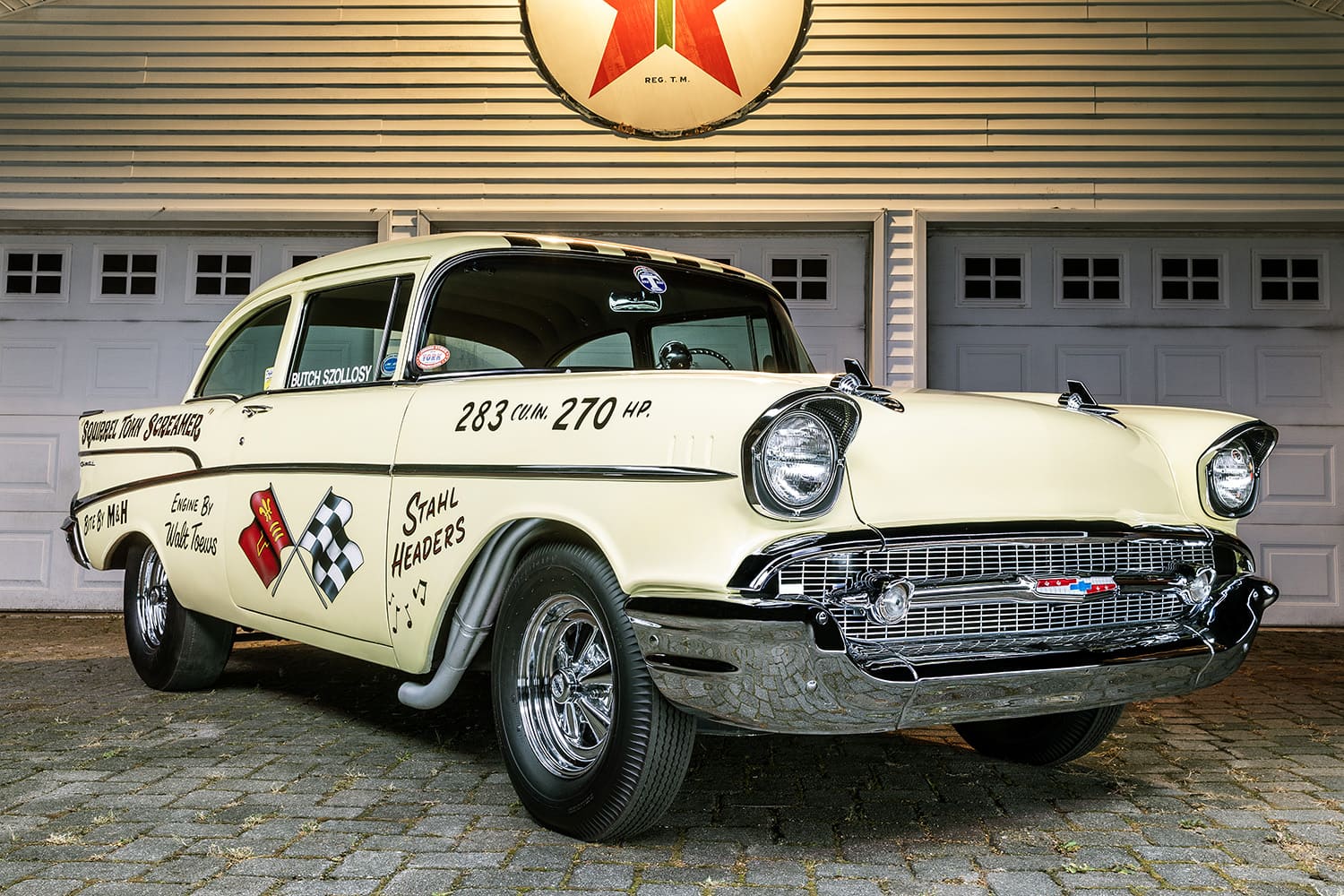
It goes without saying that when there’s a “two,” logic tells us a “one” must have come first. Longtime All Chevy Performance magazine readers may remember the May ’22 issue, which featured Butch Szollosy’s 1961 Corvette dubbed the Squirrel Town Screamer II.” Now, we’re stepping back to the beginning, bringing you the original “Squirrel Town Screamer”—his 1957 Chevy 210 sedan.
Butch’s love affair with the Chevrolet brand began at an early age. He recalls, “My father always had Chevys, and they were what I learned to work on. I liked the availability of parts at a reasonable price because they were so plentiful; that’s why I stayed with Chevrolet.” That early brand loyalty soon evolved into a deep passion for drag racing, fueled by countless trips to local tracks during his youth. He adds, “I loved watching the Junior Stockers race back in the late ’60s because we had our local heroes, people that we knew, and these cars would run fender to fender going through the traps.”
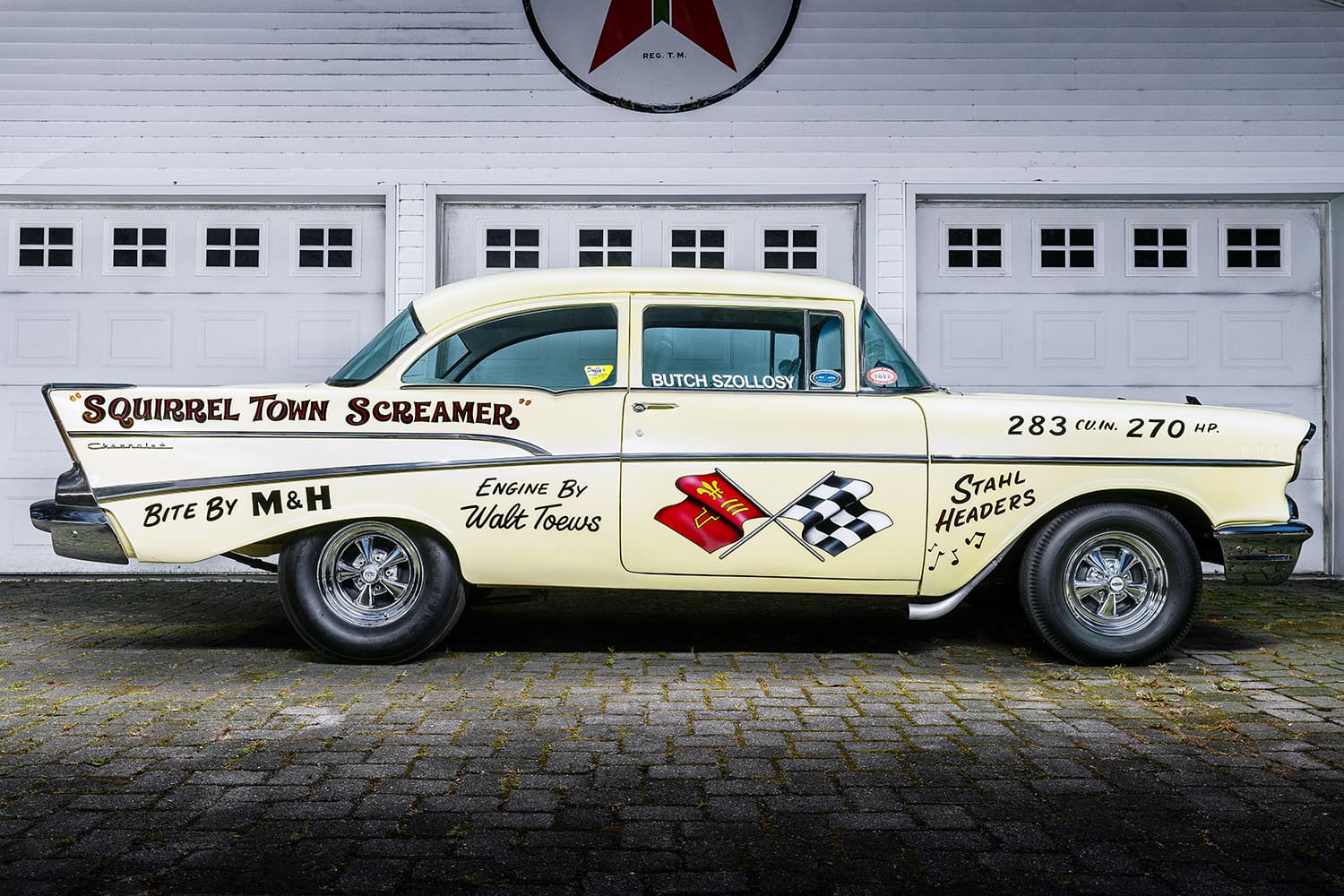
By the mid-’80s, Butch’s desire to build and eventually race a Junior Stock–flavored car had moved to the top of his wish list. Without a clear plan in place, he began searching for a solid, Chevy-based candidate. Although a ’57 was not specifically on his radar, the right car found him unexpectedly. “I came across the car accidentally when I was working on a fire engine in Palisades Park,” he explains. “The fire chief told me he found a ’57 Chevy for sale and I told him I couldn’t afford one. He said, ‘I think you can get the whole car for $150.’” That’s exactly what he paid, but instead of a complete car, what he ended up with was a bare shell and four truckloads of parts.


After assessing his purchase and the cost to complete it, he decided to build a bespoke race car, believing it would be cheaper. That calculation changed quickly when he discovered how rusty the car was. The floorpan, rockers, and quarters were beyond repair. This led to a parts-buying spree that included new floorpans and rockers, along with used quarters chosen specifically to retain the factory spot welds in the trunk. “I wanted them in there because body shops would just smear putty over that area and you’d never know,” Butch says. “I wanted the factory pinch welds in there. I was a stickler for that.”
The metalwork was handled by a builder working out of his home, and while things started smoothly, they soon went off the rails. Although the job was ultimately completed correctly and the car reached the primer stage, the experience left him with little fondness for the process.
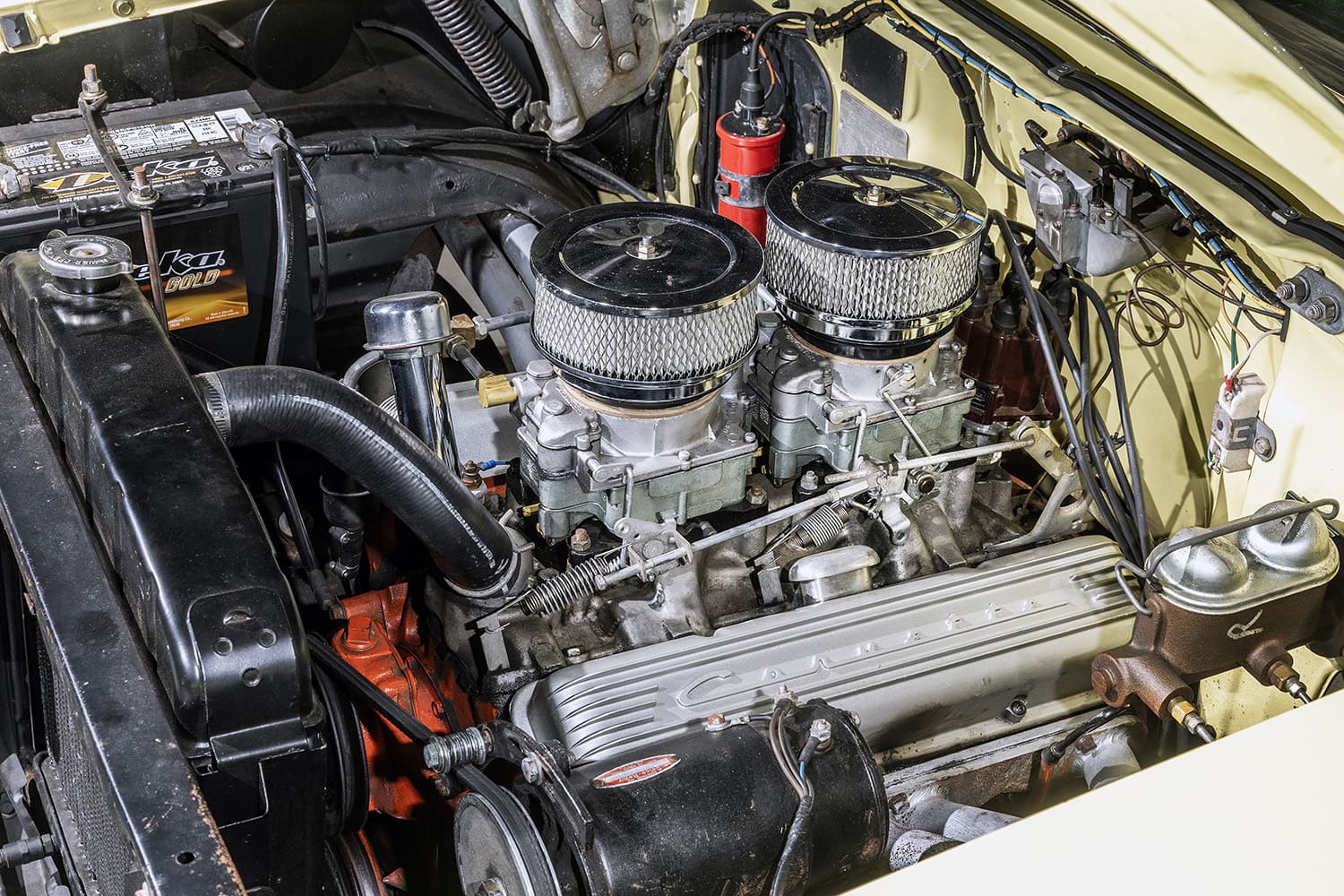
Roughly midway through the bodywork phase, he also began searching for a suitable mill that was both period-correct and compliant with late-’60s Junior Stock regulations. After making a few inquiries about potential sources, he ended up calling Walt Toews—a connection that proved invaluable. Toews had been part of the LAW Automotive race team, which fielded a three-car effort in the Junior Stock class during the mid to late ’60s. “I called him and asked him about Junior Stockers,” he recalls. “I asked him if he had any parts left from the cars and he said he had the whole engine from their ’58 delivery, but it needed to be freshened up.”
Within four months of that phone call, the 283 was delivered in late 1992. Toews had refreshed it with new rings, bearings, and valve springs, checked all the clearances, and finished it with a fresh coat of black. Butch and Toews went on to become good friends, and it wasn’t until 2004 that a surprising detail about the engine came to light. Butch tells, “I was talking to [Toews] at the York show, and he was telling me that they bought the engine from Bill ‘Grumpy’ Jenkins. He said he had him build the engine. I told him, ‘I didn’t know it was a Jenkins engine,’ and he said, ‘I never mentioned that to you?’ I told him, ‘no you never did,’ and he said, ‘oh yeah, that’s a Jenkins engine.’” Completing the other part of the drivetrain puzzle, the M20 he installed was a freebie from a friend who worked at a junkyard and pulled it from a car headed for the crusher.
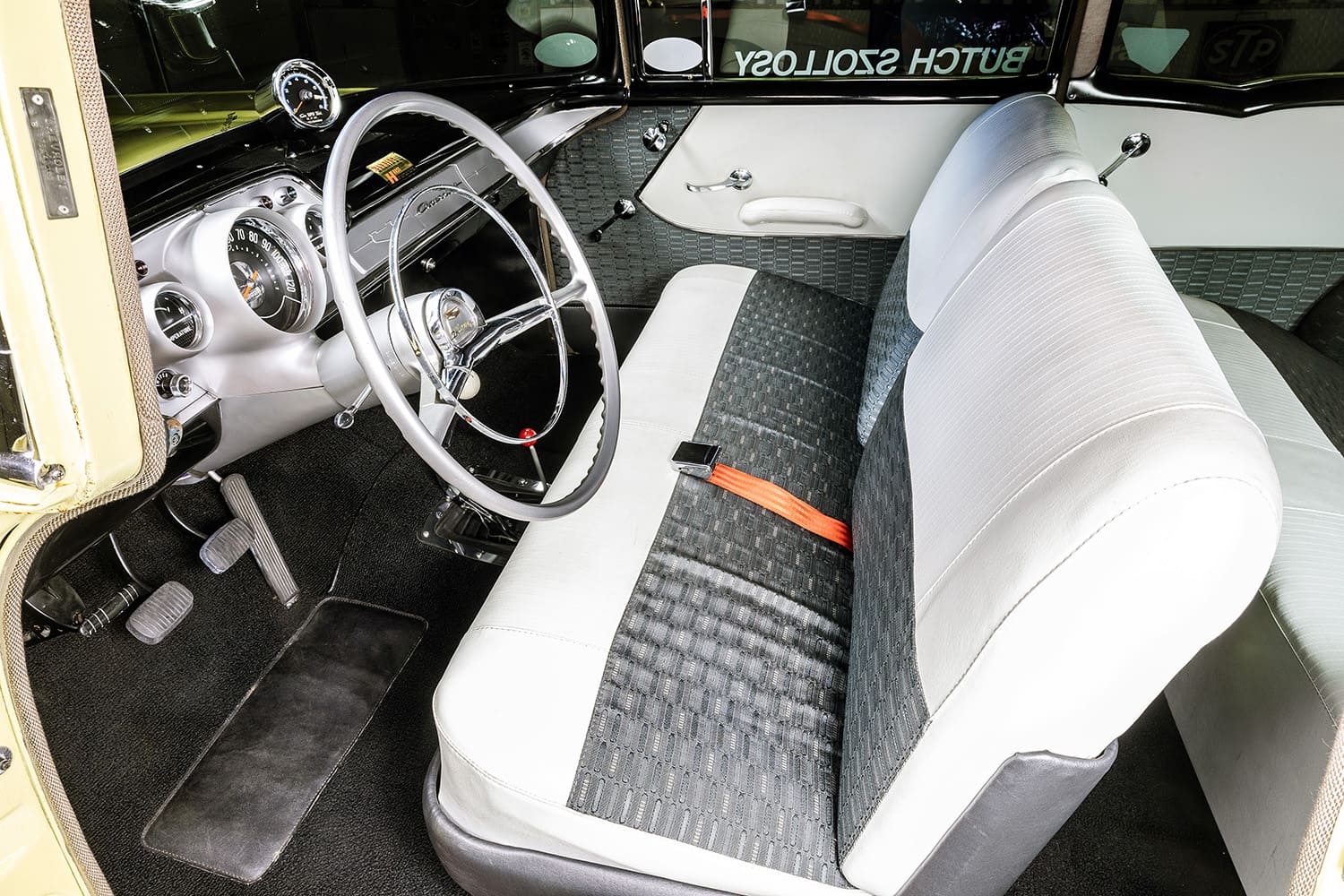
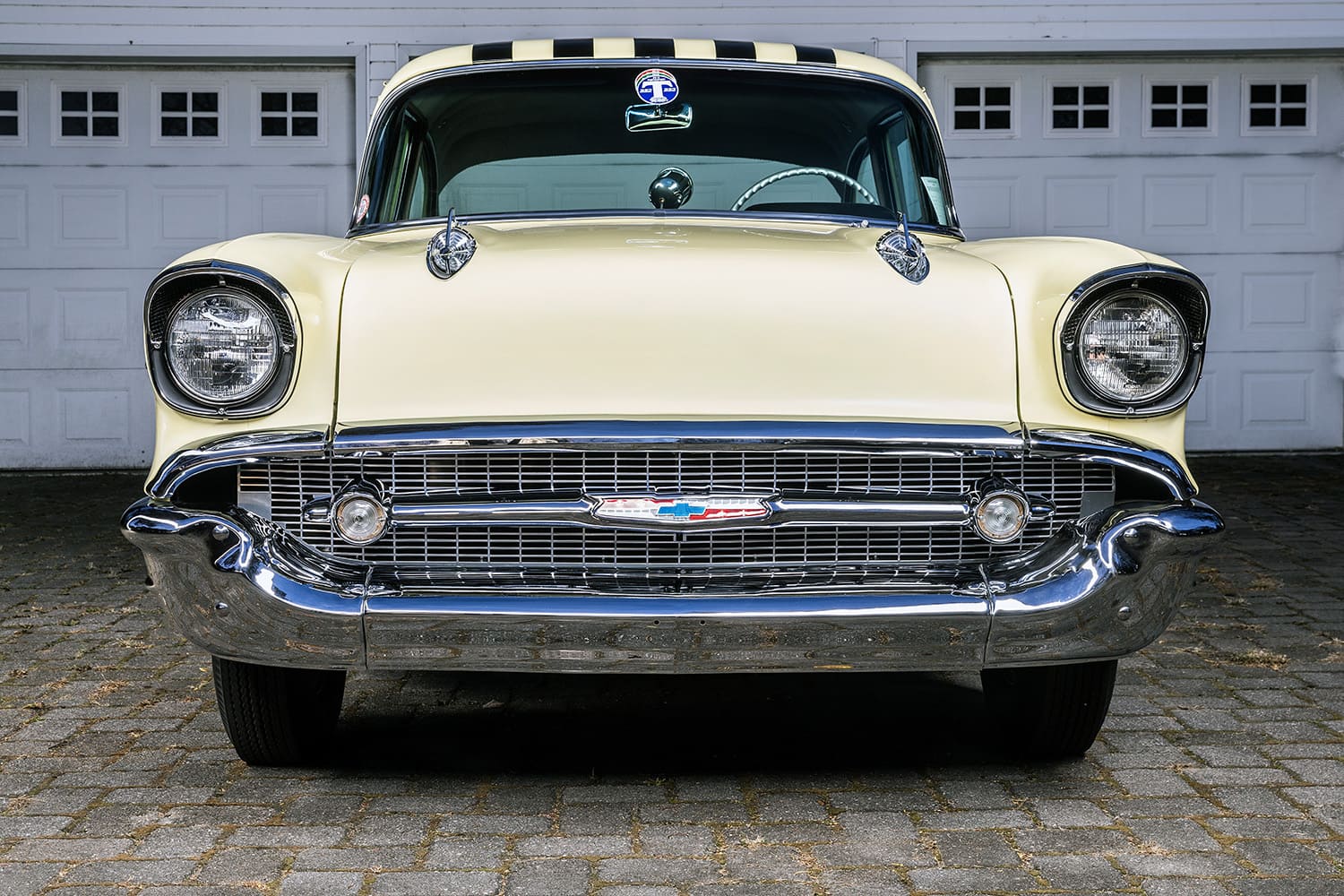
When the car was ready for paint, Butch chose to take that task on himself. The ’57 originally left the factory in Colonial Cream with a silver-and-black vinyl interior, and while he stayed close to stock, he made a subtle change. “The original color had too much lime green in it for me, so I opted for Calypso Cream, which is a very rare color on a ’57,” he explains. Although lacquer was still available at the time, he chose PPG Concept single-stage urethane for its durability and ease of maintenance.
By 1993, all the parts were in place, and Butch began assembling the car. Remarkably, all the original trim from the parts boxes was in excellent condition and reused. The front and rear bumpers were replaced with GM originals, refinished in fresh chrome. Inside, the interior was fully redone in a stock style with all-new pieces from Cars Interior, and new wiring was installed from American Autowire. Underhood, the engine and transmission were installed, and the addition of Stahl fenderwell headers completed the race-ready build.
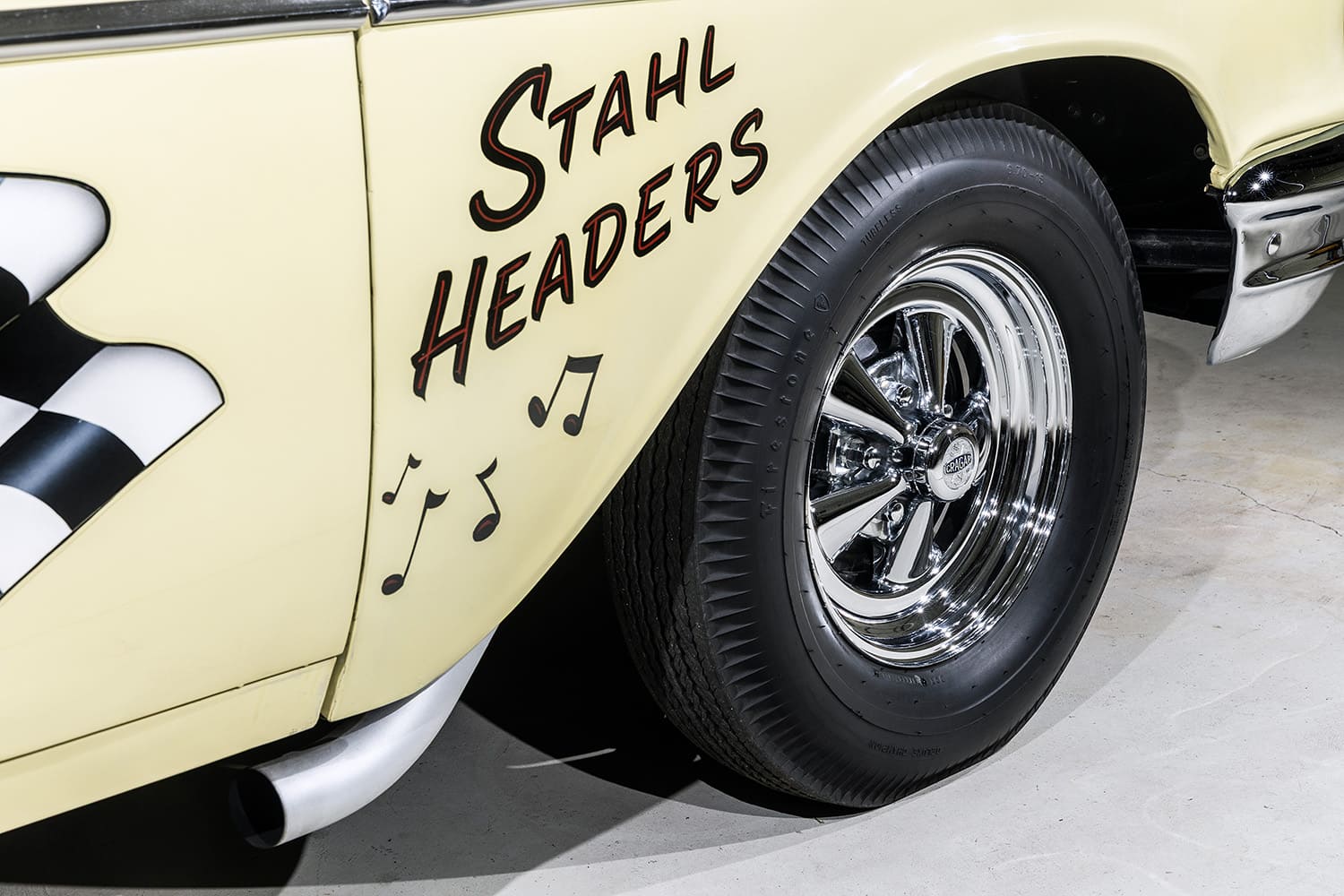
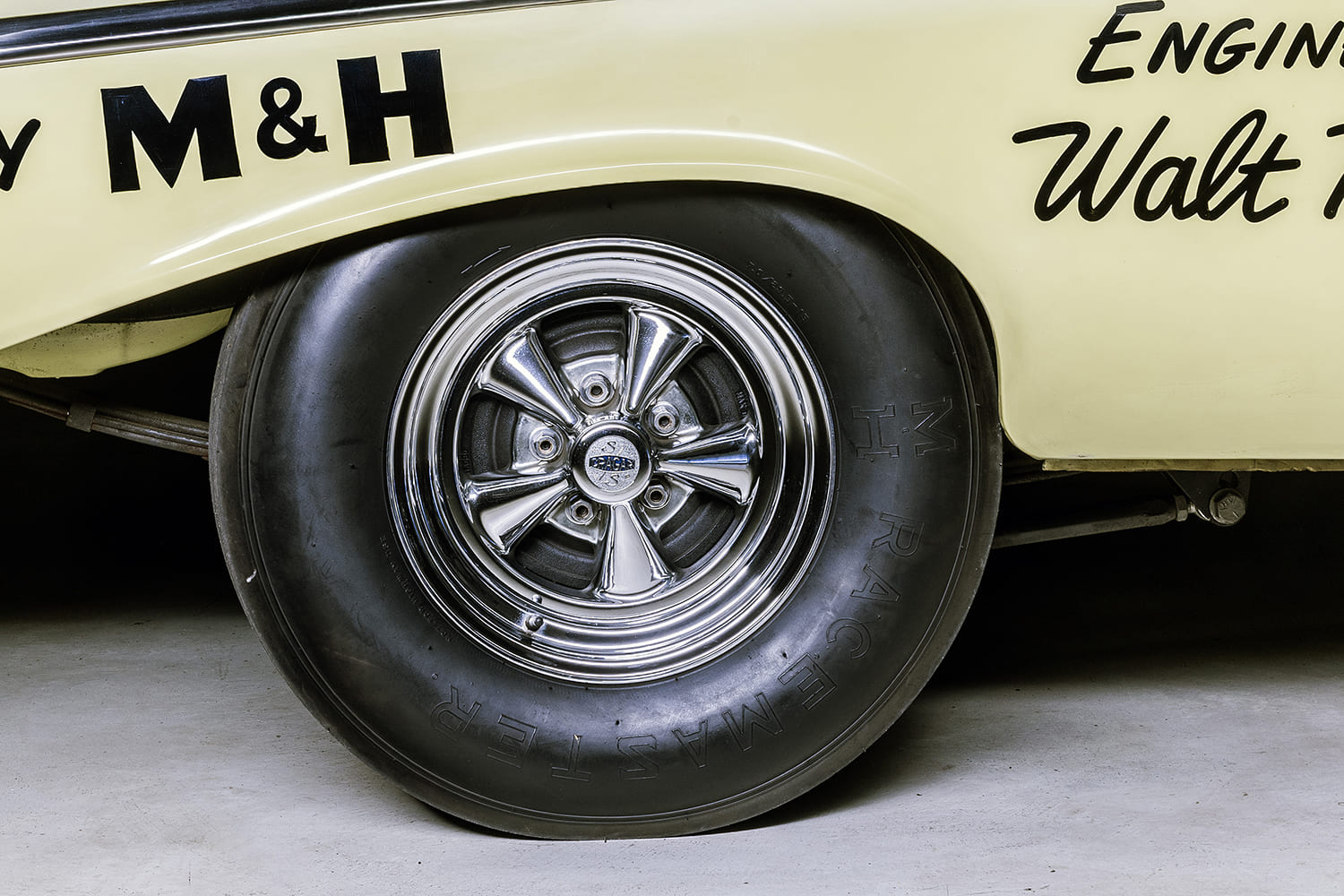
Braking on the car was kept old school with drums and all-new replacement parts, while the wheel choice over the years changed. Initially he chose American Racing 200S wheels, which were then followed by factory steel wheels painted body color, and eventually the Cragar SS set that are installed now with some M&H Racemaster skins at the back and Firestone Deluxe Champion tires up front.
The complete rebuild, from purchase to race-ready, took about seven years. Once Butch hit the track, weak points quickly revealed themselves—most notably the rear. “The stock rearend wasn’t holding up,” he says. “I was blowing them up all the time. I wanted the rearend to last because I launch it between 7,000 and 8,000 rpm when I race it, so I installed a 9-inch and a spool for reliability.”
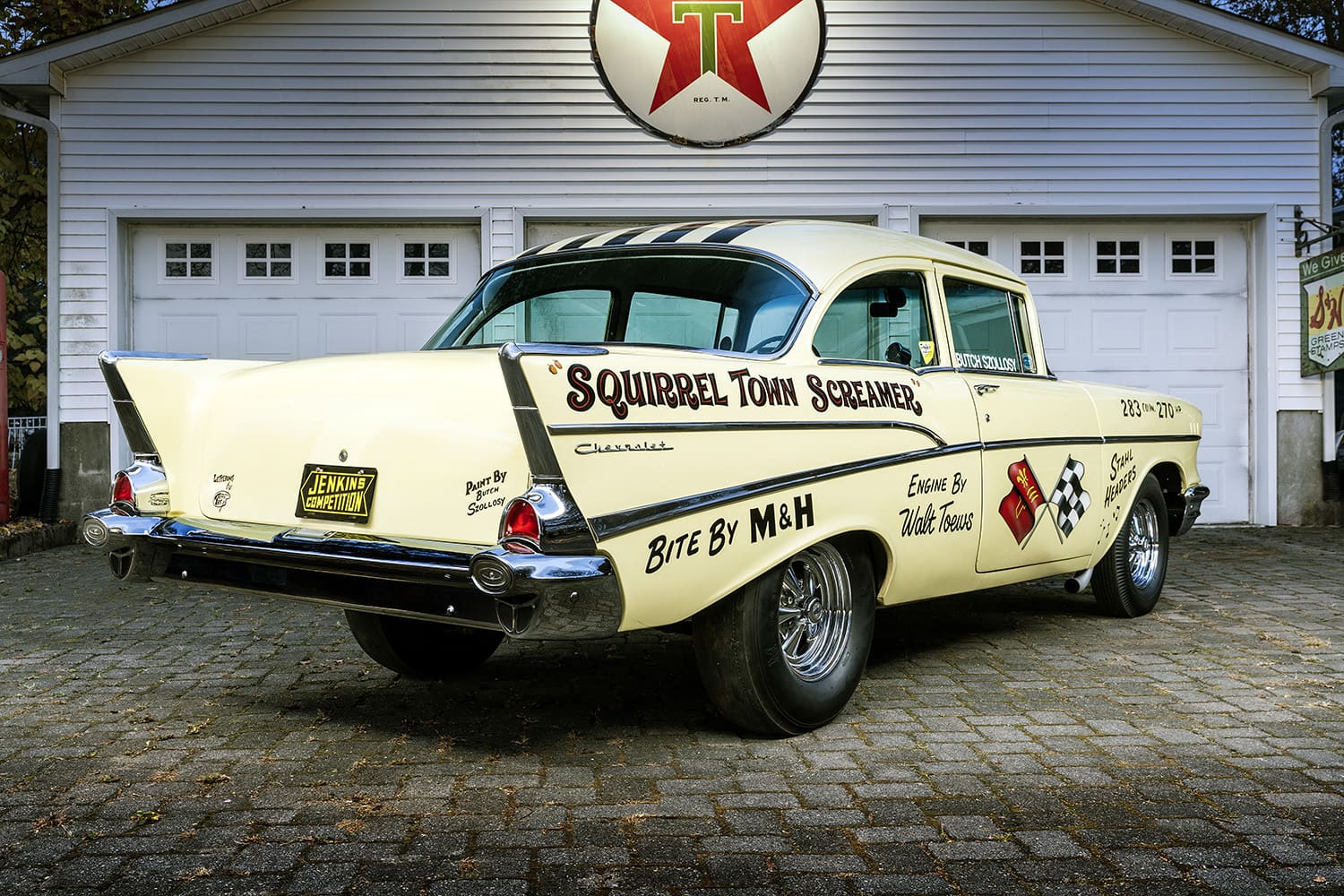
Graphics have been added to the car over the years, but you might wonder why it’s called Squirrel Town Screamer. It has nothing to do with animal cruelty. Butch explains, “My wife, Linda, didn’t know much about racing when we first met. She said, ‘you have to put a name on the car because it needs a name to be singled out.’” He adds, “The little section of town that I live in, the old-timers called it Squirrel Town. The fact that I race it locally and I bring it up to 8,000 rpm to launch, Squirrel Town Screamer was the perfect name for it.”
Butch built the car solely for racing and does so regularly during the summer, with the only break coming when it was on display at the NHRA Museum in Pomona, California, for two years.
Check out this story in our digital edition here.
So much more Tri-Five features and tech here.
TECH
OWNER: Butch and Linda Szollosy, Wharton, New Jersey
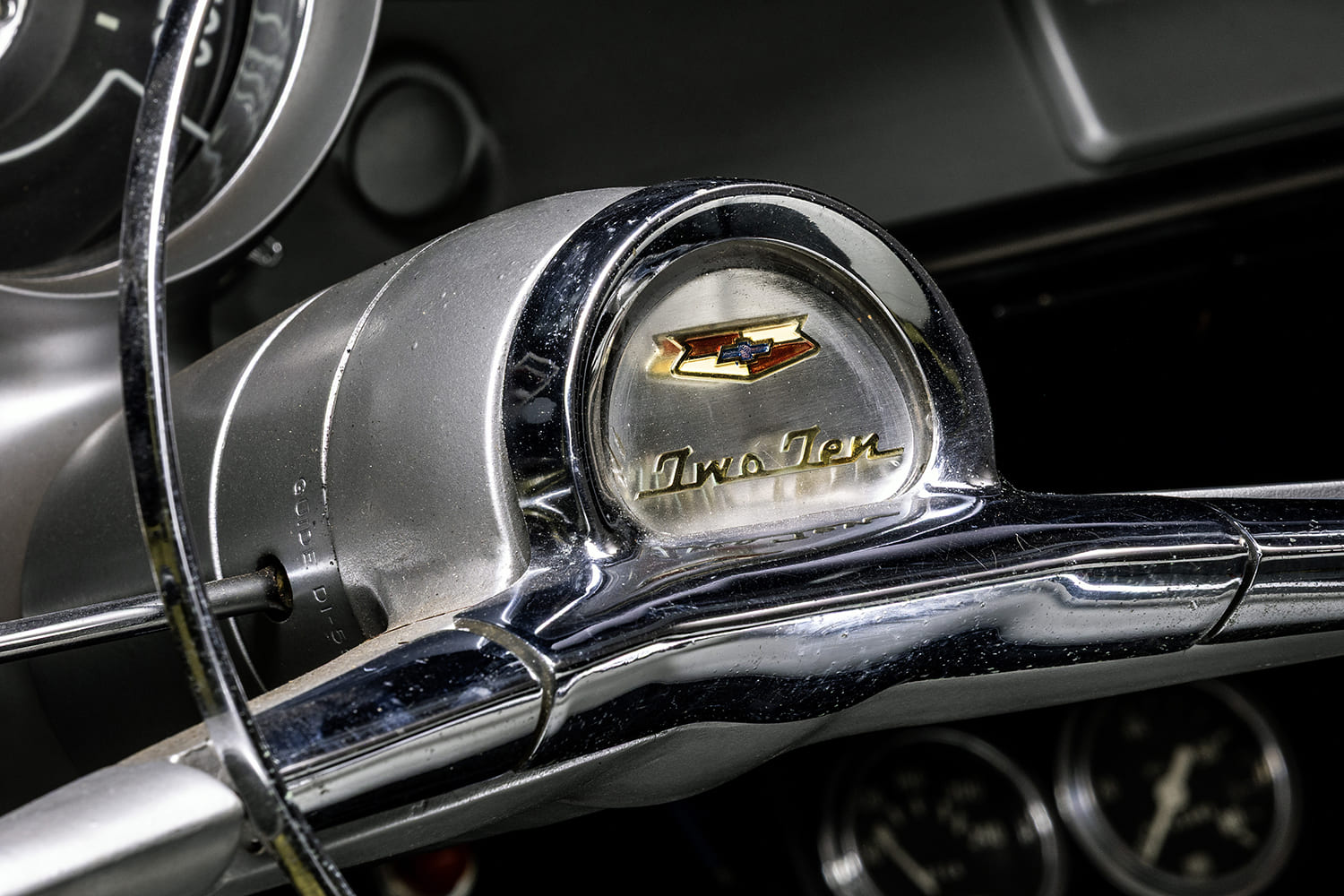
VEHICLE: 1957 Chevy 210 sedan
Engine
TYPE: 1964 283ci small-block Chevy
DISPLACEMENT: 301 ci
COMPRESSION RATIO: 9.5:1
BORE: 3.905 inches
STROKE: 3.000 inches
CYLINDER HEADS: Stock GM cast-iron Power Pack 520 heads
ROTATING ASSEMBLY: TRW forged pistons, forged crankshaft, Forged connecting rods
VALVETRAIN: GM stock high performance
CAMSHAFT: General Kinetics solid roller camshaft
INDUCTION: GM stock aluminum intake, twin Carter WCFB carburetors
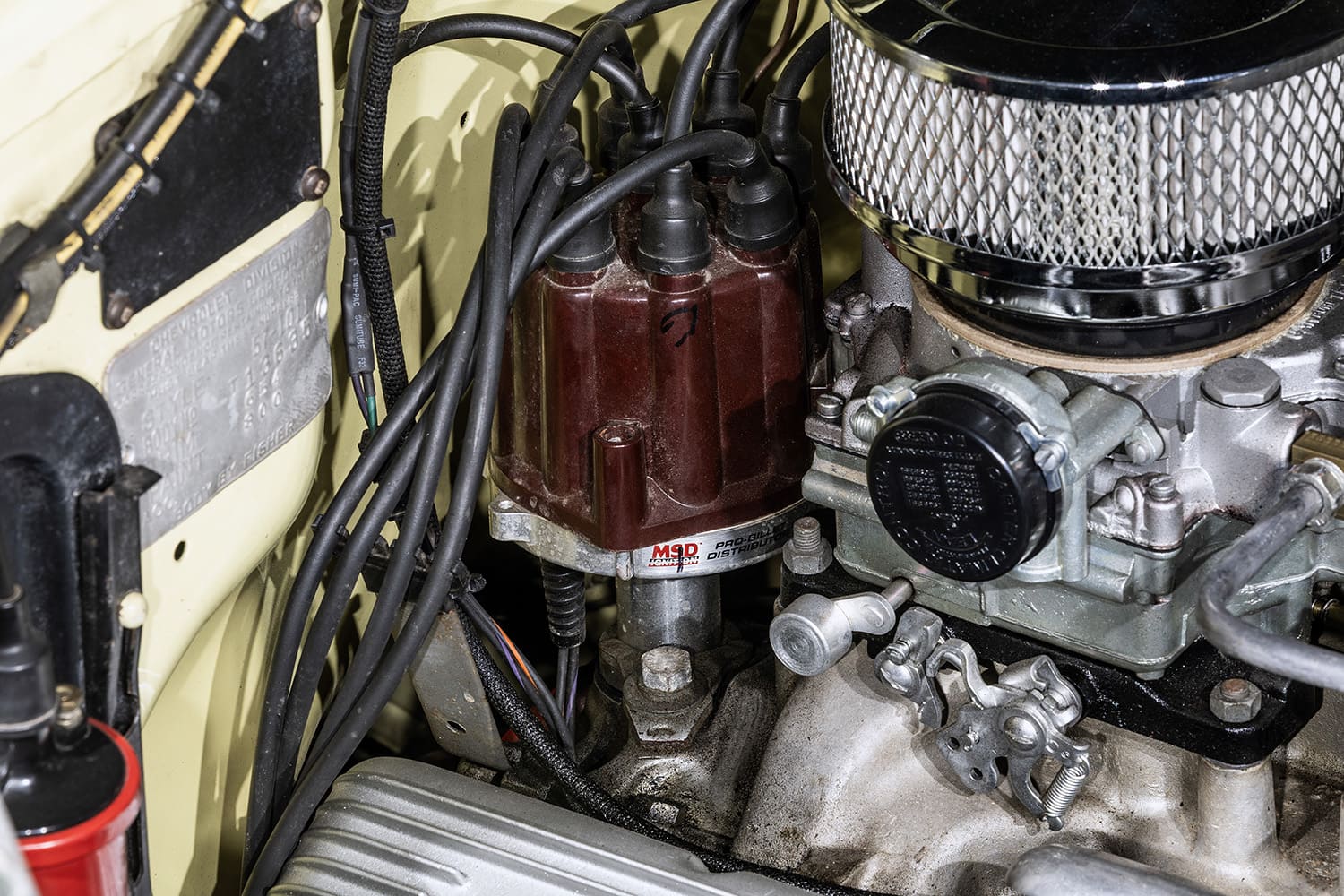
IGNITION: MSD Pro-Billet Distributor, MSD coil
EXHAUST: Stahl 1 5/8-inch fenderwell headers
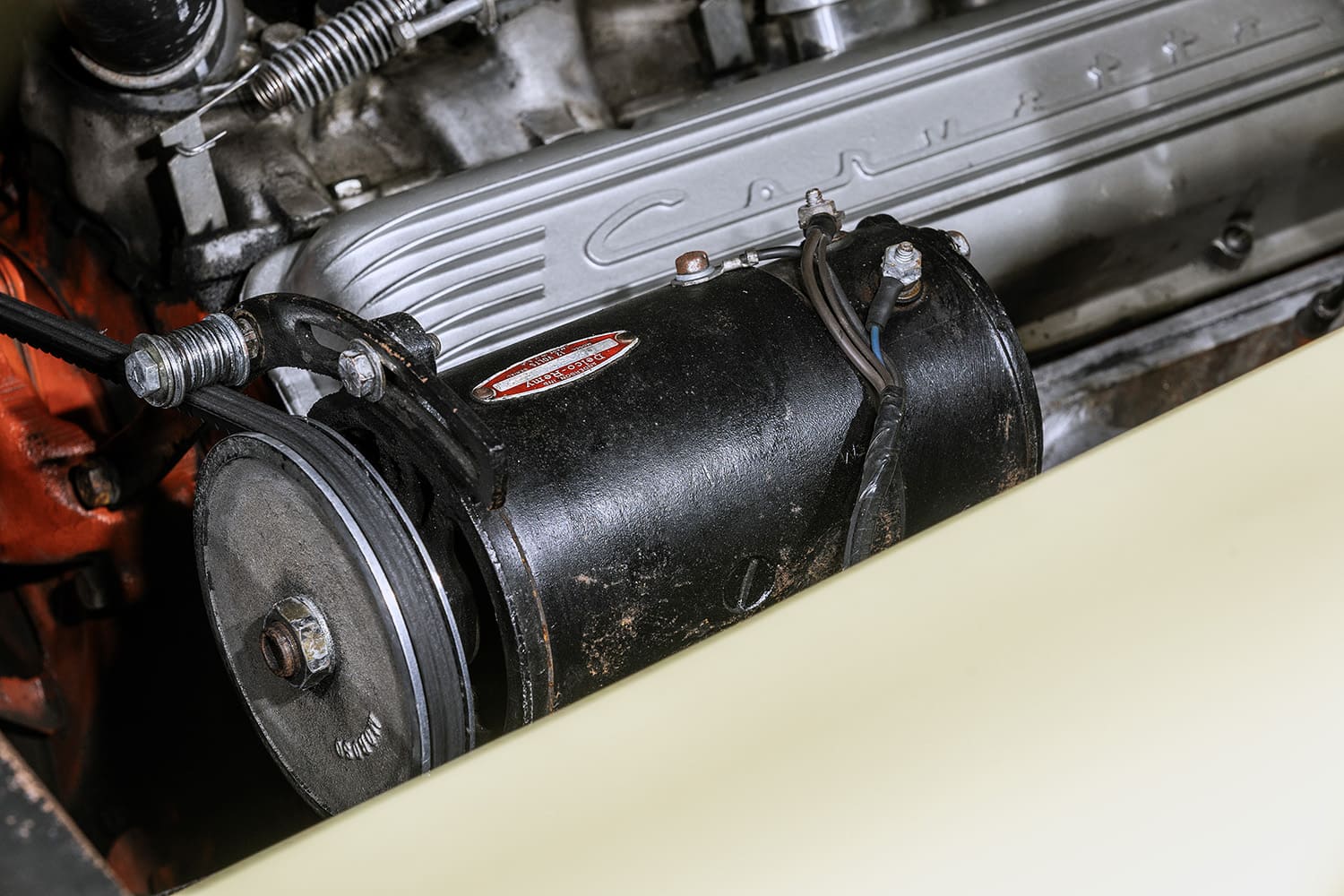
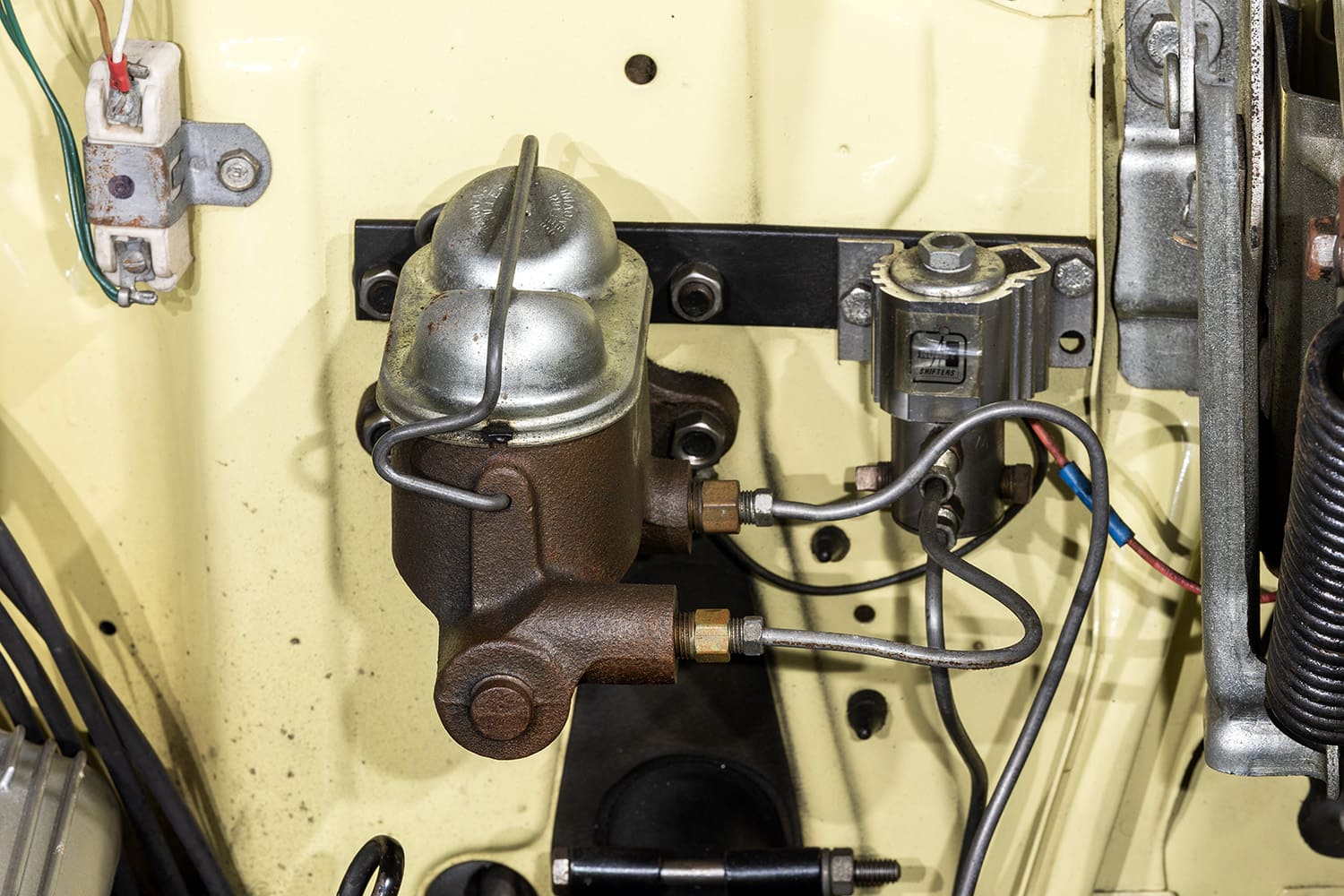
ANCILLARIES: Aluminum Corvette valve covers, GM stock 1967 Chevelle dual master cylinder, Delco Remy stock generator with oversize pulley
OUTPUT: 270 hp and 285 lb-ft of torque
BUILT BY: Originally built by Bill “Grumpy” Jenkins, refurbished by Walt Toews
Drivetrain
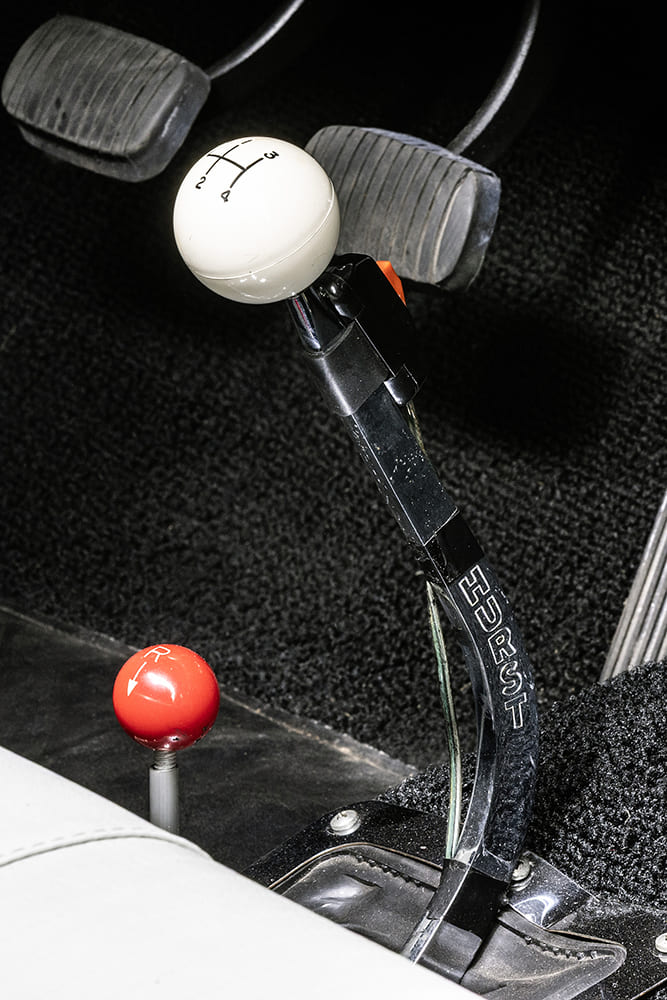
TRANSMISSION: Muncie M20 four-speed, McLoud clutch and steel flywheel
REAR AXLE: Currie 9-inch, limited-slip diff, Currie 31-spline axles, 5.38:1 gears
BUILT BY: Beaver Brook Transmission (Effort, PA)
Chassis
FRONT SUSPENSION: GM stock, Koni 90/10 shocks, GM stock control arms, manual steering, GM stock spindles
REAR SUSPENSION: GM stock station wagon six-leaf springs, Koni 50/50 shocks
BRAKES: GM stock 11-inch drums (front), GM stock 11-inch drums (rear)
Wheels & Tires
WHEELS: Cragar S/S 15×4 (front), 15×6 (rear)
TIRES: Firestone Deluxe Champion 670-15 (front), M&H Racemaster 7.0/29.5-15 (rear)
Interior
UPHOLSTERY: Stock reproduction interior by Cars Interior (Berkley, MI)
UPHOLSTERY WORK BY: Auto Kraft (Dover, NJ)
CARPET: Reproduction by Cars Interior
SEATS: GM stock
STEERING WHEEL: GM stock
STEERING COLUMN: GM stock
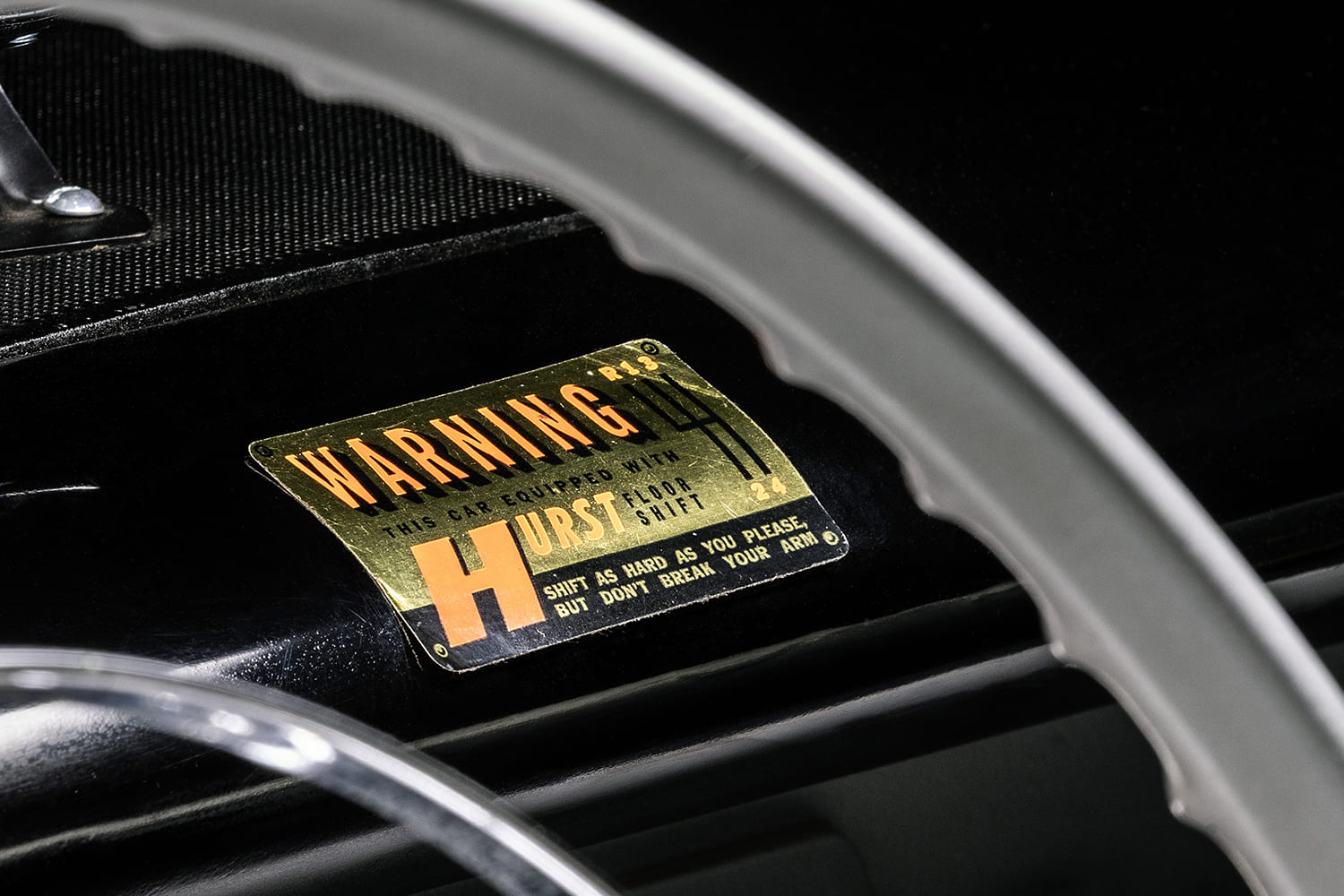
SHIFTER: Hurst Competition Plus
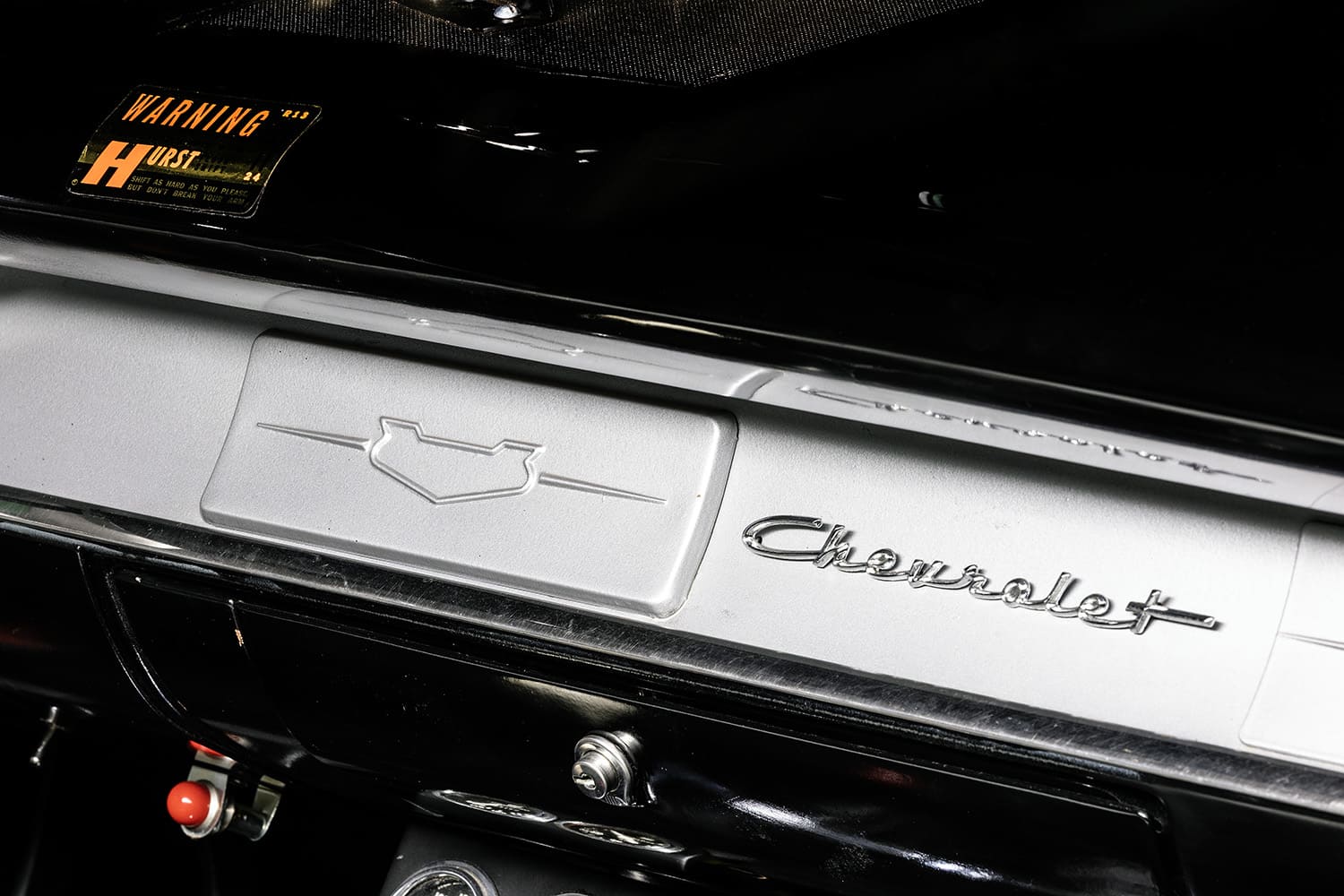
DASH: GM stock
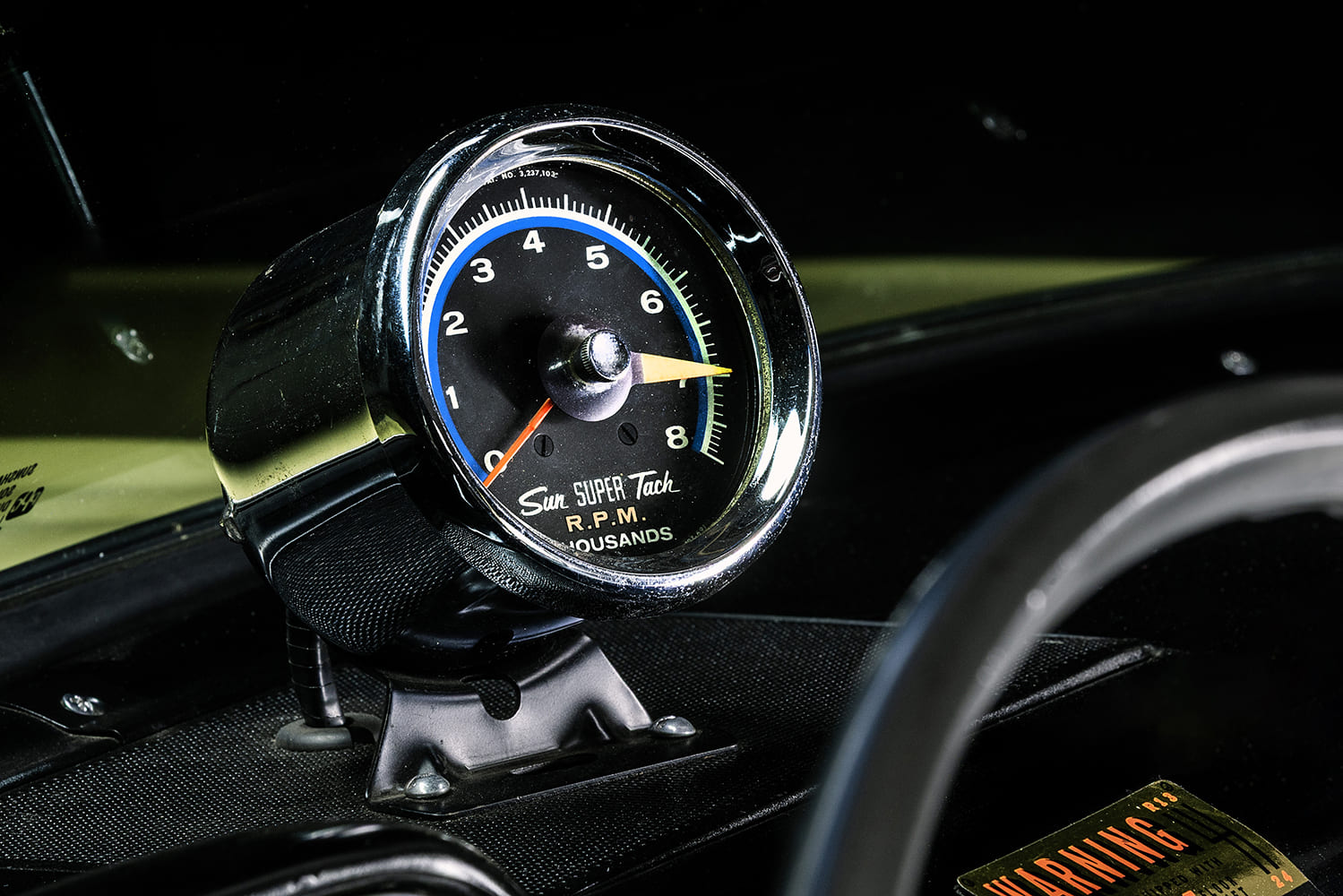
INSTRUMENTATION: GM stock cluster, Sun Super tach, Stewart-Warner mechanical underdash gauges
WIRING: American Autowire
AUDIO: None
Exterior
BODYWORK: Unspecified
PAINT BY: Butch Szollosy (Wharton, NJ)
PAINT: Calypso Cream PPG Concept single-stage urethane
BODY: GM stock original, GM stock trunklid, GM stock doors
HOOD: GM stock
GRILLE: GM stock
BUMPERS: GM stock
LETTERING: Alan Johnson Grafix (Blairstown, NJ)