


By Johnny Hunkins – Images by the Author
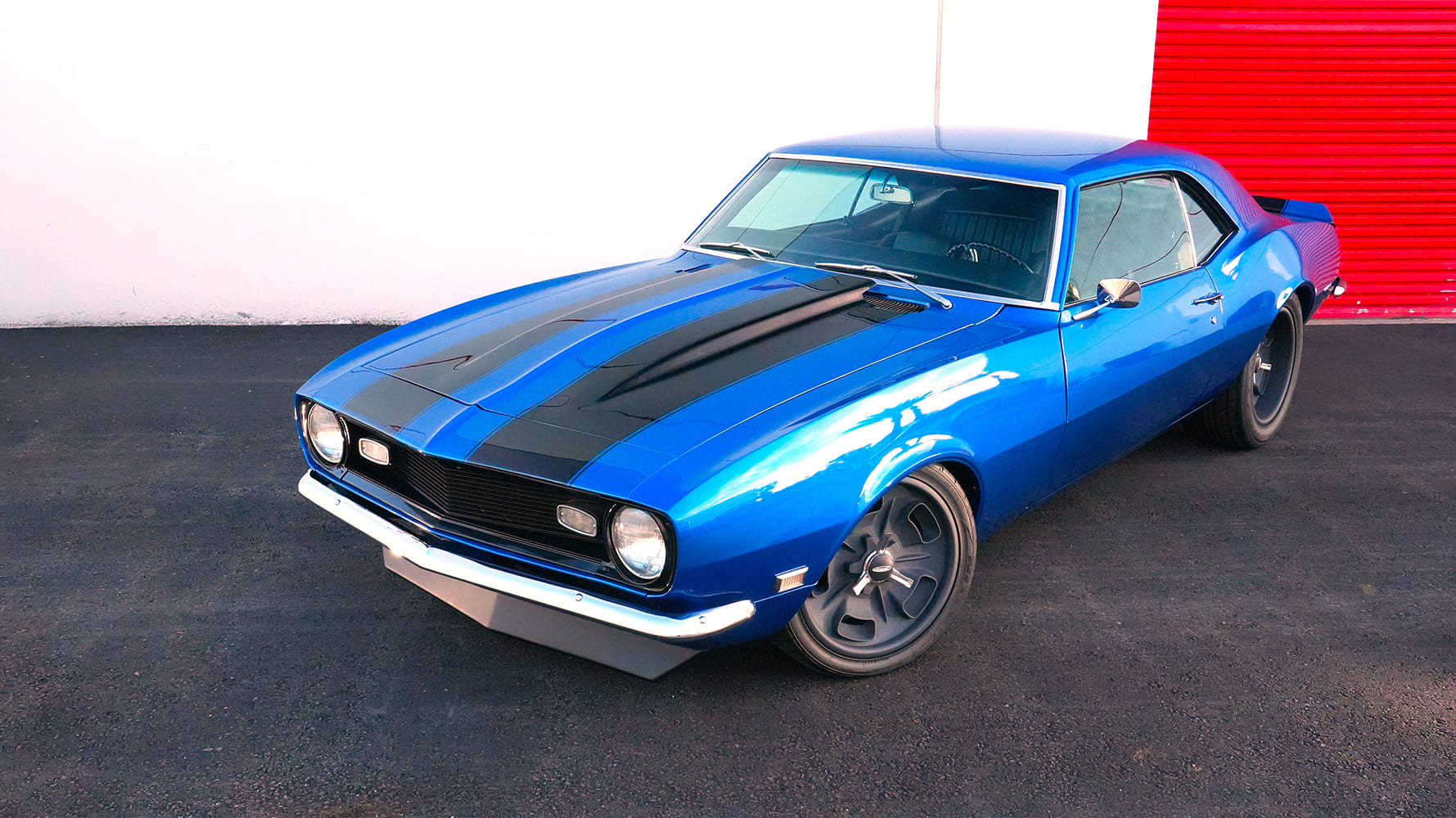
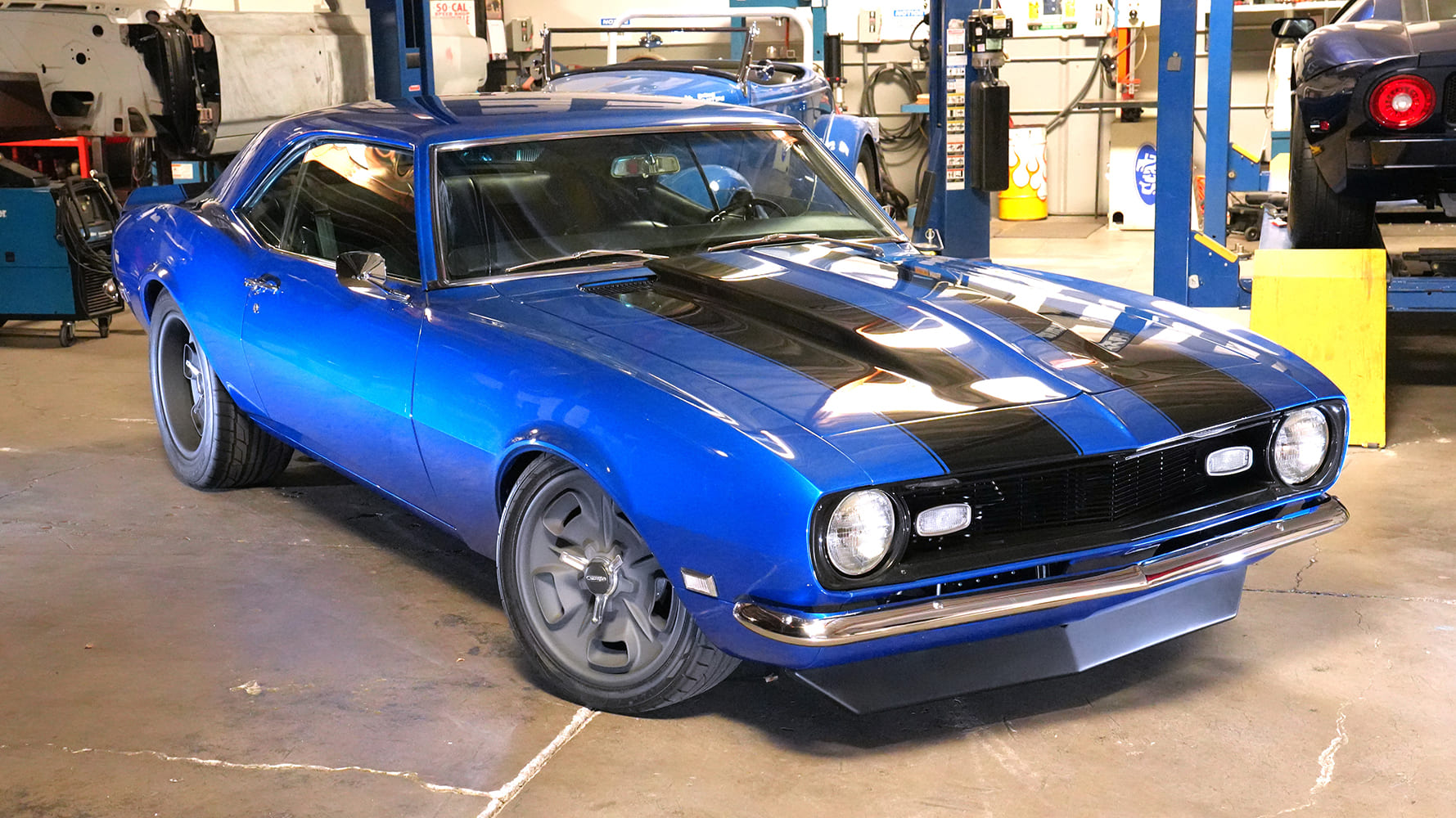
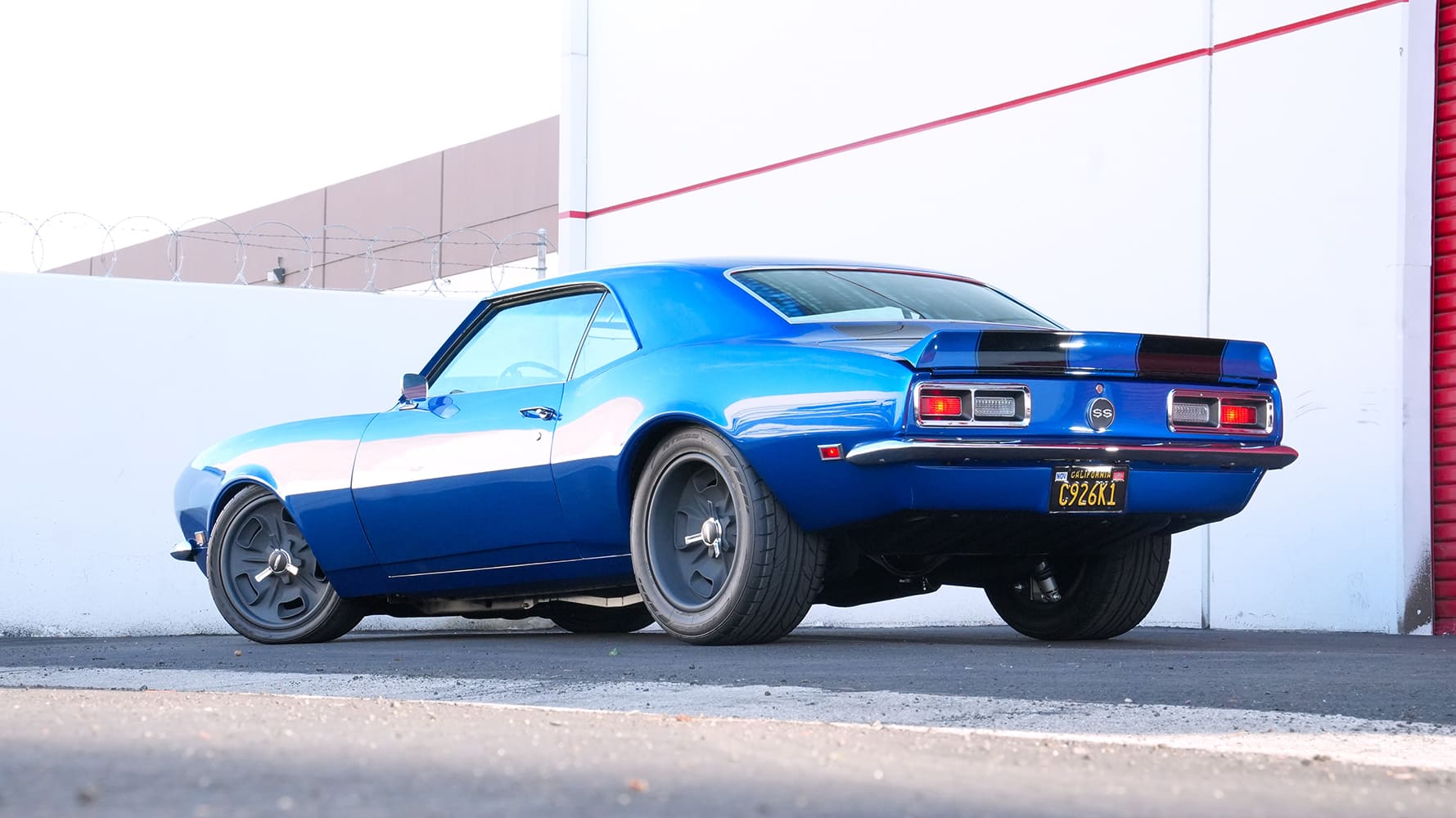
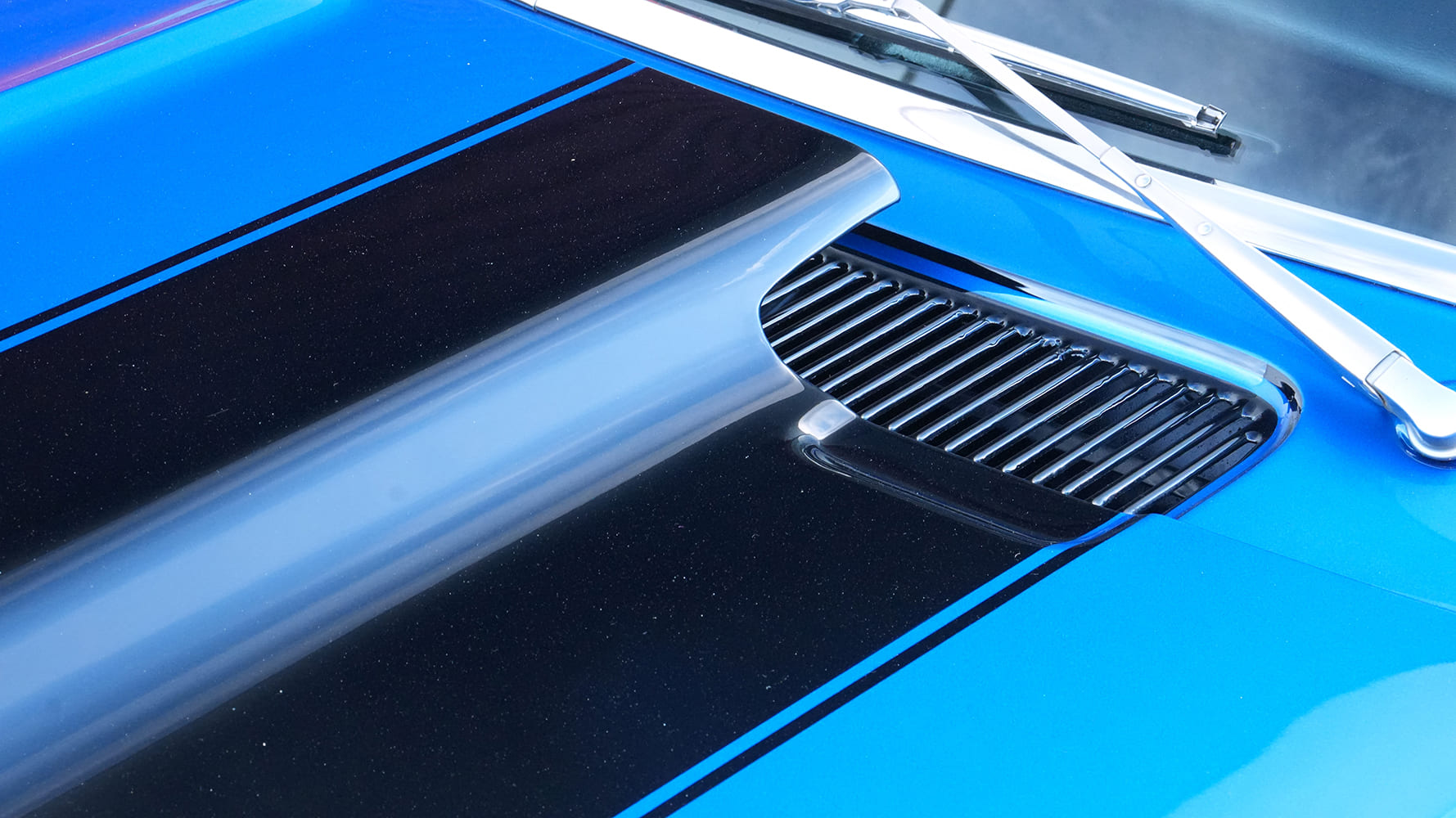
The Grand National Roadster Show is full of cars that scream for attention. Andrew Topolski’s 1968 Camaro isn’t one of them. It didn’t need to be. Sitting in Blazing Blue under the lights, the car projects a kind of quiet authority—stance locked in, proportions dead‑on, details sharpened rather than exaggerated. It’s the kind of Camaro that makes people stop, tilt their heads, and come back for another look. That’s exactly what Andrew and builder Jimmy Shine set out to create: a modern street fighter with old‑school instincts.
Andrew, a 43‑year‑old electrical engineer from the Bay Area now living in Orange County, didn’t begin his automotive life in the muscle car world. He grew up in the import era, wrenching on small‑displacement machines with friends and chasing backroads outside Hollister. But the real imprint came earlier, riding shotgun in his dad’s 1982 Z28. “He did burnouts and donuts,” Andrew recalls. “I was a little scared but excited at the same time.” That cocktail of fear and thrill never left him.
By 2019, he was ready for a first‑gen Camaro—specifically a ’68. Where the ’69 is all squared‑off aggression, the ’68 carries a sleeker, more elemental line. He found one that checked the right boxes: manual transmission, the right year, the right vibe. But the car had been cosmetically “rescued” in a way that hid more than it fixed. Rust had been skim‑coated instead of repaired, and the bodywork was a patchwork of good intentions and bad technique. “He put a fine line of Bondo through the whole thing… right over really bad rust,” Andrew says. It wasn’t pretty, but it was a foundation.

He dove in himself—replacing panels, stripping out rot, getting the body and paint handled locally. But as the project deepened, so did the need for a builder who could help shape the car into something cohesive. A friend pointed him toward Shine Speedshop in Orange, California, and Andrew reached out.
Jimmy Shine has built a career on cars that look purposeful, not precious. When Andrew walked him through the vision, Shine didn’t pitch trends or technology. He listened. Andrew wanted the car to feel old—mechanically strong, analog, textured. No LS swap. No digital gloss. Just a carbureted heartbeat and the right amount of attitude.
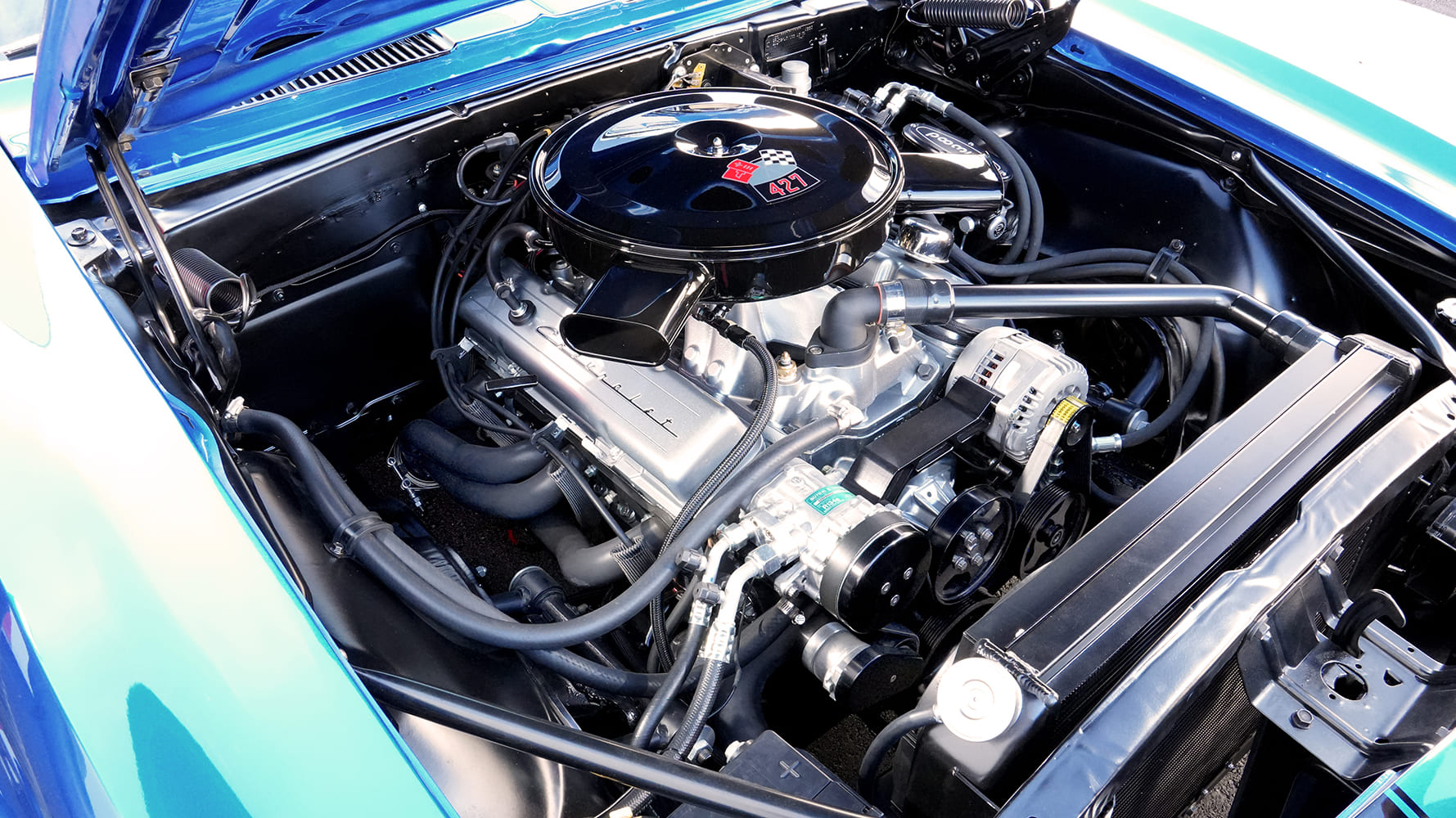
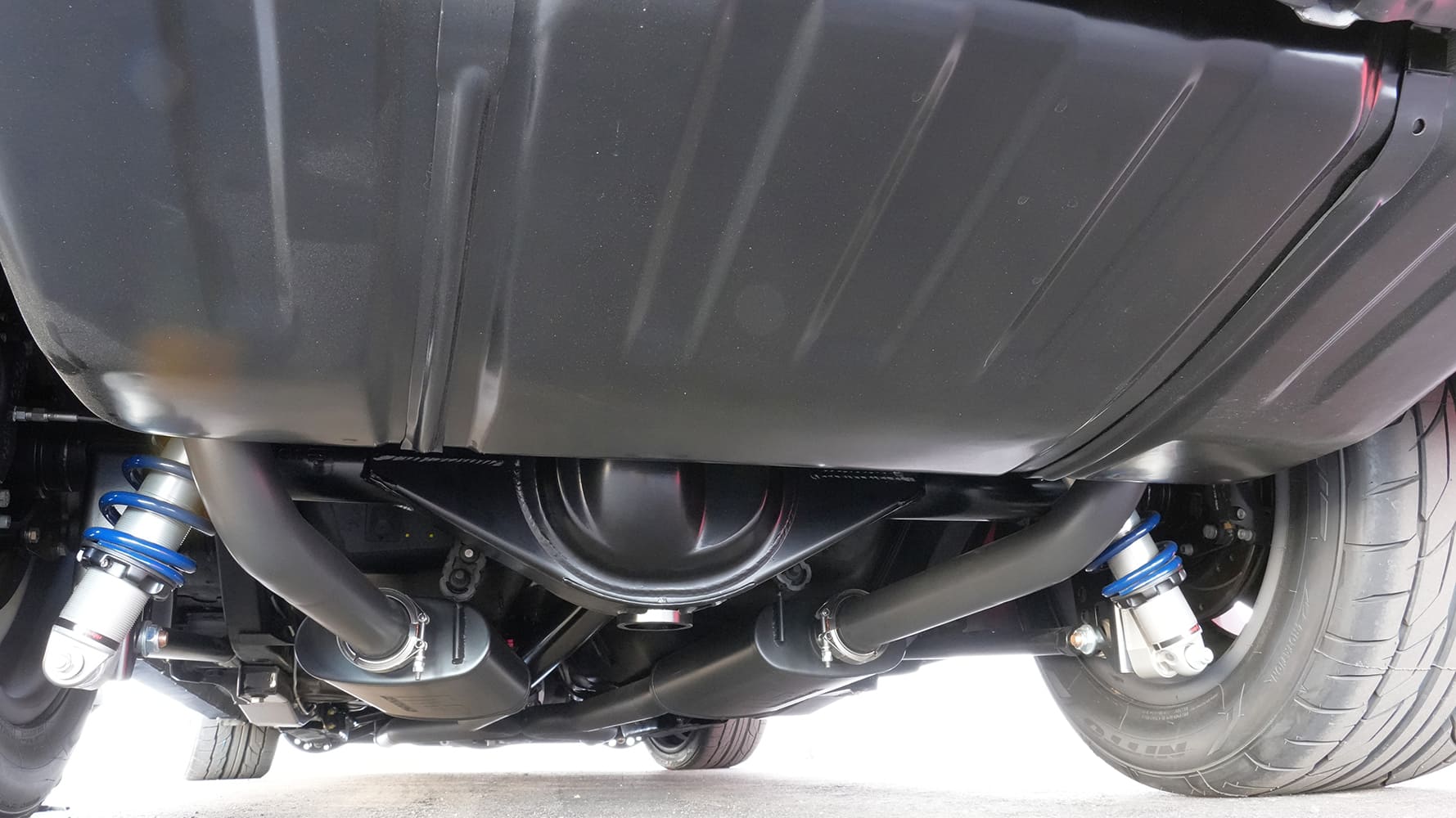
That shared philosophy became the build’s backbone. They chose a carbureted 427ci small‑block from BluePrint Engines—not because it was the most exotic option but because it delivered the right kind of power in the right kind of way. Shine had his fabricator, Paulo Dosdoglirian, build the headers in-house, and chose the MagnaFlow 2.5-inch dual exhaust behind them for both tone and flow. “It sounds so good at a low idle … deep and nasty,” Shine says. The drivetrain and suspension choices followed the same logic: modern capability without erasing the car’s soul.
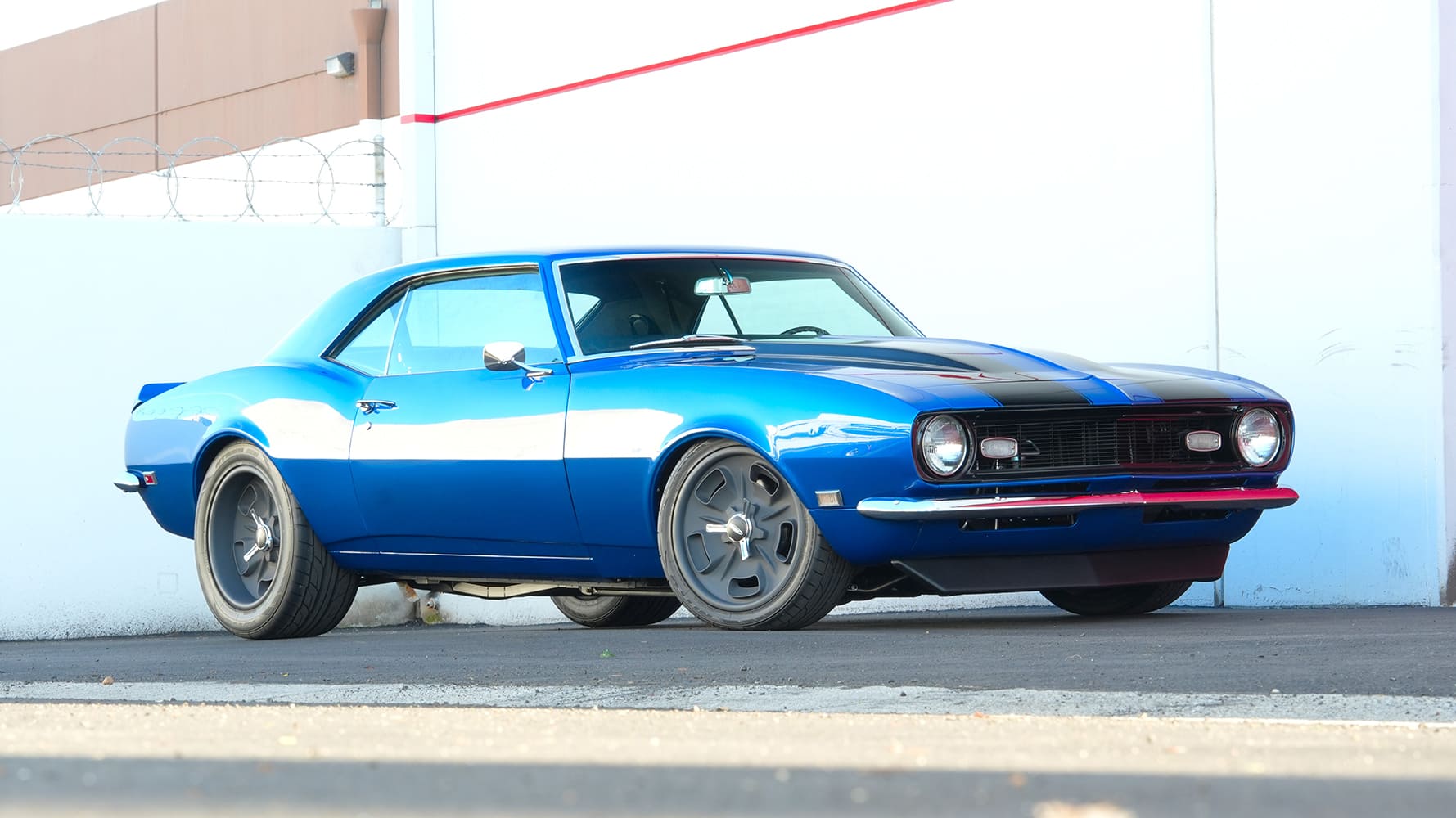
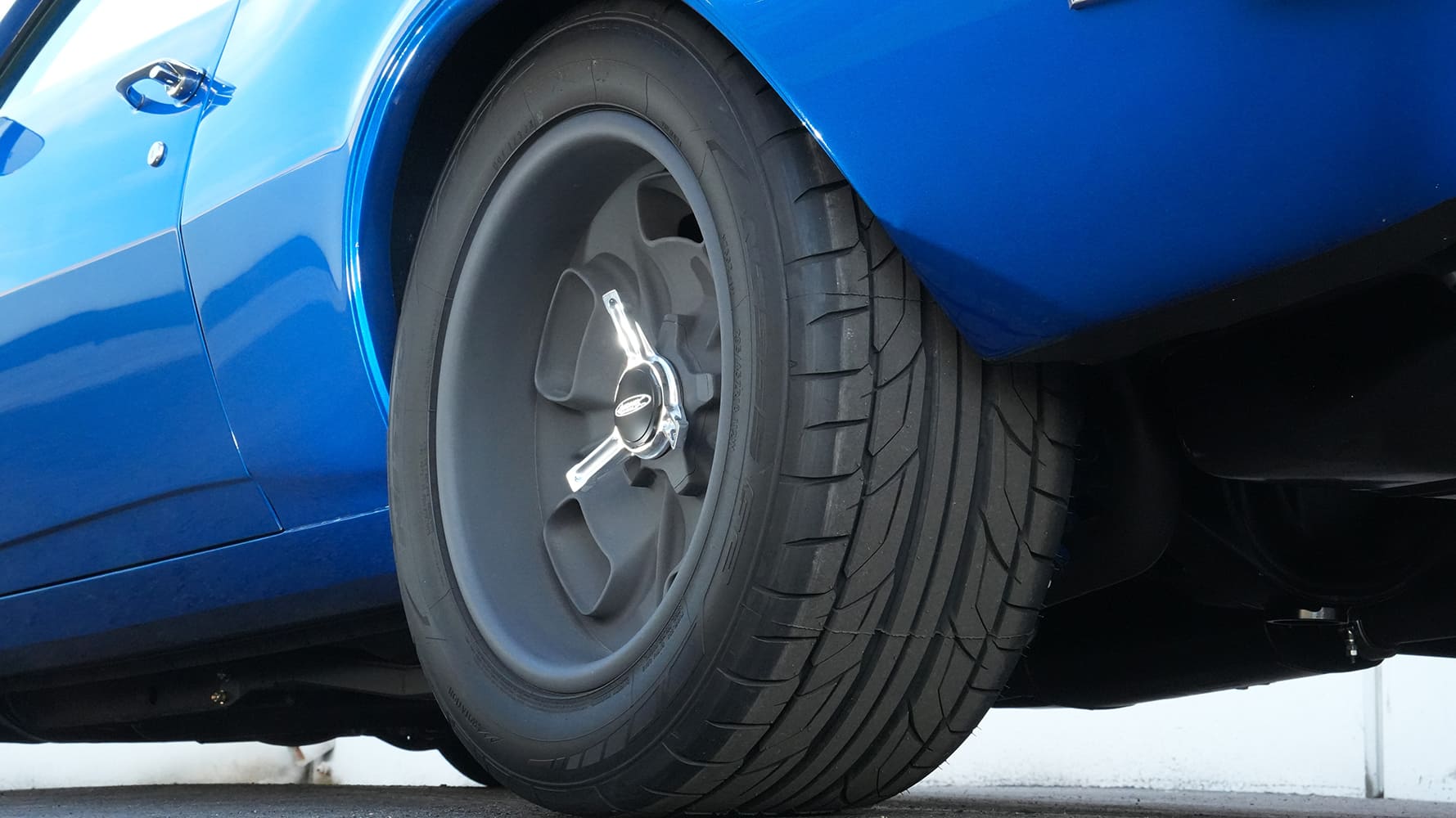
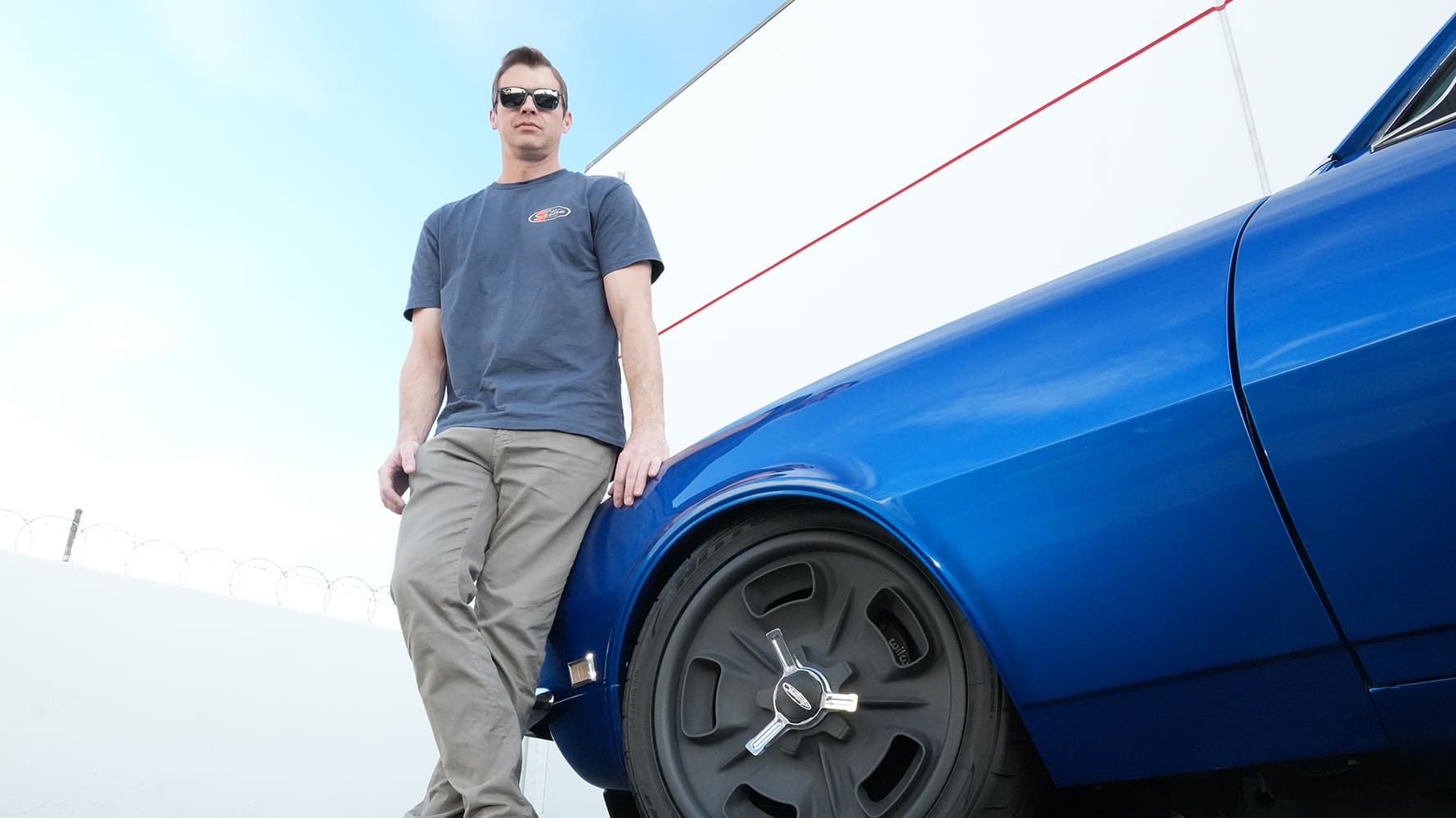
Topolski and Shine spent months talking through the details that define a car’s character—proportion, stance, wheel design, visual weight. They’d get off work, crack a beer, and spend hours on the phone dissecting ideas. The wheels became their obsession. They wanted something that captured the look and spirit of vintage magnesium race wheels, and they weren’t shy about leaning into that aesthetic. Shine had access to a real magnesium wheel from the McDonald Special—the famous 1961 Corvette road racer—and that became the benchmark. They also drew inspiration from the scooped, turbine‑like wheels of the Lamborghini Espada. Working with Budnik, they blended those influences into a five‑port window design, shot‑peened and Cerakoted to mimic the porous, weathered look of old magnesium. “Everybody was tripping on the wheels,” Shine says. “Blown away to see they were Budnik.”
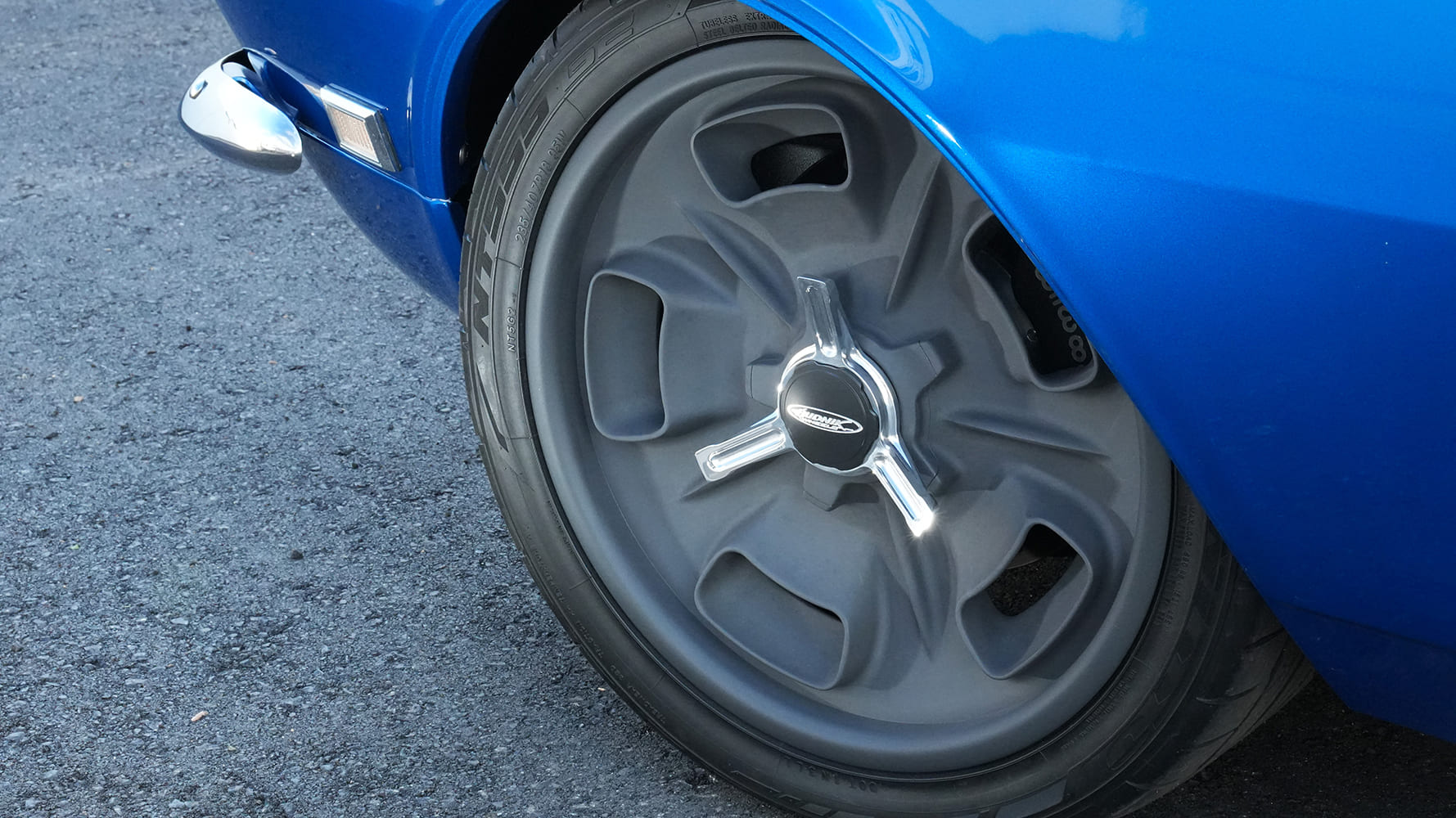
The stance was equally intentional. They could have stuffed massive tires under the mini‑tubs, but they didn’t. They chose the size that preserved the car’s balance, not its bragging rights. Shine points out the detail most people miss: the front and rear track widths align perfectly at the outer edge of the tire. “It’s all these fine nuances that Andrew and I went over again and again,” he says. The result is a Camaro that sits with purpose—aggressive but never exaggerated.
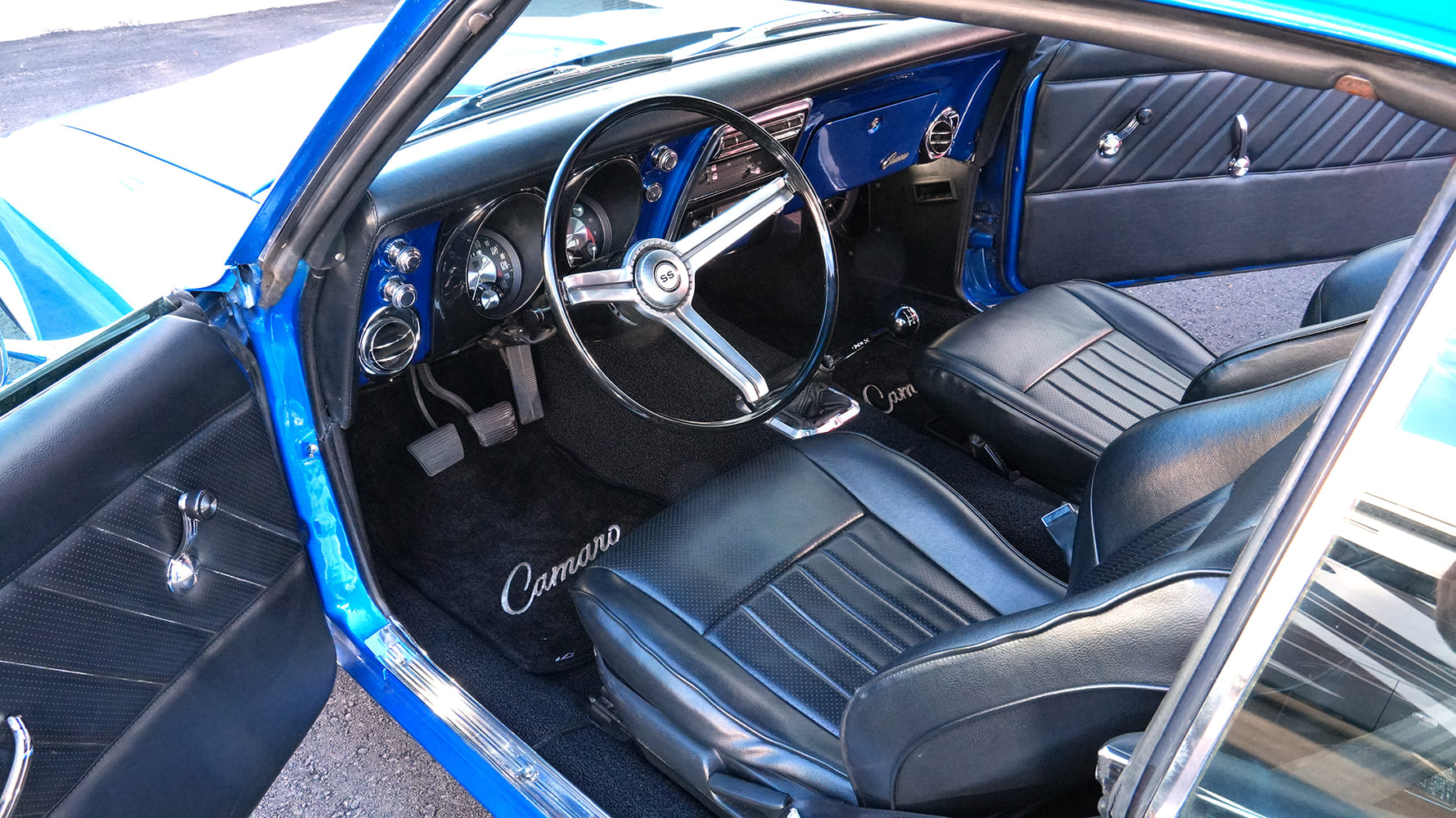
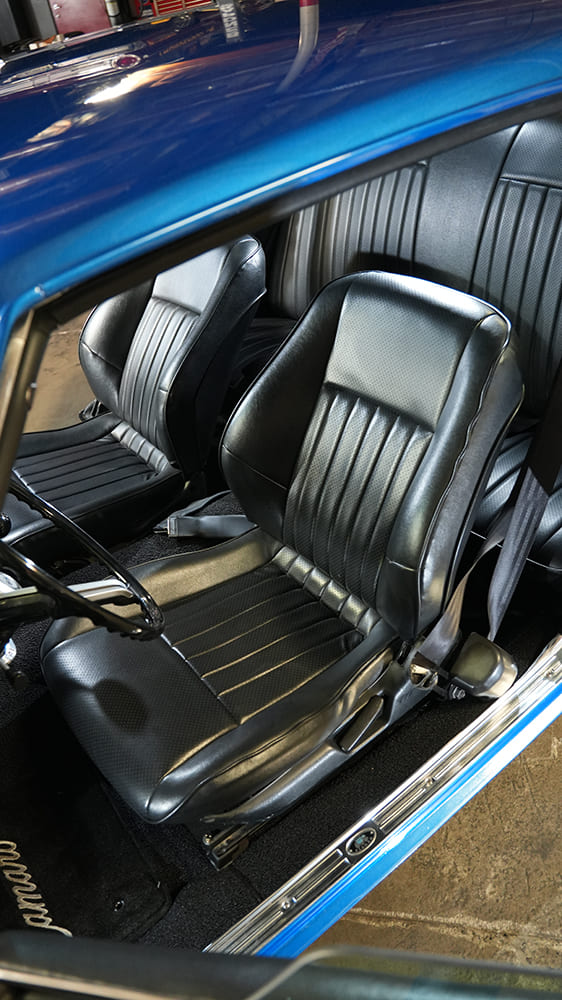
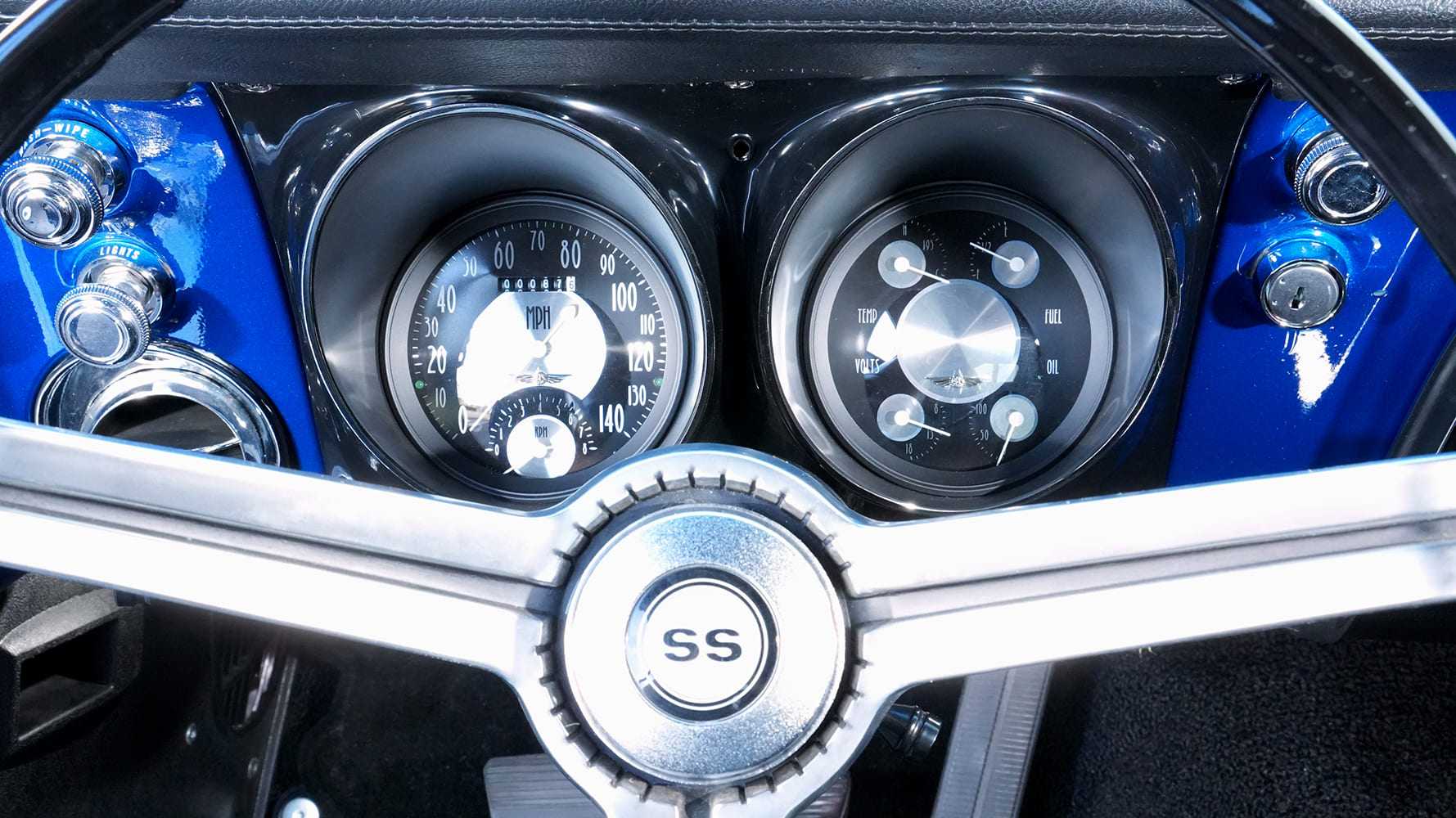
Inside, the car stays true to its roots. Factory‑style upholstery, simple instrumentation, a clean layout. It feels like a ’68 Camaro that’s been sharpened and not much more. That was the point. Andrew wanted the car to feel familiar every time he climbed in—like the memory of his dad’s Z28 but filtered through decades of experience and a builder who understood the assignment.

Shine describes the finished car as a modern echo of the street‑fighter Camaros that prowled Orange County in the ’80s. Not Pro Street. Not Pro Touring. Something in-between. “It’s just a badass wild child,” he says. He even sent Andrew the Dead Milkmen’s “Bitchin’ Camaro” as a kind of unofficial theme song—a wink to the car’s attitude and its refusal to fit neatly into a category.
At Pomona, the Camaro didn’t need neon lighting or a mirror under the chassis. It stood out because of its exterior vibe. Because it was built with intention. Because two guys cared enough to sweat the details that separate a good car from a great one. Andrew set out to build the machine he dreamed about as a kid riding shotgun in his dad’s Z28, and with Shine’s guidance, he ended up with something even more personal—a street fighter with soul, shaped by countless late‑night conversations about stance, proportion, and what makes a Camaro feel right. It’s a car born from collaboration, clarity, and conviction, ready for whatever Orange County roads can throw at it.
Check out this story in our digital edition here.
TECH
Owner: Andrew Topolski, Orange County, California
Vehicle: 1968 Chevy Camaro
Engine
BluePrint 427ci Pro Series
Compression ratio: 10:1
Bore: 4.125 inches
Stroke: 4.00 inches
Builder: Blueprint Engines
Machine Work: BluePrint Engines
Rotating Assembly: BluePrint Engines forged crankshaft, rods, and pistons
Camshaft: Hydraulic roller, 0.577 lift, 240/248 degrees duration at 0.050, 112-degree LSA
Cylinder Heads: BluePrint aluminum (HP8103), 64cc chamber, 2.08-inch intake, 1.60-inch exhaust, 220cc intake runner, 67cc exhaust runner
Induction: 850-cfm Holley double-pumper
Intake Manifold: BluePrint Engines, single-plane (HP8103)
Valve Covers: Billet aluminum
Air Cleaner: 1970-72 Chevy Camaro dual-snorkel
Accessory Drive: CVF Racing
Headers: Shine Speedshop (Paolo Dosdoglirian)
Exhaust: MagnaFlow, 2.5-inch diameter
Output: 540 hp, 535 lb-ft of torque
Drivetrain
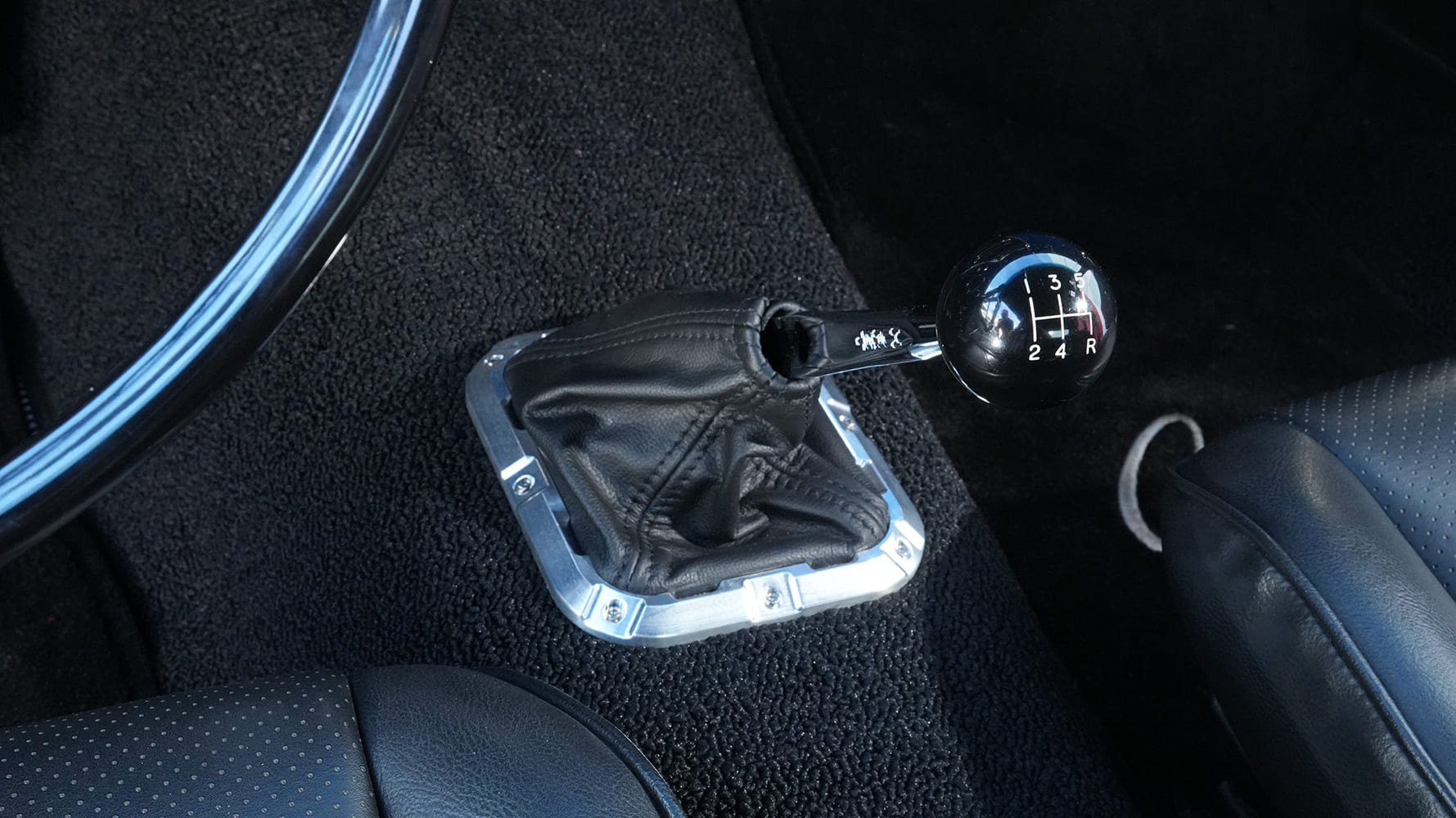
Transmission: TREMEC TKX five-speed manual
Clutch: Modern Driveline
Shifter: Hurst
Driveshaft: Drivelines Incorporated (El Toro, CA)
Rear Axle: Curry 9-inch, 31-spline axles, Truetrac, 3.50:1 gears
Chassis
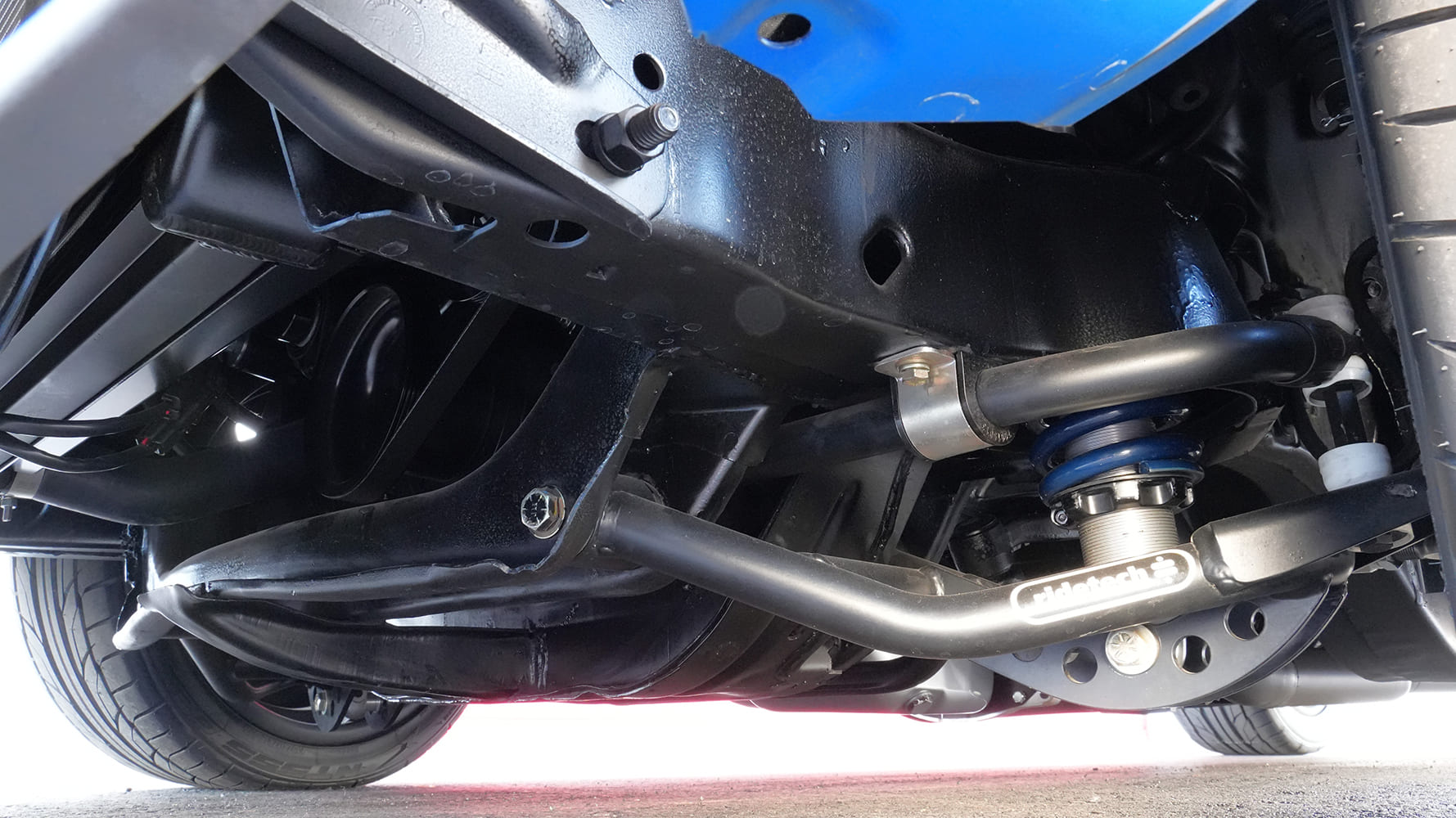
Front Suspension: Ridetech control arms and coilover shocks, Borgeson quick-ratio steering box
Rear Suspension: Ridetech four-link with coilover shocks
Chassis: Factory unibody with custom subframe connectors
Brakes: Wilwood 12-inch disc, four-piston calipers
Suspension Mods: Detroit Speed and Engineering mini-tubs
Wheels and Tires
Wheels: Budnik custom 18-inch
Tires: Nitto NT555G2, 235/40R18 front, 295/40R18 rear
Interior
Upholstery: Factory-reproduction Classic Industries
Insulation: Dynamat
Seats: Procar by Scat
Upholstery: Classic Industries
Steering: Ididit column
Instrumentation: Classic Instruments
Wiring: American Autowire
Exterior
Body and Paint: Rancho Santa Margarita Auto Body
Body Panels: Classic Industries