


By John Gilbert – Photography by Tom Koppinger & Doug Jerger
The range of colors for custom car paint expanded in 1960 with the introduction of metalflake to the public. The late 1950s and early 1960s experienced a renaissance with the popularity of Candy Apple Red and pearlescent white, soon followed by a variety of sparkling metalflake colors.
The story of metalflake’s origins begins in 1957 when the Dow Chemical Company acquired the Dobeckmun Company, making Dobeckmun a division of Dow Chemical. Dobeckmun, short for Dolan, Becker, and Munson, was a major manufacturer of cellophane and foil packaging before being acquired by Dow.
In early 1959, automotive designer Stefan Boran discovered a new product Dobeckmun produced by cutting aluminum foil into microscopic squares and trademarked it as metalflake, which could be produced in large quantities at low cost. Boran recognized the potential for metalflake to become a custom car finish and collaborated closely with Dobeckmun to develop enough product to supply George Barris with experimental silver metalflake for the XPAK 400 air car Barris debuted at the National Championship Show in Detroit.
Hot Rod magazine, familiar with George Barris’ experimentation with metalflake, contacted Dobeckmun’s West Coast reps, Fred Bell and Tom Conlin, to gather enough pounds of metalflake to custom paint three cars, each using a different application method. The original metalflake came in two grades; type 1 being coarser, with 1 pound containing roughly 385 million flakes. After Barris’ XPAK 400, the first car to be “flaked” was the Bob McGee roadster owned at the time by L.A. Roadsters member Dick Scritchfield. At Sid Langley’s Service Center in Eagle Rock, California, Scritchfield and Langley’s painter Bill Kagele experimented with translucent red toners to create a purplish candy Magenta color over a silver metalflake base.
The second car with metalflake was LeRoi “Tex” Smith’s battered 1950 Buick four-door sedan, painted at Dean Jefferies Studio of Style in Hollywood. Jefferies’ approach to the 1950 Buick, which he called a “quickie” job, involved minimal sanding before applying blue metalflake mixed in clear acrylic lacquer over gray primer as a base. Jefferies’ experiment was to see if metalflake could cover deep sanding scratches and hide the gray primer from view.
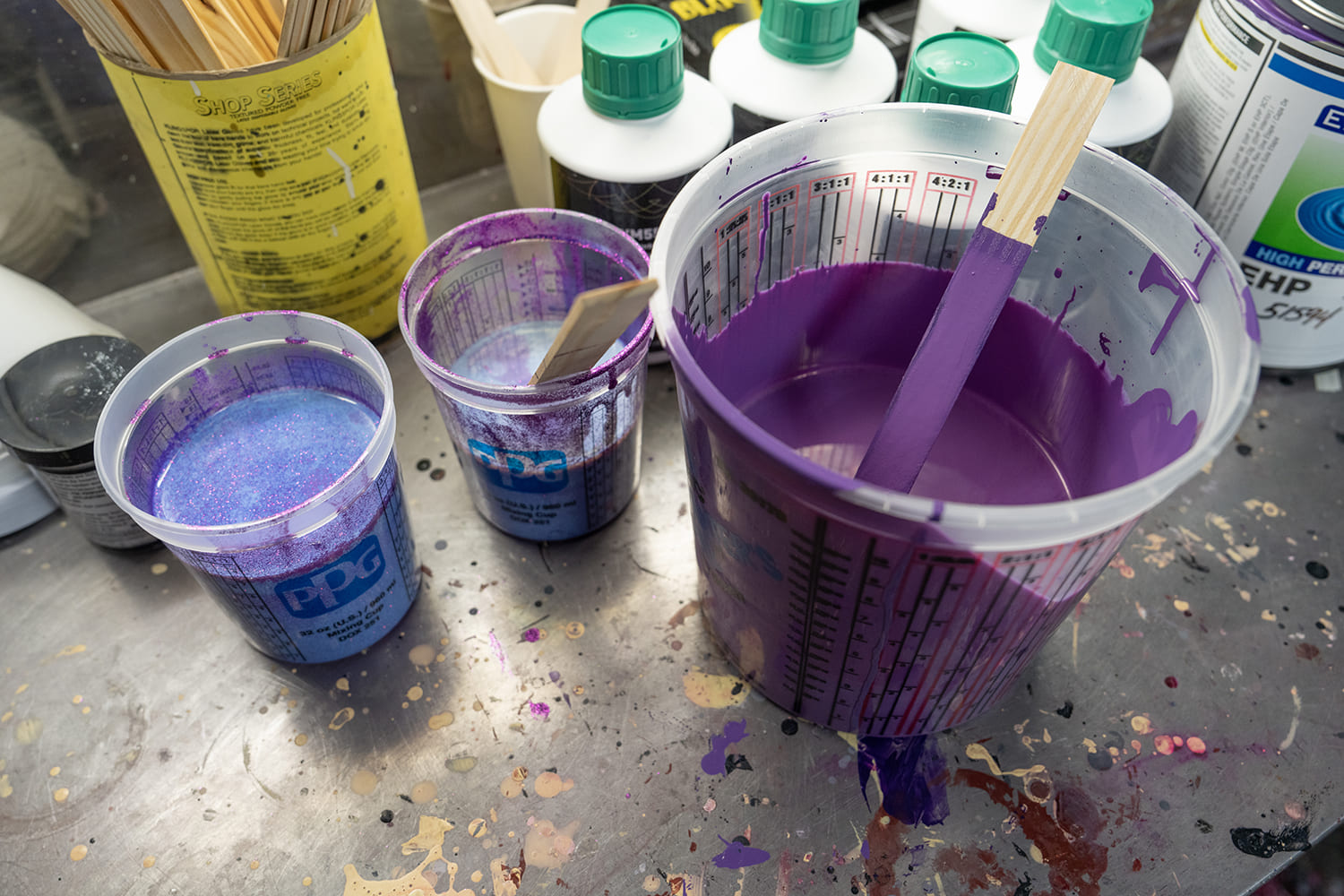
The answer to Jefferies’ Buick experiment was “no,” so from that conclusion onward, Jefferies advised custom painters to tint a base color to match the ’flake. A matching color base is exactly how metalflaking Scritchfield’s 1932 roadster was achieved. A silver base with silver metaflake sprayed on top, then a translucent candy color, and the finishing touch—burying it in clear acrylic lacquer deep enough to prevent sanding through with 600 grit, then polishing the surface to a glass-like smoothness. Sanding through the clear and abrading the candy color from the flakes meant exposing silver foil and spelled disaster.
The first metalflake job undertaken in the Midwest was in early 1961 at the Star Kustom Shop in Wichita, Kansas, by Darryl Starbird for Ed Pogue of Enid, Oklahoma. Starbird spotted an advertisement for metalflake in the March 1961 issue of Hot Rod and asked Pogue if he’d like to try it on his 1953 Ford Victoria Starbird was customizing.

In the early ’60s, DIY custom painters in home garages experimenting with glitter used for arts and crafts discovered Henry Rauchmann’s 1934 invention of Mylar glitter, which was melted and dissolved in acrylic lacquer thinners. In the late 1960s, Metalflake Corporation’s search for plastic flakes that would eliminate airborne aluminum particles and wouldn’t dissolve in thinner led to the production of special solvent-resistant polyester flakes. Though impervious to acrylic lacquer thinners, the polyester flakes typically were not UV coated, and the reflective chrome-like finish on the flakes would fade into white plastic after prolonged exposure to direct sunlight.
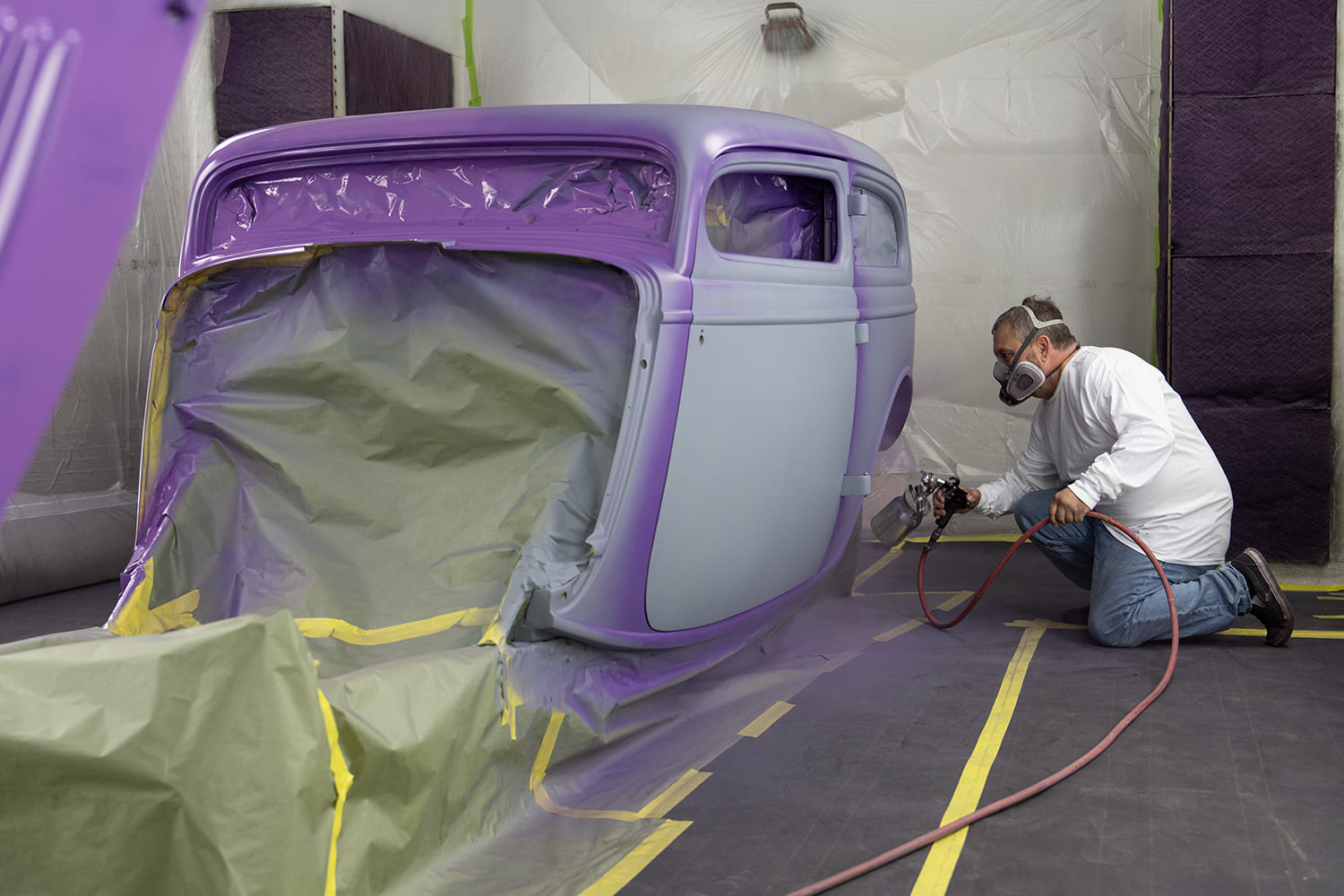
The evolution of the metalflake brand name, in some respects, mirrors Bayer Aspirin’s transition from a proprietary brand to a lowercase generic name. By 2025, most flakes are made from UV-resistant thermoplastic polymer resins that can withstand high temperatures and are typically called metalflake in conversation. Just as the shift from aluminum foil flakes to thermoplastic polymer resin flakes marks a transition, so was the evolution of “carrier” clears.
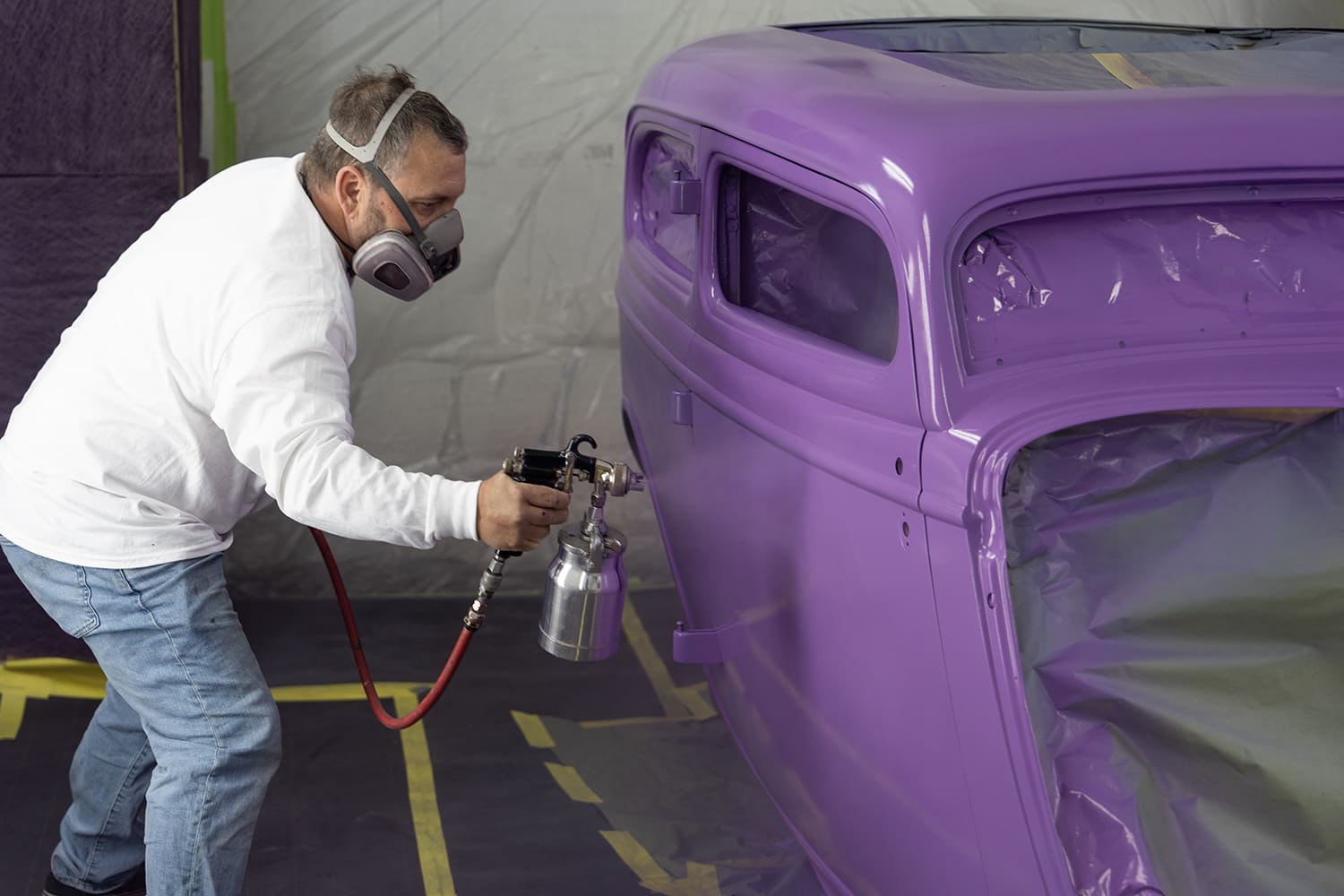
In Hot Rod’s Feb. ’61 metalflake article, it mentioned that clear acrylic lacquer was used on two of the cars, “but regular lacquer is easier and faster to use,” with regular meaning clear nitrocellulose lacquer. This was an incorrect prediction because clear acrylic lacquer became the preferred choice throughout the 1960s into the 1990s. Automotive paint manufacturers warned on a can of clear acrylic lacquer not to apply too many coats. That rule was often ignored, and it took a long time for the major paint manufacturers to recognize the needs of custom painters and address them.
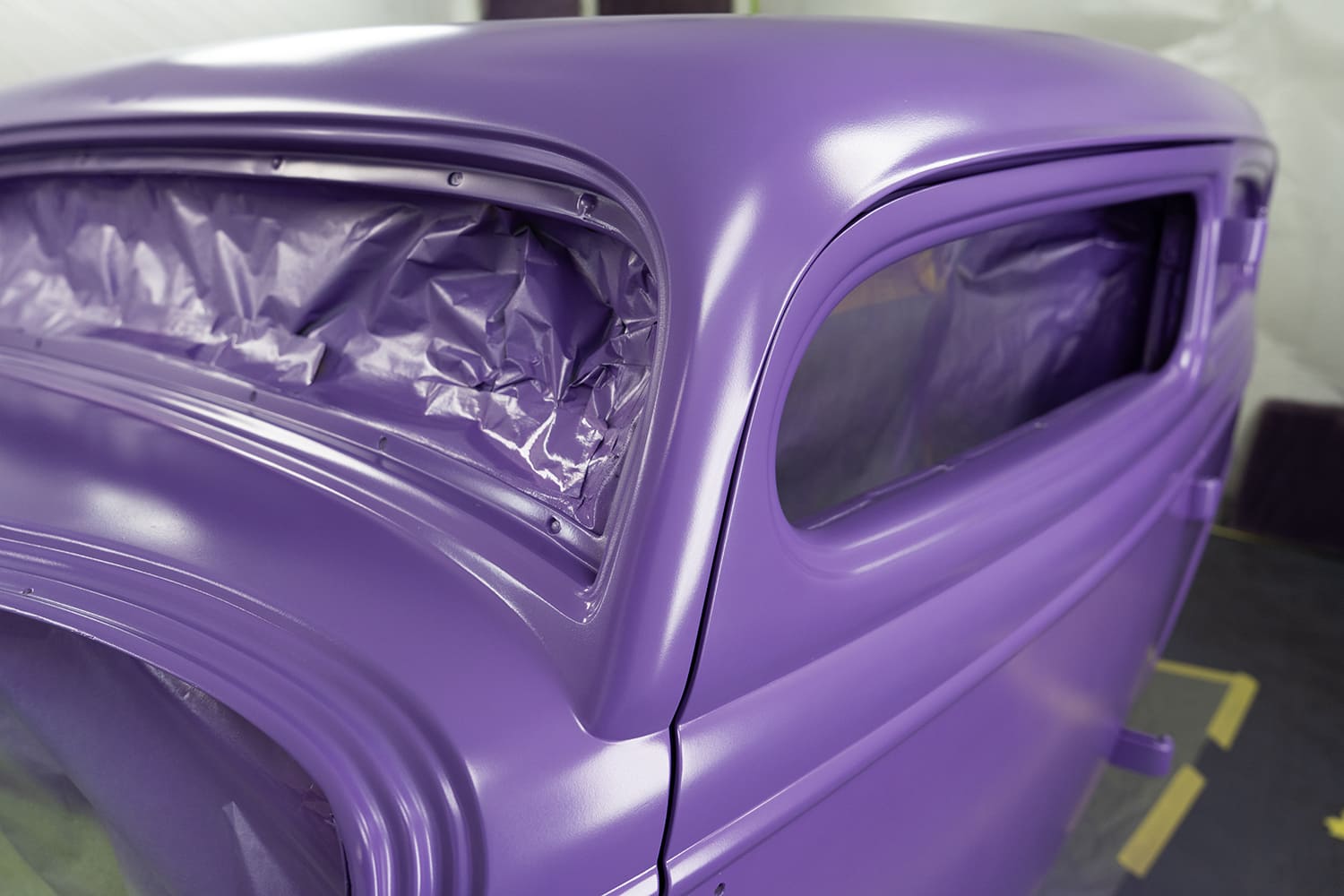
For custom bike painters spraying clear acrylic lacquer as a topcoat was problematic because spilling gasoline shriveled the clear paint around the filler neck. From Street Chopper magazine fame, the name Paint by Molly comes to mind. Rollin “Molly” Sanders was known for applying fuel-proof high-build epoxy metalflake jobs with trendsetting candy-colored scroll graphics. Other fuel-proofing experiments included mixing Centari acrylic enamel with clear added with dryer and a urethane cross-linker catalyst, or later, trying Imron clear urethane that wouldn’t react to gasoline spills, but brake fluid caused it to shrivel. In Canada, Endura-Clear, a two-component highly cross-linked, high-performance polyurethane, worked perfectly as a metalflake carrier and topcoat—plus, freezing-catalyzed Endura saved it for another day. PPG produced an all-time favorite clear that held the crown for years before being discontinued: PPG Delglo DAU 82. It could topcoat over anything and was easy to cut and buff.
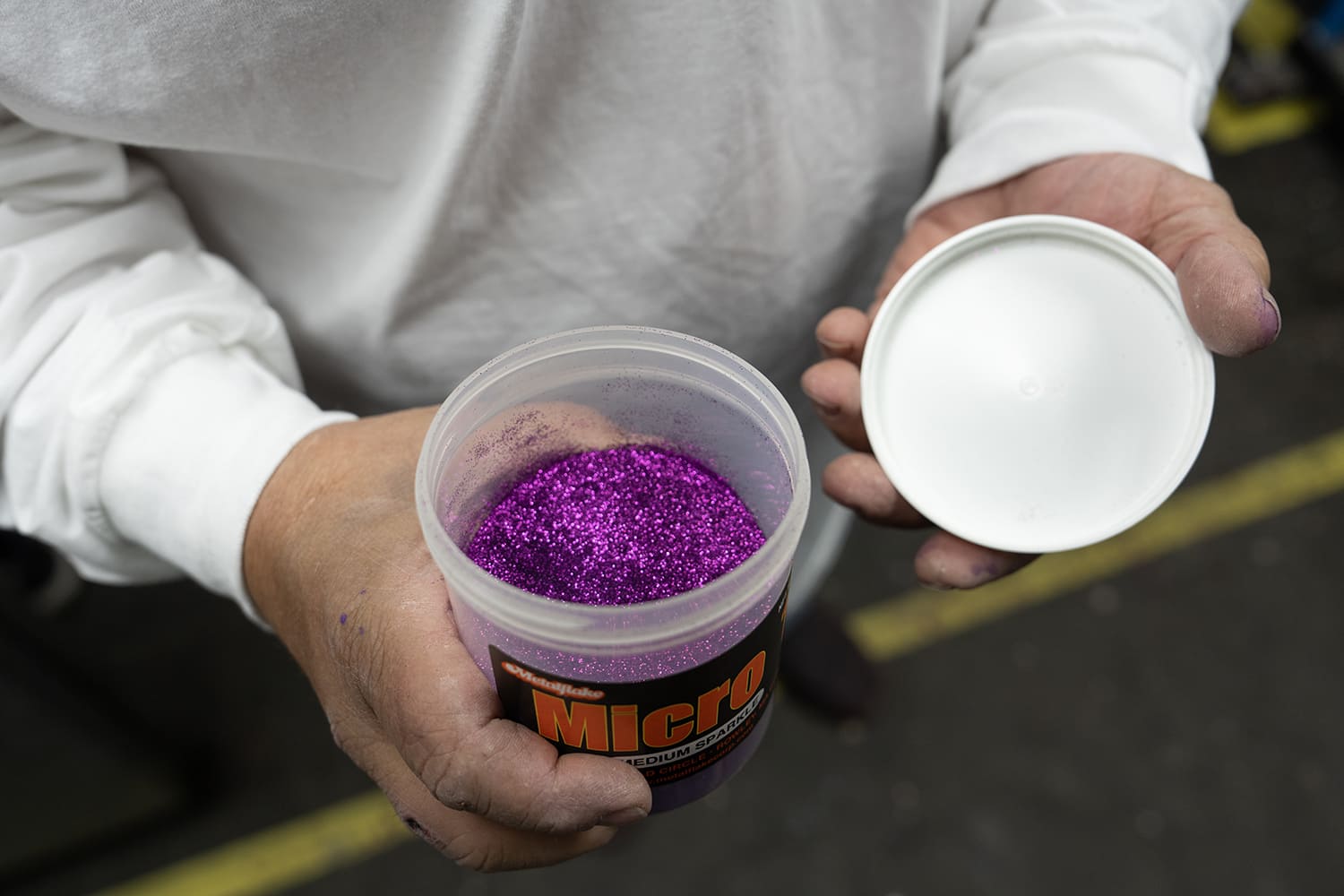
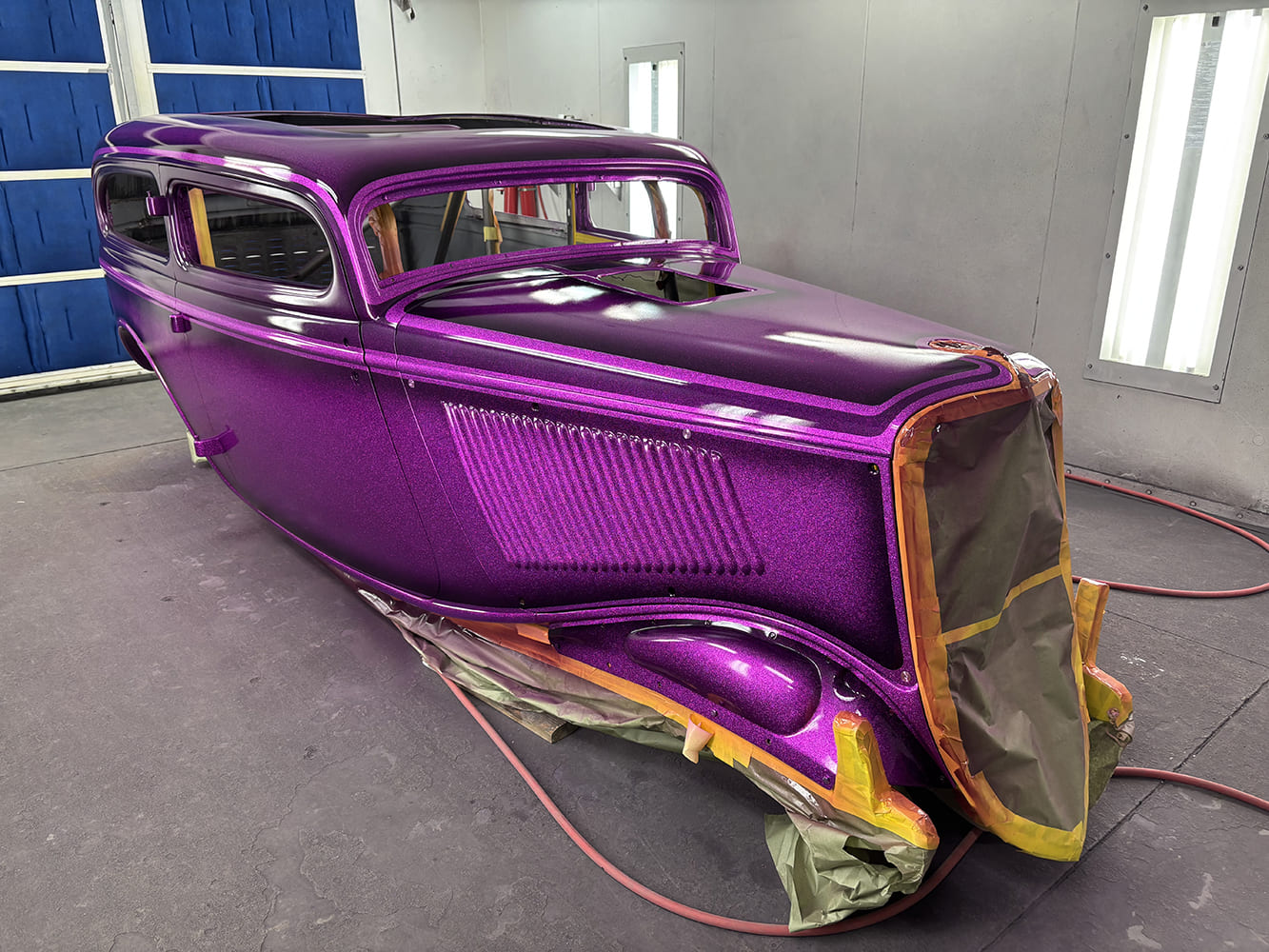
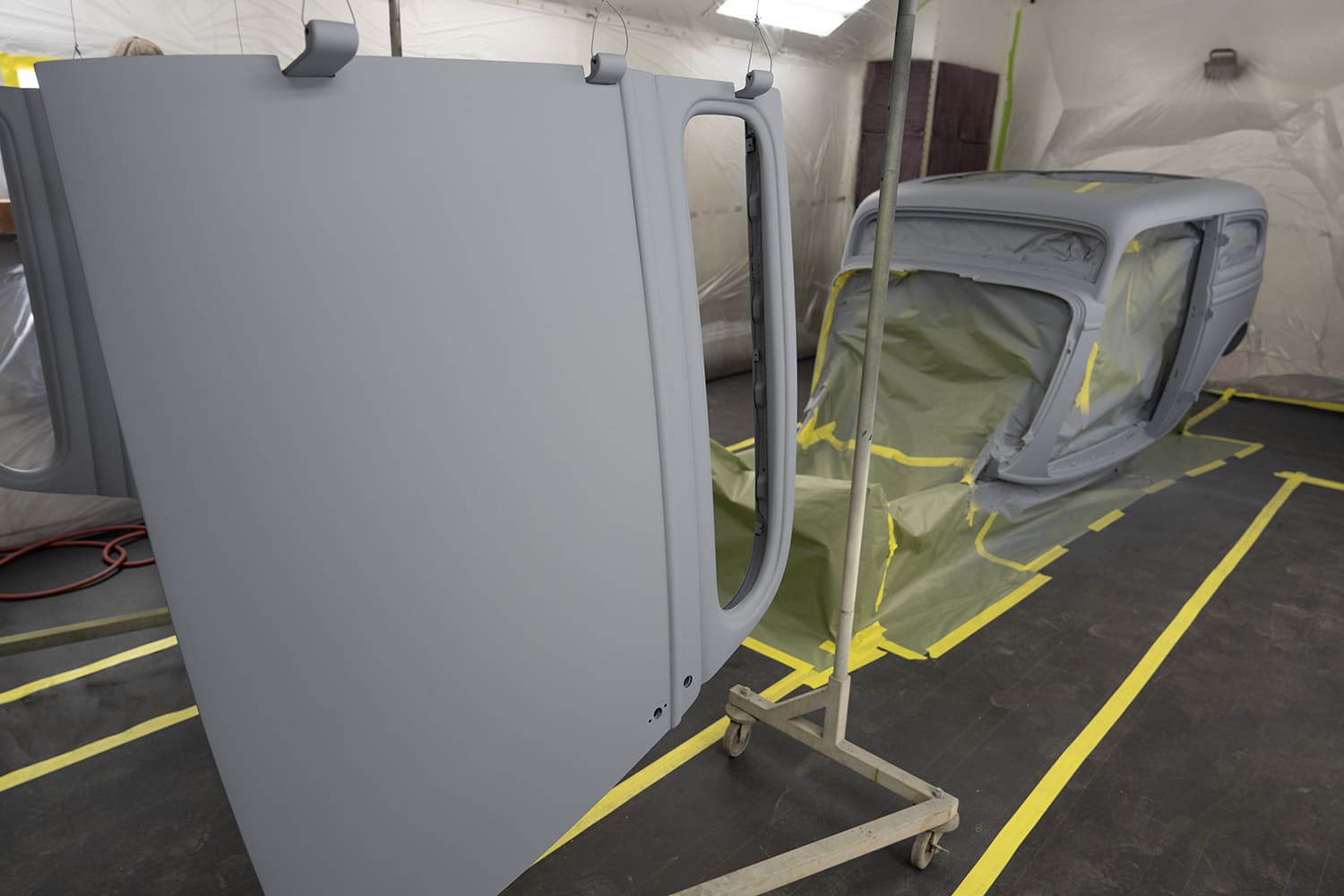
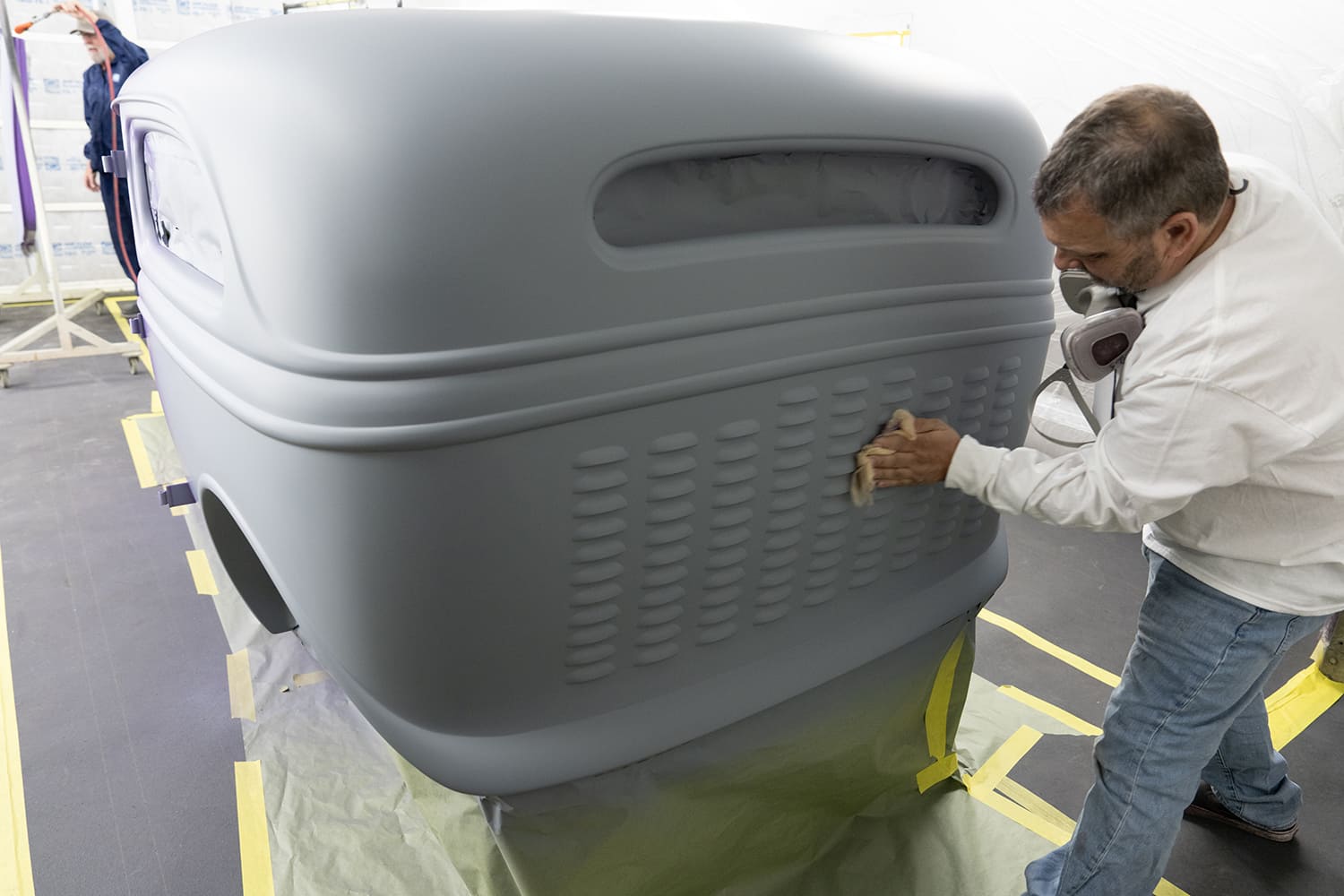
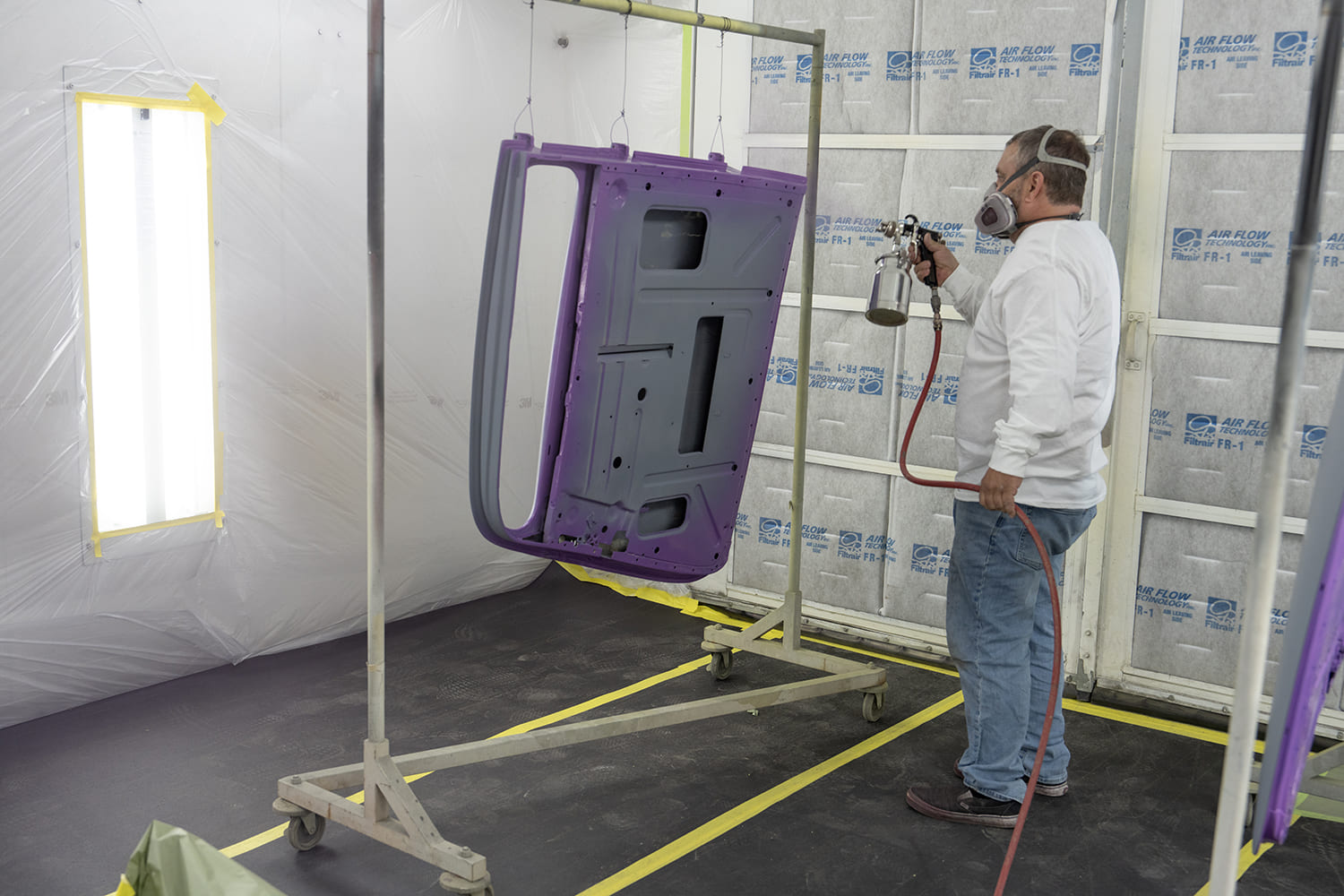
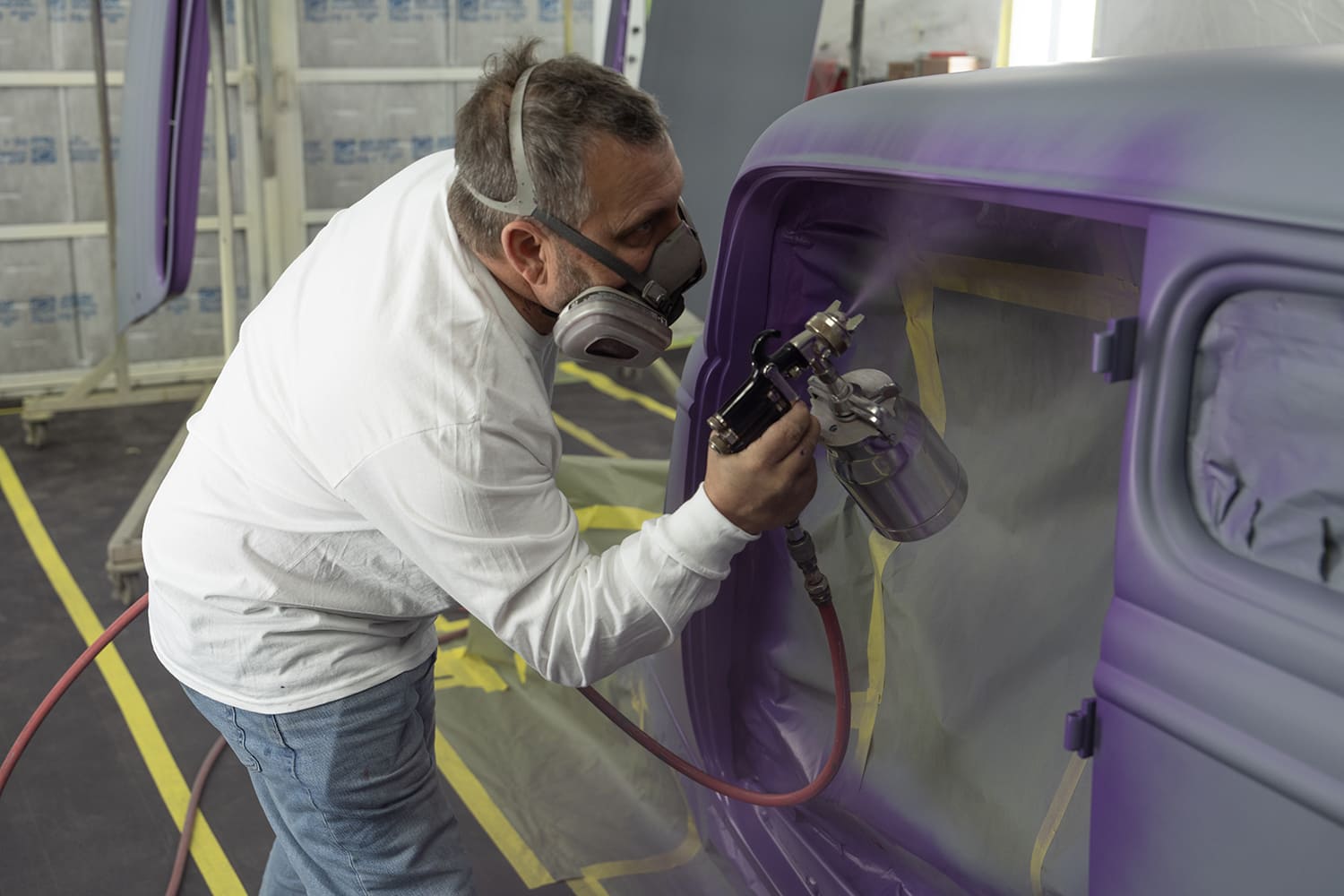
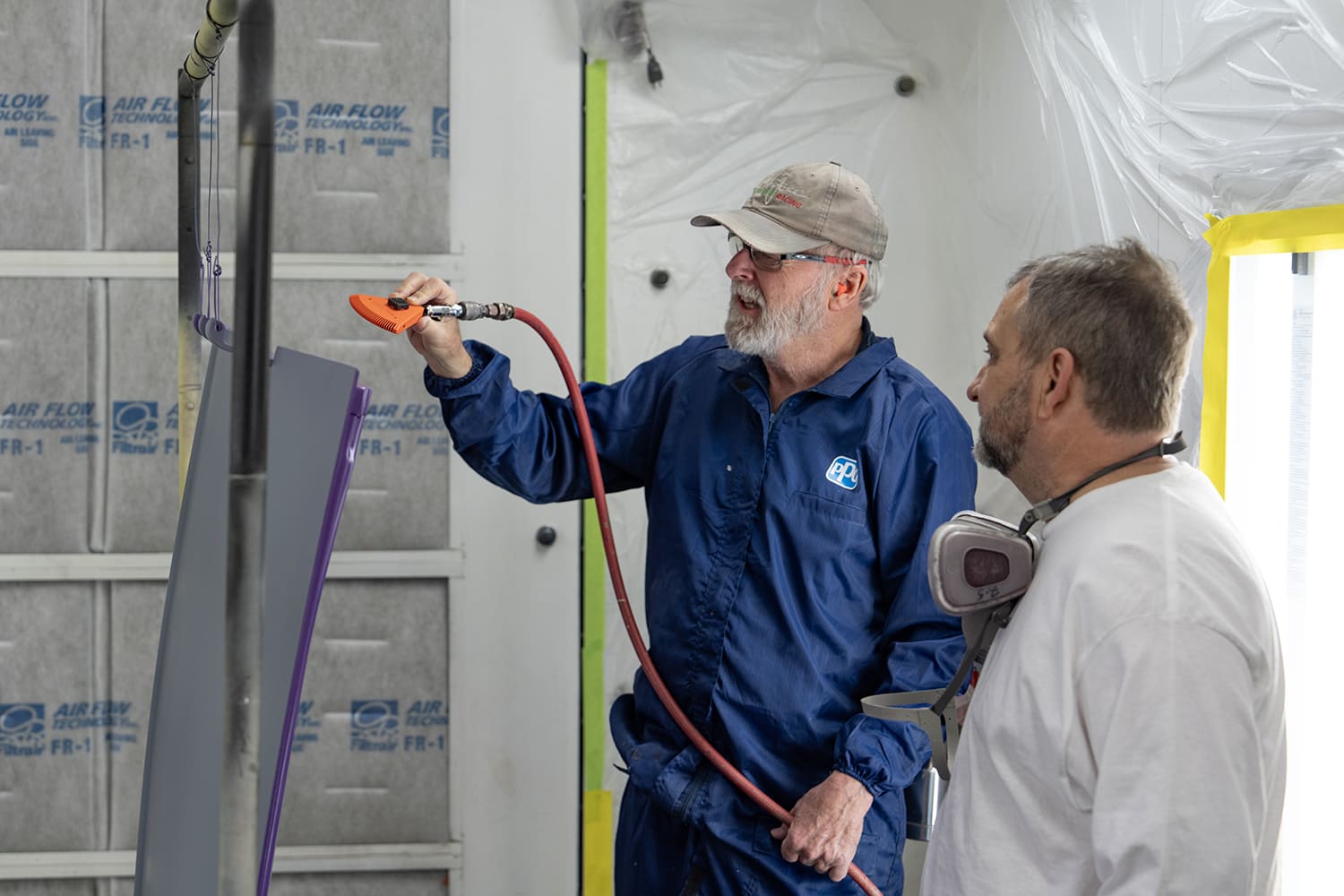
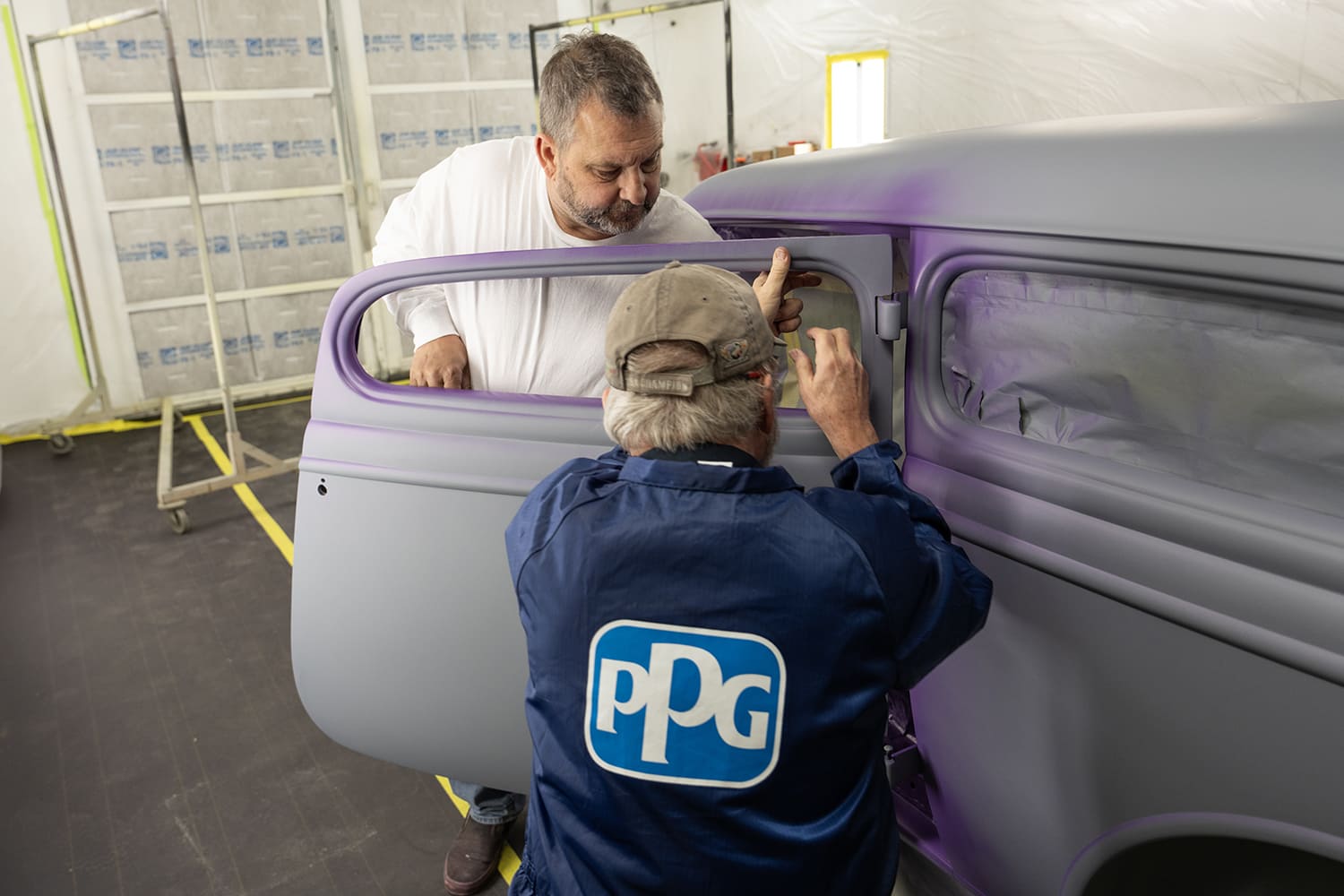
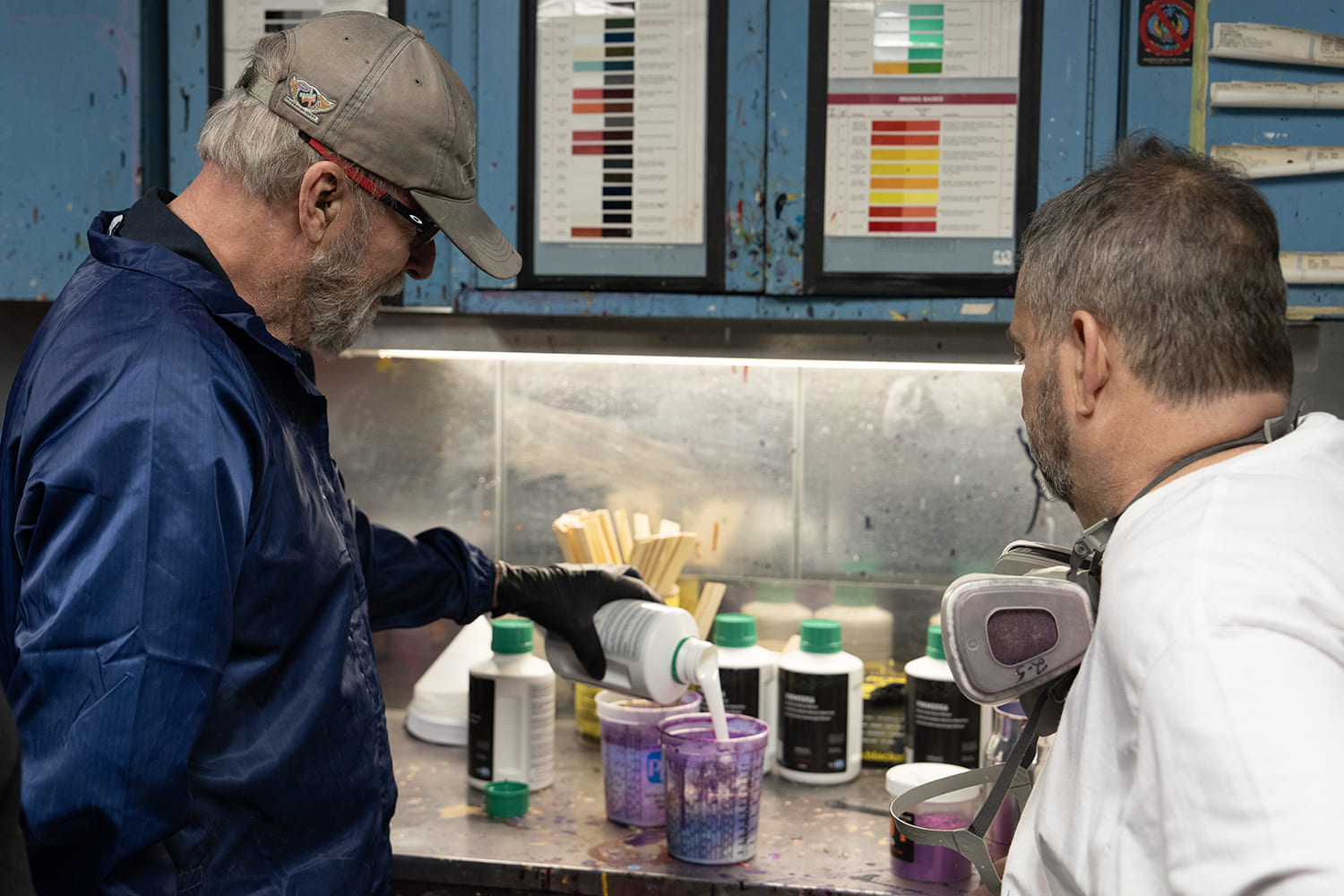
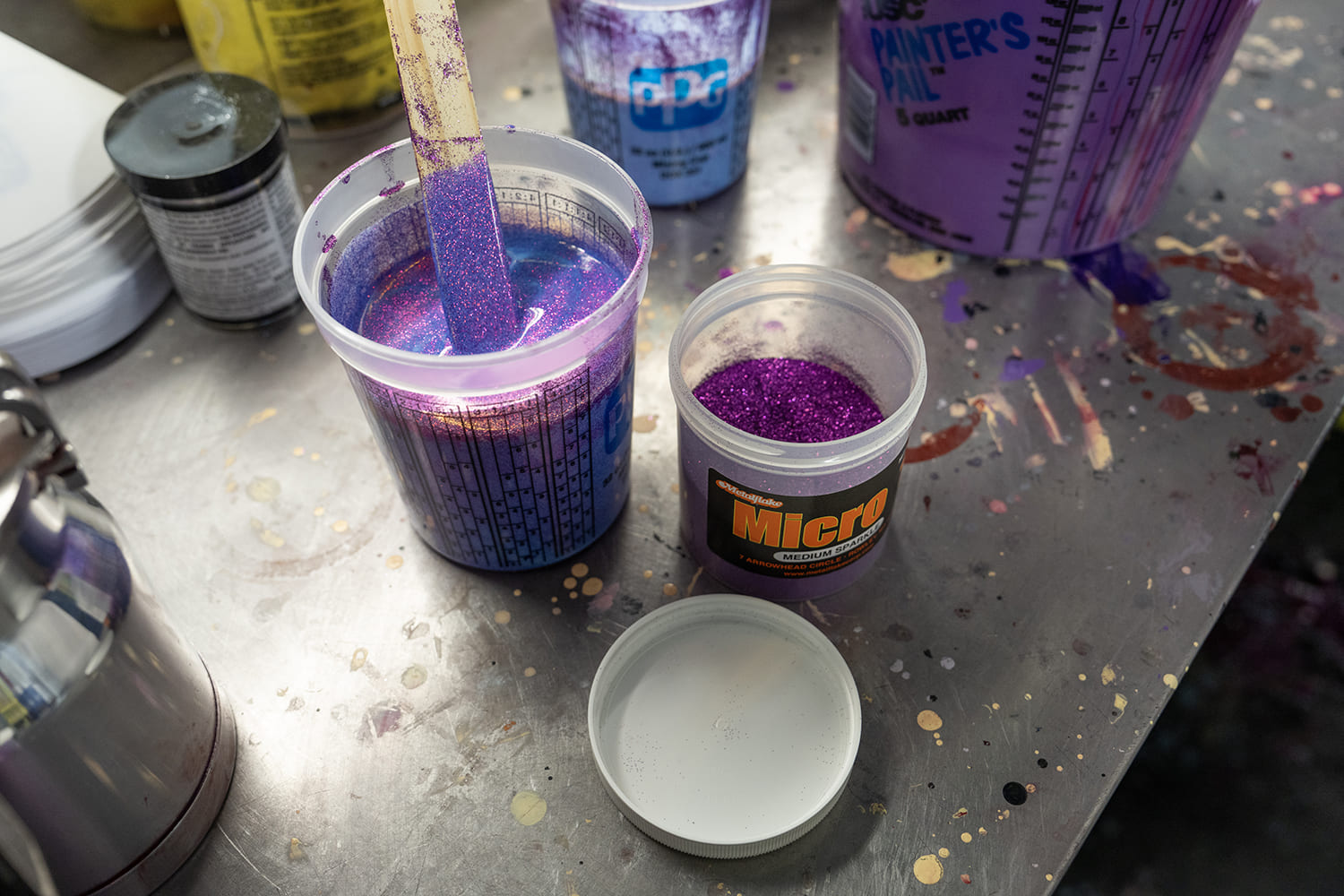
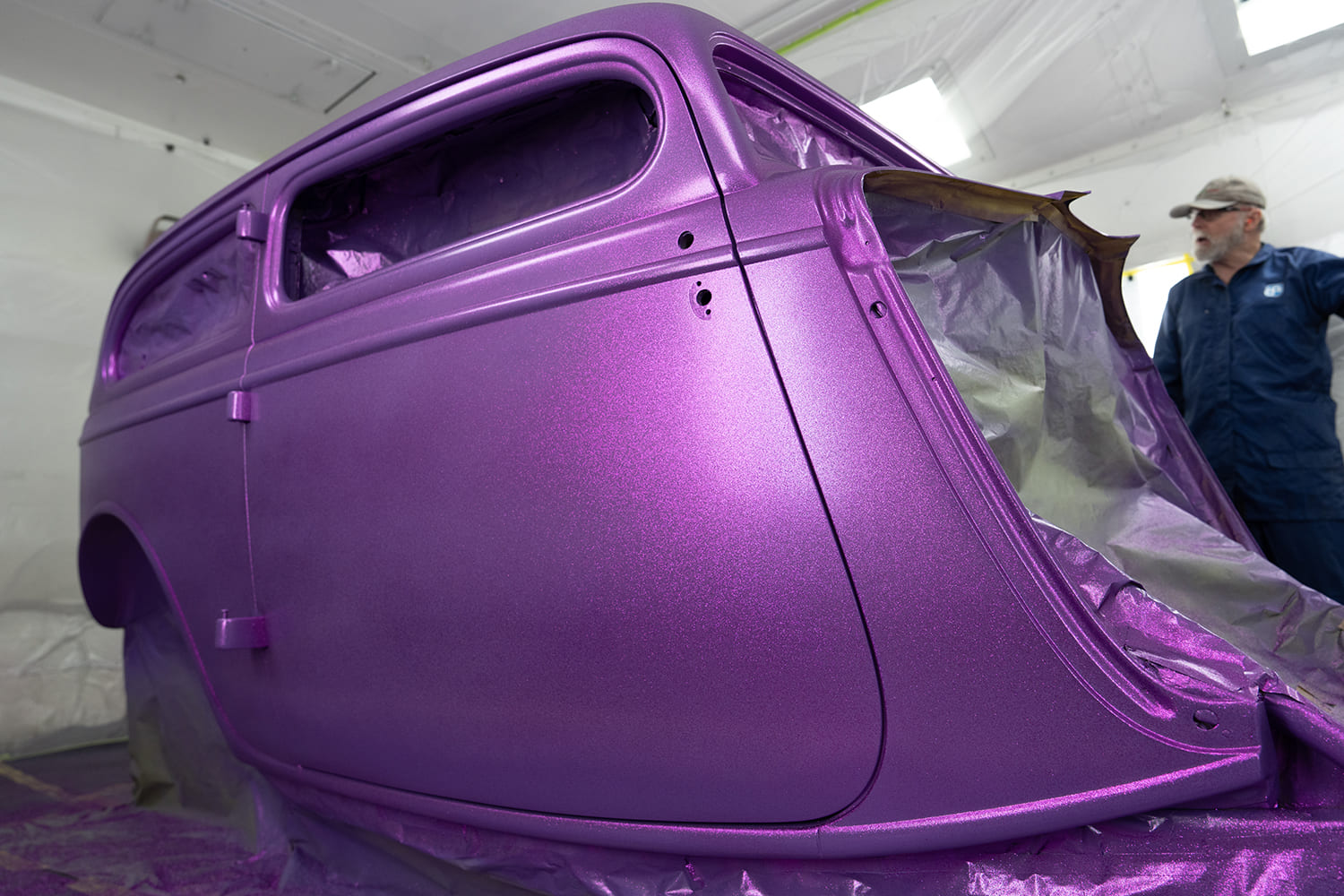
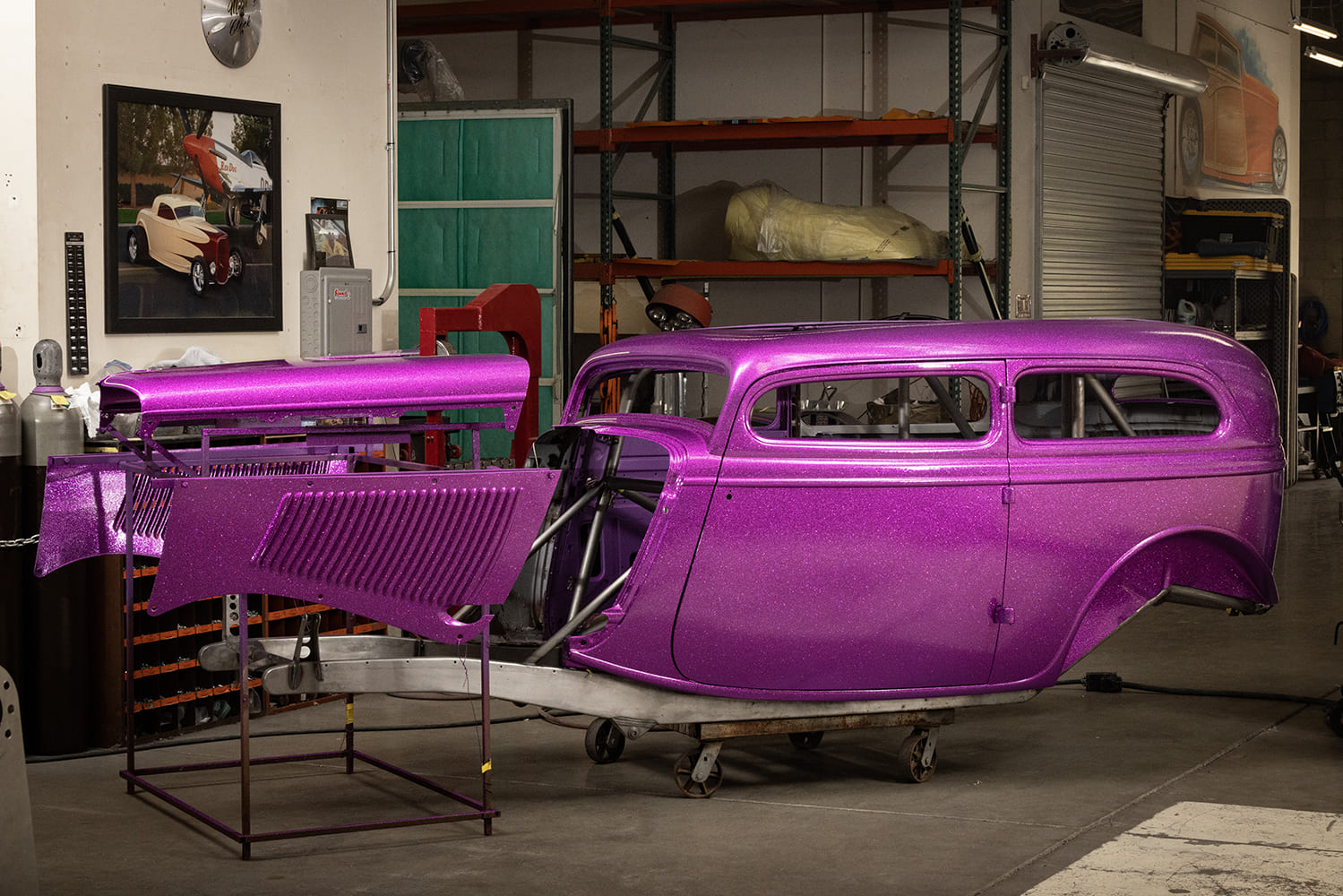
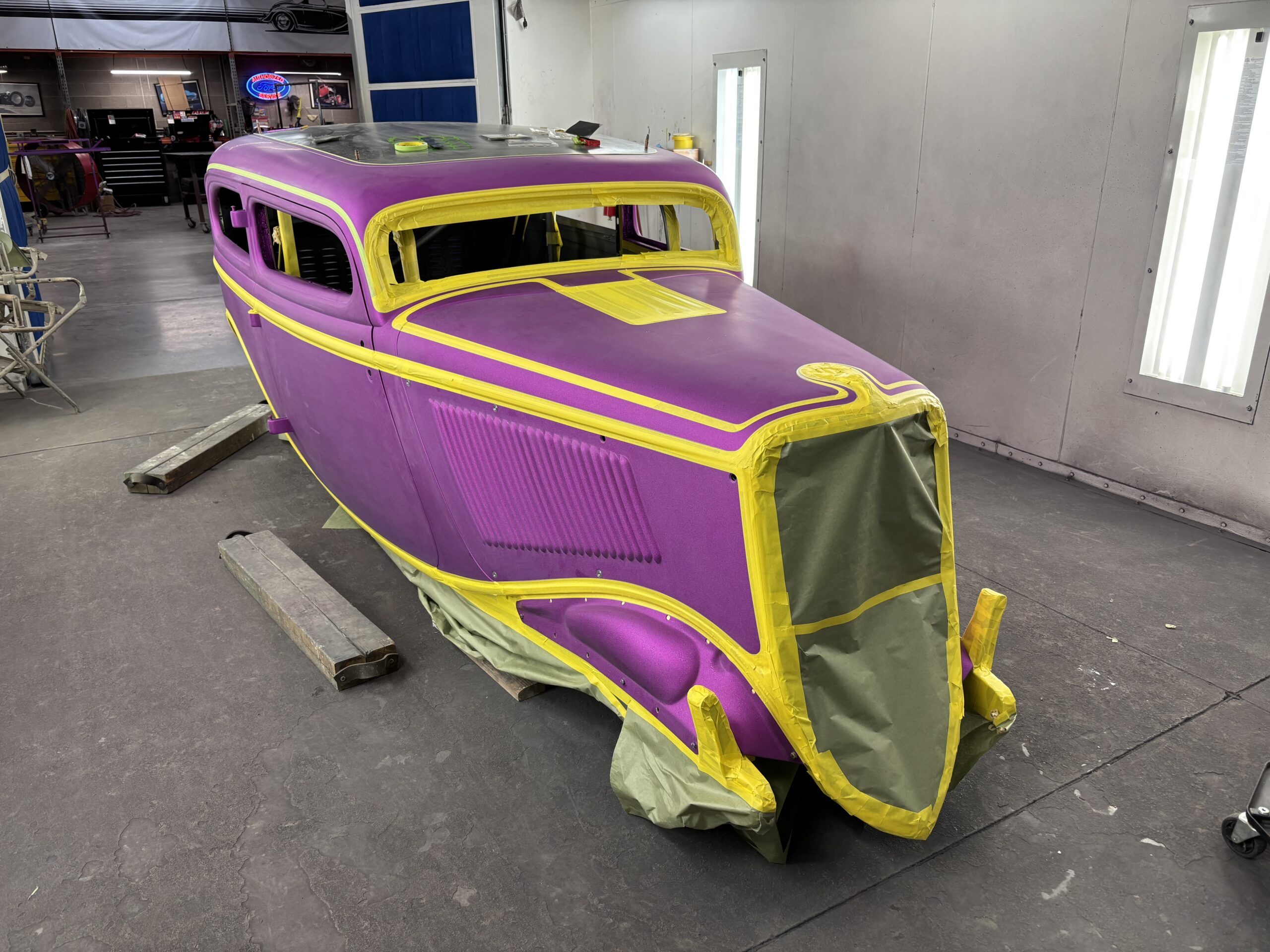
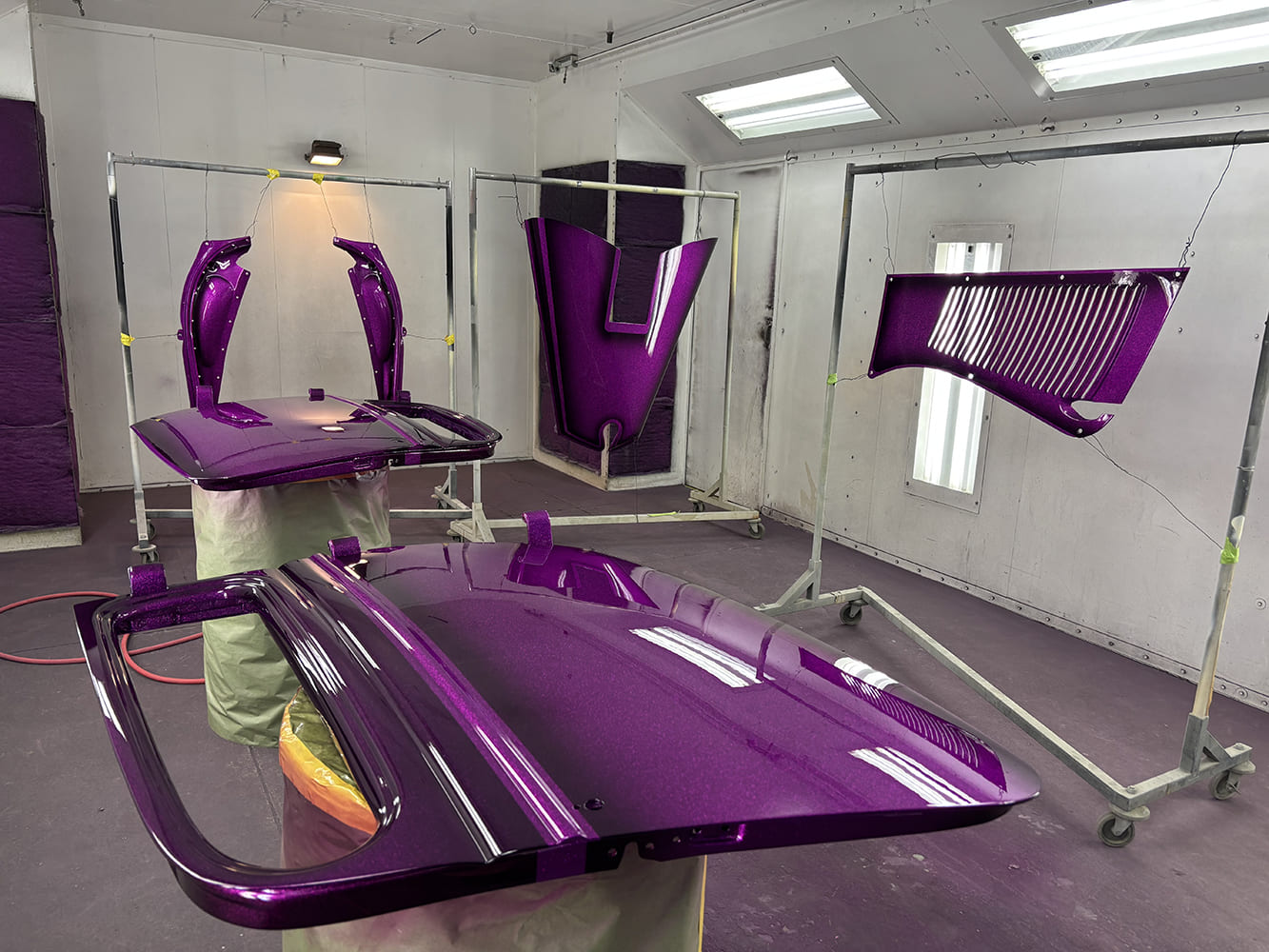
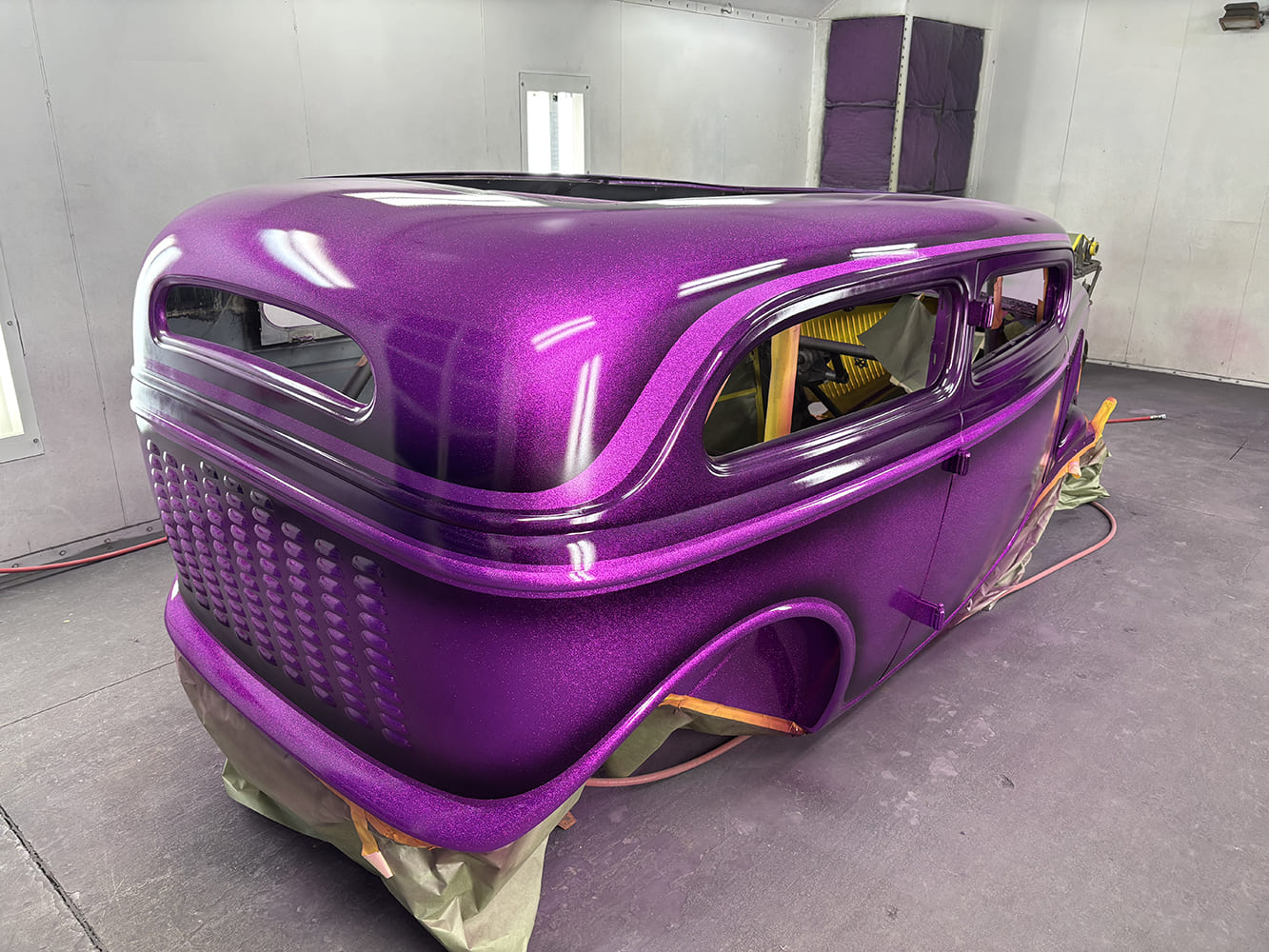
There are two main reasons why an automotive paint manufacturer reformulates paint. The first is to address environmental concerns by striving to lower VOC (volatile organic content) emissions, and the second is to increase durability to withstand the test of time better. We visited Squeeg’s Kustoms to give MR readers a firsthand look at how a 21st century, state-of-the-art metalflake job is done, preserving every bit of 1960s nostalgia. Thanks to modern materials, it will endure the ravages of time. MR
Check out this story in our digital edition here.
Sources
English Color and Supply
englishcolor.com
Kolor Koalition
kolorkoalition.com
PPG Vibrance Collection
ppg.com
Squeeg’s Kustoms
(480) 834-0324
squeegskustoms.com