

By Brian Brennan – Photography by NotStock Photography
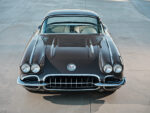
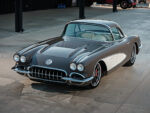
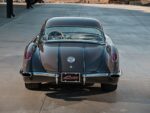
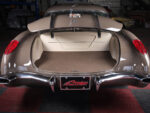
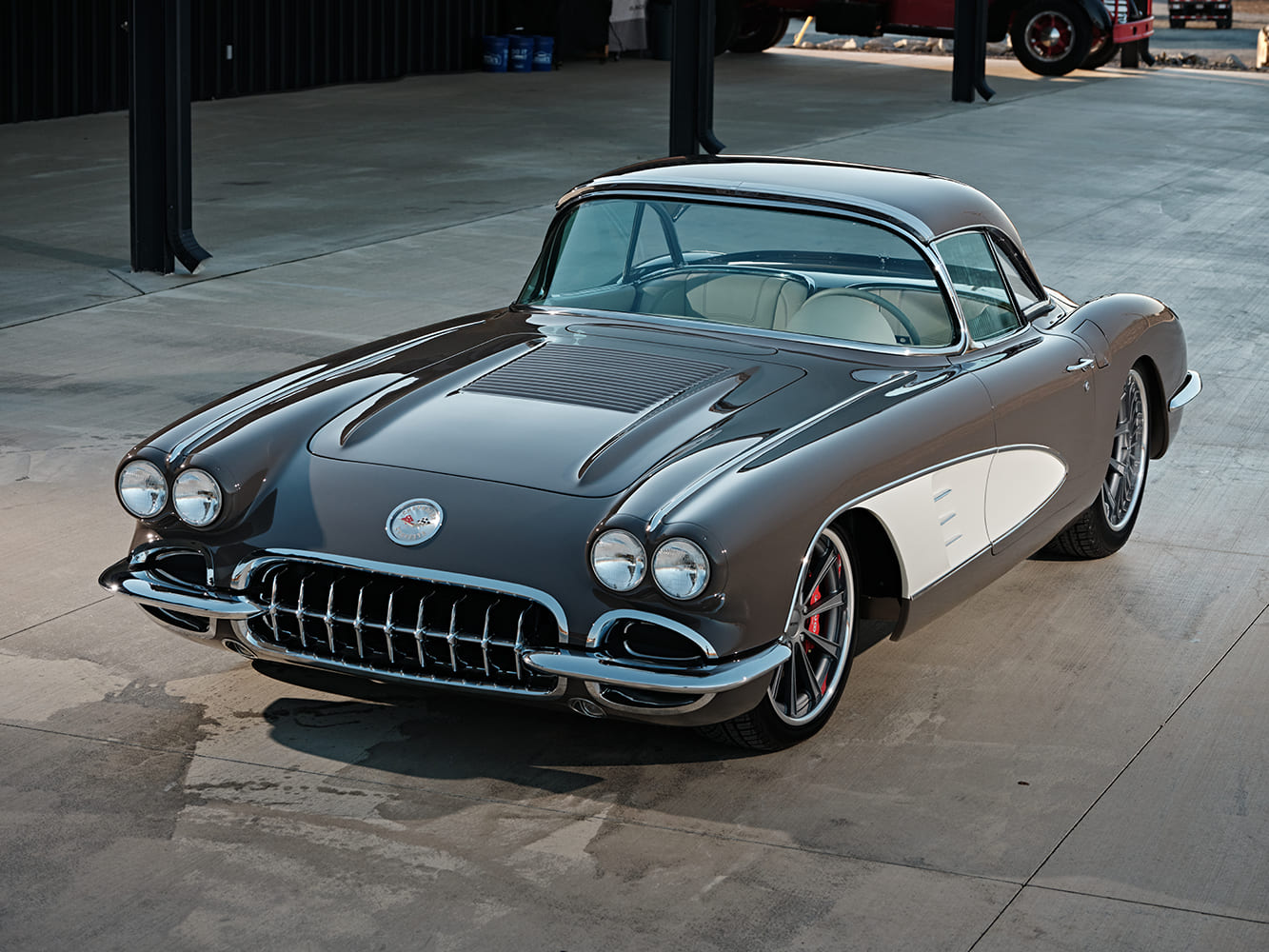
The 1958 Corvette (C1) featured notable design changes, making it a one-year-only model. The major redesign for 1958 included new body panels, a new instrument panel, and new upholstery, along with a modest 7hp increase to 290 for the top-of-the-line, fuel-injected V-8. External distinguishing features included dual headlights; nine grille teeth, down from the 13 of previous years, a Corvette first (and we are happy the last); nonfunctional hood louvers; and twin chrome trunk spears. The interior for 1958 had a large 160-mph speedometer flanked by secondary instruments. The tachometer was relocated from its previous location on the central instrument panel to just above the steering column. However, the design changes introduced in 1958 failed to attract the buying public’s attention as hoped. Yet, that brings us to Scotty Hooper of Alabama, who chose the C1 because he was born in 1958. Good enough for him—and the result is good enough for us!
It should be noted that 1958 was an unusual year for design across General Motors’ vehicle lineup, and the Corvette was no exception. In 1958, Chevrolet undertook a major redesign of its product line in response to competitive pressures and shifting market dynamics. This shift allowed Chevrolet to regain the top sales position; however, the industry’s sales were “soft” as an economic recession was emerging, and foreign car sales were gaining ground. All this led to a change in buyers’ preferences. General Motors’ overconfidence, coupled with a focus on extravagance over practicality, made the 1958 lineup less appealing to buyers.
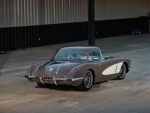
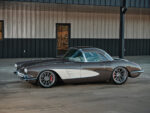
Yet a Corvette remains “hot rod royalty.” The C1 body in front of you is essentially the original from Chevrolet. However, a keen eye will notice that the headlight trim rings, which are chrome in stock form, are now painted to match the body. The Corvette “flags” usually found in the cove area just in front of the “spears” were removed, along with the front license plate bracket assembly. The rear tailpipe tips, which normally pass through the bumperettes, are still present, but the custom exhaust replaces the factory exhaust. It should be noted that all the flawless body- and paintwork were completed at Paul Atkins Hot Rods using RM paint in a two-stage (basecoat/clearcoat) custom-mix Titanium color.
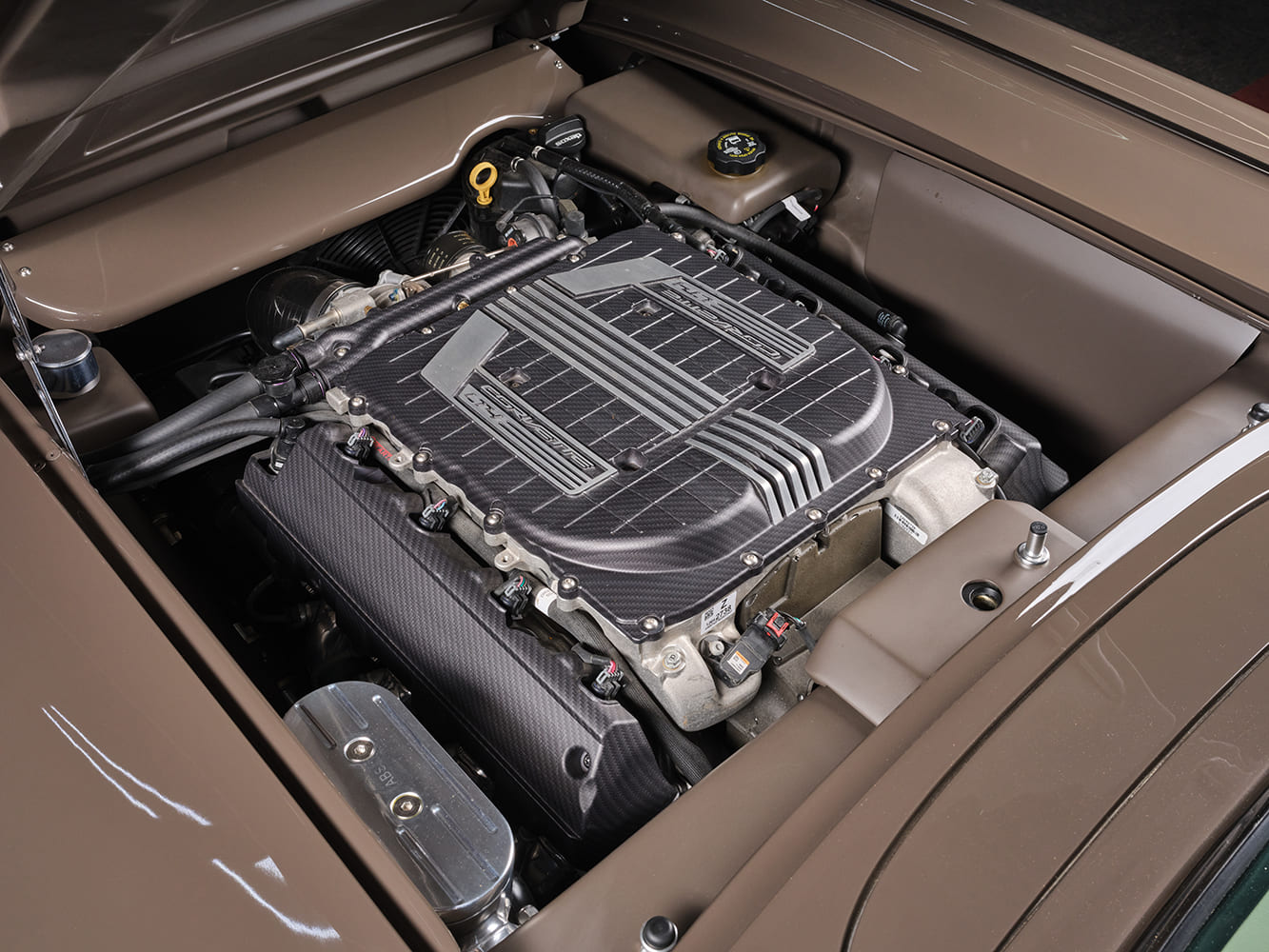
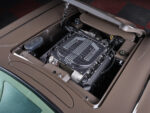
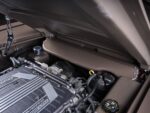
A wet-sump LT4 powers our 1958 Corvette, featuring a 6.2L engine that produces 650 hp and 650 lb-ft of torque. It is equipped with a 1.7L Eaton R1740 TVS supercharger, which spins up to 20,000 rpm and delivers over 9 pounds of boost. A nice detailing touch to this otherwise formidable-looking powerplant is the use of hydro-dipping. The LT4’s supercharger cover and valve covers are hydro-dipped. (A quick note on hydro dipping: it’s a water-transfer printing process that applies a carbon-fiber pattern to surfaces. As the film dissolves on the water’s surface, the pattern adheres seamlessly to the object. It offers practical benefits, adding an extra layer of protection, enhancing durability, and helping resist scratches and wear.) The air cleaner system includes a K&N washable air filter element. The exhaust system is a ceramic-coated Performance Coatings custom setup built by Paul Atkins Hot Rods, featuring a pair of Borla stainless mufflers. Other engine accessories include a SPAL electric fan, an Interstate Mega-Tron battery, and a CVF serpentine belt system and alternator (a one-wire alternator specifically designed to work at low rpm, ideal for cruising, and will charge throughout the rpm range).
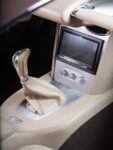
Connected to the LT4 V-8 is an American Powertrain–supplied TREMEC T-56 Magnum six-speed with a MOMO shifter. From there, a Trick Performance clutch kit, including the flywheel, pressure plate, and clutch disc, is used. Fast Shaft provided the driveshaft that transmits power to the rearend.
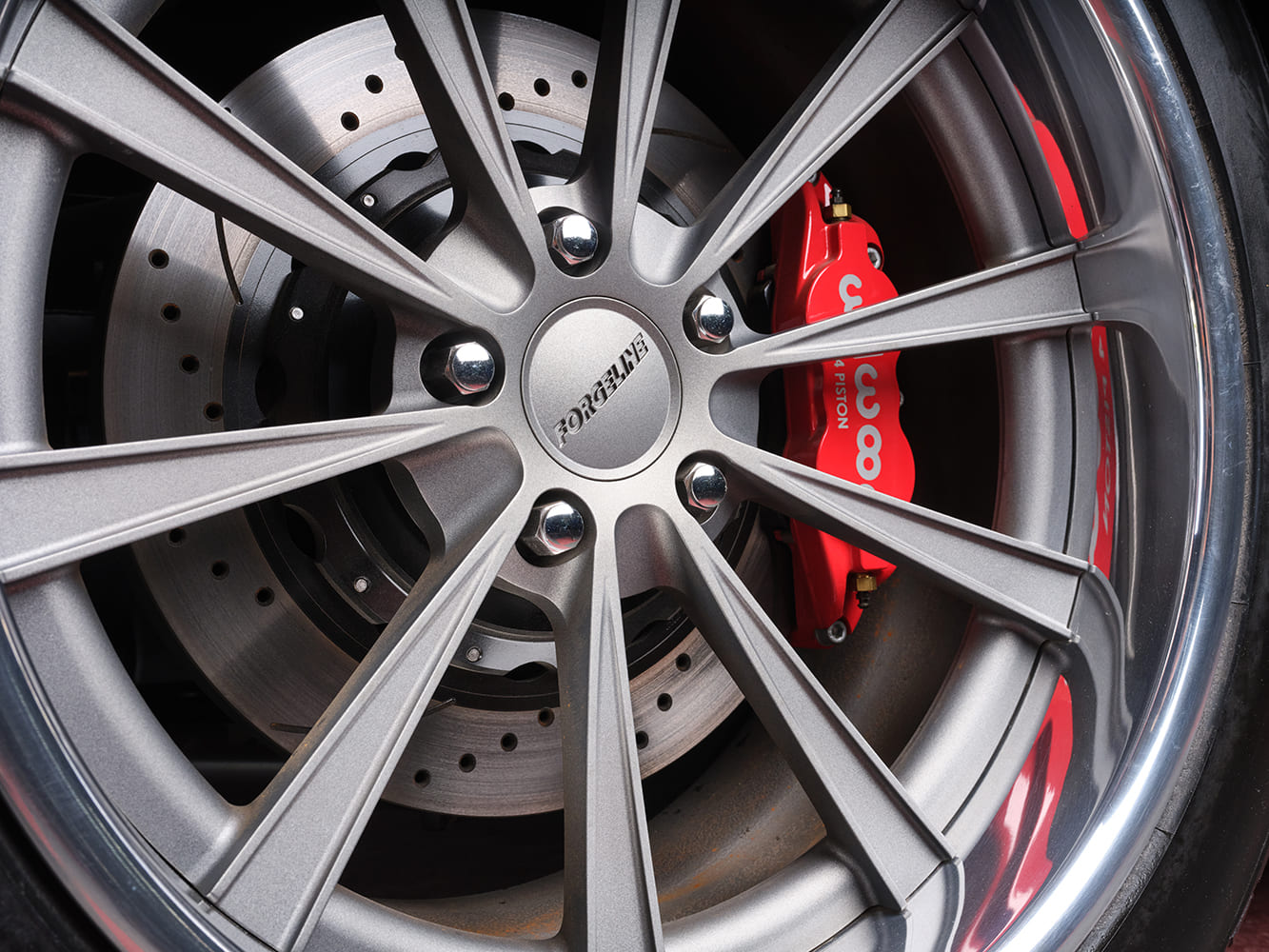
The suspension is built on a Roaster Shop Fast Track Stage 3 chassis with full independent suspension. The 10-gauge framerails are powdercoated in a Roman Bronze matte finish. The IFS is designed around a C6 (2005-16) spindle, connected to Penske RS Edition Performance coilover shocks, and includes a 1.25-inch front sway bar with C6 endlinks. In the rear, the Roadster Shop independent rearend uses a Truetrac limited-slip differential using 3.70 gears and features a pair of Penske coilovers. The corners are accented with Forgeline’s Grip Equipped Dropkick wheels, featuring an eye-catching design inspired by vintage racing in a multi-spoke, concave style. Made from forged 6061-T6 aluminum centers and heat-treated rim shells, the wheels are assembled with hidden stainless steel ARP fasteners and Heli-Coil inserts, ensuring both visual appeal and durability. These custom-made three-piece wheels measure 18×8 at the front and 19×10 at the rear, finished in a titanium powdercoating. They are mounted with Continental Extreme tires, 225/45R18 in the front and 275/45R19 in the rear. Visible through the “windows” is the braking system, which is equipped with a complete set of Wilwood calipers (six-piston in front and four-piston in the rear) paired with drilled-and-slotted, large-diameter rotors.
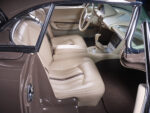
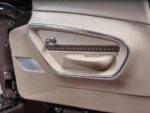
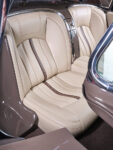
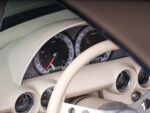
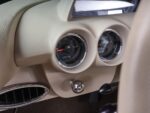
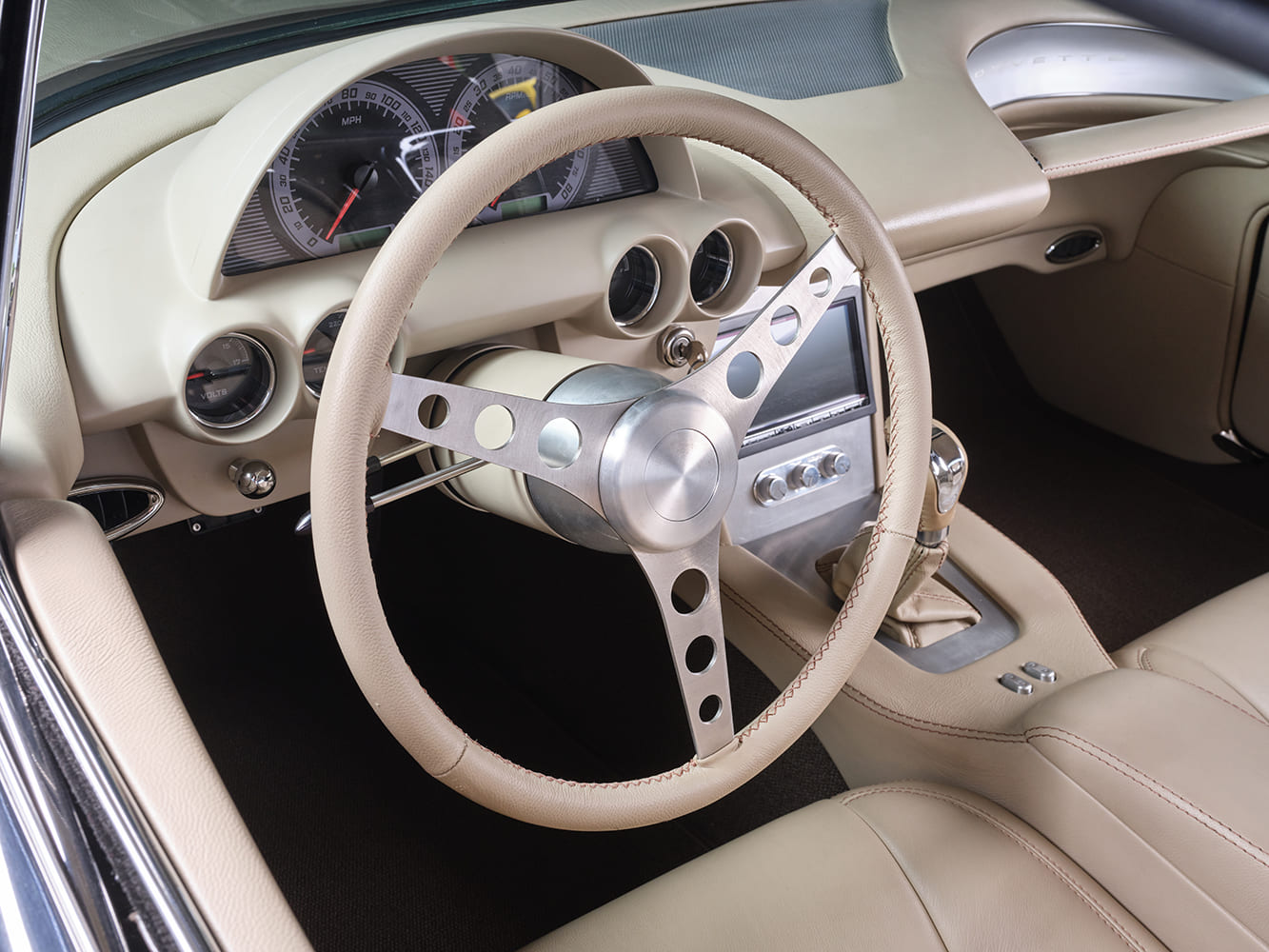
The interior of this 1958 Corvette is highlighted by the custom dash from Dashworks by Paul Atkins. It features Dakota Digital custom-built VHX gauges (red backlighting) and is linked to the Vintage Air A/C and the aftermarket touch screen navigation, with backup camera system via a Centech wiring harness installed by Ricky Burks. The Ididit tilt column is topped with a Corvette Corrections steering wheel that Atkins recovered in the seat-matching leather. The bucket seats are more handiwork from Atkins, while he also stitched the Khaki leather in a Sepia (a brown color; a combination of orange and brown) over the seating. The center console is more Atkins fabrication and upholstery handiwork. He also followed through on the carpeting with material from Douglass, an aircraft company, that was offered in Peat (a dark brown to black appearing).
The nearly three-year project has yielded a great-looking C1 and continues the 1958 one-year-only theme. The Corvette is also an award winner, having taken home the GM Iron Builder of the Year presented by Chevrolet Performance at a Goodguys event for Paul Atkins Hot Rods. No question that you can make any year Corvette look cool and still be a potent hot rod. MR
Check out this story in our digital edition here.
See more Corvette features and tech here.