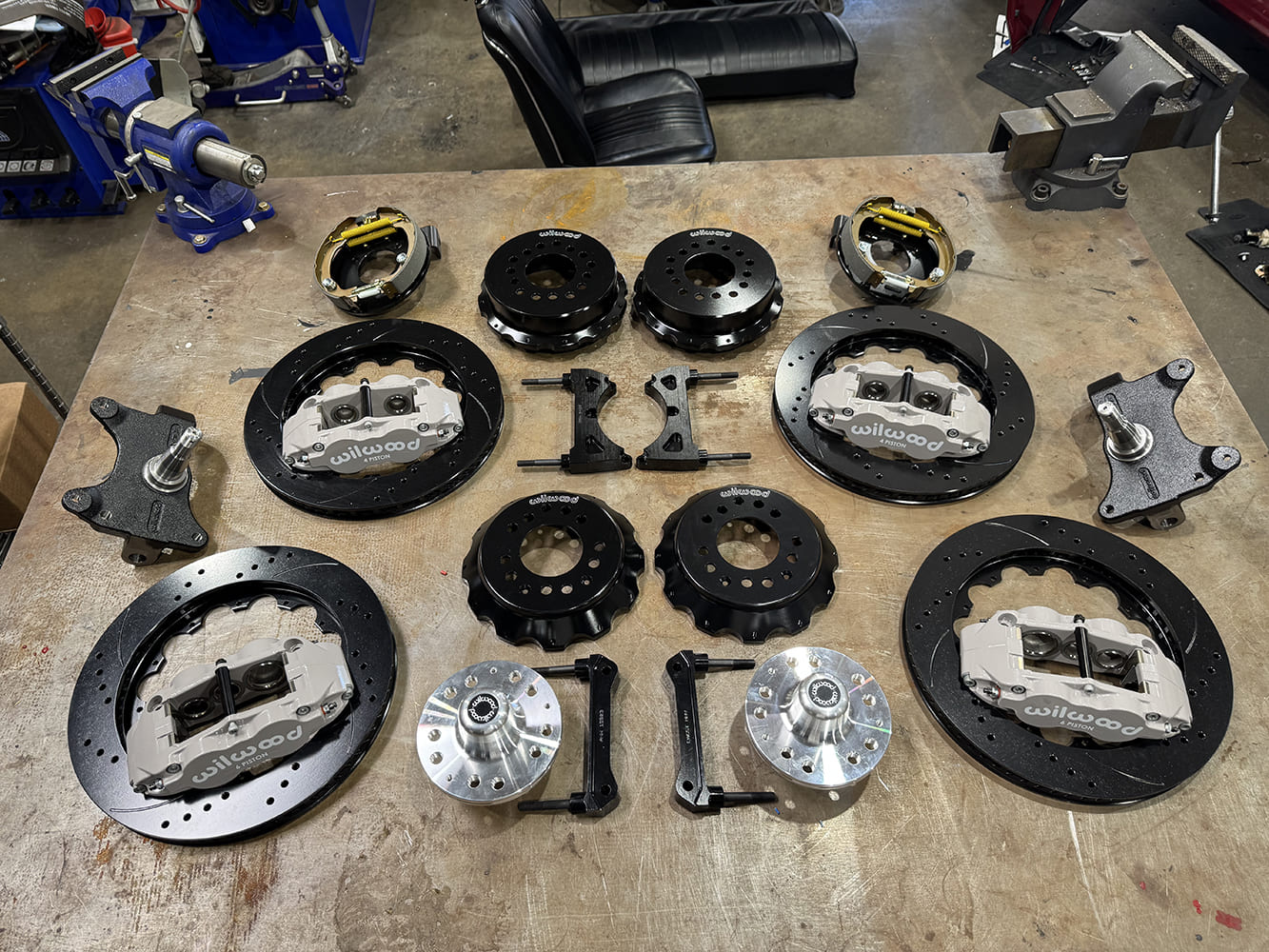
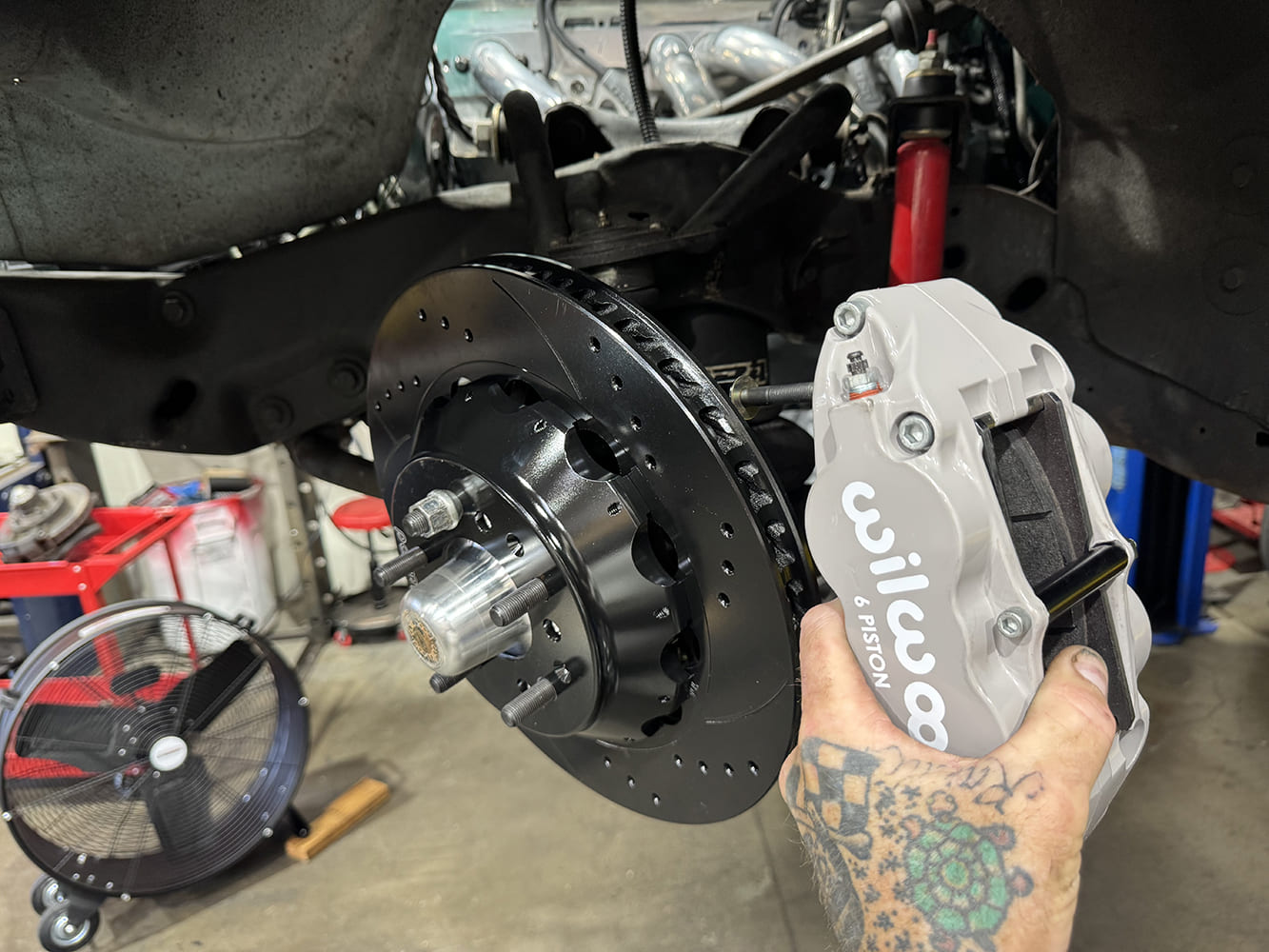
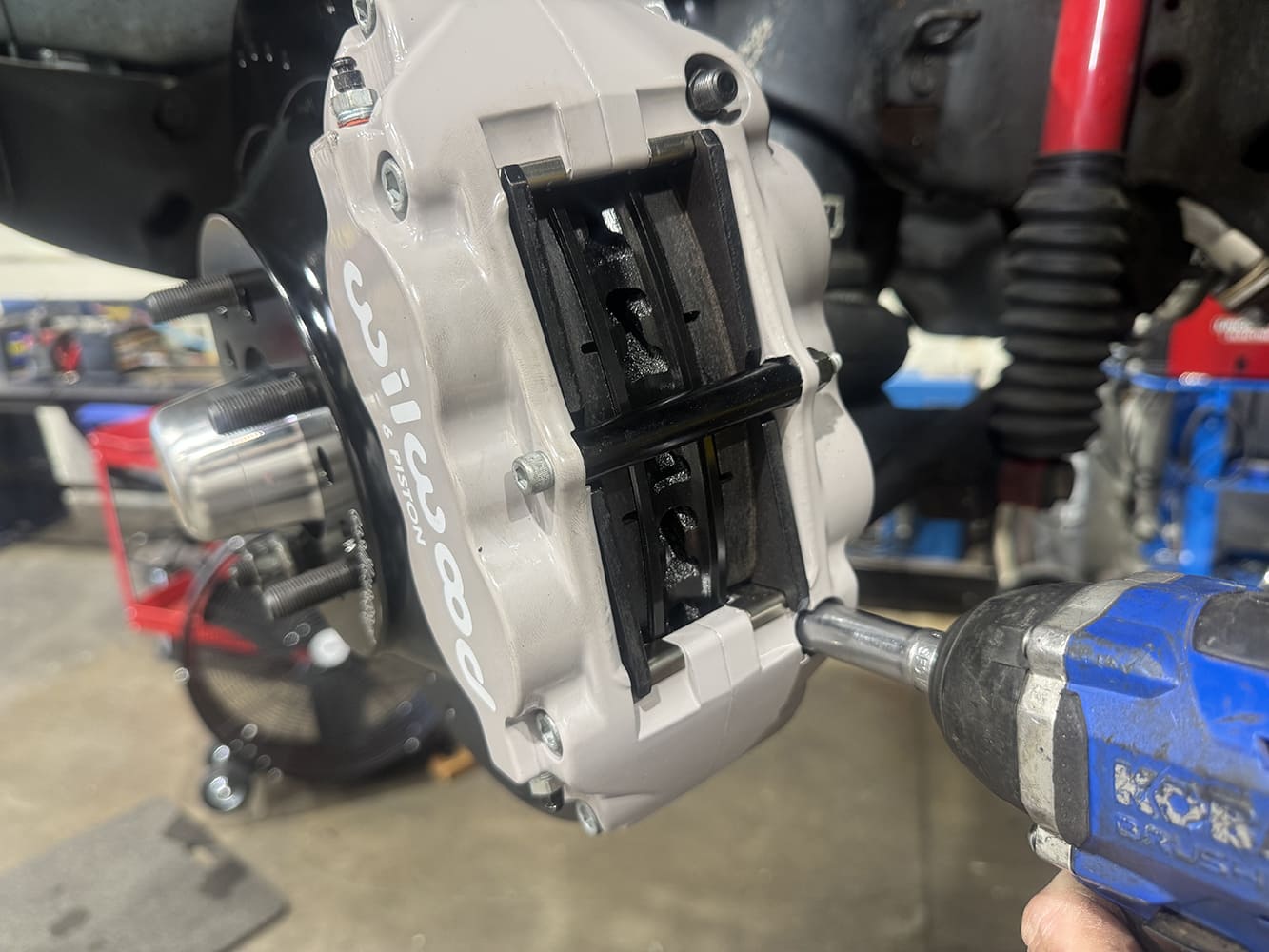
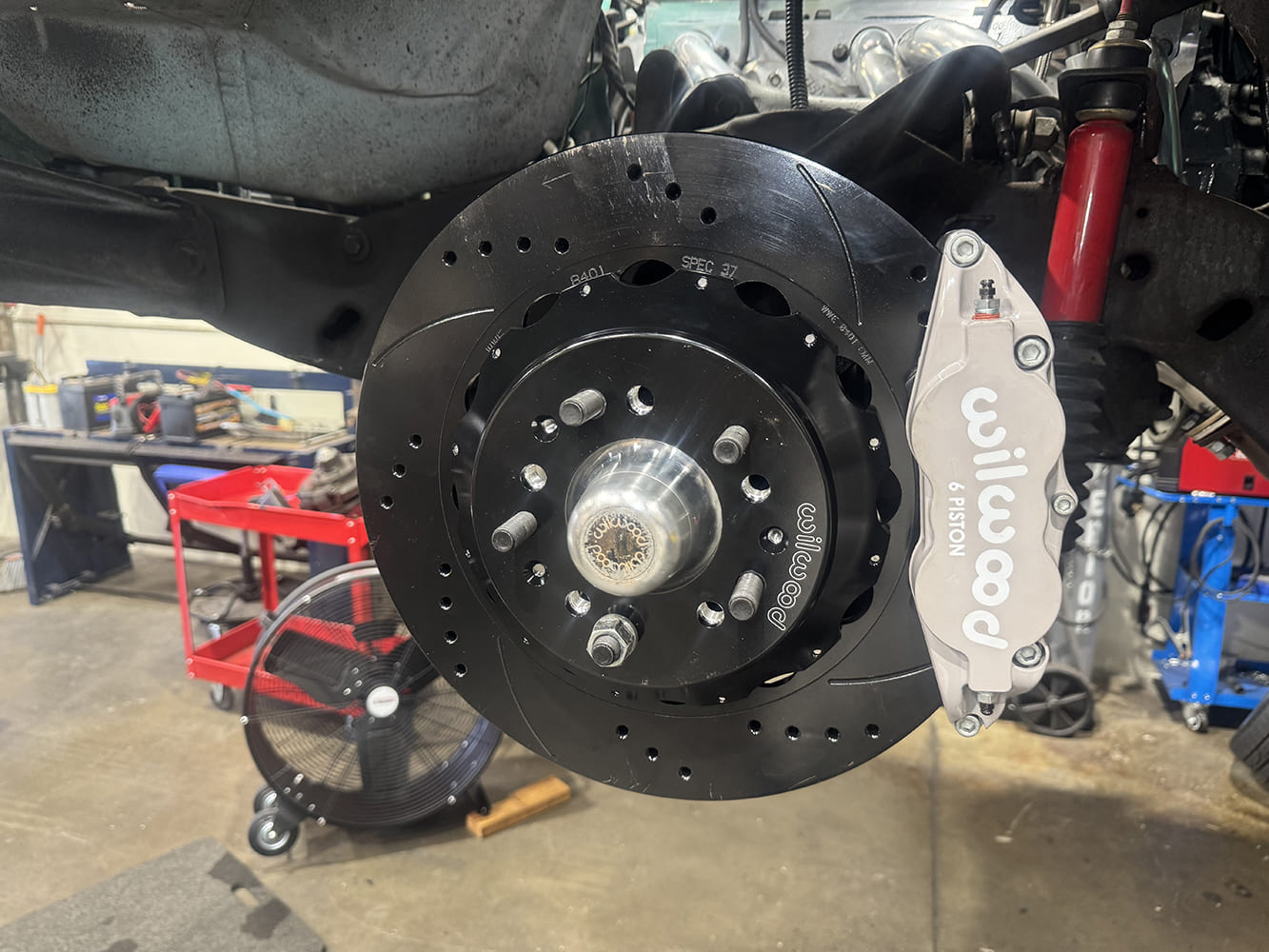
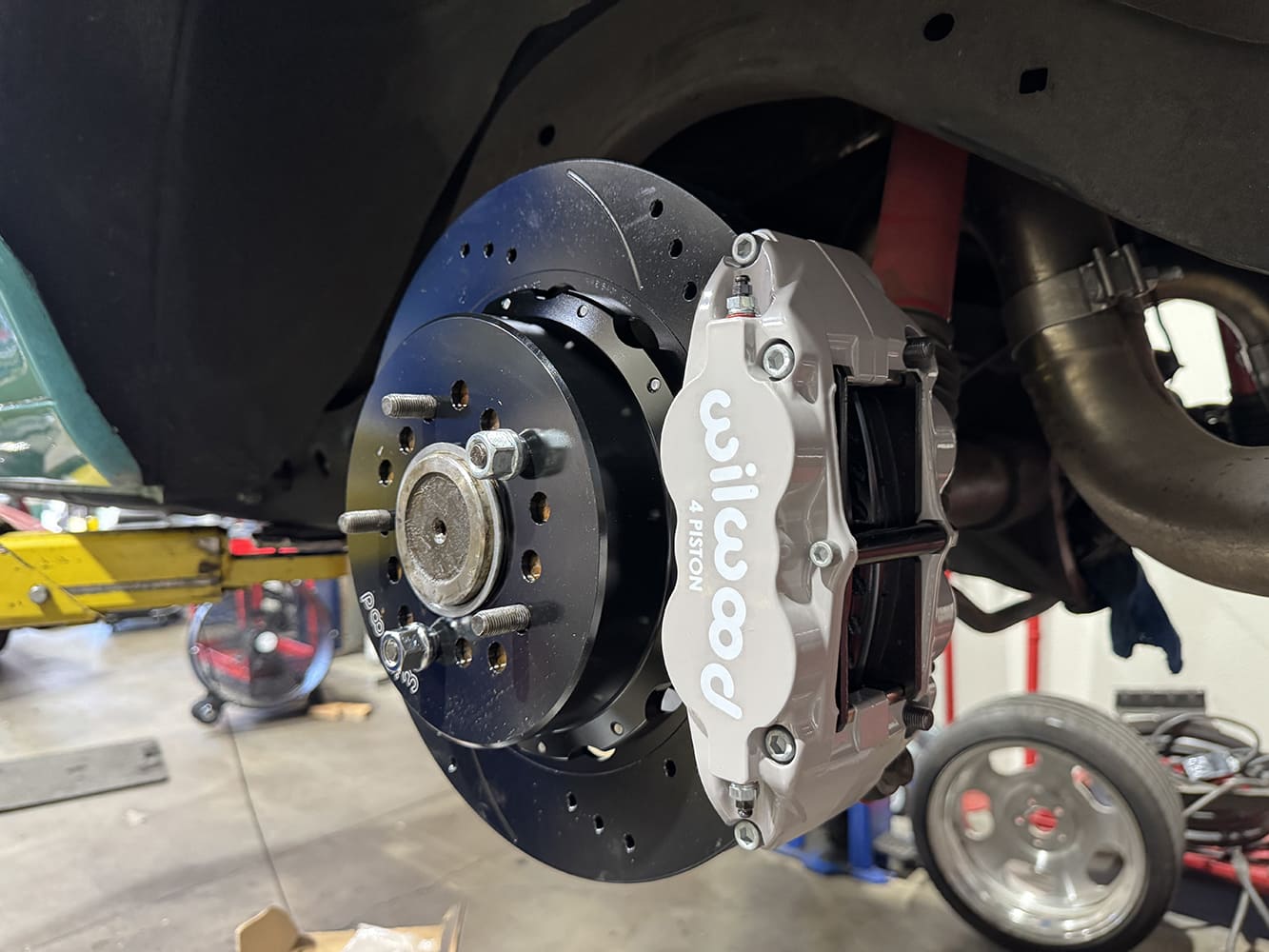
Wilwood offers 28 different caliper colors with five different logo colors and their standard laser-engraved logo. Ross chose Chicagoland gray calipers with white logos.
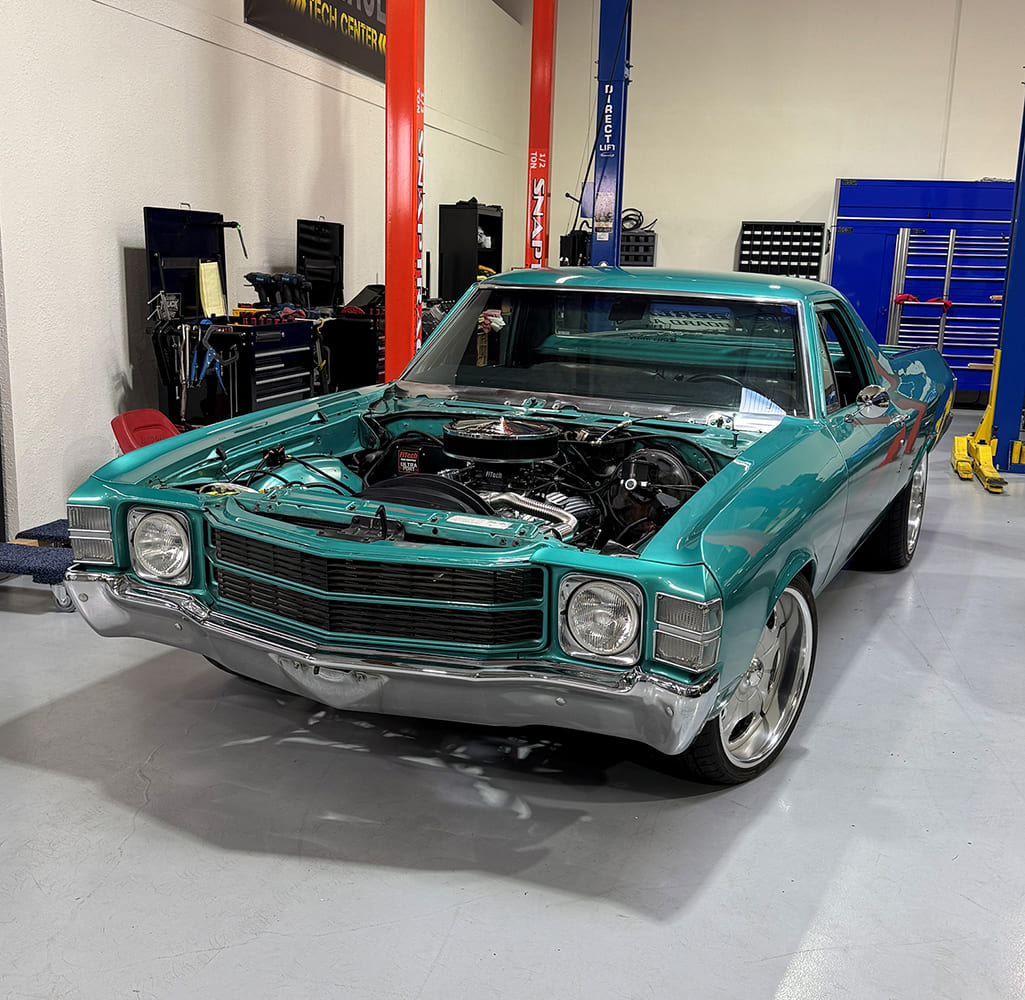
When Ross Berlanga brought this 1971 Chevrolet El Camino home in 1992, it was, by all accounts, in sad shape. The engine was junk, the body was rough, and the interior was destroyed, but Ross saw the potential of this diamond in the rough. Over the years, the front suspension was updated with tubular upper and lower control arms, airbags were added all around, and Ross and his uncle, Mark Berlanga, straightened the body and covered it in 1992 GM Turquoise Metallic. A fresh fuel-injected small-block was installed, followed by the next major performance enhancements: the addition of Wilwood dropped spindles and disc brakes on all four corners.
It’s not quite finished yet, but Ross Berlanga’s immediate goal was to get his El Camino running and back on the road with brakes to match the healthy new fuel-injected engine.
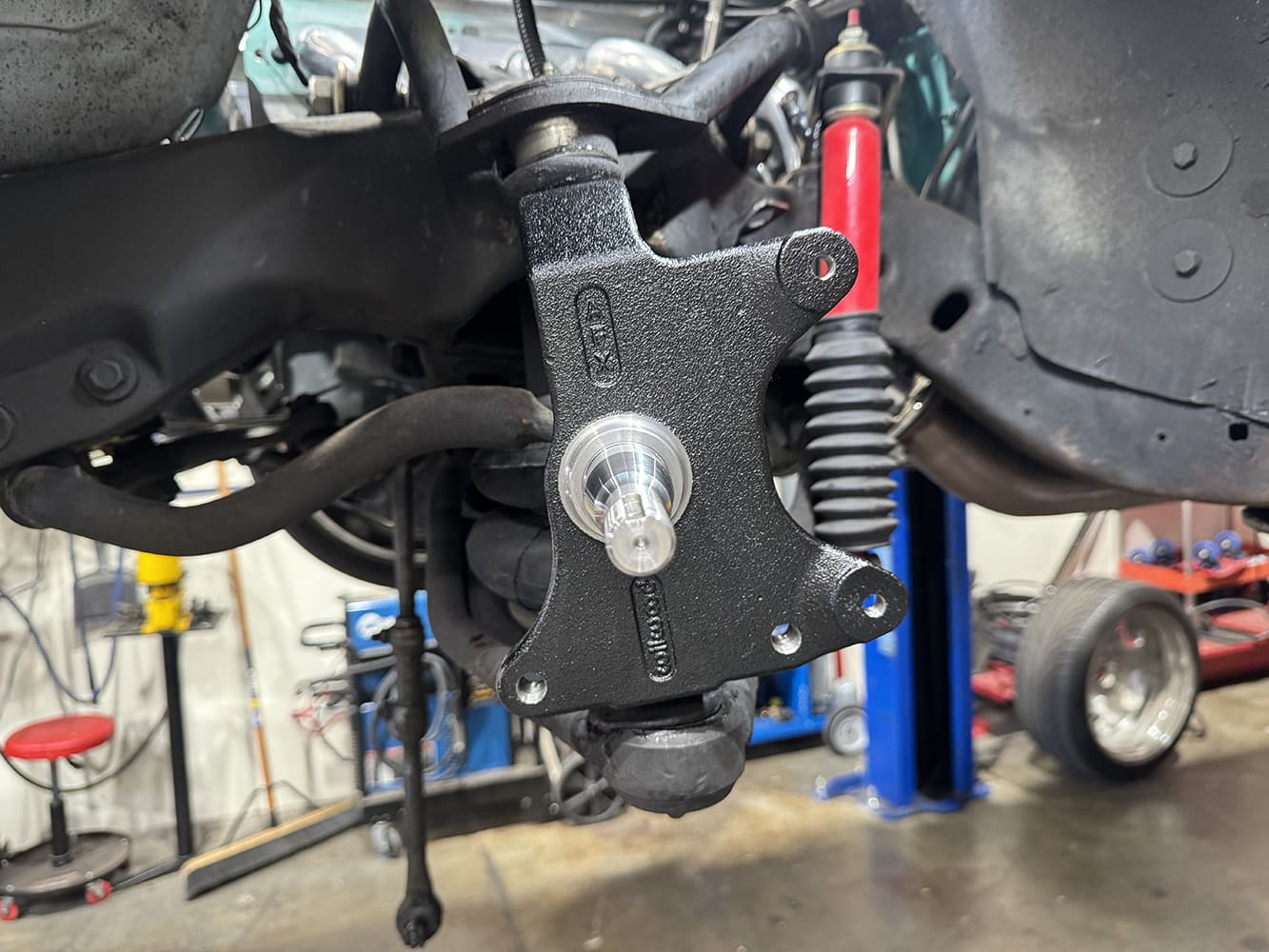
For the brake update, the El Camino was delivered to Jason Scudellari at HB Hot Rod in Huntington Beach, California. Scudellari began the transformation by installing a pair of Wilwood’s AFX Pro Spindles (PN 831-15890). These high-strength steel spindles use the original bolt-on steering arms and are specifically designed for use with Wilwood’s disc brake kits. These spindles provide a 2-inch drop-in ride height for a more aggressive stance without affecting steering geometry. In addition, they are taller than the factory spindles, which raises the roll center and decreases camber change through the suspension’s range of movement. That’s suspension speak for saying these spindles improve handling dramatically.
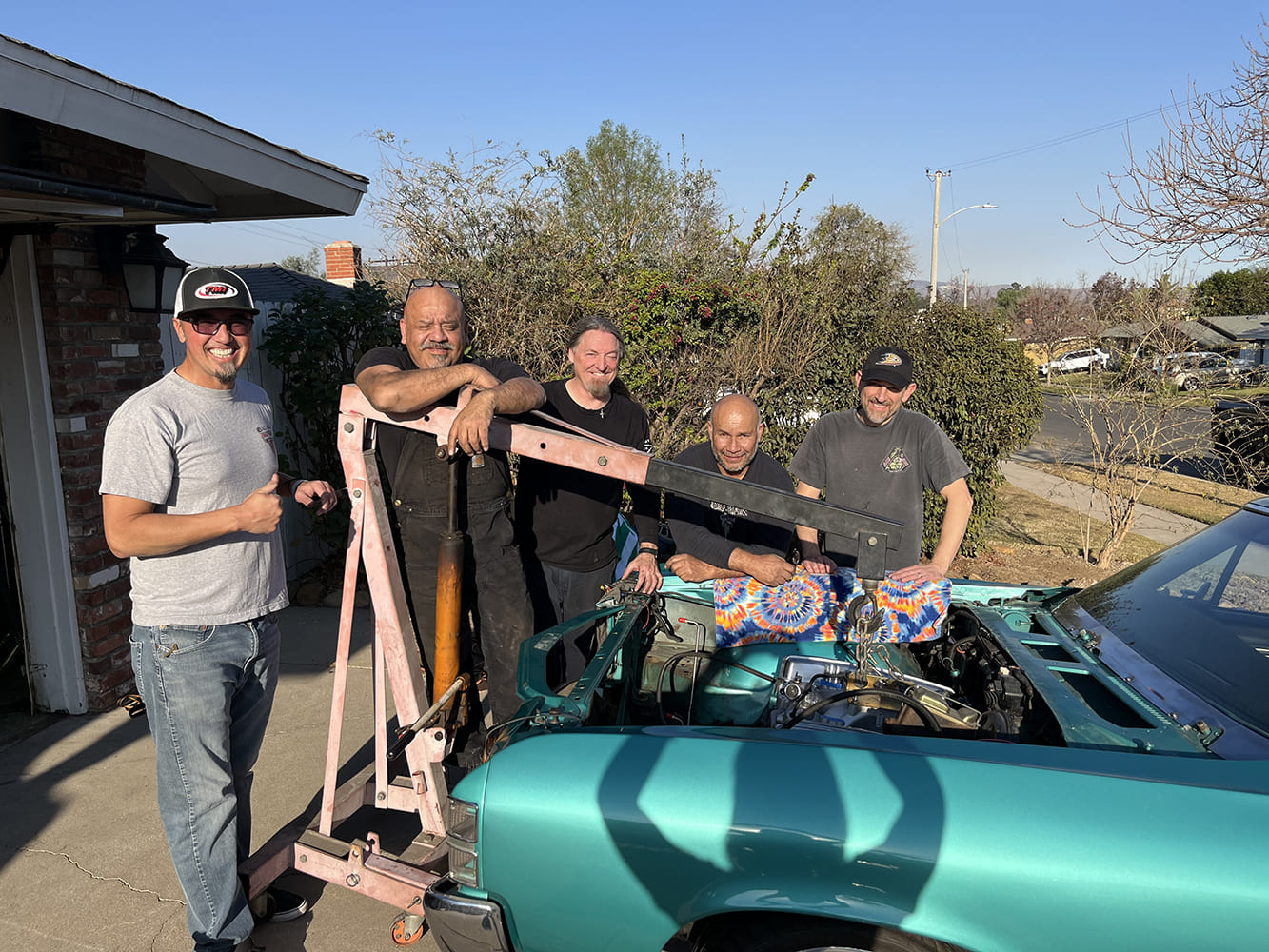
This is the crew that helped install the El Camino’s fresh small-block from L&R Race Engines. From left to right: Ross Berlanga, Jorge Lopez, Gus Stewart, Ponch Silva, and Tom Schoch.Jason Scudellari of HB Hot Rod took charge of installing Wilwood forged Superlite brakes on both ends of the Chevy El Camino.
With the spindles swapped, Scudellari installed Wilwood’s Big Brake Kit (PN 140-15911-D) for use with the AFX Pro Spindles. This kit includes aluminum hubs, FNSL6R billet forged six-piston calipers, and 14-inch rotors. Like most Wilwood extreme-performance calipers, these have a differential piston-bore design, meaning one end of the caliper has larger pistons than the other. In this case, the stainless steel pistons in bore 1 on each side are 1.62 inches; bores 2 and 3 measure 1.12 inches. These calipers must be mounted so that the smaller piston end is closest to the rotor entrance and the larger piston end toward the rotor exit. As Wilwood explains it, “The larger piston end provides slightly greater clamping force to compensate for pad taper, which can occur under extended severe-use applications.” Wilwood cautions that an improperly mounted caliper (reverse rotation) will cause increased pad taper and reduce overall braking efficiency.
Also part of the chassis update was the installation of Wilwood’s 2-inch dropped spindles. They can be used with original or aftermarket control arms.
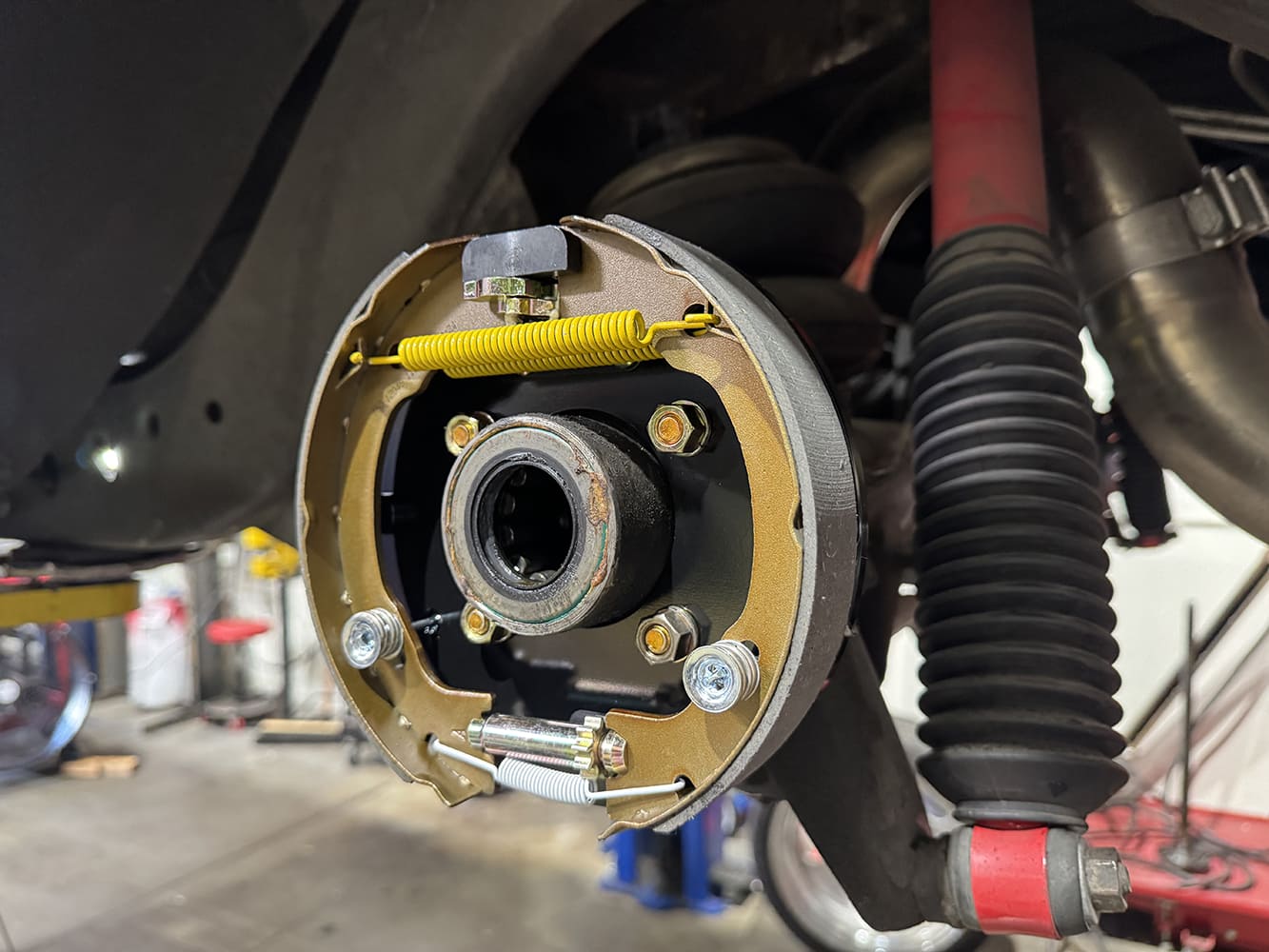
To update the rear brakes, Ross chose Wilwood’s kit (PN140-12964-D), the perfect solution for applications that require a parking brake. Along with the FNSL4R calipers with four 1.12-inch pistons and high-performance BP-10 pads. The kit also includes two-piece rotors (13 or 14 inch are available) that have integral drums for the internal parking brake assembly.
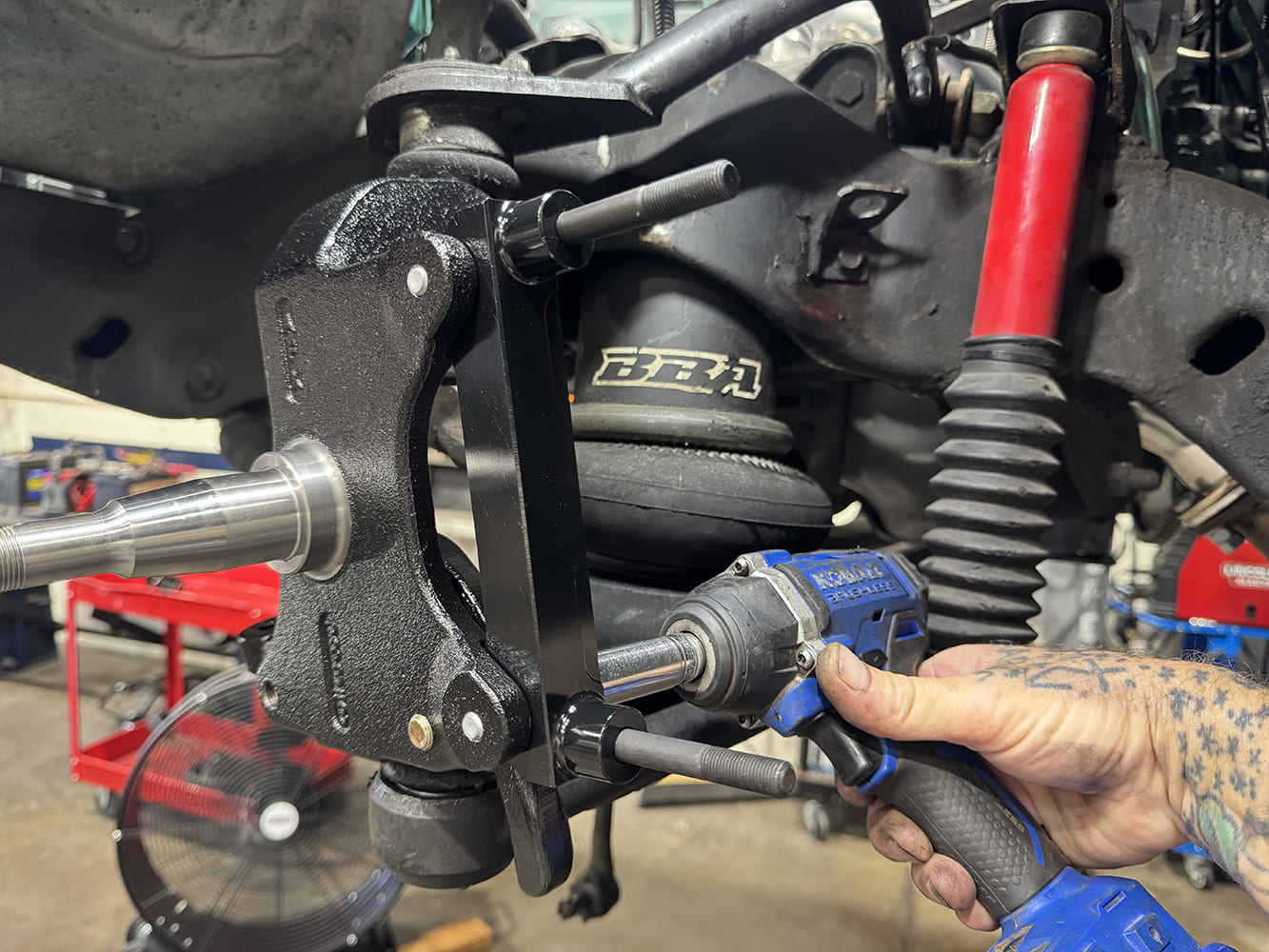
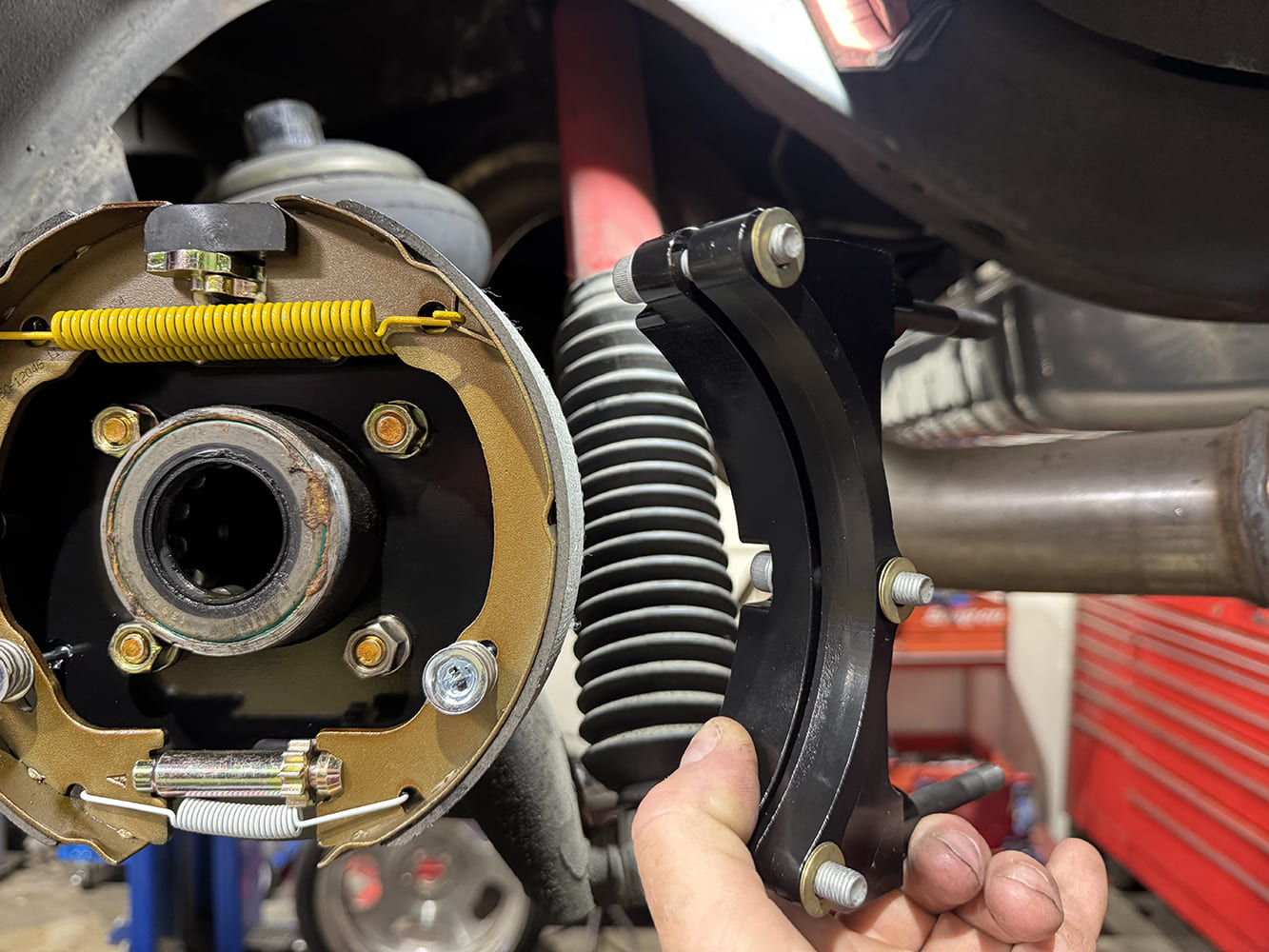
Here Scudellari installed the Wilwood radial caliper mounting bracket. With this unique mounting system the caliper can be located precisely in relationship to the rotor.
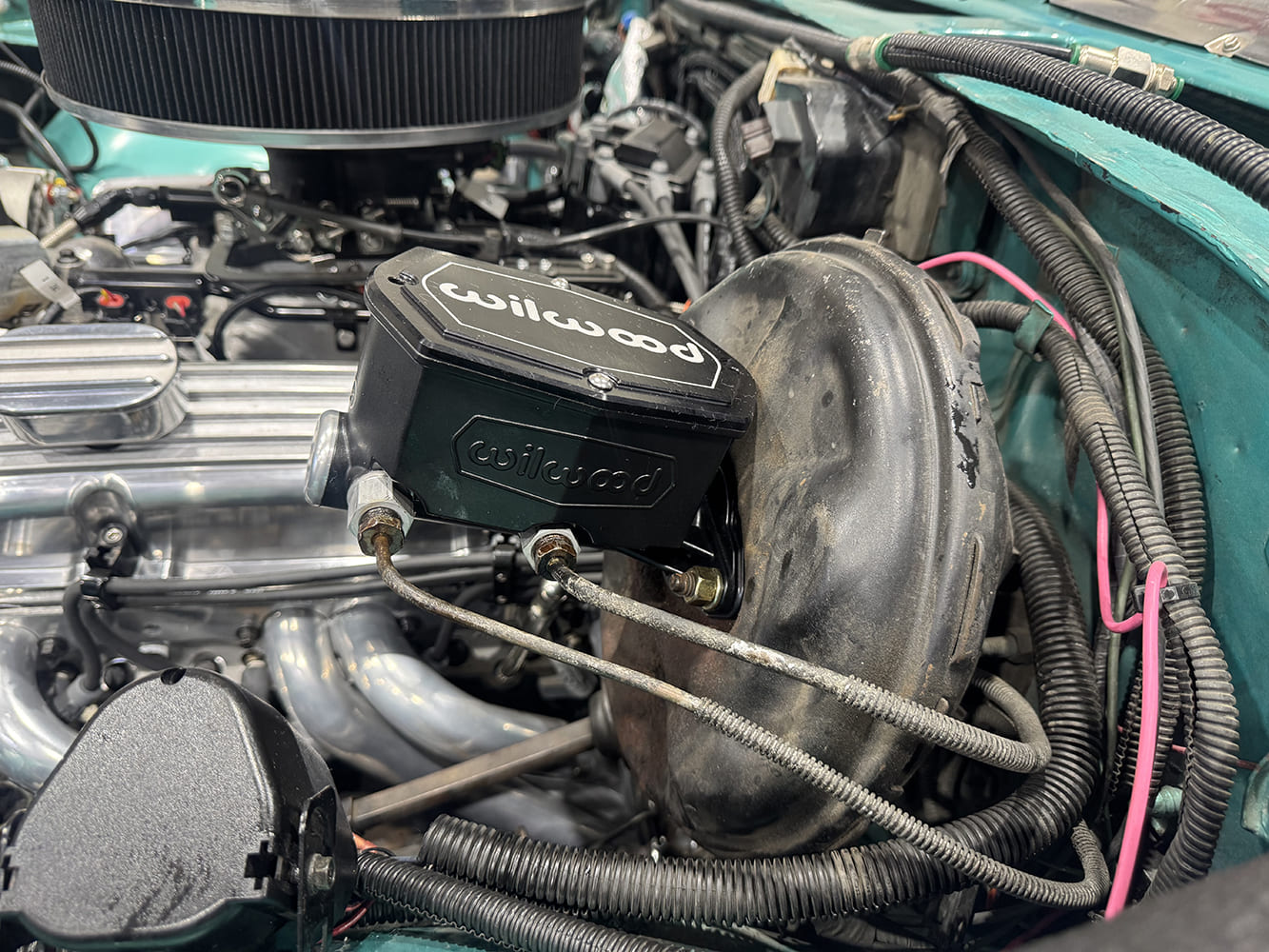
The heart of any hydraulic brake system is the master cylinder. For this application, Scudellari installed one of Wilwood’s compact 7/8-inch bore tandem master cylinders (PN 261-14961). Available in bore sizes from 7/8 to 1-1/8 inches, these master cylinders measure a mere 6.55 inches from end to end and are offered in two finishes: ball-burnished or black E-coat. Also available from Wilwood is a combination proportioning valve with a mounting bracket and precision-bent stainless steel fluid lines all specifically designed to work with Wilwood tandem master cylinders.
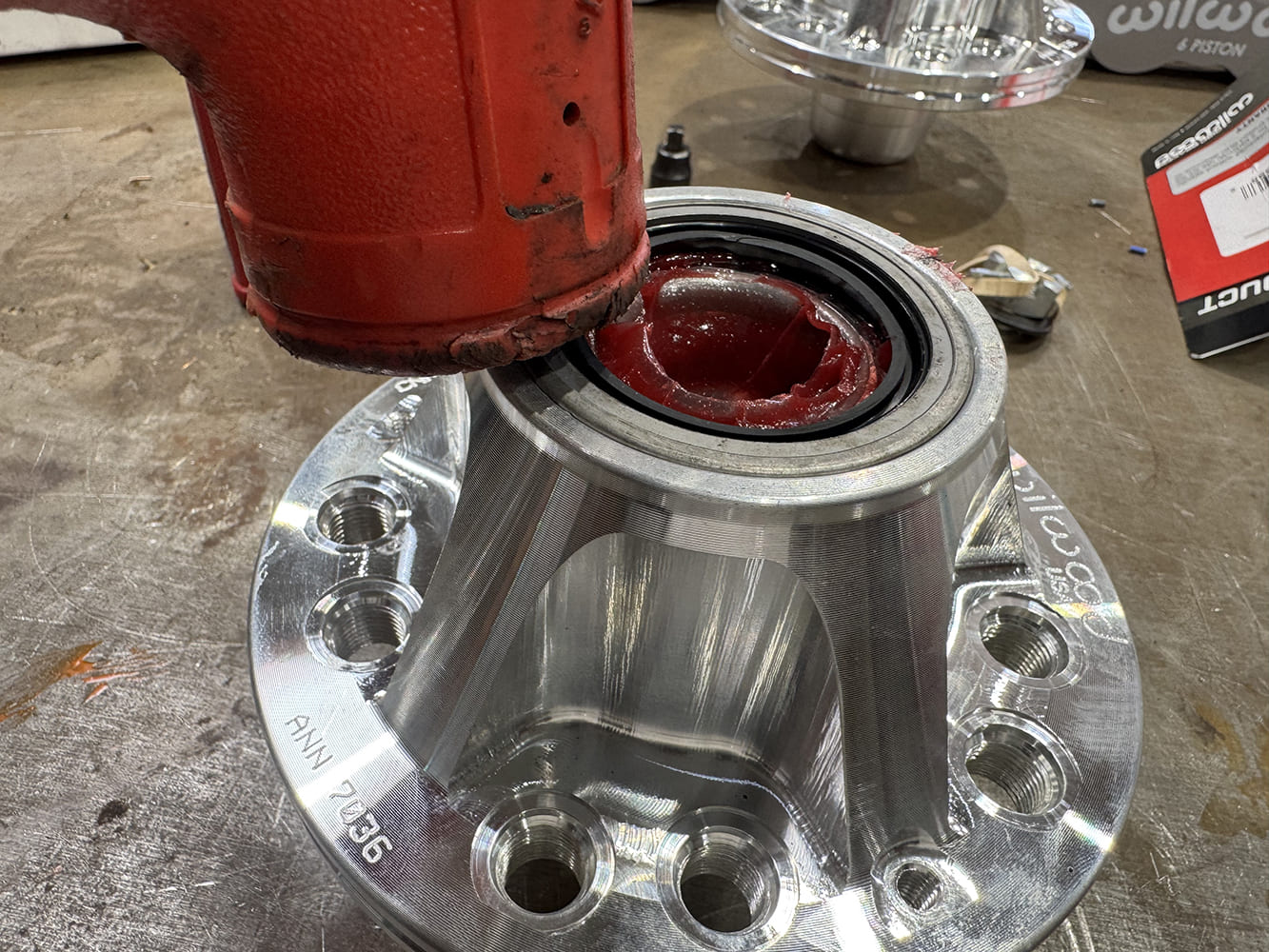
Wilwood’s forged billet hat-mount hubs are CNC-machined for a precise fit on each spindle application. Hubs come with bearings, races, and seals, and three ¼-20 holes for hat retention bolts (PN 239-7032).
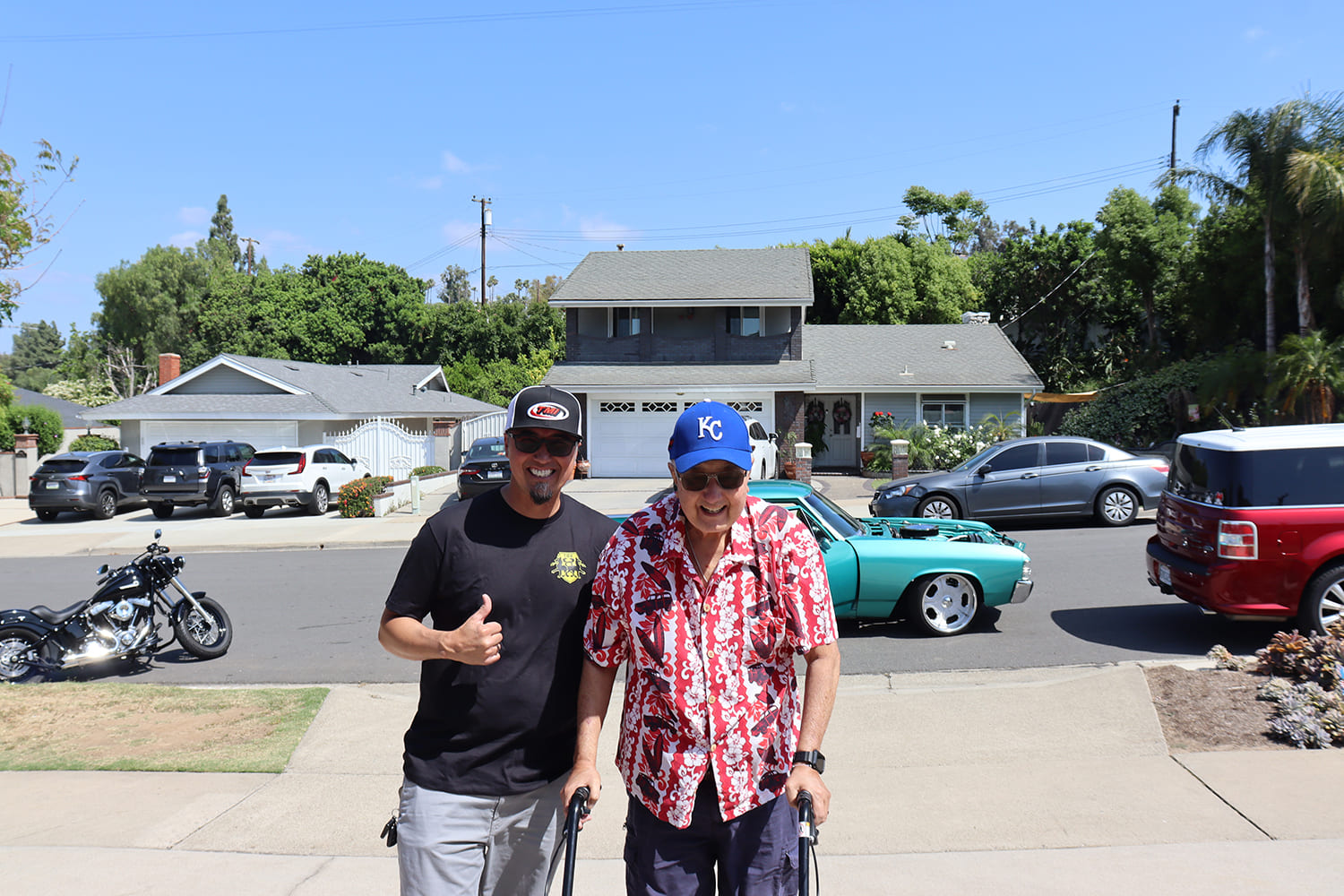
With the body- and paintwork done, suspension updates made, a new engine installed, and Wilwood brakes on all four corners, the El Camino’s “to do” list was getting shorter. As Ross told us, “I still have more to do to my Elco, such as get the new AMD SS hood painted and installed, plus install a complete new TMI interior.” Ross is the director of marketing for TMI, a leading manufacturer of aftermarket seats and interior products, but circumstances would dictate those things would have to wait. Ross learned his father, David, was going into hospice care. David, who was a professional baseball scout, wanted to go to a ball game with his sons and take a ride in the El Camino so those final details could wait; some things are more important than others.
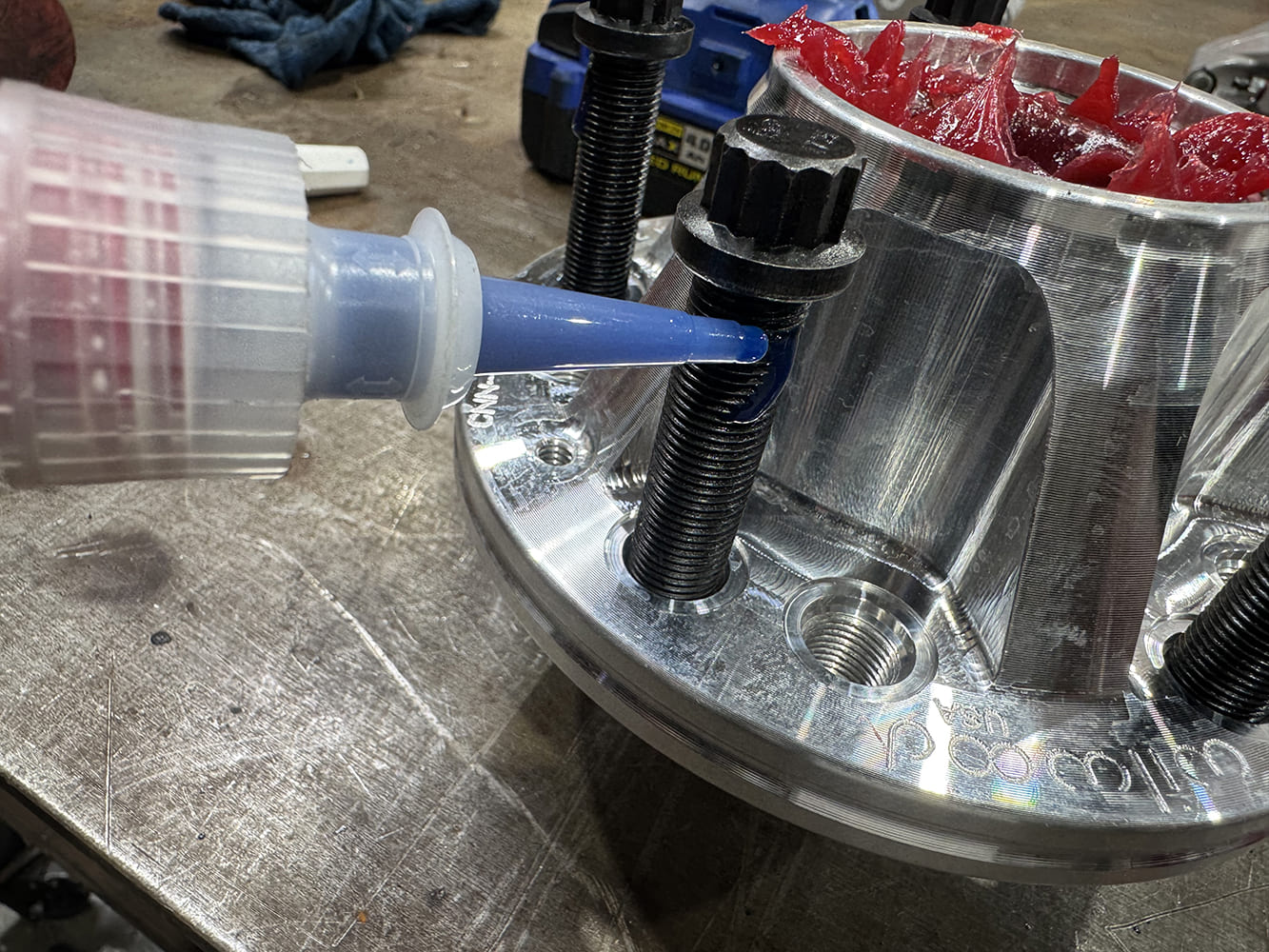
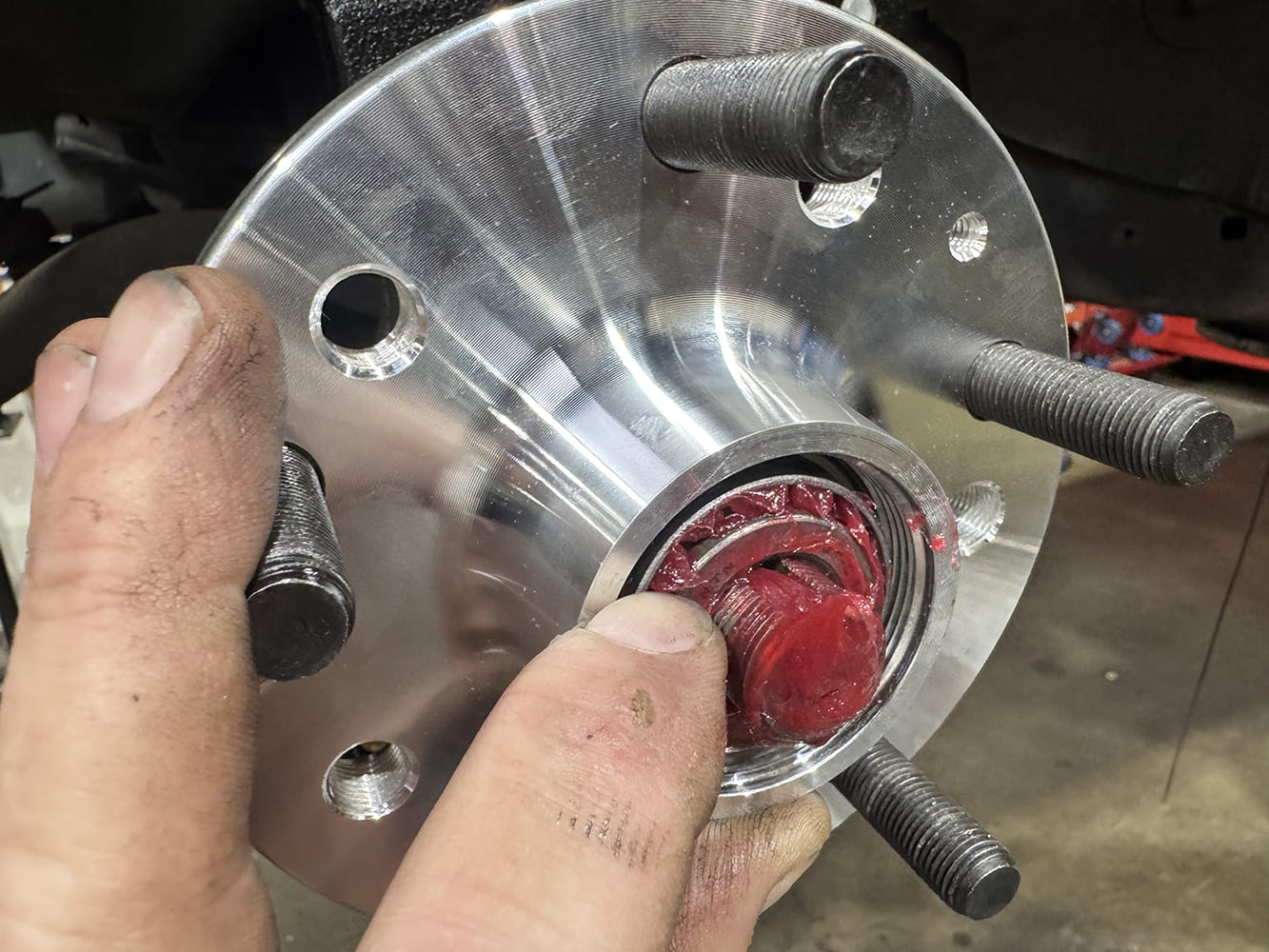
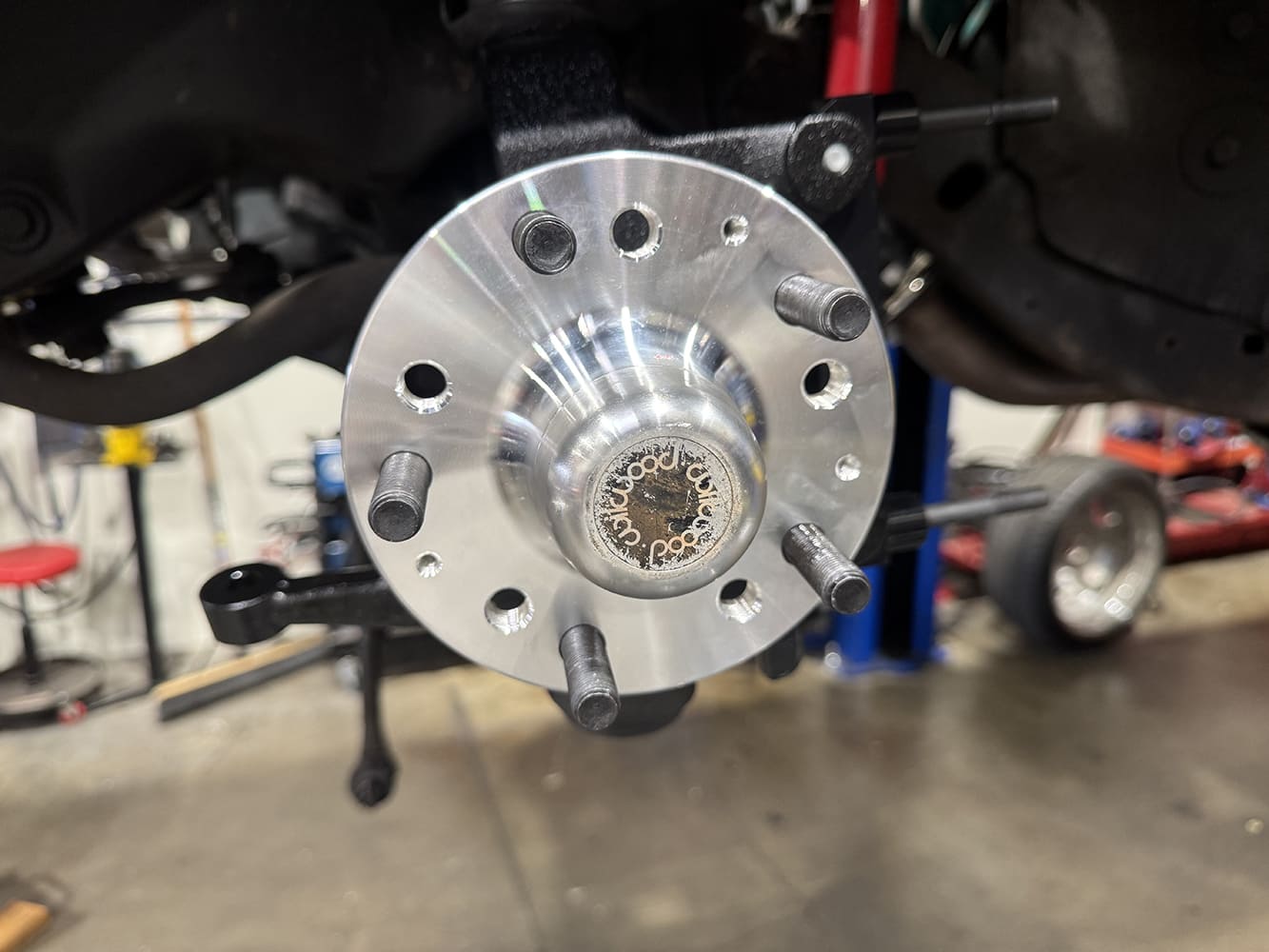
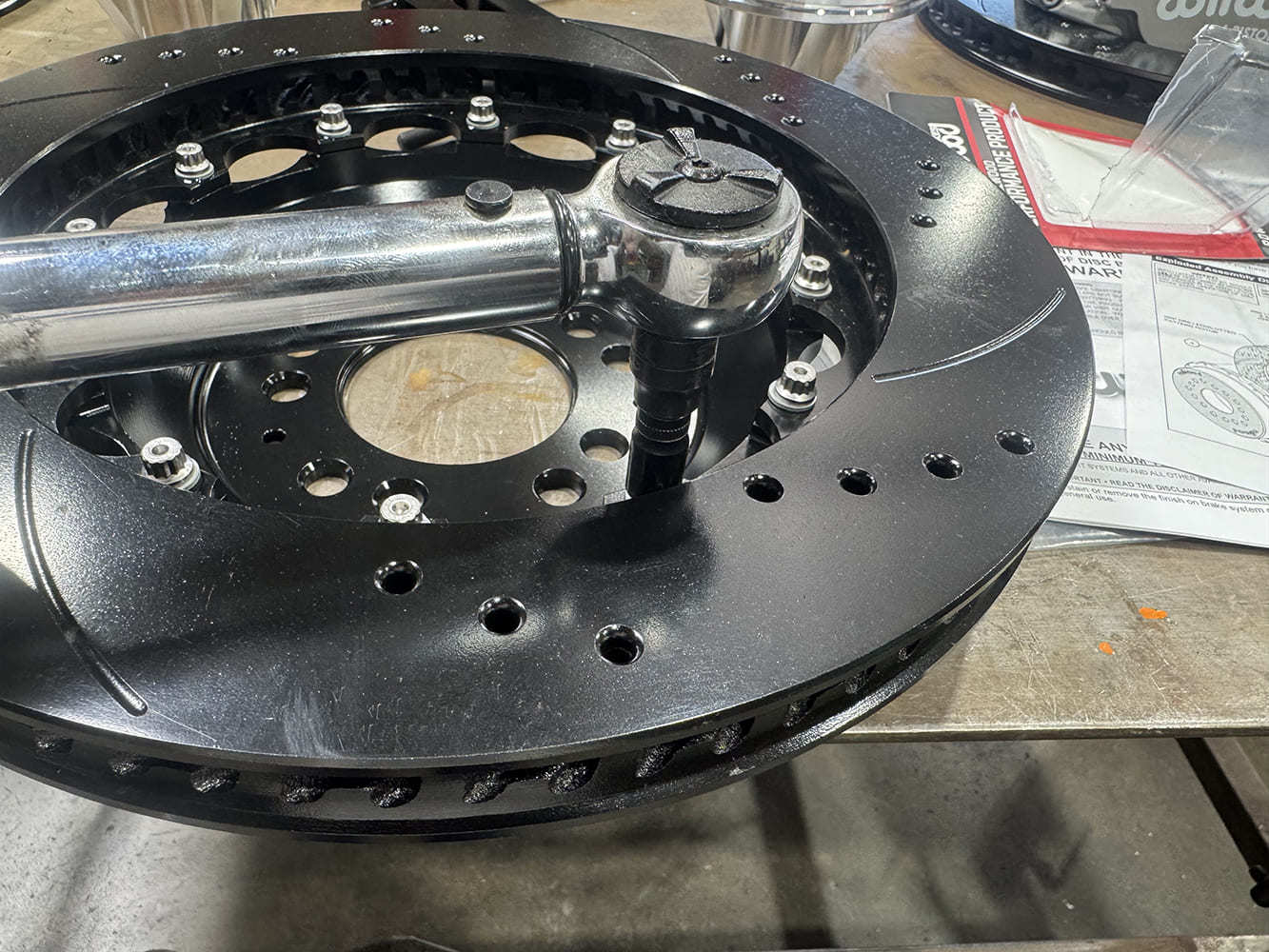
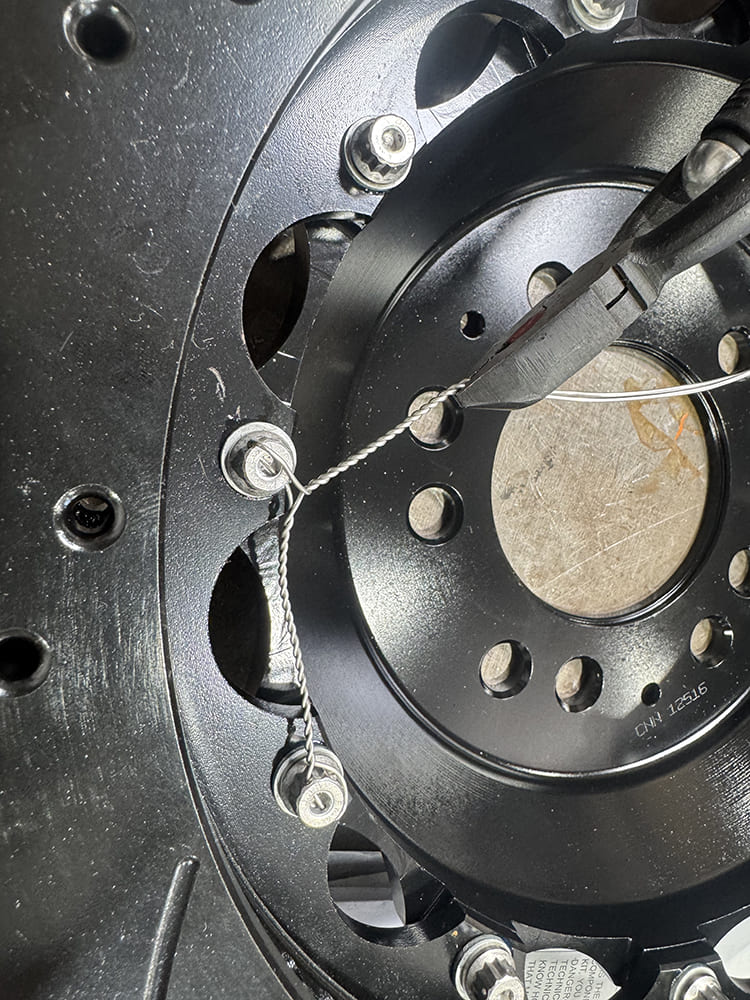
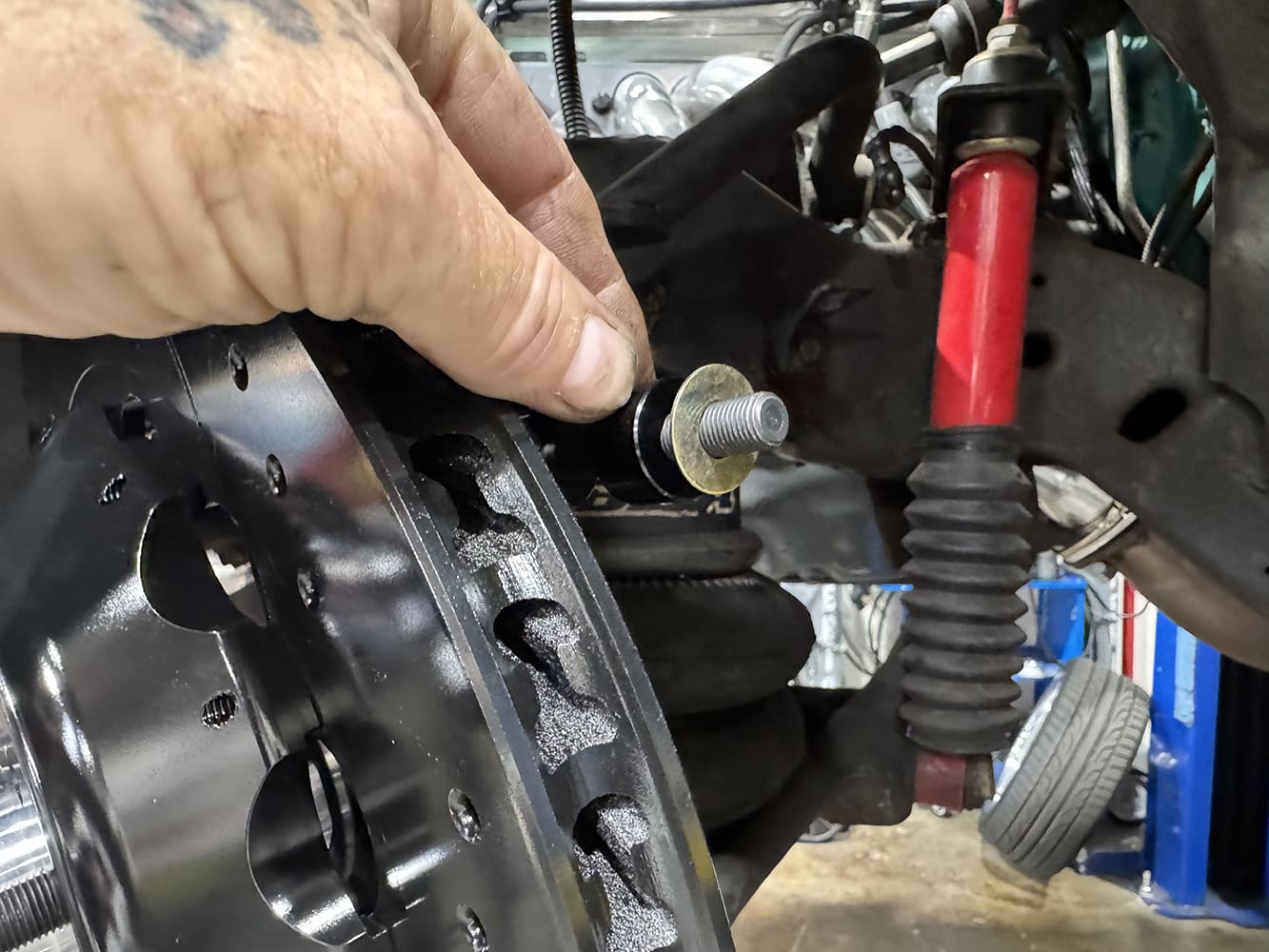
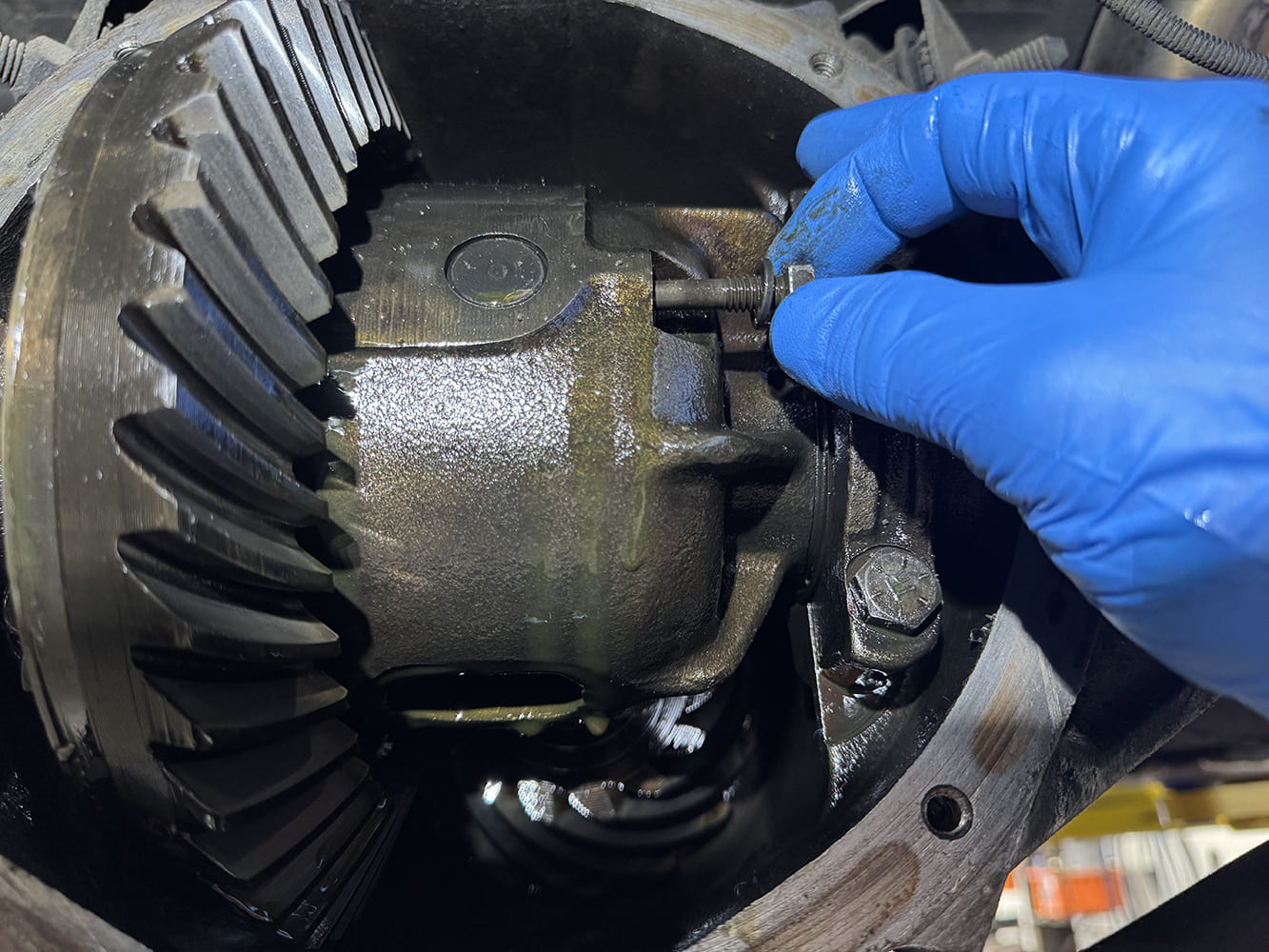
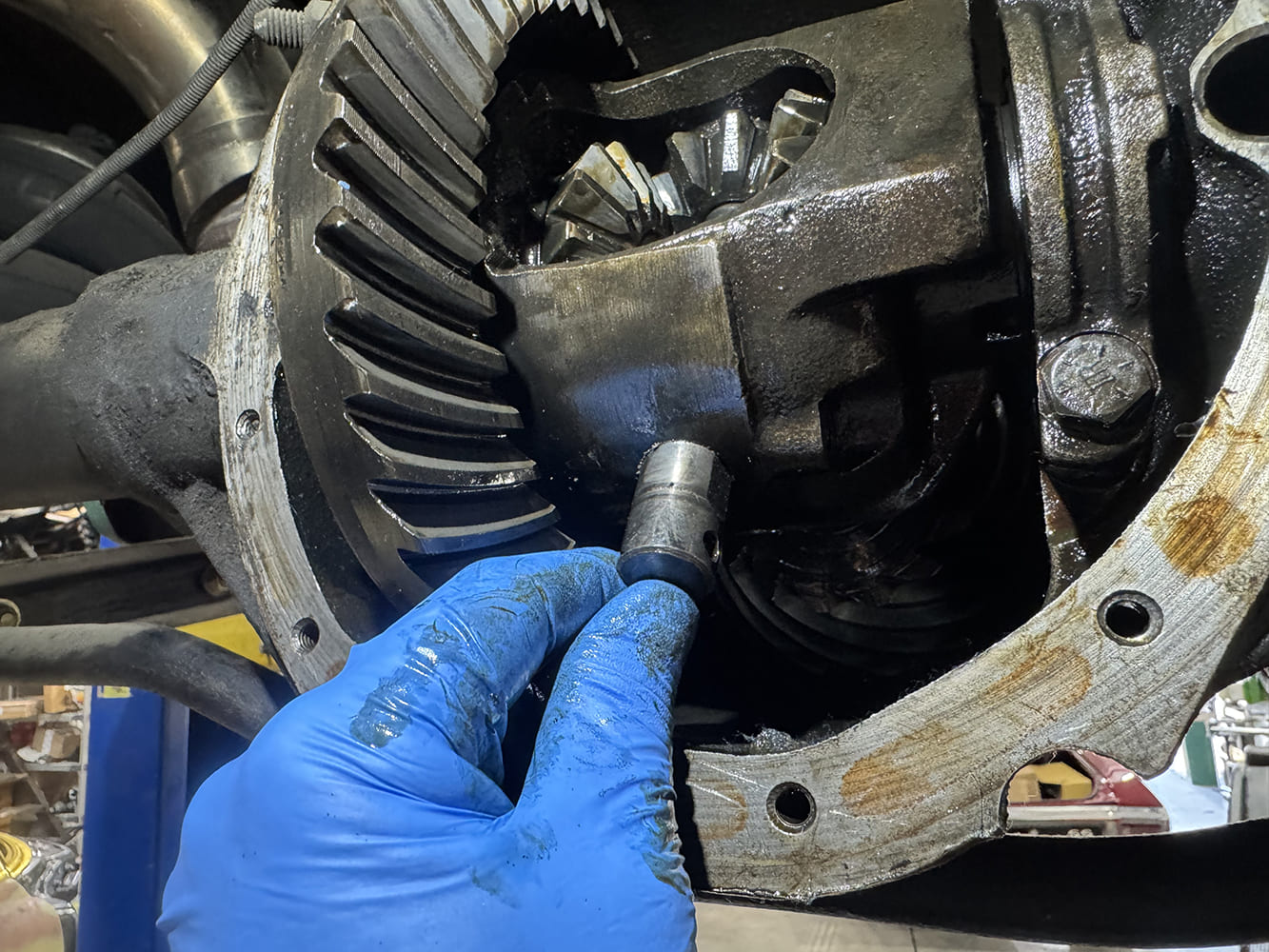
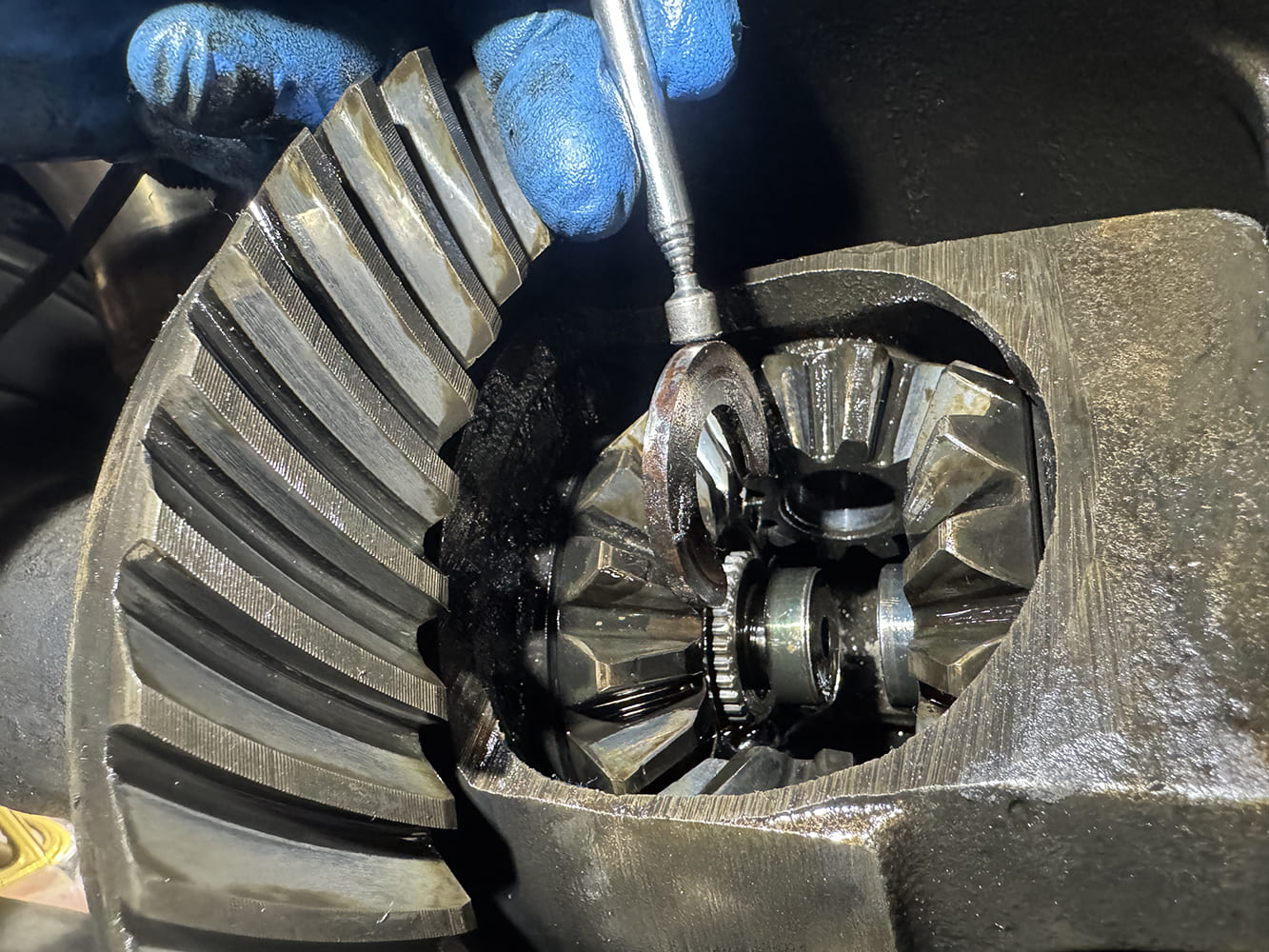
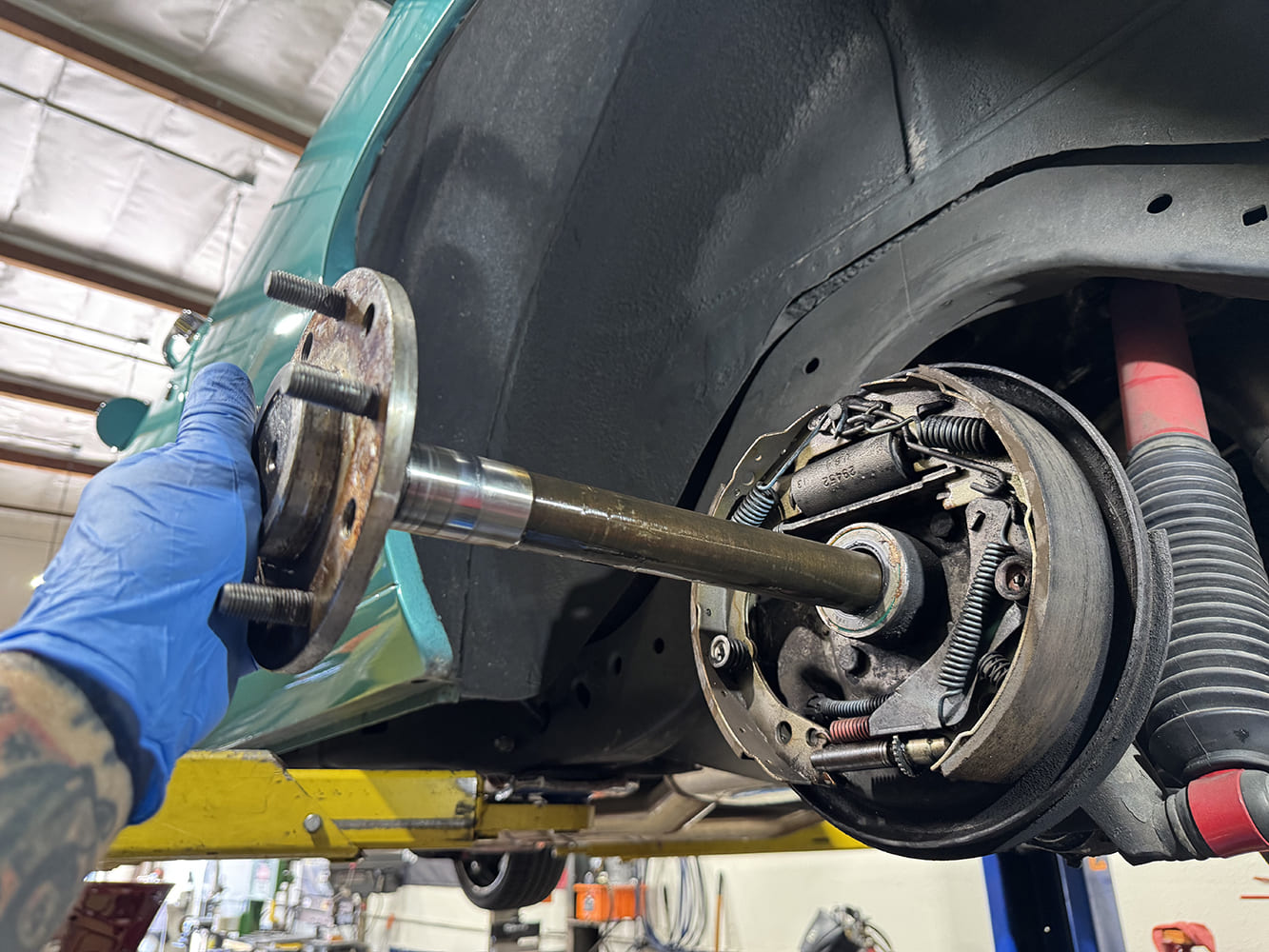
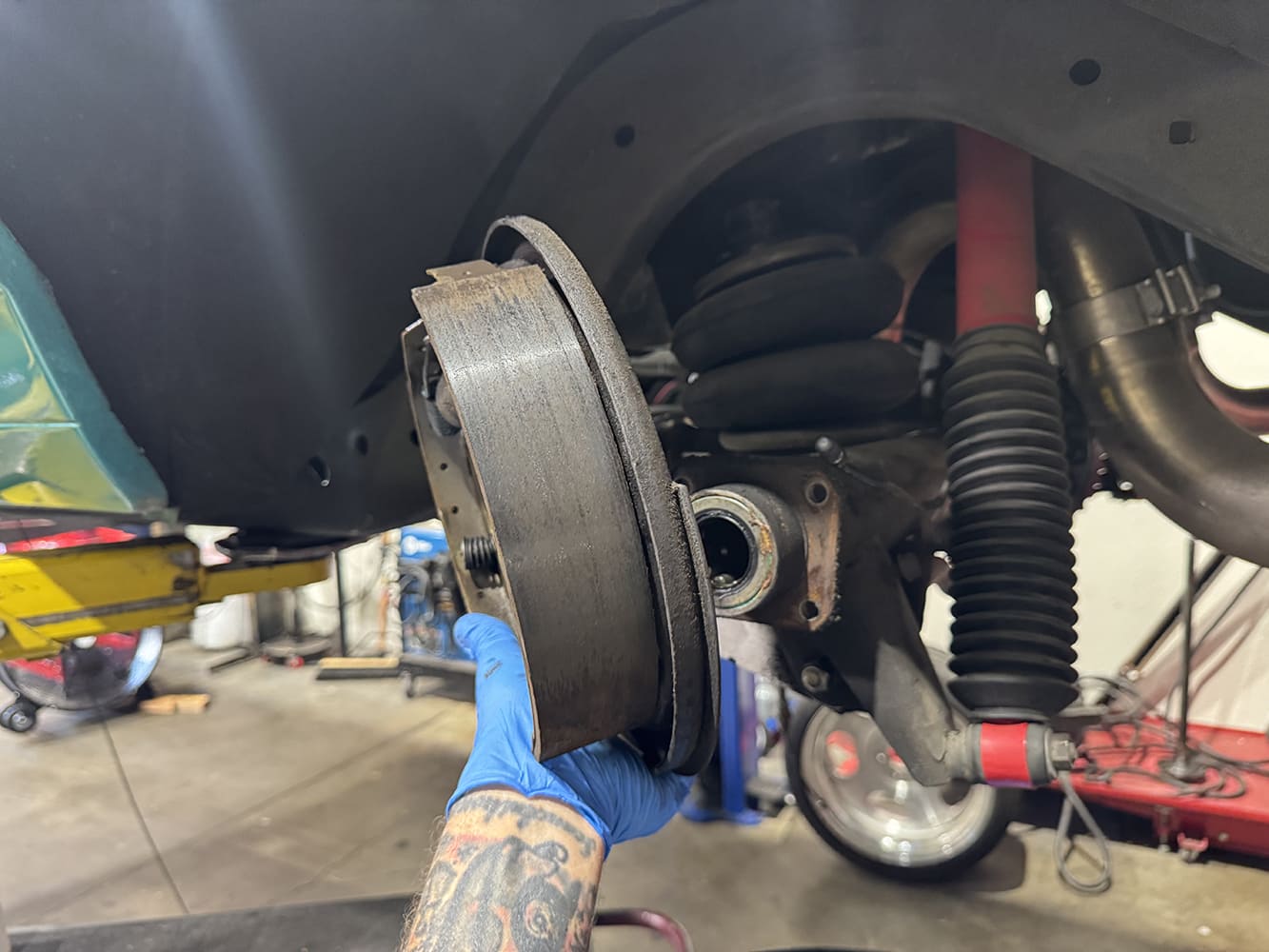
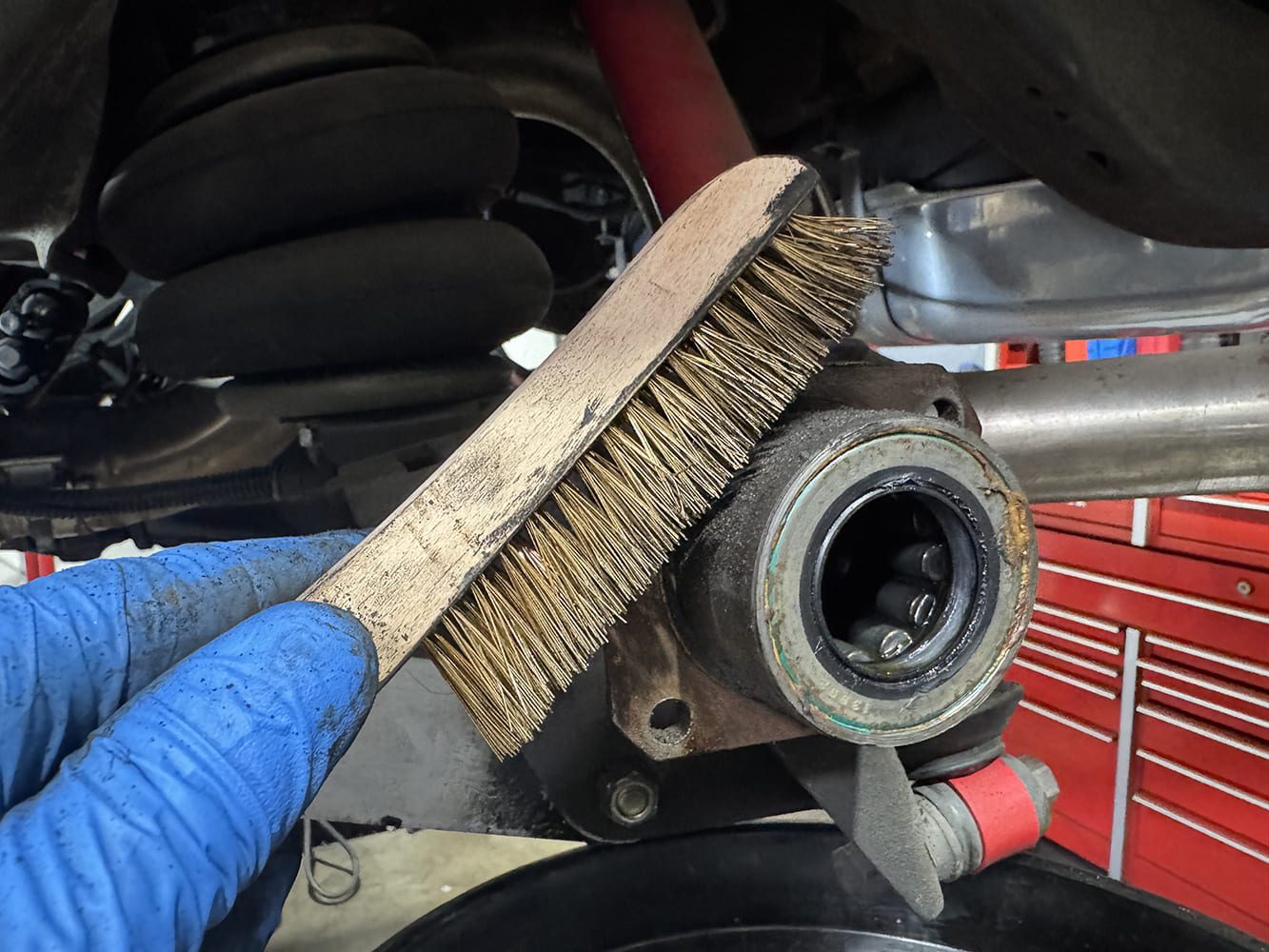
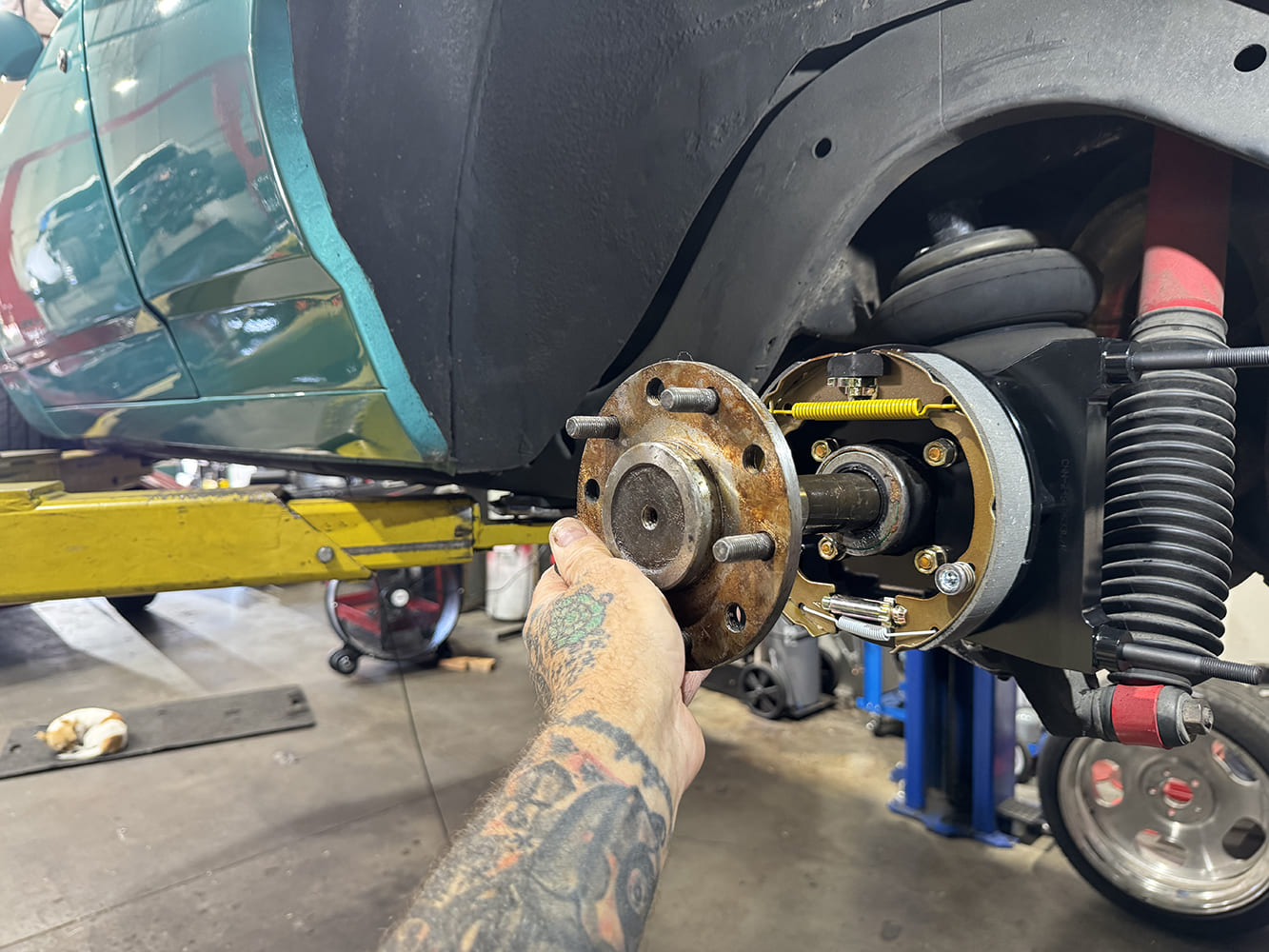
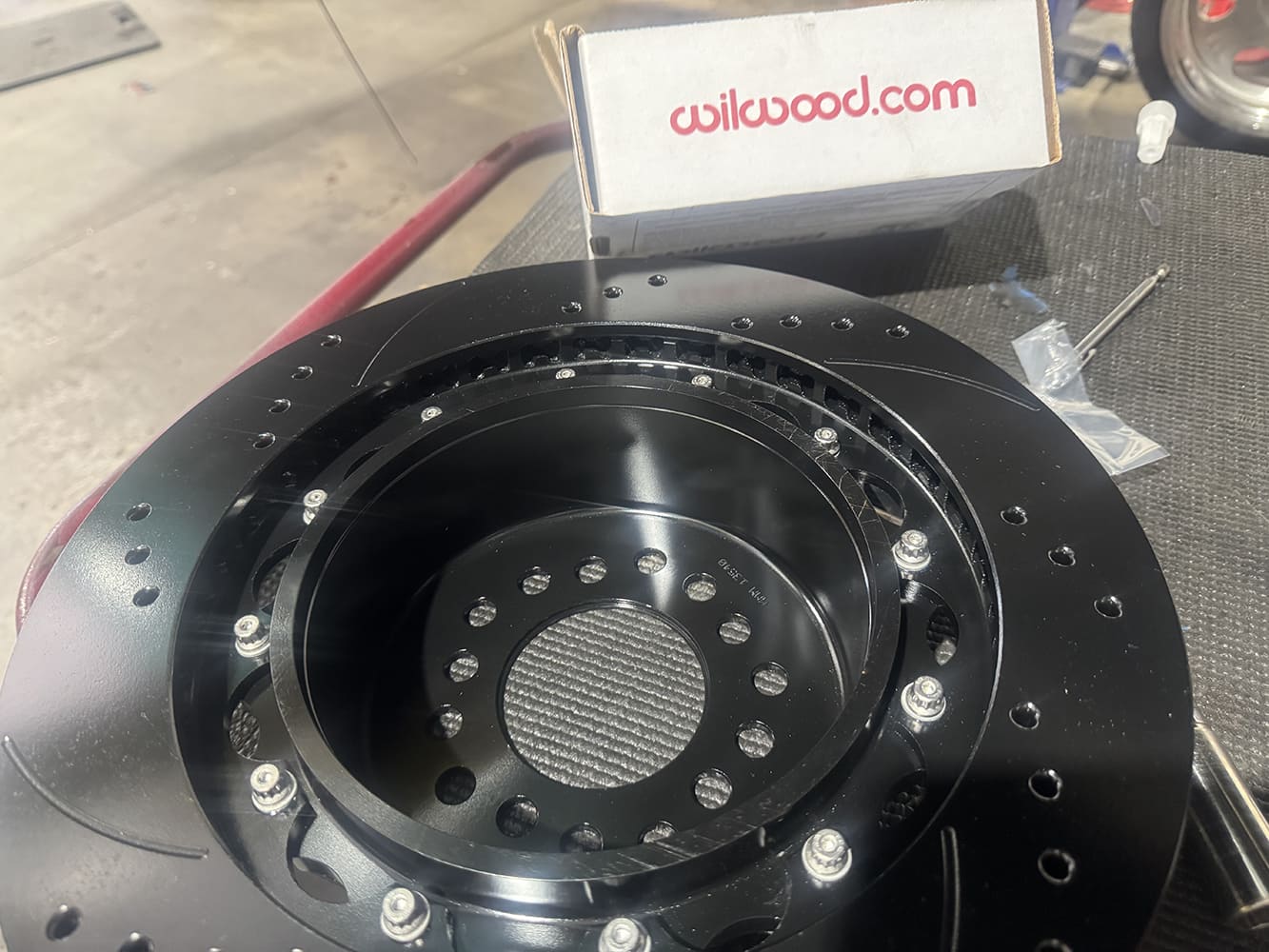
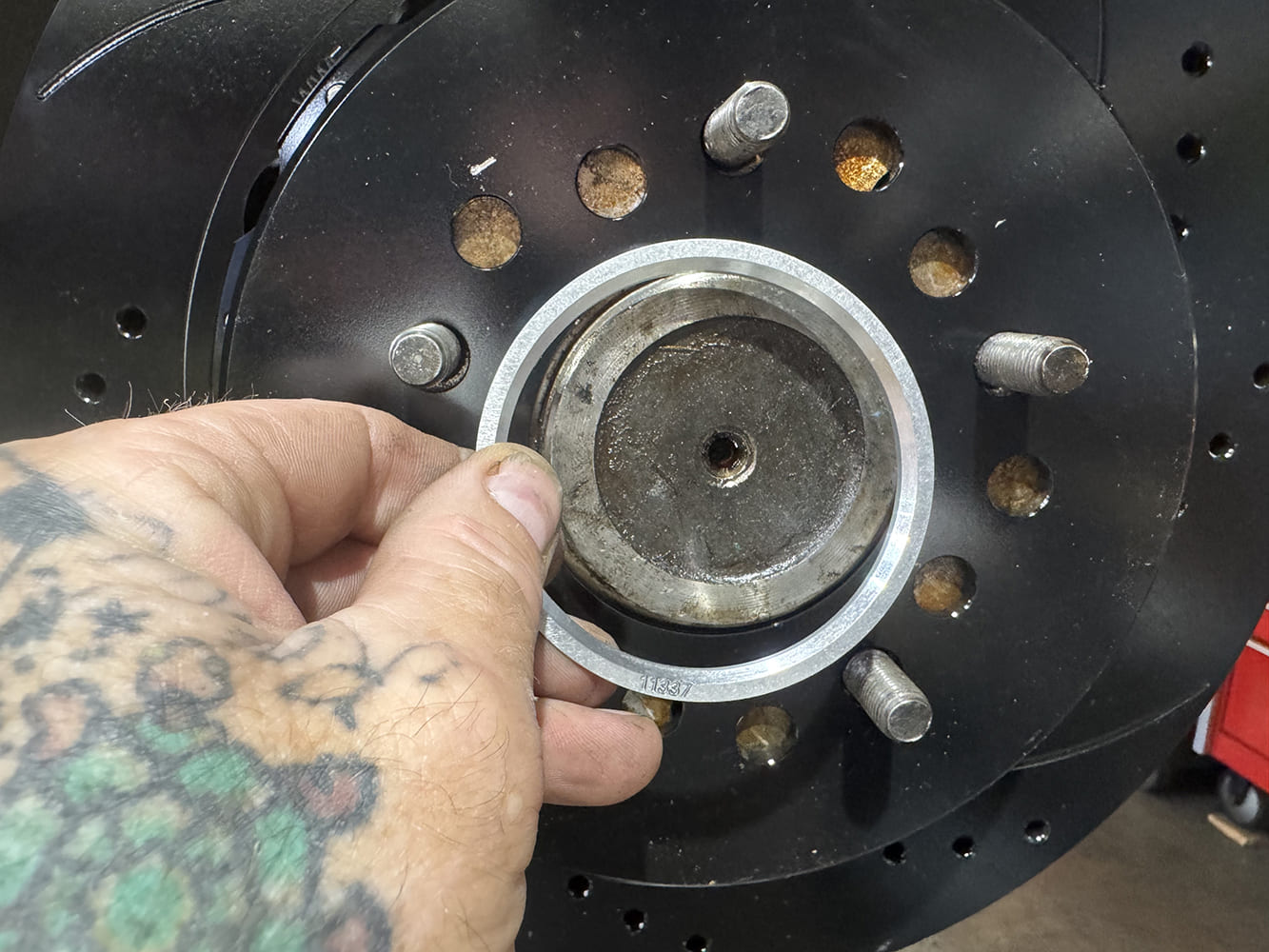
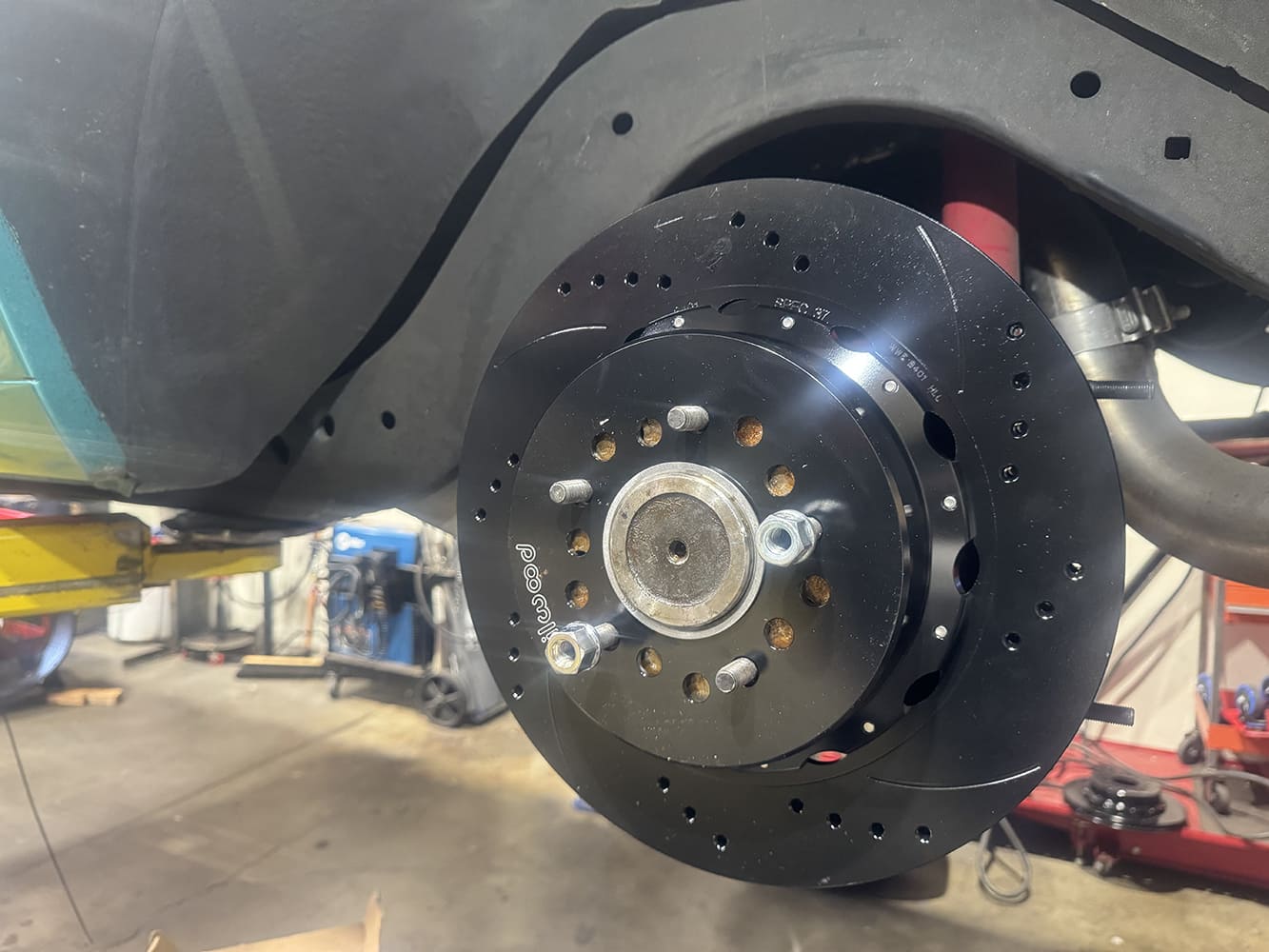
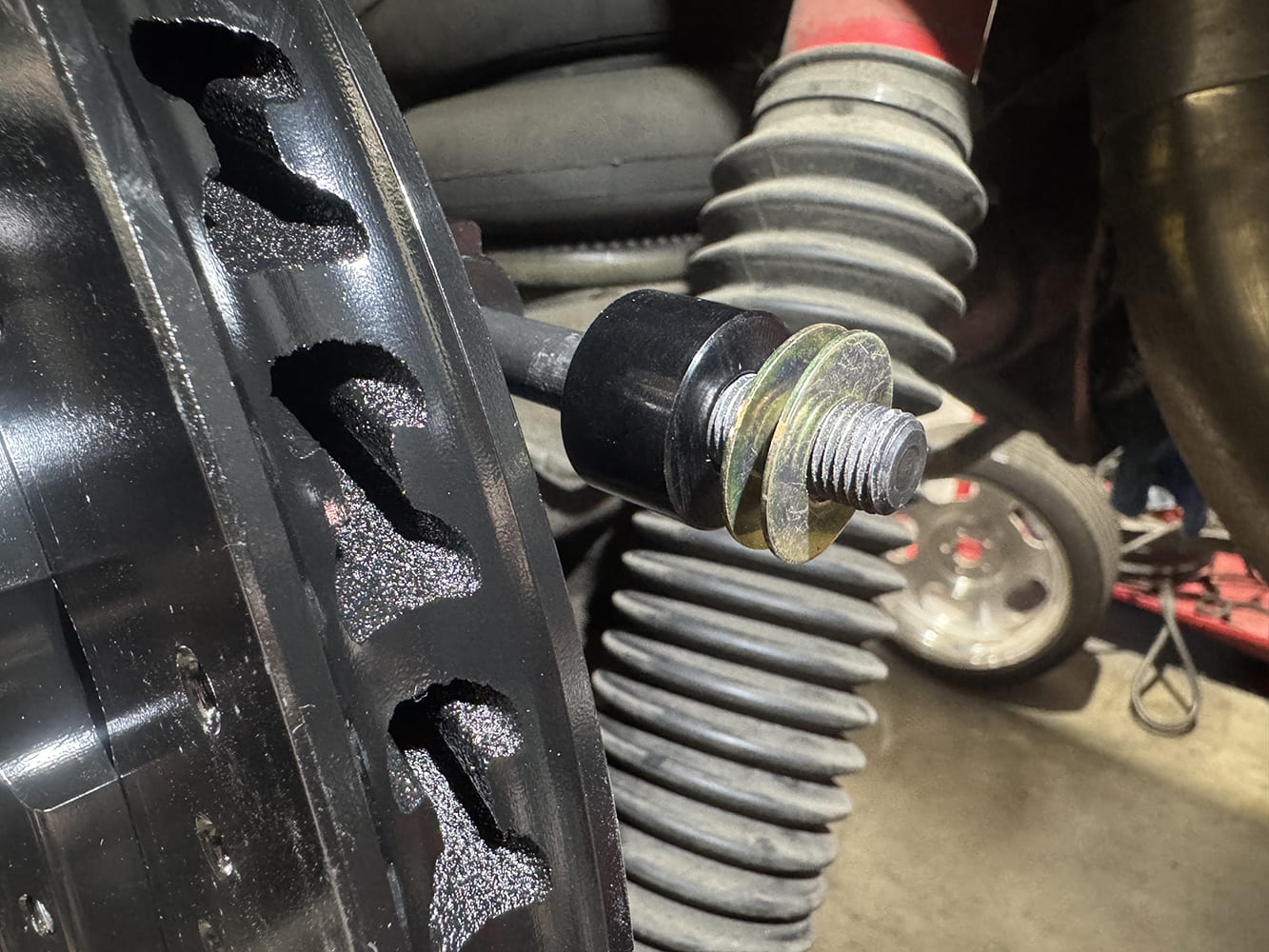
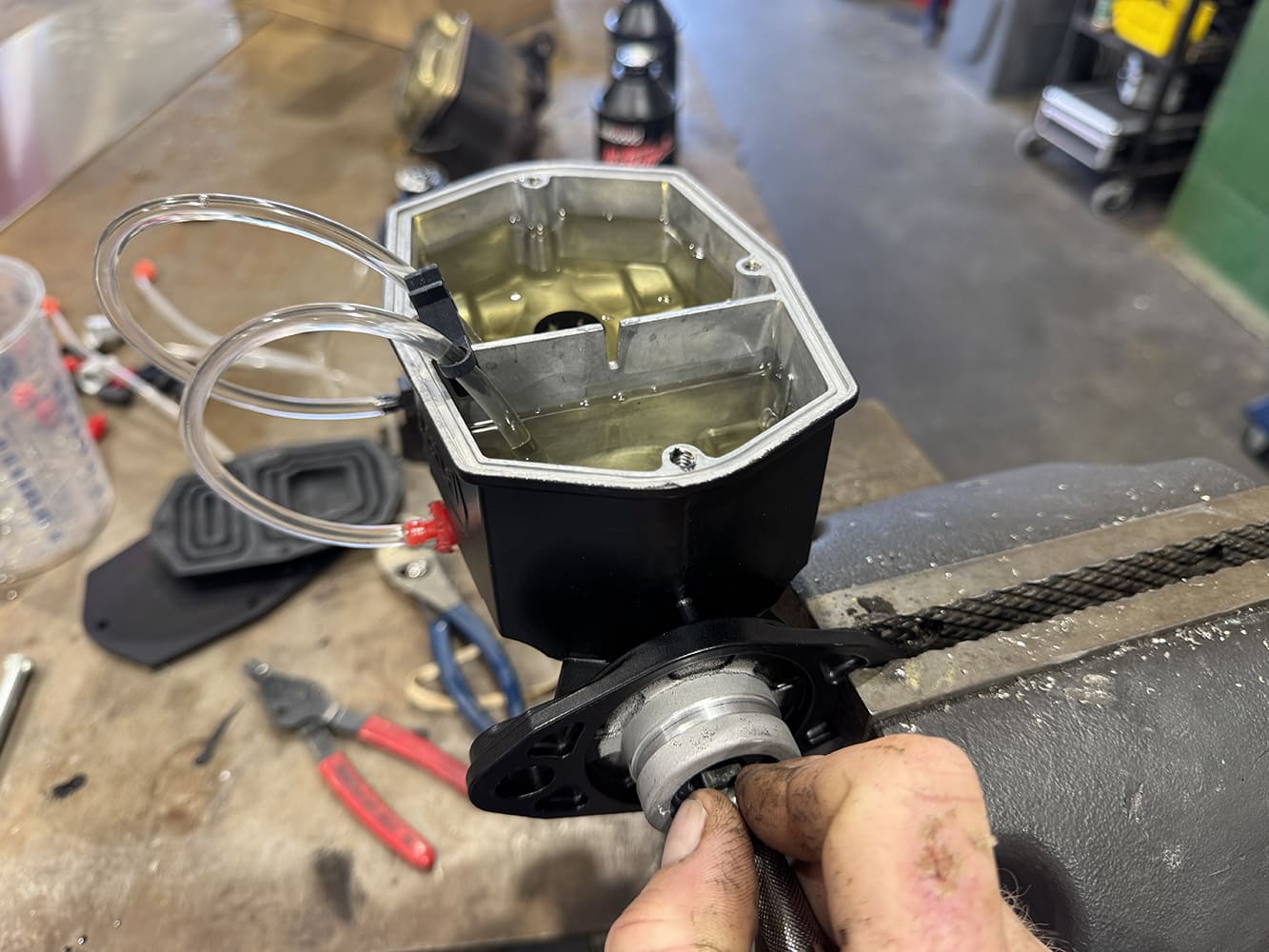
Rather than press-in studs, the Wilwood hubs use 12-point cap bolts that screw into the flange. They are installed with thread-locking compound and torqued to 77 ft-lb.To eliminate wheel fitment problems, these hubs come drilled and threaded for dual-bolt patterns—5-on-4.5 and 5-on-4.75 bolt circles.Here, the lug bolts have been installed in the larger Chevy 5-on-4.75 bolt circle pattern, and the unique threaded grease caps are in place.The rotors are secured to the hats with ¼-20x¾-inch 12-point bolts. They are installed with locking compound applied and torqued to 155 in-lb.In addition to the thread locking compound, the bolts holding the two-piece rotors together are safety-wired.Wilwood provides precision spacers that go between the radial caliper mounting bracket and the spindle to center the caliper on the rotor side to side. Shims are also used on the mounting studs to locate the caliper radially on the friction surface.With the rotors installed on the hubs, the calipers are put in place on the mounting studs and the alignment is checked. Shims are then added or removed as needed.Satisfied with the caliper’s location relative to the rotor, the calipers are secured with the supplied hardware. Note that differential piston bore calipers cannot be used interchangeably between sides. There is a left-hand caliper and a right-hand caliper.Wilwood offers 28 different caliper colors with five different logo colors and their standard laser-engraved logo. Ross chose Chicagoland gray calipers with white logos.To install the new rear discs the stock drum brakes have to be removed. That requires removing the axles. Here, Scudellari removes the threaded pin that retains the spider gears’ shaft.Typical of GM 10- and 12-bolt rear axles, once the retaining pin is removed the shaft slides out of the gear case (the El Camino came with a 12-bolt).After removing the spider gears’ shaft, the axles can be pushed toward the center of the housing and the C-clips are removed.Once the C-clips are removed, the axles are free to slide out of the housing. This is a good time to check the axle bearings and install new grease seals.After disconnecting the brake lines and the parking brake cables, the factory drum brake assemblies are removed.Scudellari used grease remover and a wire brush to clean the axle housing to ensure the new backing plat assemblies would seat flat against the mounting flanges.The internal expanding parking brake assembly is extremely effective as it supplies substantial holding power. For this application, Wilwood offers a generic-style parking brake cable kit (PN 330-9371).As with the front brackets, the rear radial caliper mounts can be shimmed prior to installation. You can see the small shims here. This will properly center the caliper on the rotor.With the parking brake assembly installed, the axles are reinstalled along with the C-clips and spider gear shaft.The rear brake rotors are attached to the combination hat/parking brake drums the same way as the front assembly. The screws will receive locking compound and safety wire.This is Wilwood’s removable center register adapter. Due to variations in wheel stud final diameters, this method is more accurate for centering the rotor on the axle than using the studs alone.The drilled-and-slotted rotors are one-directional and must be mounted in a specific position relative to the rotor rotation. The slots and holes point in the direction of rotation. In this case, counterclockwise. There is also an arrow engraved in the rotor.Here’s another shot of caliper shims used on the mounting studs to properly locate the calipers relative to the rotors.Wilwood’s rear calipers use four equal-size pistons. As a result, they can be mounted on either side of the car. Note the two bleeders at the top and bottom of the caliper that makes that possible.Prior to installation, Scudellari bench bled the master cylinder. This makes bleeding the entire system much easier.Ross elected to retain the original GM brake booster. When using a vacuum booster, engines need to make at least 18 inches of vacuum at idle.Ross and his dad, David, are all smiles after returning from a ride in the rejuvenated El Camino.
We use cookies to ensure that we give you the best experience on our website. If you continue to use this site we will assume that you are happy with it.