1967 Pontiac Firebird Sits on a Roadster Shop Chassis
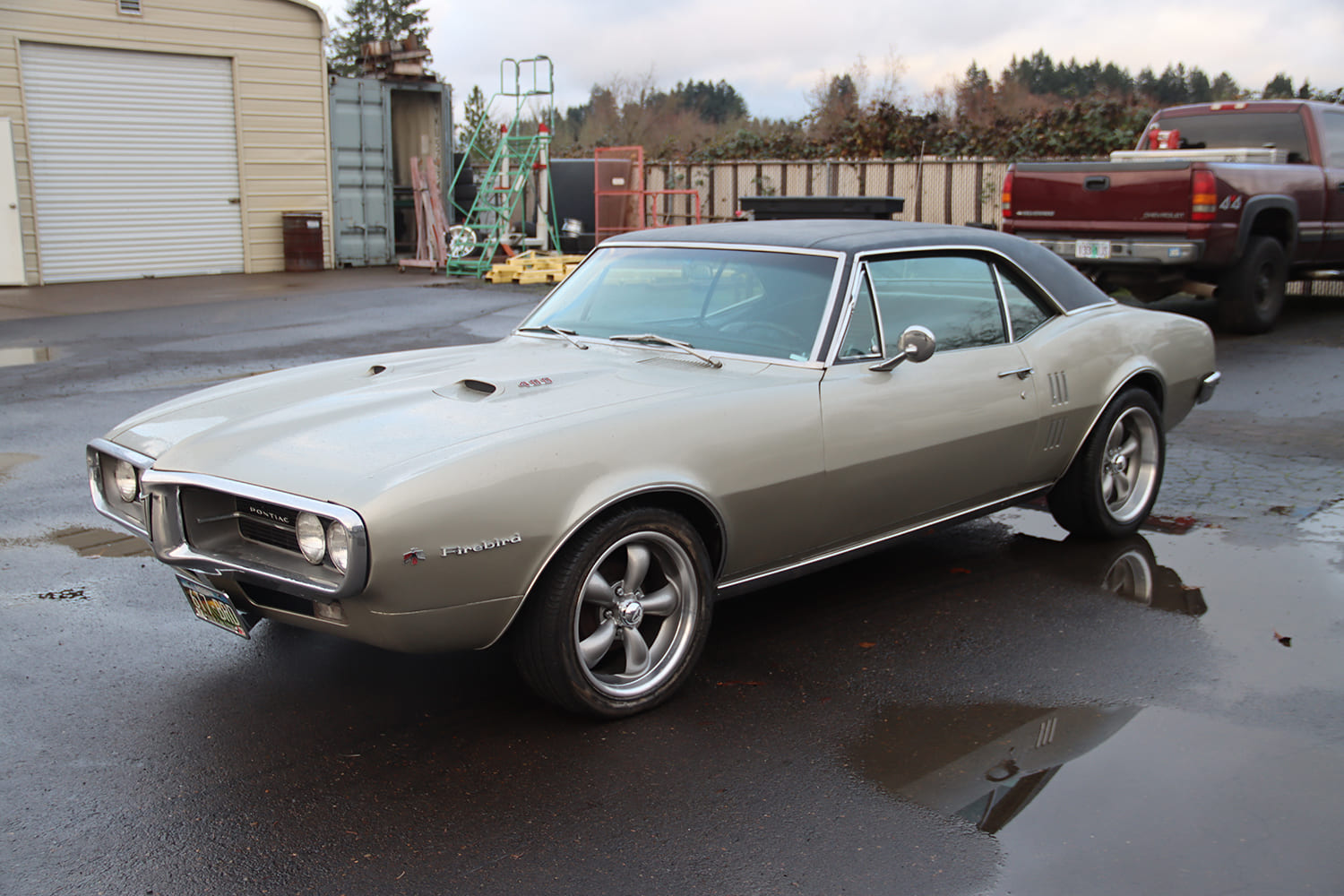
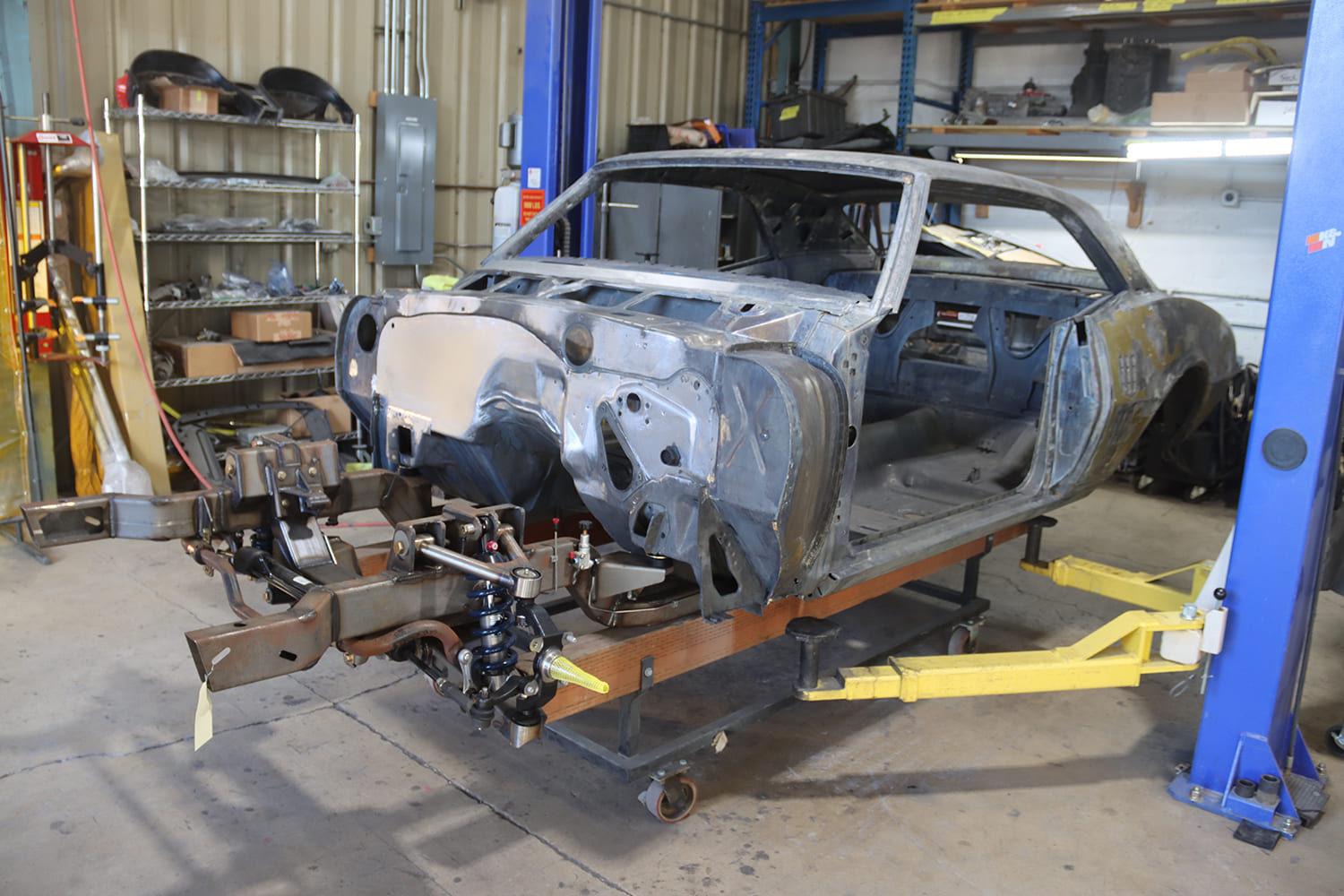
This pristine-looking 1967 Pontiac Firebird rolled up to MetalWorks Speed Shop's door to undergo a complete transformation, starting with a new Roadster Shop chassis.
When two heavy hitters in modern hot rodding combine forces to modify an iconic car, there’s no doubt that the outcome will be first-rate. Such is the case when MetalWorks Speed Shop and Roadster Shop’s combined talents focused on updating the chassis of a 1967 Pontiac Firebird.
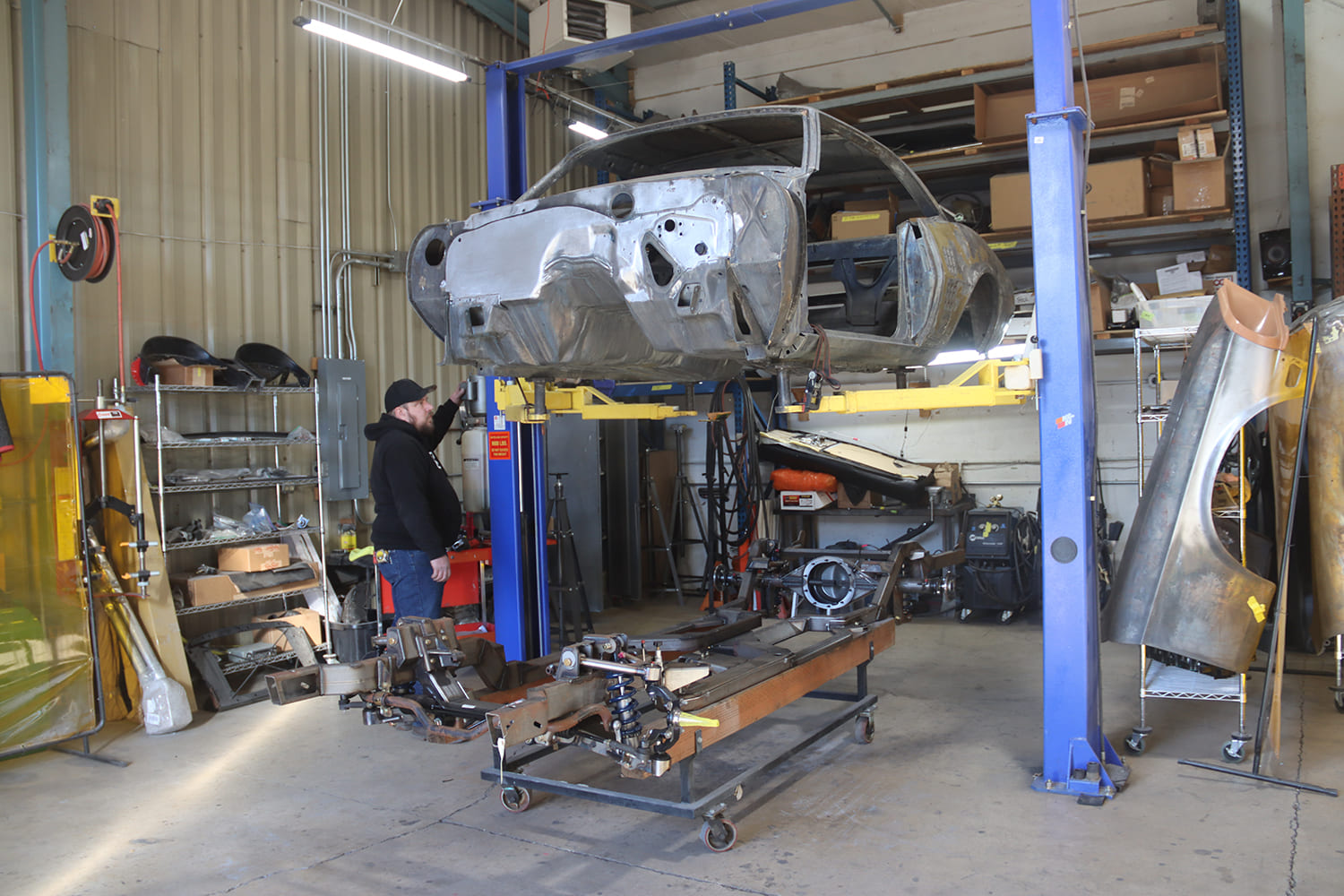
MetalWorks’ Dave Williams is preparing to drop the Firebird body onto the Roadster Shop chassis for a test-fit.
Pontiac introduced the Firebird in 1967, five months after Chevrolet debuted the Camaro. Both cars were built on the F-body platform, meaning they shared the same semi-unitized style of construction. They did not use a separate frame; rather, the front framerails attached to the body with rubber bushings, and the rear suspension mounted to supports built into the floor.
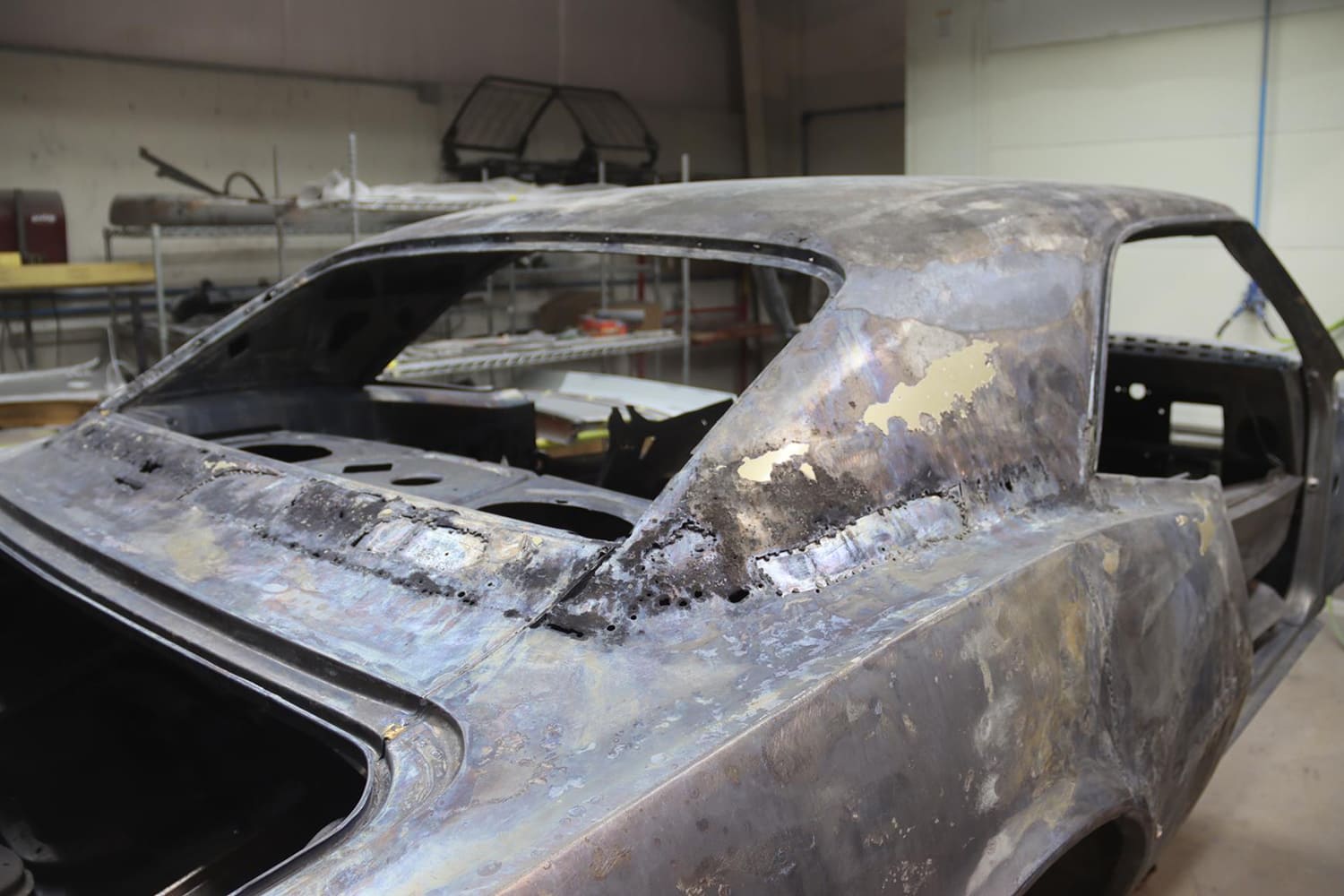
MetalWorks routinely employs chemical stripping on the sheetmetal of ground-up rebuilds. This Firebird had some well-hidden issues beneath the vinyl top that were uncovered, but more on that later.
From a marketing perspective, the Firebird was positioned as more upscale than the Camaro, showcasing a more luxurious interior and several extra standard features. The distinction was also apparent in their base six-cylinder engines. The Camaro featured the standard Chevy 230ci straight-six while the Firebird boasted a unique single-overhead cam six-cylinder engine with the same displacement. However, in terms of V-8 options, the Camaro outperformed the Firebird. Pontiac offered a 335hp 400-cid V-8, whereas the Camaro could be outfitted with a 375hp 396 (and of course, who could forget the Camaro Z28 302?).
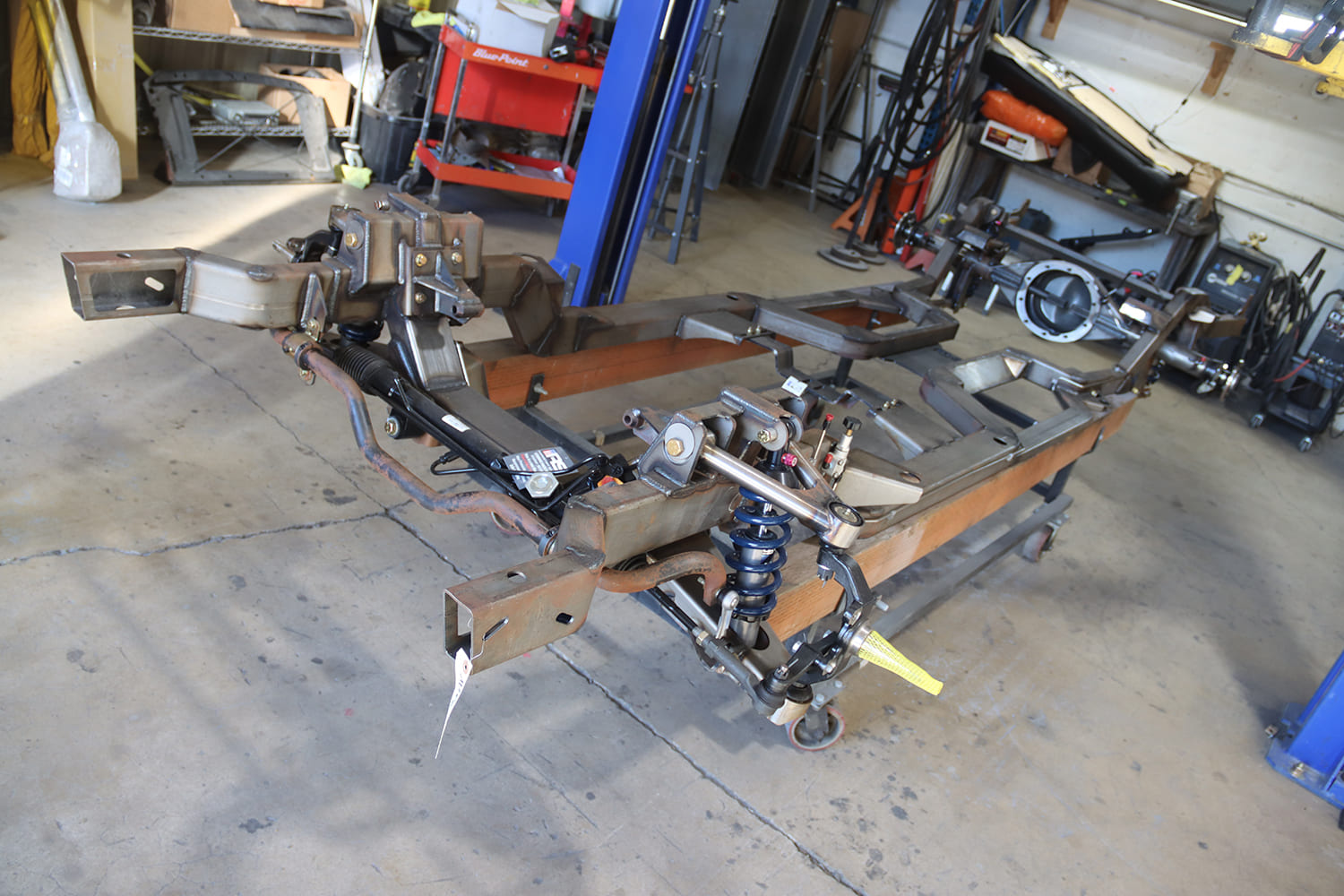
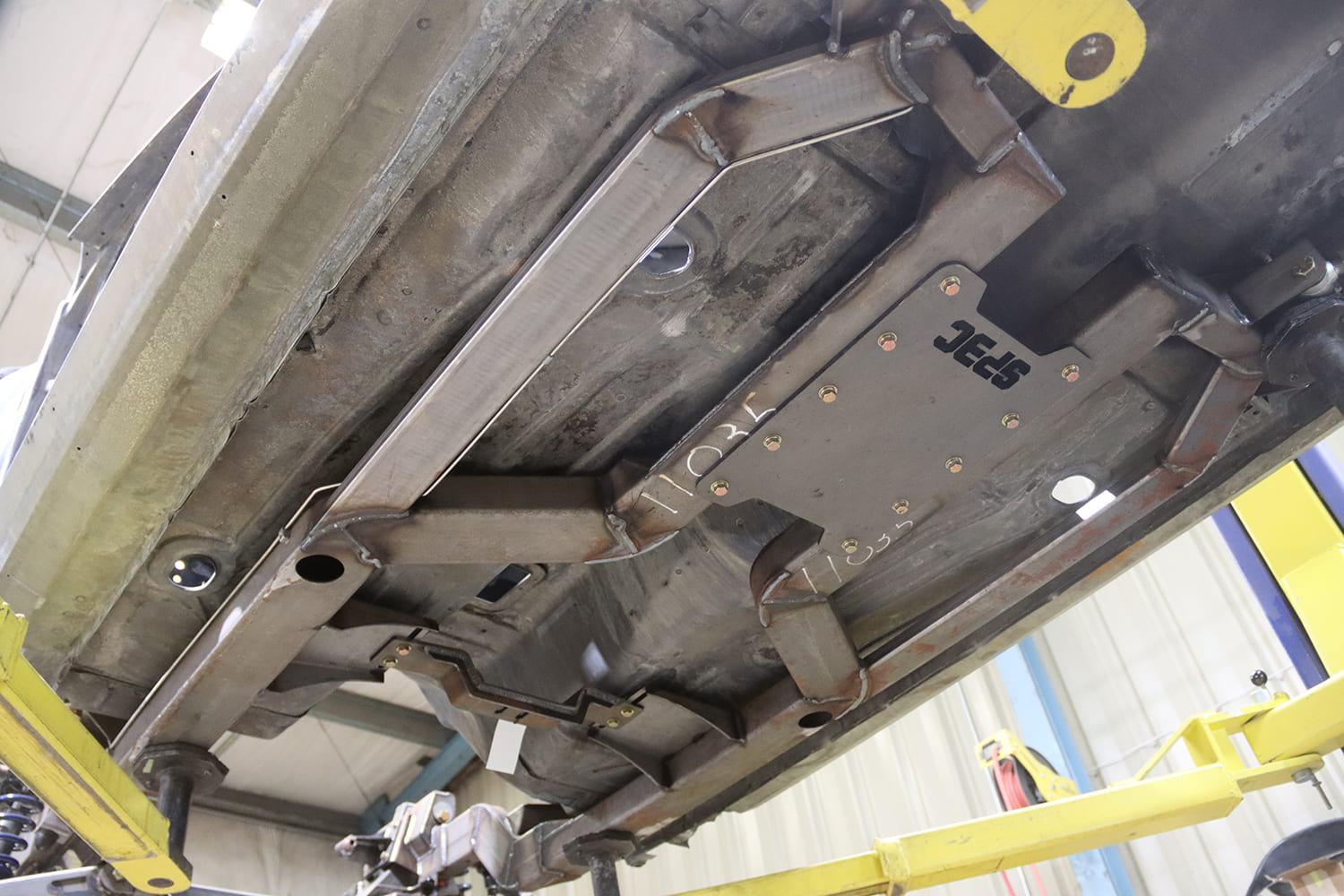
Roadster Shop’s SPEC series chassis for 1967-69 Camaro and Firebird applications features their proprietary independent front suspension system. Engine mounts are available for SBC, BBC, or optional LS and LT.
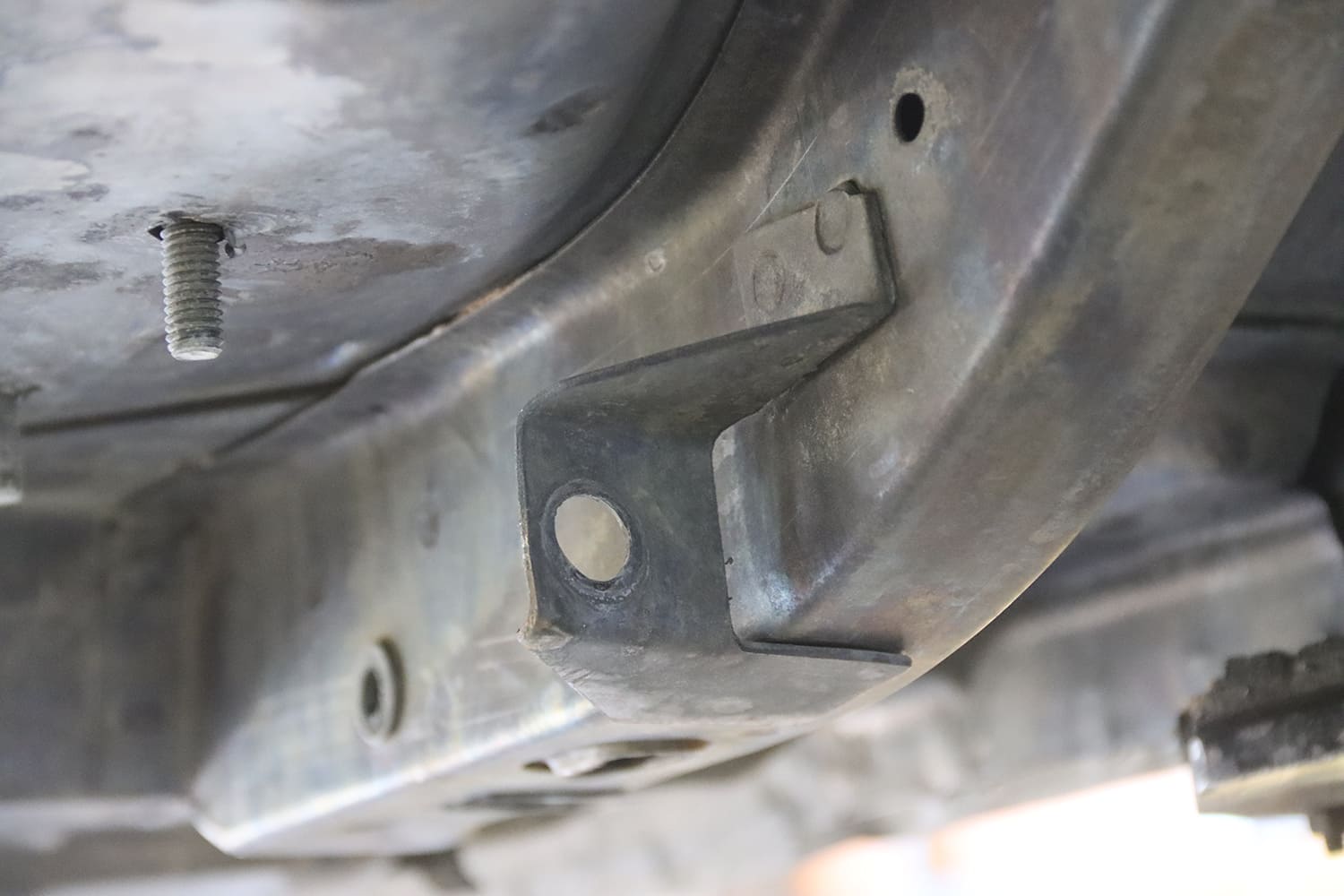
Over the years, Firebirds and Camaros have undergone a wide range of engine swaps and chassis upgrades, including retrofitting a full frame, which often required significant modifications to the floor. However, thanks to high-resolution 3-D scanning, Roadster Shop was able to create an exact model of the original Camaro/Firebird floorpan and design their entirely new SPEC series chassis to fit these cars without modifications (other than removing the parking brake cable brackets).
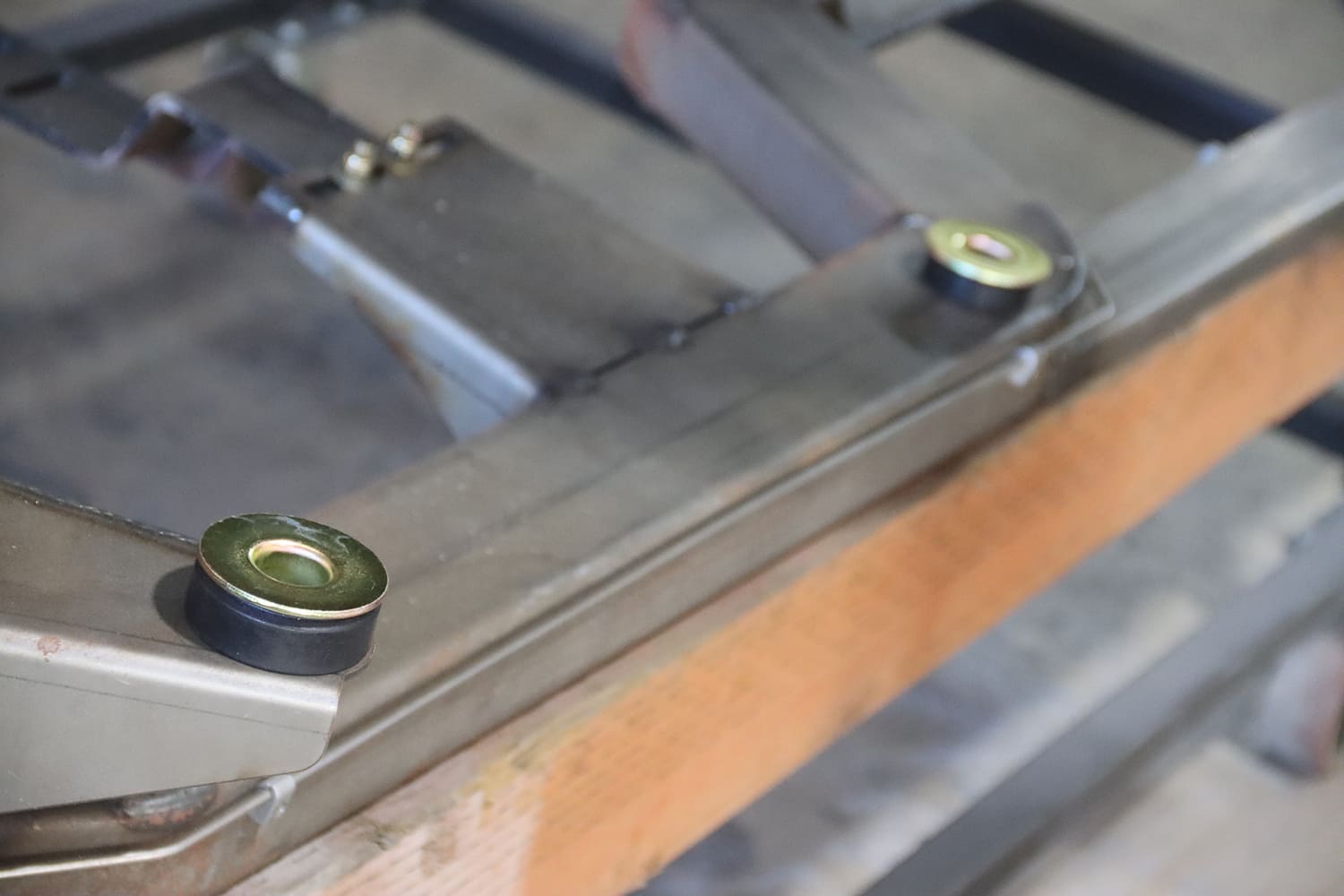
Roadster Shop has designed this Camaro/Firebird chassis to use all the stock mounting points, which ensures a truly bolt-on installation.
Jon Mannila and the team at MetalWorks Speed Shop are known for building beautifully executed and finely detailed vehicles. They are also recognized for crafting cars and trucks that drive as if they were stolen. Mannila has found that the best way to ensure these qualities in his shop’s creations is to use quality components that are compatible and to pay attention to the details, no matter how small.
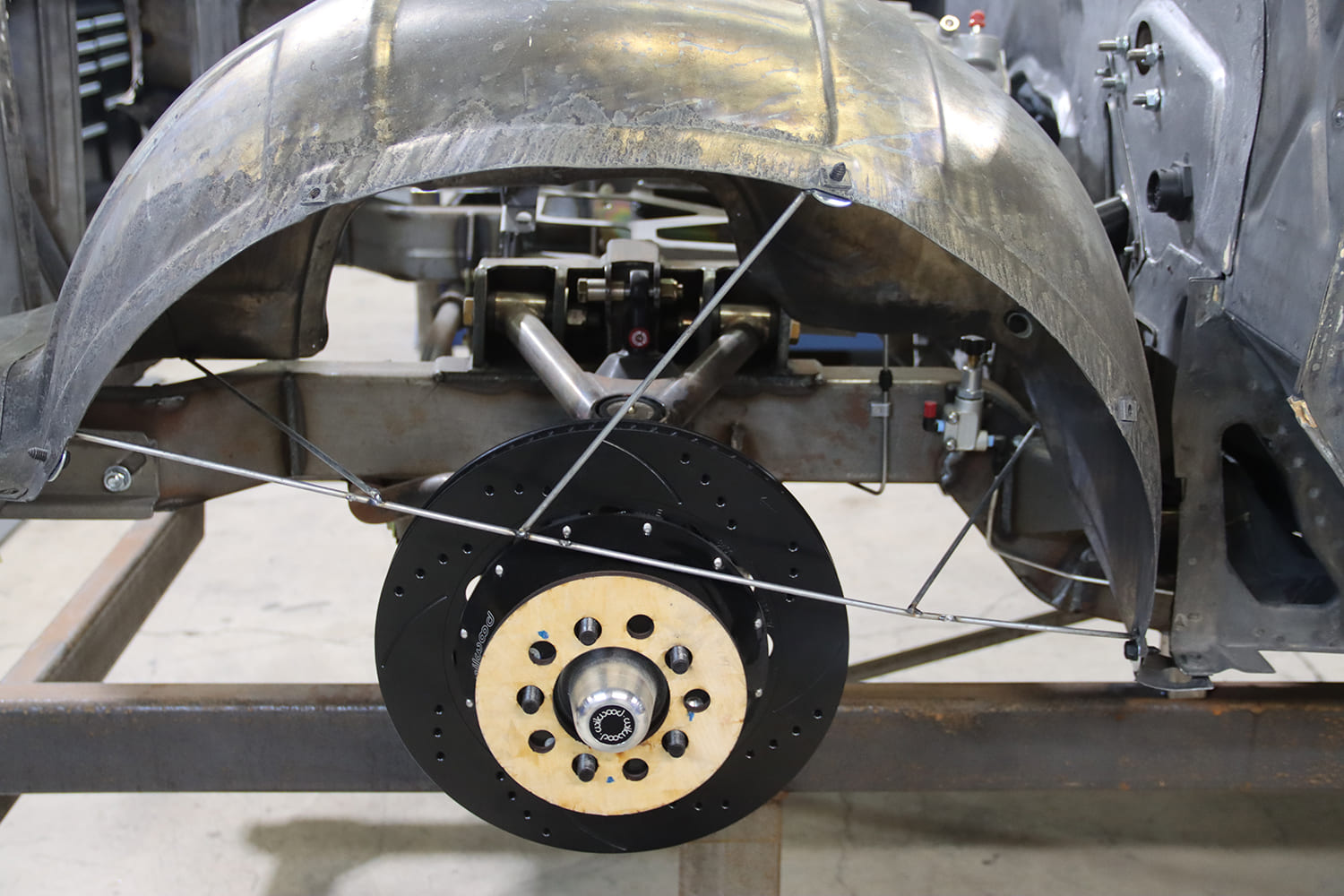
Up front, Roadster Shop’s SPEC chassis features Fox fixed valve coilovers, power rack-and-pinion steering, and Wilwood Pro spindles.
When MetalWorks began transforming this first-series Firebird from stock to Pro Street, they installed a Roadster Shop chassis. Then they proceeded with their usual ground-up processes, leaving nothing overlooked. After chemically stripping the body, it was placed onto the new chassis, and the metalwork makeover began with reshaping the front inner fender panels. This level of attention is rarely given to such parts, and this is just the beginning of the Firebird’s fresh start. MR
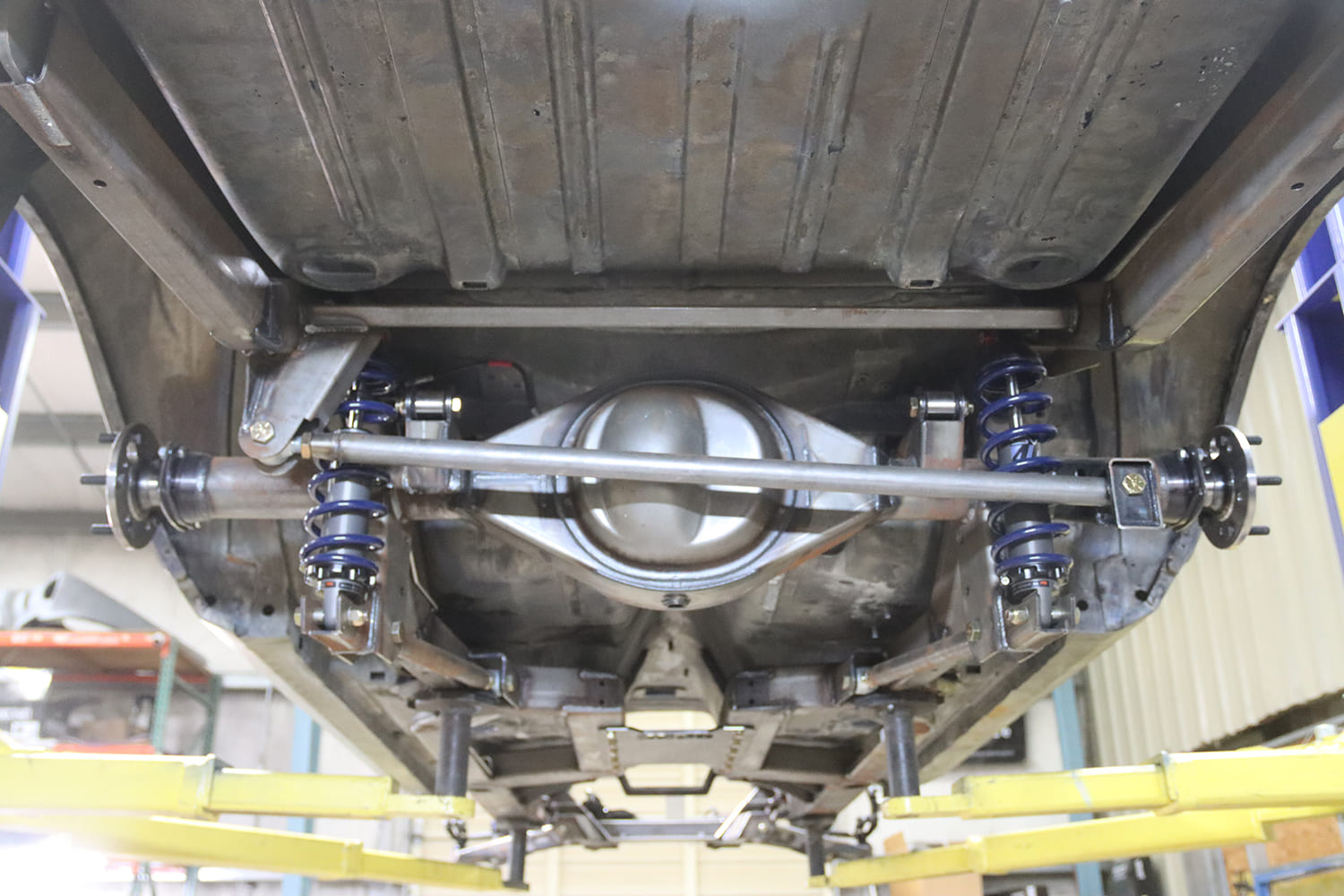
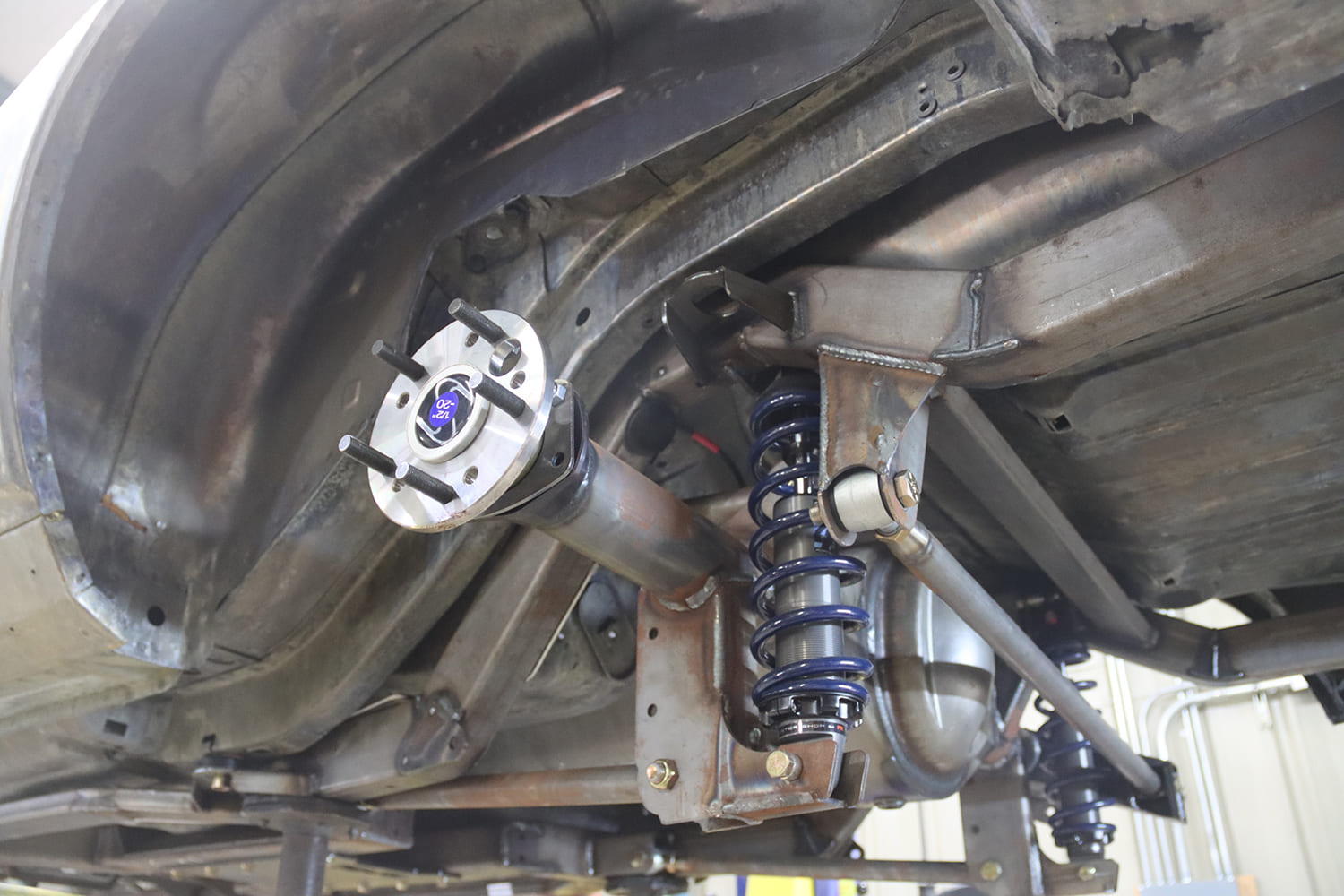
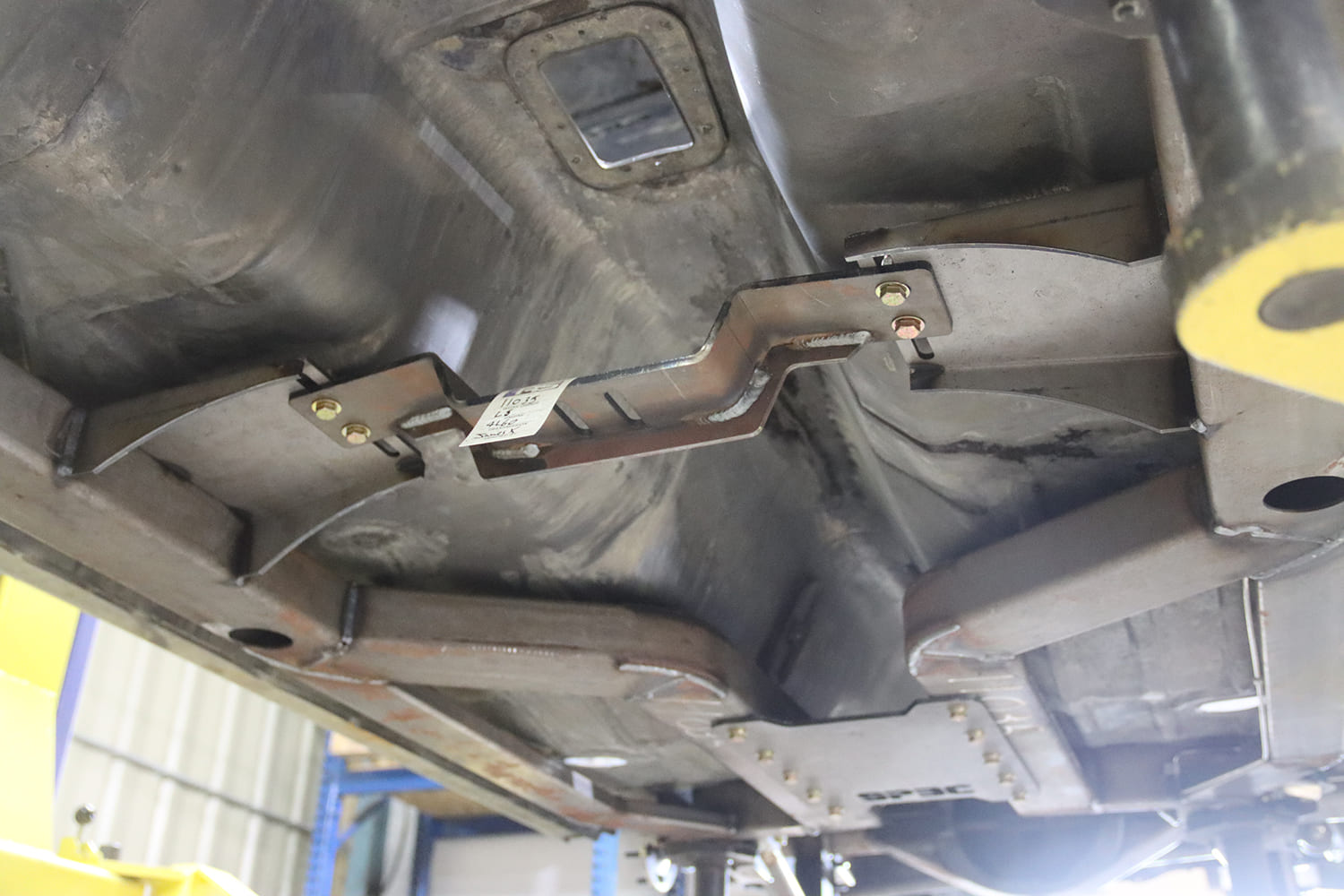
Aside from removing the factory emergency brake cable tabs from the floorpan, no additional modifications were needed to drop the body onto the new chassis and secure it in place.The laser-cut framerails are contoured to perfectly fit Camaro/Firebird floorpans. Crossmembers and chassis braces are tucked up for ground clearance, allowing for a 3-inch exhaust.The rear suspension features a parallel four-bar design, a Panhard rod, and Fox fixed-valve coilovers as standard equipment.
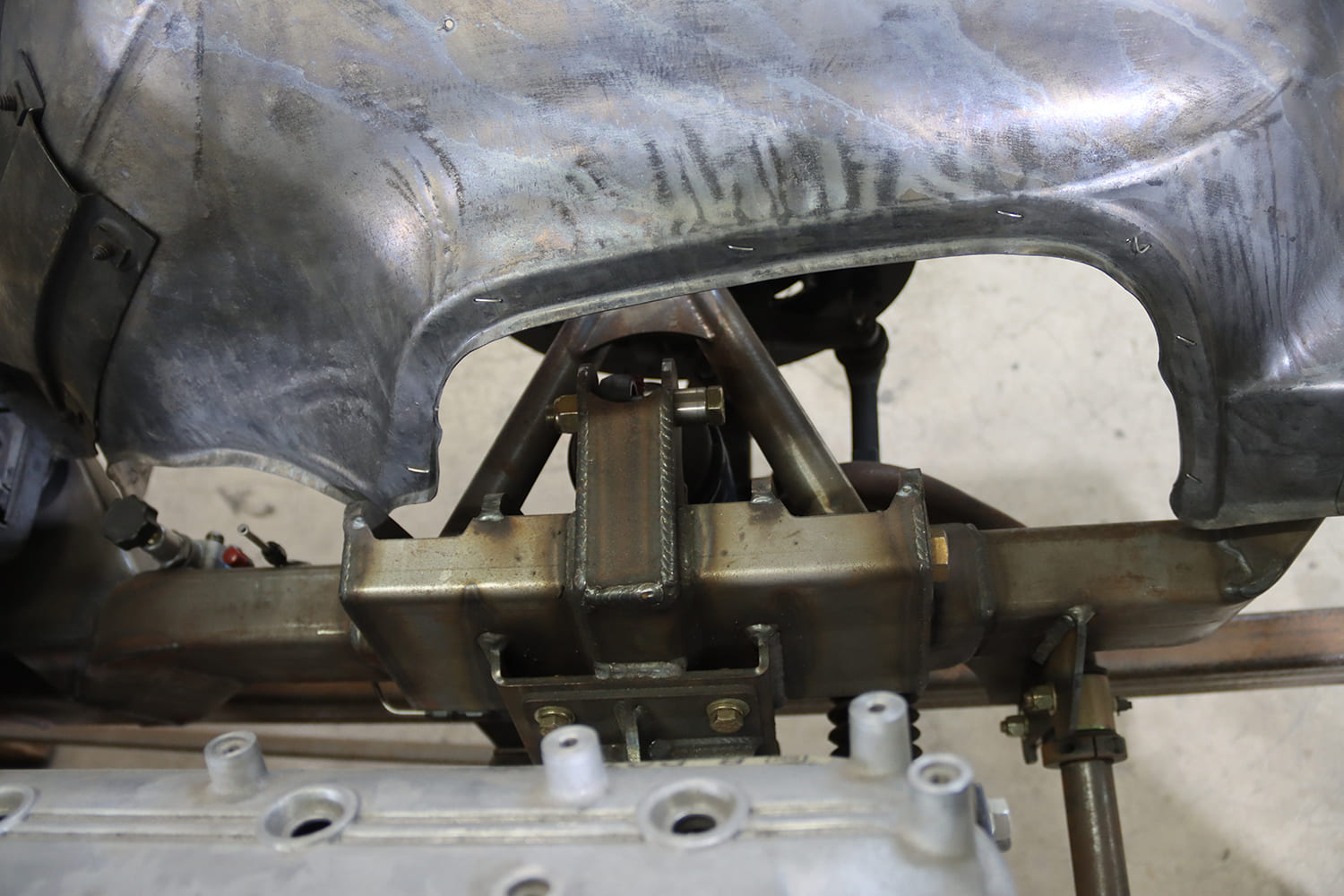
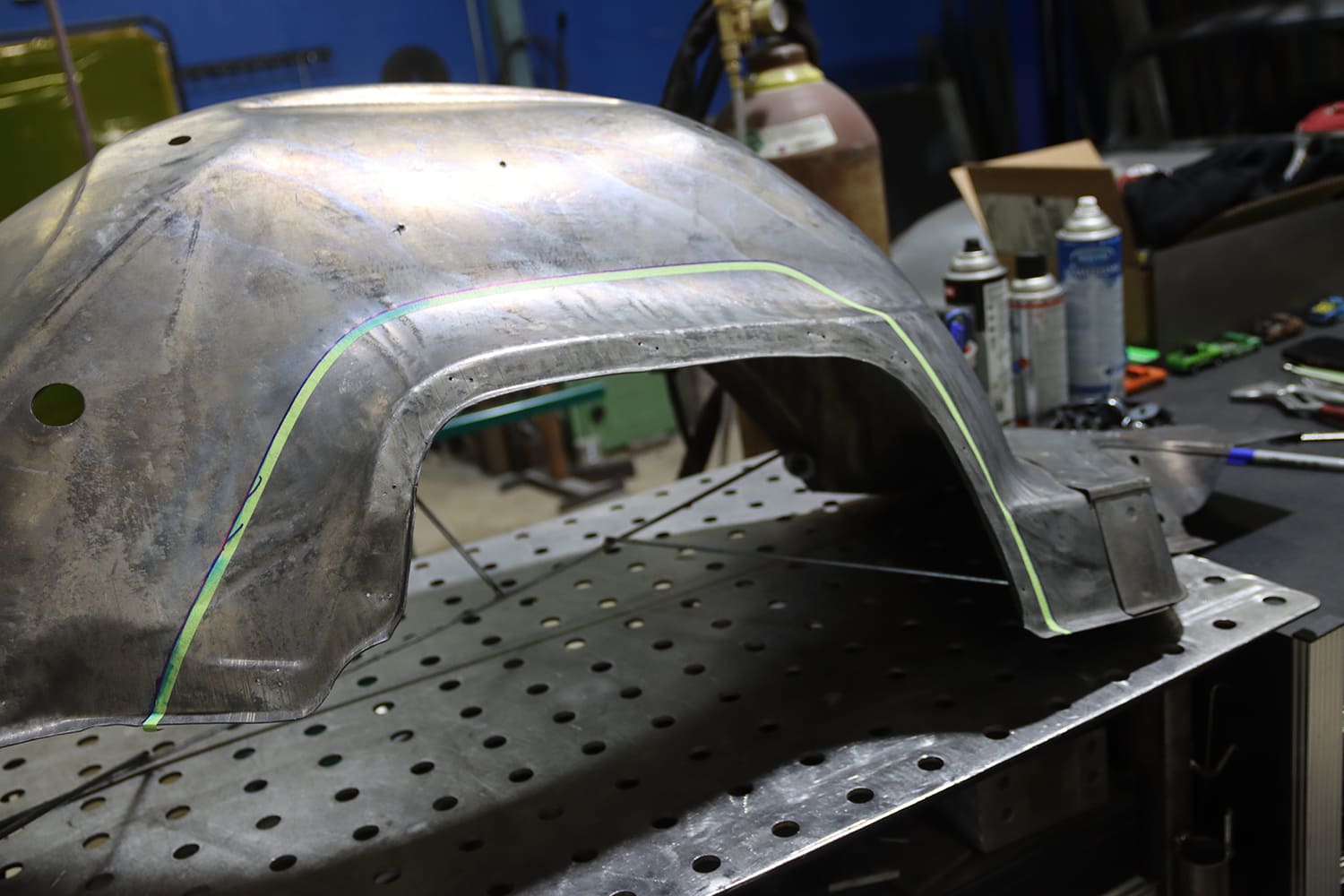
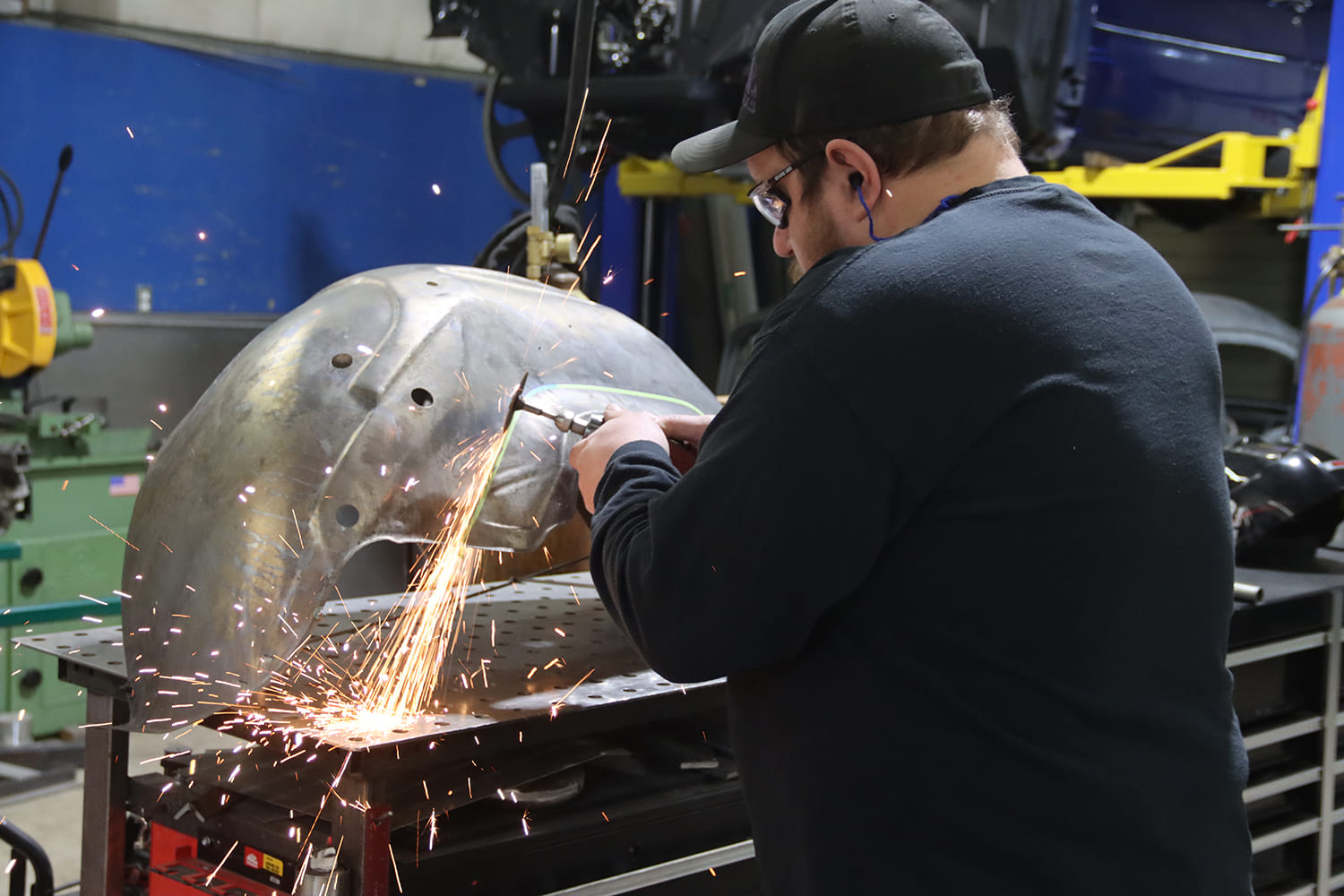
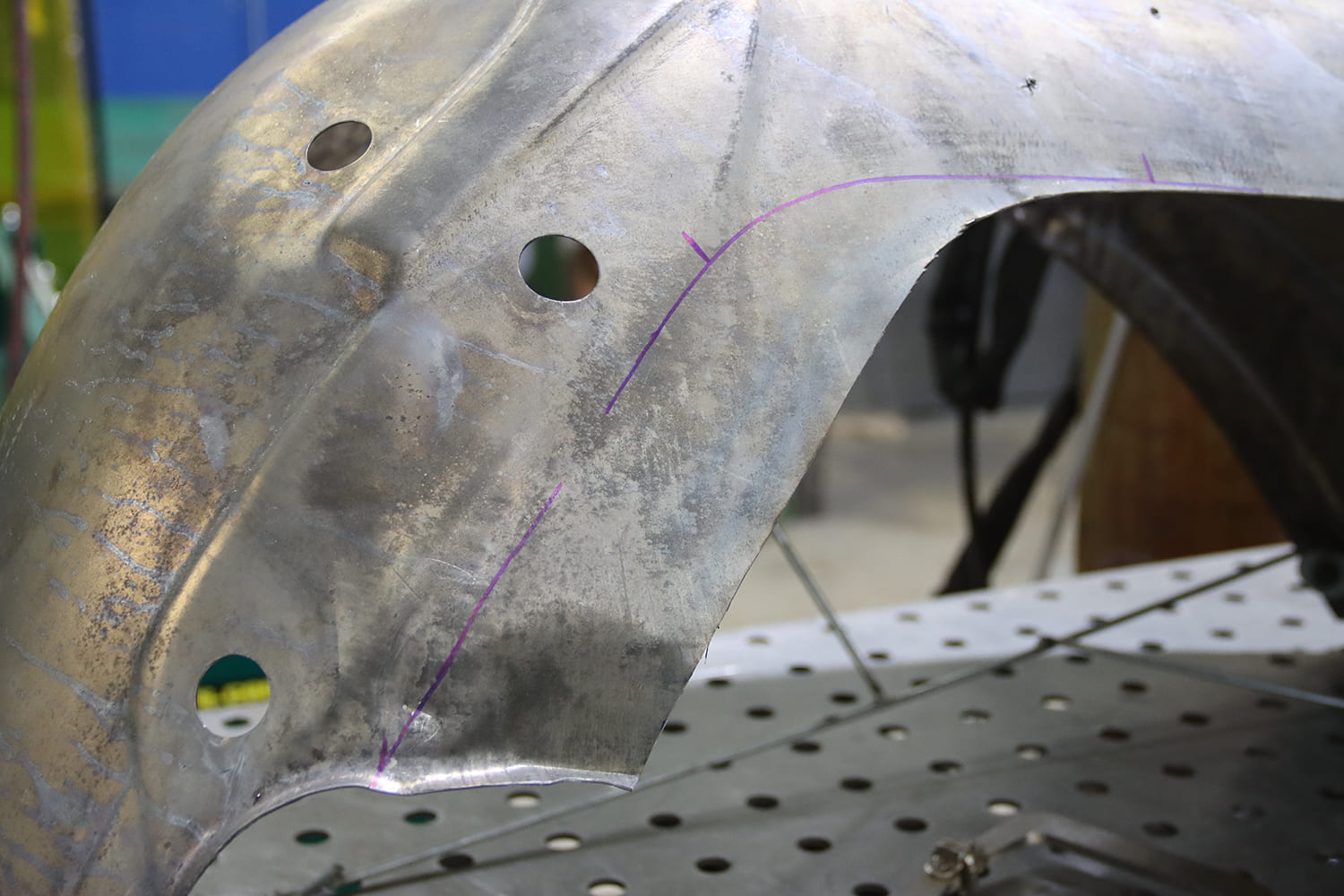
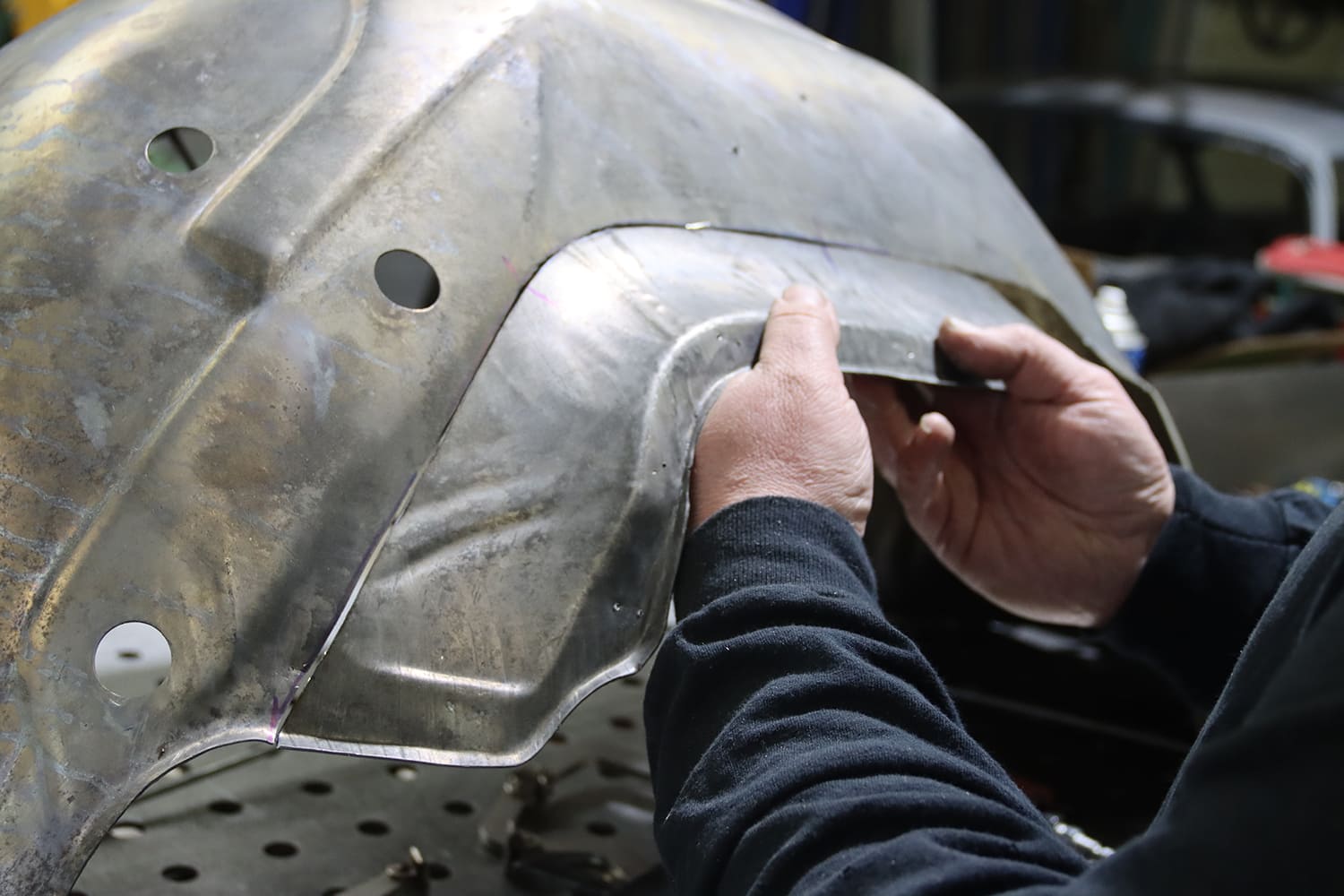
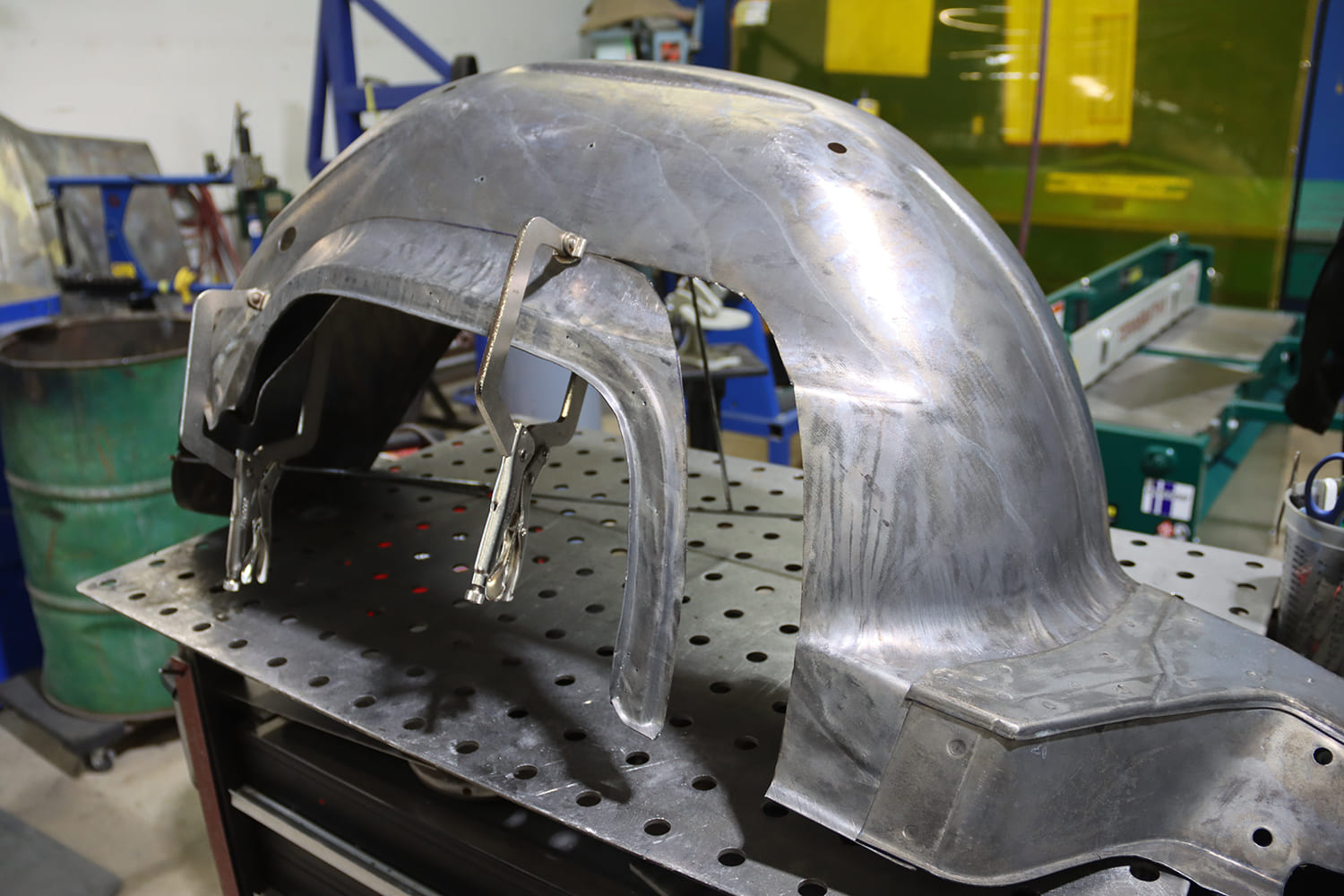
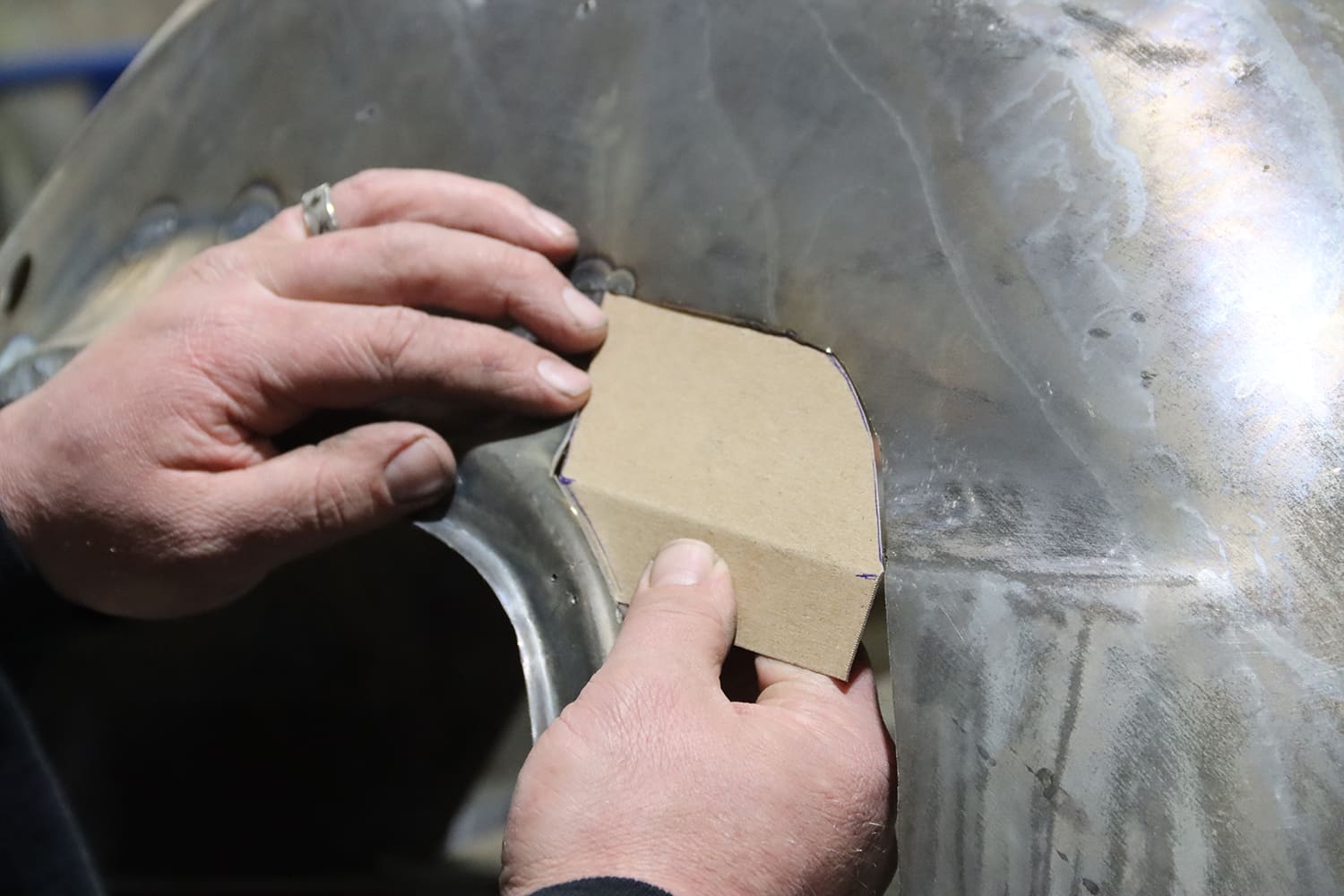
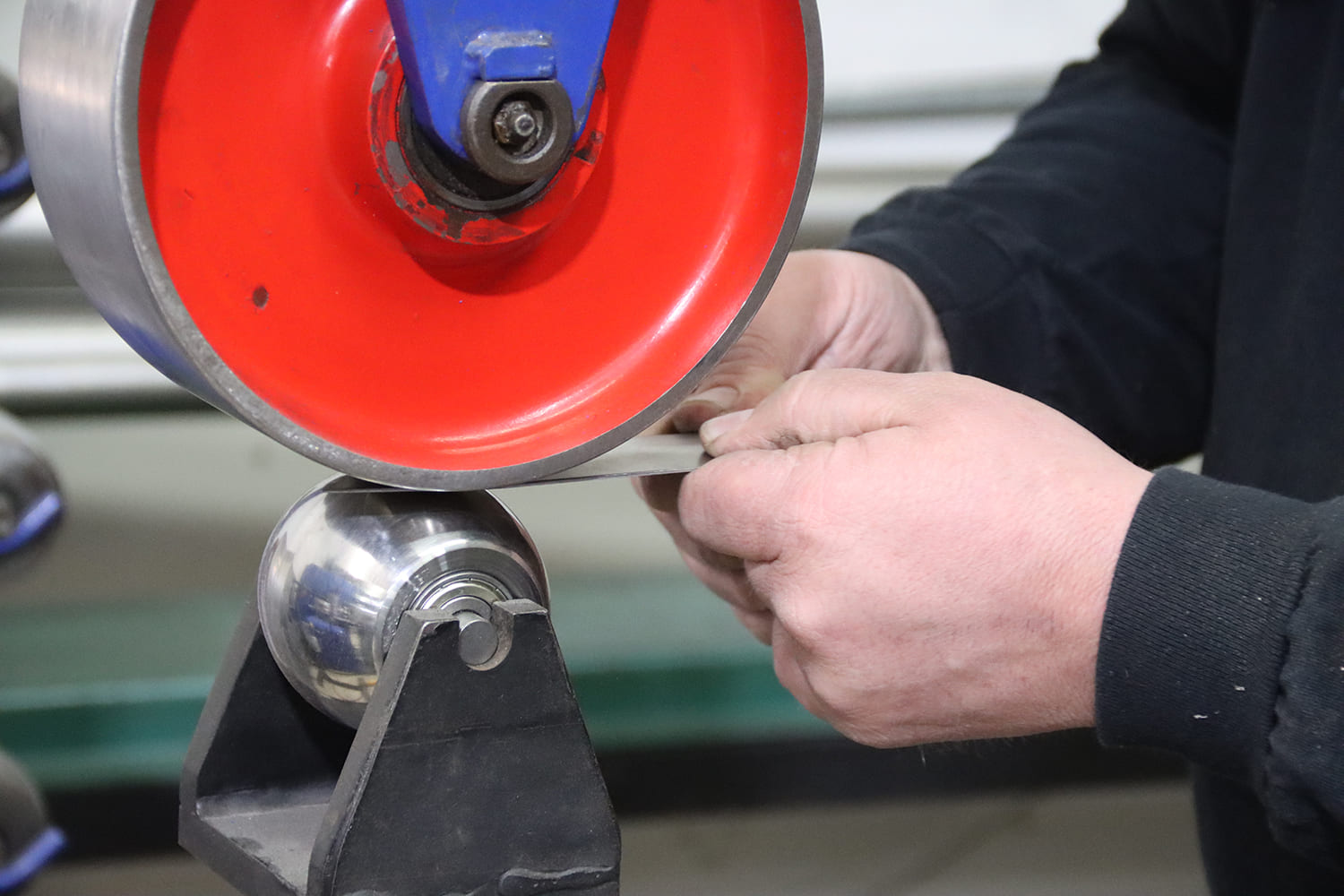
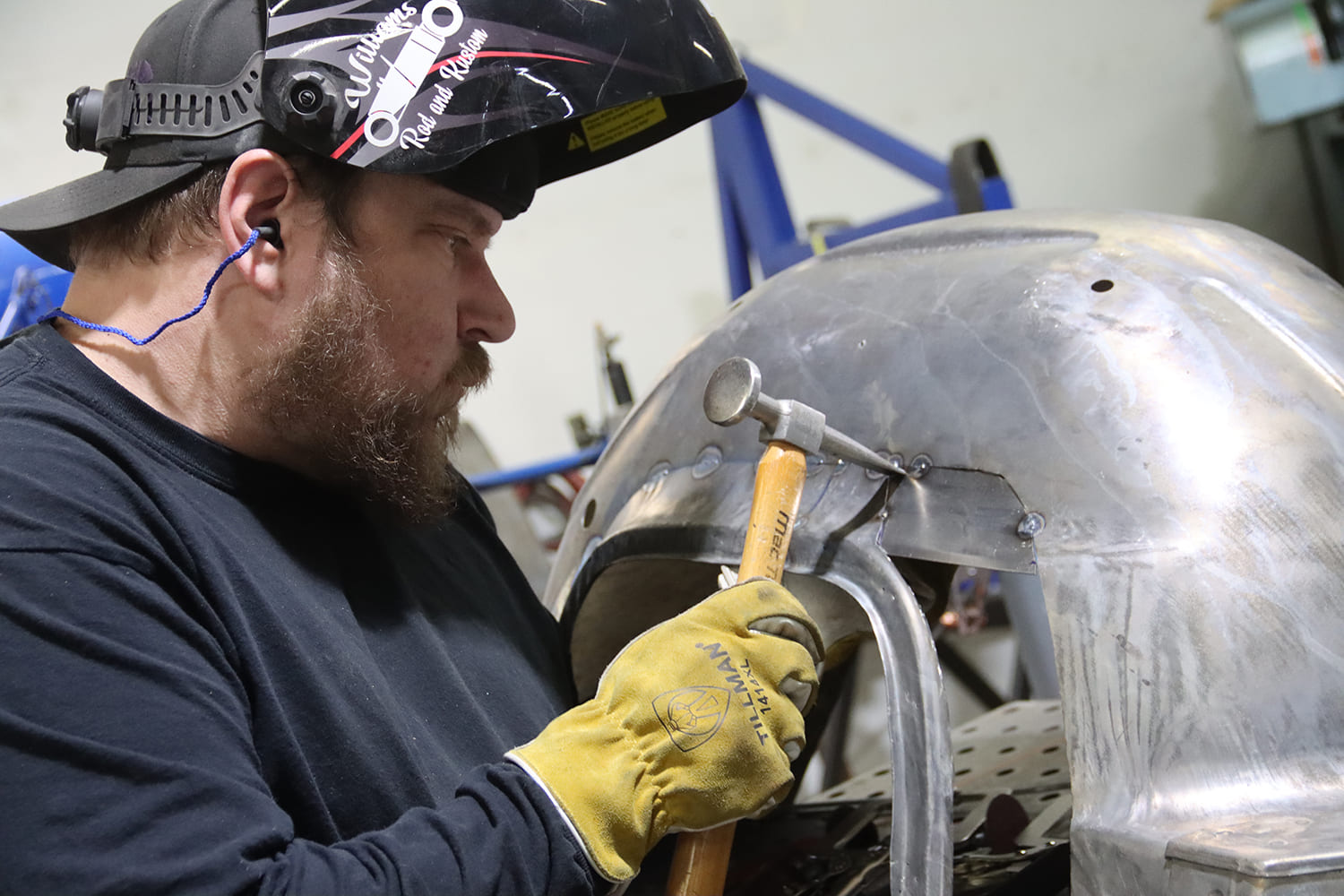
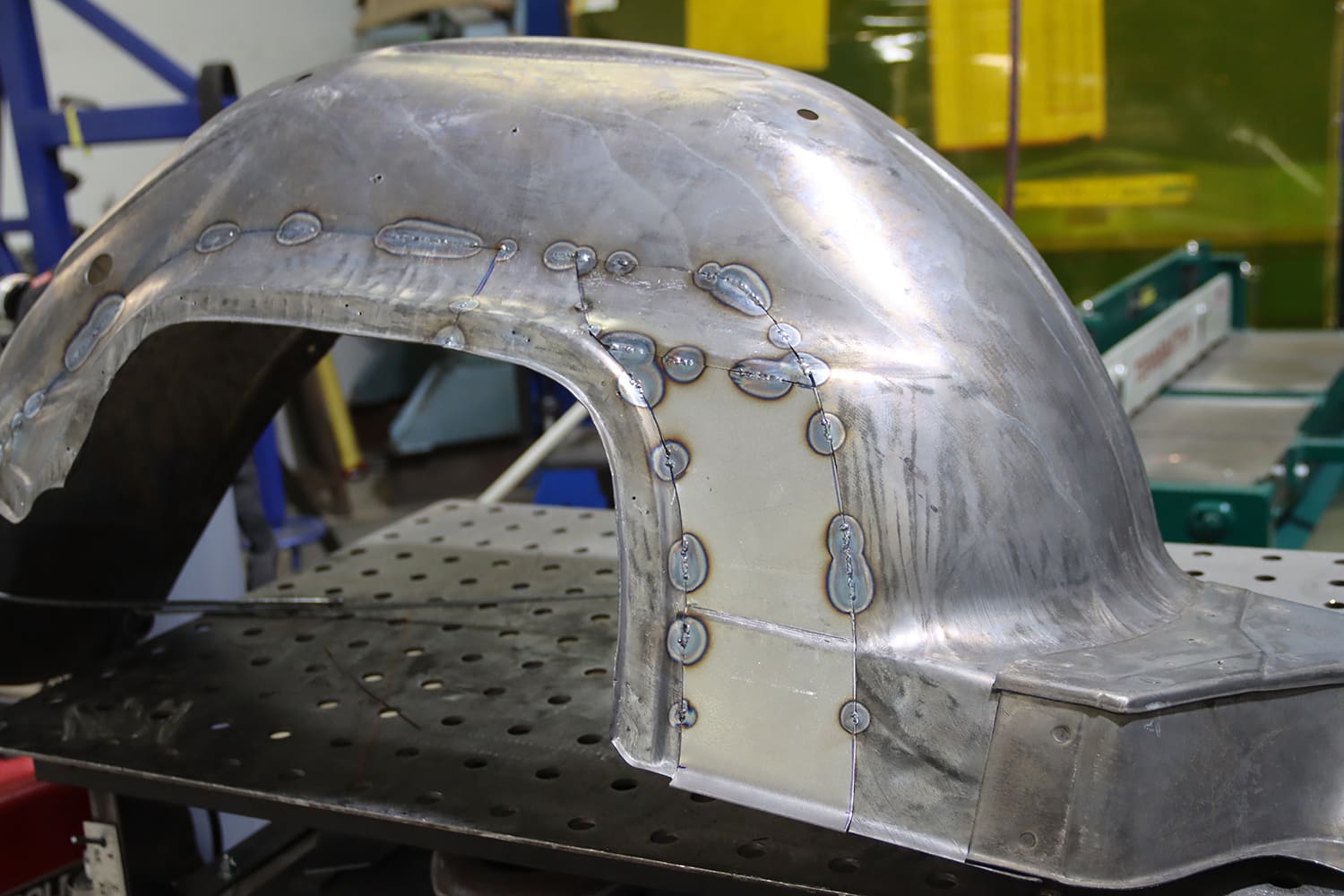
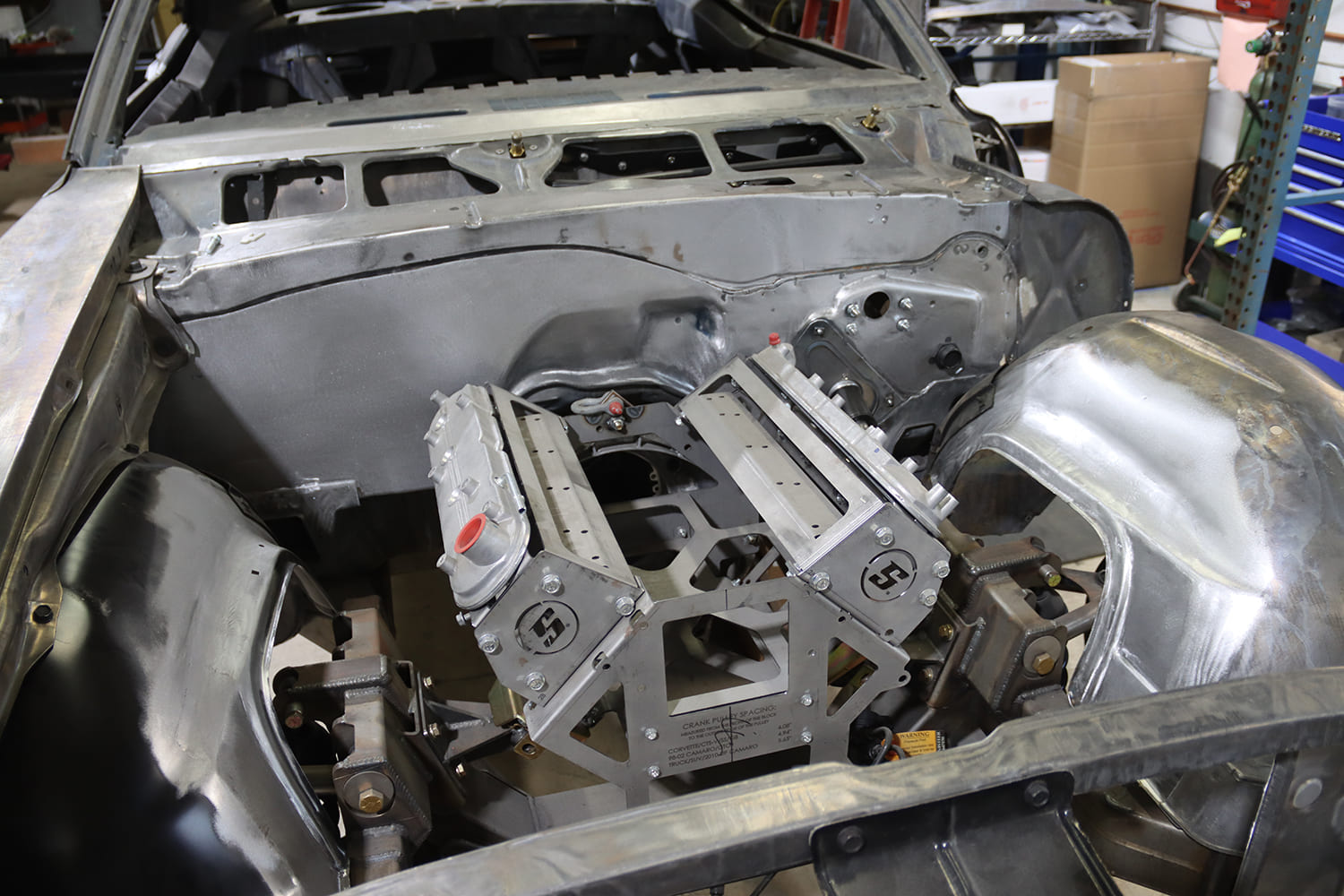
Included with the chassis is a 9-inch axle housing featuring 31-spline axles. The rear framerails can accommodate tires up to 345mm wide when the body is mini-tubbed.The adjustable drop-out trans mount will fit all popular transmissions, however, modifications to the transmission tunnel may be necessary for T-56 and 4L80 transmissions.To align properly, the opening in the original GM inner fender panels will be adjusted to accommodate the Roadster Shop front suspension.To maintain the shape of the fender panels during modifications, supports made from steel rod were tack welded in place.Here, the driver side inner fender is marked for cutting with masking tape.Williams starts the necessary modification by cutting out the contoured opening for the upper control arm. This piece will be saved and reattached.The inner fender panel is marked for trimming; the previously removed portion will then be repositioned to the rear to center the opening on the control arm.The severed section of the fender panel was clamped in place and then tack welded.To address the gap created by relocating the opening to the rear, Williams would fabricate patch panels. Pay attention to the crease in the template.The necessary filler pieces were quite complex. The small upper piece was initially shaped on an English wheel.Williams carefully shapes the upper portion of the patch with a hammer and dolly while tack welding it into place.Next, the lower section of the filler panel was added. Note the crease and the lip at the bottom edge that match the original contours.The modified fender panel fits perfectly. The seamless metalwork is a testament to MetalWorks’ attention to detail and Williams’ skill.With the body mounted on the chassis and the inner fender panels modified, a Speedway Motors SoloSwap mock-up was used to determine the position of the LS3 to be installed.
We use cookies to ensure that we give you the best experience on our website. If you continue to use this site we will assume that you are happy with it.