


By Curt Iseli – Photography By Cody Walls
There are a handful of customizing tenets that define the early, traditional custom style. The first and most obvious modification is to improve the factory design. Another approach is to adjust the stance and body lines to draw the viewer’s eye rearward to a distant vanishing point, creating a flowing, tail-dragging aesthetic. Finally, early customizers aimed to disguise more common, lower-cost cars by incorporating design elements of their up-model counterparts. Fadeaway fenders—modifying the fender lines of pre- and immediate postwar cars to connect the front fenders with the rears—check every one of those boxes.
Automotive design advanced rapidly from the early 1930s through the late 1940s. As that progress continued, fenders transformed from simple, bolt-on splash aprons into parts fully integrated into the body, like on the innovative 1949 Fords, whose design earned them the nickname “shoebox.” For much of that period, from around 1935 until new car design slowed for World War II, most American production cars had large, rounded fenders that covered only the wheels. These fenders curved into the passenger compartment just ahead of the doors and curved back out beyond them, creating an hourglass shape when viewed from above. But there were exceptions.
Pinpointing a single car that sparked the fadeaway fender trend is challenging. Automotive historian Michael Lamm points to the 1932 Maybach Zeppelin and the somewhat-similar 1933 Pierce-Arrow Silver Arrow as among the earliest to fully incorporate the front fenders (both fenders in the case of the Maybach) into the passenger compartment. However, their design was more of a slab-sided “envelope” body rather than the sleek fadeaways discussed here. For those interested, custom car expert Rik Hoving references a 1934 proposal, reportedly for a Duesenberg by designer Arthur Ross, that features an elegant, sloping bodyline connecting the rounded front fenders to the rear (see Hoving’s “Fadeaway” article on customcarchronicle.com for more).


Whoever it was who first imagined the concept, one of the early factory-produced cars with fully integrated fadeaway fenders was the 1941 Chrysler Newport. Designed by LeBaron and built by Briggs, there were five Newports constructed and displayed in 1941 under the direction of Chrysler president K.T. Keller, including one that served as the 1941 Indianapolis 500 pace car before becoming part of Walter P. Chrysler Jr.’s personal collection. The following year, Harley Earl’s “through fenders,” as OE designers refer to them, appeared on a mass scale with the introduction of the 1942 Buick Roadmasters and Supers. (As a side note, Earl originally pitched the design to Cadillac and incorporated it into a custom-bodied Cad limousine for the Duke and Duchess of Windsor a year before the 1942 Buicks debuted.)
American customizers were never far behind the original equipment manufacturers, and sometimes were even ahead of them. In the early 1940s and 1950s, hand-formed fadeaways appeared on cars like Bob Fairman’s, the Jimmy Summers–built 1936 Ford (which was more recently restored and featured in Modern Rodding Vol. 4, #34), Butler Rugard’s Westergard-built 1940 Mercury, and George Barris’ 1941 Buick, to name a few. By the immediate postwar era, fadeaways had become a standard part of customizing as much as frenched headlights and chopped tops. In fact, a May ’47 issue of Popular Mechanics featured Jimmy Summers crafting a pair of his fadeaways, and the following year ads for his bolt-on “fender extensions” for 1942-48 Chevys appeared in Hot Rod. “These fender panels serve to enhance the body lines and inexpensively repair damaged or rusted doors and bodies,” the column-wide advertisements claimed—and all for just $69.50 COD.
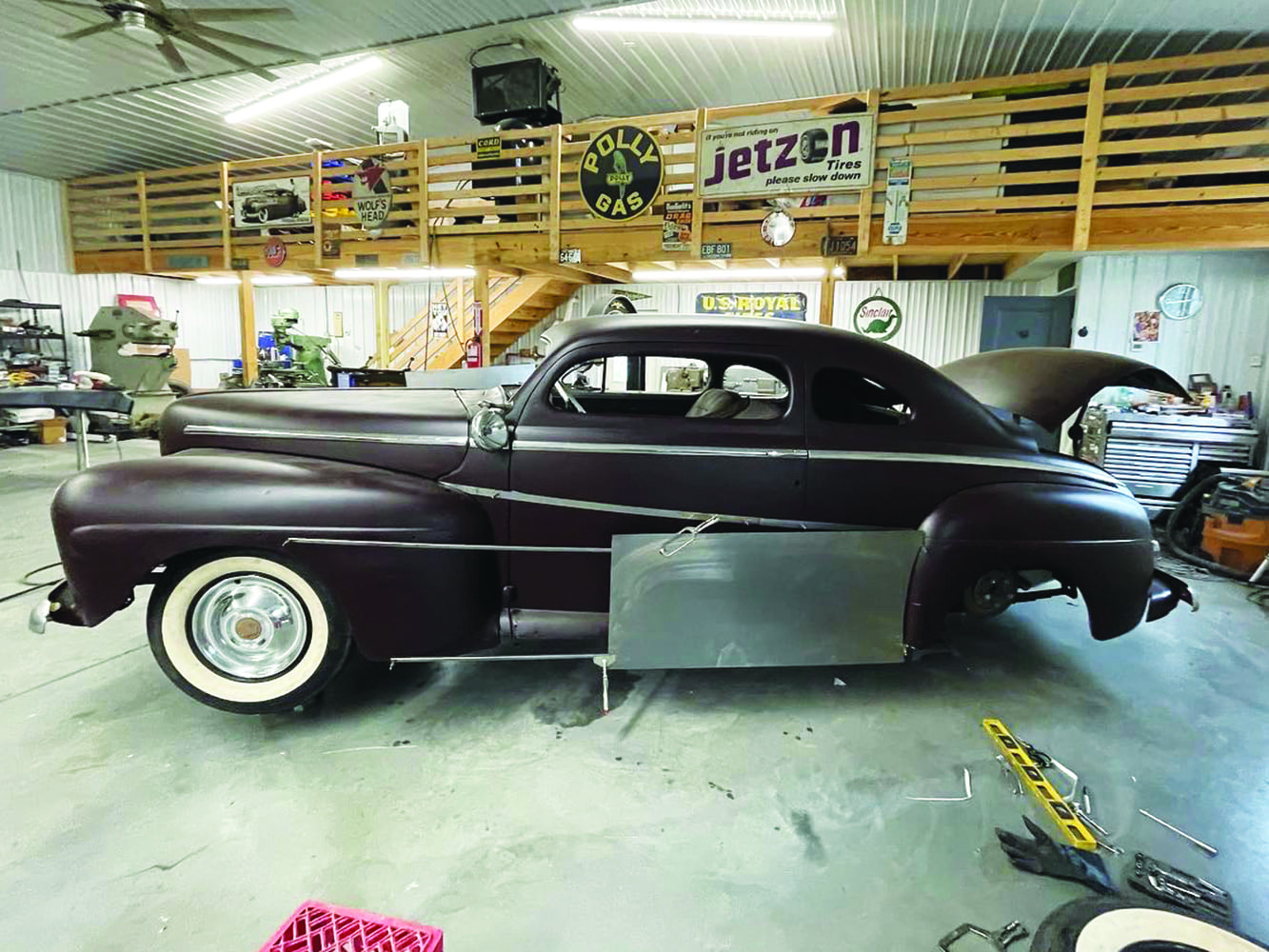
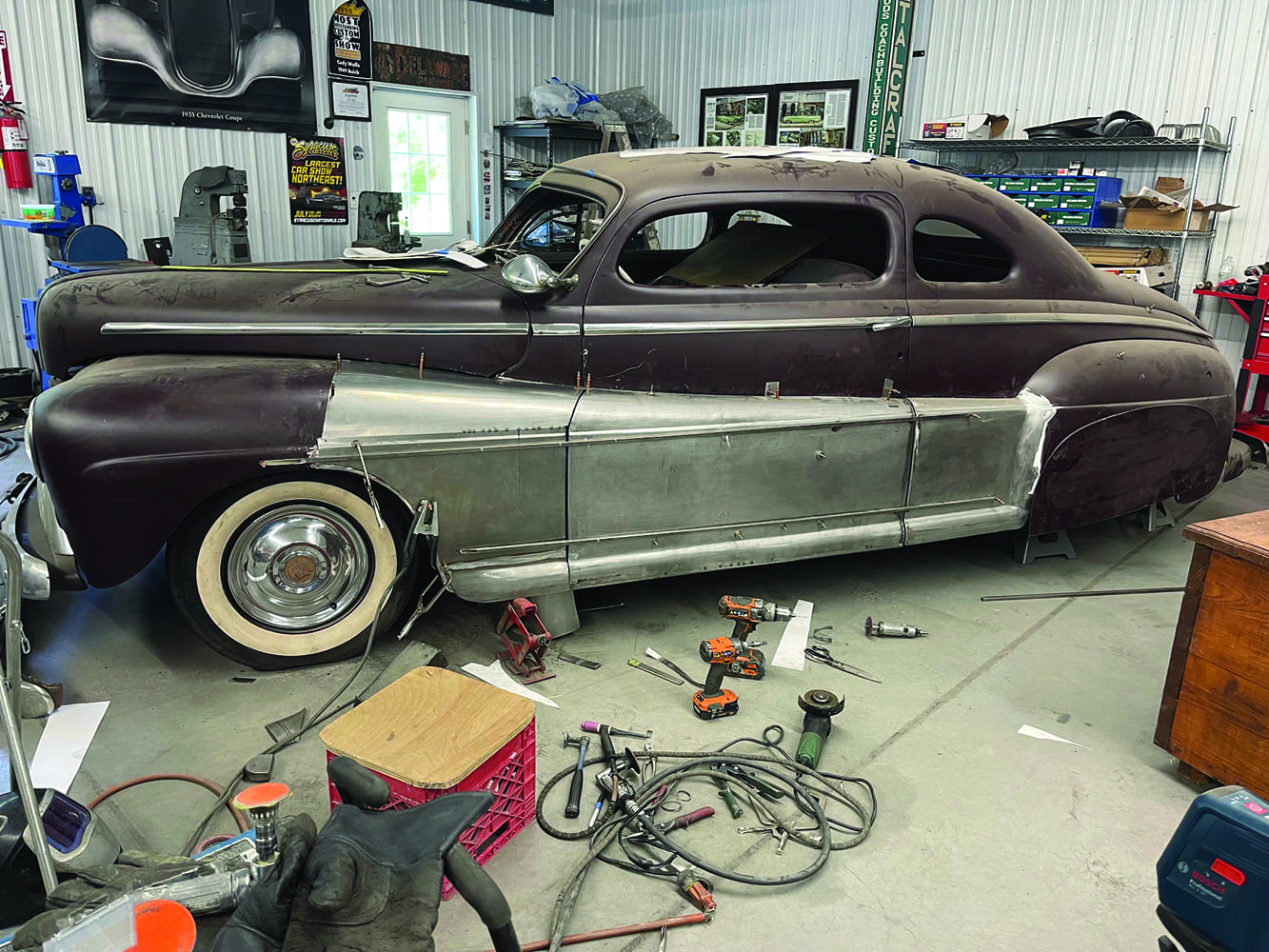
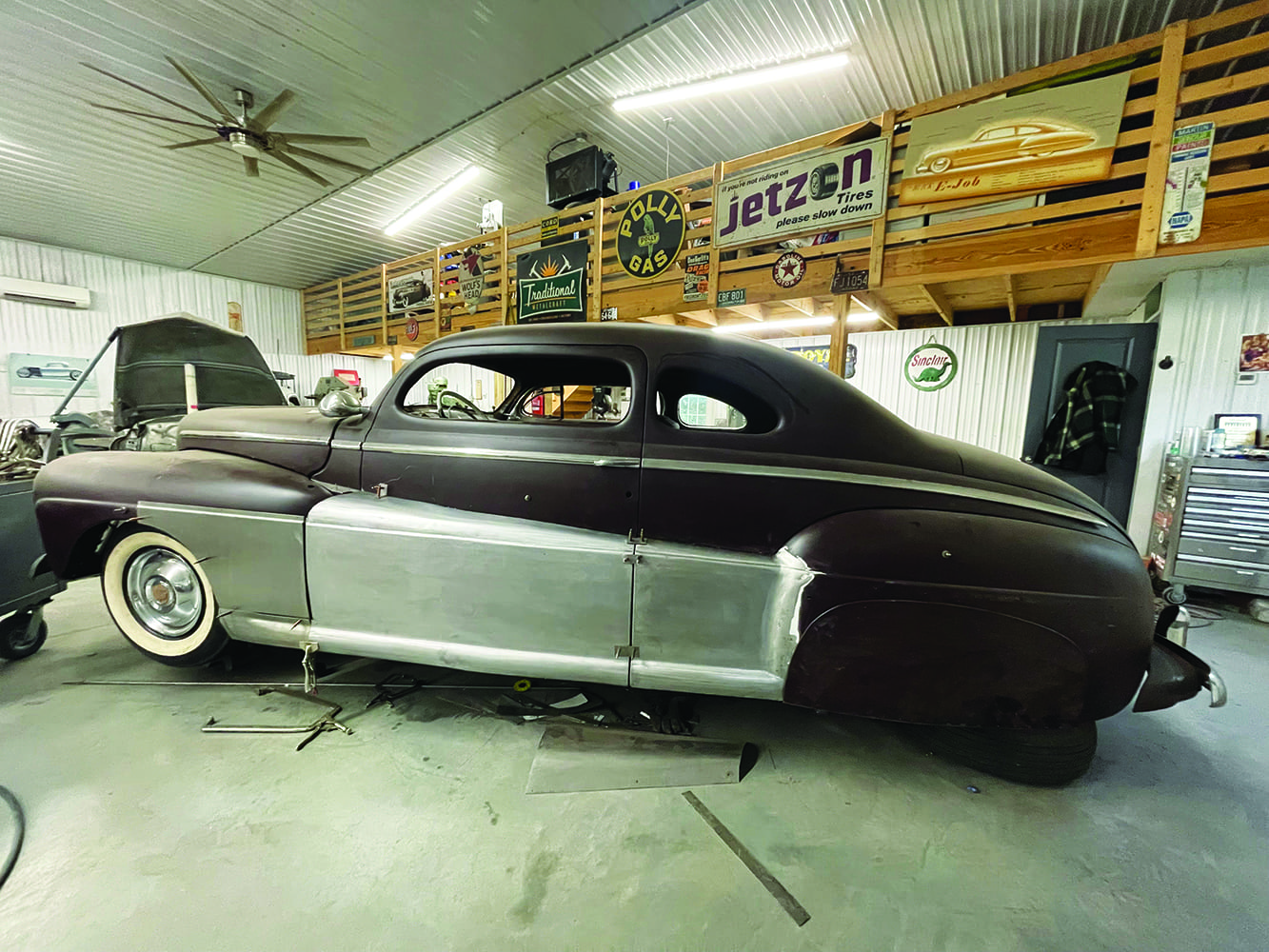
In the spirit of these Summers extensions, Cody Walls at Traditional MetalCraft crafted the bolt-on fadeaways for Mikey Lippincott’s 1947 Ford custom. Walls and his work are familiar to our pages, and for those paying attention, Lippincott’s name might sound familiar too. Known as “Mikey Seats,” he’s the guy responsible for the beautifully crafted interiors in many of Walls’ cars (and countless others that have appeared since he began trim work over 30 years ago).
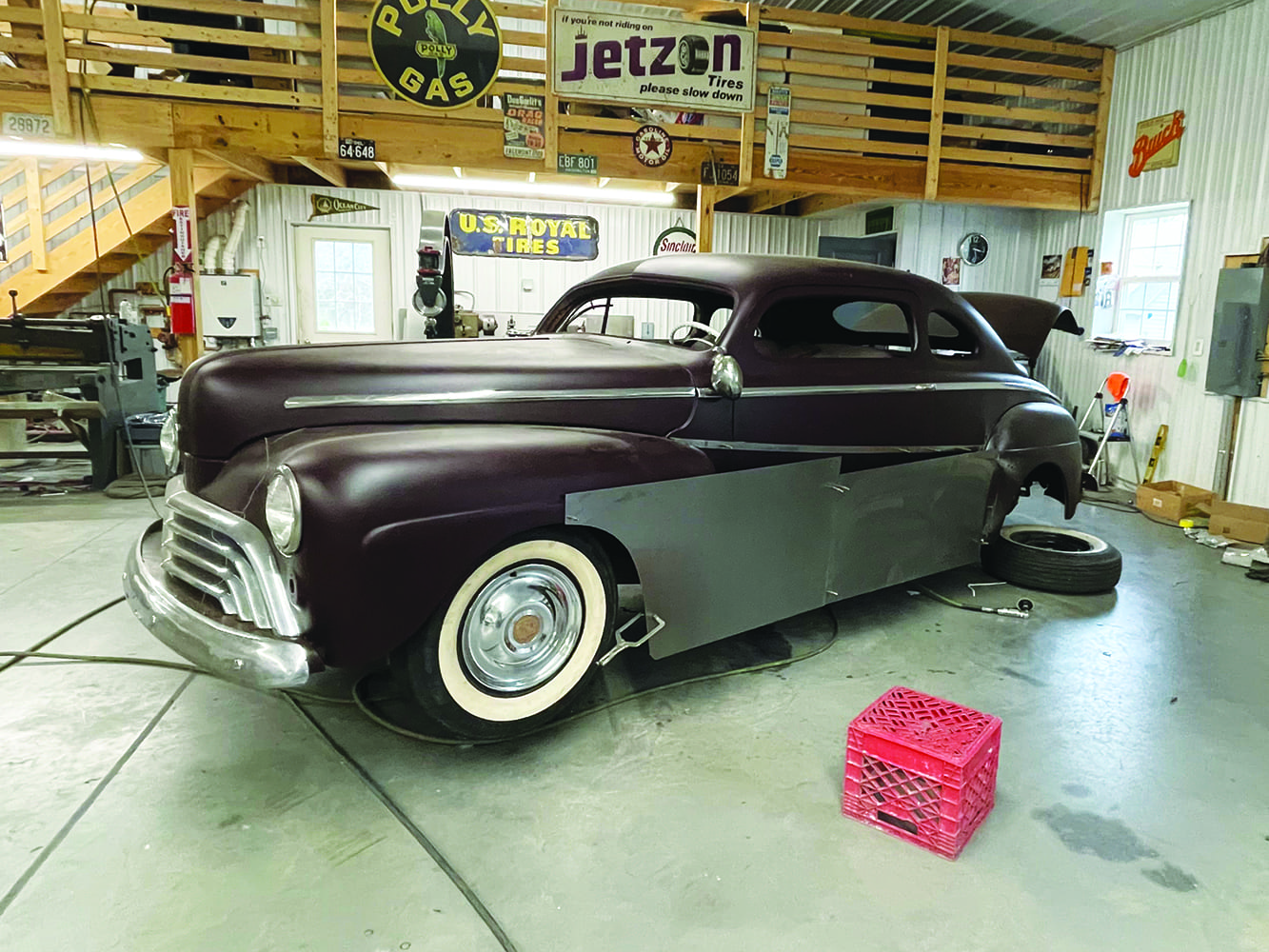
The 1947 entered the picture four years ago. Purchased as an incomplete project, it began life as a Tudor sedan that customizer Tom Matthews outfitted with a chopped coupe roof, decklid, and associated sheetmetal. Lippincott finished putting it together, sprayed it with red oxide primer, and quickly realized it wasn’t quite what he wanted.

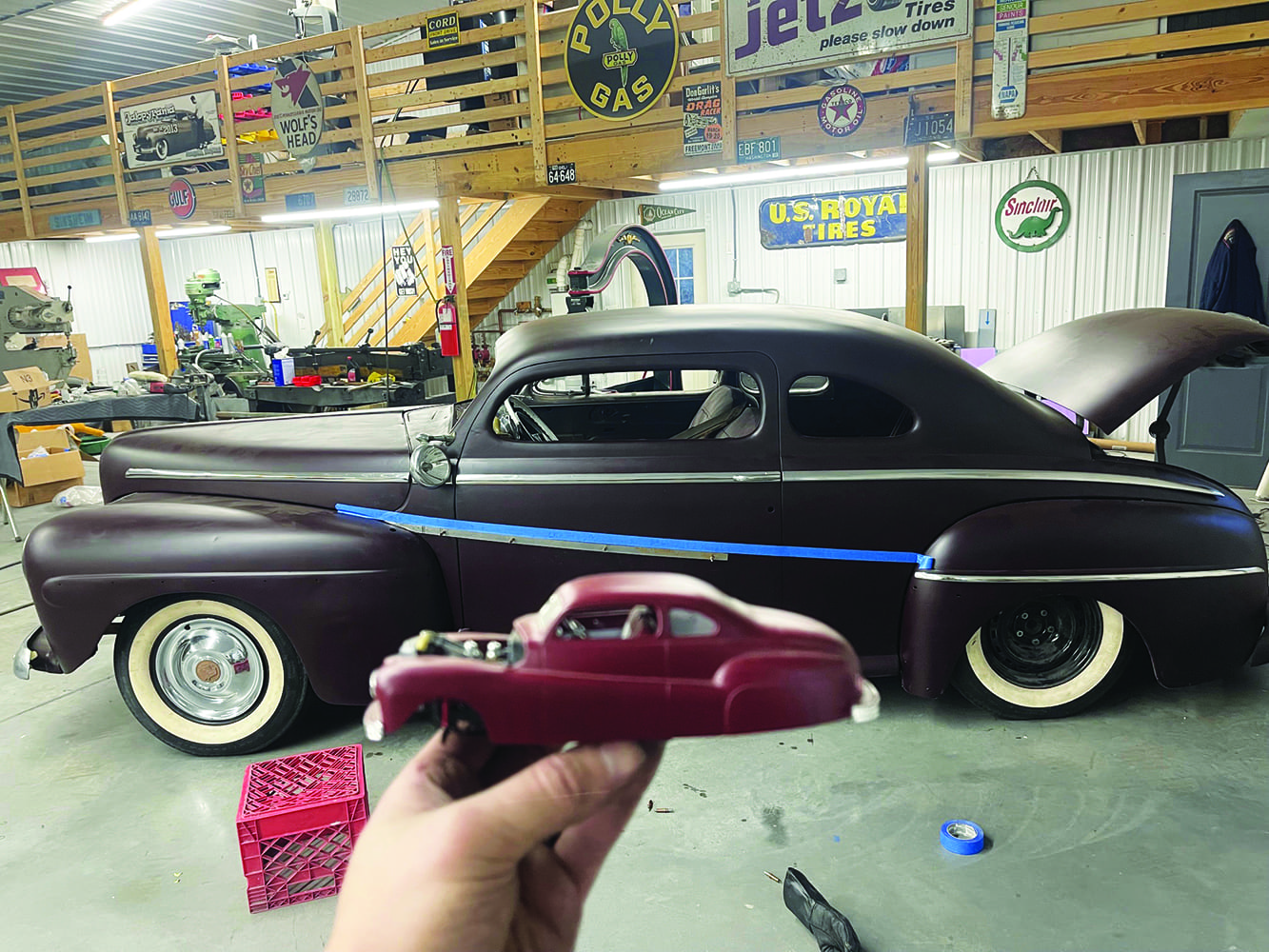
“I collect these old toy cars from the 1930s and a lot of them have these swoopy fadeaway designs,” he says. “So I built a scale model of the 1947 with fadeaways and thought, ‘I have to do this.’” Since he was already booked to upholster two of Walls and his wife’s personal cars (their “E-Job” 1949 Buick Sedanette and “Ardun Killer” Deuce coupe), some horse trading took place and the Ford was off to Traditional MetalCraft for the complete custom treatment.
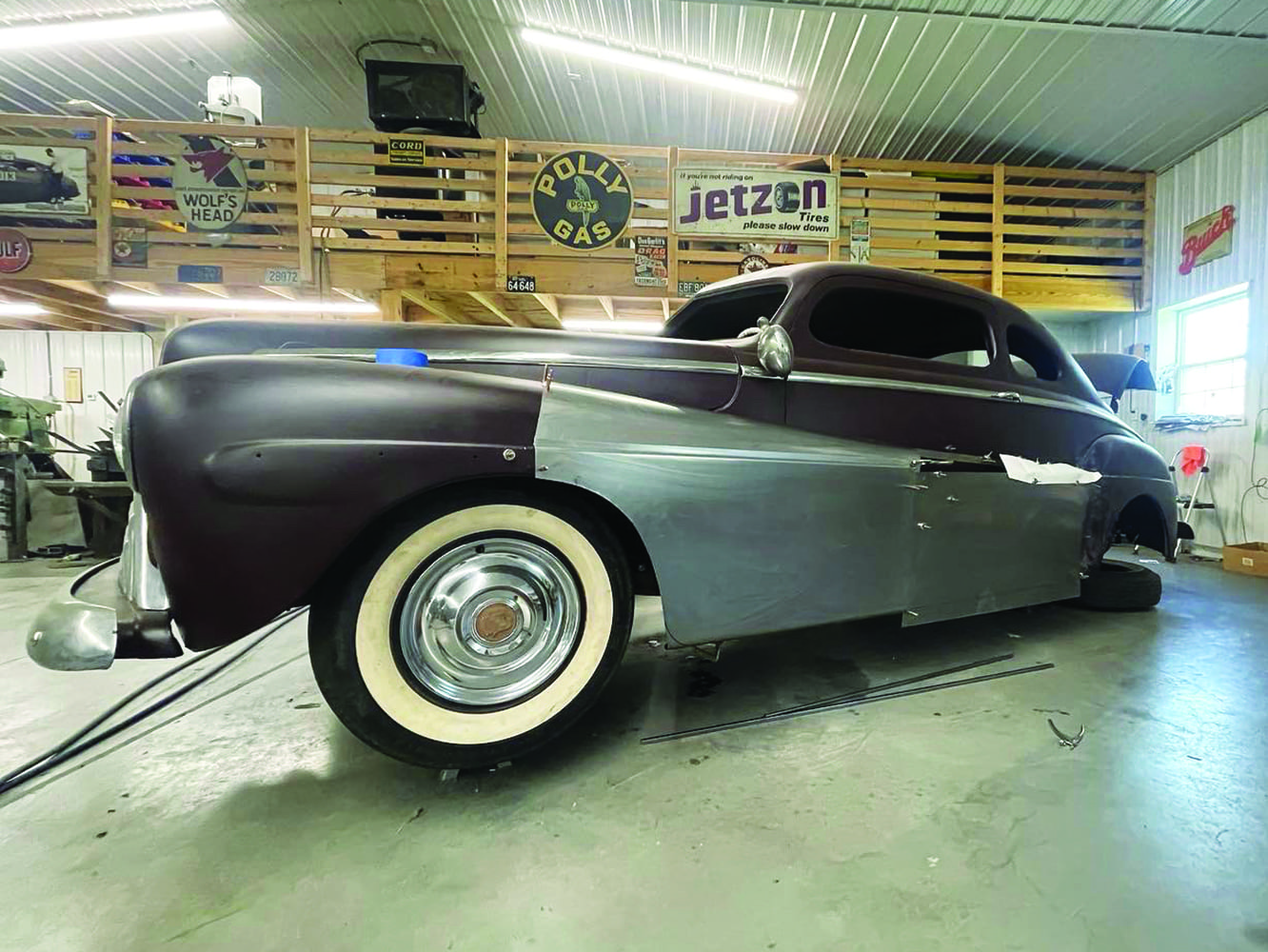
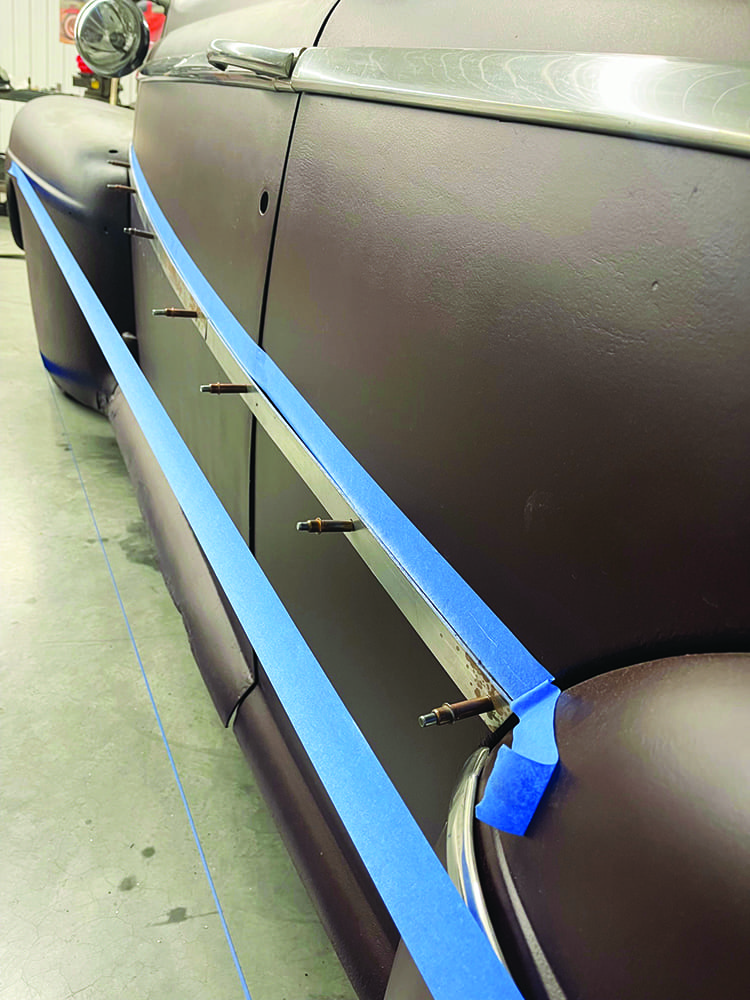
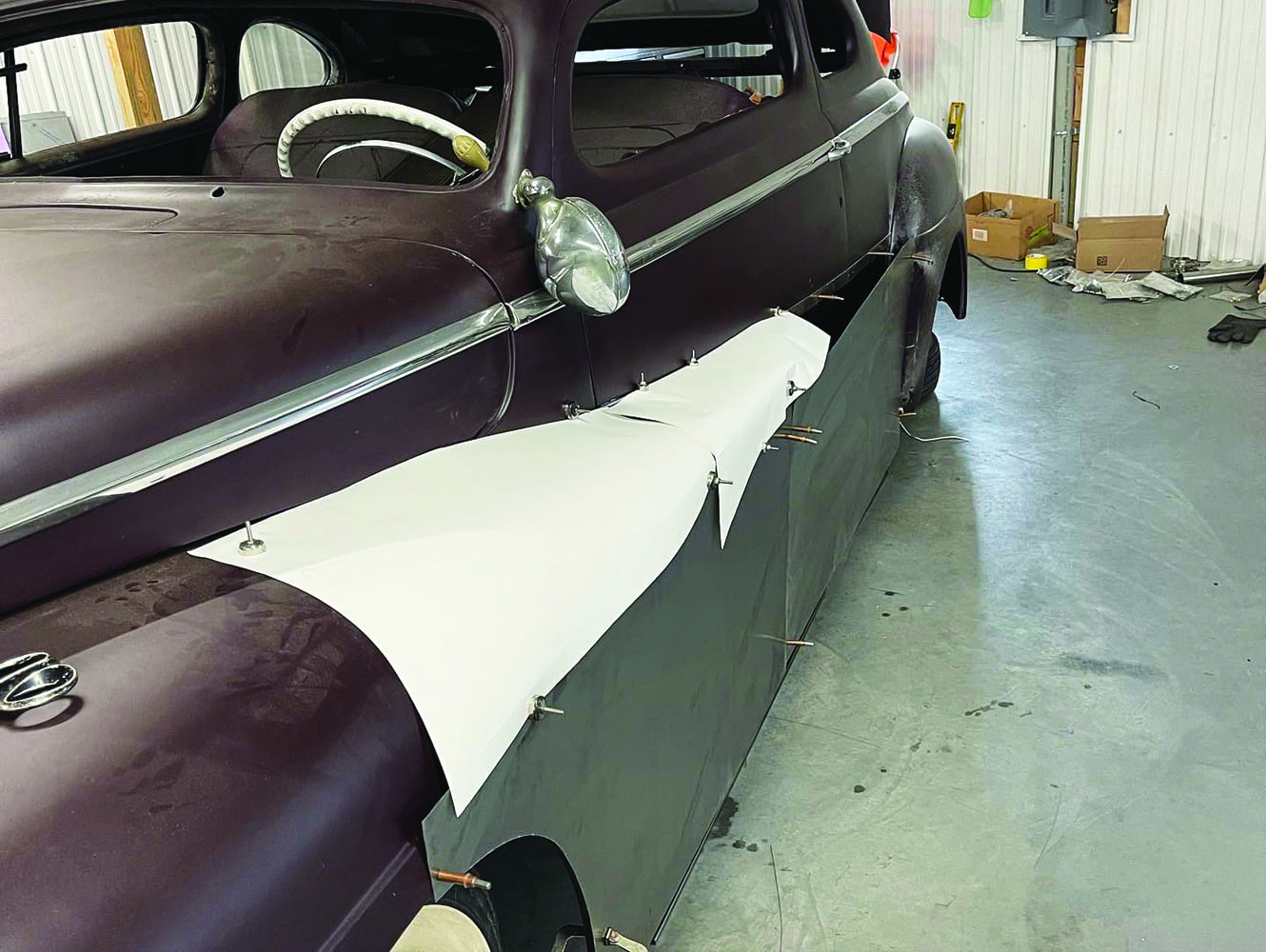
The first order of business in any fadeaway design is establishing the basic profile that the new fenders will take. As with any major metalwork project, tape and construction paper will be your best friend during the design process. Standing back and looking at the car in profile, imagine a line that will gracefully flow from the top of the front fender to a point of your choosing on the rear fender. Then, pull a long piece of tape along that line and examine it from different angles. Once you have a rough profile that looks right, mark it on the body with a long straightedge or a strip of sheared sheetmetal.
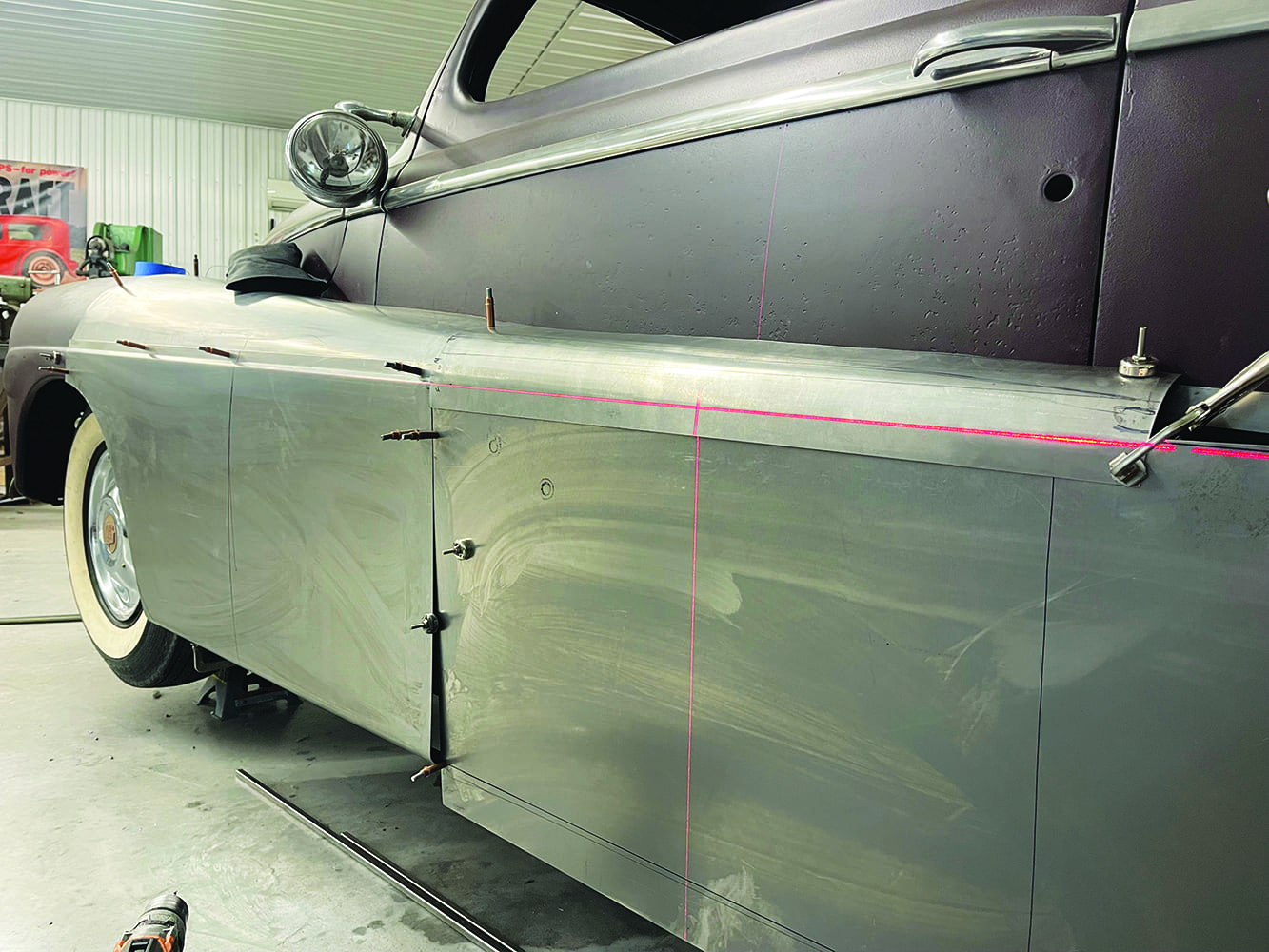
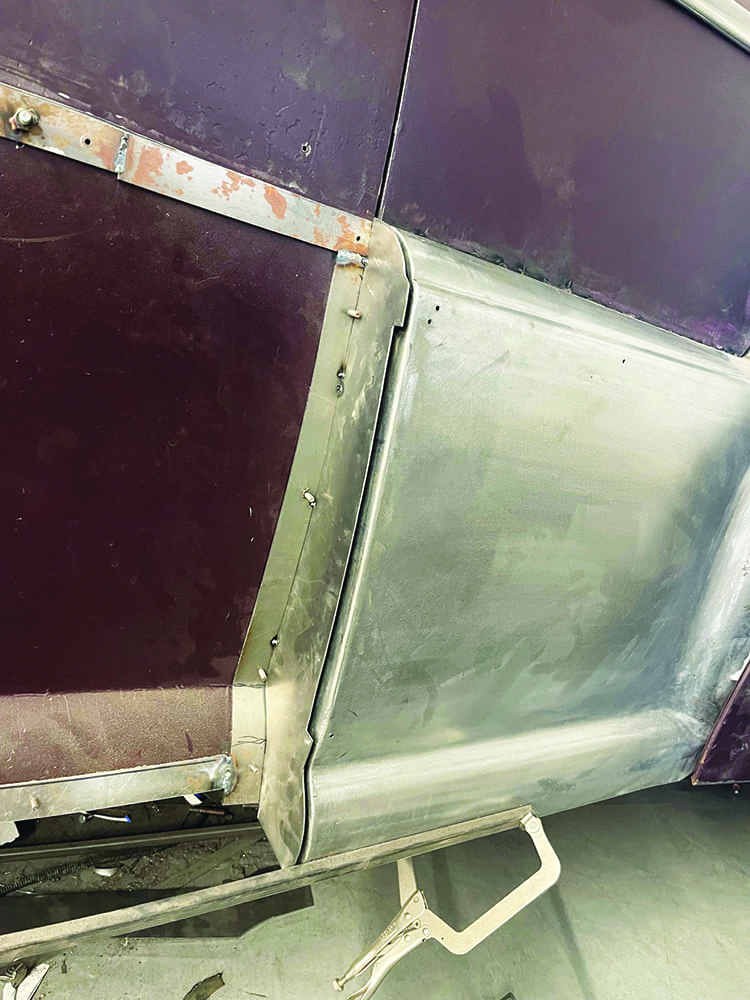
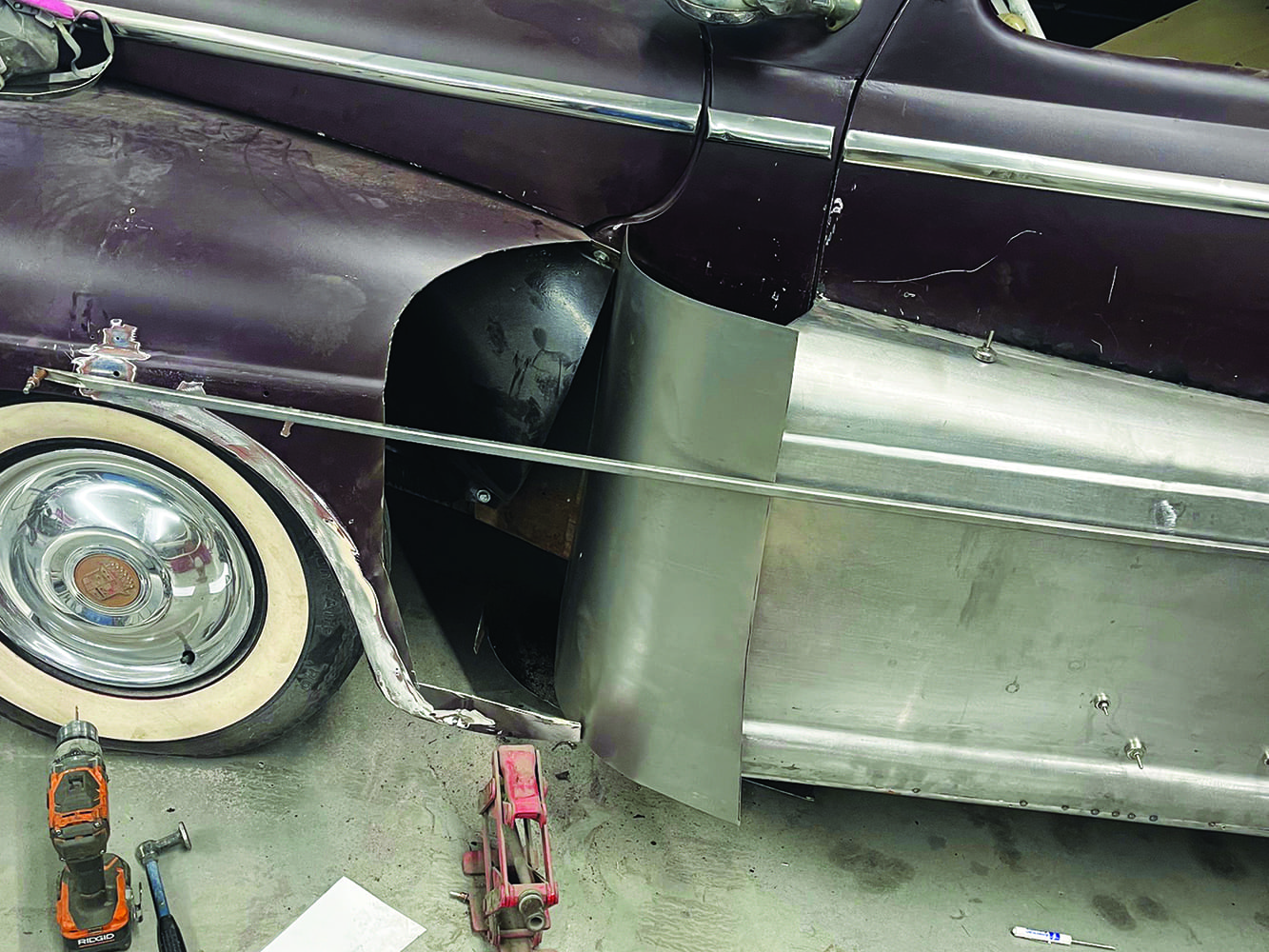
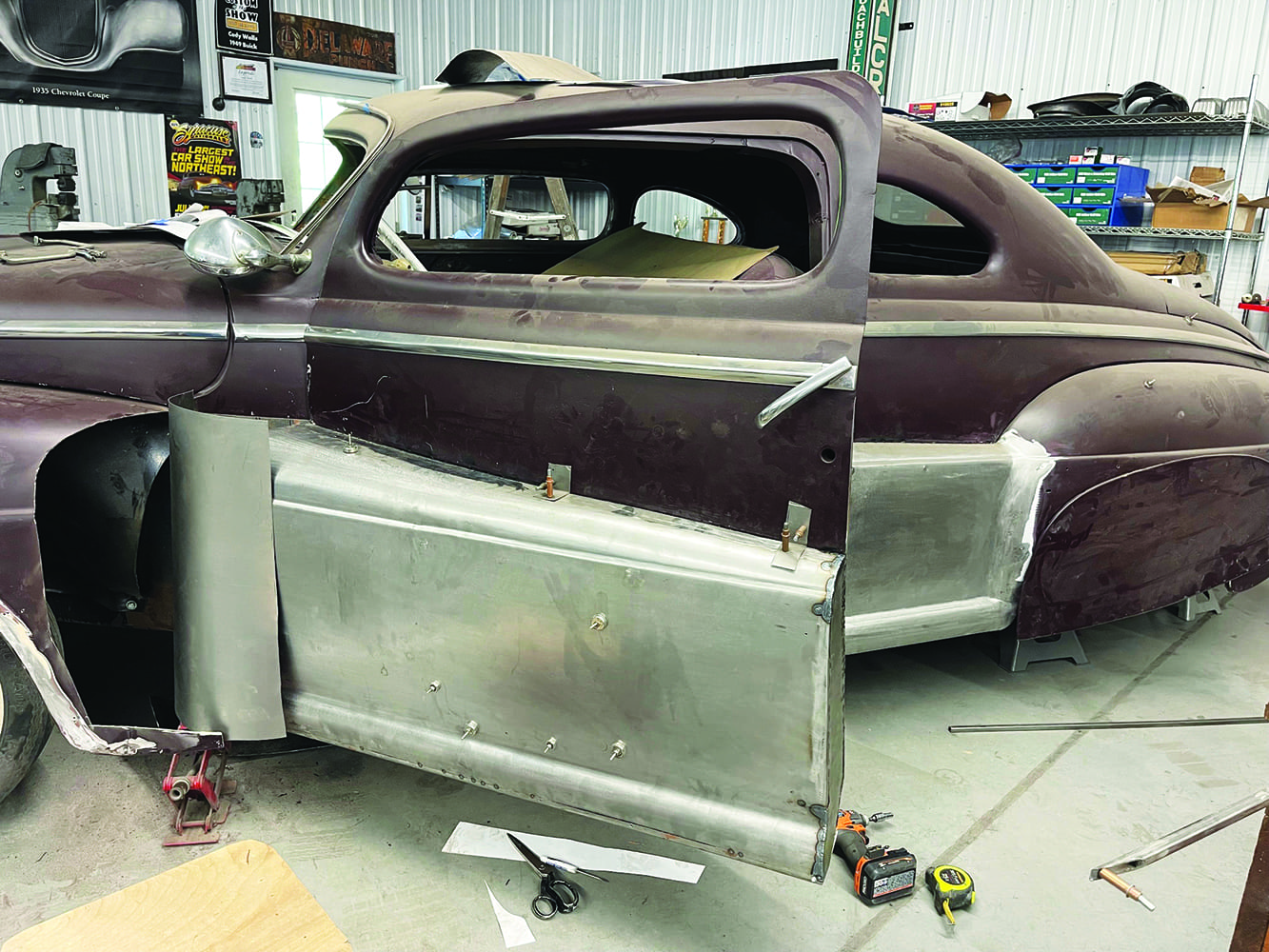
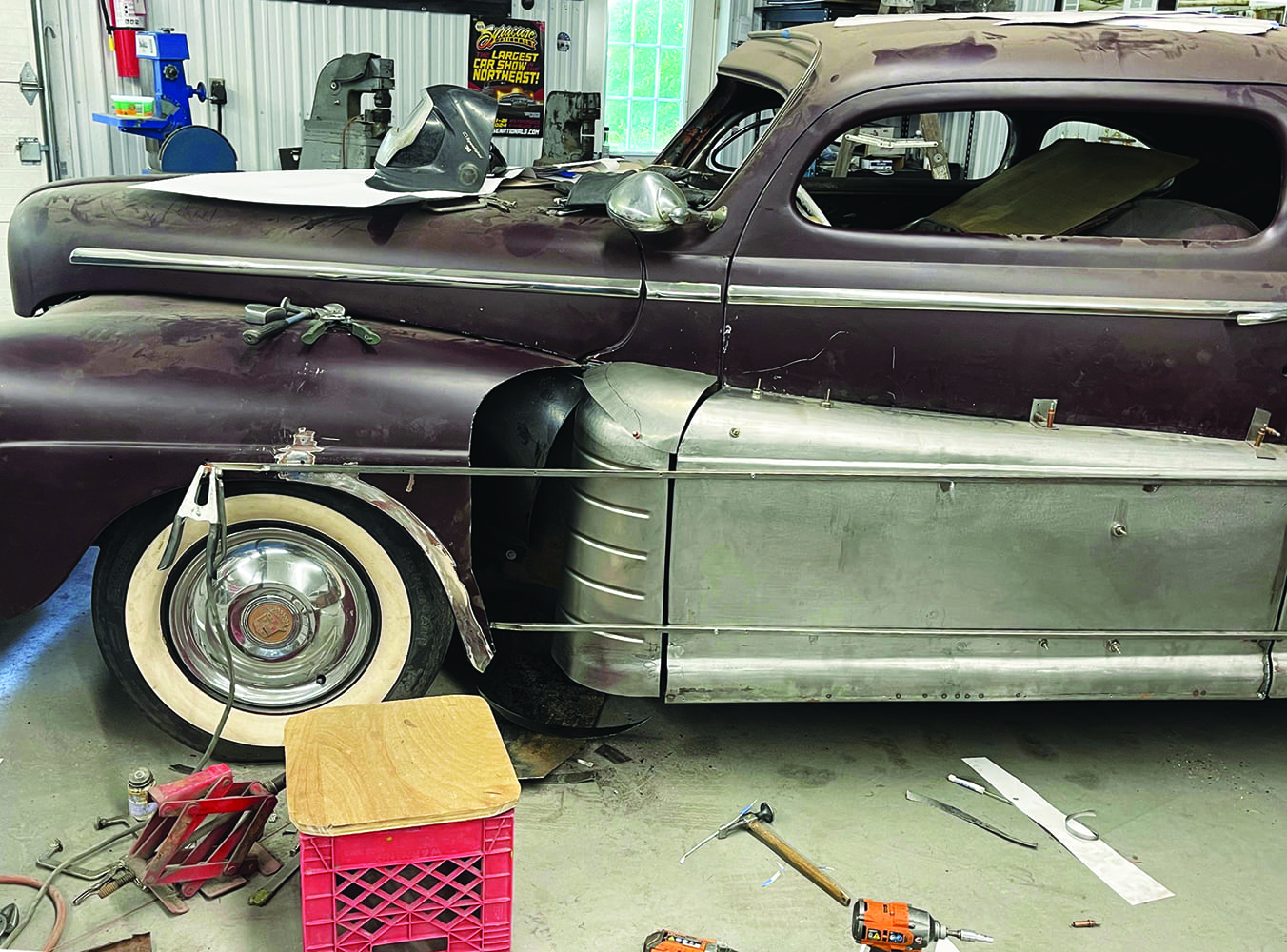
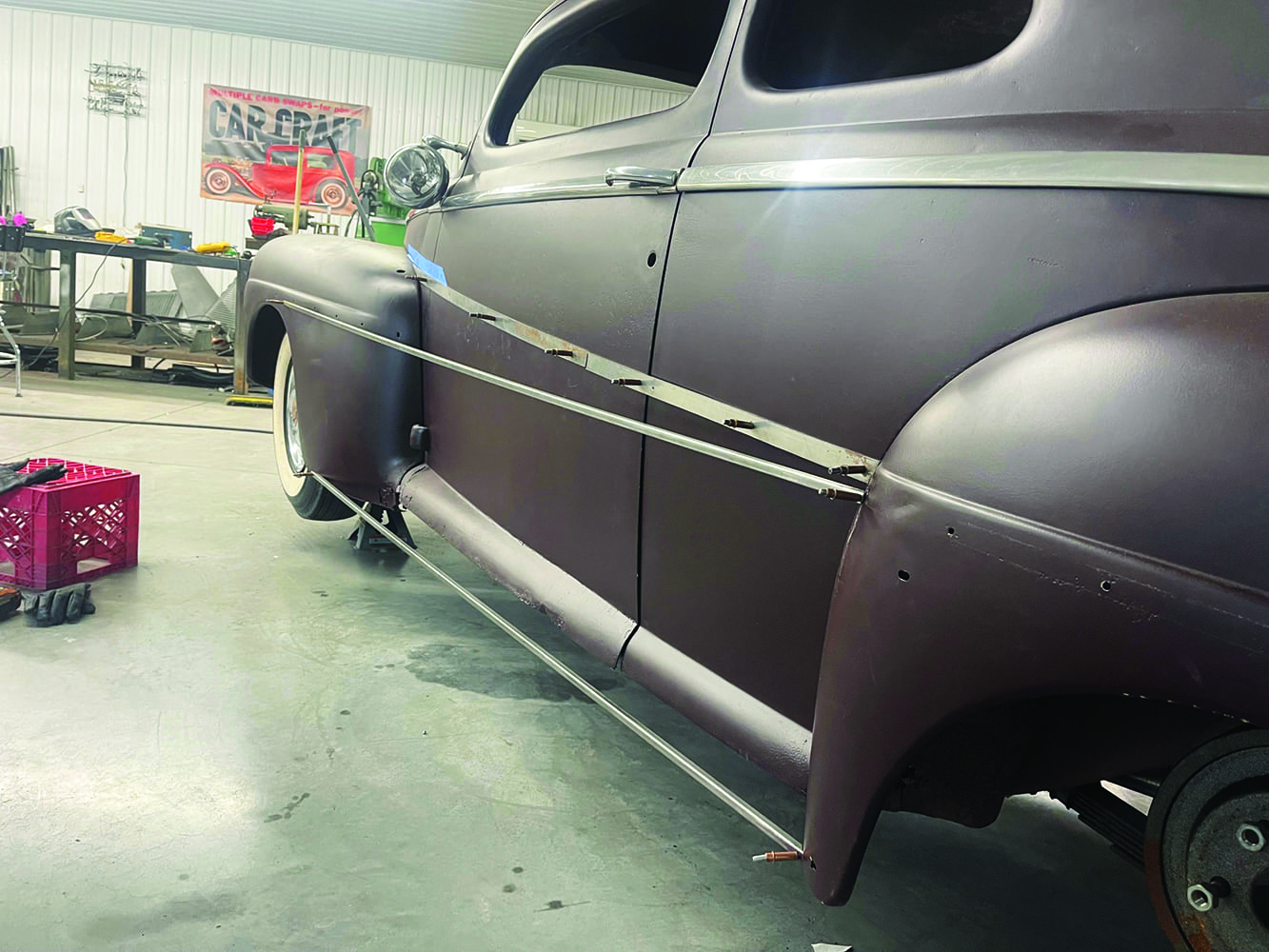
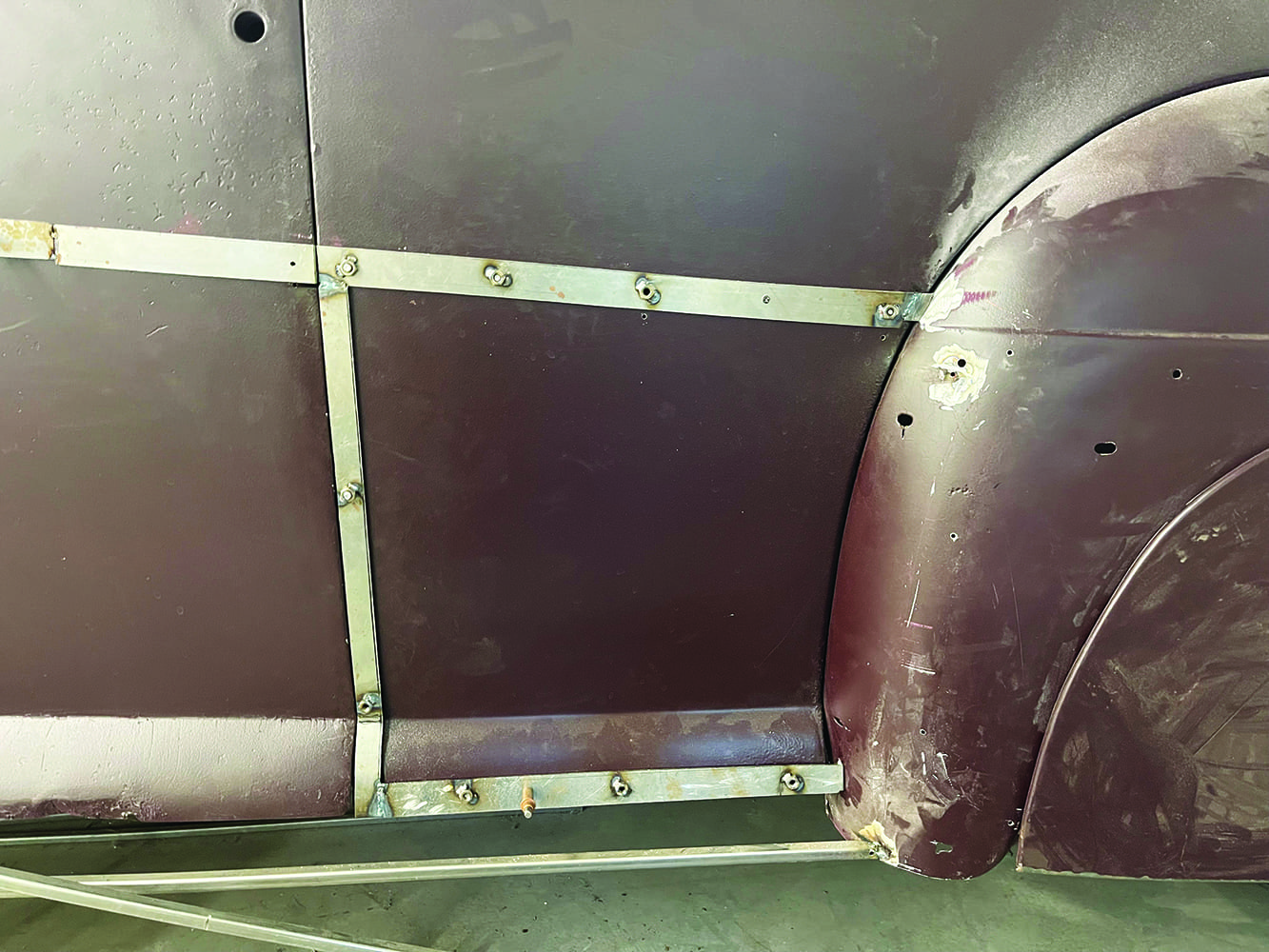
Since Lippincott’s fadeaways will bolt onto the car, after marking the fadeaway’s upper feature line, Walls cut a 1-inch-wide strip of 10-gauge steel that followed that line from the front fender to the rear. This heavy-gauge steel strip will ultimately become a flange for the sheetmetal work, providing significant structure to the fadeaways when they’re being taken on and off the car during the shaping process. The strip, the door, and the quarter-panels behind it were drilled and held in place with Clecos (which will be replaced with bolts in the future). Additional 10-gauge strips were Cleco’d in place at the vertical edges on either side of the door openings and along the outer edge of the rocker panel.
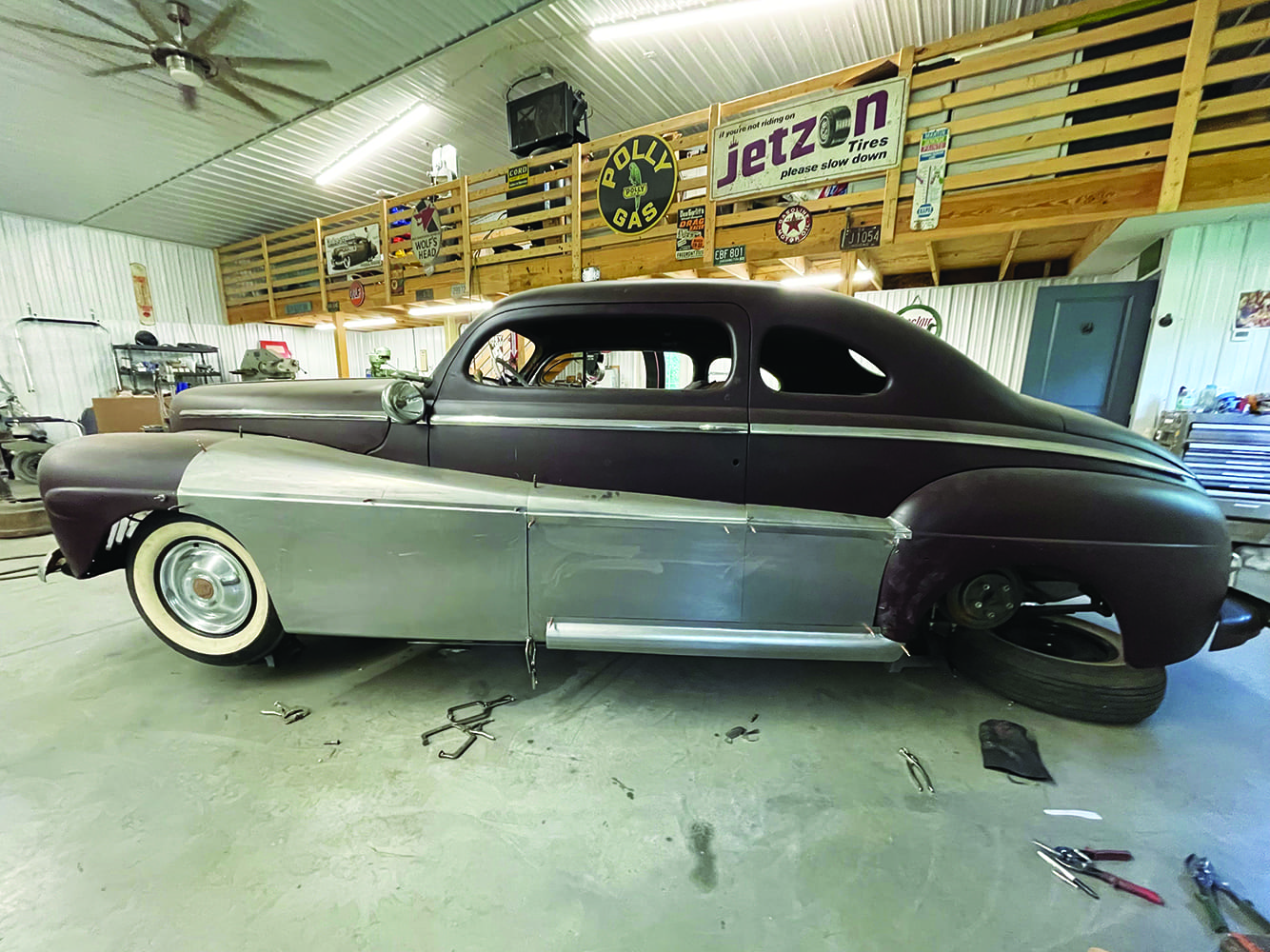
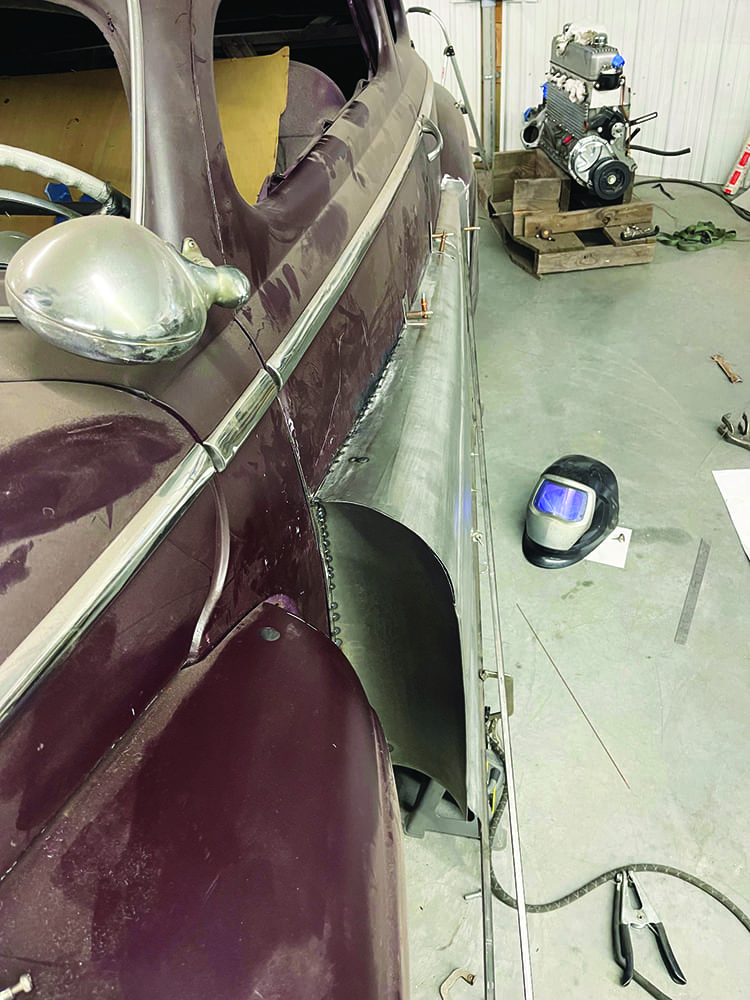
With the 10-gauge perimeter in place, a pair of 1/2-inch square tube runners were tacked to the front and rear fenders—one at the lowest edge of the body/rocker panel and another parallel runner several inches above the first, positioned where the flat portion of the fadeaways meet the rear fender before the sheetmetal curves back into the body. These will provide something to clamp the sheetmetal to and hold it in place when laying out the fadeaway design.

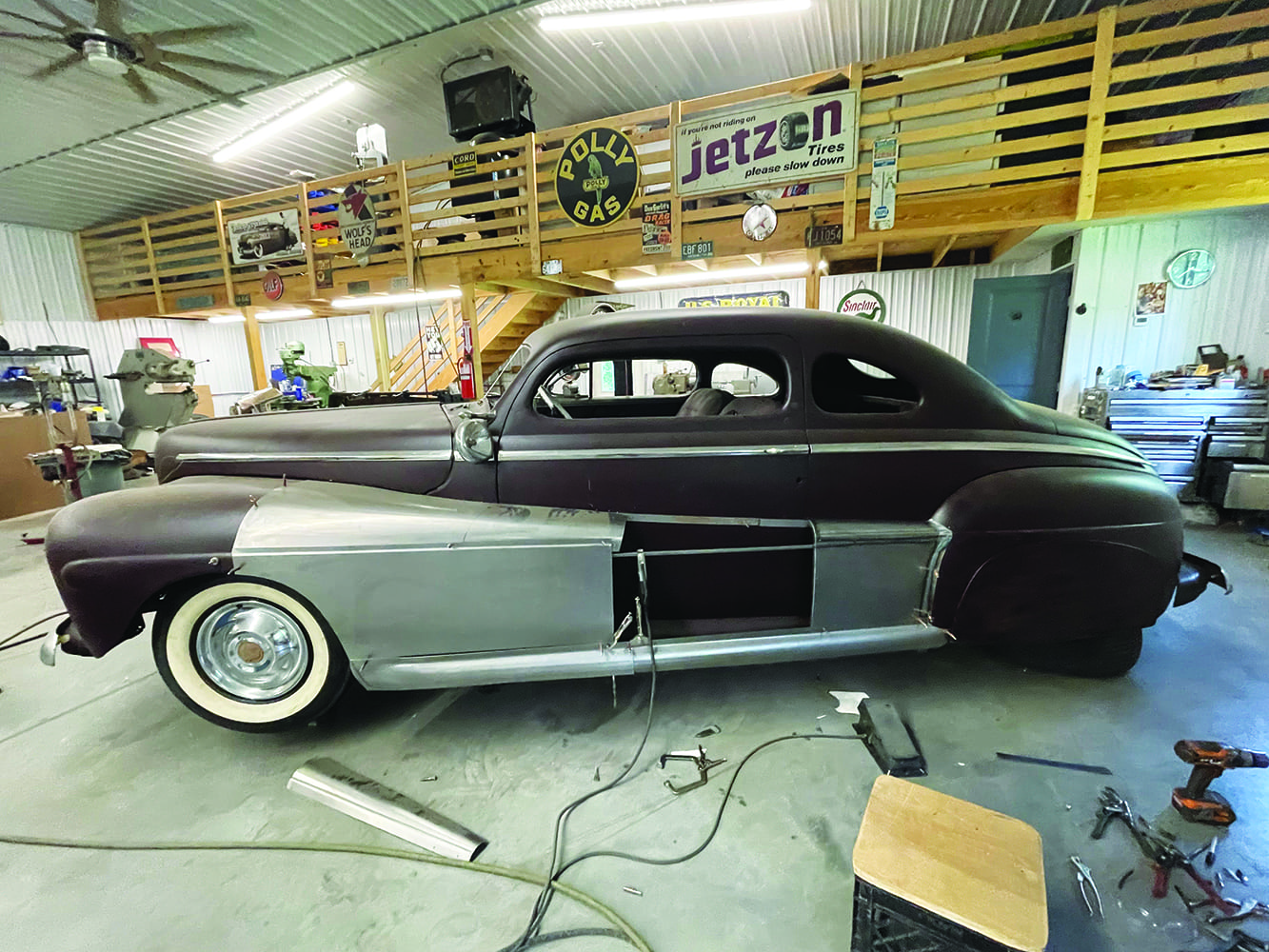
Interestingly, exactly where the sheetmetal would begin curving into the body on this particular project was a point of contention between Lippincott and Walls. “I had a really specific angle in my mind that I wanted the fadeaways to take as they sloped from the front fender to the rear,” Lippincott says, “and when Cody started designing them, they hit the rear fender higher than I envisioned. We went back and forth until he said, ‘Come look at it in person.’ When I saw it, he was totally right. He’s got a good vision, so after that I let him run with it.” In this case, that top line lands just below the factory bodyline that runs horizontally through the fenders (a design element that will come into play again shortly).
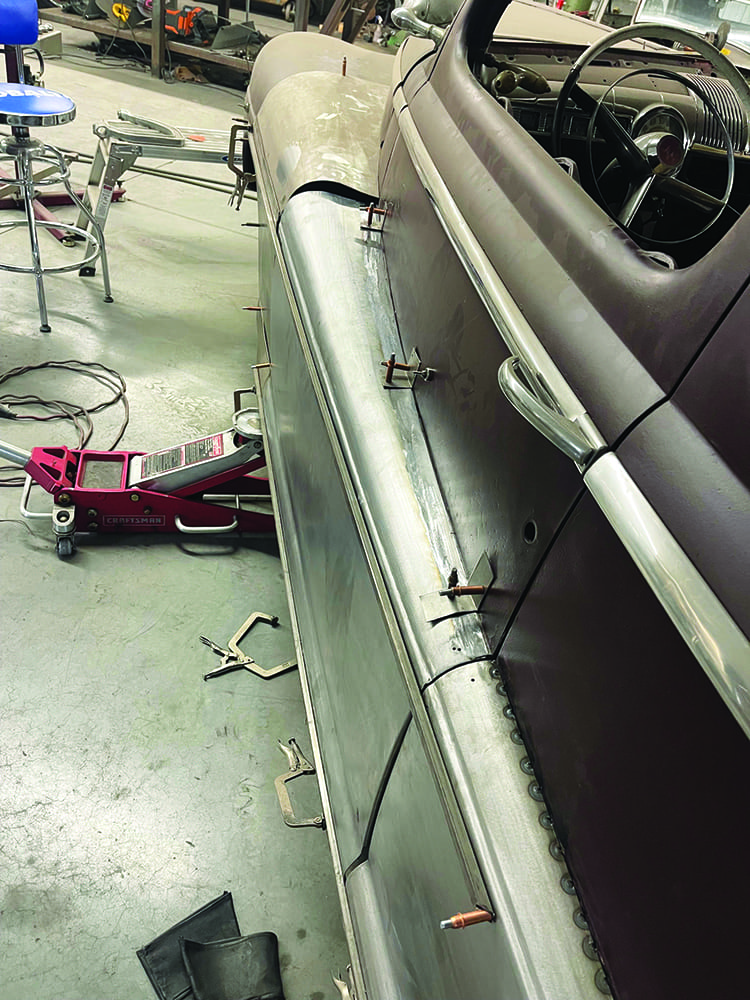
Walls used two pieces of 18-gauge steel to clamp to the horizontal runners and establish the basic shape of the fadeaway’s vertical area. Cut lines for the doors were ignored in the initial stages; they will be marked after the basic form of the extensions is finished. The fundamental curvature of the sheetmetal that will connect the new slab sides back to the body was drafted on paper and then transferred to steel, which was roughly shaped and Cleco’d in place.
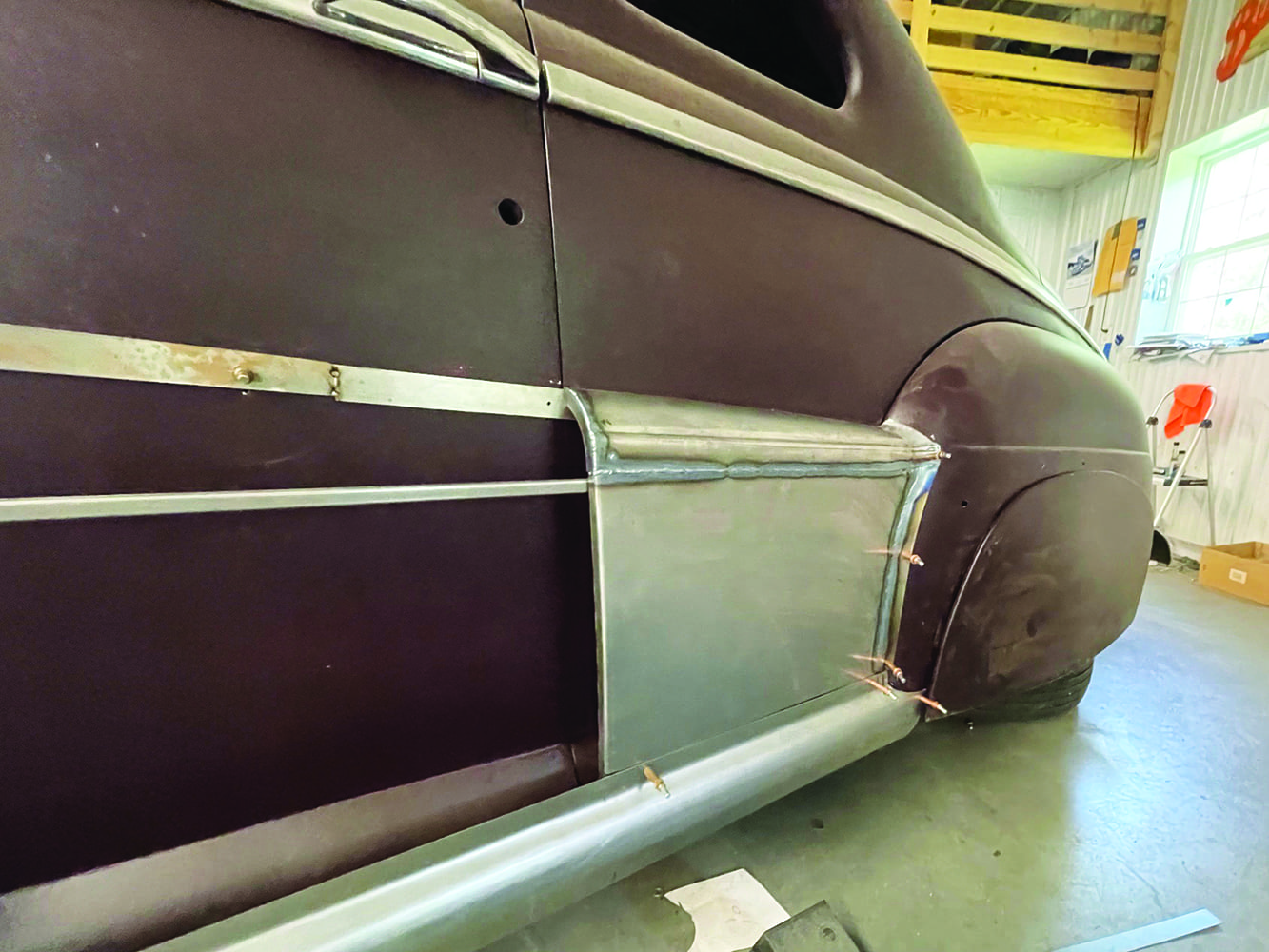
We mentioned that the horizontal body lines of the fenders would resurface. Many 1946-48 Ford customs have been relieved of those lines to simplify the profile. In this case, Walls not only kept them but extended them through the entire length of the fadeaways. It’s a cool touch that ties everything together and gives the new extensions an almost factory look, which was perfectly fine with Lippincott. “I actually asked Cody to make the fadeaways bolt on because I thought it made them look more factory-style,” he says. “I didn’t want them to be completely molded and smoothed out, and I feel like the more lines these have, the better they look.”
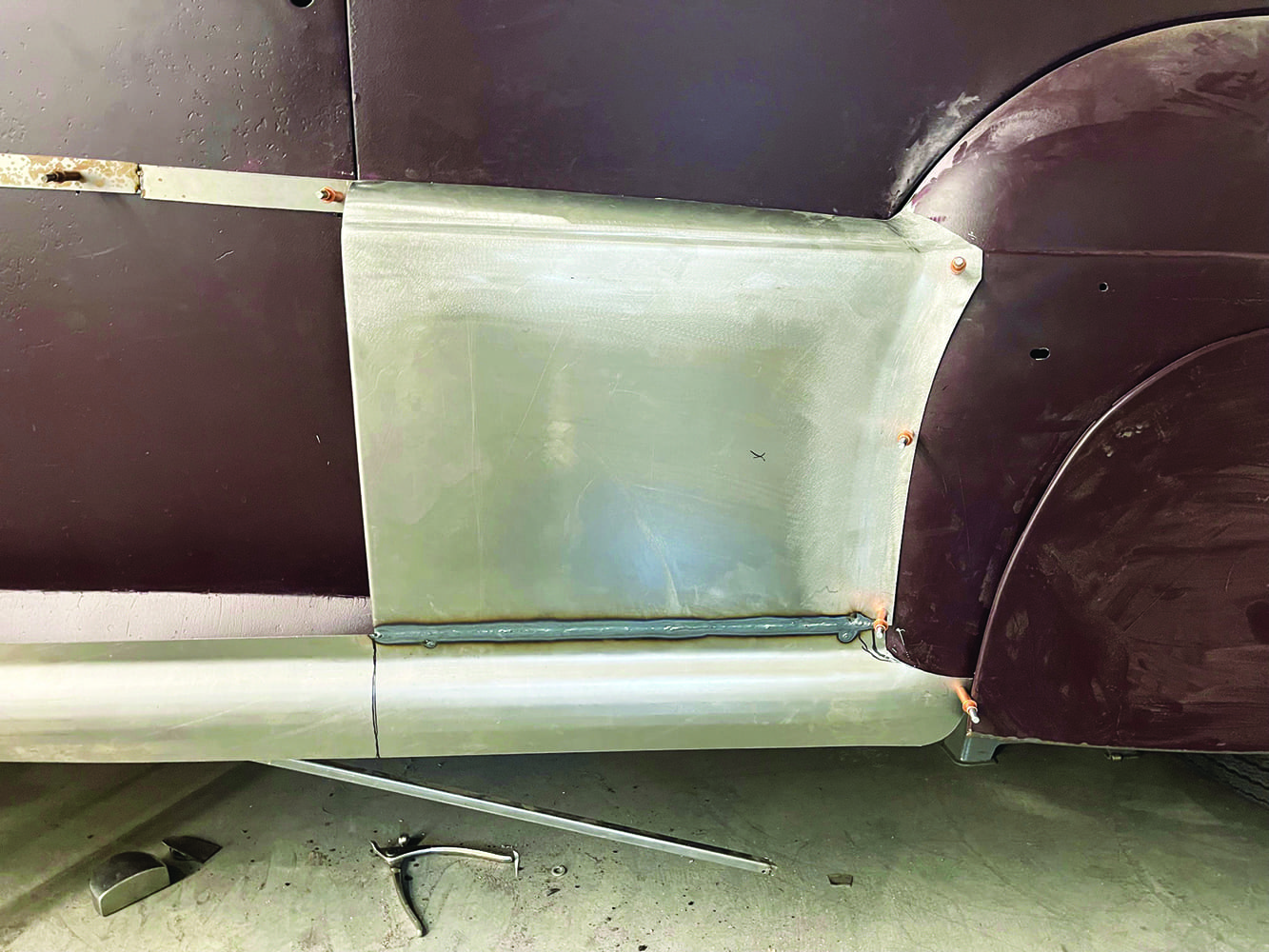
With the basic shapes of the extensions finished, the intensive process of shaping all the steel and making it functional began. Walls prefers to work with a combination of hand tools, an English wheel, a Pullmax, and a power hammer, and the size of the sheetmetal sections he crafts is determined by what’s easiest for him to handle with his various machines and techniques. For example, as noted, these fadeaways were created in two halves that were later welded together and cut back apart to form the door openings. Walls chose this method because forming one large piece would be too difficult for him to shape alone, and dividing them into three or more sections would have been unnecessary extra work.
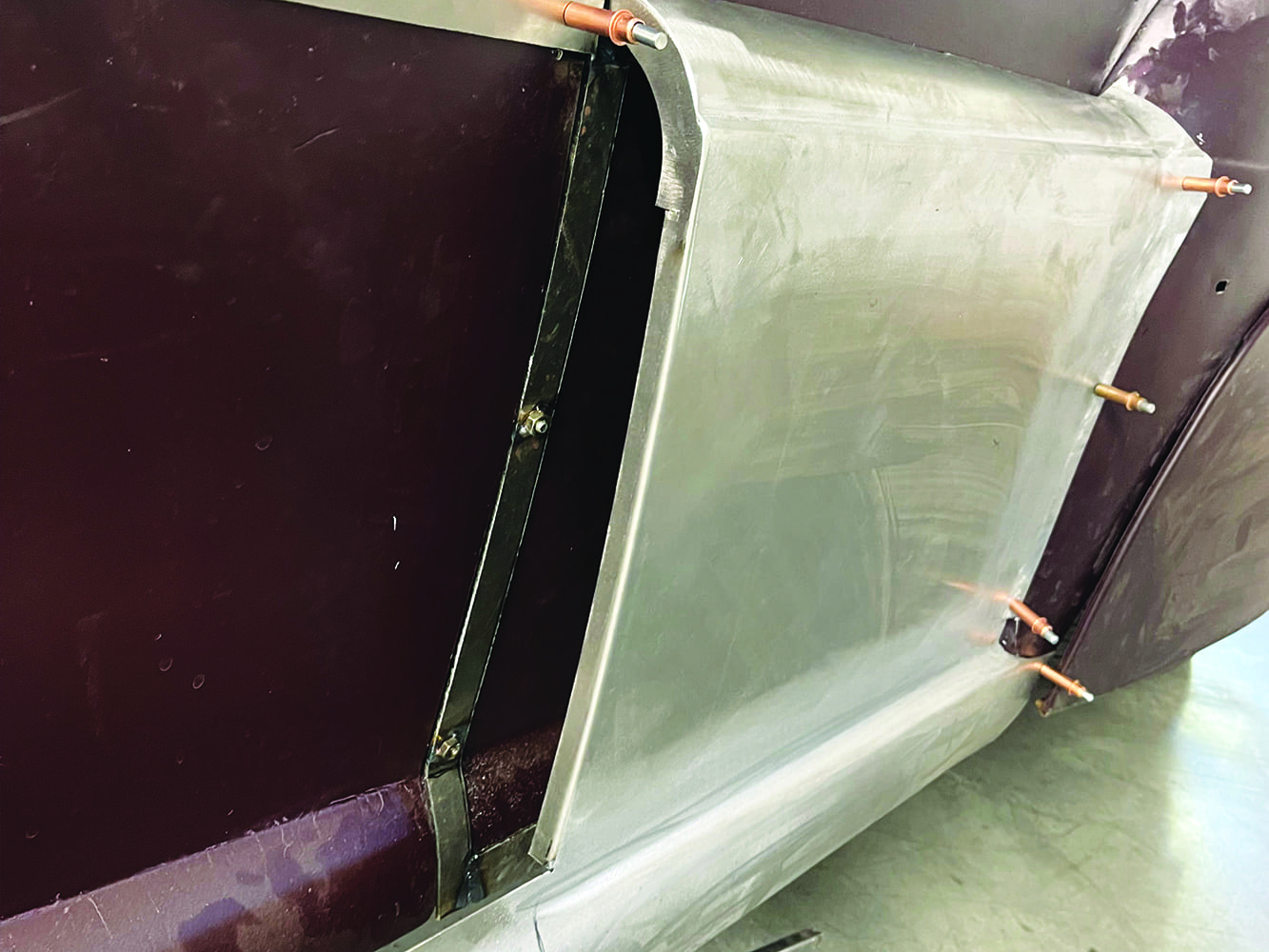
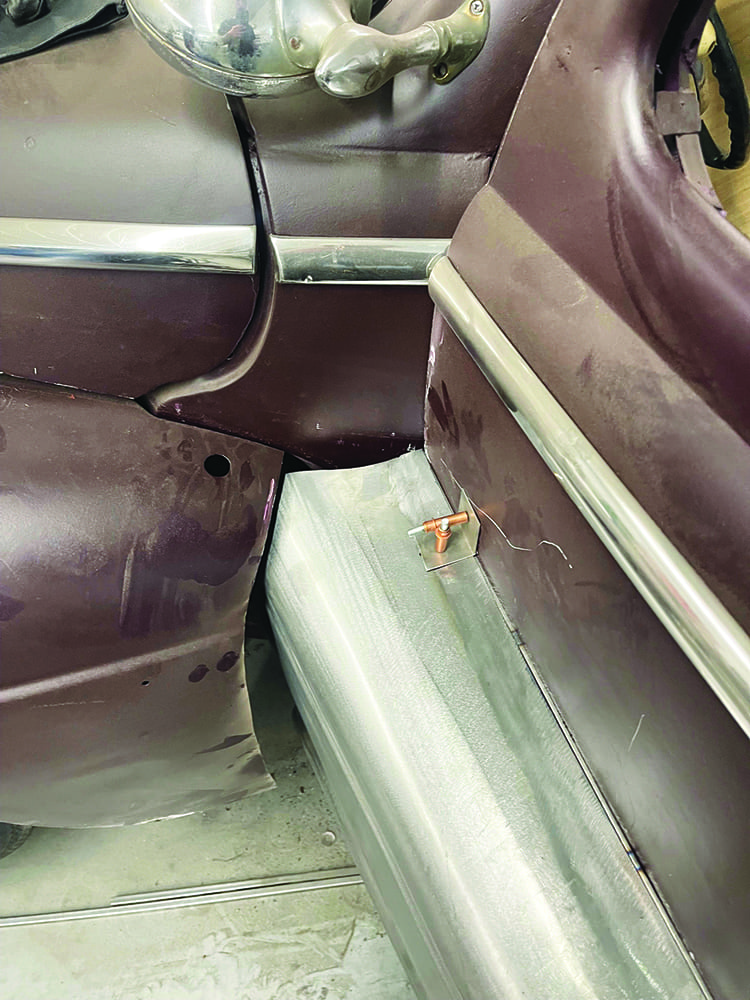
One design feature that sets Lippincott’s Ford apart from many other fadeaway customs we’ve seen is the vestigial running boards Walls created. The half-round shape tapers from the front fender back toward the rear, and the plan is to continue that shape behind the rear fender and connect it to the splash apron. It’s a nice touch that enhances the “factory look” Lippincott aims for, and it also breaks up the tall, vertical surface of the fender extensions quite effectively.
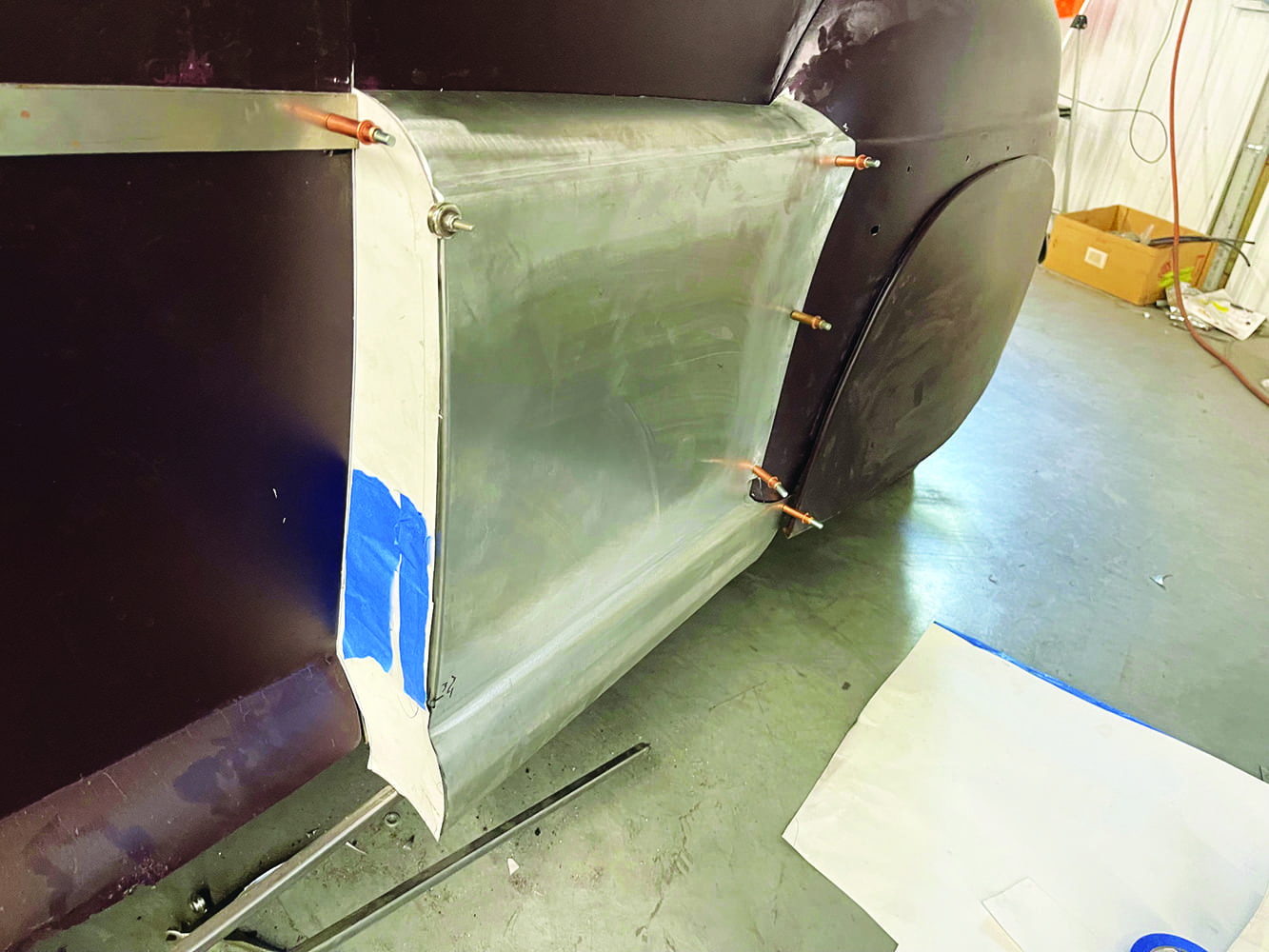
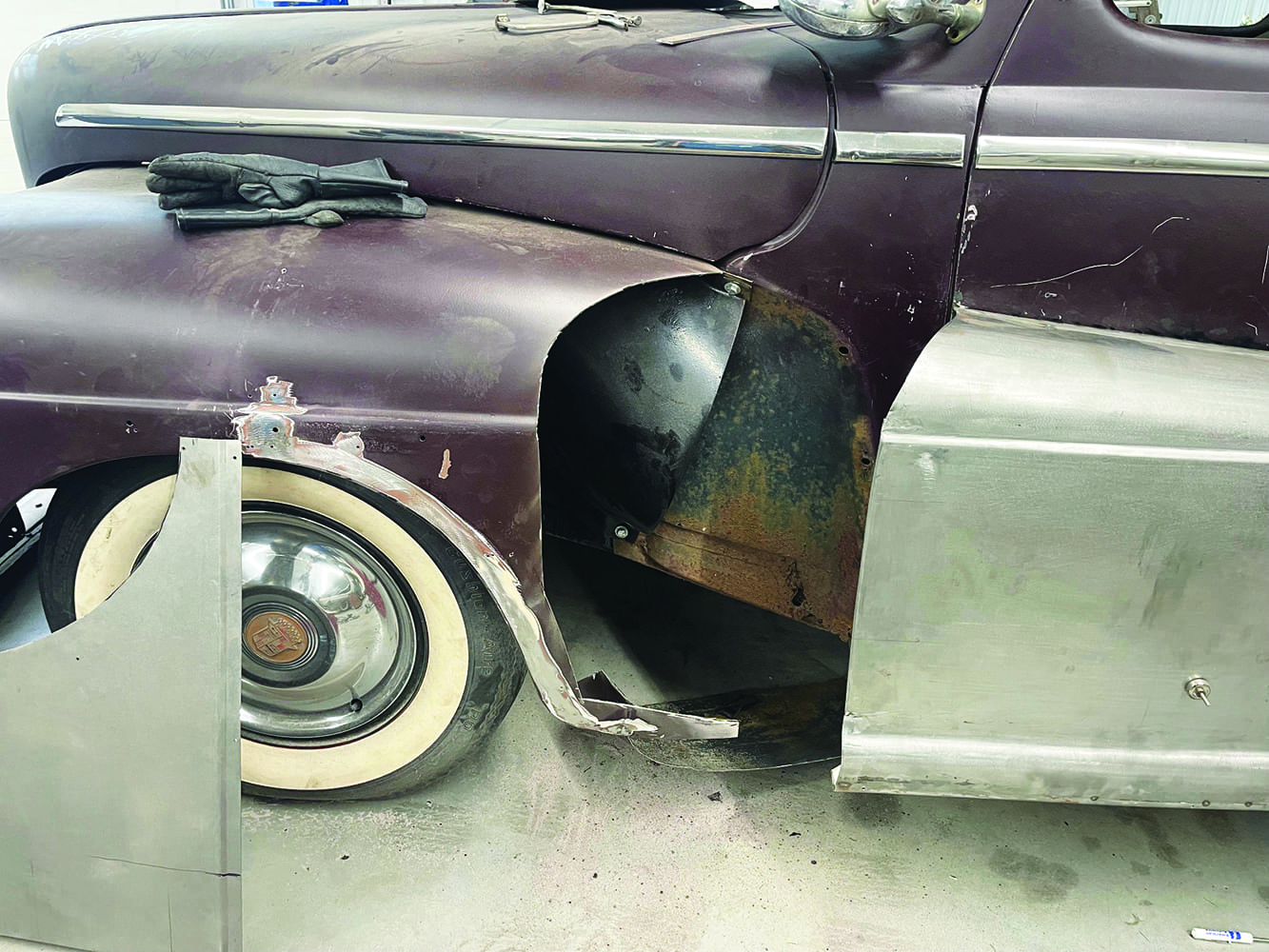
Creating the door openings on fadeaways can be a tricky proposition. When the fender line extends into the door, the leading edge of the door must swing inside the front quarter-panel without the doorskin contacting the rear edge of the quarter. With fadeaway fenders, the door hinge location hasn’t changed. Still, the fadeaways have added another 4 inches or more running from the front fender into the door (depending on the width of the extensions), so when the door opens, it will now need to tuck inside those front quarters.
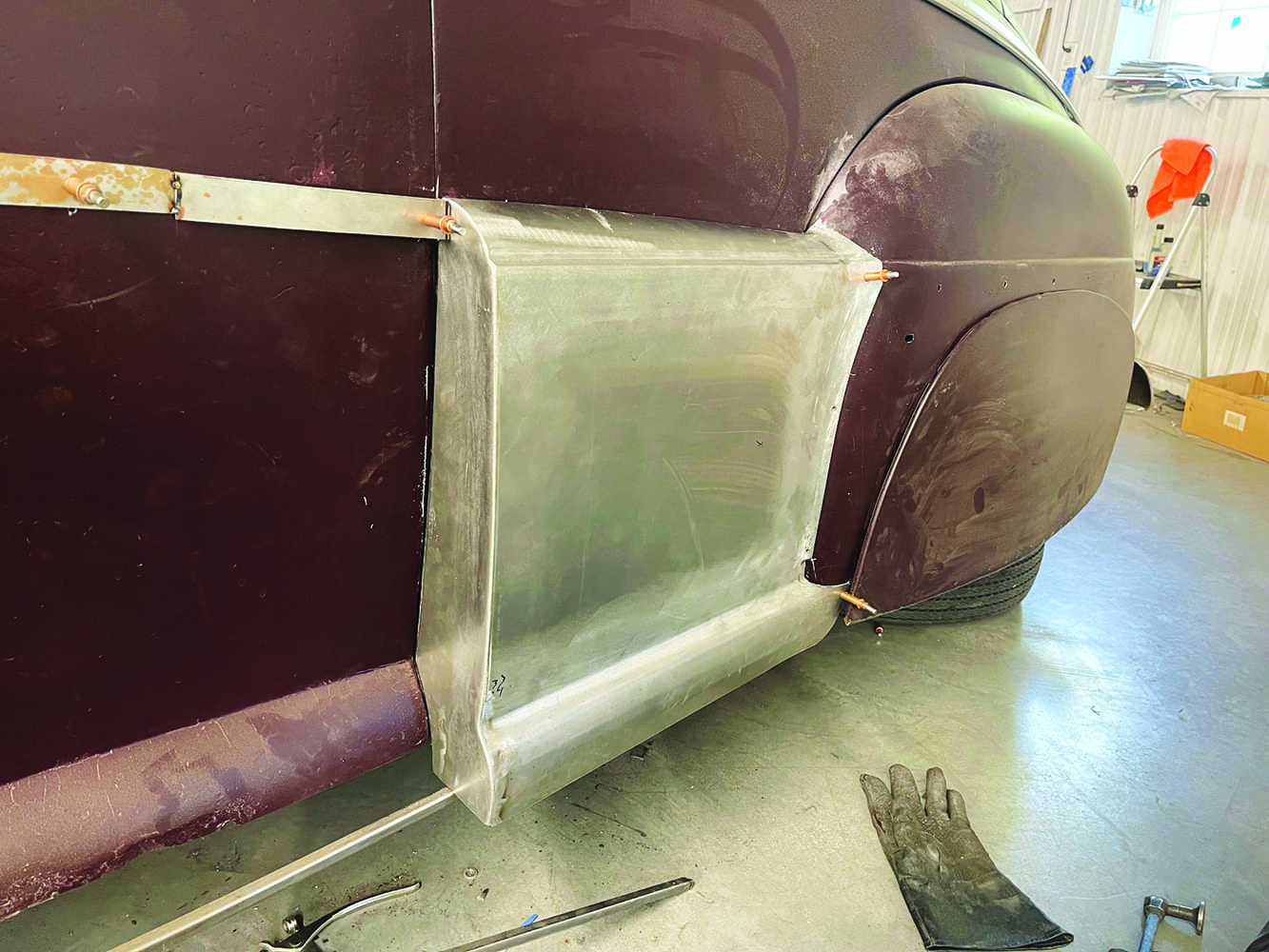
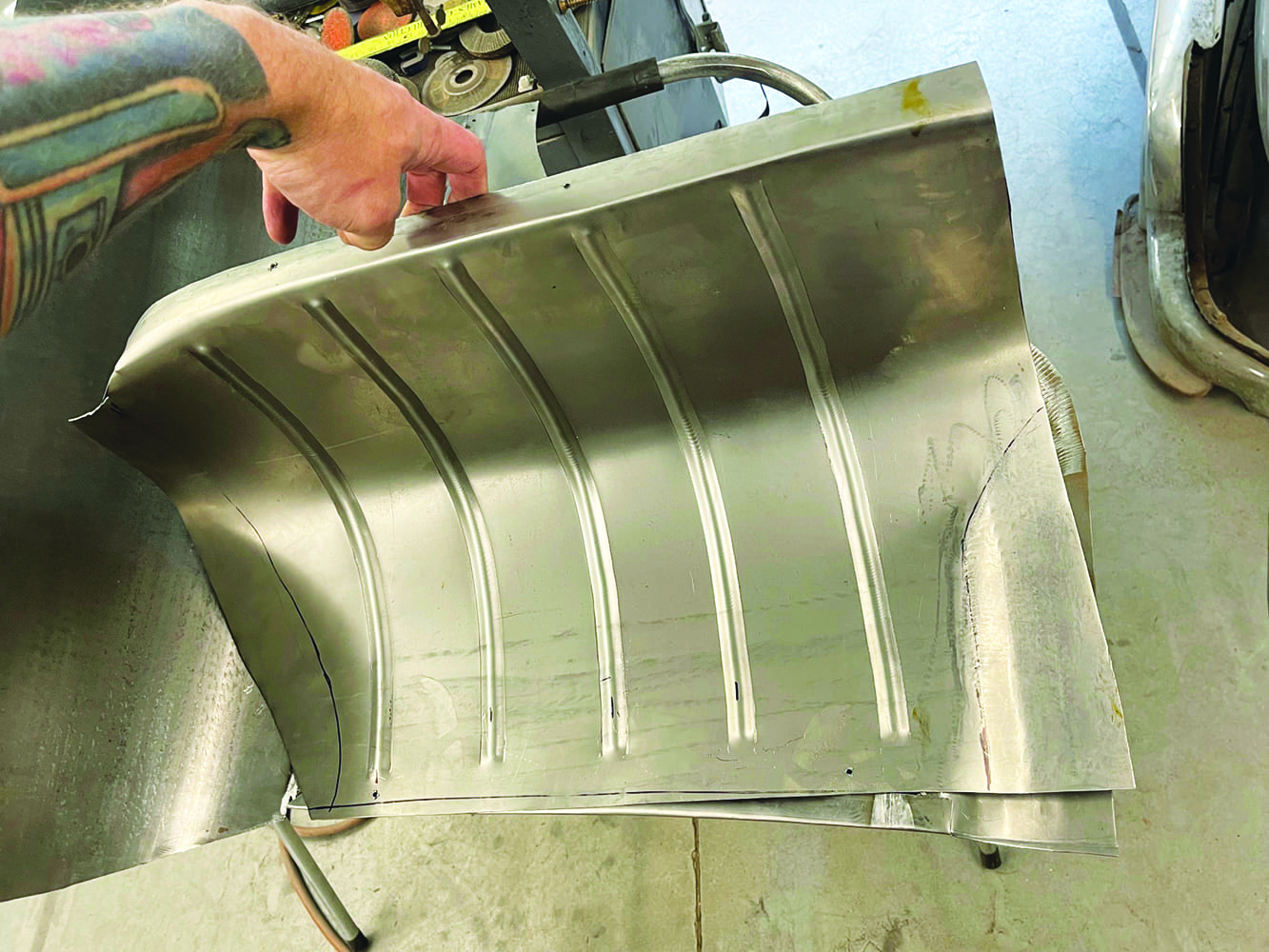
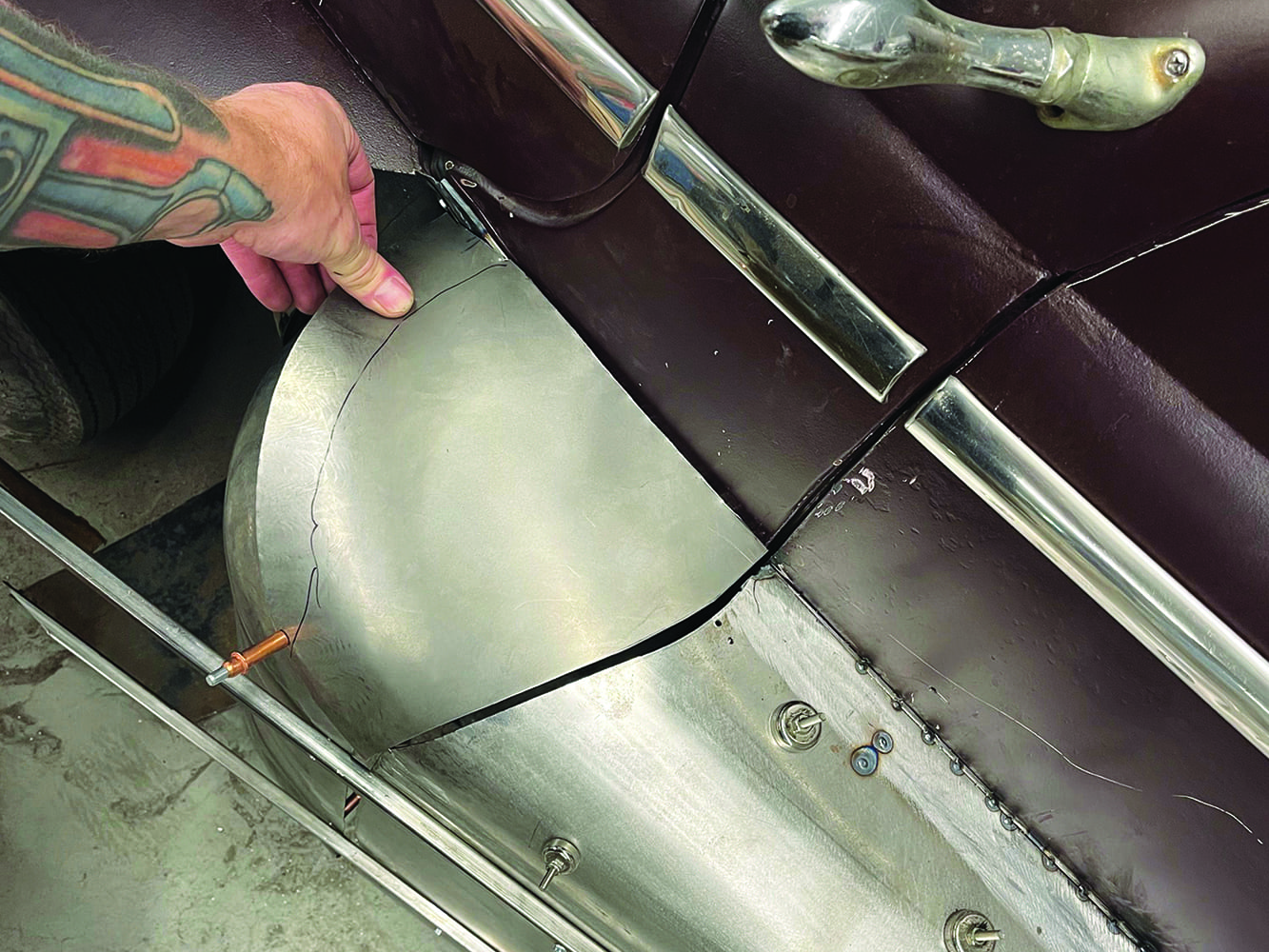
To make everything work, Walls cut away the rear part of the factory fender (which will be hidden behind the fadeaways anyway) and shaped a cove for the new door edge to swing into. He formed more 18-gauge steel and rolled it with horizontal beads to add extra strength and a bit of visual interest when the door is opened. At the back edge of the door, the open areas in the doors and the rear quarter’s fadeaway sections were filled with steel inserts for a smooth, finished appearance. Whenever possible, Walls prefers to flange the edges where his sheetmetal panels begin and end, such as at the split in the fadeaways for the door opening and then butt weld smaller filler sections in place. This way, he has a flat seam for hammer welding rather than a welded corner that can’t be adjusted to account for any stretching or shrinking that may occur in the panel during welding.
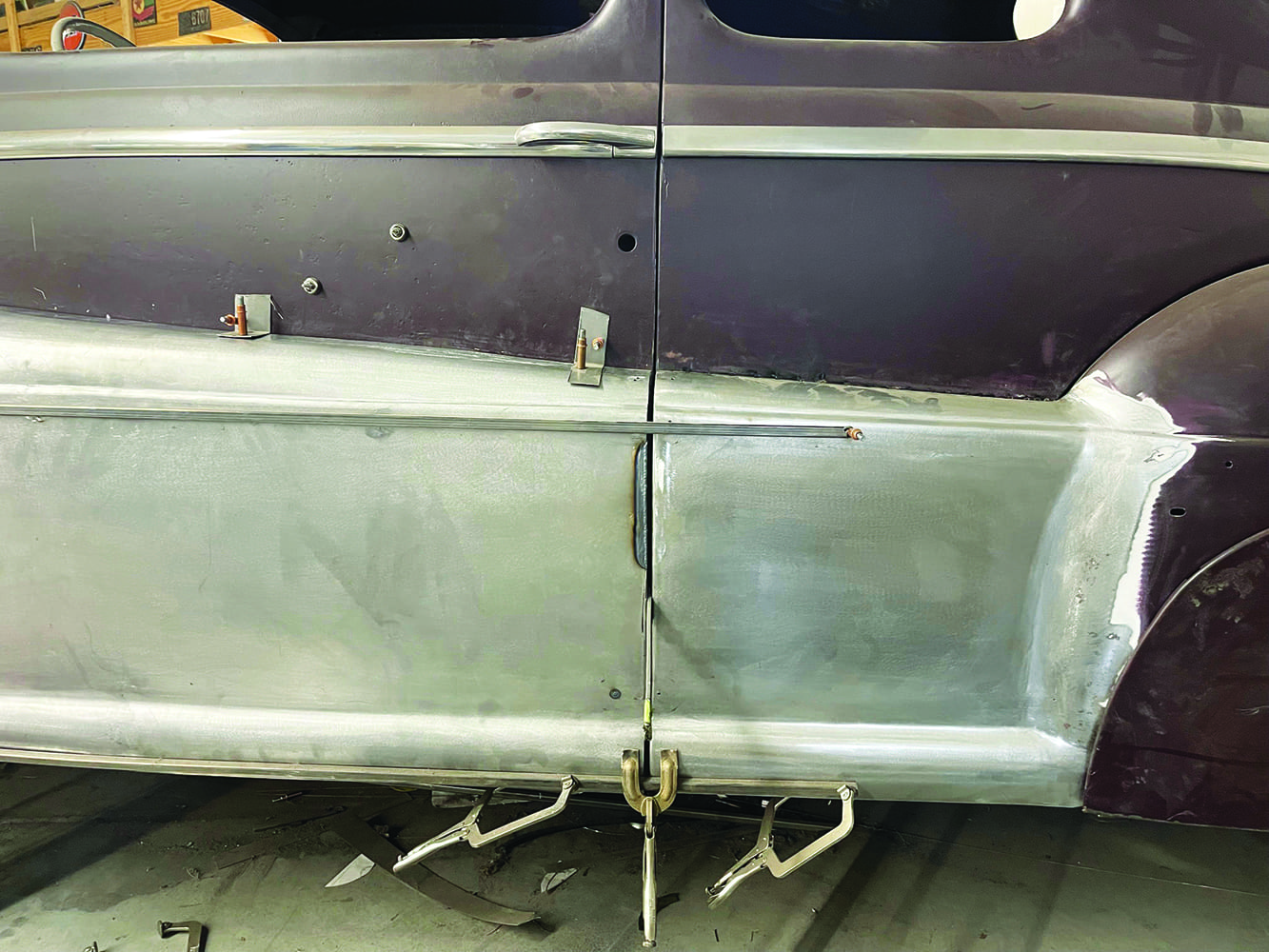
As you’ll see in the featured images, Lippincott’s Ford is still a work in progress. We plan to share more in a future issue as those fadeaway rockers are extended around to the back of the car and other custom tricks are added. But it’s clear how much the fadeaways influence the overall design of the car, turning what was once a workingman’s coupe into a smoothly flowing custom that pays homage to the sleek, streamlined styles of pre- and postwar designers and coachbuilders. MR
Check out this story in our digital edition here.