In the first installment of our coverage on this remarkable Corvette—a full-scale reimagining being crafted by the talented team at Roadster Shop—we explored some of the work that went into reshaping the firewall, floor, and interior panels. This time, we’re taking a closer look at a different side of the build: what it takes to fit the glass and trim to a level that goes far beyond factory standards.
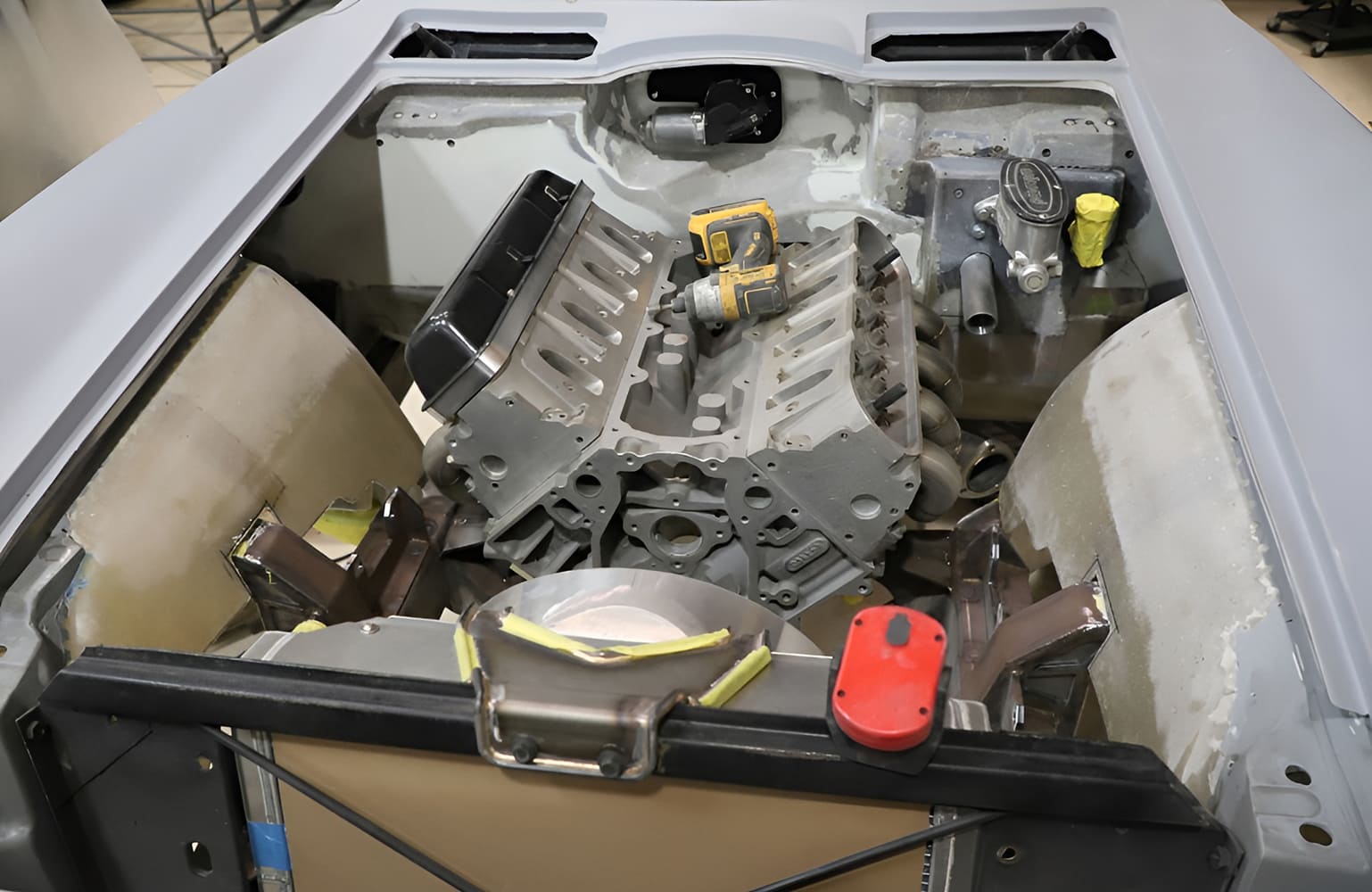
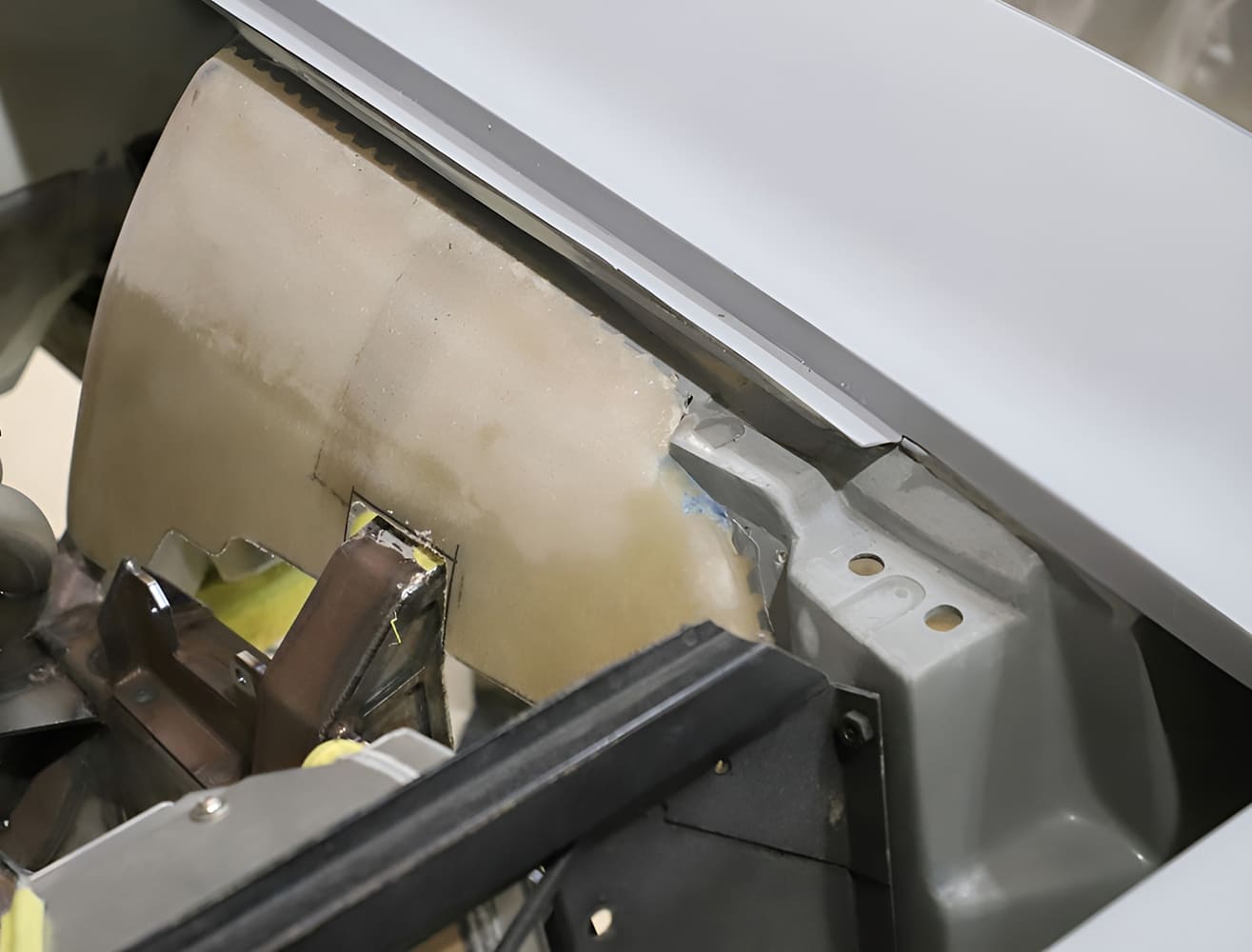
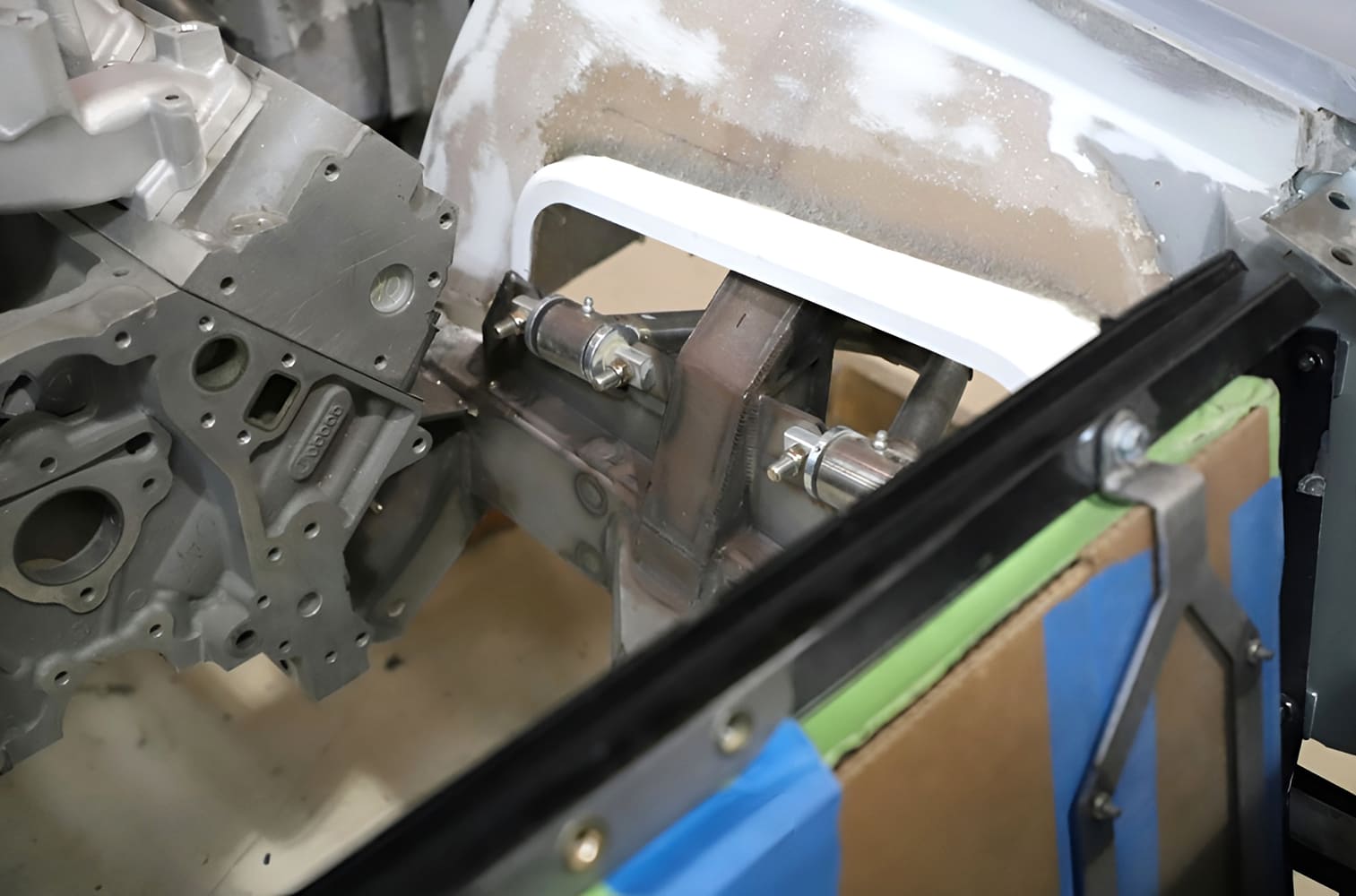
New fiberglass front wheelwells were fitted to the car, then further modified to better integrate with the Roadster Shop chassis.
Beneath the hood, the inner wheel panels were smoothed and carefully reshaped to nestle cleanly around the new front suspension. New flanged fiberglass panels were fabricated and bonded into place, adding strength and giving the lower edges a finished, coachbuilt look.
The first step was notching the wheelwell to clear the section of chassis supporting the new front suspension.
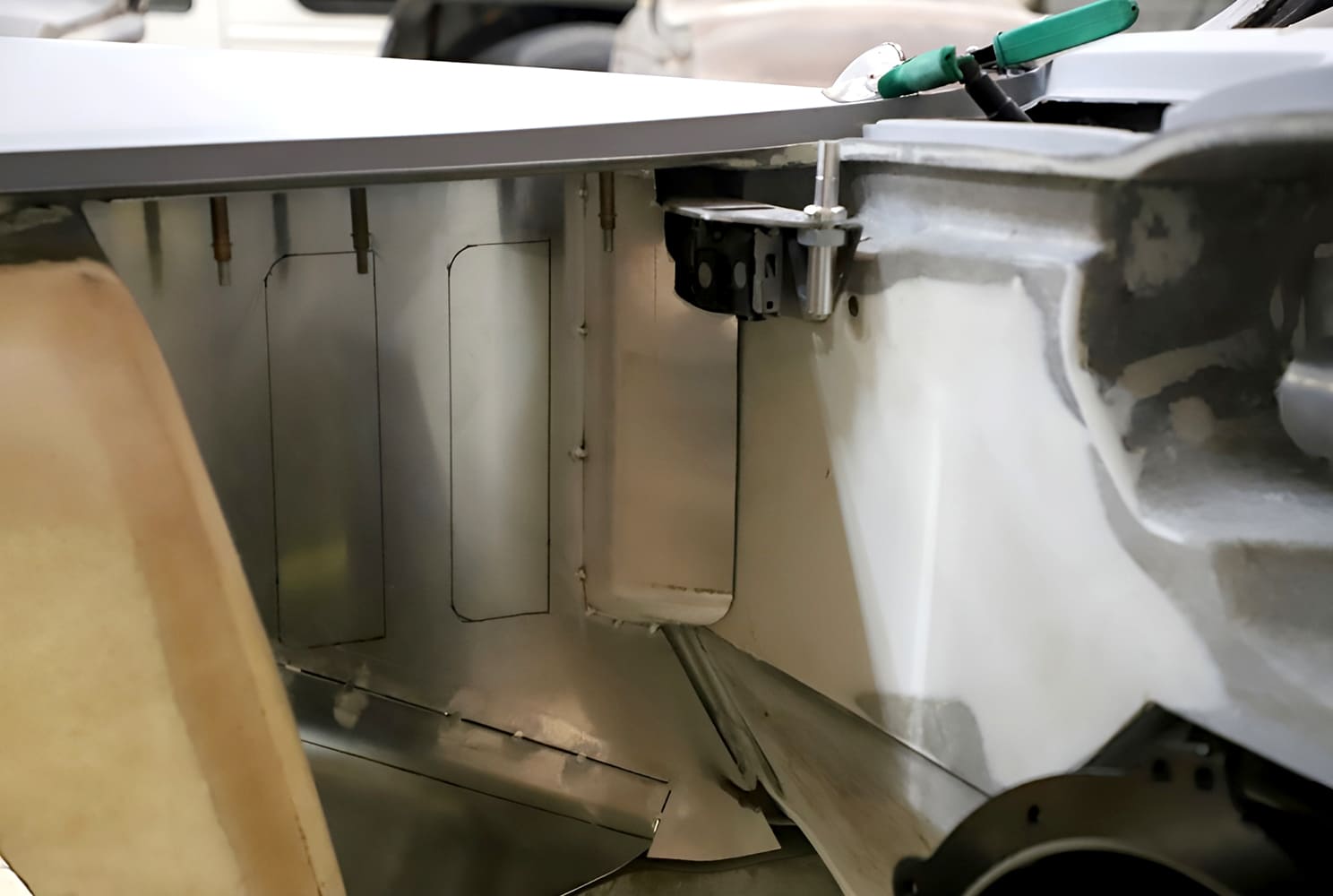
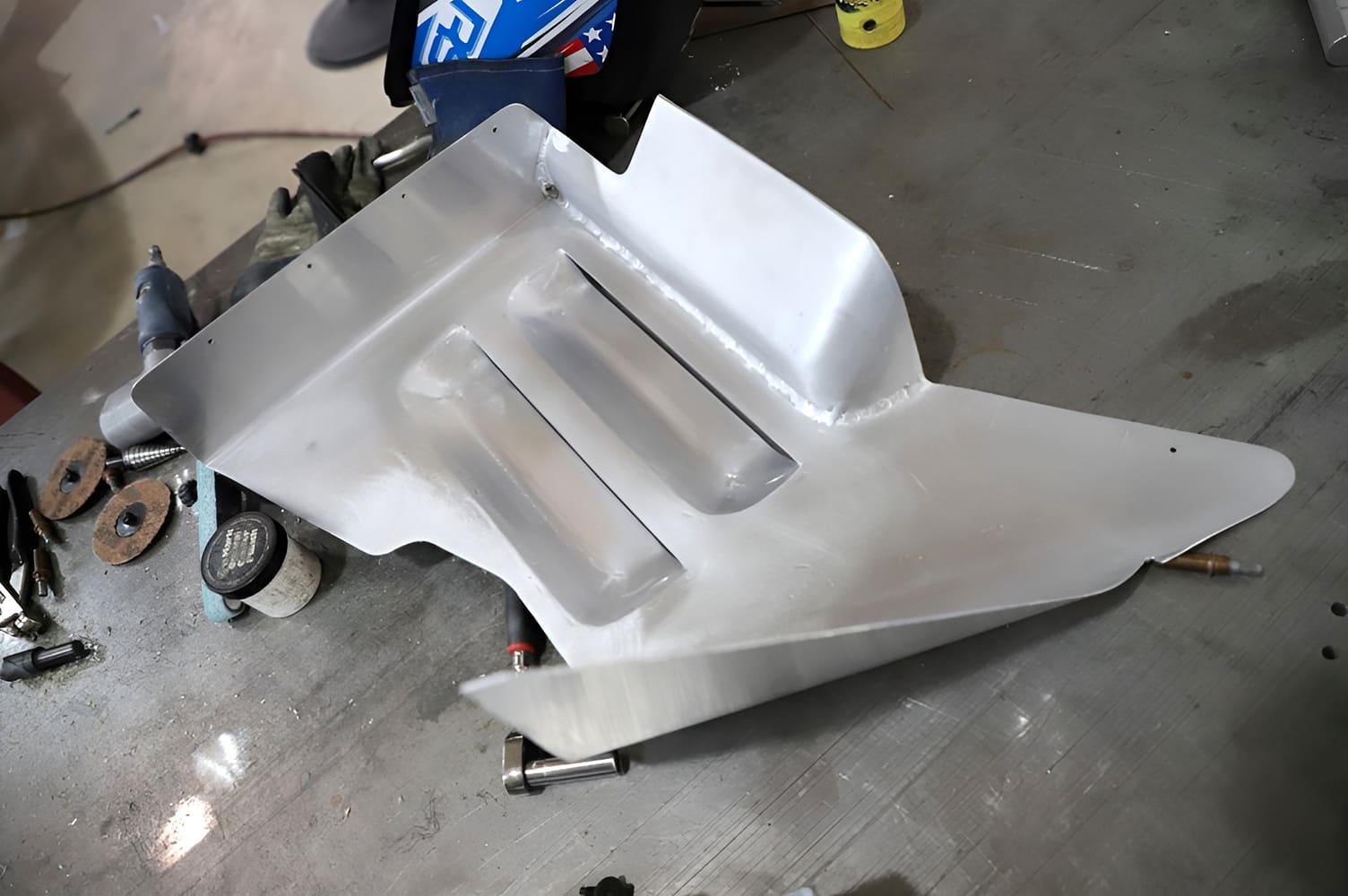
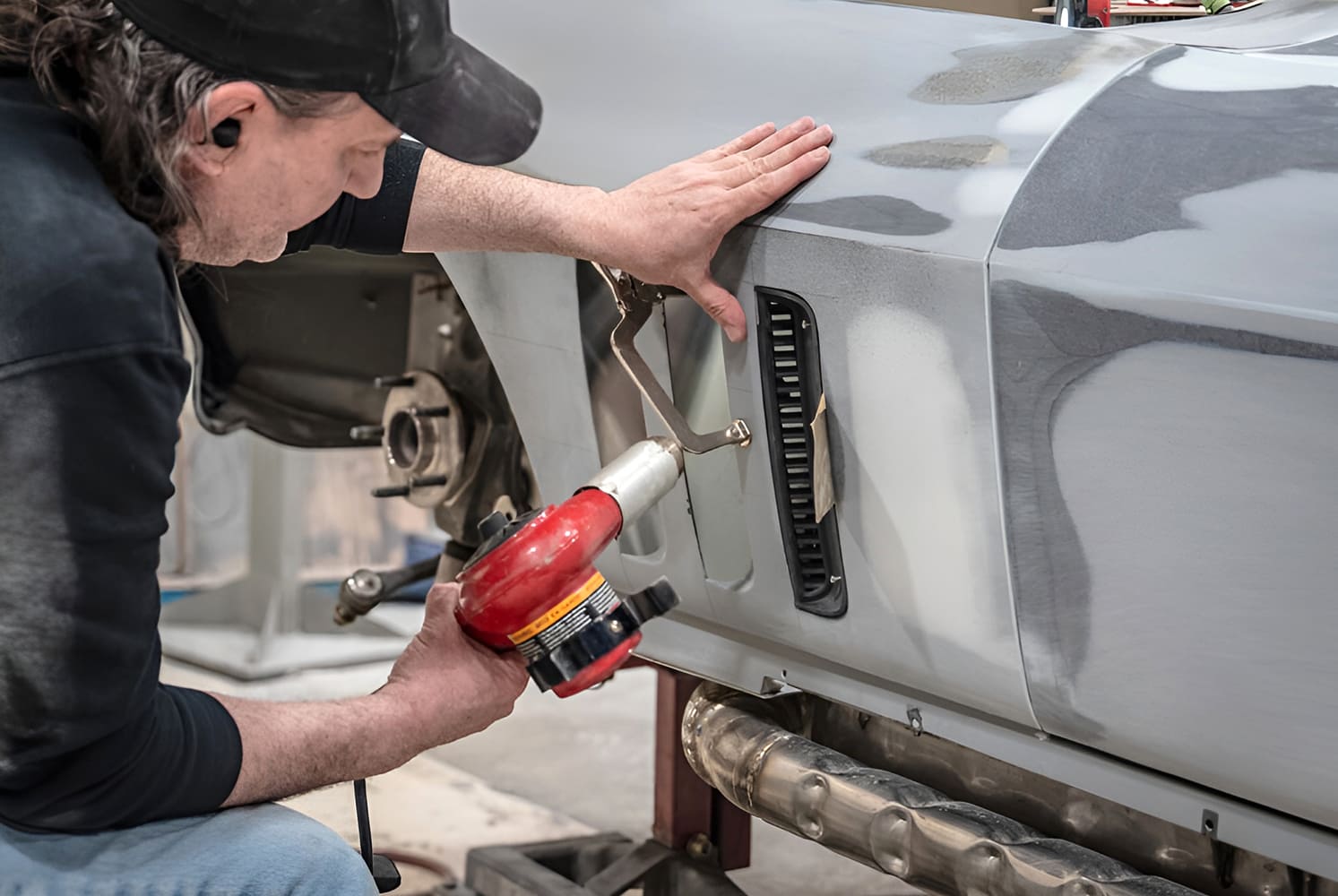
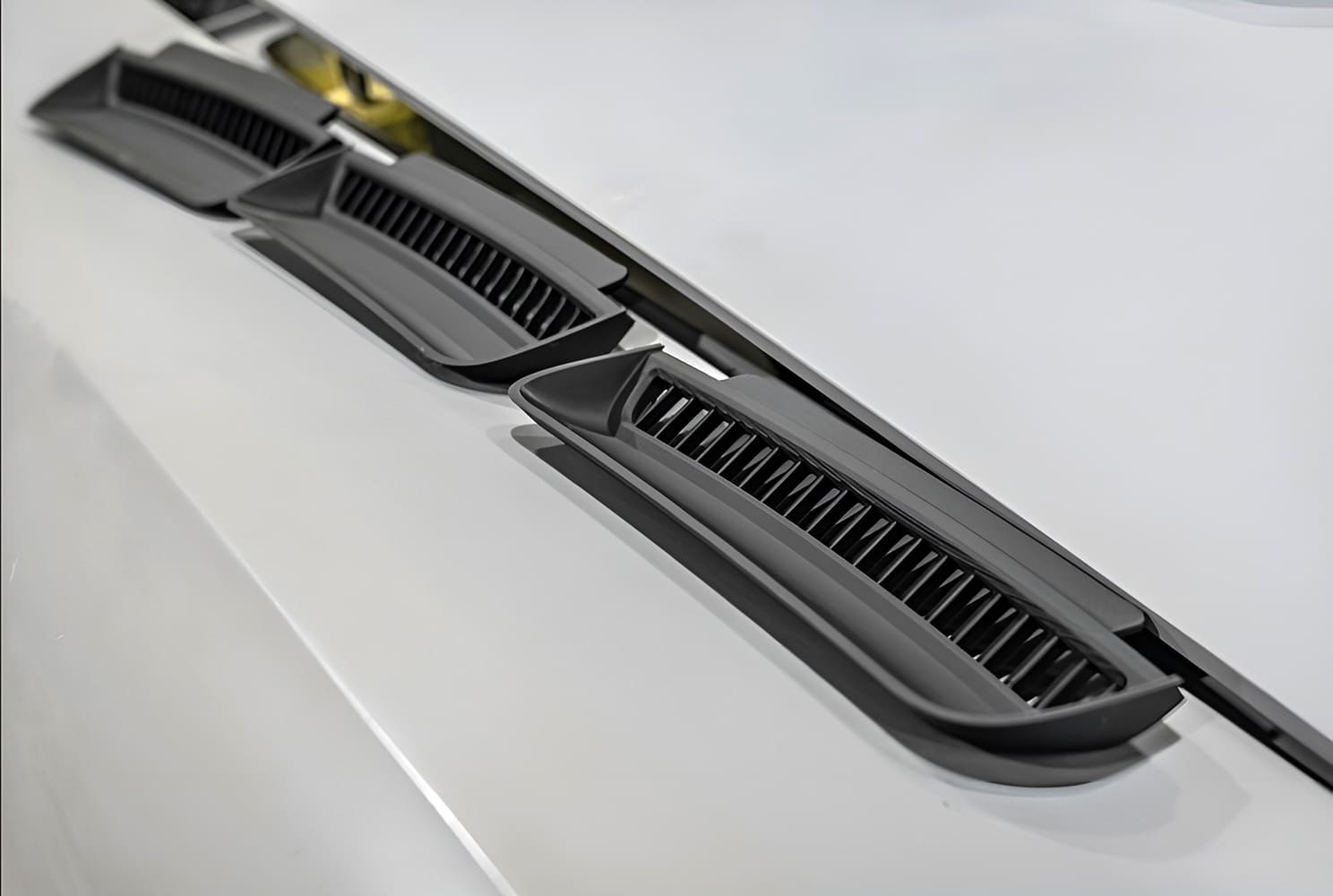
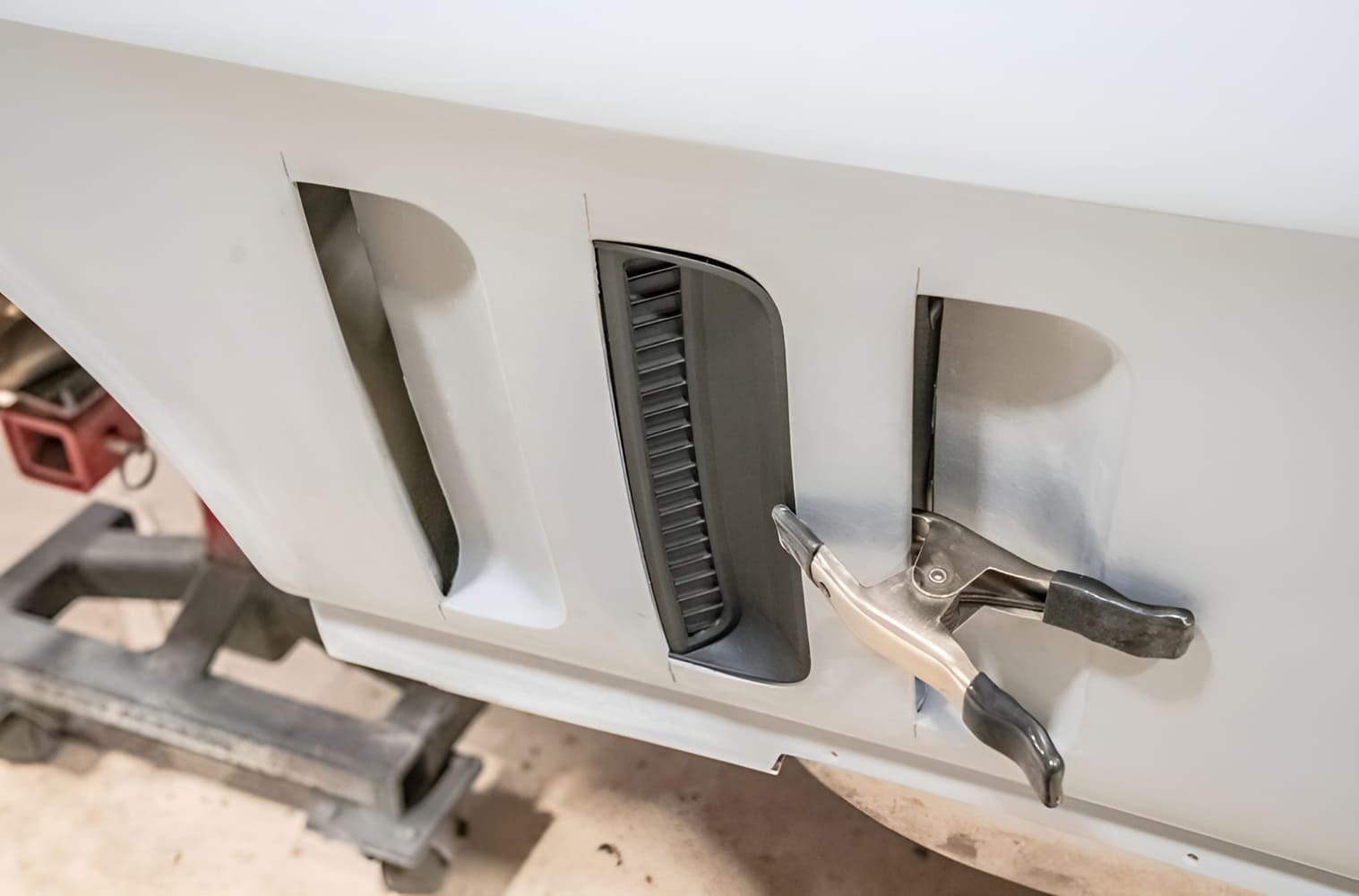
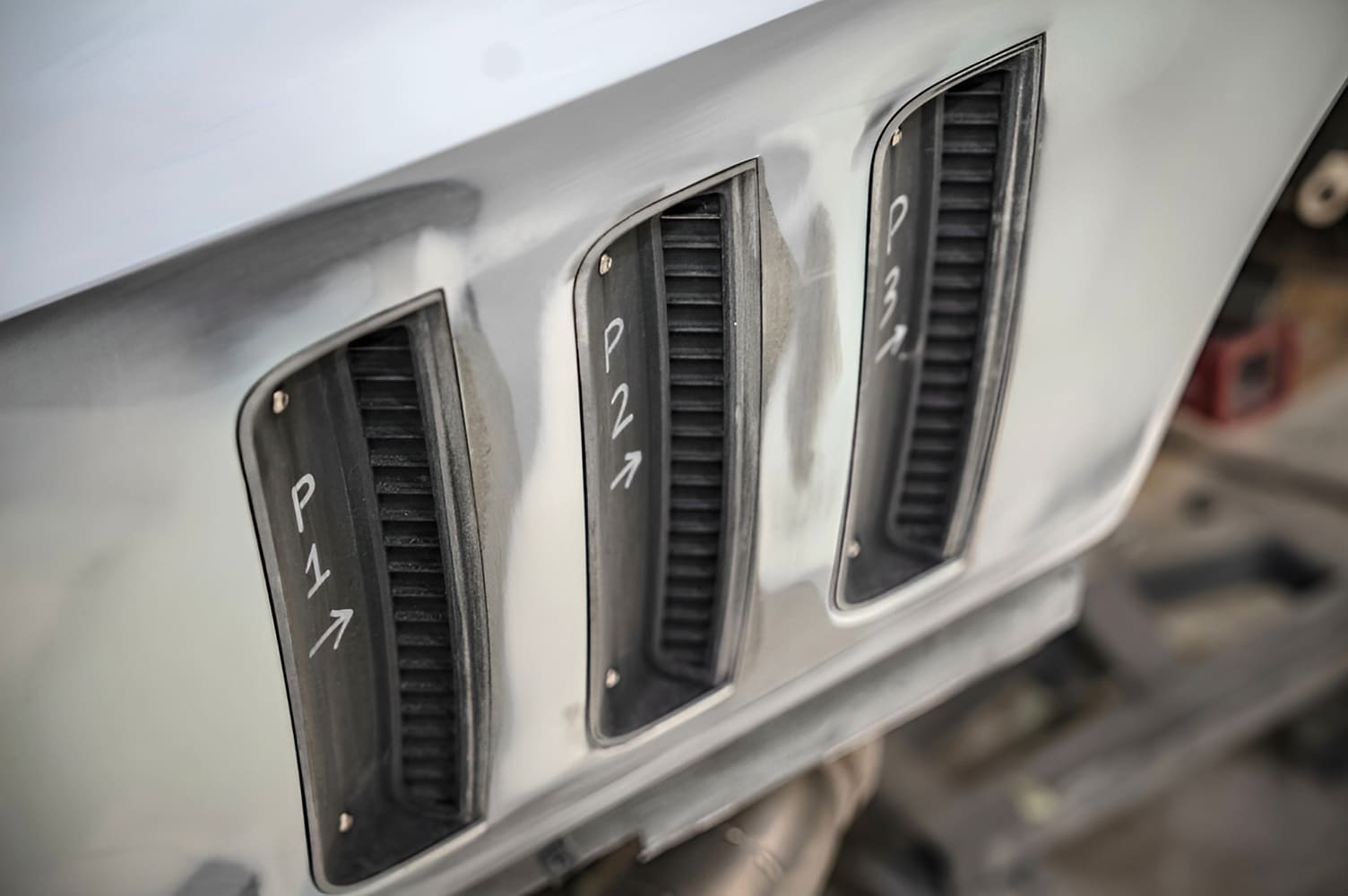
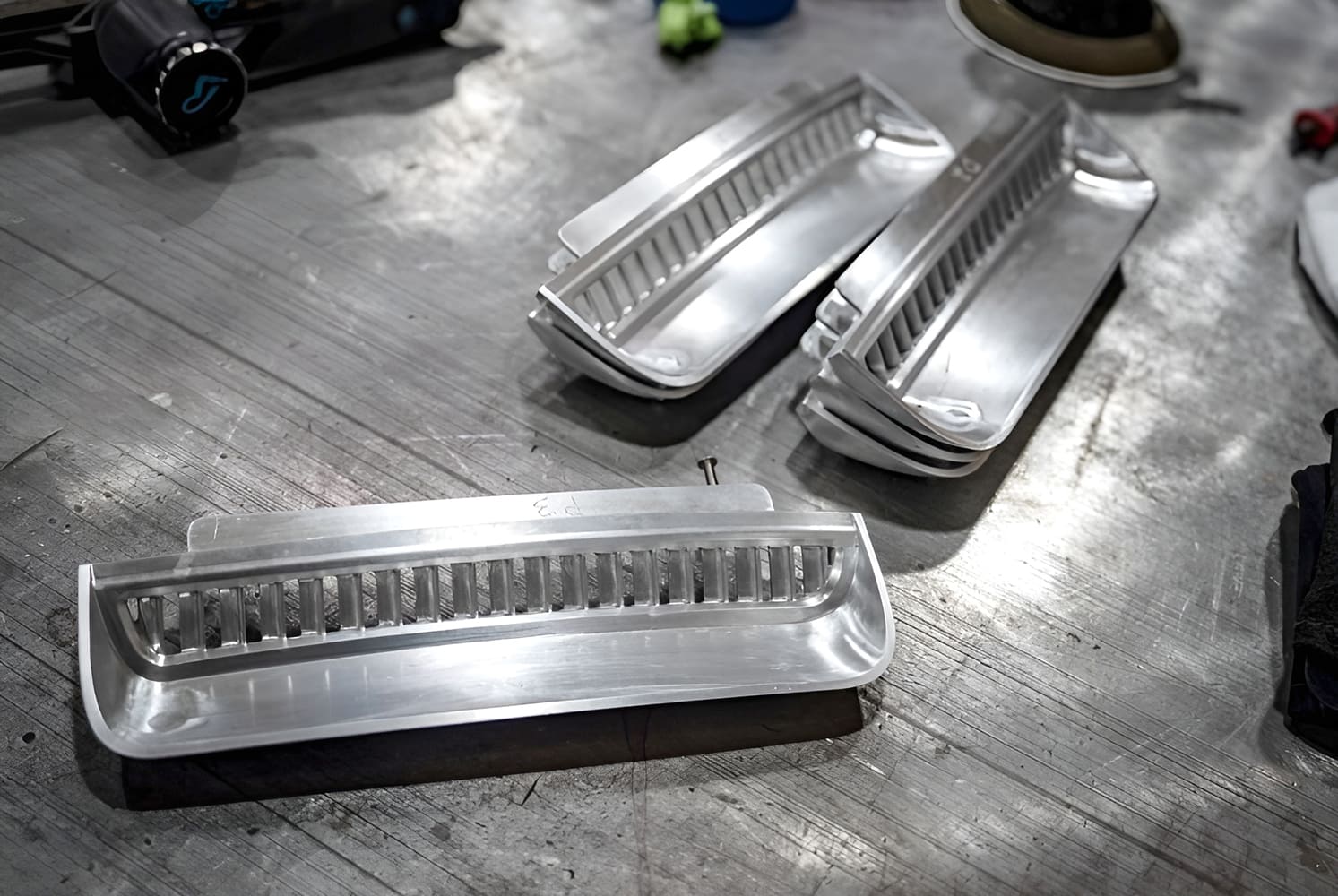
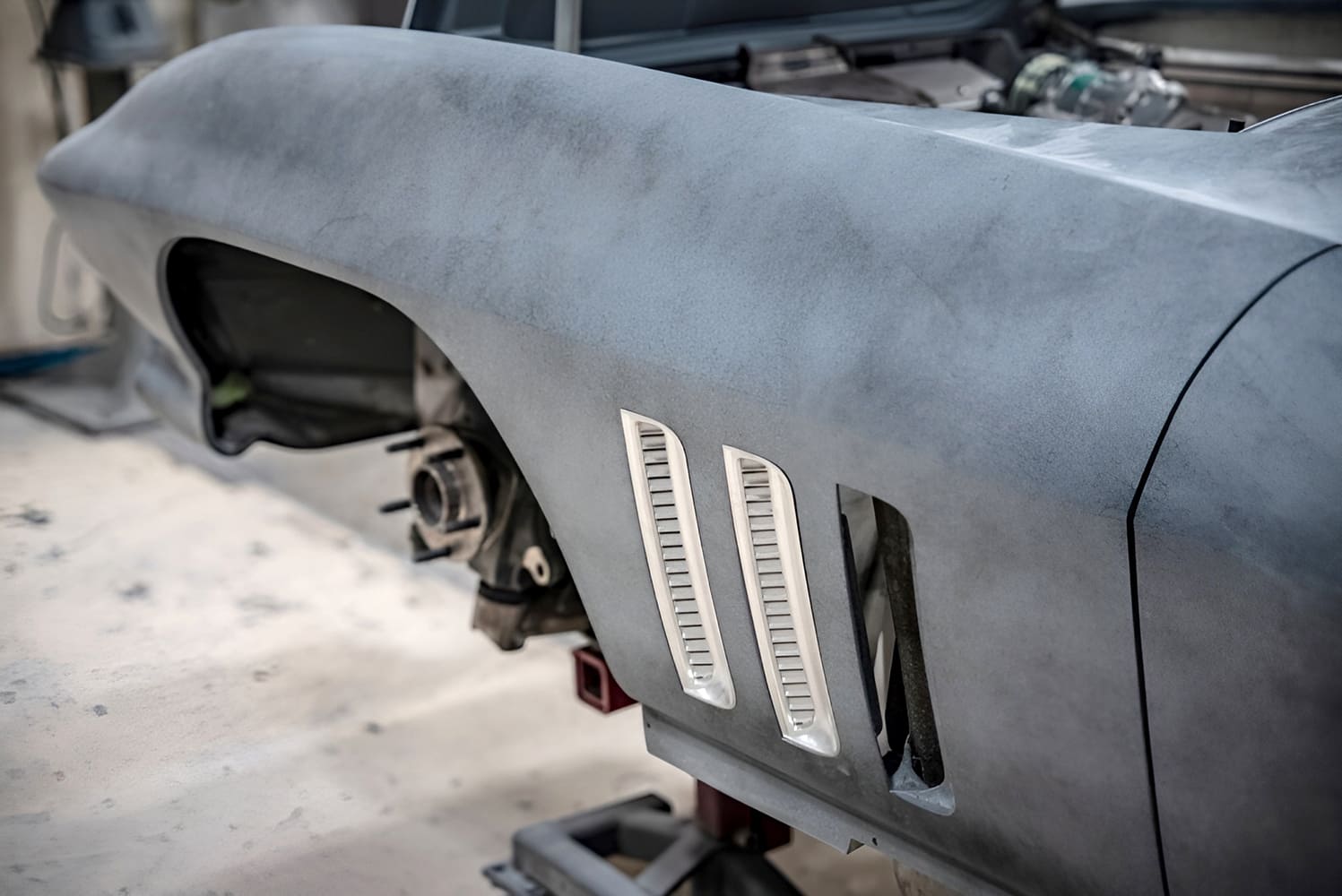
The Corvette’s signature side vents also received a complete rethink. New pieces were machined from billet aluminum, and 3-D–printed polymer prototypes were created along the way to perfect the recesses before committing to metal. On the inside, hand-fabricated aluminum panels were added to properly duct air through the functional vents—blending design and engineering in equal measure.
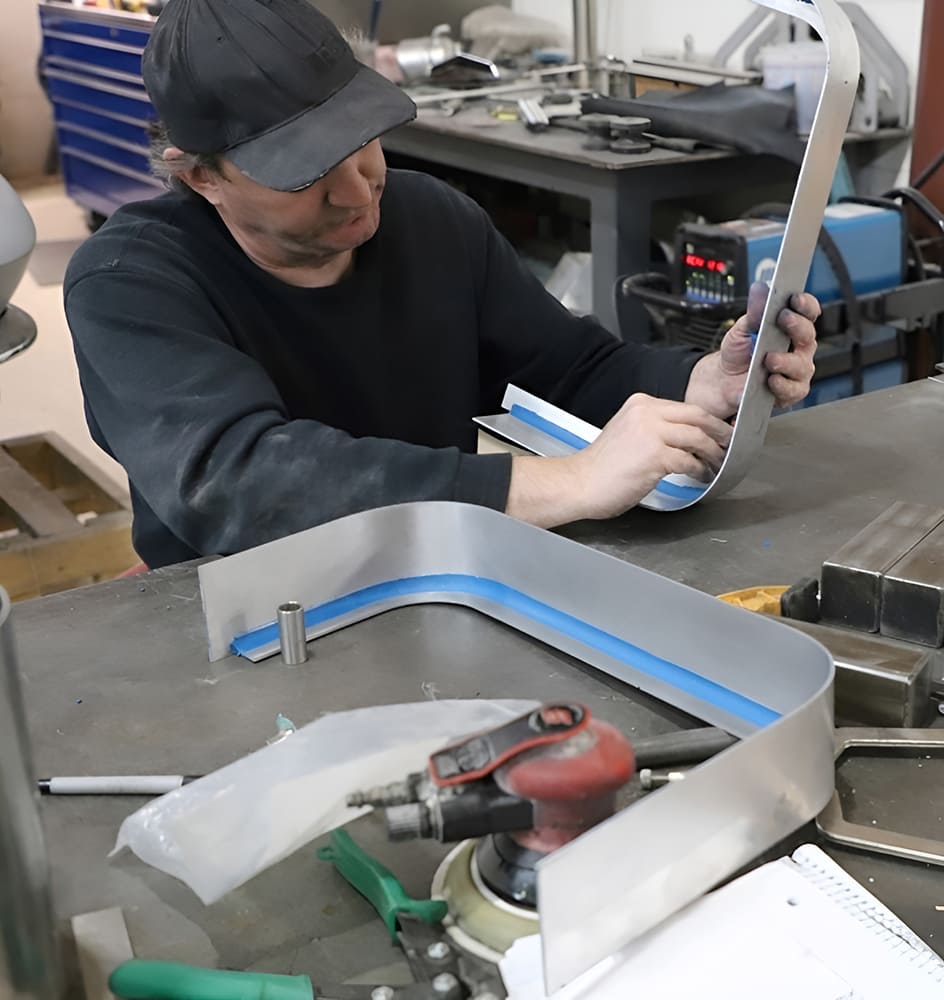
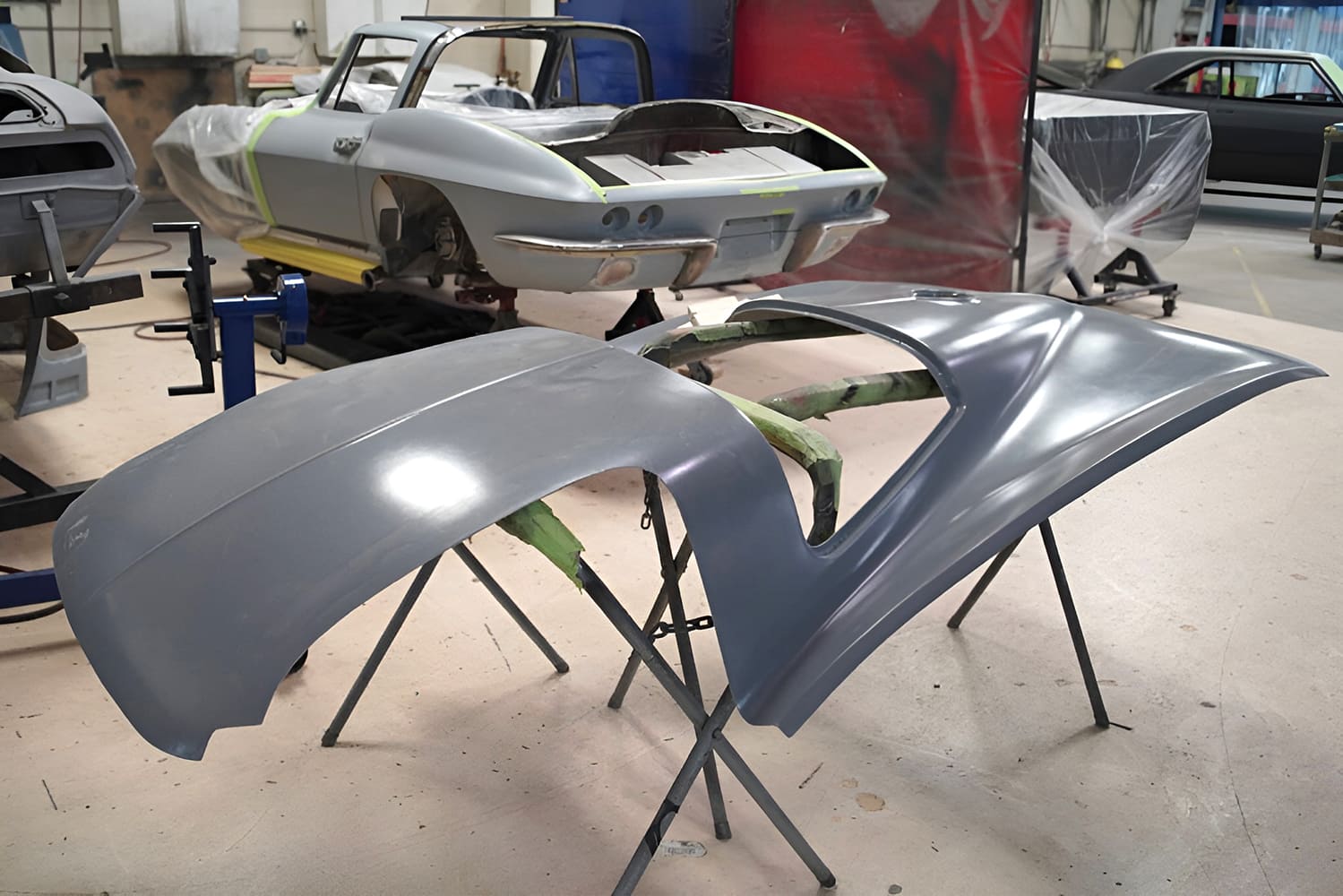
To create new fiberglass flanges, simple sheetmetal forms were built. Here, clay is pressed into the inner corner to form a smooth fillet, which will translate into a rounded corner on the final fiberglass piece.
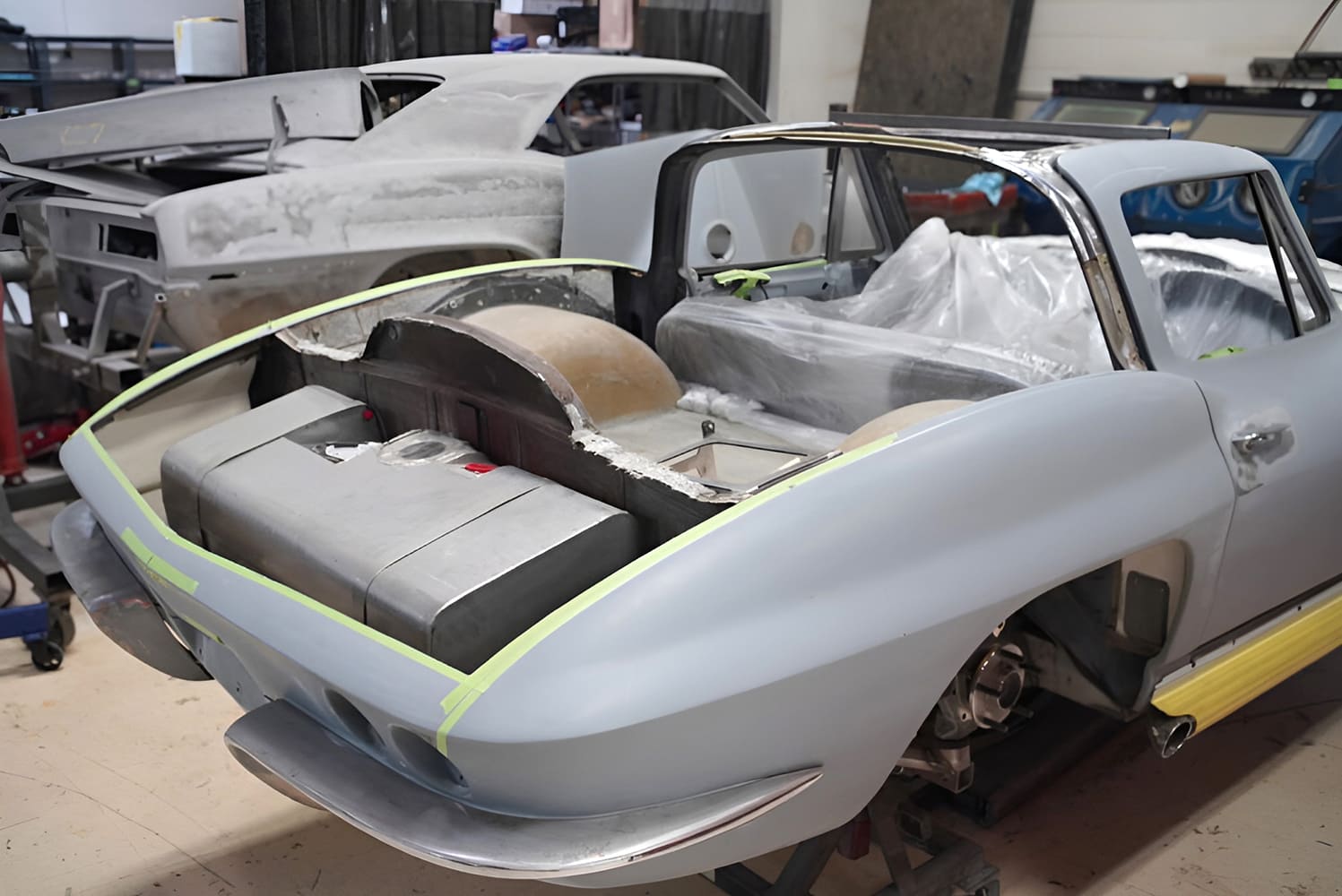
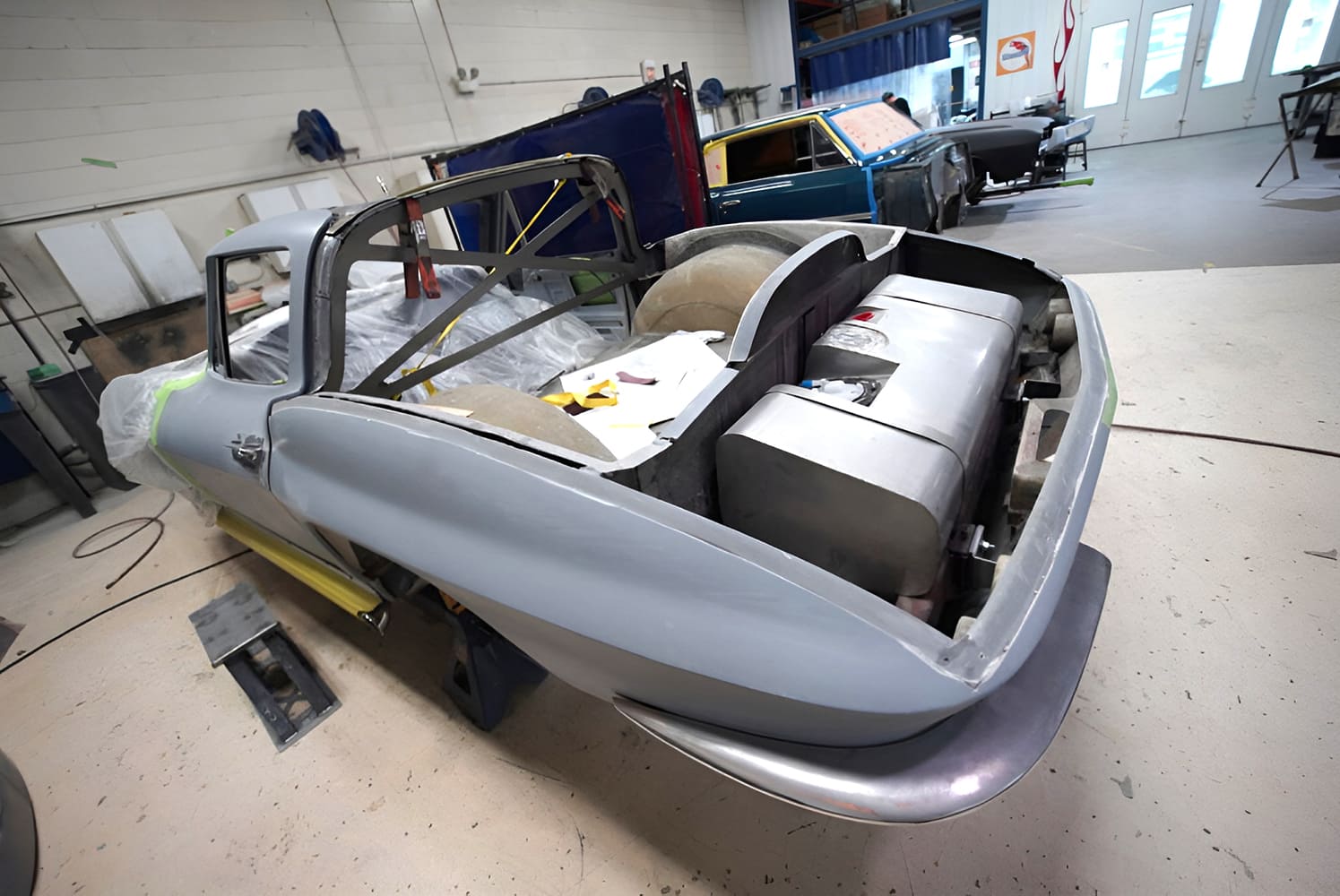
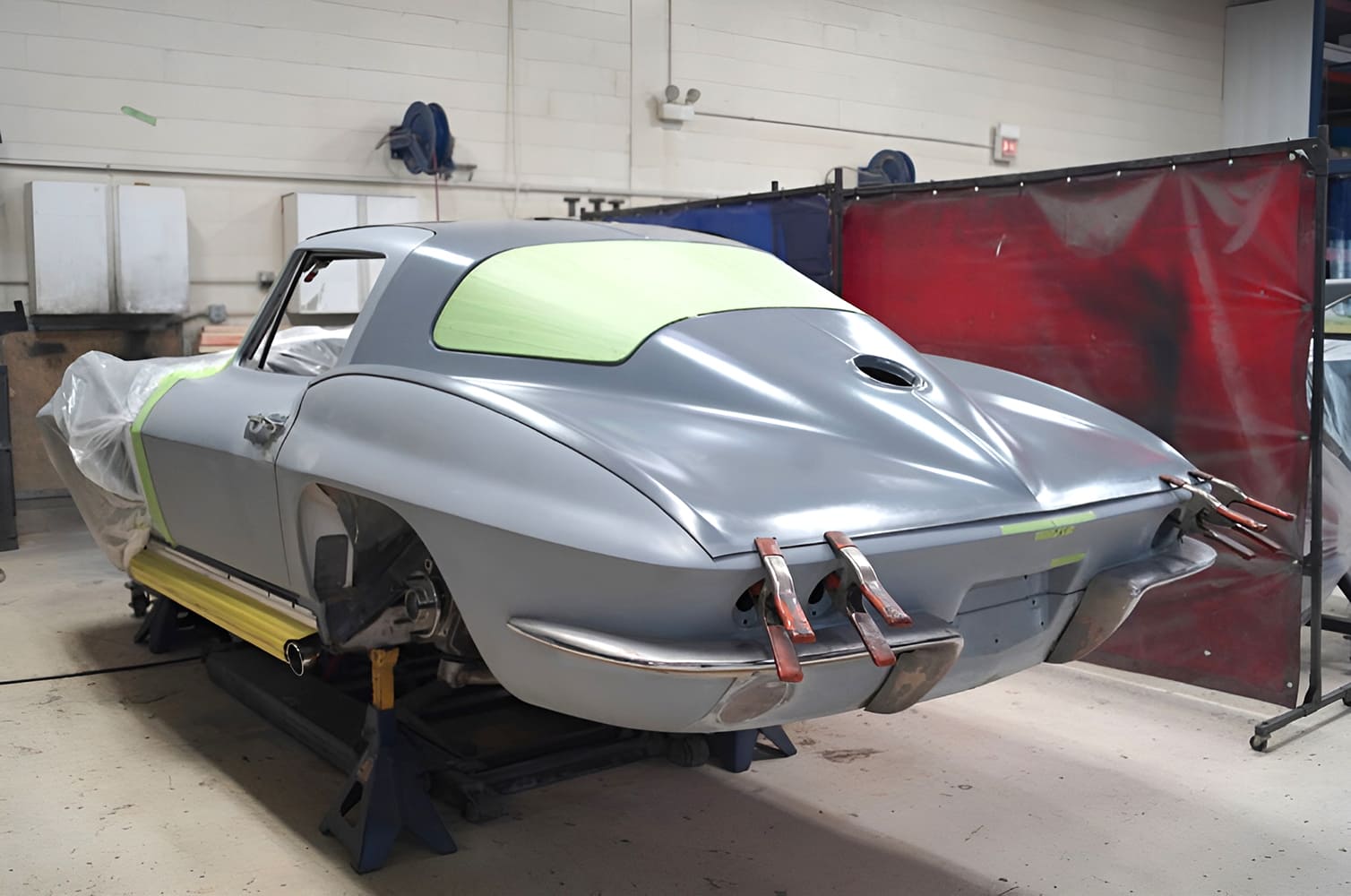
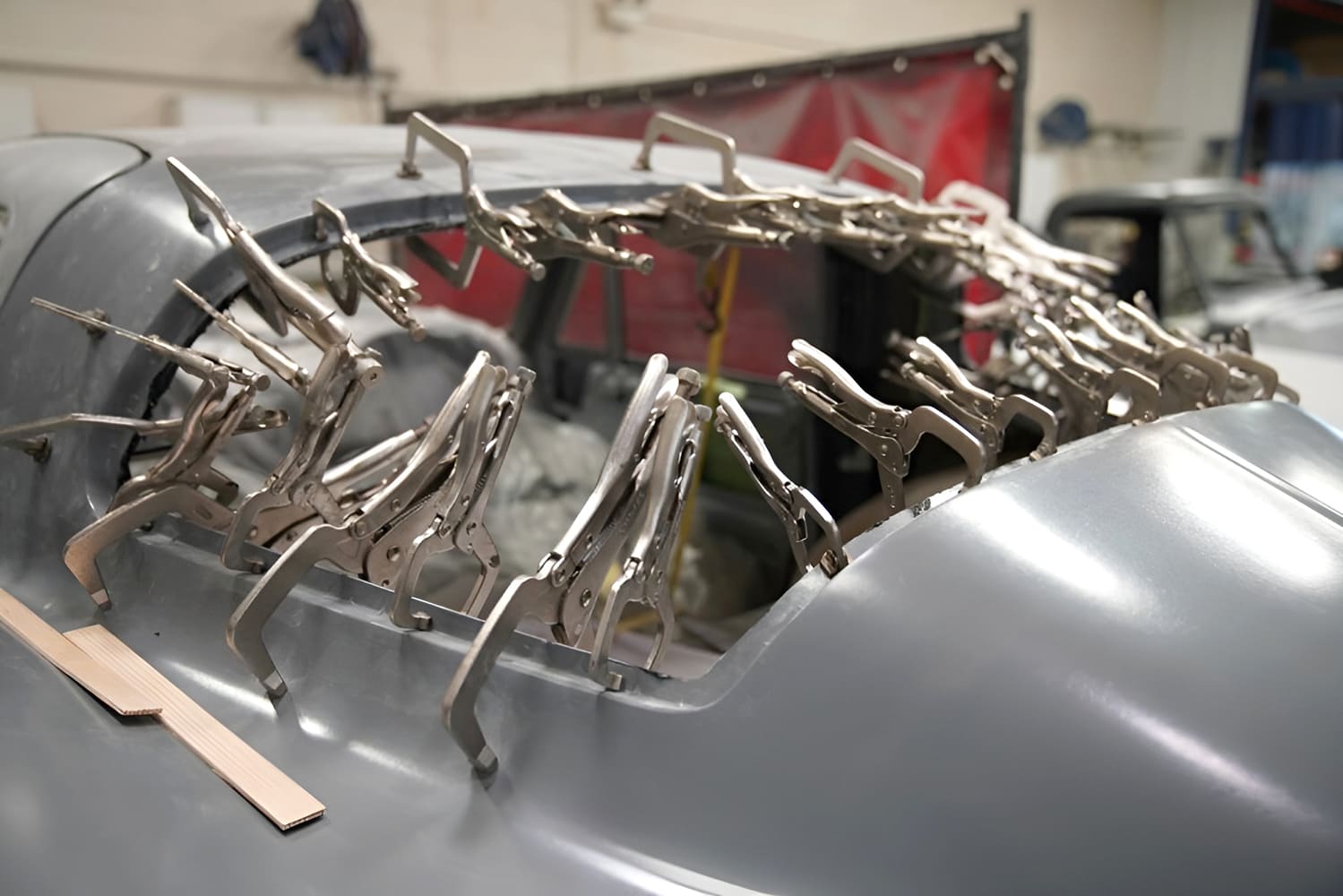
One of the most dramatic changes was the decision to replace the entire roof and deck panel. The original body, though it appeared clean, had suffered from structural distortion over the years. Once the steel inner structure was straightened and realigned, new panels were painstakingly fitted and permanently bonded in place, establishing a solid foundation for everything that follows.
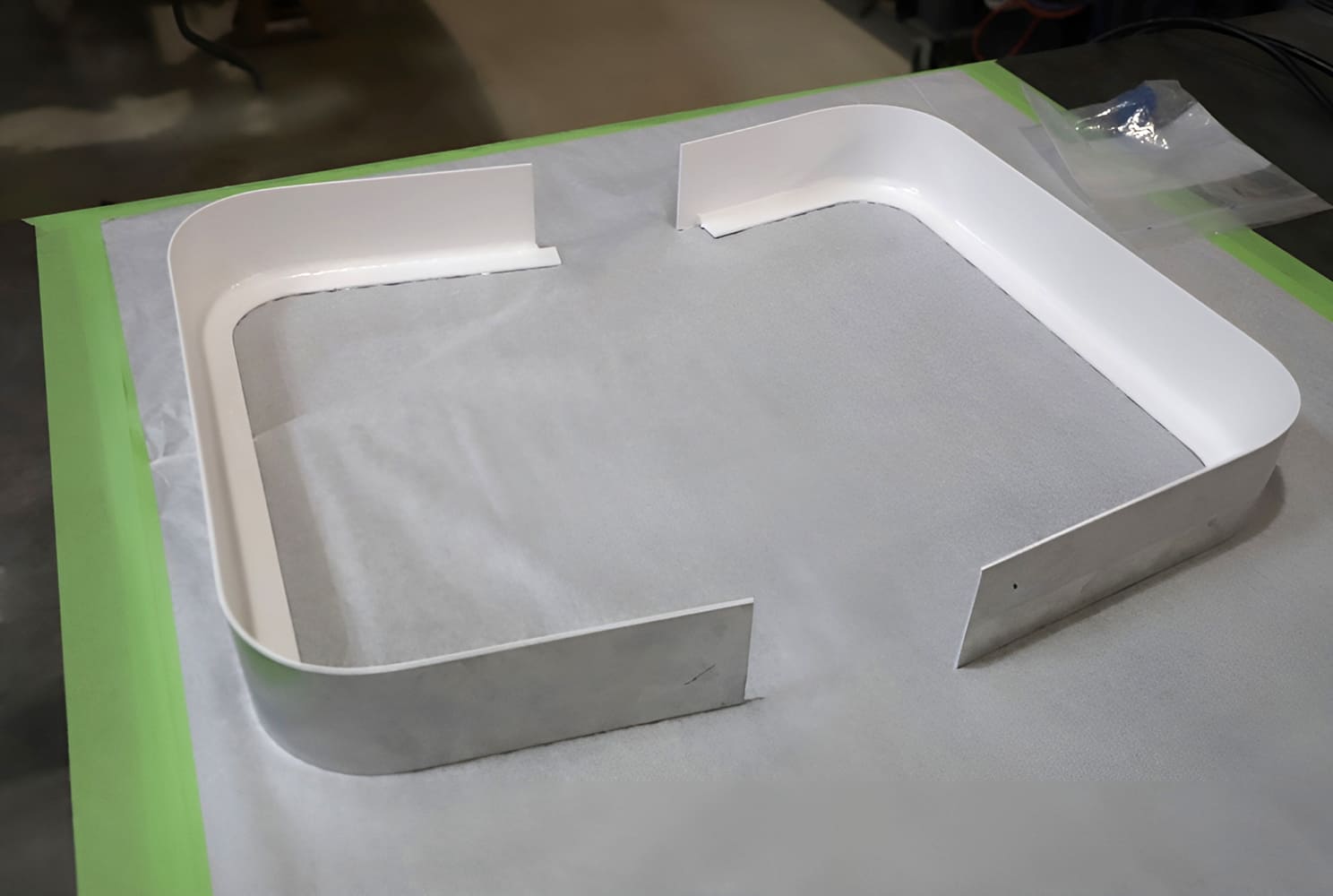
The forms are sprayed with gelcoat, preparing them for the layup of glass cloth and resin.
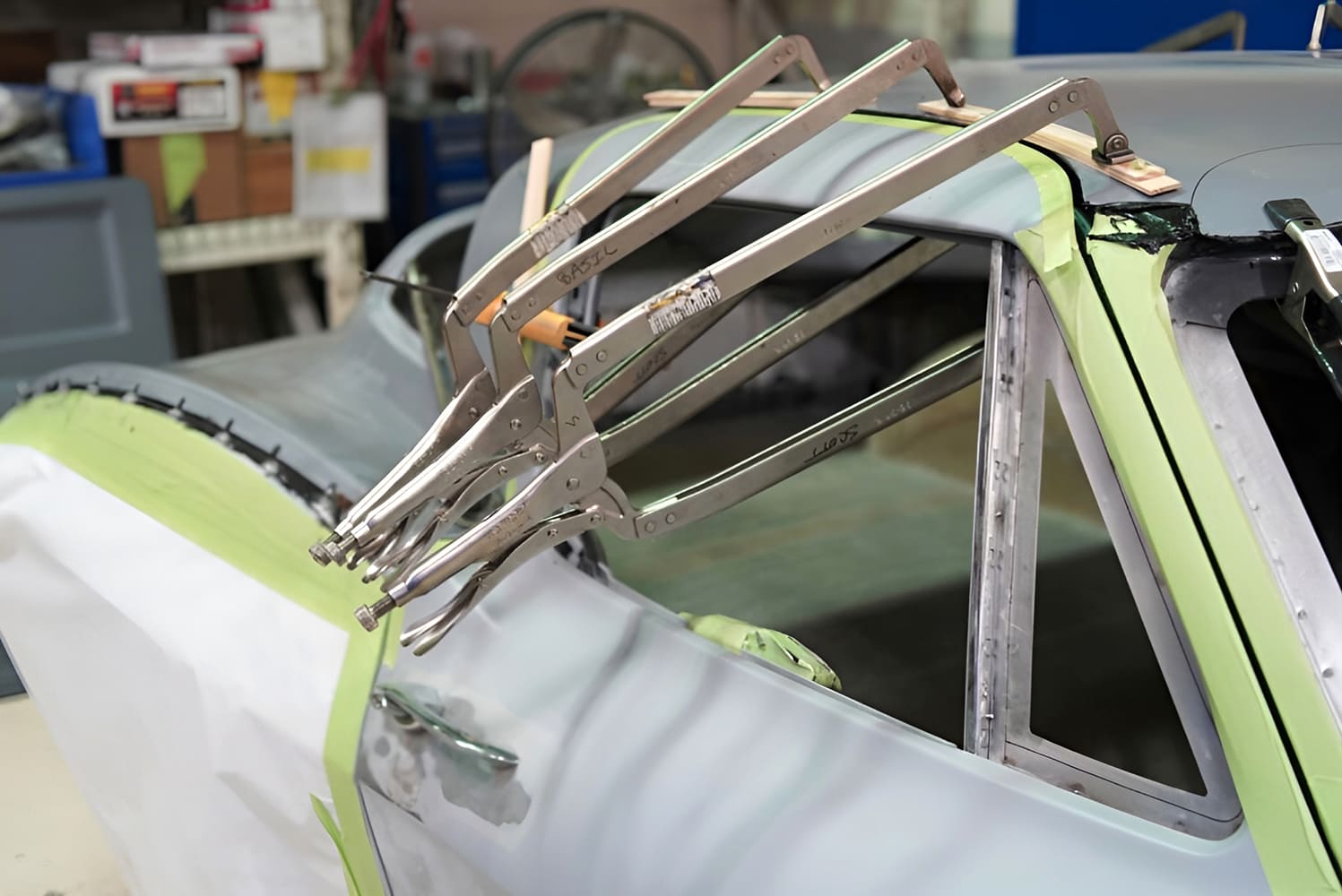
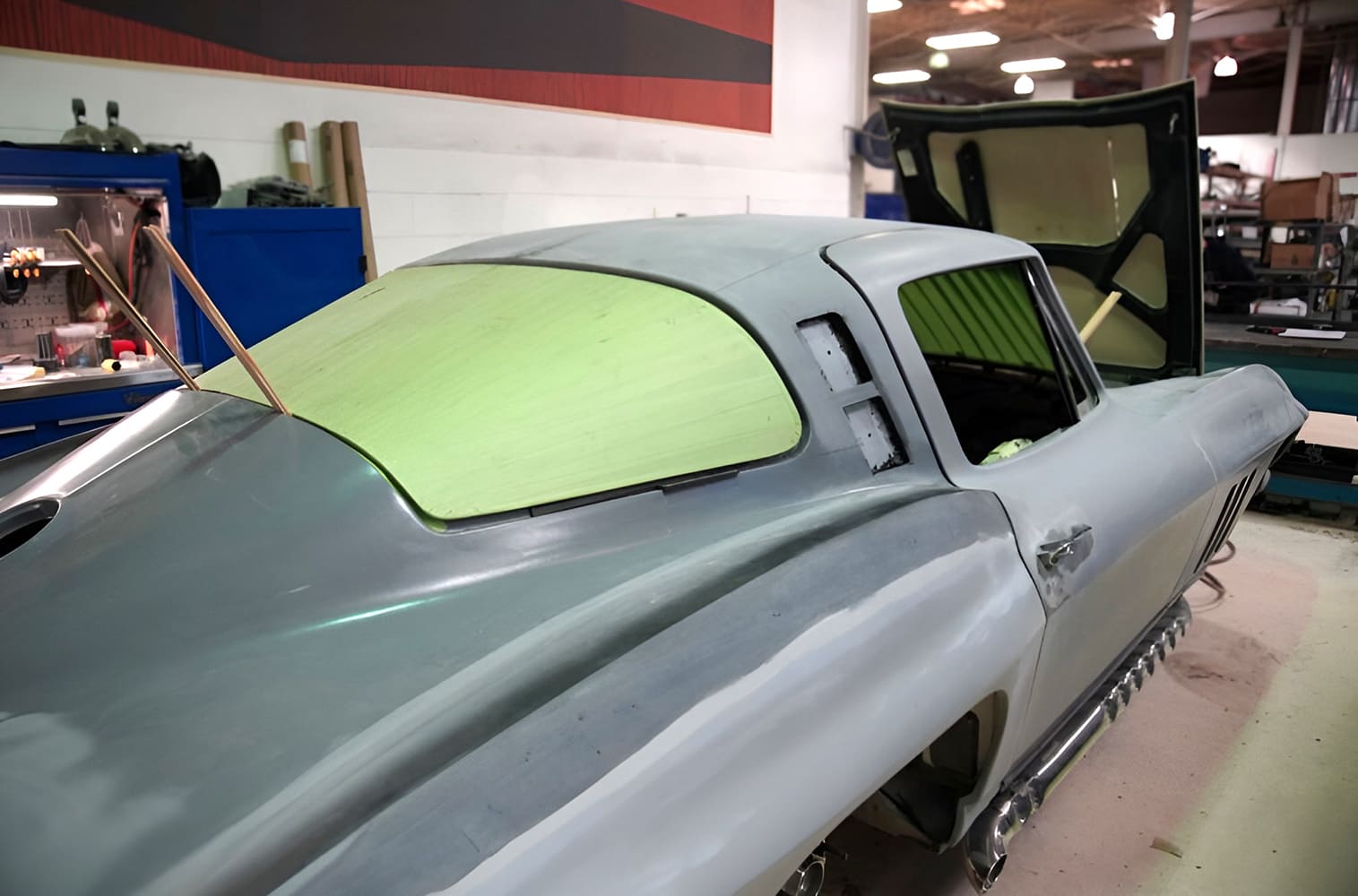
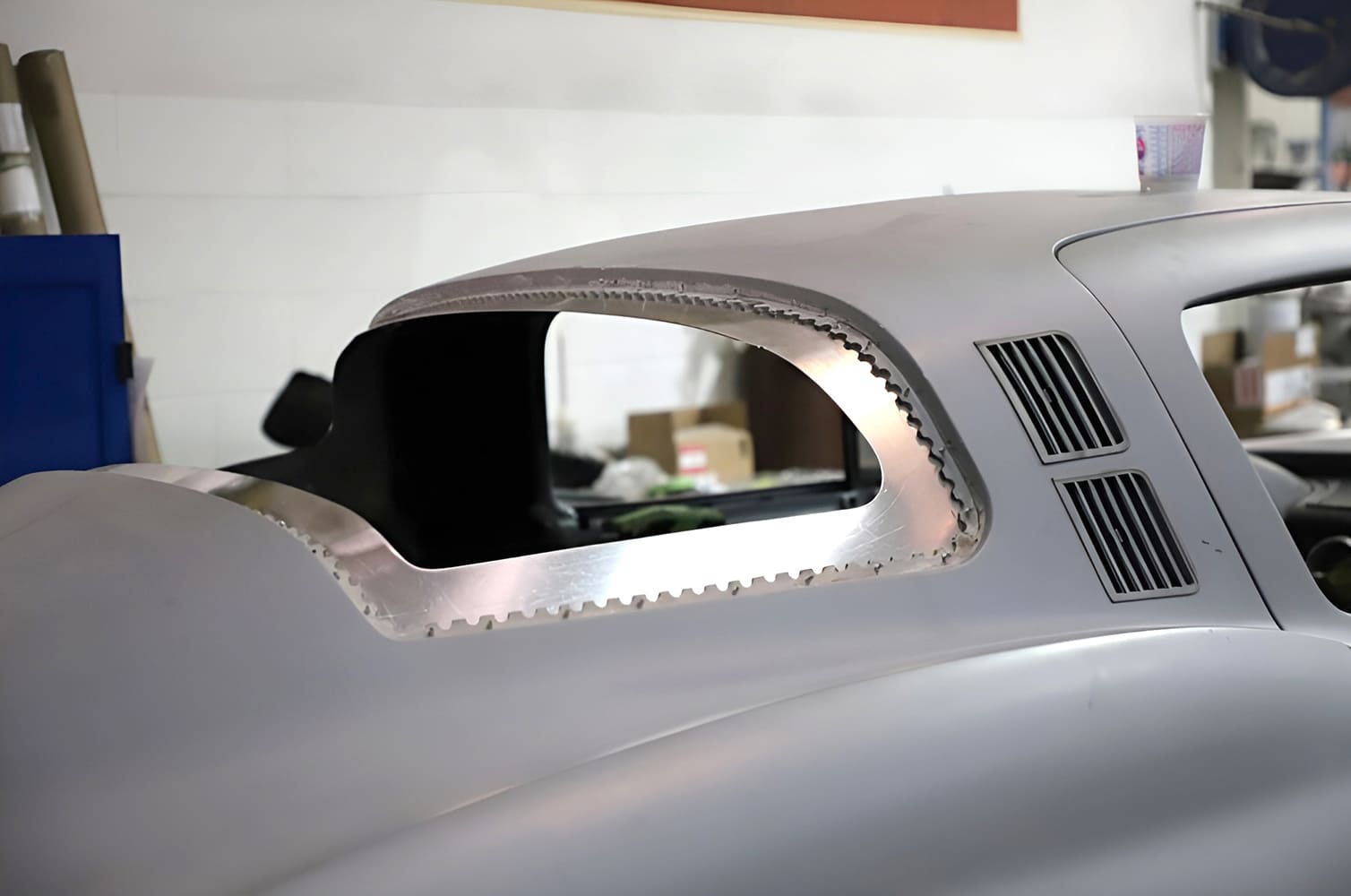
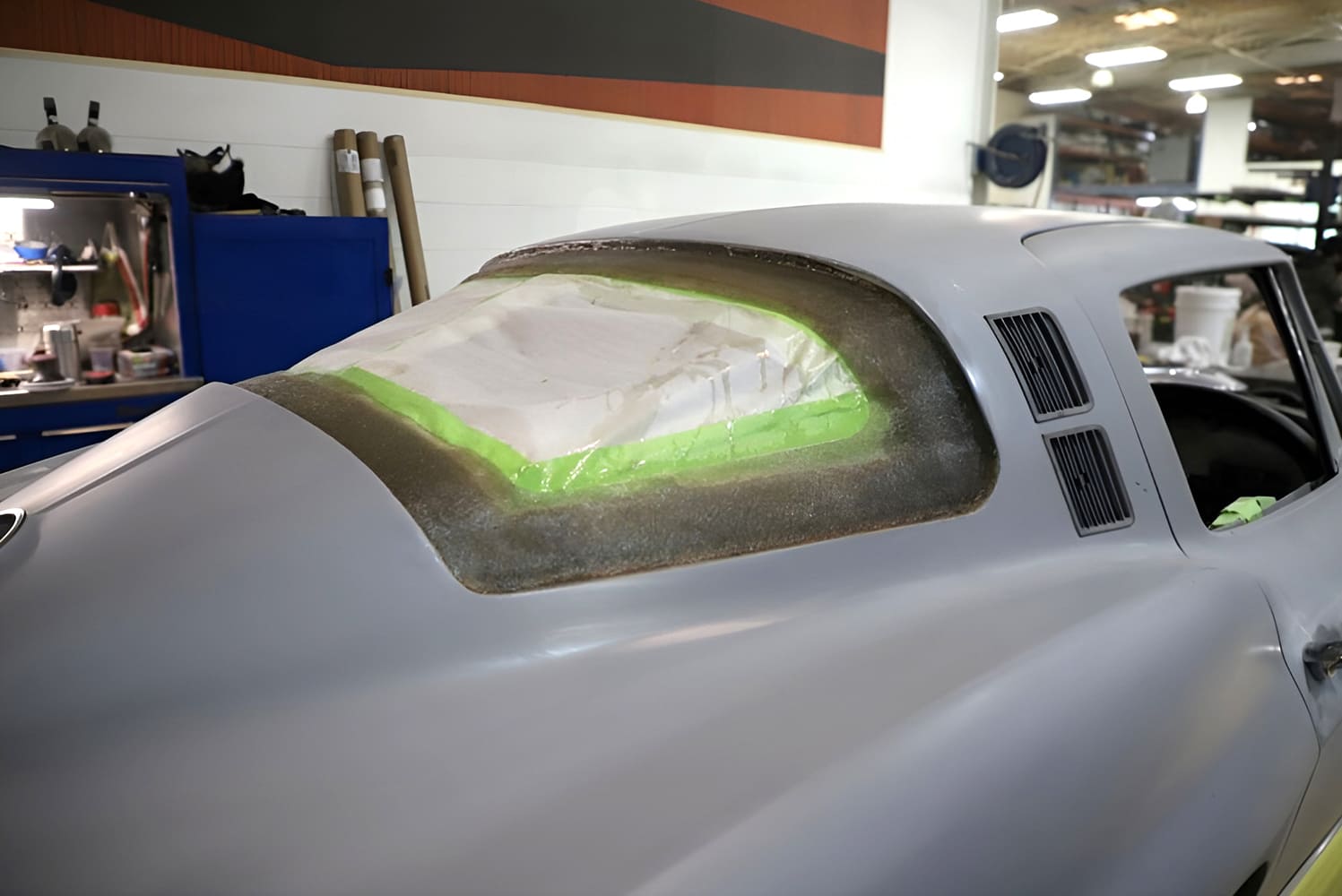
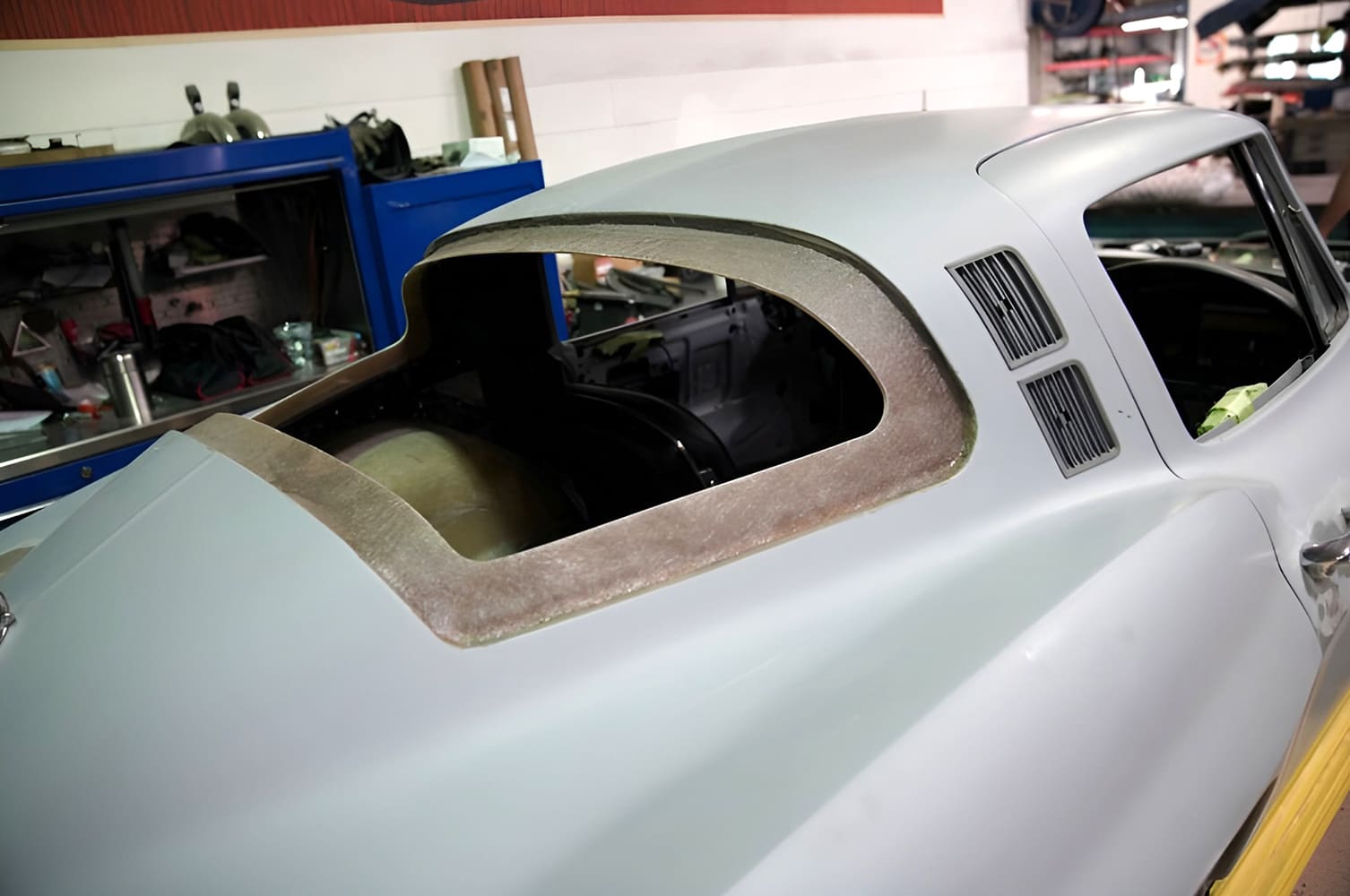
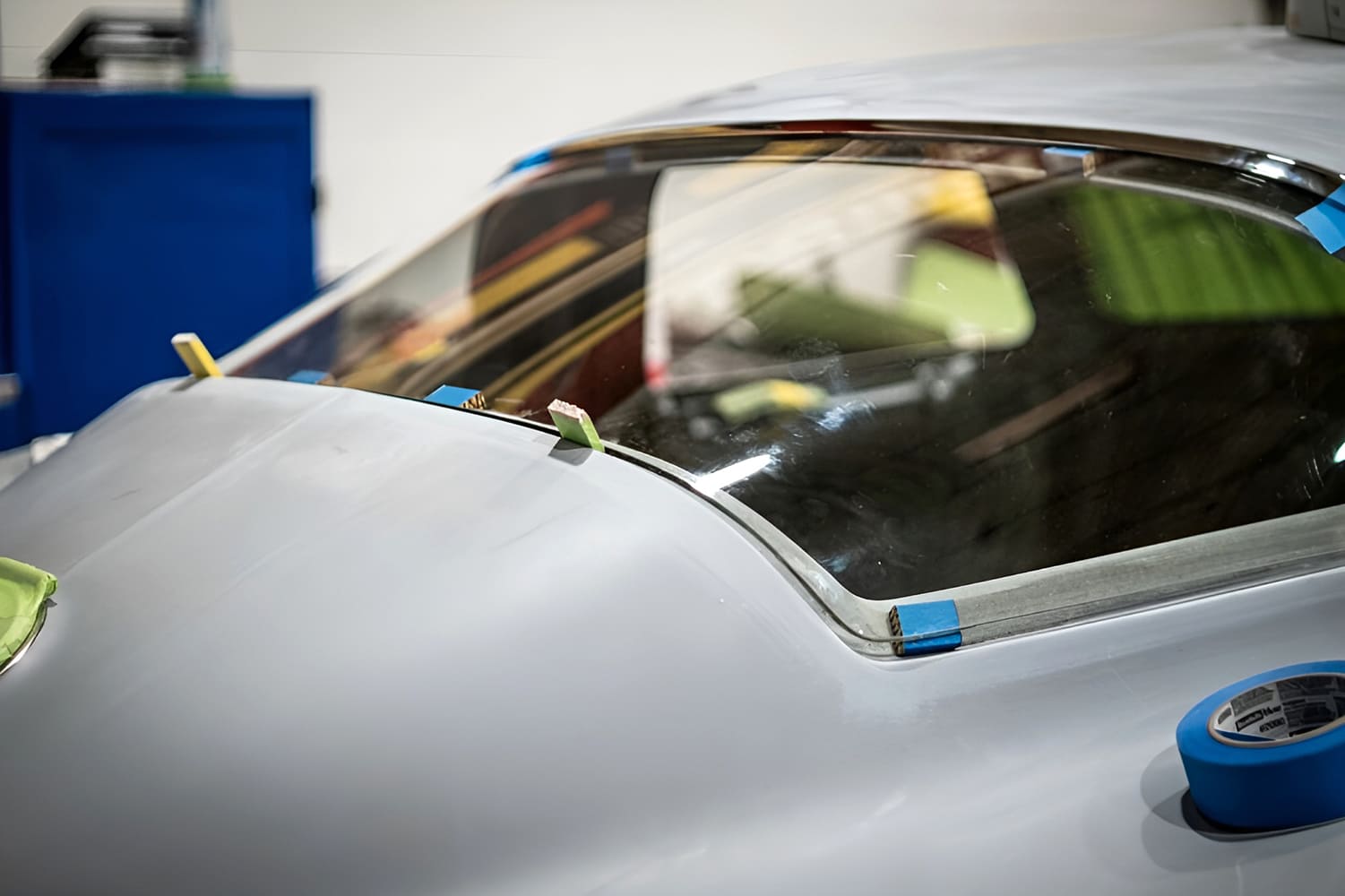
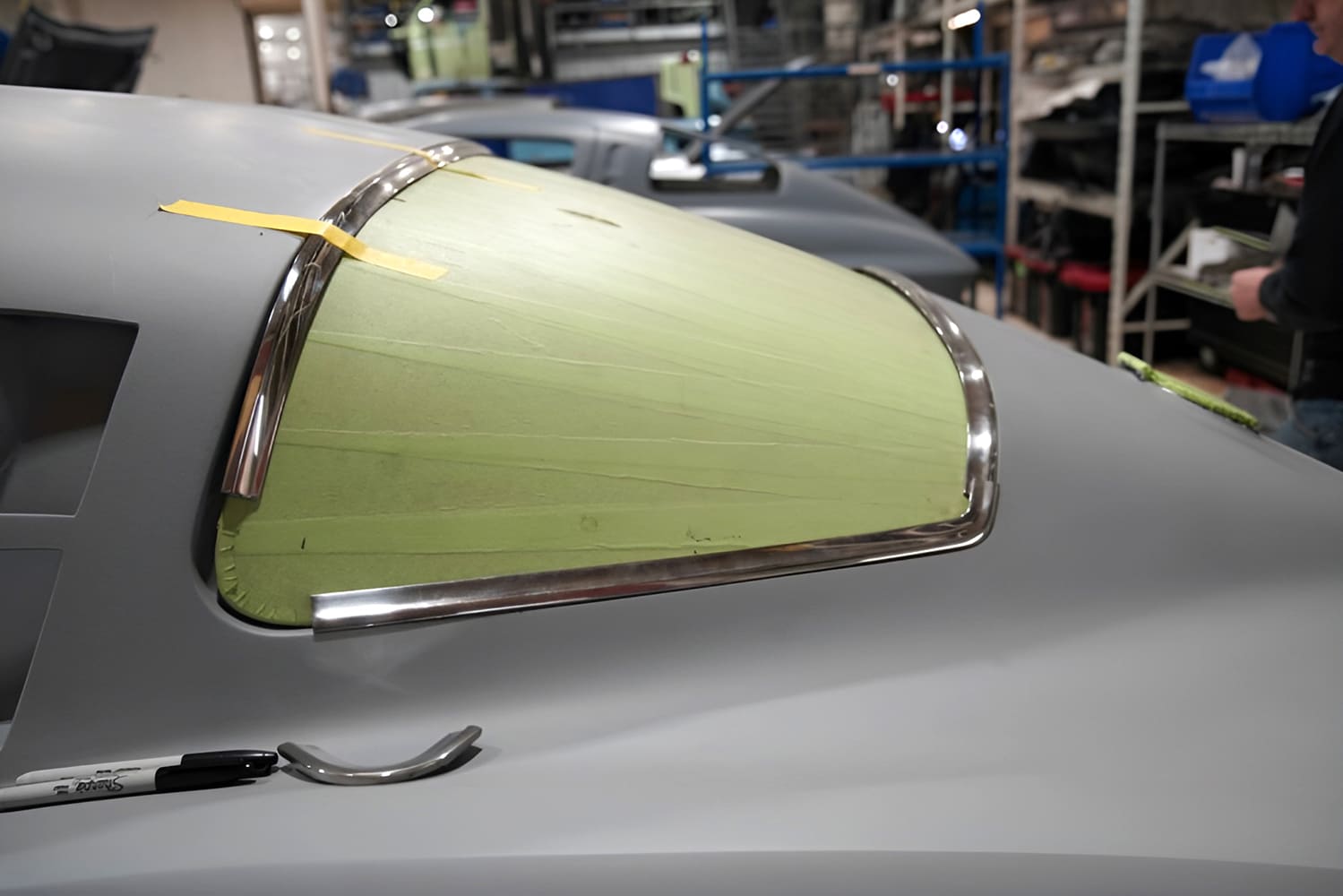
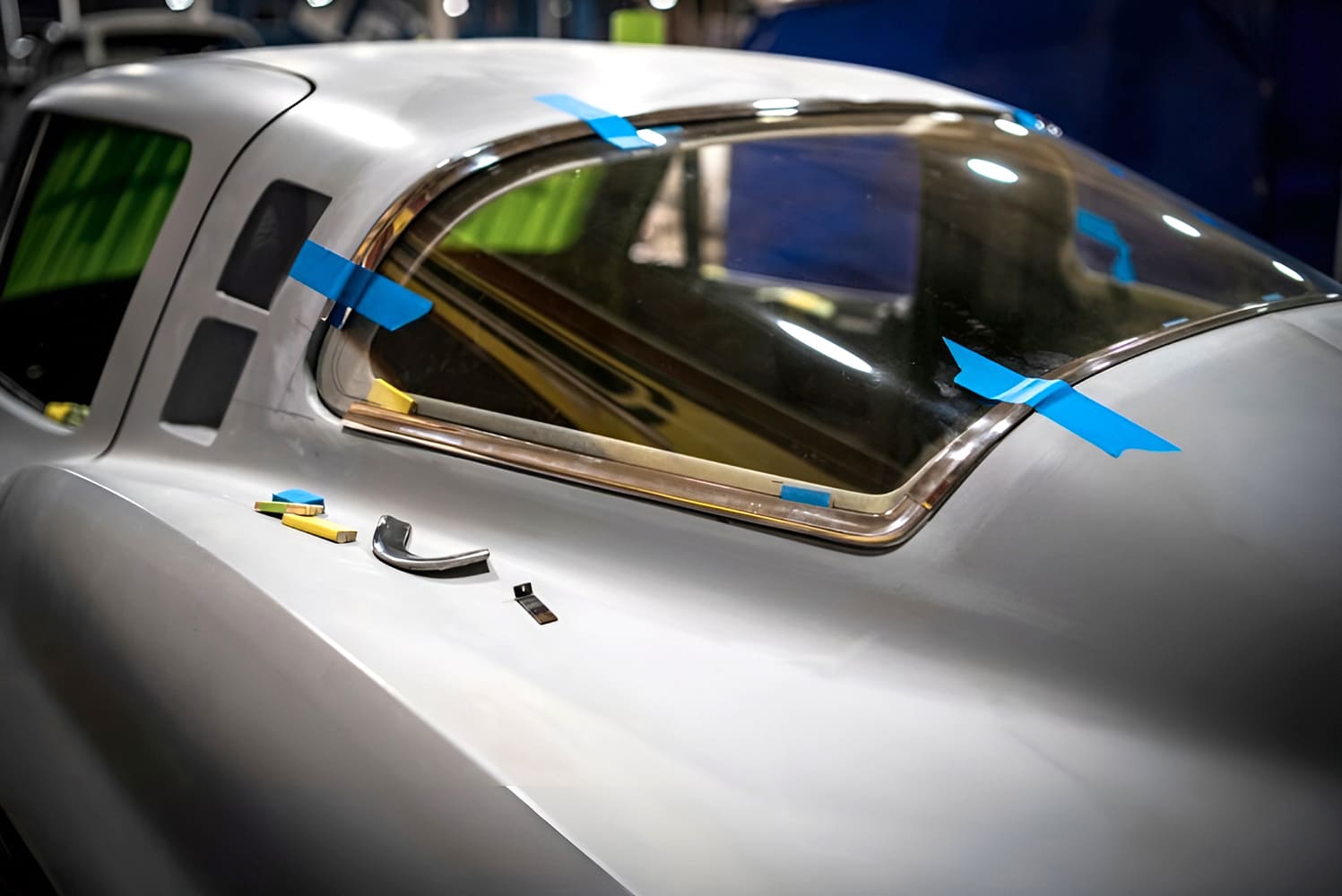
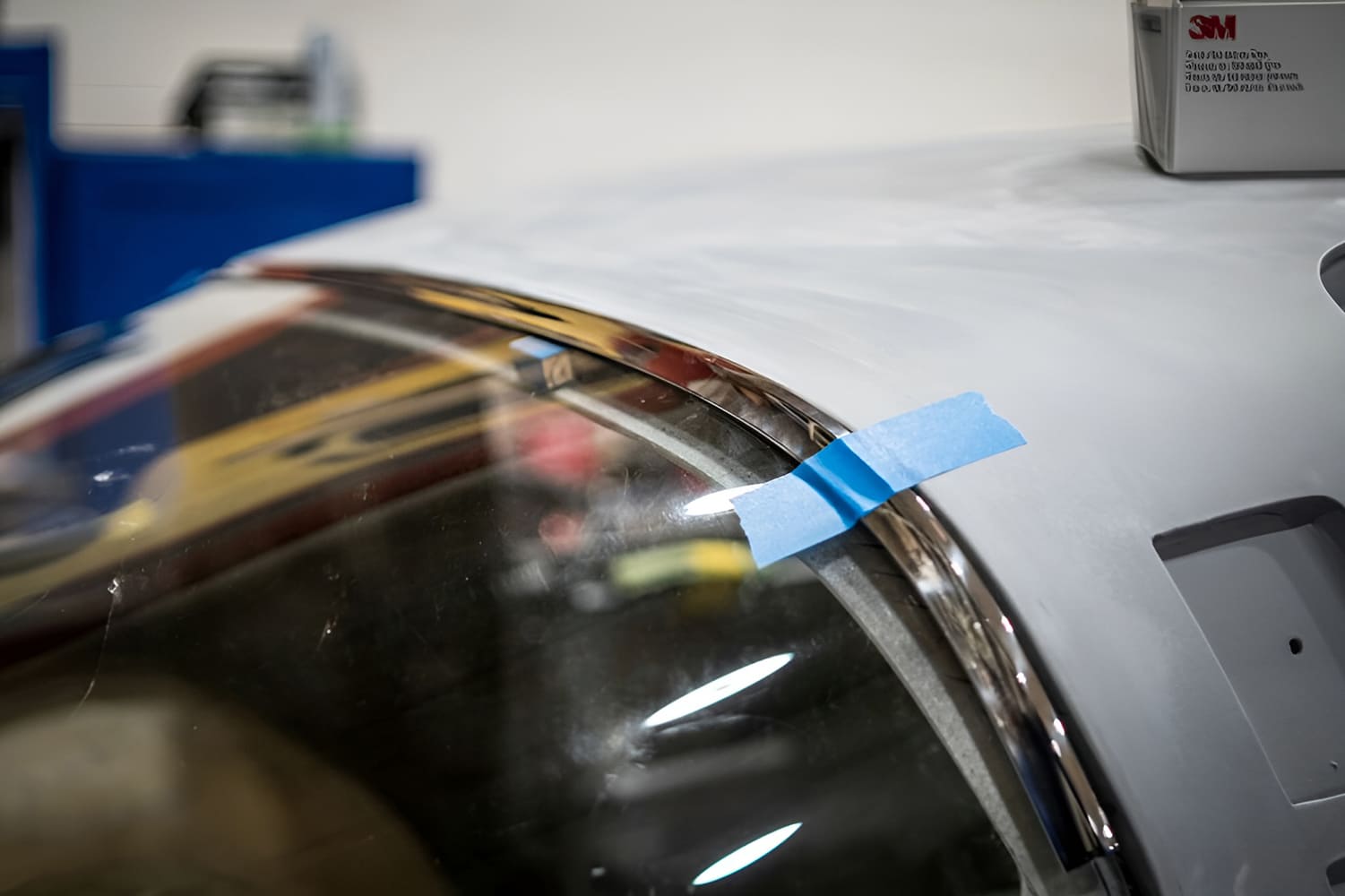
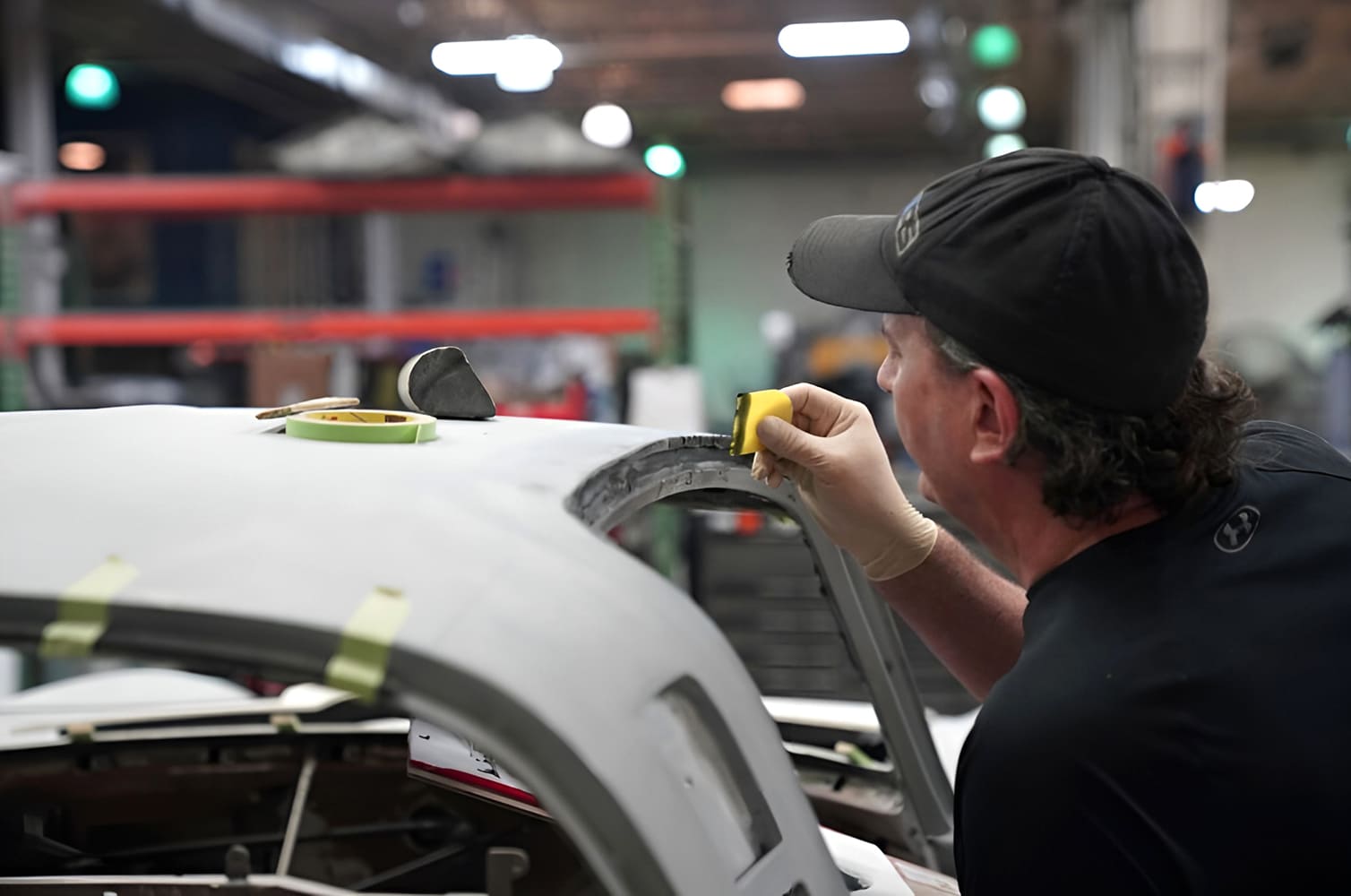
Even the installation of the rear glass was elevated far beyond original production methods. Rather than relying on the factory-style rubber gasket, a stout recessed flange was created so the glass could be bonded directly into the body. This secure connection not only improves rigidity but also allows the surrounding trim to be installed with surgical precision. Some original trim pieces were retained, while others were machined from billet—all with the goal of achieving a flawless, uniform fit.
The new flanges are now in position and will be smoothly bonded to the wheelwells.
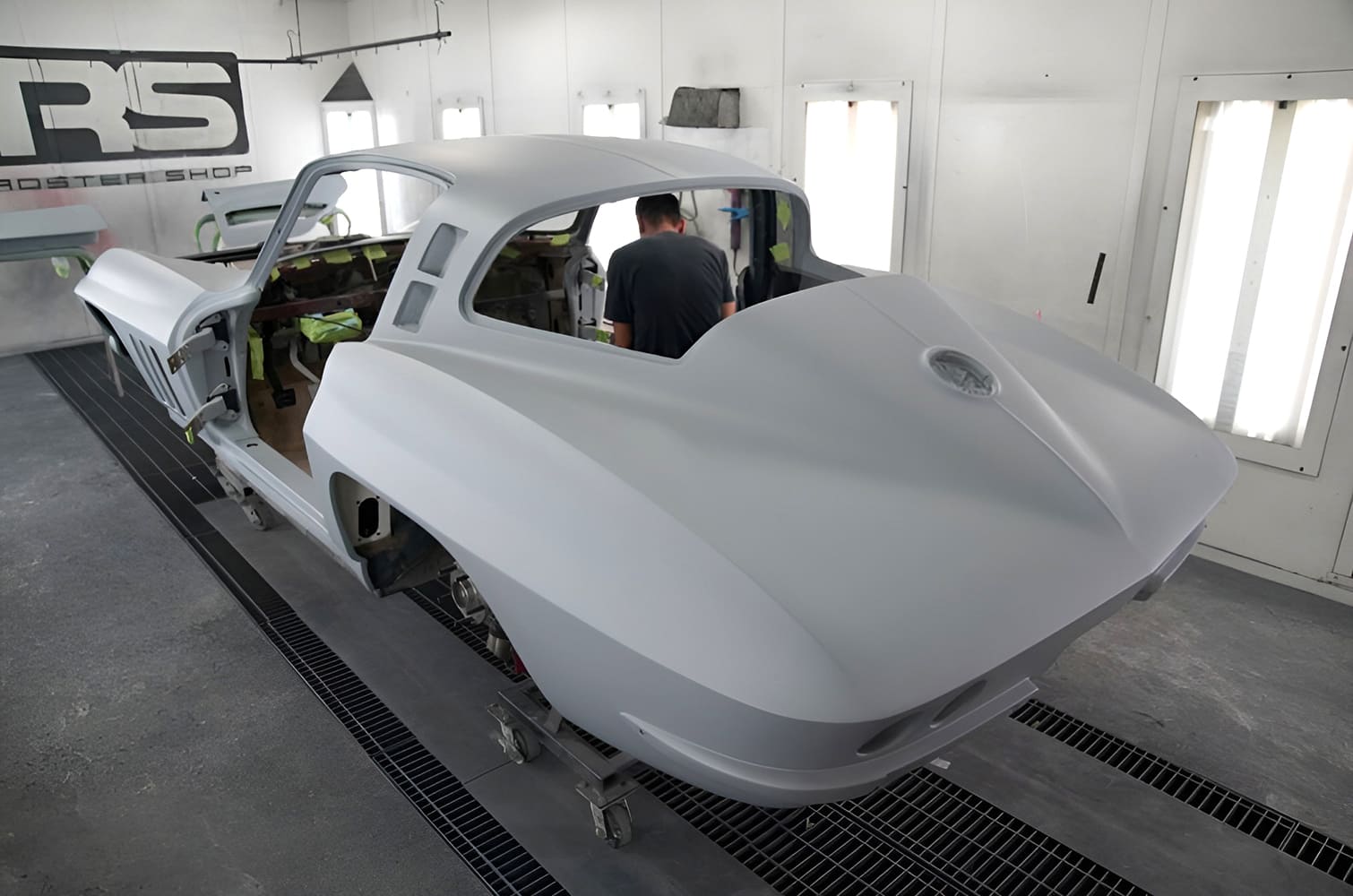
Once all the body modifications were complete, the entire surface was sealed in catalyzed primer—protecting the car during the remainder of the build and establishing a stable, high-quality substrate for the color coats that will come later.
Significant effort went into reimagining the fender side vents. New inner panels were fabricated from sheet aluminum, blending nicely into the frame and firewall.
Stay tuned for future installments where we’ll continue following the build of this extraordinary Corvette as it makes its way from a bare shell to a world-class showpiece.
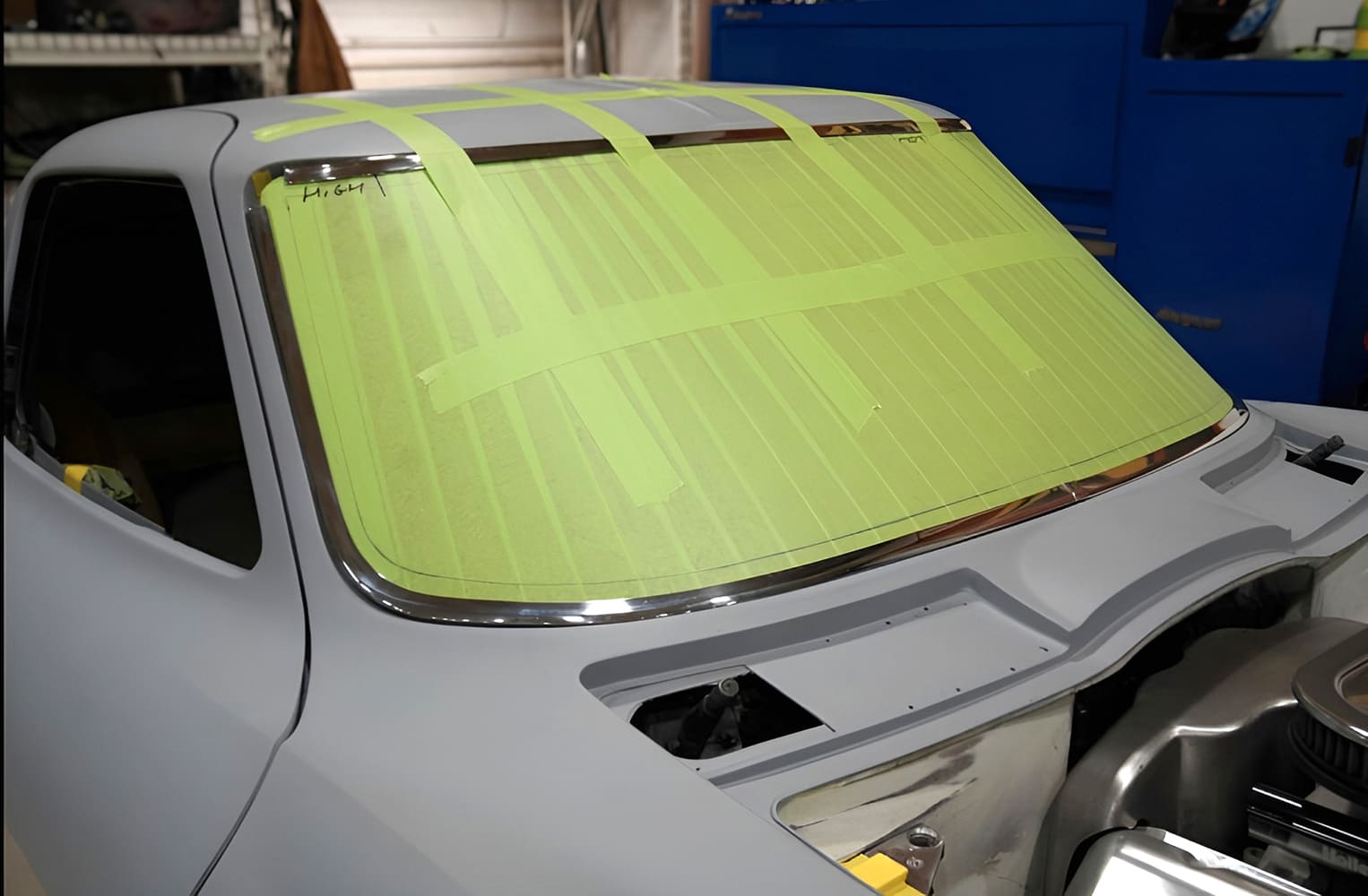
Louvers formed into the inner panels help duct airflow in a more efficient manner.On the outer surface, achieving a precise fit for the vent trim required patience and technique. Here, clamps and a heat gun are used to help bring the fiberglass into perfect alignment.Trim pieces were designed in CAD and polymer prototypes were printed for trial fitting.Numerous tweaks and adjustments were necessary to achieve the desired fit.At this stage, the fitment is finalized with enough clearance to account for paint buildup. Screws temporarily hold the trim in place—the final production parts will use hidden studs for a cleaner appearance.The final trim components were CNC-machined from aluminum billet.The result: trim pieces that nest perfectly into their sculpted recesses.Although the project started with a seemingly clean donor car, significant discrepancies were found between the two sides of the body. After scanning the body, Roadster Shop removed the entire roof and corrected the inner structure to achieve symmetry.Extensive grinding was required to create a proper recess for the new roof and deck panel.The new panel shown here is being prepped for bonding.Spring clamps temporarily hold the panel in place while the fit is checked.Once verified, the panel was permanently bonded using numerous clamps, ensuring each joint was secure.Special attention was given to reinforcing the rear window opening. Eliminating the factory rubber gasket will allow the glass to be bonded directly, allowing the fit of the glass and trim to be perfected.With the roof bonded in place, the rear glass was trial-fitted. More fine-tuning will follow to meet Roadster Shop’s exacting standards.A sheetmetal form was temporarily installed to allow laminating a new, thicker flange around the window opening. Notice how the original edges were scalloped to promote strong adhesion between old and new fiberglass.The new fiberglass laminate has now been laid up around the window opening.After curing, the bulk of the excess material is removed.Trial-fitting the rear window with uniform spacers reveals exactly where adjustments will be needed to perfect the fit.Original trim pieces are being tested here. Some will be retained, while others will be replaced with billet stainless components machined to exacting tolerances.Every detail of the trim fit was treated with the same care as any other part of the build.Tape temporarily secures the trim pieces while the fit is finalized.The windshield was fitted to the same meticulous standards.Once all components were finalized, any remaining irregularities were perfected before the entire body was coated in primer.In the paint booth, catalyzed primer seals the body and provides a premium foundation for the color coats to come.
We use cookies to ensure that we give you the best experience on our website. If you continue to use this site we will assume that you are happy with it.