



By Brian Brennan
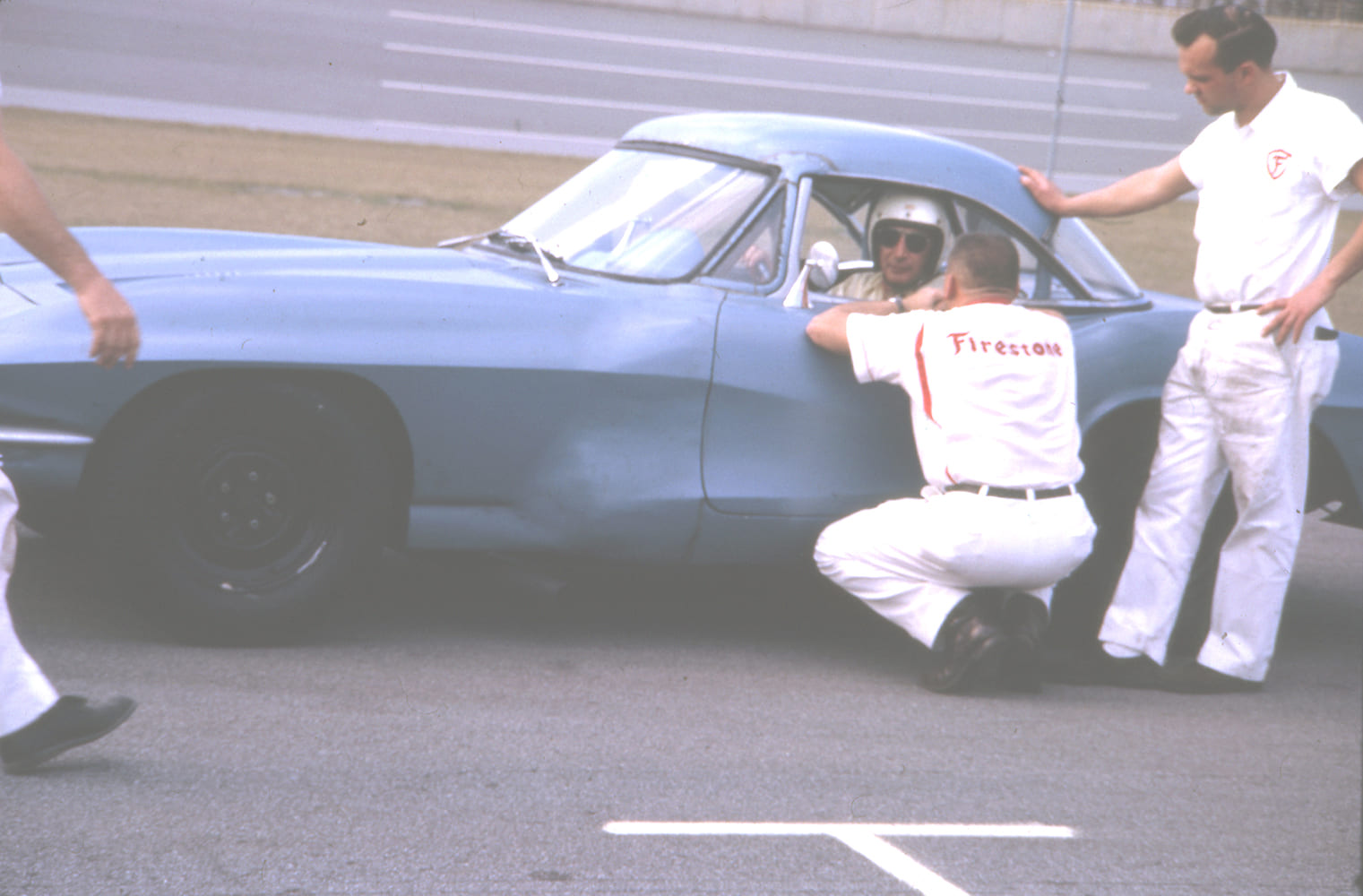
Fans of the Corvette Sting Ray will appreciate this piece of engineering history. The vintage photos are as cool as the test mule itself. It was about 10 years ago, when I was working on a historical Corvette piece with noted Corvette historian and collector of some incredibly rare Corvettes, Franz Estereicher, who told me about the half-1962, half-1963 Corvette. It was photographed at Daytona International Speedway by Jerry Titus, an accomplished race car driver and well-known automotive journalist.
The following is something we were working on but never got around to doing anything with—so here goes.
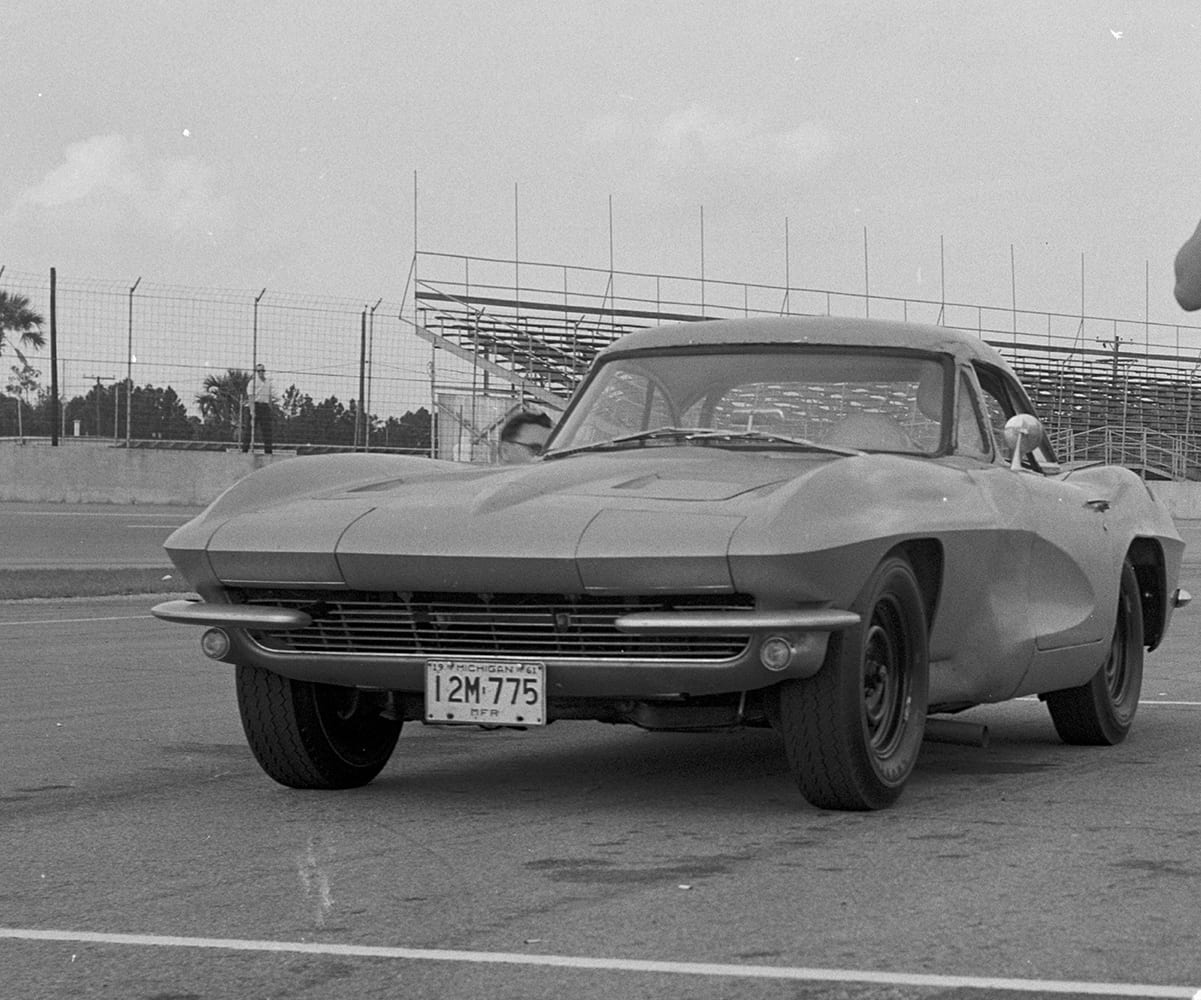
The Nov. ’62 issue of Sports Car Graphic featured an article on Chevrolet’s new 1963 Corvette, along with a captivating photo of a “test mule” that captured everyone’s attention. What exactly was it—a 1962 or 1963 Corvette? It was a blend of both, captured in January 1962 at Daytona International Speedway during engineering tests of “heavy-duty” components, with particular focus on the new forward-adjusting braking system. The image revealed significant upgrades, including: 1. The “cast and camber” of the rear wheels with an inward tilt, showcasing the all-new independent rear suspension; 2. The 1963 frontend design with unique hood grilles; 3. The revised windshield design; and 4. The rear clip from the 1962 model.
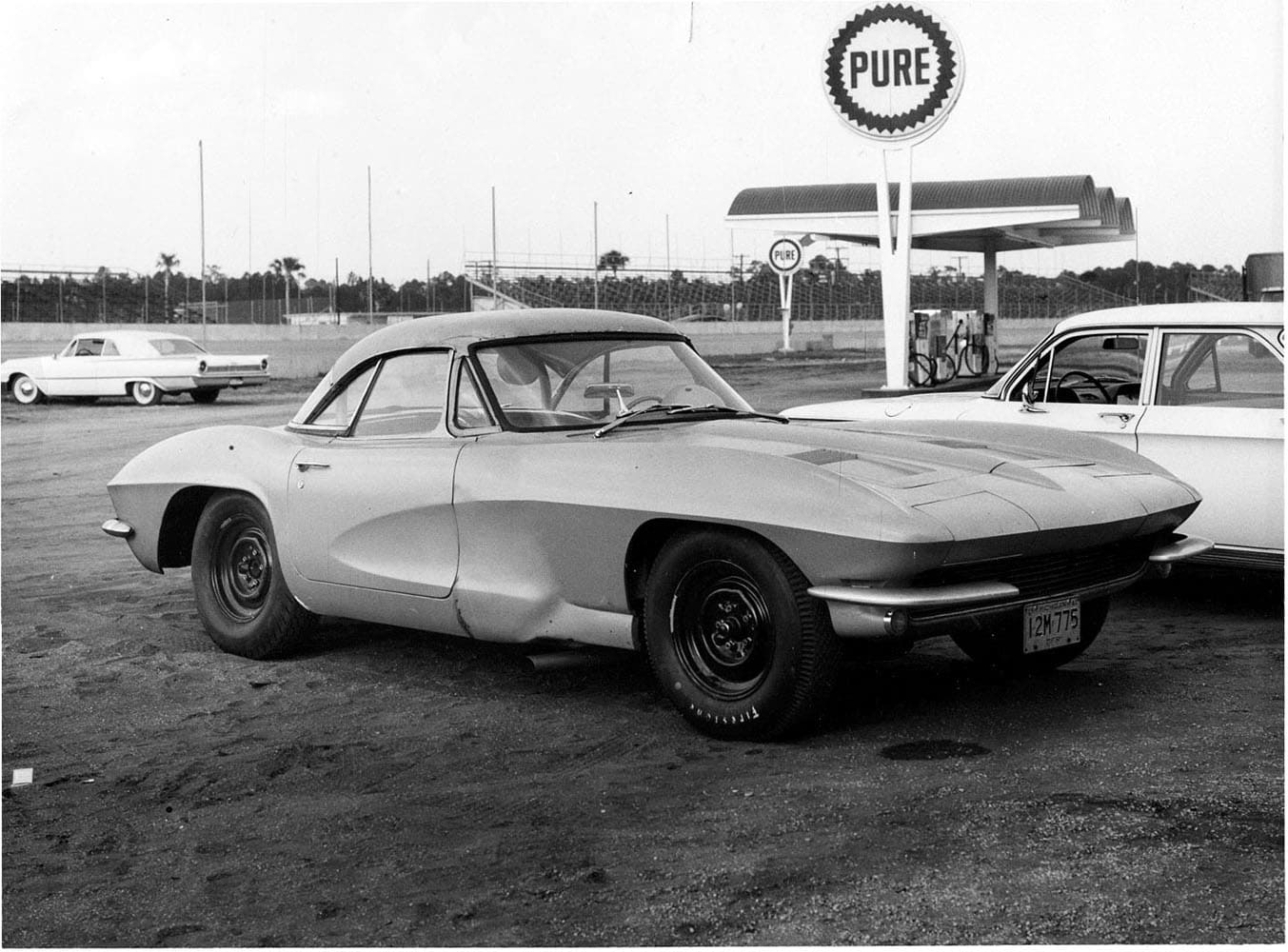
The test mule appeared awkward, typical for prototypes. It combined a 1962 body from the firewall back with a newly mounted suspension on a large-diameter ladder frame. It showed significant improvements over the 1962 model, achieving 5 mph faster at Daytona and 5 seconds per lap quicker at Sebring, using the same fuel-injected, four-speed engine and gearbox as the 1962 Corvette.

To grasp Chevrolet’s goals, it’s essential to look back to late 1961. Engineers were working diligently to develop a range of “Heavy Duty Components” as service packages for both factory and private race teams, especially as the 1962 Le Mans race approached in June. The Corvette needed to be homologated with competitive hardware, and engineering rose to the challenge, setting the stage for extensive testing to ensure success.
Tony September, driving for the Scuderia Scirocco race team, performed admirably in his 1962 Corvette #1 until a transmission failure forced him into the pits. While the race ended for him, development work continued unabated.
The focus soon shifted from performance components to tire technology, which is crucial for winning on the racetrack. Firestone’s Steve Petrasek, along with a dedicated support team and new tire compounds, was on hand at Daytona to assist Chevrolet’s development efforts, with a shared objective of victory! By the time of Sebring’s March race, engineering had deployed several forward-adjusting brake systems to select race teams. An article in Today’s Motorsports from July 1962 described their remarkable performance with anecdotes such as Delmo Johnson using both his Texan boots to apply them and Don Yenko exclaiming, “Dammit, I said ‘WHOA’” as he came into the pits—a clear indication that Chevrolet was on the right track!
This groundwork set the stage for Corvette’s next evolutionary leap: the introduction of Chevrolet’s “Z06 Special Performance Package” as an option for the 1963 RPO, marking the transition into factory-built race cars. MR

Sources:
National Corvette Museum
(270)-781-7973