We’re back in Phoenix at Hot Rods by Dean for the next part of our C3 Corvette project: the IRS rear suspension and brakes. In our last visit, we installed Detroit Speed’s SpeedRay coilover front suspension and rack-and-pinion steering, along with a big set of Wilwood brakes. We’ve returned to both iconic brands to source parts for the rear, with Detroit Speed’s DECALink Corvette IRS and matching rear Wilwood brakes, including an electronic parking brake.
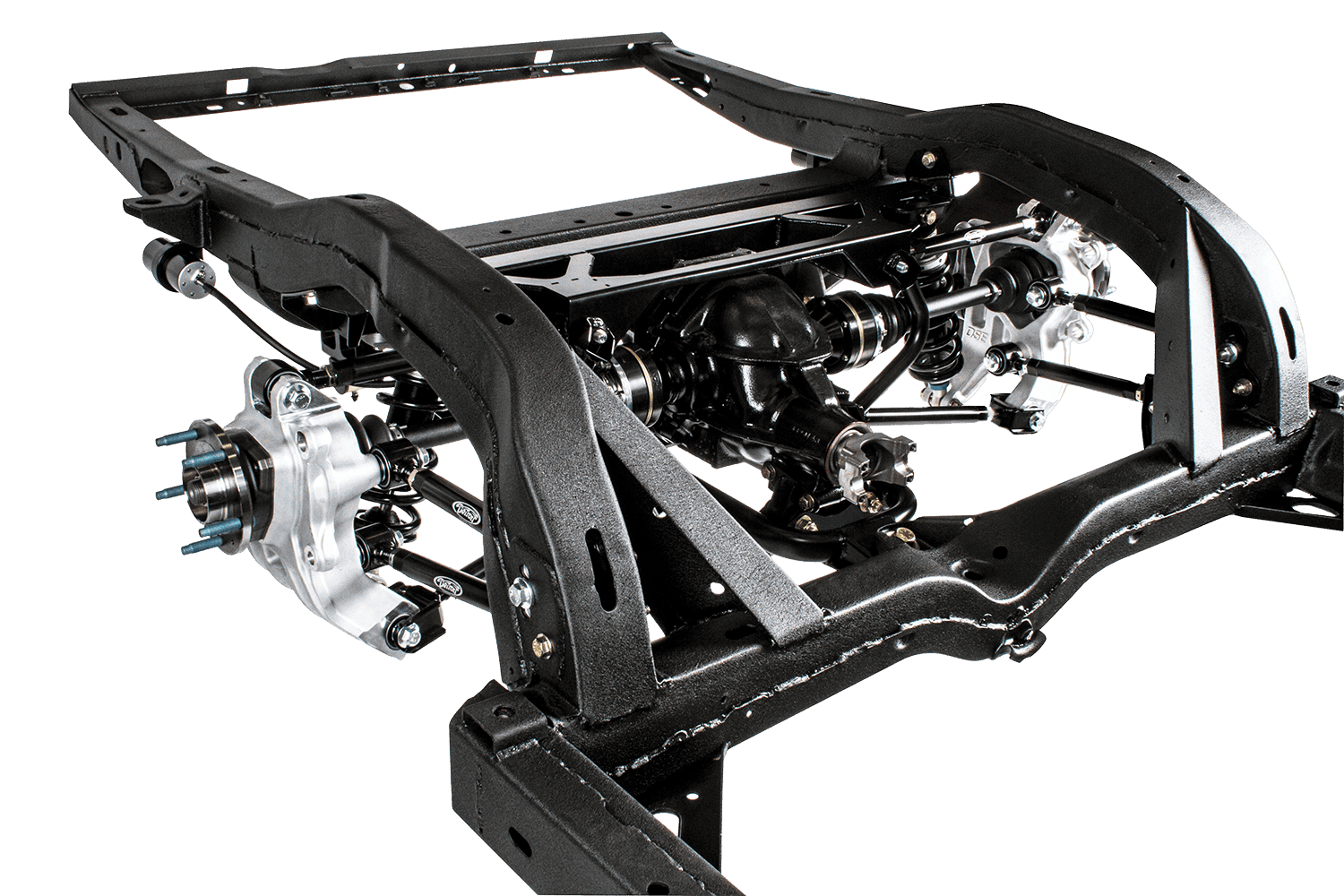
The suspension is the core of the issue, and like the frontend conversion, replacing the C2/C3’s transverse leaf springs and three-link axle positioning with the DECALink’s 10-point independent design and unique geometry promises major improvements not only in cornering and handling but also in ride comfort. This is because all the lateral and trailing links, as well as the toe links, can be adjusted, making camber and toe adjustments relatively straightforward. Even the rear antisquat geometry and roll-center height are adjustable—and in our project system, it features double-adjustable coilovers, too.
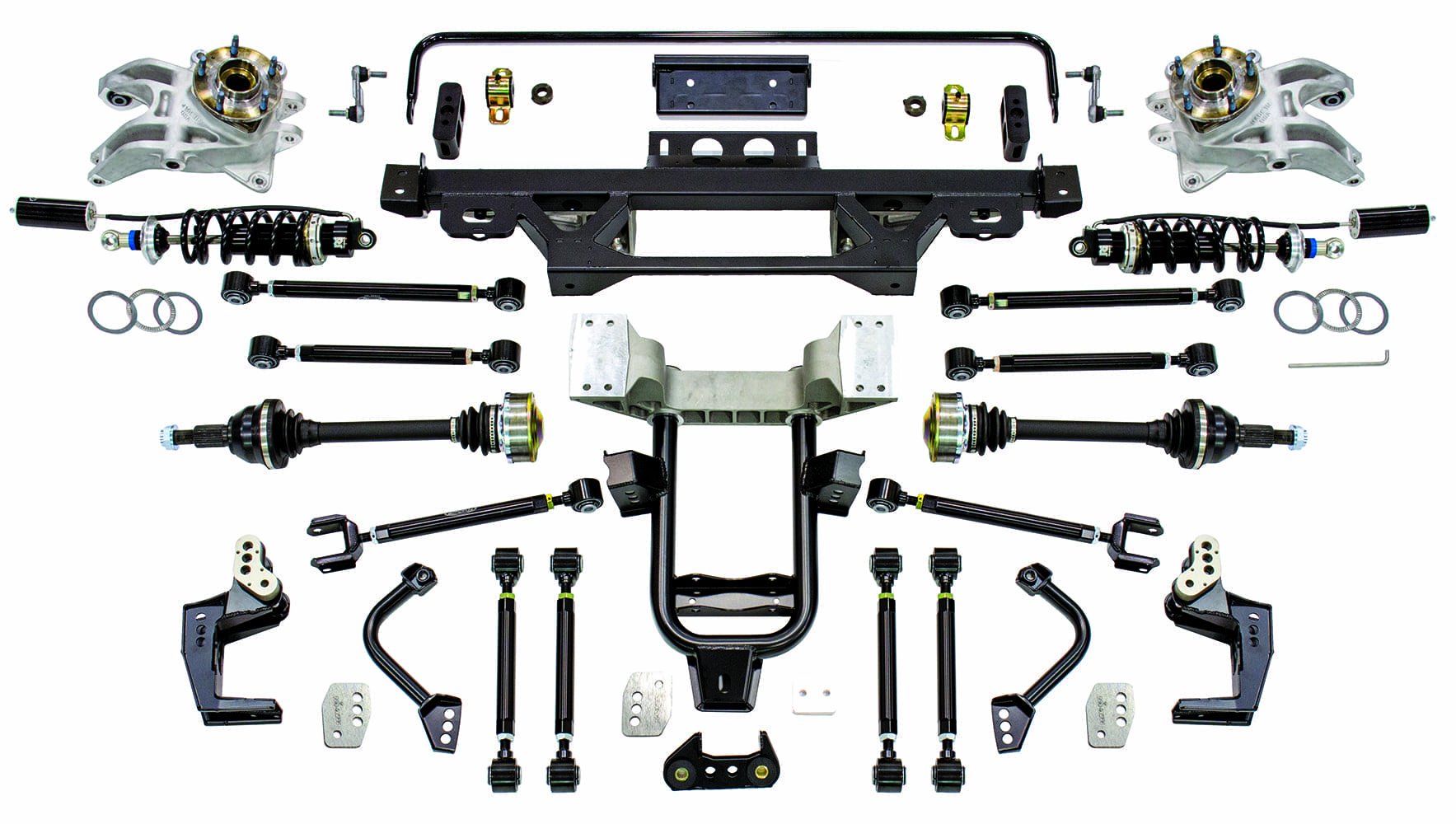
The Detroit Speed DECALink for our C3 Corvette (1971) supplies a substantial number of components, and to this you will need to add your third member as well as braking and the appropriate lines.
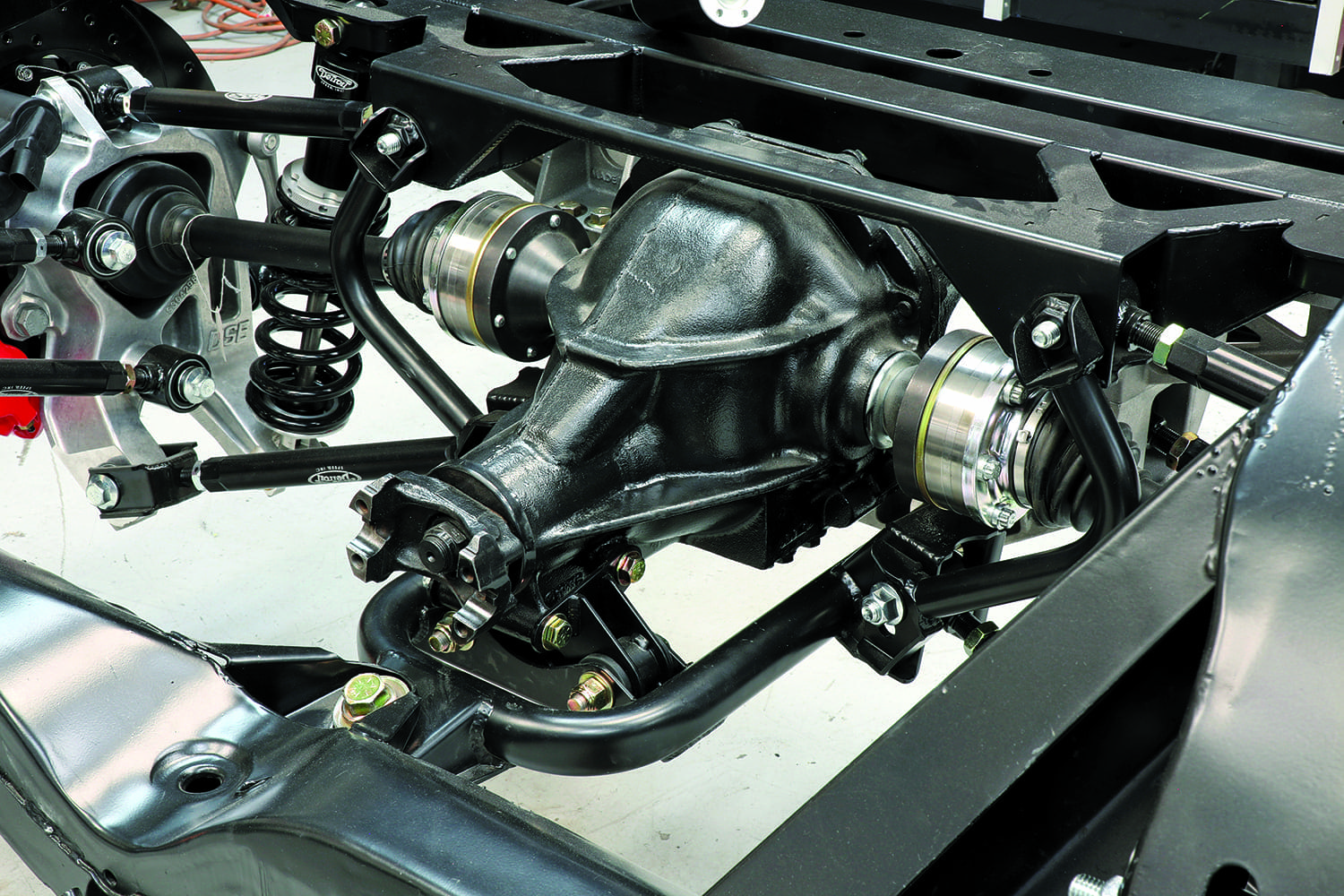
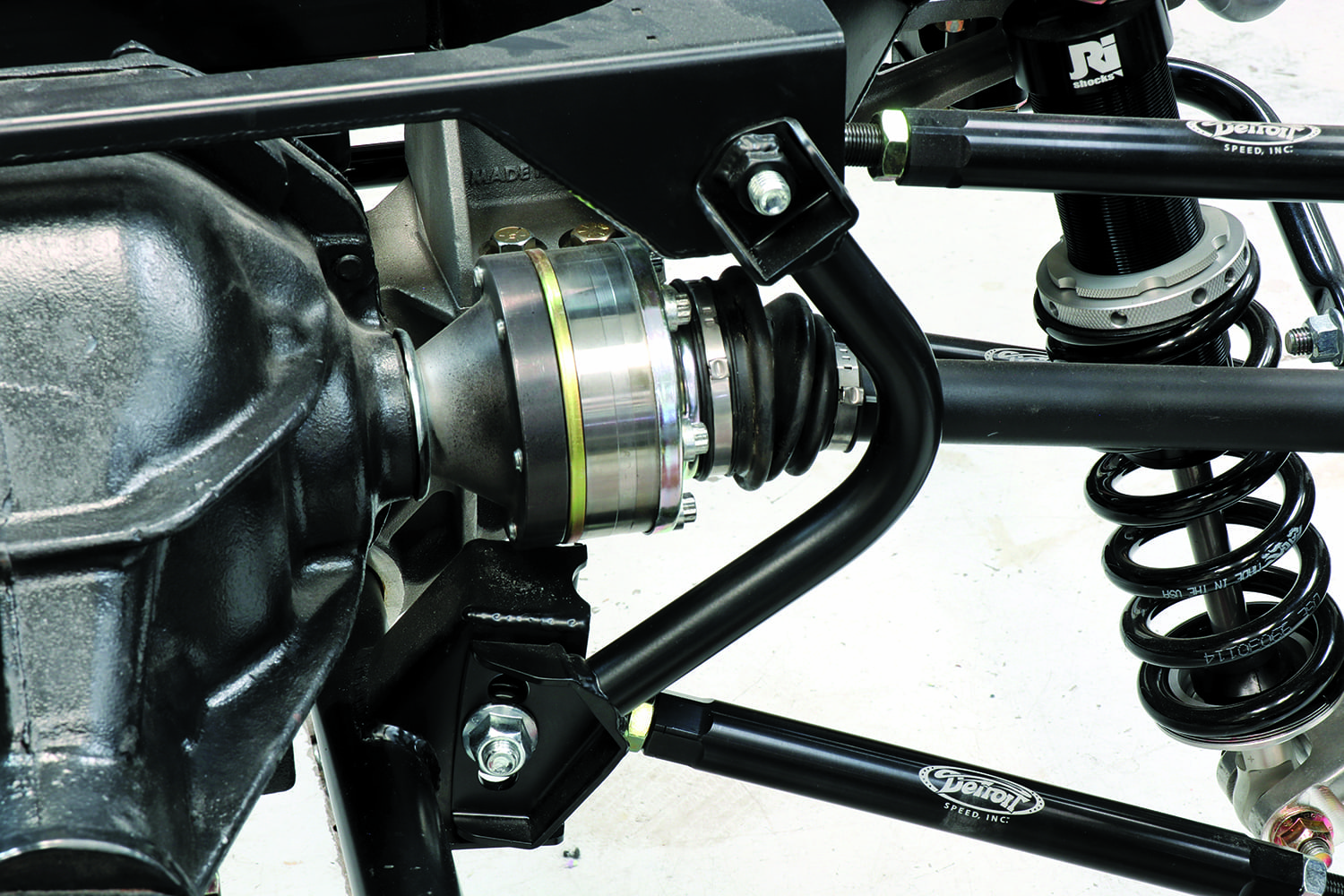
Another important note: In the stock Corvette IRS rear suspension design, used from 1963-82, the large, thick half-shafts—connected via U-joints at both ends—effectively acted as upper control links, which worked well enough in corners but not so much for comfort. That has all changed with the DECALink setup, as the 10-link design relieves the half-shafts of that burden. There are no U-joints anymore, since CV joints provide a greater range of motion.
It all contributes to a customized driving experience that better balances performance and comfort. The last time we visited Detroit Speed’s website, there were six versions of the DECALink, differentiated by damper type and axle shaft strength. Regardless of the specifications, it’s important to note that installation involves a fair amount of cutting and welding, which includes a steel upper mount, a lower aluminum cradle, and mounting plates for the trailing arms and more.
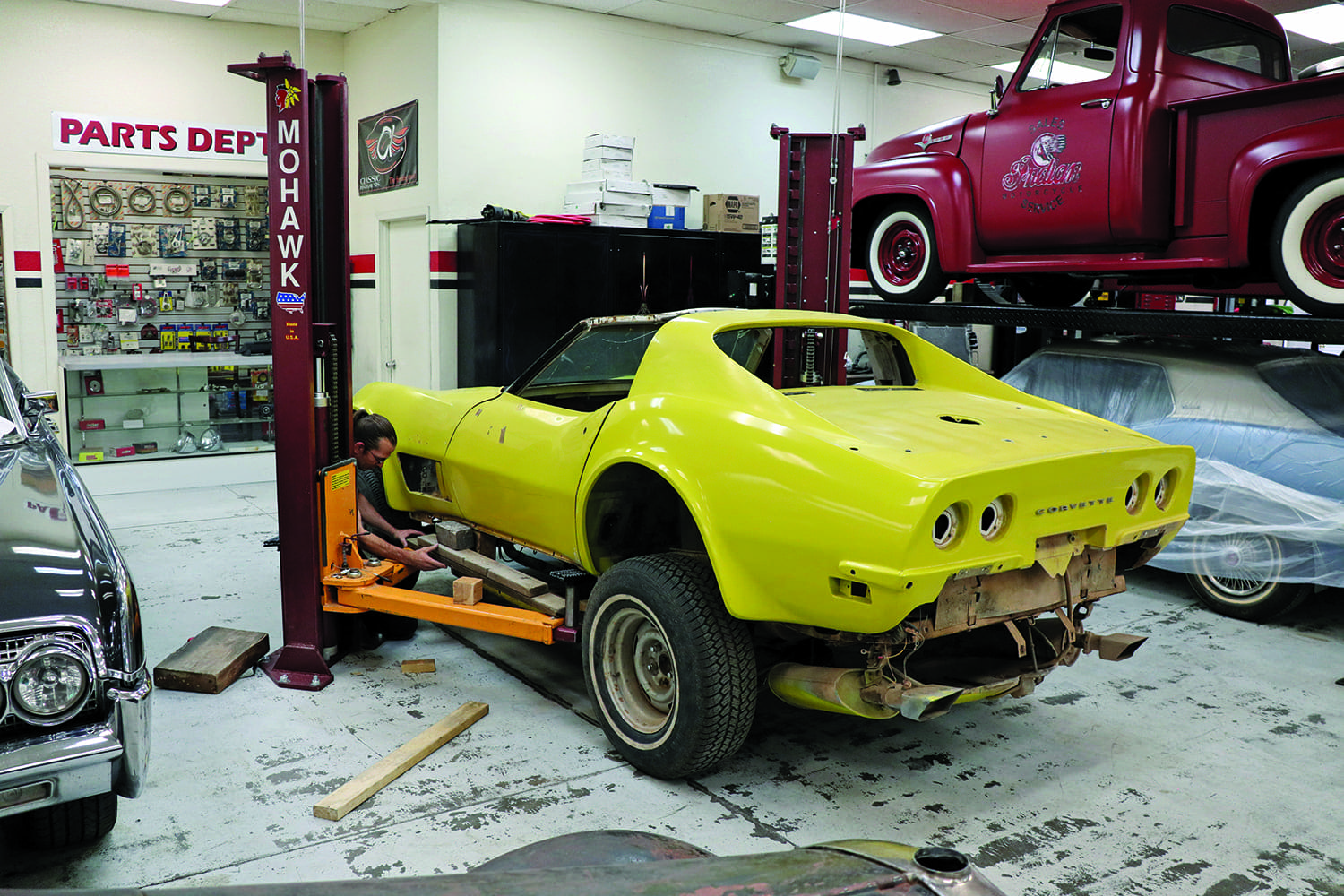
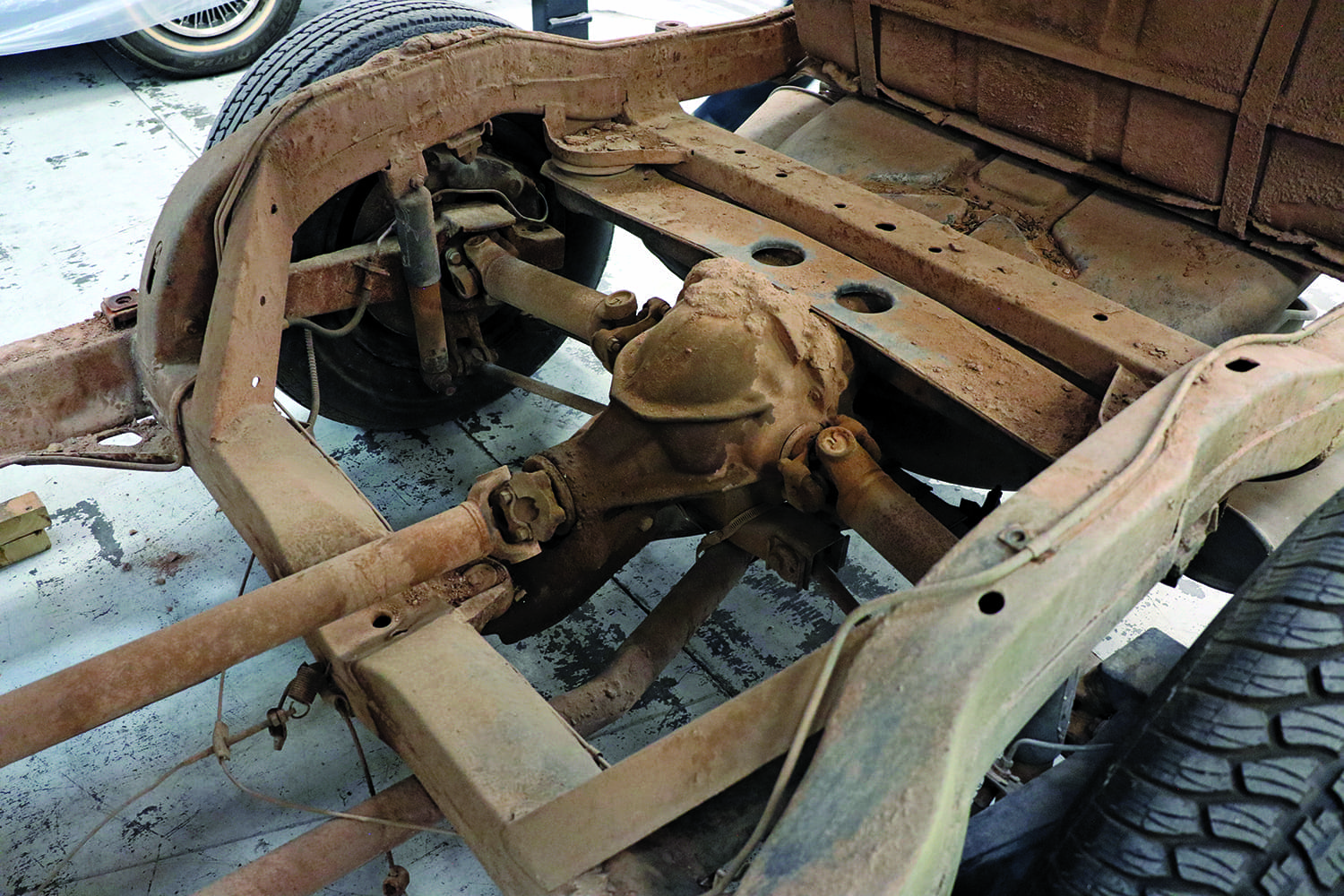
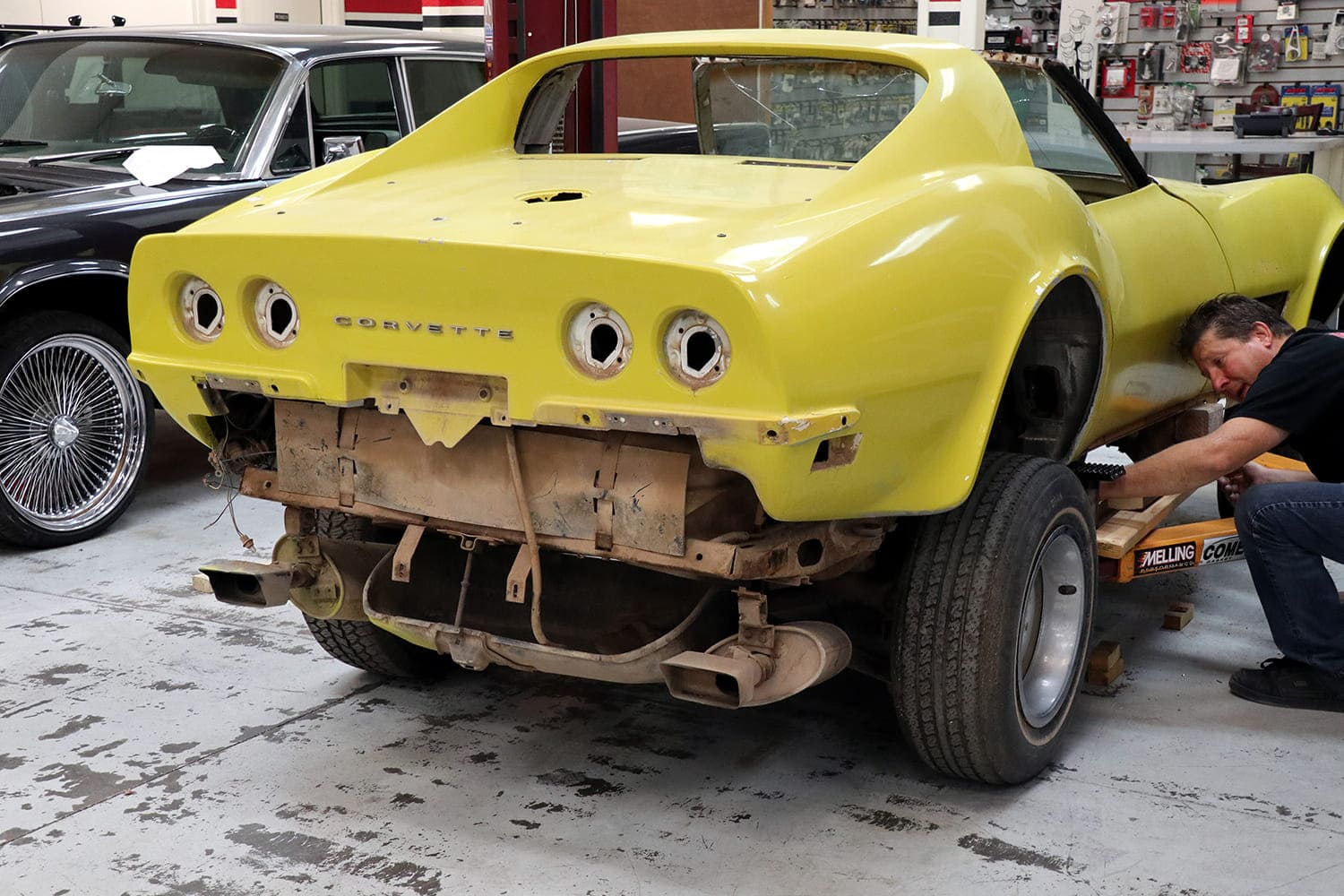
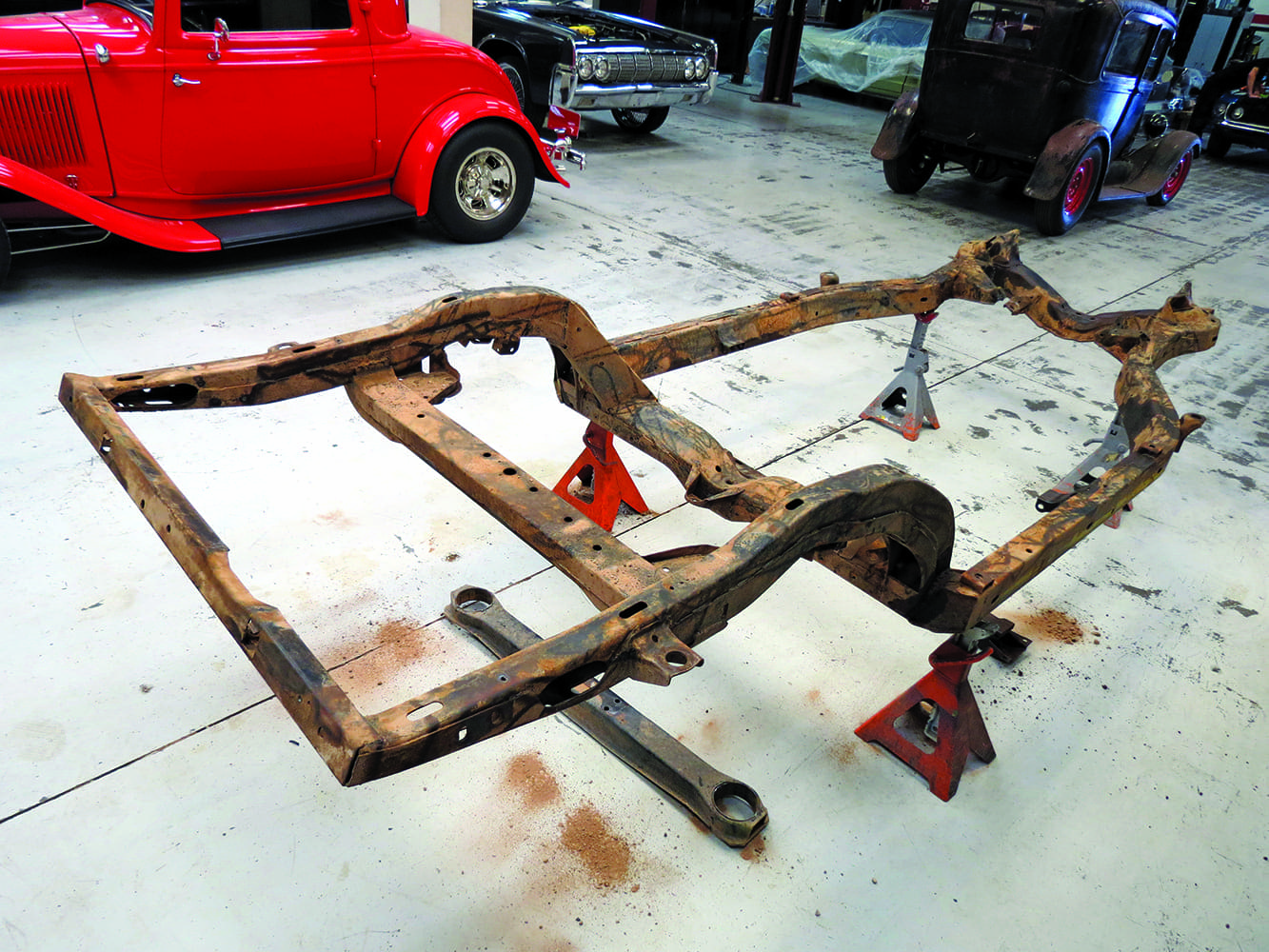
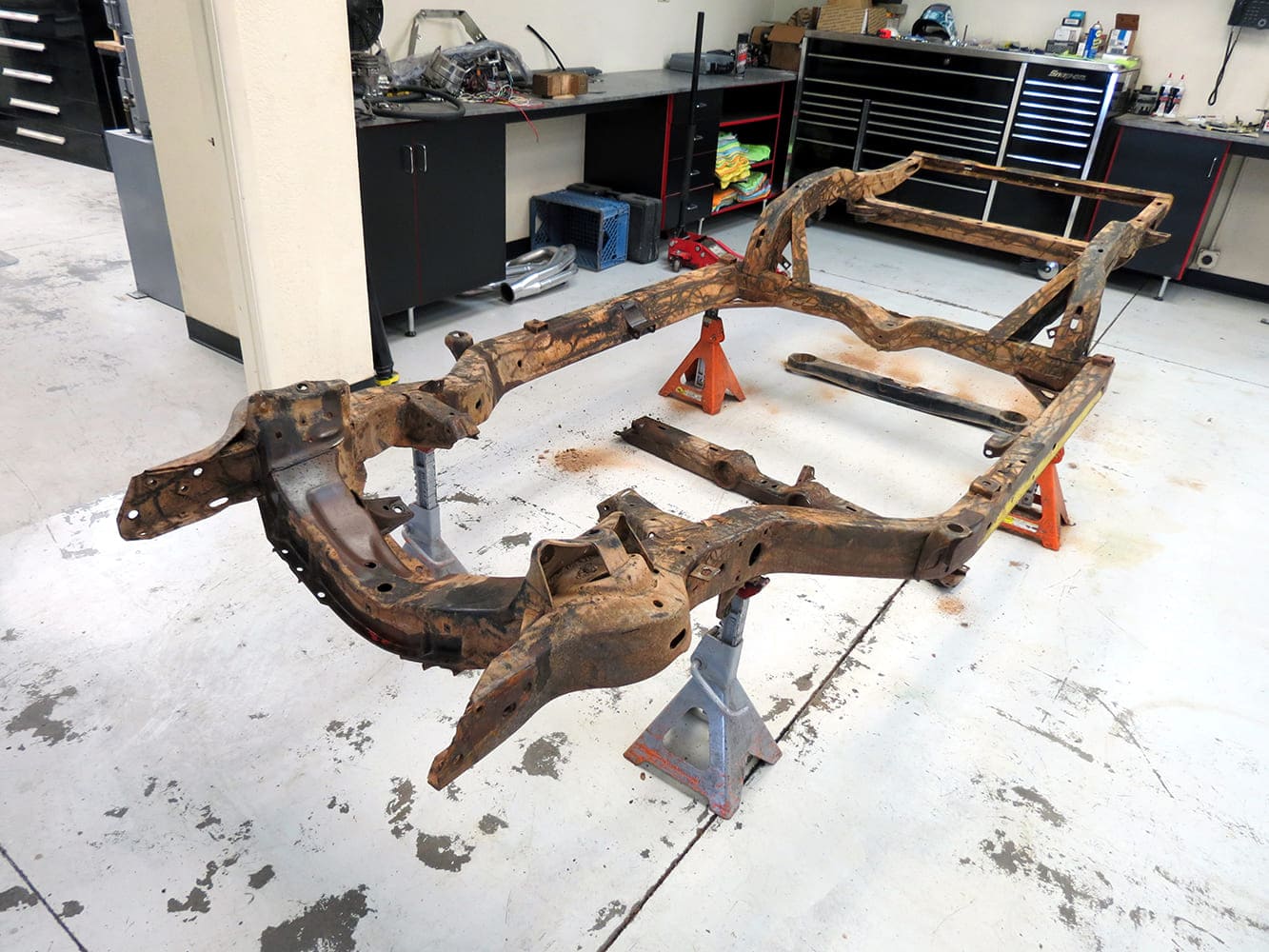
Our 1971 Stingray project car was a solid but worn starting point, covered in decades of dirt and grime. We took it to Hot Rods by Dean in Phoenix, where they began by removing the body from the chassis.
In short, it’s a project suited for more experienced DIYers or one best left to the professionals, which was our choice. Also, Detroit Speed says the Corvette IRS system can be installed with the body in place, but from what we’ve seen of the installation, that seems like a masochistic endeavor. Given the access required for some of the cutting and welding, it’s much, much easier to do the work with the body off the frame. Trust us on that.
With the body removed, we get a clearer view of the stock Corvette IRS, which used a heavy, transversely mounted leaf spring and a pair of shock absorbers. In their time, the C2 and C3 Corvettes (sharing the same basic chassis and suspension designs) handled quite well—especially compared to solid axles—but ride quality was never their strong suit.
A few more notes: The DECALink system fits C2 and C3 models, but when used with a C2, a couple of clearance holes must be drilled in the body. Additionally, the rear center section can be reused on 1965-79 models, but differences in the 1980-82 models make their center sections incompatible. Fortunately, sourcing an earlier-model center section is easy. The crossmember for a 1968-79 Corvette IRS will also be needed with that swap.
We still have a long way to go on our Corvette project, but with the front and rear suspension completed, our restored and modernized chassis is ready to accept the powertrain, and we can’t wait to get started. Stay tuned! MR
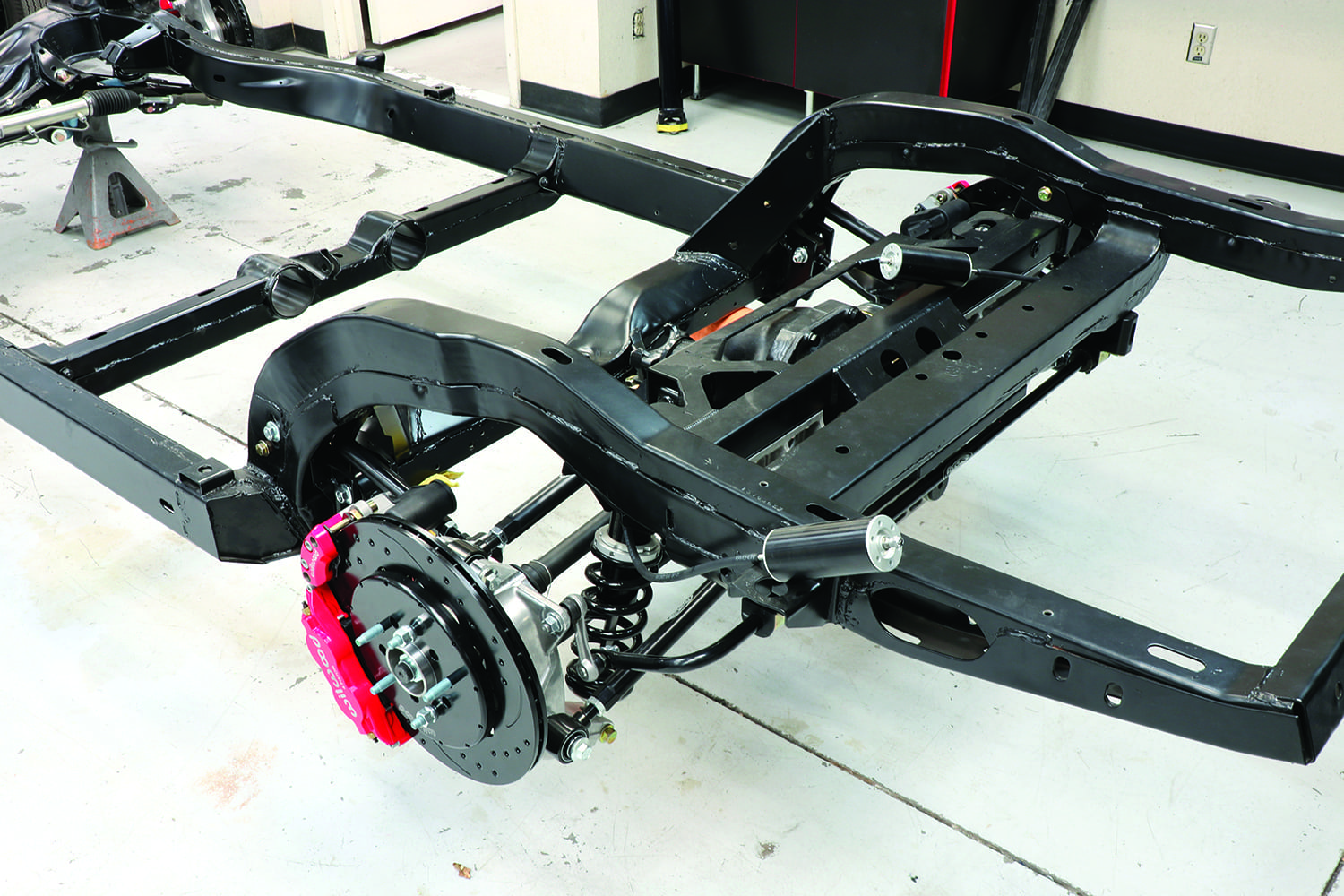
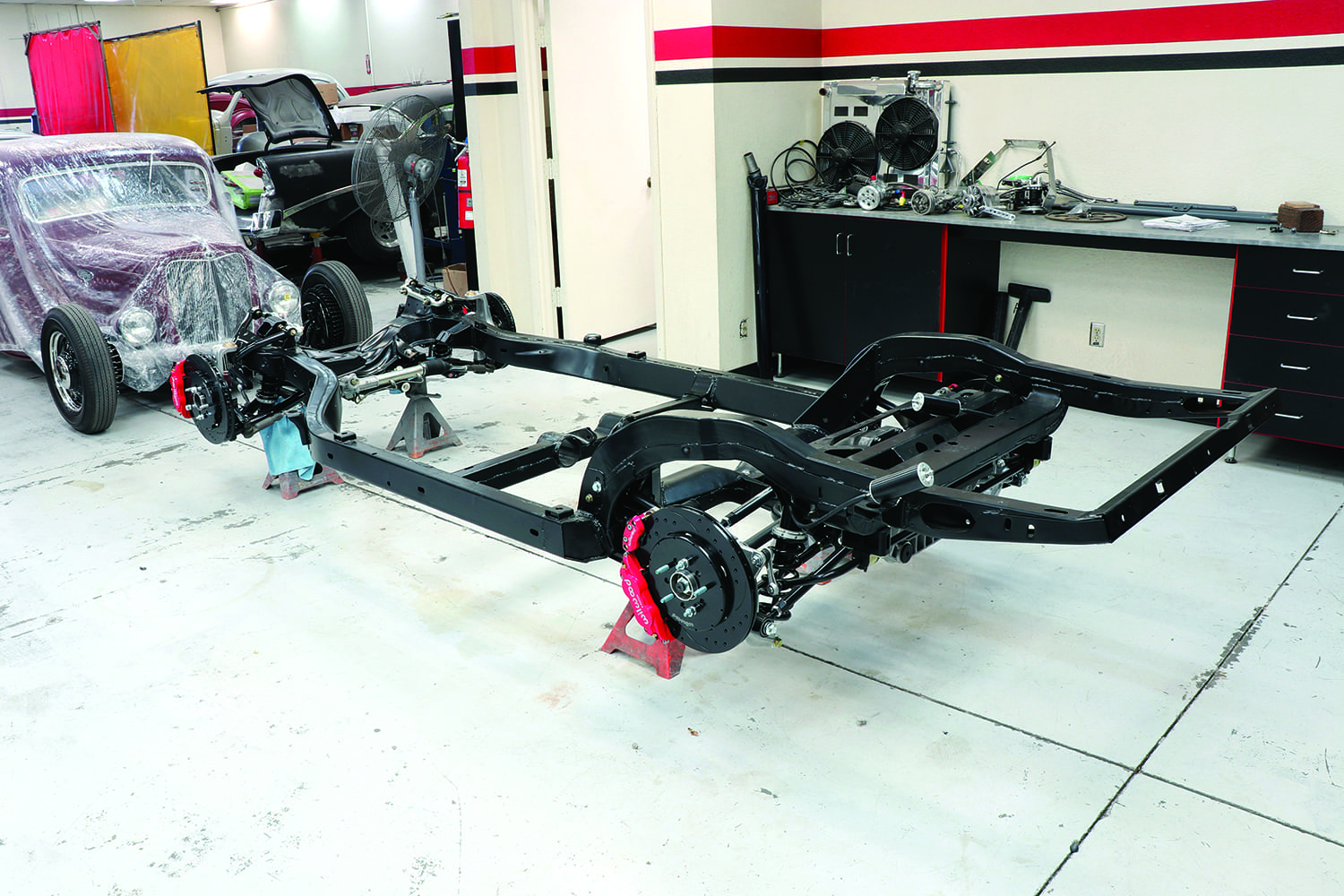
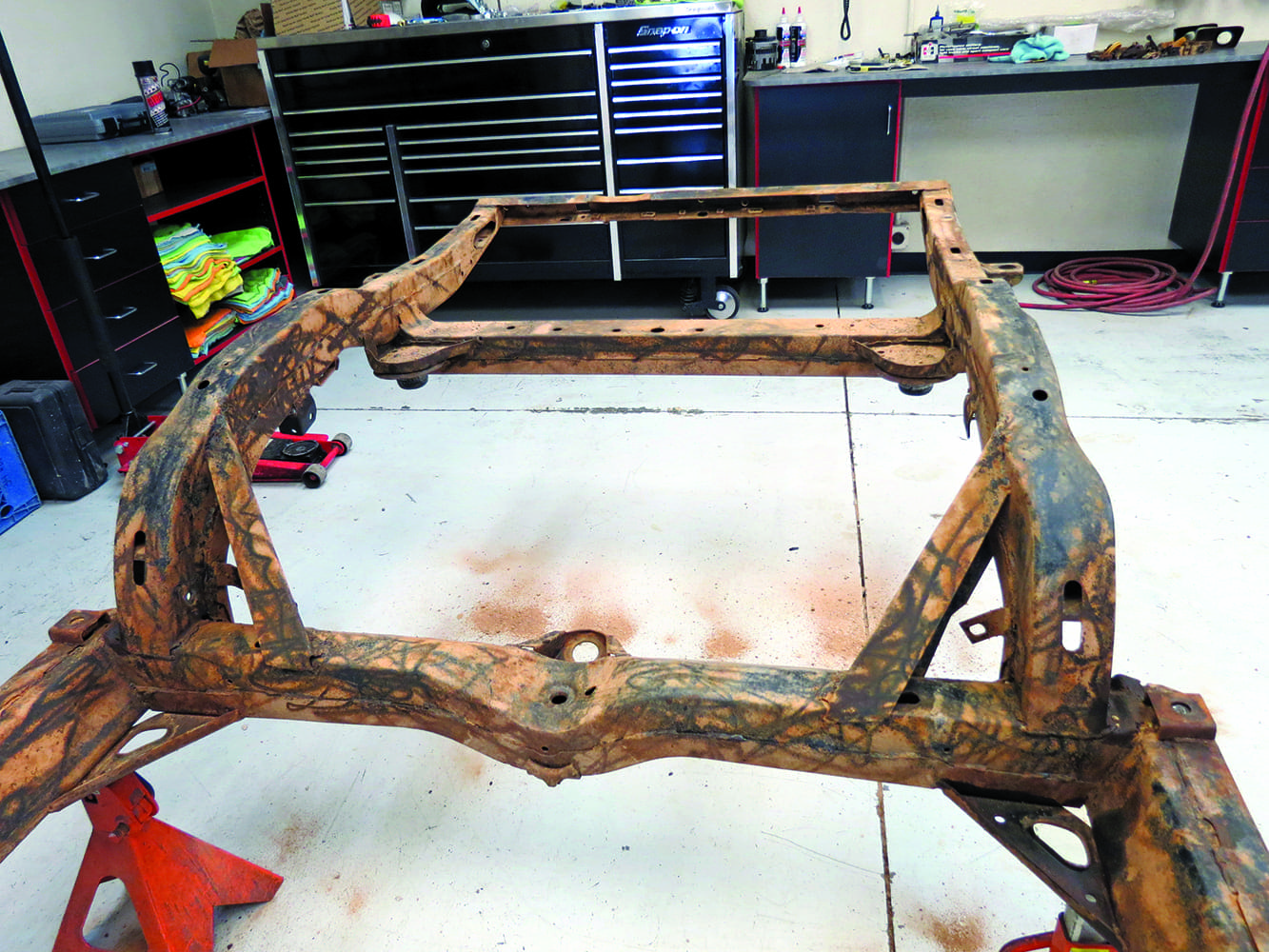
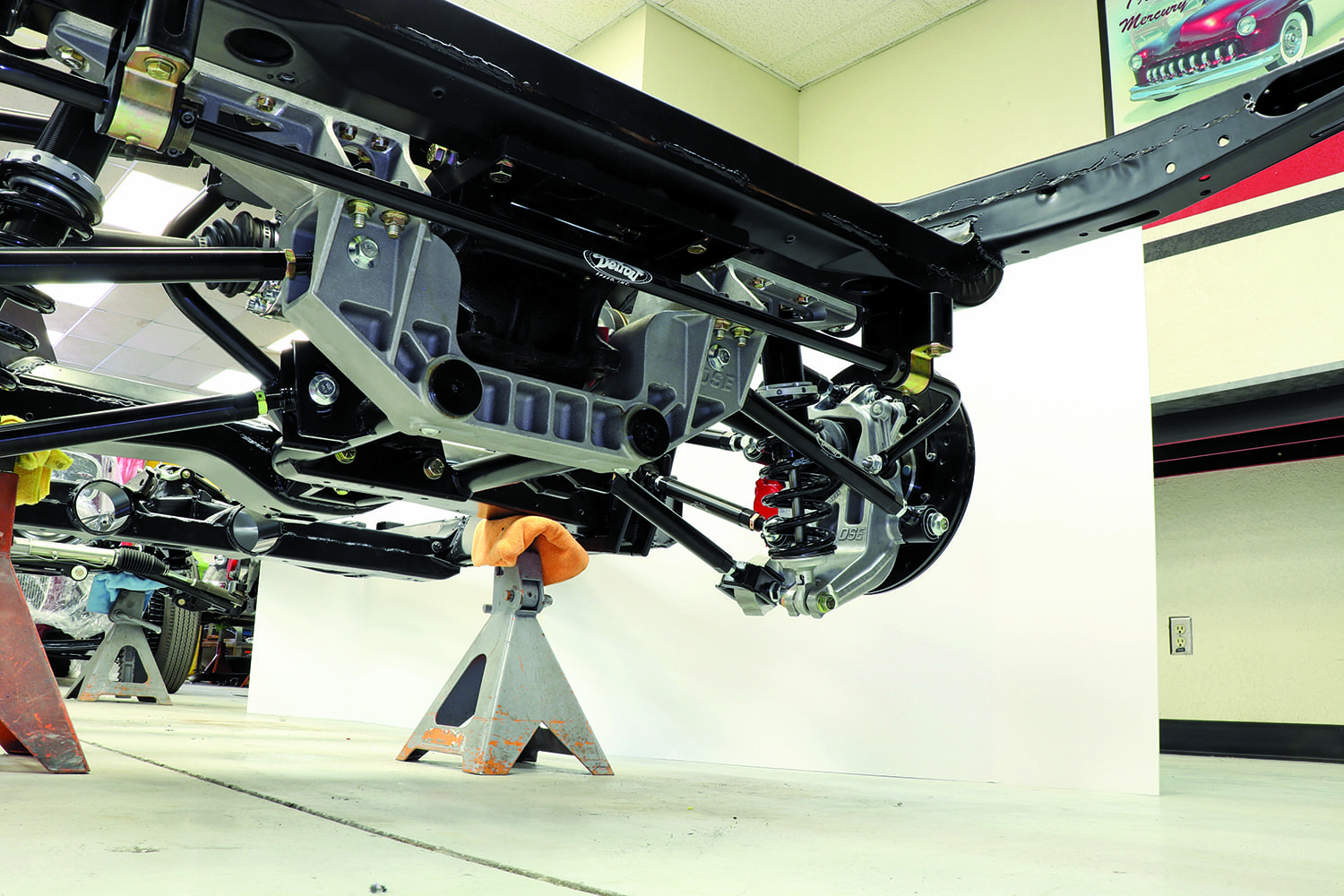
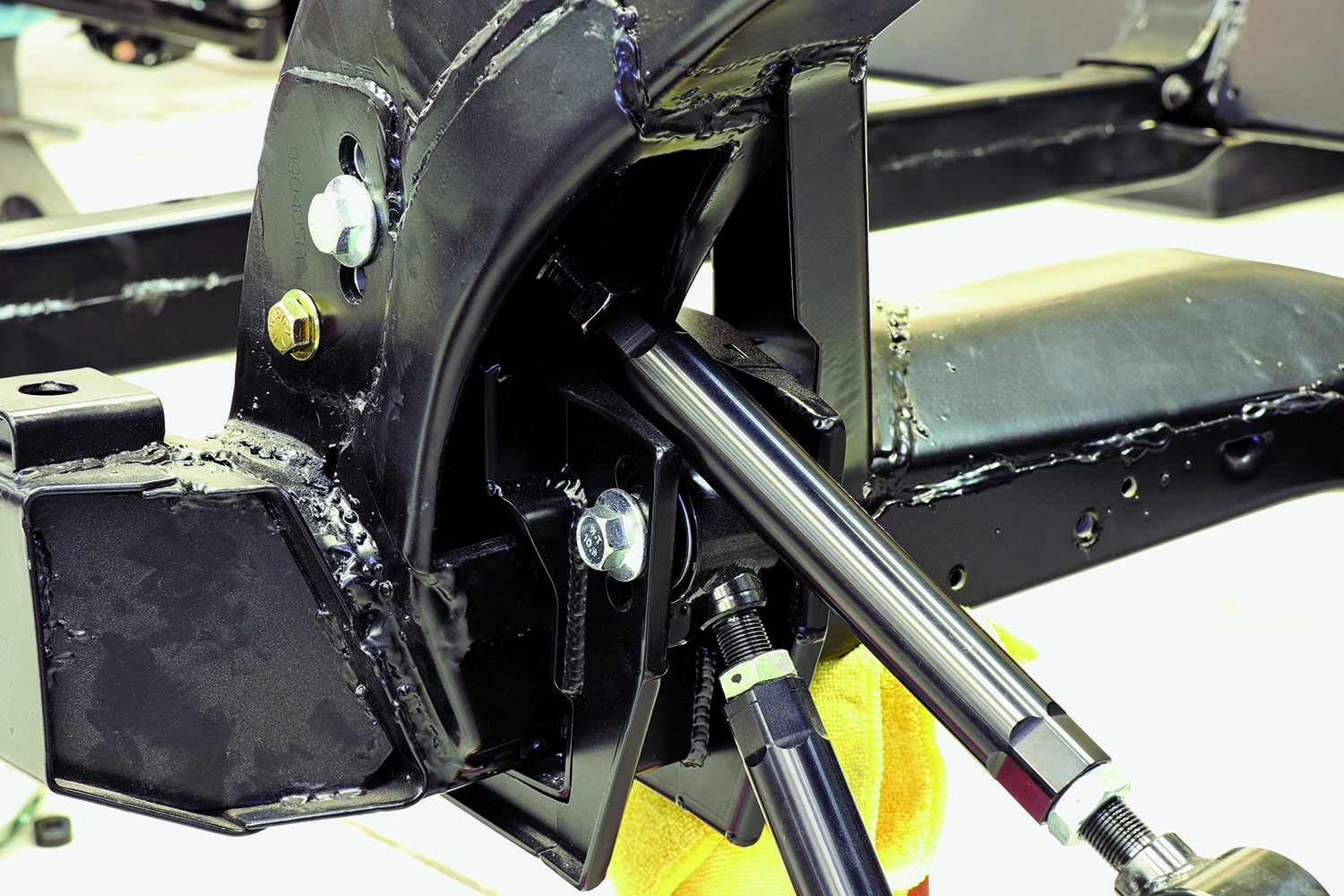
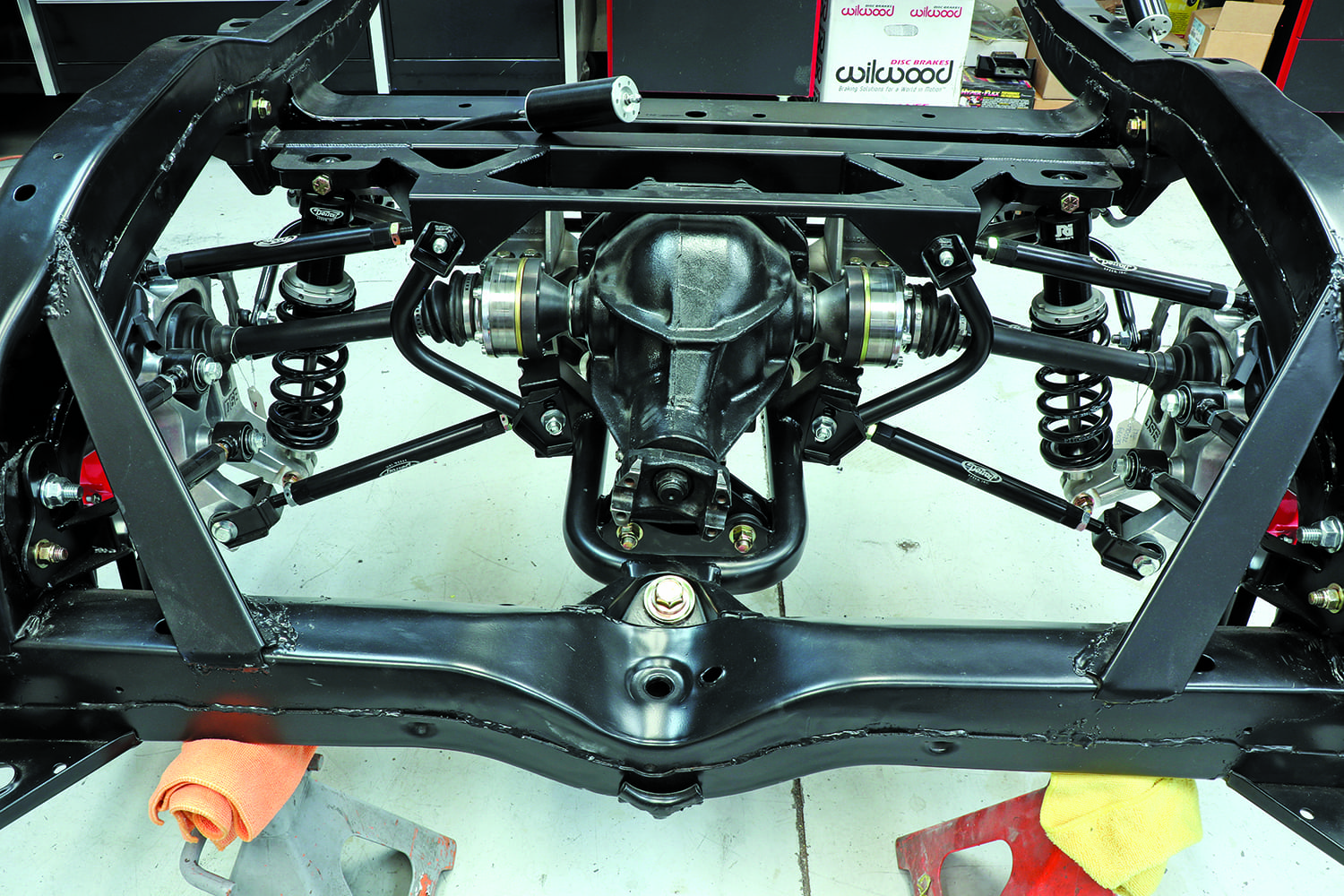
The clean-sheet approach of the DECALink design includes tubular links, a heavy-duty lower cradle, an upper crossmember, plus forged aluminum uprights. The original trailing arms are long gone.There’s nothing quite like seeing your car’s body separated from its chassis. The rear suspension, in particular, is much easier to install with the body removed. Dean makes it look easy.Although it didn’t look perfect, the chassis was solid and free of rust. The C2/C3 frames are known for rusting in the boxed sections and around the welded areas of the rear kick-ups. Luckily, this one was in good shape; it was cleaned, stripped, and prepped for the new rear suspension.Preparing the chassis for the new suspension assembly involved removing the frame crossmember and cutting off the bumper brackets, shock mounts, brake line brackets, and more.Admittedly, we missed a significant portion of the drilling, grinding, and prep work on the chassis by the time we arrived at Hot Rods by Dean with our camera, but in a nutshell, the IRS cradle assembly—made of steel upper and aluminum lower sections—attaches to brackets welded to the frame.Admittedly, we missed a significant portion of the drilling, grinding, and prep work on the chassis by the time we arrived at Hot Rods by Dean with our camera, but in a nutshell, the IRS cradle assembly—made of steel upper and aluminum lower sections—attaches to brackets welded to the frame.Here’s what a cleaned, powder-coated chassis looks like. Equipped with the latest Detroit Speed Decalink IRS, the classic C3 platform is transformed into a modern, multi-link suspension design.
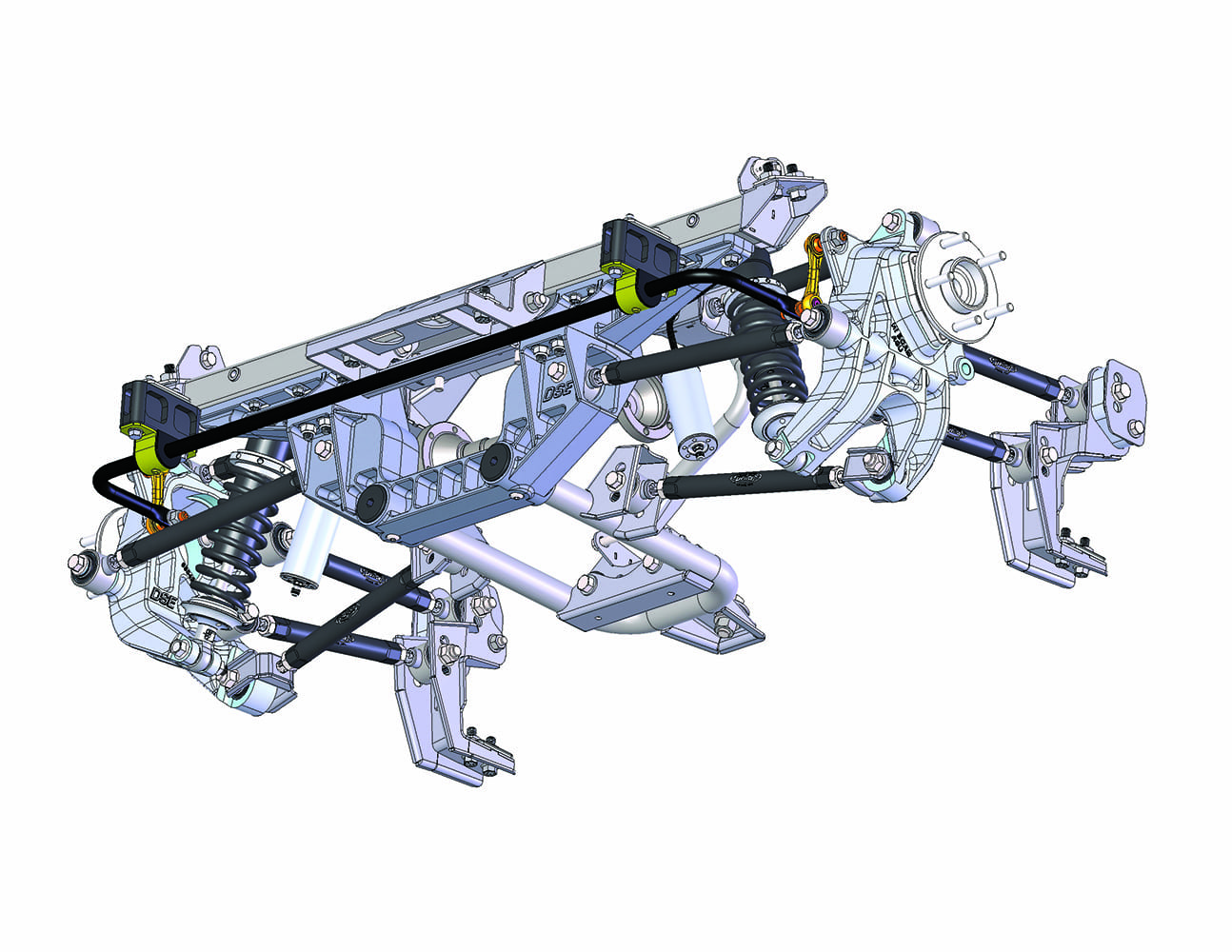
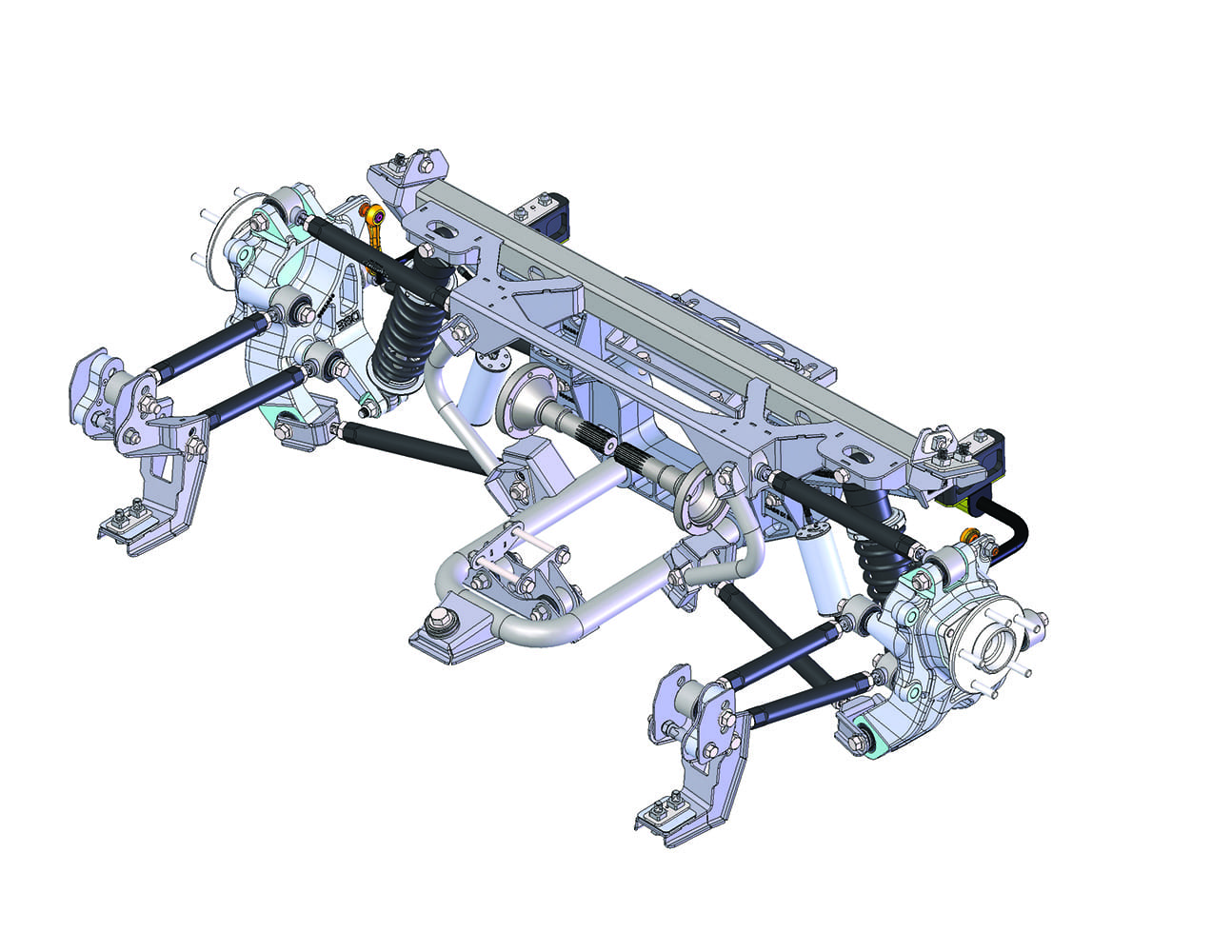
The dark areas in this CAD drawing highlight DSE’s multi-link control bars, custom coilover shocks, sway bar, and new uprights.
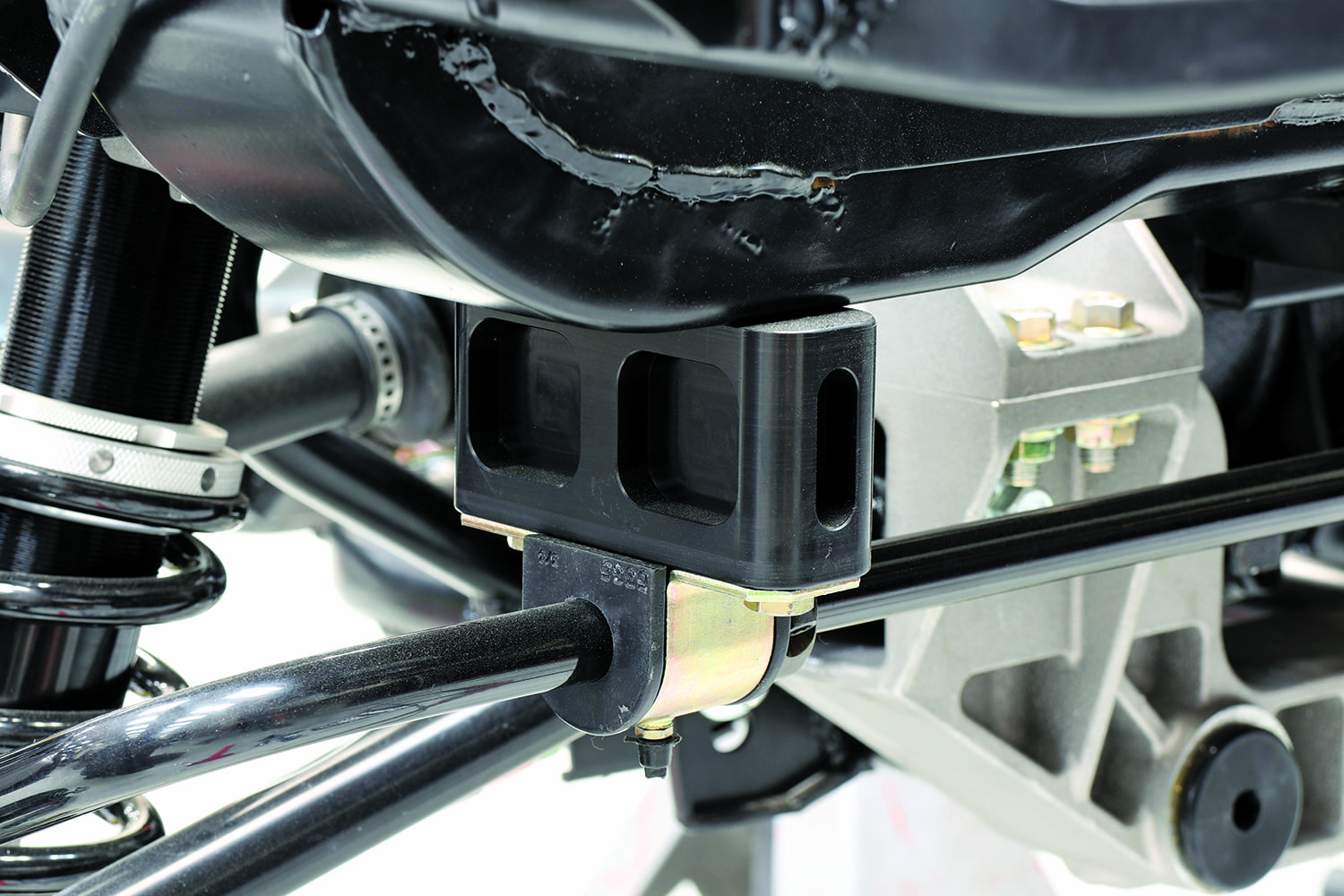
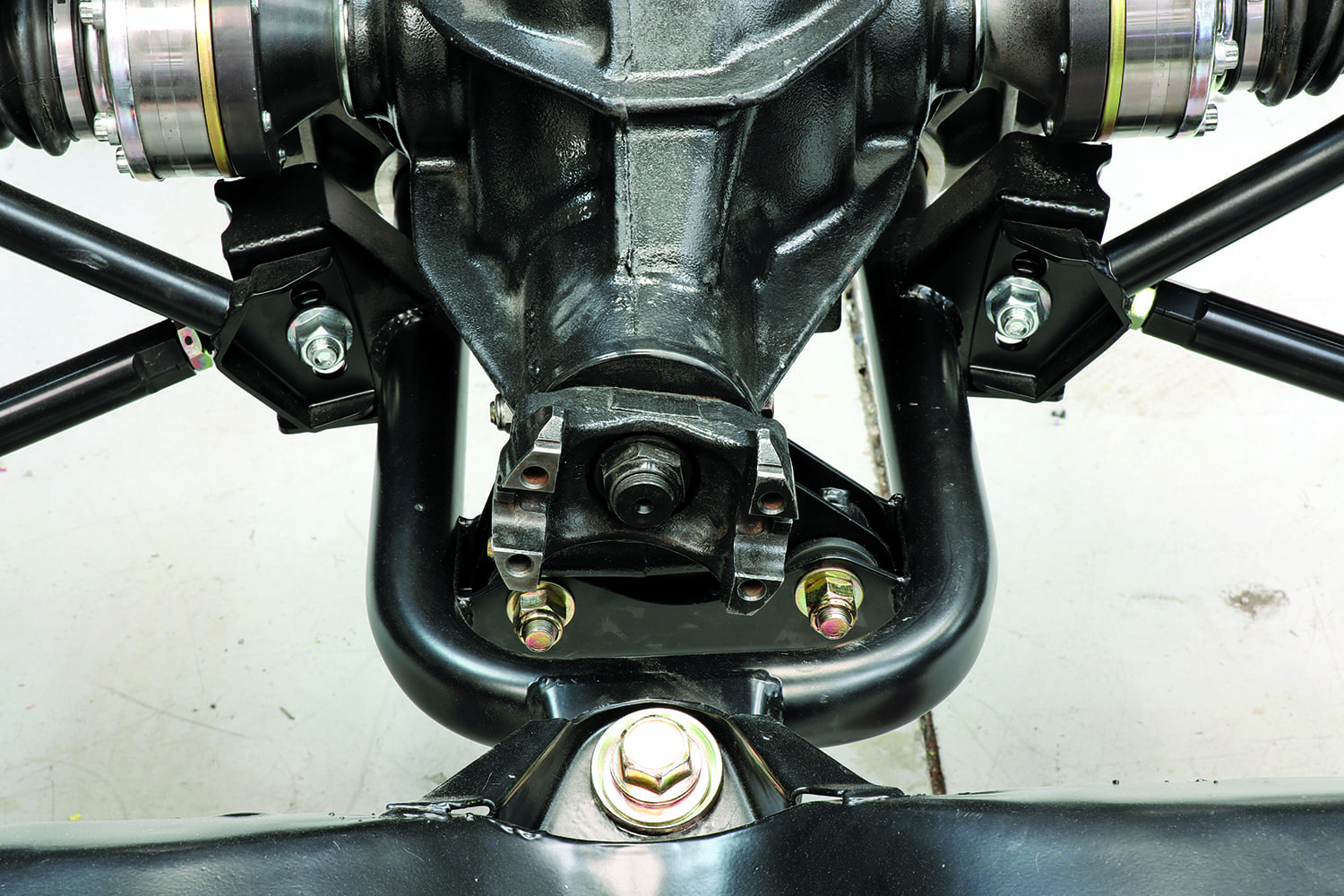
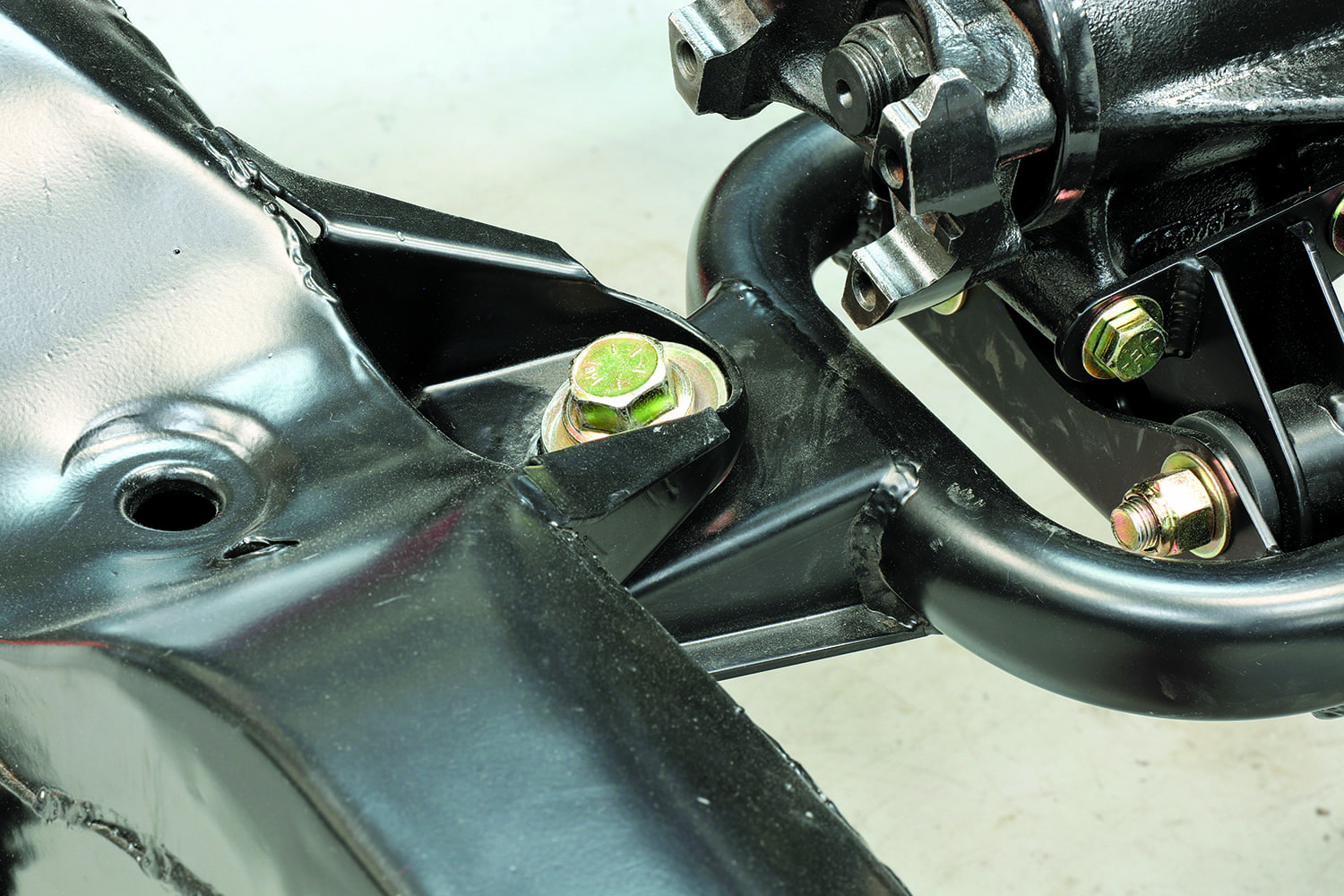
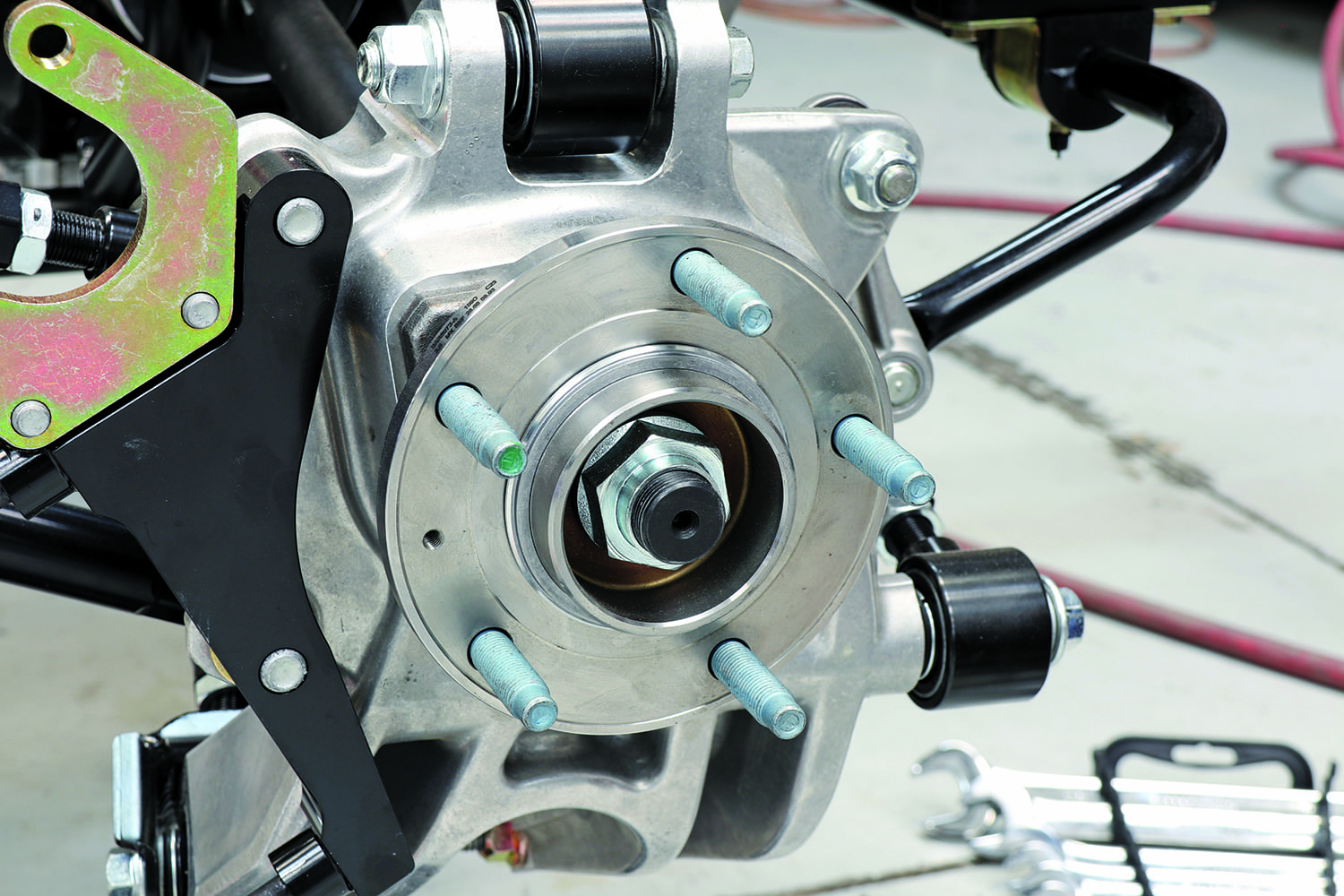
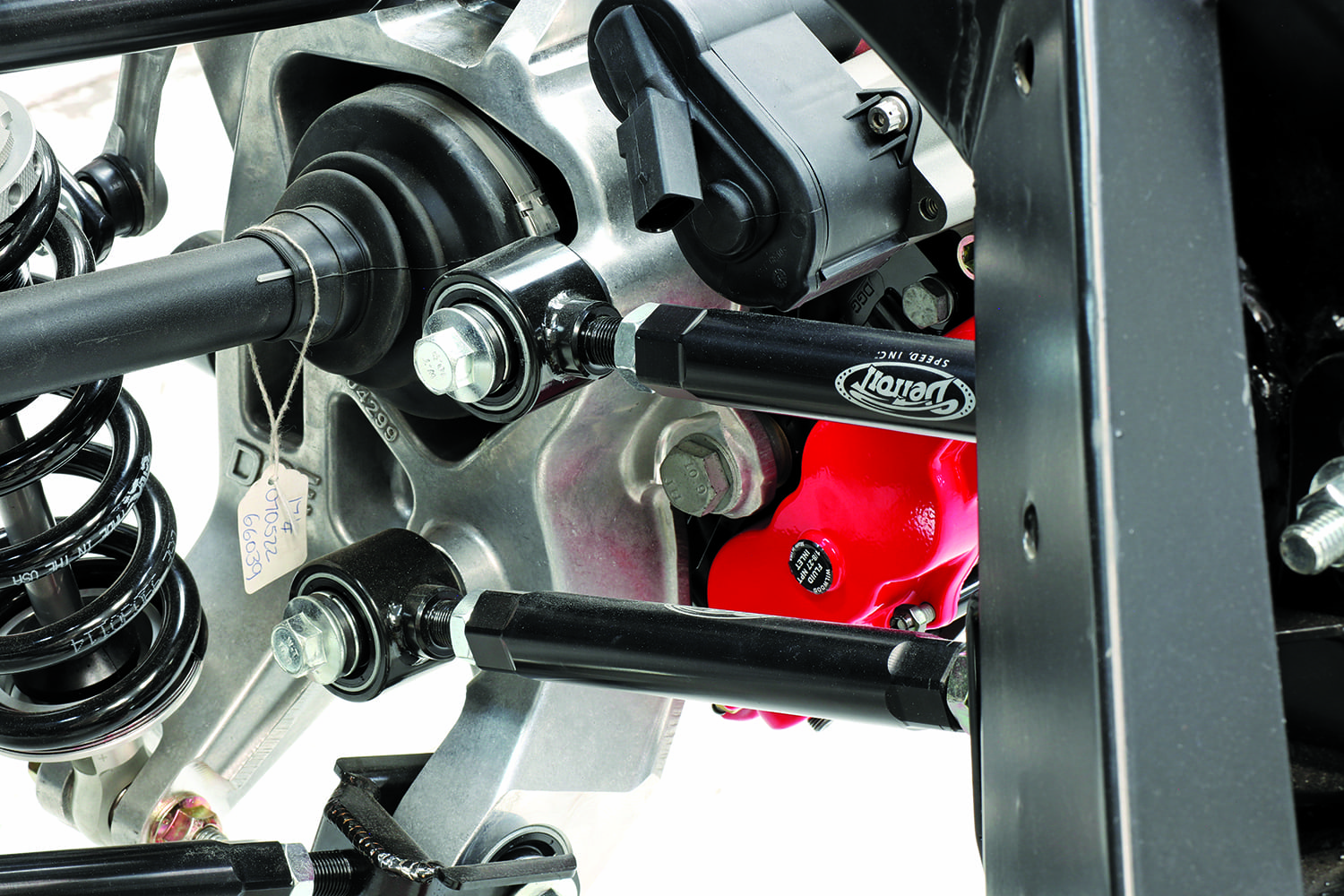
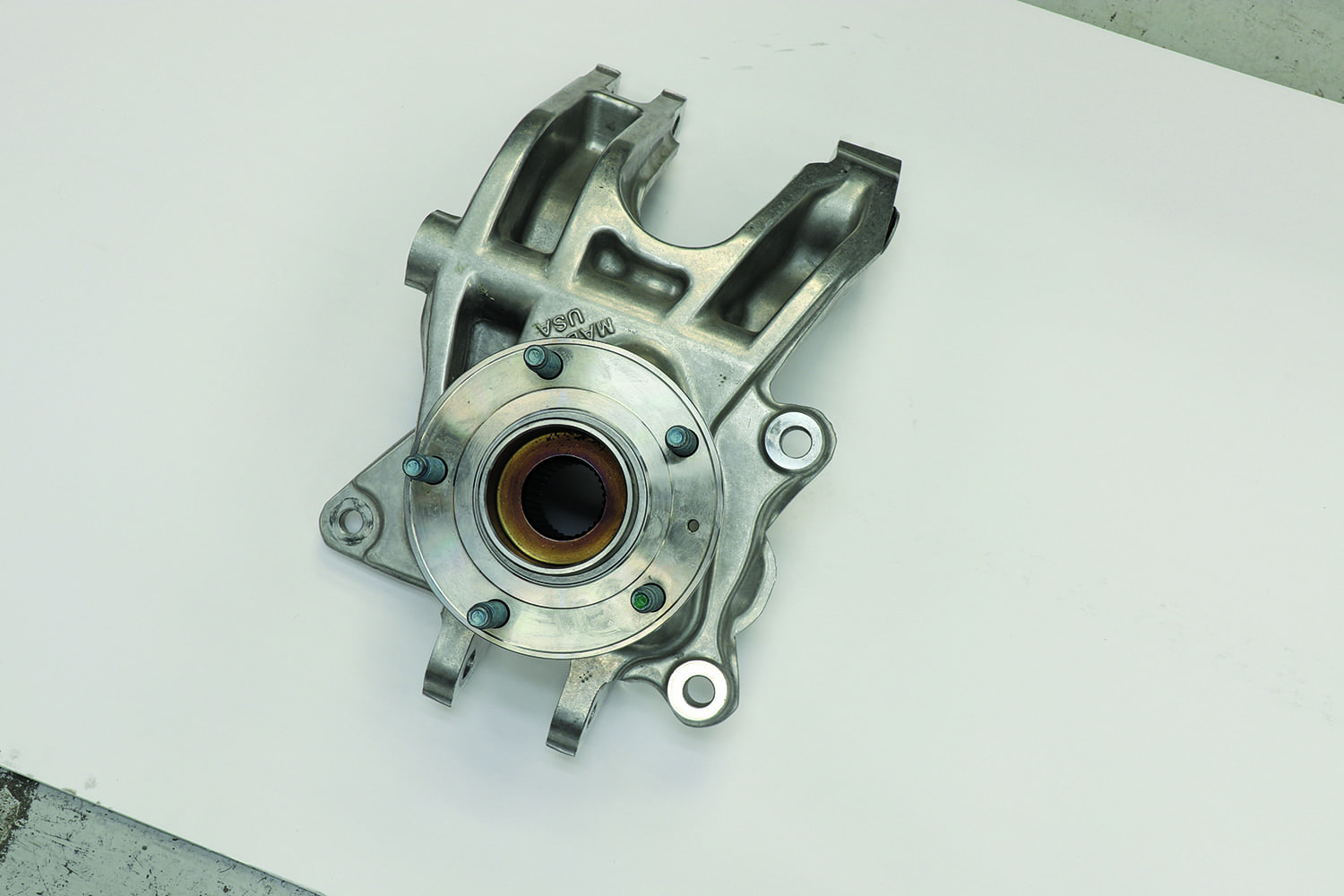
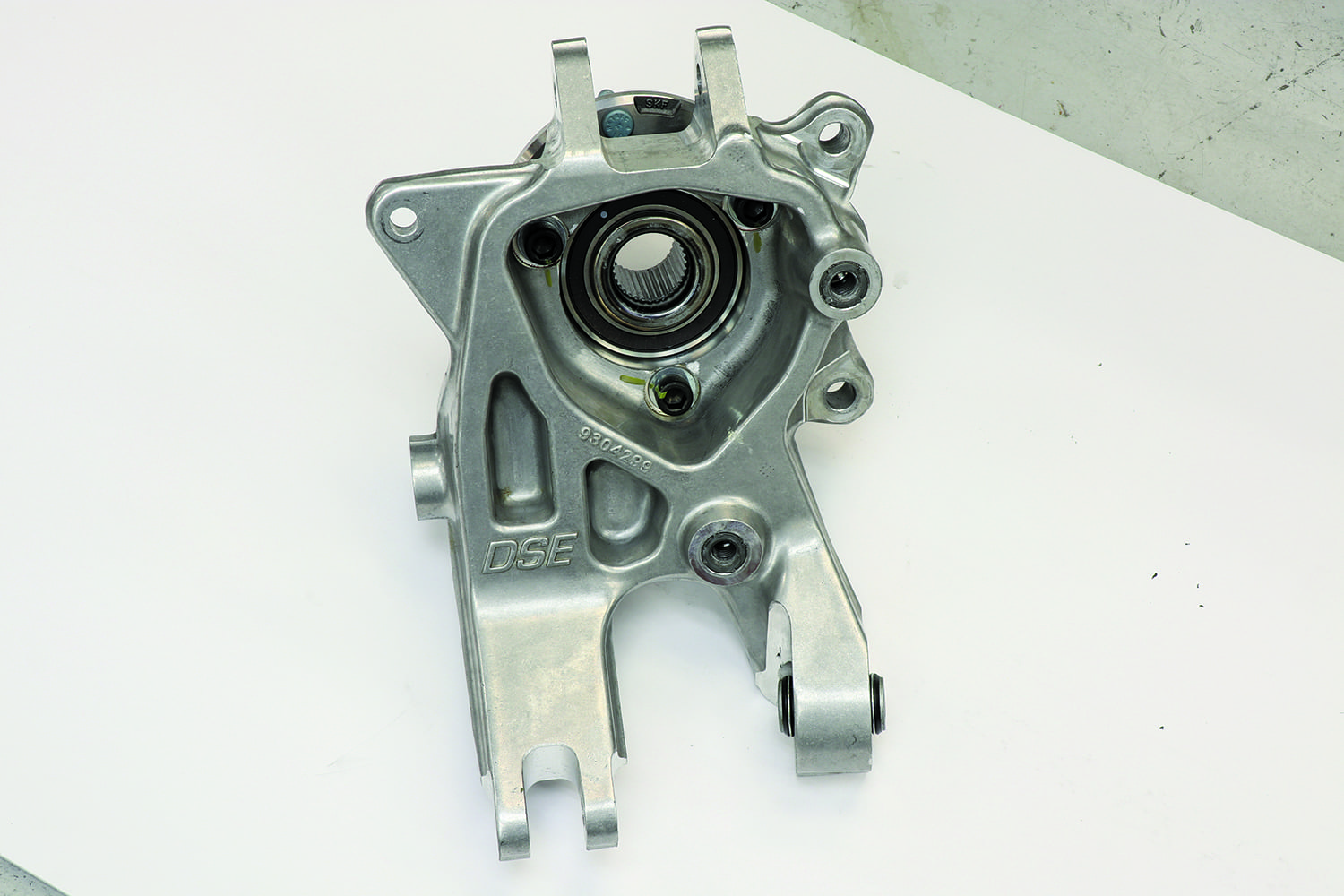
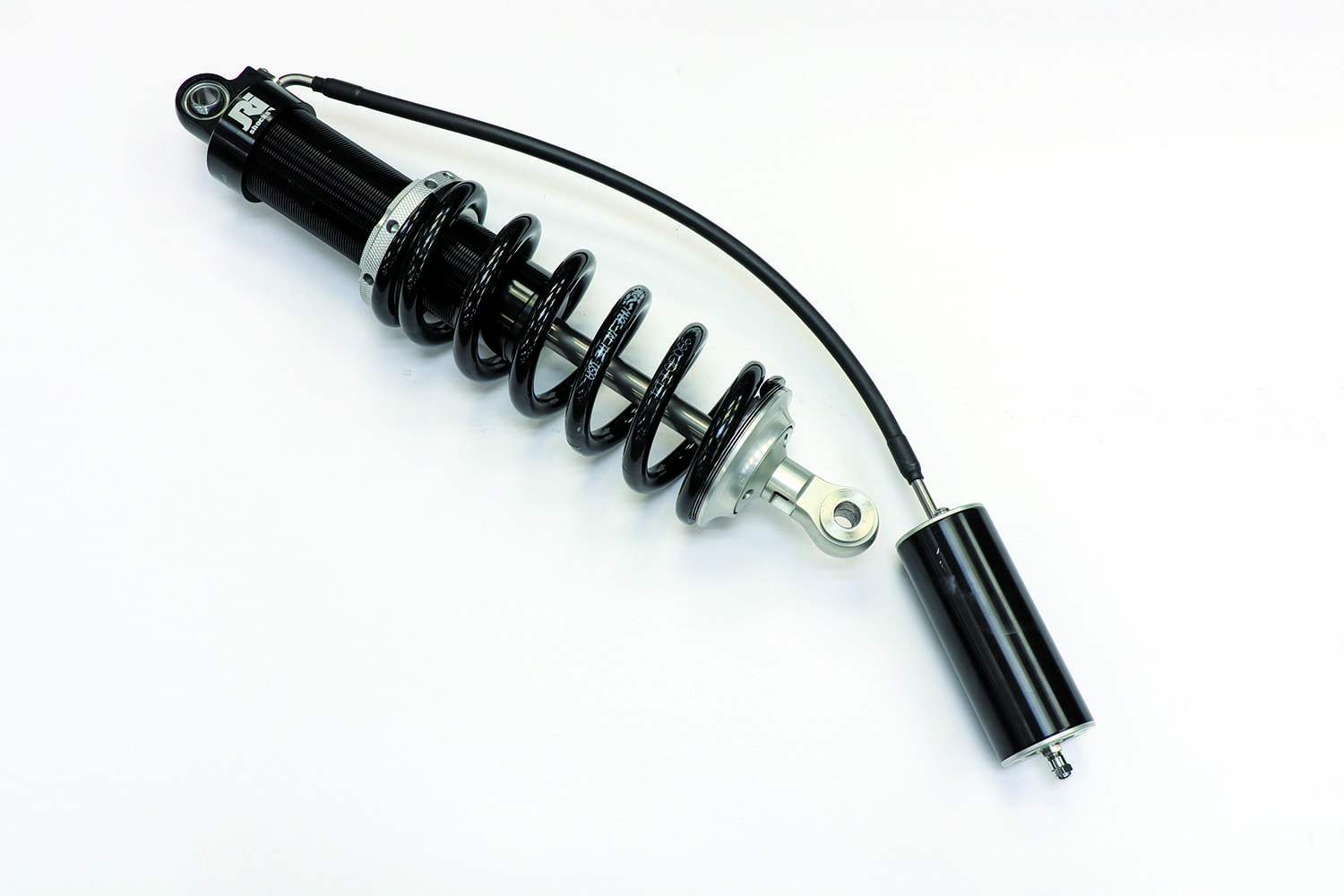
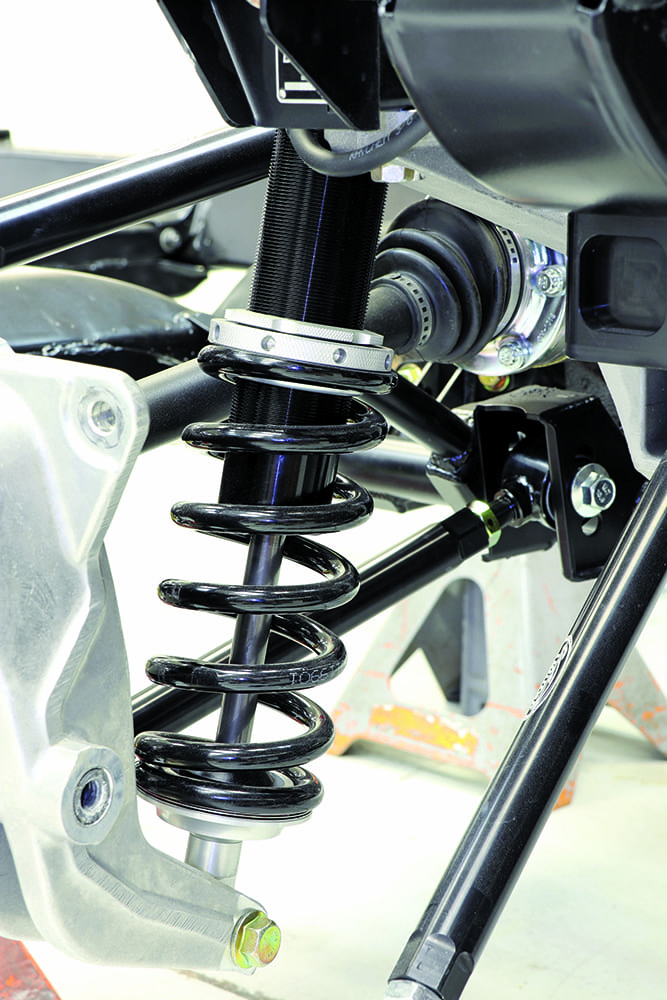
Additional mounting holes need to be drilled into the frame to support the rear stabilizer bar. The project involves quite a bit of drilling, cutting, and welding.The DECALink system is designed for 12-bolt rearends and has a mount specifically for them, but there are a few caveats: First, reusing the stock 12-bolt requires installing Detroit Speed’s own stub axle shafts. Additionally, the DECALink does not work with the rearend housing used in 1980-82 models, which had an aluminum case and different mounting provisions. A 1965-79 rearend housing must be sourced for those model years.No fabrication needed here. The front of the lower differential bracket attaches to the stock crossmember mount, just like the original differential assembly.The upper and lower trailing links attach to brackets welded to the chassis. There are three mounting positions, and Detroit Speed recommends starting with the middle positions.In the three-link design of the original C2/C3 rear suspension, the half-shafts (connected by U-joints) effectively served as upper suspension links, thereby limiting traction and ride quality. The multilink design of the Detroit Speed Decalink system isolates the driveshafts from the links, replacing the half-shafts with CV joints. The result is a greater range of motion and a smoother ride. The links are free to focus on handling and traction.Aluminum uprights are included and serve multiple functions, including mounting points for the outer CV joints, trailing arms, toe-links, lateral links, and stabilizer bar endlinks. They also support the brake caliper mounting brackets.Close-up of the upright’s rear view shows the outer CV joints, link mounts, and brake caliper bracket. Note the toe adjusters at the very bottom of the image.The outside view of DSE’s aluminum upright highlights the multilink mounting points.Here’s a rear view of one of the uprights, showing the installed components. It’s worth noting that the offset trailing-link mounts were kept inboard in the design to allow for wider wheels and tires to be mounted. Eighteen-inch wheels and up to a 295-series tire should fit within the wheel openings.Coilover shocks made by JRi are included. Depending on the kit, they can be non-adjustable, single-adjustable, or double-adjustable. The single- and double-adjustable dampers have remote reservoirs. This system uses double-adjustable coilovers. Each must be assembled before installation.
Remote reservoirs for shocks allow greater fluid volume within the damper, which helps dissipate heat and reduce the risk of faded performance. They must be mounted nearby on the frame. Detroit Speed offers brackets specifically for this purpose.The CAD drawing shows a front view of our IRS mounting with multilink control bars, excluding the centersection and brakes.
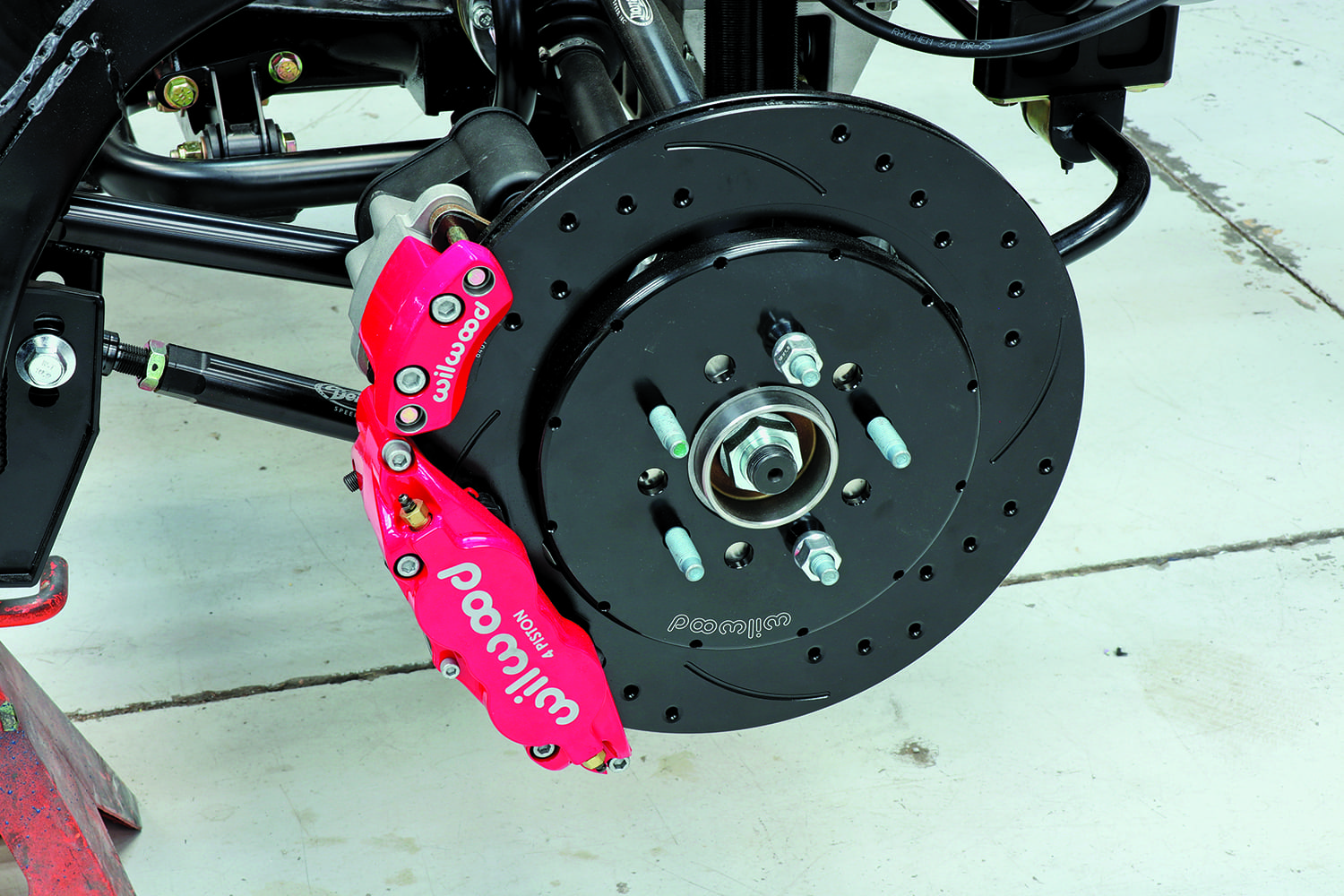
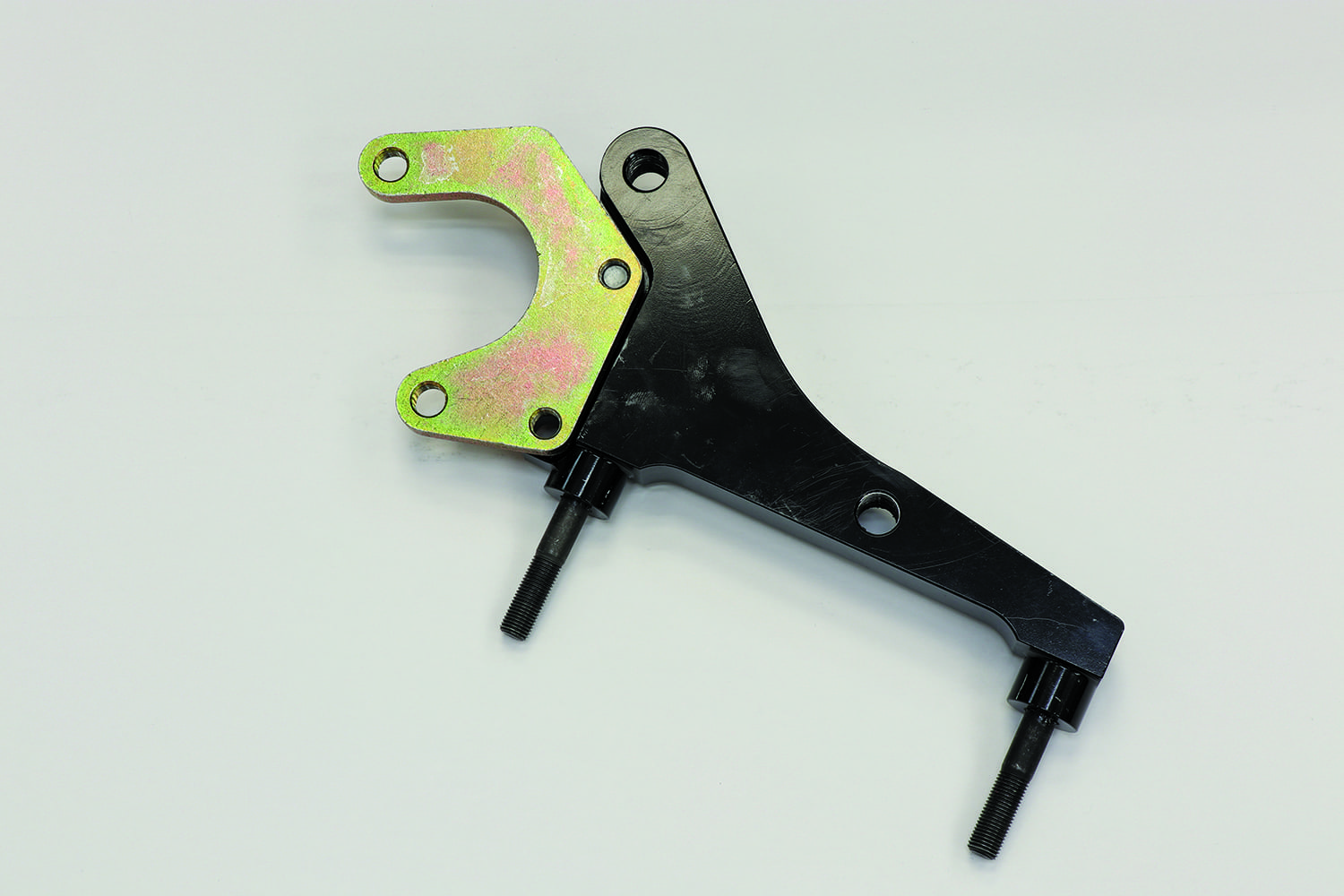
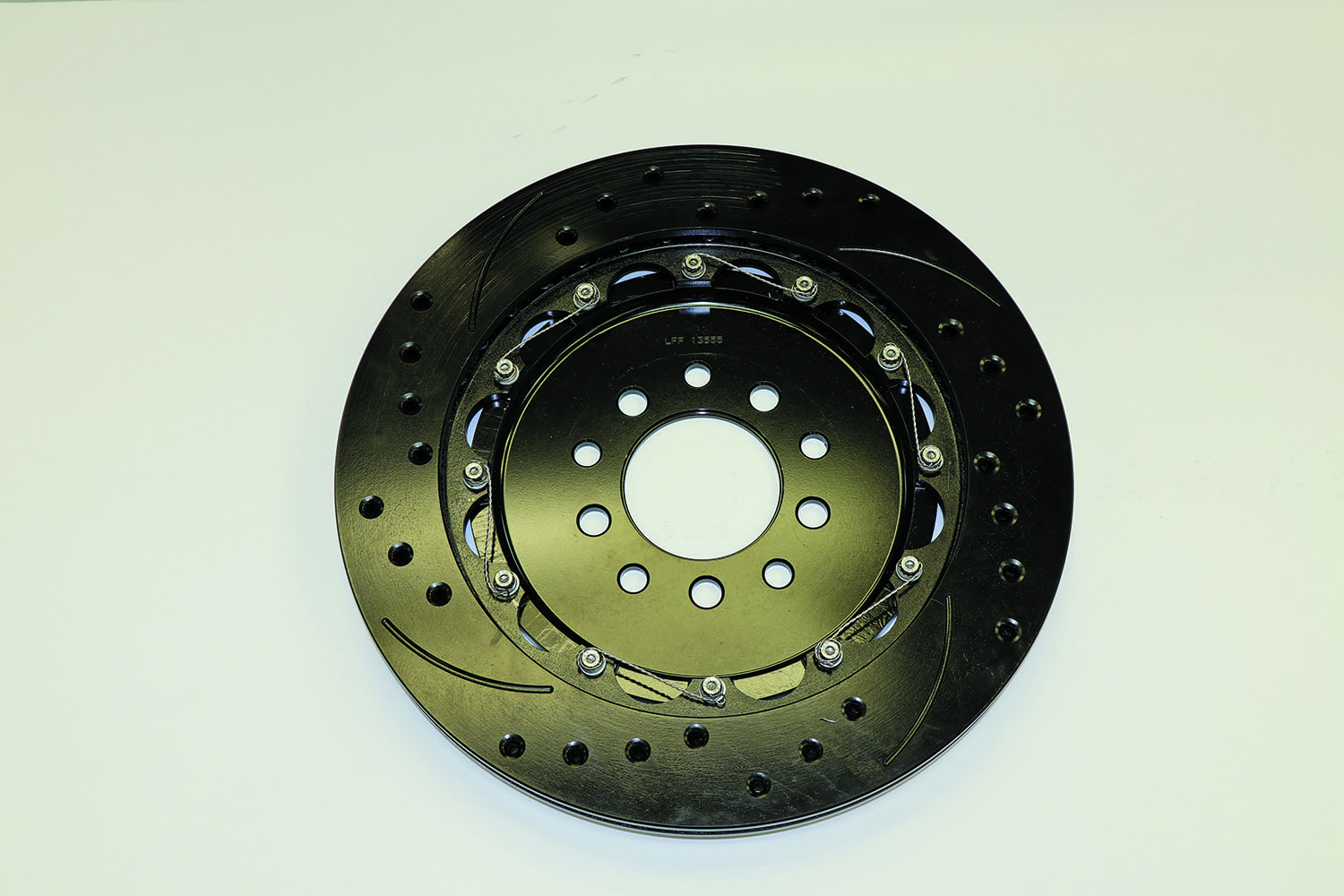
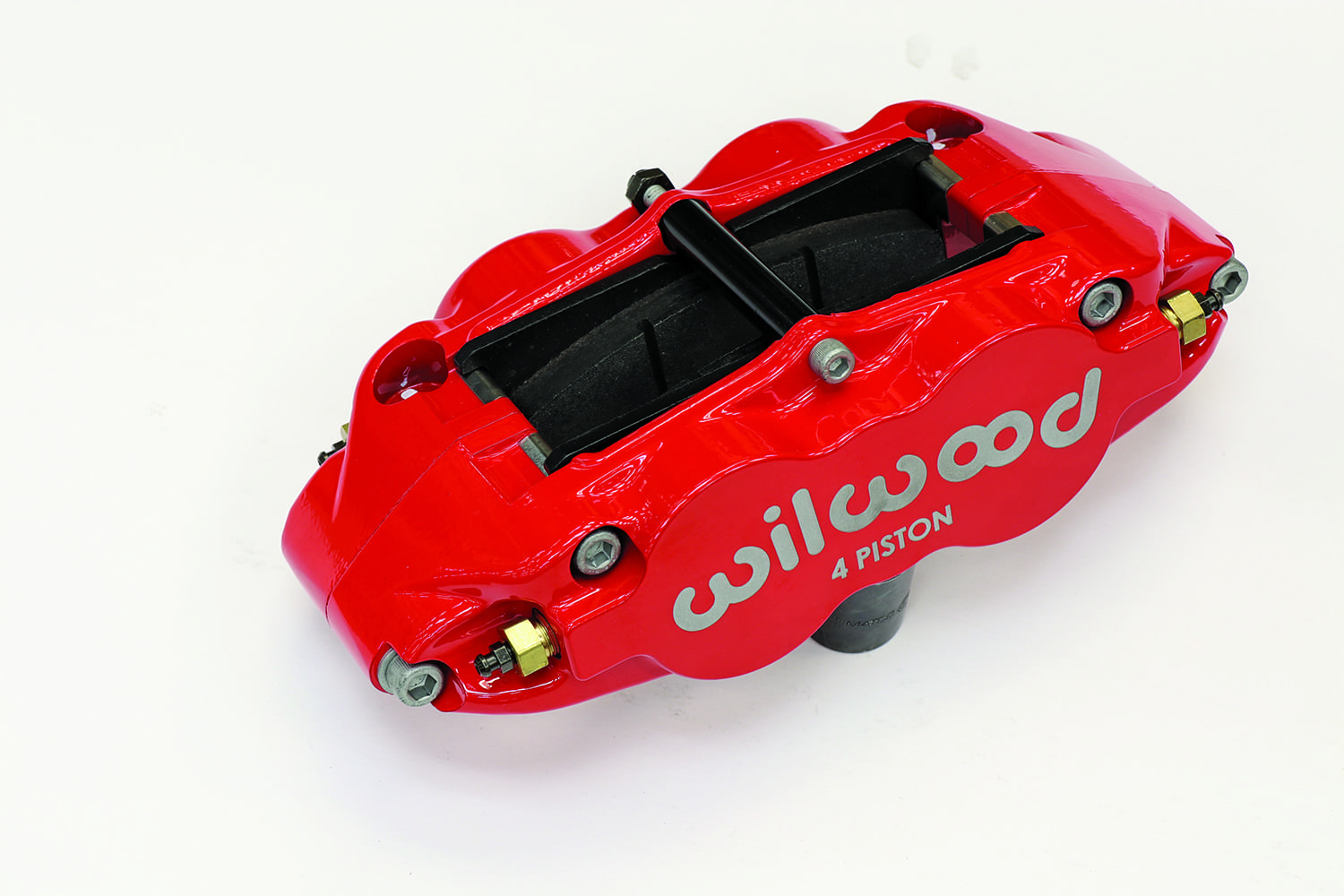
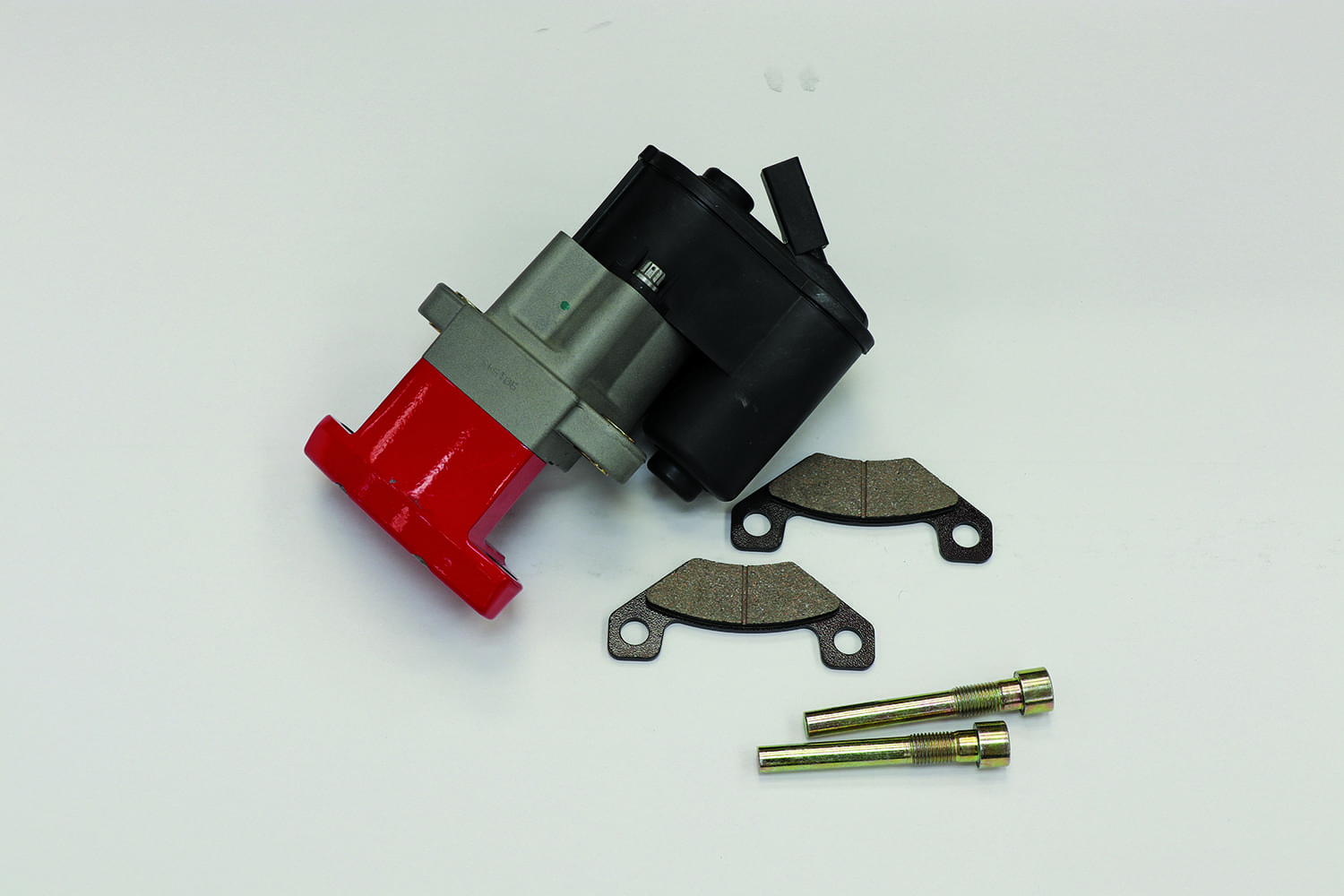
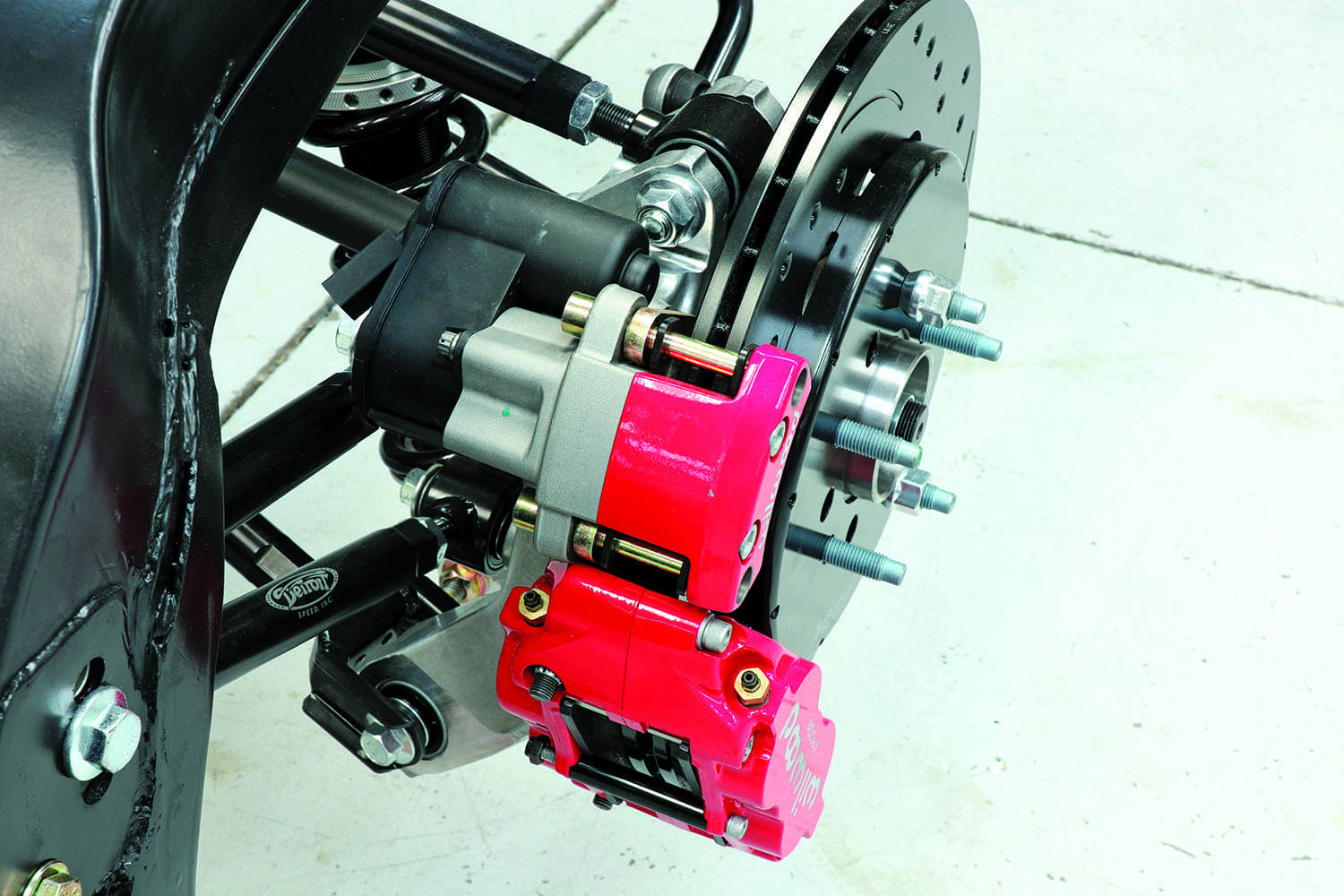
Attaching the coilovers mostly completes the installation, but the project isn’t done yet. It’s important to do a thorough nut-and-bolt check of all the fasteners. Once the car is put together with the body reattached, and it’s back on the ground with the wheels and tires installed, the ride height will need adjustment. That’s still a long way off for this project.Like the front brakes on this Corvette, the rears are supplied by Wilwood and feature 14-inch, two-piece rotors that are drilled-and-slotted, along with four-piston calipers. The extra caliper mounted on the rotor is for an electronic parking brake system. It’s high-tech because we’re fancy like that.Our rear Detroit Speed bracket holds the Wilwood caliper and the electronic parking brake.The Wilwood drilled-and-slotted 14-inch rear rotor accepts multiple popular bolt patterns.The Wilwood rear brake caliper is a four-piston model (the front is six-piston).The Wilwood electronic parking brake (PNs 140-15978-RD, 140-15979-RD, or 140-16849-RD) is suitable for a variety of applications and can be used on solid axle or independent systems.Here’s one last look at the brake system with the electronic parking brake, which features matching calipers and actuators that mount the aluminum uprights on each side. The kit also includes a controller and wiring harness.There’s still a long way to go with our project, but our restored and modernized chassis now features the latest Detroit Speed suspension systems, front and rear, along with Wilwood brakes that should handle anything we throw at the car on an autocross course. Next, we’ll start installing the powertrain.
We use cookies to ensure that we give you the best experience on our website. If you continue to use this site we will assume that you are happy with it.