


By Brian Brennan – Photography By NotStock Photography
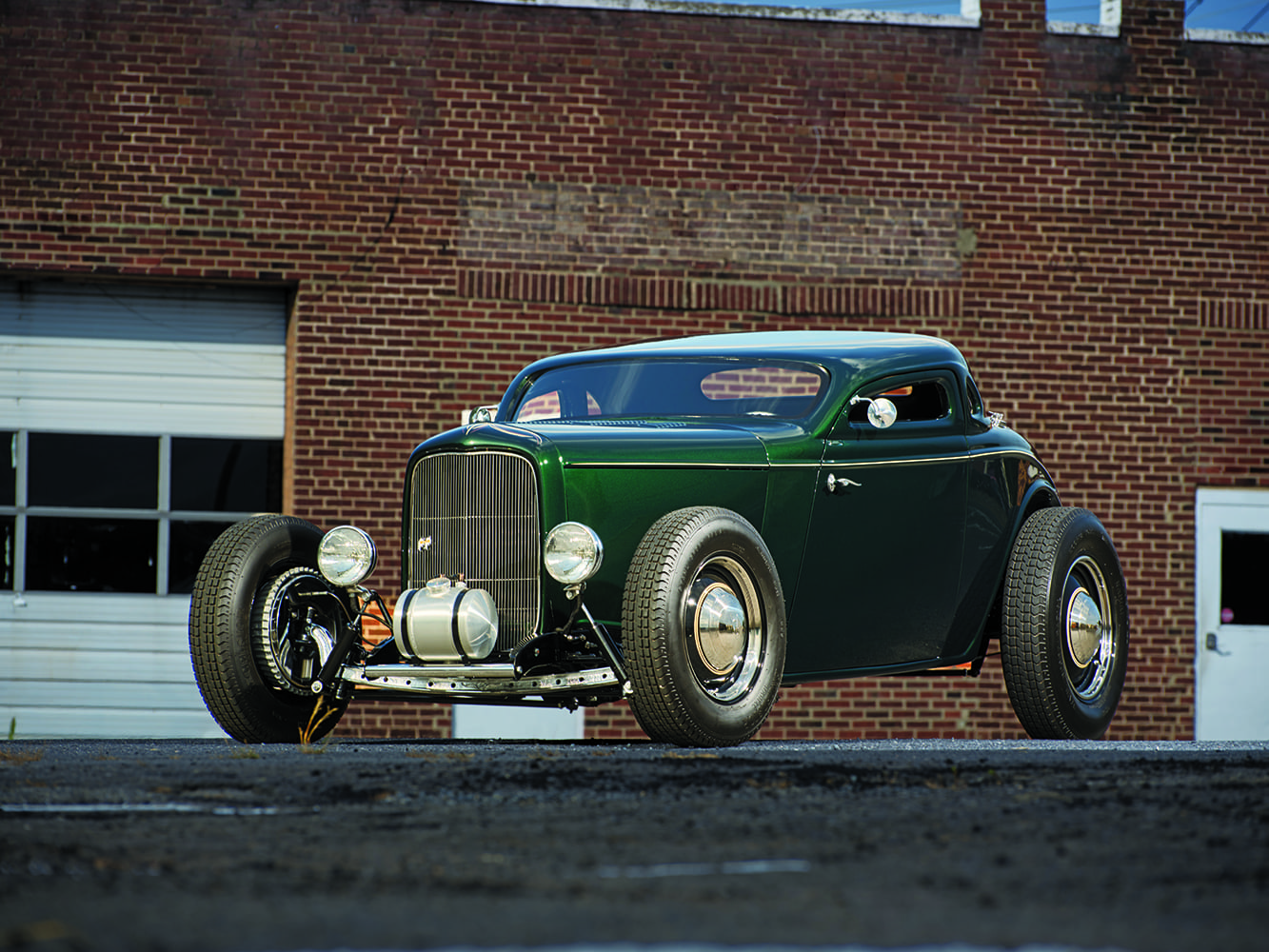
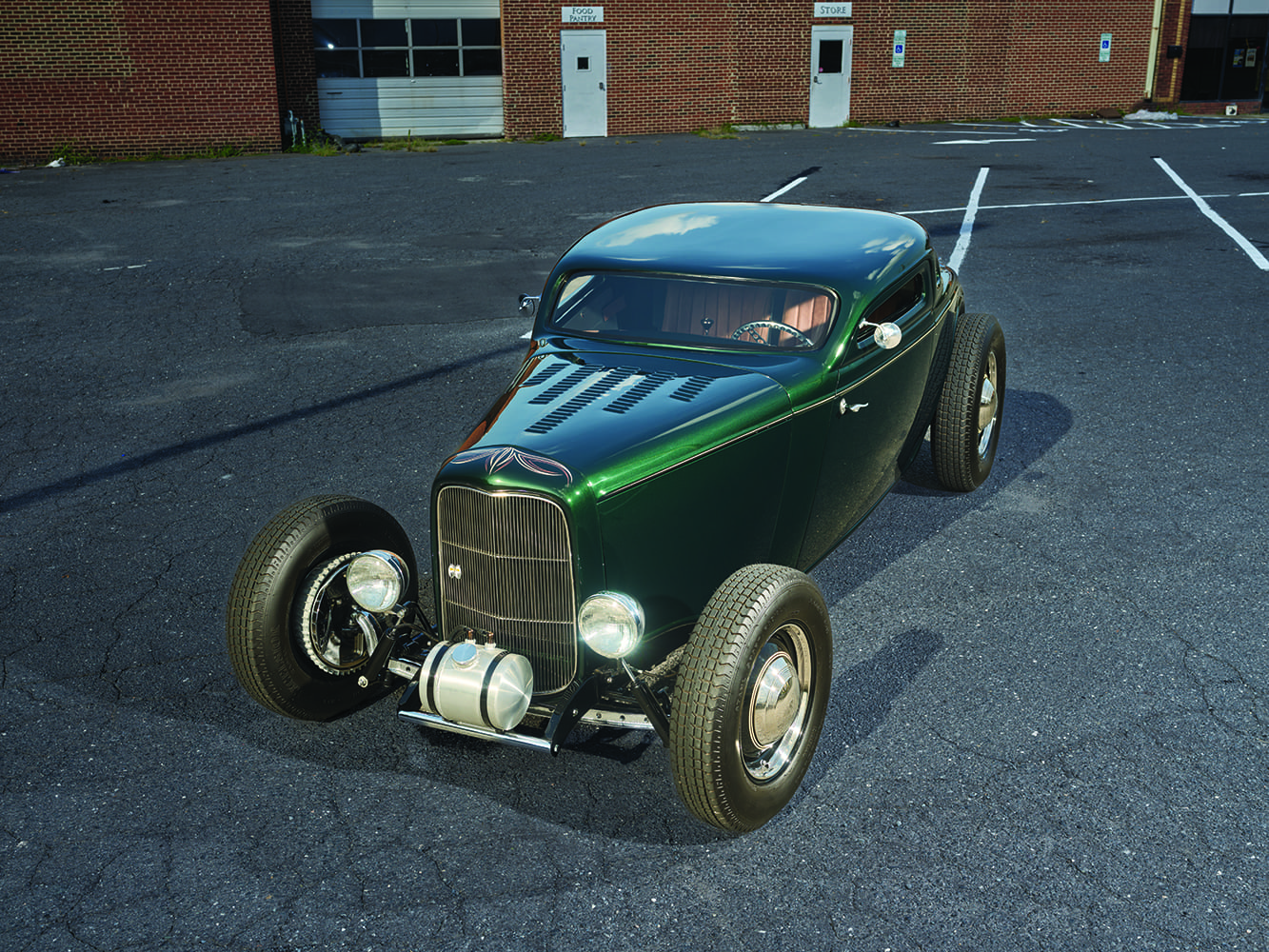
There are chopped-top hot rods, and there are “CHOPPED” top hot rods. Chuck Savoca of North Carolina has most assuredly built the latter. To truly experience the radical 7-inch top chop, you must walk up beside this fenderless coupe, also fully channeled over the stock framerails.
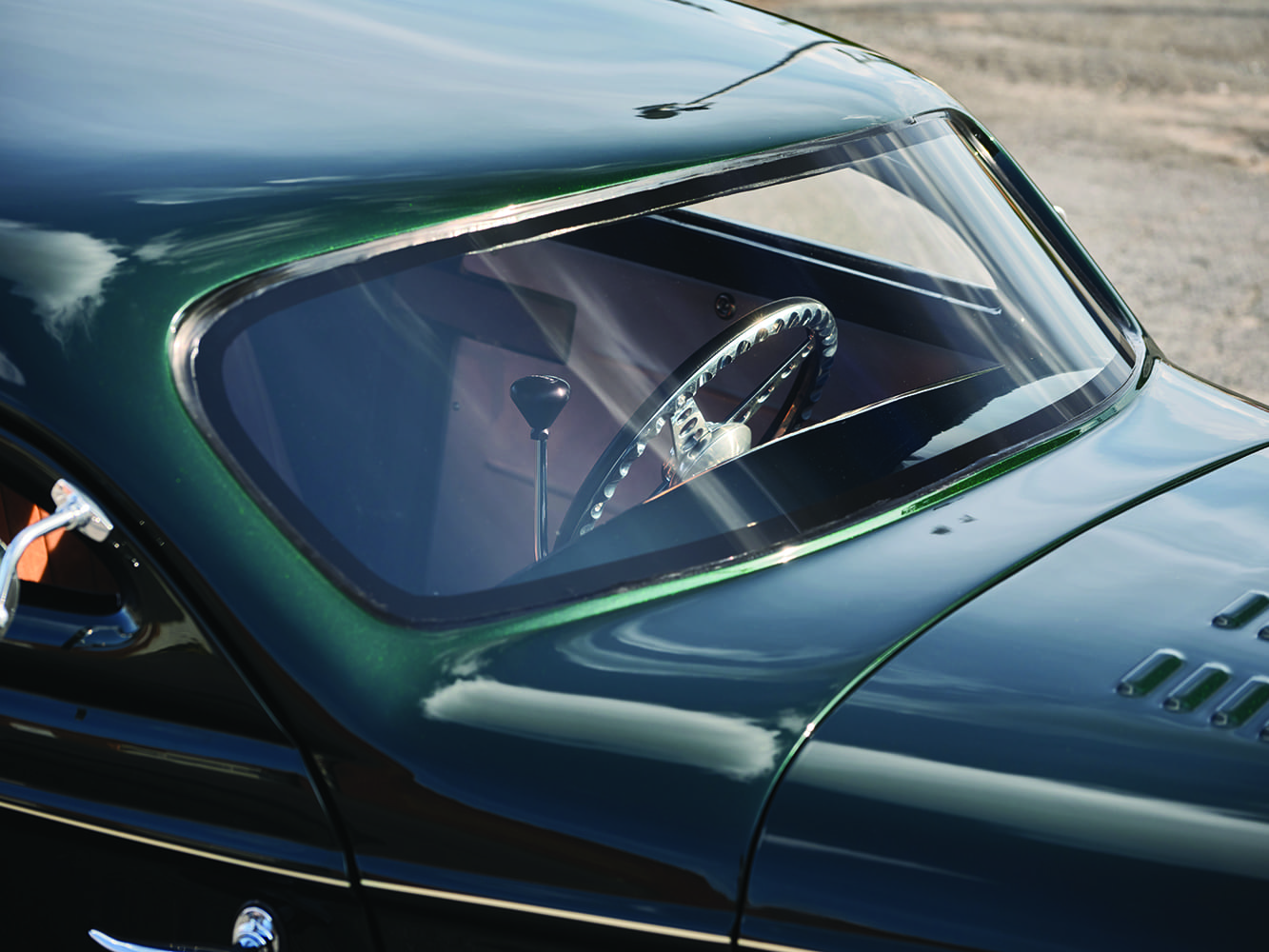
Chuck built this hot rod; although he acquired the body from Studleys Independent Rods, the top was already “cut” (top chop) a full 7 inches. As for “chopping a top,” it is neither for the faint of heart nor for those lacking skills. For those of us who have chopped a top or two (though I am not in that esteemed fraternity), there are different styles: the “square top traditional cut” (like on a Model A, where the roof is brought straight down) or the “turret top traditional cut” (seen on 1933-40s Fords). Then, there’s the aggressive “competition” cut that slants the windshield. And, my hot rod friends, that is what we have here. (Apologies to my mentor Tex Smith, who taught me about chops, although he quickly realized I was better suited to taking pictures than wielding a hacksaw or—look out!—a cutting torch. Tex always told me it was, “… best to understand your limitations.”)
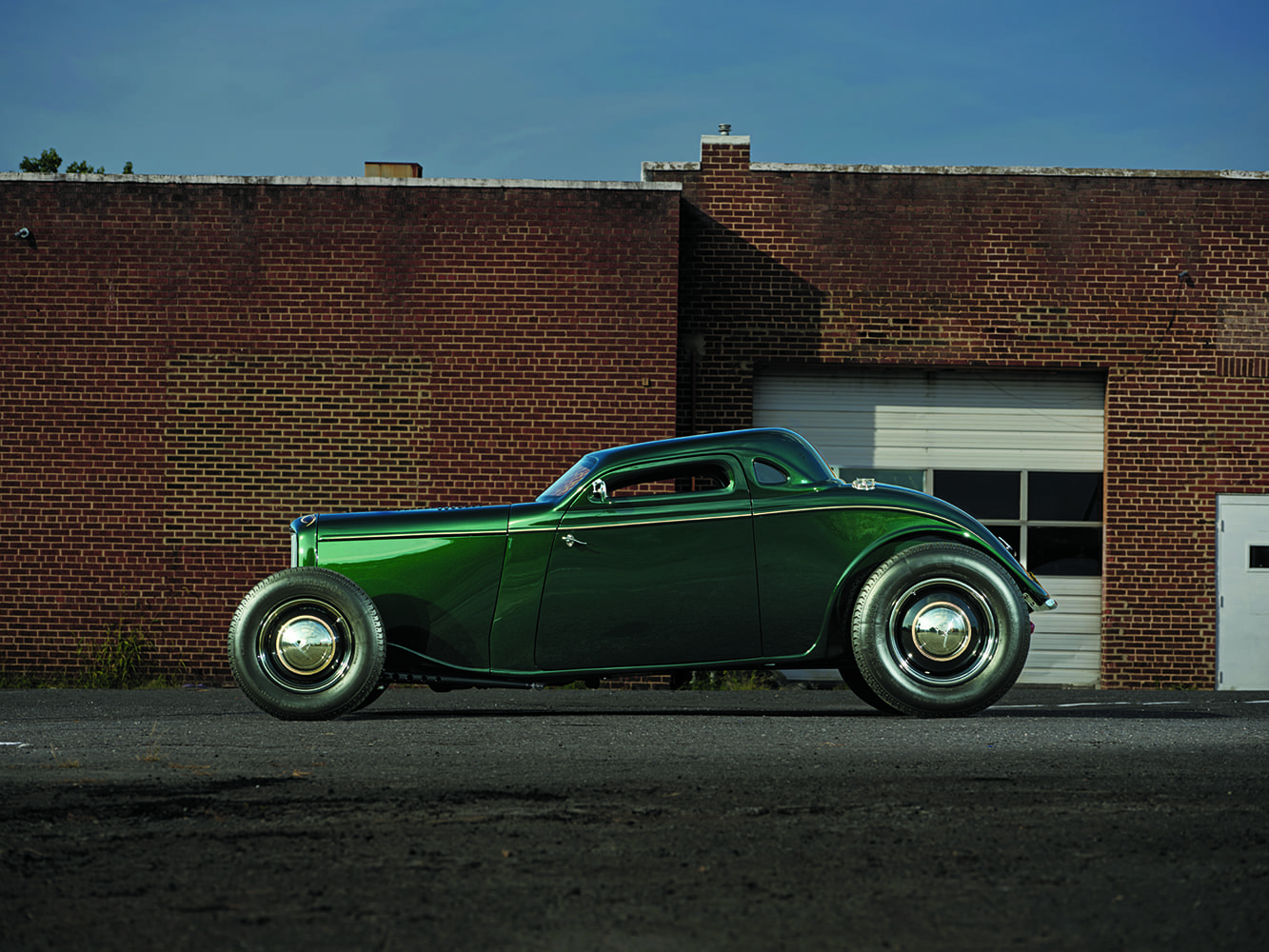


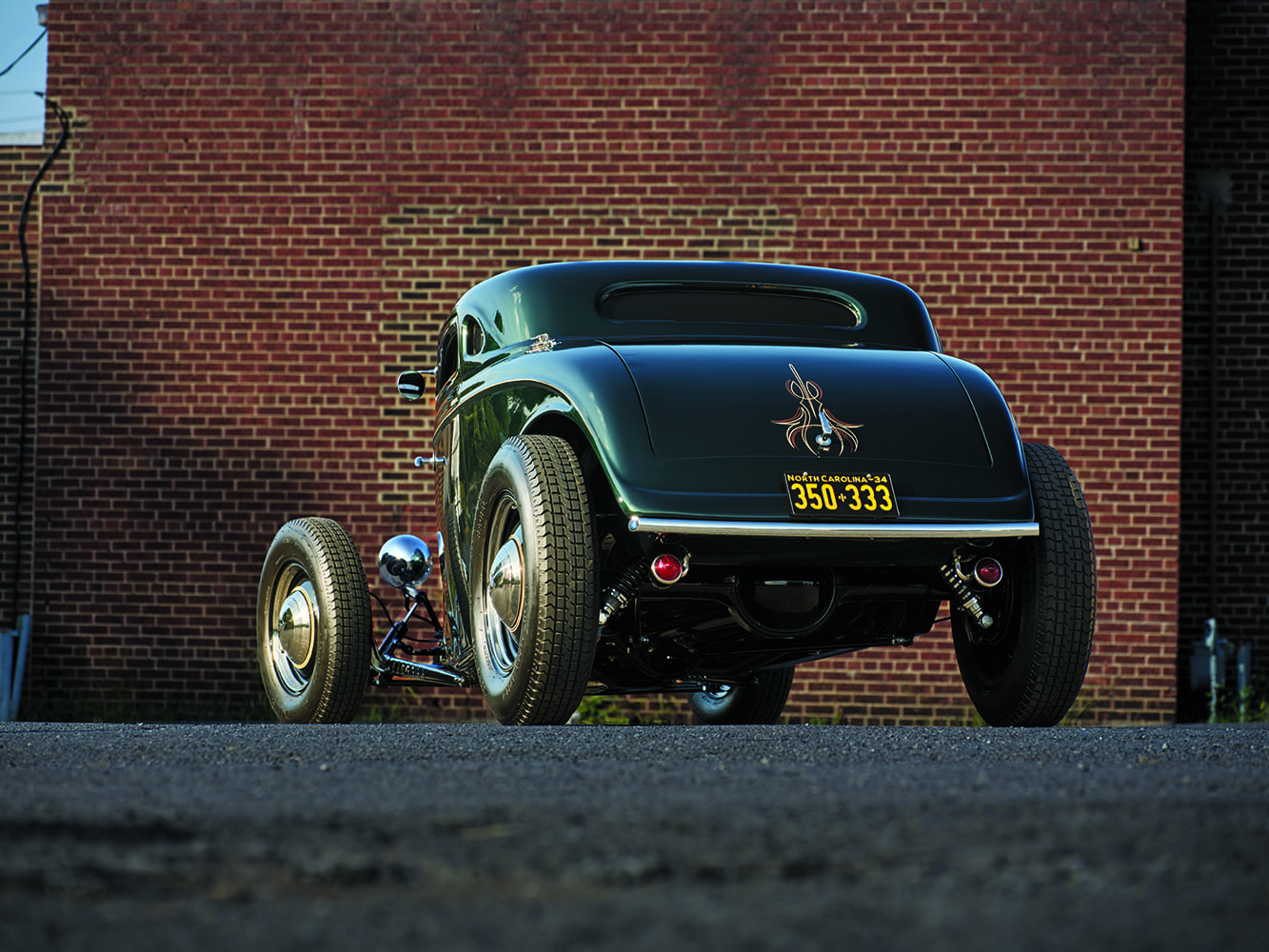
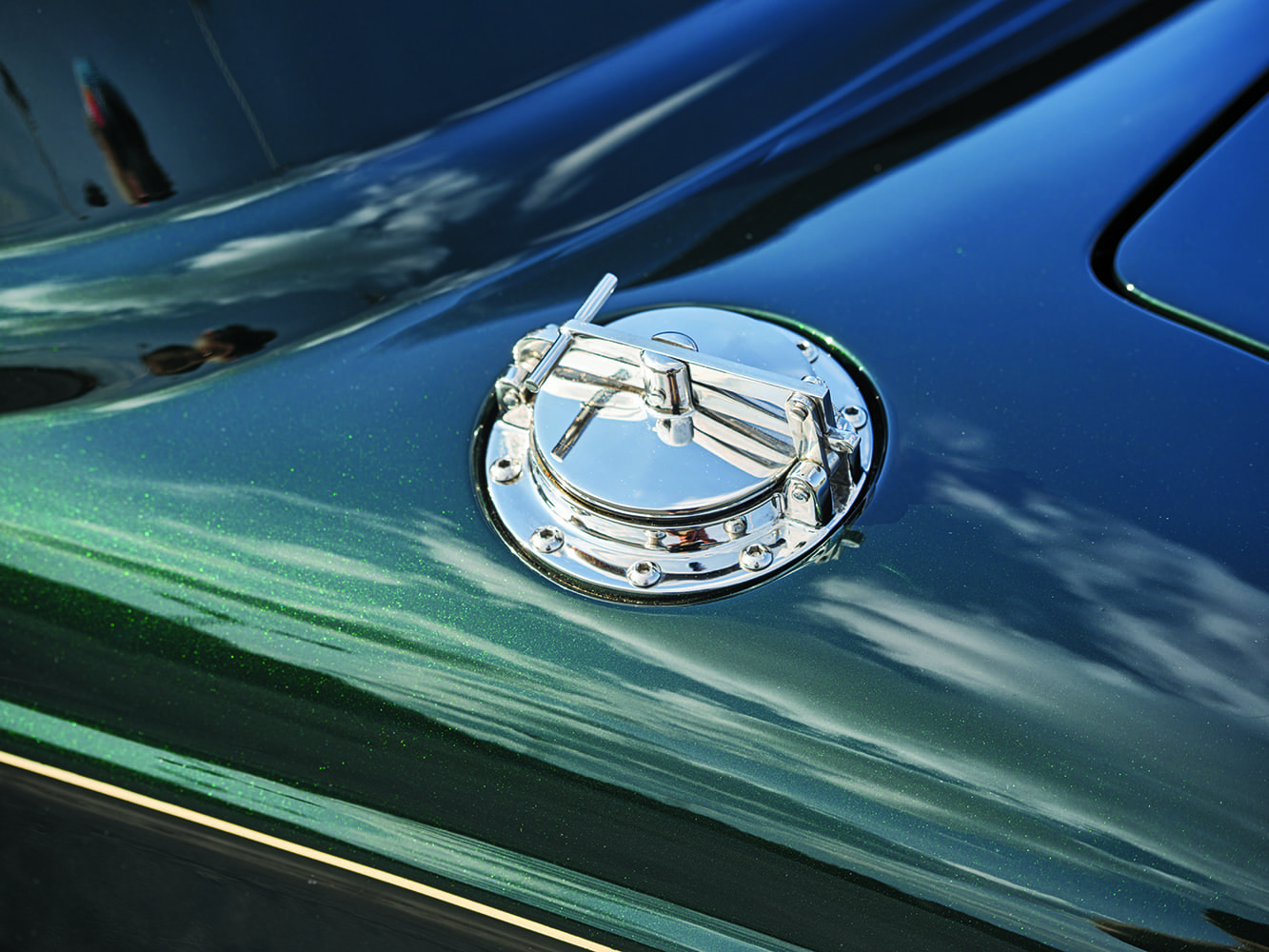
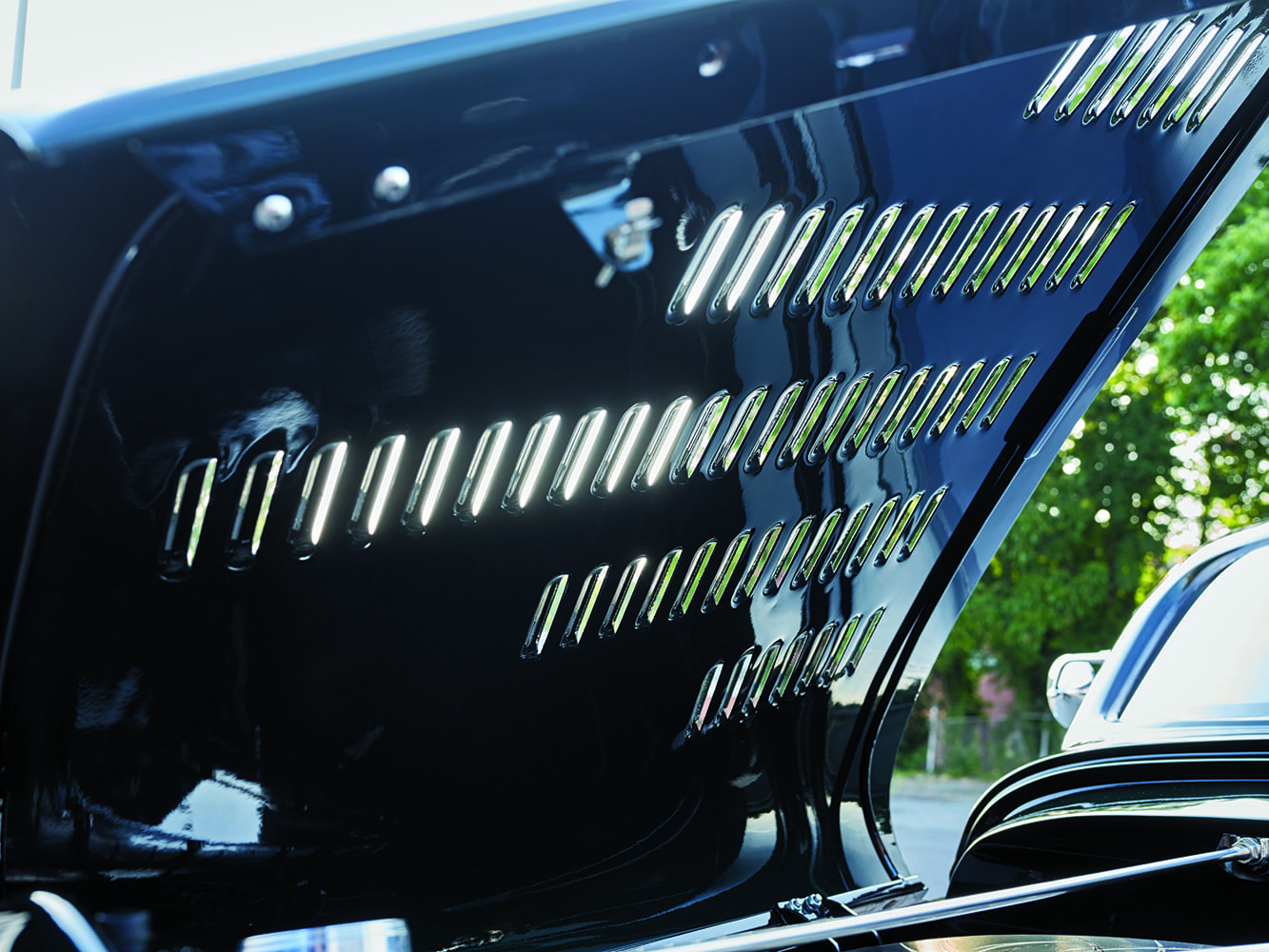
Having had the chance to walk around Chuck’s 1933 Ford coupe at the NSRA Nats, I was impressed by the effort put into it. Hidden behind a hot-rod–style Deuce grille shell and an insert that was chopped 4 inches, the extensive body- and paintwork were done by Mickey Russell, who paid close attention to every detail in creating a custom mix of R&M Green Metallic. (A color that looks subdued inside under fluorescent lighting but comes to life outside under the blue sky.) This was complemented by pinstriping running the entire length of the bodyline, along with a splash of graphic pinstriping on the grille shell by Ellis Customs. The workmanship is evident; no one can hide poor sheetmetal work, no matter how much Bondo, primer, or paint they use. The body definitely features a top chop that would have been reminiscent of the top chops from back in the day that Bonneville and lakes racers alike would have aimed for—6-inch top chops were common, but this aggressive 7-inch “cut and slant” would make a racer proud.
The chassis comes from Rjay’s Speed Shop, then Ben Hagg, the owner of Bluefield Vintage Engine Works, took on the project of “pinching” the front and rear of the ’rails as well as the remainder of the chassis. He also handled the exhaust chores, beginning with a pair of Chevy Ram Horns, then building a custom exhaust from there through a pair of mufflers and out the back. The chassis is based on a Super Bell 4-inch drop, drilled, chrome-plated I-beam axle, coupled with a Posies painted transverse leaf spring mounted to reversed-eye shackles. Early Ford spindles were used along with painted Monroe tube shocks, a Vega-style steering box, and a SO-CAL Speed Shop disc brake setup hidden inside the faux-finned Buick brake drums. Resting on the front spreader bar is a Moon 3-1/2-gallon tank, mainly for looks rather than function. Also, note the popular Mooneyes Cloisonné attached to the Deuce grille bars. The rear suspension features a Ford 9-inch with a limited-slip differential, 3.70 gears, Ford drum brakes, and QA1 adjustable coilover shocks. The brake system utilizes a Master Power Brakes under-floorboard dual reservoir master cylinder paired with Lokar pedals. The corner eye candy comprised Wheel Smith Smoothies measuring 16 inches in diameter in front and 18 inches in back, with Excelsior Stahl Sport Radials by Coker, measuring 6.00R16 in front and 7.00R18 in back.
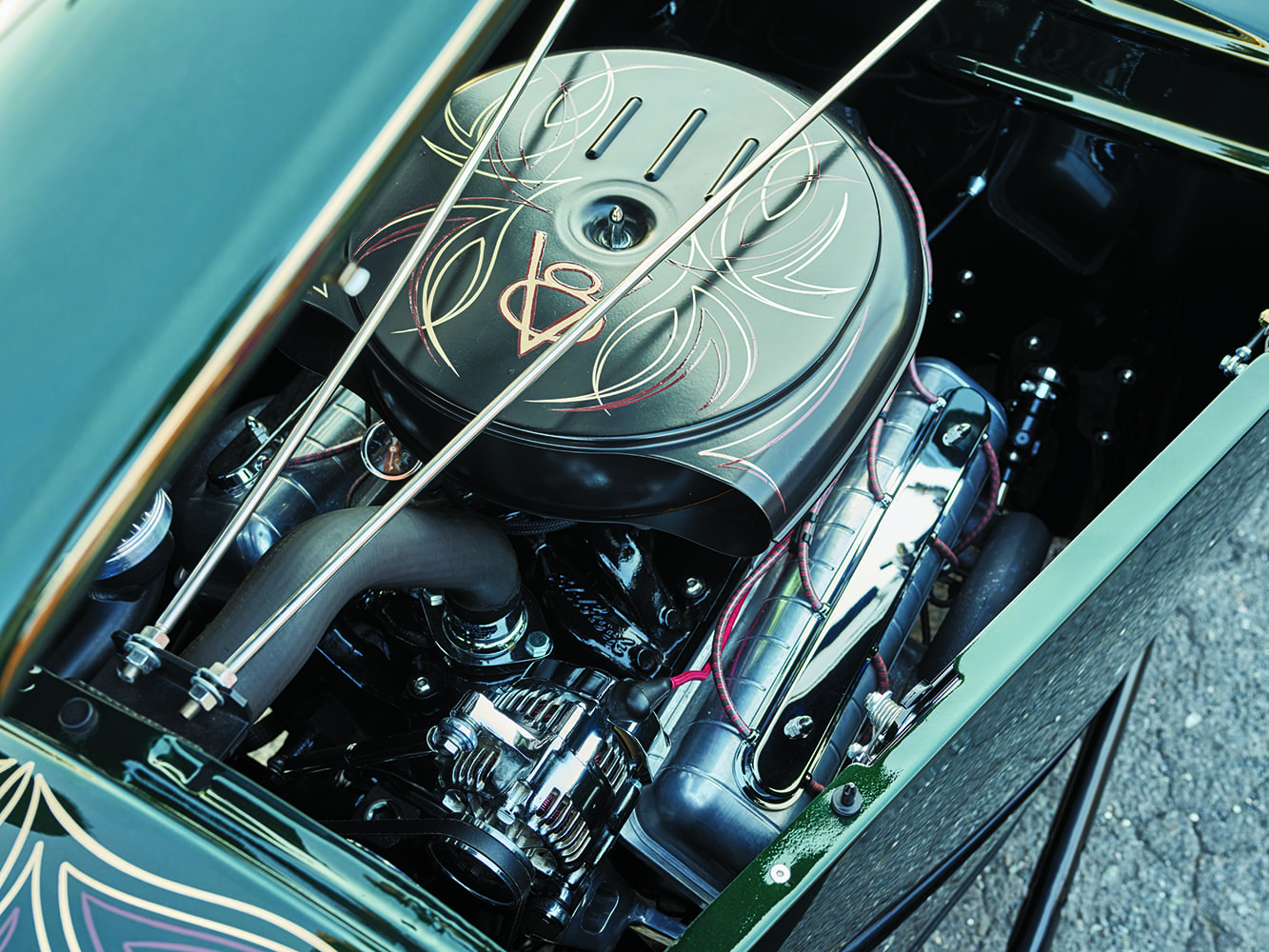
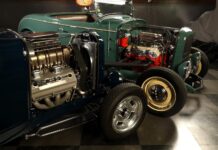
This hot rod motor is built on the popular small-block Chevy, featuring a 350ci V-8 that generates 350 hp. Equipped with 11:1 compression-ratio slugs, the cylinders stay “happy” through the use of race gas. Additional performance comes from Taylor “vintage” cloth-covered spark plug wires, along with a GM HEI ignition and coil. To add a “let’s have fun” touch, Chuck equipped the SBC with custom Oldsmobile valve covers and a Cadillac air cleaner decorated with extensive pinstriping. Although not visible in the engine photos, a pair of Mooneyes gauges (oil pressure and water temperature) are block-mounted just beneath the HEI ignition. On the opposite side of the engine, Chuck has installed another Mooneyes gauge that monitors fuel pressure. The intake manifold is an Edelbrock with a matching 600-cfm four-barrel carburetor, fed by an Edelbrock fuel pump drawing from a Tanks 18-gallon gas tank all brought to life through the use of a Lokar throttle cable. Connected to the V-8 is a TH350 that’s been “gently” massaged with a GM 1,500-rpm stall converter and shift kit and run through the gears by a Lokar shifter. To keep everything cool, an Afco Industries radiator with a SPAL electric fan, an Edelbrock water pump, and a TSP Performance oil cooler all work together.

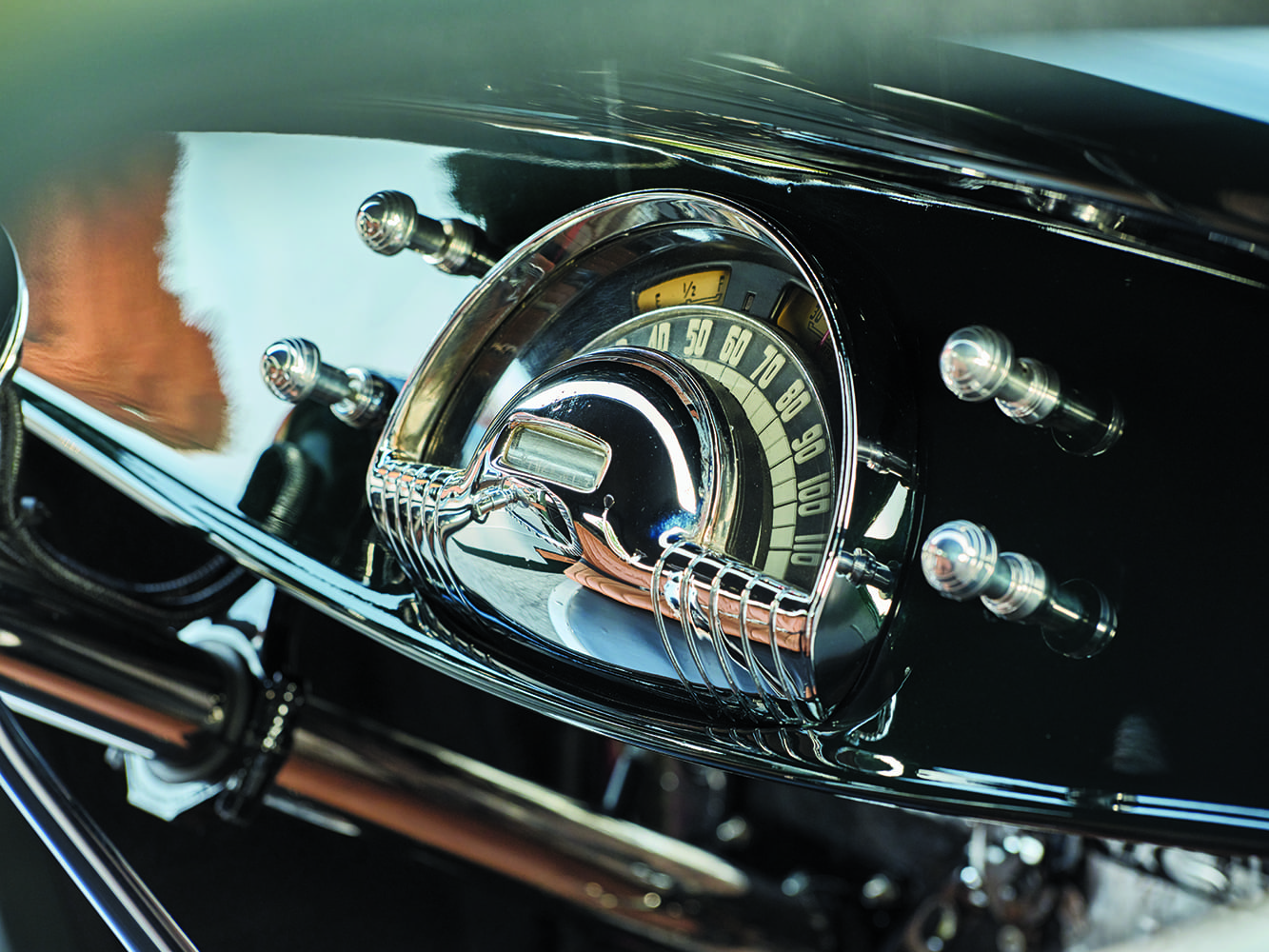
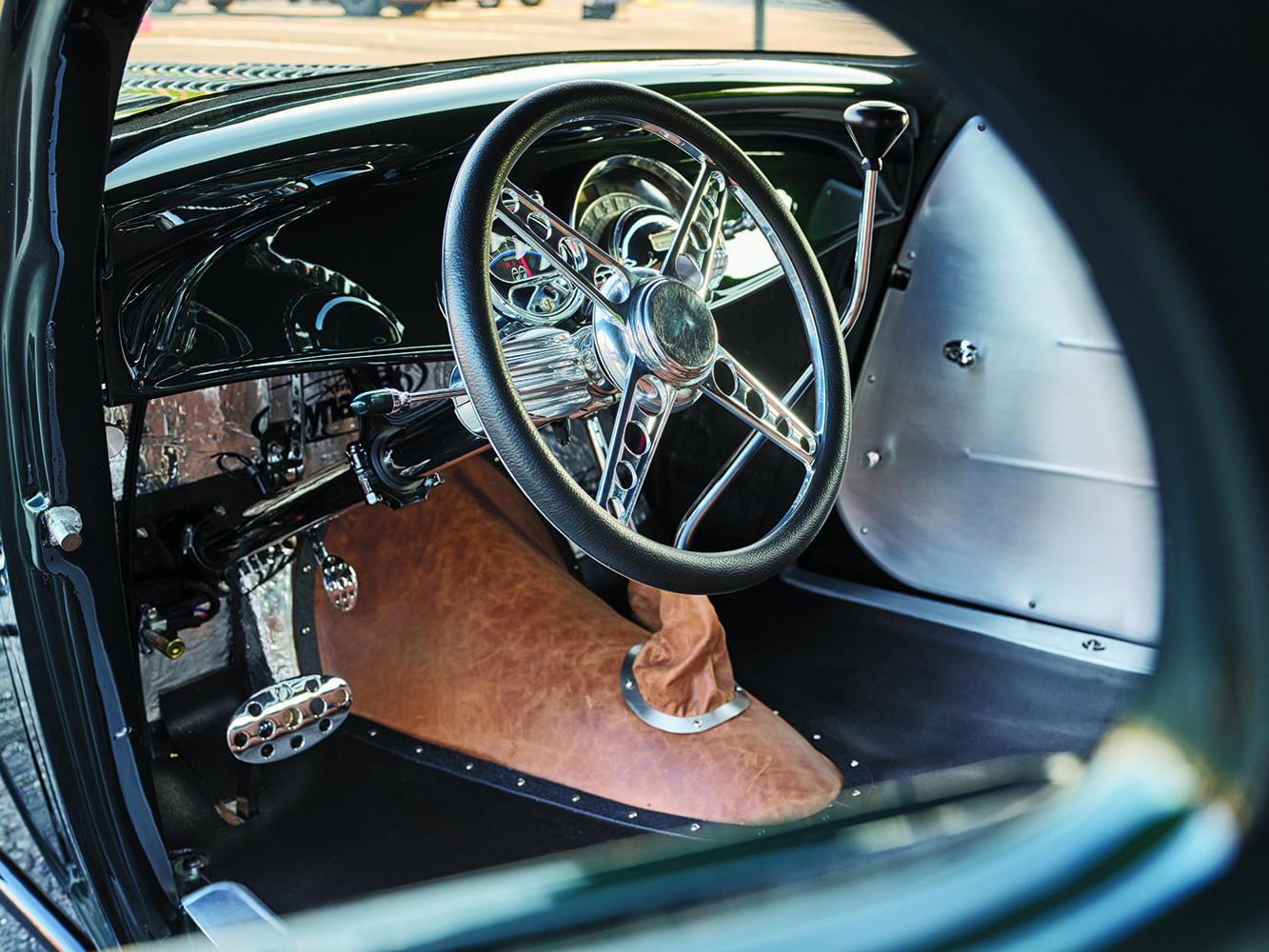
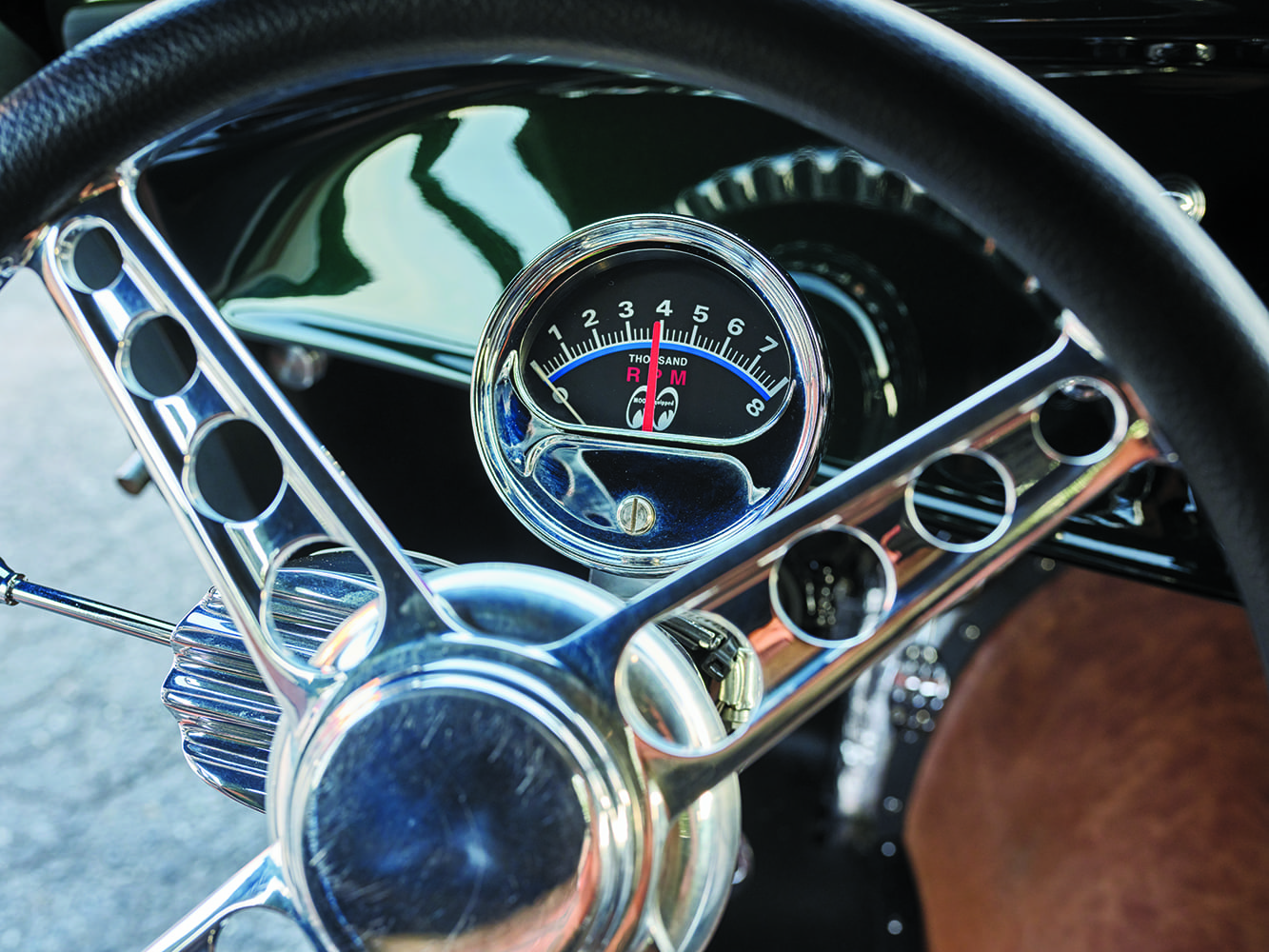
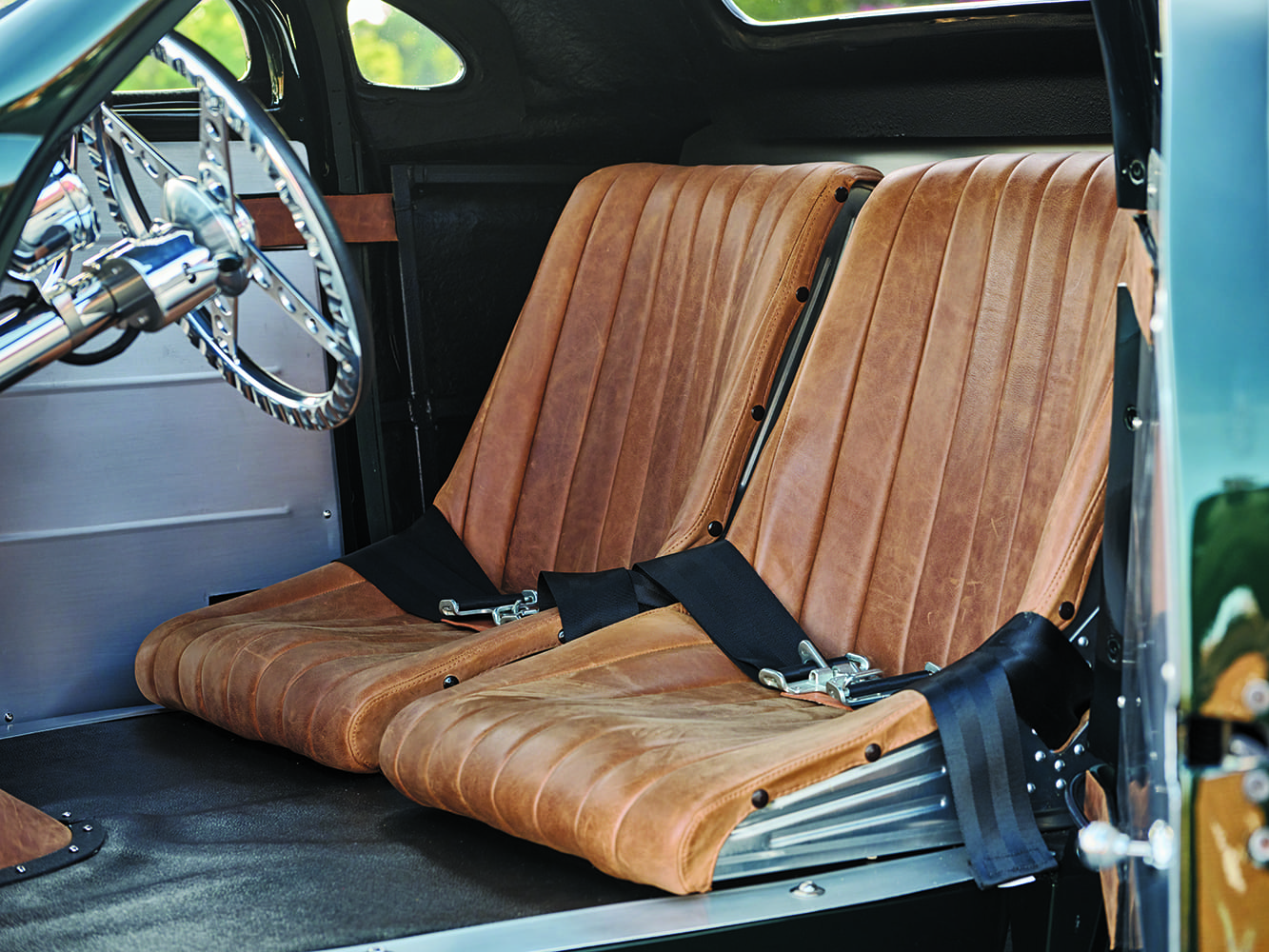
Inside a fiberglass 1933 Ford dash, a very cool-looking 1949 Olds cluster is fitted; it is powered and meets all electrical demands by a Ron Francis wiring system laid out by Chuck himself. The LimeWorks steering column is topped with a Billet Specialties wheel. The bucket seats are a pair of vintage-inspired aircraft-style seats from Speedway Motors’ Bomber series. The seat coverings are stitched with distressed brown leather, the headliner is black-painted raw metal, and the flooring is covered in black vinyl—a true utilitarian approach. The seating is then accented with 4-inch-wide aircraft/racing seatbelts. The interior stitchwork fell to the sewing machine at Street Seats Hot Rod Interiors.
Chuck is no stranger to hot rods of all persuasions, having raced a Top Fuel dragster, an Alcohol Funny Car, and his street vehicles included a 1937 Ford Sedan Delivery (which earned Top 25 at the 2012 Shades of the Past) and a 1956 Ford F-100 (nominated for a Goodguys Truck of the Year). Hot rods come in all shapes and sizes, with or without mufflers, and that go in a straight line and those that can turn corners. A job well done by Chuck. MR
Check out this story in our digital edition here.