


By Ron Ceridono – Photography by the Author & Chuck Vranas
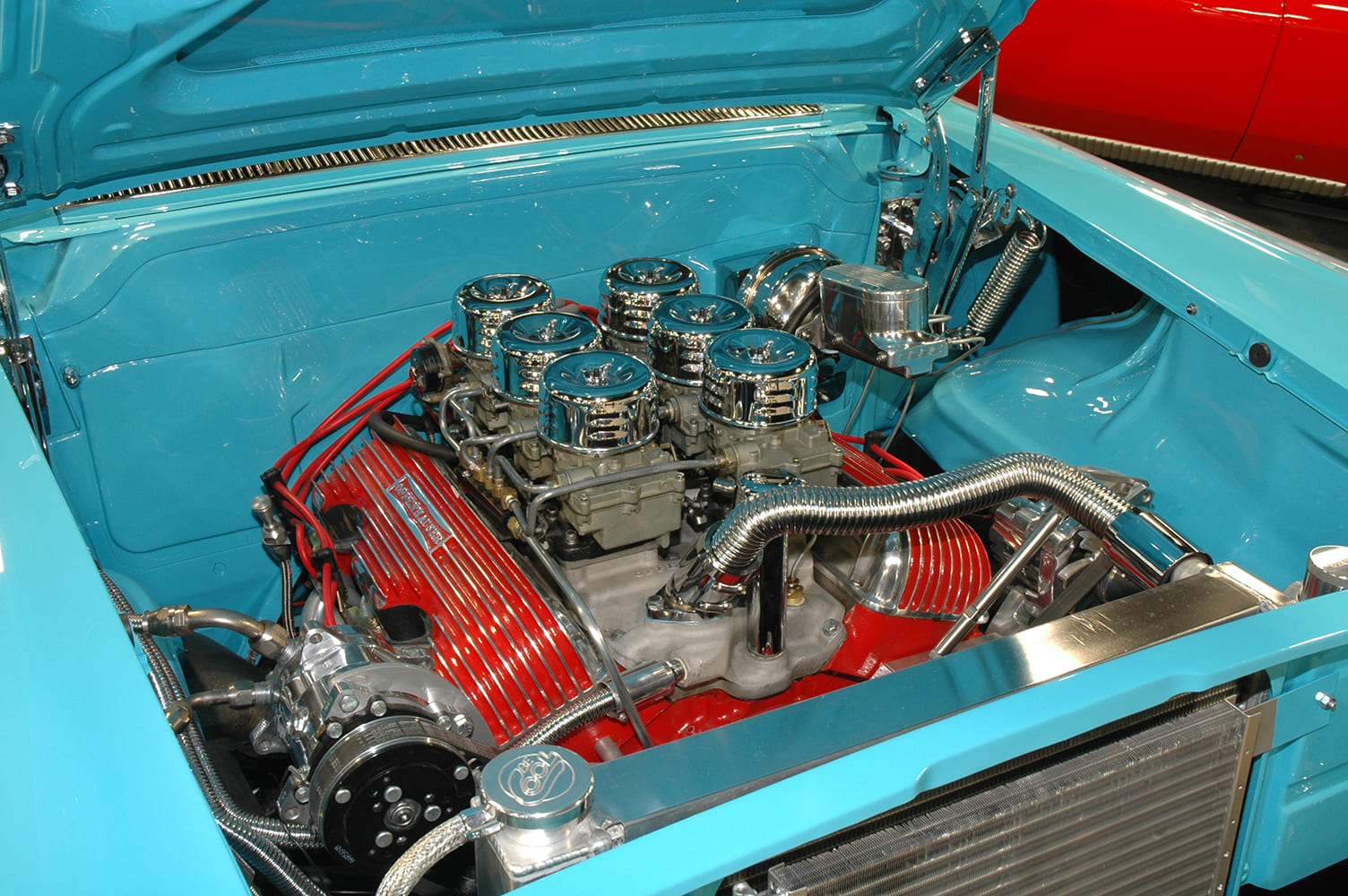
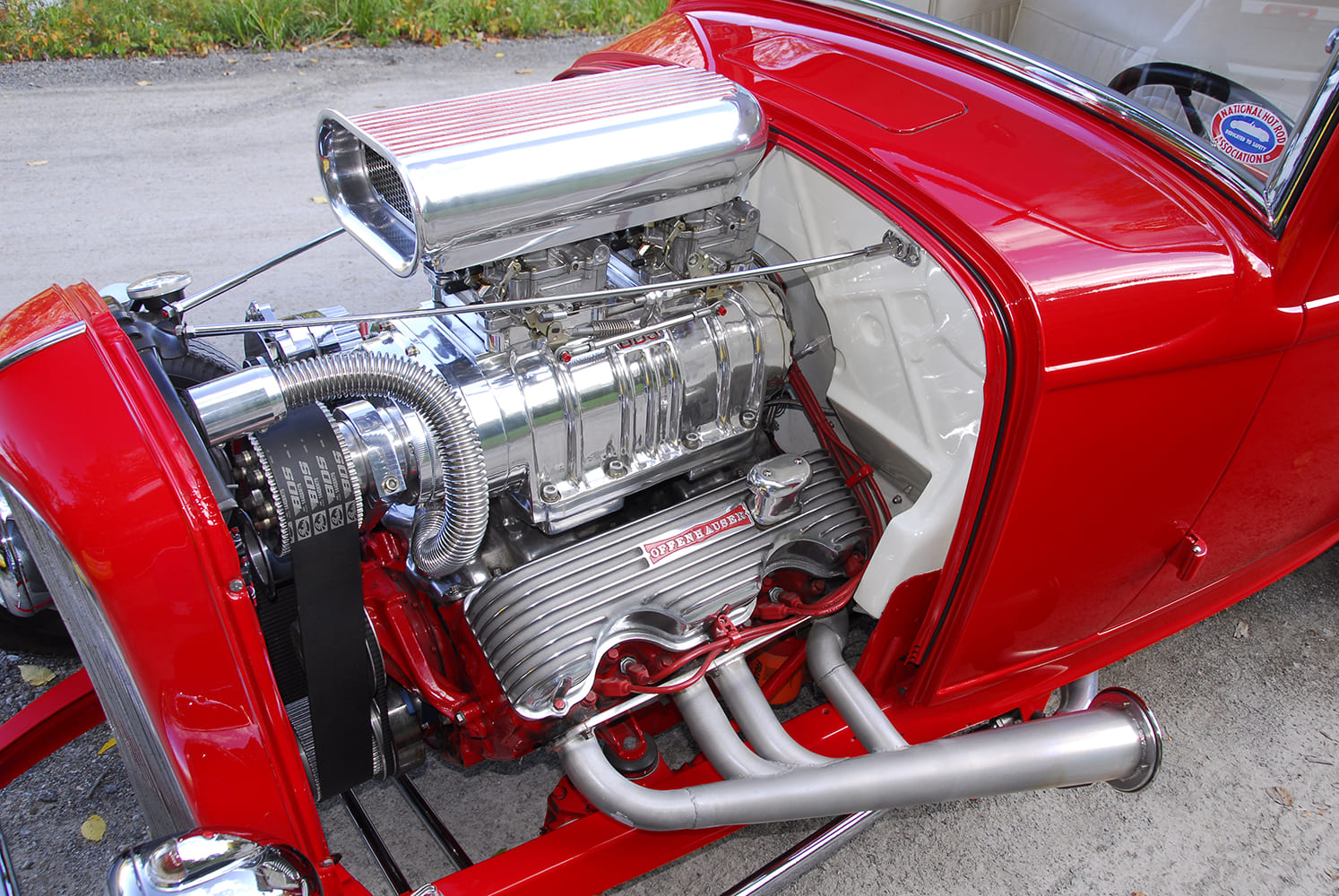
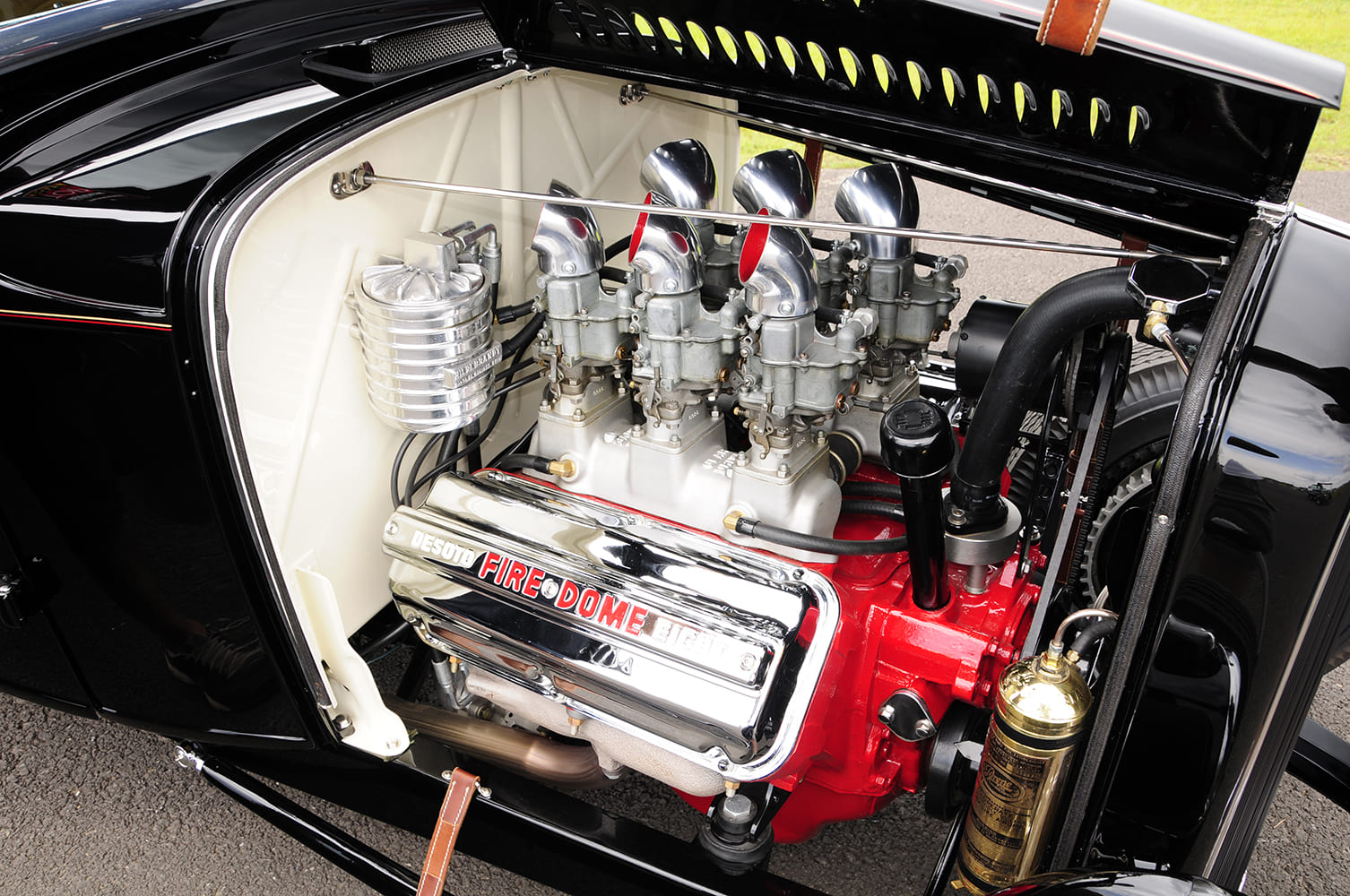
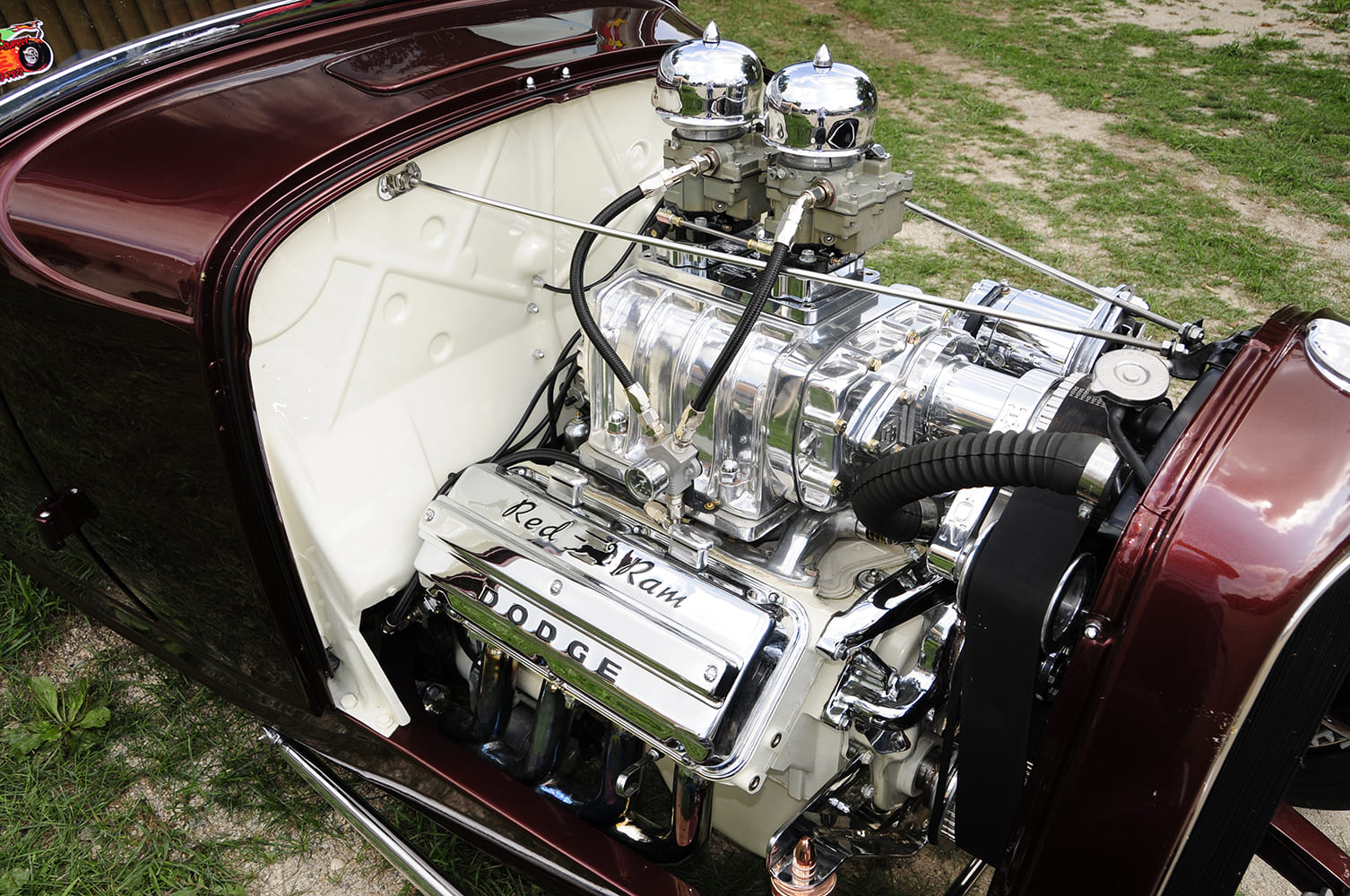
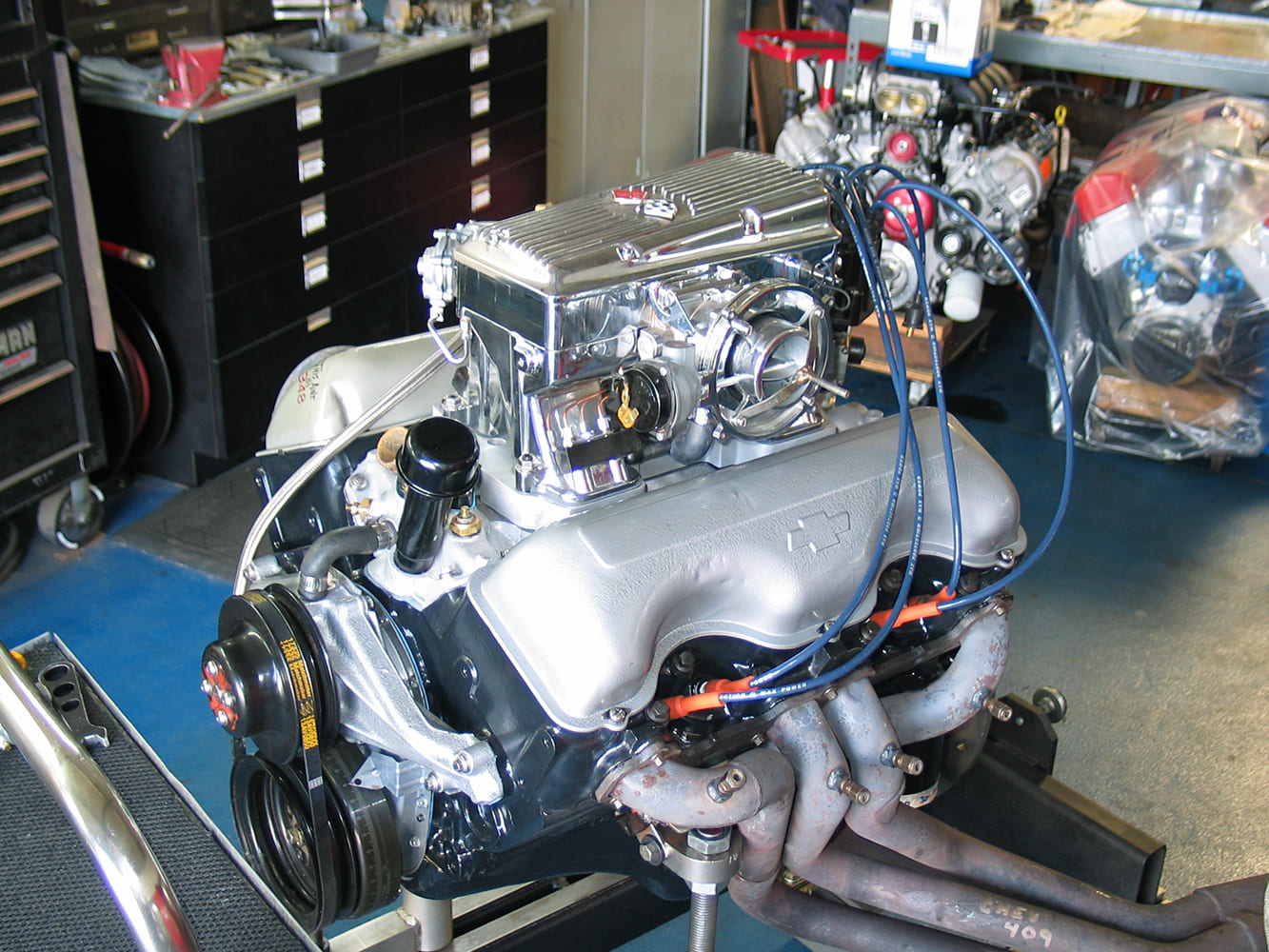
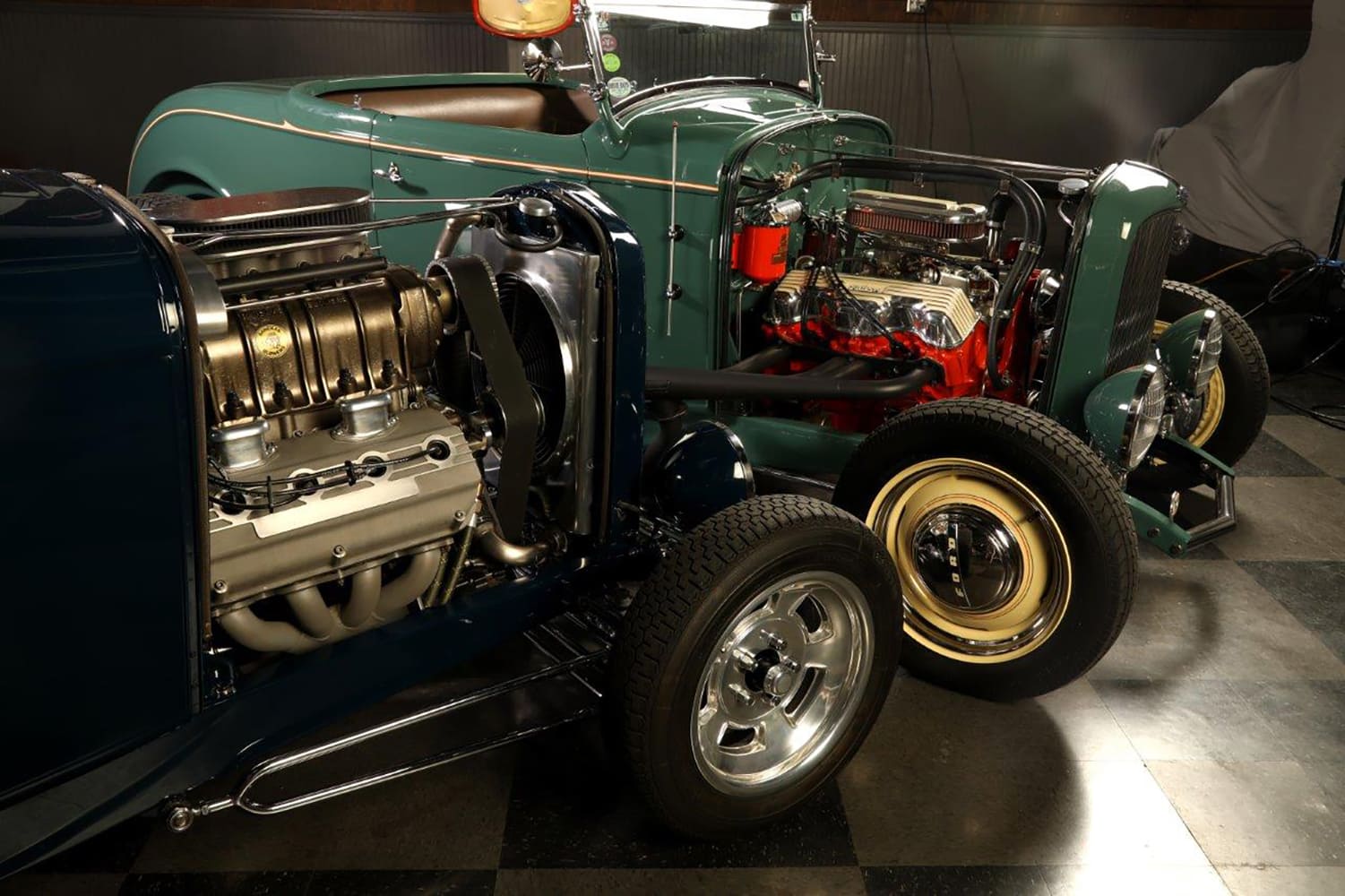
Visit any hot rod event and you’ll find yourself surrounded by cars powered by common mills—lots of small-block engines and a variety of modern powerplants hidden under plastic covers and coil packs. Of course, most of these usual choices are sensible, but who said hot rodding needs to be practical? While it’s safe to say the LS series of GM engines is as popular as the small-block Chevy, neither typically makes passersby stop and stare. However, some engines have enough visceral impact to excite a gearhead into stopping and looking. Two prime examples are Chrysler’s Hemi and Chevrolet’s 409/348—the 1932 highboys of Gary Boler and Ray Thompson shown here certainly prove this point.
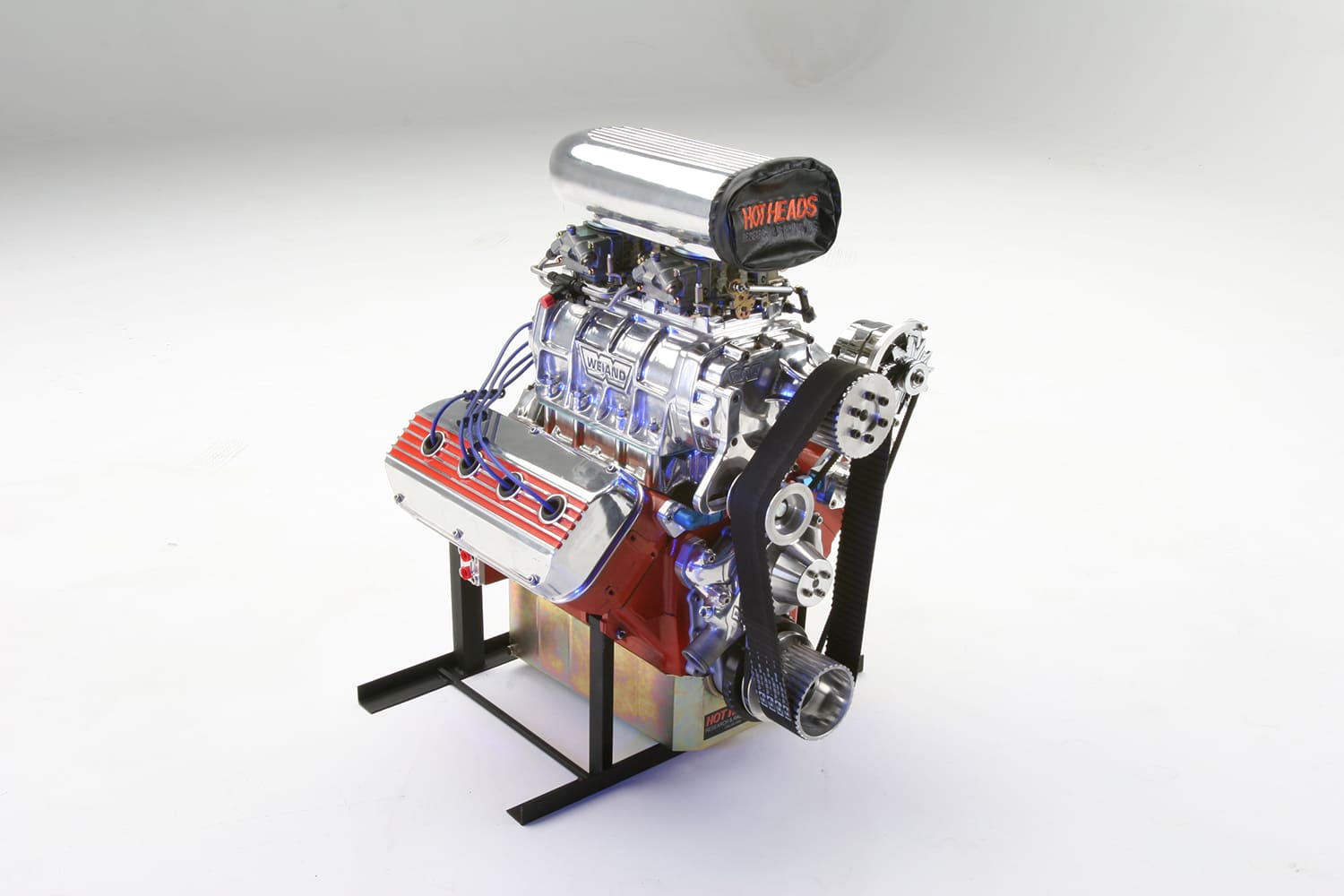
The Early Hemi Engine Family
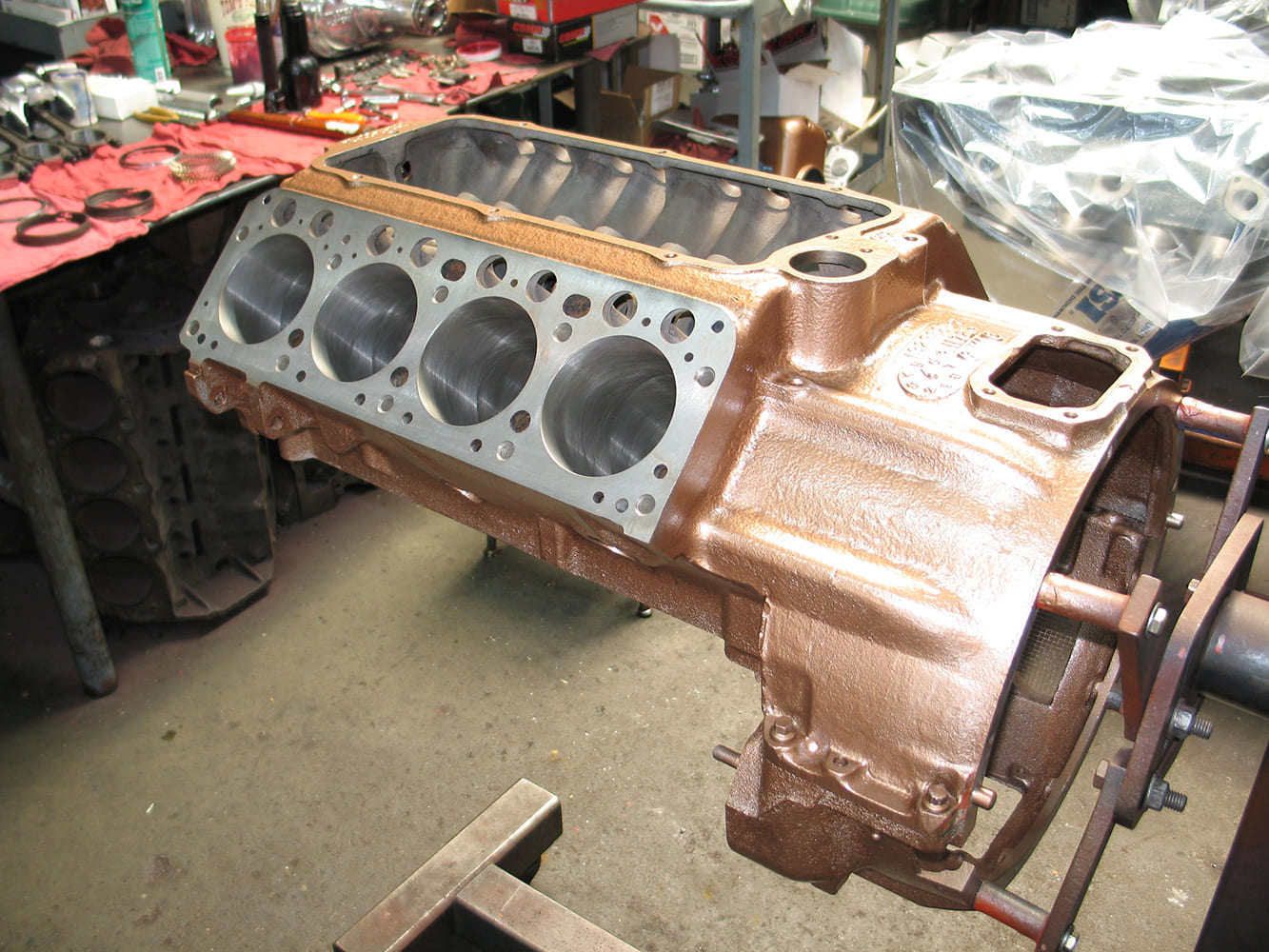
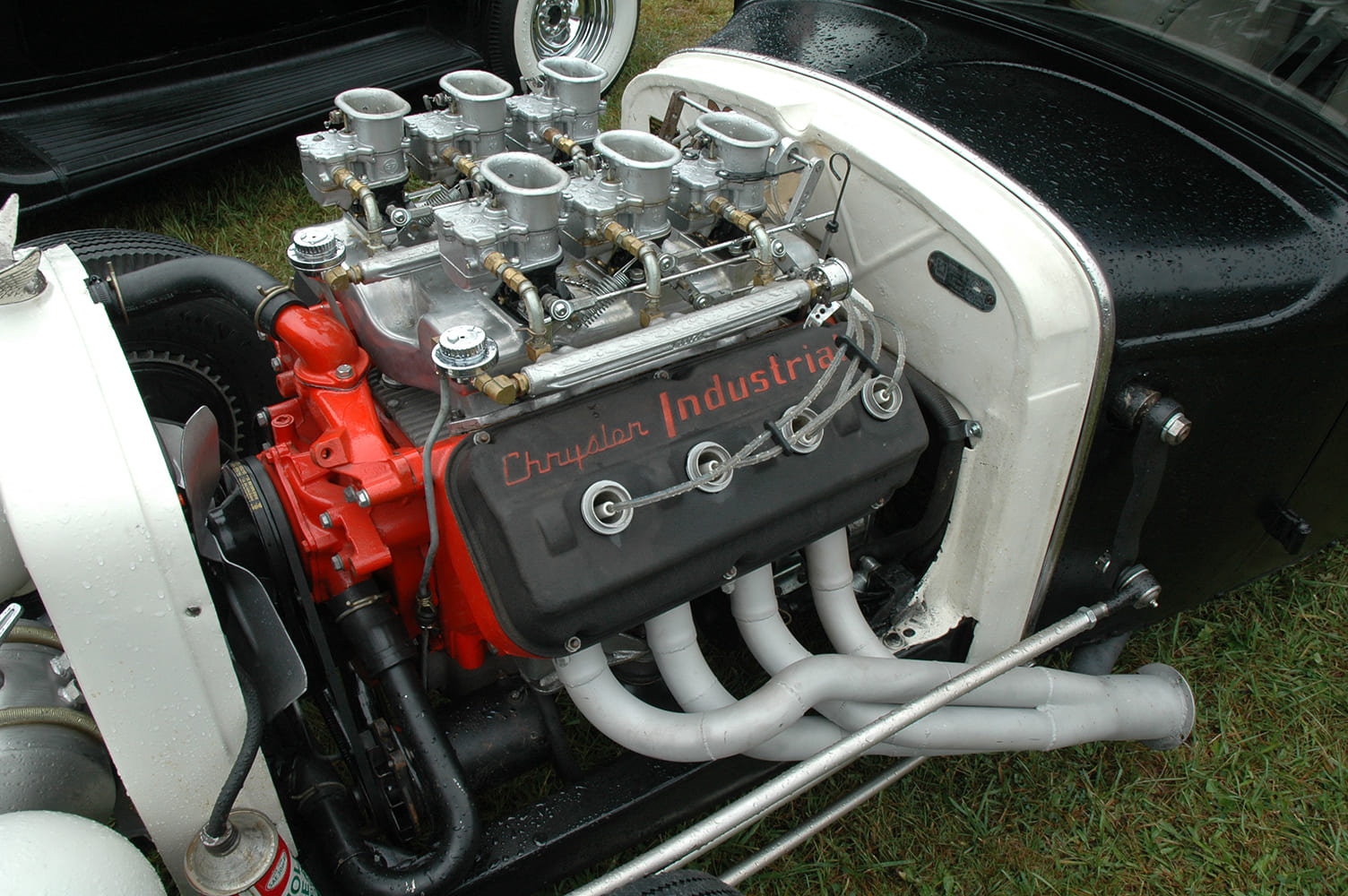
To compete with General Motors’ post World War II OHV V-8s, Chrysler needed to replace its inline flathead six- and eight-cylinder engines. Therefore, in 1951, the 331ci V-8 Hemi was introduced in Chrysler and Imperial cars. In 1952, DeSoto started offering its Hemi, and the next year Dodge launched yet another version. Although the engine offerings across the three Chrysler Corporation divisions were clearly related, they were built on distinctly different blocks, each with unique bore spacing (Chrysler 4.5625 inches, DeSoto 4.3125 inches, Dodge 4.1875). Essentially, due to the differing block sizes, there is little to no interchange of internal engine parts among the three series. To make things more complex, all three divisions provided engines with various bore and stroke configurations, accommodating a range of displacements in two different deck heights (the distance from the crankshaft centerline to the top of the block). Chrysler’s 331- and 354ci blocks are low decks, while the 392 blocks are high decks; DeSoto’s 276 and 291 blocks are low decks, with 330, 341, and 345 blocks being high decks; Dodge’s 241 and 270 blocks are low decks, and the 315 and 325 blocks are high decks.
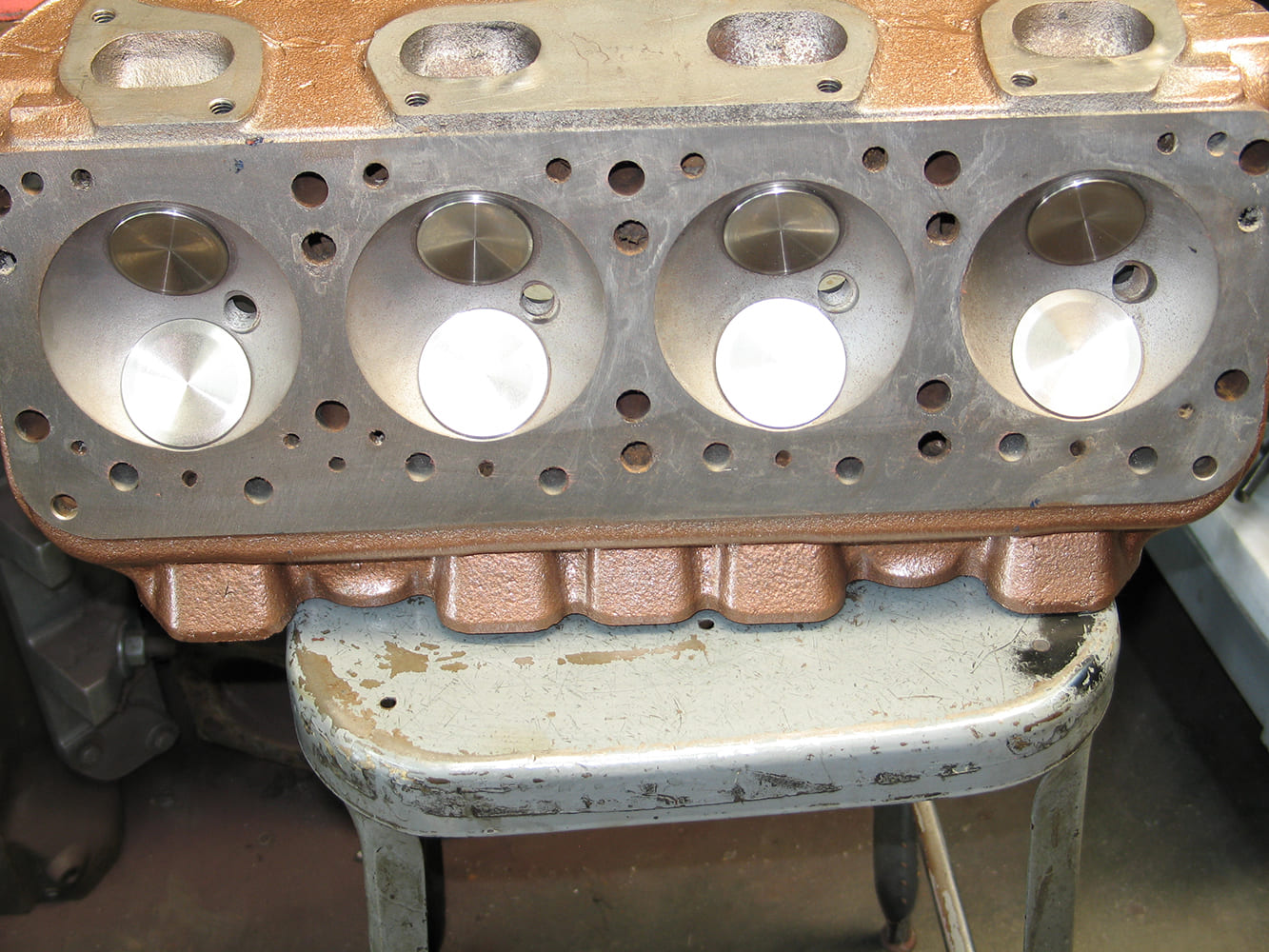
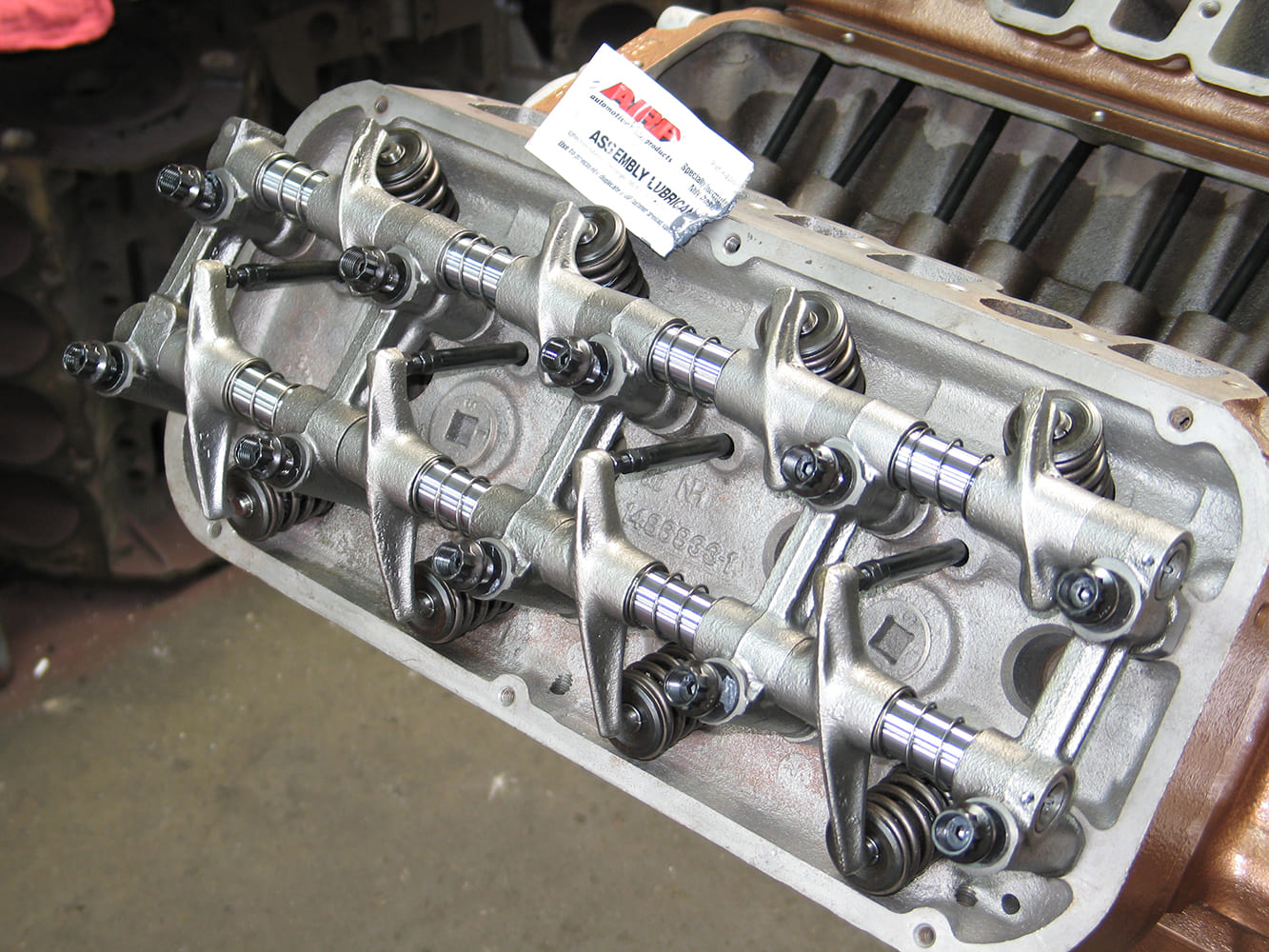
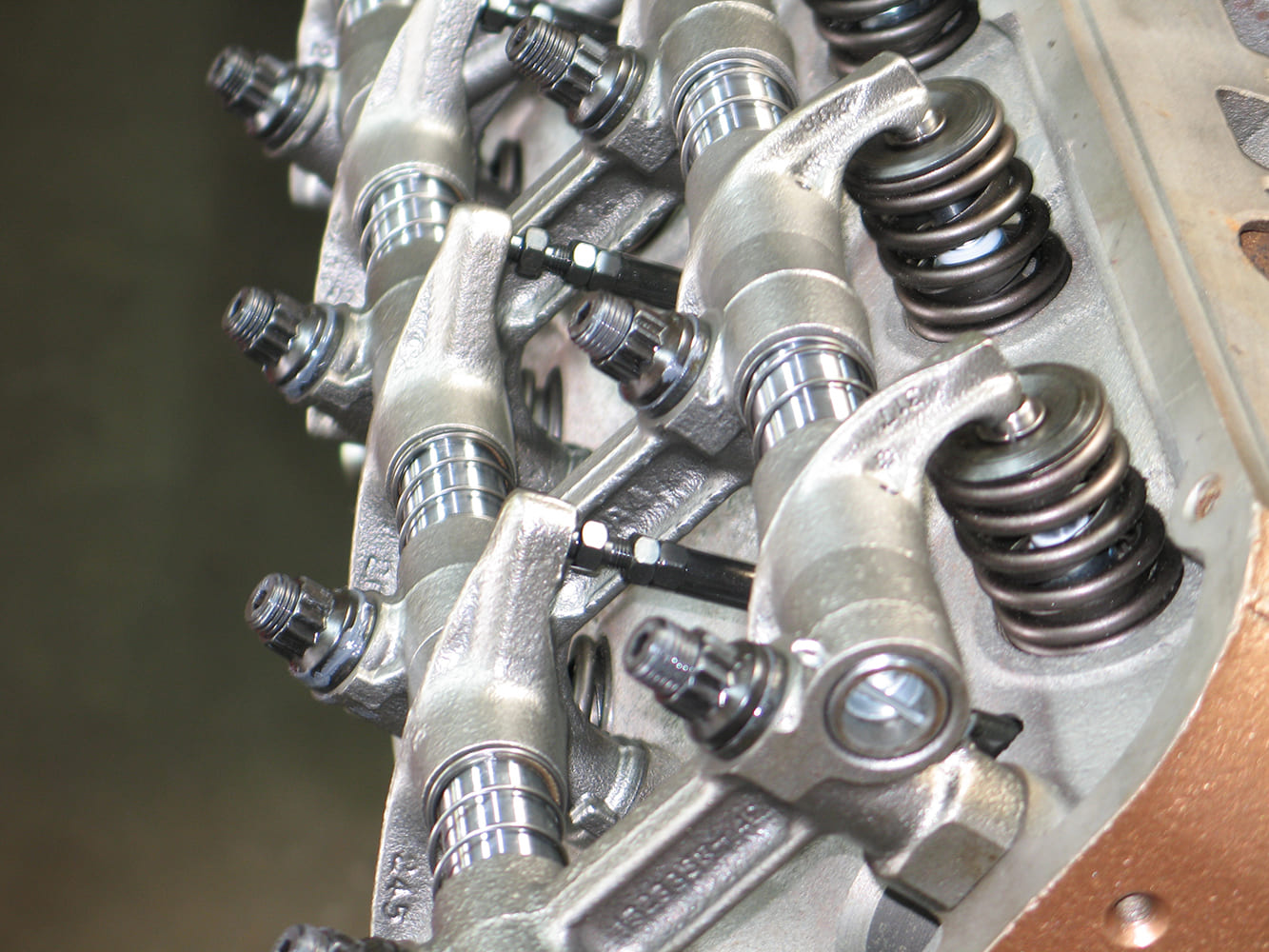
While all Chrysler’s Hemi engines used cast-iron blocks with two-bolt mains and cylinder banks at 90 degrees to each other, it was the heads with hemispherical combustion chambers that made these engines so distinctive. Thanks to the relatively small surface area compared to other designs, this type of chamber transfers less heat to the head during combustion, so minimal energy is wasted. Additionally, Hemi heads breathe extremely well. Since the valves are angled on opposite sides of the combustion chamber, they can be quite large. Another reason these engines breathe so effectively is that the splayed valves allow for straighter, less restrictive ports than those found in most wedge-head engines.


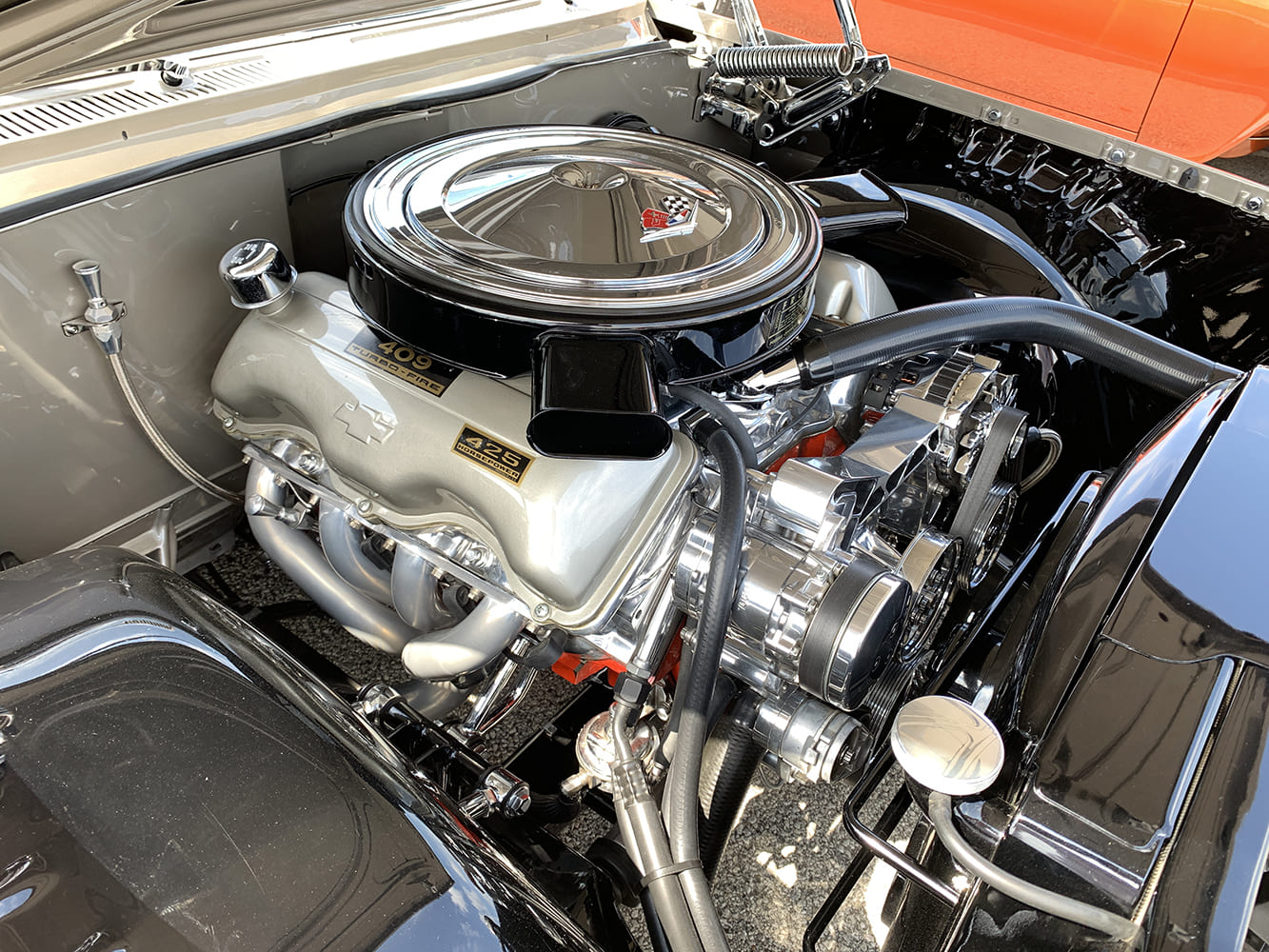
Chevrolet’s 348 and 409
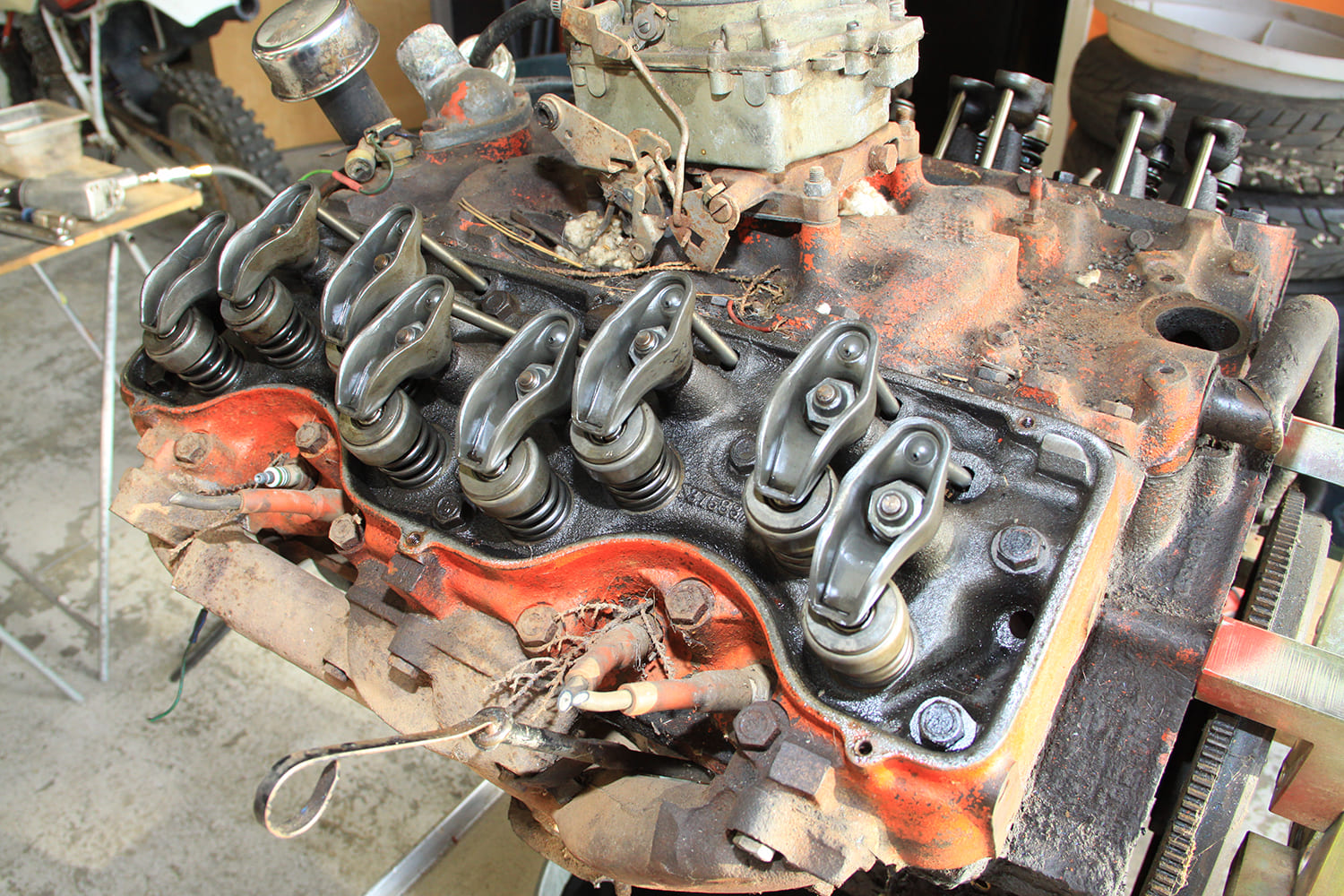
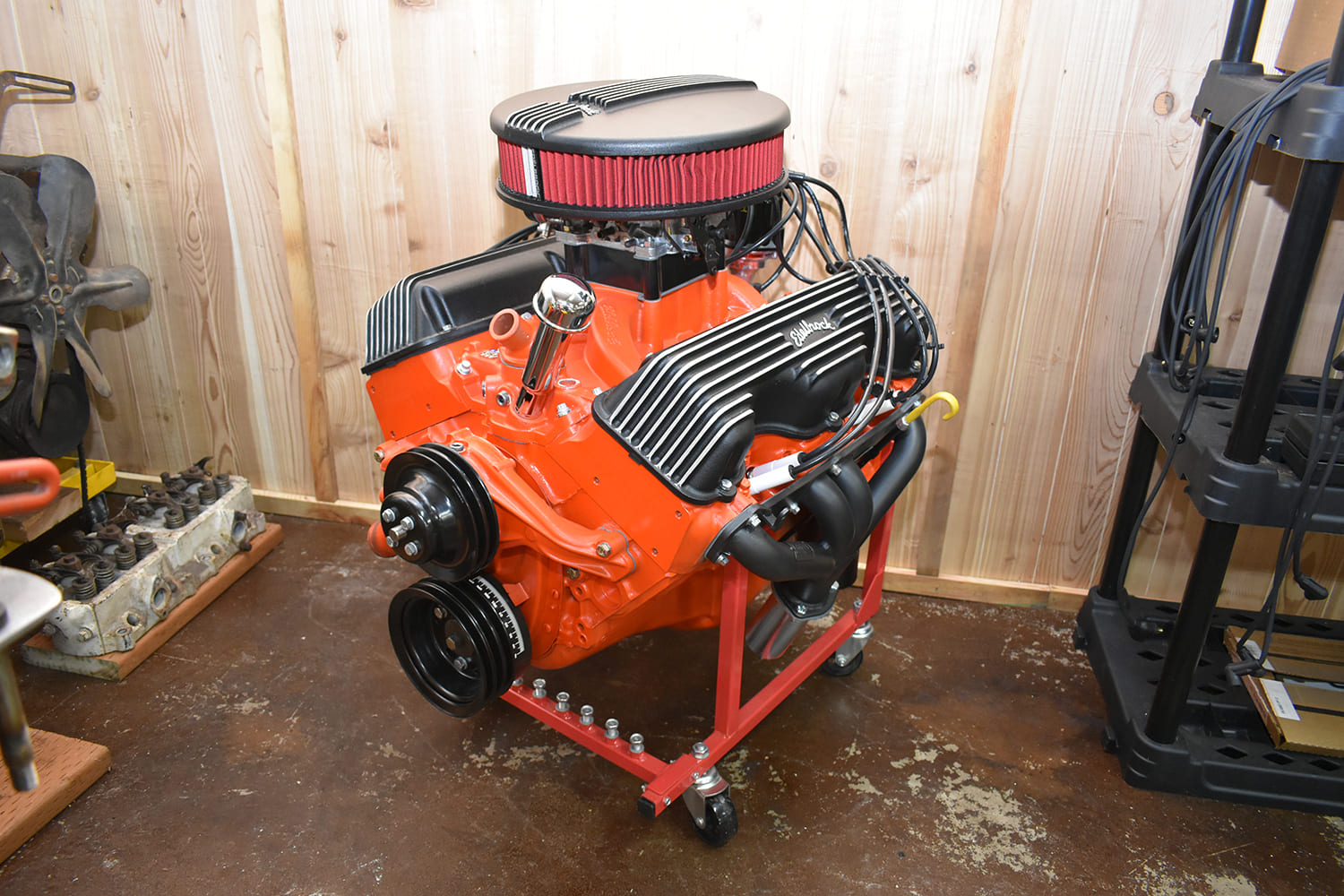
Although Chevrolet’s small-block 265ci and later 283 Chevrolet V-8s were popular when introduced, it became clear that a larger-displacement engine was needed for the bigger, heavier cars being developed and for light- to medium-duty trucks. Consequently, the engineers began working on three new engines, designated W, X, and Y. The X and Y engines were based on the small-block design, while the W used an entirely new block and heads. Although it’s often said that the W engine name relates to the shape of the valve covers, the truth is that after testing, the W design was chosen for production and the letter designation remained.
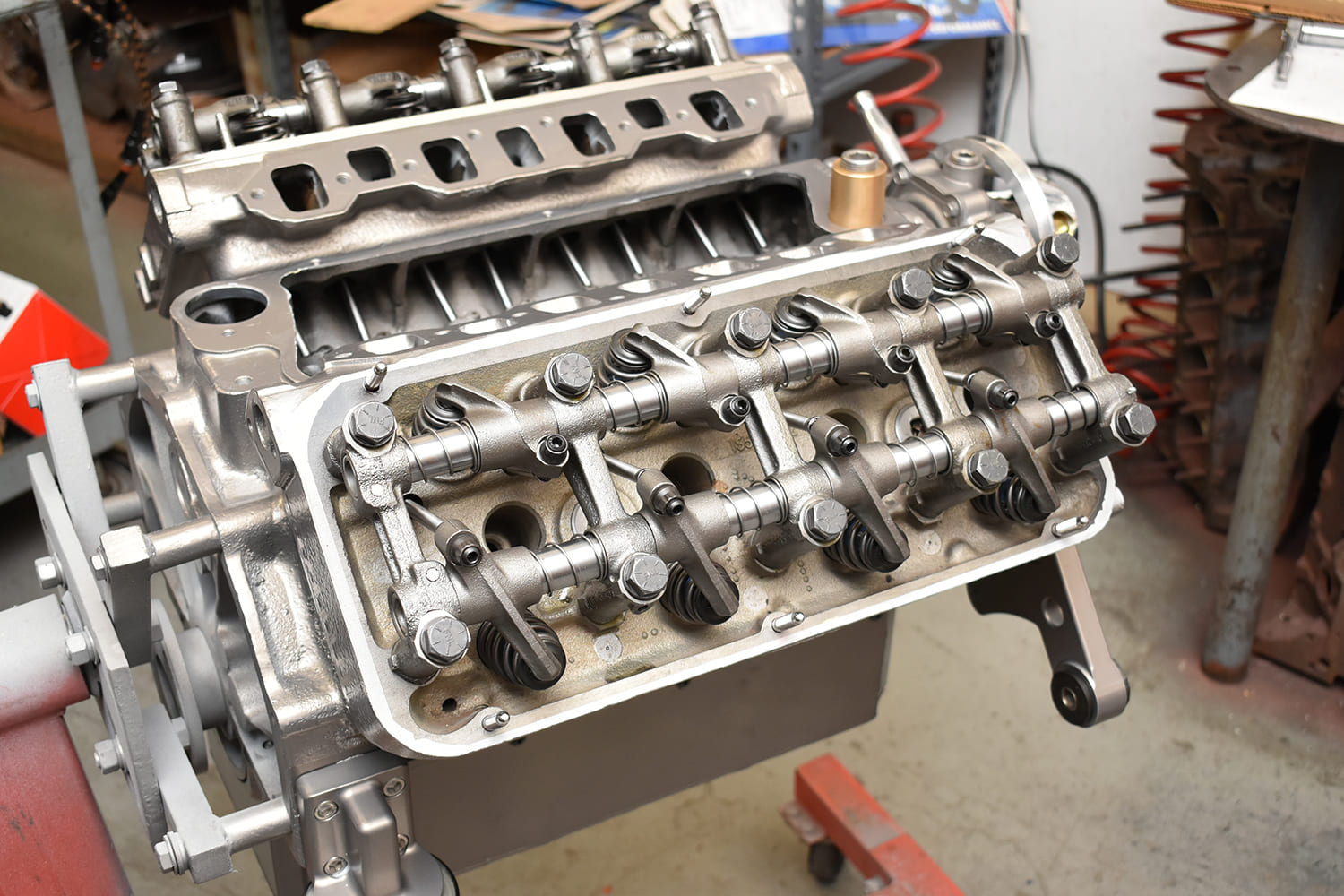
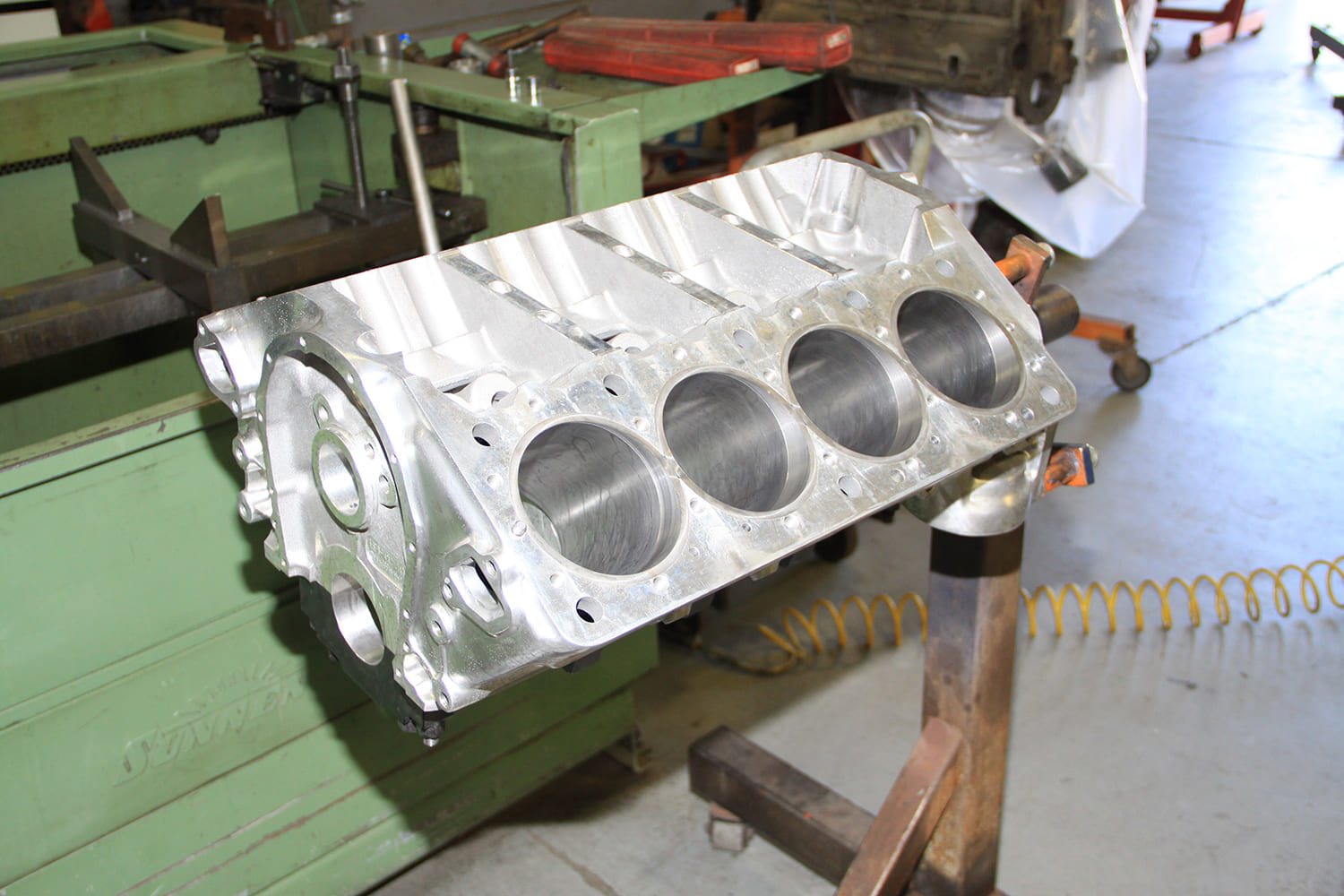
The new W engines were unique in several ways, but they did incorporate the small-block–style stud-mounted rocker arms lubricated by hollow tubular pushrods. However, the rest of the oiling system was significantly different. Unlike the small-blocks, the W-blocks have a gallery running low on the left side of the block to feed the mains directly, along with additional passages to supply the lifters and cam bearings. But what truly sets the W-series apart from the small-block is the combustion chamber design.
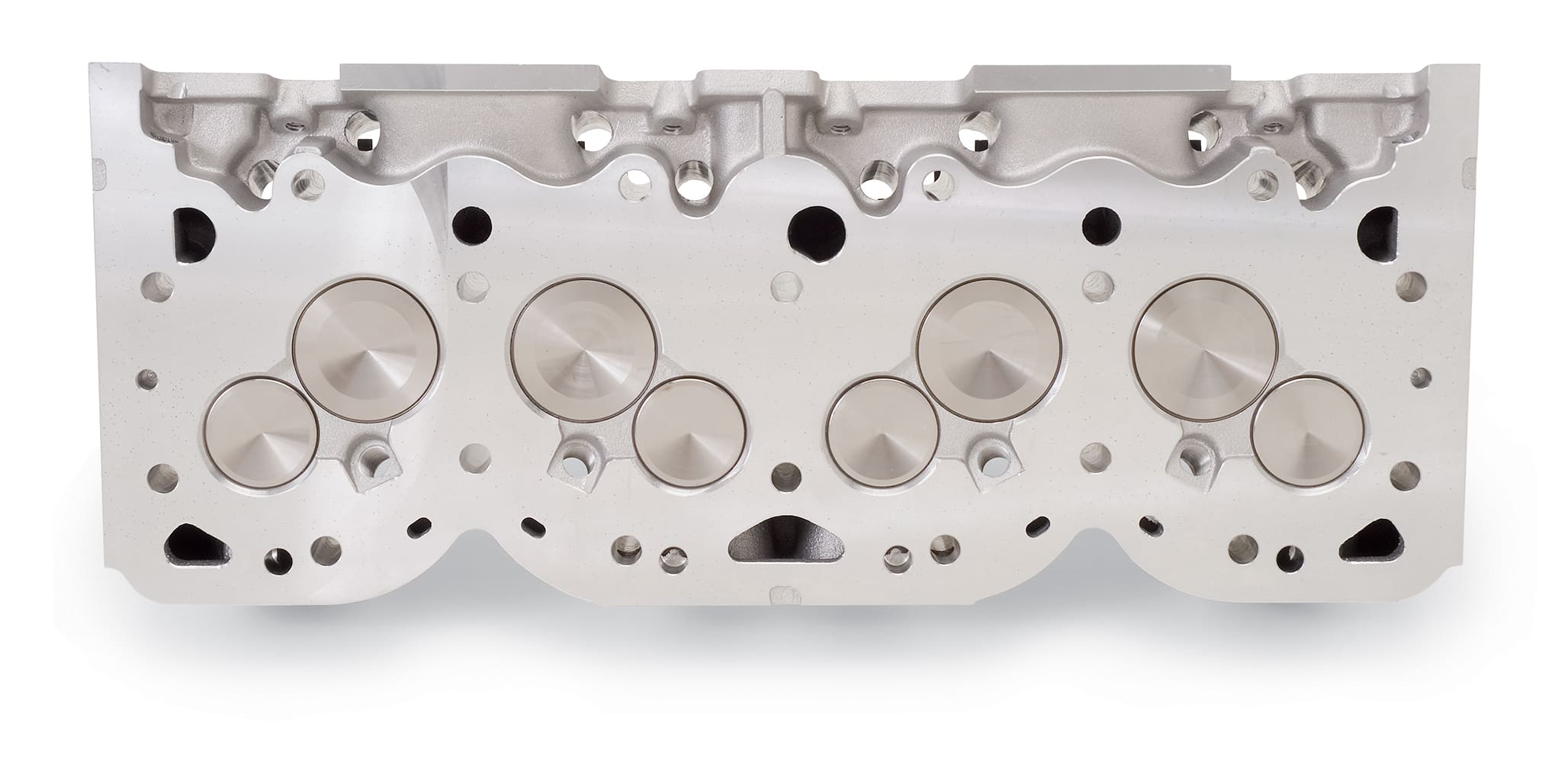
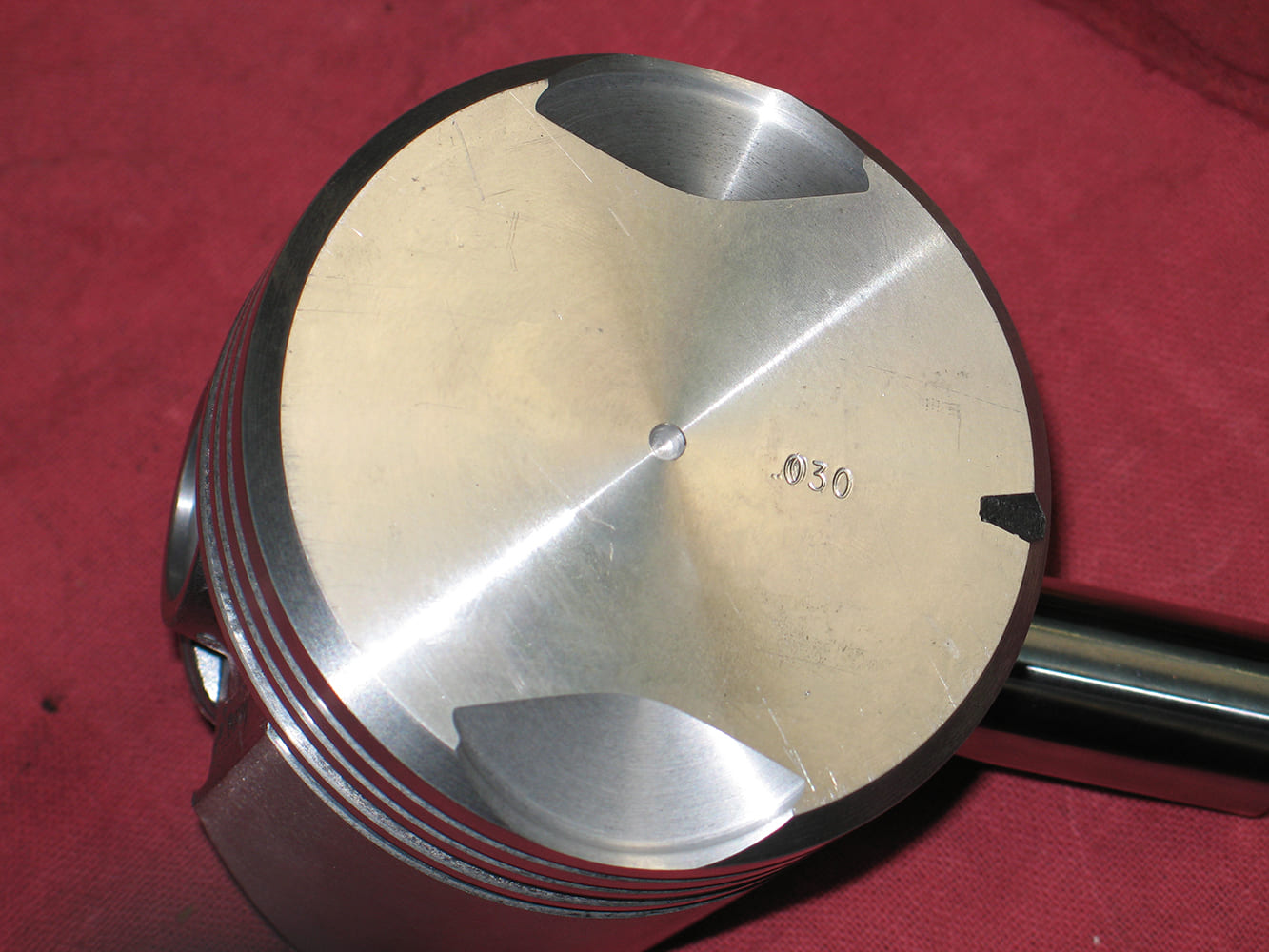
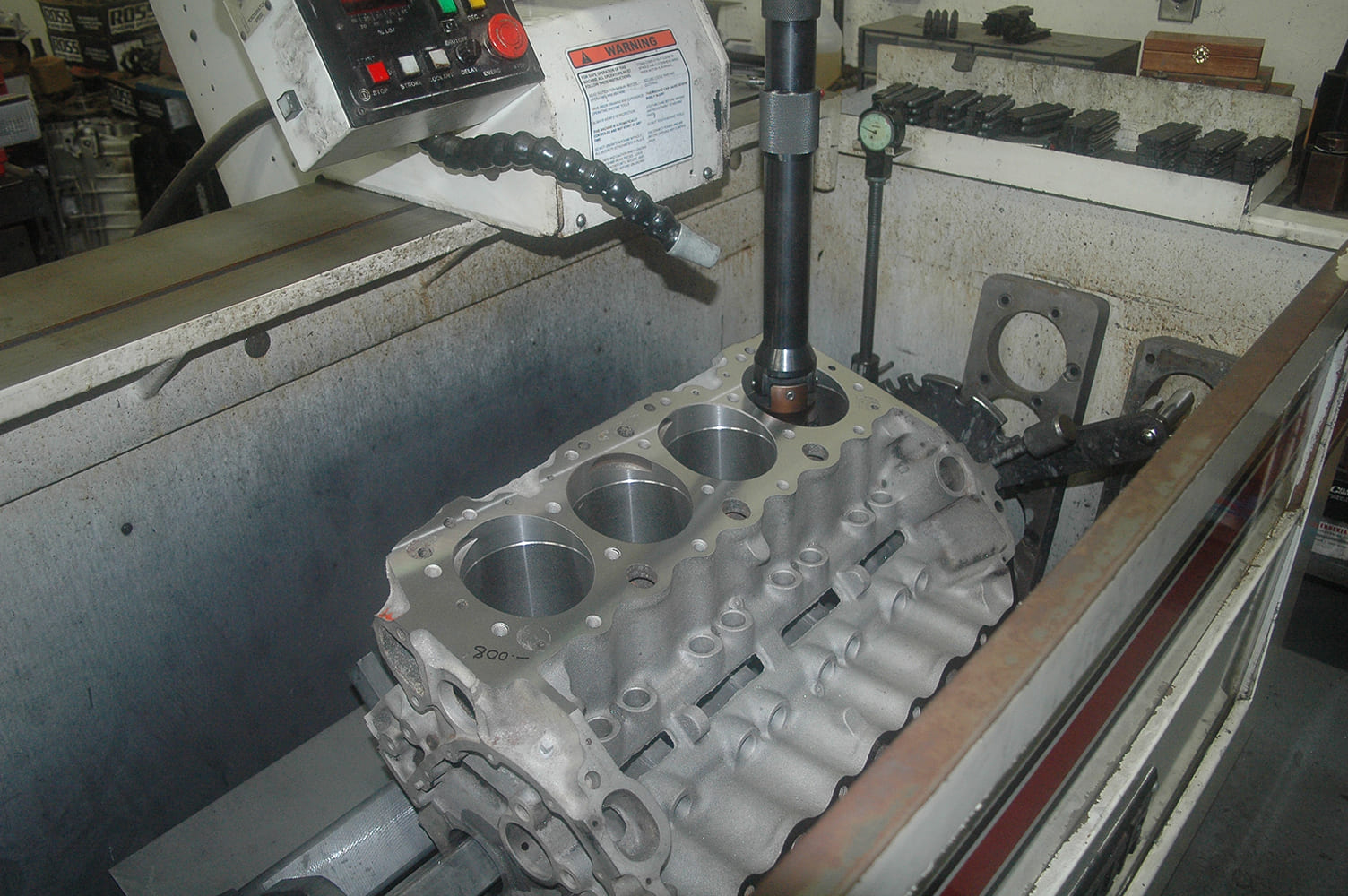
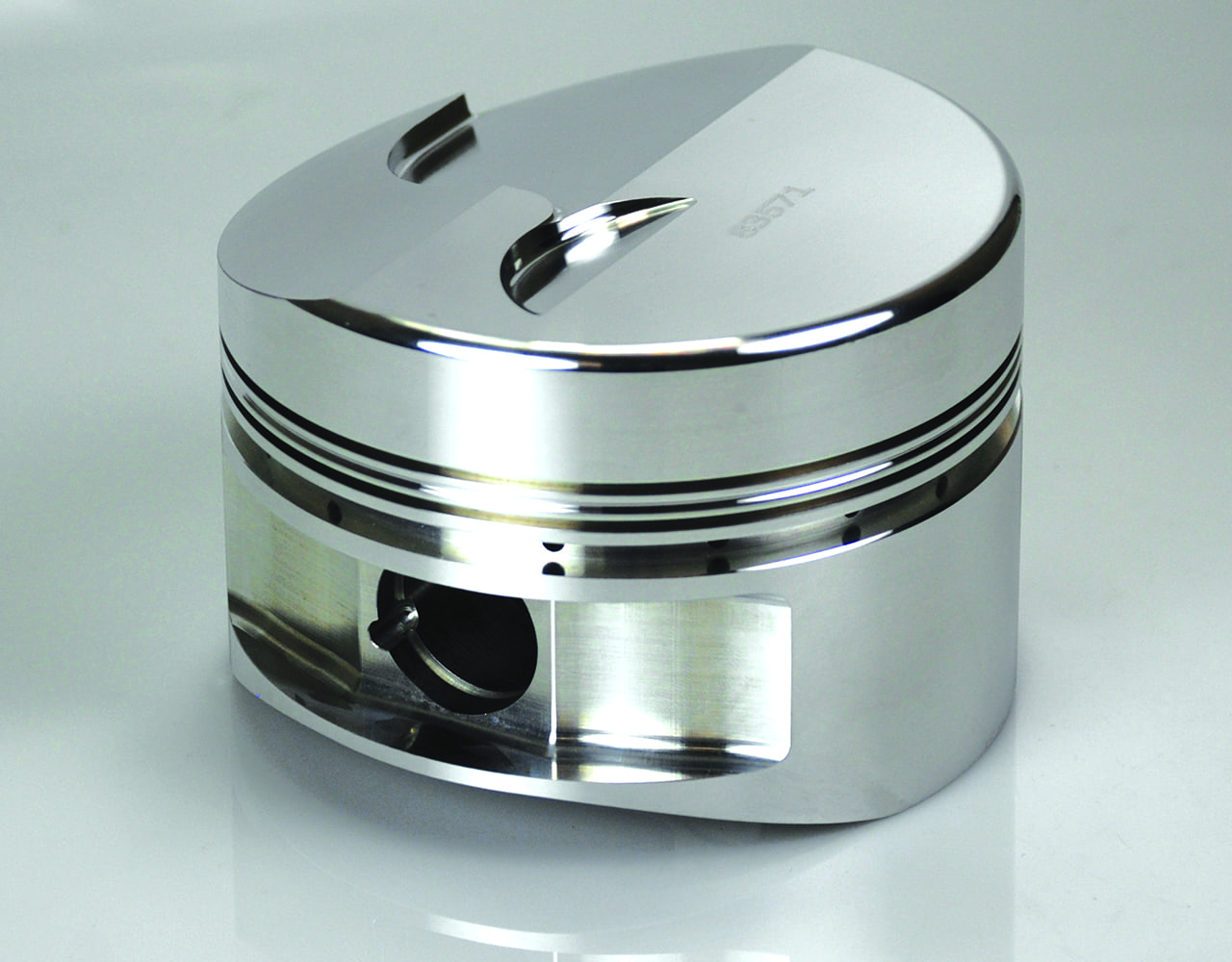
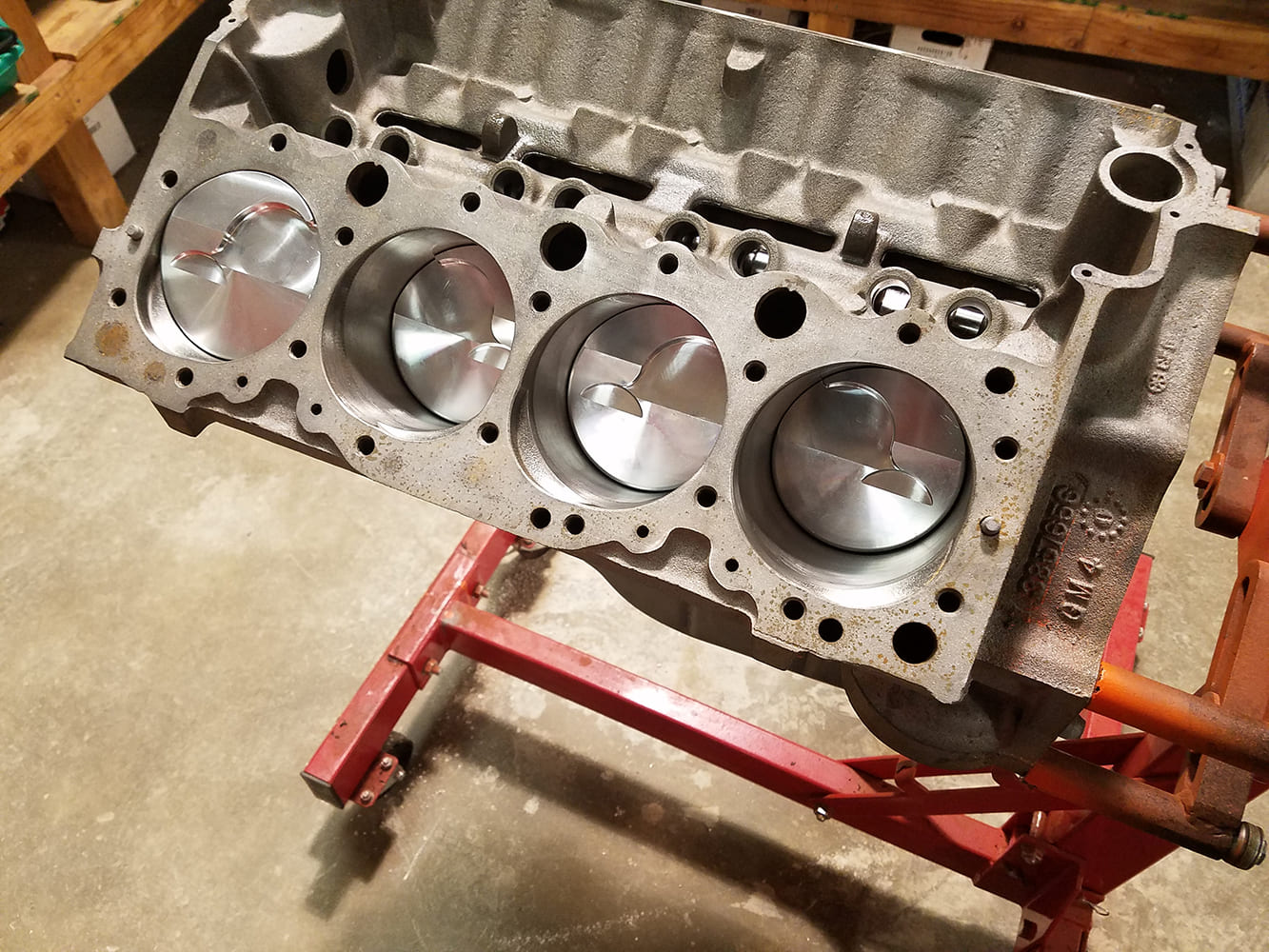
Small-block Chevrolets have conventional combustion chambers in the heads with the block’s decks 90 degrees to the crankshaft centerline. The heads for the W are flat with no combustion chamber (some trucks and marine heads have small chambers to lower compression), and the block decks are at 74 degrees to the crankshaft centerline. The result is 16-degree wedge-shaped combustion chambers in the cylinders between the heads and the pistons. Chevrolet’s engineers chose this design because it creates turbulence in the chamber, and, when coupled with the spark plug’s location, the result is a fast-moving flame front that helps produce lots of low-end torque and is resistant to detonation.
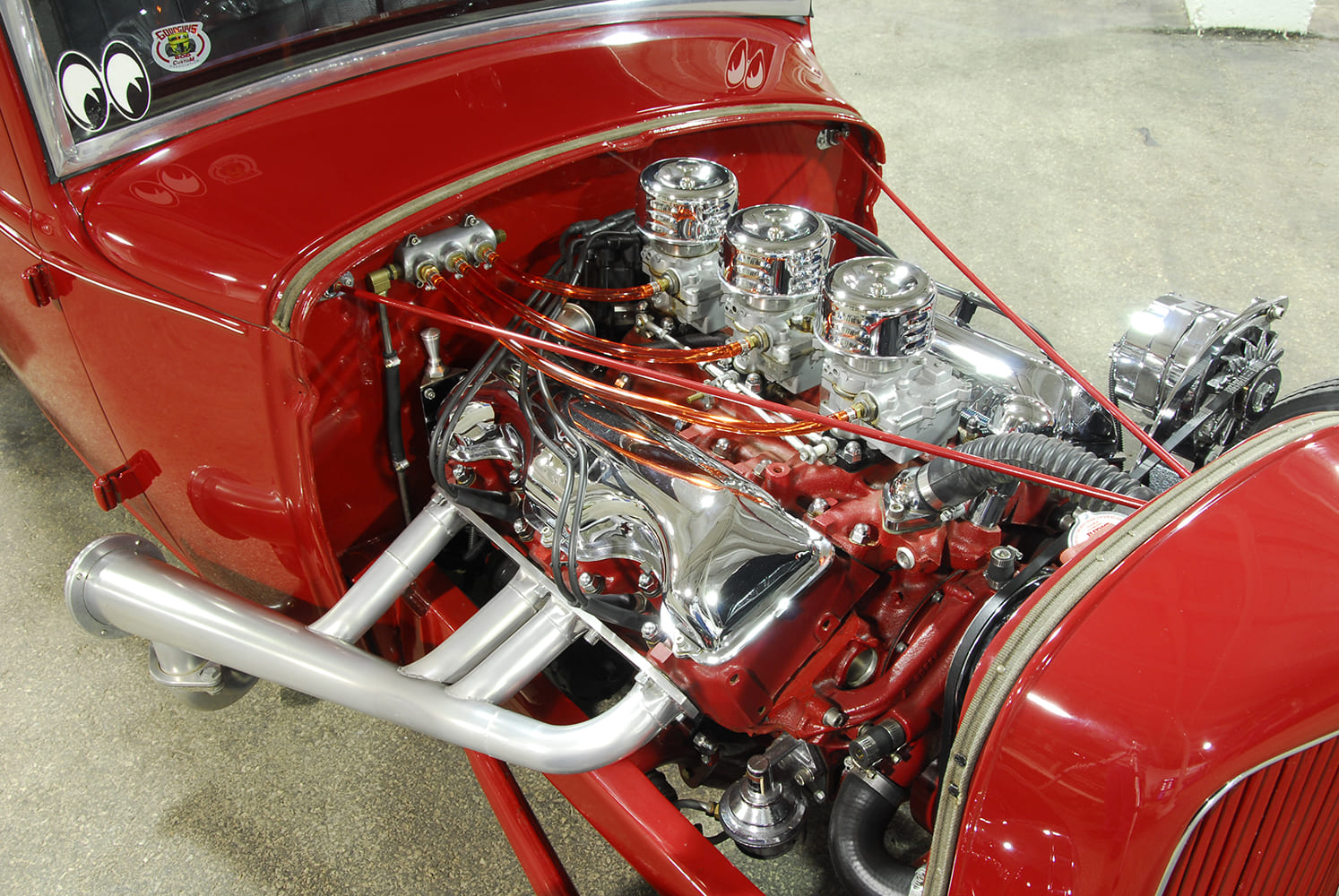
The first W-series engine was introduced in October 1957 for the 1958 model year. Displacing 348 ci, it had a bore of 4.125 inches and a stroke of 3.25 inches—it was available in cars through 1961 and trucks through 1965. Over the years, horsepower ranged from 250 to 350 with Tri-power. At the end of 1961, Chevrolet unleashed the 409. The redesigned block accommodated a bore of 4.3125 inches and a stroke of 3.5 inches. In 1962, the base version of the 409 produced 360 hp with a single Carter AFB, and by 1964, a 425hp version with 11.25:1 compression, solid lifters, and two four-barrels was available. However, for 1965, only 340- and the 400-horse 409s were available, and by midyear, the W-series engine had been replaced with the 396.

Another engine in the W family that deserves mention is the 427, developed in 1963 exclusively for drag racing. Offered as a Regular Production Option (RPO), Chevrolet reportedly sold 57 so-equipped Impala Sport Coupes in 1963 to do battle with Ford, Pontiac, and Mopar. With dual four-barrel carburetors, 13.5:1 compression, and a solid-lifter cam, Chevrolet claimed these engines produced 430 hp—the actual number was around 500 hp.
Identification
Hemis:
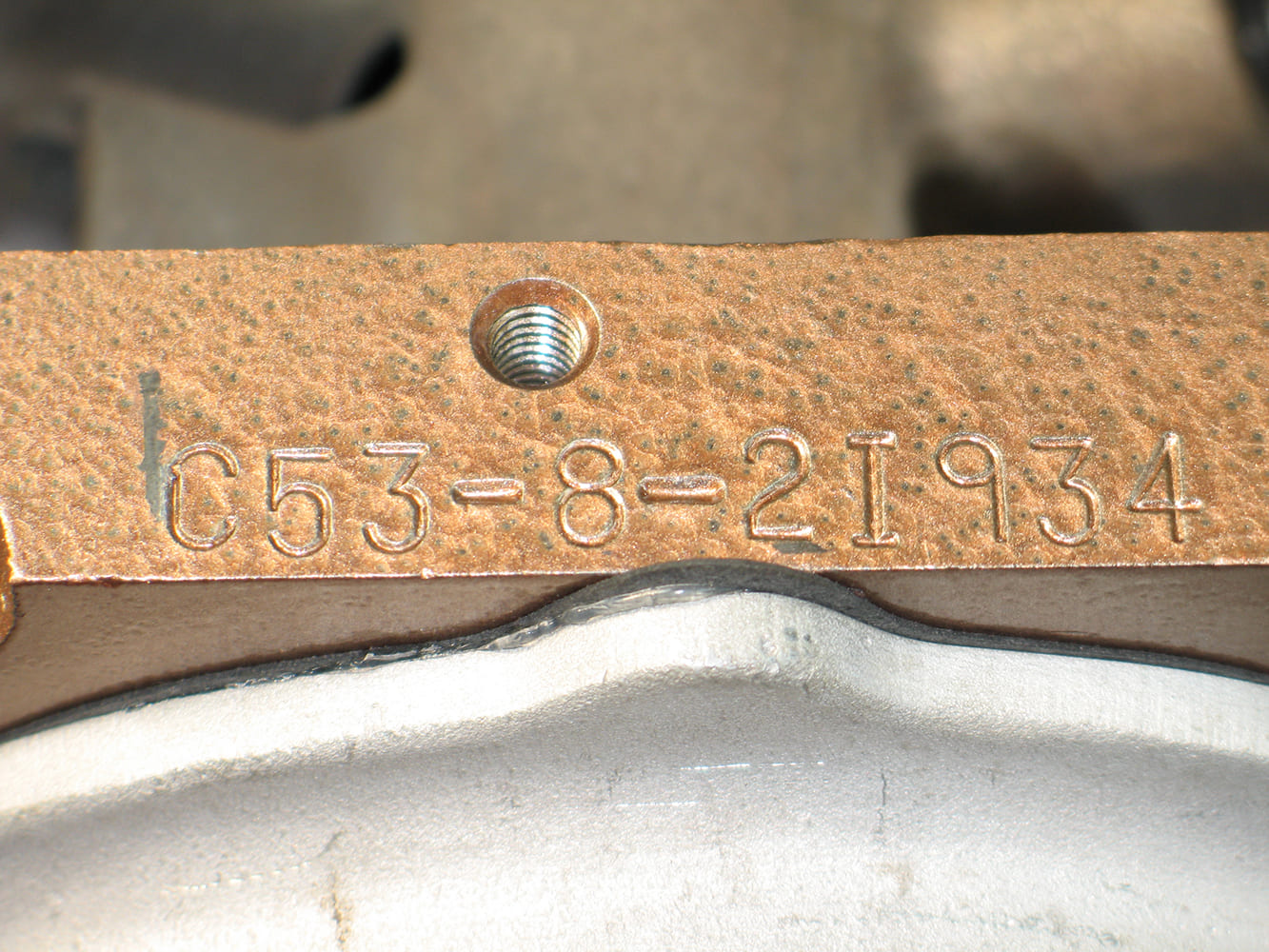
Even though Chrysler produced an array of Hemis, identifying one from the other is rather simple, thanks to letters and numbers stamped on the block in front of the valley cover (see HotHemiHeads.com for more information).
Chrysler
331s begin with C, WE, NE, CE55, 3NE55
354s begin with NE56, CE56, 3NE56
392s begin with NE57, 58N, 58C, 58N3
DeSoto
276s begin with S17, S16, S19
291s begin with S21,S22
330s begin with S23, S24
341s begin with S24A, S25
345s begin with S26A
Dodge
241s begin with D44, D50A, D50
270s begin with D553
315s begin with D500
325s begin with KD500
349/409s:
There are a few visual differences between a 348 and a 409. The most obvious is the dipstick location. The 348 has it on the left, or driver side; the 409 has it on the right, or passenger side. (However, since the pans are interchangeable, it’s a simple matter to make one look like the other.)
Another telltale indicator is the crankshaft flange. All W engines had a forged crankshaft; the 348 had a round flywheel flange, and the 409 was D shaped. From 1962 on, 409 and 348 truck engines had a small X cast into the front of the block on the left side. Still, the best method to identify a W-block is by the casting number located on the rear of the block behind the left head (they will begin with a 37 or 38). A complete list of casting numbers is available online or from a number of 349/409 parts suppliers.
While 409s bring premium prices, 348s are fairly easy to find and are considerably cheaper. If displacement is an issue, very affordable stroker cranks are available. A 348’s stroke can easily be increased from 3.25 inches to 4.0, resulting in 434 ci. John Beck has built a number of these engines that typically produce over 470 hp and 500-plus lb-ft of torque.
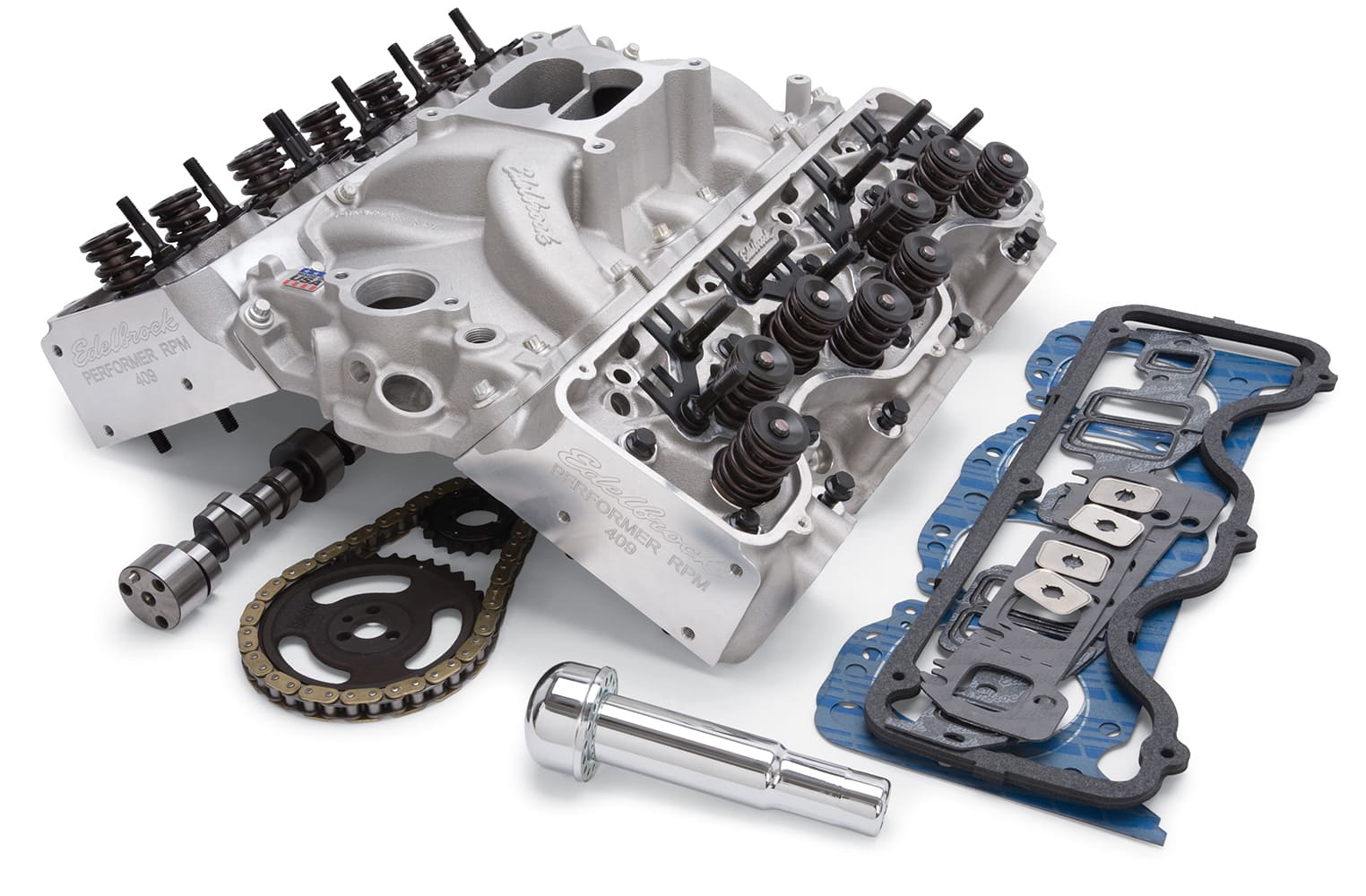
Are They Practical Today?
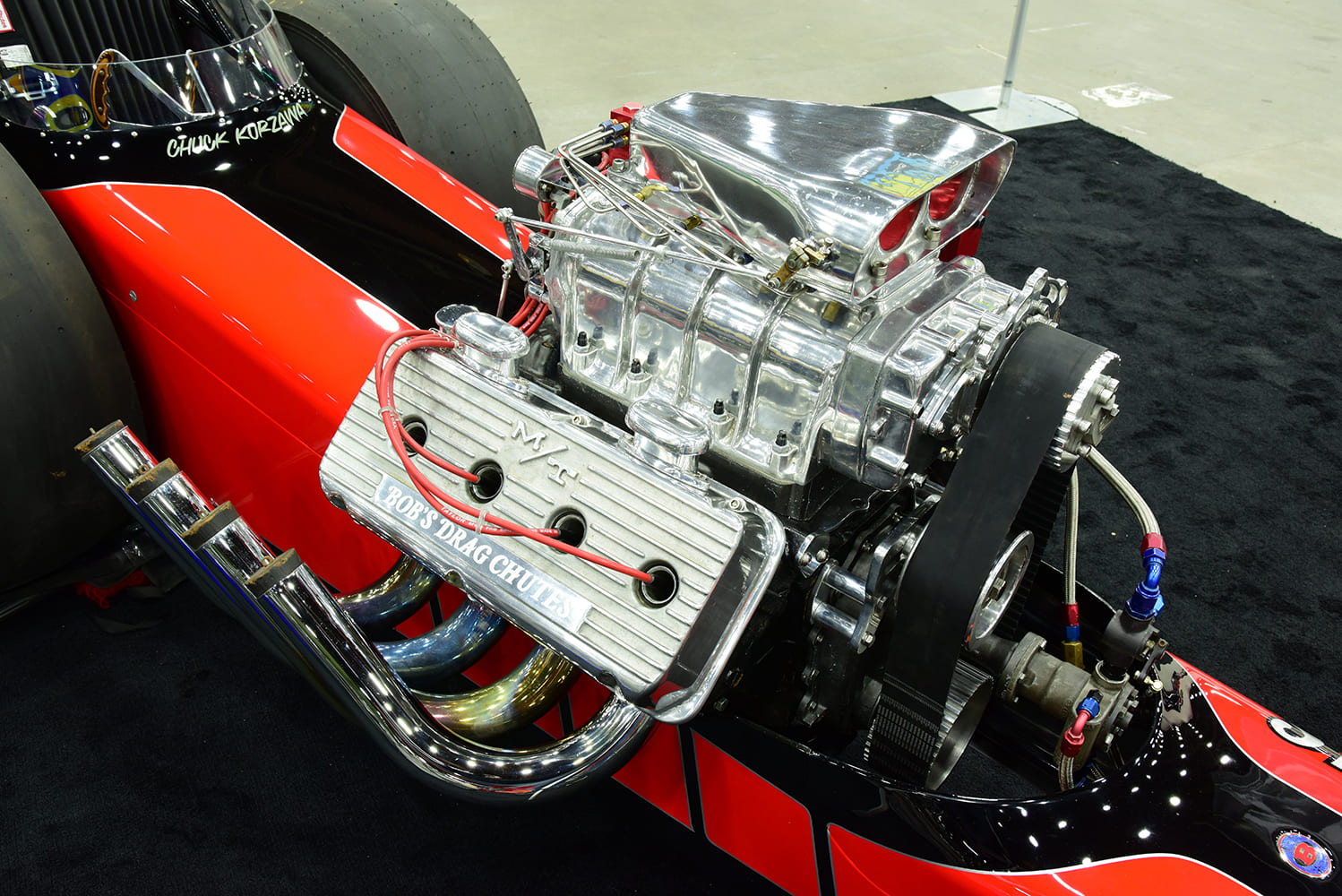
Chrysler’s early Hemi was arguably the most important engine in the early days of Top Fuel drag racing, and how many engines besides the 409 won races in every venue and were sung about by the Beach Boys? There’s no question that Chrysler’s entire lineup of Hemi and Chevrolet W-series is a key part of our hot rod heritage. They may be a little harder to find and more complicated to build, but they can be powerful and reliable. If you’re looking for something different to power your hot rod, any Chrysler Hemi or Chevy W-series would certainly be more unique than those run-of-the-mill engines.
Check out this story in our digital edition here.