



By Brian Brennan – Photography By Fuelish Media
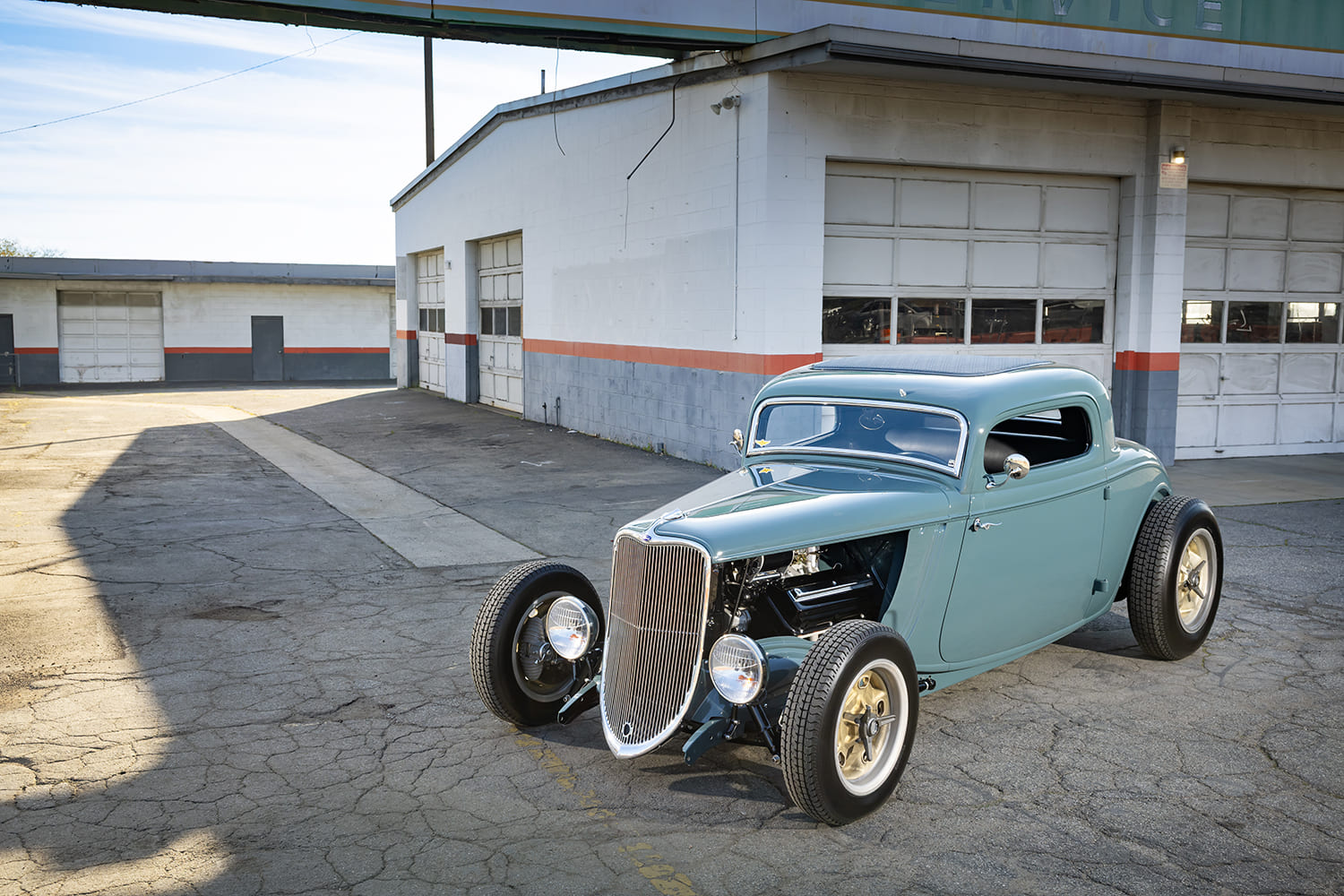
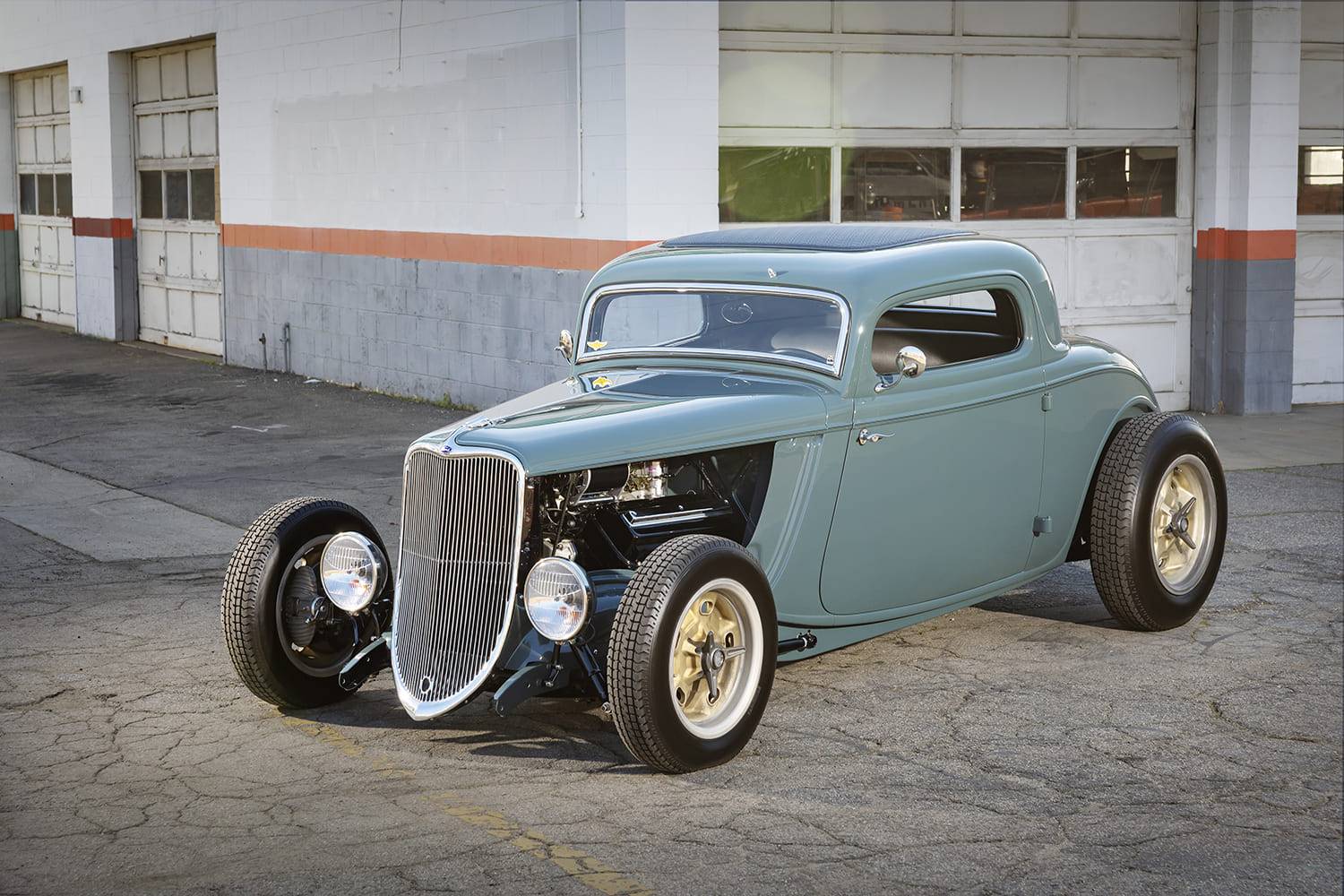
The story behind the hot rod always makes it so interesting. Scott Smith, of SoCal, racks up miles on his fenderless 1933 Ford three-window coupe. Although he has made some changes to fit his style, the fact remains that his dad, Jim, built the hot rod coupe and had it on the road back in 2015. A few years later, he died, leaving it to Scott.
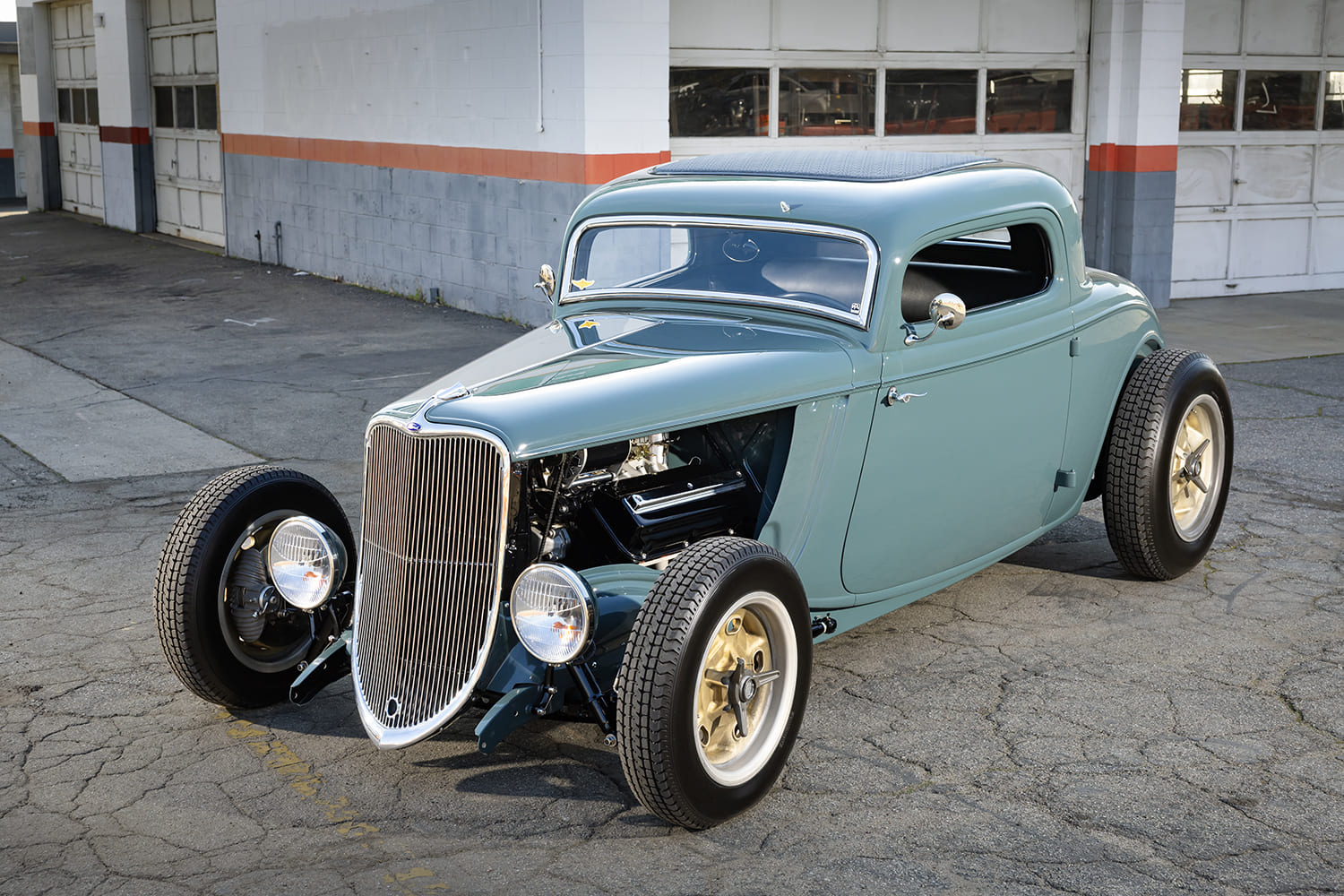
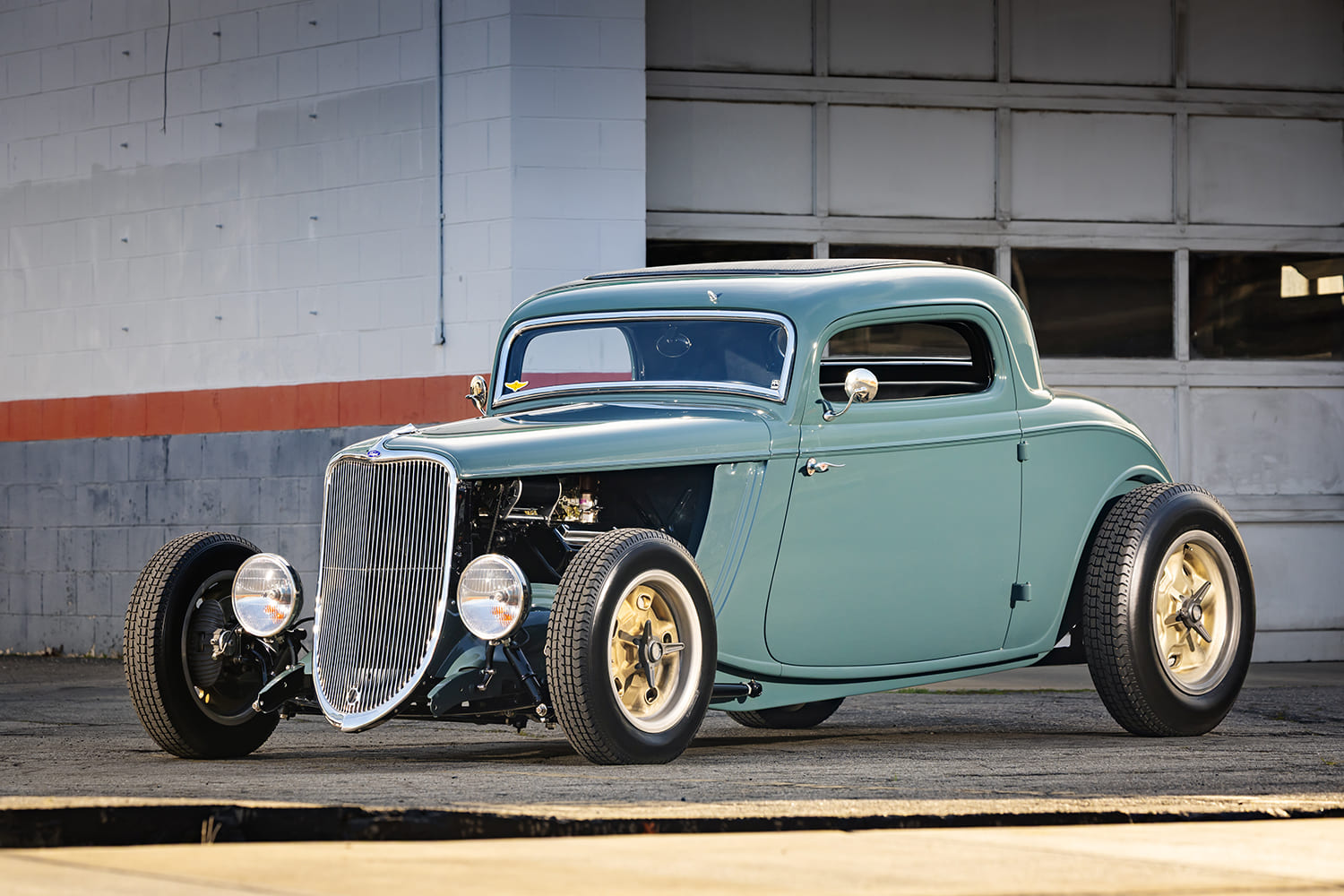
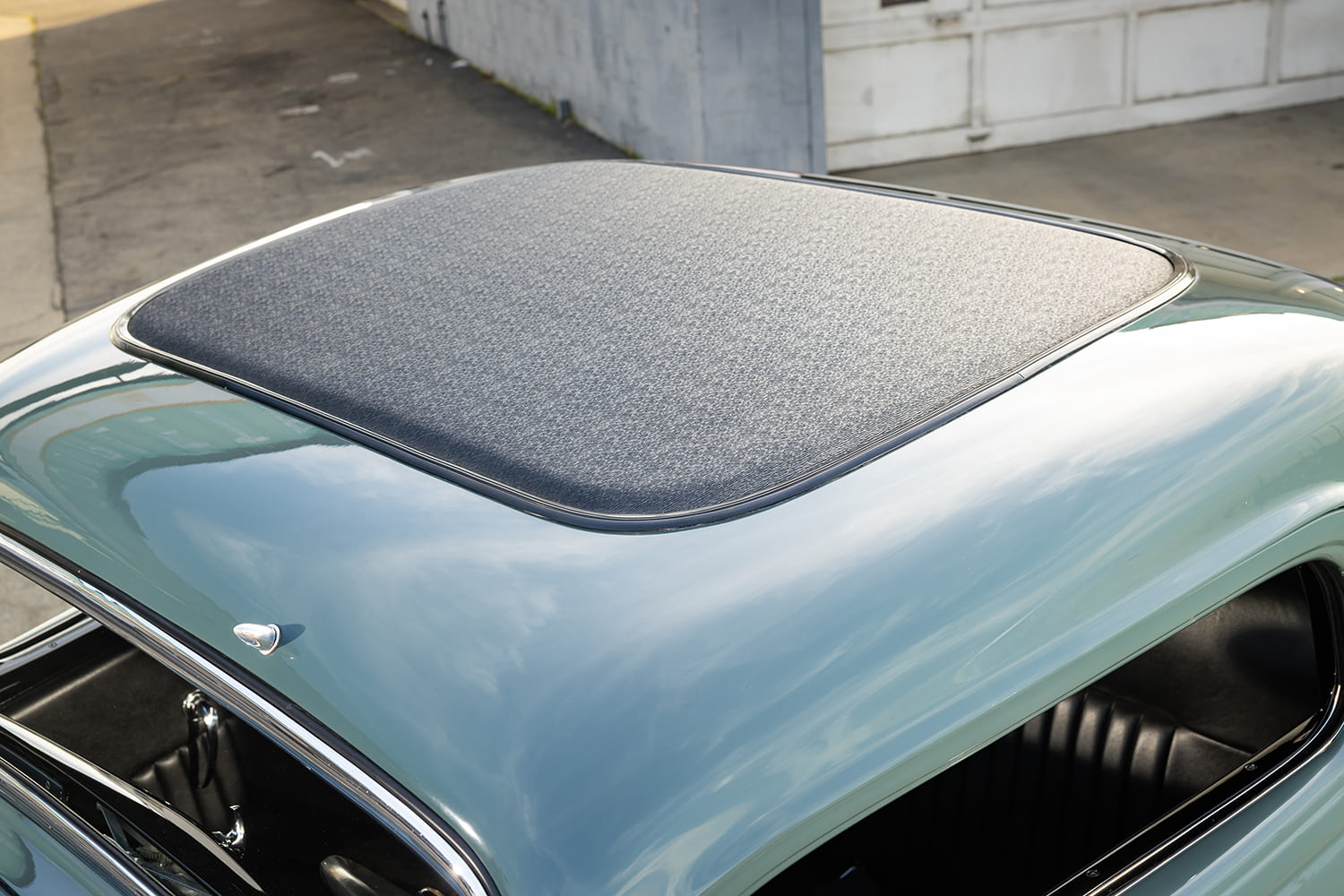
One should take a closer look to realize that this 1933 Ford three-window coupe is based on a Deuce Customs fiberglass body from Australia, with a Rootlieb metal hood and grille shell. Jim noted that using this body, with the already-desirable modifications, would be a real time-saver and would also make his budget go further.
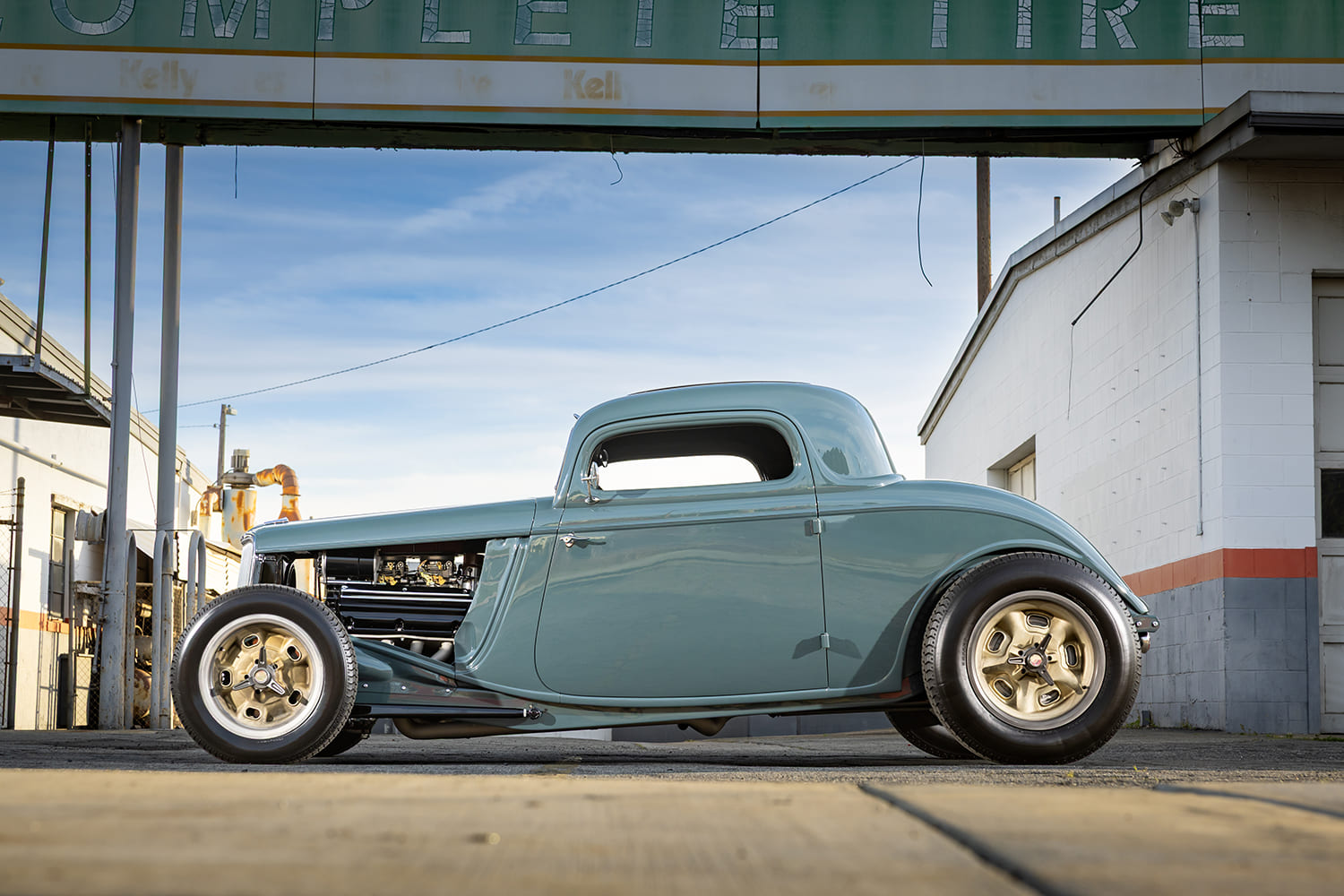
Scott’s dad was always a hot rod enthusiast and especially admired the 1933-34 Ford coupe. After facing the challenge of finding an affordable vintage project starting point, he discovered Deuce Customs in Australia, which offered a fiberglass body. Jim liked that the body looked very authentic yet included several modifications he would have made. The body features a 3-inch top chop, keeps the stock door handles and hinges, has a stock-looking firewall, and includes a functional cowl vent and a roll-out windshield with a roll-down rear window.

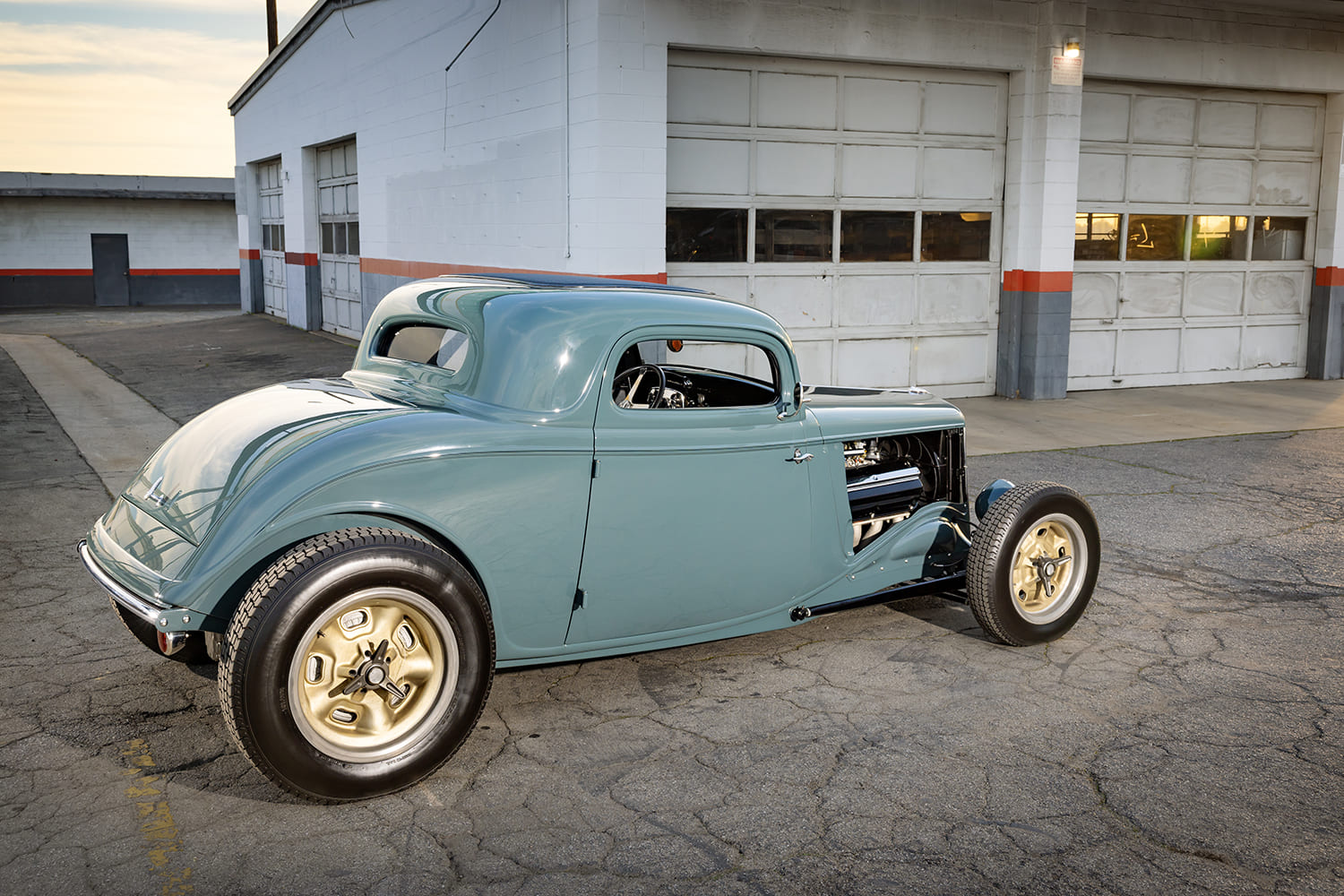
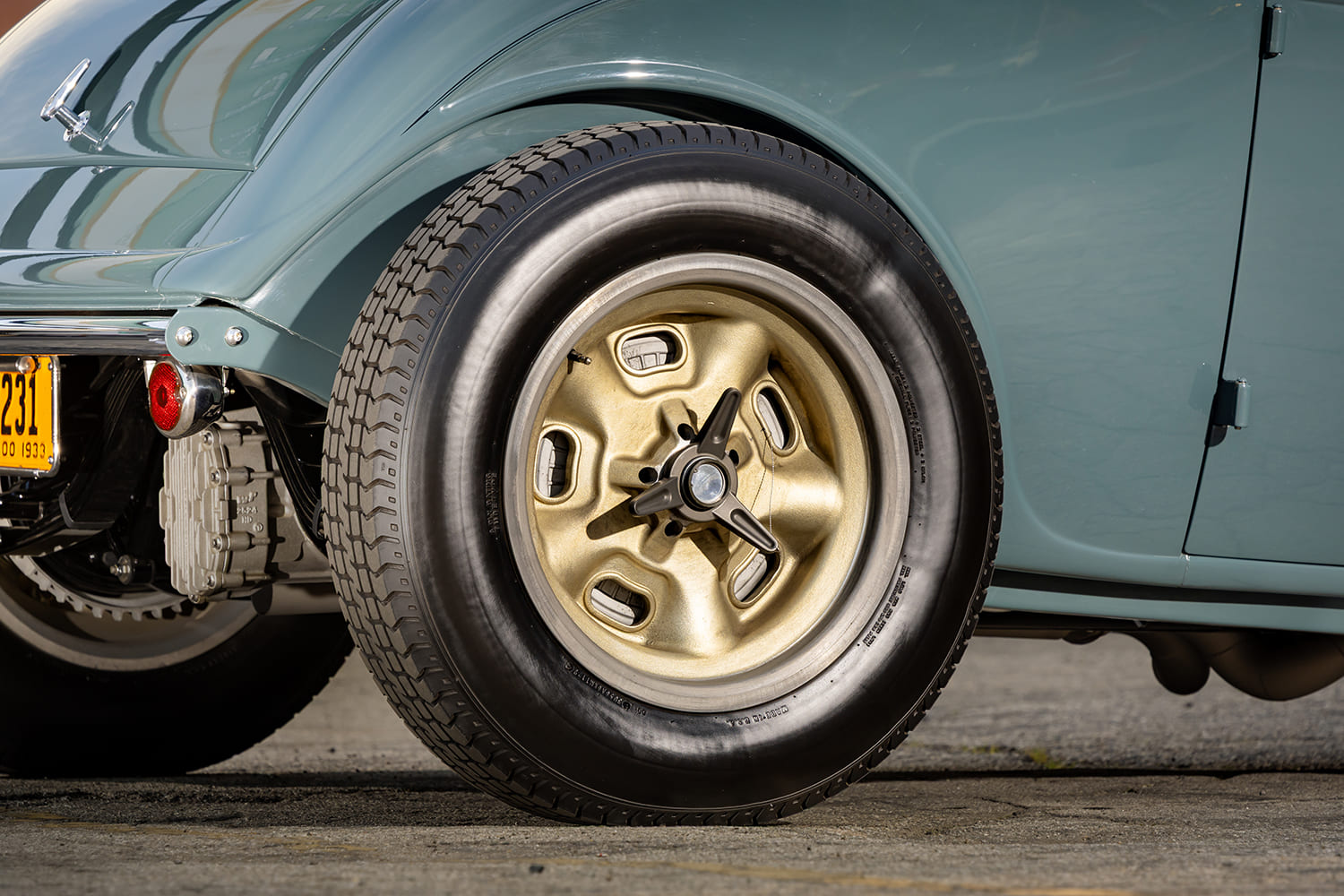
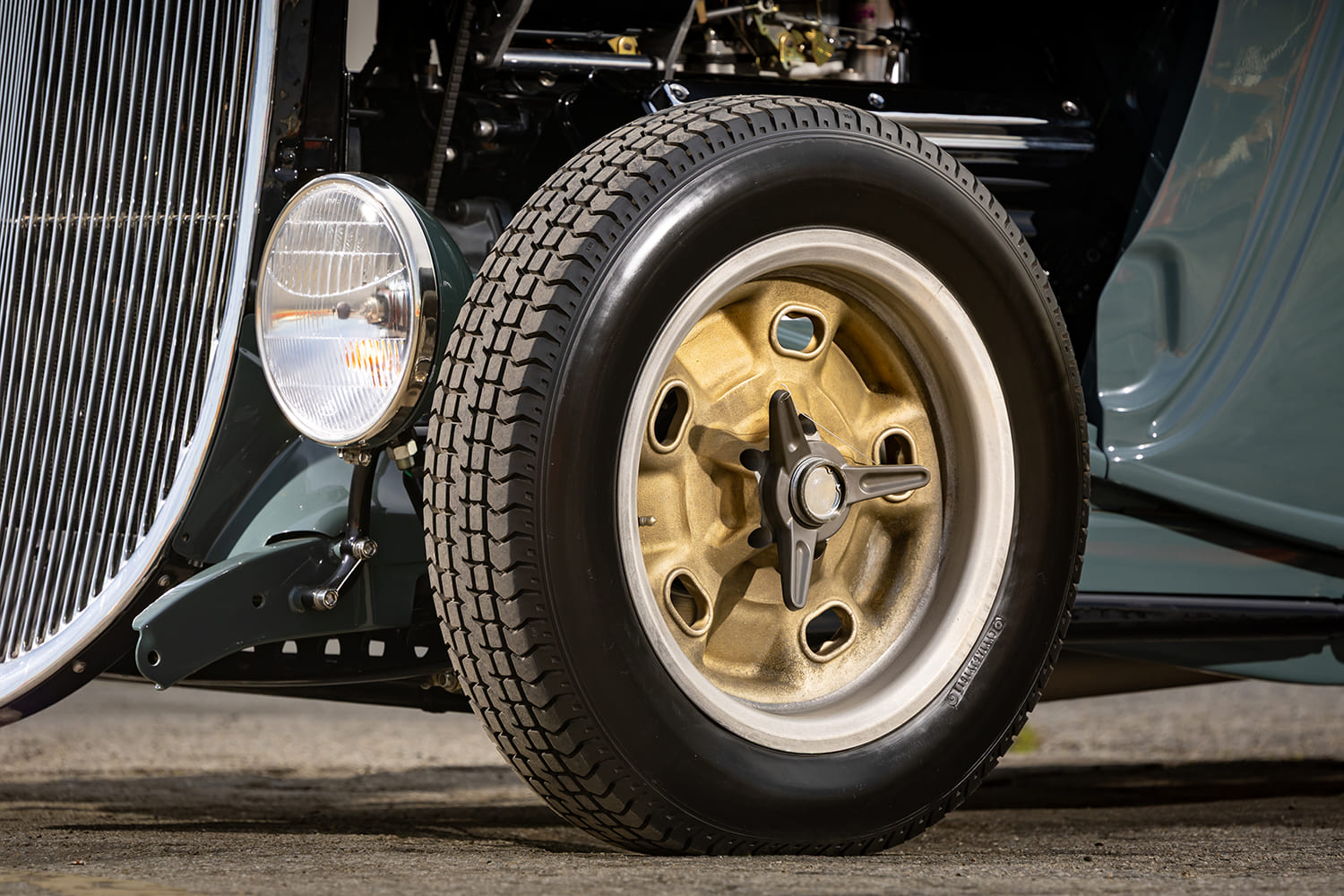
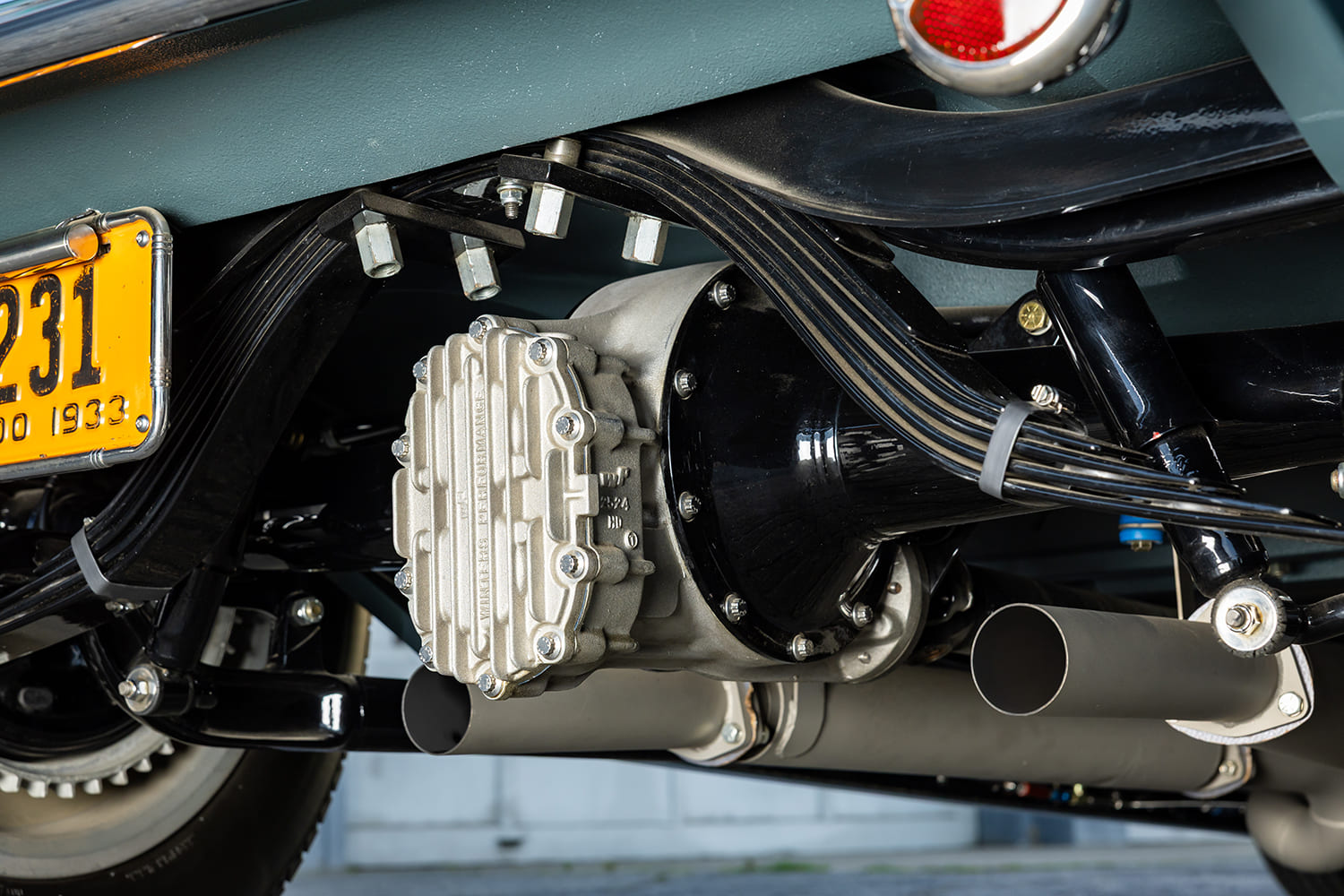
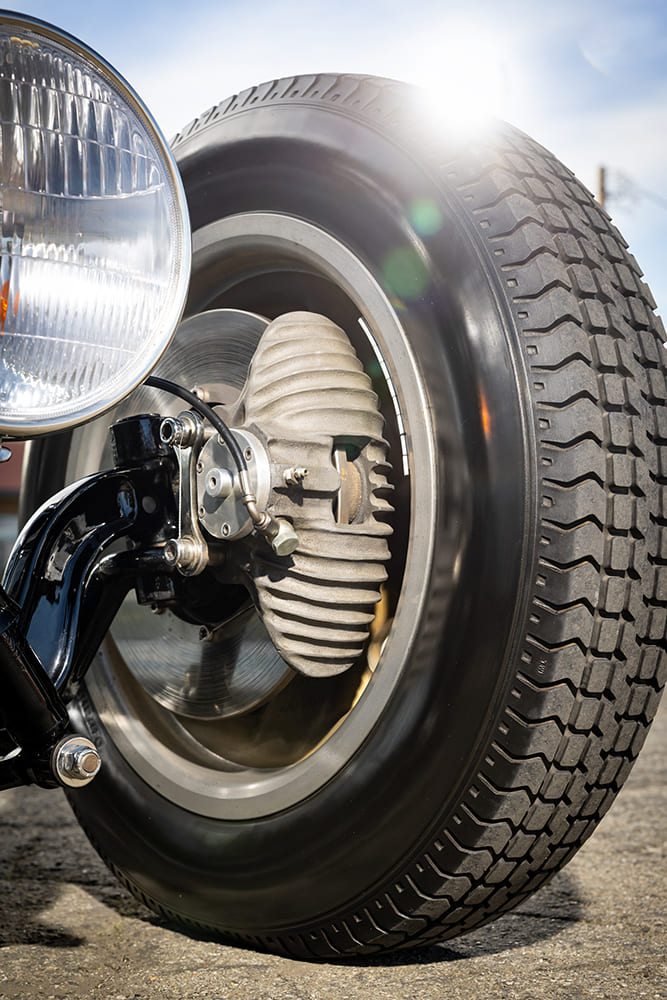
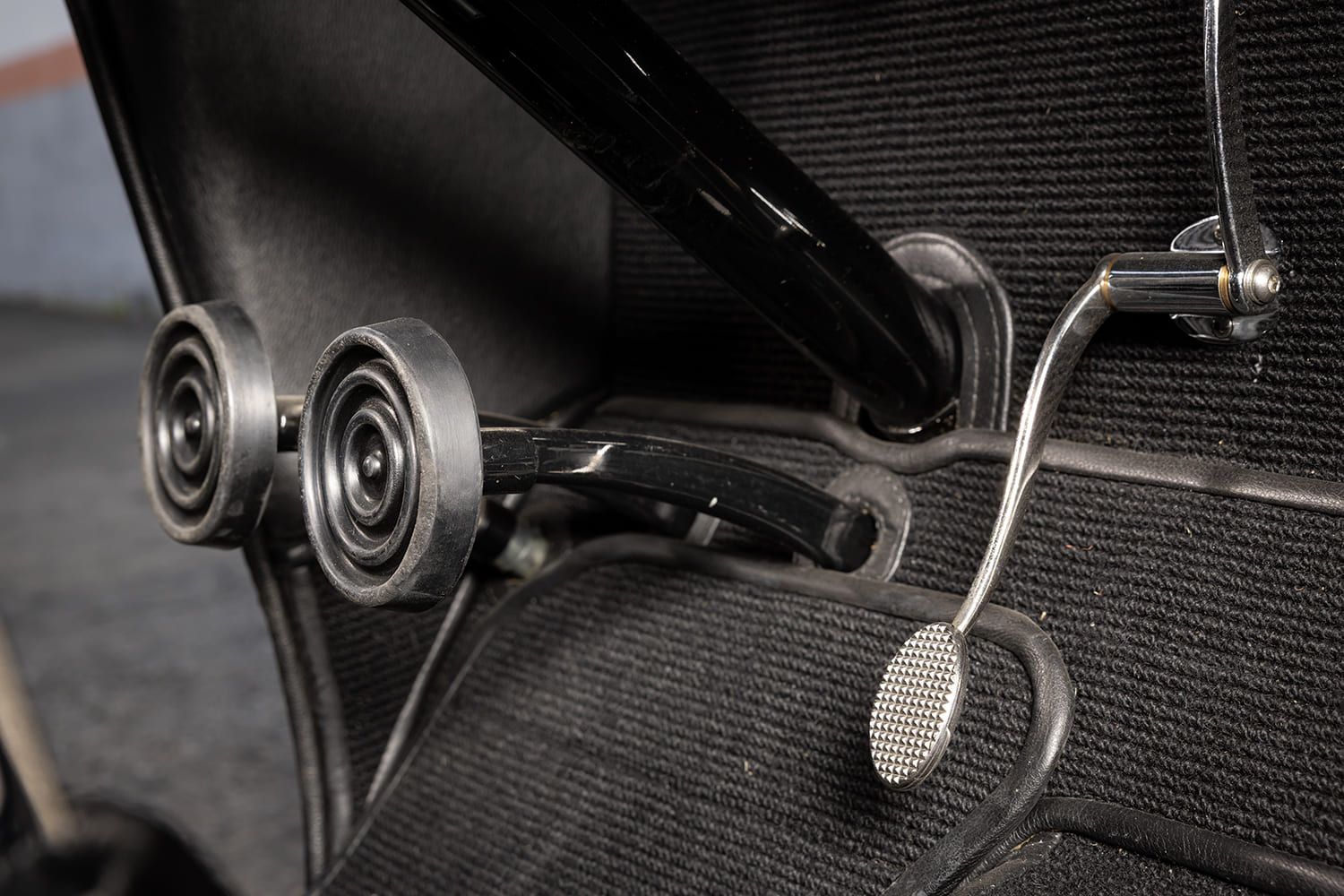
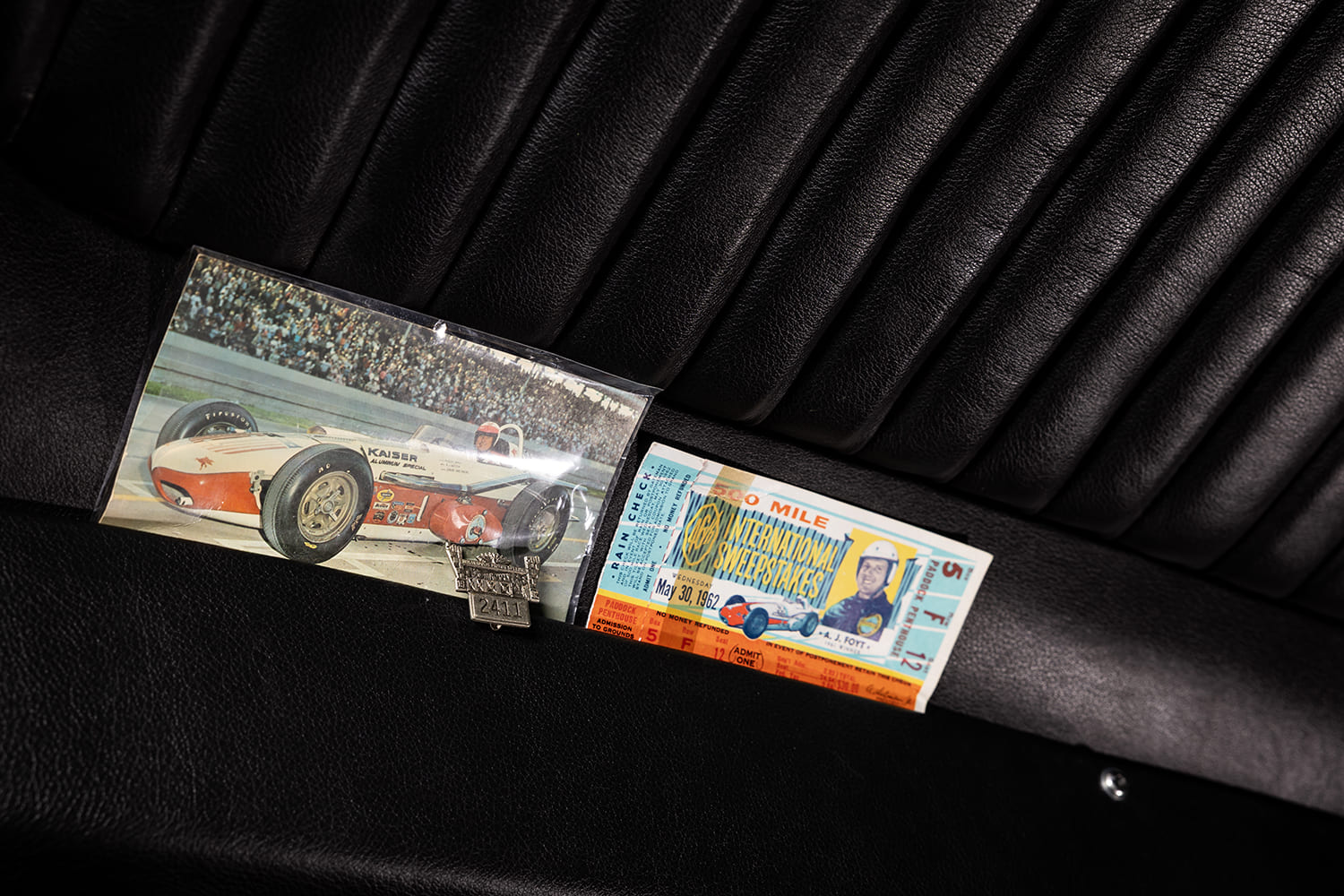
Once ordered, Jim shipped the body to the States, where Aaron Broughton of Foothill Fabrication transformed the project into a roller. Foothill Fabrication built the chassis around an American Stamping 1933-34 Ford frame, which was then lowered by 4 inches and fitted with a drilled I-beam axle, early Ford spindles, Vega-style steering, SO-CAL Speed Shop tube shocks, and split wishbones. To personalize the coupe, he swapped out the front brakes for a set of original Halibrand early 1960s Indy/Sprint Car disc brakes, based on the single-piston Halibrand “lobster claw” design. Ryan Manson of Clampdown Competition supplies a kit that includes rotors, hats, spacers, and the tie bar—the “dog bone” bar between the caliper bolts that supports the bolts—that enables use of these brakes on the street. Rear brakes are based on Ford 11-inch “shoes” with SO-CAL finned drums. The rearend features a Winters quick-change with a 3.78 ring-and-pinion and high-low gear options of 3.38 and 4.11, 31-spline Winters axles, a Posies transverse leaf spring, and additional SO-CAL tube shocks. The brake system is operated by a Corvette master cylinder and a stock pedal assembly. If you like the Indy theme, you’ll definitely appreciate Johnson’s Hot Rod Shop magnesium Indy wheels, which are real knockoffs—another personal touch Scott added. The wheels measure 16×5 in the front and 18×7 in the rear, wrapped with Excelsior tires by Coker in sizes 5.00R16 and 7.00R/18. Once the coupe was a “roller,” it was transported to Colorado where Scott’s dad finished the build. Additional work was done outside Jim’s garage, including body- and paintwork handled by Wayne Saunders of Alternative Automotive Design. The custom gray/green paint is based on PPG products.
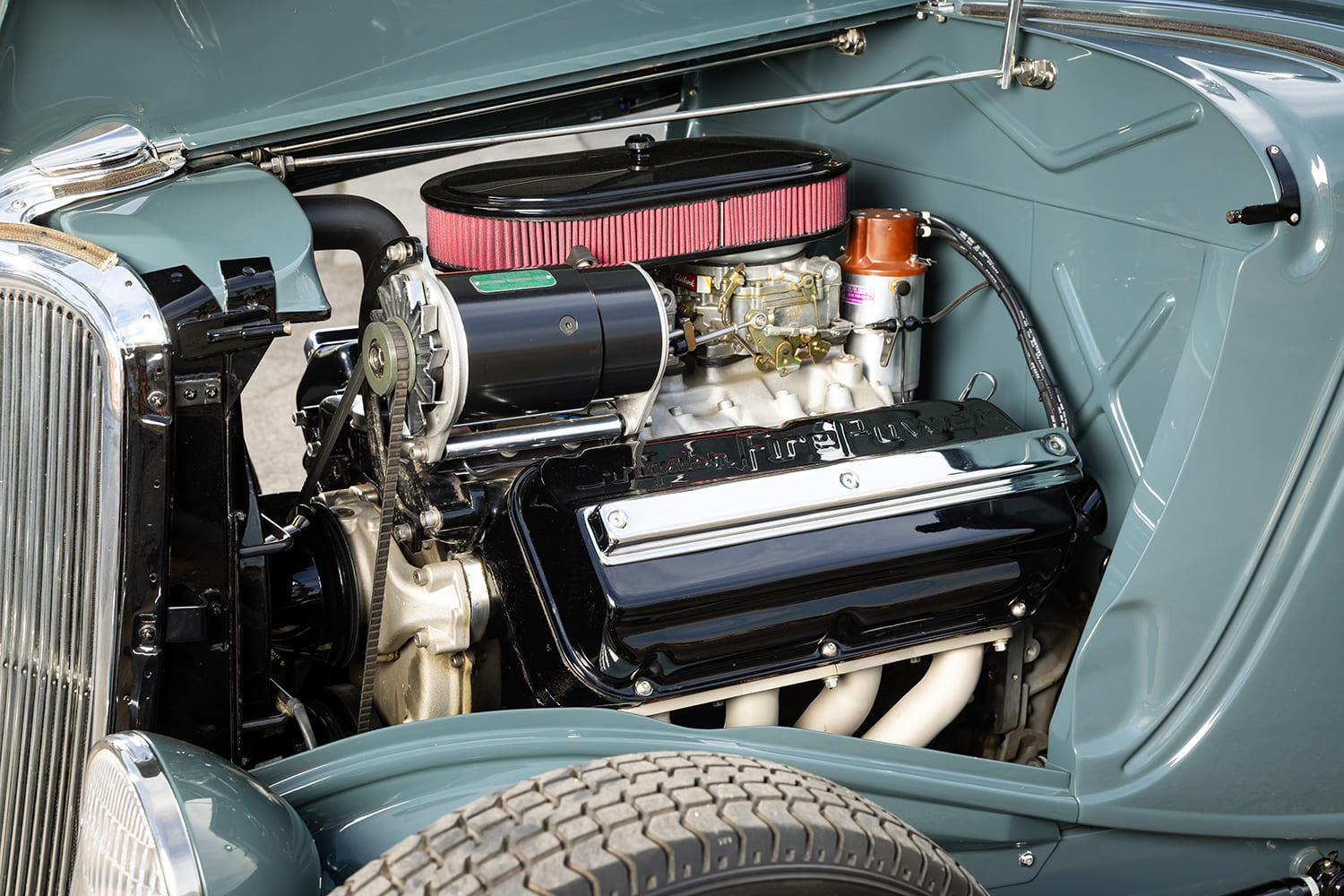
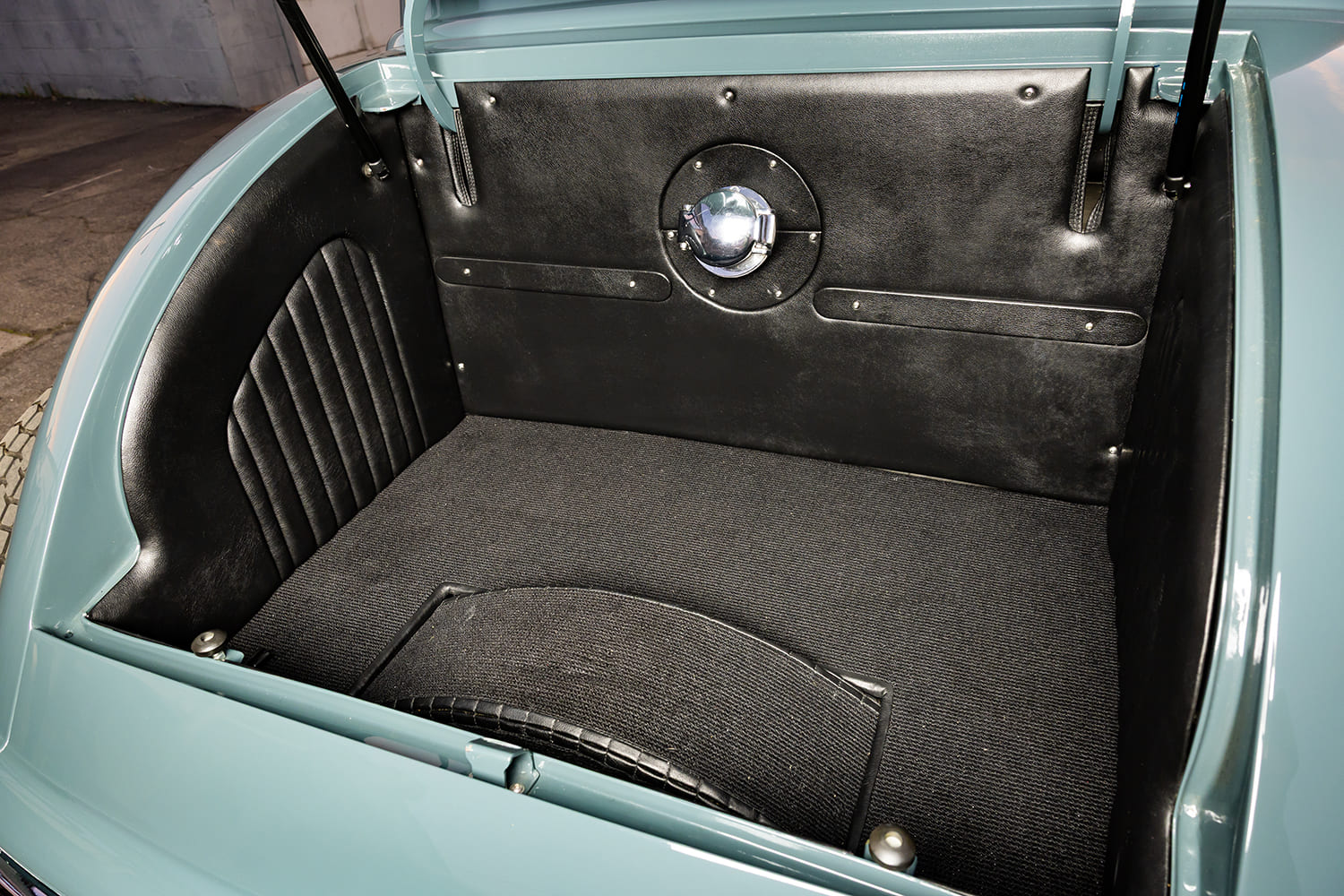
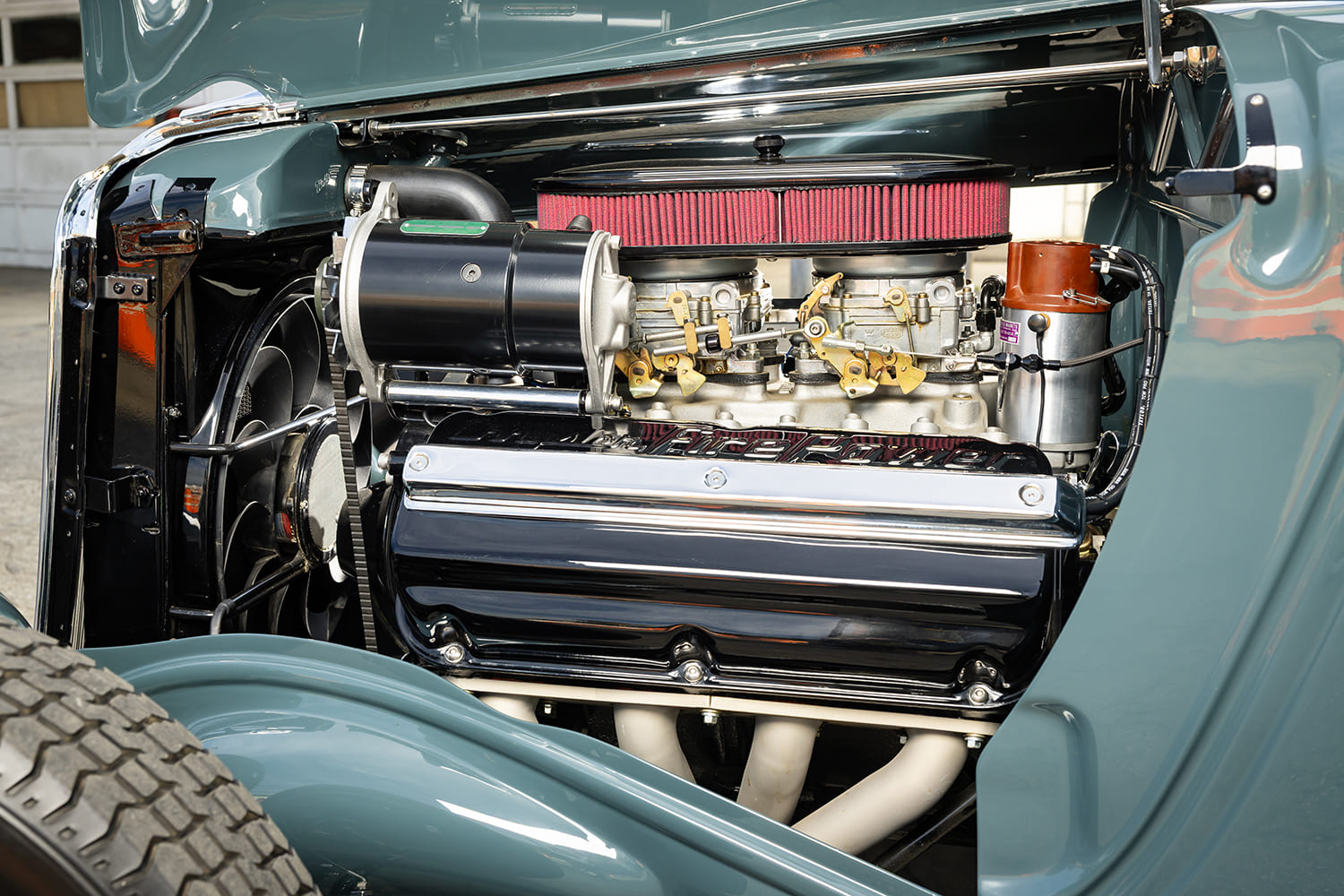
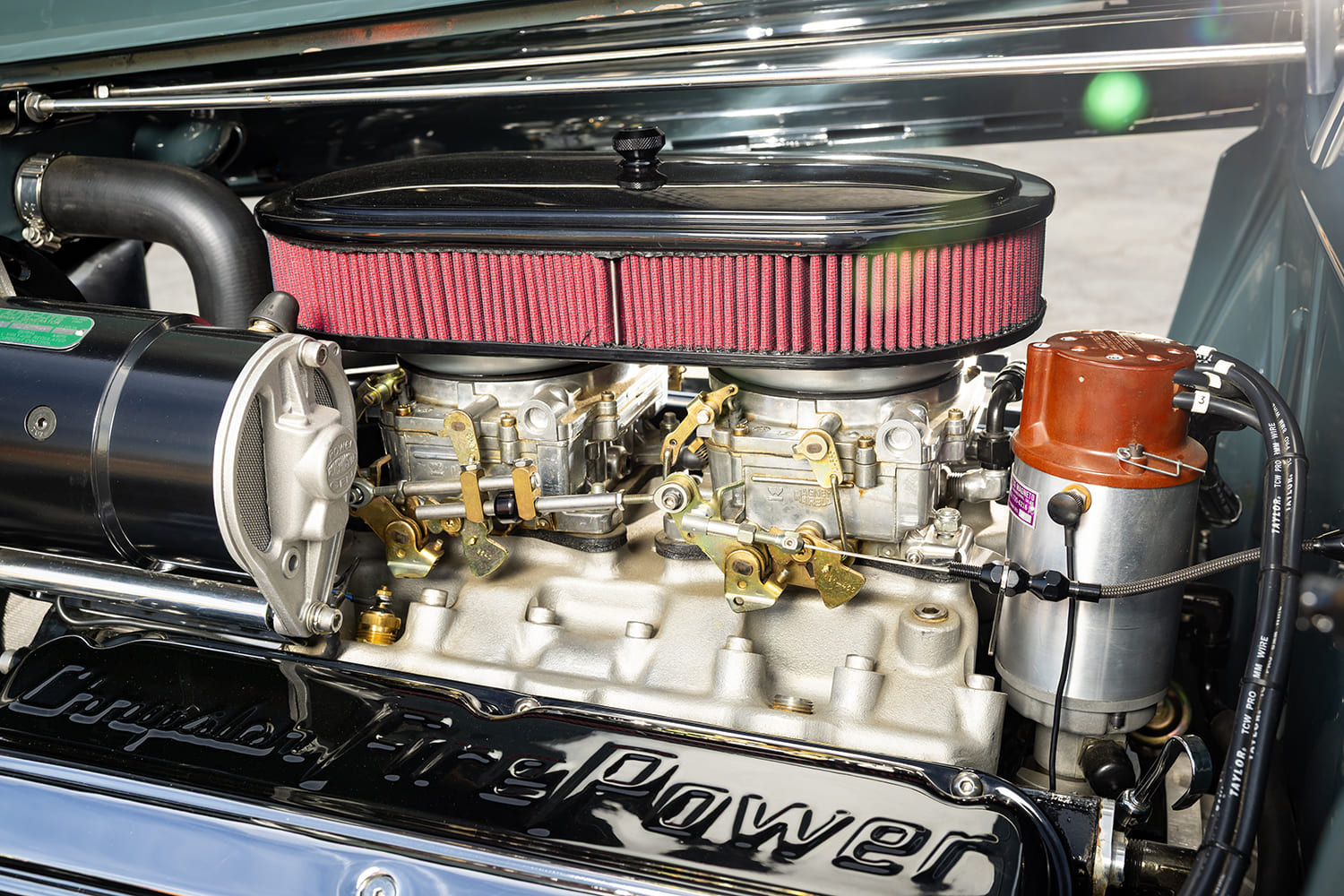
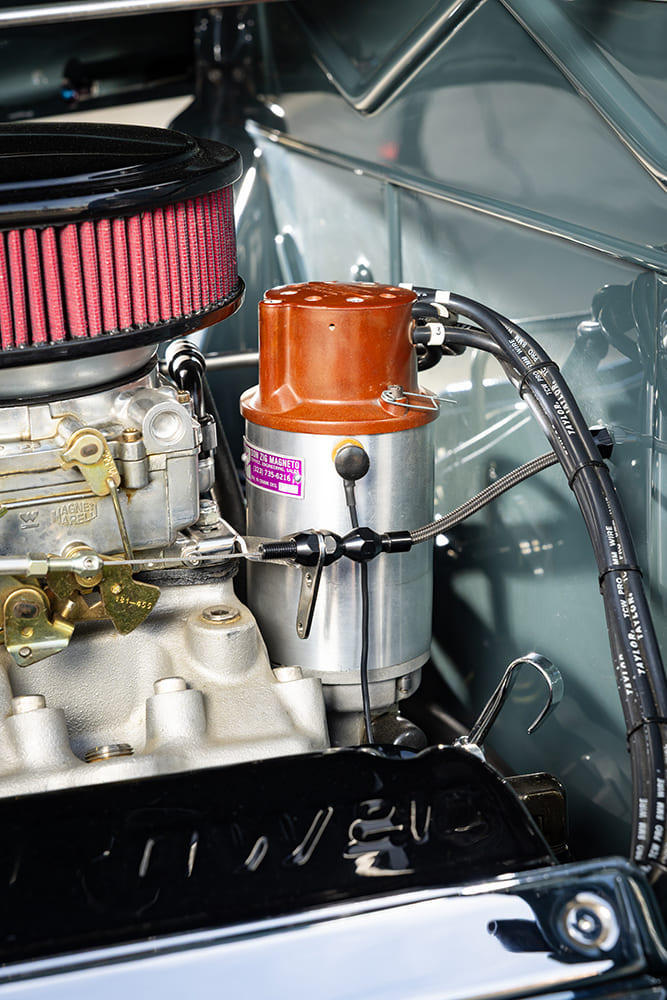
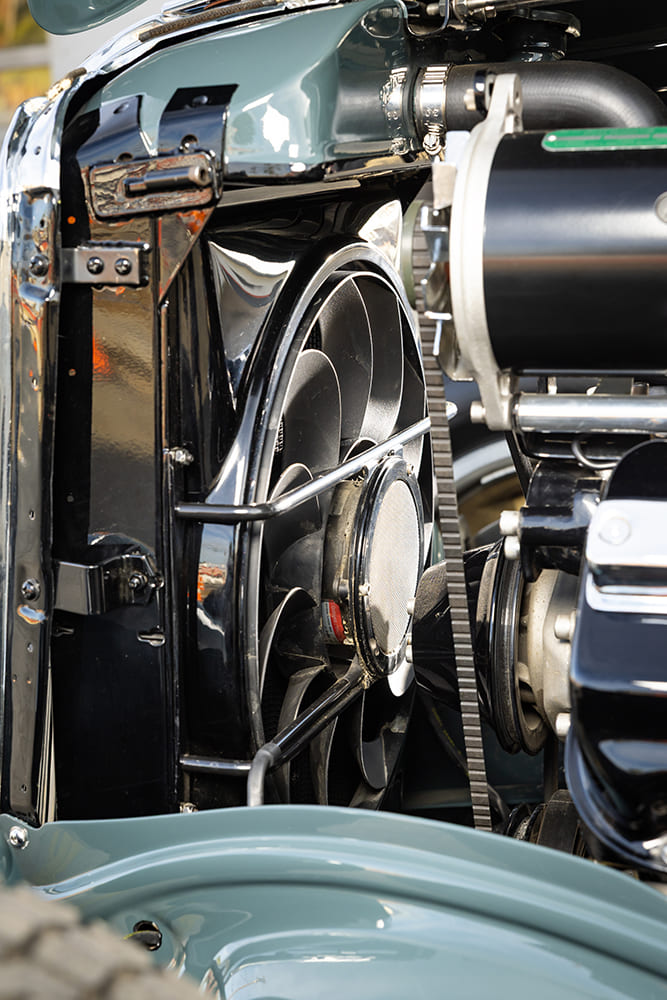
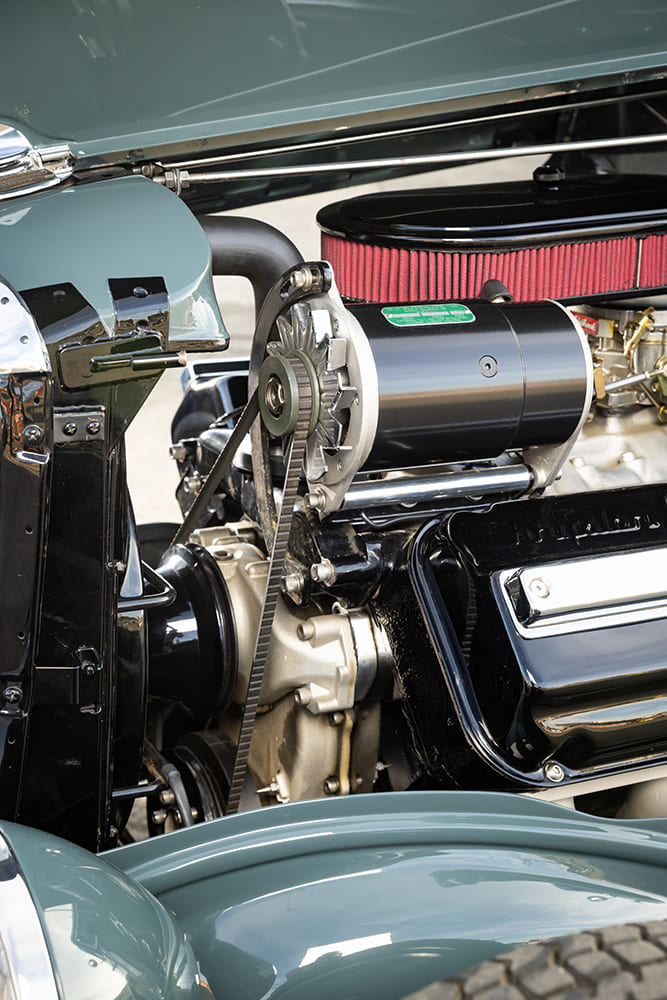
Powering the coupe is the popular Chrysler Hemi. This 1957 model features a full 392-inch displacement, with 9-to-1 Keith Black pistons and an Isky hydraulic camshaft. The iron heads support an Edelbrock dual-carb intake, which holds a pair of Edelbrock 500-cfm four-barrels breathing through a modified Holley air cleaner. Fuel is ignited by the rare Don Zig Magneto, equipped with a mechanical tach drive and the original brown magneto cap, serving as the starting point for the Taylor TCW Pro 8mm plug wires. Exhaust gases exit through a pair of Sanderson headers, ceramic-coated in titanium gray, dumping into a custom exhaust system built by Foothill Fabrication, flowing back to a pair of Smitty mufflers. Cooling is managed by a Chevy water pump, a Walker (now Johnson’s) radiator, and an electric fan. To help the electrics “wake up,” a Powermaster starter, PowerGEN alternator (in a generator case), and a trunk-mounted Odyssey battery are installed.
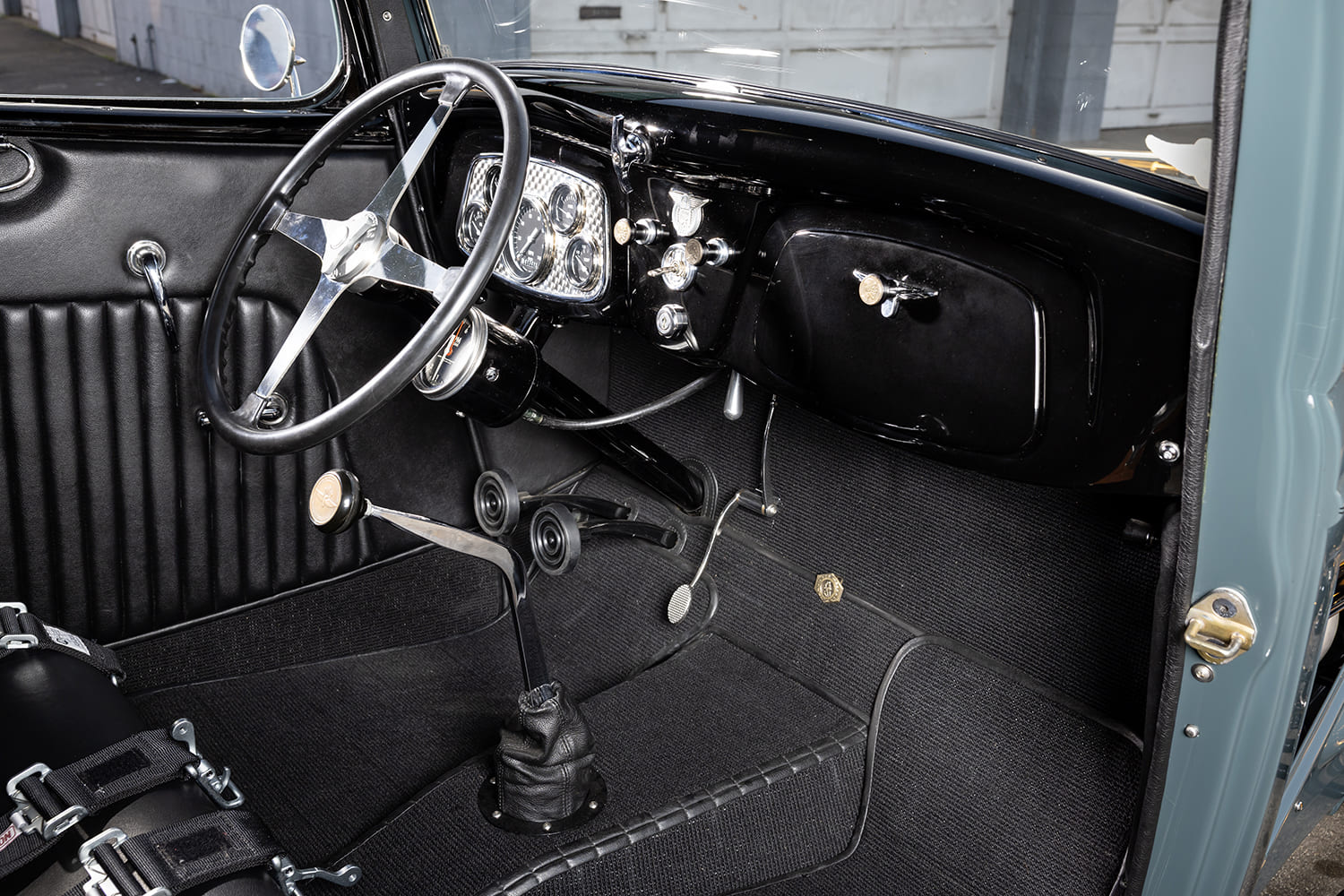
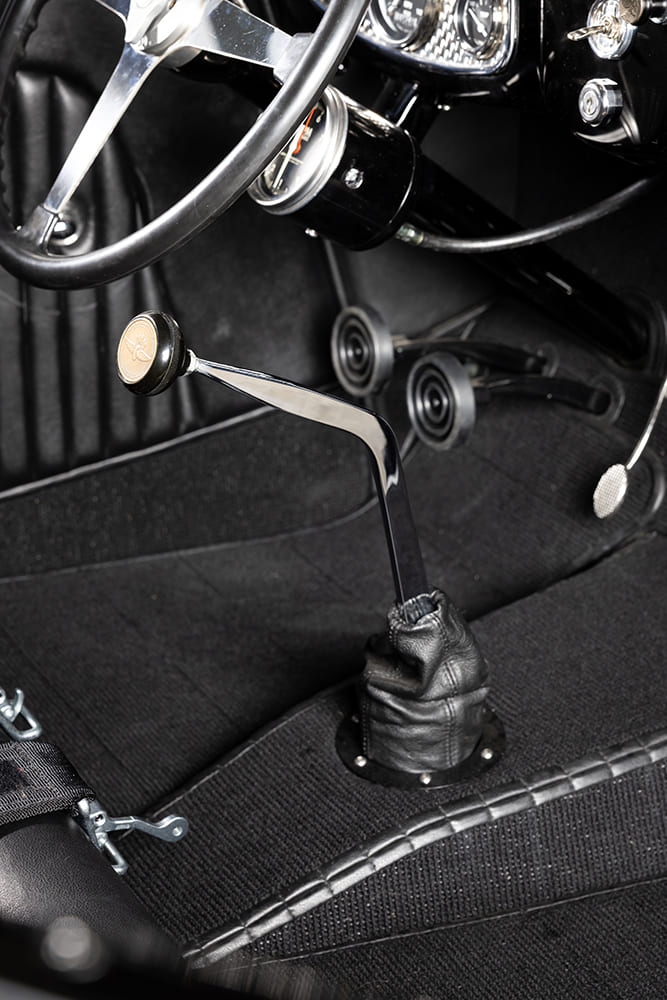
The Hemi is backed by a TREMEC TKO 600 five-speed, with gear changes via a Hurst Blackjack shifter and a custom-fabricated shift lever. The shift lever ball features a commemorative “Indianapolis Speedway” coin that tops it off. The clutch package consists of a McLeod flywheel and clutch disc set and works in unison with the five-speed and the Inland Empire driveshaft.

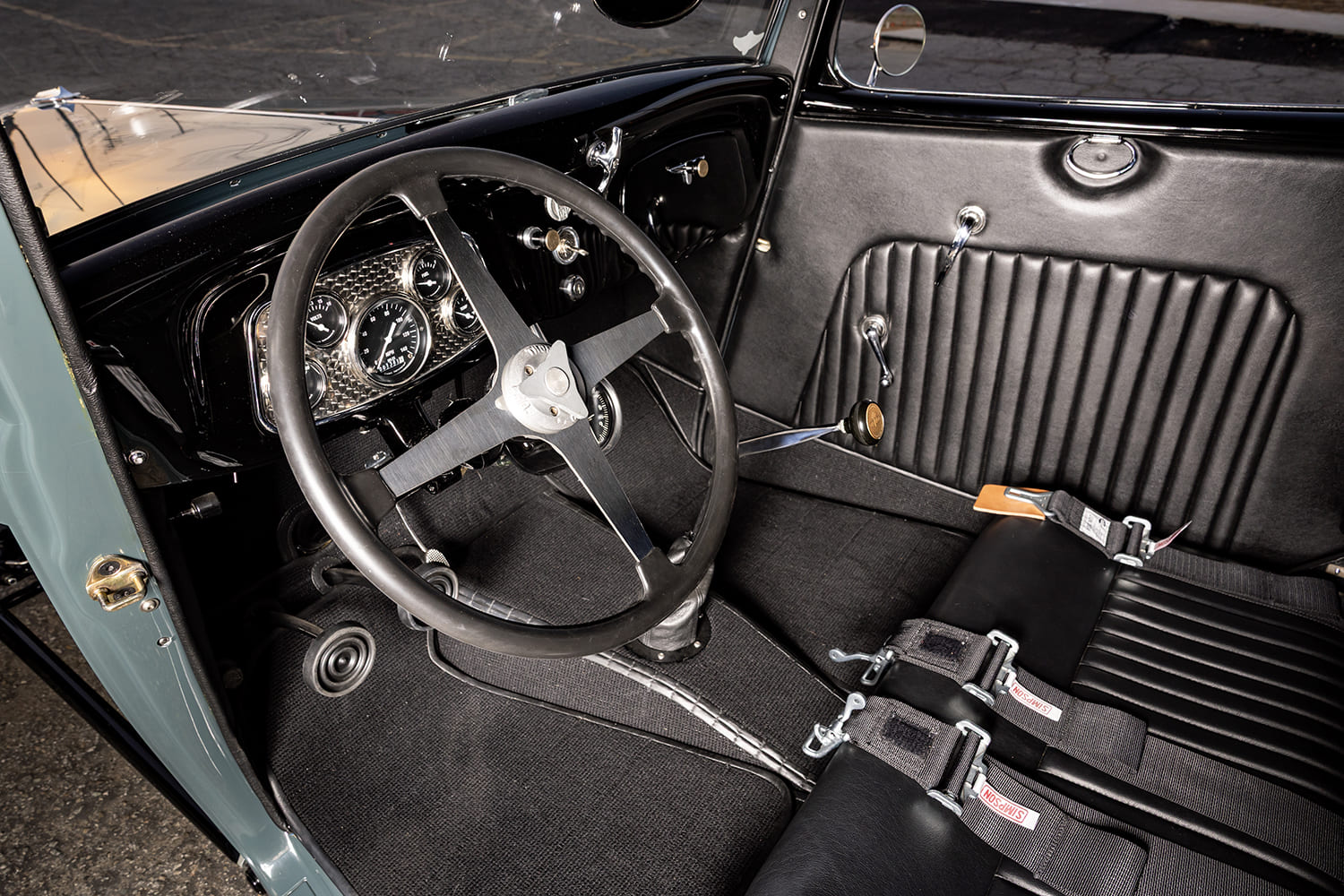
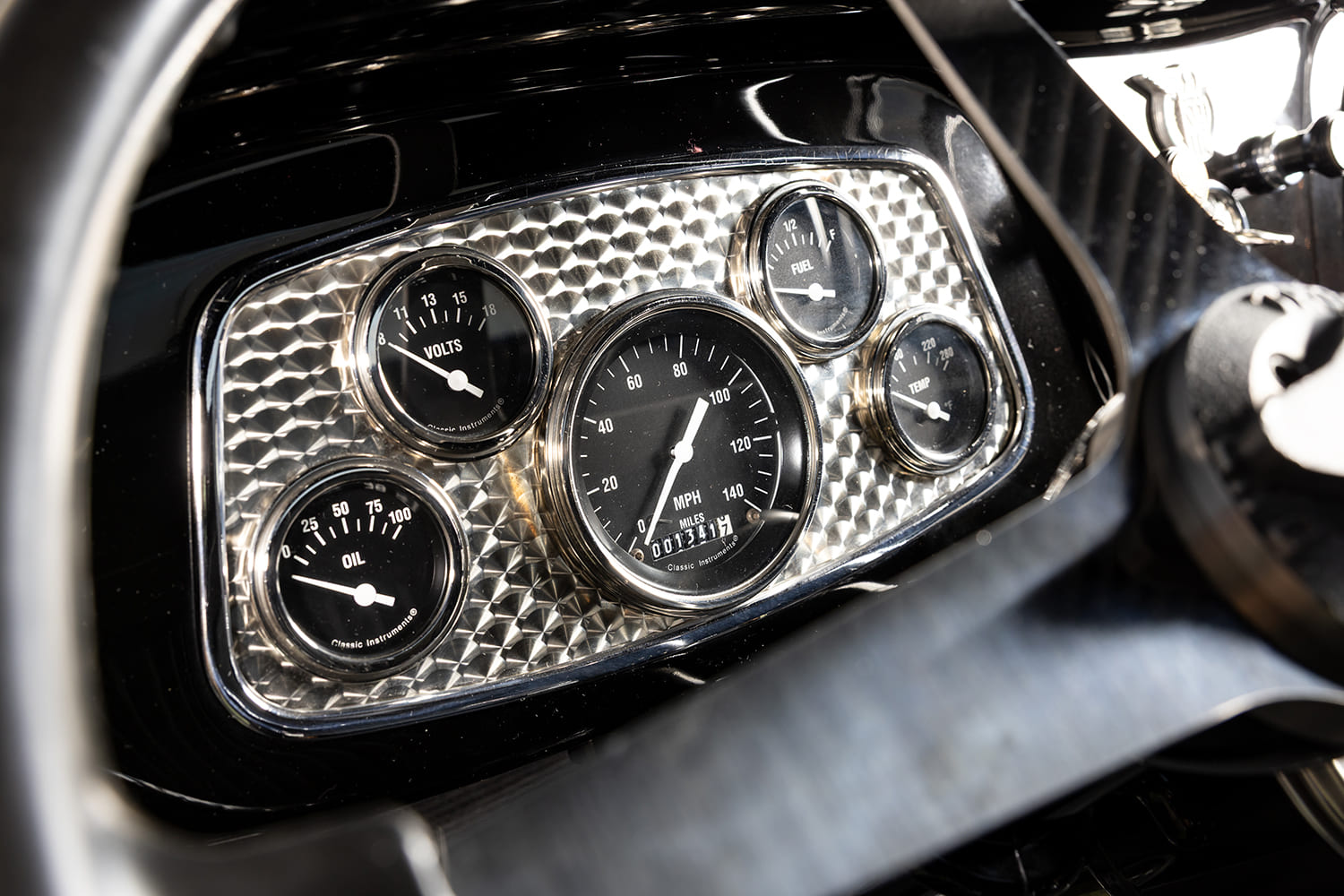
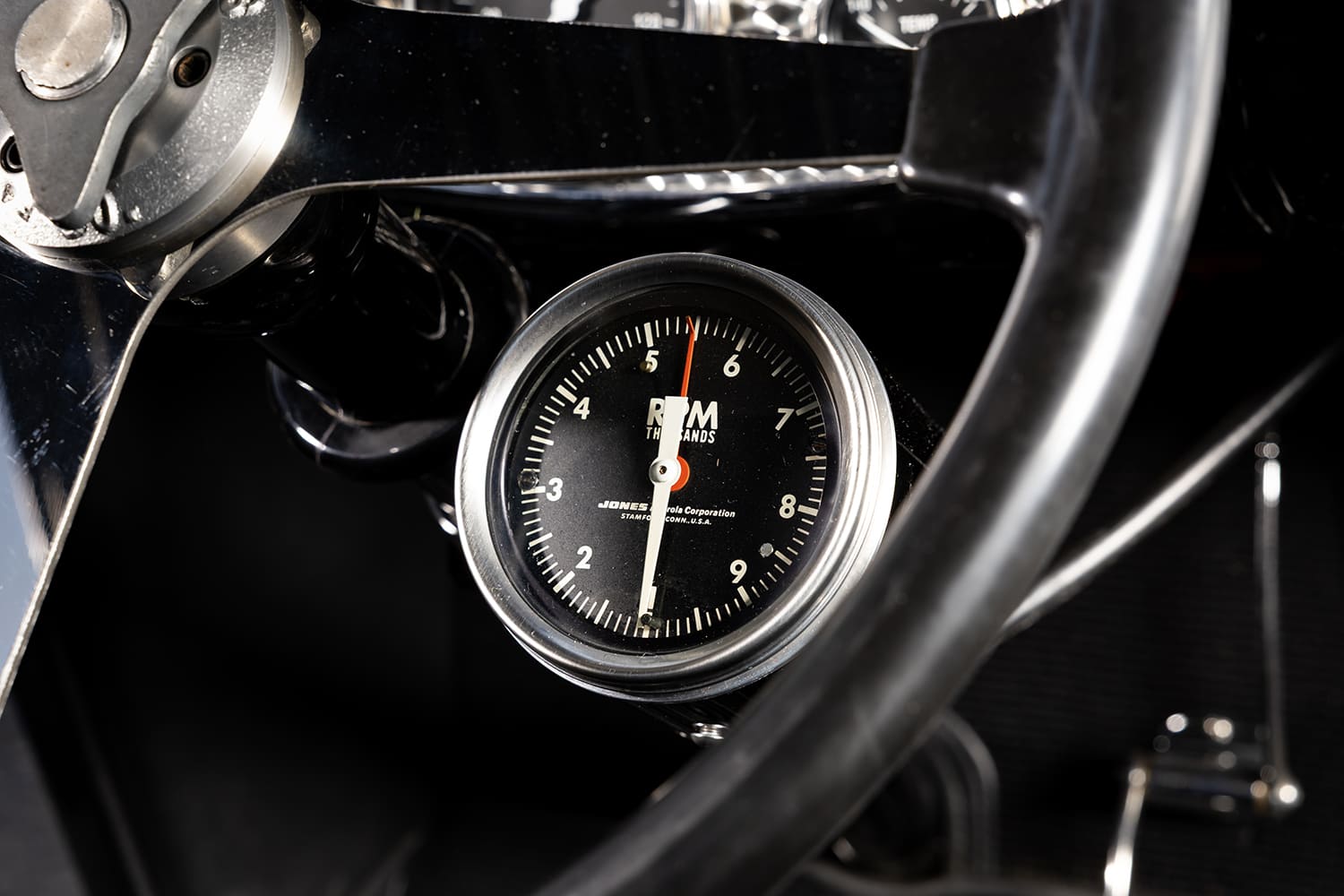
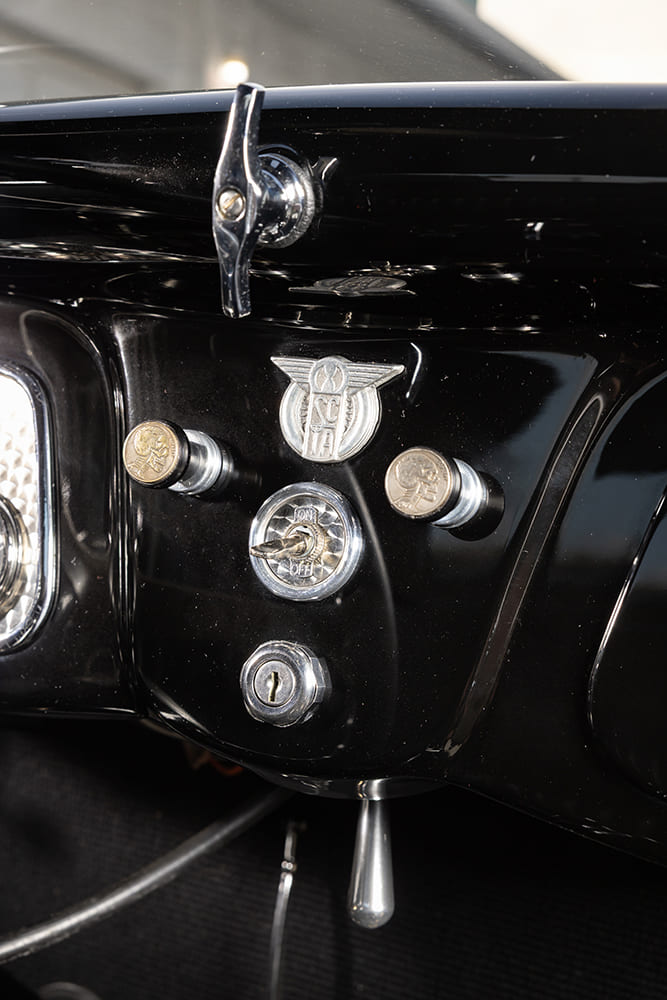
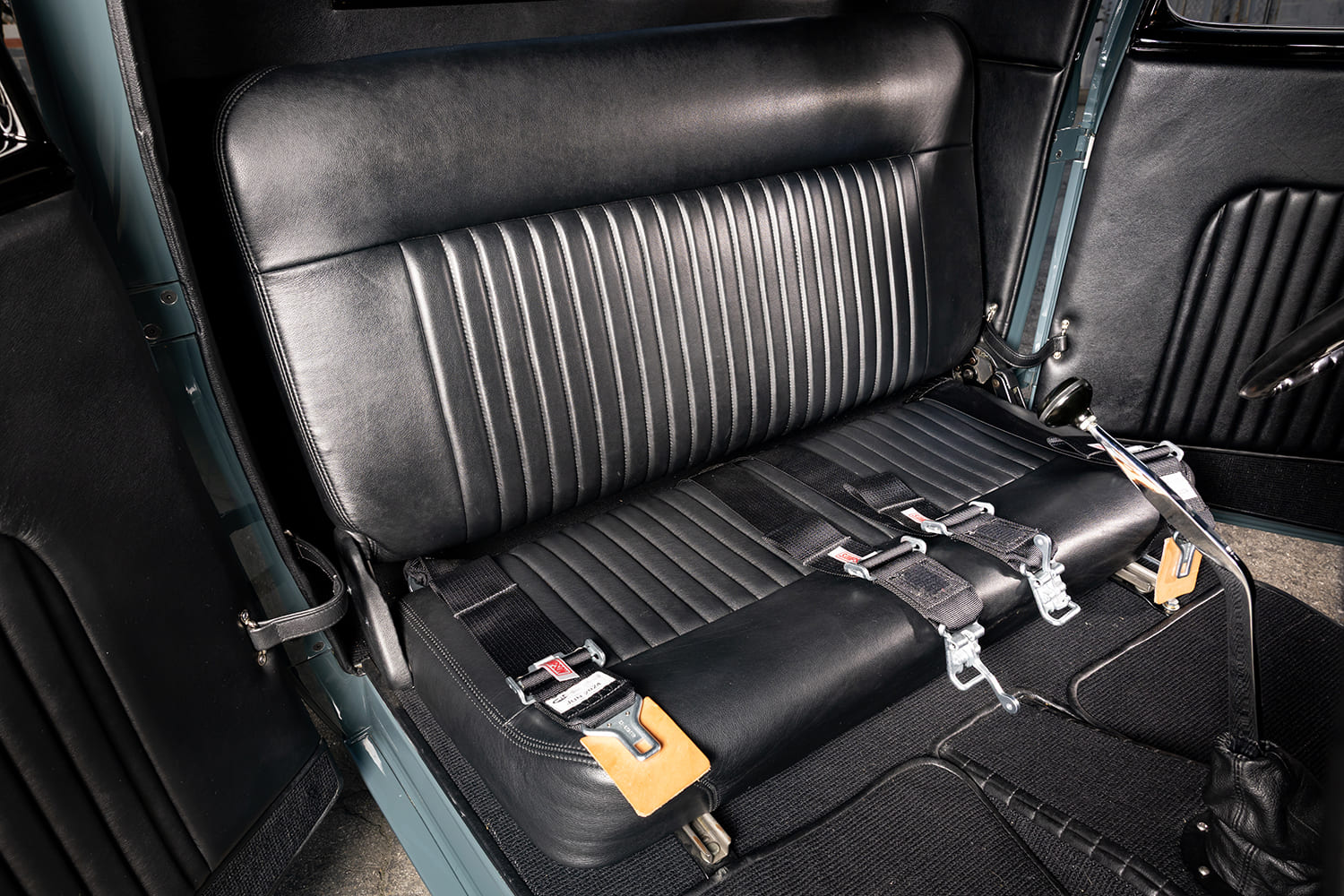
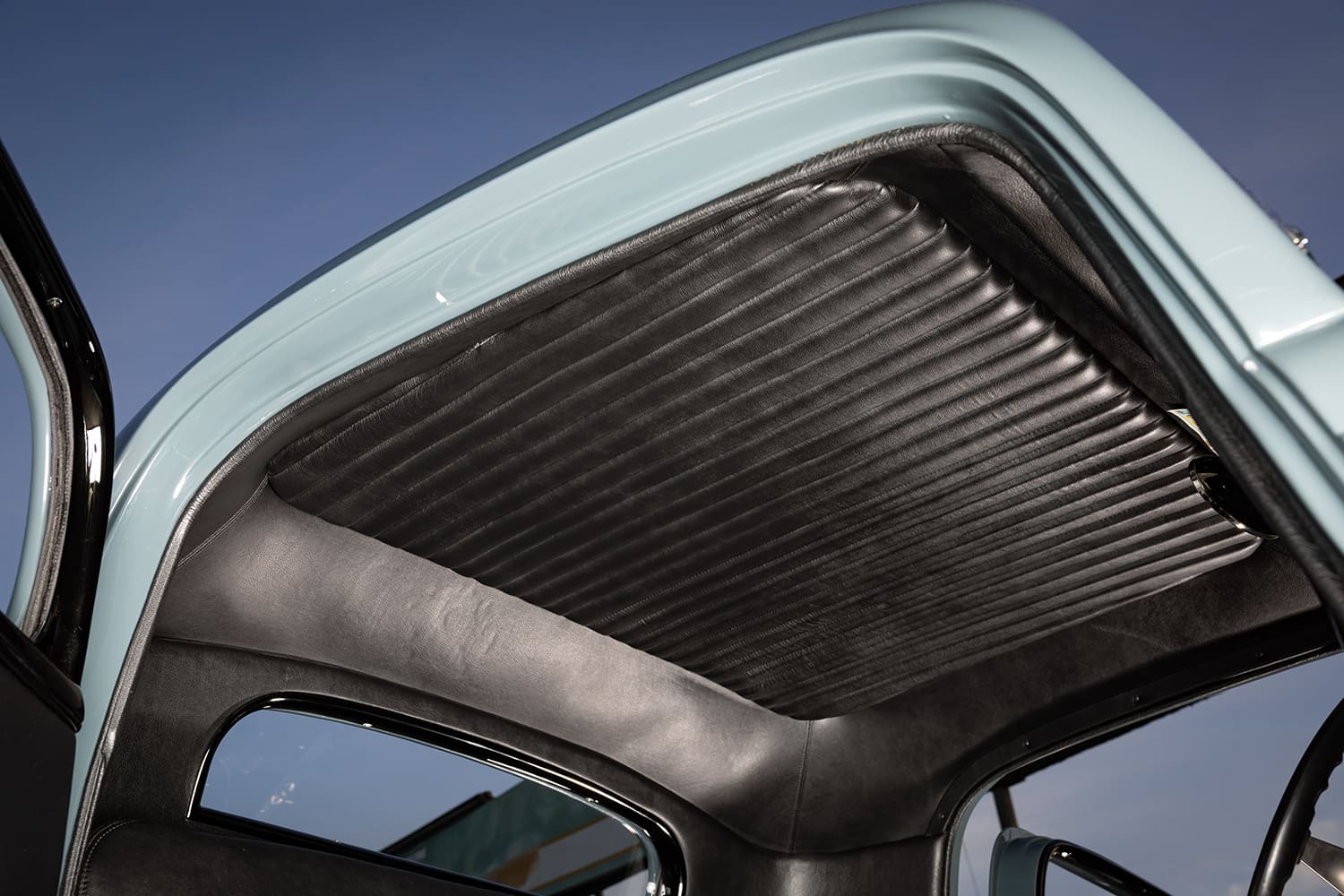
Inside, the coupe has a “hot rod” feel, starting with an original 1933 Ford dash outfitted with Classic Instruments Hot Rod gauges set within a Haneline engine-turned insert. A LimeWorks steering column is also “home” for the vintage Jones (knee knocker) mechanical tach, while a Shaw 17-inch four-spoke (spring car–style) wheel is used with a rare Taylor quick-release hub. All the wiring for the hot rod was handled by Jim, who used a Ron Francis Wiring system. A variety of SO-CAL Speed Shop modified knobs are topped with rare Depression-era “Hobo” nickels. (A hobo nickel is a term for “carved nickels,” especially Buffalo nickels, made during the Great Depression. The itinerant workers of that time often carved these nickels, creating a form of folk art.) Eddie Potestio of Eddie’s Rods and Customs handled the interior project, using a Glide Engineering bench seat covered in black leather, while the carpeting is done in German square weave, and a pair of Simpson racing lap belts is also employed.
Scott continues to make changes to reflect his rodding style, while keeping in mind that his dad did an outstanding job of turning this gathering of parts into a great driving and riding hot rod. MR
Check out this story in our digital edition here.