FiTech EFI Questions Asked and Answered – with Installation
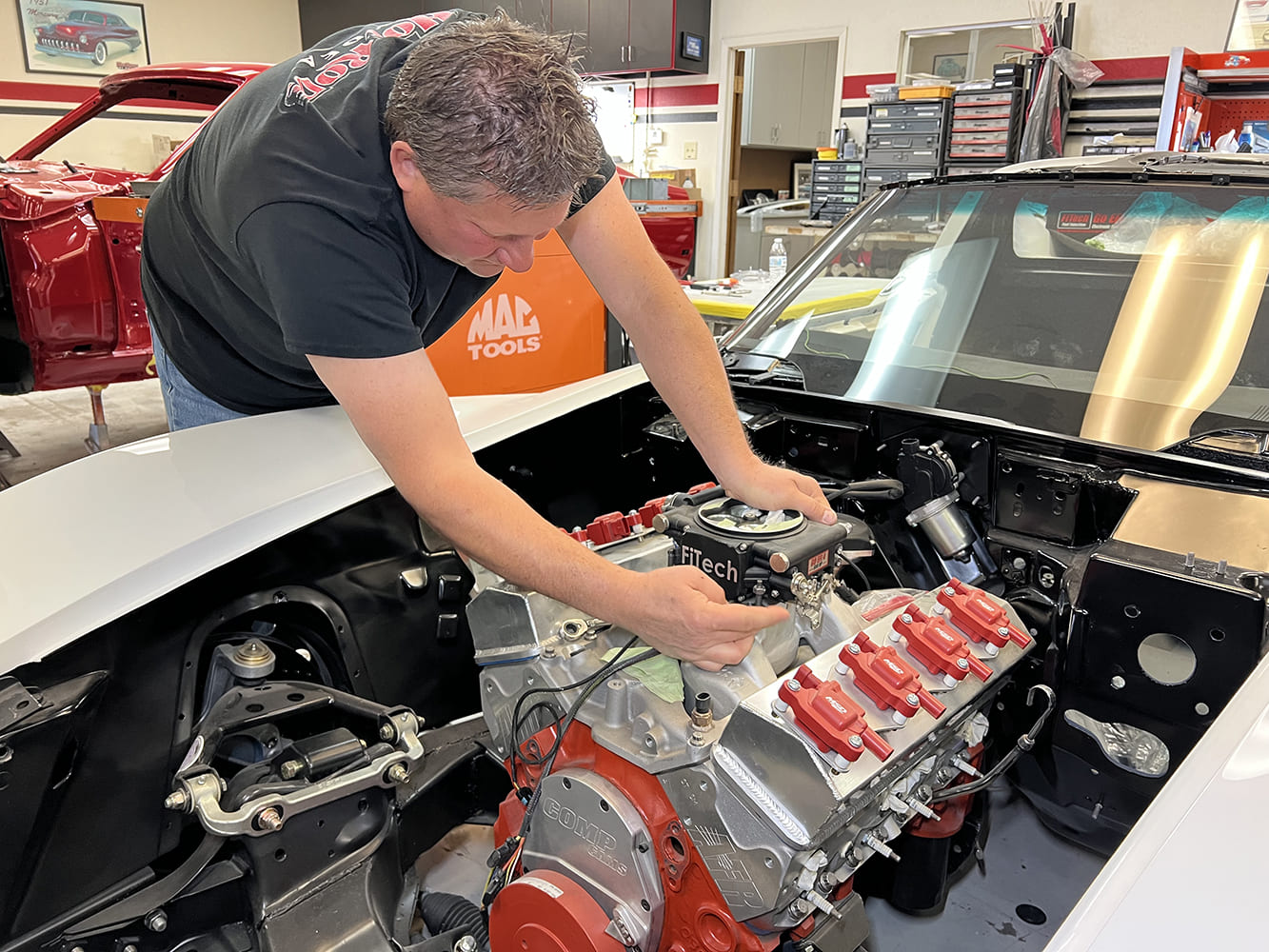
Dean Livermore of Hot Rods By Dean installed the FiTech Go EFI 600hp Matte Black throttle body on Brian Brennan’s small-block Chevy-powered Corvette.
By Ron Ceridono – Photography by The Author & Brian Brennan
FiTech is a leader in EFI, offering self-learning systems in a variety of configurations, including throttle body and port-injection configurations. In this installment, we will be looking at FiTech’s popular throttle body systems, specifically the Go EFI, Easy Street, and Go EFI Classic that use “four-barrel” throttle bodies, all of which are rated at 850 cfm (a Go EFI 500-cfm two-barrel is also available for single or really cool tri-power applications). With the exception of the Go EFI Classic, the ECU and all sensors, except the O2 and coolant sensors used by the Go EFI and Easy Street systems, are housed in the throttle bodies. The Go EFI Classic has the old-school look of a carburetor and uses an externally mounted ECU.
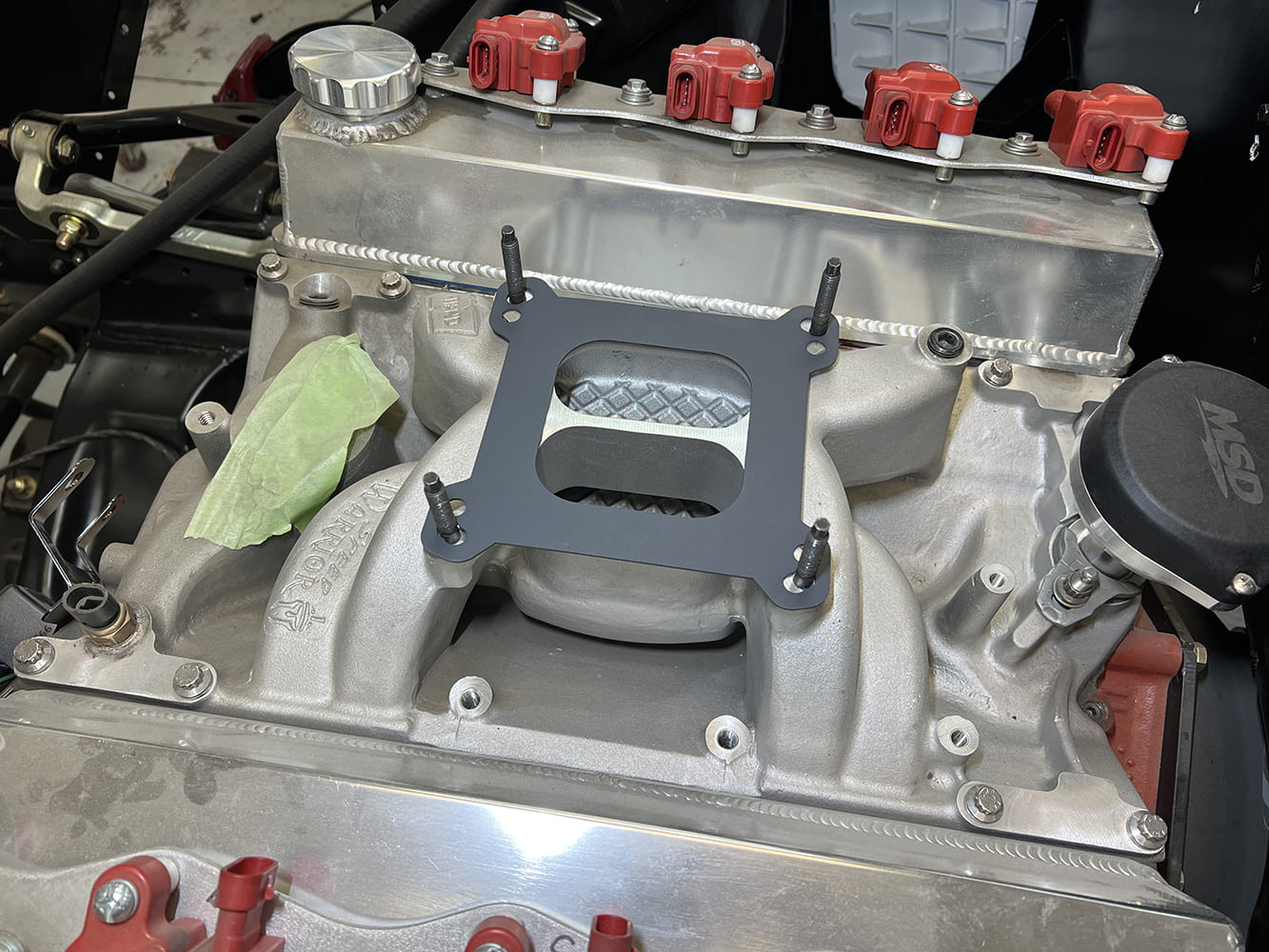
FiTech throttle body systems use a square-bore 4150 flange pattern, found on most four-barrel manifolds. These throttle bodies are used with single- or dual-plane manifolds.
Over the years, there have been many bench-racing sessions at the Modern Rodding headquarters about the impact of technology on hot rodding. One such conversation began with Brennan telling yours truly that the love for a row of carburetors on any engine was a sign of being stuck in the past. Admittedly, the counter that carburetors can be fixed on the side of the road was lame, but that’s all that came to mind, and it was better than admitting he was right.
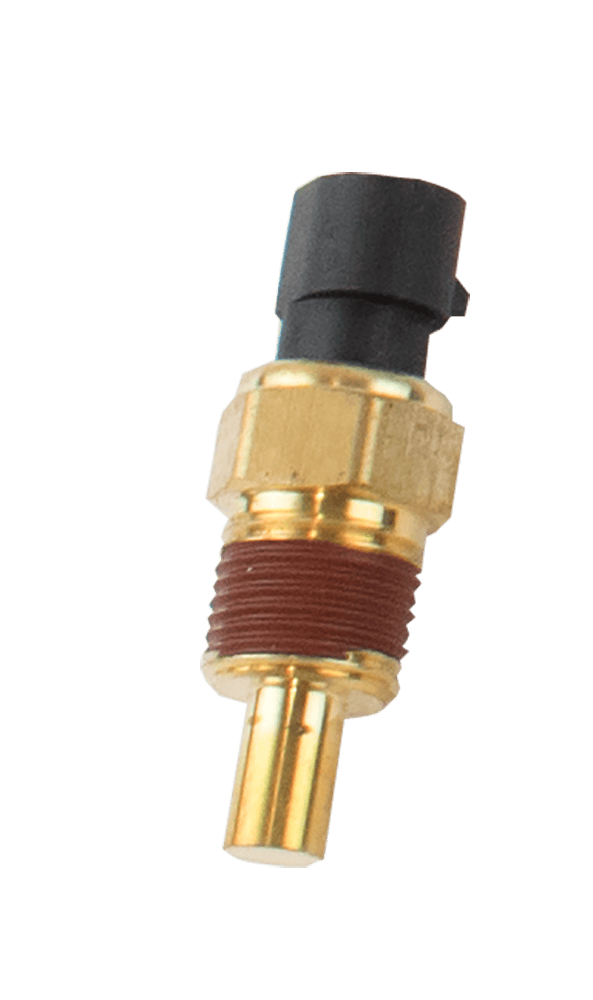
As most sensors are in the throttle body, only two must be added to the engine; this is the coolant temperature sensor …
Something that has made aftermarket electronic fuel injection (EFI) viable is self-learning technology. Essentially, the ECU (electronic control unit) reads data from various sensors: a wideband oxygen sensor, a throttle position sensor (TPS), a manifold absolute pressure (MAP) sensor, and a coolant sensor. The ECU uses this input to continuously adjust the air/fuel ratios based on established fuel maps for idle, wide-open throttle, acceleration, and cruise. Over time, as the system “learns” the demands and necessary adjustments, the air/fuel ratios are optimized.
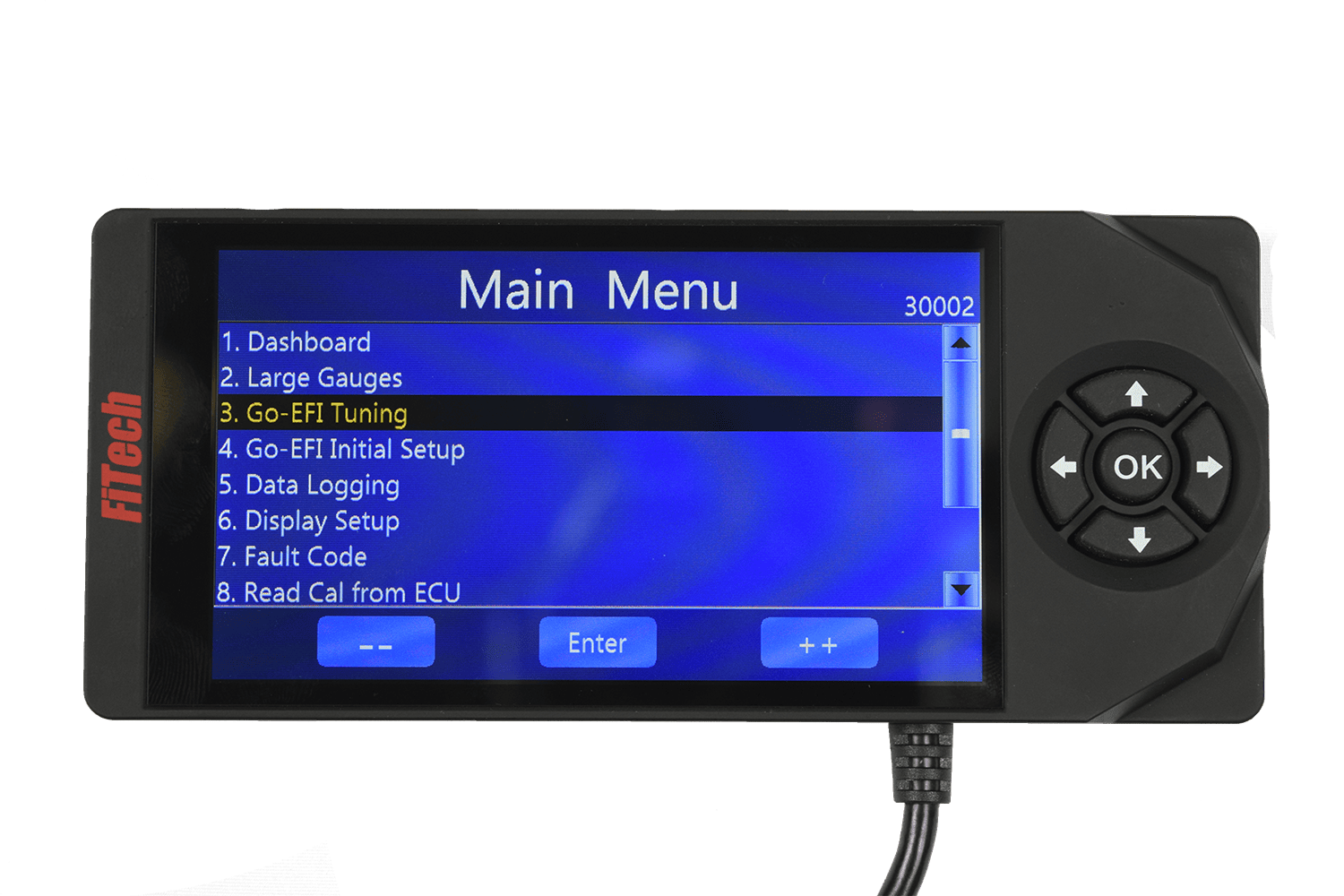
This is the FiTech controller, which is used to input the initial programming to create a base fuel MAP. Thereafter, the ECU will continuously adjust to optimize the air-to-fuel ratio.
When it comes to choosing a FiTech system, there are some differences to consider. The Go EFI series can provide ignition timing and engine cooling fan control. The Easy Street and Go Street series do not offer timing control, but they do offer fan control and an input that increases idle speed when the A/C is turned on.
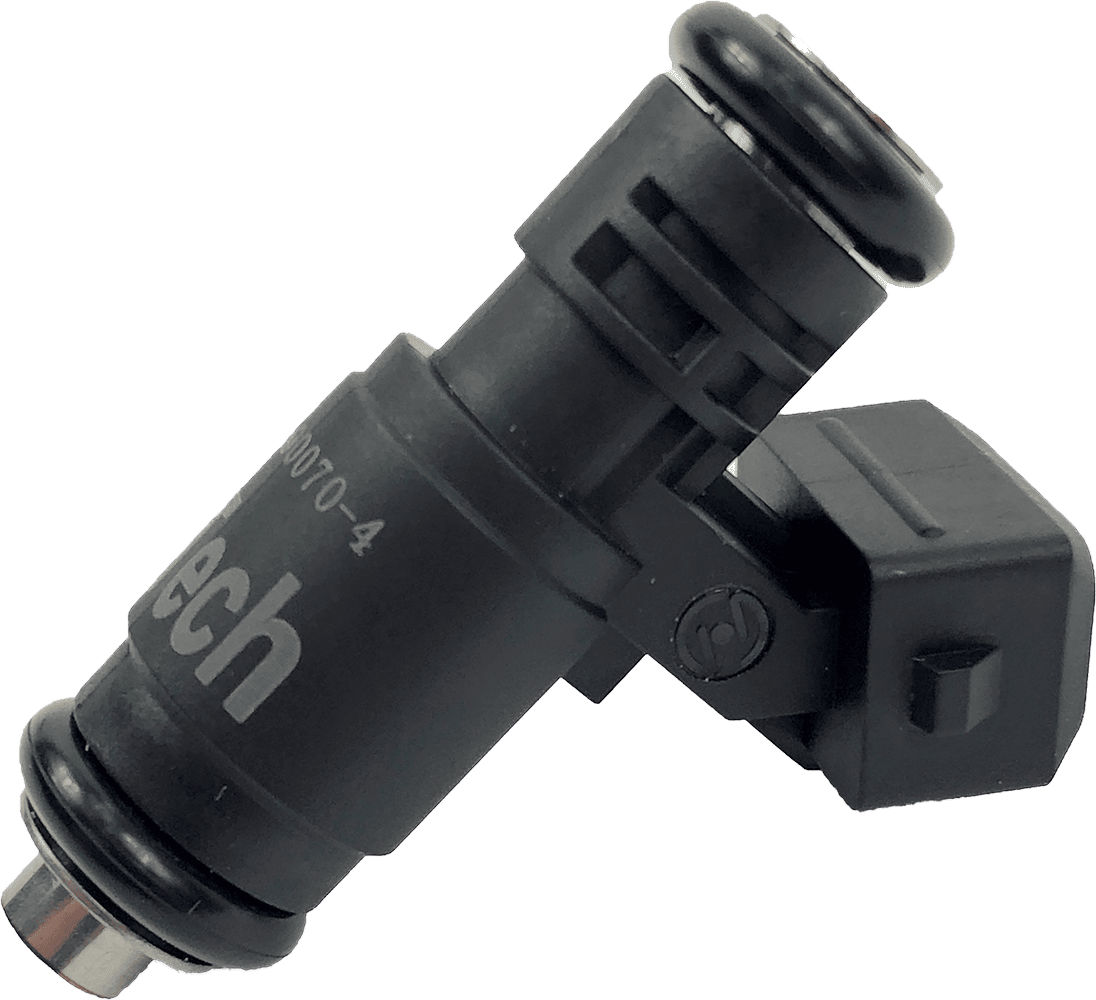
Electronic fuel injectors are rated in lb/hr (the amount of fuel in pounds that can be delivered in one hour).
Another consideration when selecting a system is the horsepower rating. Throttle bodies are typically rated for 400-, 600-, or 800hp applications (the Classic Series is rated at 650 hp). But don’t let those numbers scare you. A system rated at 400 hp is suitable for engines from 100-400 hp; a 600hp system handles 200-600 hp. The difference between the two ratings lies in the size of the injectors: 400hp systems use four 62-pound injectors, and 600hp systems use four 80-pound injectors. For engines producing 800 hp, there is the Mean Street system with eight 62-pound injectors, and for supercharged engines or those equipped with nitrous there is the Power Adder series. FiTech also offers several dual-quad systems with a pair of GO EFI throttle bodies.
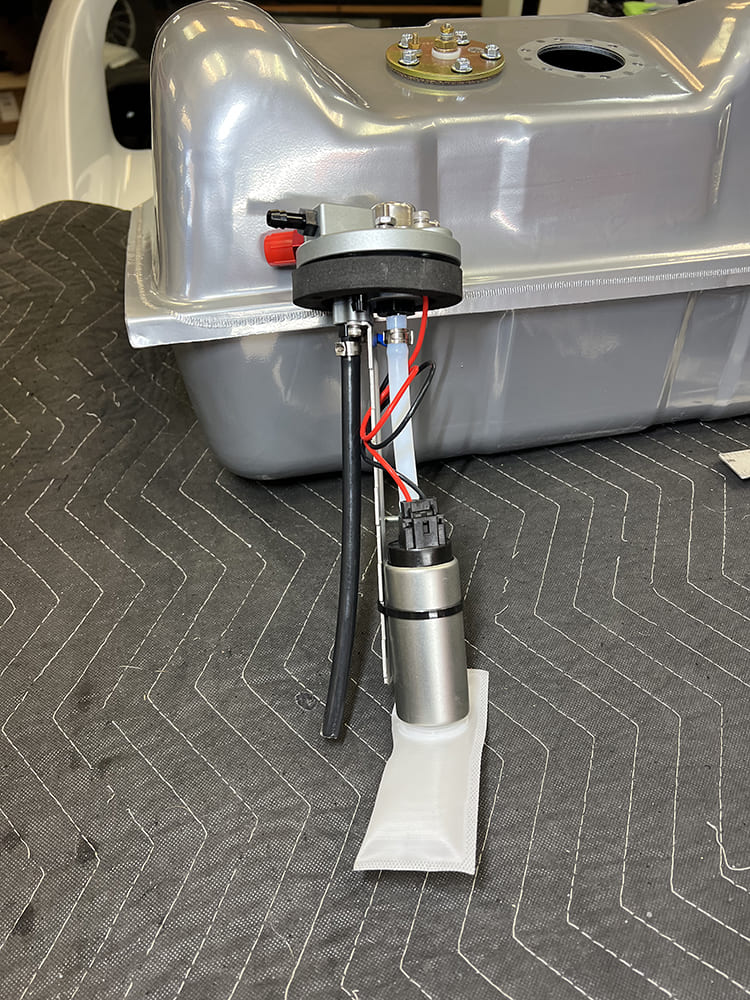
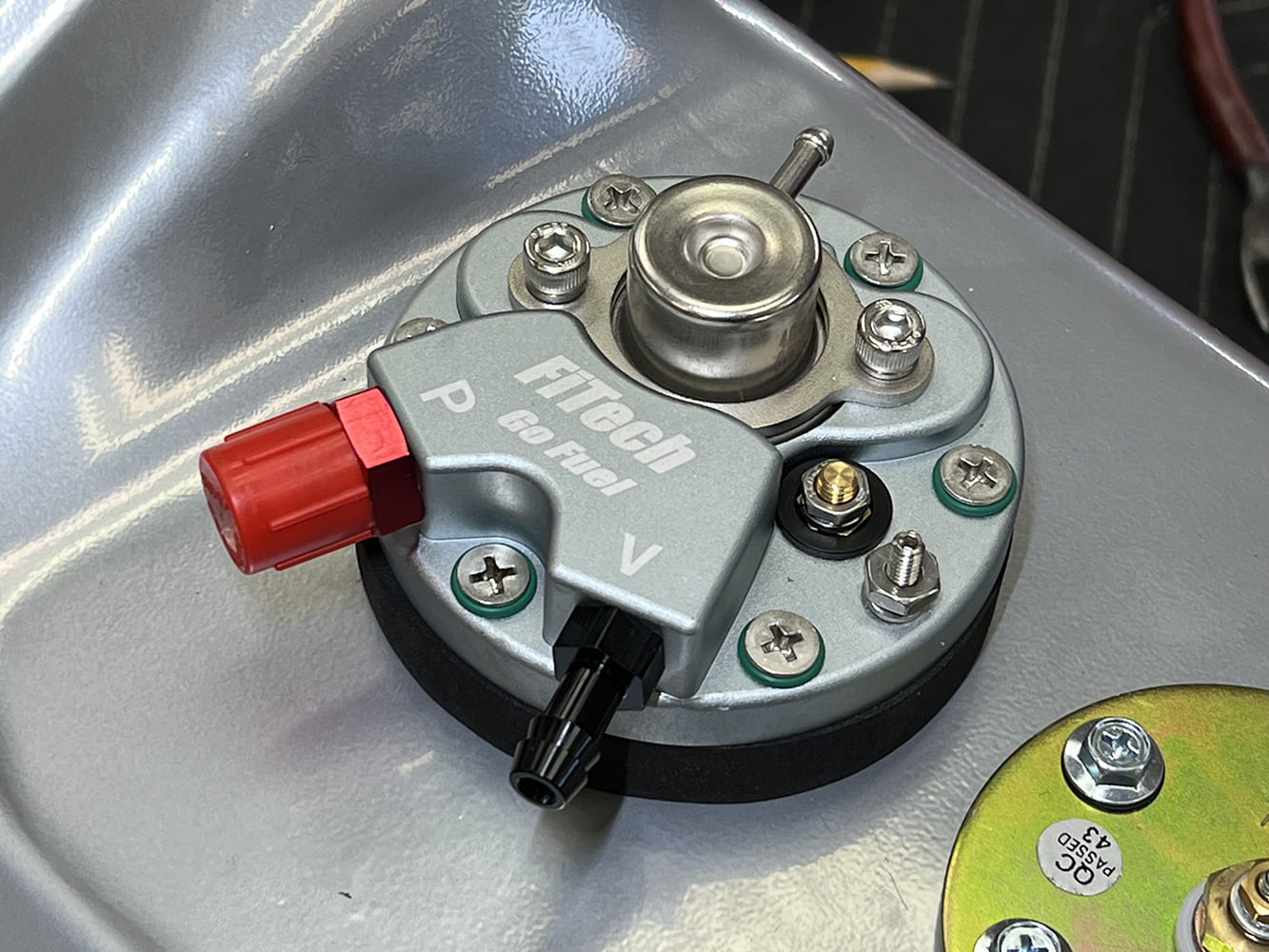
This is FiTech’s fuel pump (PN 50018). It incorporates a 58-psi regulator that eliminates the need for a return line. This fuel pump can deliver 340 LPH (340 liters/90 gallons per hour), good for 600 hp.
For any FiTech throttle body system to operate correctly, two things are required. First is a fuel system with a high-pressure pump capable of providing 58 psi (two barrels require 43 psi). Inline pumps are available, but a FiTech in-tank pump is preferred. Another option is a FiTech Force Fuel system. These assemblies have a supply tank fed by the original low-pressure fuel pump (mechanical or electric). The EFI system is then fed by an internal pump. Three systems are available: the Force Fuel System for up to 600 hp with a 340-LPH fuel pump, the Dual Pump System with twin 340-LPH pumps capable of feeding 1,600 hp, and the Mini with a 255-LPH pump (still capable of feeding 600 hp).
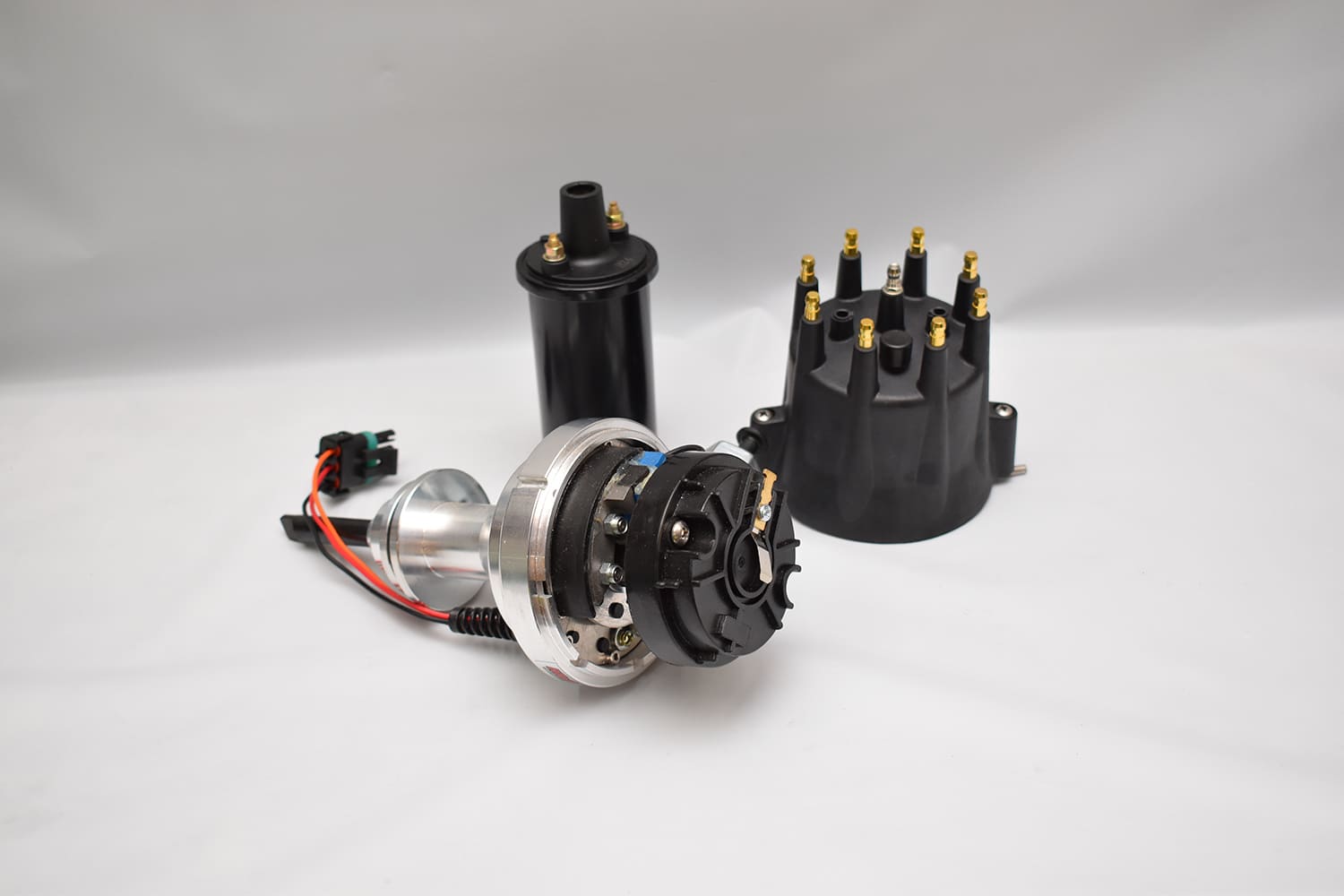
To eliminate the “dirty” tach signal caused by the ballast resistor, FiTech offers a complete ready-to-run electronic distributor. It removes the ballast resistor issue.
The second requirement is an appropriate ignition system. A FiTech EFI may work with a point-operated ignition system, but it won’t work as it should. The problem is that the ballast resistor in these systems produces a “dirty” tach signal that disrupts the ECU’s proper operation. The cure for that is an electronic ignition system.
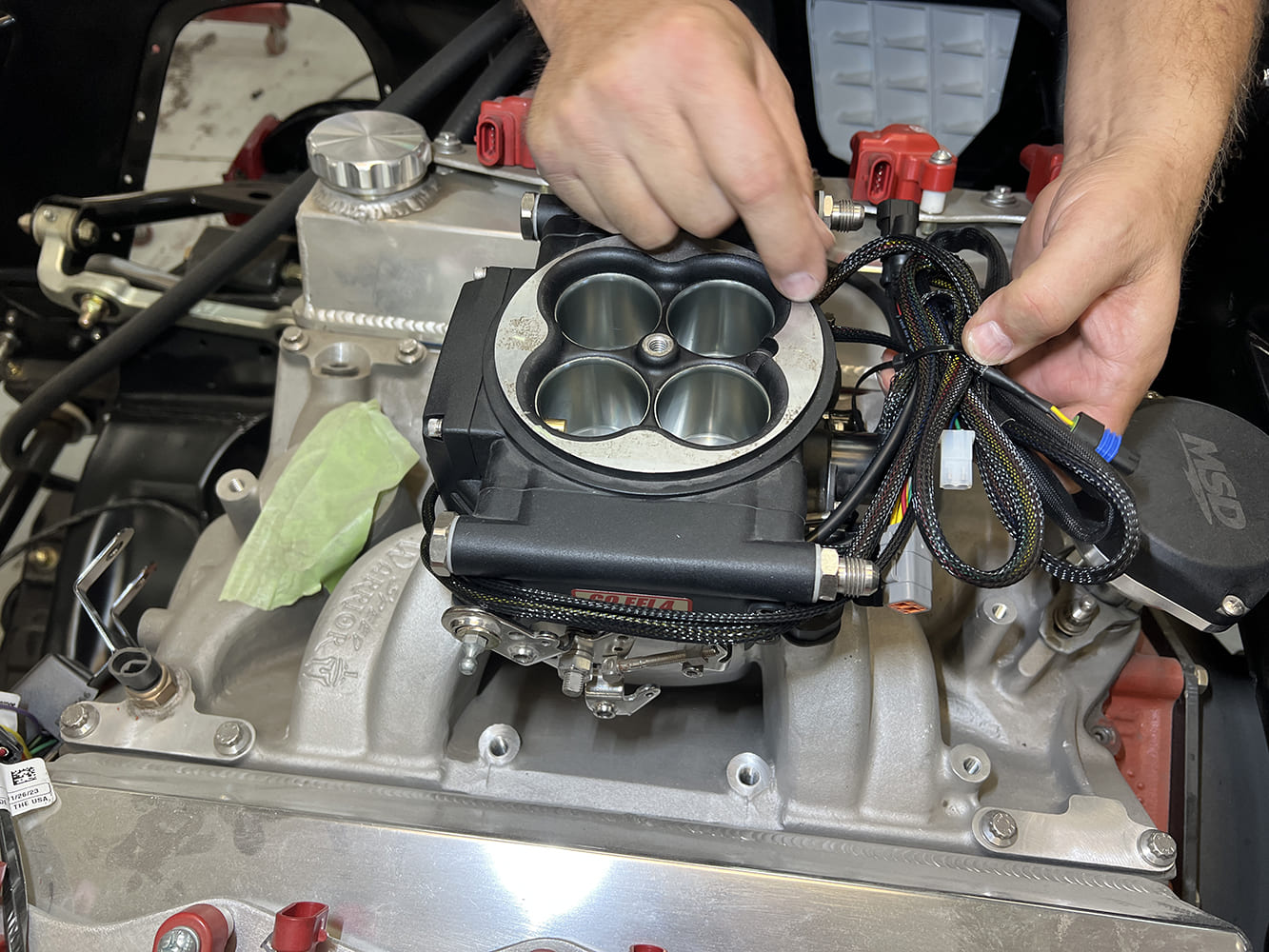
Recently, our very own champion of technology, Brian Brennan, decided to equip his 383 small-block Chevy–powered 1971 Corvette with a FiTech EFI system. He chose a Go EFI 4 Matte Black system (PN 30002) rated at 600 hp. It’s perfect for everything from an everyday driver to a weekend racer. Like all Go EFI systems, it offers spark control without the need for an external control box or a special distributor and accepts the same-size air cleaner normally found on four-barrel carburetors.
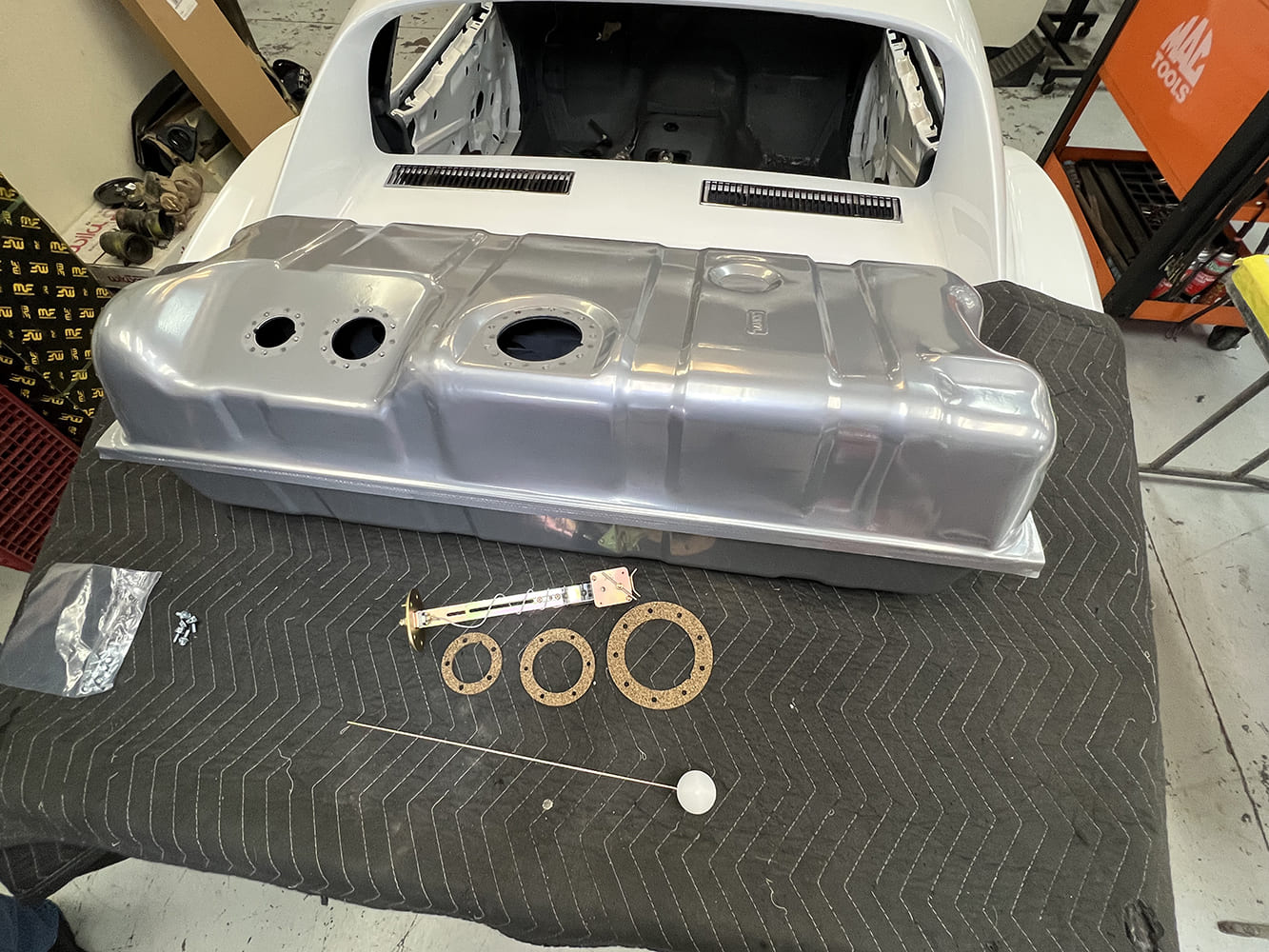
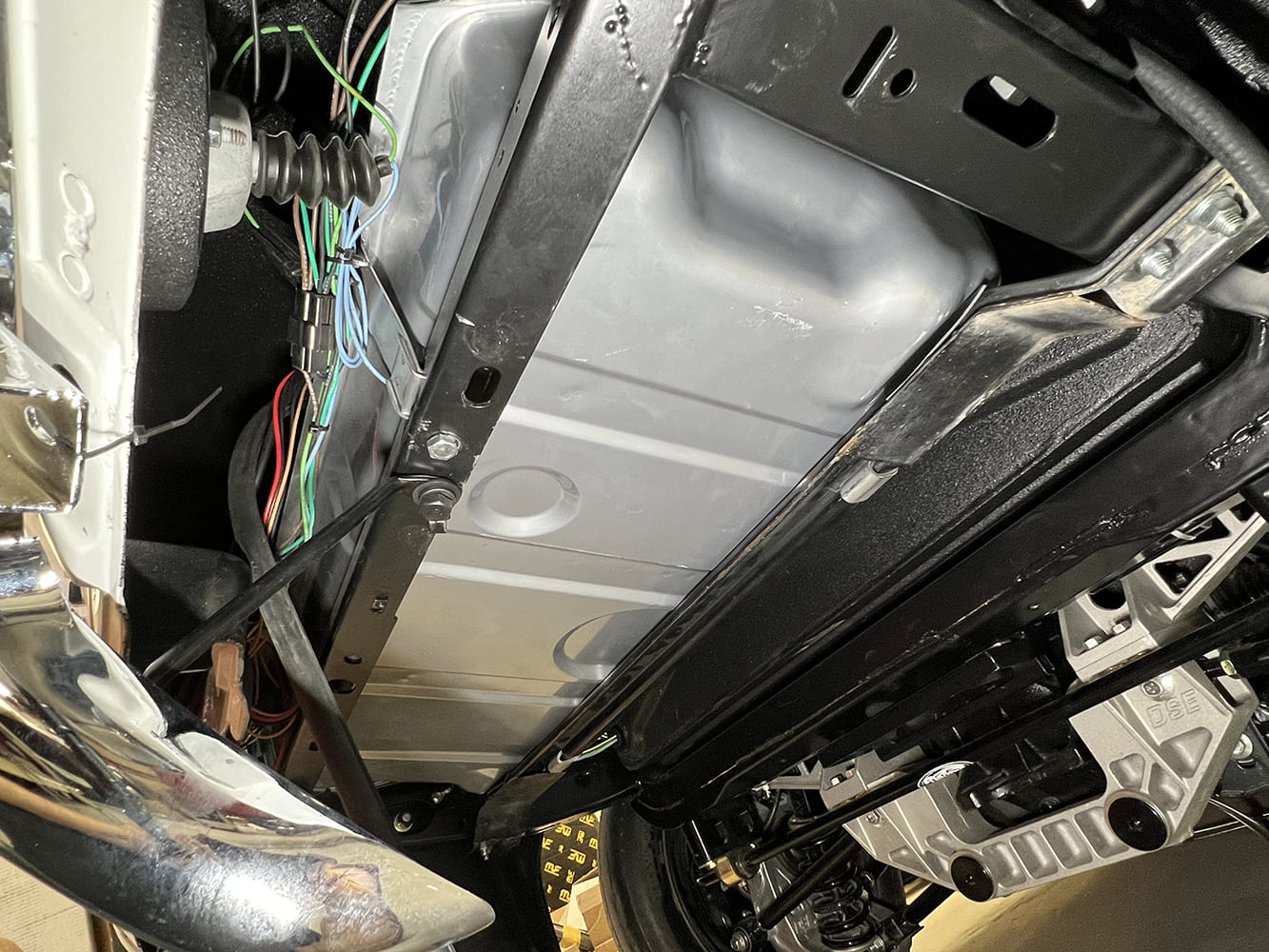
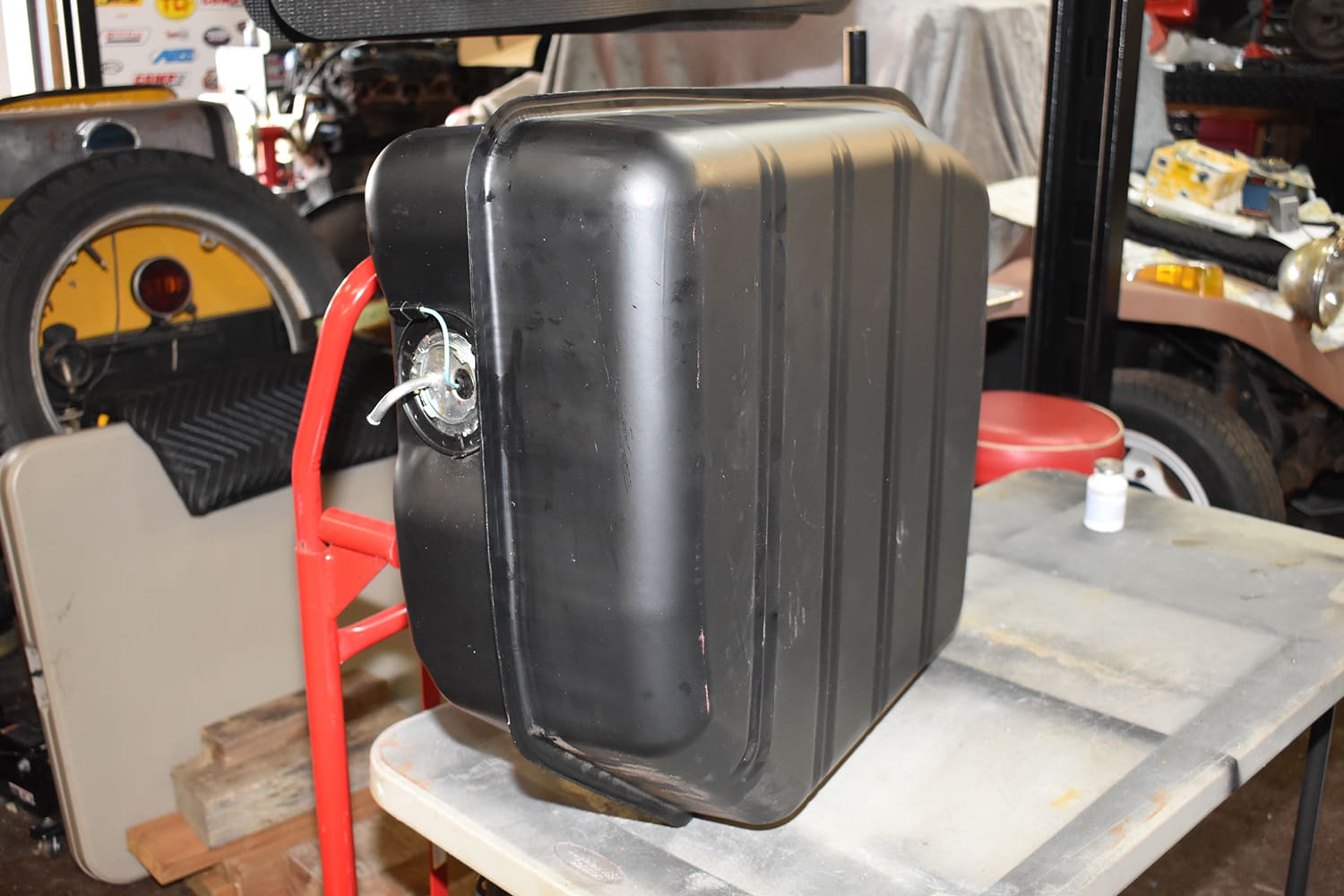
A FiTech direct-fit fuel tank (PN 58125) replaced the original. The new tank is baffled and accepts an in-tank fuel pump. It comes with a universal gas gauge sender.
To upgrade the stock fuel system, Brennan chose to install a FiTech replacement with an in-tank pump and a braided fuel line kit. To simplify the process, FiTech now offers complete EFI packages for several popular vehicles, including a throttle body, a direct-fit fuel tank with a fuel pump, a steel braided hose kit, a filter, and various fittings.
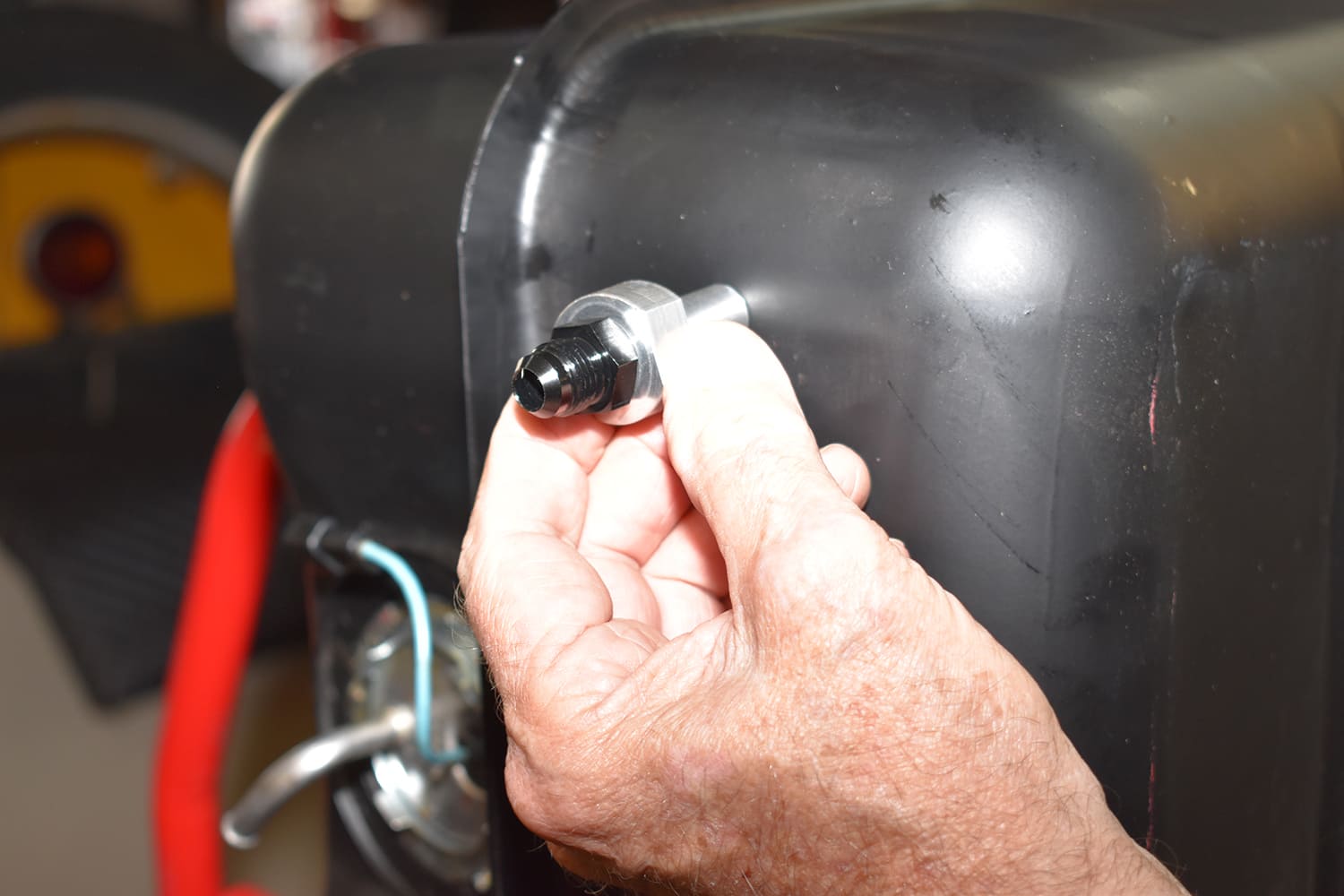
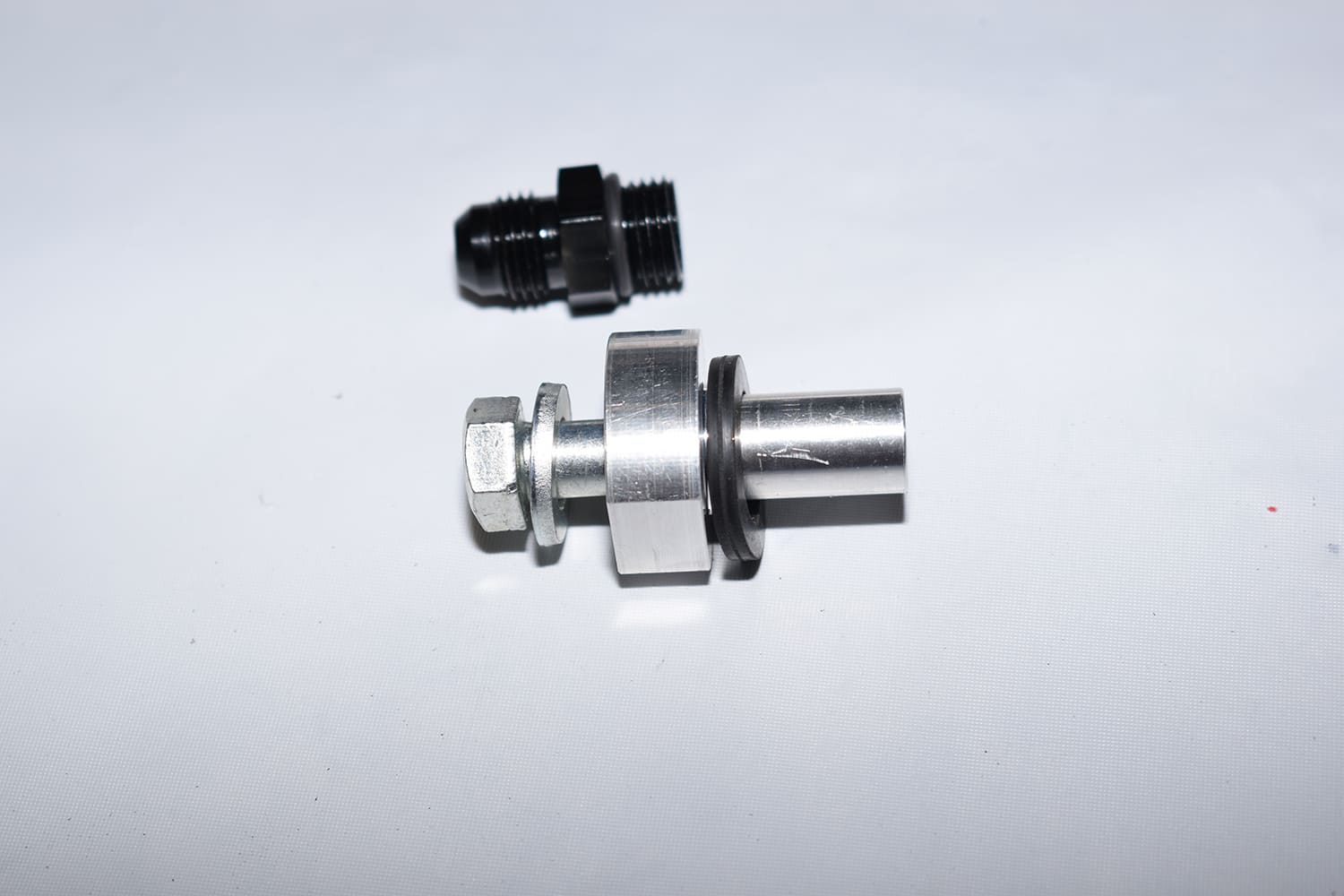
Included with the Force Fuel system is this return line fitting for the gas tank. After drilling a hole, the return line bung is installed from the outside with the supplied rubber seal.
Installing FiTech’s throttle body EFI isn’t much more complicated than replacing carburetors. There are some electrical connections to make, and the fuel system will need updating, but while resisting the urge to say, “If Brennan can do it, anyone can,” the truth is it’s something the average do-it-yourselfer can handle.
There is no questioning the effectiveness of EFI, and thanks to FiTech, it can be installed on virtually any engine. FiTech’s EFI systems eliminate tuning guesswork by “learning” the parameters initially programmed into the hand controller and will then continue to refine them for optimum performance. All things considered, EFI is without a doubt the way to go when choosing a fuel system—just don’t tell Brennan you heard it from me.
To simplify installation, the electronic control unit (ECU) of the Go EFI is housed in the throttle body. The wiring harness includes a remotely mounted relay/fuse block.
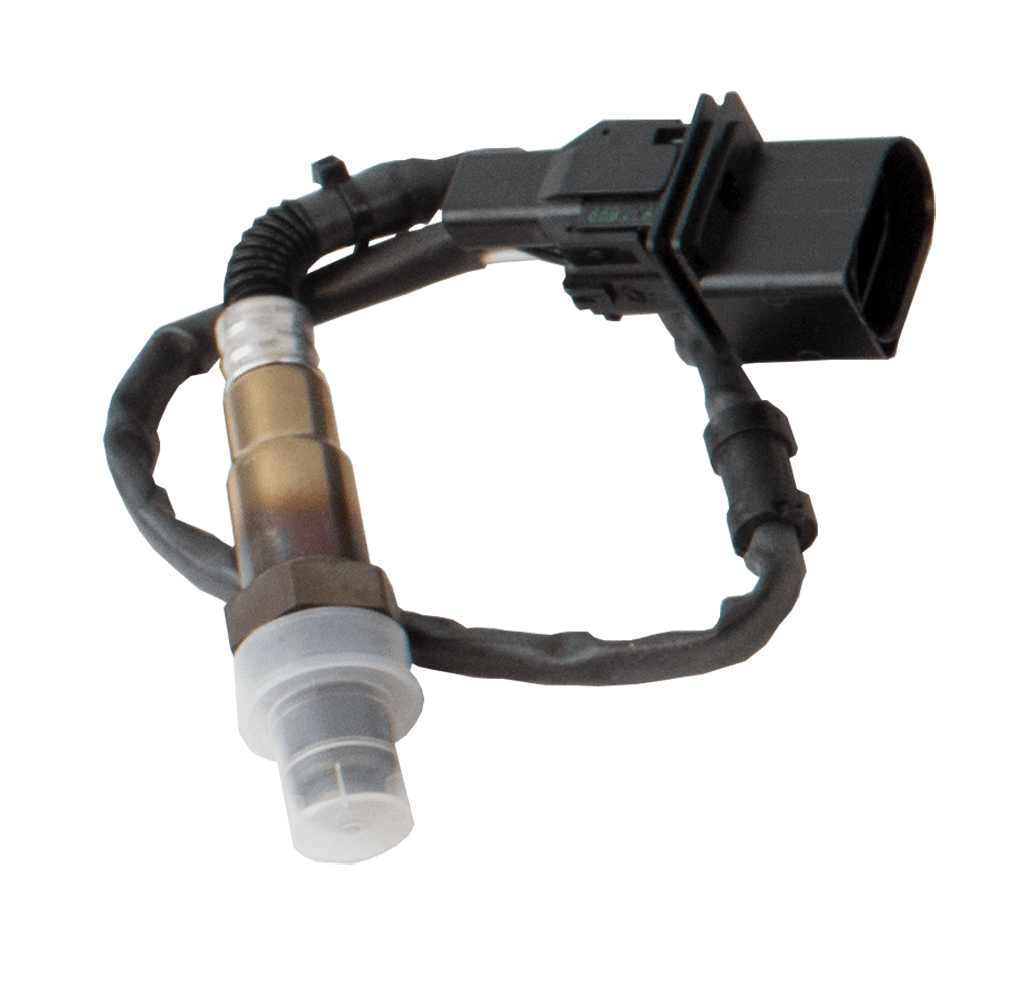
… the other external addition is the oxygen sensor, which must be installed in the exhaust system.
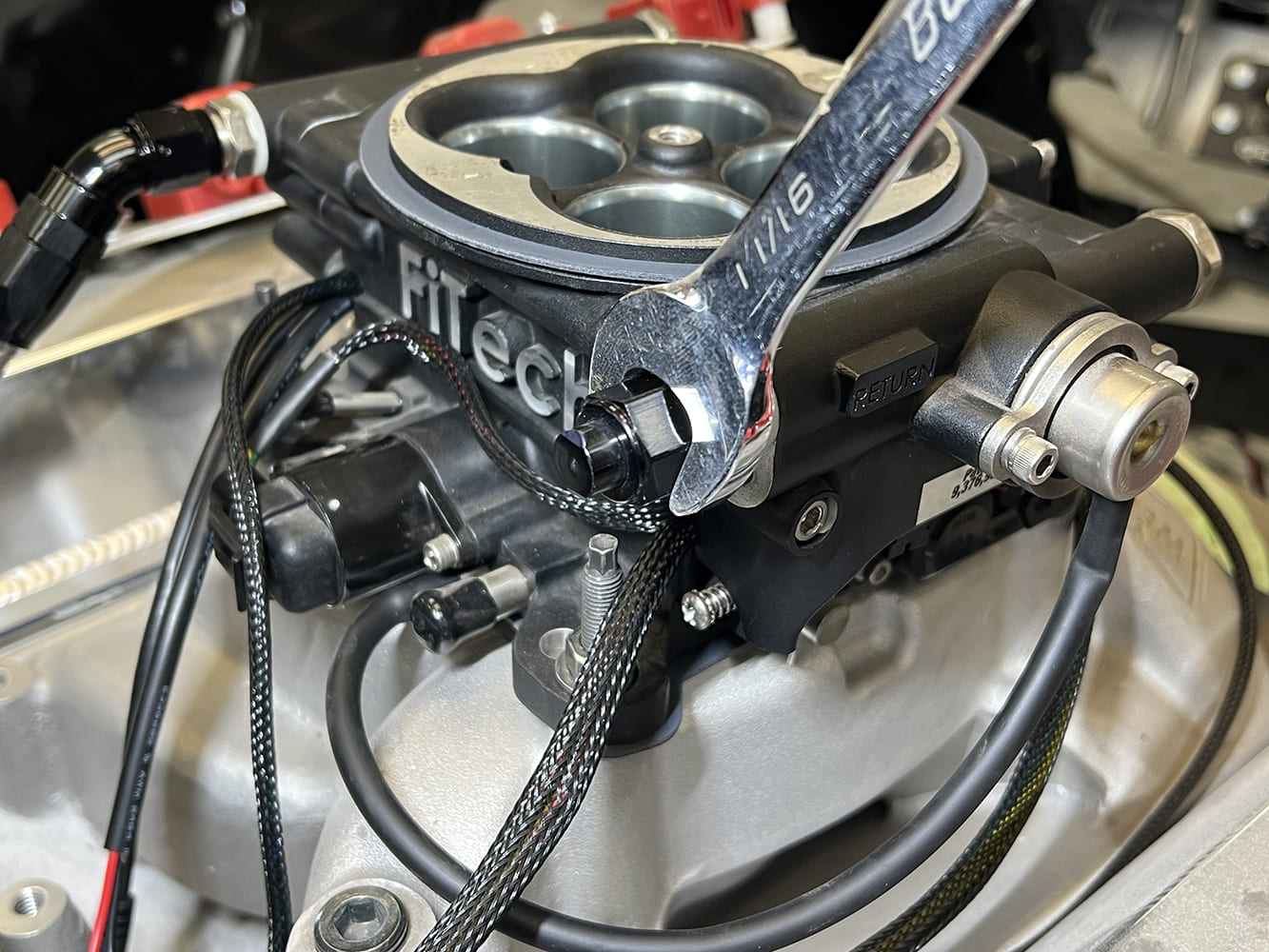
Normally, a fuel supply line and a return are required. In this case, the return port on the throttle body is capped as the in-tank fuel pump’s regulator eliminates the need for a return line.
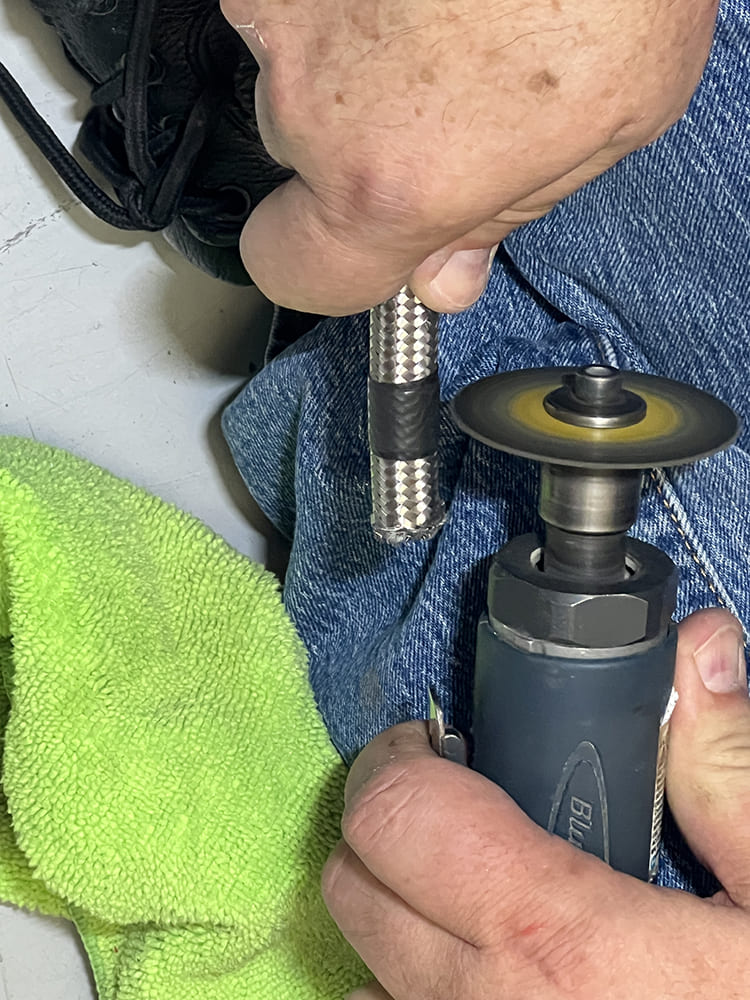
To connect the throttle body to the fuel pump, a FiTech fuel delivery kit (PN 50001) was used. It included 20 feet of AN-6 (3/8-inch) braided line, trimmed to fit. Before cutting the line, it was wrapped with electrical tape to keep the braid from fraying.
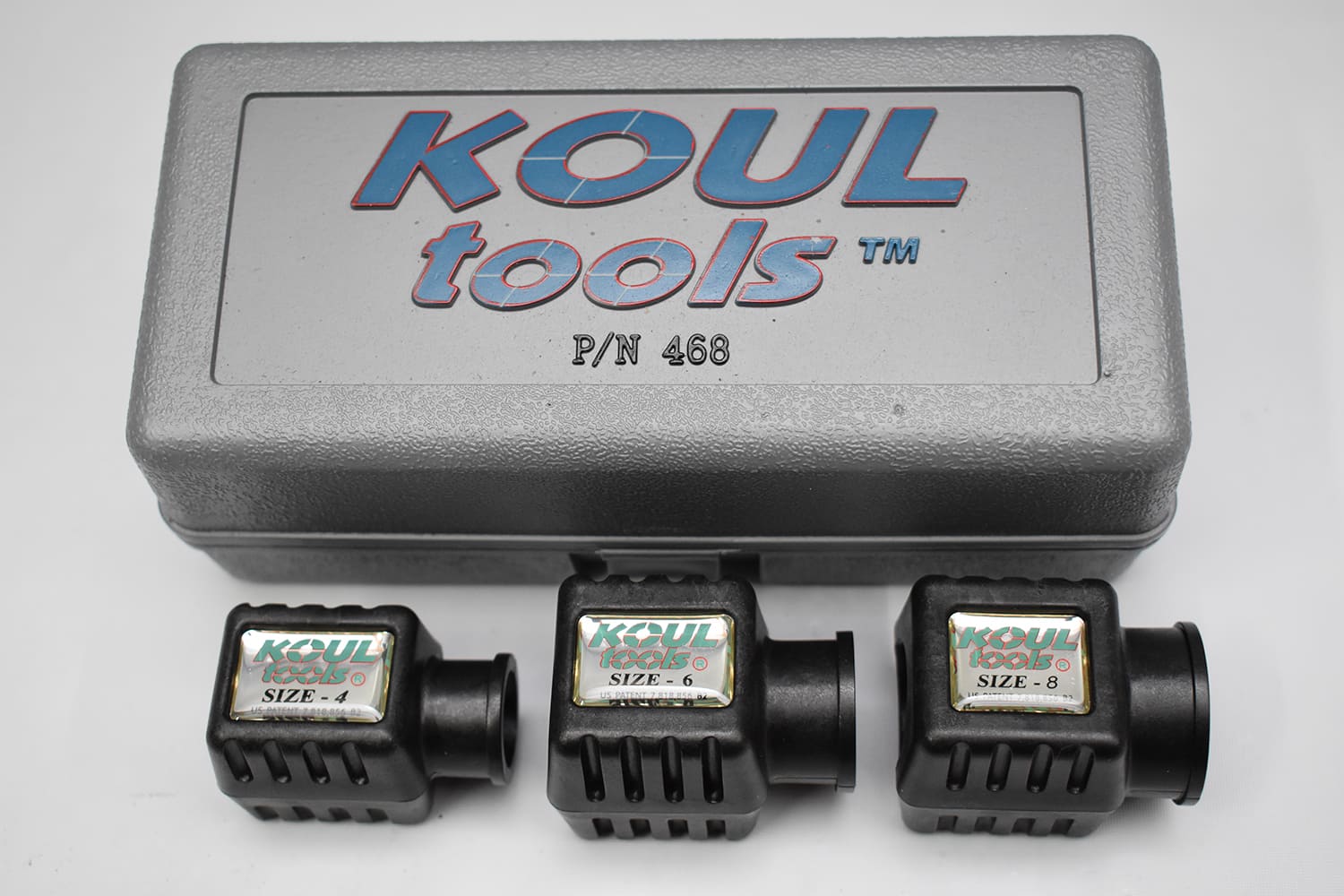
After cutting, assembling braided lines can be challenging due to the inevitable frayed ends. This set of assembly tools from Koul Tools makes it easy. This kit handles -4, -6 and -8 fittings.
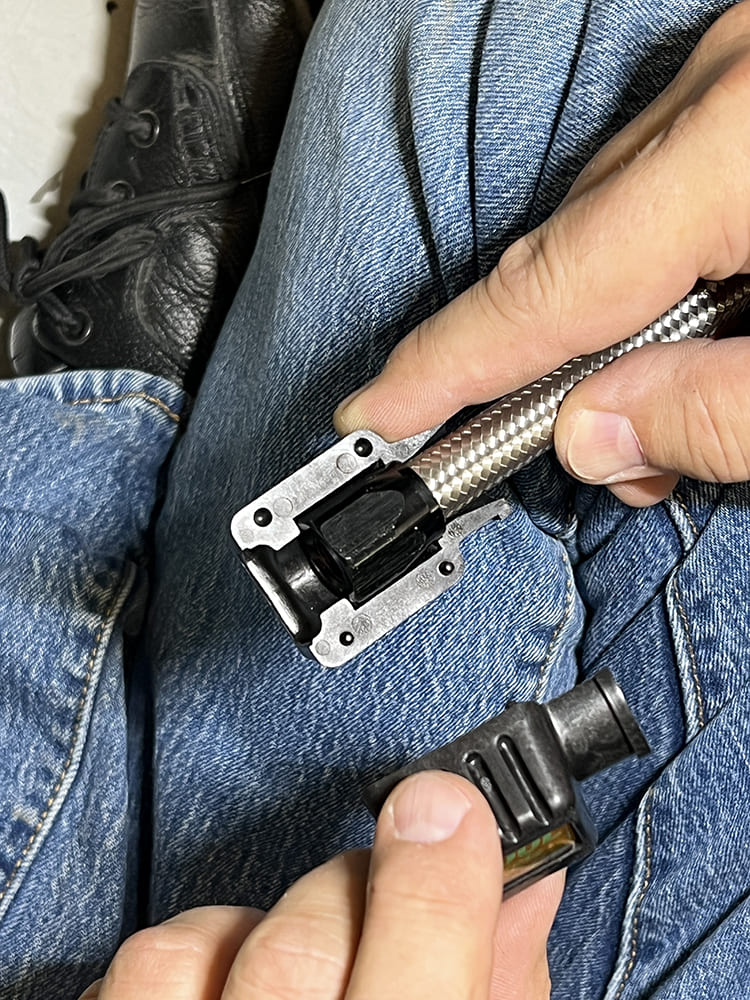
To assemble the hose, place the ferrule inside the two-piece Koul Tool. The tapered opening in the tool then guides the hose into the ferrule. Push the hose in until it seats firmly and you’re done.
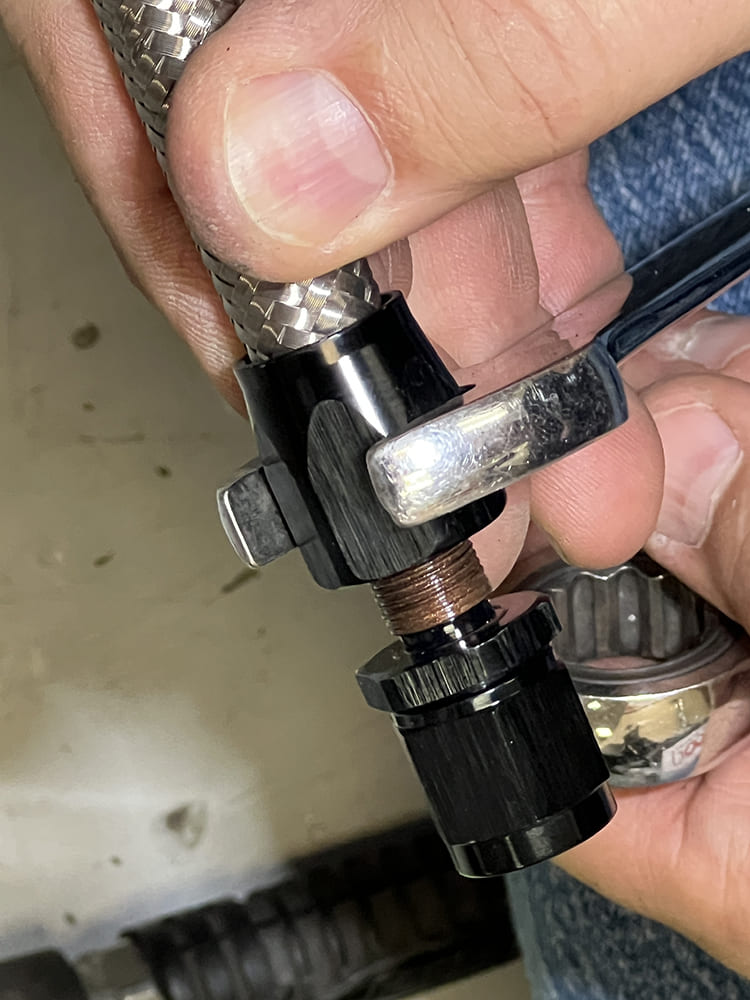
With the ferrule in place, the end fitting is coated with antiseize screwed into the hose to form a tight, leakproof seal.
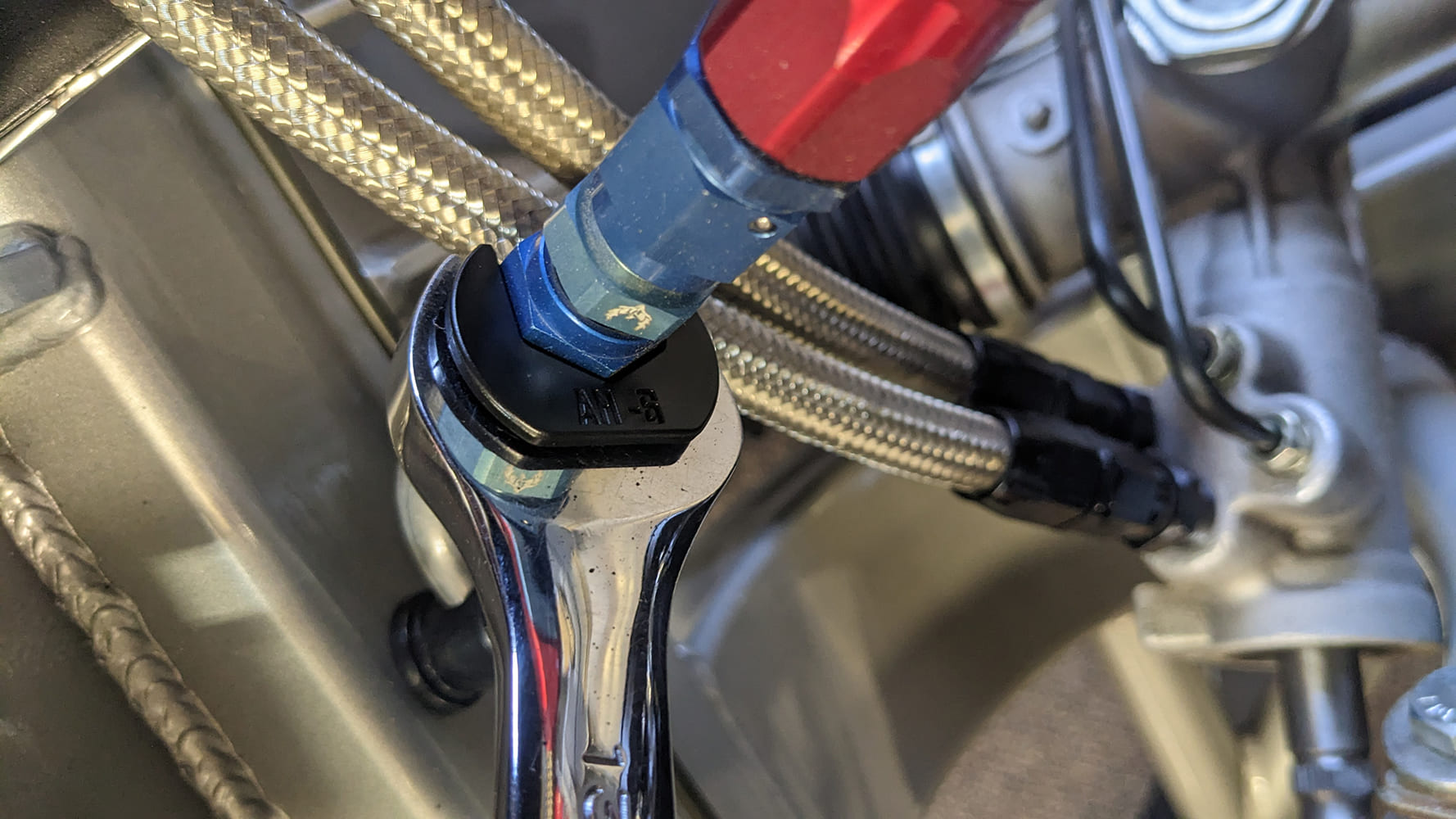
To protect the finish on AN fittings, use NotcHead AN wrench inserts. The kit includes six inserts, -3 through -10, plus a 3/4 inch for the other side of a -6 line.
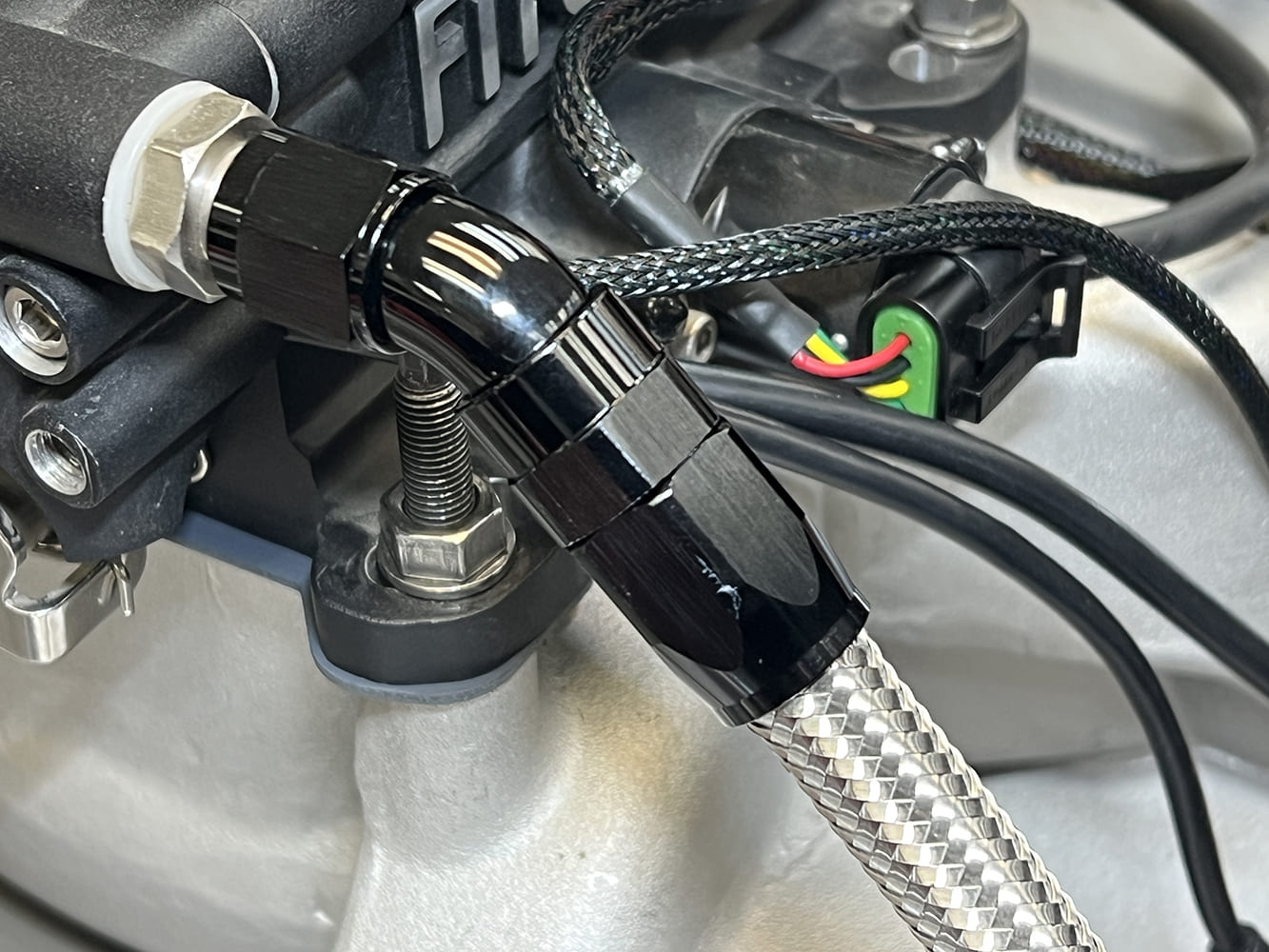
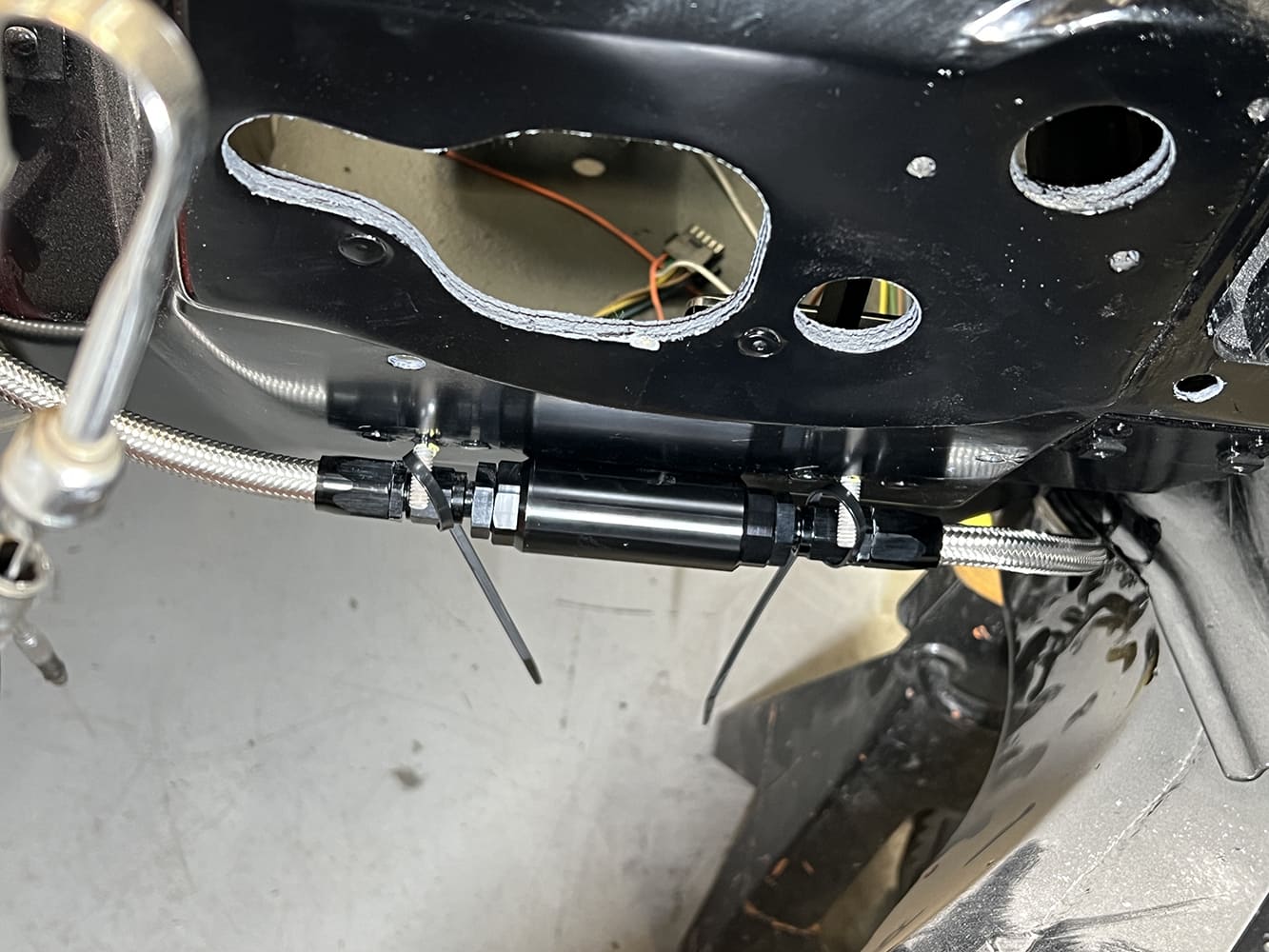
This is the finished supply line from the firewall-mounted fuel filter. The FiTech fuel line kit included straight, 45- and 90-degree fittings.
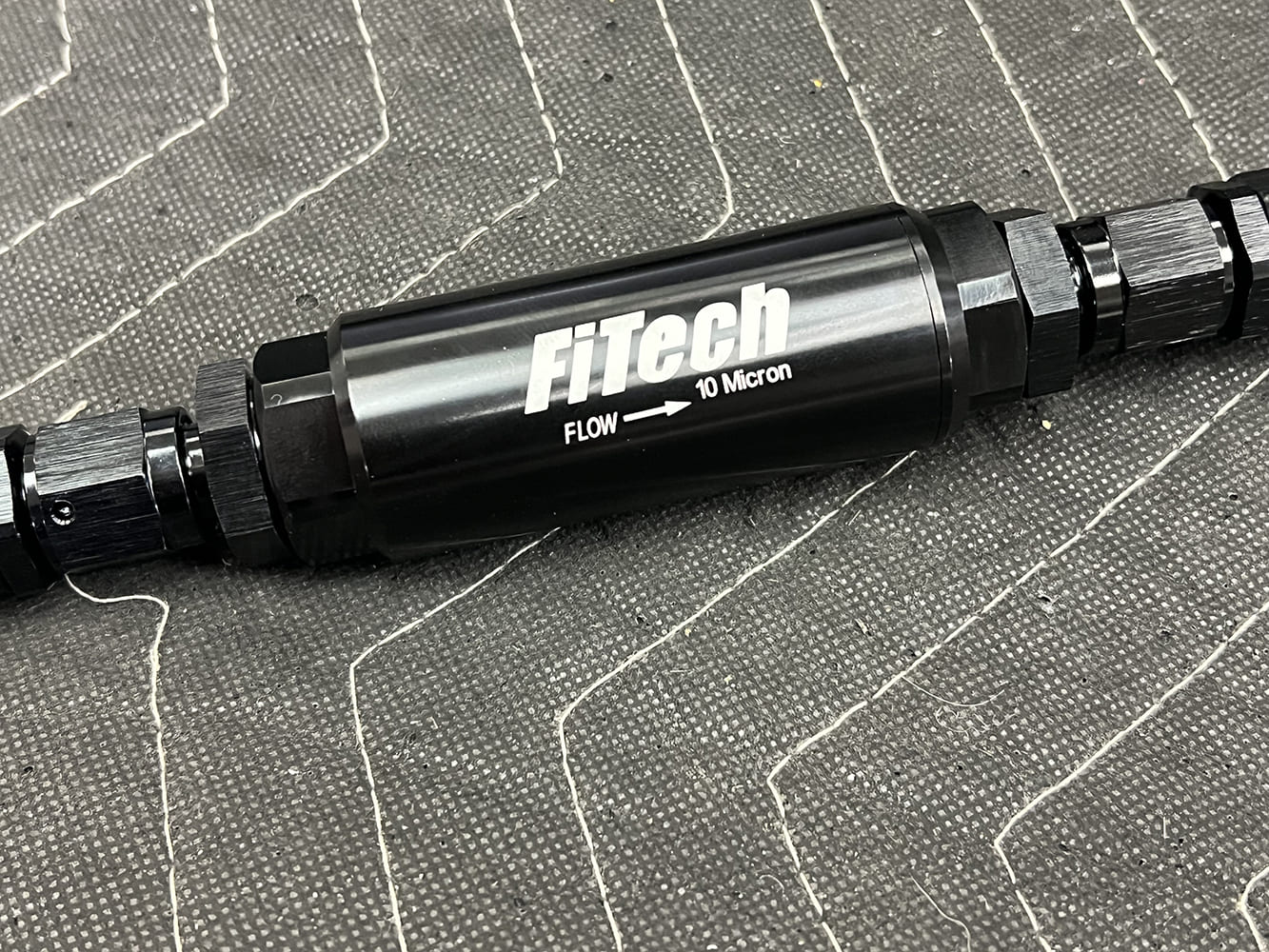
Also included in the FiTech fuel line kit is a 10-micron filter to be installed between the tank and the throttle body.
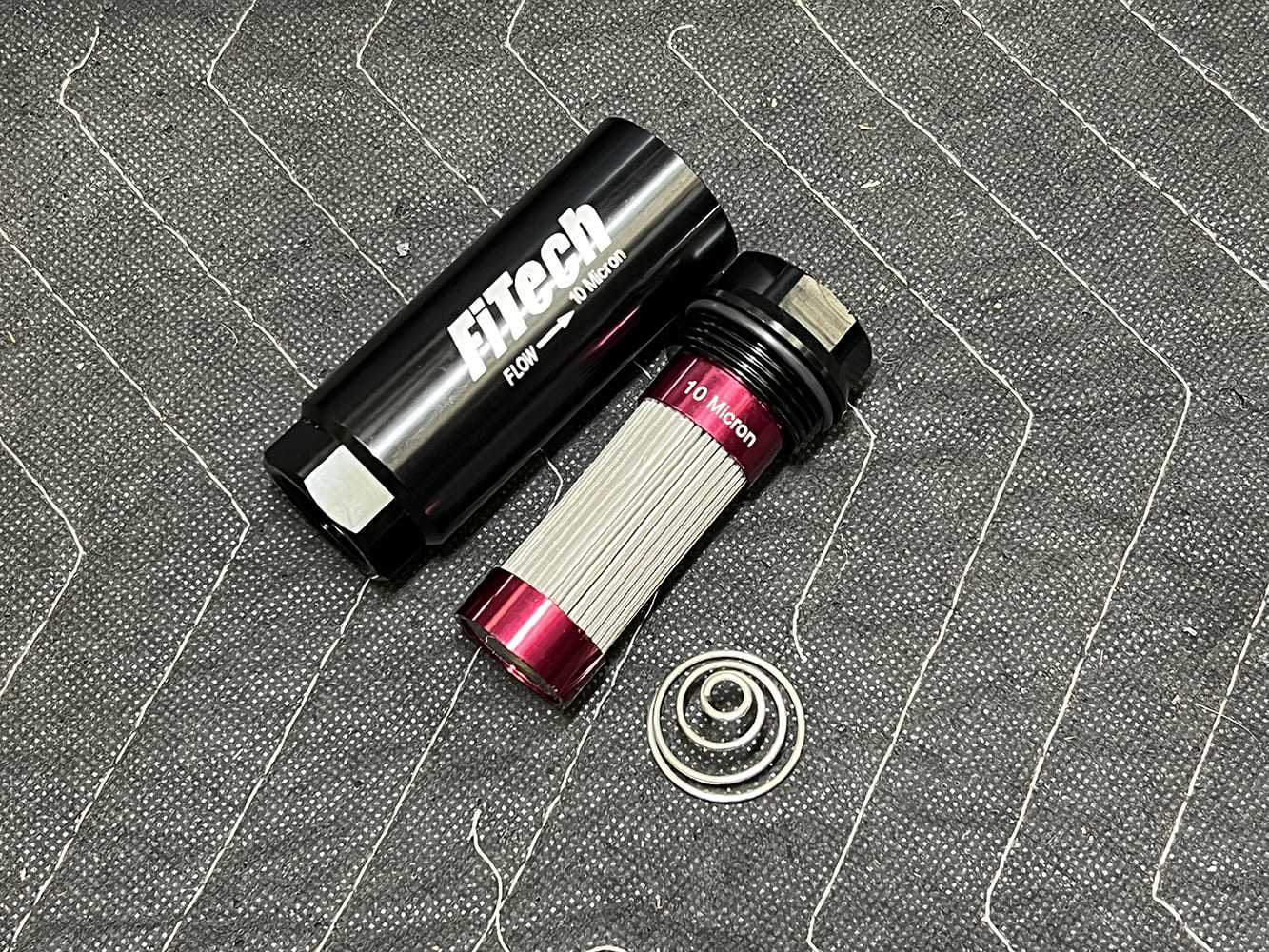
For ease of maintenance, the FiTech fuel filter has an easily removable, cleanable stainless steel filter insert.
Livermore mounted the fuel filter on the left side of the firewall. Here it is temporarily held in place with zip ties; actual brackets will be added.
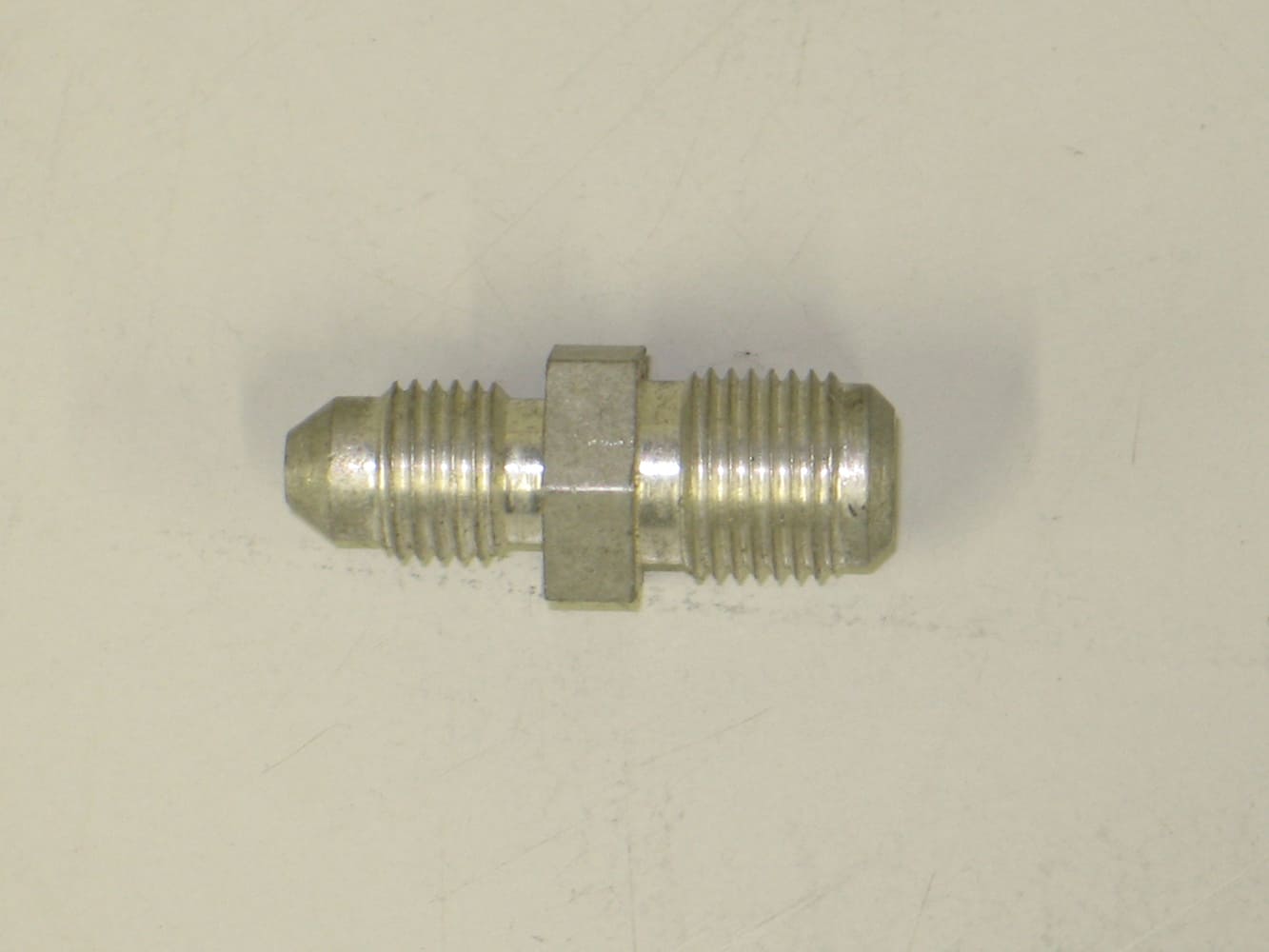
In some cases, rather than running new braided lines, it may be easier to tie the fuel filter into existing steel fuel lines—AN to inverted flare adapters are available from Pure Choice.
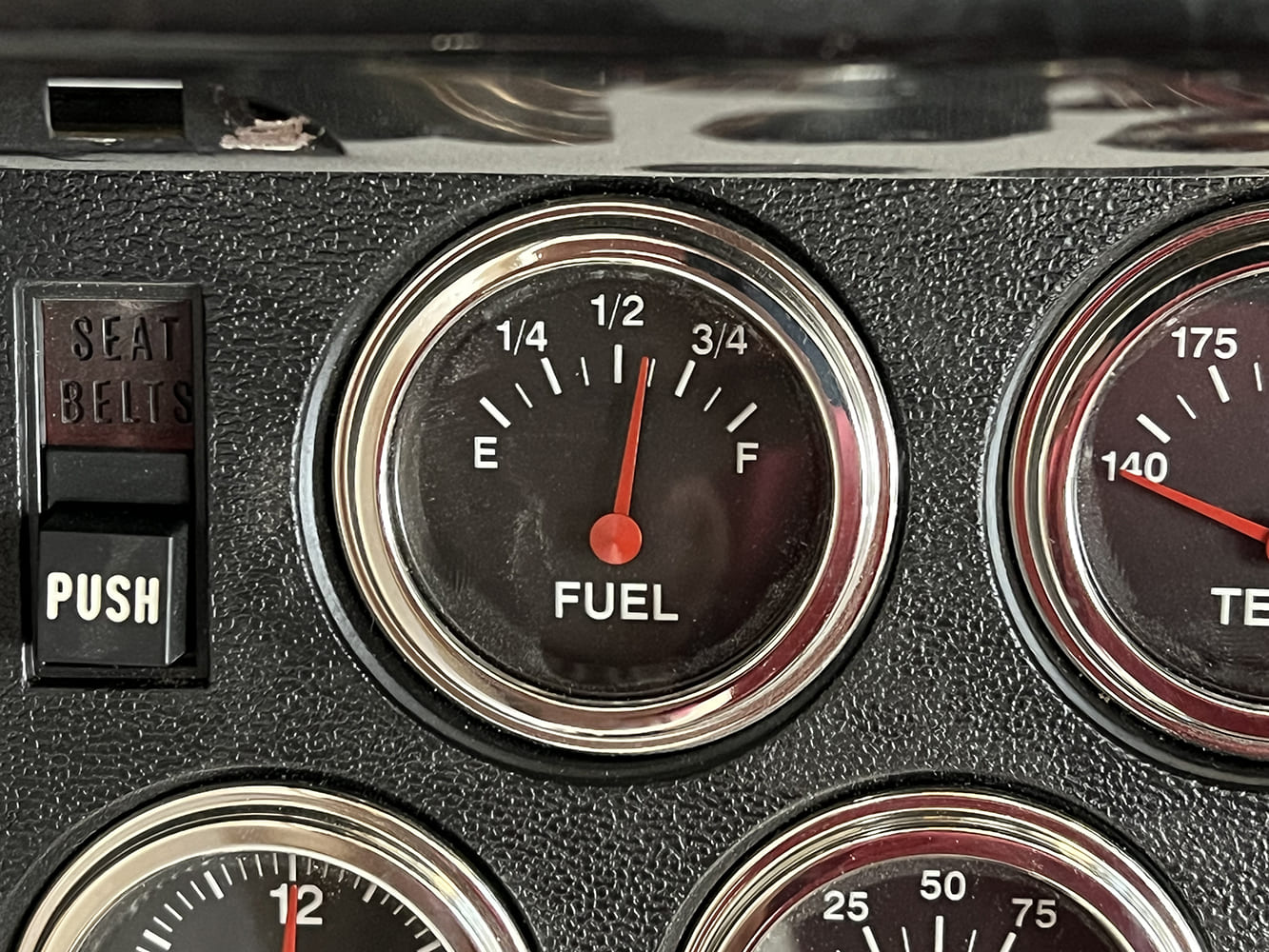
FiTech’s gas gauge senders are available in a variety of empty to full resistance ratings in ohms to match the gauge being used. This is a Classic Instruments gauge for a Corvette with GM’s standard 0 ohms at empty and 90 ohms at full.
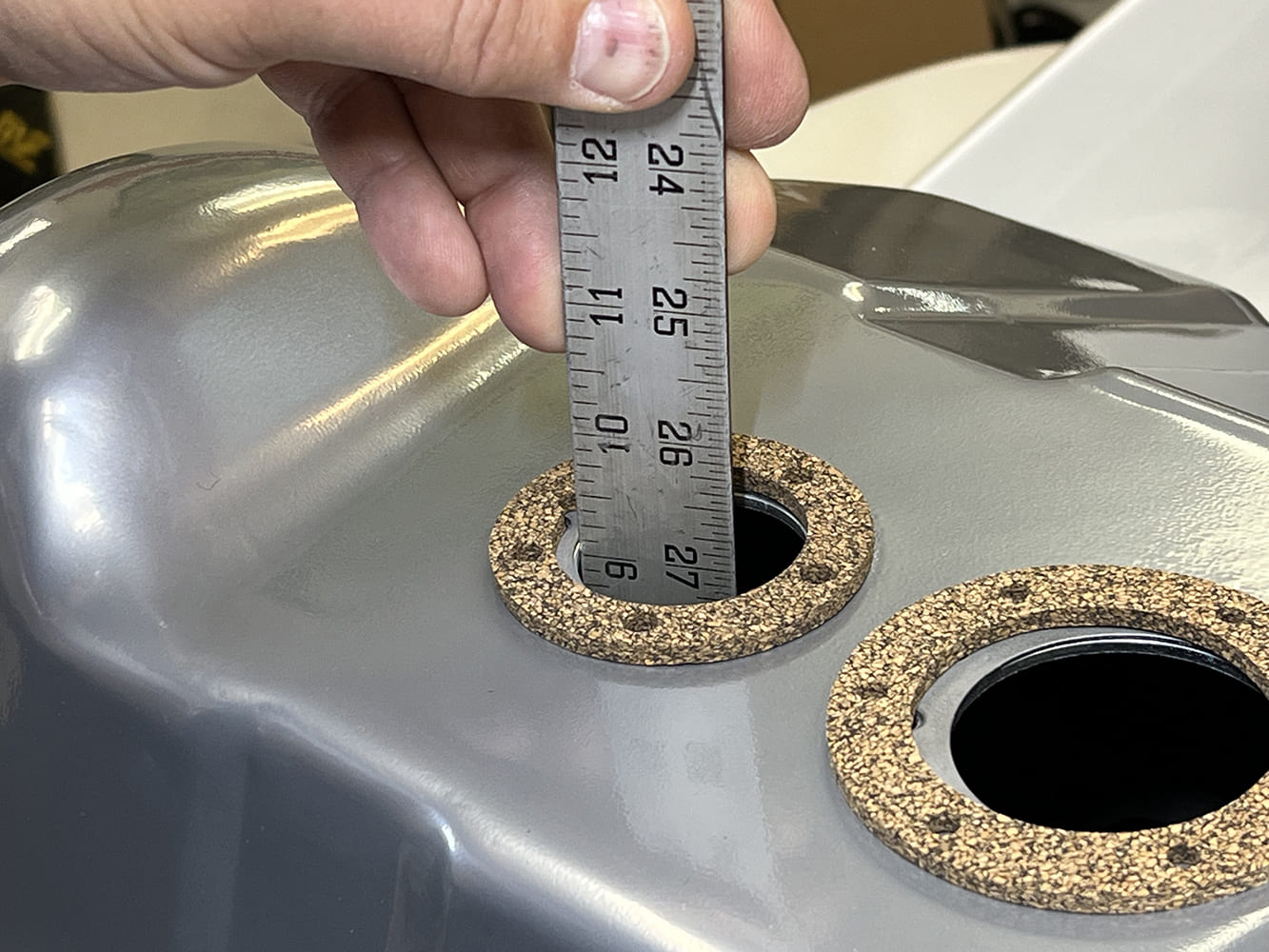
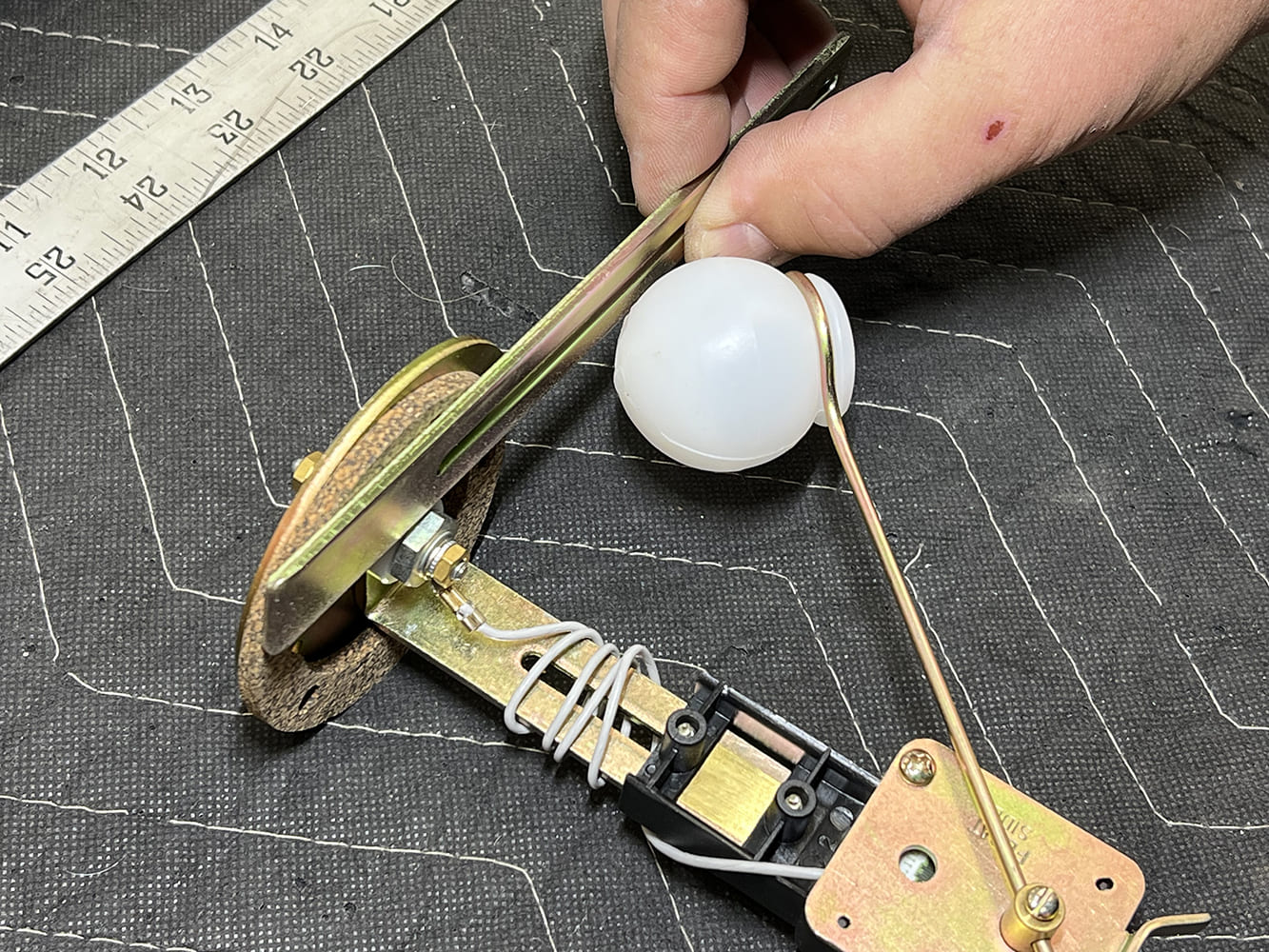
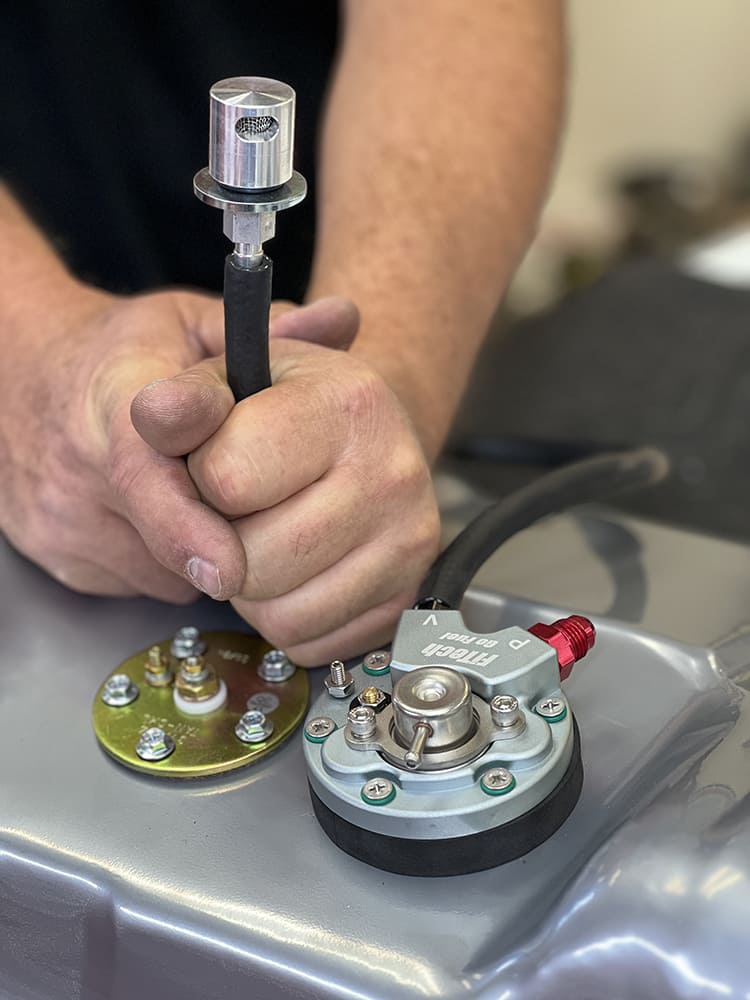
As these are universal fuel level senders, the depth of the tank is measured, then the sender is positioned on the adjustable bracket midway in the tank.
The float is adjusted by sliding it in its mount to provide full travel up and down without contacting the tank.
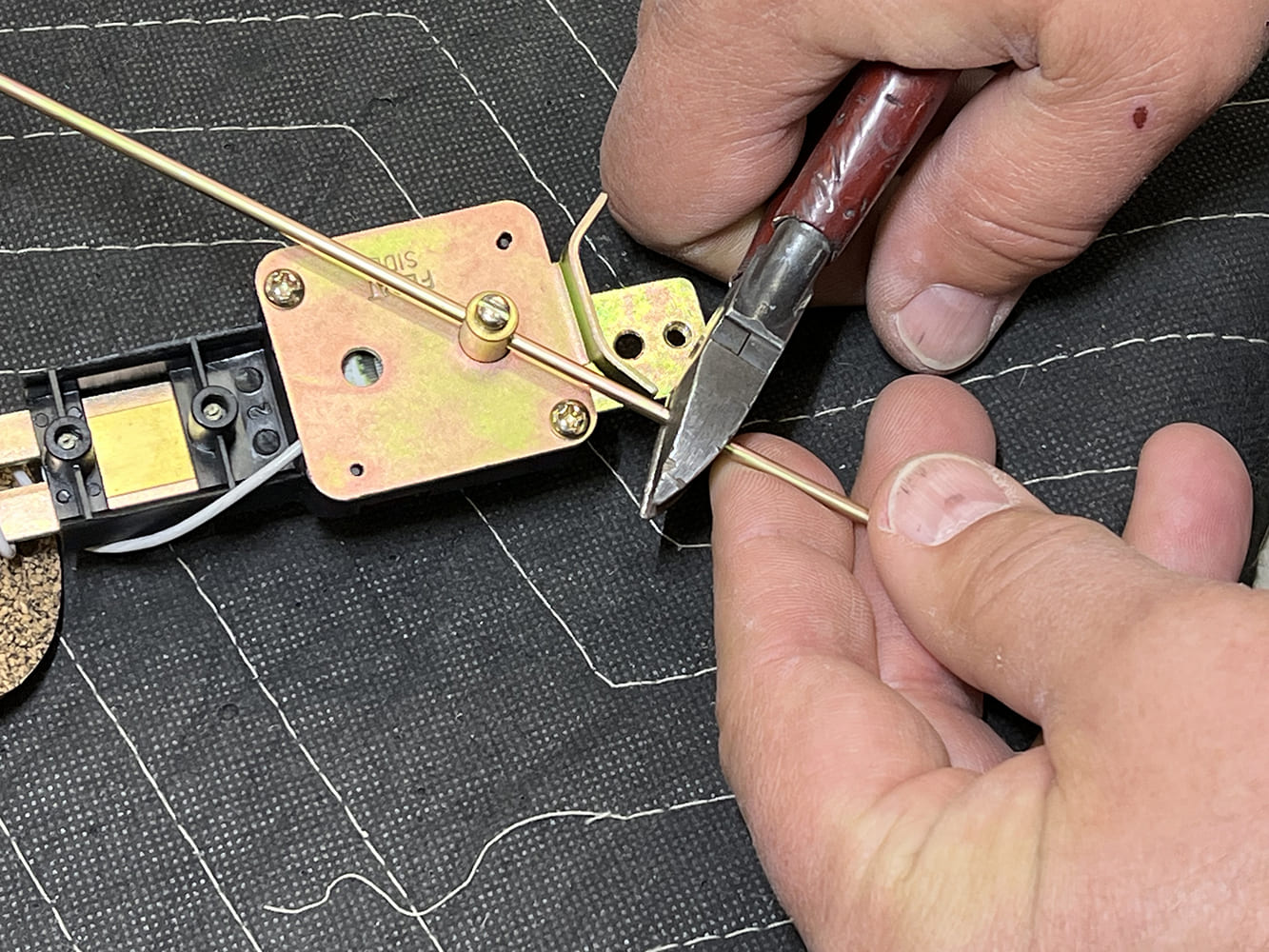
With the float rod secured in the proper position, the excess rod is cut off. Note the two stops that limit the floats’ up-and-down travel.
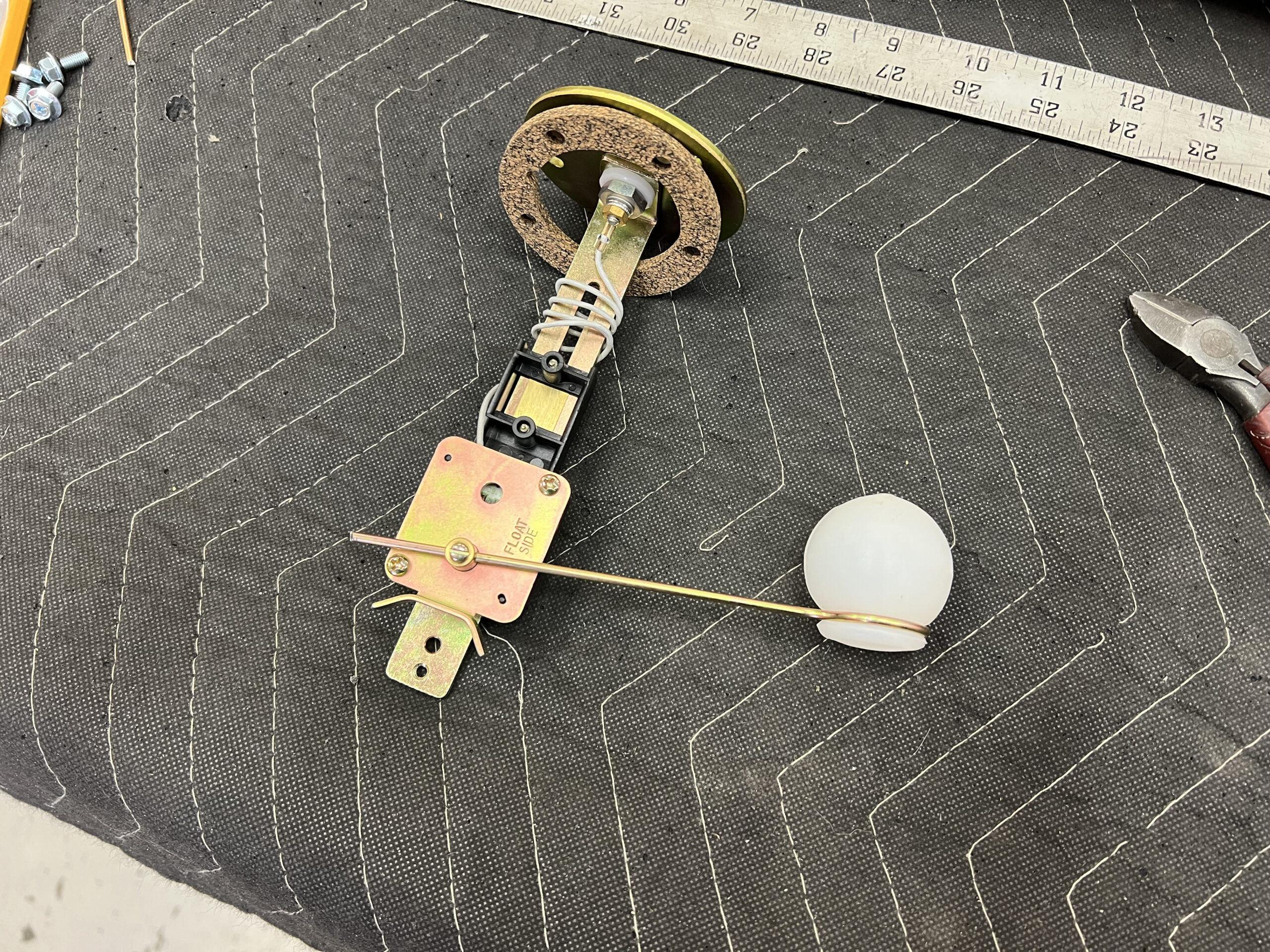
Here’s the sender ready for installation. Compare this photo to #20 to get an idea of how much the sender mount and float rod have been shortened.
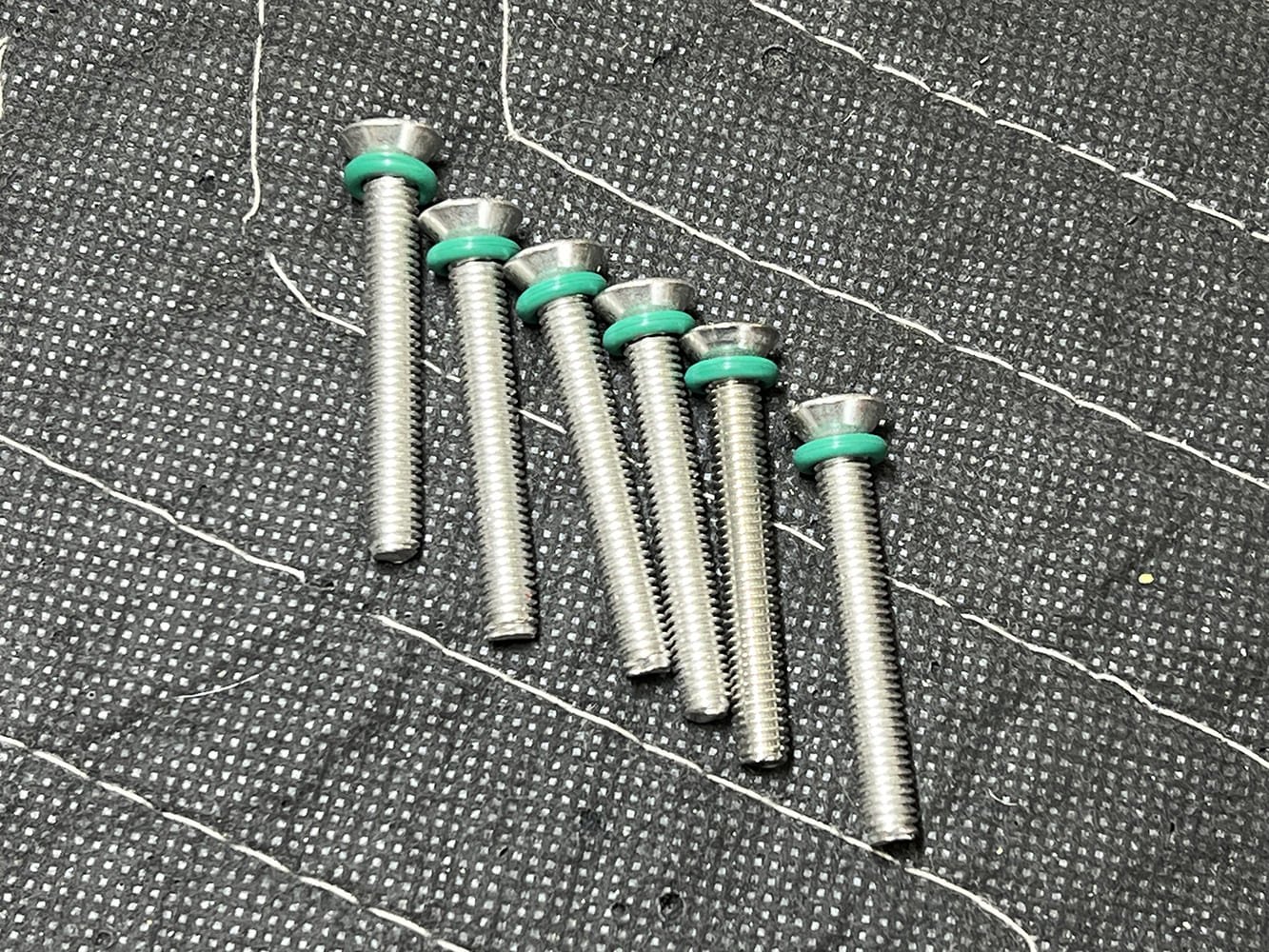
To prevent leaks, the FiTech fuel pump’s attachment screws come with fuel-resistant O-rings.
As a return line isn’t required, the only hose connections are the pump output and the vent. The round piece is the regulator; the barb is its vent.
Included in the fuel tank kit is this cool combination vent and rollover valve.
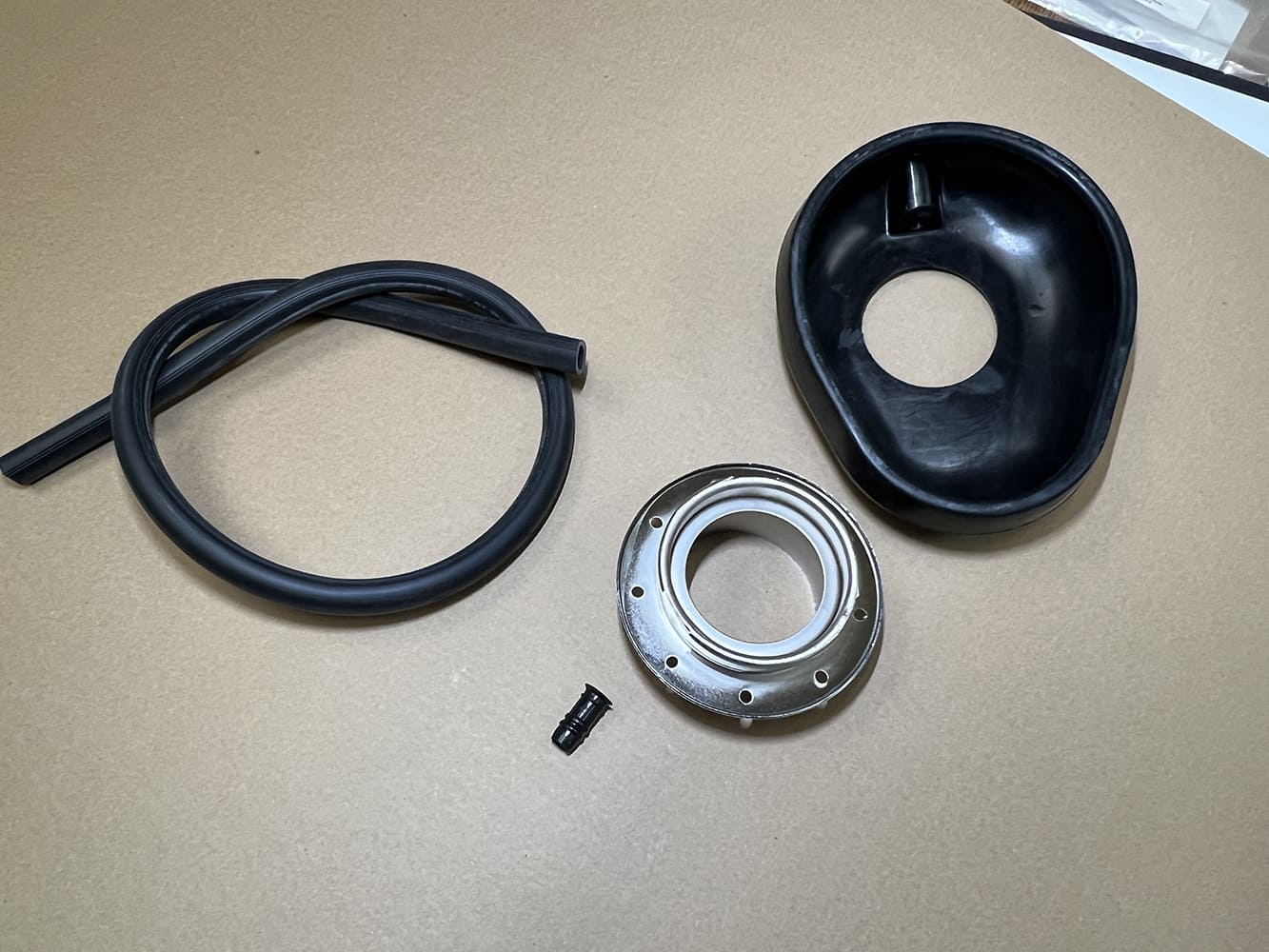
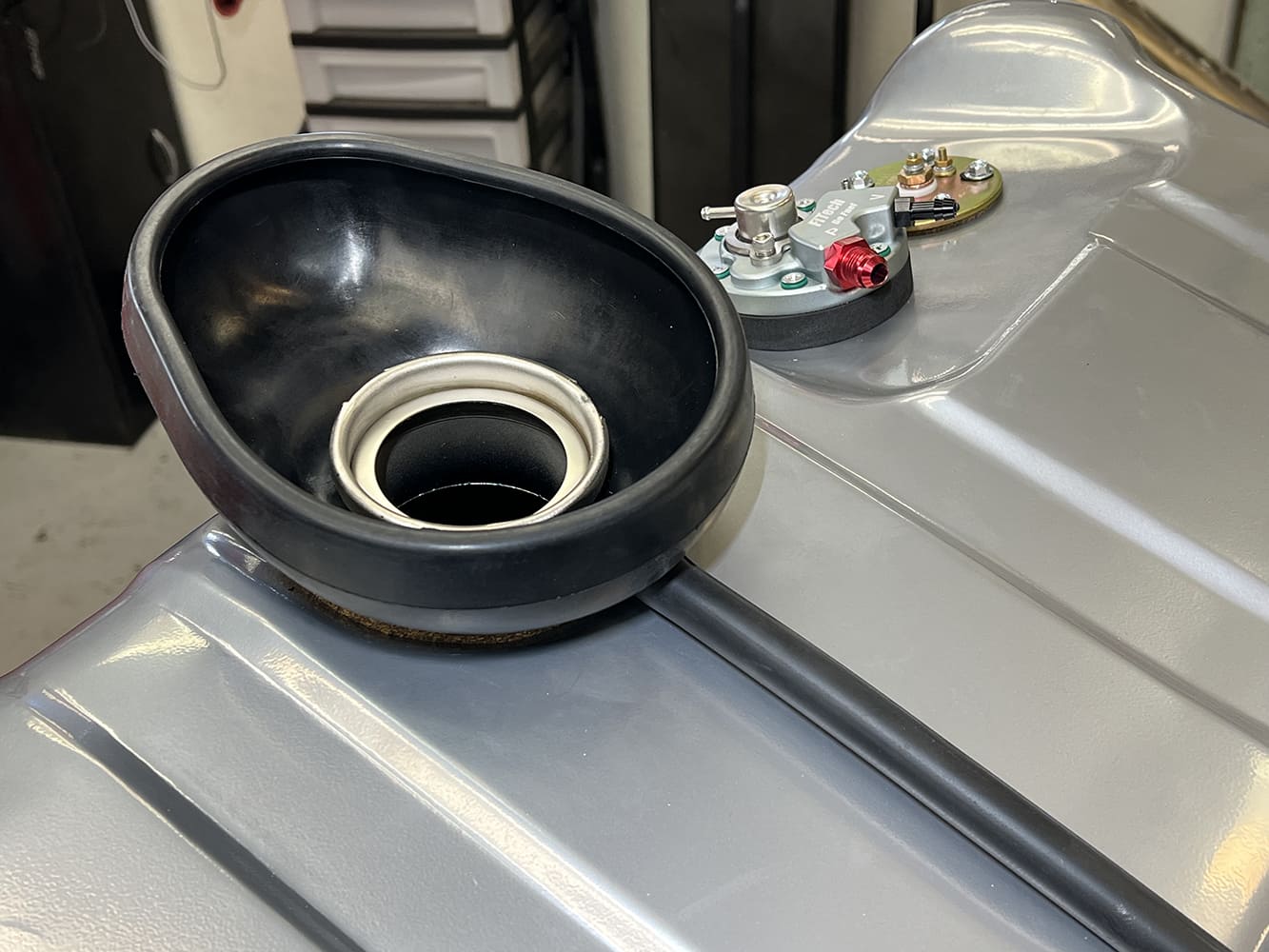
Summit Racing was the source of the new gas tank filler neck (TNK-FN5018), lock ring (PN SGT-L002), the filler neck seal, and filler neck boot (MMU-X2260).
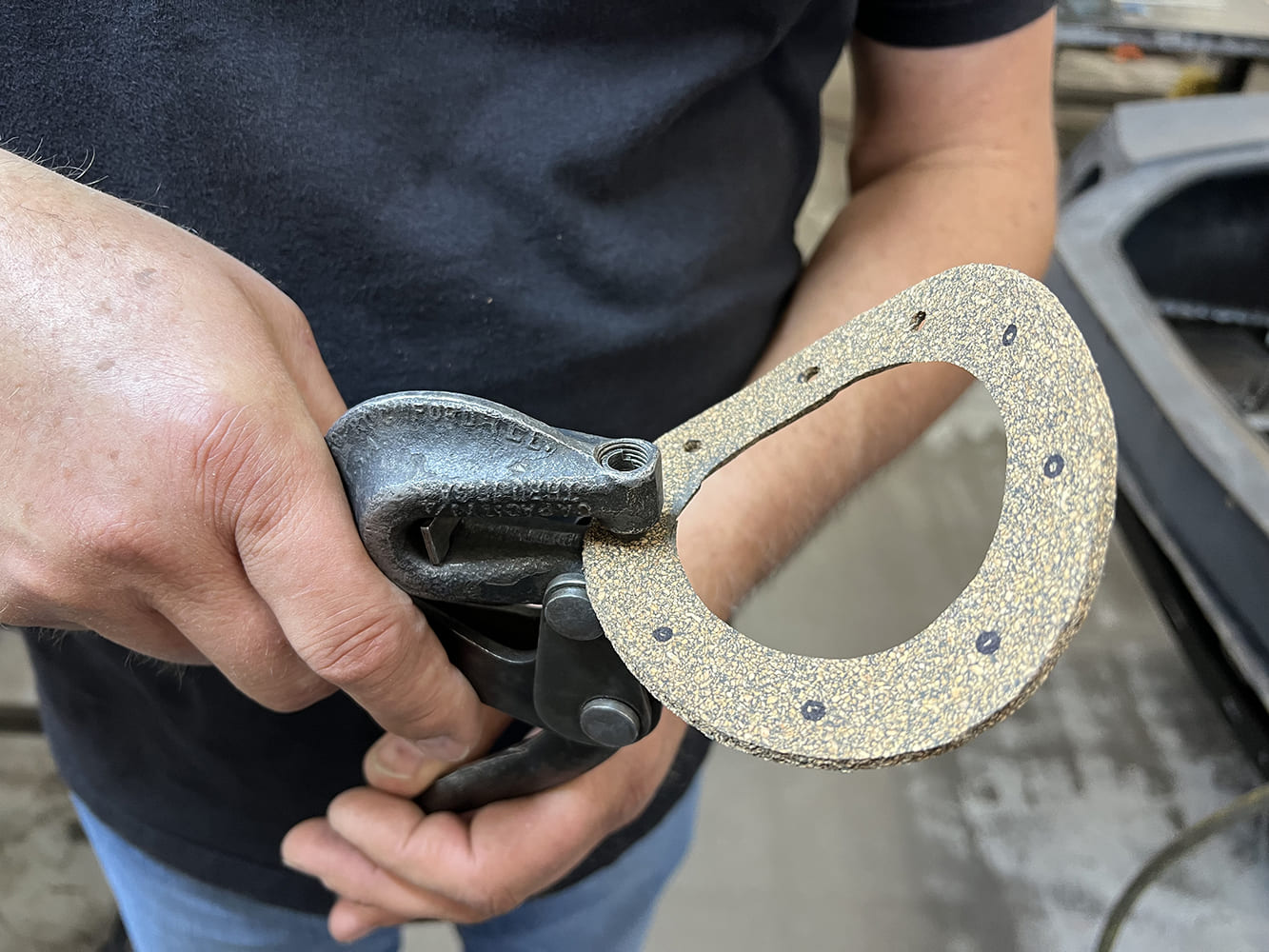
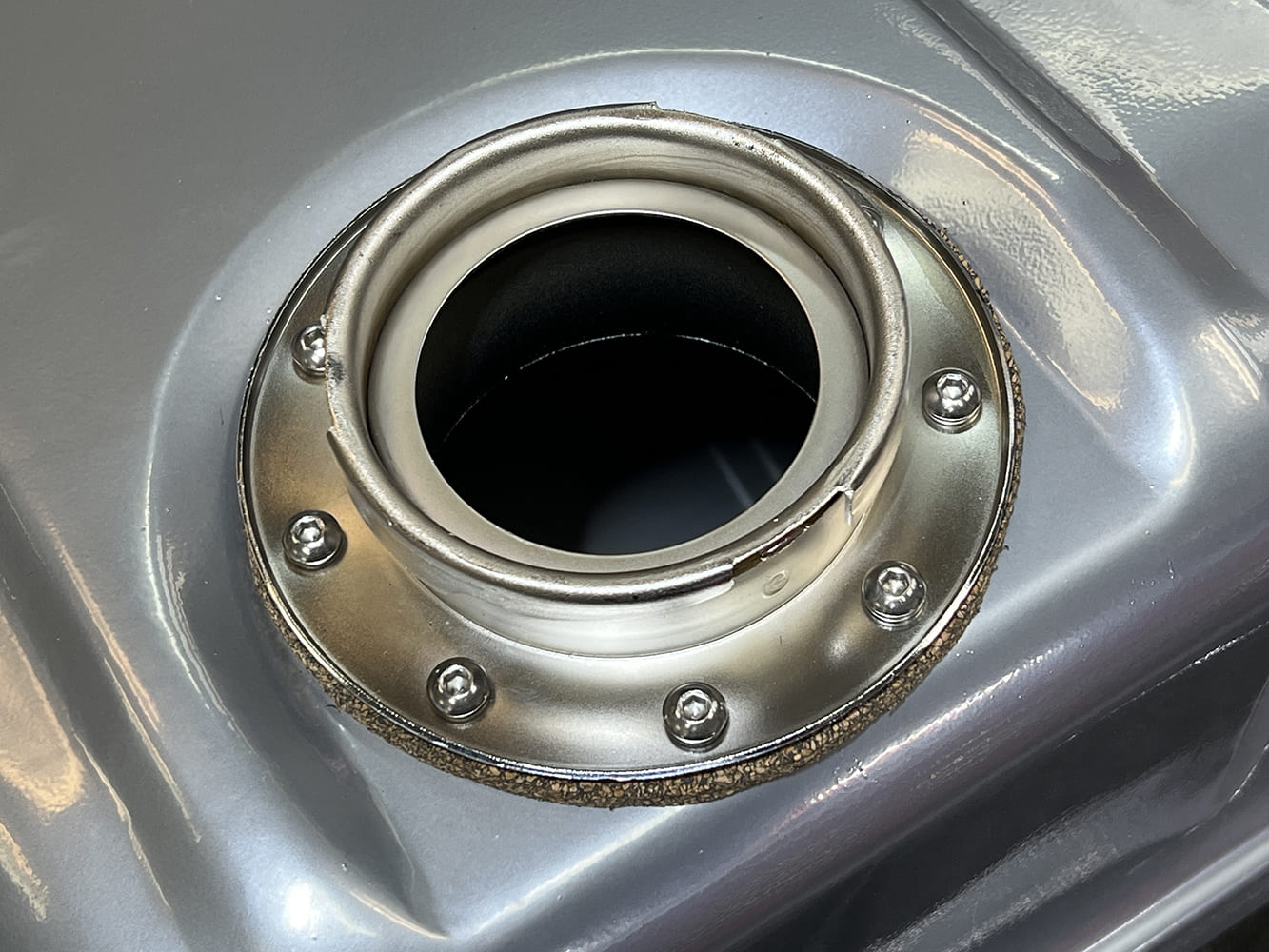
A unique feature of the Corvette gas tank is a bolt-on filler neck. Livermore fashioned a custom cork gasket to prevent leaks.
FiTech’s fuel tank has the appropriate thread holes to accept the filler. All of this is hidden under the Corvette’s rear deck.
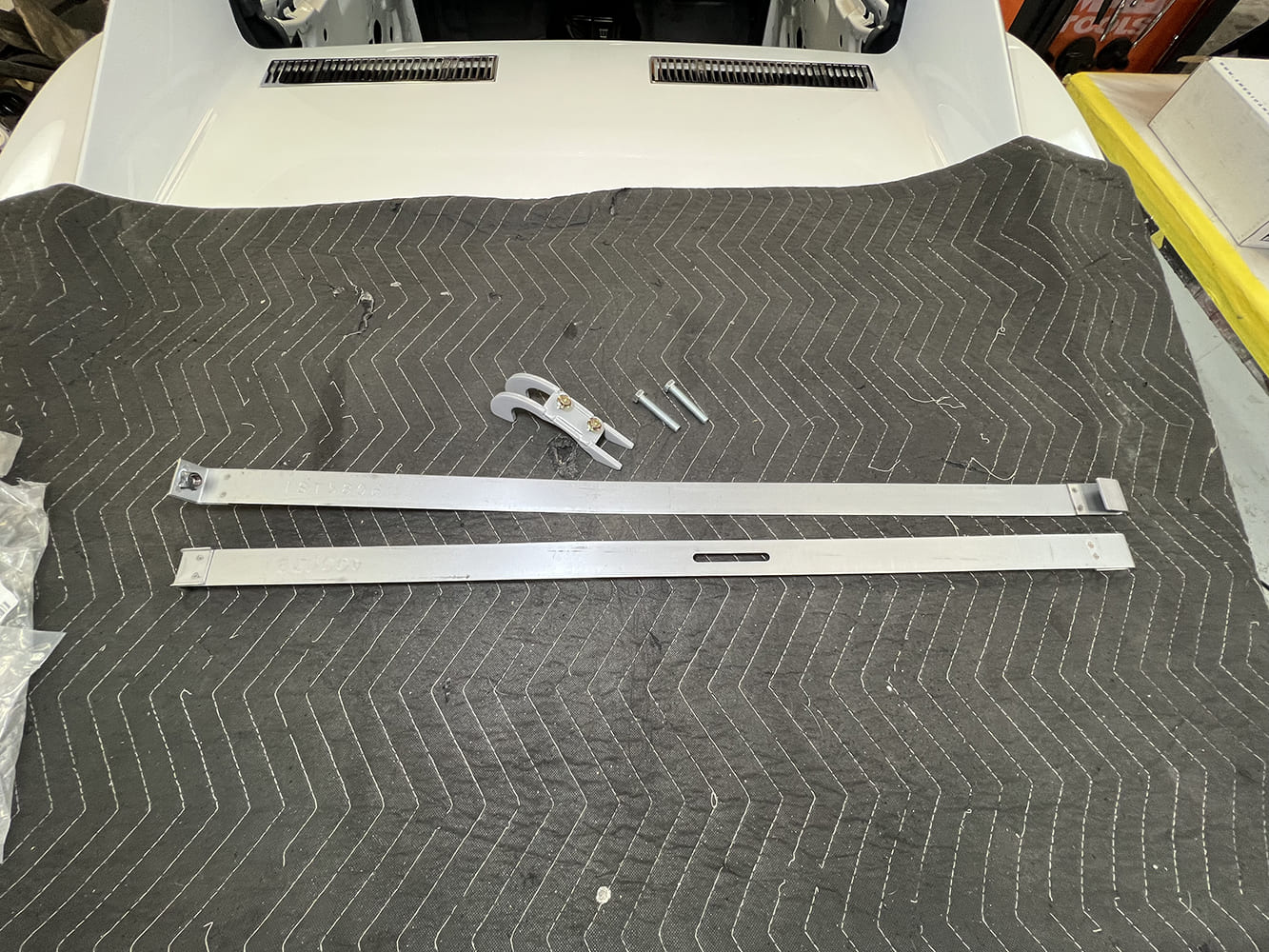
The rubber filler neck seal fits between the tank and the underside of the body. The included overflow hose (MMU-X2563) drains away any spilled fuel.Provided with the tank are new retainer straps, as the originals won’t work.
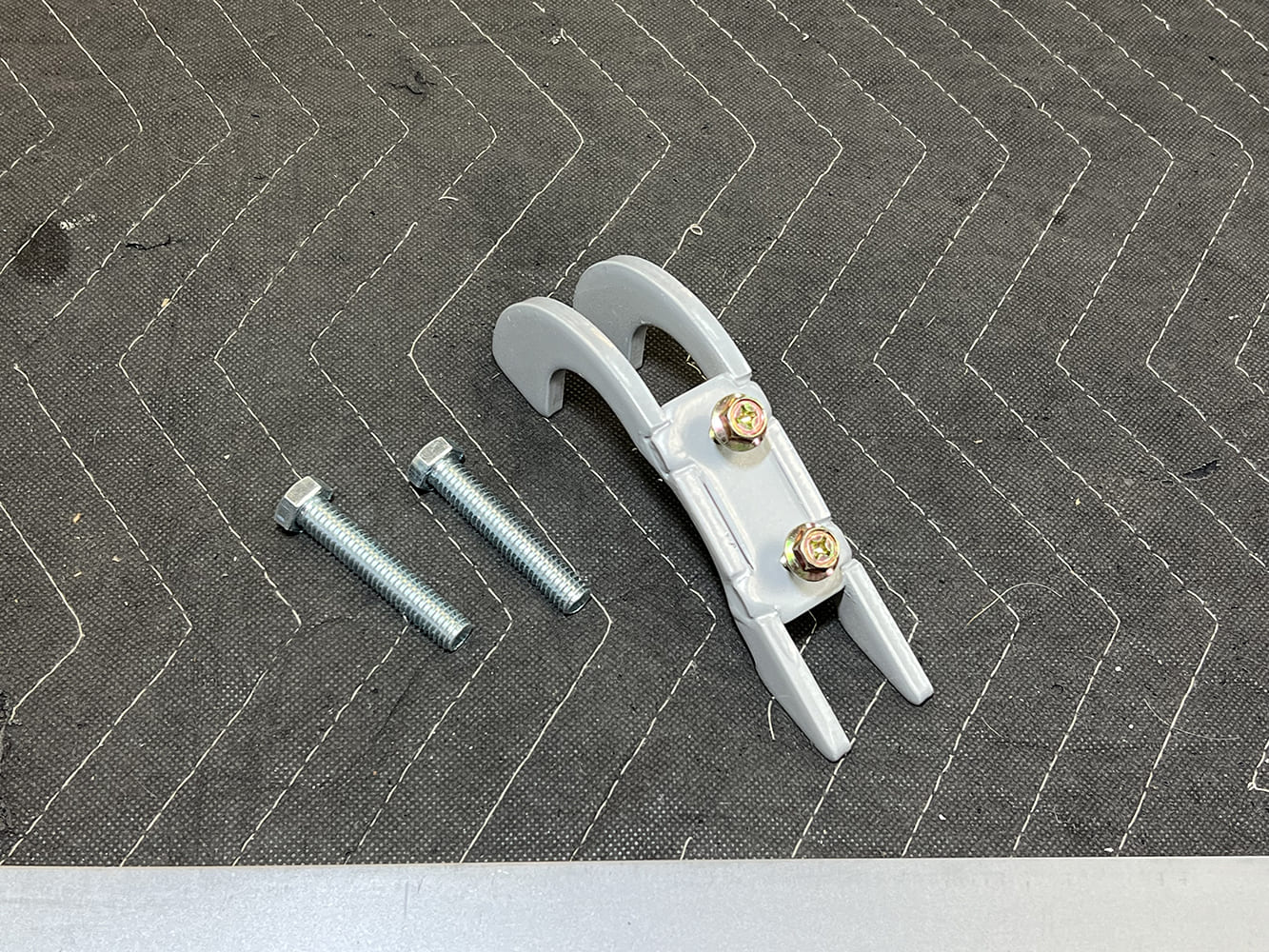
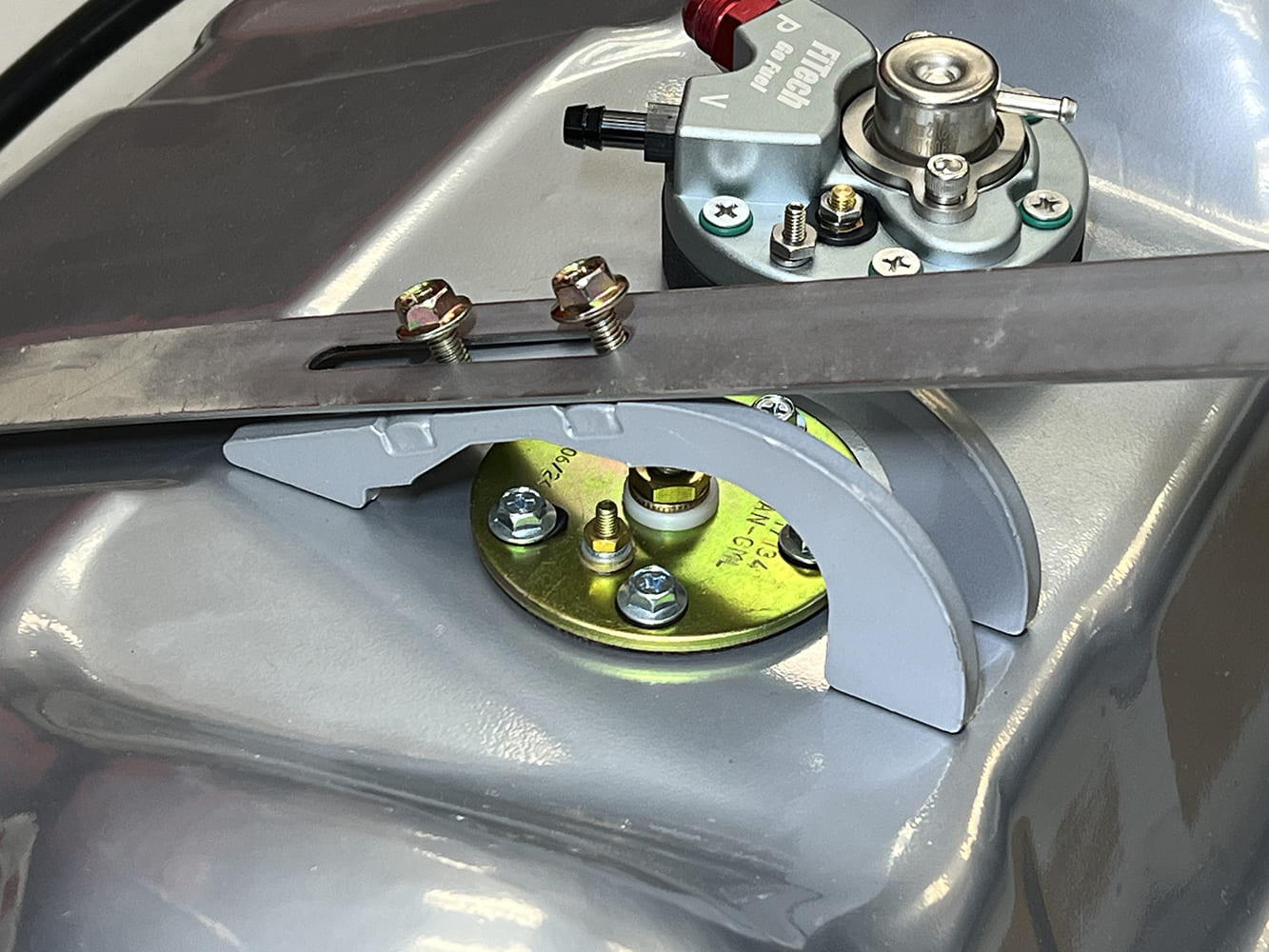
This clever little device is a “bridge” that fits over the gas gauge sender, as it is now in a different position when compared to the original Corvette tank.
Here, the reason for the “bridge” over the sender can be seen.
Another unique feature of the Corvette’s fuel tank. It sits on top of a pair of crossmembers, and the straps hold the tank down from the top.
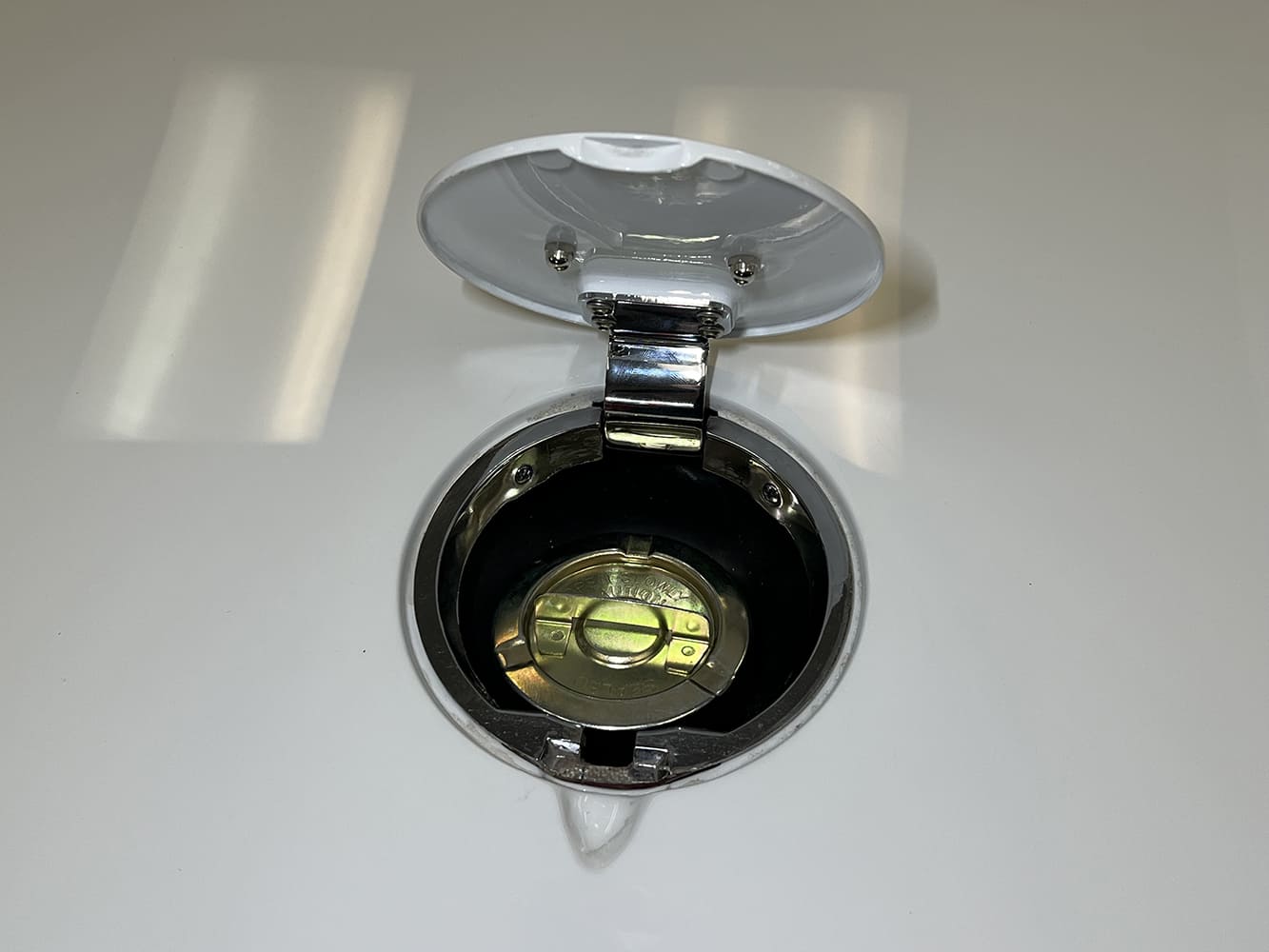
Summit supplied the gas tank cap (MMU-X2451) and the flip-up lid. It can’t be seen in this photo, but the filler neck seal is in place.
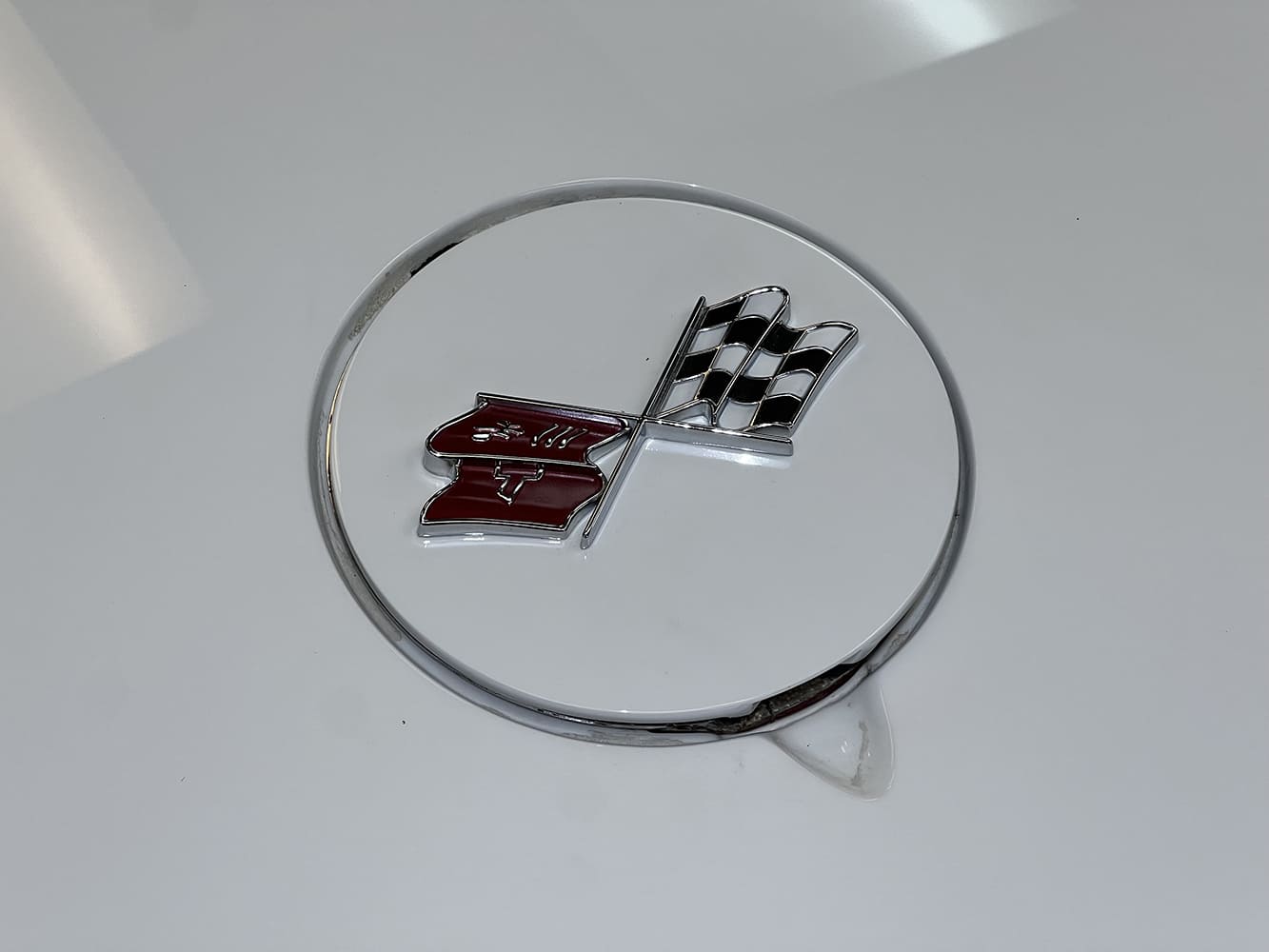
The finishing touch was a new Corvette crossed flags emblem, also from Summit.
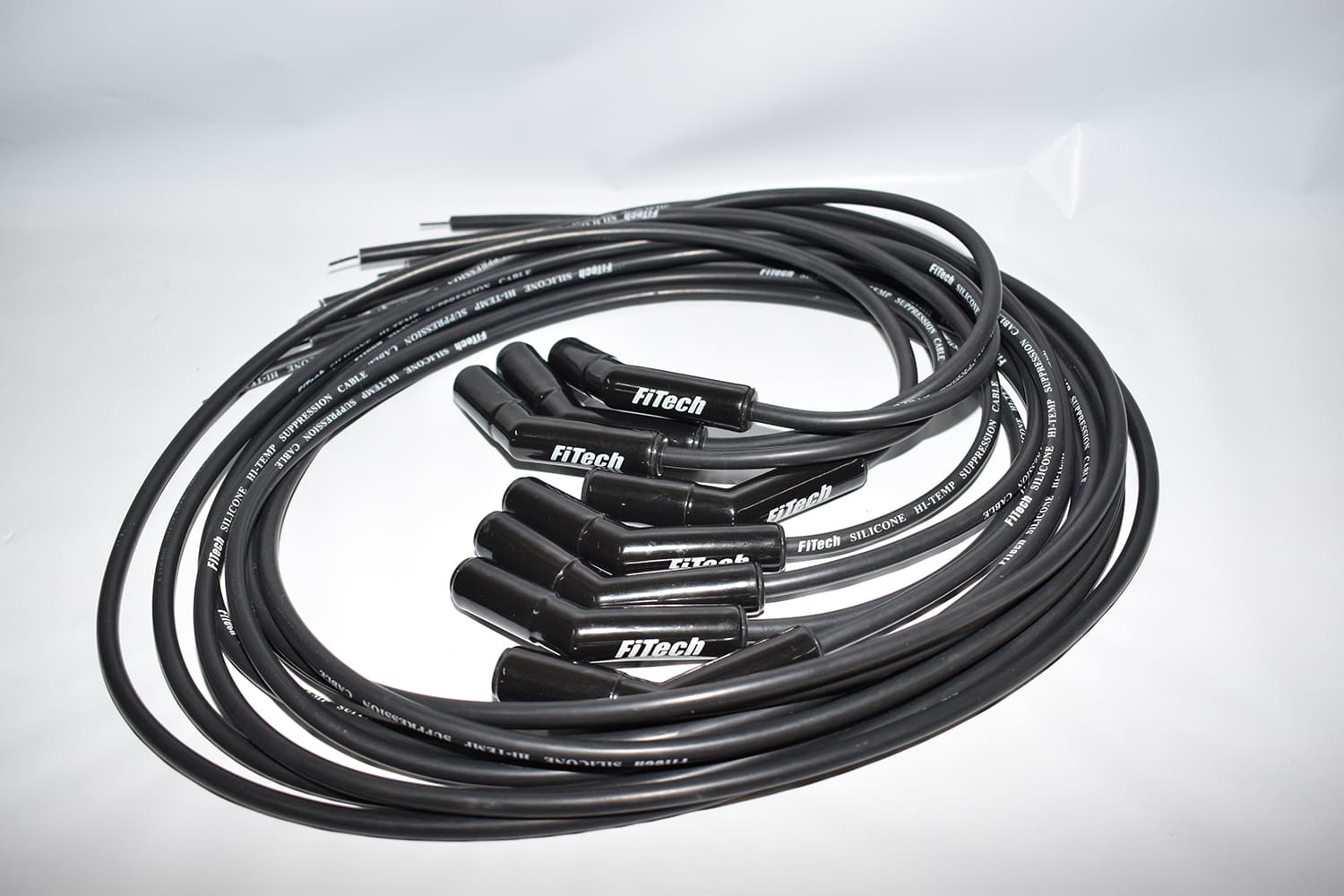
Anytime you install a new distributor, it’s a good idea to install brand-new plug wires. FiTech offers 8mm spark plug wire sets with ceramic ends.
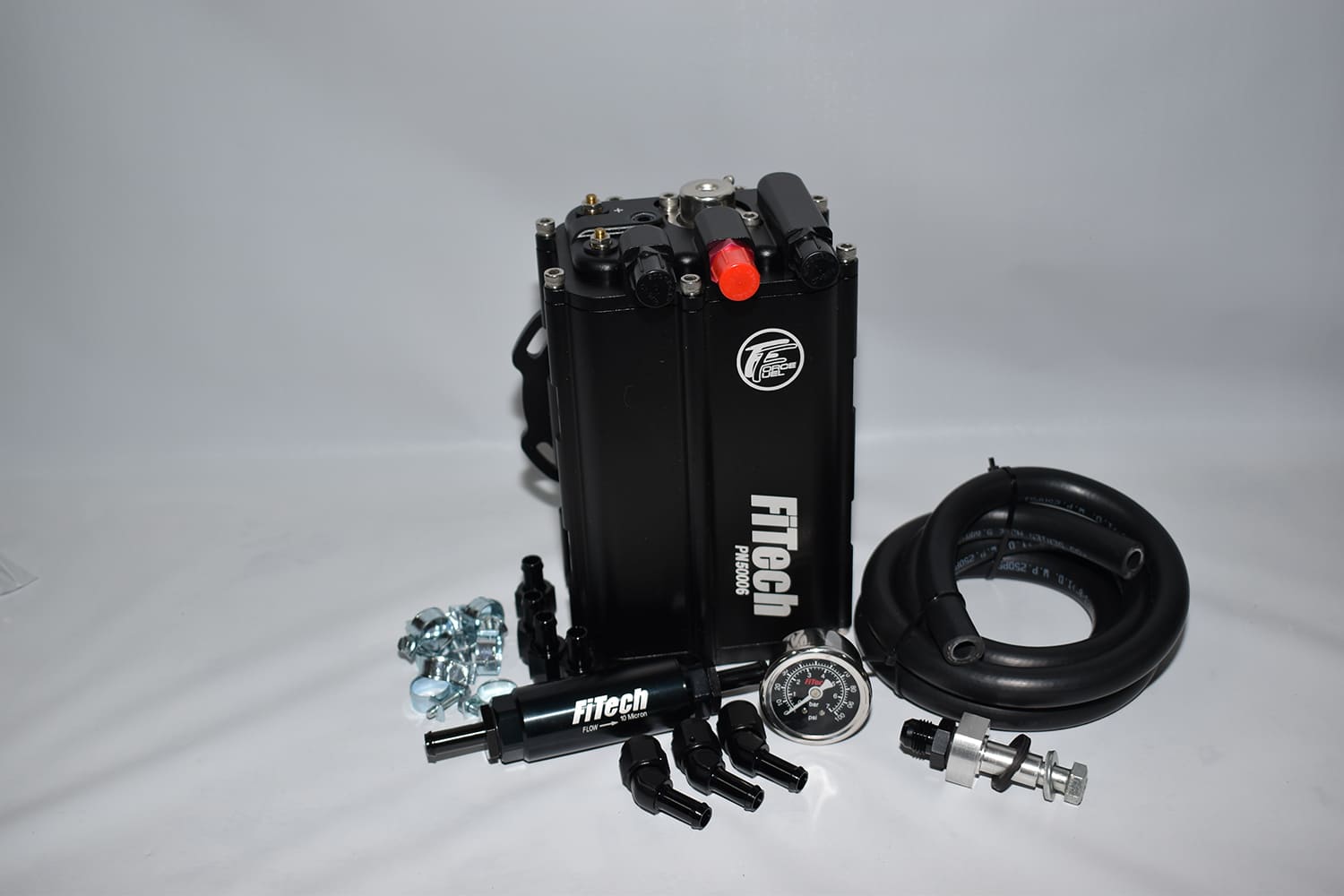
This odd-looking tank is found on many Mopar station wagons, including our 1960 Dodge. It is not a good candidate for an in-tank fuel pump.This is FiTech’s Force Fuel Mini System (PH 50006). It was perfect for our application because it eliminates the need for an inline pump given its depth.
With the AN fitting removed, the included bolt is tightened, collapsing the bung against the interior of the tank. With the bung secured, the bolt is removed, and the AN fitting is reinstalled.
We use cookies to ensure that we give you the best experience on our website. If you continue to use this site we will assume that you are happy with it.