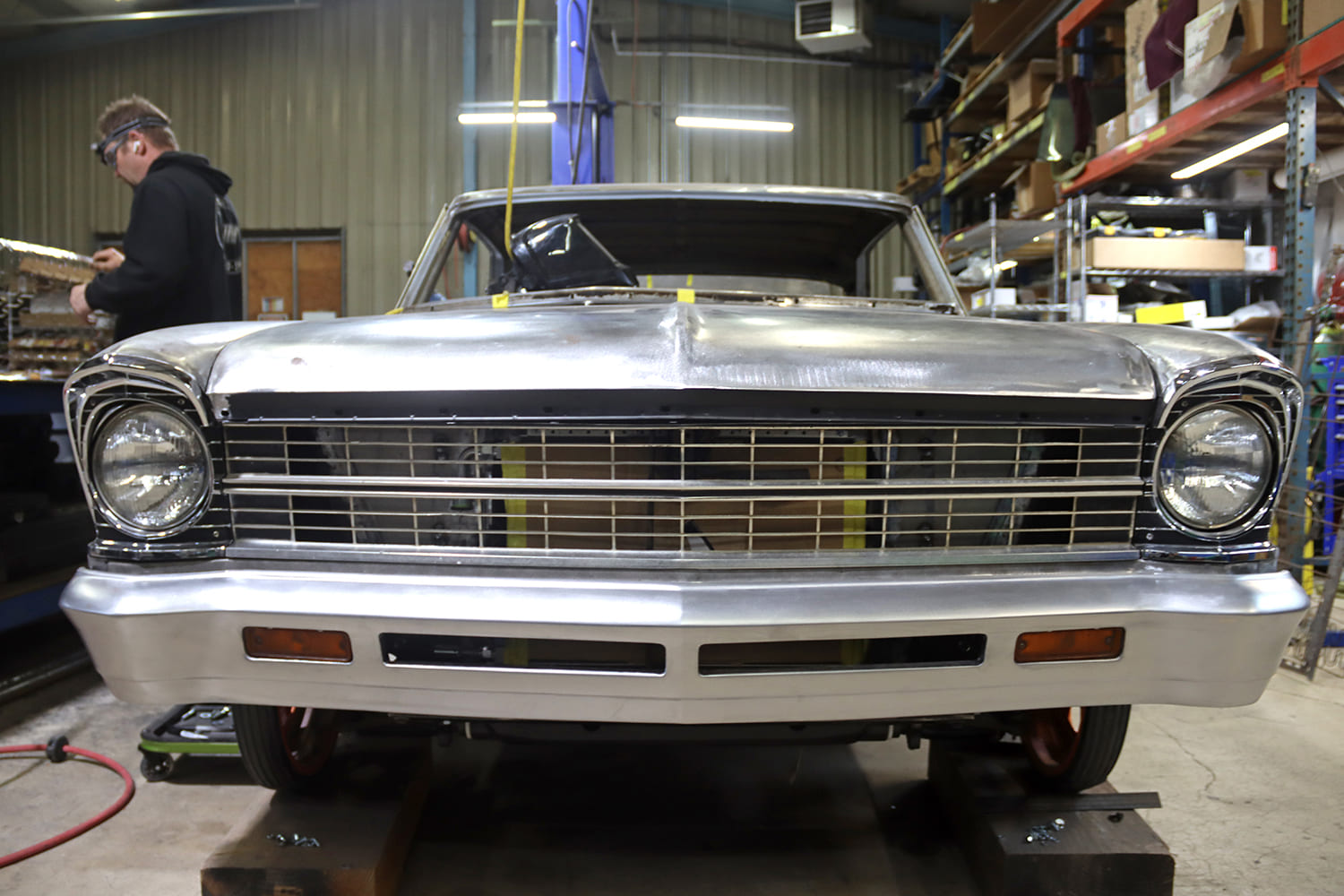
There are a variety of opinions when it comes to personalizing a car like this 2nd gen Nova. For some, the goal often seems to be change for change’s sake. The problem is that change without purpose is often counterproductive and makesthe result less appealing than the original form. The trick to making any car look better is to improve the fit and finish of individual components and simplify them, if possible. That’s exactly what Dayton Eitner of MetalWorks in Eugene, Oregon, did to this second-genChevy Nova.
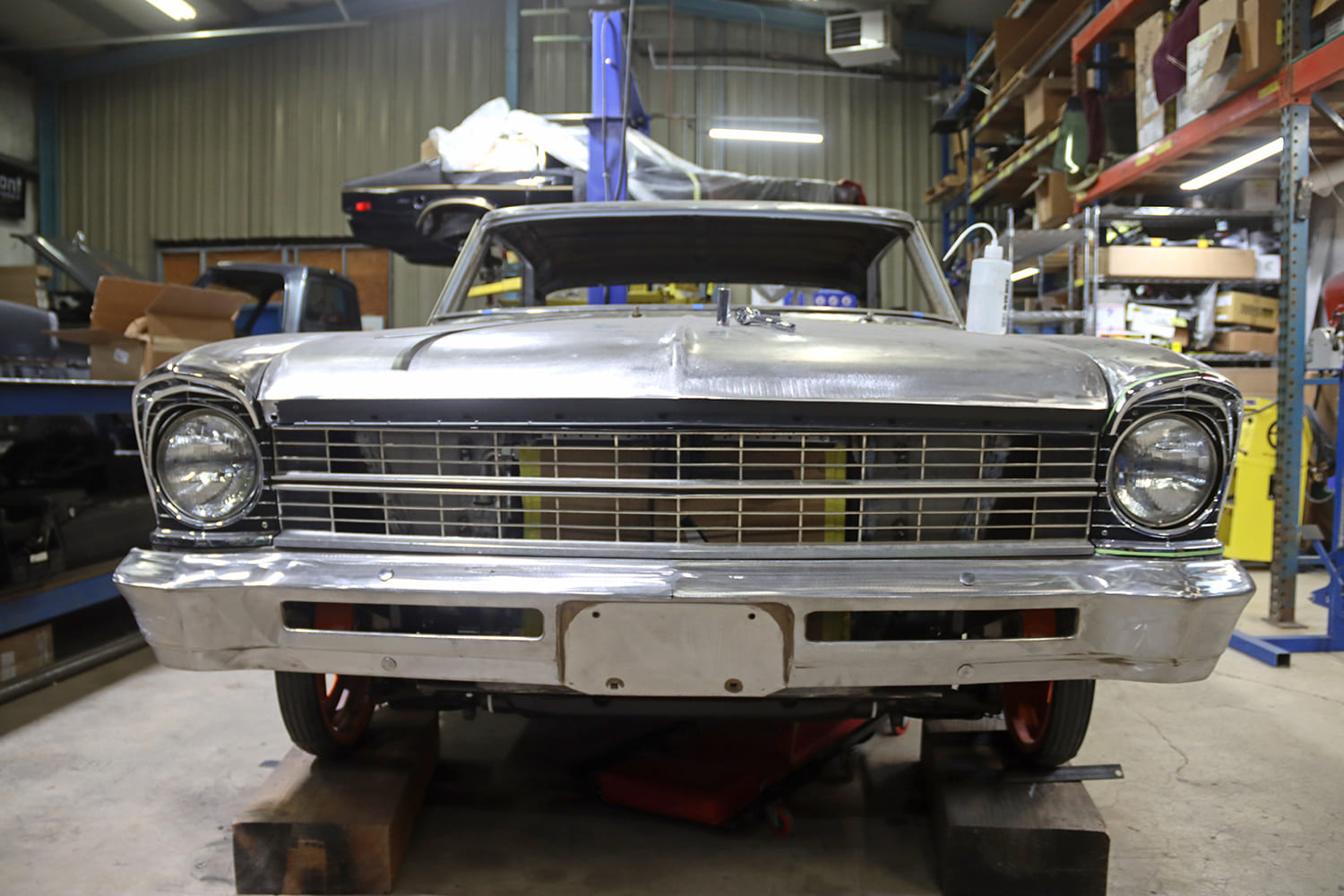
This is what Eitner started out with (minus the turn signal/parking lights). While it’s hard to tell in photographs, the bumper did not fit the body very closely in stock form.
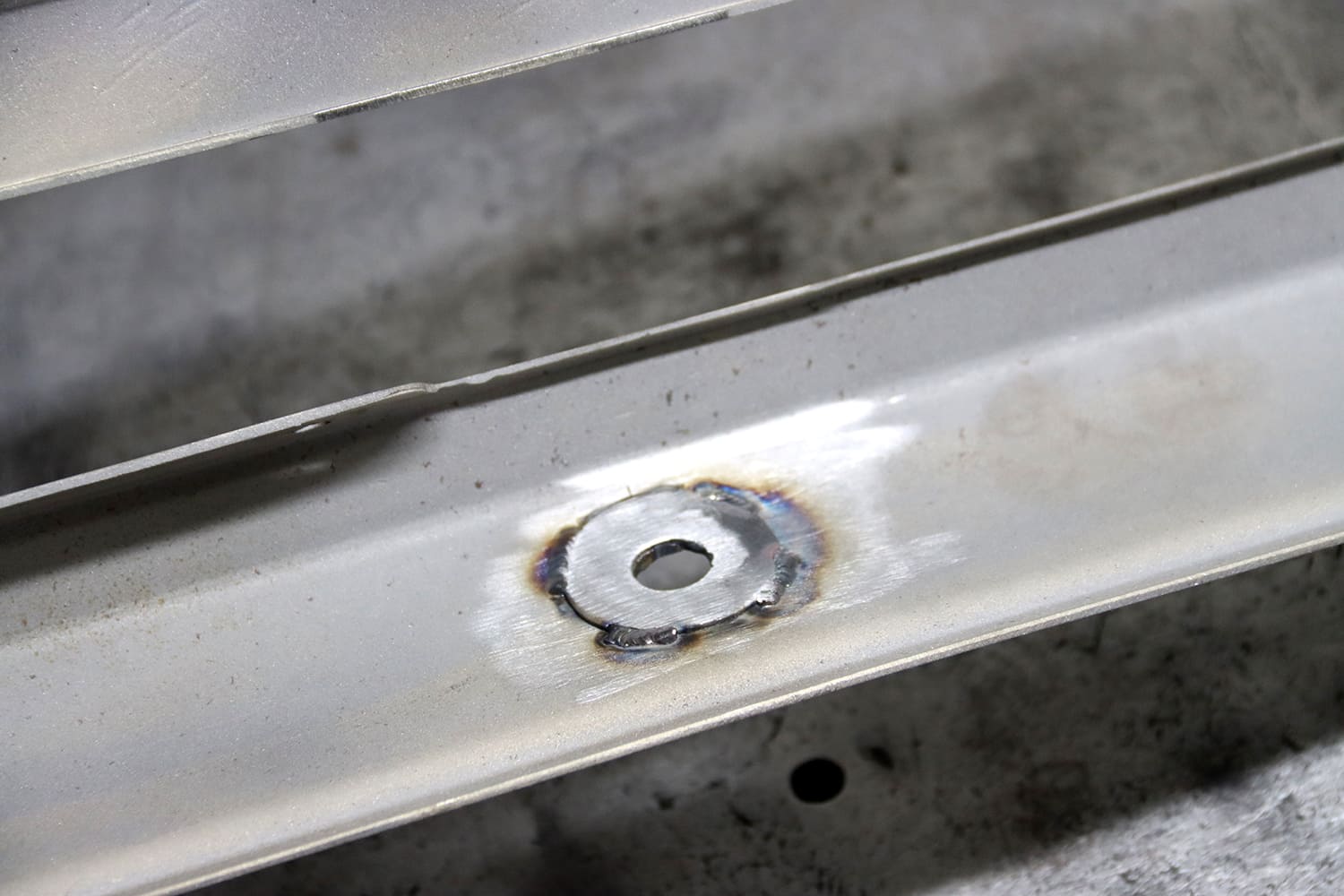
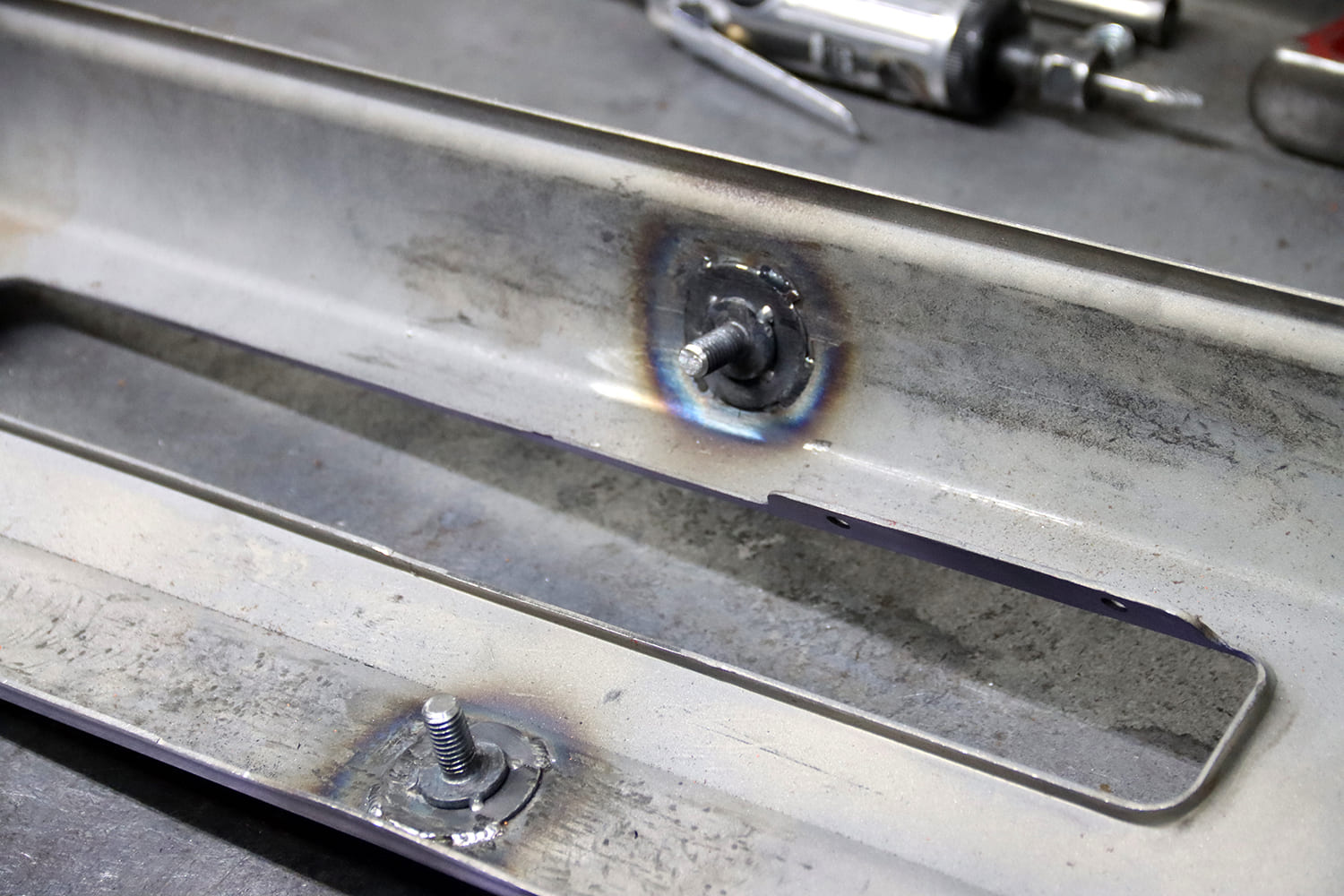
Eitner was tasked with what seemed like a simple job: clean up the front bumper, make it fit better, and give it a “cleaner” look. The process began simply enough.The first to go were the bumper bolts. The holes were filled, and studs were added to the back side, a pretty standard customizer’s trick.
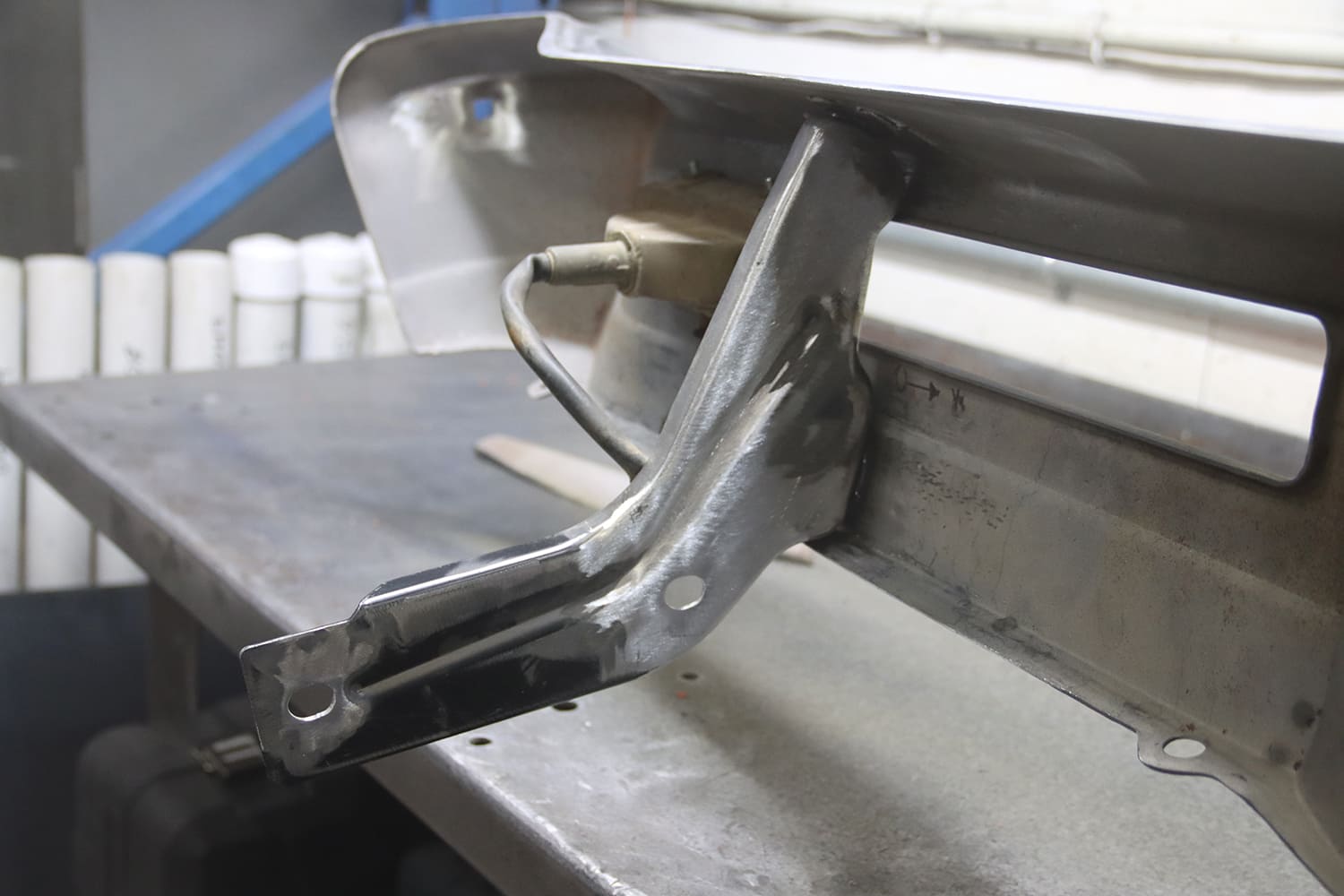
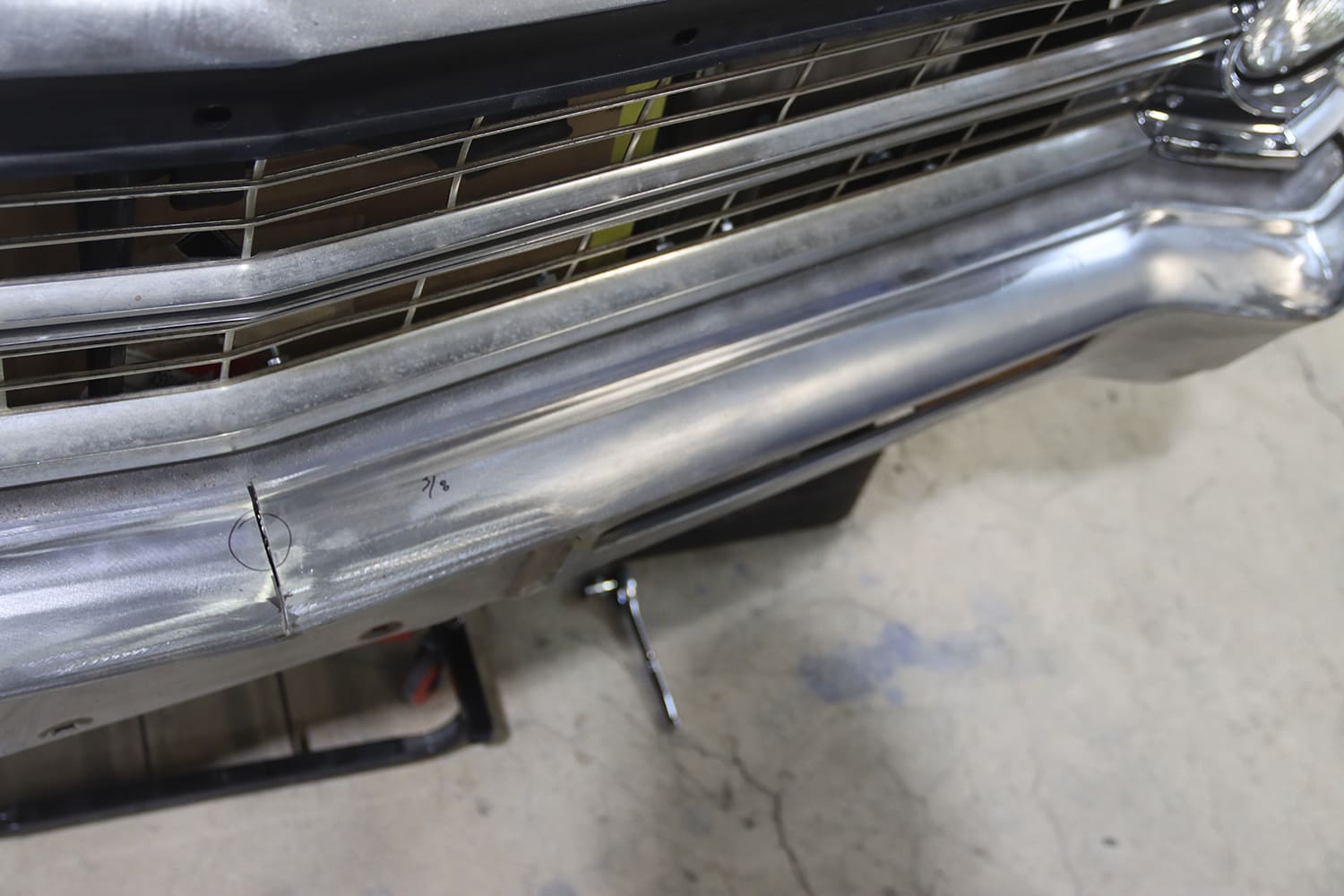
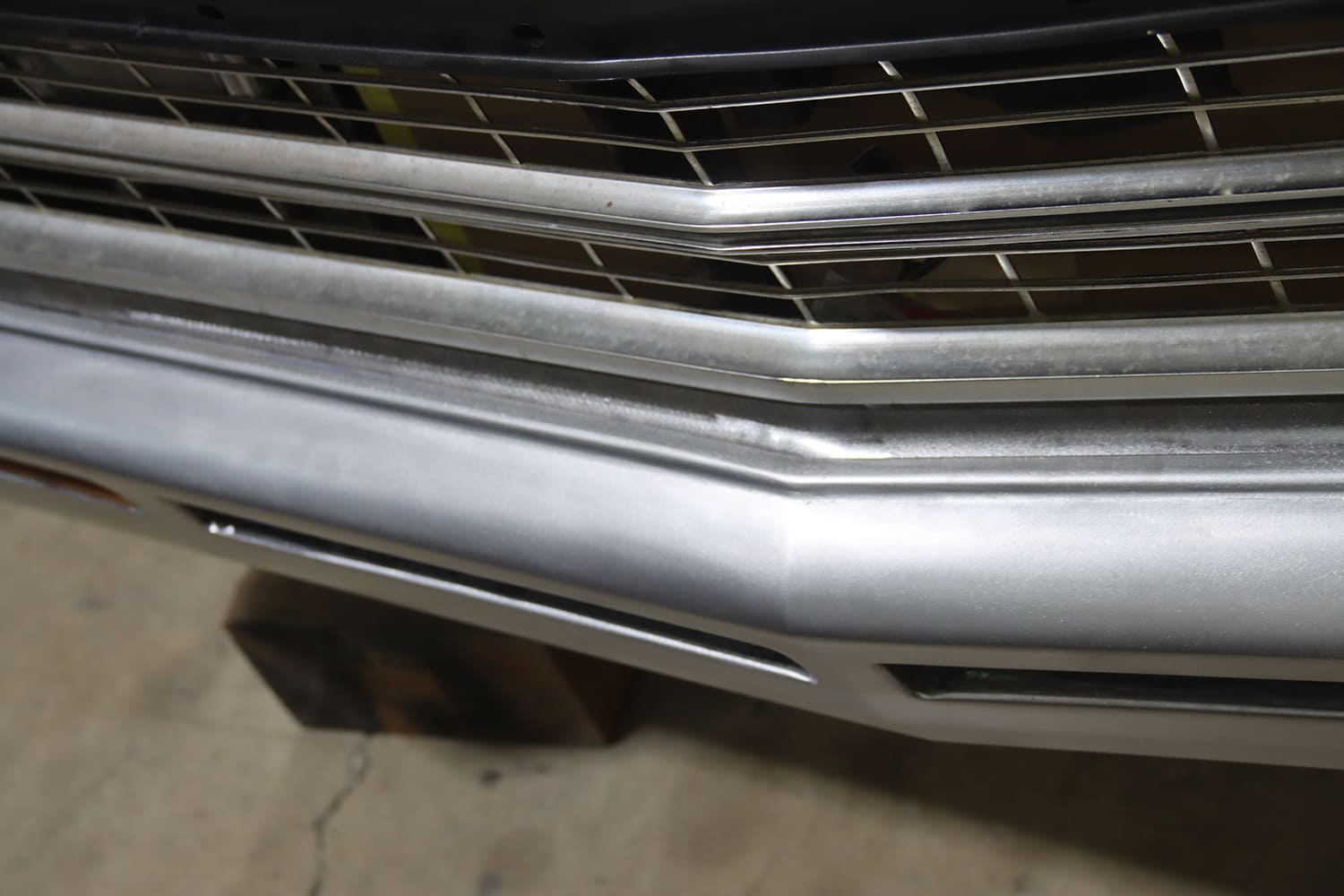
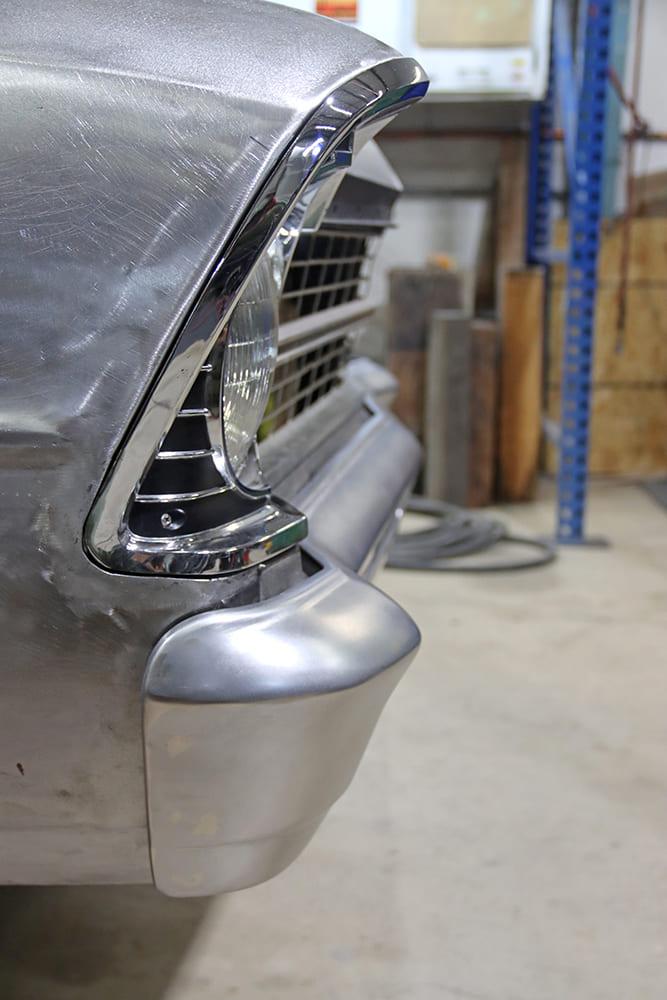
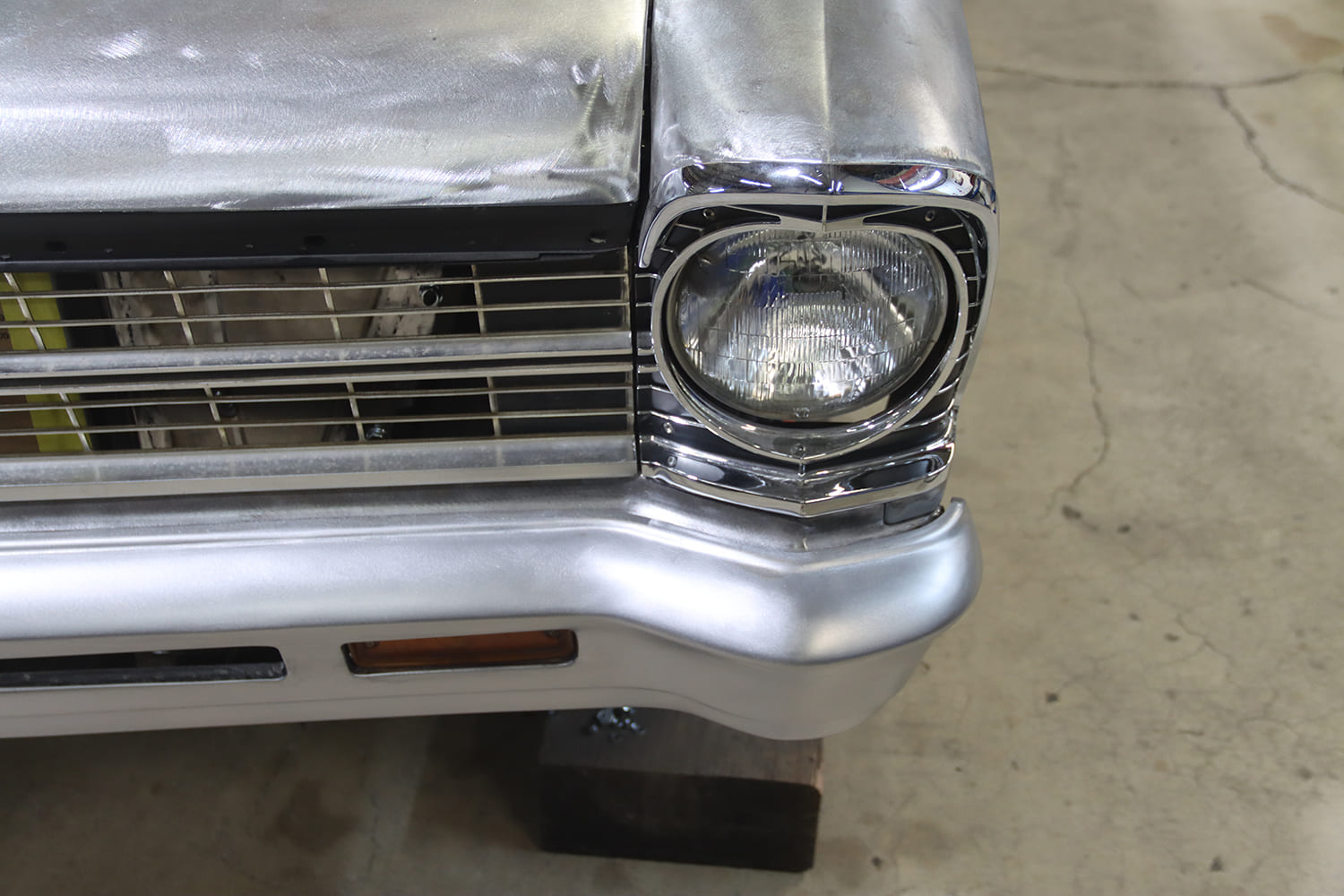
With the bolt holes filled, the bumper brackets were modified to bring it closer to the body and lower it ever so slightly to match the accent line in that portion of the fenders. Eitner cut the bumper in the center, then reshaped it to fit the shape and the peak of the grille precisely, then welded it back together. The ends of the bumper were cut off and reattached to tuck them closer to the body and align their peaks with the peaks in the fenders.
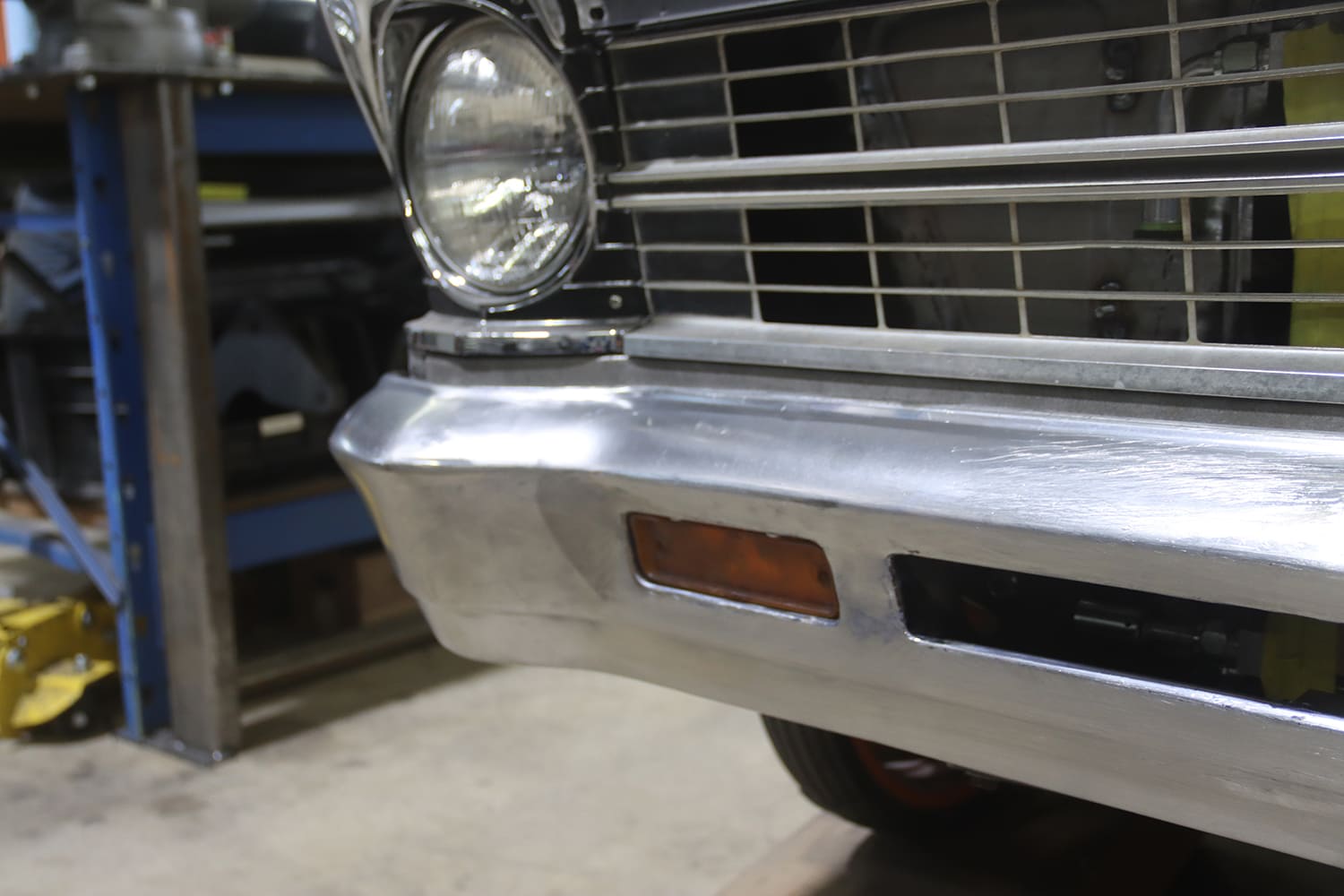
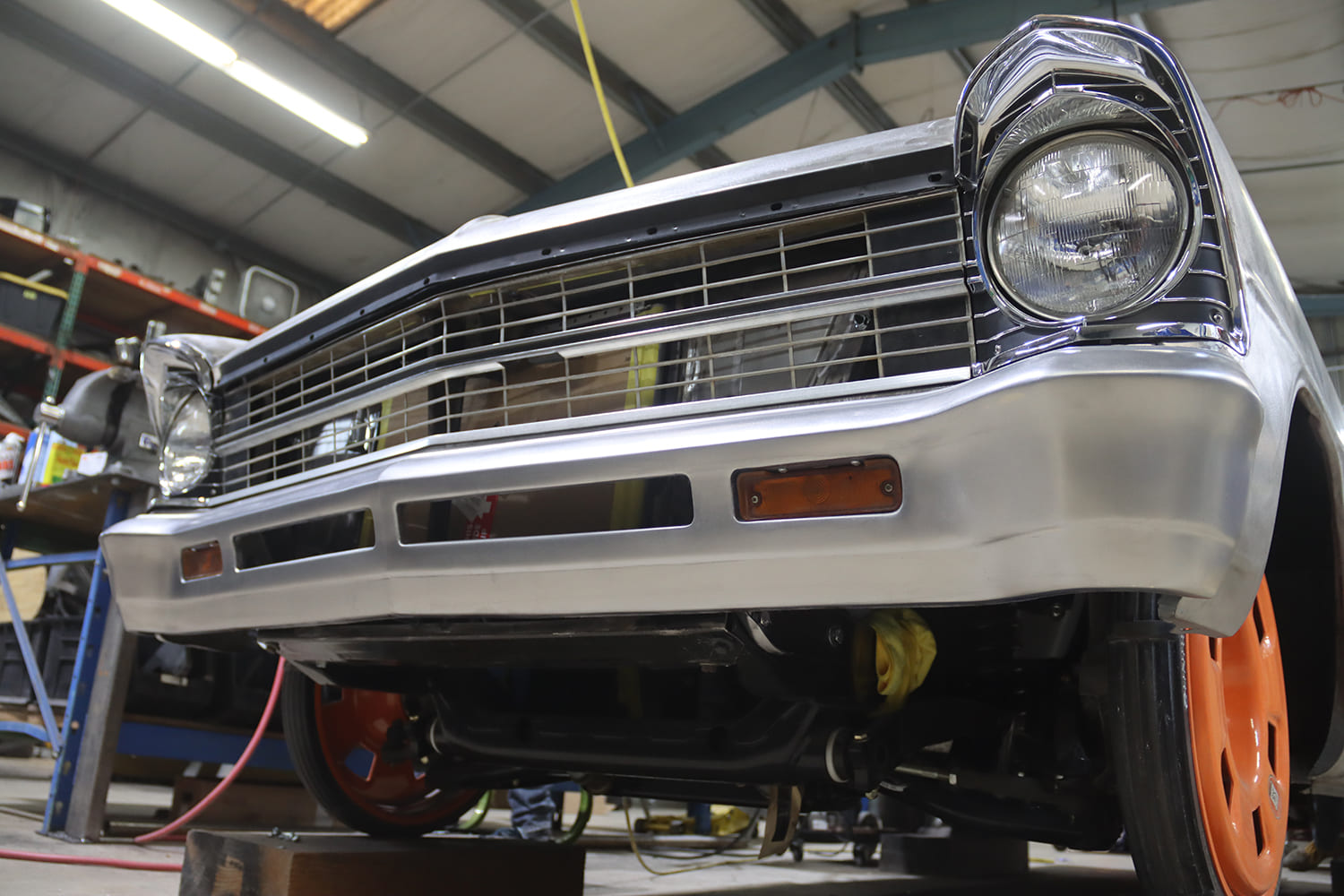
All finished with the light in place, it looks like the factory did it—and they should have.
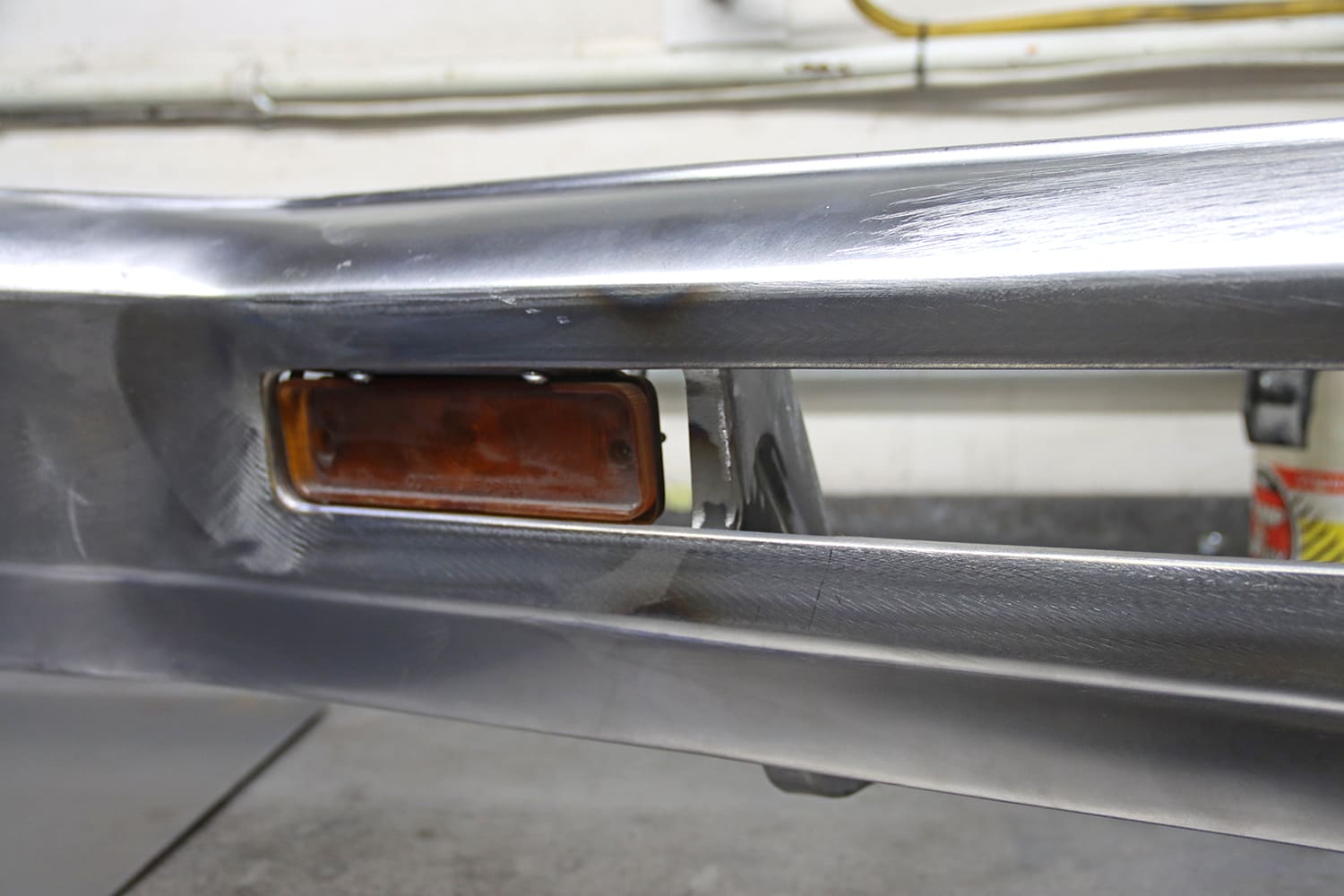
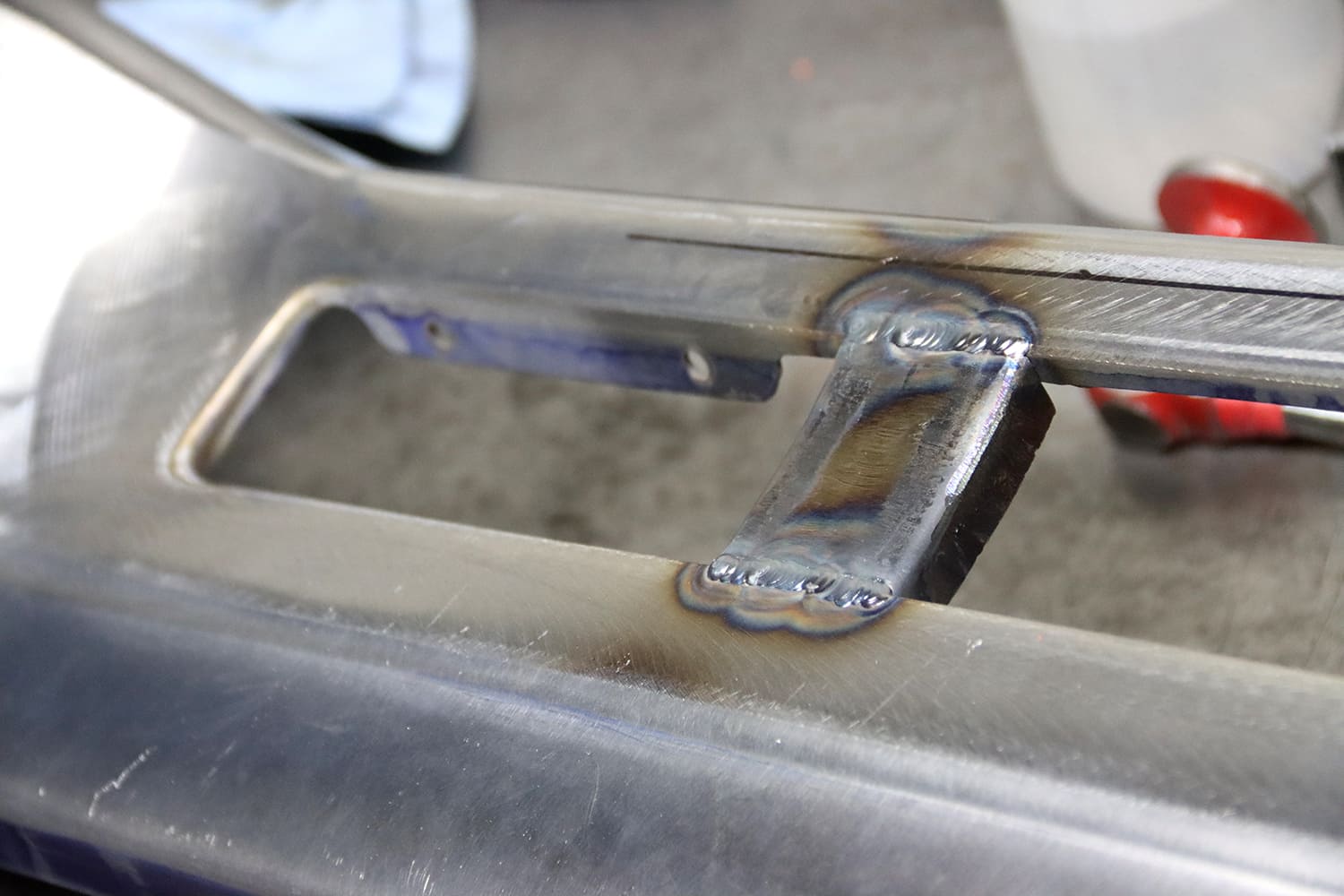
At this point, most would think the goal of cleaning up the Nova’s nose was accomplished, but there was more to come. In stock form, the turn signal/parking lights in the long horizontal slots in the bottom of the bumperlooked like afterthoughts, and they were there because there was no other place to put them. The solution was to create individual openings for the light assemblies so they looked like they belonged.
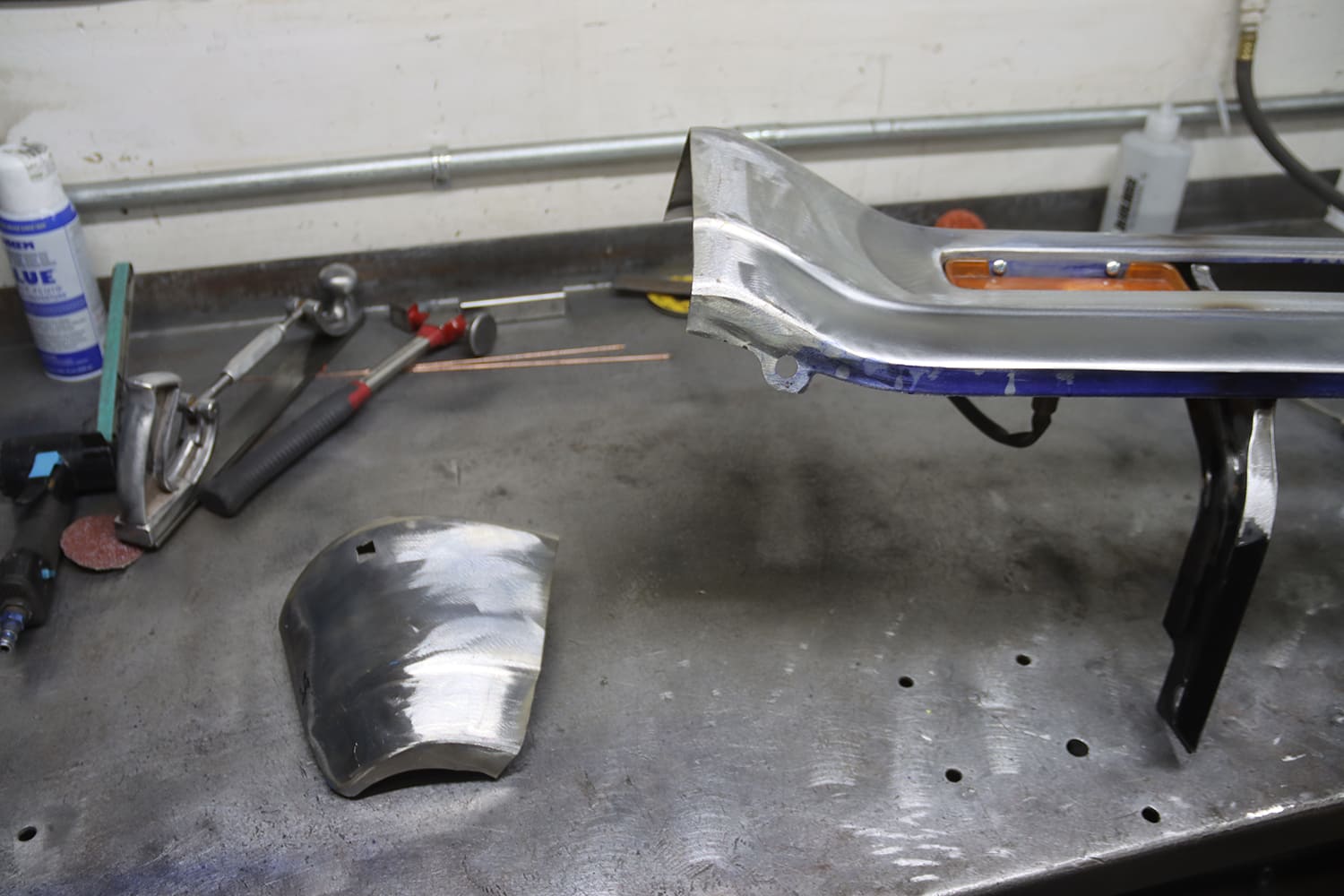
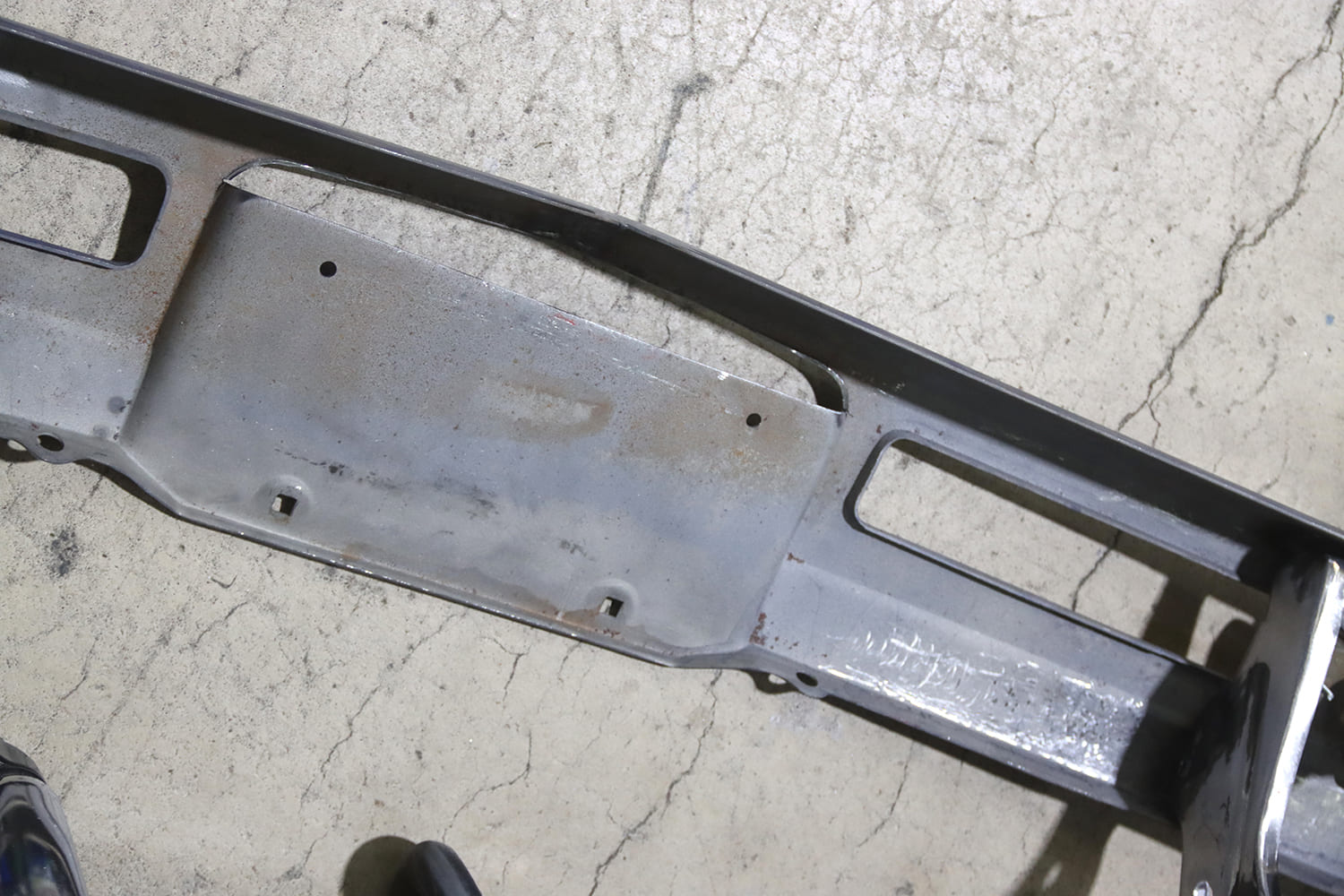
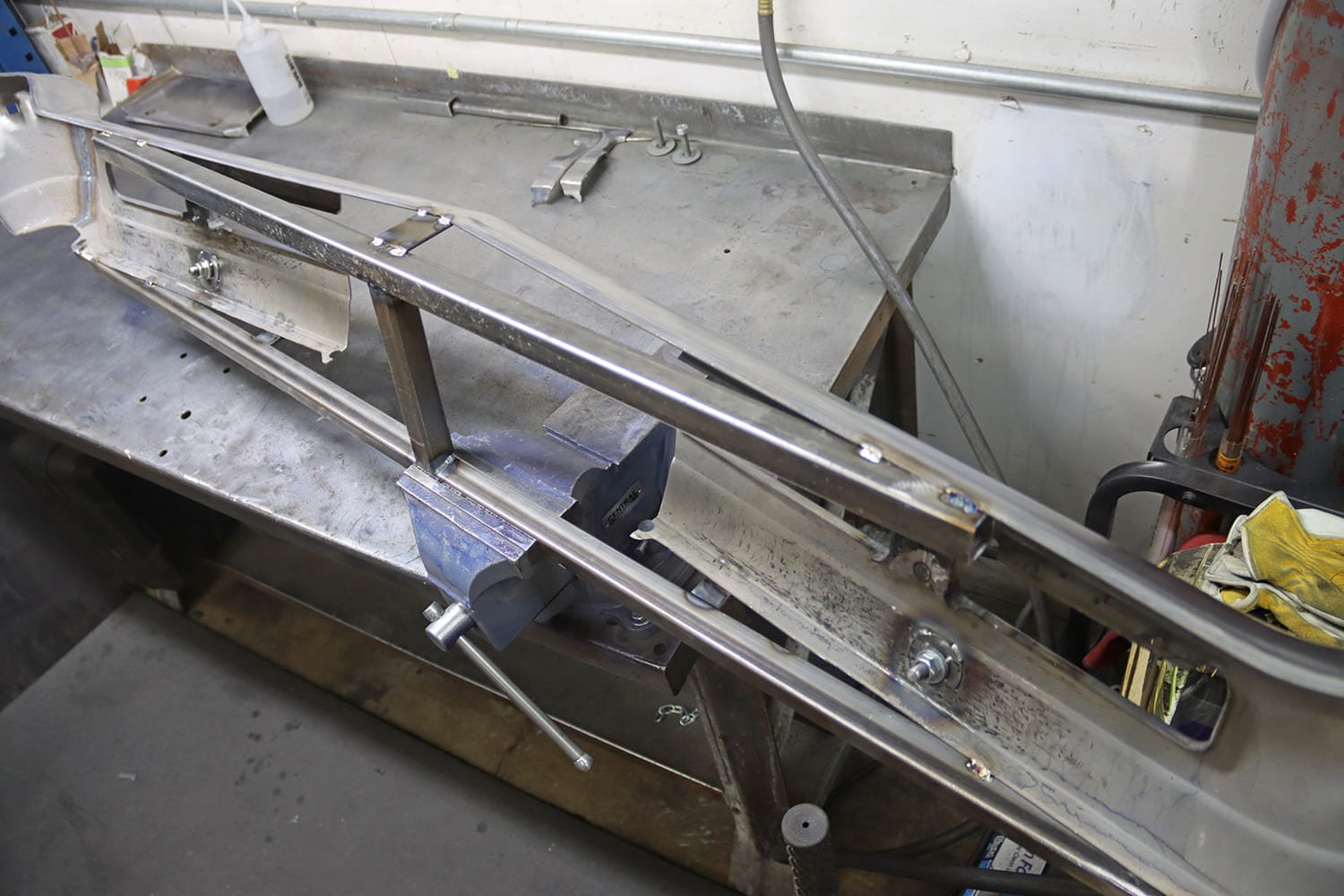
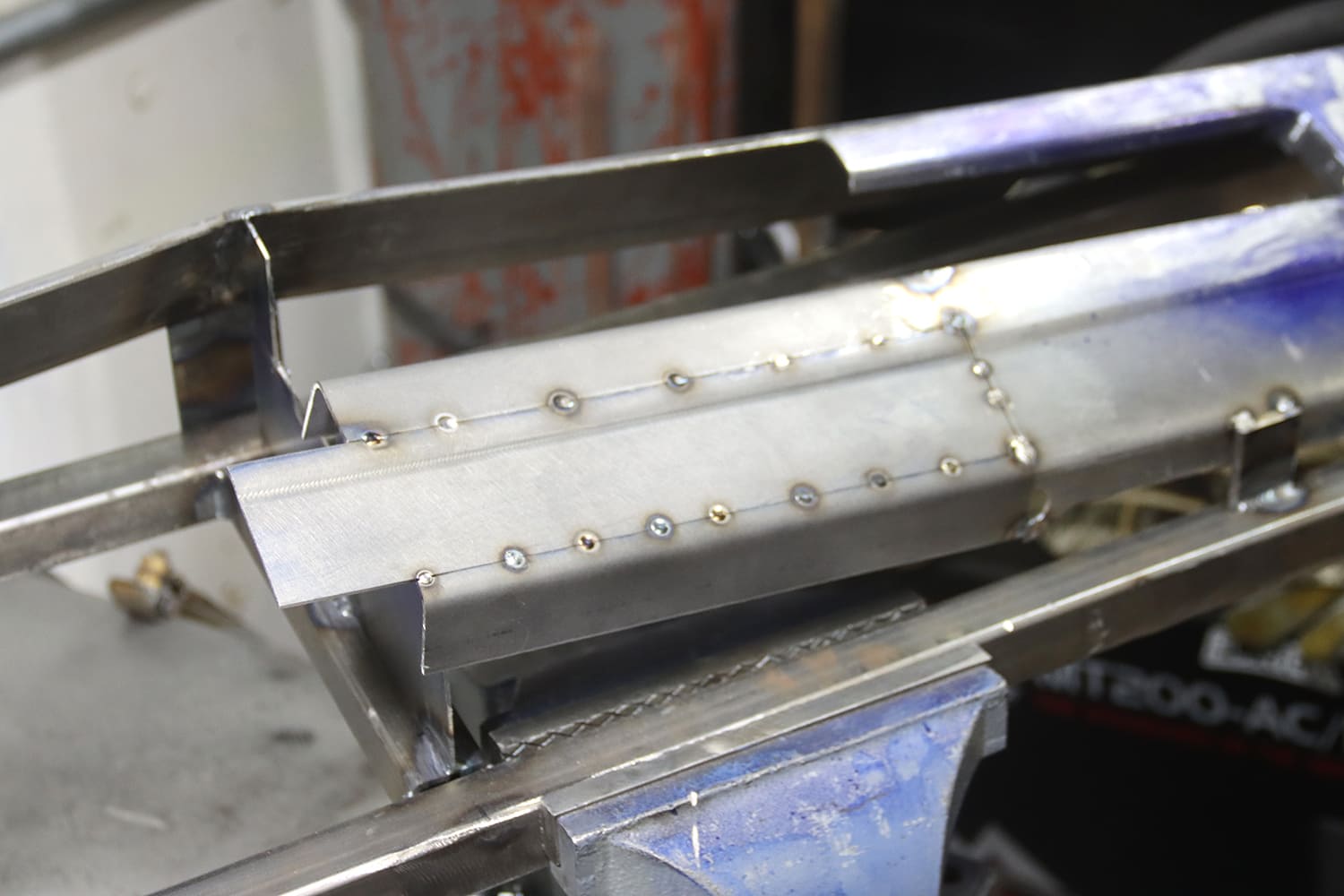
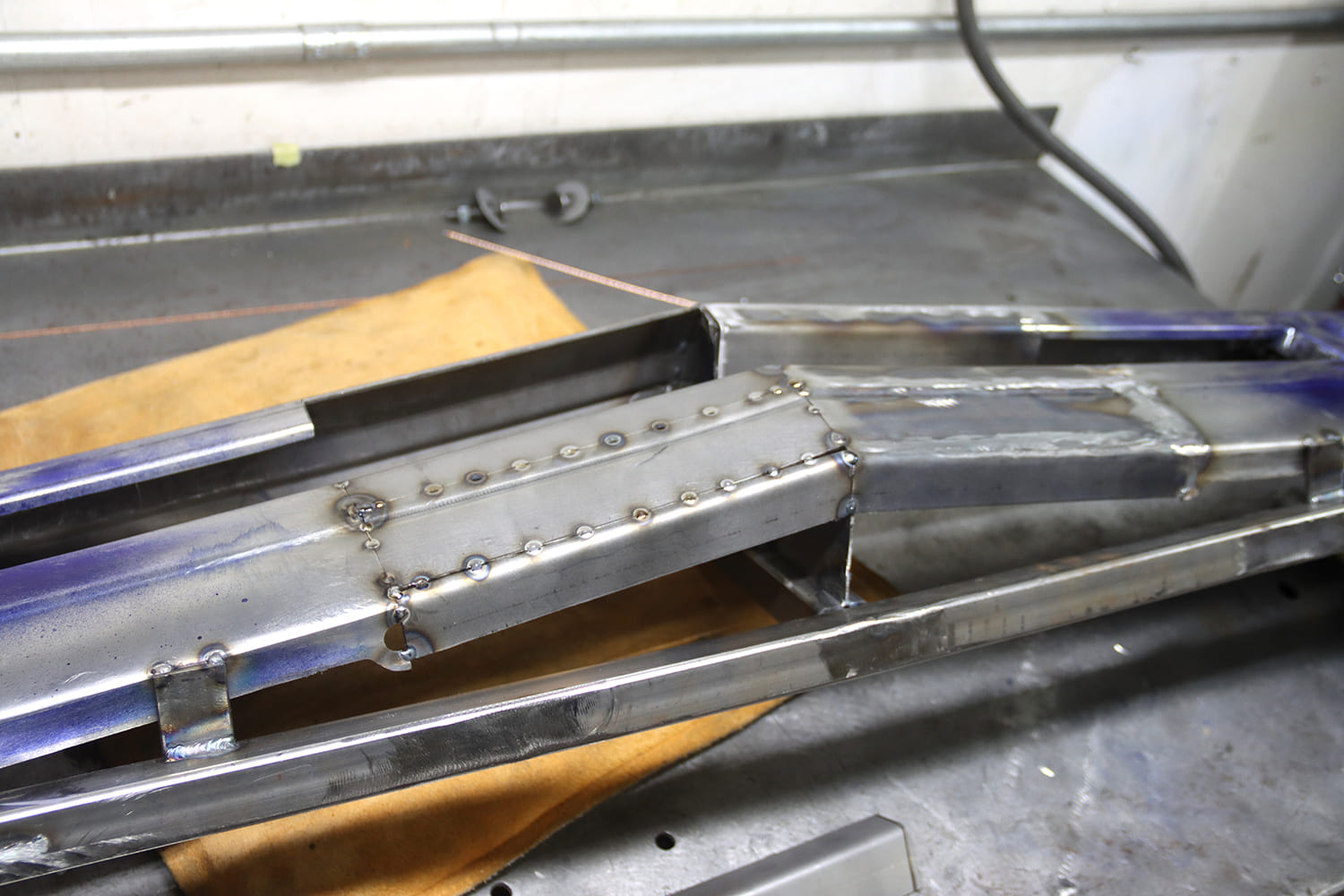
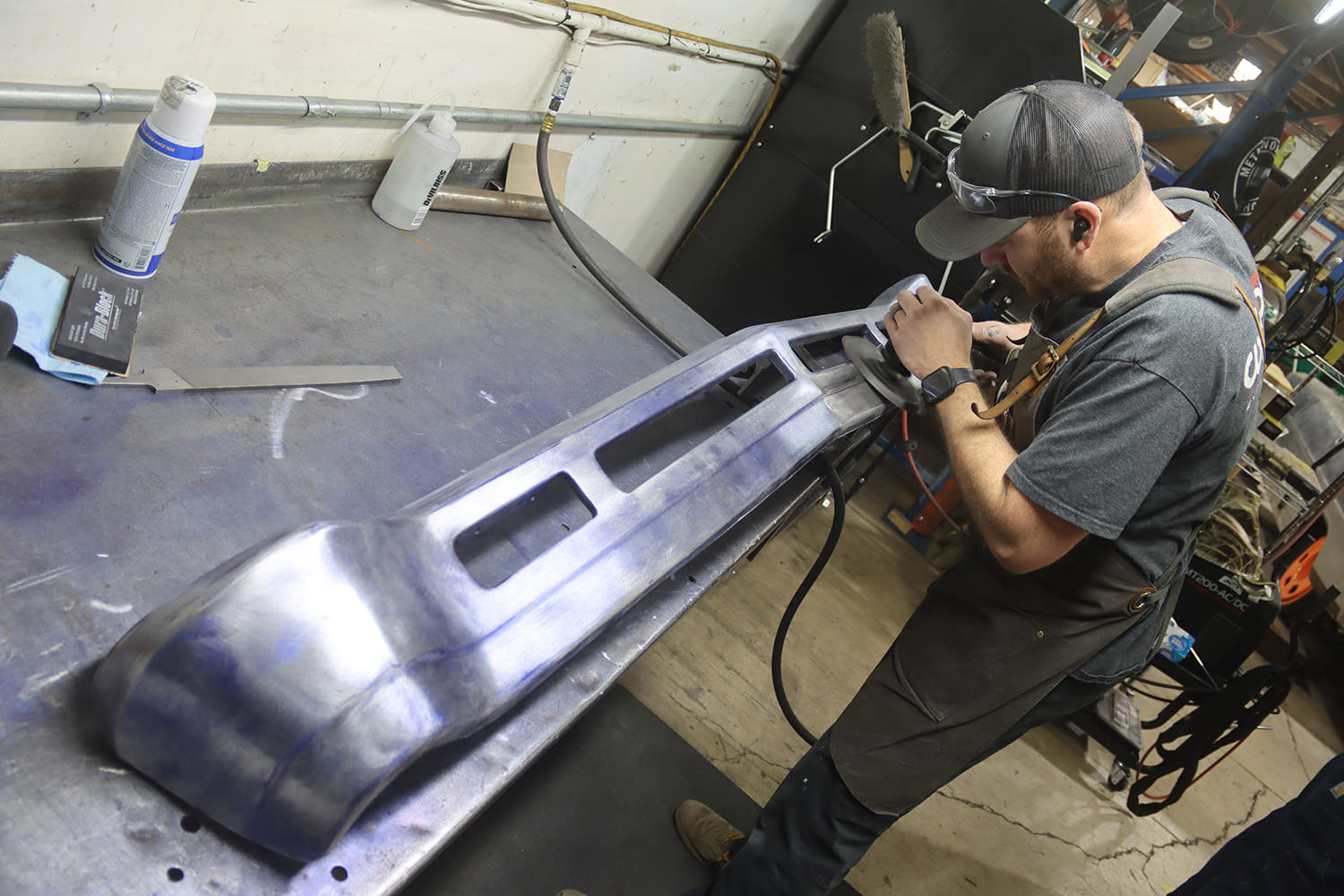
The final modification of the Nova’s bumper was the most challenging. The customer wanted the license plate recess in the center of the bumper removed and smoothed. Eitner built a fixture to hold the bumper and maintain its shape, then the recess was removed, and a new center section was fabricated and welded in place. With all the modifications made,the bumper was metal–finished to perfection in preparation for chrome plating.
The end result of Eitner’s efforts is so subtle and looks so right it’s hard to recognize the amount of effort involved. There’s no question all the work was worth it, but it just goes to show simplicity can be deceptive. It’s not always as simple as it looks.
More features and tech related to fabrication here.
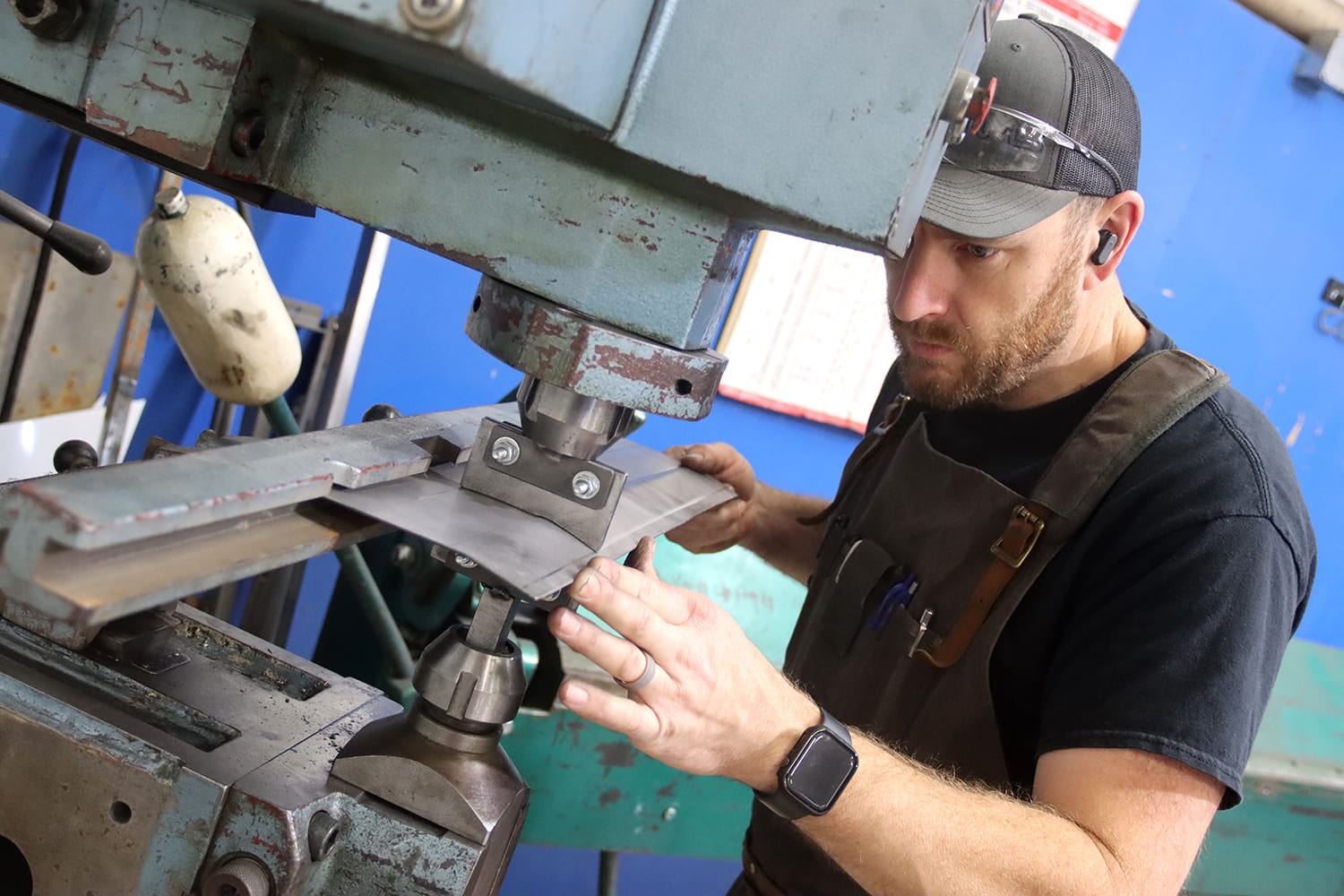
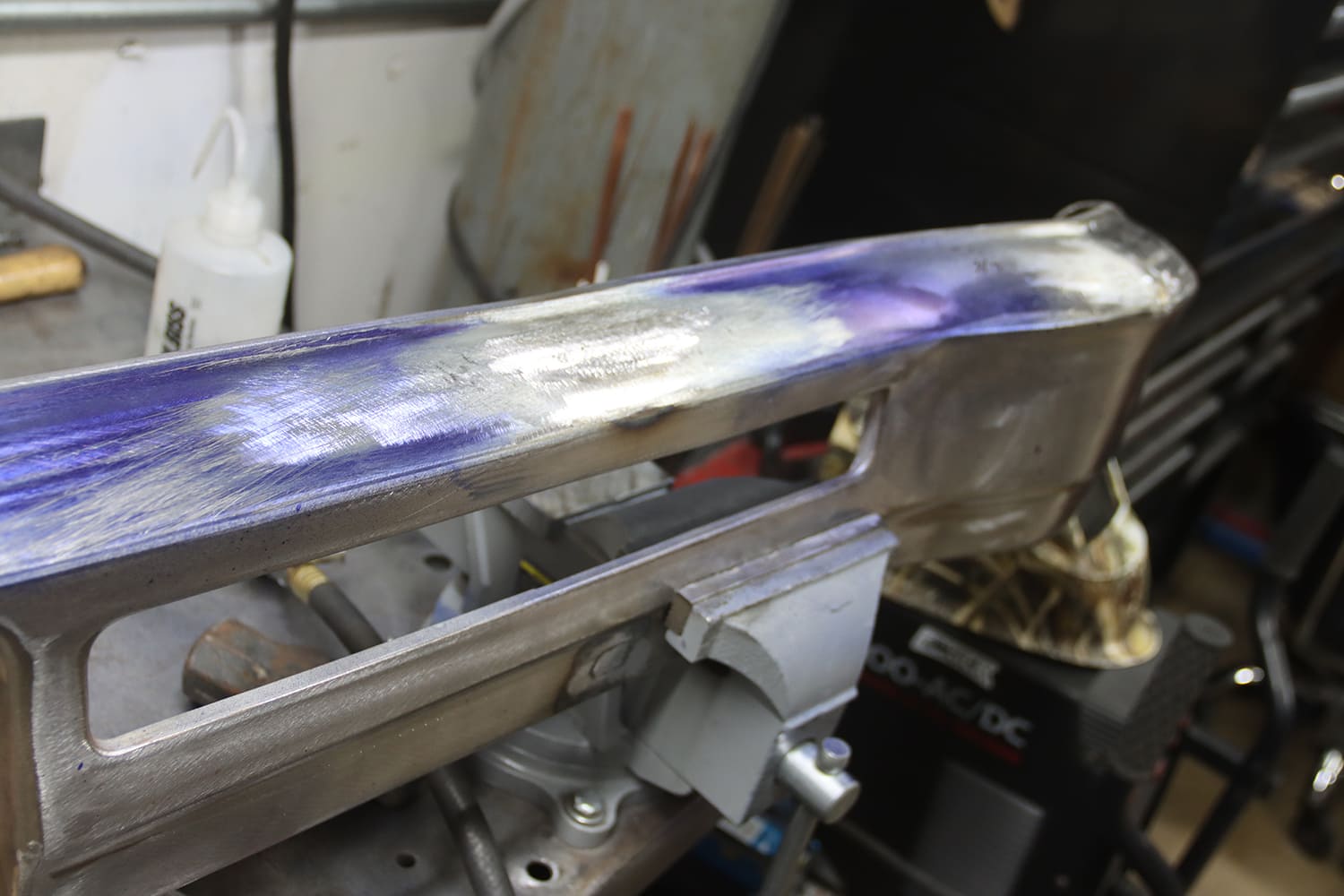
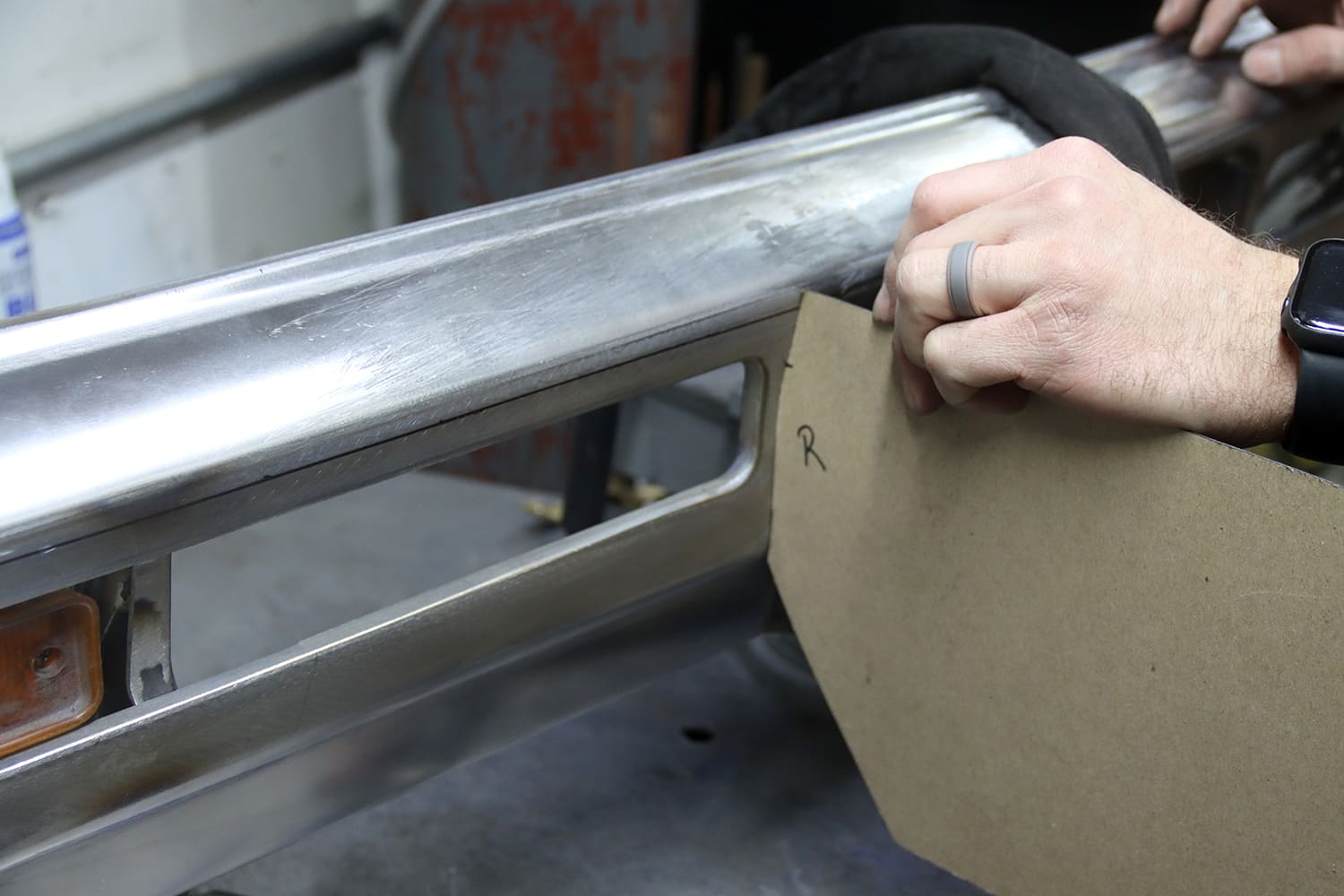
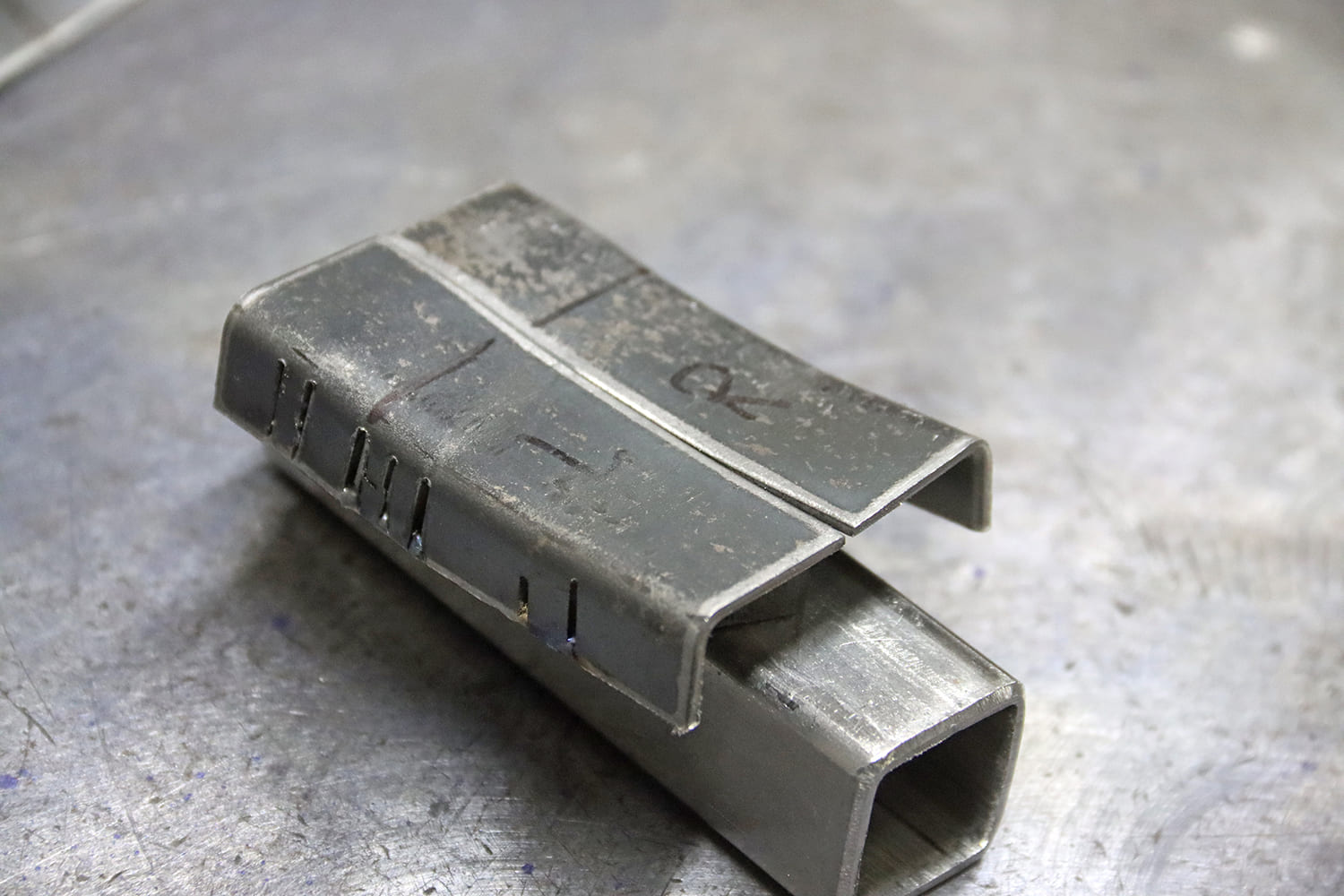
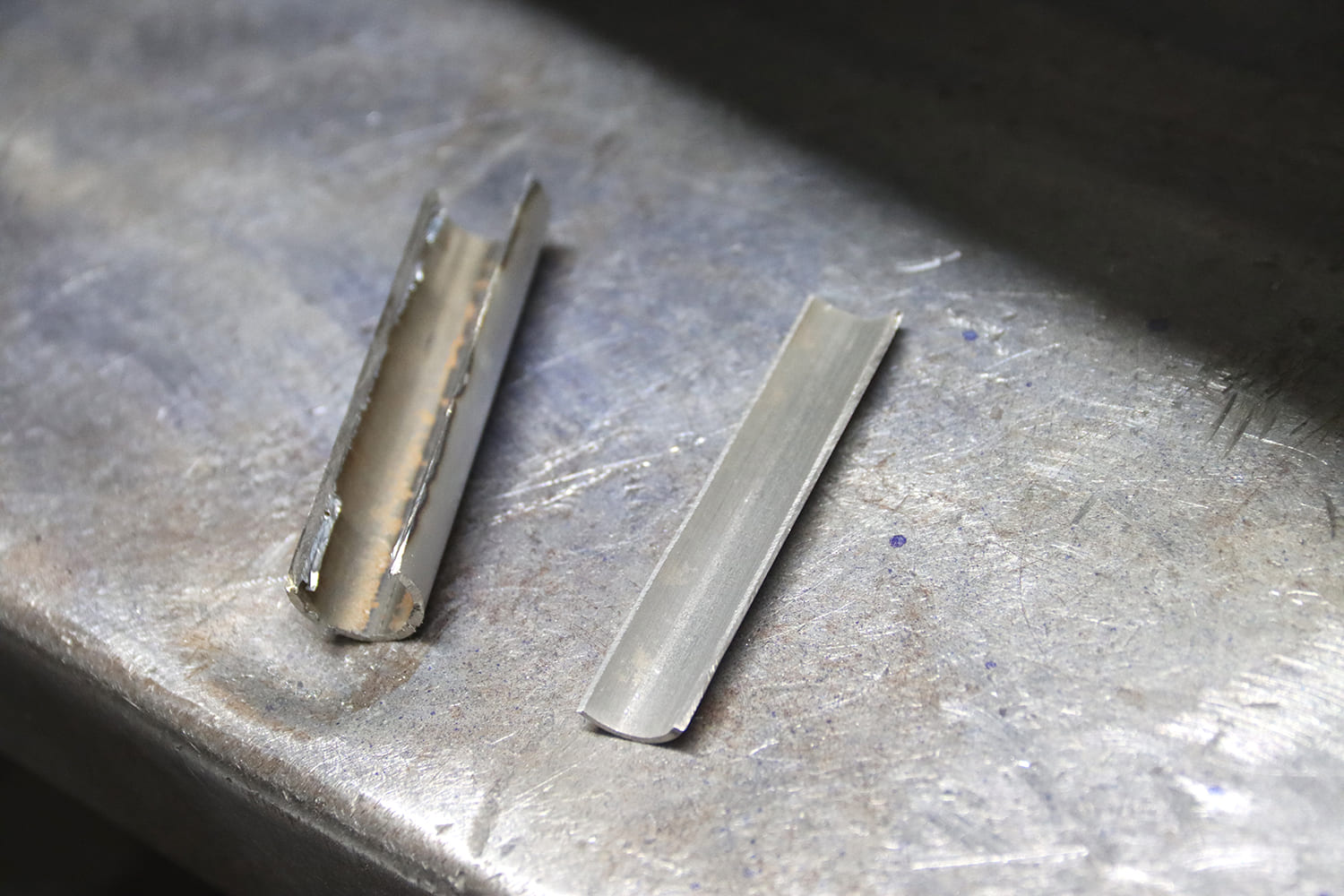
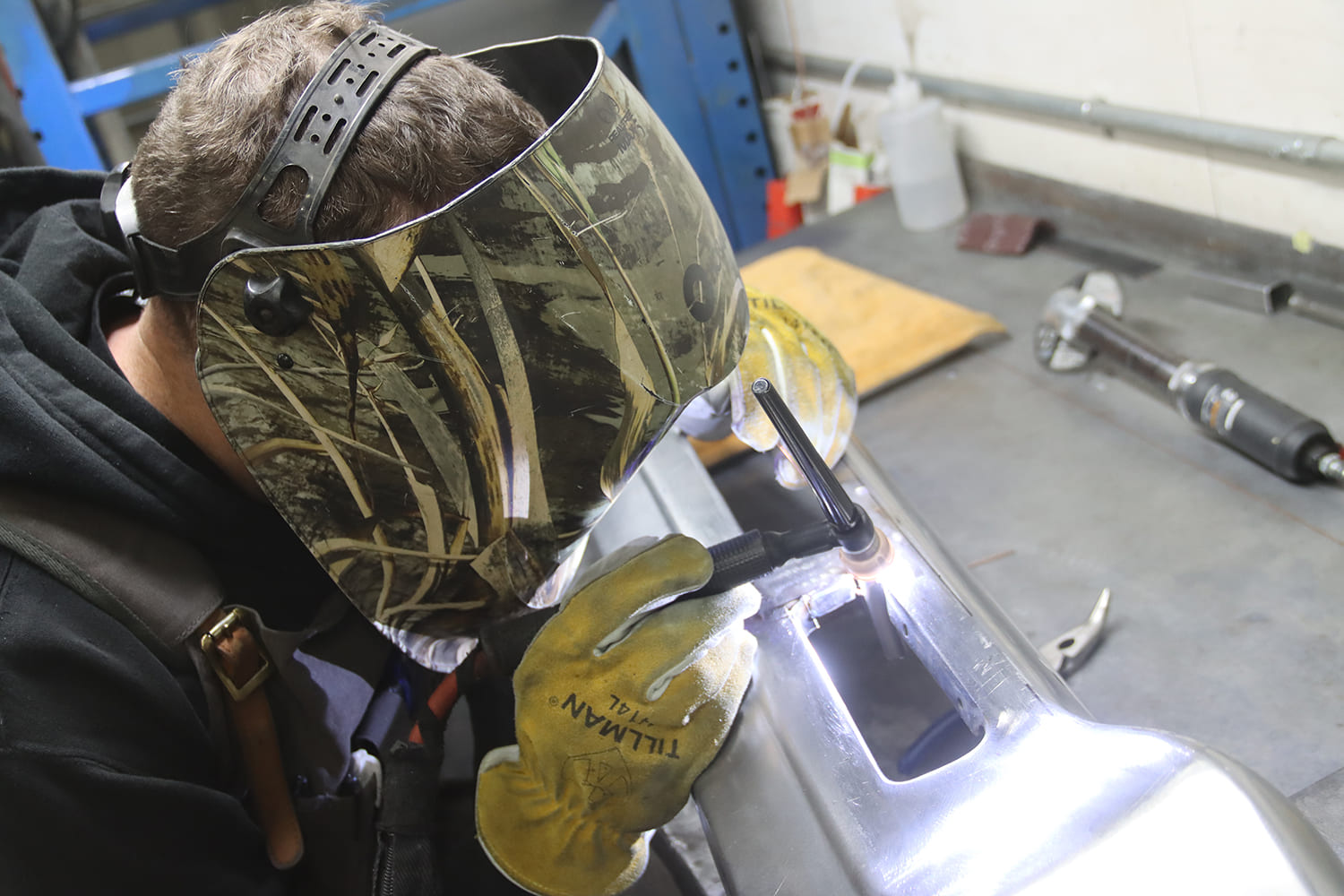
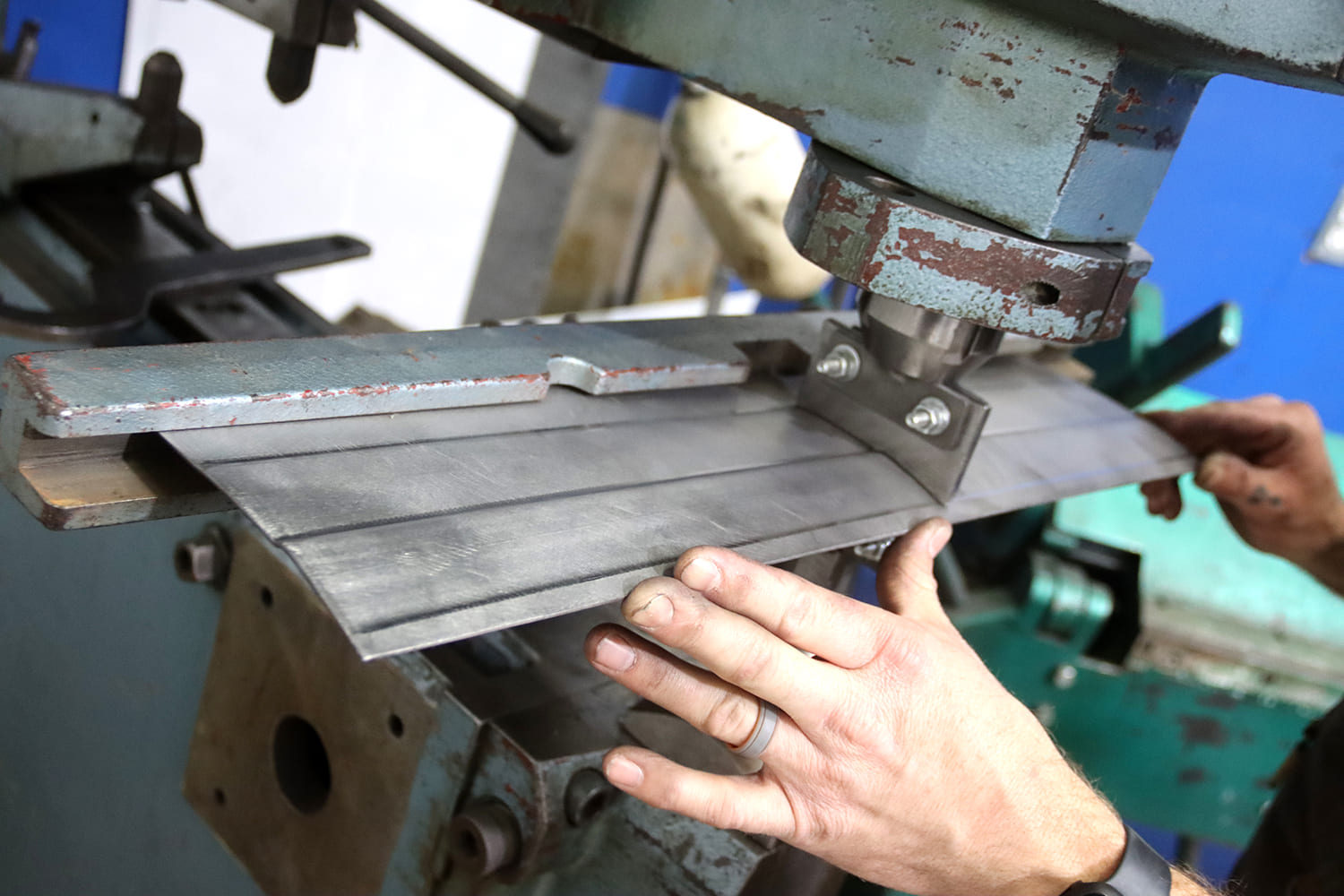
MetalWorks’ Dayton Eitner made a long list of modifications to a 1967 Nova front bumper, including making a new centersection from 14-gauge steel.Often, the best modifications are so seamlessly integrated that they’re nearly invisible—but that’s exactly the point, isn’t it?To smooth the bumpers, the factory bolts were eliminated. The holes were filled and reinforced with washers.The bumper will now attach to the brackets with studs welded to the reinforcements.With the mounting studs welded in place and the original boltholes filled, the bumper was ground smooth.To move the bumper closer to the body and drop it down slightly, Eitner modified the original bumper brackets.In stock form the bumper did not fit the shape of the grille very well, so a cut was made in the center.The bumper was reshaped so its shape and the peak in the center would match the grille perfectly.To tuck the bumper closer to the fenders, the ends were cut off and trimmed.The reattached bumper ends fit closer to the body and now match the contour at the bottom of the fender.With the ends of the bumpers attached, the peaks of the bumpers now match the peaks in the headlight bezels and fenders.In stock form, the turn signal/parking lights just hang in the openings on each side of the bumper. The plan was to refine the installation with individualized openings.Eitner began by making a template that followed the shape of the lower portion of the bumper.Individual pieces of flat stock were bent at a 90-degree angle then formed to follow the template.The two formed pieces were welded together, then welded to the bumper to create a new opening for the turn signal/parking light assembly.Eitner used pieces cut from tubing to finish off the inside edges of the newly formed opening.The tubing “corners” were welded in place, giving the openings a finished, factory look.Viewed from the back, this is the recess in the bumper for the license plate—it will be removed.To maintain its shape before cutting out the center of the bumper, Either built a fixture to bolt it to.The bottom of the Nova’s bumper had several character lines stamped into it. Eitner made a set of dies for a Pullmax machine to duplicate the shape in the replacement section.A piece of 14-gauge sheetmetal was used to fabricate the bumper’s new centersection. The stamped character lines in the new panel match those in the bumper perfectly.The left and right sides of the replacement panel were done individually. Note the upper part of the original opening also required filling.Here, the lower portion of the license recess has been filled along with half of the upper portion.With all the welding done, the bumper was ground smooth, leaving no traces of the modifications made. A true testament to Eitner’s craftsmanship.Here’s the finished bumper ready for shipping to the chrome platers.
We use cookies to ensure that we give you the best experience on our website. If you continue to use this site we will assume that you are happy with it.