


By Rob Fortier & Pat Kelly – Images by Johnny O/OC Productions
In the automotive world, we as enthusiasts have been blessed with “concepts” since day one—literally, the first pre-production automobile was just that. Later on, most notably during the 1950s, the conceptual aspect of vehicles became much more artistic, whether via the high-paid minds of the Big Three designers or struggling customizers scratching thoughts on paper napkins at the local taco shop.
Many concepts never made it past the drawing board, but those that did left a lasting impression in our minds via the magazine articles, or if we were lucky enough, the car shows where the likes of those one-off amazing customs were displayed. Most importantly, however, they served as inspiration for those who had pension for customizing.
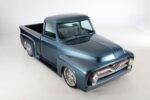
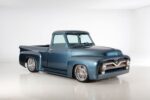
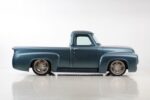
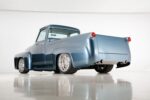
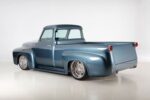
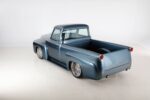
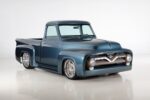
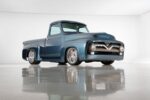
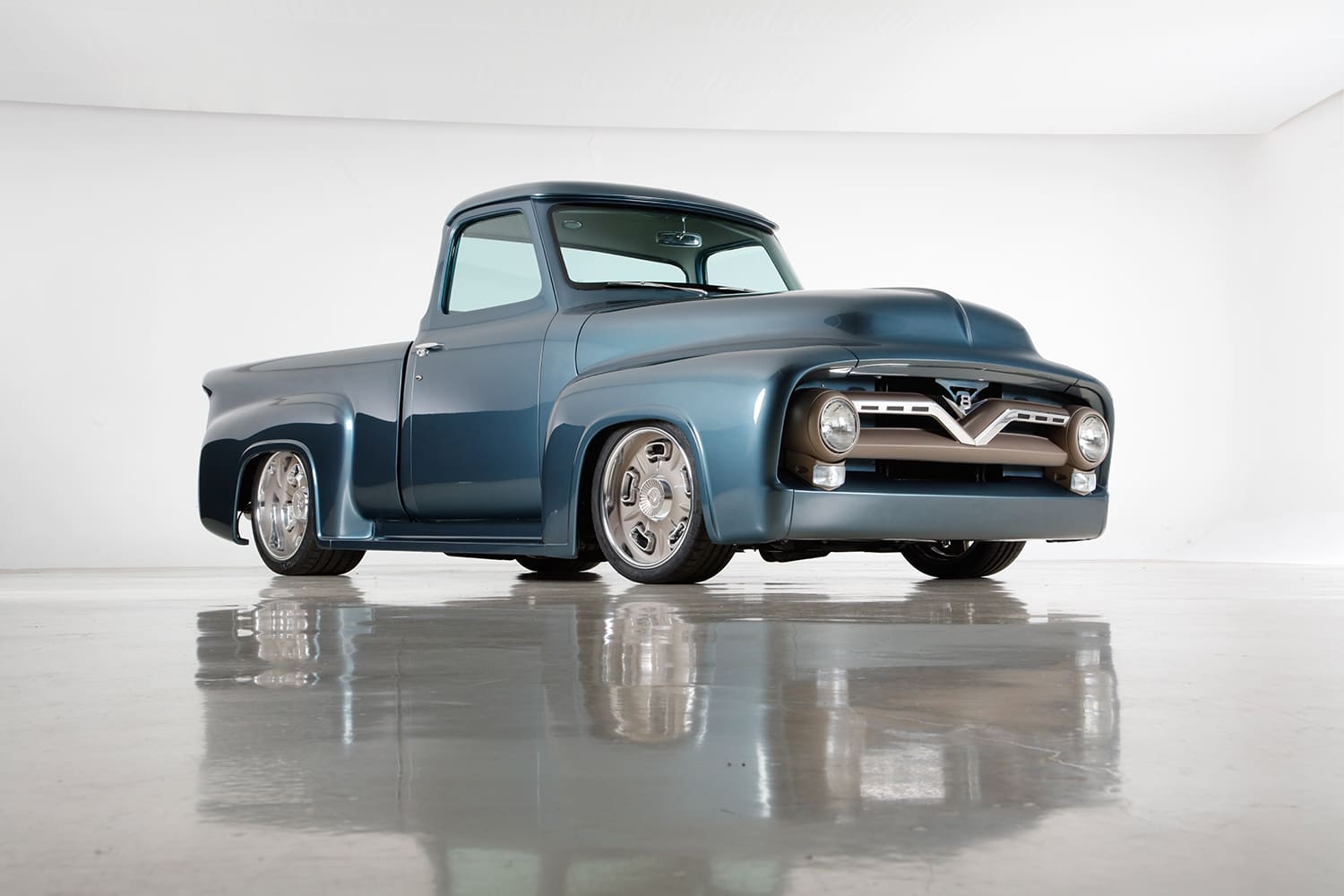
When I first spotted Pat Kelly’s 1955 Ford F-100 with its unique “Unibody” styling, I was immediately taken back to that golden age of customs, even though I was still a decade away from being born at that time! As I was admiring all the work that had been done, I had the opportunity to meet Pat, and he took the time to explain how it all came to be.
“In the late 1970s, I owned a body shop in North Long Beach,” Pat recalls. “One day, a gentleman came in with a 1955 Ford panel that he had turned into a Unibody-style pickup. I thought it was a neat idea but thought it should have been done like a Chevy Cameo with a separate bed.
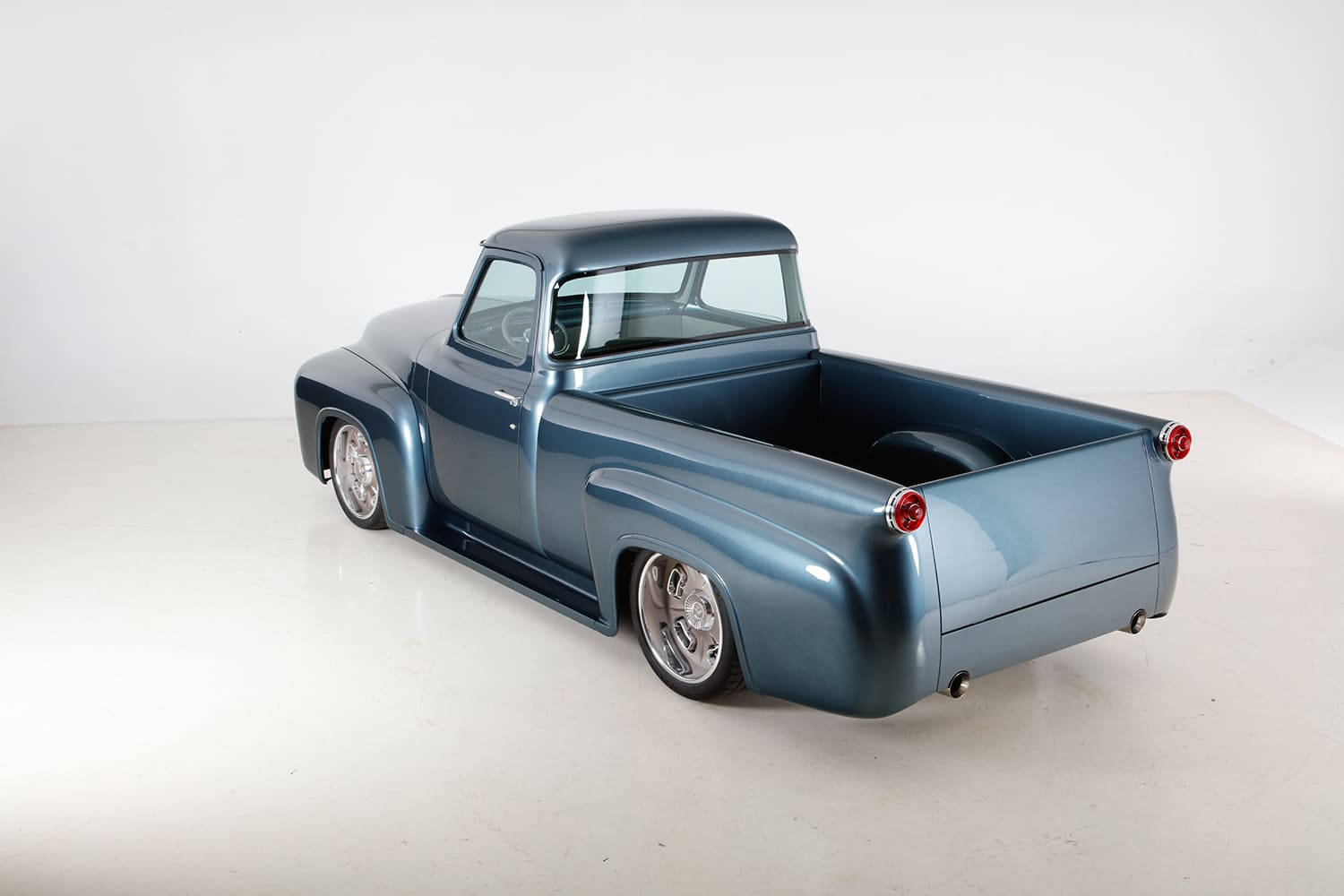
“Fast-forward to 2017: I was going through HAMB online and saw a Photoshop rendering of a ’55 Ford pickup for sale with a Cameo-style bed—it was a basketcase of parts … cab, front sheetmetal, and two donor vehicles; a panel truck for the quarter-panels and a station wagon for the taillight sections. The owner, Todd Tatro, had a shop in Texas do a bunch of metalwork on the cab and front clip. I purchased all the pieces and had the same shop order a new Art Morrison GT Sport chassis, 2017 Gen 2 Coyote, and TREMEC six-speed—as well as install the cab and front sheetmetal before I ultimately ended up bringing the truck to California to finish.
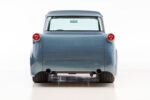
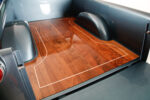
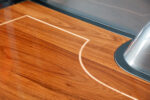
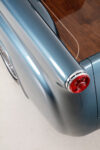
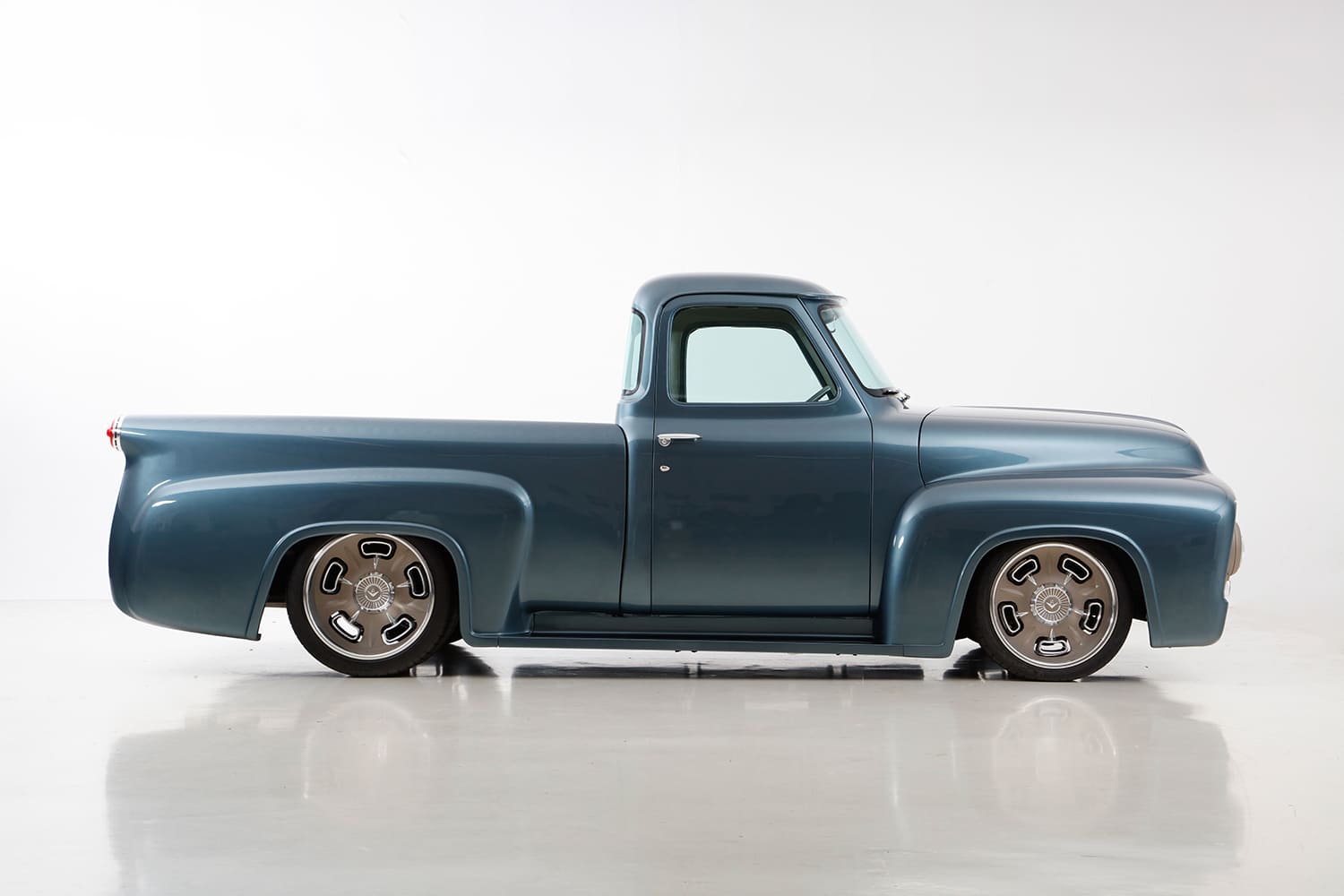
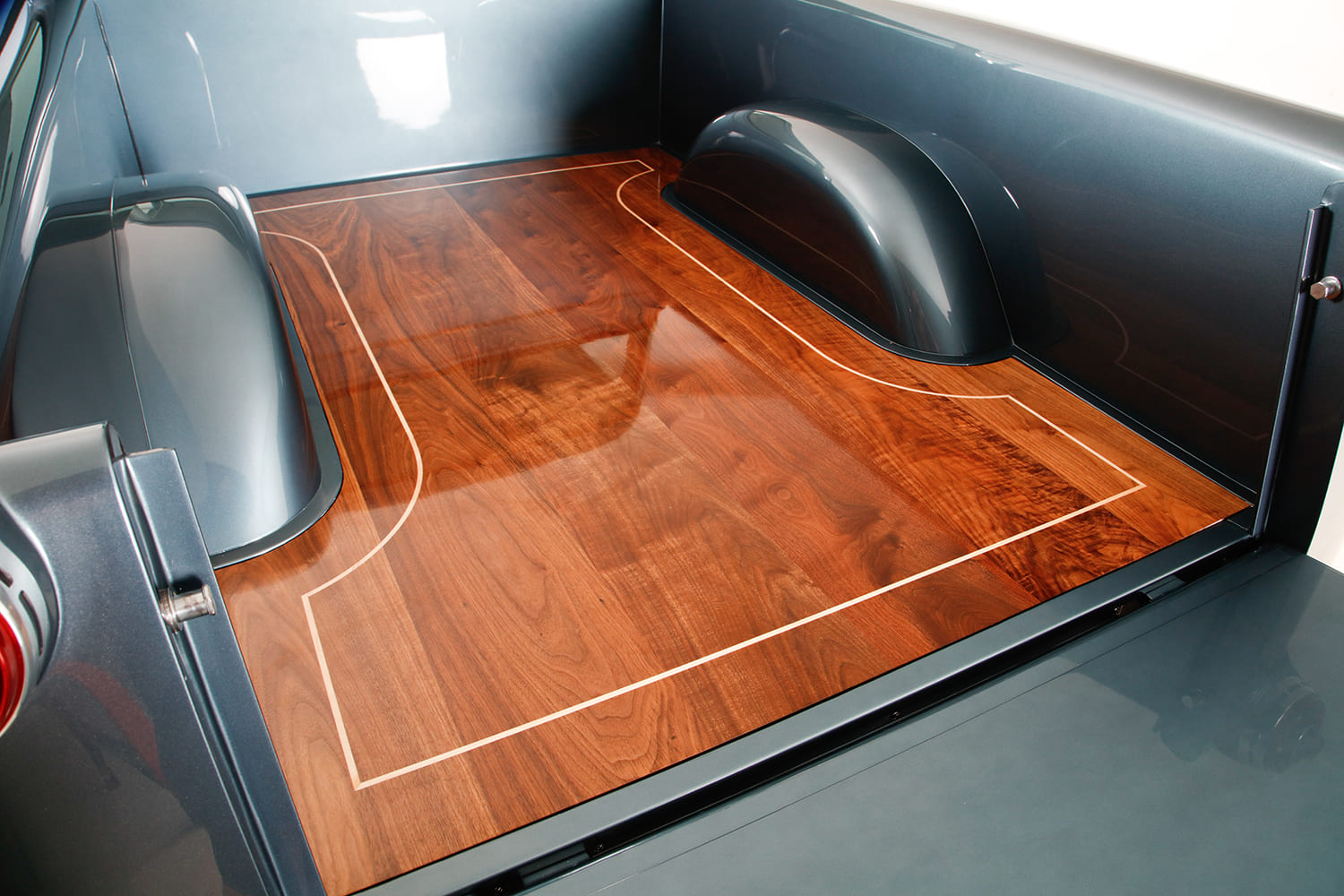
“After attending the SEMA Show, I acquired various sheetmetal fabrication equipment and began completing the truck myself. I ended up scrapping the hood, front fenders, doors, firewall, cab floors, and complete cowl. During the week, I could cut out the bad panels and make/tack weld new pieces; on the weekends, my good friend Sergio Suacedo, who’s been in the industry for 25 years, would come over and finish-weld all the panels. (The truck bed was made using ’55 Ford panel outer quarters with taillight sections from a 1954 station wagon; all other parts of the bed were handmade. The taillight housings were machined from billet by EVOD Industries. The bed wood is black walnut with a maple inlay that was CNC cut and fabricated at The House of Hardwood in Los Angeles.)
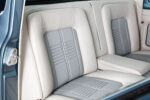
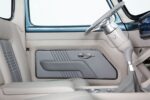
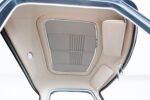
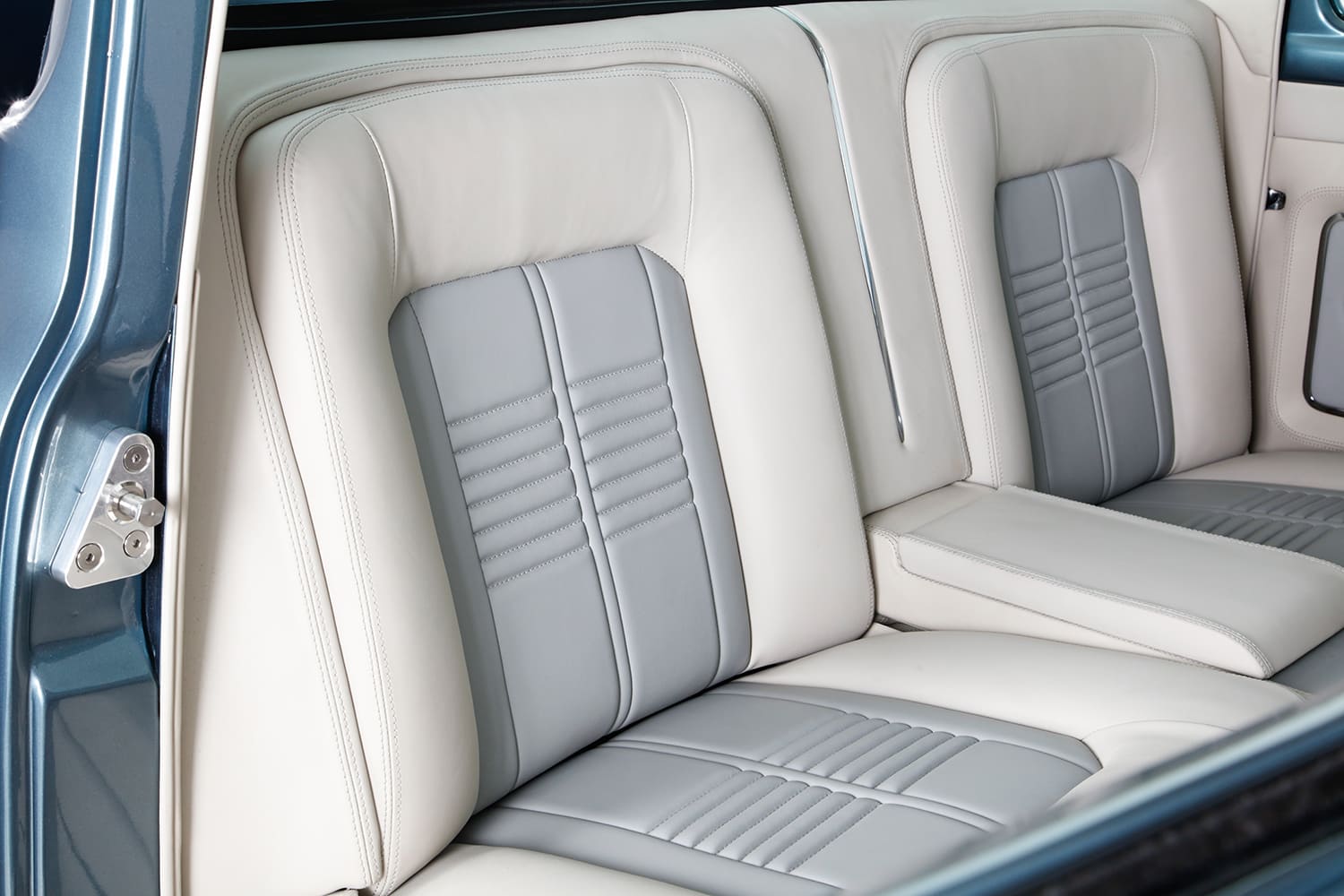
“I did the engine harness and computer installation, then took the truck to KR Custom Paint in Seabeck, Washington, for the body and paint (PPG BNW Blue Ridge Metallic), and while it was there, Keith Russell (KR) and Doug Braun did the final wiring. In total, I made four trips up north to work with Keith and did all the assembly. From there, the Ford went directly to Gabe’s Custom Upholstery in San Bernardino for the interior based off Eric Brockmeyer’s concept illustration.”
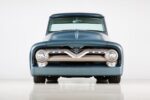
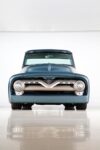
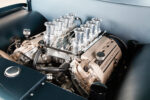
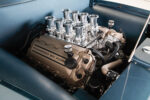
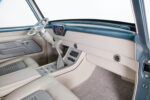
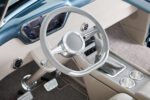
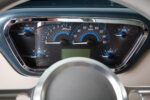
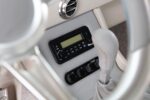
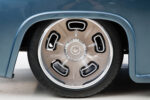
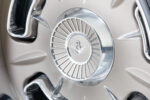
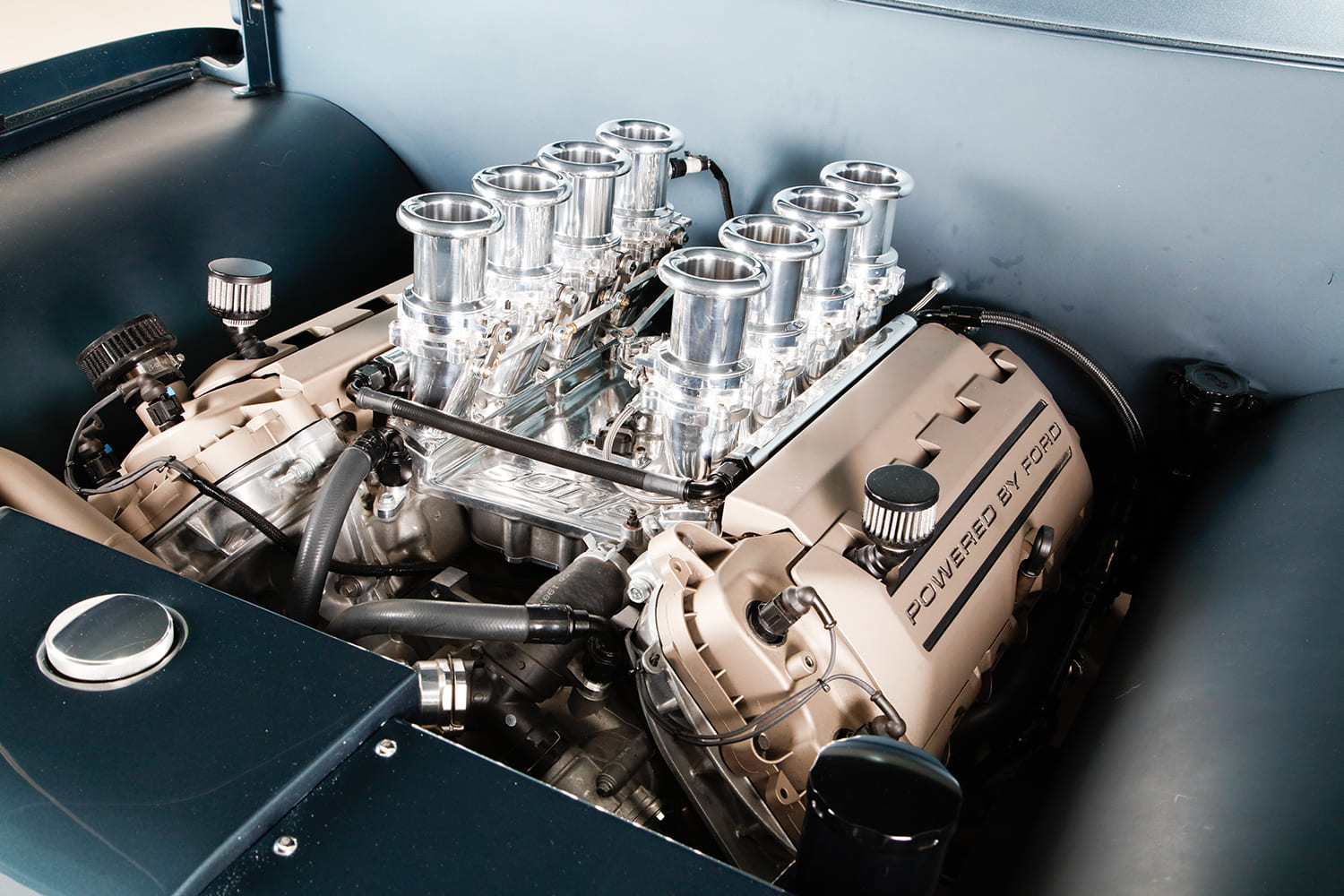
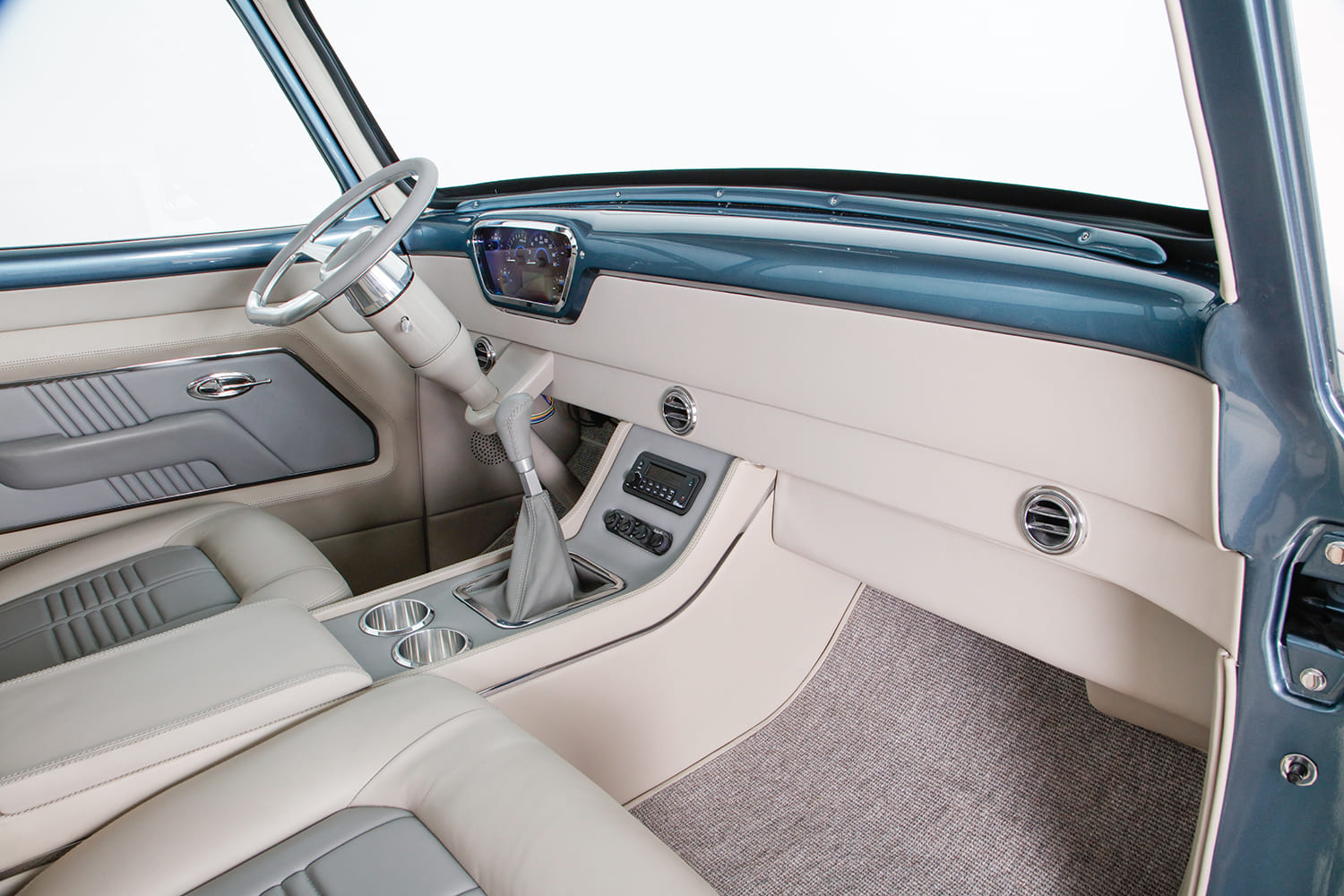
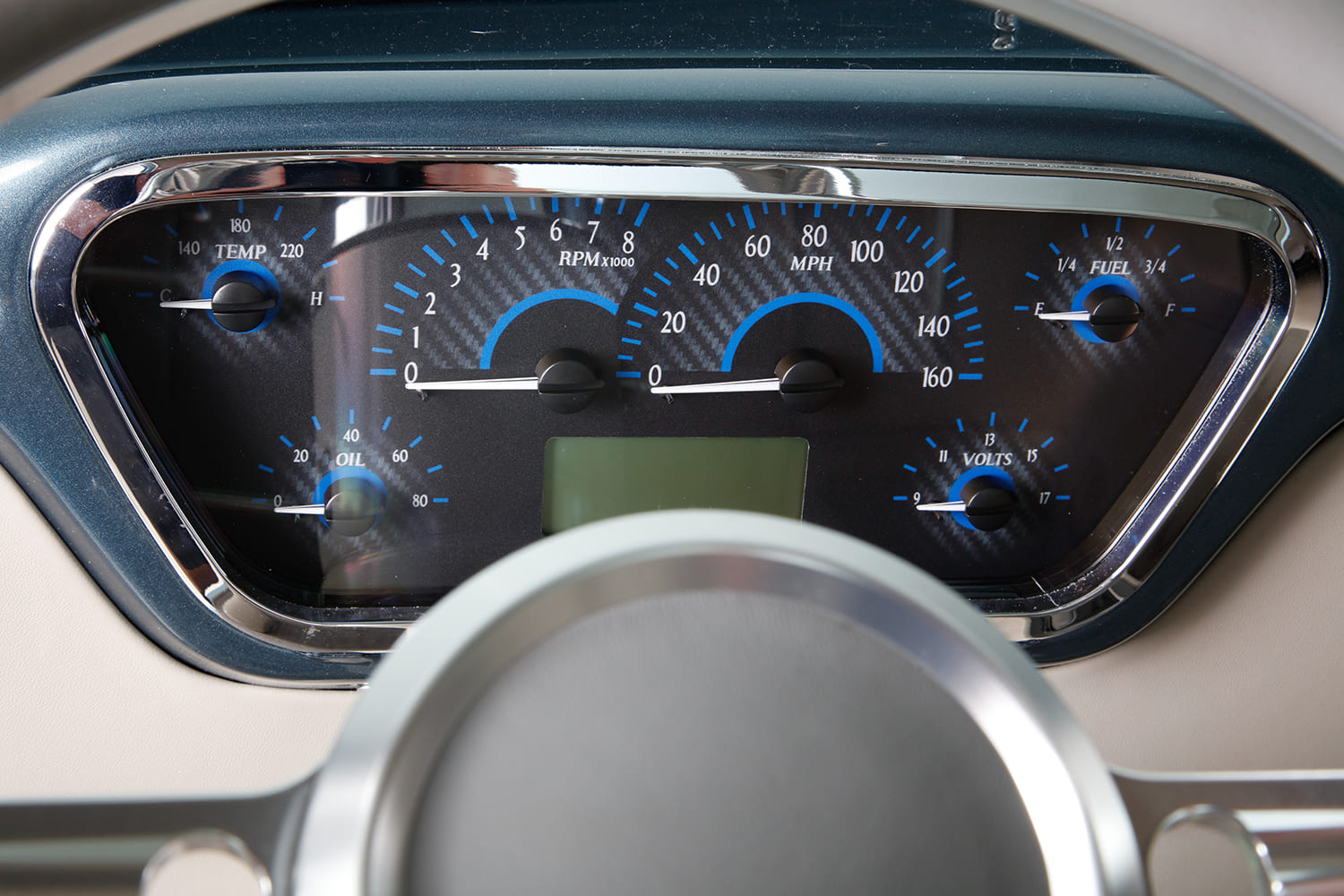
Chris Coddington contributed a signature element to the F-100’s concept with a set of one-off Hot Rods by Boyd 19/20-inch billets (based on their new Cleveland model wheel) that feature a polished and Cerakoted two-tone finish with unique “hubcap” centers. Additionally, Gabe’s two-tone gray and cream leather interior are complemented by a Dakota Digital cluster, Sparc Industries wheel on an Ididit tilt column, and Vintage Air Gen II climate control. That 5.0L modular V-8 beneath the nosed and peaked and reshaped hood is now fed by a Borla eight-stack injection (exiting via a stainless Borla exhaust) controlled by Holley’s latest Dominator controller. All in all, a properly executed “modern” concept reminiscent of that truly inspirational golden era!
Check out this story in our digital edition here.