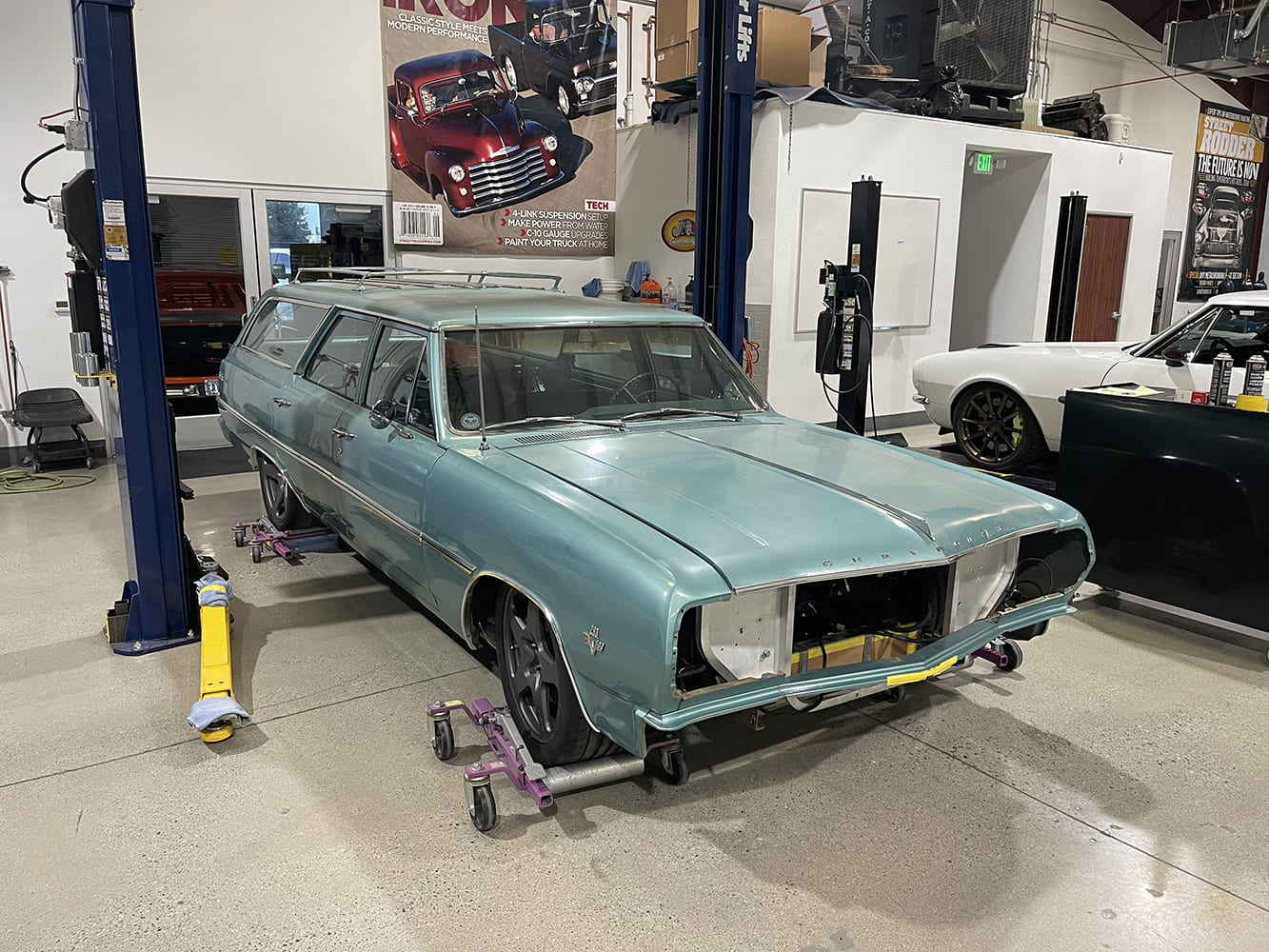
Wearing a perfectly seasoned original paintjob, a roof rack, and four doors, one might think Andy Lezotte’s 1965 Chevelle station wagon is built for the family vacation. The knowing eye can tell there is more lurking beneath the subtle exterior.
The station wagon, once relegated to chores related to family life, was the body style of choice for soccer moms, Little League coaches, family vacations, and, occasionally, towing a drag car to the track. And, of course, who could forget the 1954 Dodge station wagon and camper trailer that made up the first NHRA Drag Safari. Yes, it was versatile, roomy, and, for the most part, form followed function. Speaking of form and function, by the 1960s, the desirable weight transfer of the station wagon had been discovered, and station wagons were in the thick of drag racing in a wide range of classes, many complete with candy stripe roofs … but I digress. The completely boring SUV has made modern station wagons a rarity, but the charm and allure of a vintage wagon is not lost on the hot rod community. You can include longtime Chevy guy Andy Lezotte of Morgan Hill, California, in that group.
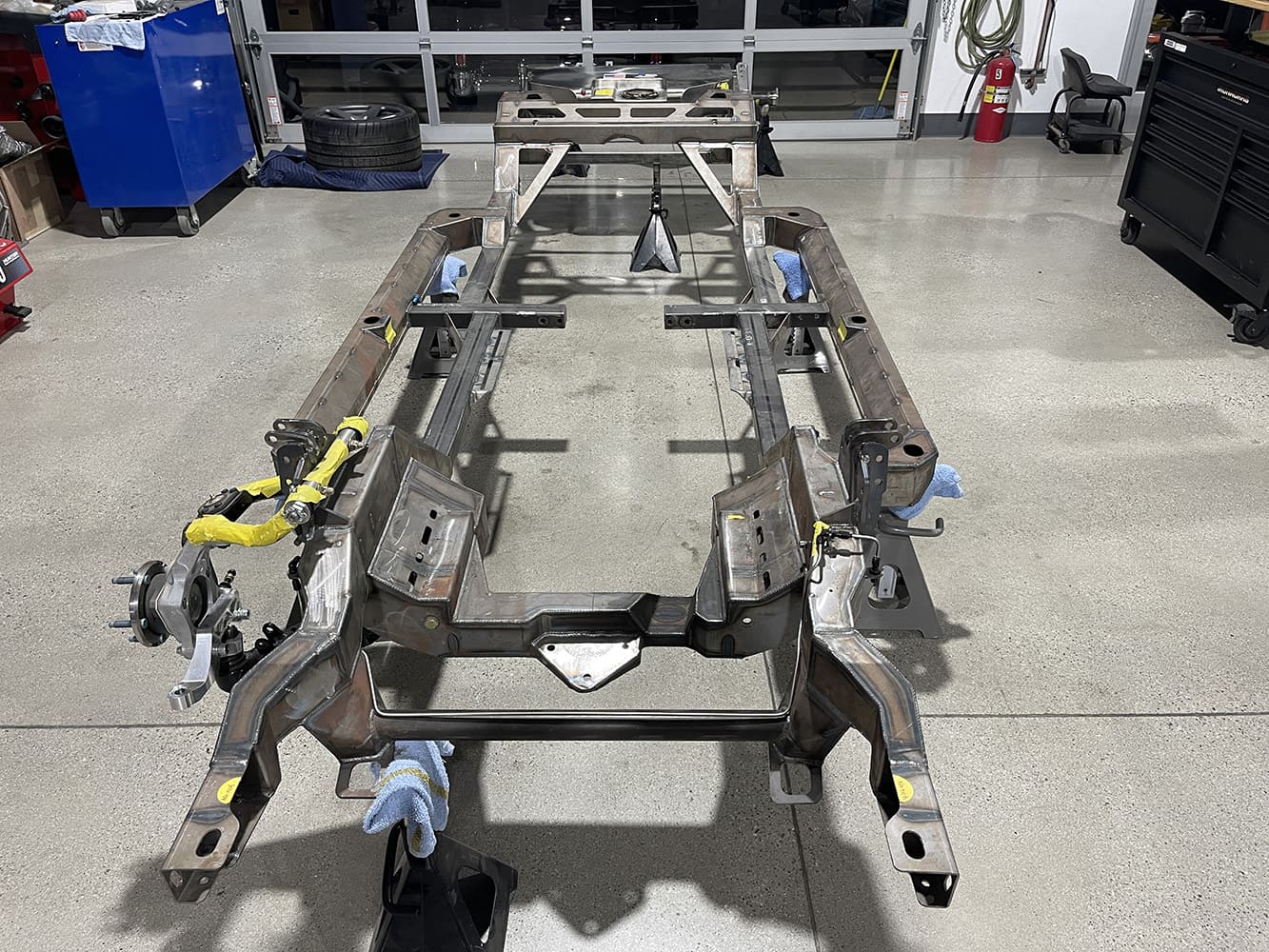
The foundation for the build is this Speedtech Performance chassis. Clearly, it represents a major improvement in handling and provides a solid platform for the modern drivetrain.
Lezotte and Rodger Lee, at Ironworks Speed & Kustom, have teamed up on hot rods before, with the last being a 1969 Chevelle. When Lezotte found a remarkably original 1965 Chevelle station wagon, he immediately envisioned what could be done with it and knew exactly who could make that vision come true. It was to be a modern take on the classic “sleepers”—a car with a stock, understated exterior but all business underneath.
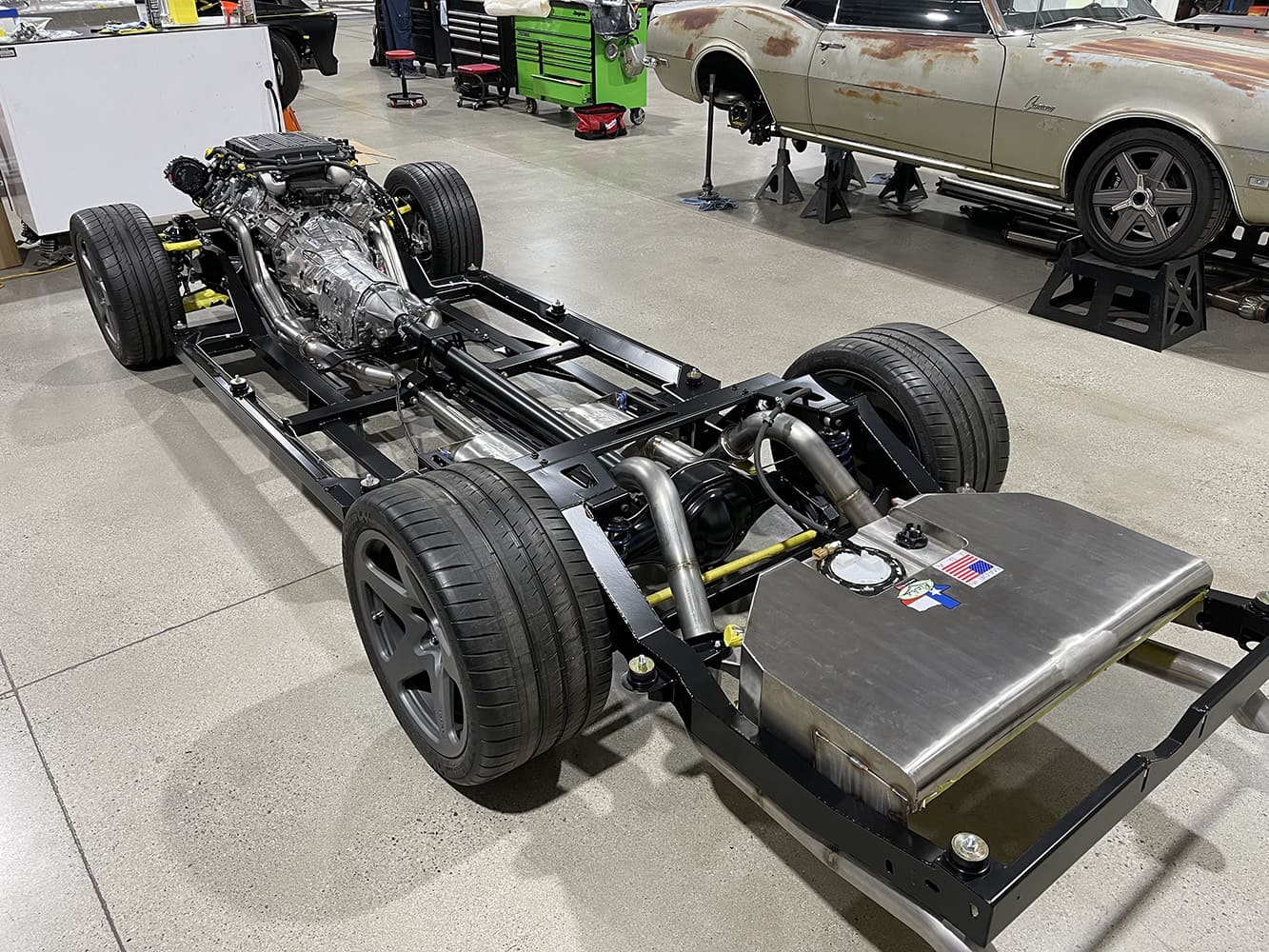
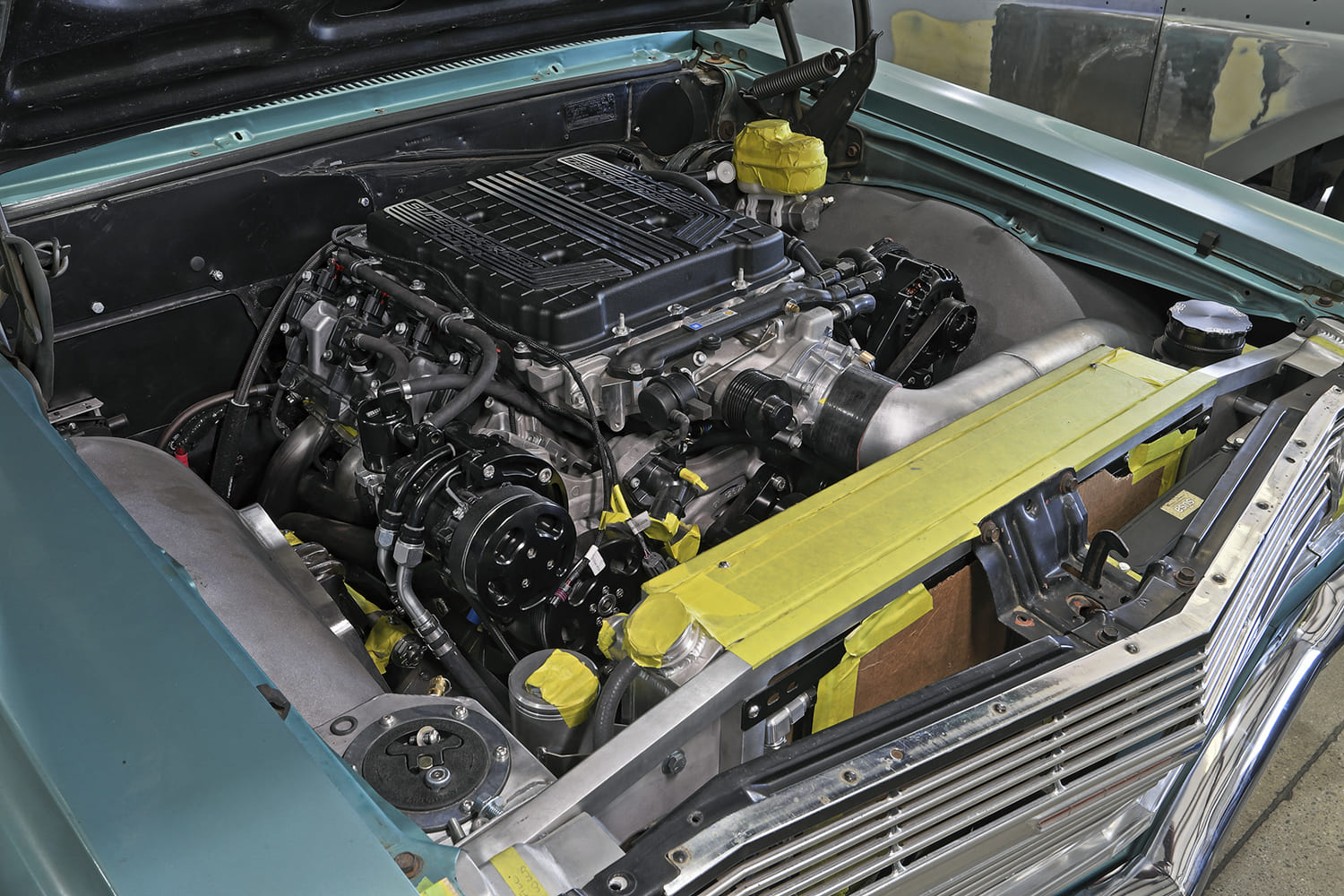
The team at Ironworks Rod & Kustom installed the LT4 engine and Bowler 10-speed automatic transmission while massive tires deliver the power to the pavement. A Rick’s gas tank features a factory GM LT4 Pump Module, ensuring proper fuel delivery.
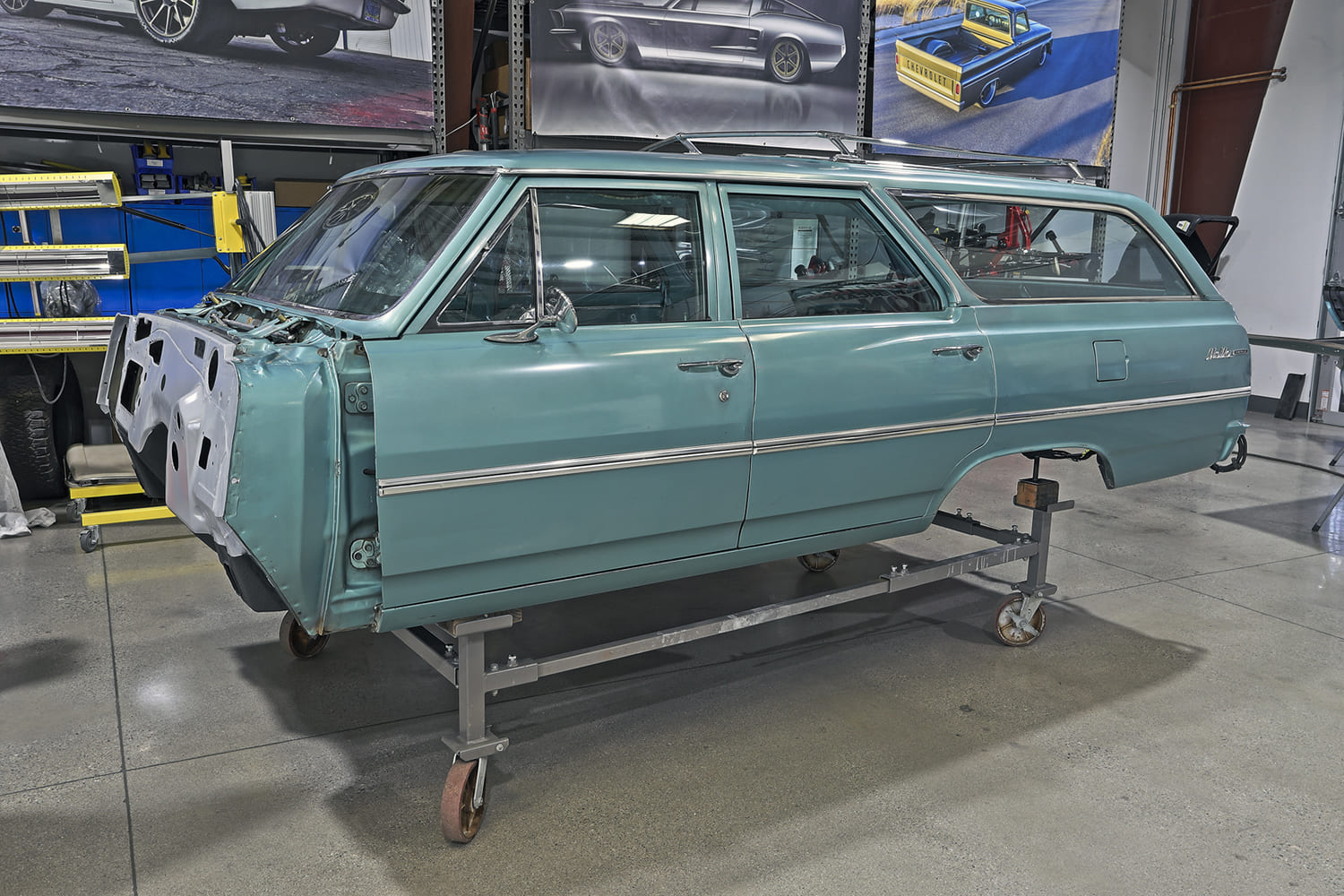
Externally, factory Artesian Turquoise paint was both a desirable Chevelle color and in salvageable condition. While the paint is far from perfect, it fits nicely into today’s popular “survivor” paint category with a luster only time can produce. Several days of rejuvenation proved the paint would be perfect in an imperfect way. Of course, building a complete frame-off hot rod without disturbing the original paint presents some serious challenges, but the team at Ironworks was up to the task.
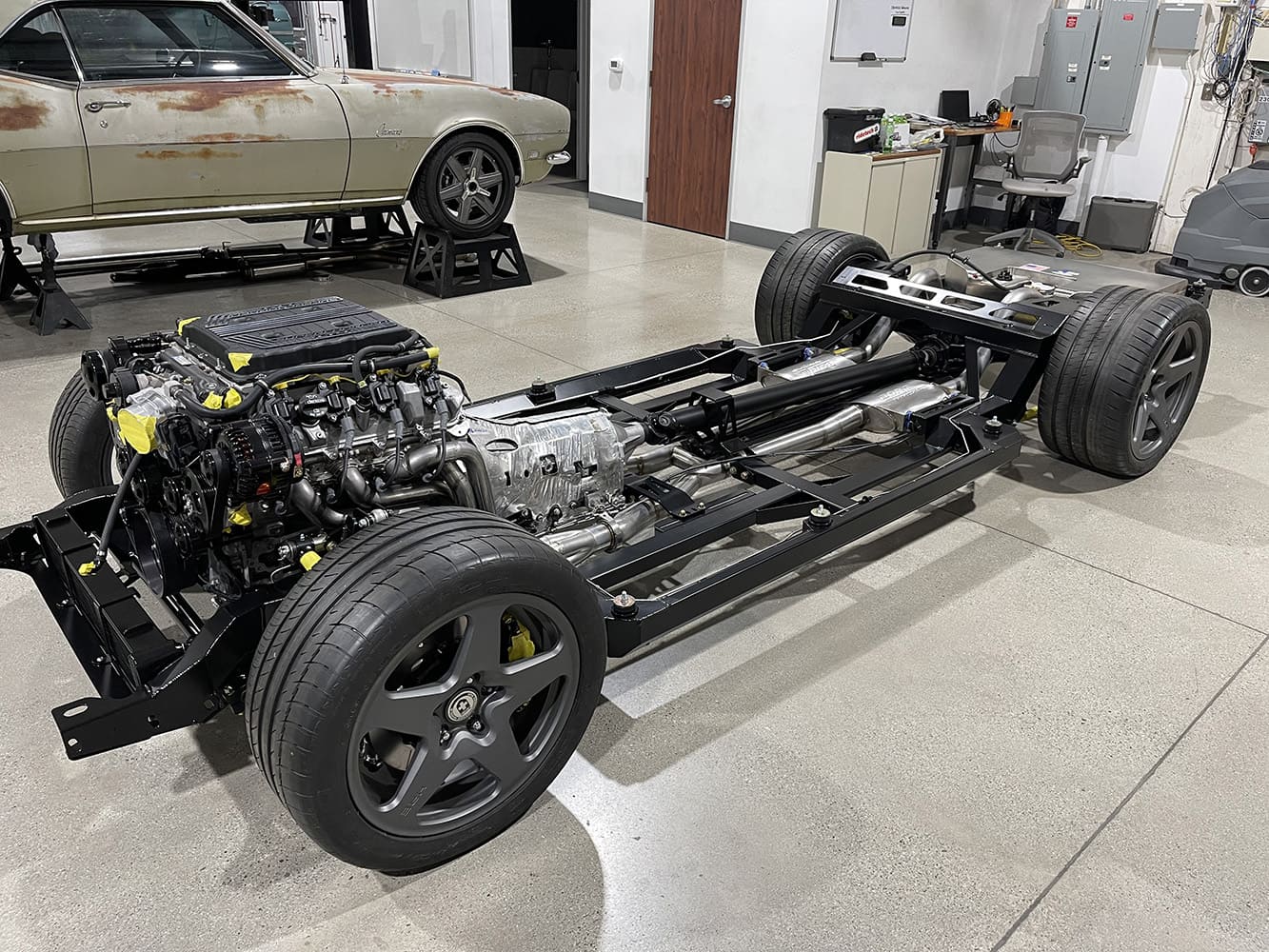
Rolling on 18×9 front and 19×11 rear wheels, there is ample rubber meeting the road, while Wilwood brakes slow everything down. Every aspect of performance is addressed in this build—power, handling, and braking.
In 1965, if you had the correct RPO numbers, you could order the Z-16 package for your Chevelle. That gave you a powerful 396/375hp big-block engine and a stronger suspension, although this wagon mostly came with a more common small-block. It’s still an impressive package today, but team Ironworks had bigger ideas.
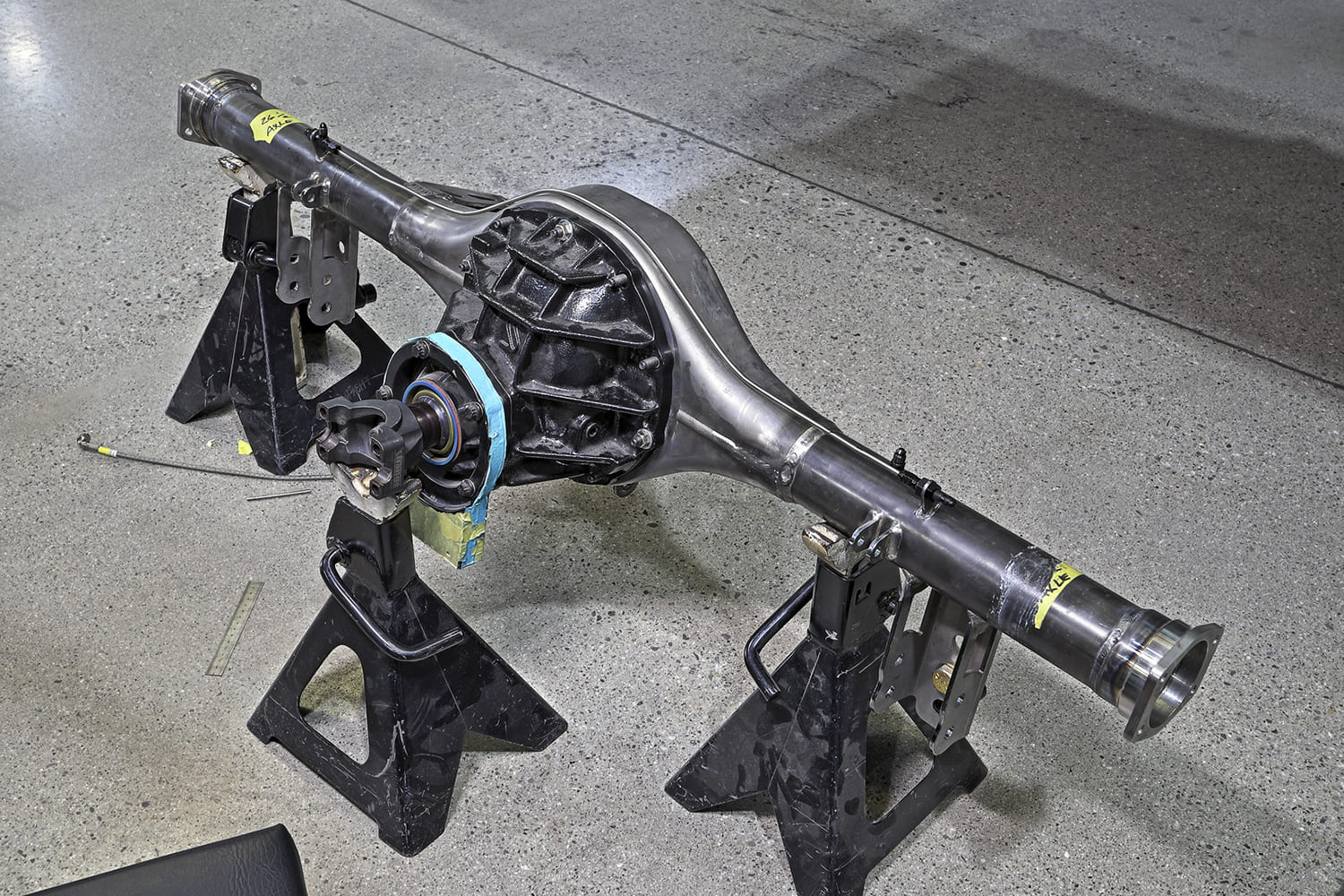
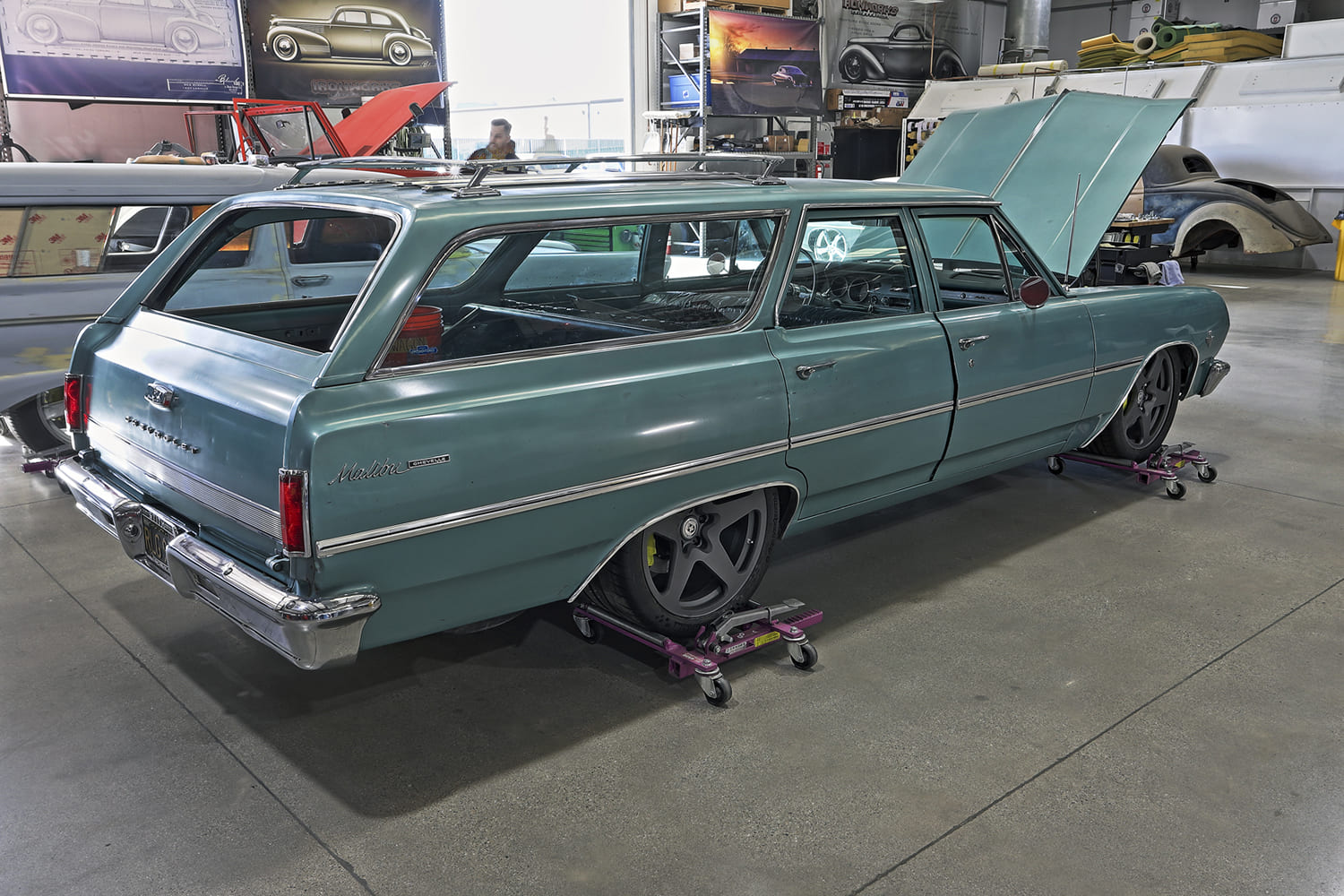
The 9-inch Ford rear is up to the task of harnessing 650 ponies. The team at Ironworks narrowed the rear to fit all that monster rubber inside the stock wheel opening.
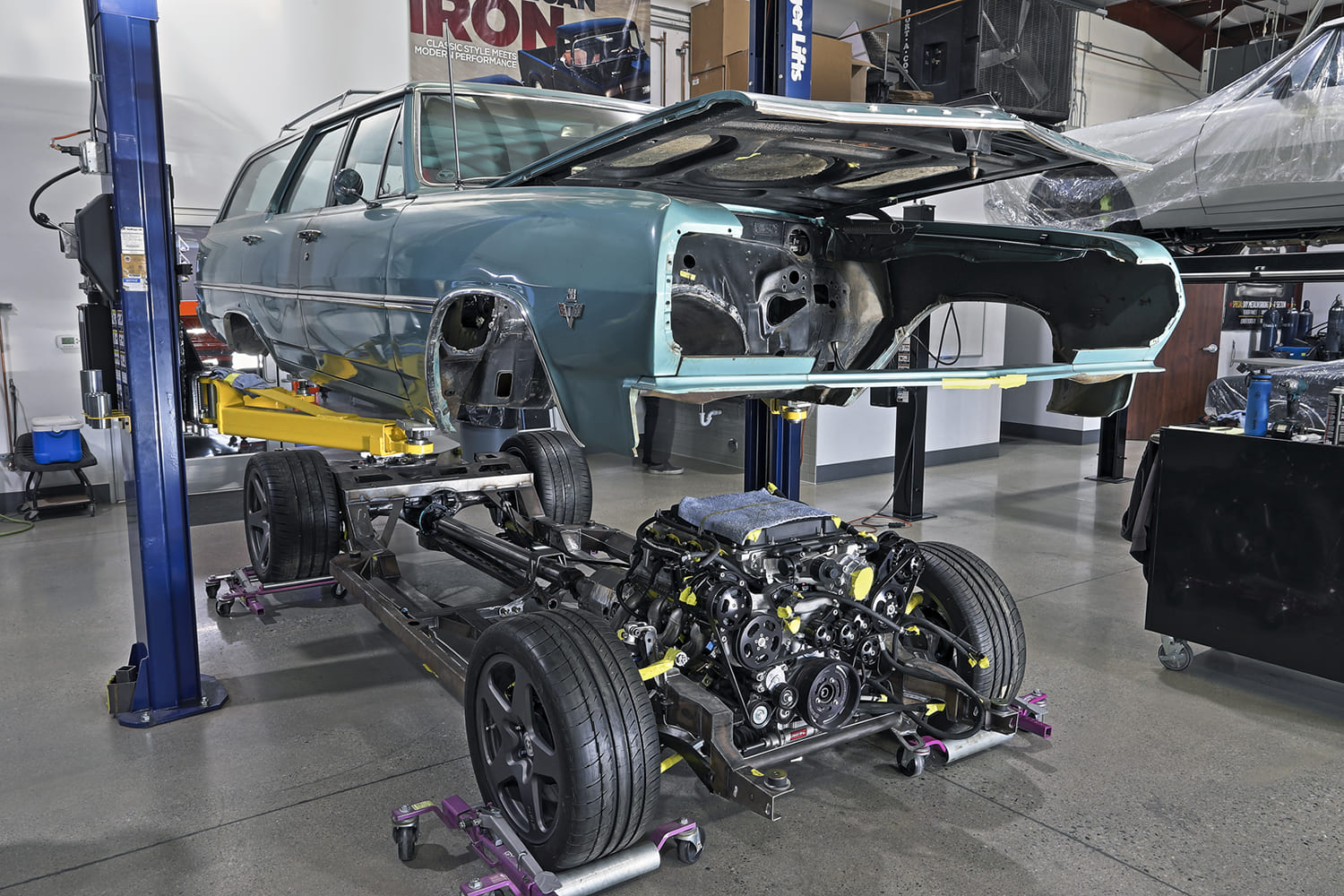
Step one involved separating the wagon body from the original chassis. The chassis and driveline were rolled outside and replaced with a Speedtech Performance Extreme chassis. This new chassis features forged-aluminum spindles with C7 hubs, power rack-and-pinion steering, adjustable splined sway bars, Ridetech adjustable coilovers, and Wilwood brakes on all four corners. A 9-inch Ford rear axle is installed with Speedtech’s torque arm rear suspension system. All this engineering results in excellent handling and an aggressive stance, with space to fit the massive HRE 105 wheels. The chassis also includes mounts for the LT4 engine. Producing 650 hp, it makes the early big-block option seem mild. While you might have opted for a four-speed transmission in 1965, the LT4 is paired with a GM 10-speed transmission built by Bowler Transmissions.
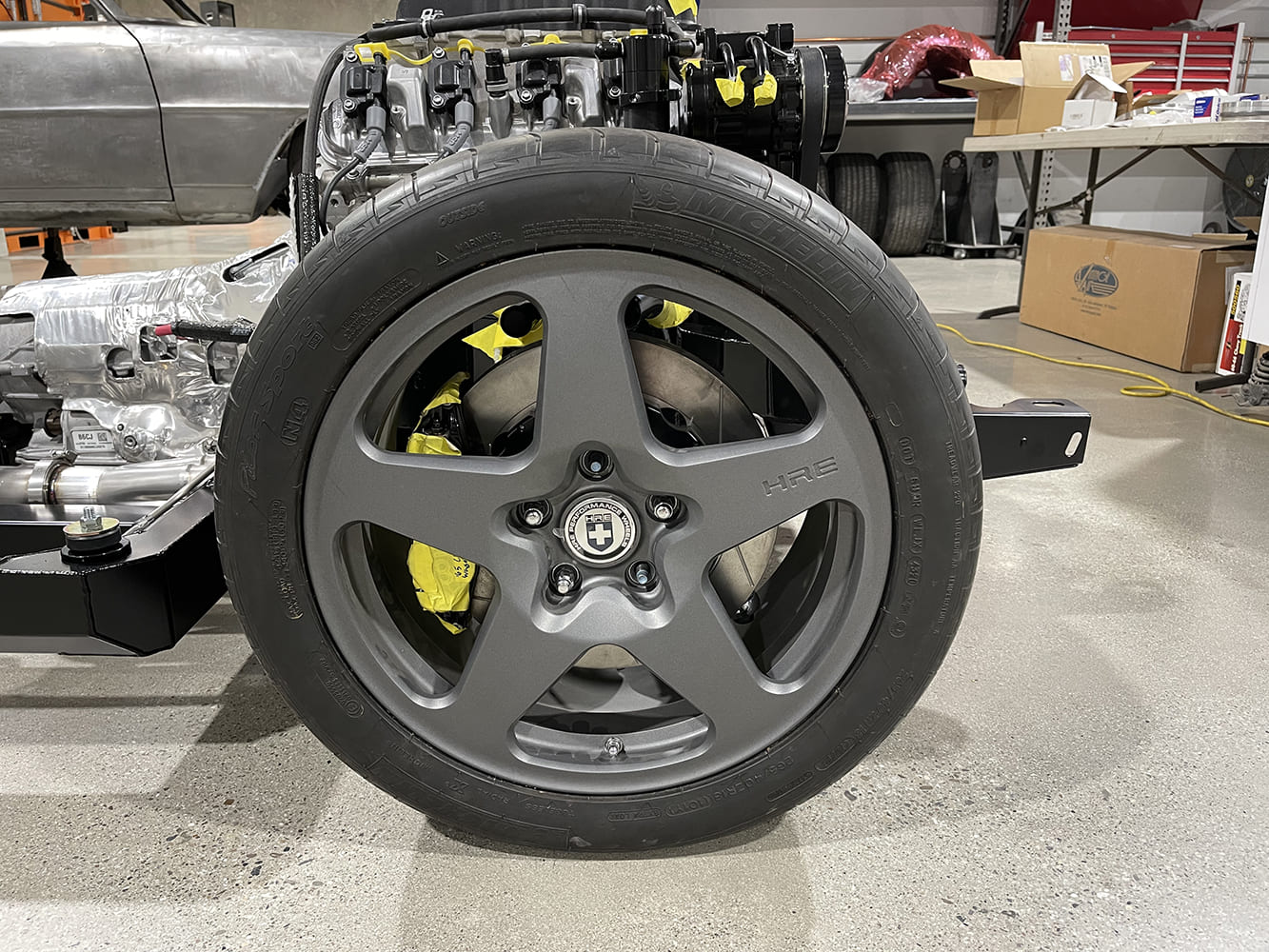
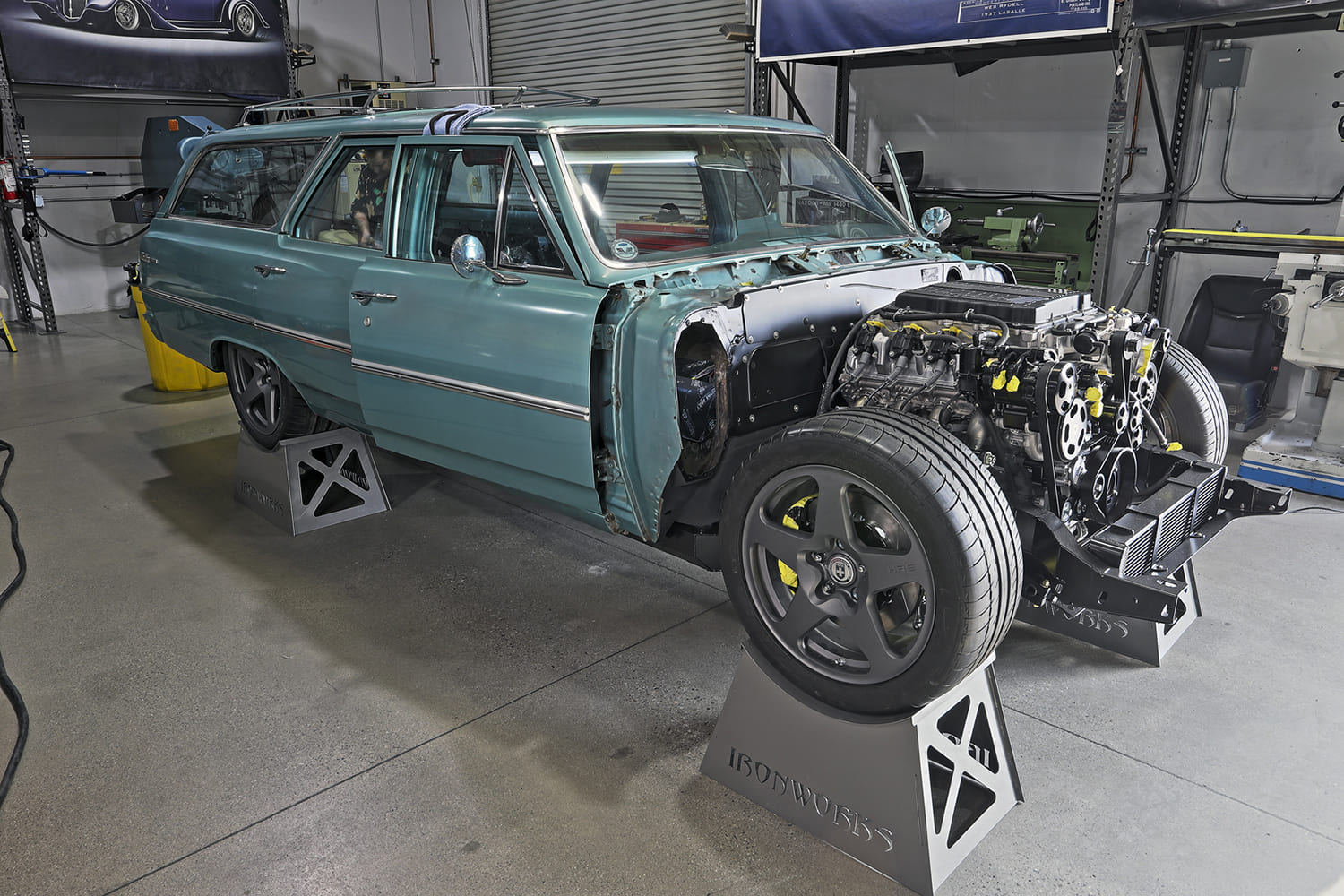
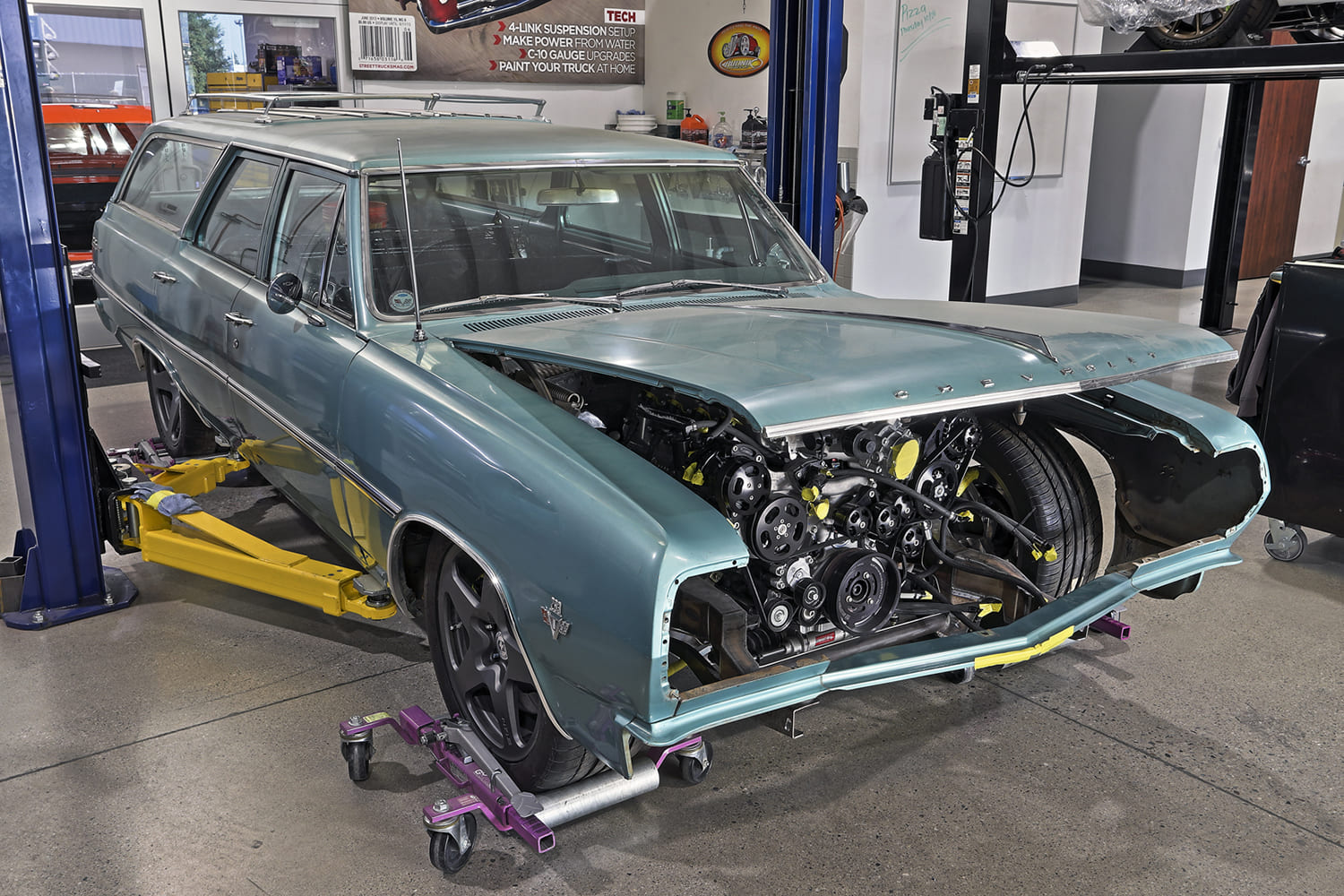
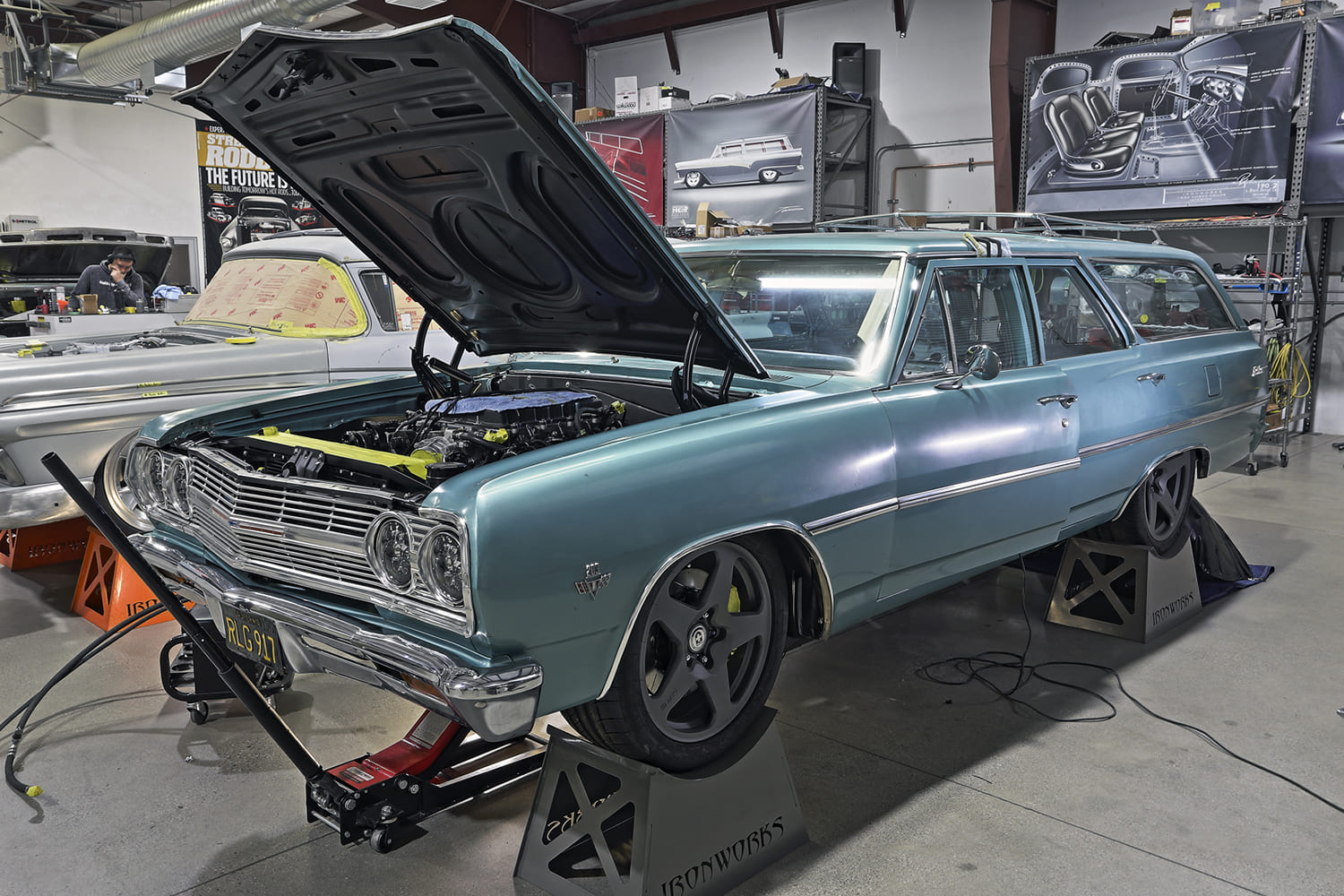
The front HRE wheels measure 18×9 and are fitted with 265/40ZR18 Michelin Pilot Sport tires. The sticky rubber offers excellent handling, while the yellow tape protects the finish on the large Wilwood brake calipers.
Plans include Vintage Air, Dakota Digital HDX gauges, and a powerful 3-inch exhaust system. DJ Designs will be tasked with creating the perfect vintage-style interior. The finished wagon is surprisingly refined. Wild with power, stance, and handling, yet wrapped in a package that simply says “nice old wagon.” And, of course, the famous battle cry from the back seat of every station wagon … “Are we there yet?” will be replaced with “Wow! We’re here already!”
A quick look at the body shows this is a great survivor with no rust and aged paint that has the perfect vintage shine. Once again, we just love the roof rack.
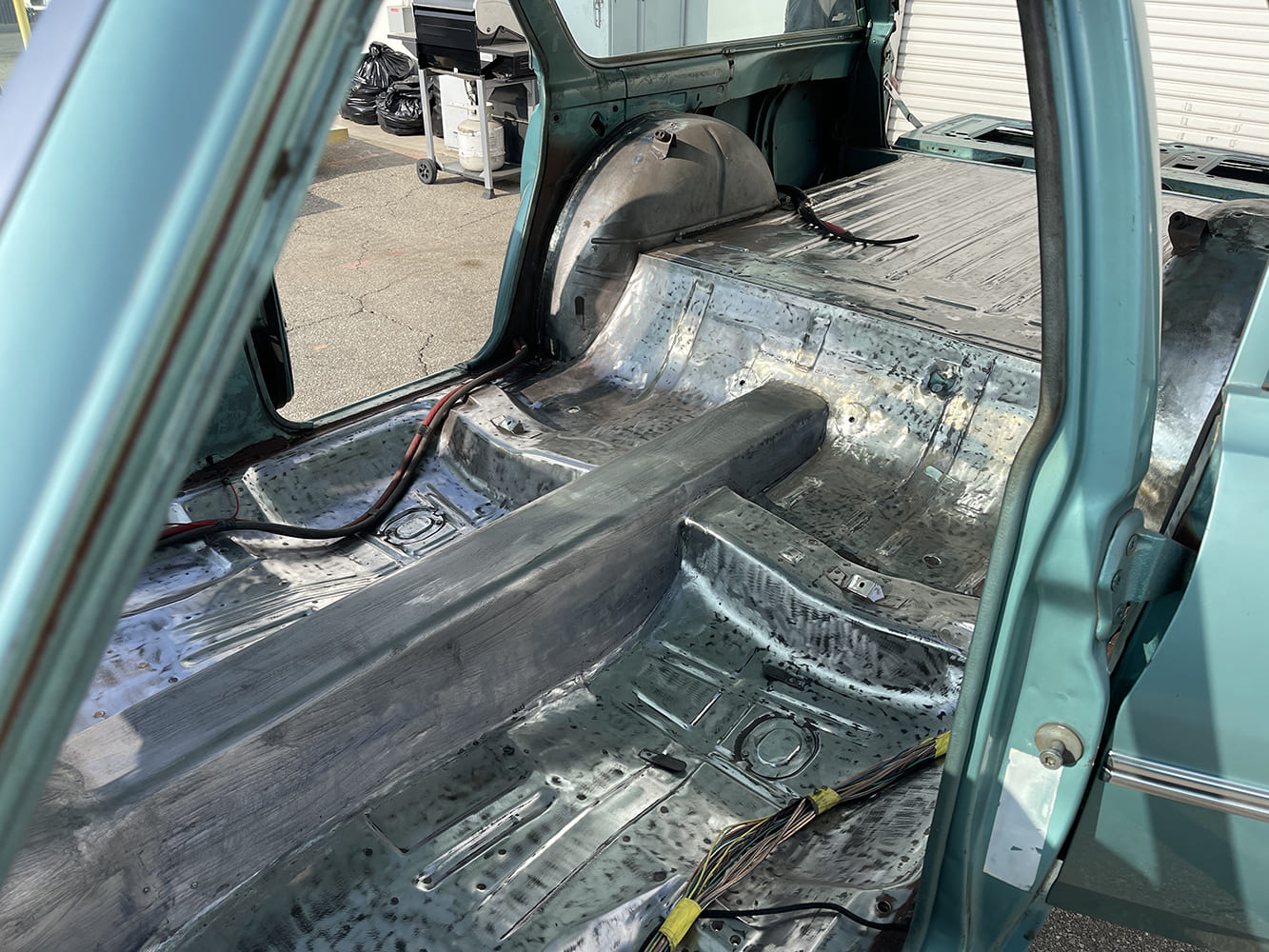
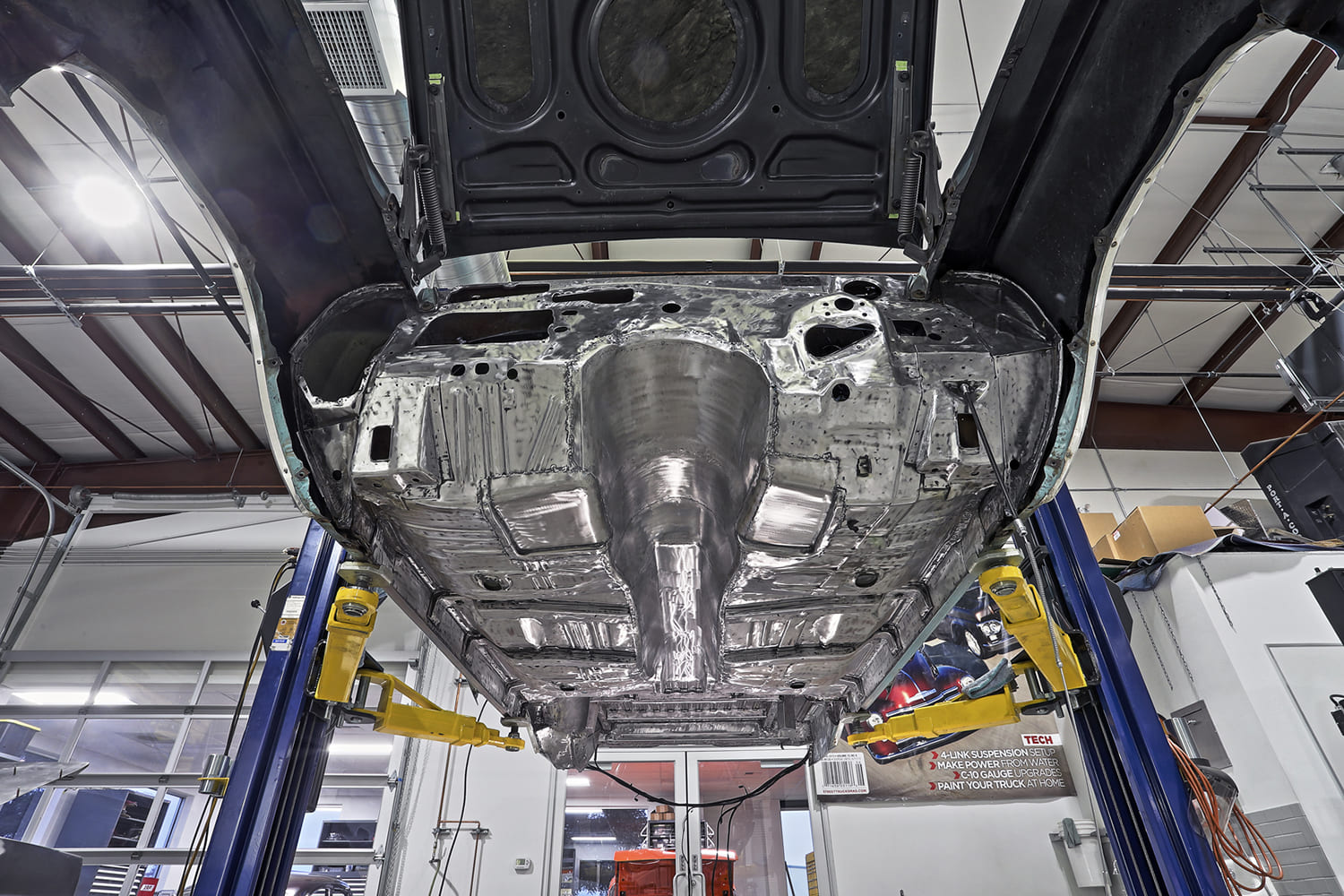
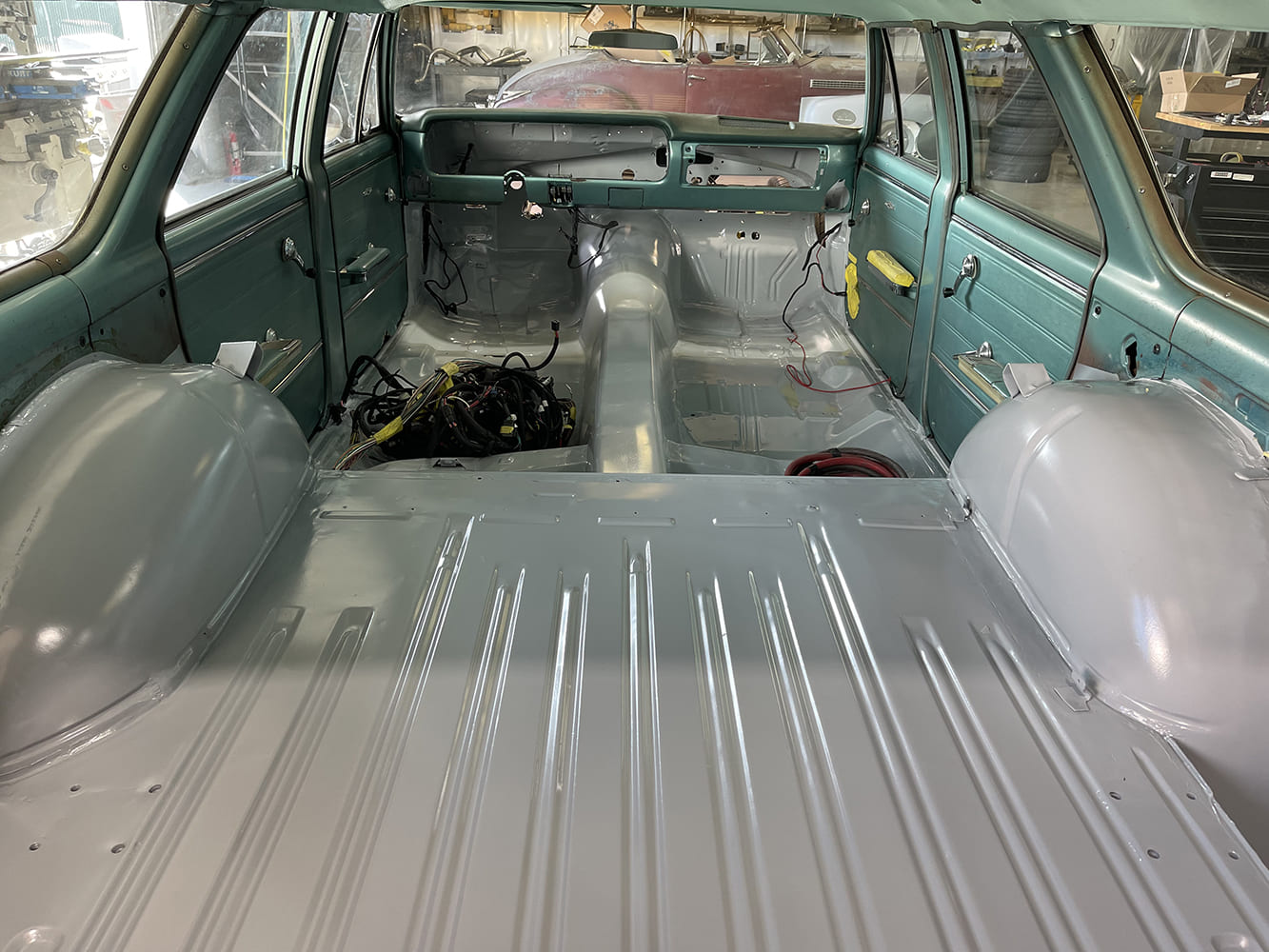
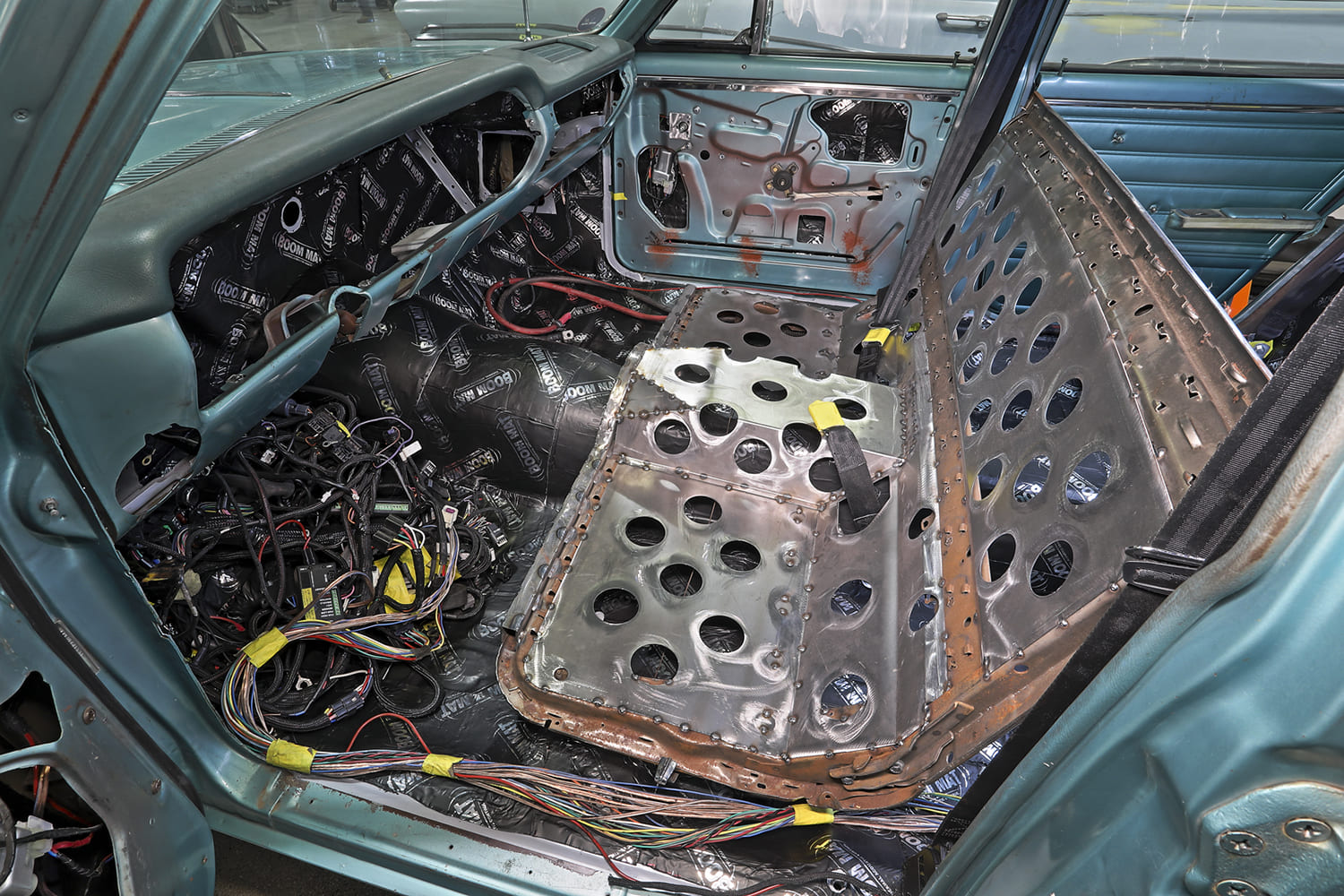
Like all good metalwork, when finished it appears simple, but the reality is that a lot of fabrication went into shaping the new tranny and driveshaft tunnel. Notice how perfect the original floor panels are; this Chevelle truly exemplifies being rust-free.The underside of the car is also completely rust-free, and the modified tunnel looks like a factory option. It required special care and protection to do all this work without disturbing the original paint.
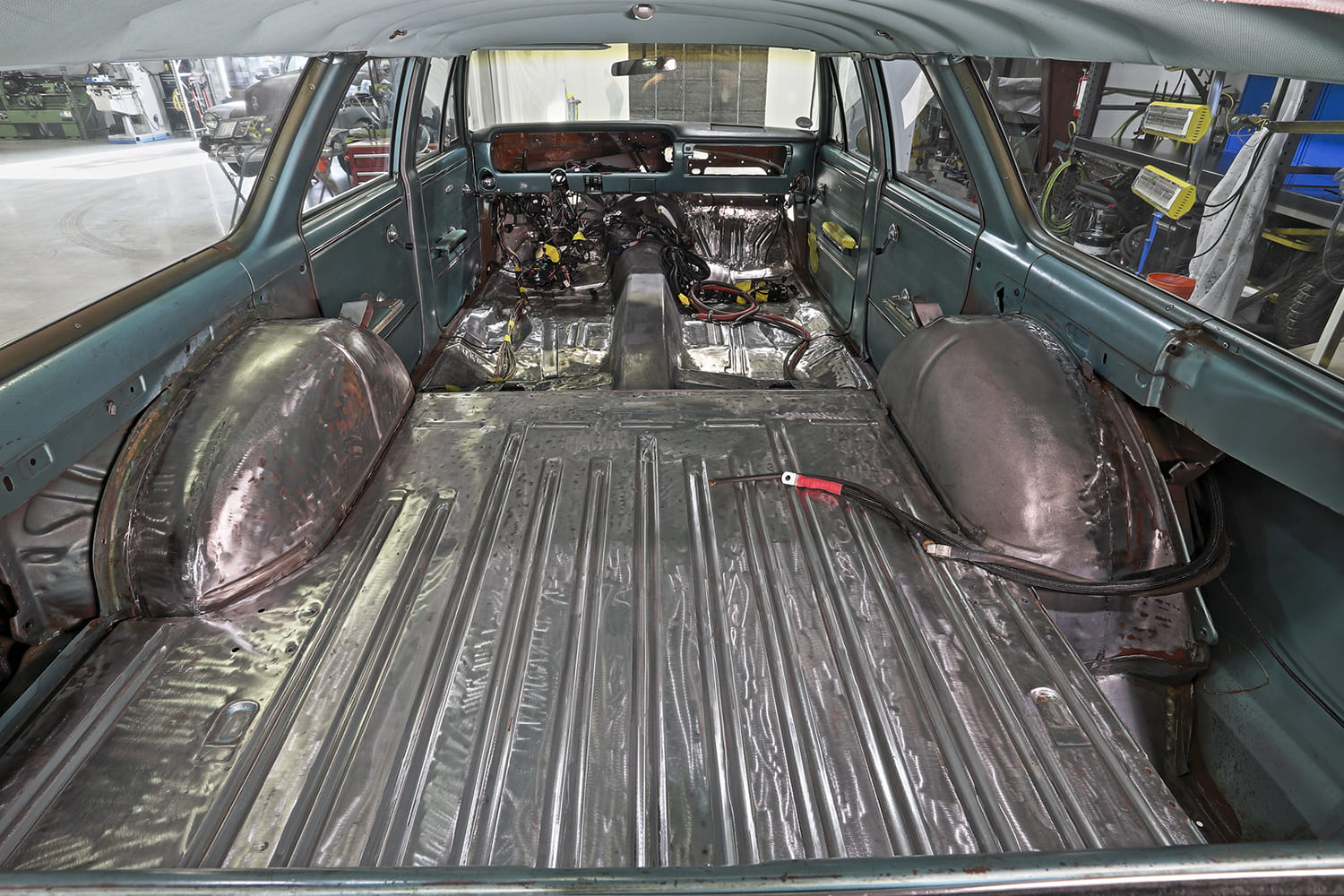
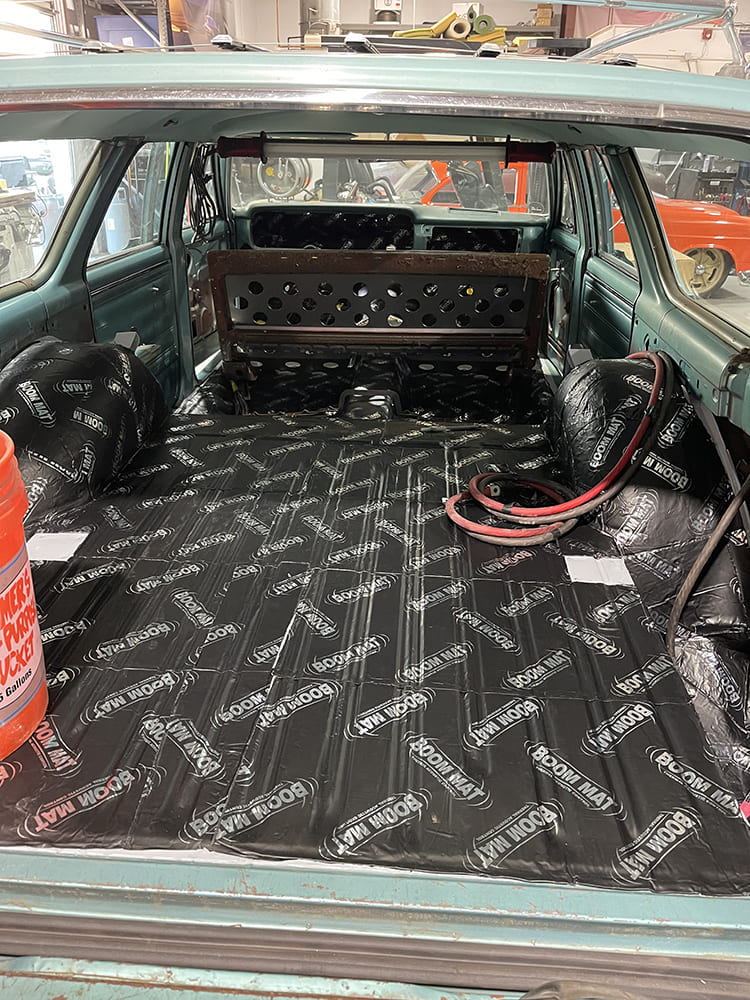
Inside the wagon, the wheeltubs were expanded to fit the huge rear tires, and you can see the tranny and driveshaft tunnel blend seamlessly with the factory floor. The original interior paint was also preserved.Several coats of PPG epoxy primer ensure this station wagon stays rust-free for many years. Despite all the modifications, it still looks like a factory station wagon.All that impressive metalwork is now hidden beneath a layer of Boom Mat. We’re glad we could showcase the metalwork to you before it was covered up. The Boom Mat will provide a quieter ride and help keep the cool air supplied by Vintage Air inside.
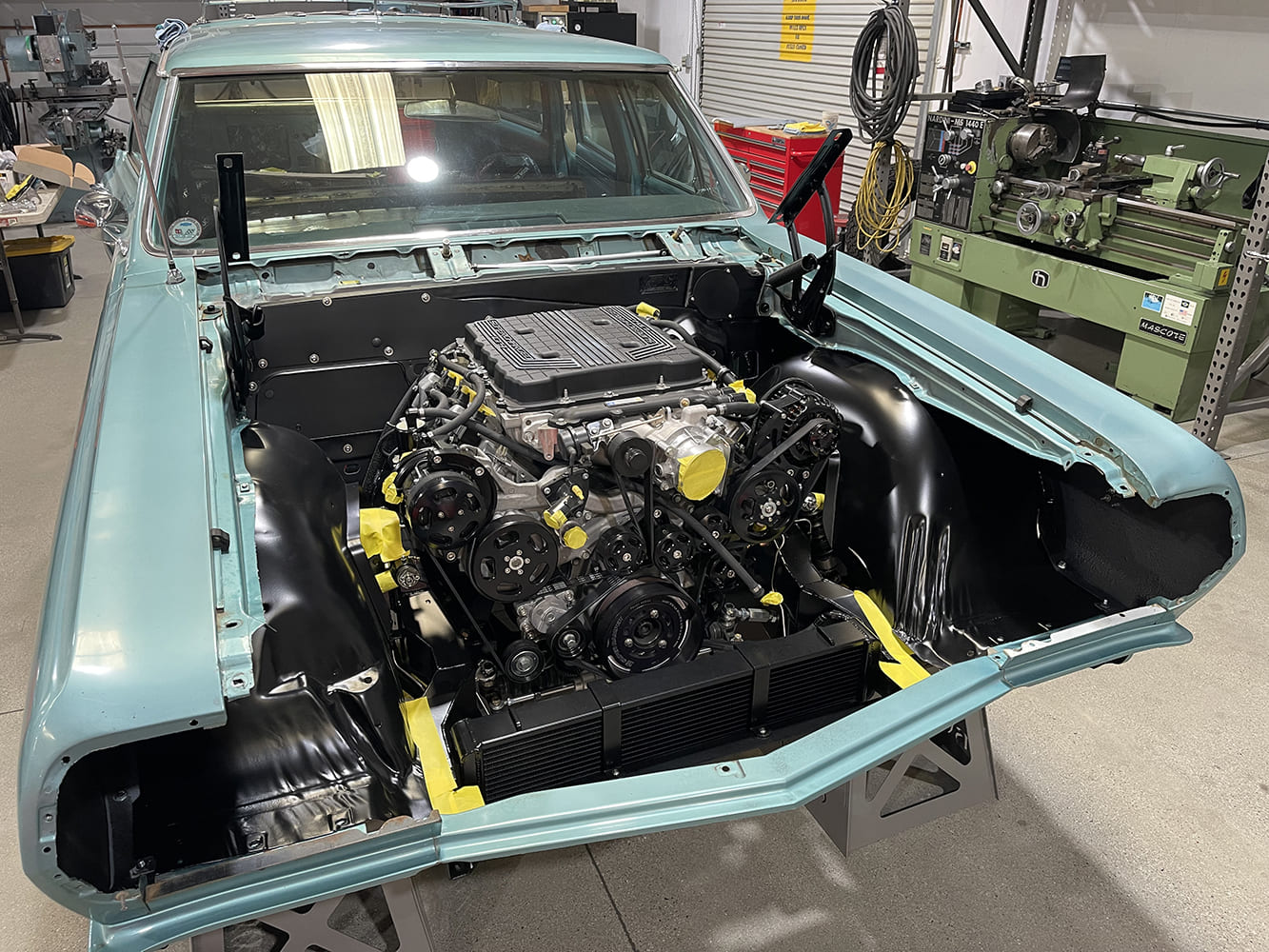
This is the big day where the body meets the chassis, and few would ever suspect all this performance could be hidden under a 1965 Chevelle station wagon body.The body fit on the Speedtech Performance chassis was perfect, and there is plenty of room for the LT4 motor in the front. Notice how the rear tires are neatly tucked into the wheelwells.The engine bay is surprisingly spacious and easily fits the LT4 engine. While the 396 big-block was the top-of-the-line option in 1965, this modern motor will produce nearly twice the horsepower of the old Z-16 option.
The radiator, air intake connections, and modified wheelhouses make this LT4 look like a factory option. There is a lot of technology under that hood.Speaking of “under the hood,” the real test happens when you first close the hood after an engine swap. Fortunately, there is plenty of clearance with the stock hood still on.With the front sheetmetal, grille, and bumper in place, the simple lines of the first-generation Chevelle are clear. The design has endured over time.
The new transmission tunnel required major seat modifications. The team at Ironworks crafted new front and rear seat frames while keeping factory adjustability. DJ Designs Interiors will handle vintage-style upholstery.Looking from the rear, the traditional station wagon’s long window dominates the design. This is truly a utility hot rod; it will feel at home on the highway, the dragstrip, autocross, or hauling surfboards to the beach. Long live the station wagon.
We use cookies to ensure that we give you the best experience on our website. If you continue to use this site we will assume that you are happy with it.