


By Evan J. Smith – Photography By The Author & Brian Brennan – Illustrations Courtesy of Roadster Shop
When it comes to the 7.3 Godzilla, most enthusiasts agree that it was surprising to see Ford unveil a new pushrod V-8, given the Detroit automaker’s over 25 years of focus on overhead-cam V-8 technology. Offered in Super Duty trucks, Godzilla engines have recently been finding their way into hot rods and race cars.
What makes the 7.3 Godzilla so surprising is that over the past three decades Ford has focused on development of their modular engines including two-, three-, and four-valve options. The mod motors deliver excellent power, efficiency, and dependability. Currently, the 5.0L Coyote and its variations (such as those in Shelby G.T. 350, G.T. 500, and Raptor R) are industry leaders. The last pushrod V-8 was the 5.0L small-block, originally popular in the Fox-body Mustang. A version of that engine continued to be used in the Ford Explorer until around 2001 when modular engines replaced it.
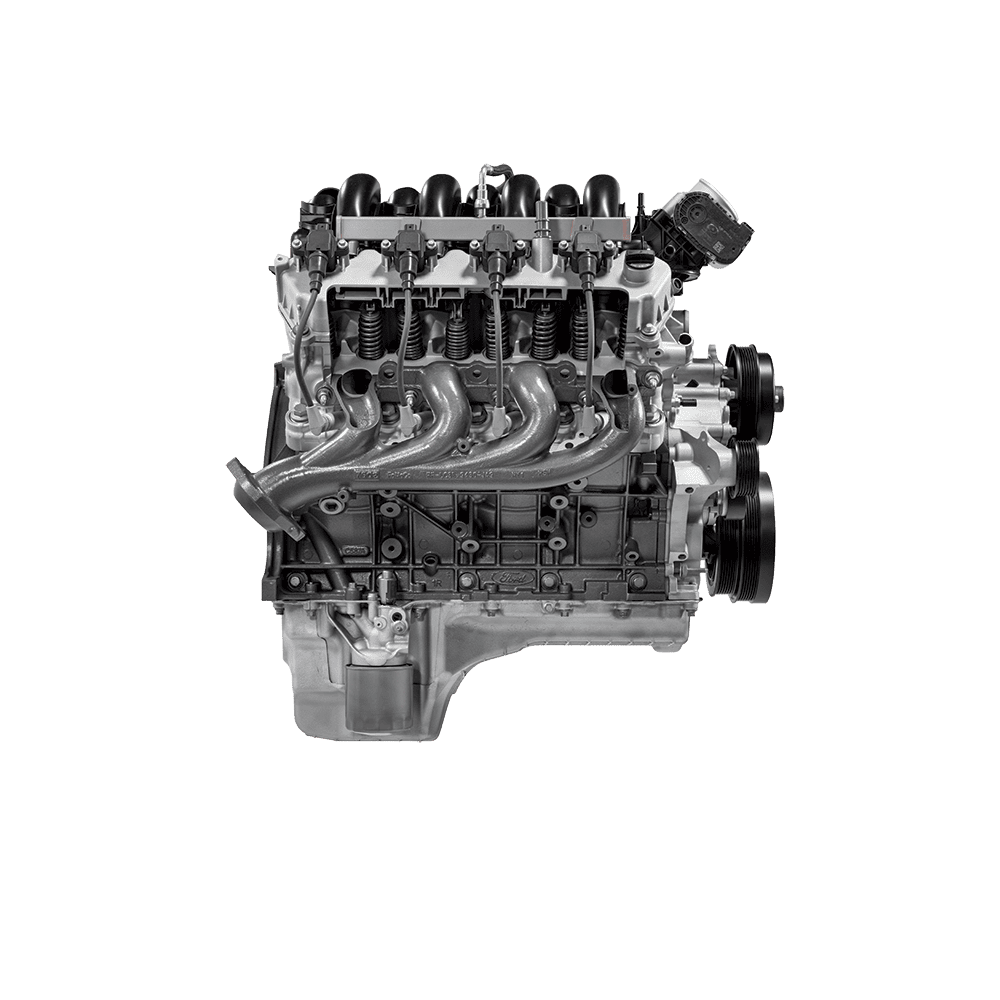
But sure enough, Ford fans now have a new V-8, dubbed “Godzilla” by the Blue Oval brass. The 7.3L engine (not to be confused with the 7.3L diesel) features a single cam-in-block design with roller lifters, pushrods, and rockers to operate all 16 valves in the traditional way. Godzilla is a gasoline engine built specifically for Super Duty trucks; it’s not even available in passenger cars. However, 7.3 Godzilla offers impressive qualities that appeal to performance enthusiasts. Plus, it’s affordable and easy to find in both new and used condition.


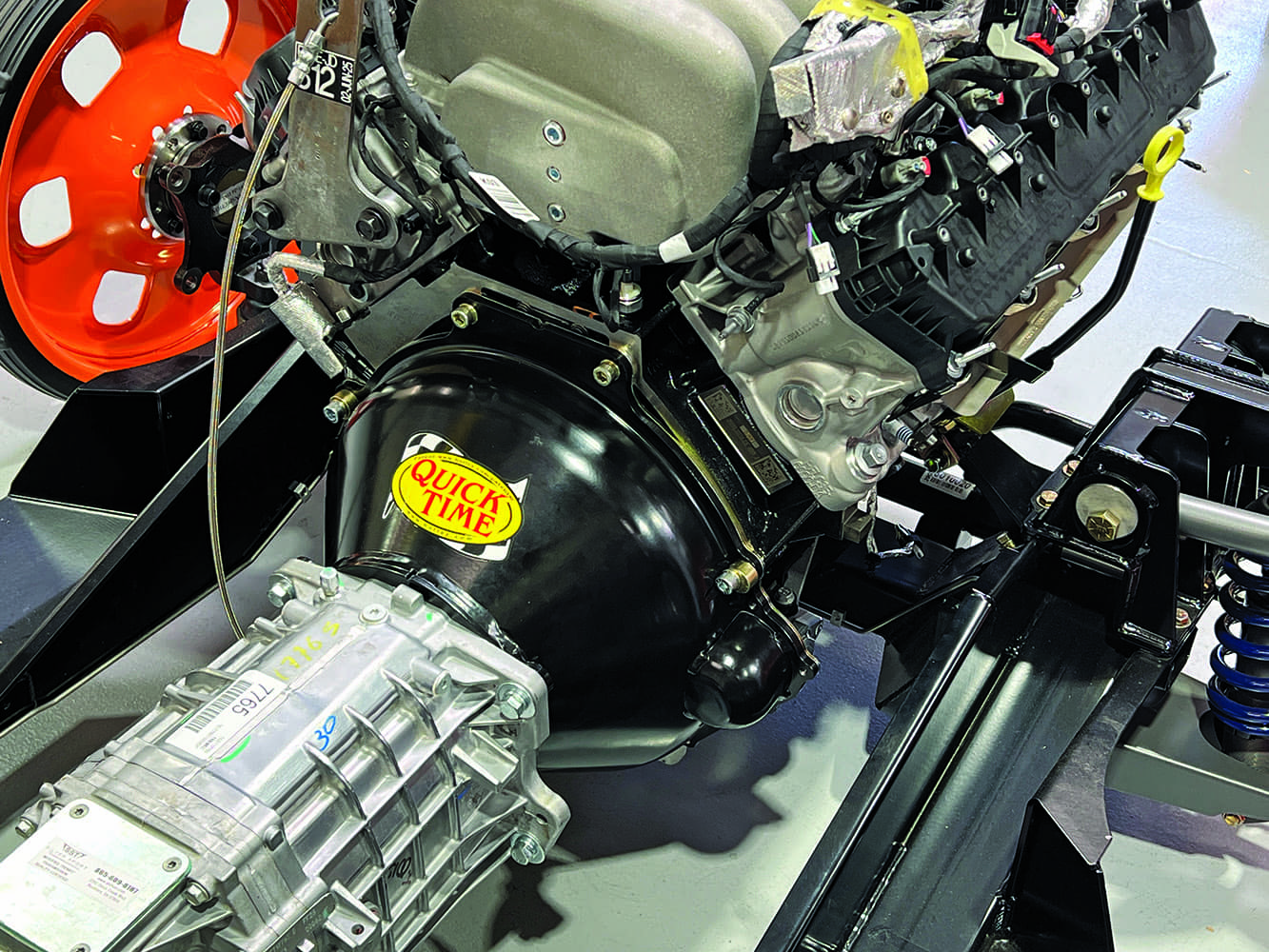
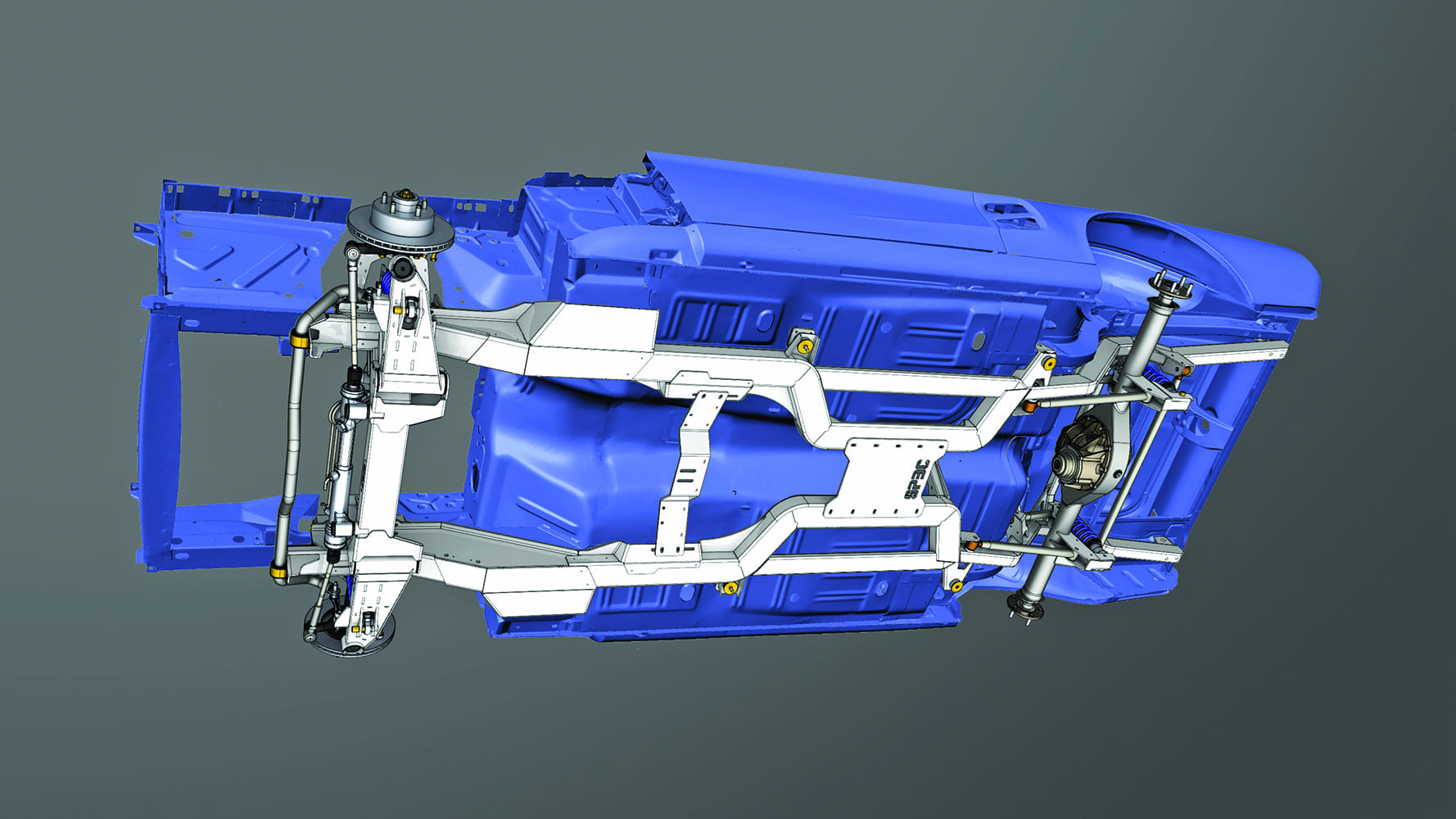
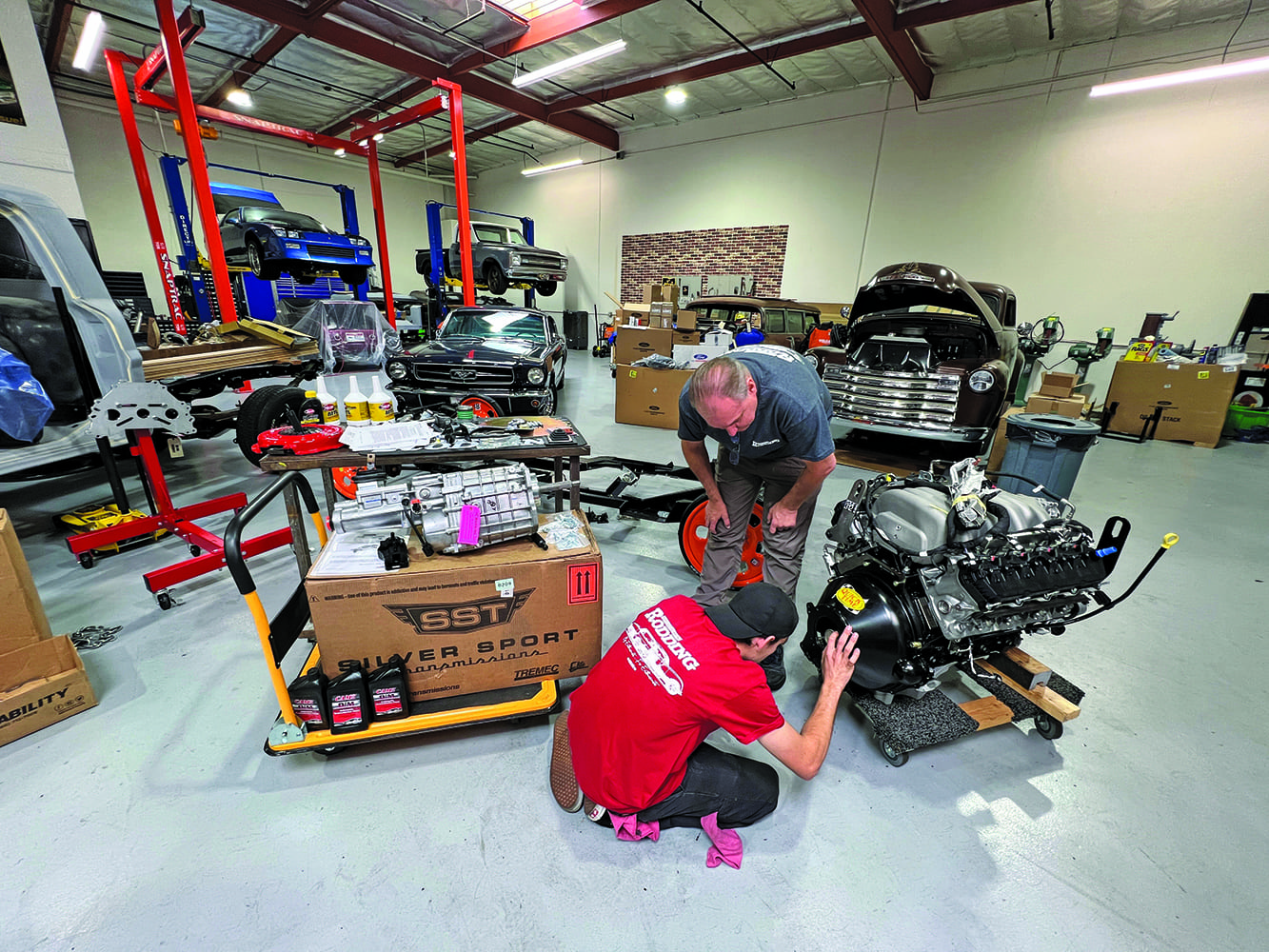
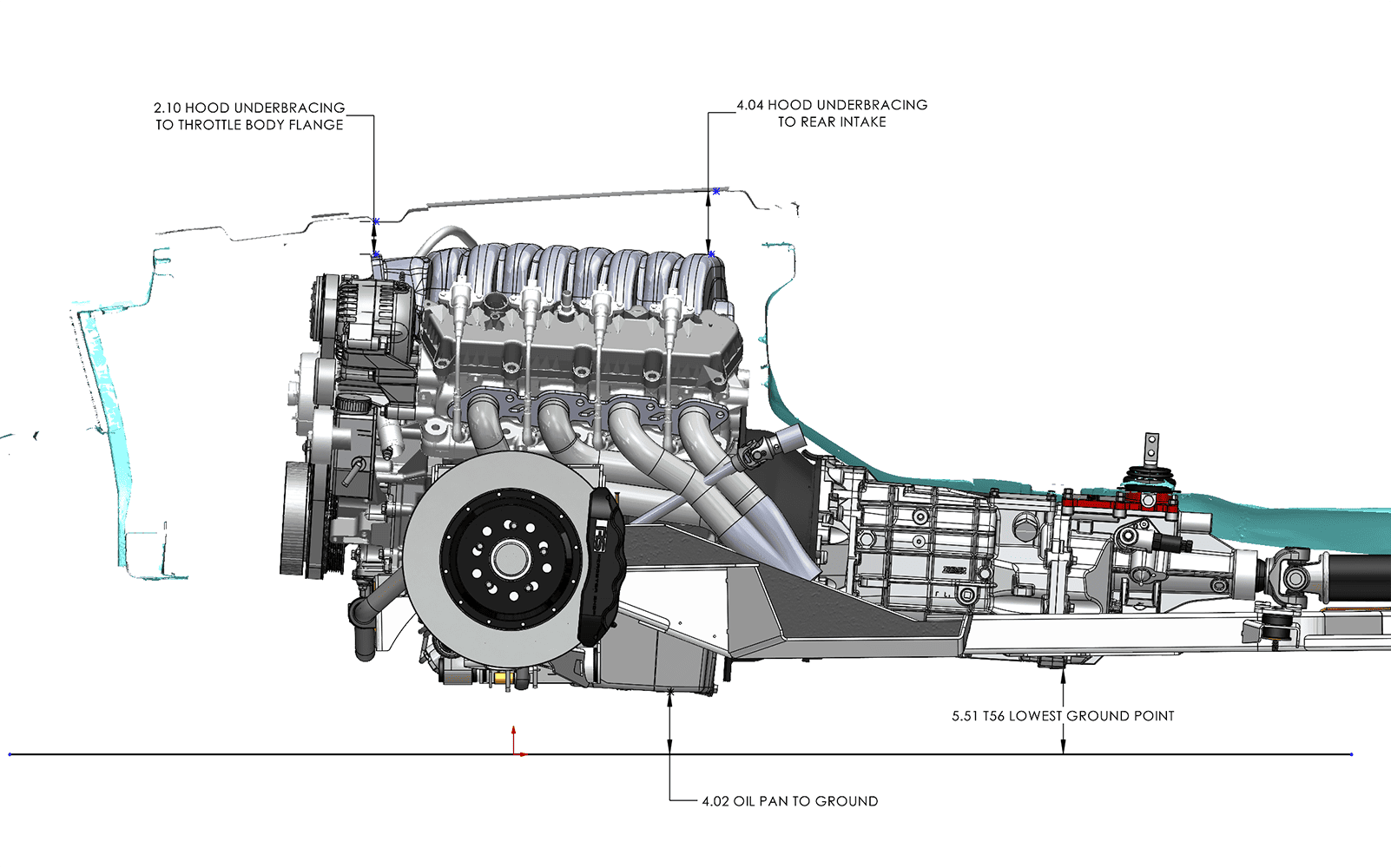
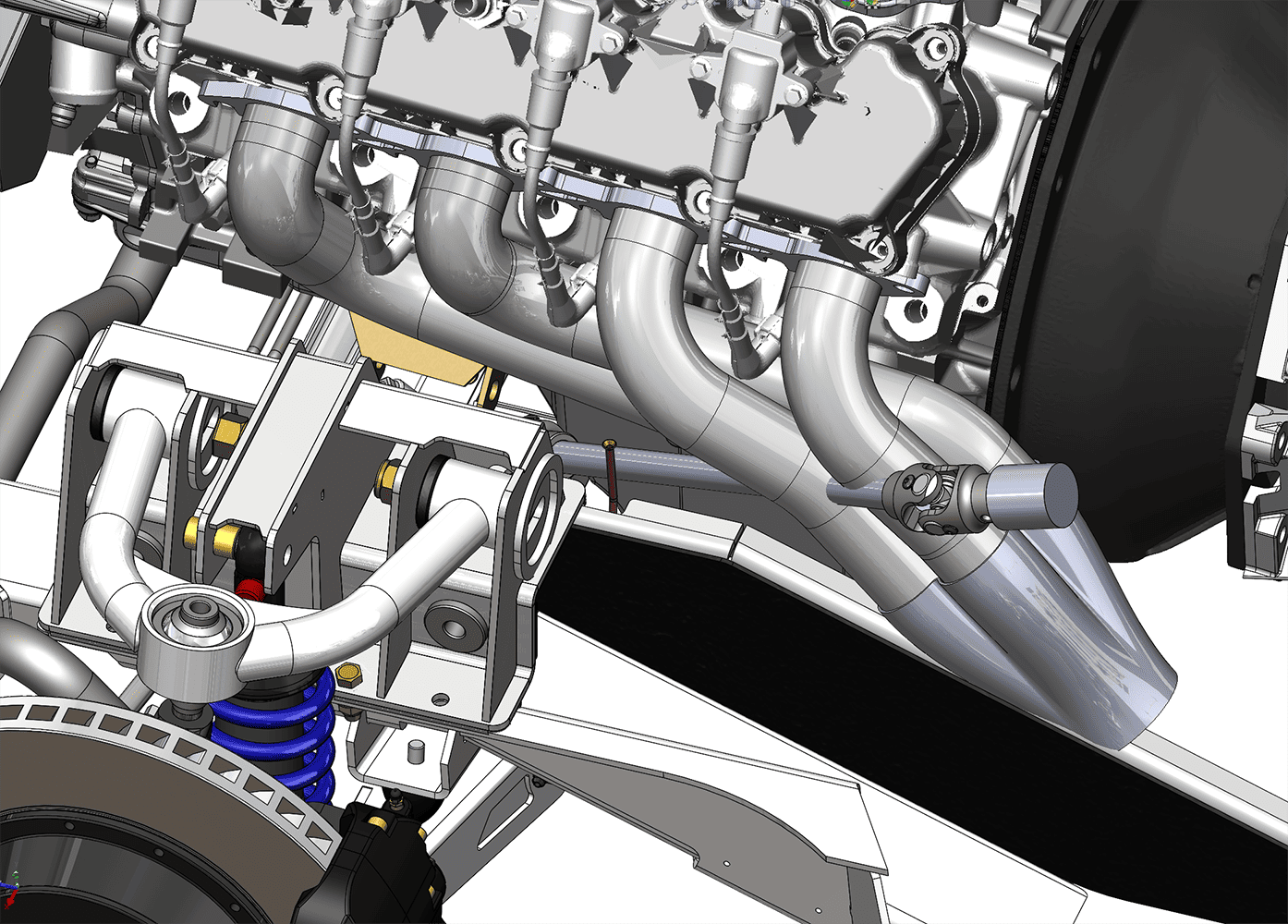
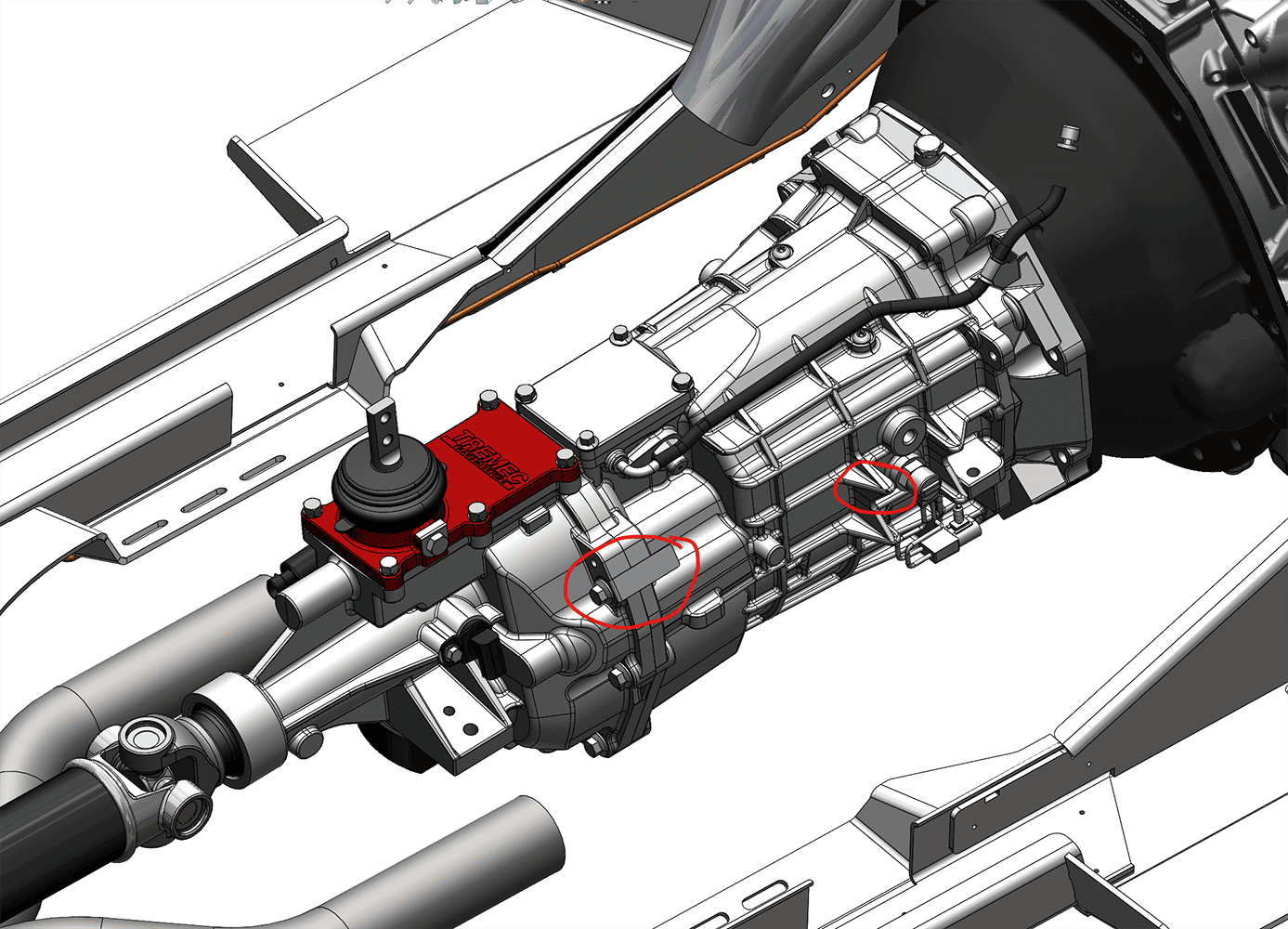
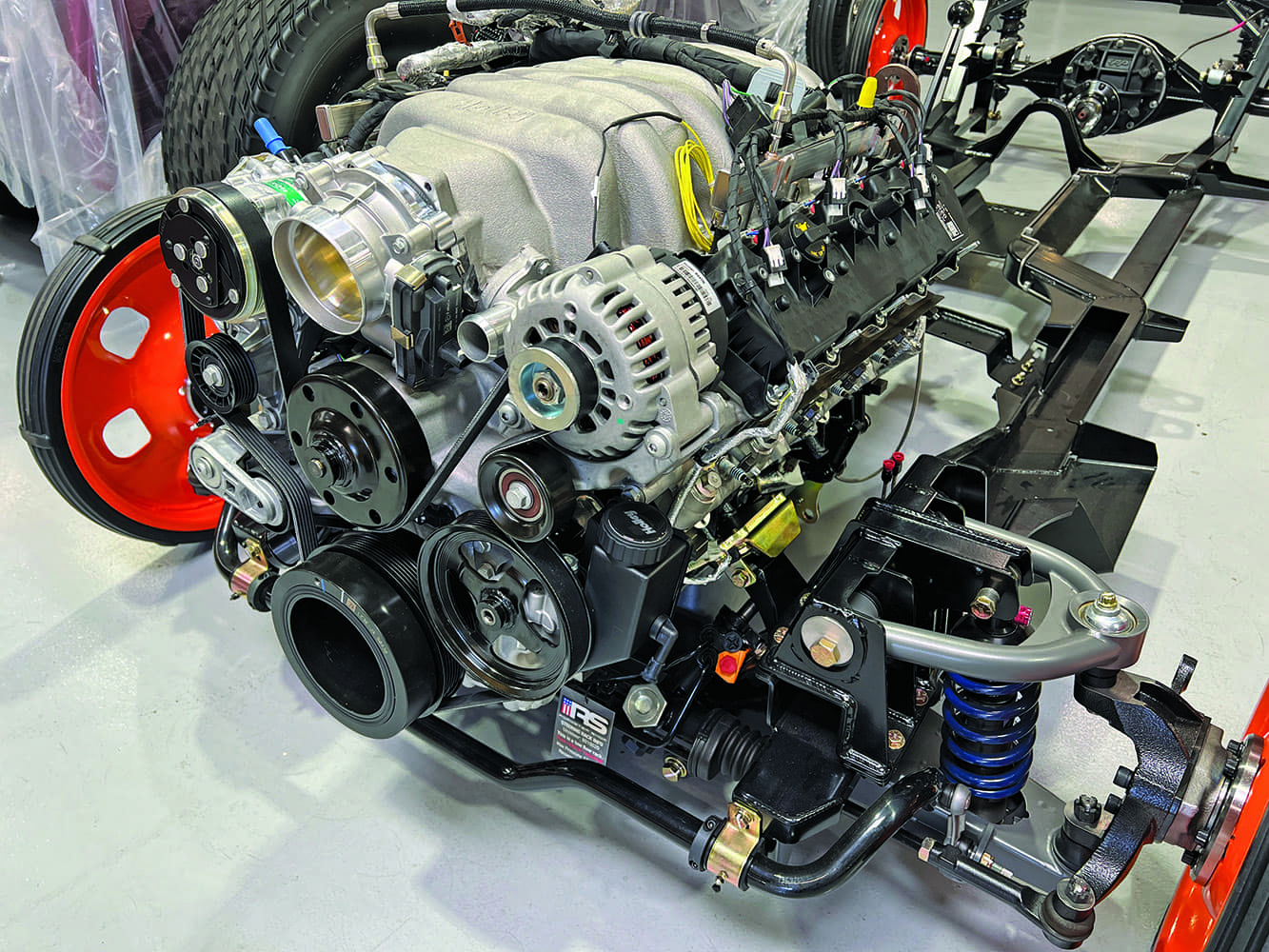
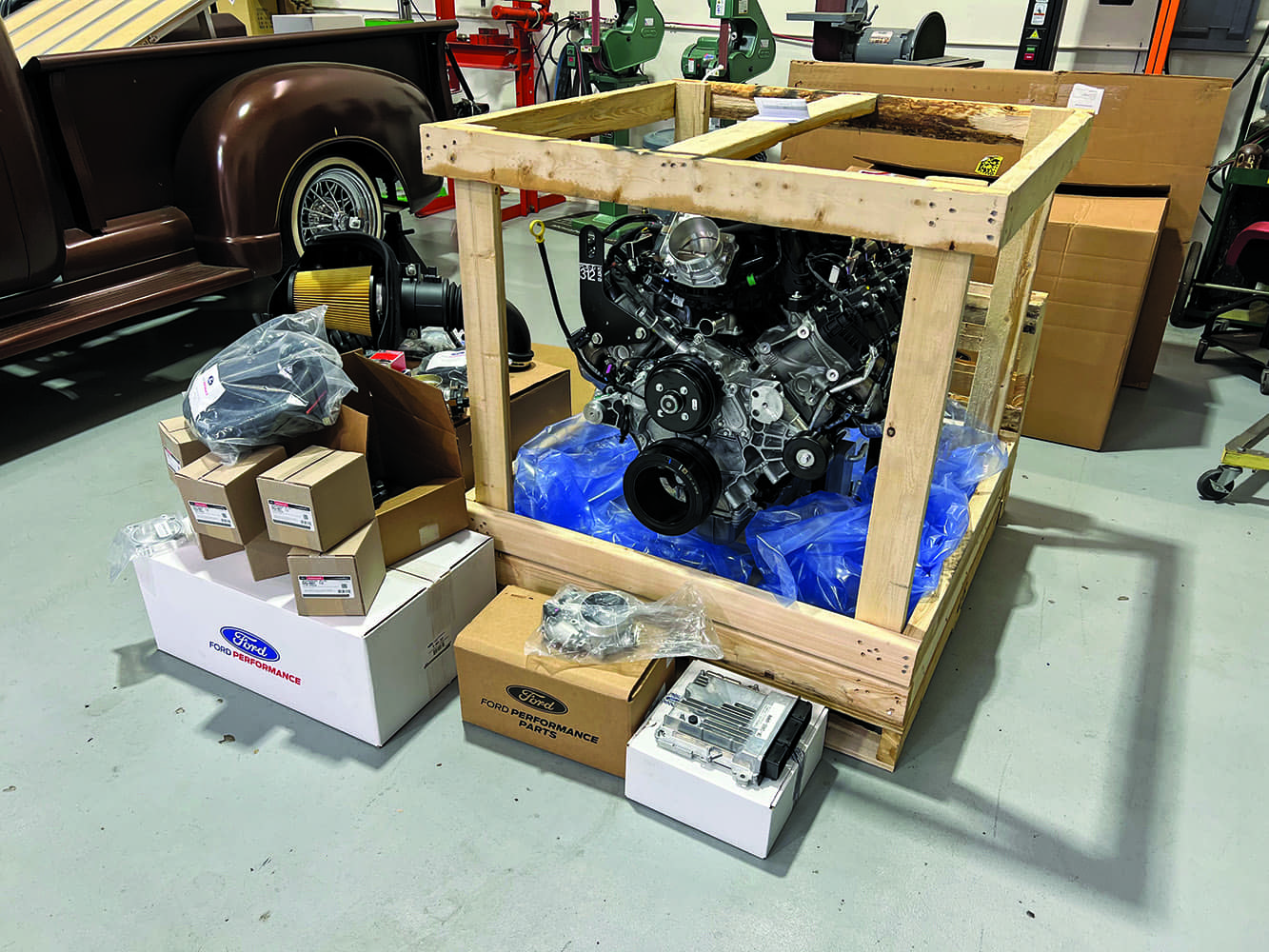
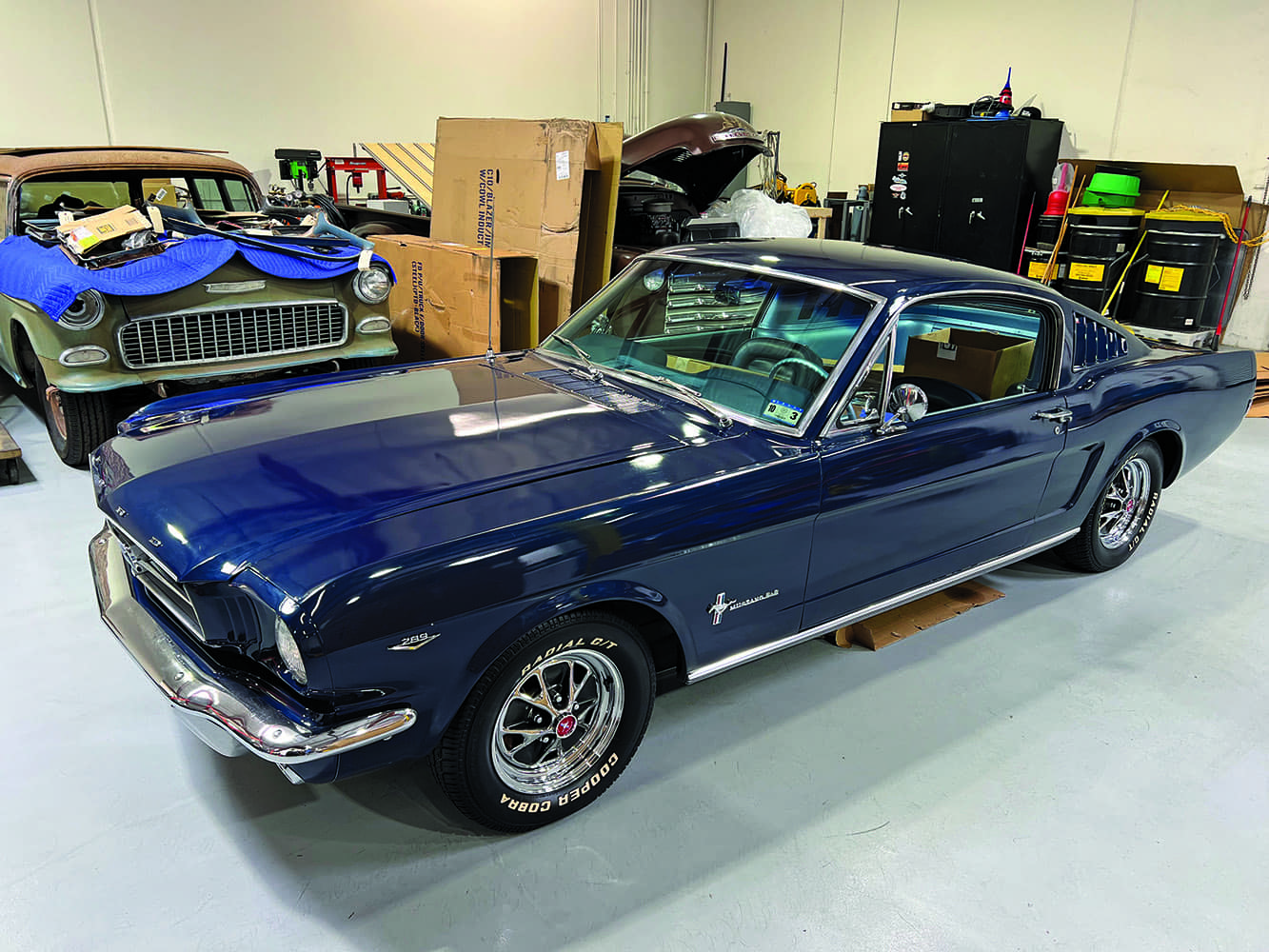
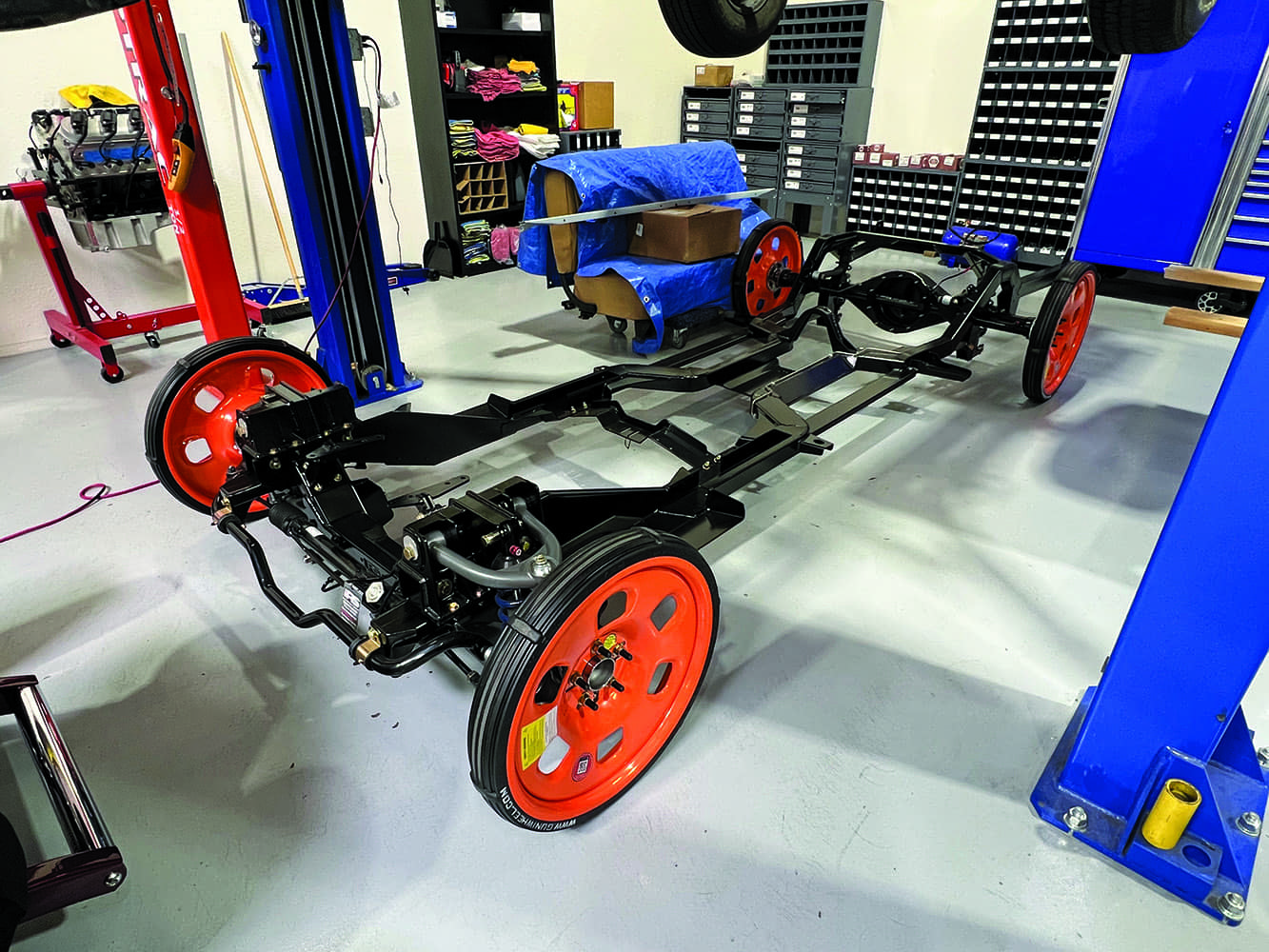
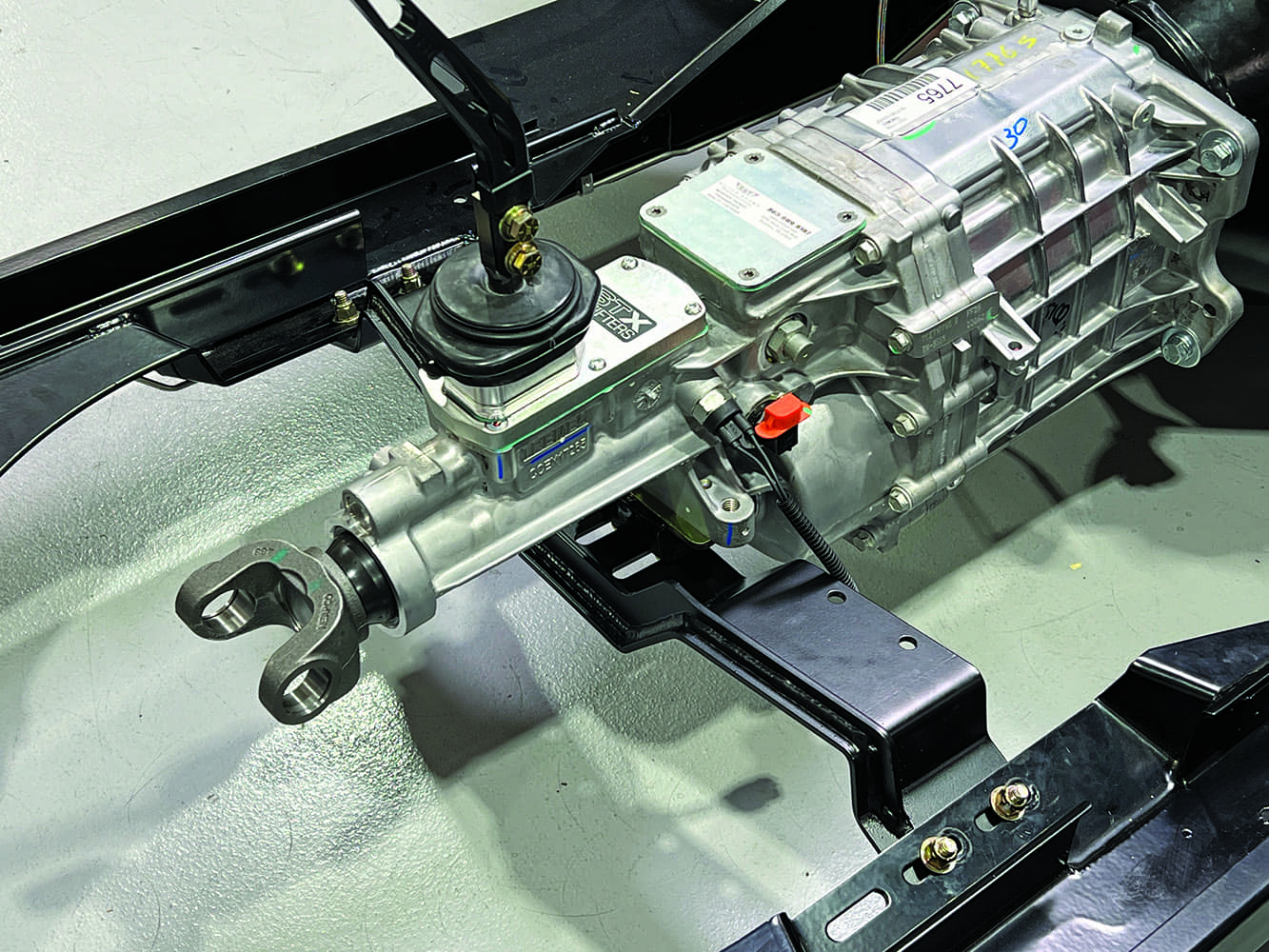
That’s why we chose a Ford Racing 7.3 Godzilla (PN M-6007-73B) for our 1965 Mustang project. The Godzilla will sit in a Roadster Shop SPEC Series chassis, and we plan to use a Silver Sport Transmissions swap kit with a McLeod clutch and TREMEC TKX five-speed manual. With help from Holley (intake, oil pan, and serpentine belt system) and a few aftermarket partners, our Fastback will be ready to roar.
Welcome Mr. Godzilla
Introduced in the F-250 Super Duty in 2021, the Godzilla engine delivers 430 hp at 5,500 rpm and 475 lb-ft of torque at 4,000 rpm. It was primarily designed as a replacement for the outgoing modular 6.8L V-10, which was common in motorhomes, fleet trucks, and F-250/350 pickups and vans. Compared to the V-10, the 7.3 Godzilla provides improved durability, more compact packaging, and increased power. As a cam-in-block design, it has fewer parts, making it less expensive to manufacture and maintain.
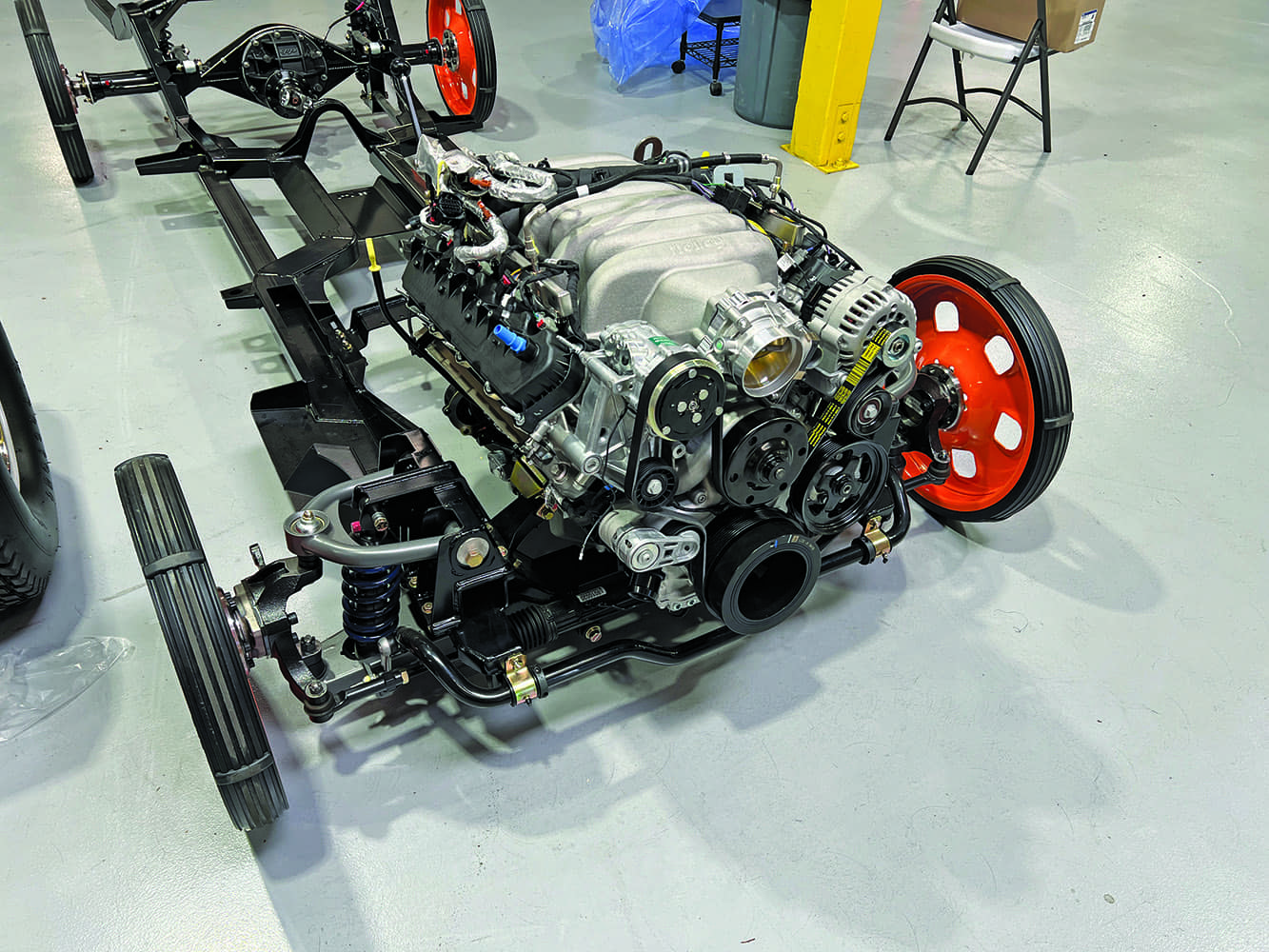
What makes it appealing to performance enthusiasts is its potential. Even with only 430 hp in stock trim, Godzilla has the foundation of a true race engine, and reaching 500-600 hp only requires a few bolt-on parts.

There are dozens of aftermarket companies developing and selling parts specifically for this engine, so you can go mild and make 500-600 hp, or custom build one to make over 1,800 hp—all while using a stock block and heads. To date, one of the quickest racers using a Godzilla is retired director of global engine engineering at Ford Motor Company, Brian Wolfe, who spearheaded the program before he left Ford.
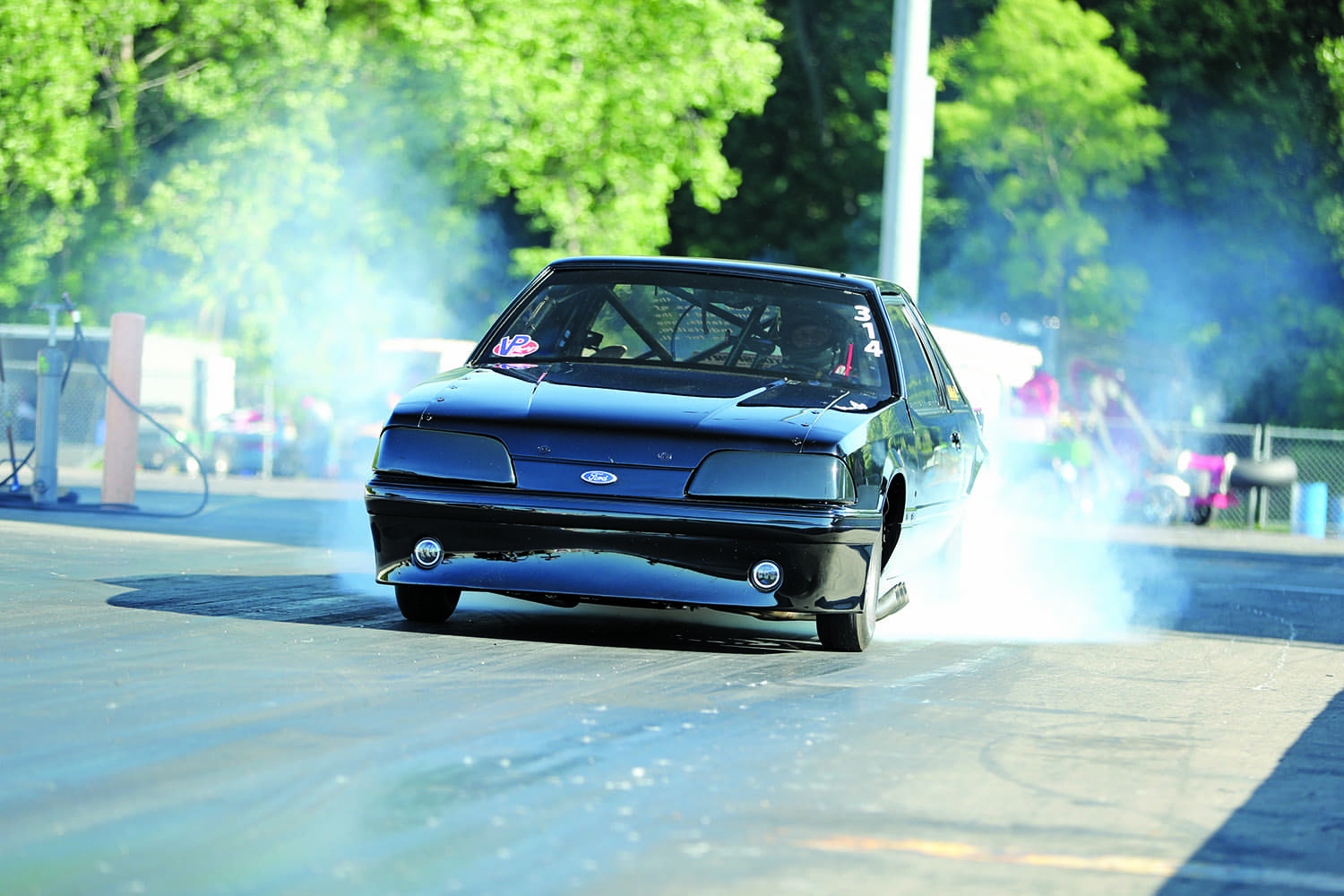
Wolfe has achieved a 6.90-second run at 192 mph in the quarter-mile with a supercharged Godzilla engine that produces roughly 1,800 hp. The key point is that his 1990 Fox-body Mustang still has a stock block and ported factory cylinder heads. Wolfe also built a naturally aspirated version that made over 900 hp using the same stock block and ported factory heads. Another racer, Charles Bartolme, who also races a Fox Mustang, has also run in the 6s at over 190 mph with his 7.3 Godzilla.
Beyond the dragstrip, we’ve seen Godzilla engines swapped into Broncos, F-Series trucks, Cobra replicas, GT40 replicas, street rods, and more. So, we’re excited to get going with our 1965 Fastback.

“When the project [to replace the V-10] kicked off [Brian Wolfe] was the director of global engine engineering, and we decided to go with a new design, one that made the most sense for Ford and its customers,” Blaine Ramey, former supervisor of large gas and diesel engine performance development at Ford Motor Company, says. “We had a clean sheet of paper, and this design offered the customer what they we’re looking for in that segment. We wanted to have a common engine that would go across the board. This [engine] will be in fleet trucks, motorhomes, and pickup trucks. We wanted a relatively compact package with low cost and high reliability,” Ramey explains. “So, it made sense to do a pushrod V-8.
“[Godzilla] uses everything we have learned over decades building powertrains. The same guy who did the 5.0L and the 5.2L Shelby [G.T. 350] intake port developed this engine. It’s brand new with no compromise. It is rugged with a deep skirt, cast iron, four-bolt main block with cross bolts, and the pistons and rings are an evolution of the EcoBoost design. There are fewer parts [compared to the V-10] and it’s built in Windsor [Ontario]—the DOHC V-8 engines use 32 valves; this has 16, and one cam versus four.”
The 7.3 Godzilla features large cylinder bores to enhance airflow through the intake ports and results in slower piston speeds during cruise modes for improved efficiency. Regarding induction, Ramey and the team developed a composite intake that mounts flat at the heads, instead of in the “V” of a typical 90-degree engine. “This arrangement helps with sealing and assembly. It also has a dry valley to reduce potential for oil leaks.”
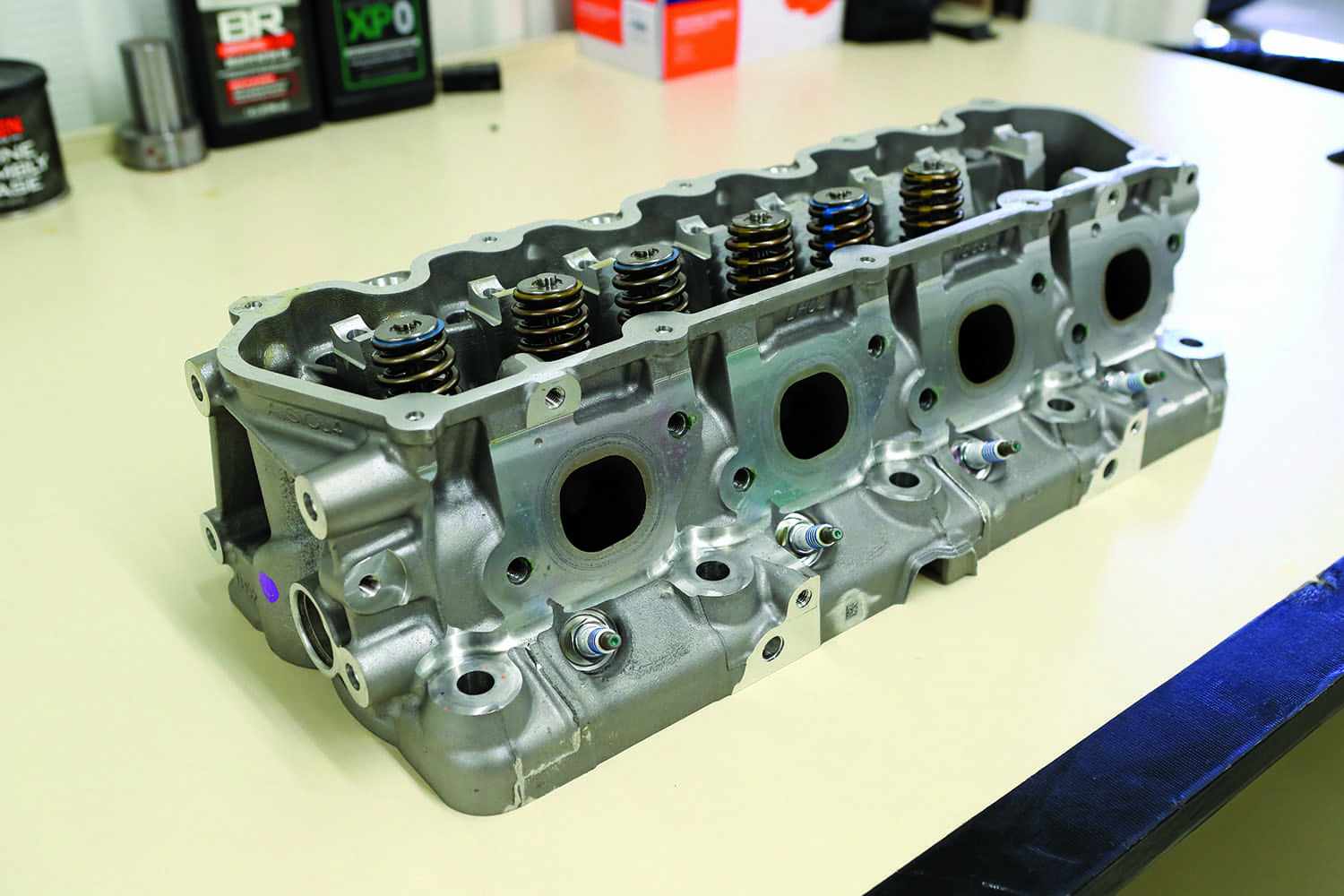
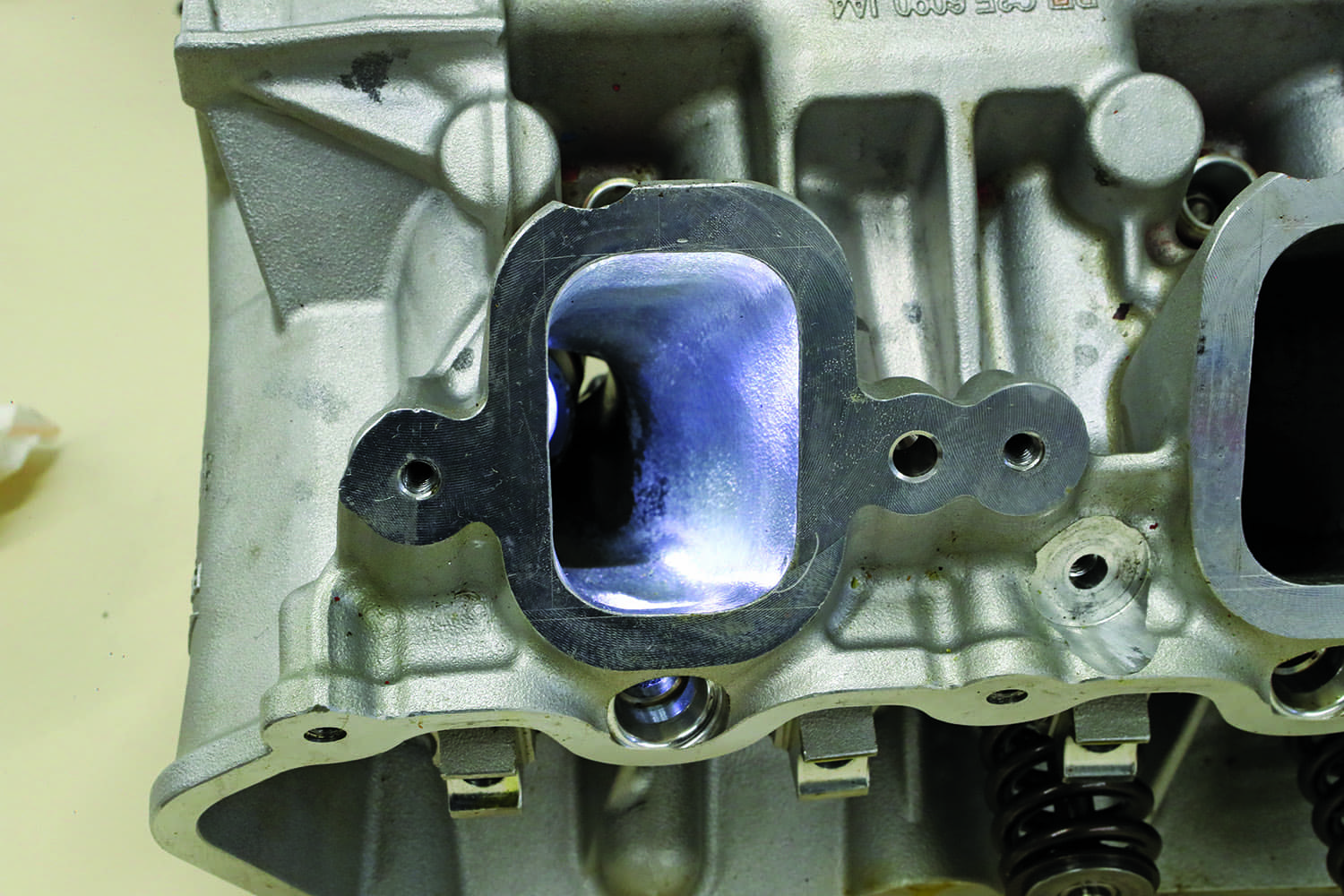
The composite intake feeds aluminum heads with tall, straight ports that deliver excellent flow and charge motion. “We built a wedge-shaped combustion chamber, and the spark plug is centered optimally in the dish to allow for a higher compression ratio, which boosts efficiency and performance. We also used piston-cooling jets to spray oil on the back side of the pistons. This lowers piston temperatures under high loads to prevent detonation. Additionally, we control oil pressure with a variable-displacement oil pump,” Ramey adds.
We can control the oil pressure to reach a target level. It uses a variable-displacement oil pump that adjusts based on driver demand. At idle, less pressure is needed; at higher speeds or loads, we increase pressure to protect the engine.
What’s interesting about the 7.3 Godzilla design is that the oil pump is powered by a jack shaft and a chain from the crank. This setup requires a deep oil pan; however, Holley and other manufacturers have developed oil pump systems compatible with more standard oil pans.
Godzilla Foundation
While designed and built for severe duty, Ford’s Godzilla has features you’d expect to see in a racing engine. Let’s start with the size. The 7.3 Godzilla has 445 ci of displacement. Those cubic inches might make you think Godzilla is a big-block, but technically, whether it’s considered big- or small-block depends on bore spacing, which is the distance between the centers of adjacent bores. With a 4.53-inch bore spacing, Godzilla leans more toward a small-block than a big-block. In comparison, the Ford Windsor has a bore spacing of 4.380 inches, the Cleveland 4.380 inches, the FE 4.630 inches, and the 385 Series 4.900 inches. So, based on these numbers, it’s more of a small-block than a big-block.
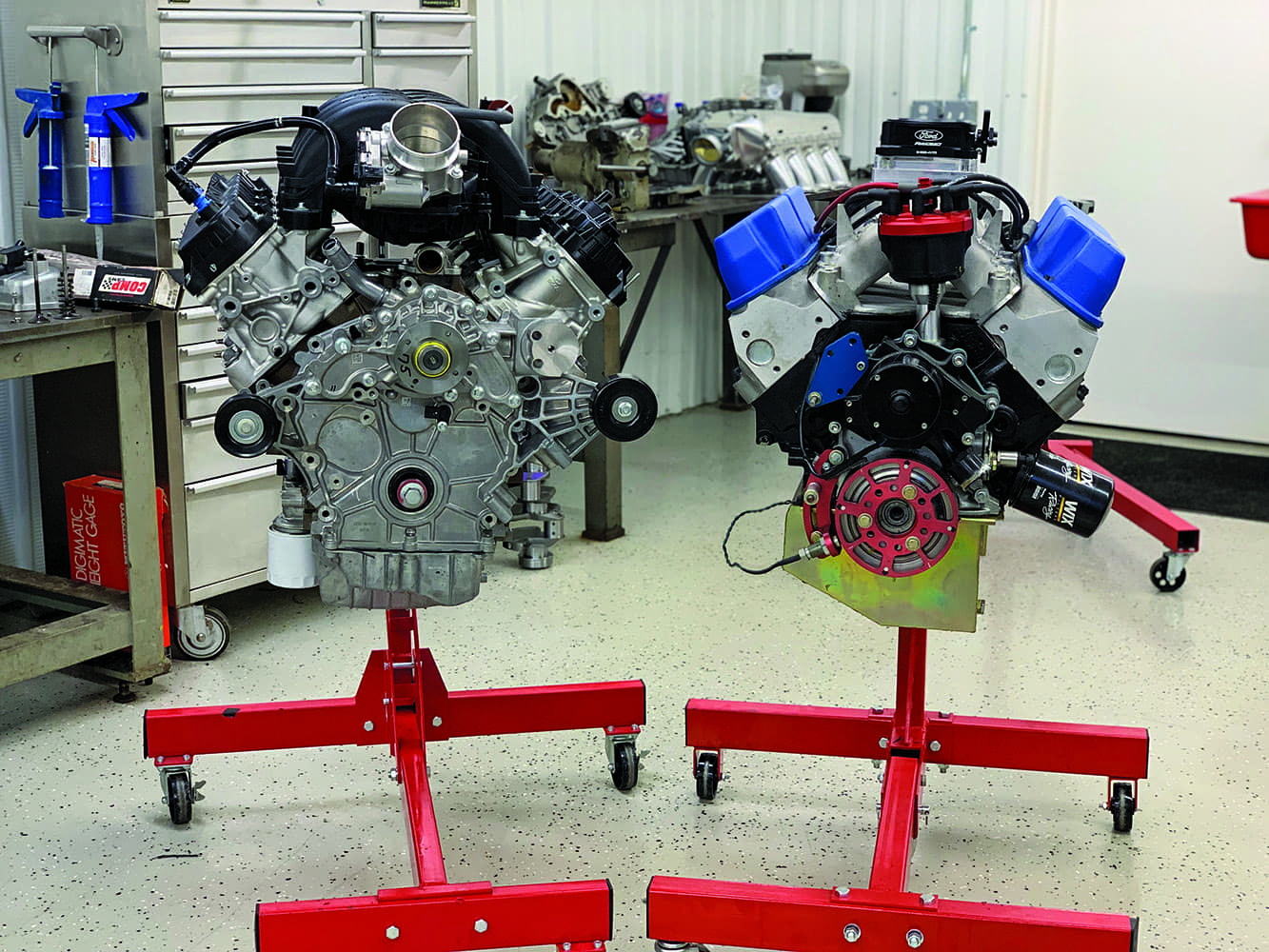
Fitting a Godzilla into your project shouldn’t present an issue, as it measures roughly 25.5 inches wide at the top of the valve covers and it is 24 inches long. That’s about 2 inches taller and wider than a 351W. Dressed, the weight is roughly 540 pounds.
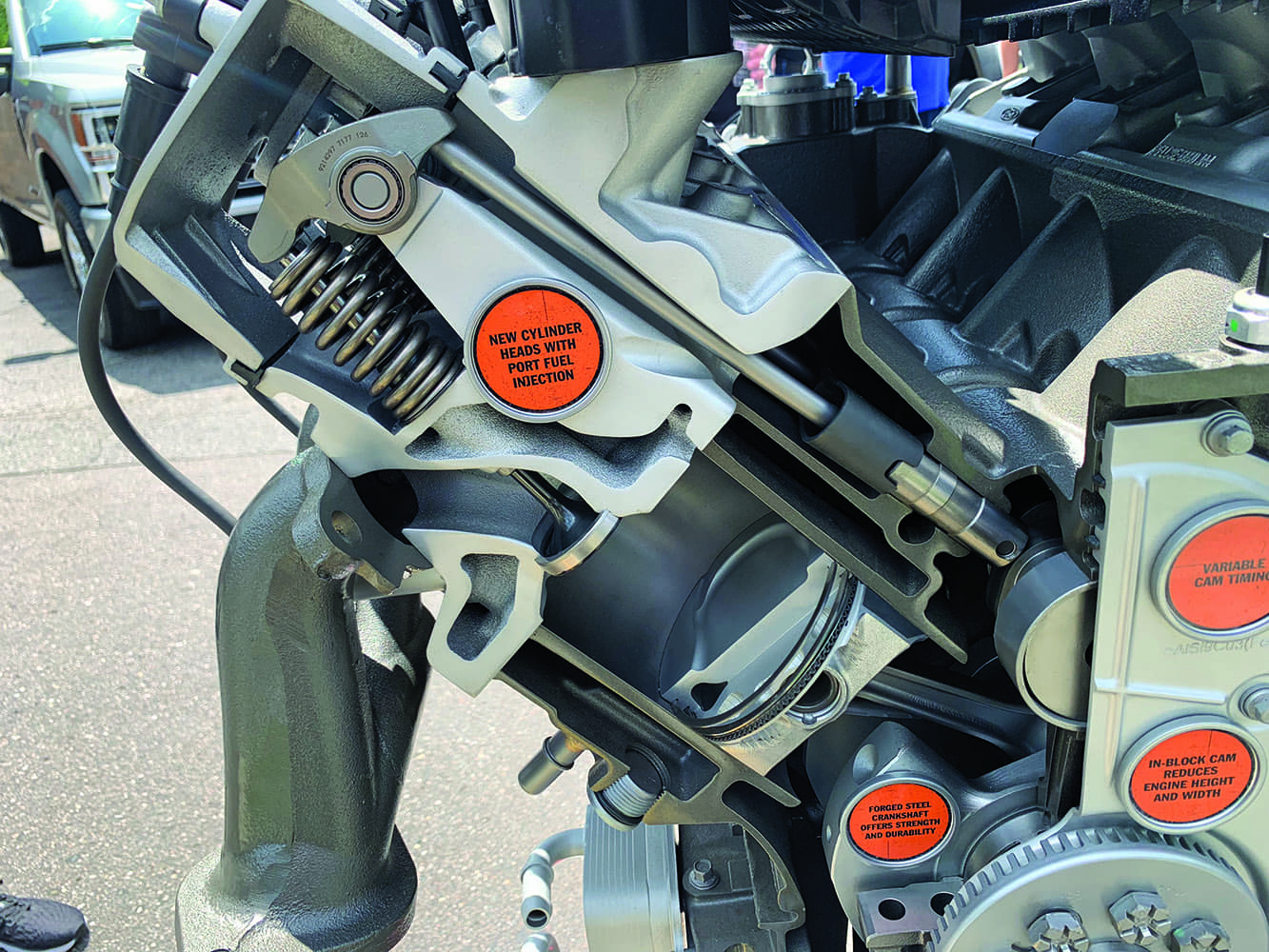
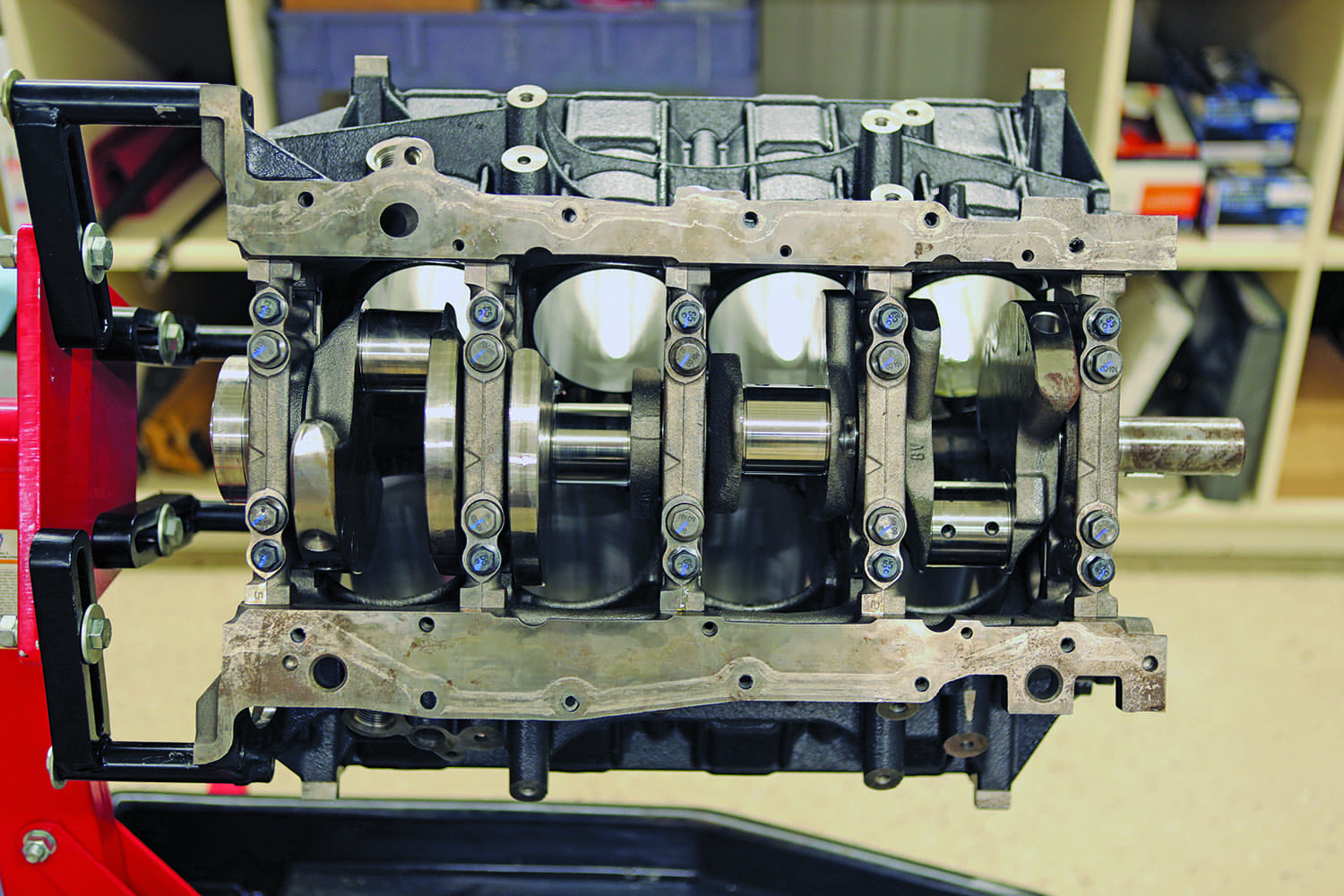
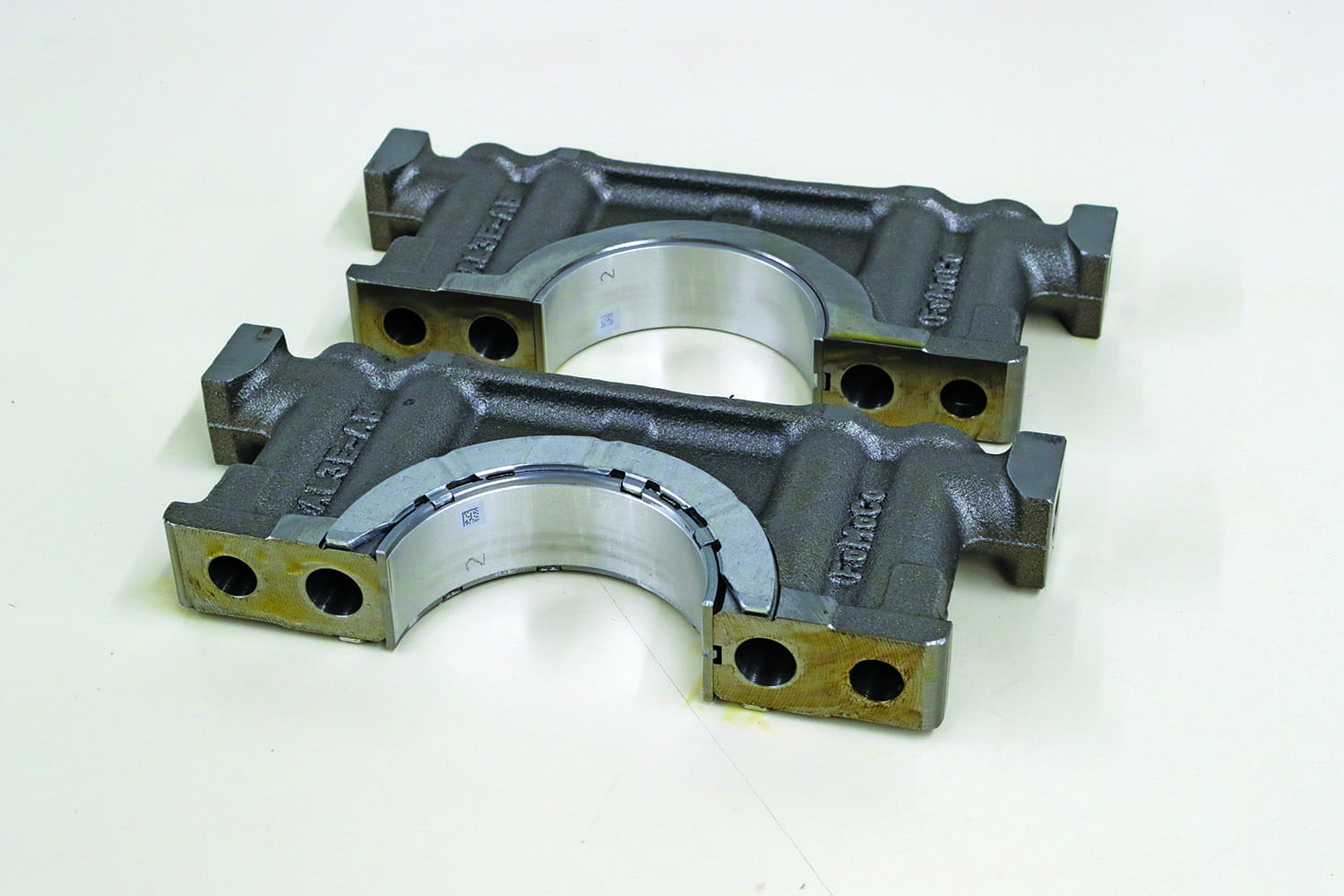
Godzilla engines are built around a cast-iron block (casting No. RFLC3E-6015-JB) with deep skirts and Siamese 4.22-inch cylinders. The deck height measures 9.65 inches from the crankshaft centerline, and you’ll notice a “saw cut” between the cylinders to improve cooling. The block features four-bolt main caps with two lateral cross-mounted fasteners per cap, and the thrust bearing is located on the number three main. The cam-to-crank distance is 5.433 inches, and depending on the bore and stroke, the maximum displacement with an overbore and stroker crankshaft is approximately 500 ci. Ford selected the popular 4.6 DOHC and 5.0 Coyote bolt pattern on the rear of the block. The 7.3 Godzilla uses a forged-steel crank.
The crank stroke measures 3.976 inches, main journals are 2.66 inches (which are common to the 6.2L Ford V-8), and rod journals are 2.086 inches (shared with Coyote). The crank features an eight-bolt rear pattern, the same as the 5.0 Coyote and 4.6 modular engines.
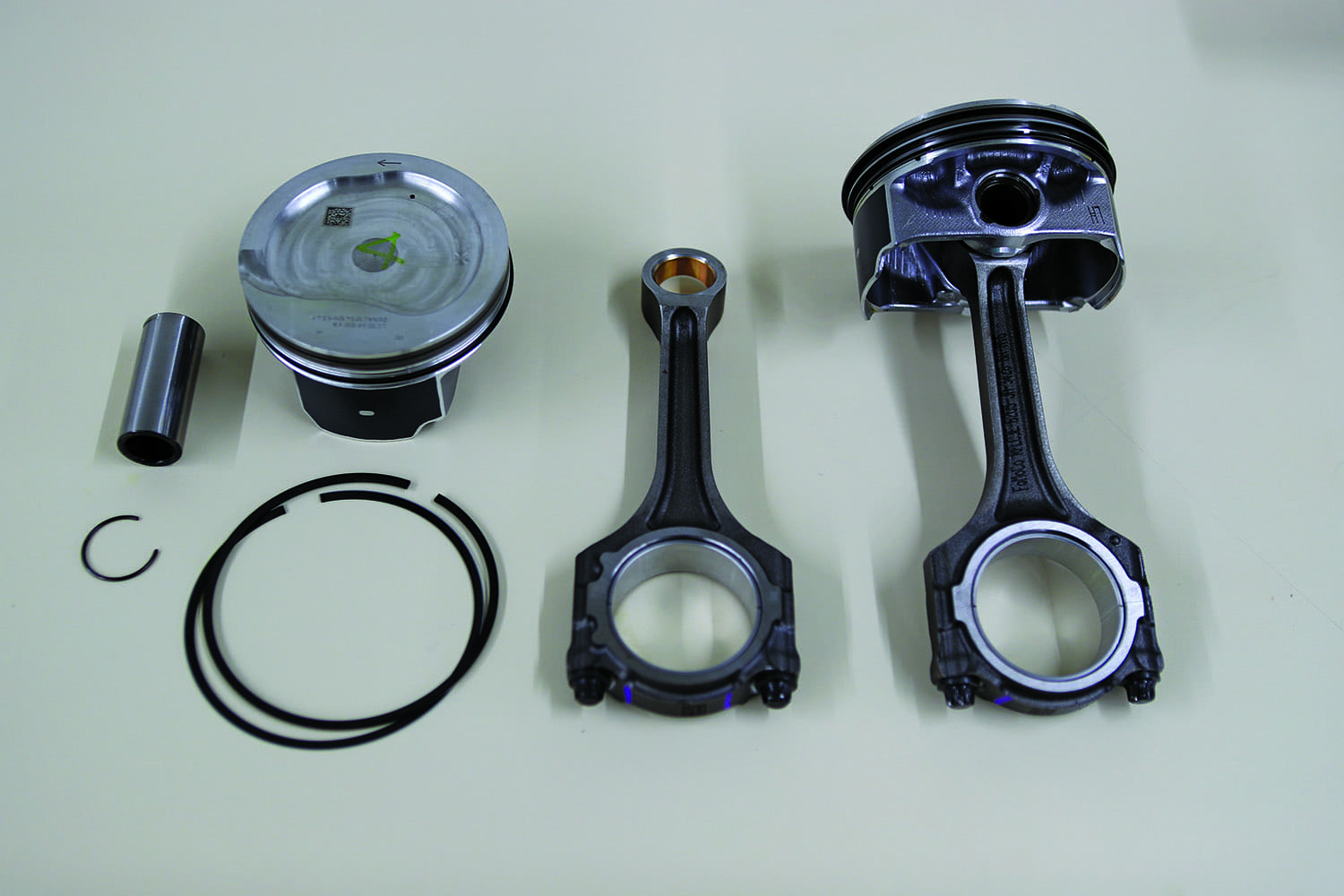
Connecting rods are I-beam, made of powdered metal, with fractured caps secured by external Torx head fasteners on the rod bolts. Rod length: 6.319 inches. Wristpin diameter: 0.990 inch. Big-end diameter: 2.236 inches. They use aluminum hypereutectic pistons with 1.5-, 1.2-, and 2.5mm rings.
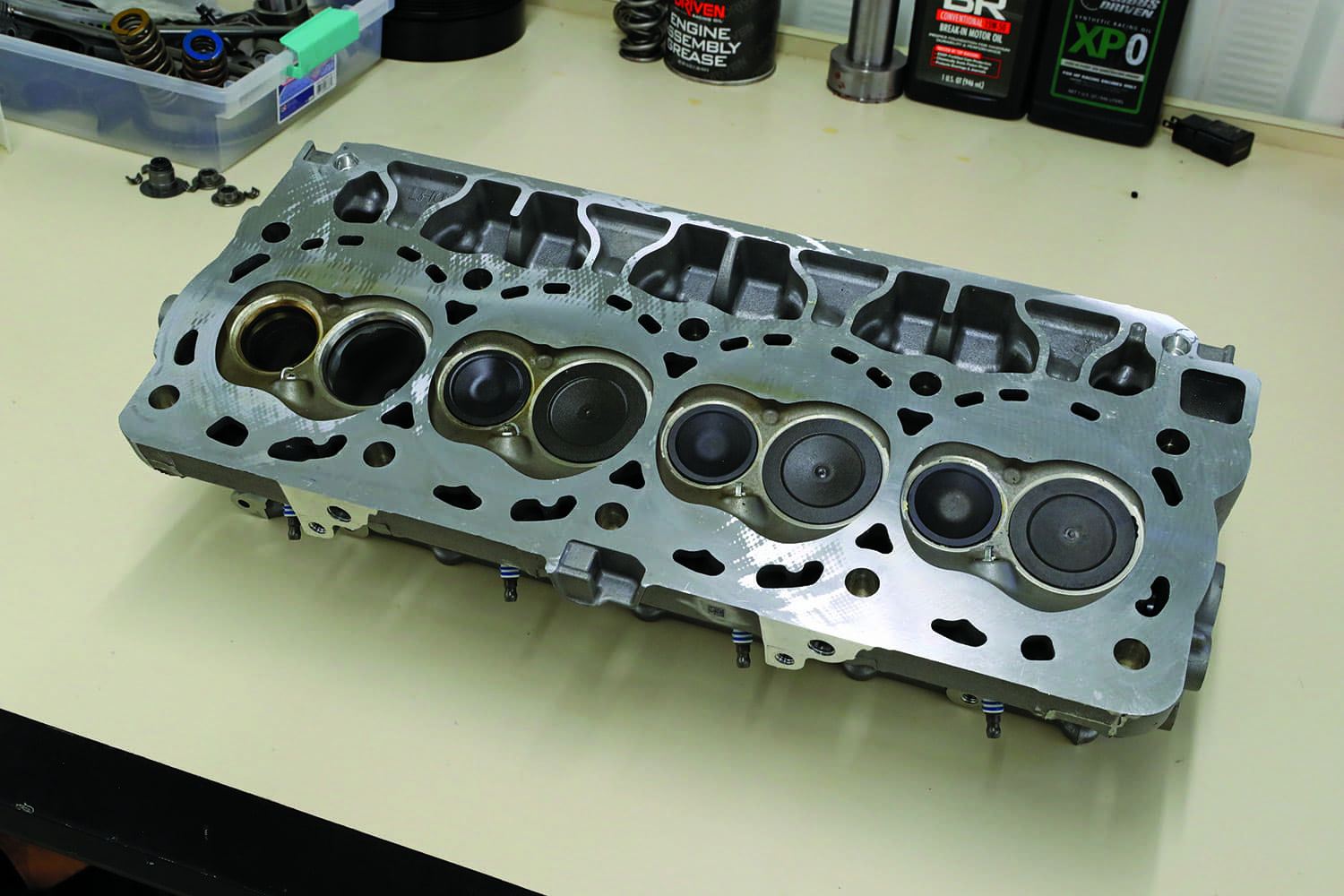
The biggest difference from any previous Ford V-8 is in the aluminum cylinder heads. They are lightweight, and Ford cleverly installed 2.17-inch (55.13mm) intake valves and 1.66-inch (42.53mm) exhaust valves, which sit at an 8.8-degree valve angle. The valves are also canted at 1.8 degrees, with a combustion chamber volume of 62.4 cc. The compression ratio is 10.5:1, and the firing order is 1-5-4-8-6-3-7-2.
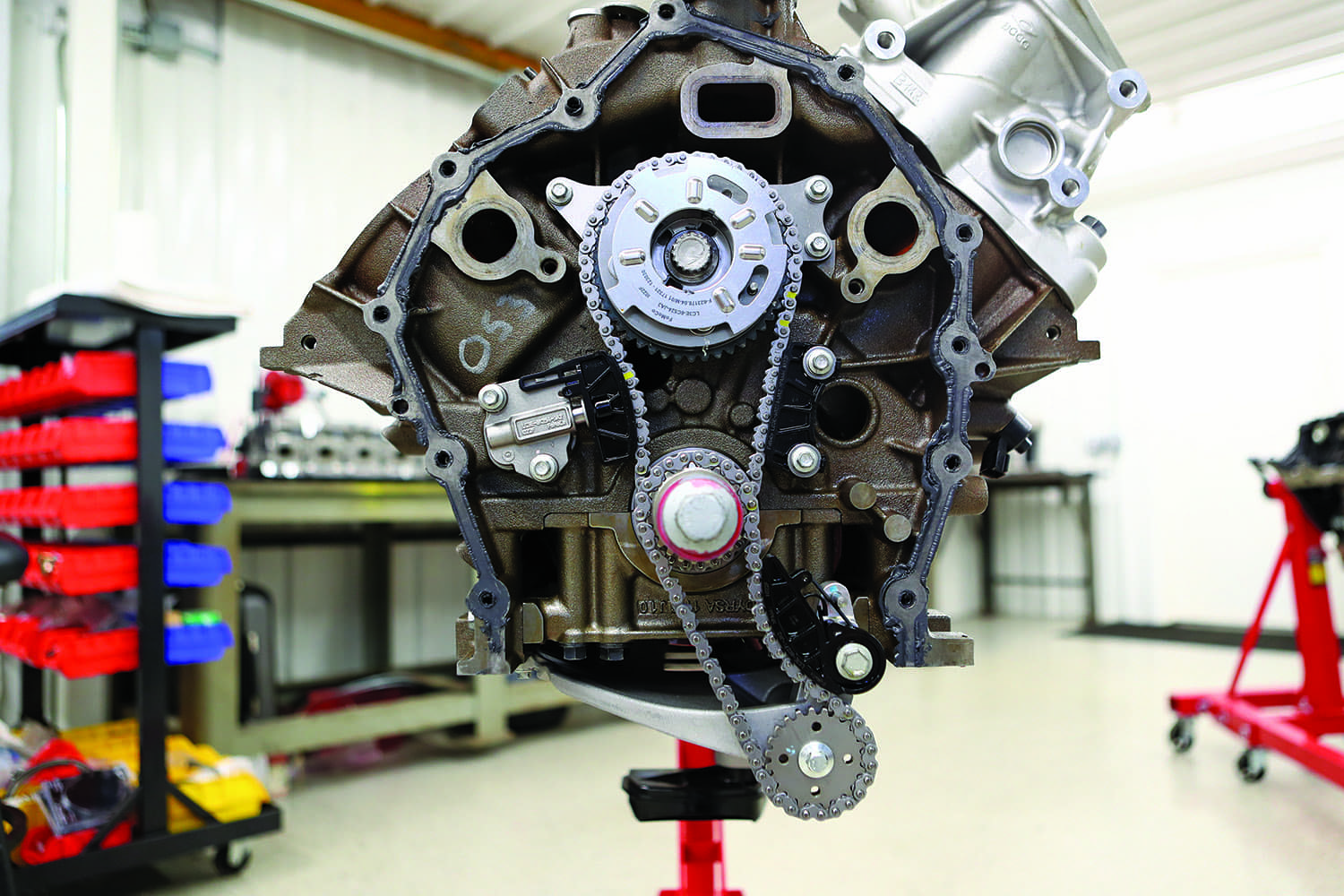
Godzilla engines feature either die-cast or steel roller fulcrum rockers with a 1.8:1 ratio, along with Beehive valvesprings and a single timing chain with dual tensioners. They use 10 13mm head bolts. We’ve seen 300 cfm of intake airflow in stock trim, and up to 400 cfm with porting. Lifters are hydraulic-roller type, with a 0.842-inch diameter and plastic link cups.
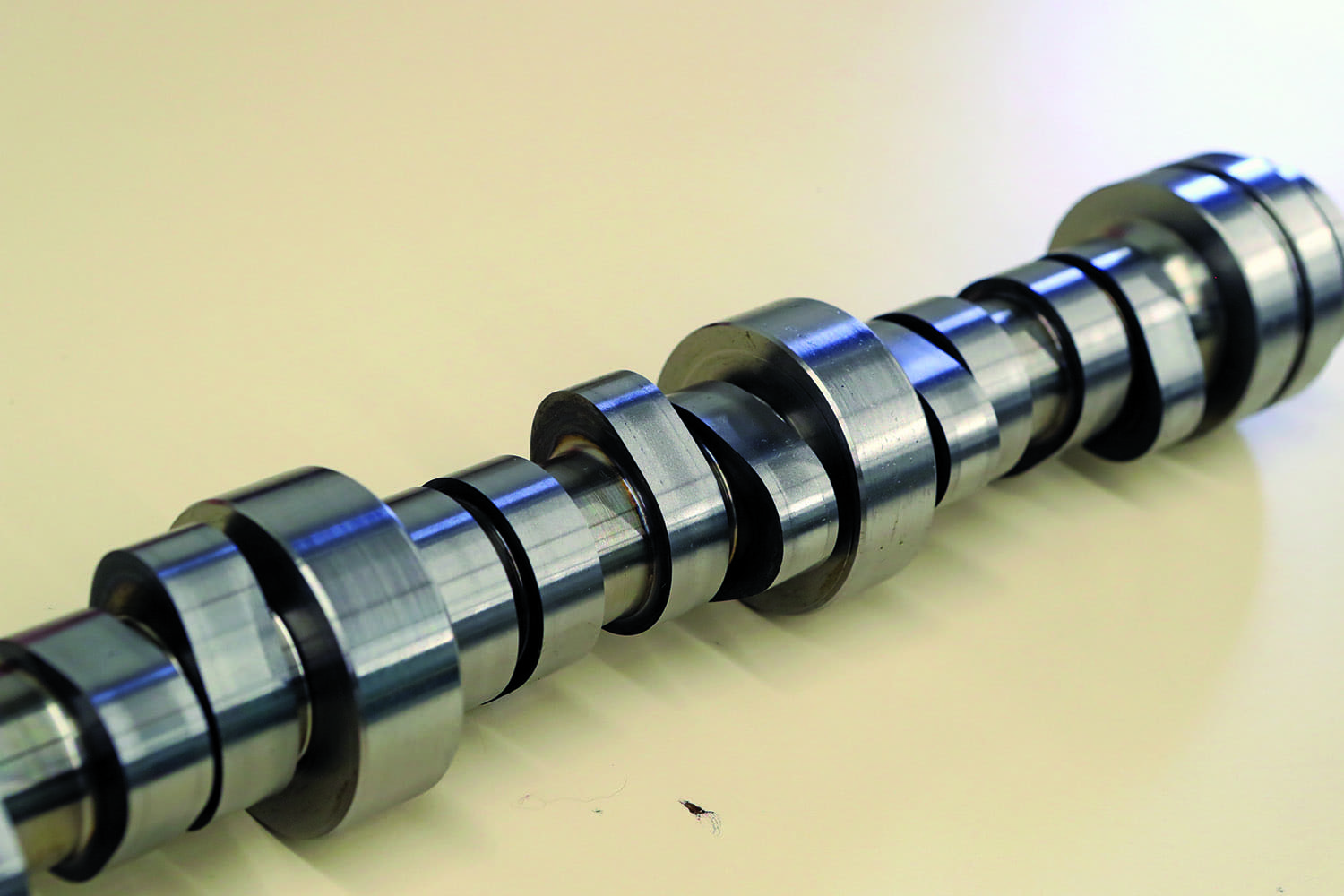
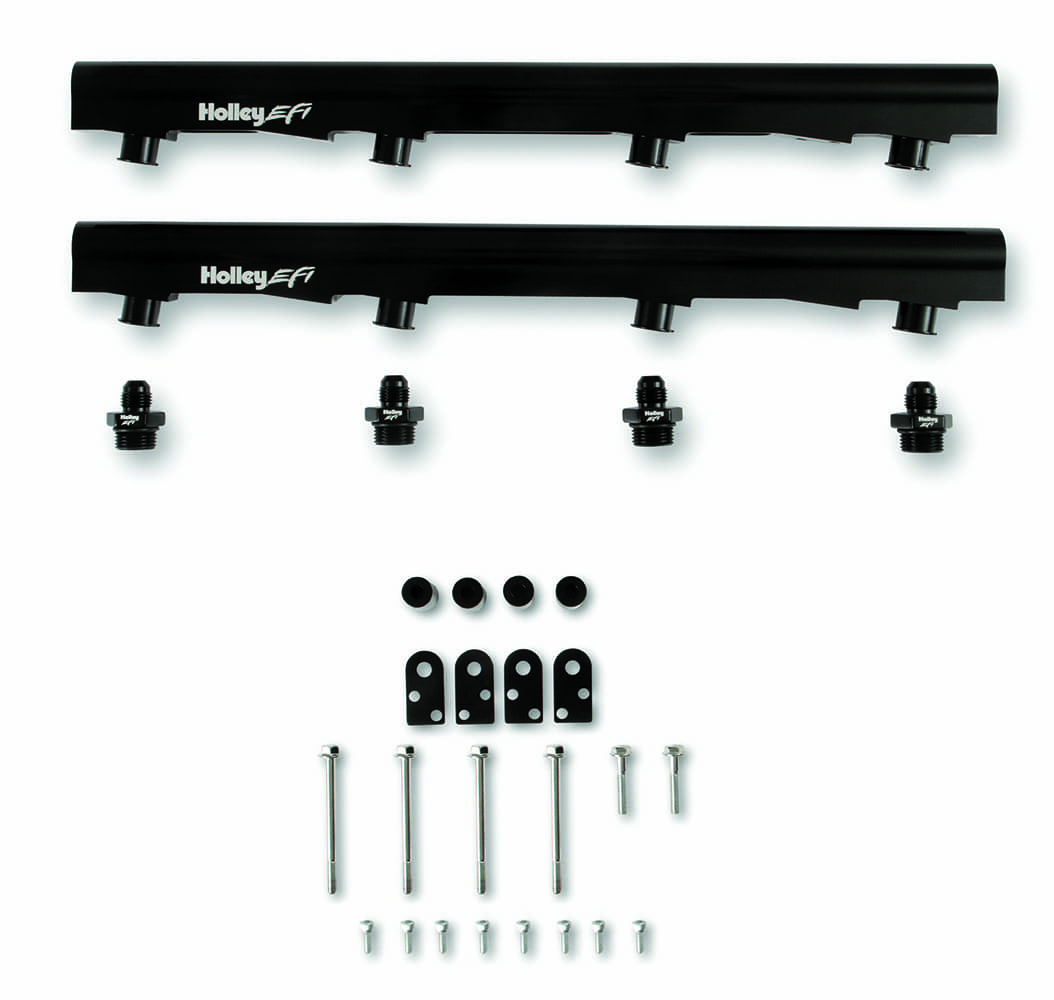
The stock cam features variable valve timing (VVT) and intake/exhaust lift of 0.539/0.595 inch (13.67/15.26mm), with durations of 201 and 212 degrees respectively. Ford designed a five-journal, 60mm camshaft journal diameter for improved reliability. The robust cam provides accurate valve actuation. Godzilla uses a composite intake with a single throttle-by-wire throttle body. These measure 80mm up to 2021 and 92mm for 2022 and newer models, with 35 lb/hr injectors to supply fuel.
That’s the facts, now it’s time to head back to the shop and turn some wrenches. We’re excited to get going so we can turn the key and bring this 7.3 Godzilla to life. As the old saying goes, “There is no replacement for displacement.” MR
Check out this story in our digital edition here.