While the thought of upgrading to a carburetor in 2026 might seem a bit contrived, cost and accessibility can be a huge hindrance when it comes to making the leap to a fully electronic fuel-injection setup. Without a laptop or the ability to program an ECU, tuning an EFI system makes one reliant on a dyno shop or third-party tuner. Yet while most modern EFI systems feature self-learning abilities and a very robust initial programming baseline, there can still be subtleties that need to be refined by a professional. That’s what still makes a carburetor a very attractive option for many classic truck enthusiasts and the reason the guys at Edelbrock sat down and designed a clean sheet four-barrel carburetor, the VRS-4150.
Based on the classic 4150-style design found on many Ford vehicles going back as far as the 1950s, Edelbrock’s VRS-4150 took those elements and injected it with a plethora of adjustability, all at a screwdriver’s length. With a simple turn of an adjustment screw or a change in size of a jet or air bleed, the VRS-4150 can be easily dialed in by the end user, much to the chagrin of your local EFI tuner.
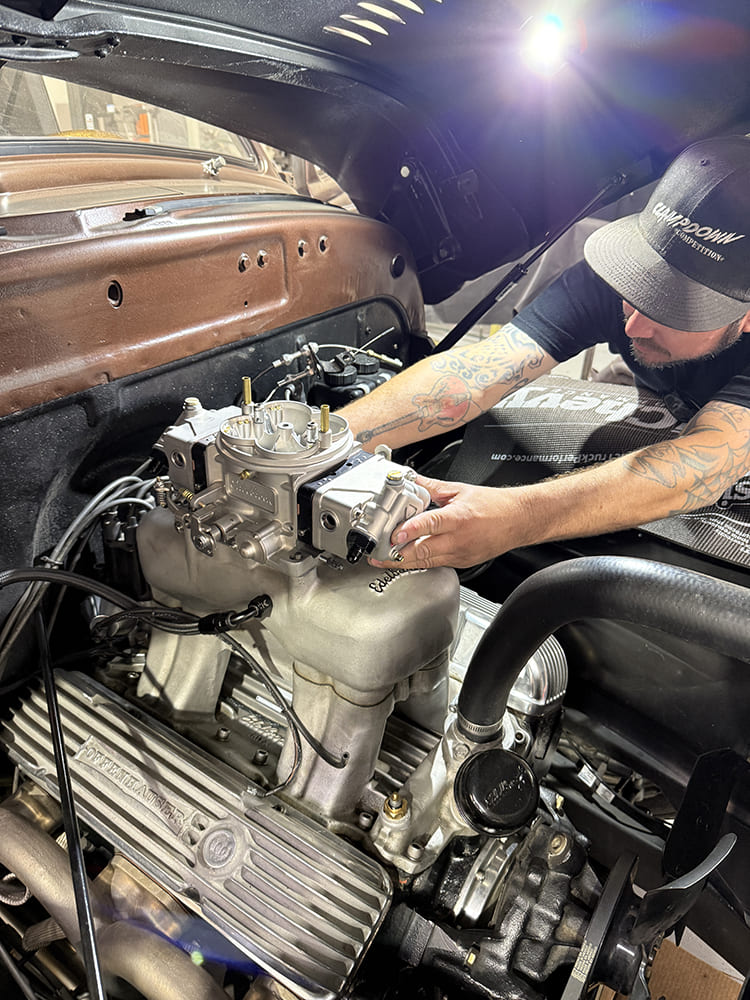
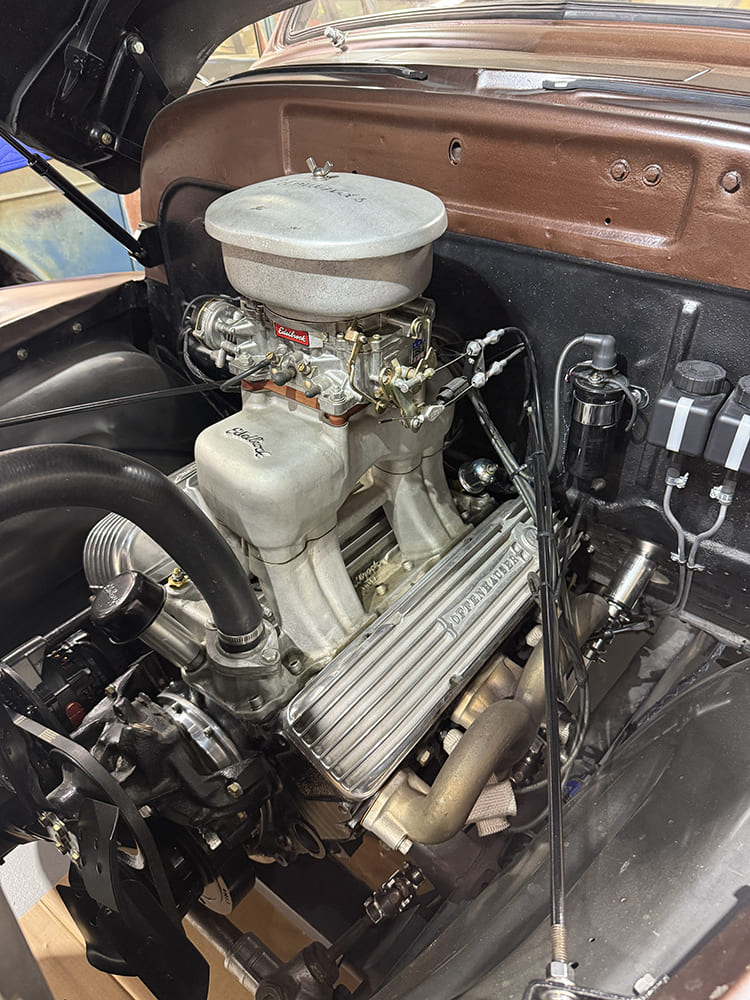
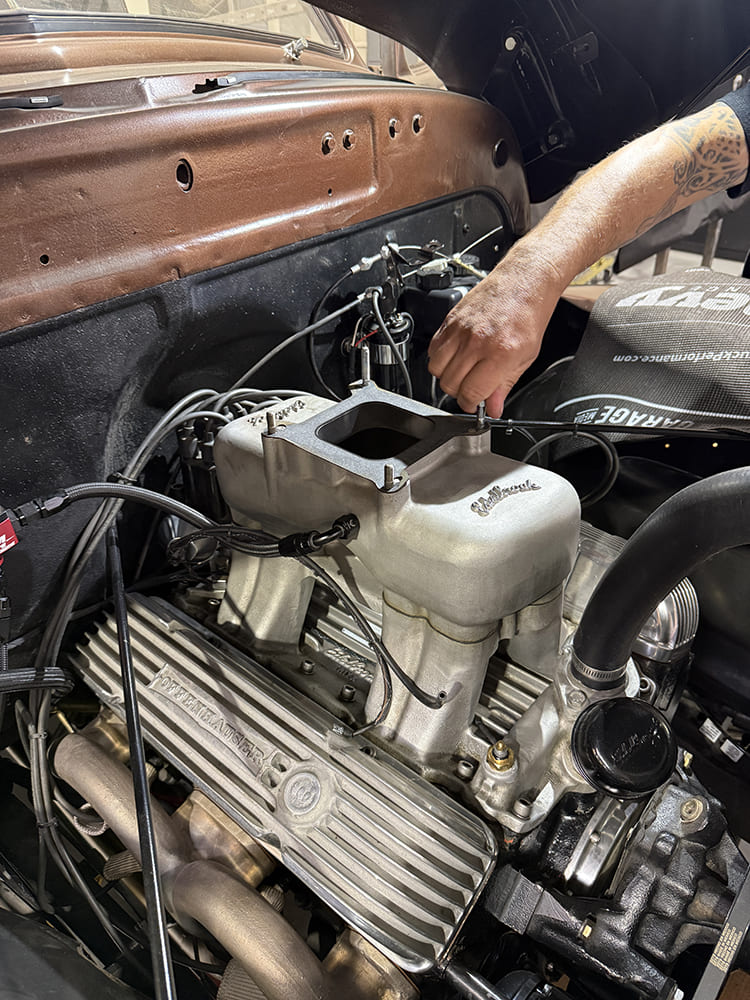
The small-block in our 1948 Chevy project is of unknown origin, but the external components are a mix and match grab bag of vintage cool. The carb has been sitting for some time, so it was decided to swap it out for a new unit.
Designed with a leaning toward the performance crowd, the adjustability of the VRS-4150 is truly remarkable, with improvements and modifications done to nearly every aspect of the carburetor, from how the fuel enters the float bowl chamber to how it enters the venturi, no stone has been left unturned by the folks at Edelbrock.
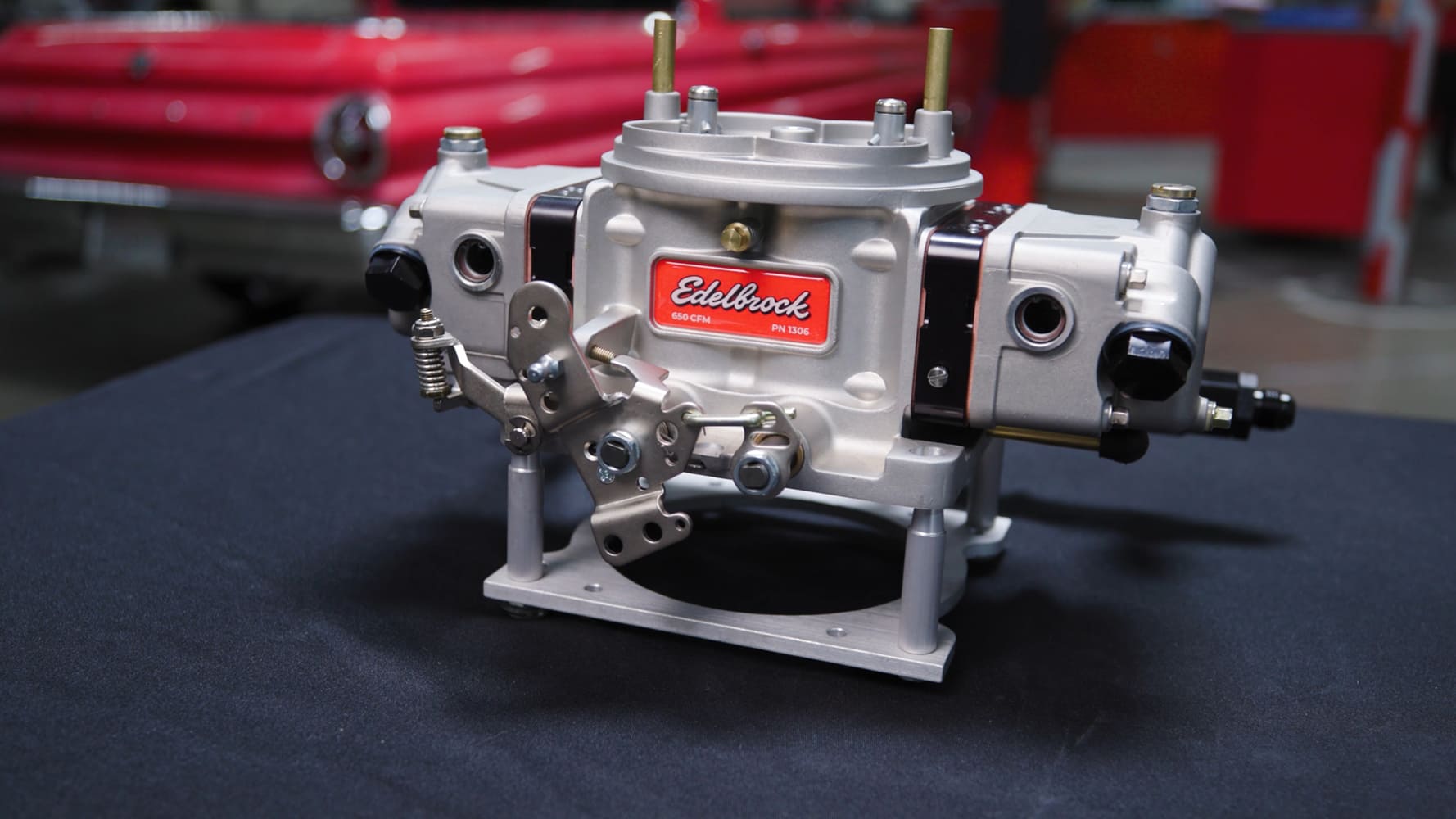
The guys over at Edelbrock like to talk shop about all things carburetors and when we mentioned our project, they eagerly recommended using their new 650-cfm VRS-4150 four-barrel carburetor (PN 1306). With many of the same functions and features of their AFB carb line, the VRS-4150 has one foot firmly in the street performance and racing application. Available in cfm ratings in 100-cfm increments, starting at 650, this new carb is extremely versatile and highly capable, with an impressive tuning range.
So, if that old hauler has been sitting on blocks since the Johnson administration or you’re simply looking at adding a more performance-based carburetor to your existing pickup, check out Edelbrock’s VRS-4150. We think you’ll find a very robust carb in a very user-friendly package with capabilities not found in the carburetor market of the past.
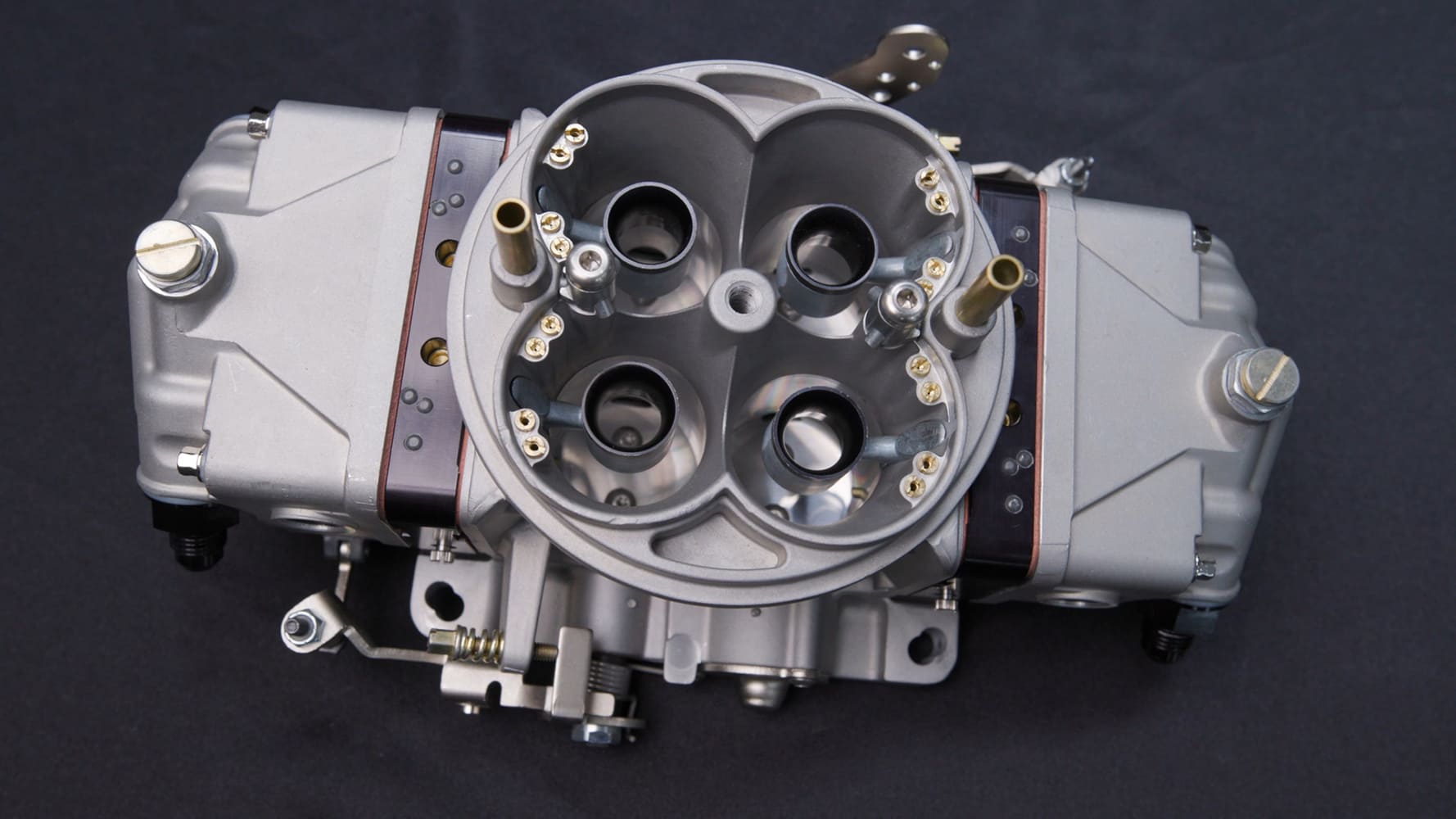
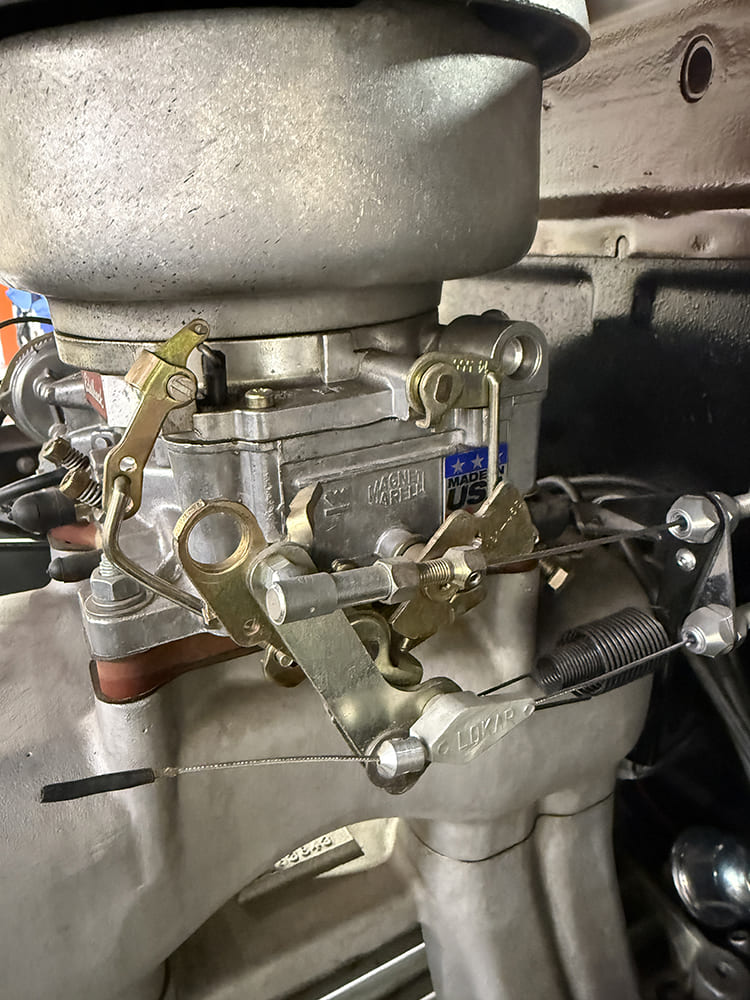
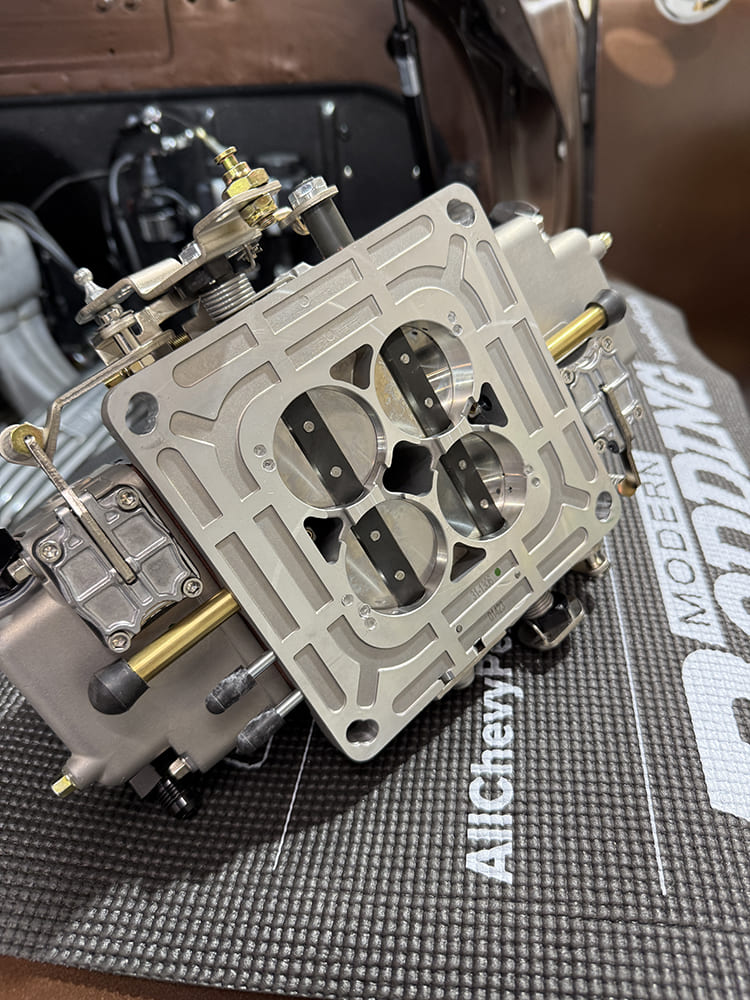
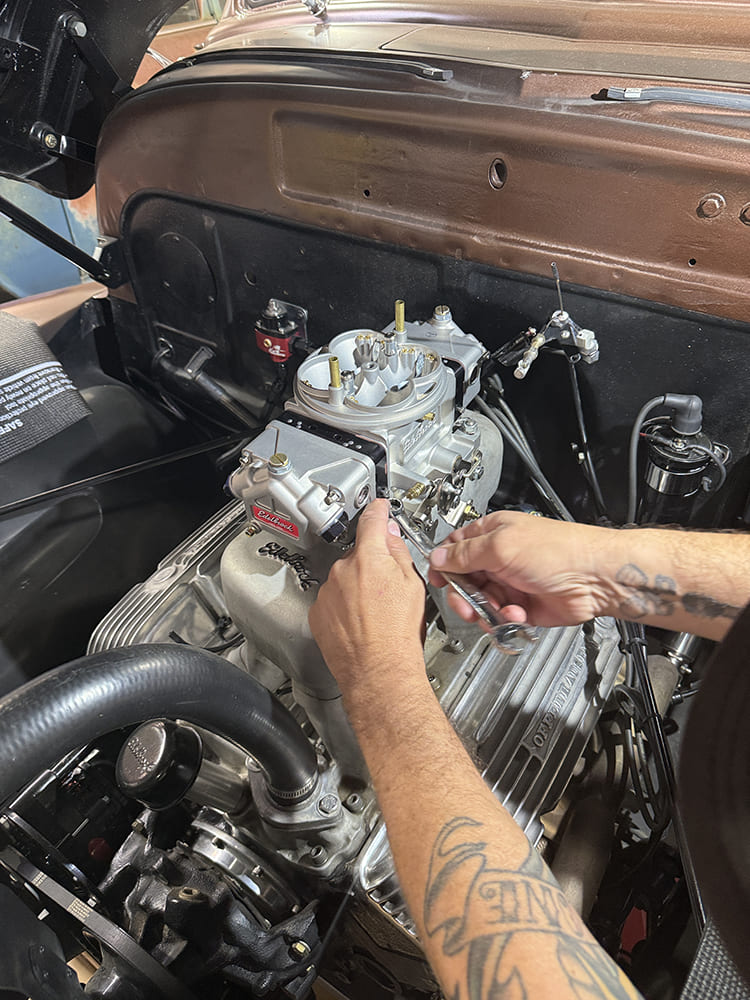
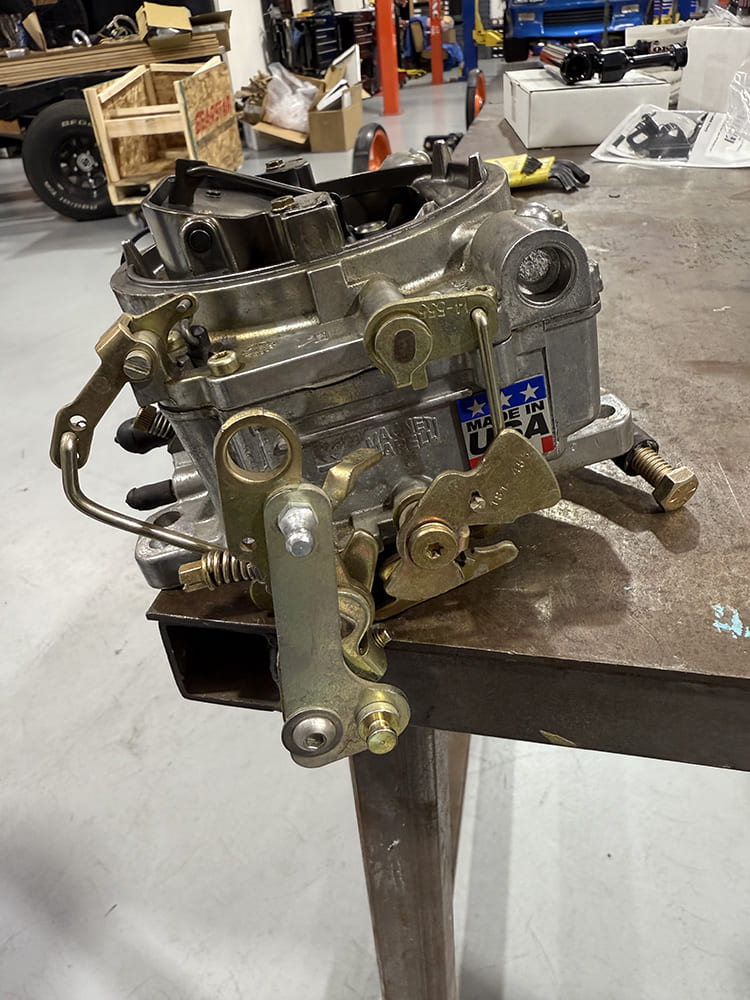
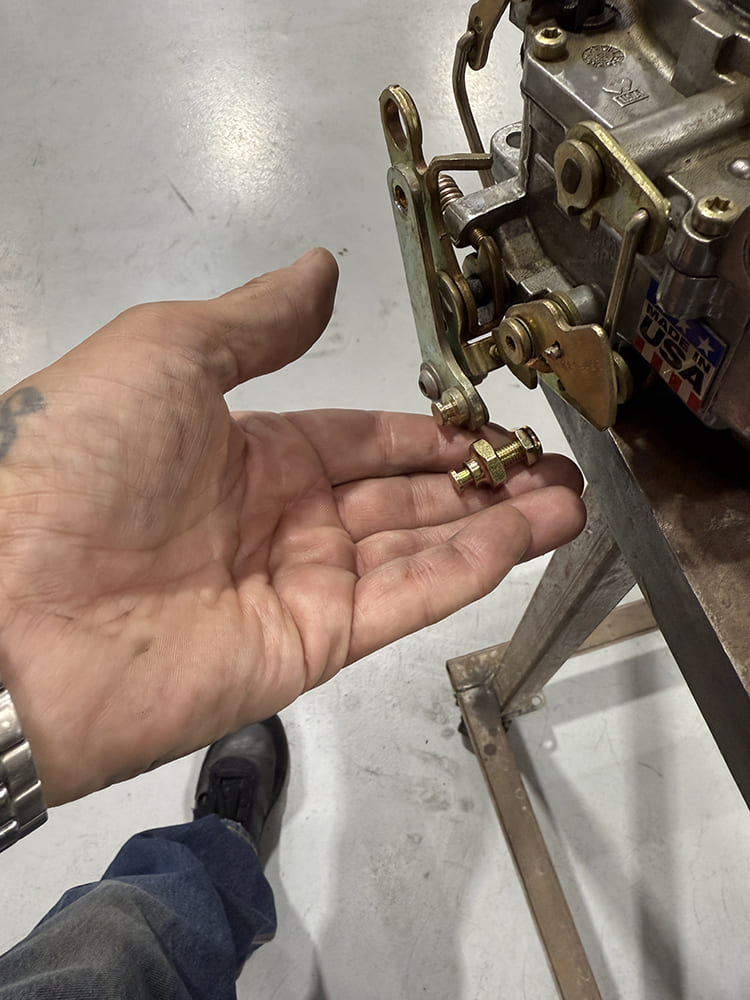
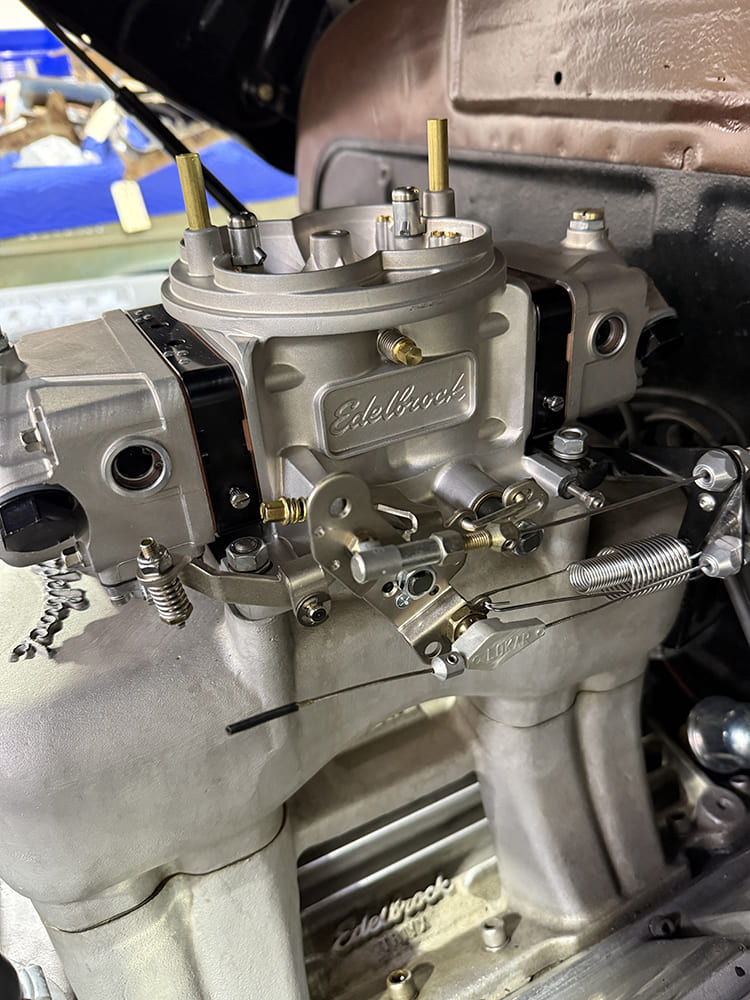
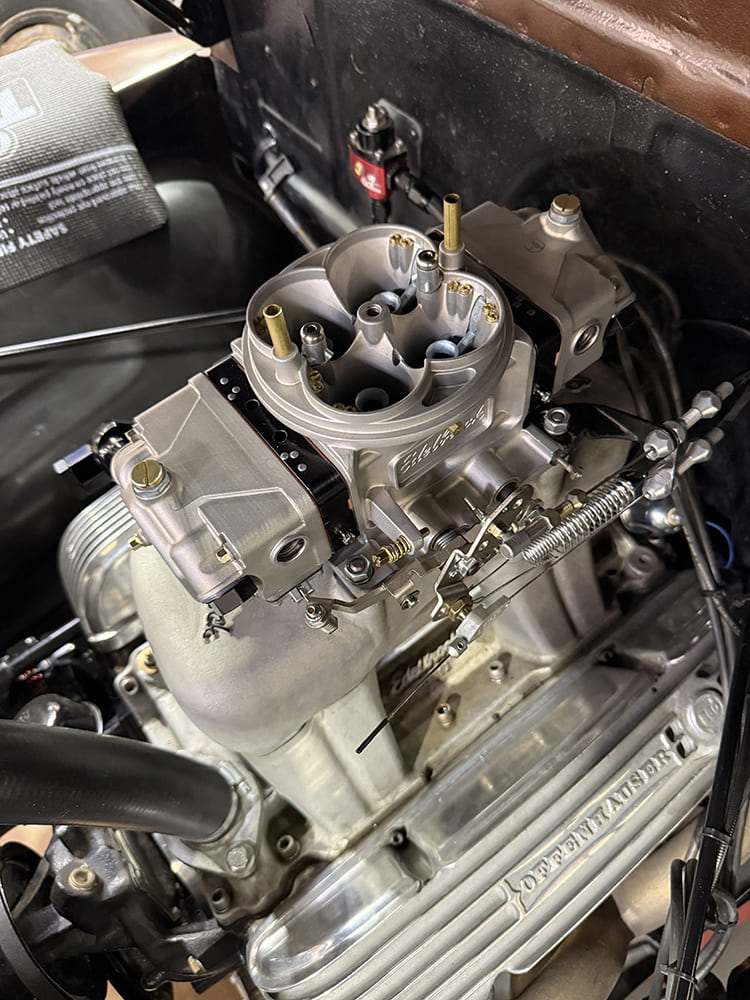
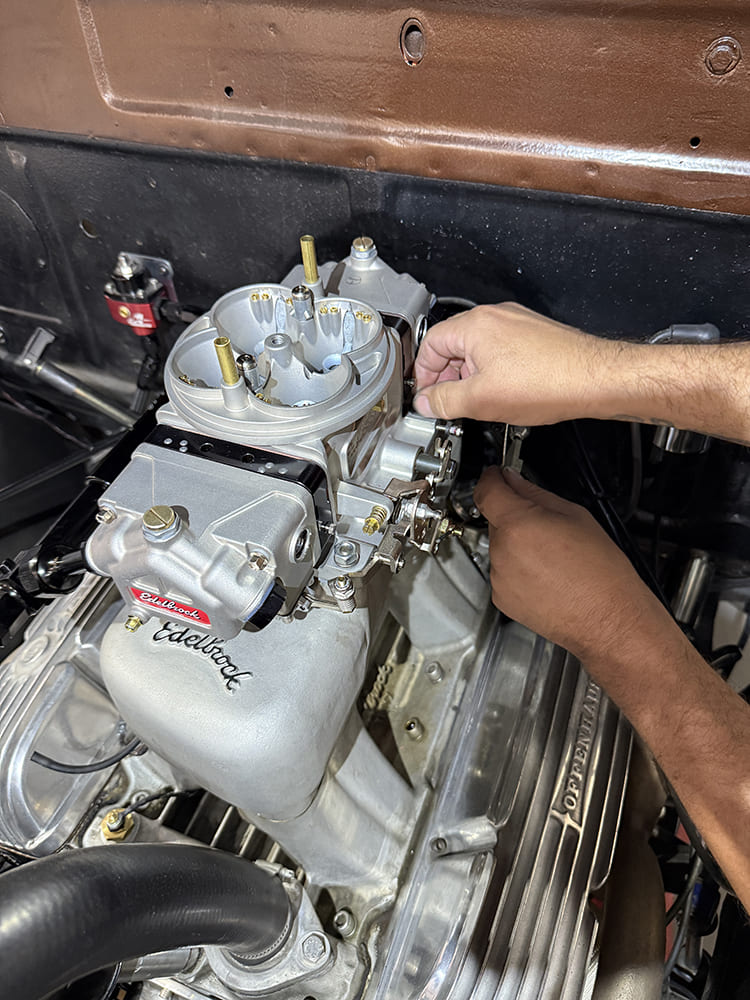
The VRS-4150 features four fueling circuits per venturi; a single idle and intermediate circuit and two high-speed circuits, all of which are adjustable via replaceable bleed jets in the main carb body. Downlink boosters deliver fuel via the four 1-1/4-inch venturis. Adjustment screws for both floats are also visible, as are the billet aluminum metering blocks, which distribute fuel from the float bowls into the main carb body.We’ll be reusing a couple items from our original carb setup, including the Lokar kickdown and throttle cables, bracketry, return springs, and hardware, so that needs to be disconnected before the carb can be removed.With the cables set aside and the fuel line disconnected, our old carb could be removed and set aside as we prep for the new VRS-4150. This included installing taller studs due to the new carb’s thicker base.A quick look at the bottom of the VRS-4150 reveals the adjustable twin accelerator pumps and a variety of both ported and non-ported vacuum ports. We’re taking note of the location of the timed vacuum port for our distributor that will need to be connected upon installation.With that, it’s a simple matter of bolting the VRS-4150 into place.As we mentioned earlier, we need to retain the existing Lokar cables. This meant that we need to retain their attachment studs as well, which need to be removed from the original carb …
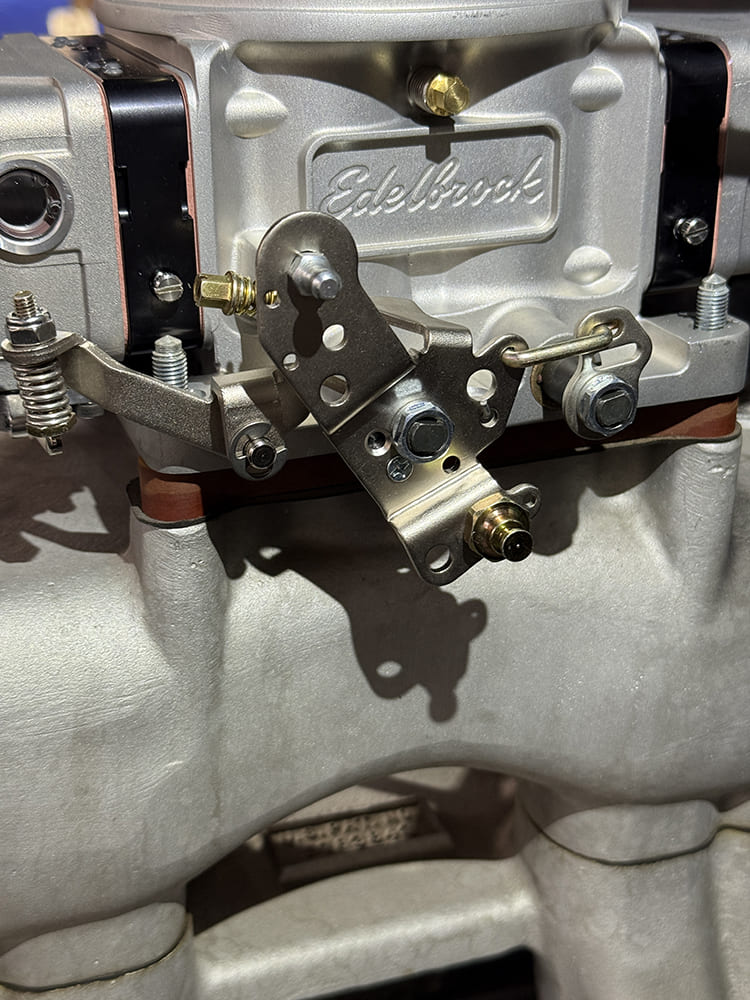
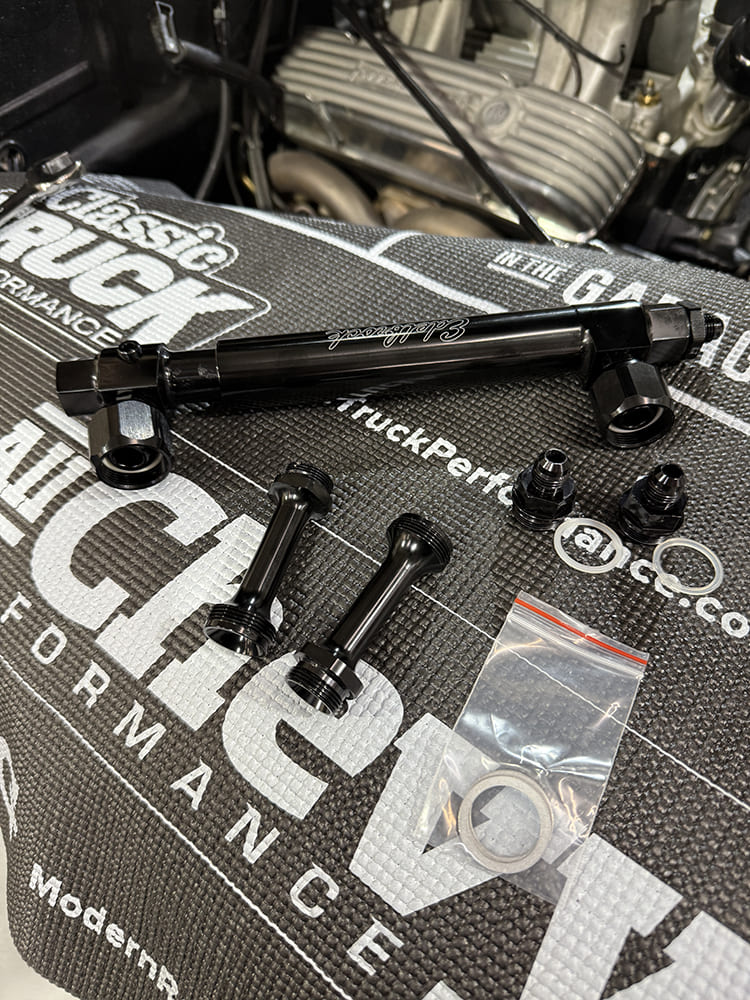
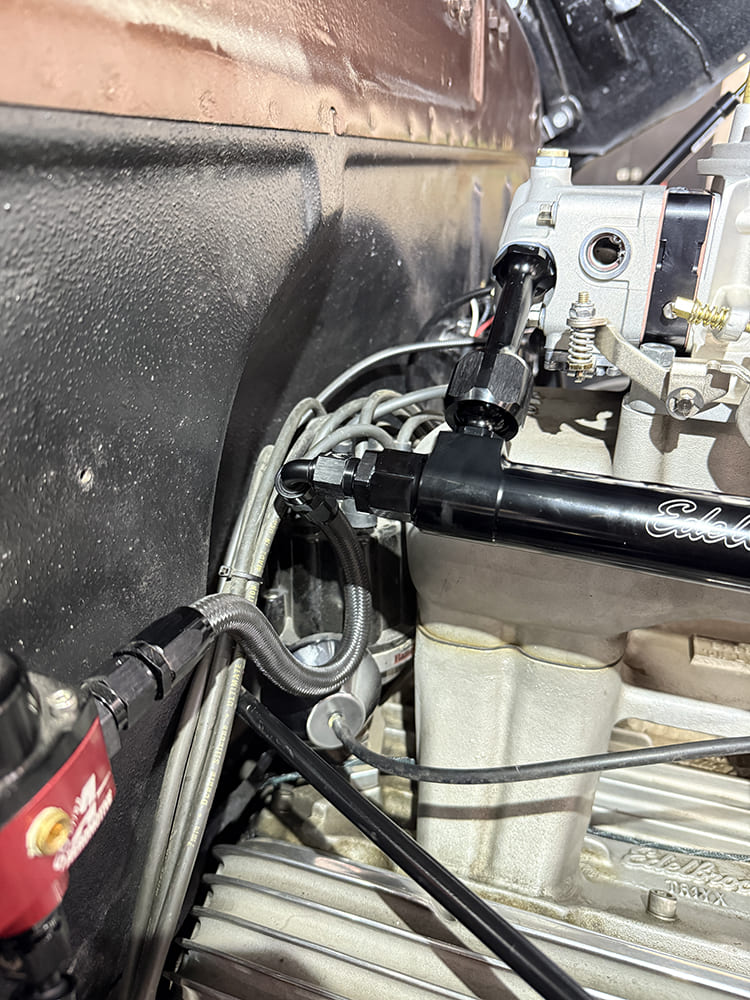
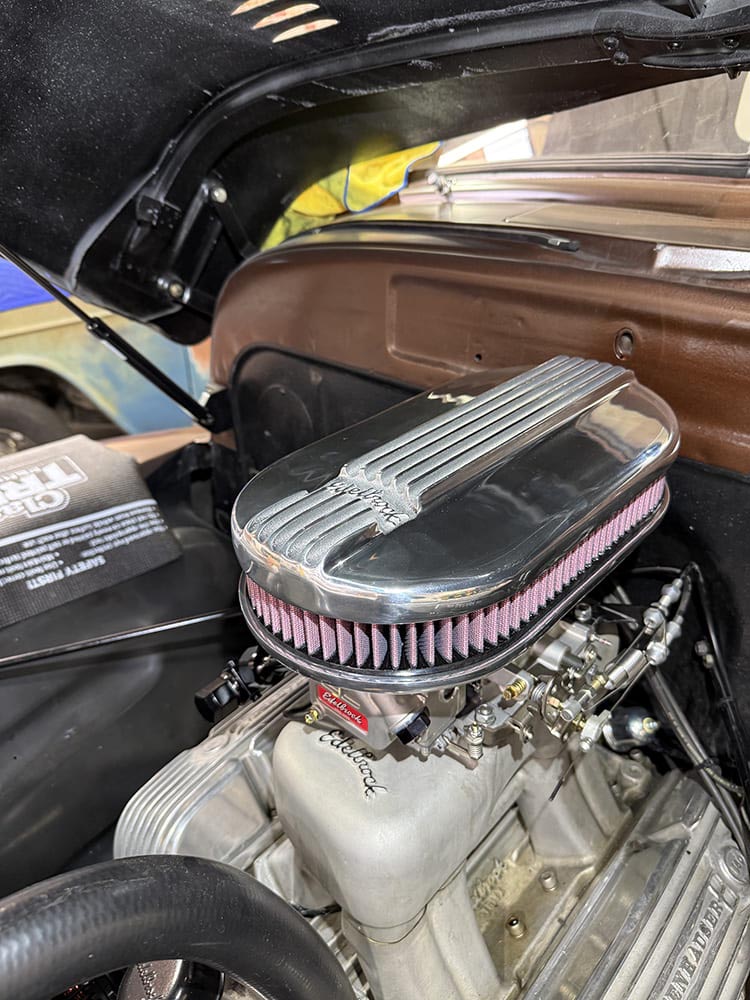
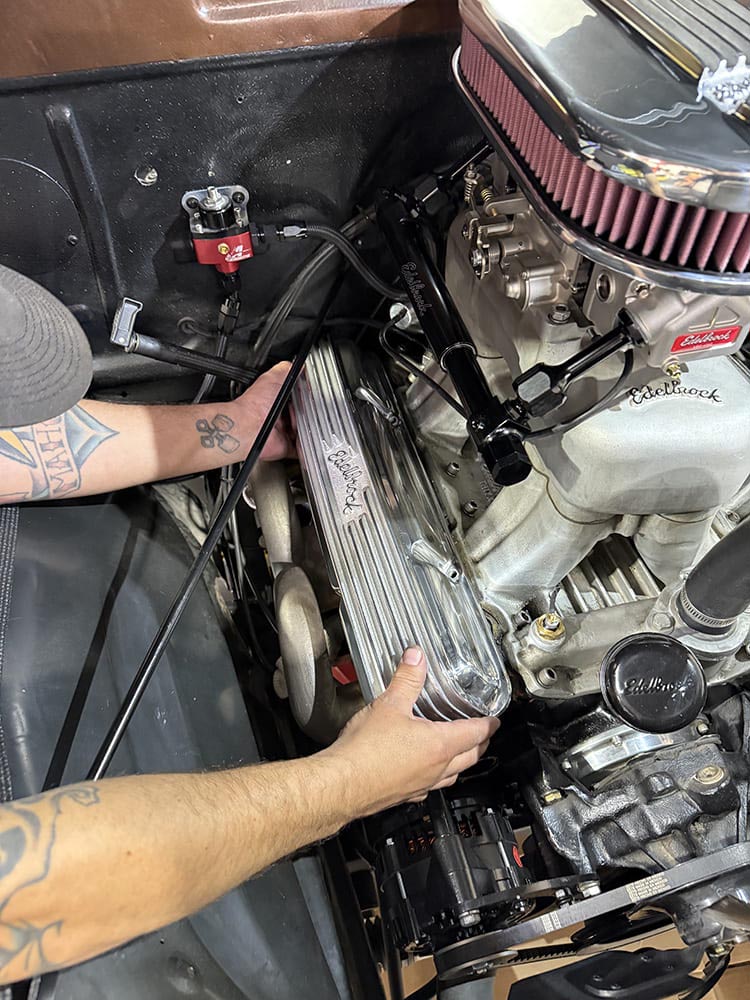
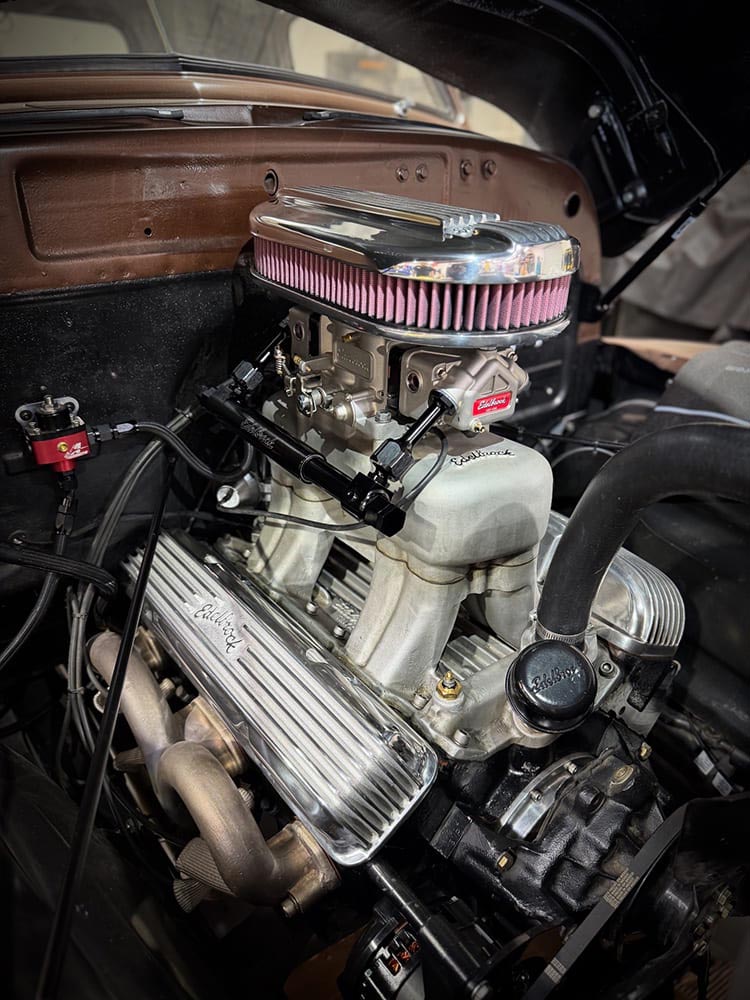
… and reinstalled on the new VRS-4150. There are multiple potential mounting locations for these, so we’re careful to put them in the same location to not disrupt their relationship.Here, carb and cables have been mated using the existing hardware and bracketry, showcasing the new VRS-4150’s ability to be truly plug-and-play in situations where it’s replacing an existing four-barrel carb.Our old AFB-style carb utilized a single fuel inlet, while the new VRS-4150 utilizes two, one for each float bowl. To feed both bowls, we opted for an Edelbrock Adjustable Fuel Log (PN 8100). This features an AN-10 telescoping center body that adjusts perfectly to the VRS-4150’s inlets and attaches via swivel ball socket ends that can be adjusted to clear various components.The same single AN-6 line that fed our original carb now feeds the dual fuel log.With that, the initial installation of Edelbrock’s VRS-4150 is complete!While the tuning of the new carb is pretty impressive out-of-the-box, initial adjustments can be made via the four-corner mixture, idle, and throttle blade adjustment screws.To keep with the vintage vibe of the engine compartment and to remain loyal to the family of Edelbrock parts, we decided to upgrade to a polished aluminum finned Edelbrock oval air cleaner (PN 4115) …… and a matching pair of valve covers (PN 4145).With both form and function sorted, our old small-block not only looks great in the engine compartment of our Advanced Design Chevy but will certainly perform better than it ever did in the past, thanks to a handful of parts from Edelbrock.
We use cookies to ensure that we give you the best experience on our website. If you continue to use this site we will assume that you are happy with it.