


By Ron Ceridono – Photography By Tate Radford
For most hot rodders, nothing compares to the thrill of being pushed back into the seat by serious acceleration—all it takes is horsepower. On the other hand, not being able to bring that same car to a quick stop when needed can be another kind of excitement, though much less satisfying—the solution is more stopping power. Colin Radford is tackling both issues; his 1965 Mustang fastback will rely on a built FE Ford V-8 for horsepower, while four-wheel disc brakes from Classic Performance Products (CPP) will provide the stopping power.
All brakes depend on friction between two surfaces to stop the car. Unfortunately, friction produces heat, and heat is the enemy of brakes. As brake components heat up, the coefficient of friction between them decreases, causing the brakes to lose effectiveness. This is called brake fade. If you’ve ever driven a car down a steep grade and noticed it took more and more brake pedal pressure to slow down, you’ve experienced brake fade.
When it comes to resisting brake fade, discs have a big advantage over drums. Since the caliper only covers a small part of a disc brake’s friction surface, much of the rotor is exposed to air, which helps cool it down. In contrast, with a drum brake, most of the friction surface contacts the brake shoes, leaving less area for cooling. Another reason disc brakes are more effective than drums is the wiping action built into their design. In wet conditions, the brake pads tend to wipe water off the rotor. With drums, moisture can become trapped between the shoes and the drum, significantly lowering the coefficient of friction until the water disperses.
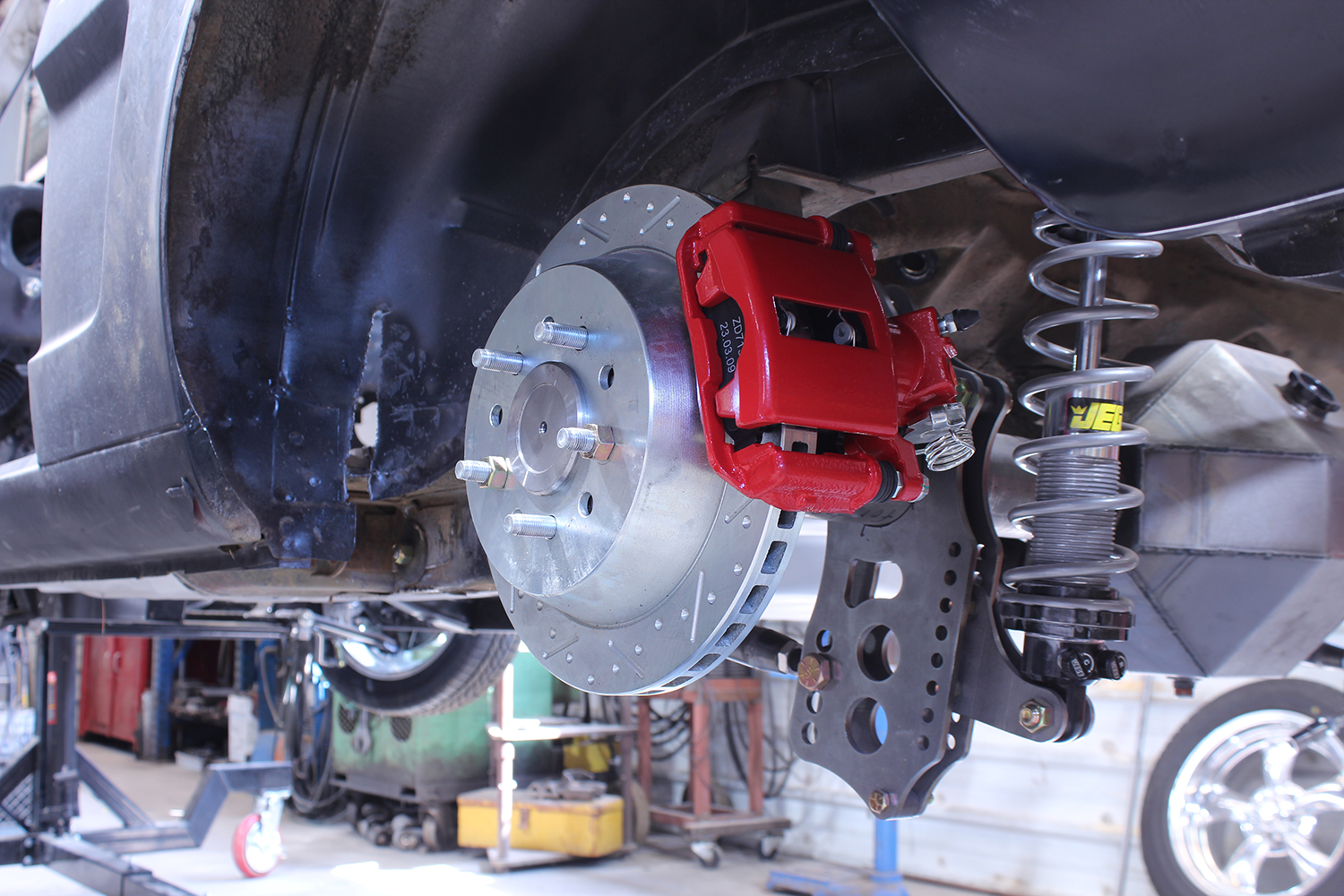
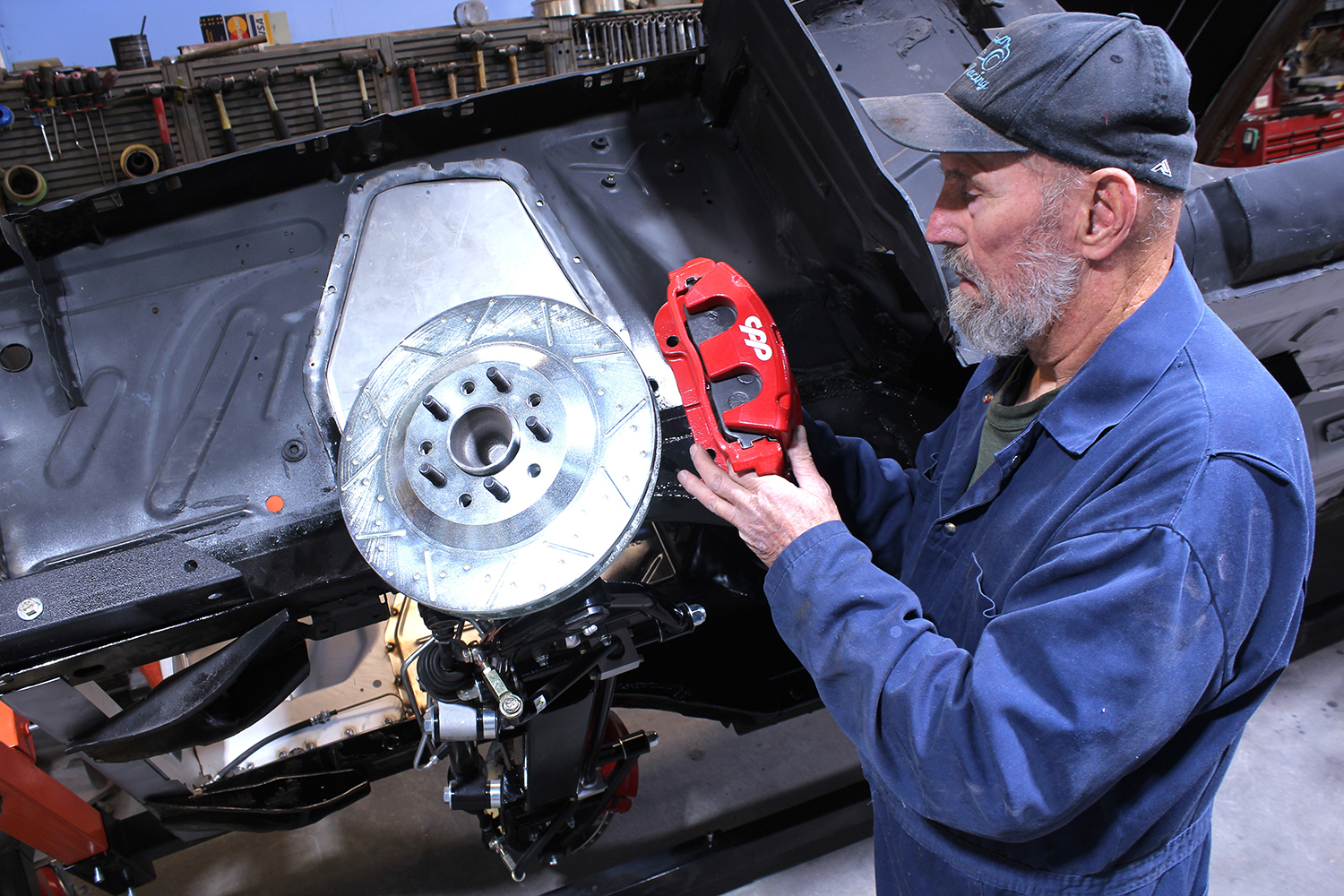
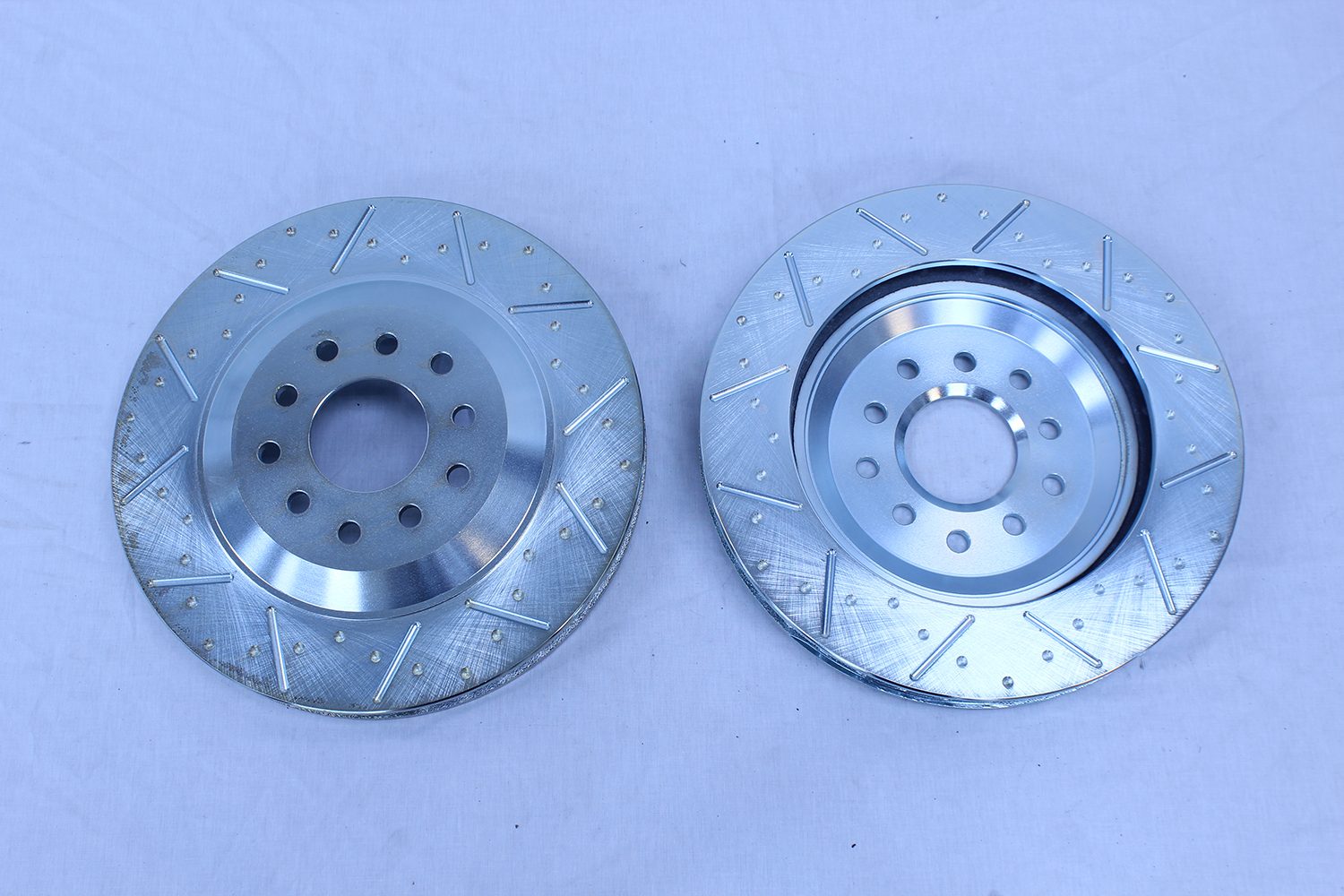
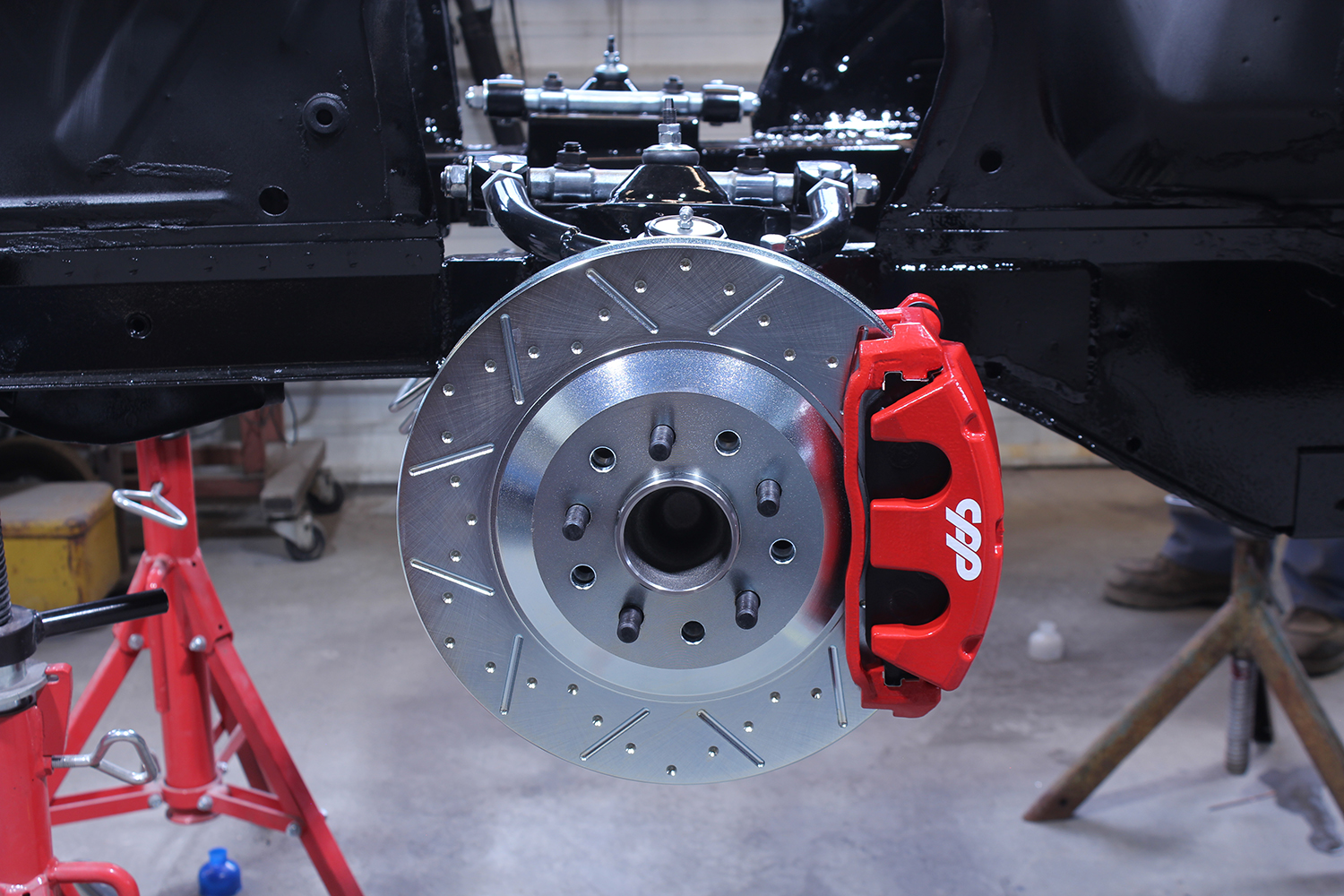
Although brake rotor diameters vary considerably, they can be categorized into two main types: solid and vented. Solid rotors are just that: a simple flat disc. While solid rotors are sufficient for lightweight cars, especially on the rear, a more effective option is the vented style. This design separates the two friction surfaces with air passages to improve cooling. Additional features often found on vented rotors include drilled holes and slots. Although these are often seen as cosmetic, the drilled holes help dissipate heat, and the slots are used to clean the pads and push dust away from the friction surfaces. And yes, they look cool too, so Colin chose CPP’s drilled-and-slotted options for both the front and rear rotors.
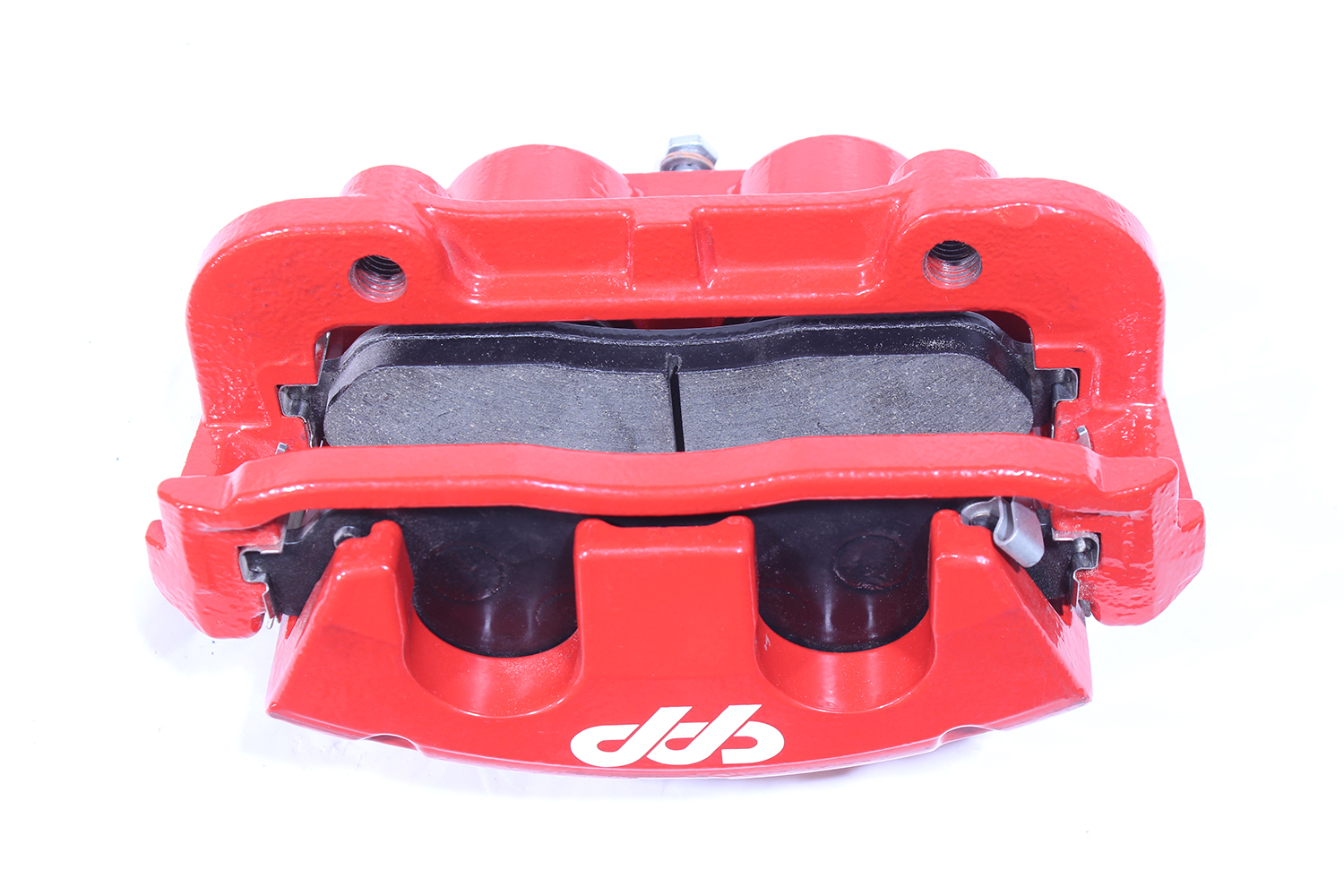
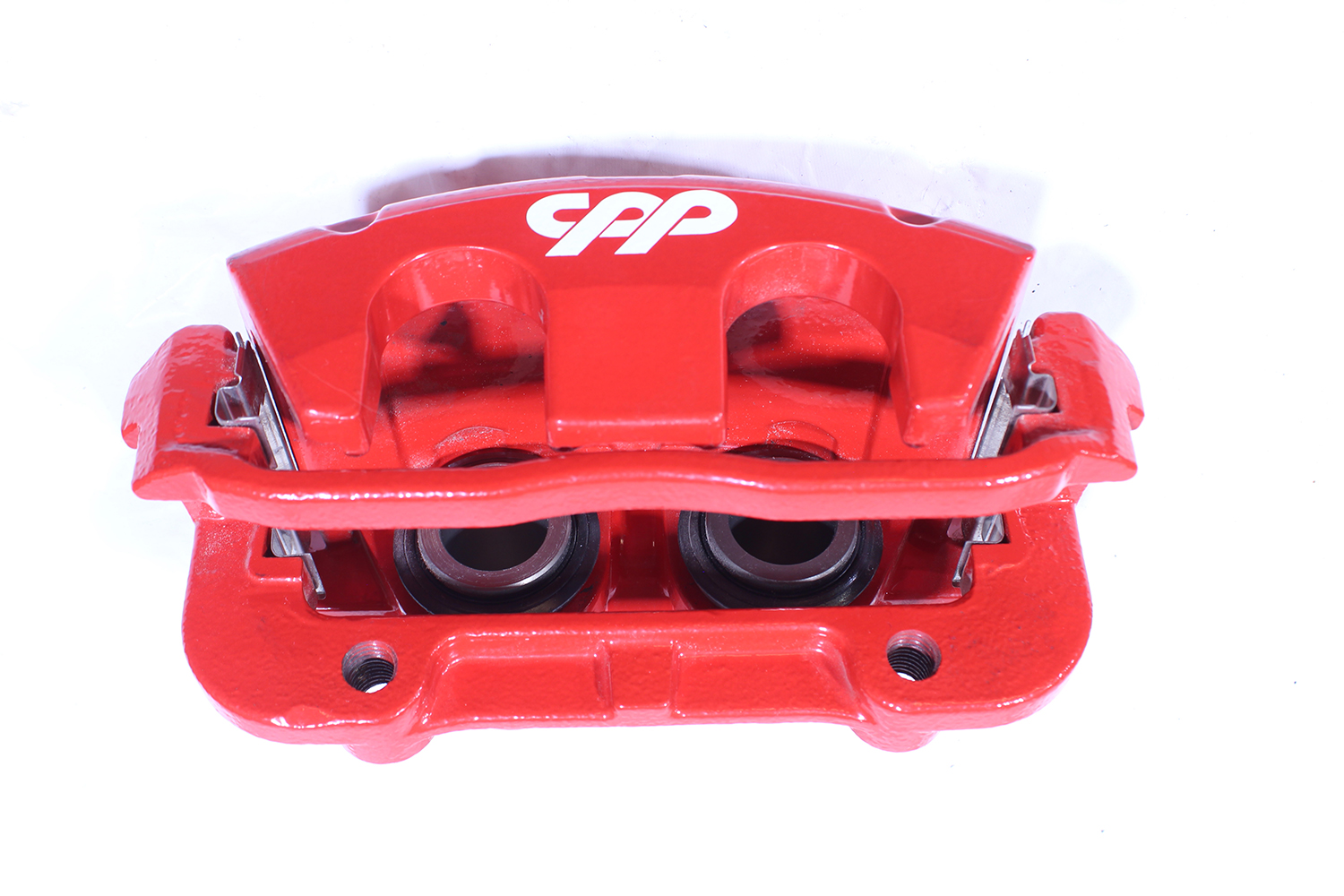
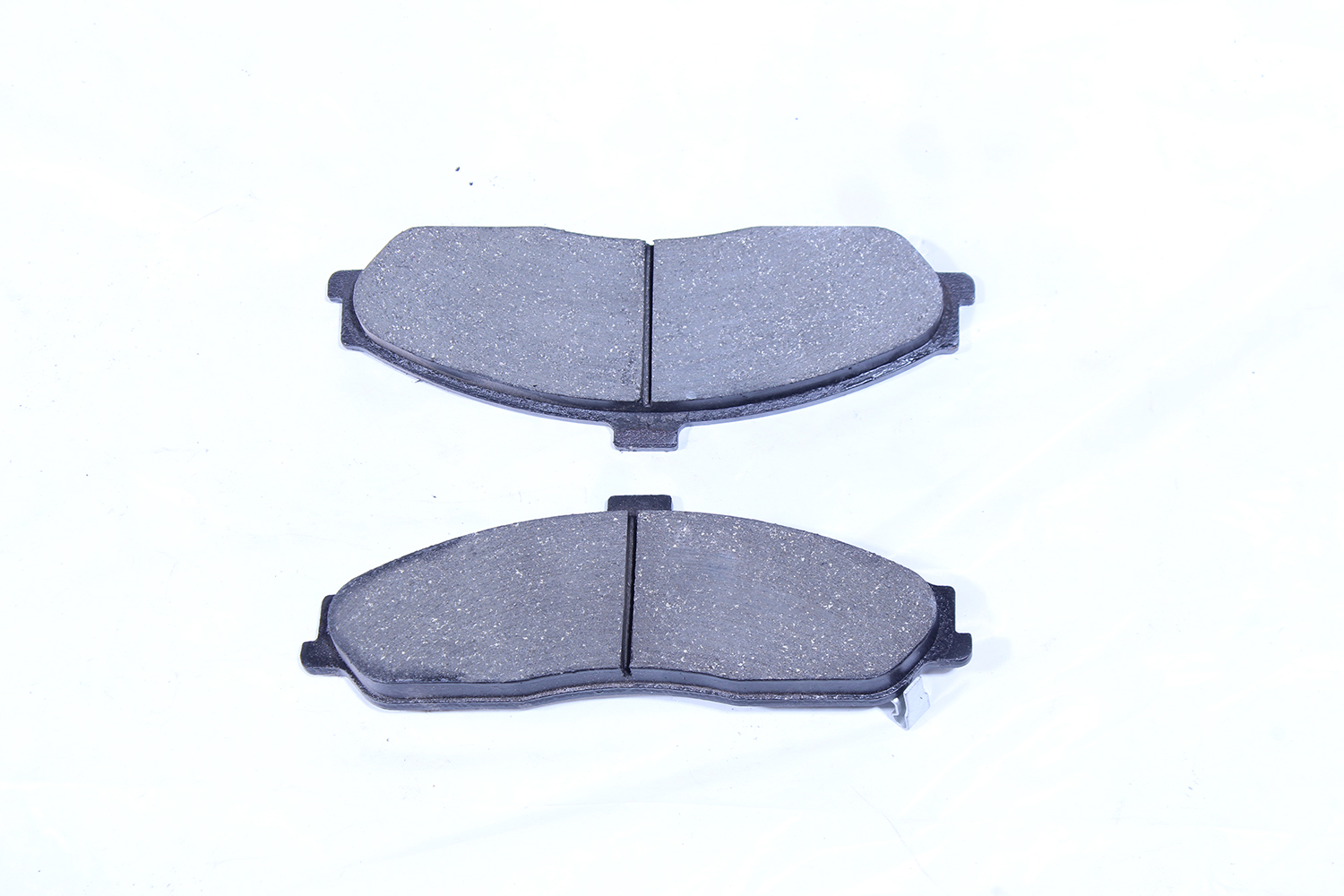
Disc brake calipers vary in size and design and can be divided into two basic categories: fixed and floating. Fixed calipers don’t move because they are securely bolted in place. They typically feature two or more pistons on each side of the rotor that push the brake pads against the rotor simultaneously. Although fixed calipers are effective, they require small external lines or internal passages to connect the two halves, which makes them more complex to manufacture and increases costs.
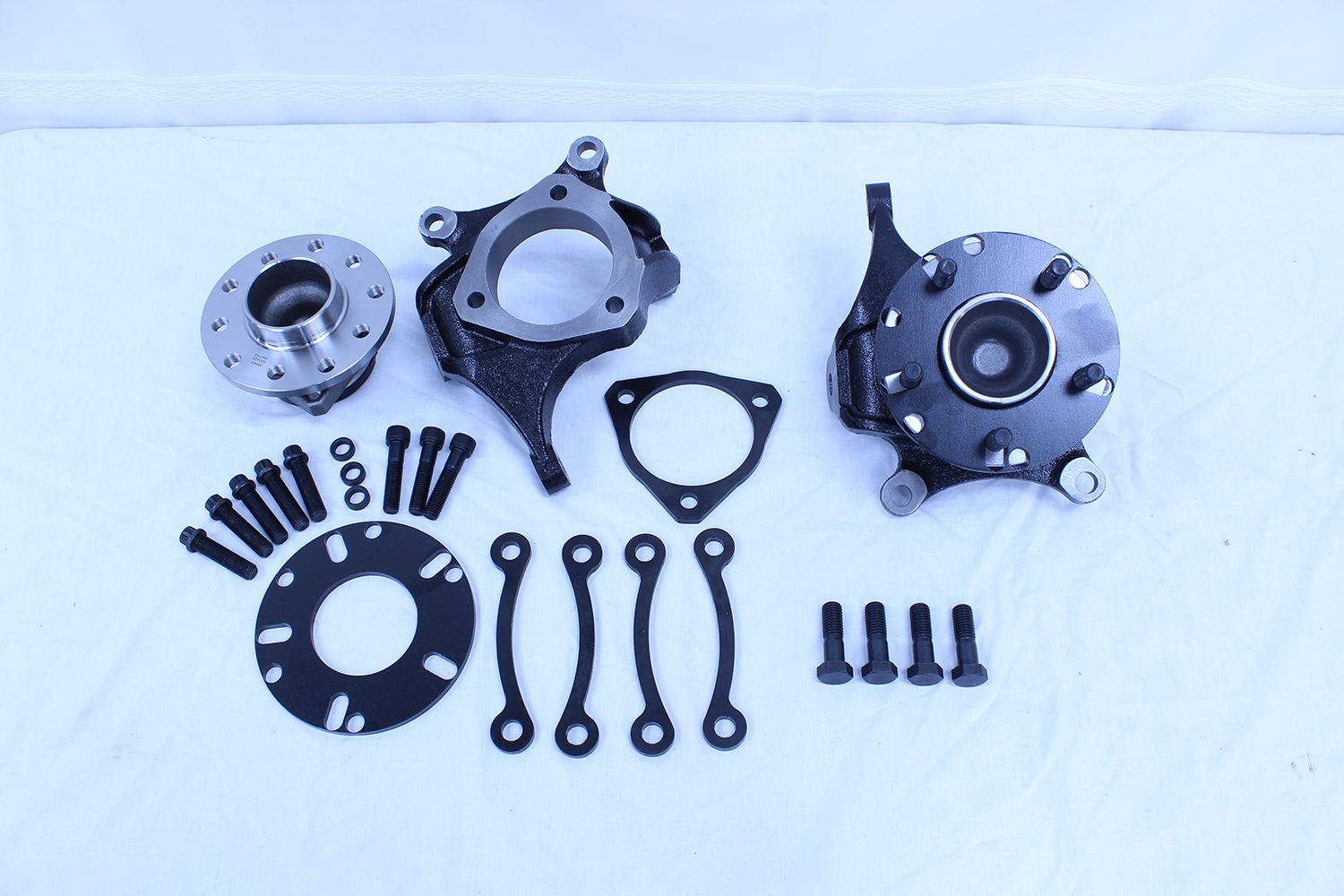
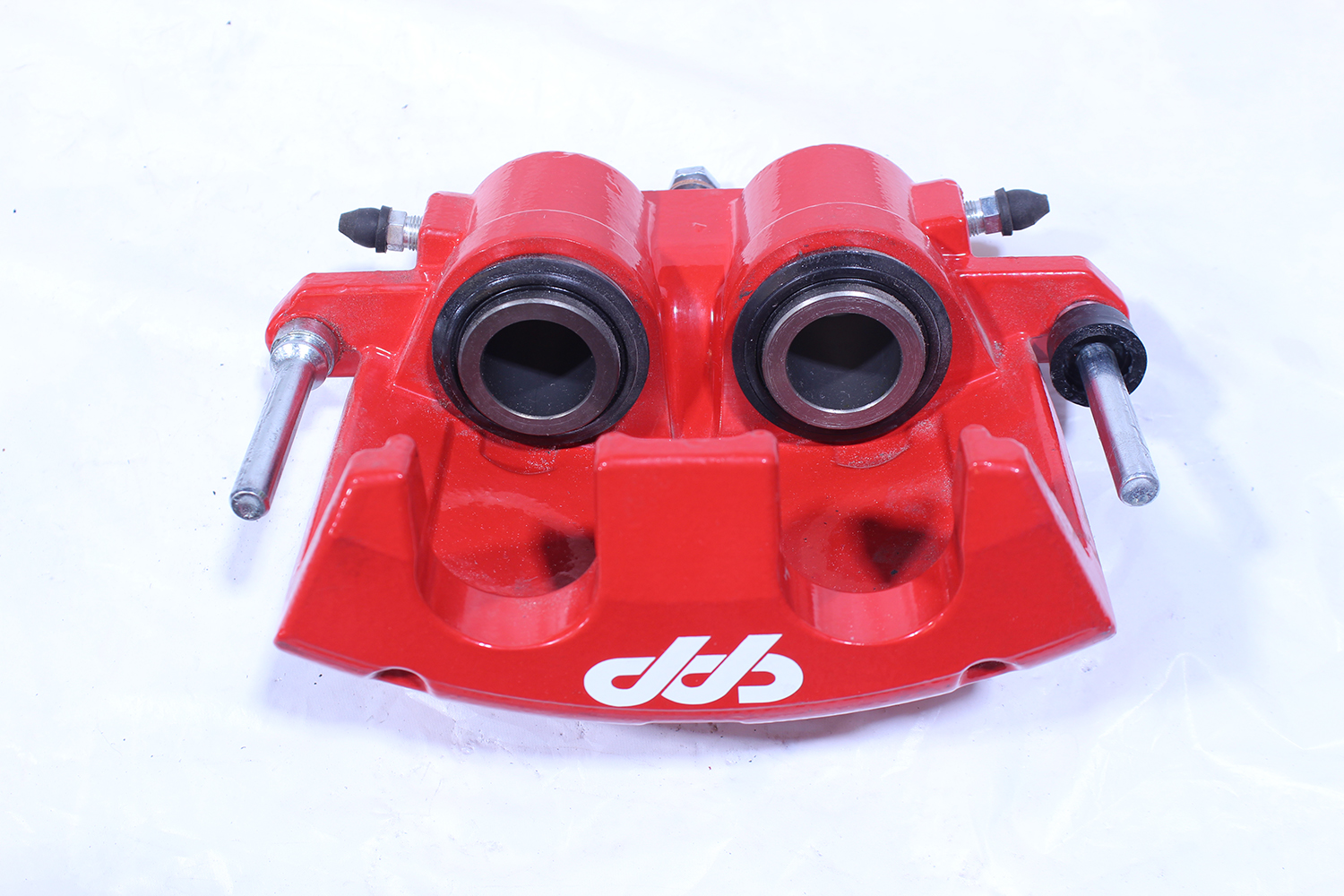
Perhaps the most common caliper in use today is a floating design. These calipers are mounted so that they can move laterally on the guide pins or “slides.” This movement occurs because a sliding caliper has pistons on one side of the rotor. When the brakes are applied, the caliper’s piston(s) push the inner brake pad against the rotor; the caliper then slides, bringing the outer brake pad against the rotor’s outer surface.
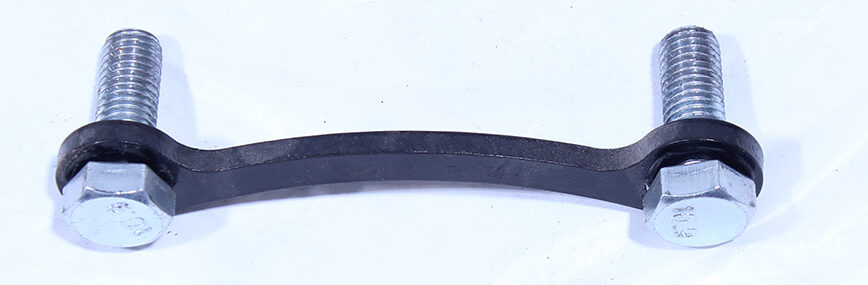
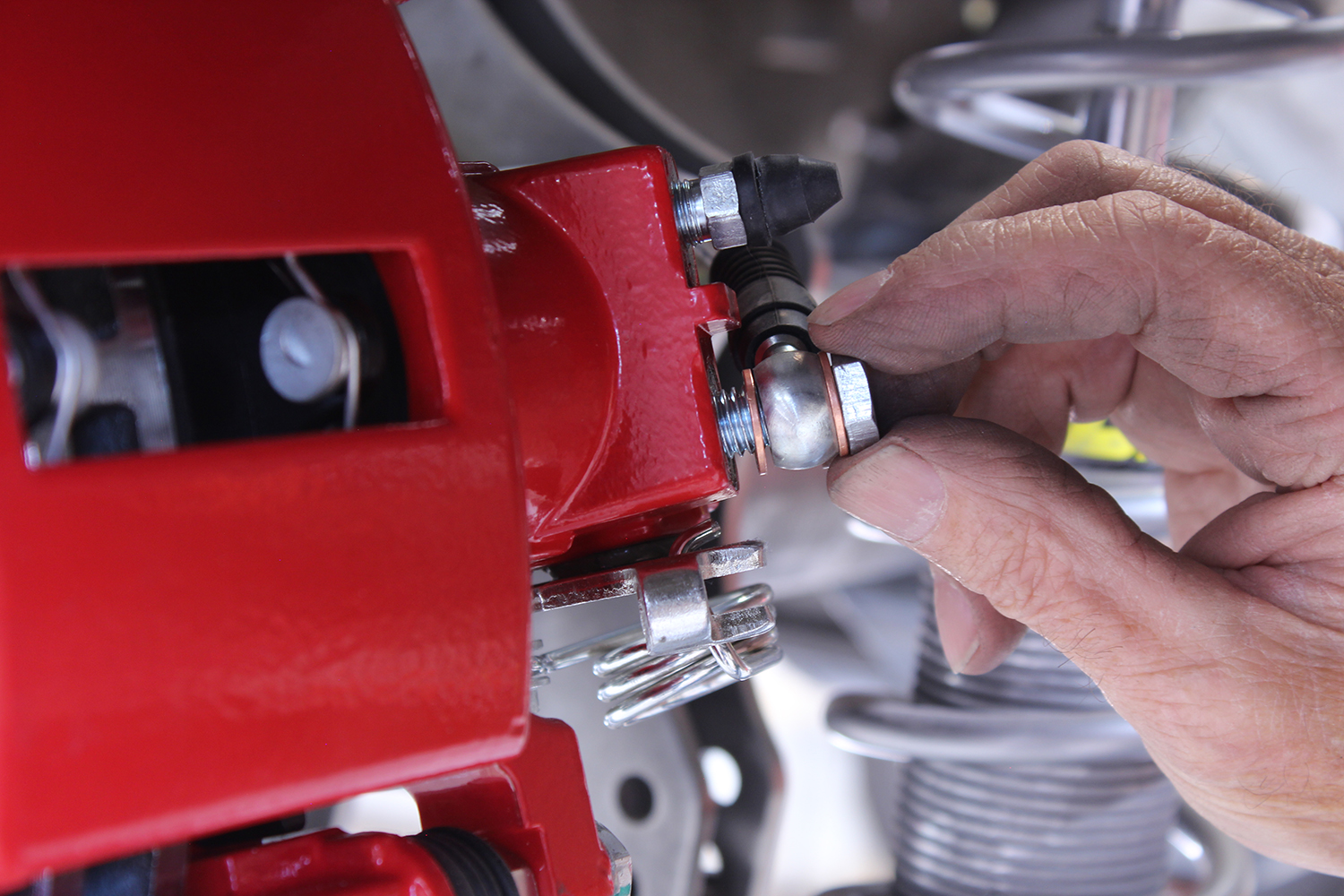
The CPP calipers used in the Big Brake kits we installed were floating. These C5 Corvette-style aluminum front calipers have two 42mm pistons and fit CPP’s Corvette-style spindles. Since these calipers are equipped with two brake bleeders they are interchangeable side for side.
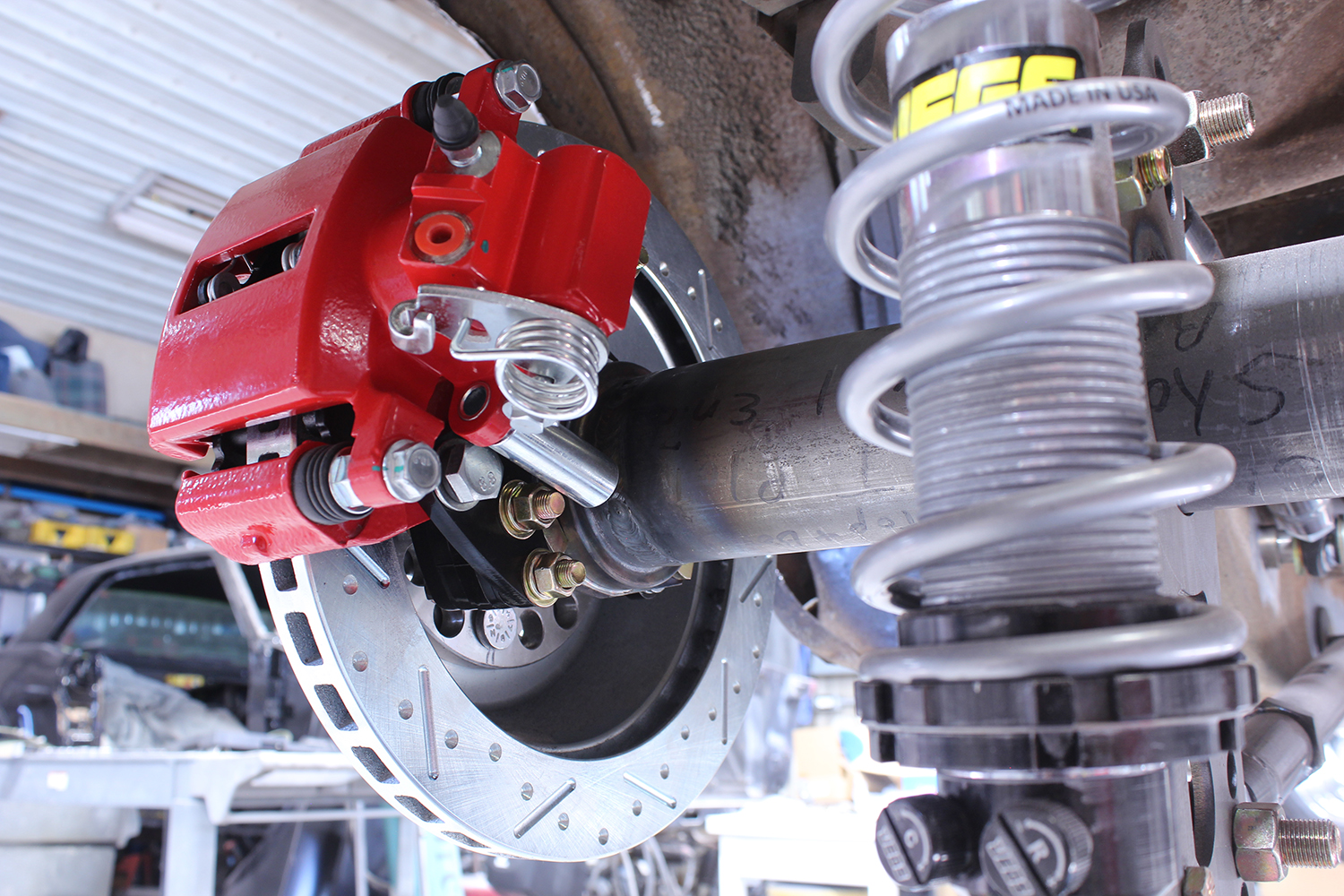
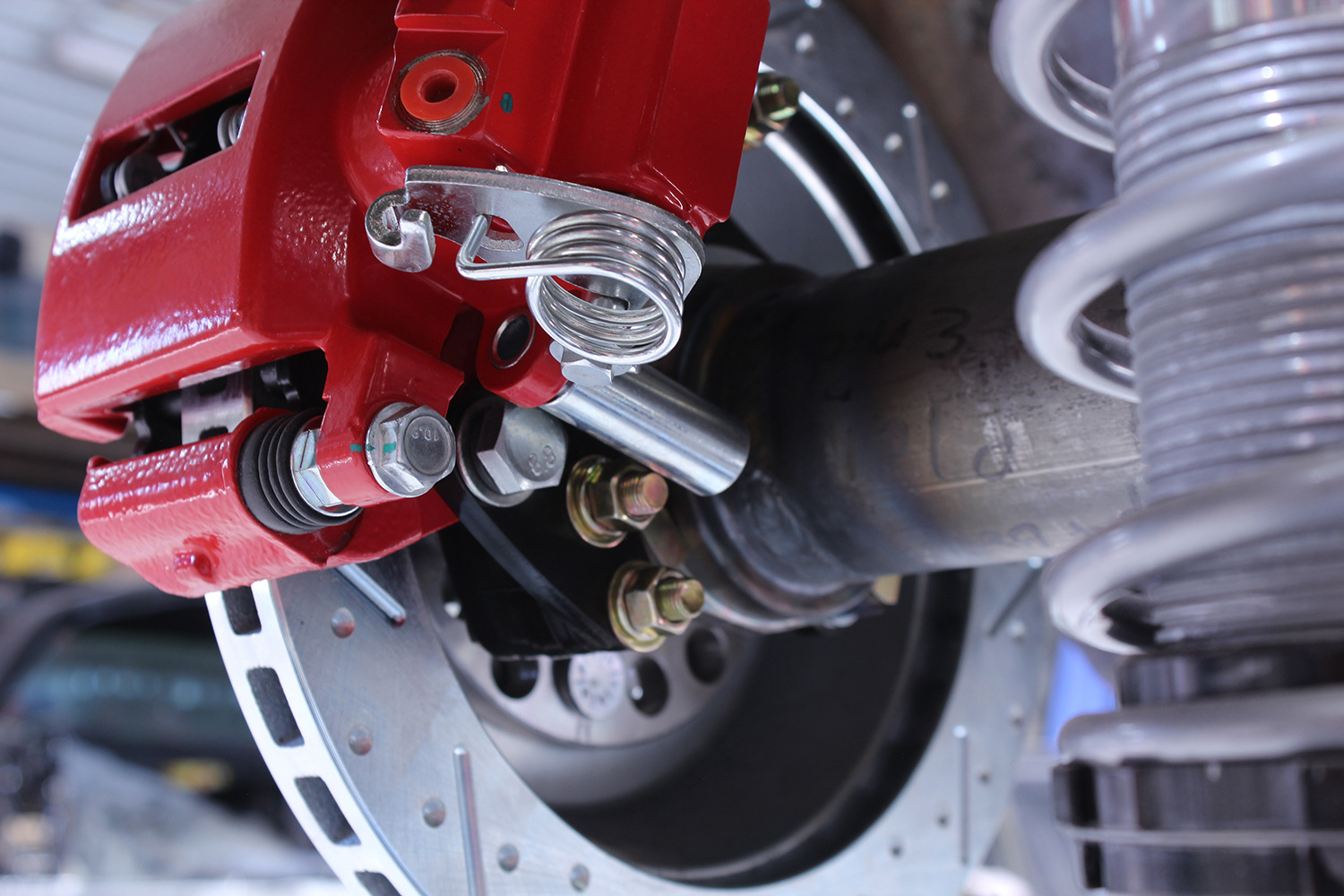
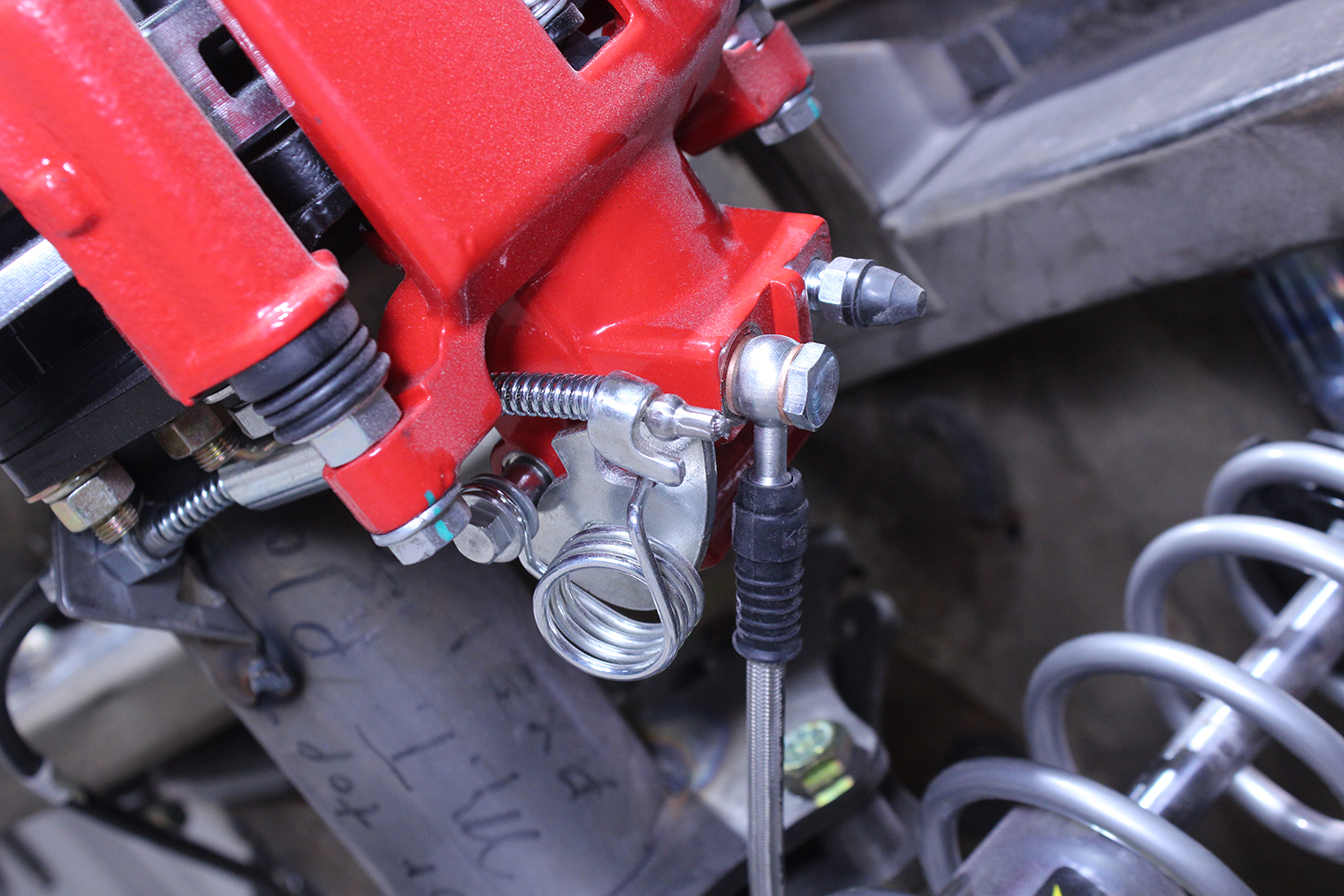
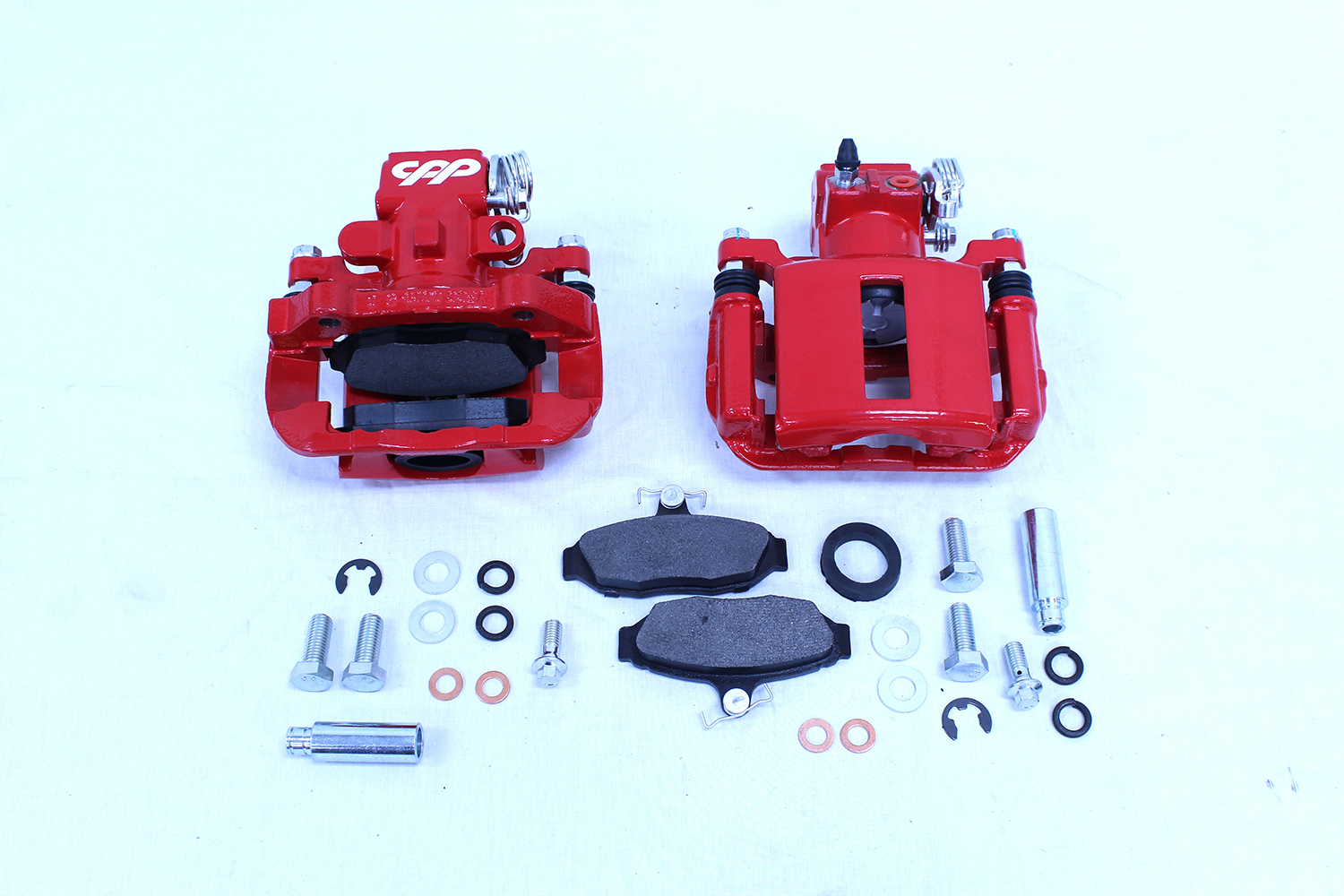
In the rear, the Big Brake kit we used came with aluminum 45mm single-piston floating calipers that include a parking brake function. When the parking brake is applied, the brake pads are mechanically applied to the rotors. An internal ratcheting system automatically adjusts the parking brakes as the pads wear. As these calipers are unique side to side there are different part numbers for left and right components.
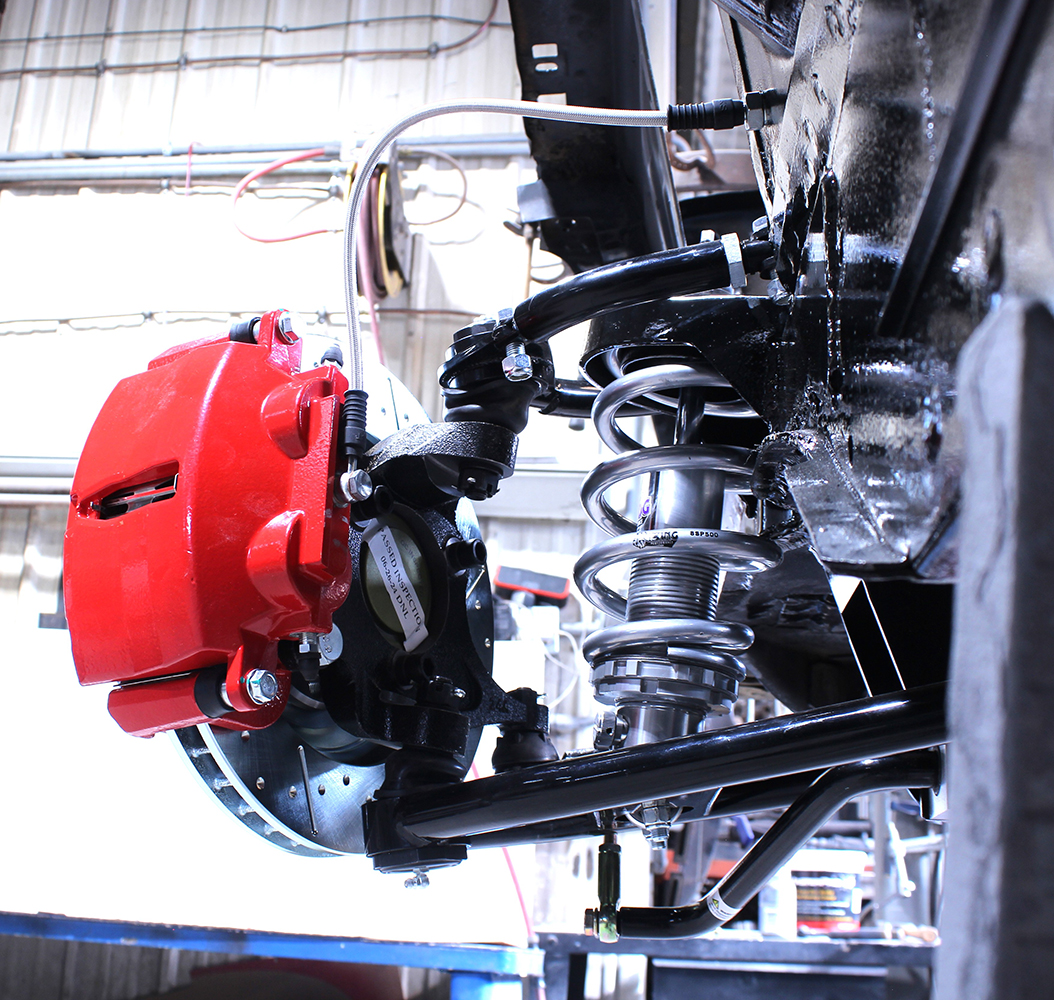
In the rear, the Big Brake kit we used features aluminum, single-piston floating calipers with a parking brake. When the parking brake is engaged, the brake pads are mechanically pressed against the rotors. An internal ratcheting system automatically adjusts the parking brakes as the pads wear. Since these calipers are unique to each side, the left and right components have different part numbers.
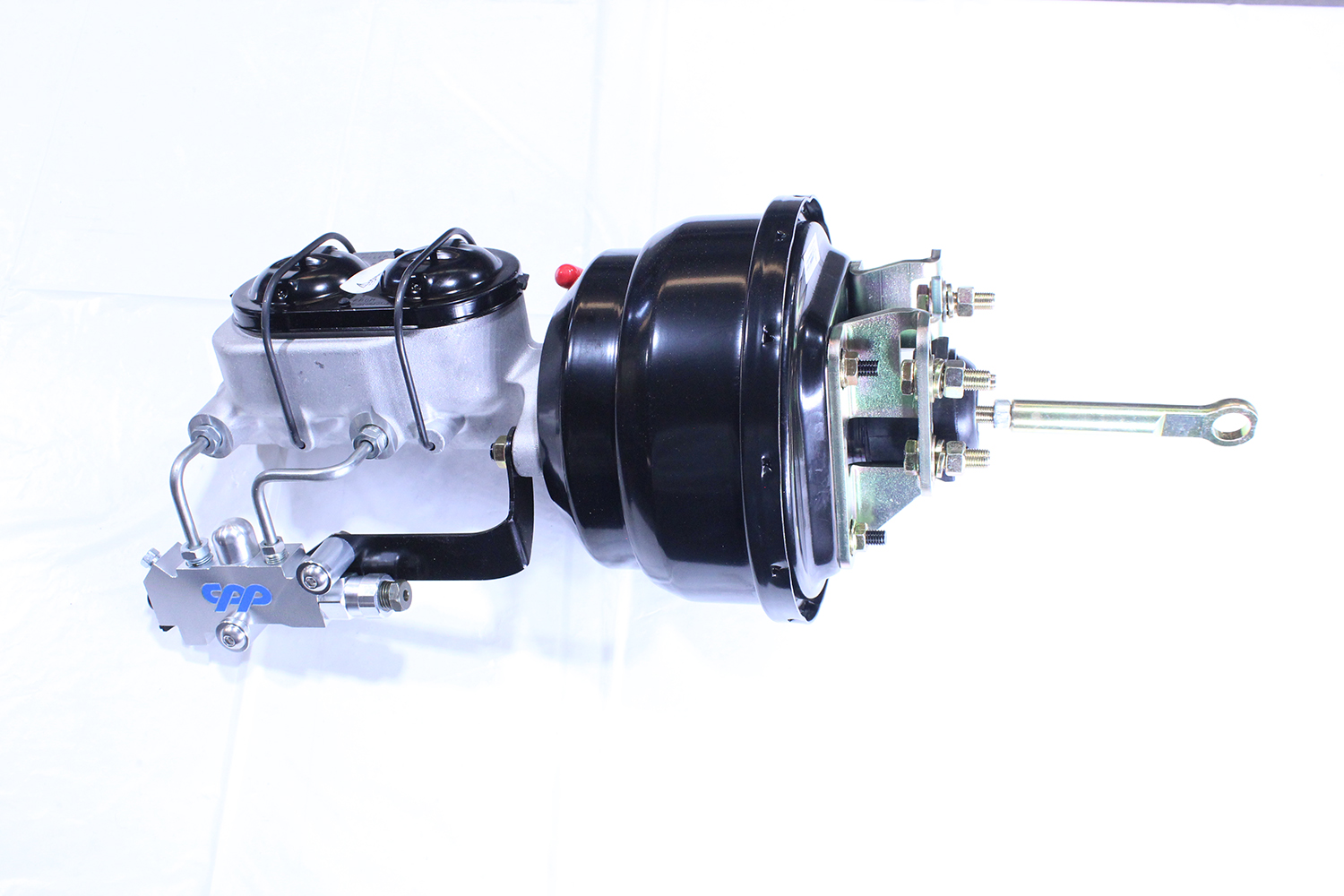
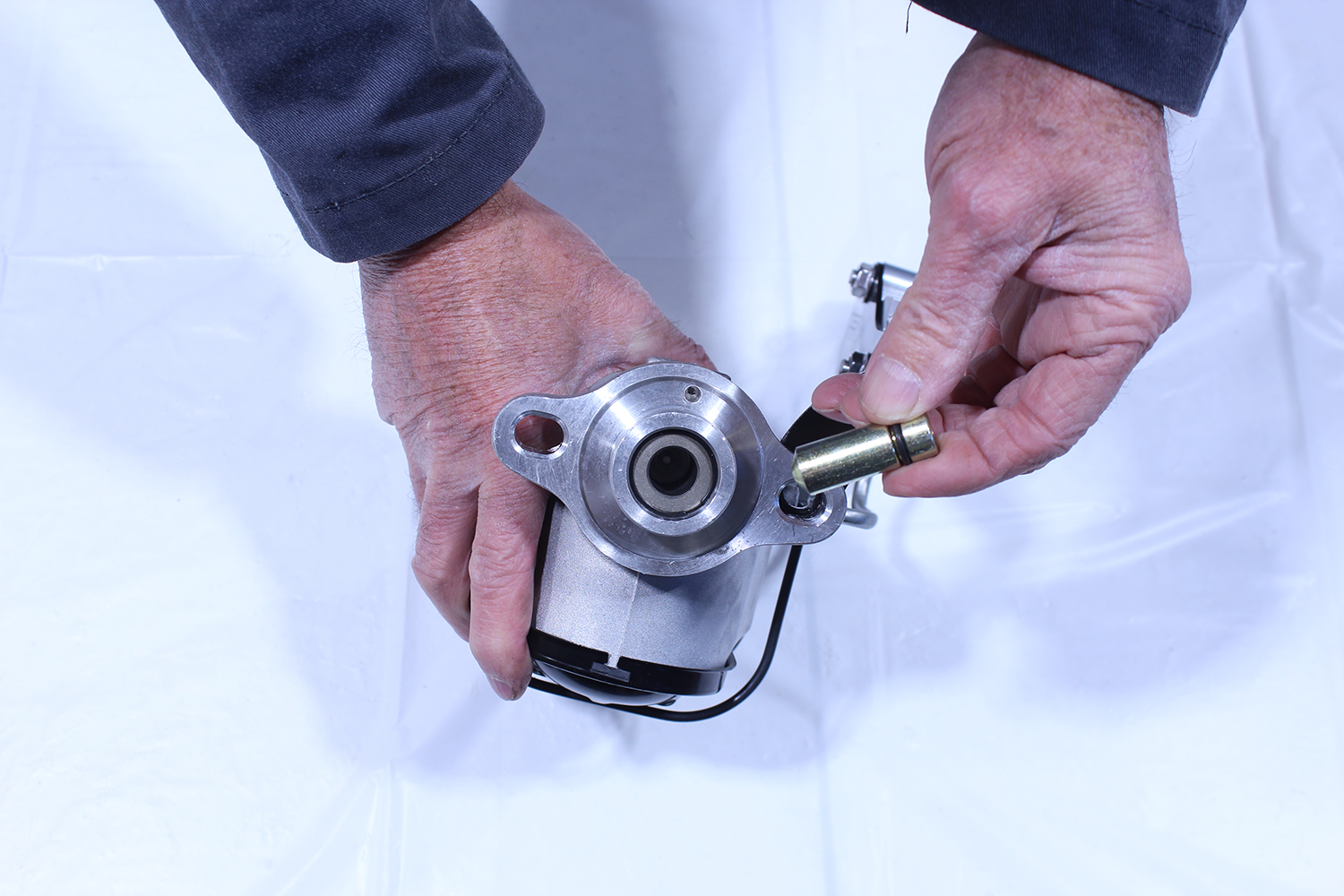
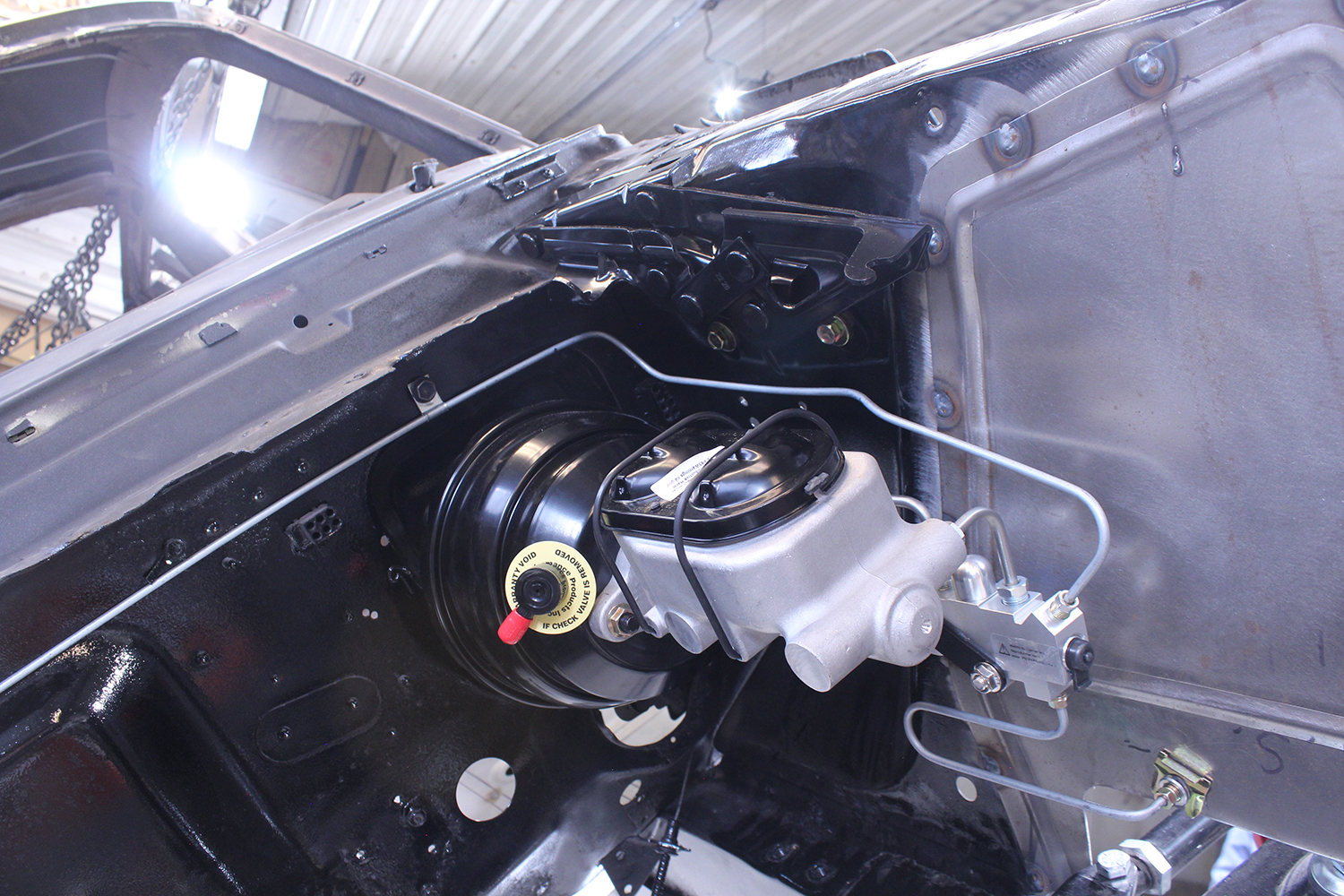
To give this Mustang the stopping power Radford wanted, he chose to install a CPP 8-inch dual diaphragm vacuum booster. Designed specifically for early Mustangs, the booster and master cylinder assembly fits snugly against the inner fender panel. When choosing brake components it is important to ensure they are all compatible. CPP points out there are two different styles of master cylinders: one for manual brakes, the other for power brakes. The difference is the depth of the bore in the piston that accepts the push rod from the pedal. Power brake master cylinders have a shallow bore and can only be used with a brake booster, while manual brake master cylinders have a deep bore piston. Using a power brake master cylinder on manual brakes can allow the push rod to fall out of the bore with the inevitable result of a total loss of brakes. However, a deep bore can be used with a brake booster if the proper CPP spacer is installed.
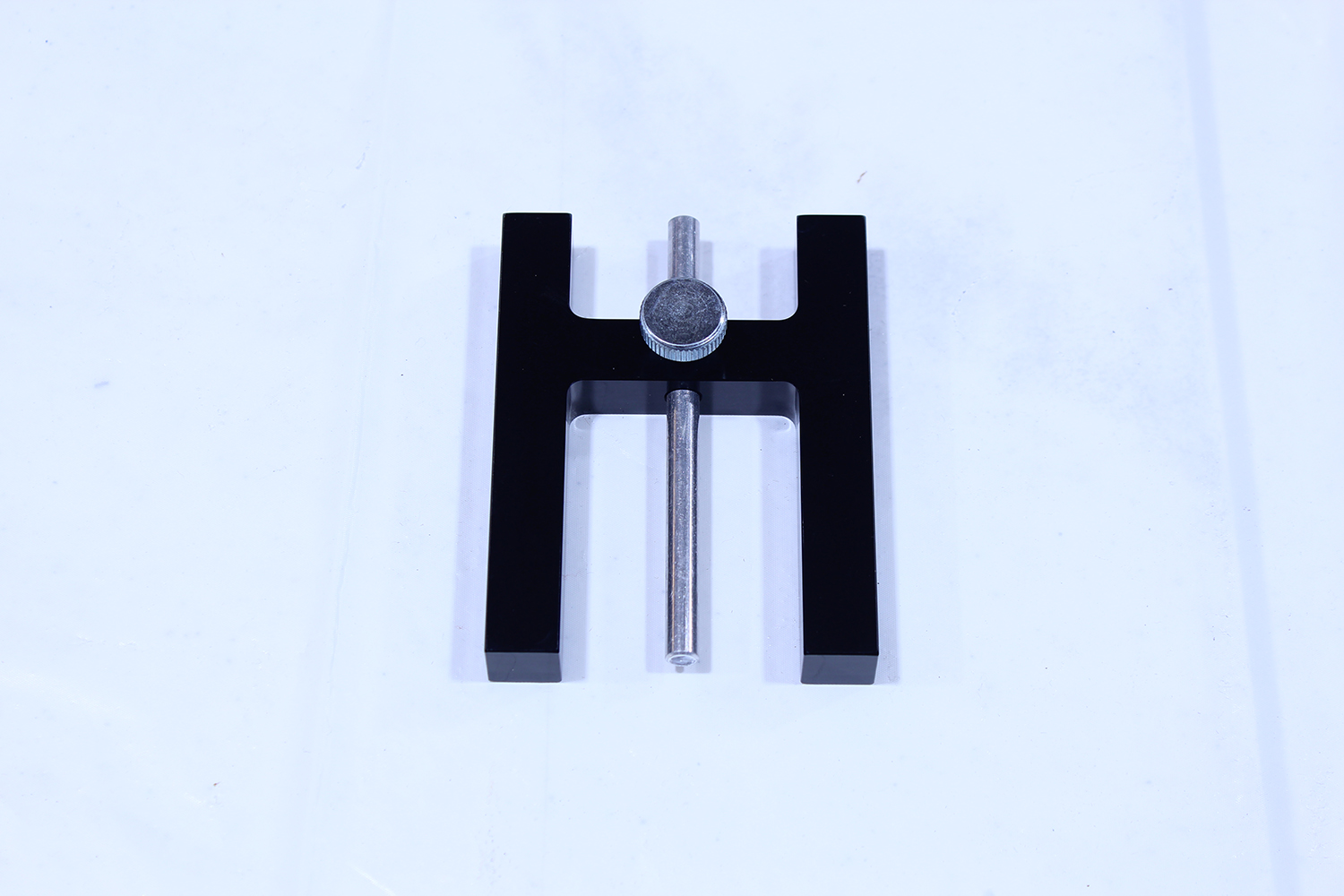
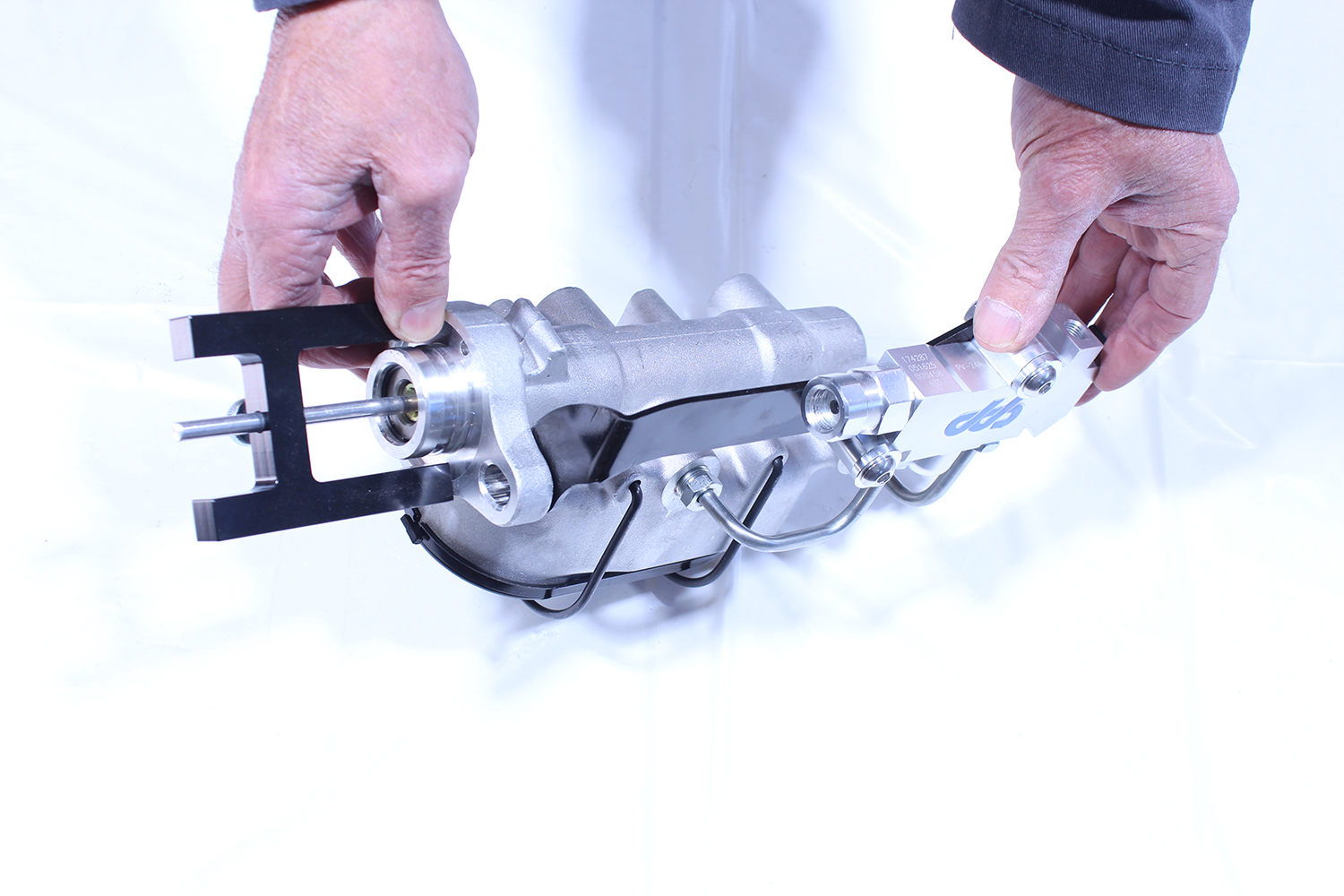
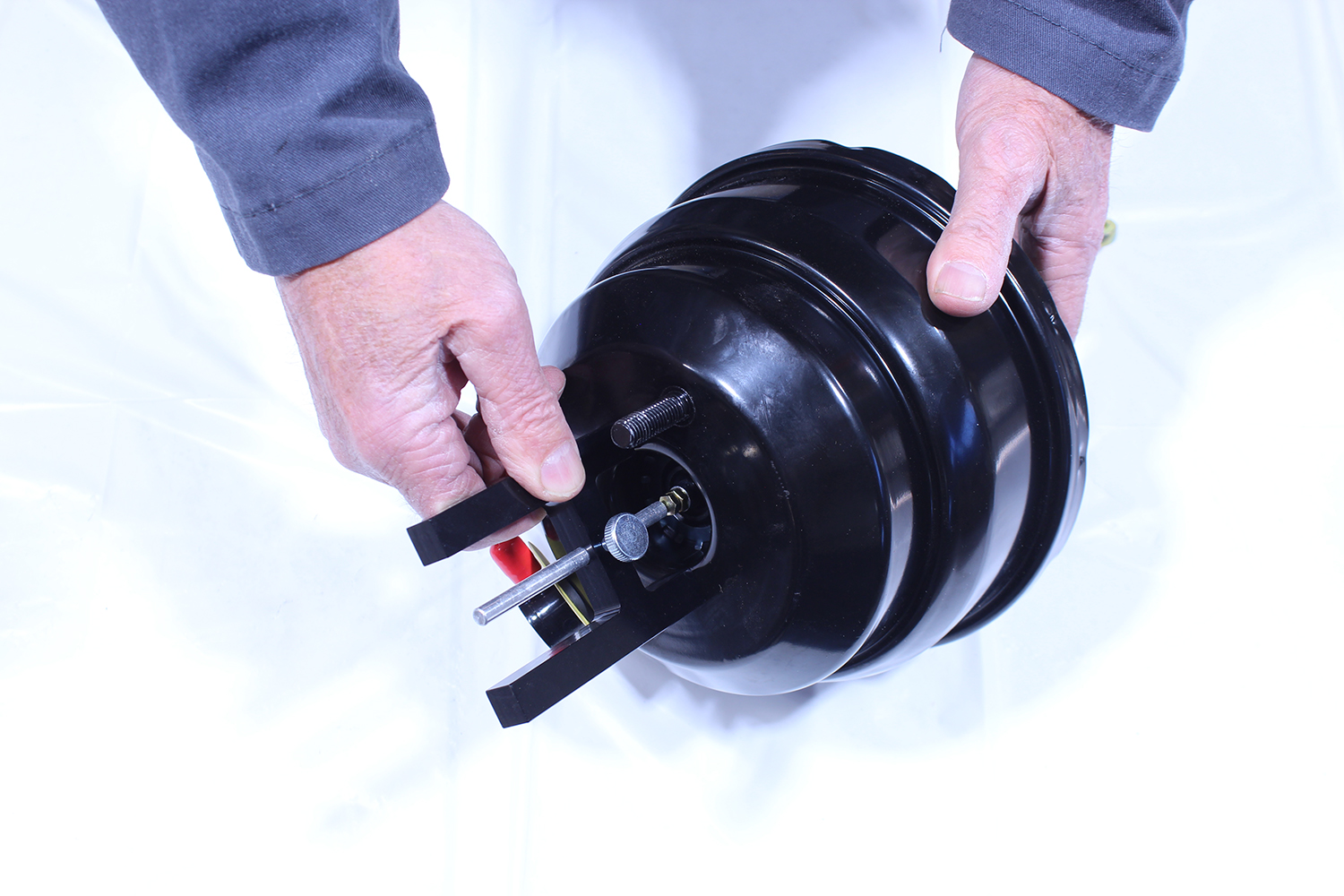
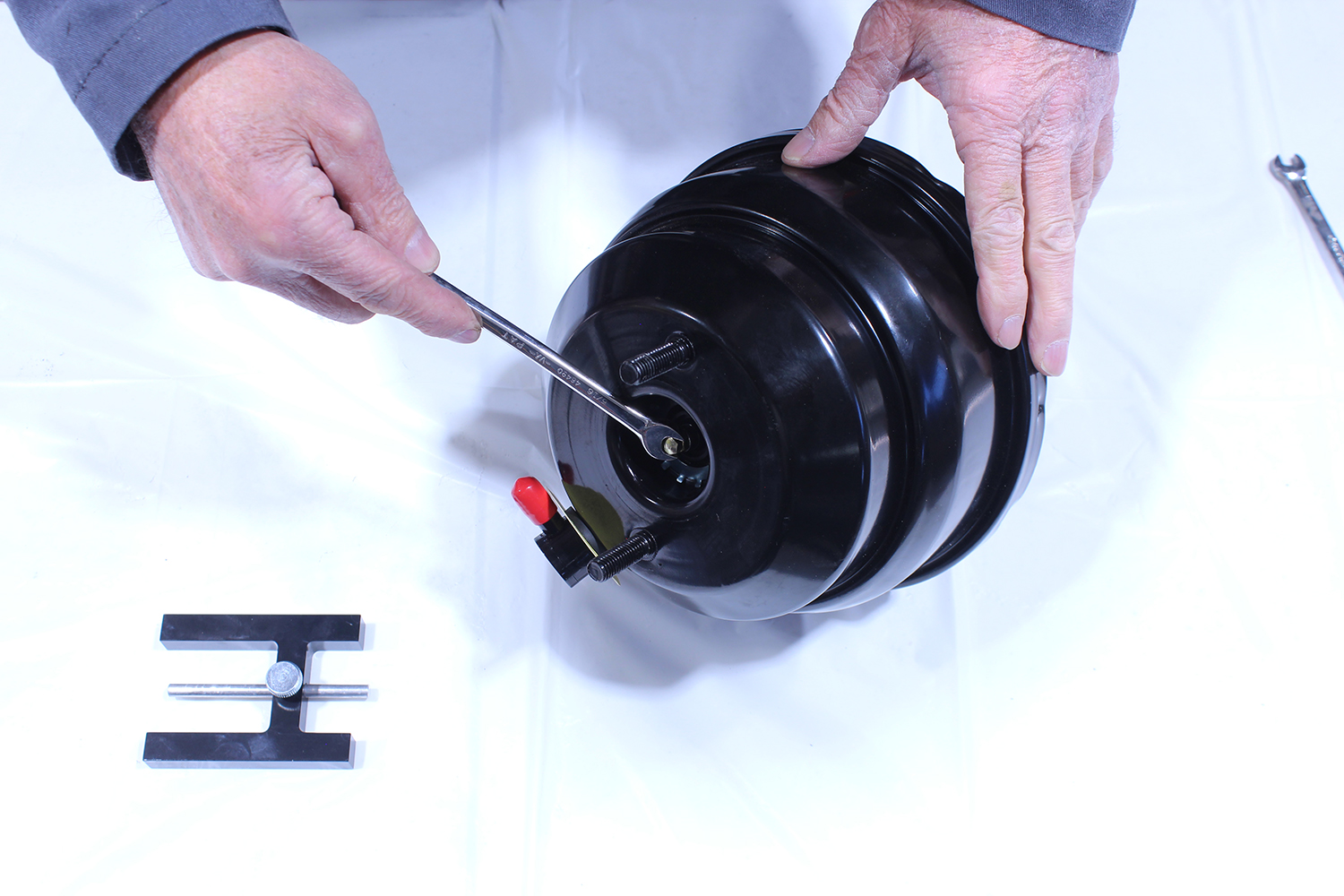
An often-overlooked step when installing a vacuum booster/master cylinder assembly is checking the clearance between the booster’s pushrod and the master cylinder piston. If the pushrod is too long, the brakes may not fully release, causing them to drag. If the rod is too short, the brake pedal travel will increase. CPP provides a simple tool for measuring this clearance (PN MCDG) with a preferred range of 0.010 to 0.030 inch. We should point out our CPP booster came with the proper master cylinder spacer and was adjusted properly, but it never hurts to check.
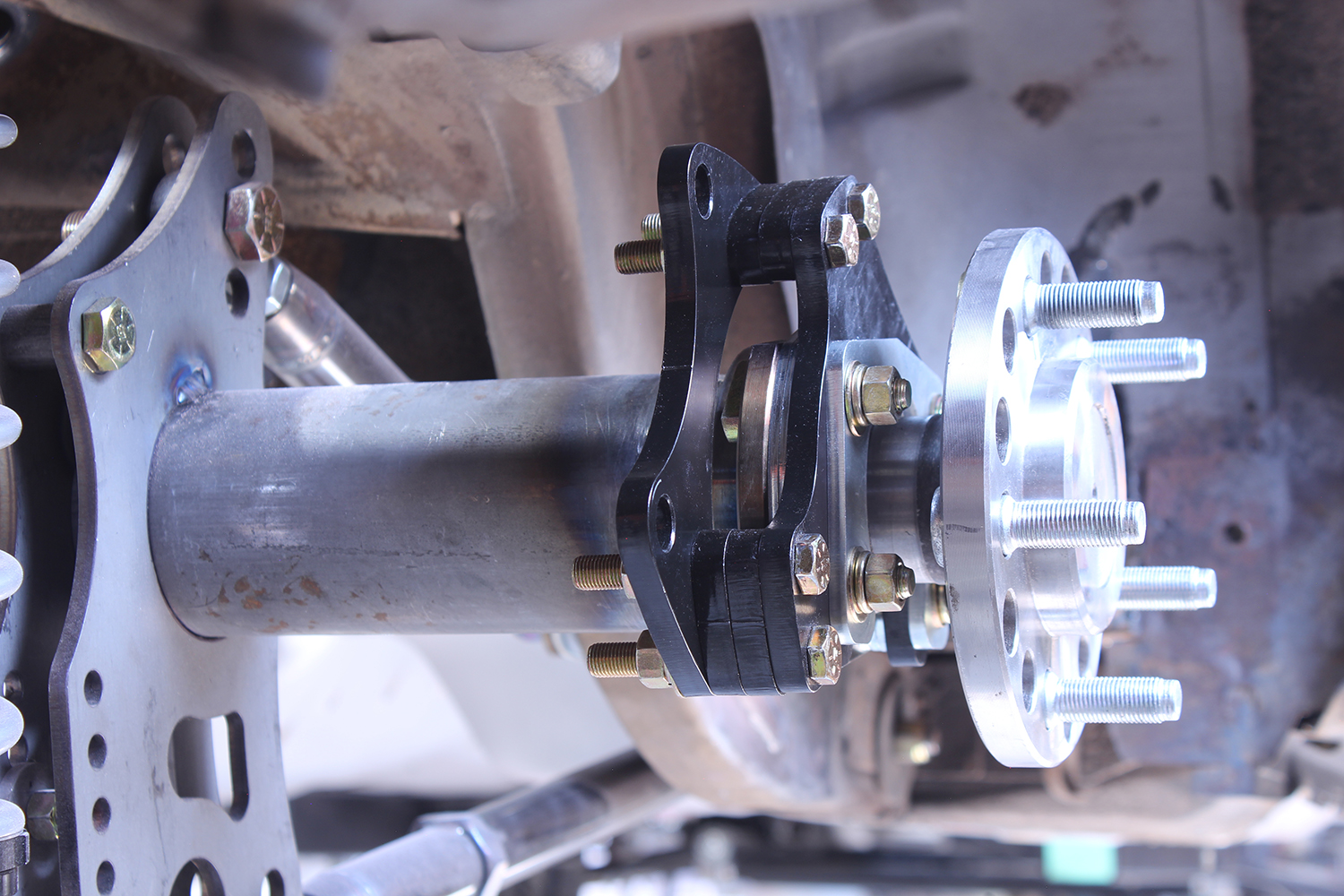
Although this Mustang has been fitted with a CPP Mustang II–style front suspension with modular Corvette-style spindles and a fabricated 9-inch rear axle, CPP also offers a variety of brake kits for original front suspension components. No matter which suspension components are used, upgrading your Mustang’s brake system is a smart investment for performance and could prevent the kind of excitement you don’t want to experience.
Check out this story in our digital edition here.