
3100 Radiator and Fan Install with Johnson’s Radiator Works and Vintage Air

By Ron Ceridono & Rob FortierImages by Rob Fortier

According to Johnson’s Radiator Works, “Copper has been, and will be for the foreseeable future, the ultimate material for heat transfer, long-lasting durability, and easy repairability.”

There has been an ongoing debate comparing the effectiveness of copper/brass radiators (copper is used for the fins and brass is used for the tanks) and all-aluminum radiators. The bottom line is this: When comparing the thermal conductivity of the two materials, copper is rated at 398 W/m-K; on the same scale, aluminum is rated at 235. That simply means copper conducts heat much better than aluminum. So why do OEMs use aluminum? The primary reasons are that aluminum is cheaper and lighter than copper.
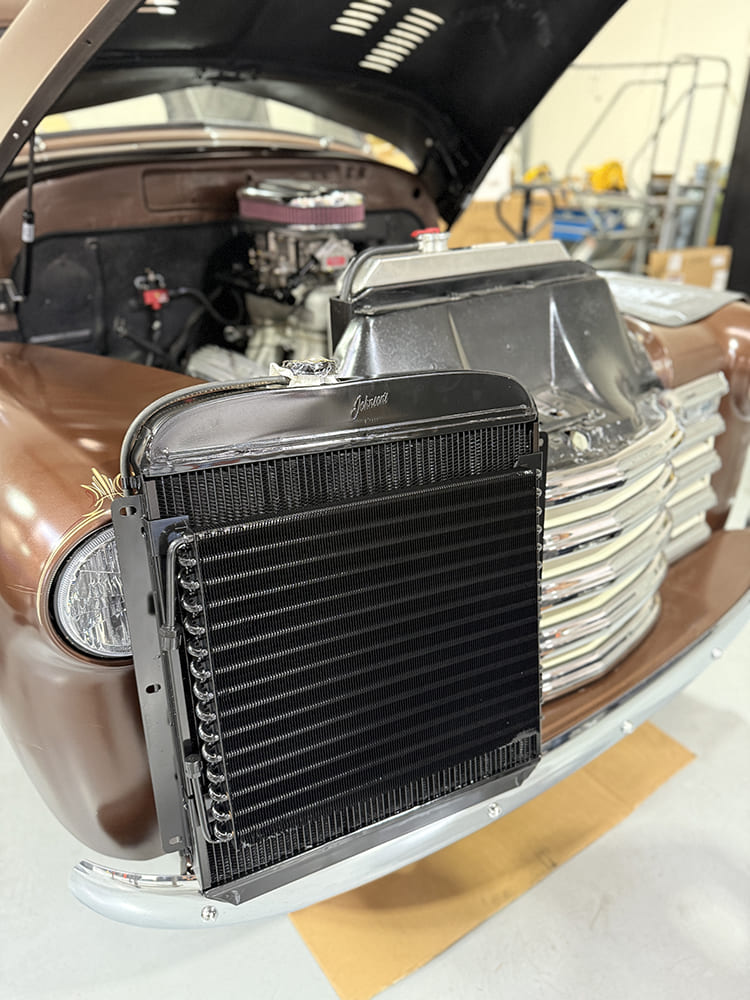
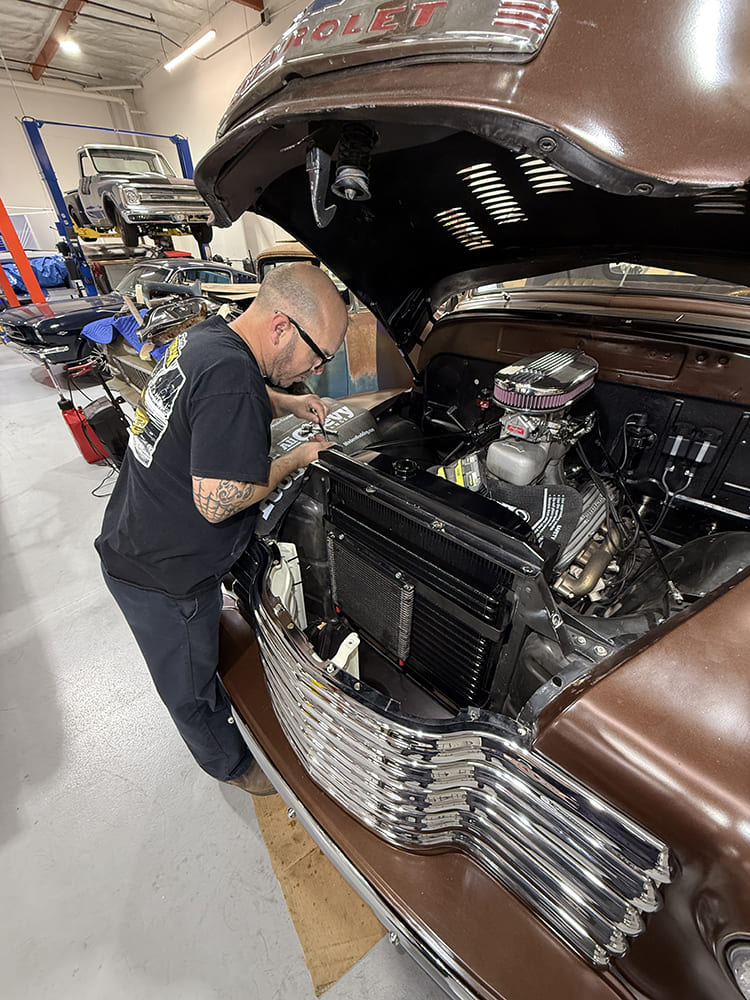
1949 Chevrolet 3100 pickup radiator mockup front grille exposed custom cooling setup classic Chevy truck
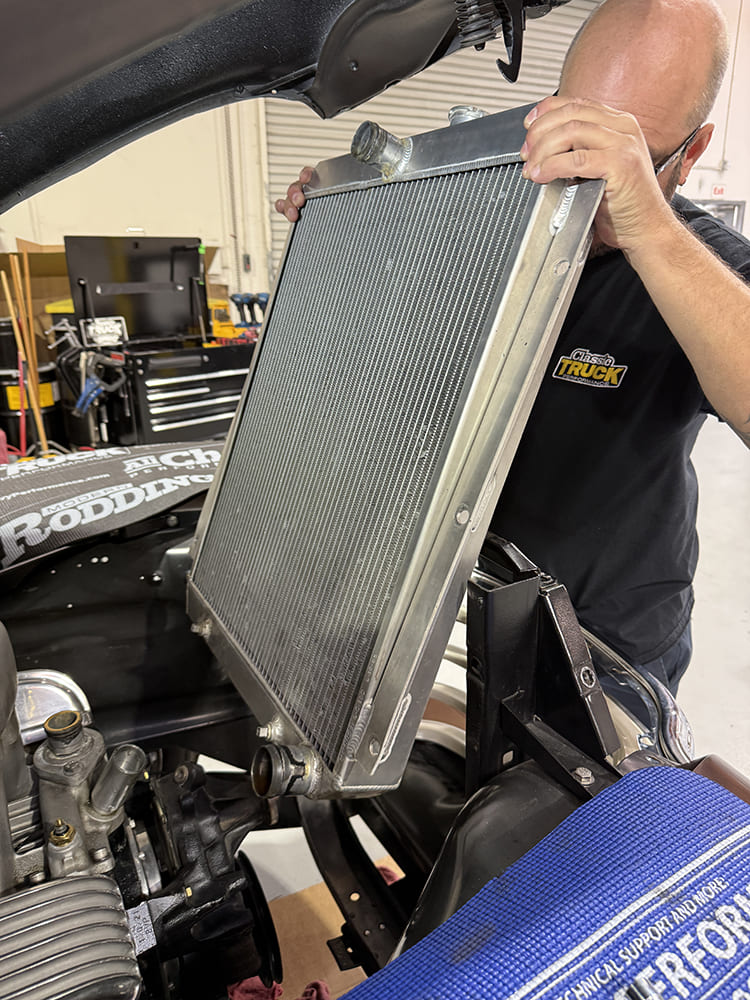
After a few boil-overs in the ’48, a call was made to my buddy Alan Johnson, who, along with building some of the best hot rods (and classic trucks) around, builds the best radiators around via Johnson’s Radiator Works (formerly Walker Radiator, if you were wondering!). Before I knew it, a fresh copper-brass ’47-53 radiator—complete with A/C condenser mounted—arrived at the ITGM HQ.

While copper/brass radiators are known to be efficient and long-lasting, aluminum radiator manufacturers will point out that the solder used to attach the copper fins to the tubes is a very poor conductor of heat. That means the critical balance is to use enough solder to ensure the fins are securely bonded to the tubes while not disrupting the transfer of heat from the tubes to the fins and ultimately to the air. To that end, Johnson’s Radiator Works limits the solder applied to the tubes as close to 0.0006 inch thick as possible, providing the necessary strength while maintaining the utmost efficiency.
With the exception of the petcocks and bungs, every part of Johnson’s radiators are manufactured and assembled in-house. The cores are made from 0.125×0.5-inch brass tubes with proprietary brass fins and small louvers that create turbulence in the airflow. With over 600,000 louvers in each radiator, these fins dissipate heat more effectively than smooth fins. The assembled cores are attached to holes punched in the headers and secured by dipping the assembled components in a solder bath. The tanks are stamped from 0.040-inch brass; automatic transmission coolers are an available option, as are steam vents for LS applications.
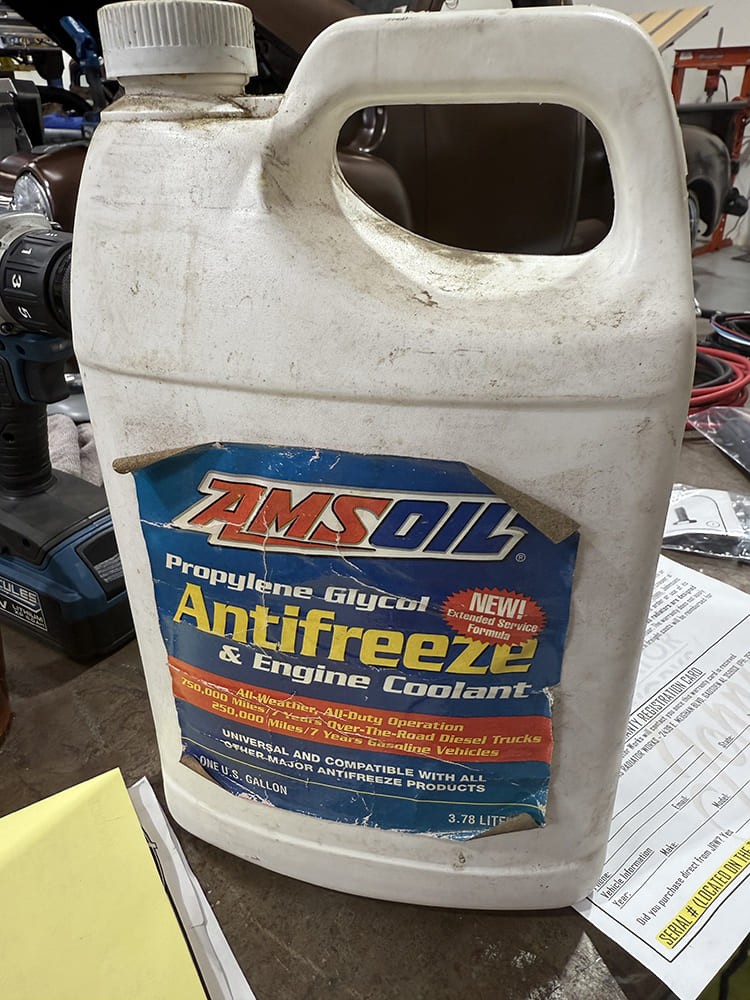
chevy 3100 pickup radiator cap antifreeze in a gallon container
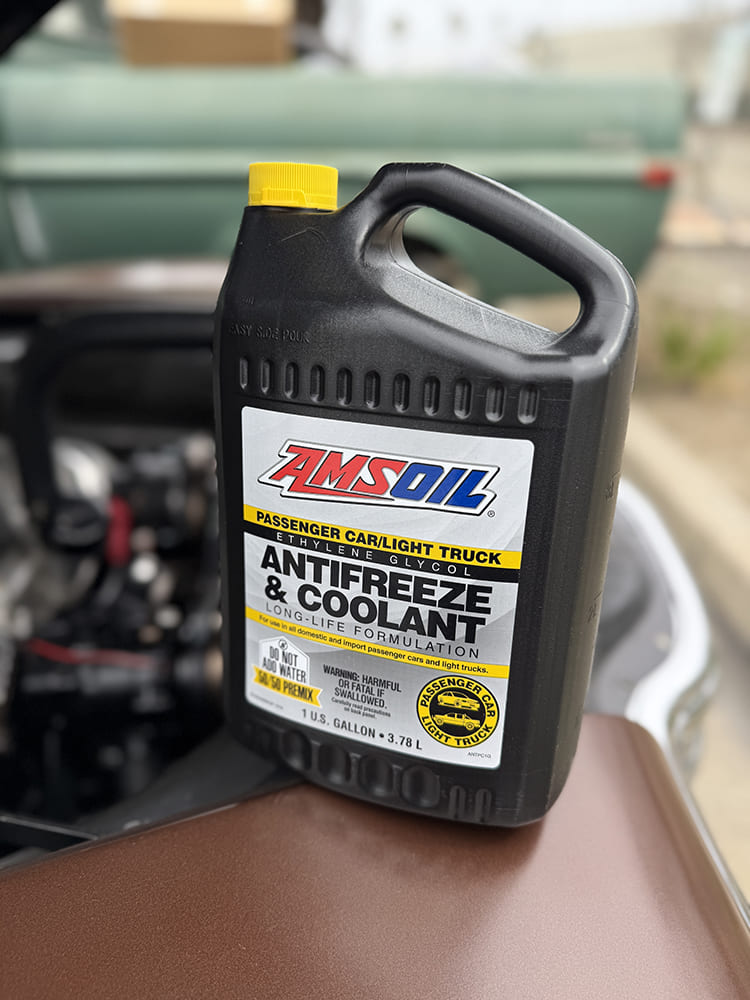
Speaking of antifreeze, I had a couple (unopened) bottles of AMSOIL Propylene Glycol lying around, but when I went to order a few more to fill the system, I was quickly reminded that this particular recipe is not legal in California! So, a case of California-compliant Ethylene Glycol was ordered and subsequently put to proper use!

A common question when installing a new radiator is what type of antifreeze to use. At one time that decision was simple enough; there was basically one choice and it was green. There are a variety of products to choose from and they are identified by their color. Johnson’s suggests that selecting antifreeze should be based on the combination of engine components being used. For those with an iron block, heads, and water pump, original green antifreeze is recommended. Iron blocks with aluminum heads and/or aluminum water pumps use blue. With orange suggested for when using an aluminum block, heads, and water pump.     

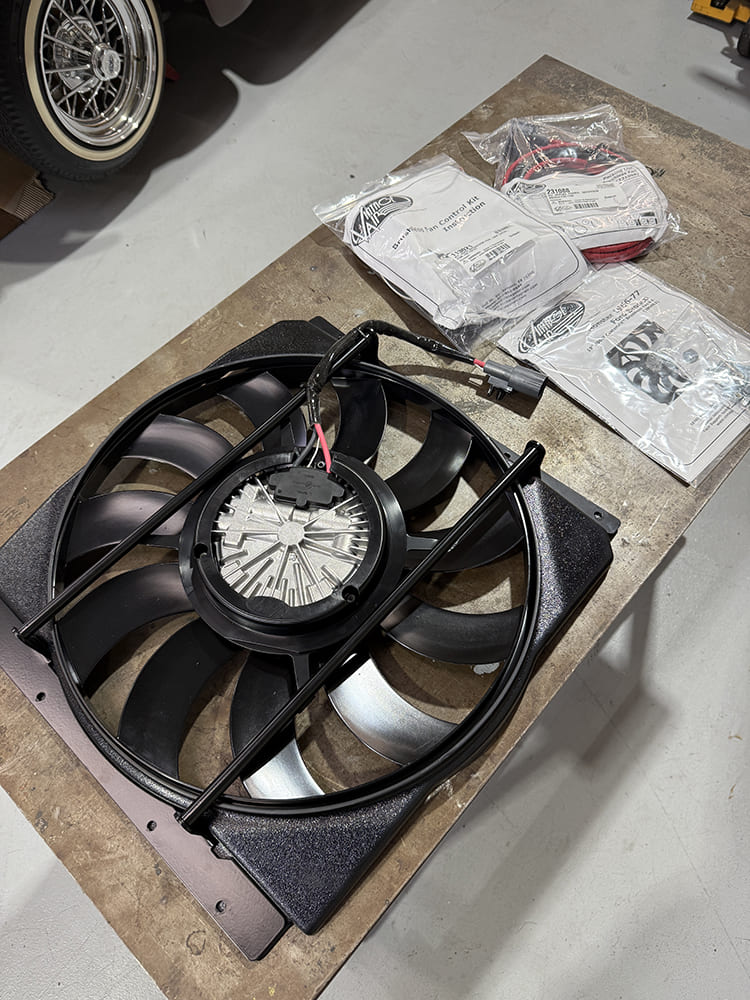
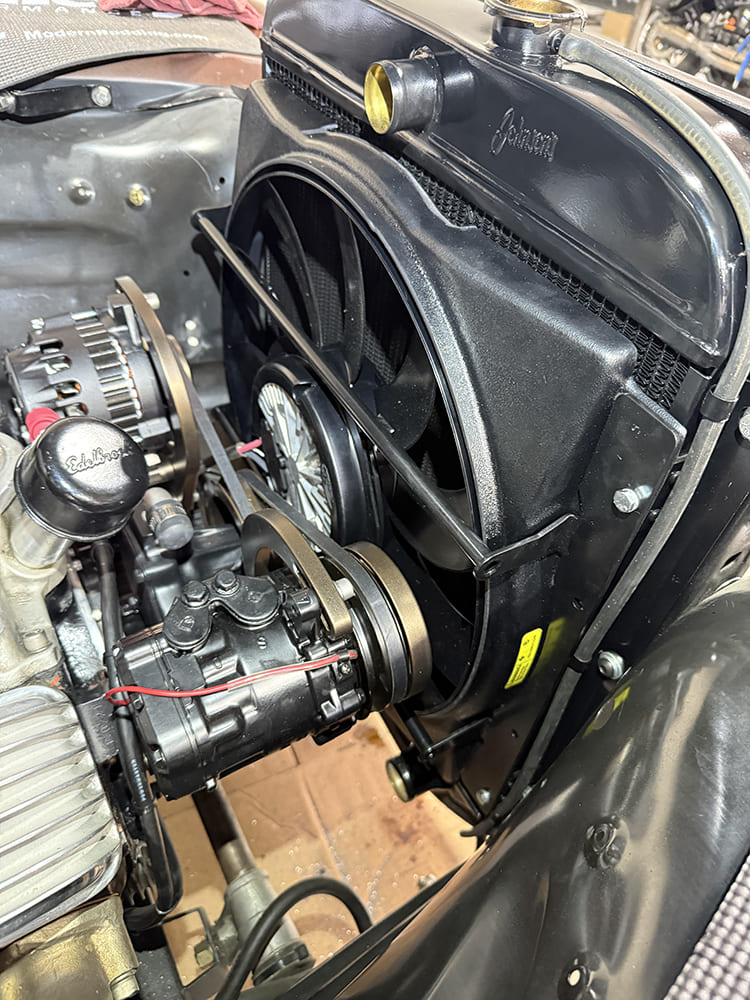
Another decision to be made when installing a new radiator is the type of fan to use. In this case a 19-inch Vintage Air brushless fan for 1966-77 Broncos was chosen. Equipped with SPAL’s latest motor technology, the brushless design extends the lifespan of the fan motor and also improves its reliability. Another advantage to Vintage Air’s brushless fans is the integrated variable speed controller, which eliminate the need for relays. The sophisticated controller provides a “soft start,” which eliminates the amp spike from the large initial electrical draw when a brushed fan starts. The controller then slowly ramps-up the fan speed, running it only hard enough to cool the engine.
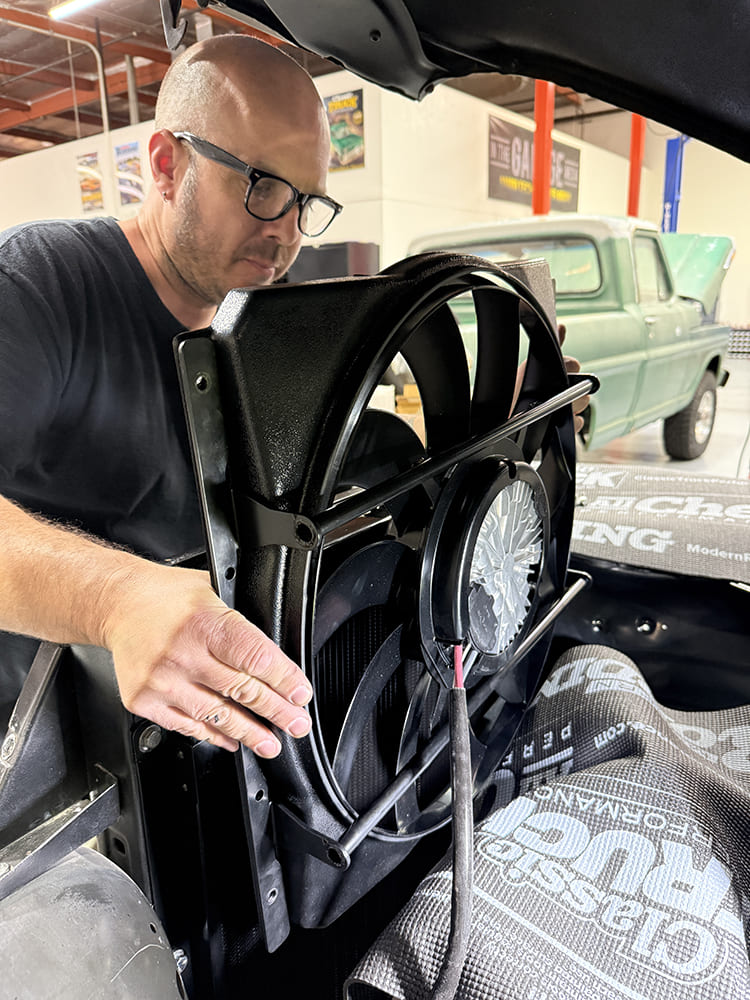
1949 3100 pickup electric fan installation engine bay custom cooling upgrade classic Chevy truck
With the frontside of the radiator all set and good to go, the CustomFit fan assembly was refit onto to the back side in preparation for wiring and final installation chores (plumbing, fluid, and so on).

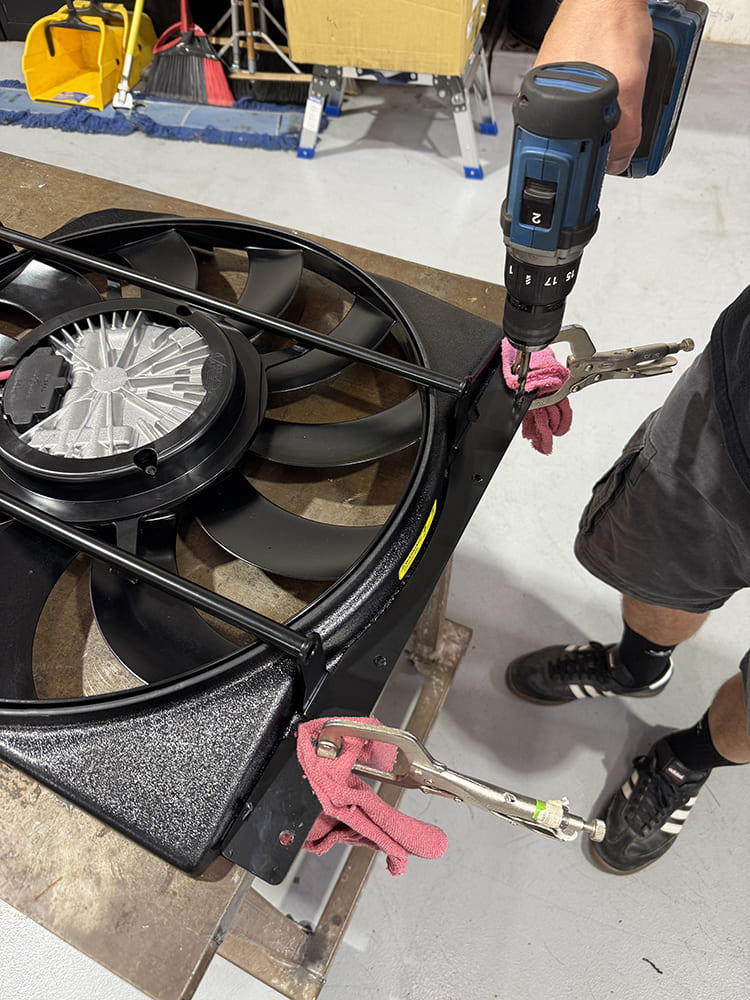
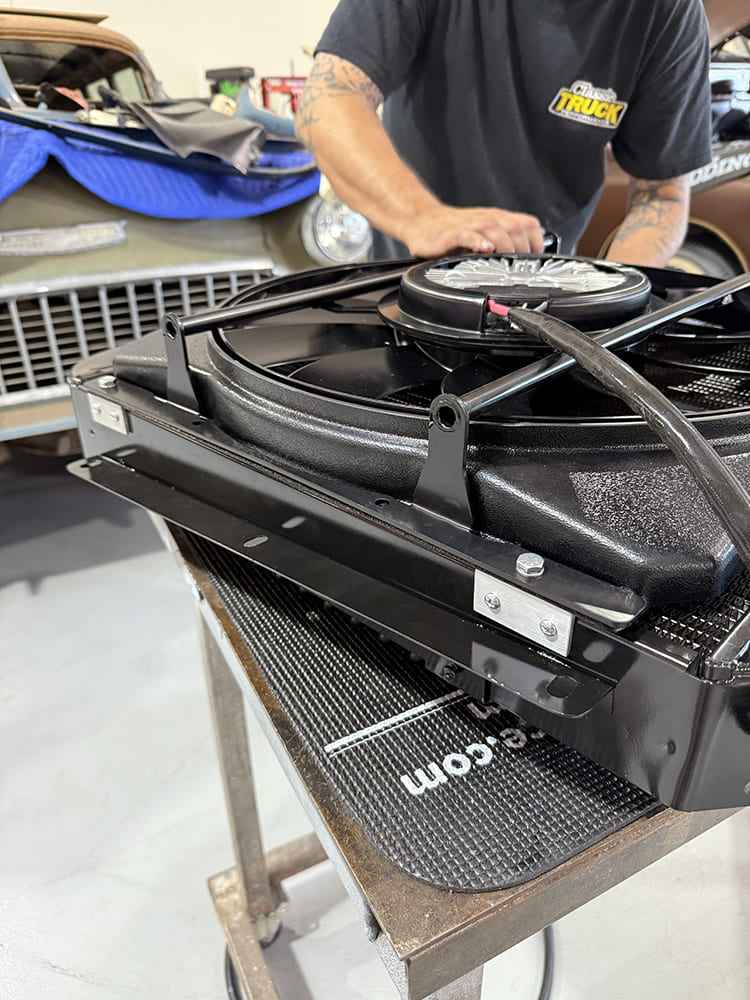
Installing an electric fan often requires drilling holes in the radiators side straps for mounting brackets, which can be a scary thing to do on a new radiator. However, Johnson’s Radiator Works eliminates the potential for problems by using a last row of “dead tubes” on either side of the core.

We combined the best of both worlds—copper/brass Johnson’s Radiator Works radiator and Vintage Air’s all-new 19-inch/850-watt CustomFit brushless fan kit—in our ’48 Chevy, now with its compact Eddie Motorsports V Drive installed, and without exaggeration, could not be happier with the cooling results. Follow along, then give Johnson’s and Vintage Air a call and get your truck running COOLER than ever!

But, a quality radiator alone won’t keep your engine properly cooled—your airflow and, more specifically, its management, are equally important. At higher freeway speeds, unrestricted air flowing through the radiator can typically keep things relatively cool. But how often are we not on the open highway when we drive our trucks?! Not only is an efficient fan crucial to keeping your engine cool, so too is a proper fan shroud.

Check out this story in our digital edition here.

More 3100 pickup features and tech here.

1949 Chevrolet 3100 pickup aluminum radiator close up fan water pump
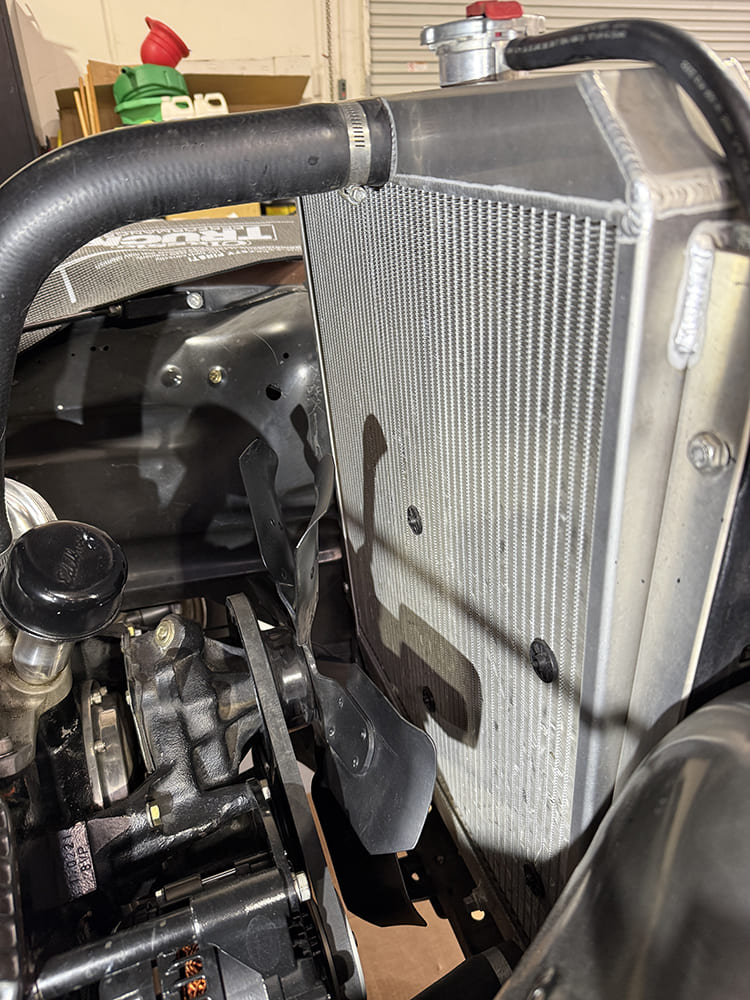
A low-mounted, shroudless mechanical fan was the major culprit of the overheating, but due to corrosion buildup as well..


1949 Chevrolet 3100 pickup mechanic removing aluminum radiator
the old Brand-X aluminum radiator had seen better days … out she came.


Chevy 3100 electric cooling fan kit parts wiring hardware aftermarket radiator fan setup
The aforementioned “shroudless” cooling fan situation will be remedied with Vintage Air’s all-new Monster CustomFit brushless fan kit—literally a rotating monster: 19 inches and 850 watts of “smart” (soft start) engine cooling in a self-contained, molded ABS shroud!


49 Chevrolet 3100 pickup electric fan and shroud assembly drilling mounting custom cooling install classic truck
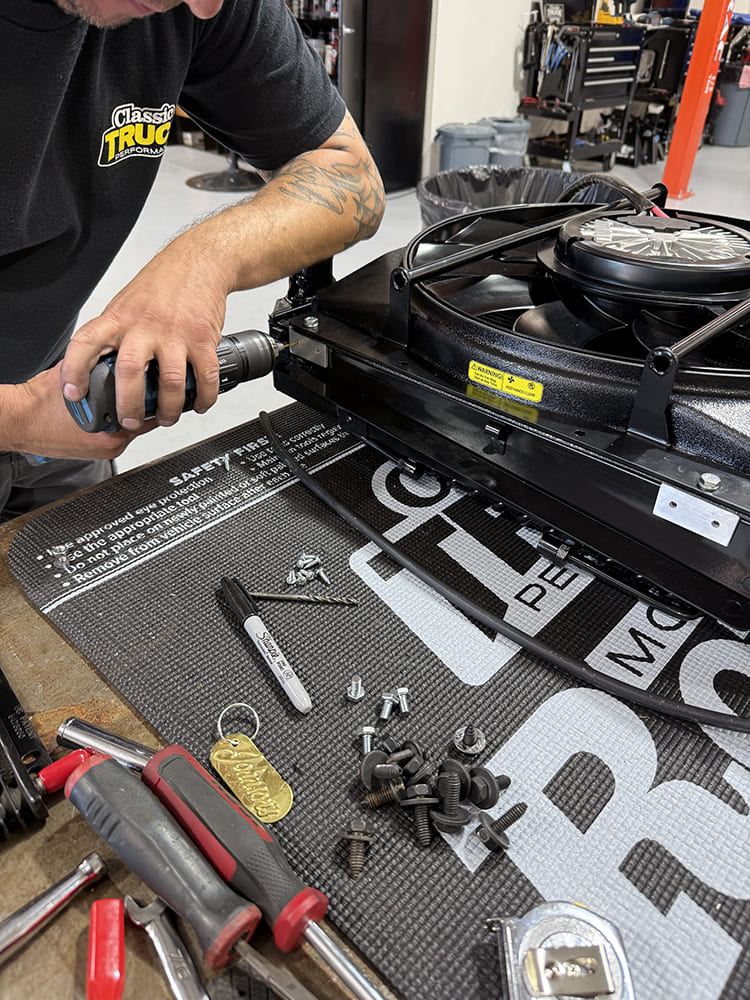
Designed to be a direct fit for the ’66-77 Ford Bronco, the CustomFit brushless fan kit (PN 280483) is just that for the ’47-53 Chevy/GMC 1/2-ton: a custom fit. Ryan Manson started out by marking and drilling the ABS shroud for mounting bracket fitment.


1949 Chevrolet 3100 pickup radiator fan mounting hardware install close up tools bolts custom setup
A quick trip to McFadden-Dale for some angled aluminum and 1/4-20 self-tappers for Manson to fab up the mounting tabs.


3100 electric fan mounted on radiator finished assembly custom cooling upgrade
As mentioned in the story, the outer row of tubes in the radiator may be “dead,” however, we did our best to put holes just in the vertical caps only … and succeeded!


1949 3100 pickup radiator with aftermarket cooling components close up
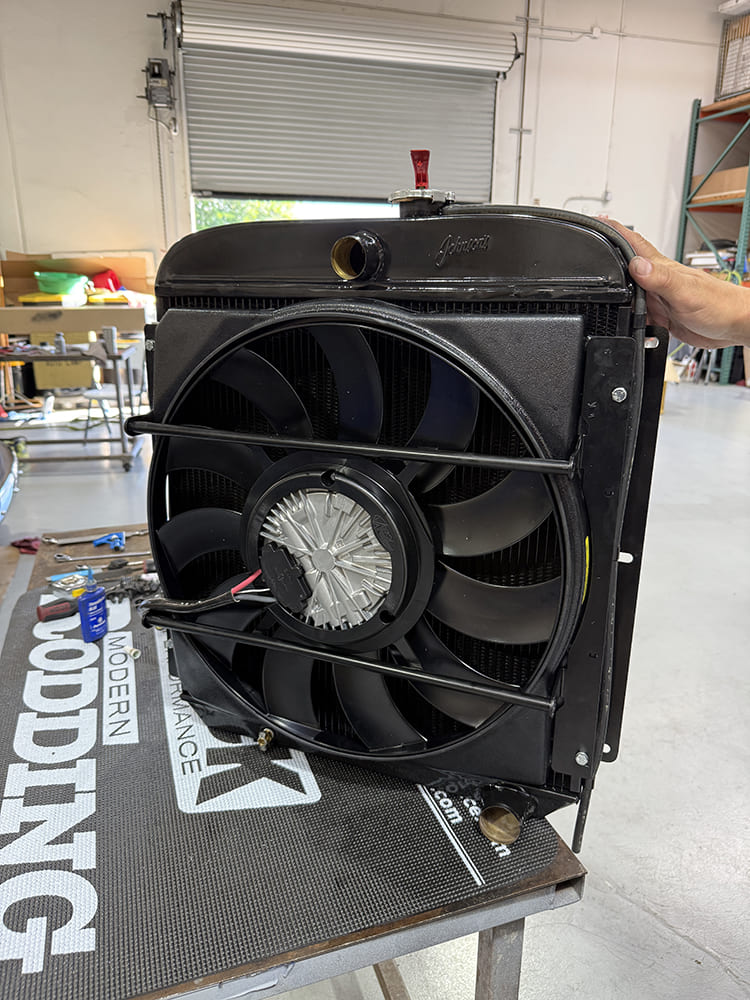
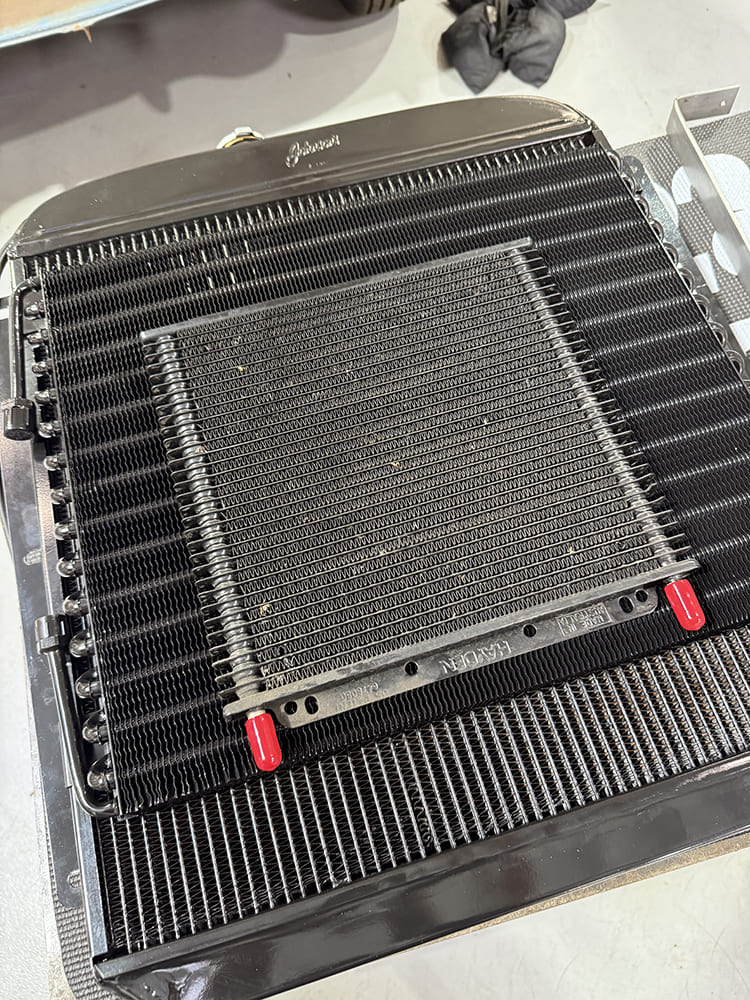
Our Vintage Air Monster CustomFit fan—fit and ready to be fit in the ’48 … however, we still have to tend to the matter of affixing the old Hayden trans fluid cooler on “top” of the already-attached A/C condenser!


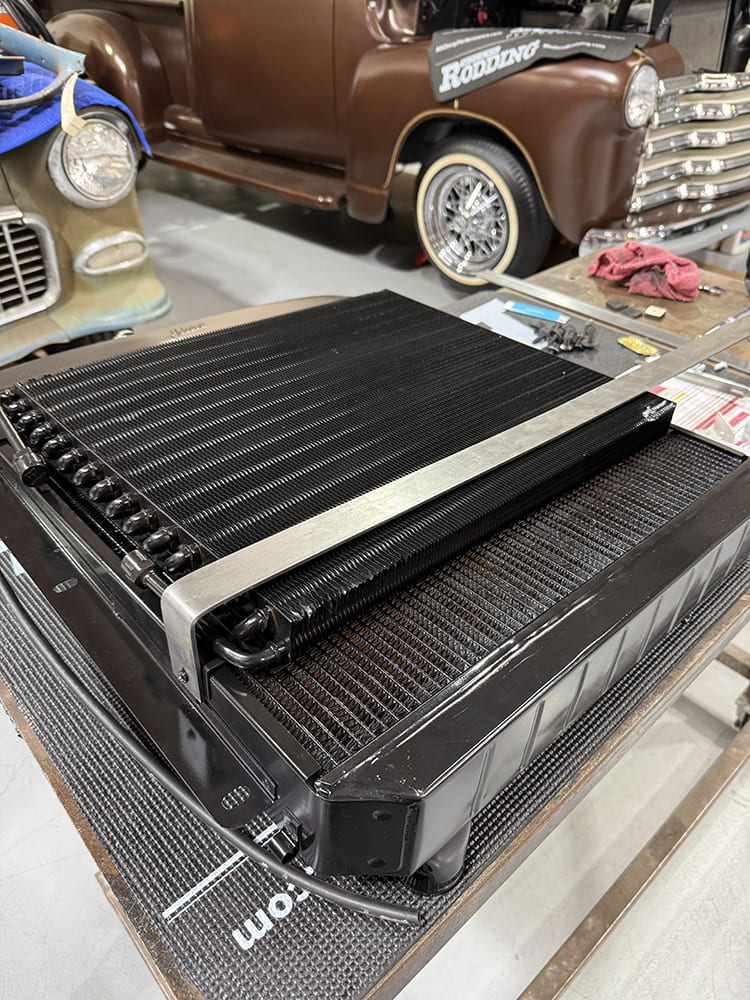
3100 radiator transmission cooler install stacked heat exchanger classic Chevy truck cooling system upgrade
Typically, fluid cooler companies provide zip-tie–like fasteners with flexible spacers—but the last thing we wanted to do was shove plastic sticks through our brand-new fins! So …


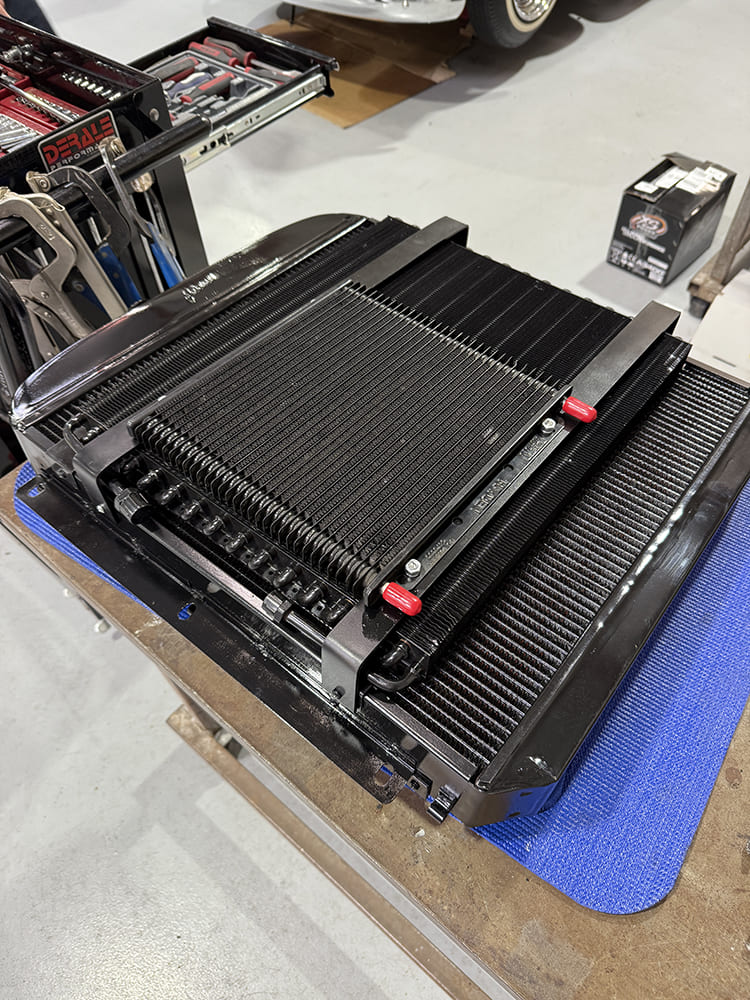
49 Chevrolet 3100 pickup radiator core condenser, transmission cooler bench mockup classic Chevy truck cooling components layout
Manson came up with a solid fixture method using 1/8-inch flat strap…


3100 pickup radiator and transmission cooler mounted assembly black coated cooling stack
…cradling the radiator, and positioning the cooler on top of the condenser as close as possible without touching, as so.


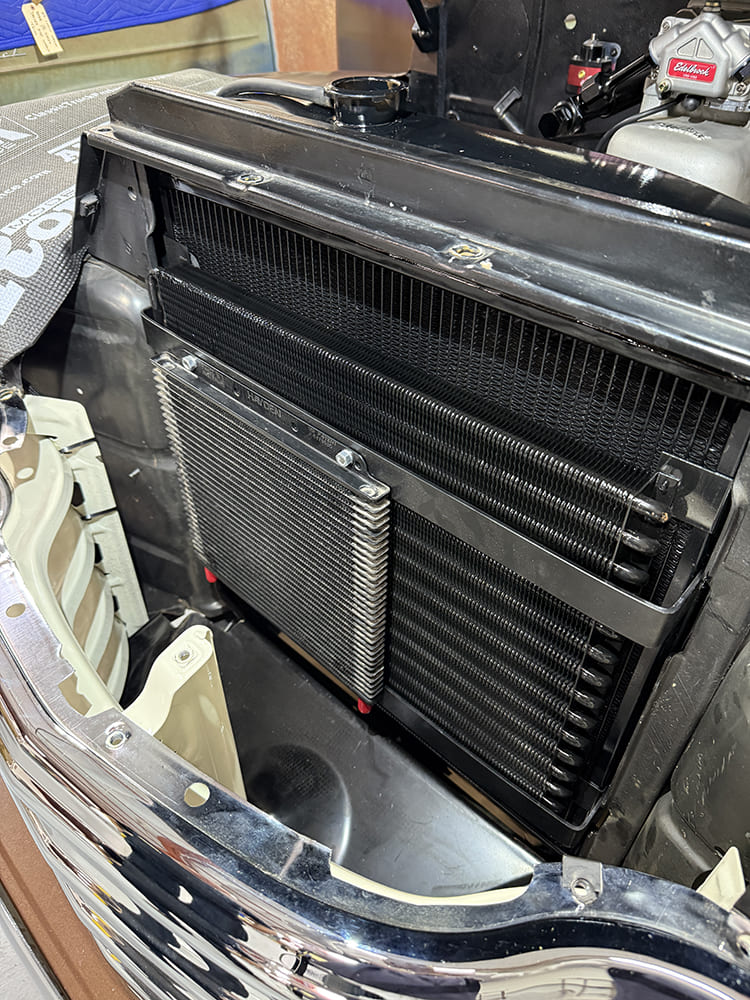
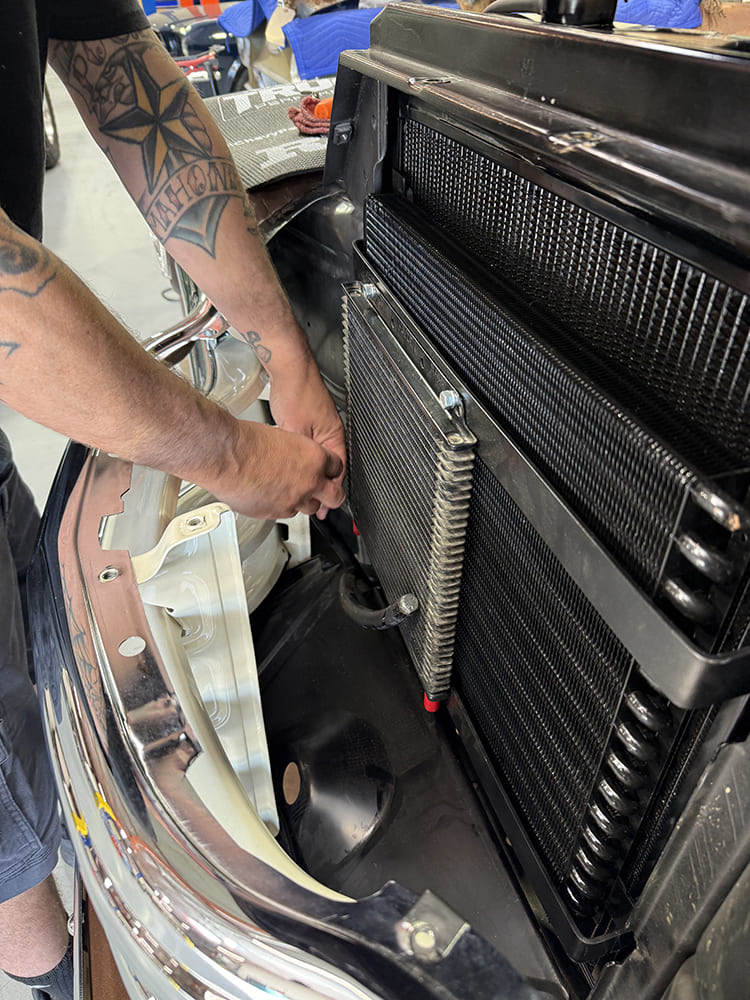
Chevy 3100 pickup radiator and transmission cooler installed front support engine bay
A quick test-fit in the truck (without the fan mounted) showed we needed to slightly notch the inside edge of the core support to clear our new brackets, …


49 Chevy 3100 pickup transmission cooler hose routing installation detail
…but otherwise, fit nice and snug, just as we wanted, so everything was secured, and the trans cooler lines reattached.


electric fan installation 3100 engine bay custom cooling upgrade
With the frontside of the radiator all set and good to go, the CustomFit fan assembly was refit onto to the back side of the Johnson’s Radiator Works modern radiator.


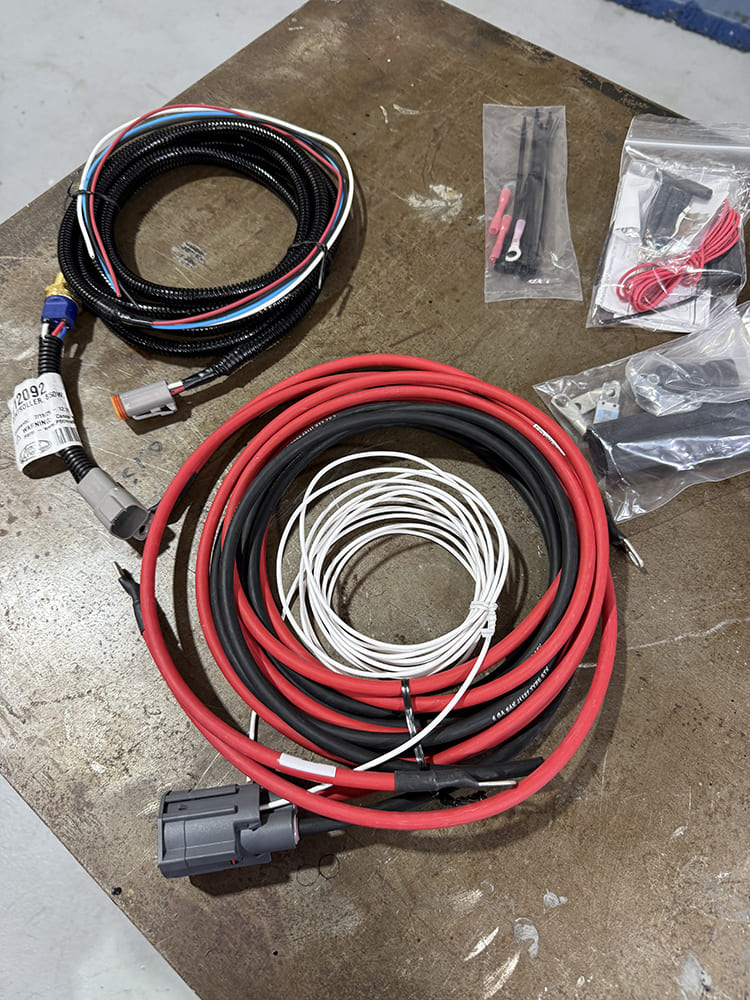
wiring kit for electric fan relay harness install components by vintage air
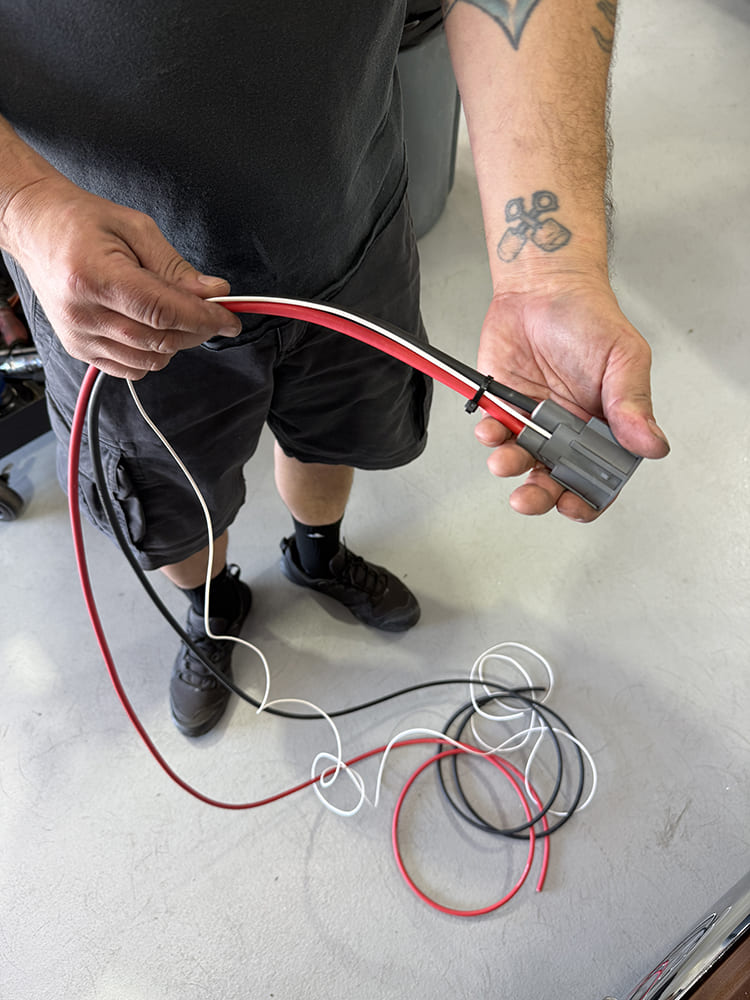
The wiring harness from Vintage Air seemed kind of daunting at first, especially with the massive 6GA power wire and plugs…


1949 Chevrolet 3100 pickup electrical connector wiring detail electric fan harness installation
..but because this happens to be one of Manson / Clampdown Competition’s specialties, he had the system powered up in no time.


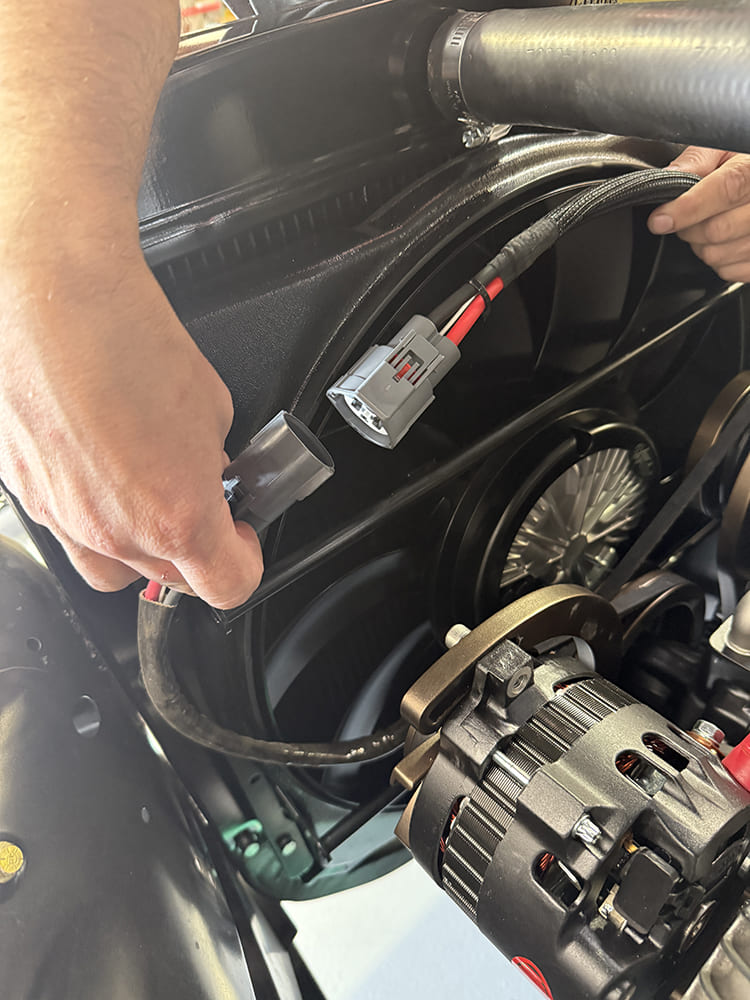
electric fan wiring connection to harness engine bay
The pre-wired fan motor gets its main power off our Powermaster starter …


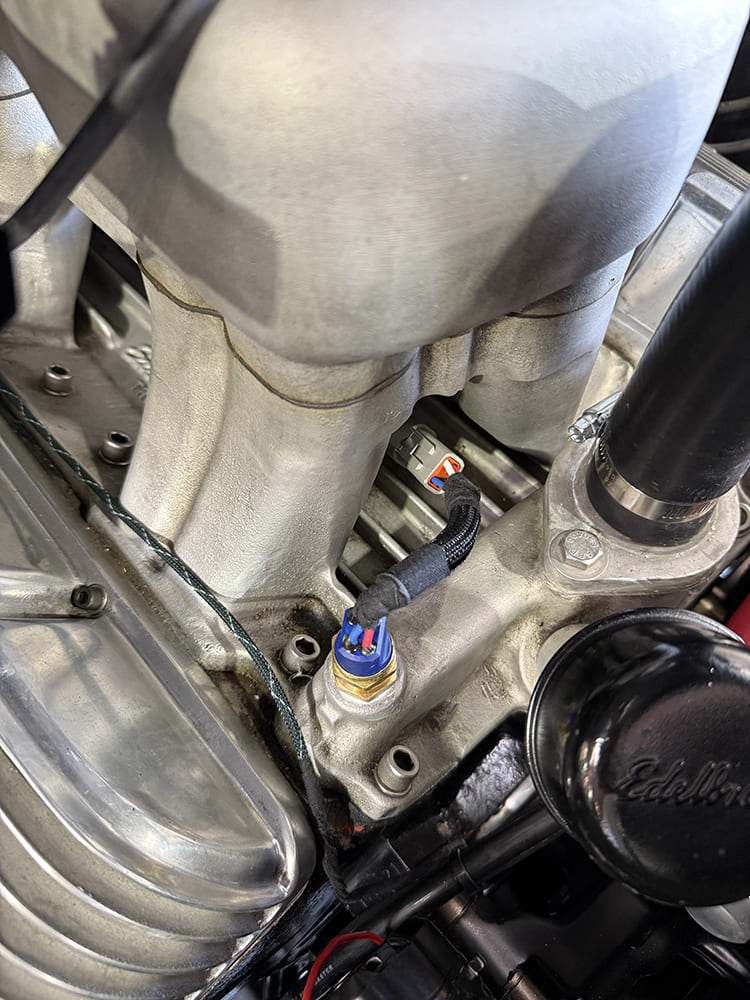
25 1949 Chevrolet 3100 pickup coolant temperature sensor wiring Edelbrock tunnel ram intake manifold
… while the “smart” soft-start/variable-speed functionality (it’s not simply an ON-OFF fan!) is controlled by a manifold-mounted switch monitoring coolant temp after the 180-degree thermostat.


3100 pickup upper radiator hose routing small block V8
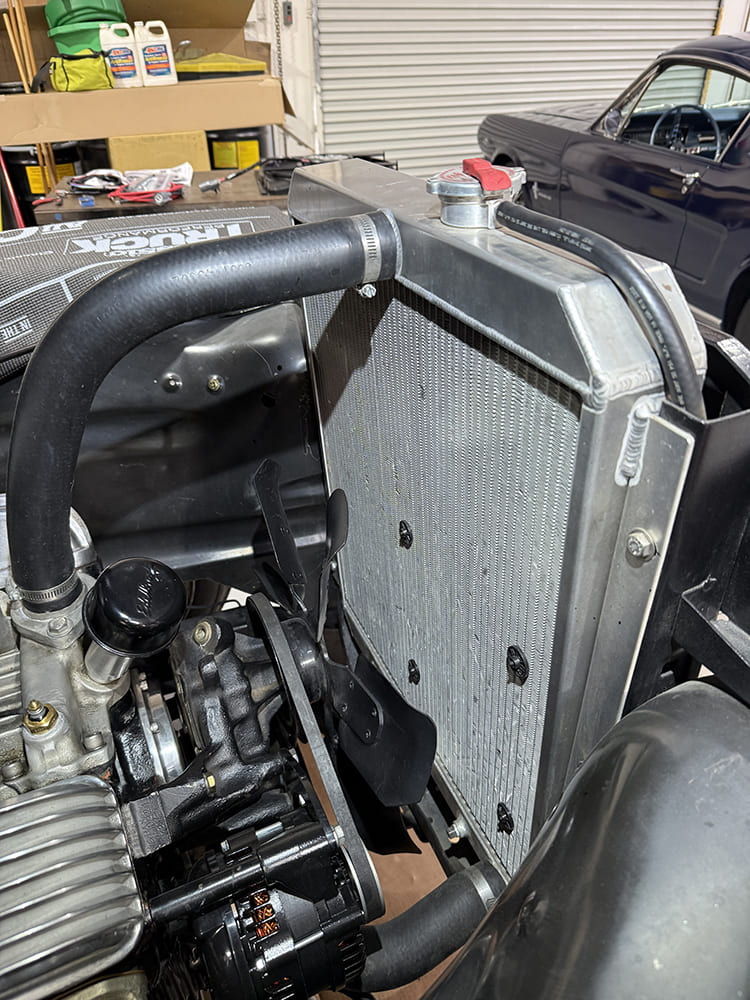
The after/before shots easily illustrate the vast difference in radiator setups—especially with the Eddie Motorsports V Drive installed (tucked up behind the Vintage Air fan with little room to spare!).


49 Chevrolet 3100 pickup aluminun radiator with mechanical fan no shroud.
The old aluminum radiator and mechanical fan setup can’t compare. The new setups CustomFit shroud controls incoming air as needed and efficiently as possible, and antifreeze is also cooled as efficiently as possible with the new Johnson’s copper-brass radiator.


simple radiator hose installed on 3100 pickup
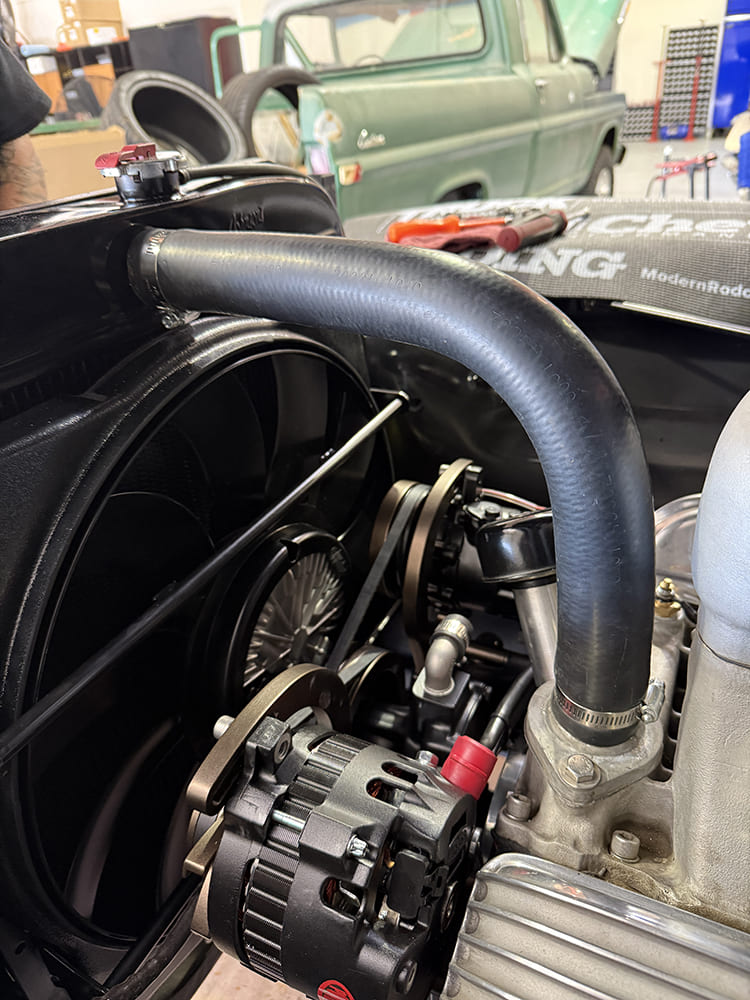
You never need to worry about upper radiator hose clearance on 1949 3100 Chevy truck.


adding correct amsoil antifreeze / coolant to 3100 radiator.
…so, a case of California-compliant Ethylene Glycol was ordered and subsequently put to proper use!


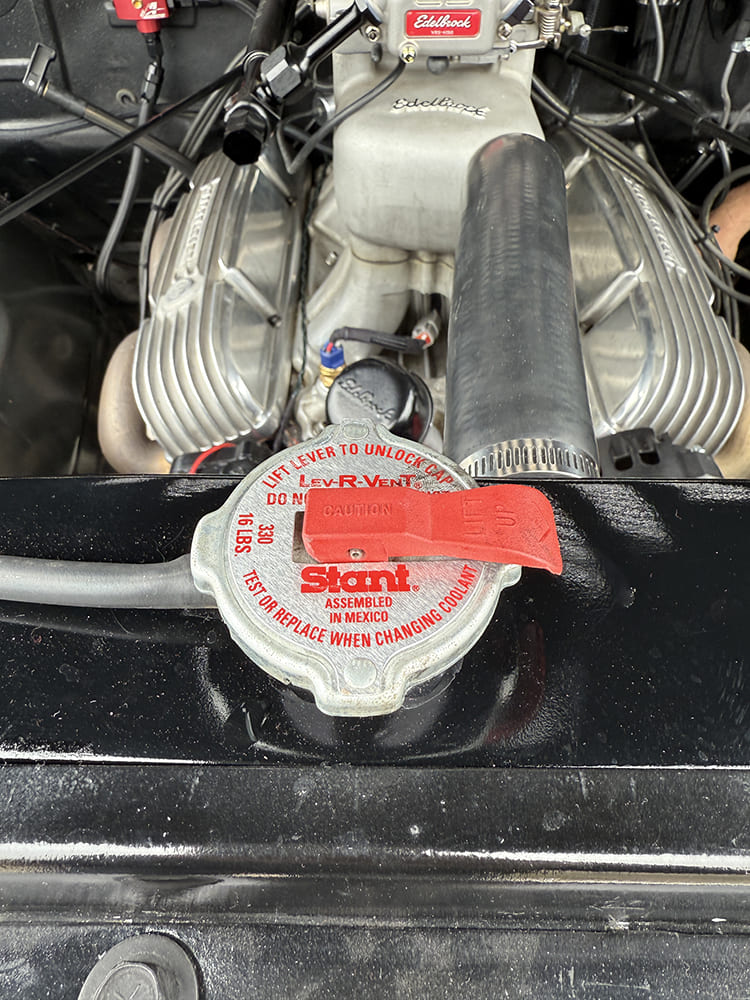
radiator cap installed on johnson's radiator works copper brass radiator
A new 180-degree thermostat was installed, followed by a new set of radiator hoses and clamps before refilling the system with some fresh antifreeze.


ITGM Source Box Heading

johnsons Web Sources

Vintage Air web source

amsoil Web Sources


Related Articles

Search Our Site