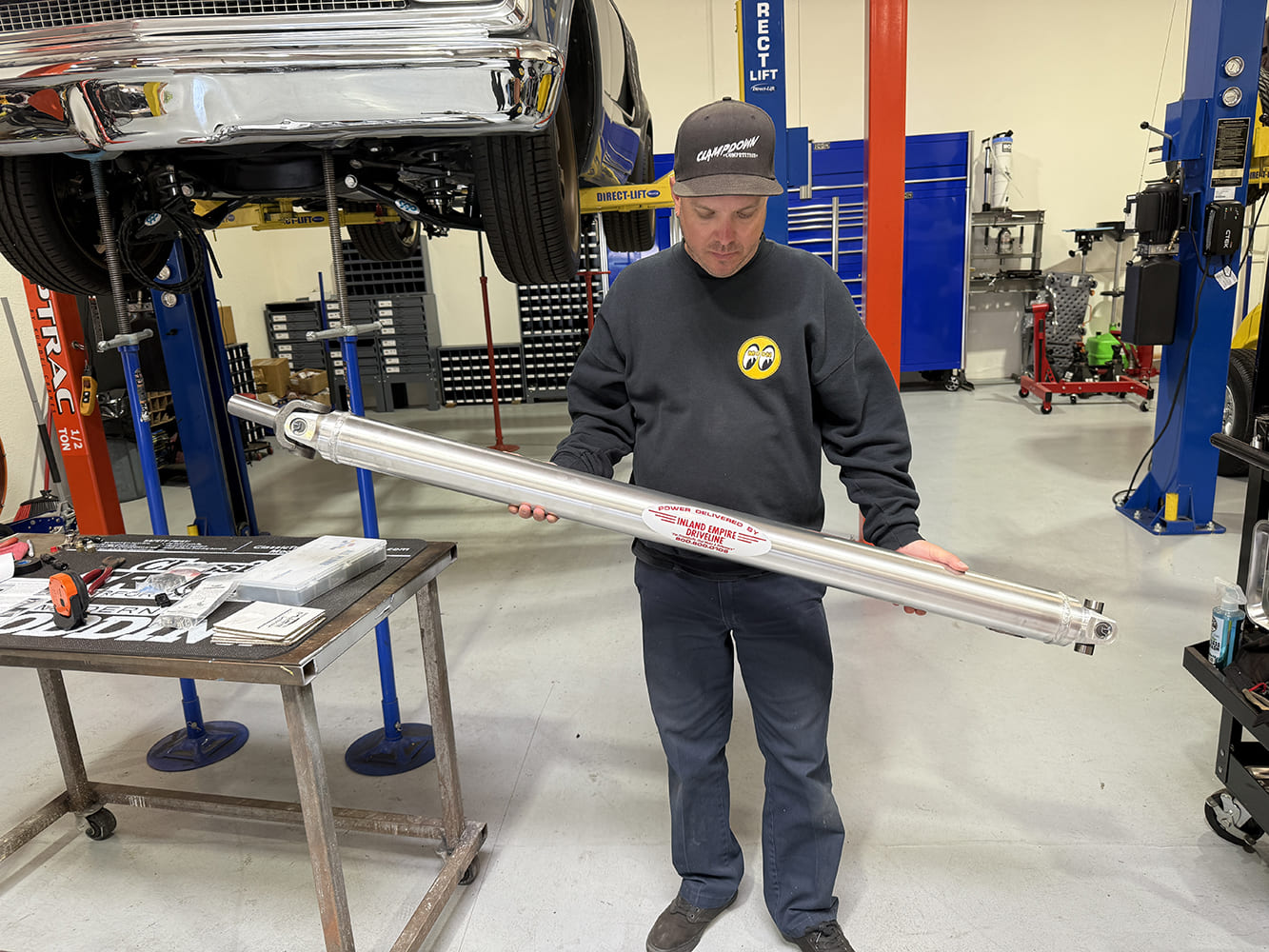
Whether you’re building a classic truck from the ground up or performing an engine/transmission swap, chances are you’re going to get to the point where you need to measure for a driveshaft. This can be a stressful time for the uninitiated as any mistake can mean the difference between getting it right the first time or buying another driveshaft after getting it wrong. The crew at Inland Empire Driveline Service (IEDLS) knows the trouble folks can have when it comes to properly measuring for a driveshaft and have put together a simple form that makes ordering a custom driveshaft a simple affair—provided one can read a tape measure.
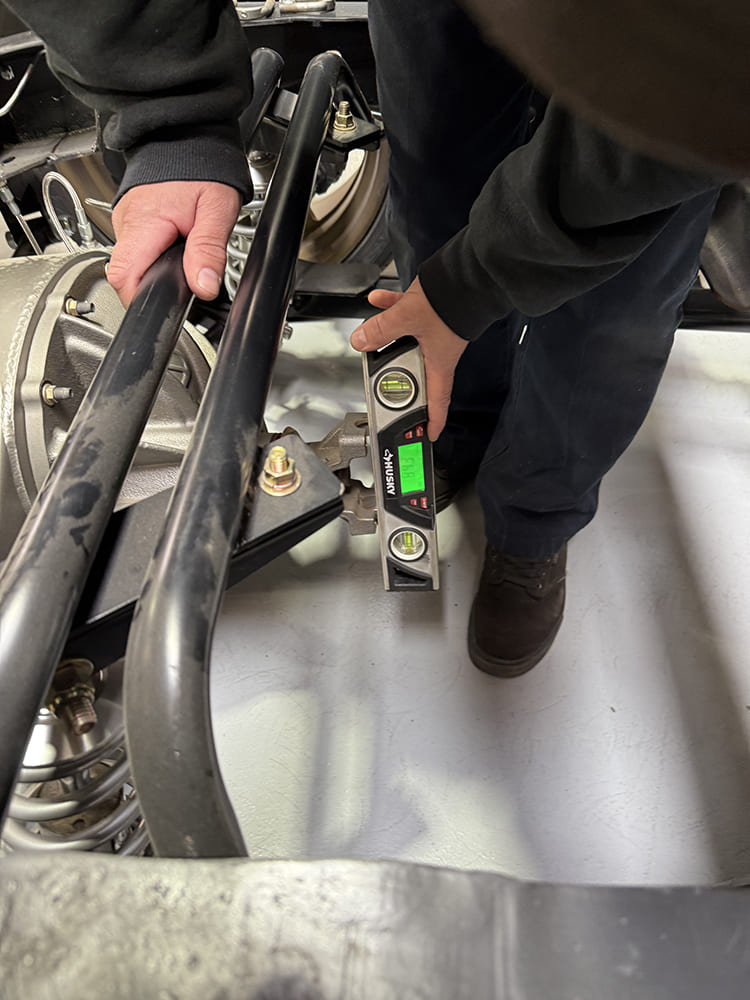
Before any measurements are made, the angle of both the output shaft of the transmission and the yoke of the rearend are checked and compared, with the truck sitting on the ground at ride height. We’re looking for a couple degrees down at the trans and an opposite reading at the yoke.
One of the most important aspects of measuring for a driveshaft is to take the measurements as described by the driveshaft shop. Different shops may use different approaches, so always be sure to check with your local driveshaft shop if you decide to go that route. For us, our go-to has been IEDLS as we’ve found their instructions to be simple and the directions easy to follow. Their measurement sheet gives specific points to be measured and after a couple minutes under the car, that sheet can be emailed to IEDLS and a week or so later a custom-made driveshaft shows up at the shop. It doesn’t get any easier than that. And if there’s any question regarding yoke size or material recommendations, the knowledgeable staff at IEDLS are eager to please.
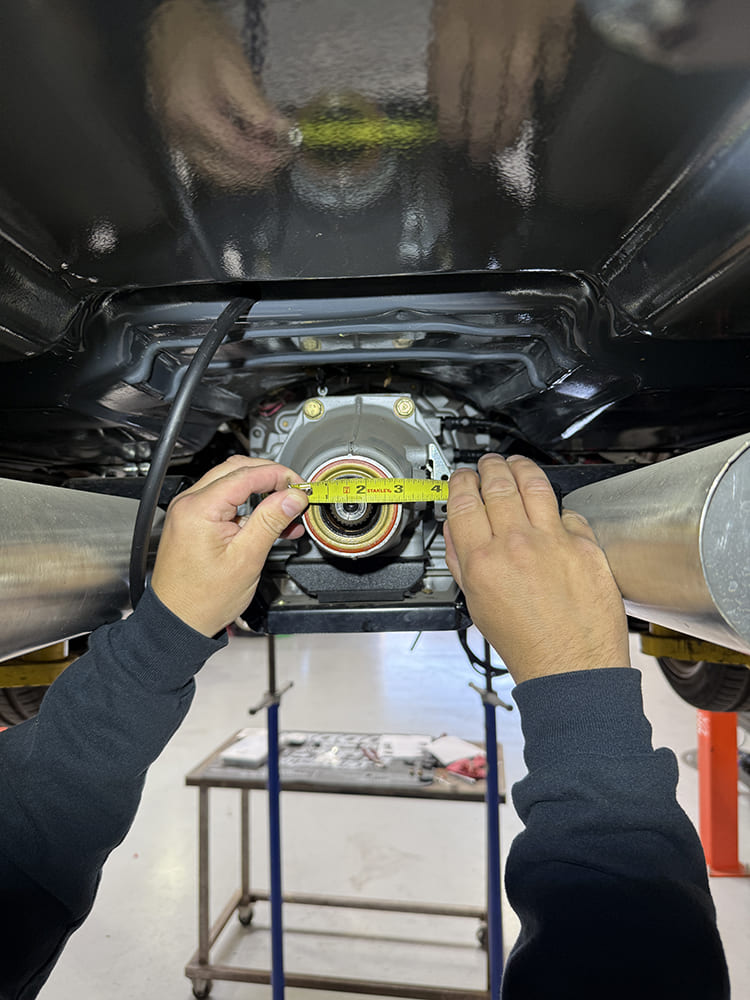
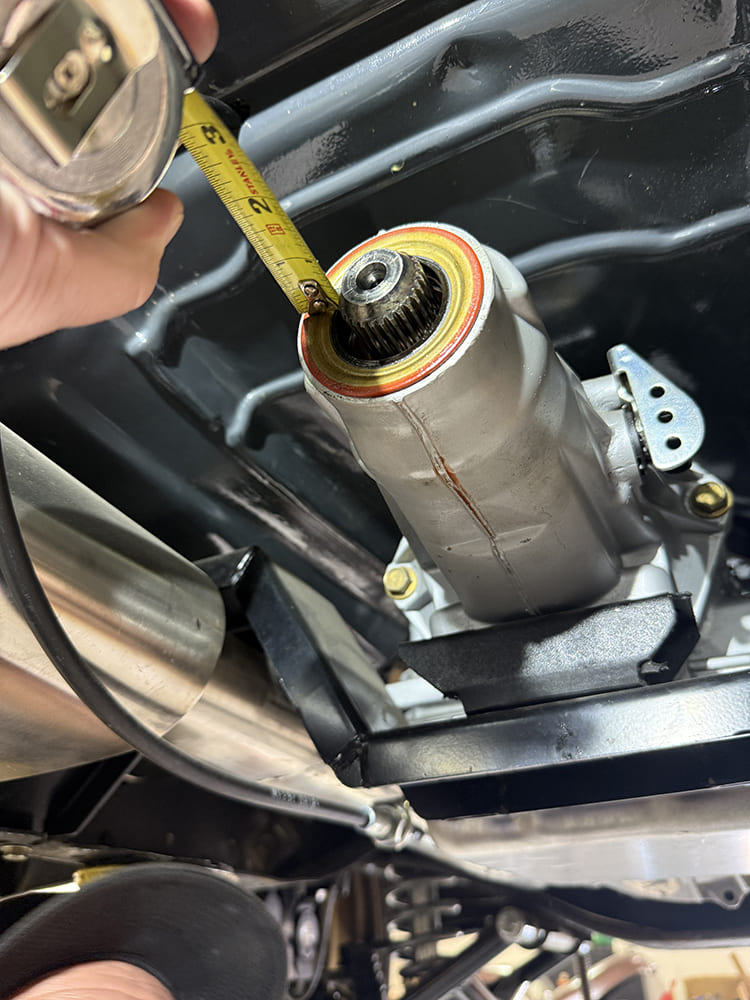
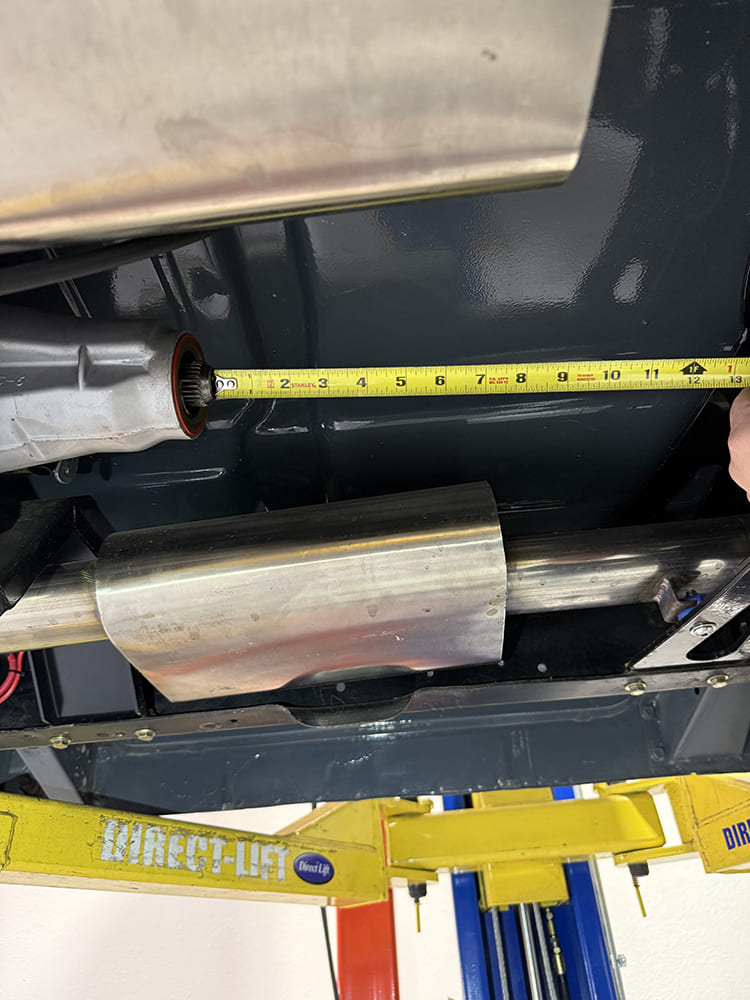
With any necessary alignment changes made, we can now measure for driveshaft length. First, we’re going to measure the diameter of the transmission output shaft, tooth count, and length of stick out from the end of the tailshaft housing.
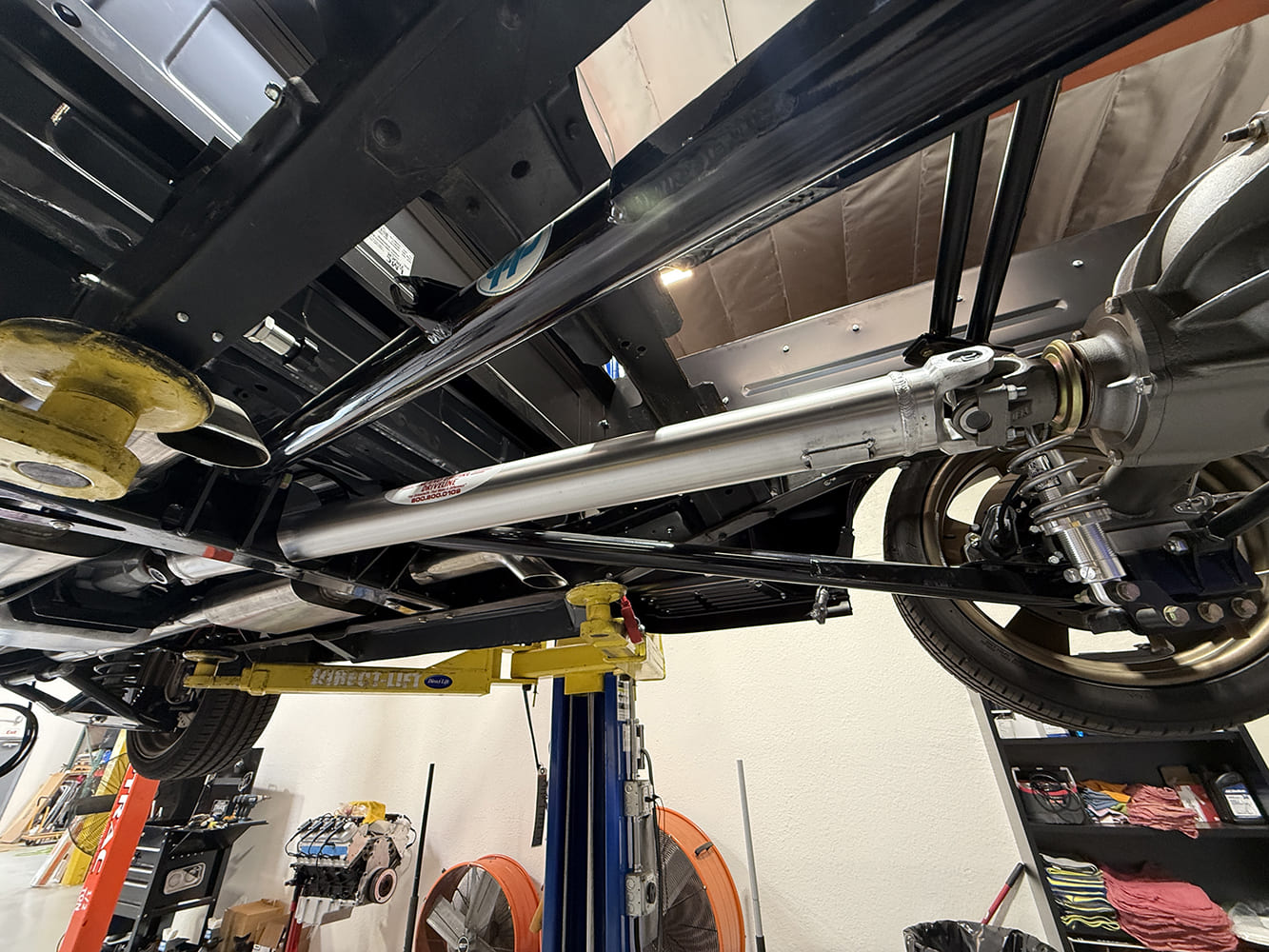
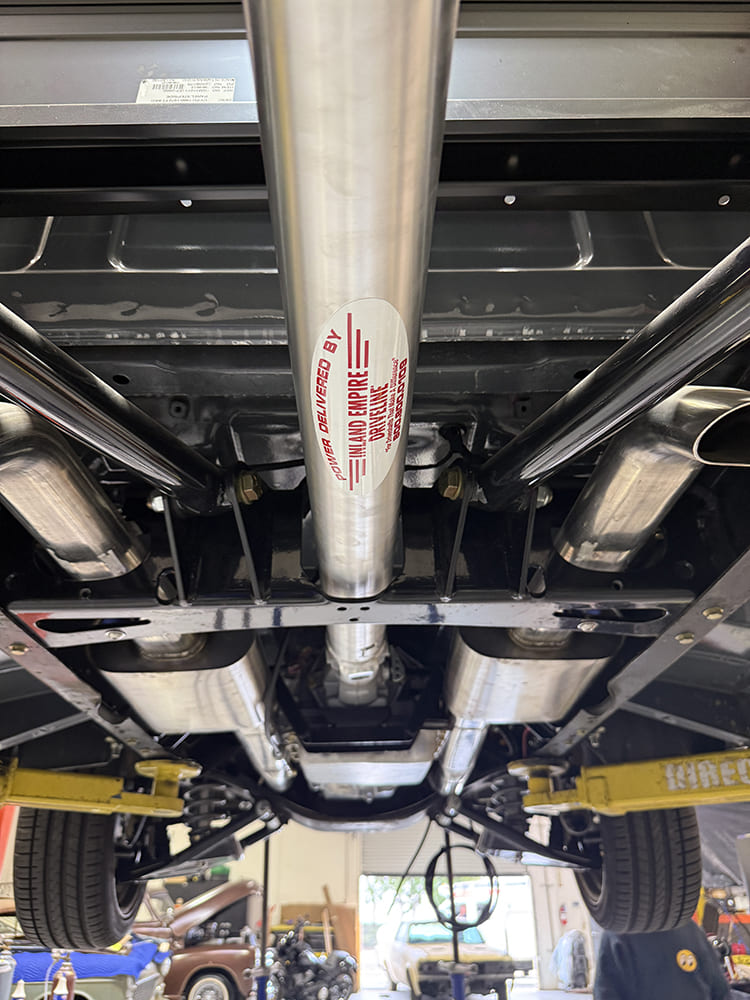
While we’re slowly working toward making Editor Fortier’s C10 road worthy, the big-block is in place, backed by a 4L70E, and the Strange Engineering 9-inch Ford rearend is hung and ready to rock as well. Looking to tackle another item off the to-do list, we decided to measure for a driveshaft and have the guys over at IEDLS spin us up one of their aluminum masterpieces. It turned out to be one of the easiest things we’ve knocked off the check list as of late, hopefully setting a precedent for things to come!
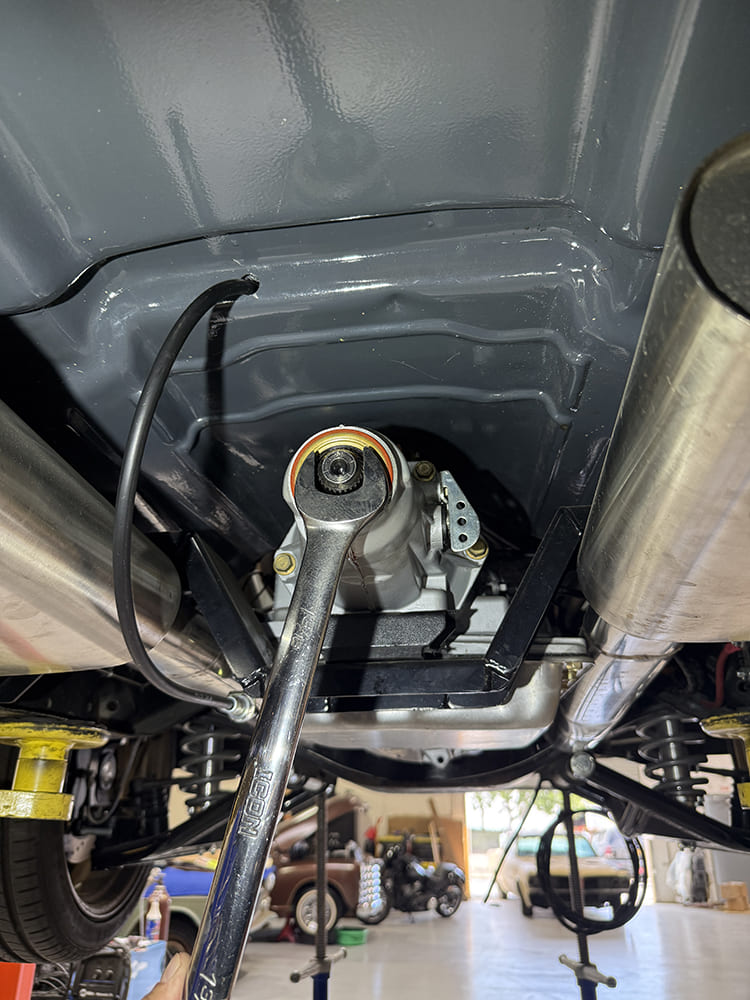
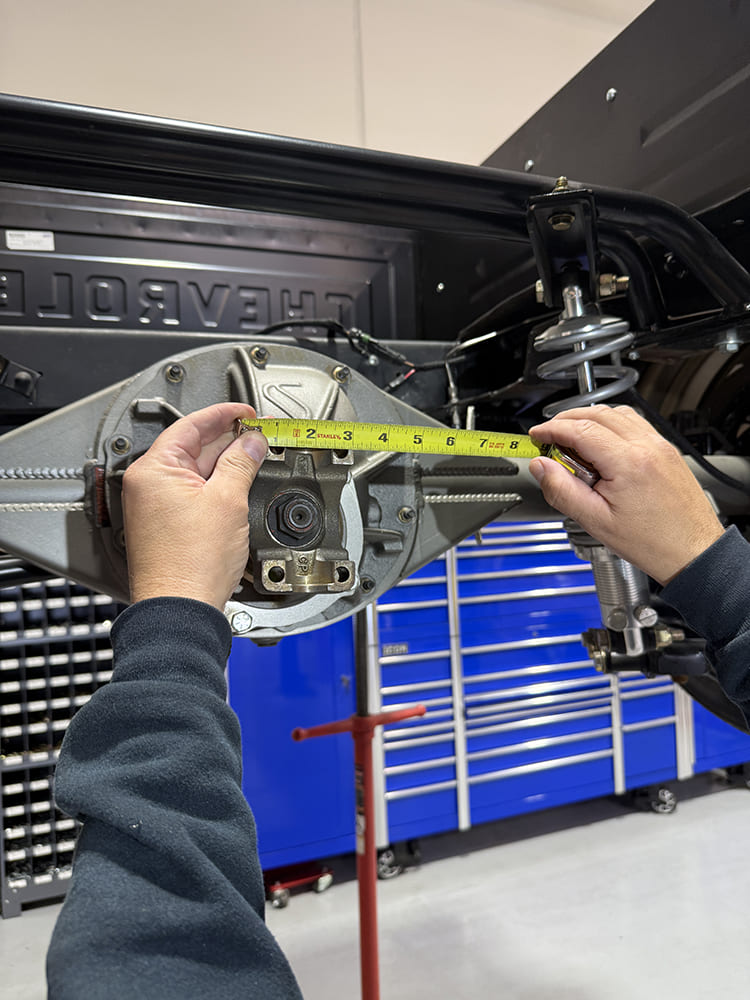
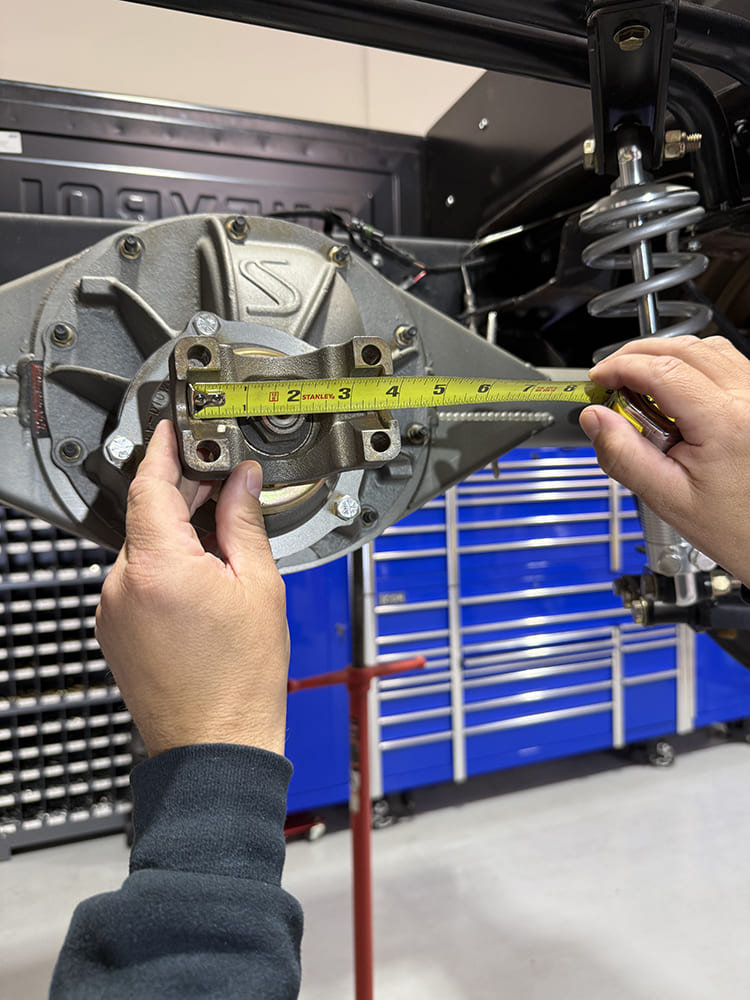
Measuring the diameter of a round shaft with a tape measure can be awkward at times. A quick test to determine if your measurement is accurate is to grab an open-ended wrench of the corresponding size to use as a poor man’s caliper. It won’t split a few thou, but it will tell you whether that shaft is 1-3/4 or 1-13/16 inches.Next, our attention is moved to the yoke of the rearend. Here, we need to determine the cap diameter and width between the two tabs of the yoke to determine what U-joint needs to be used when IEDLS fabricates our driveshaft. Our trusty tape tells us that we have a cap size of 1-3/16 and a width of 3-5/8 inches, which corresponds to the larger 1350 U-joint. This is to be expected as our C10 has been upgraded with a Strange 9-inch Ford rearend.
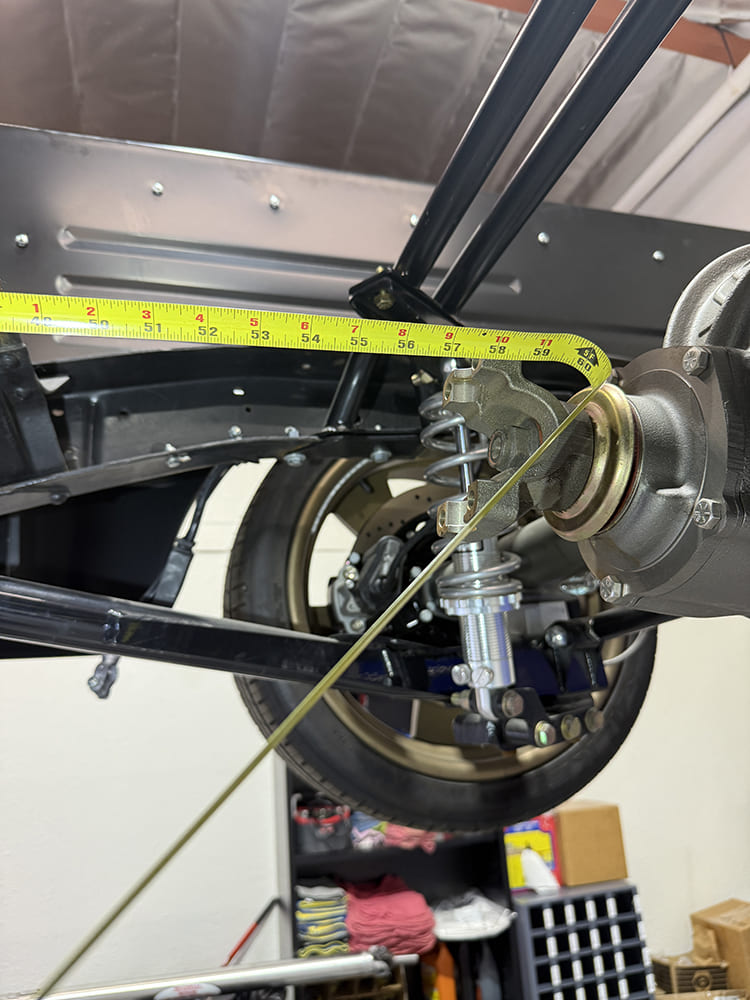
With the little but important details out of the way, it’s time to measure for length of our driveshaft. This step is very important to be done precisely as the driveshaft shop requests. The distance needs to be measured from two specific points and if this is taken incorrectly, a bad day will be had and the driveshaft shop will be upset to scrap the driveshaft, but happy to charge you for another one. IEDLS requires the length to be measured from the end of the transmission output shaft to the centerline of the U-joint on the rearend yoke.
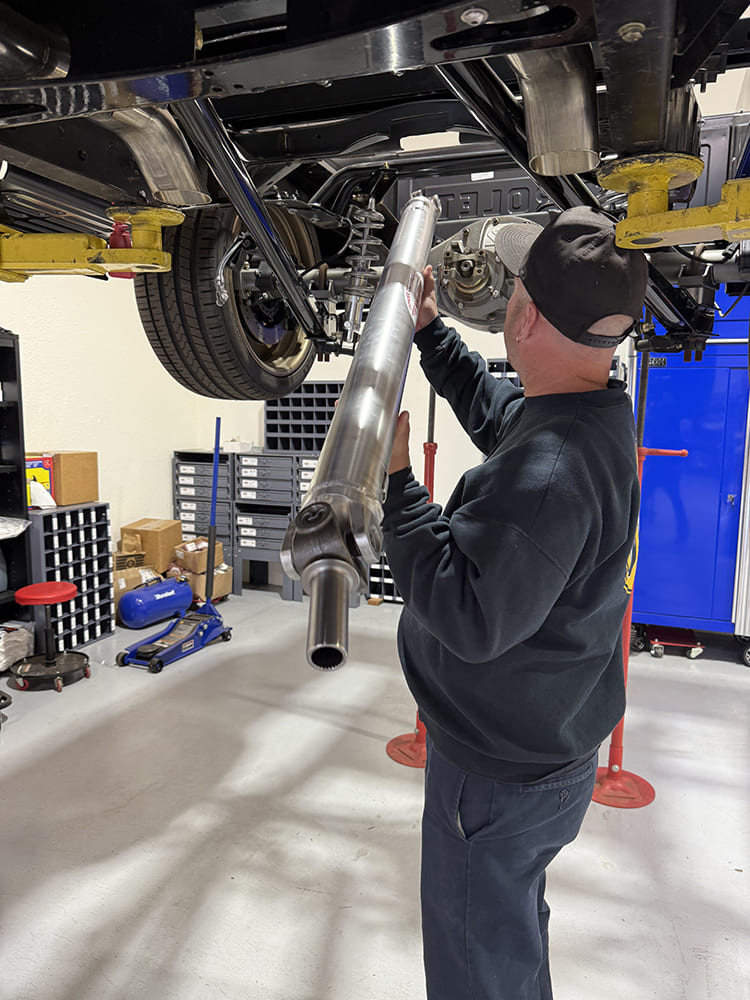
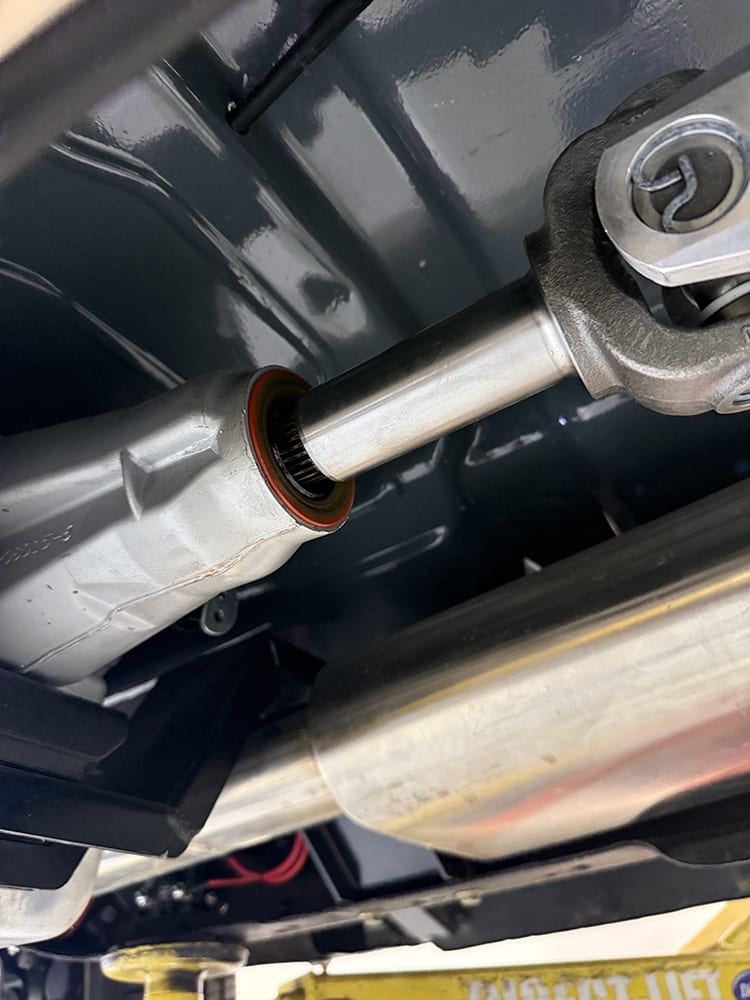
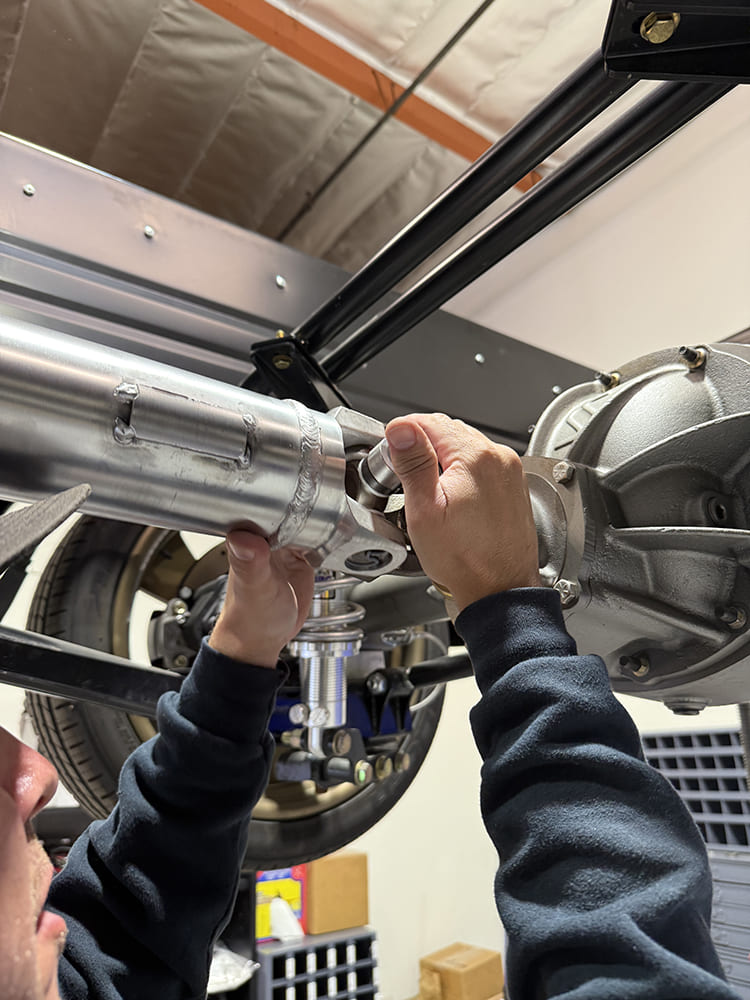
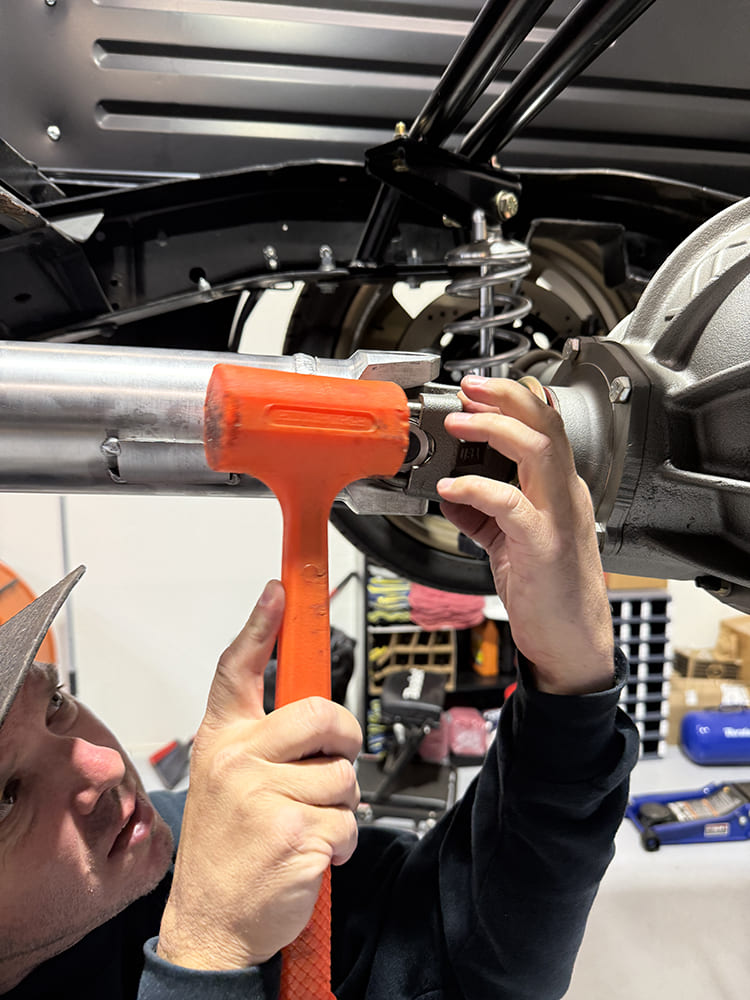
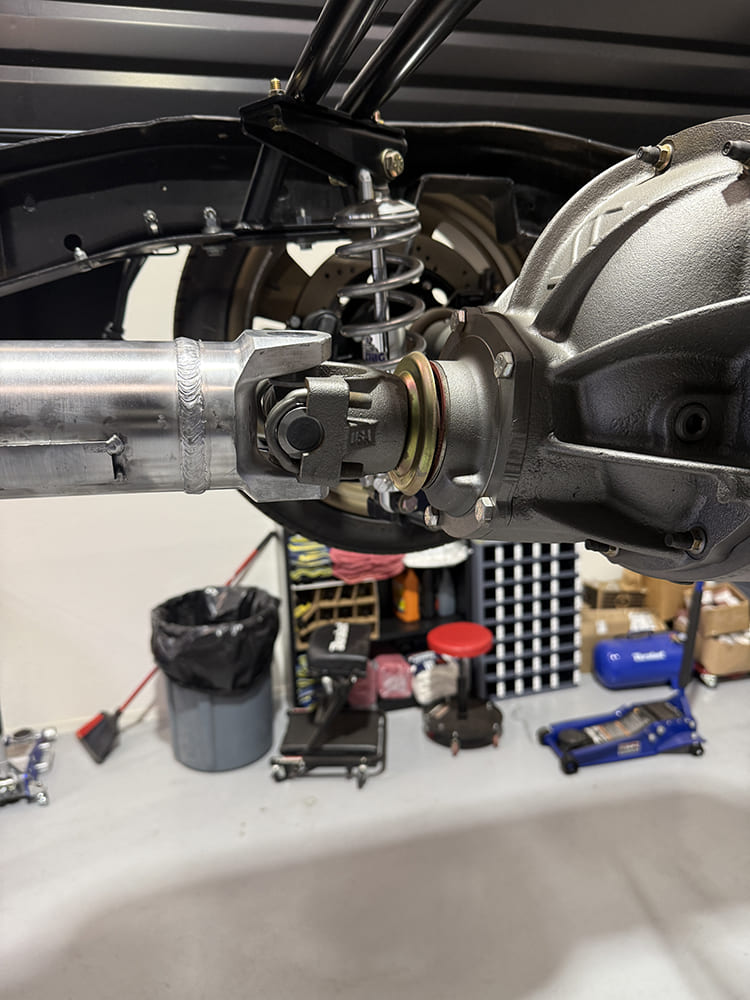
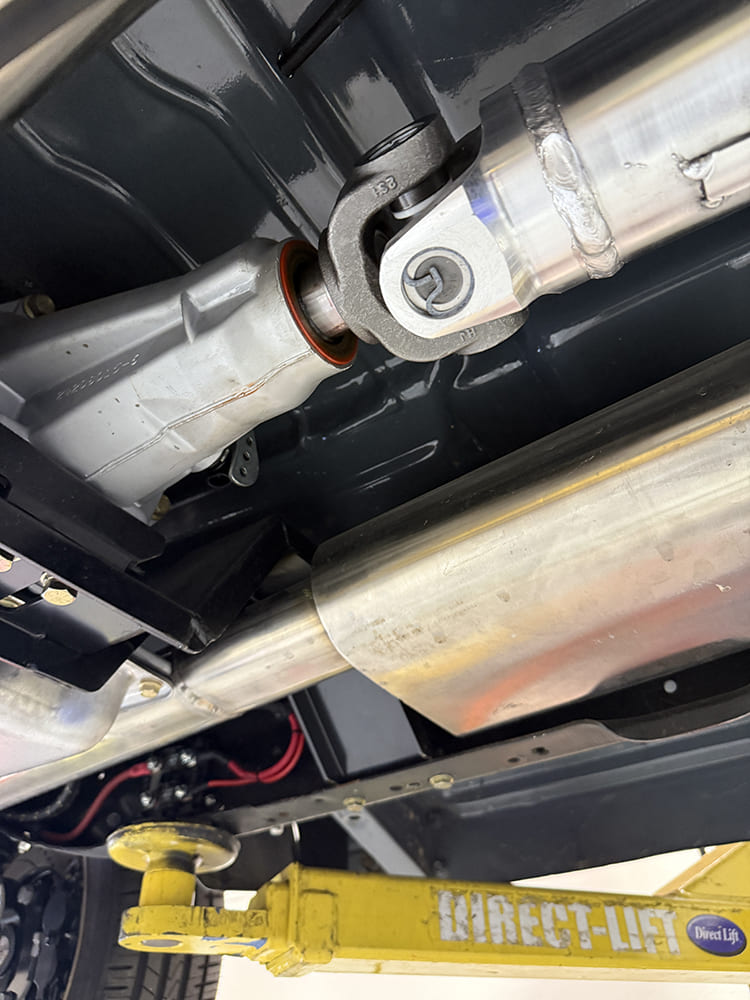
IEDLS can fabricate a custom driveshaft from several different materials, from steel to aluminum and even carbon fiber. Manufactured from custom-drawn 6061-T6 DOM tubing with similarly forged weld yokes, our aluminum driveshaft is light in weight but heavy in strength, reliability, and performance. IEDLS’s products have passed Spicer’s grueling dynamic reverse torsion fatigue testing, qualifying them as one of a very few Spicer-authorized aluminum driveshaft builders in the world.In addition to providing the diameter and spline count of the transmission output shaft, we also noted the make and model of said trans for further confirmation of spec. Installation onto the output shaft is firm and reassuring; a perfect fit.Out back, the 1350 U-joint is slid into the rear yoke.The U-joint needs to be fully seated into the rear yoke before the U-bolts can be tightened. Here, a mallet is used to lightly tap each cap until it’s securely in place.The U-bolts need to be tight but not overbearing! A torque rating of 20-24 ft-lb turns out to be spot-on.When installed, the slip yoke needs enough clearance to not bottom out on the transmission as the suspension travels. This stickout is usually between ½ to ¾ inch and allows the slip yoke to move fore and aft on the output shaft without crashing.With the driveshaft installed, the truck is raised in the air to allow the rear suspension to achieve full droop and to check for any interference.
We use cookies to ensure that we give you the best experience on our website. If you continue to use this site we will assume that you are happy with it.