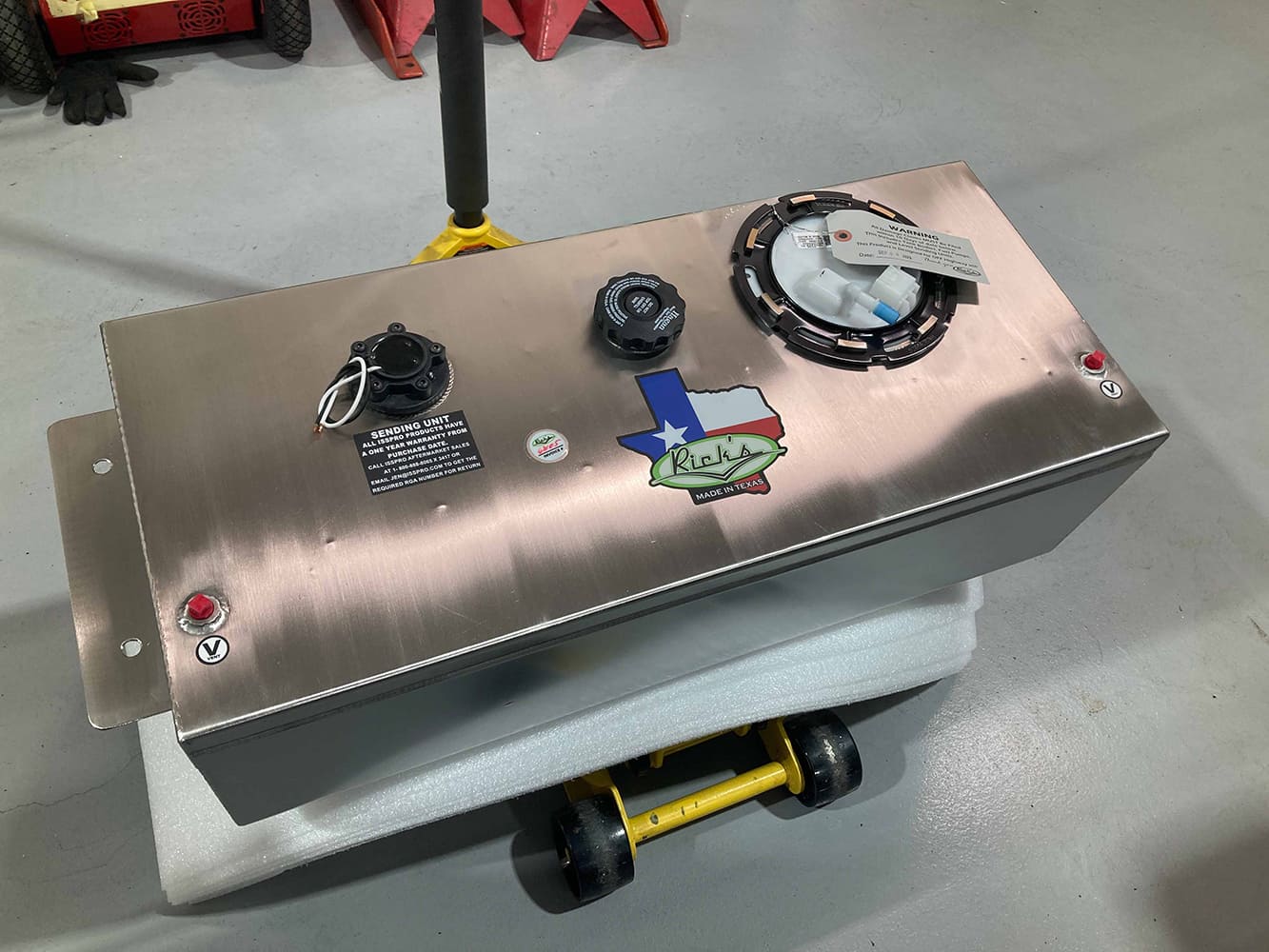
When it comes to upgrading your classic truck with an LS swap, a compatible LS fuel system must be carefully planned and executed. It’s become pretty standard fare to relocate the fuel tank from inside the cab to somewhere out near the back of the truck, under the bed. Most installations are pretty straightforward, as the aftermarket has done a pretty good job providing a plug-and-play solution for most OE setups, provided you’re not against giving up the spare tire mount, and so on. But some situations, such as our 1964 Chevy C10, require a more “outside the box” approach.
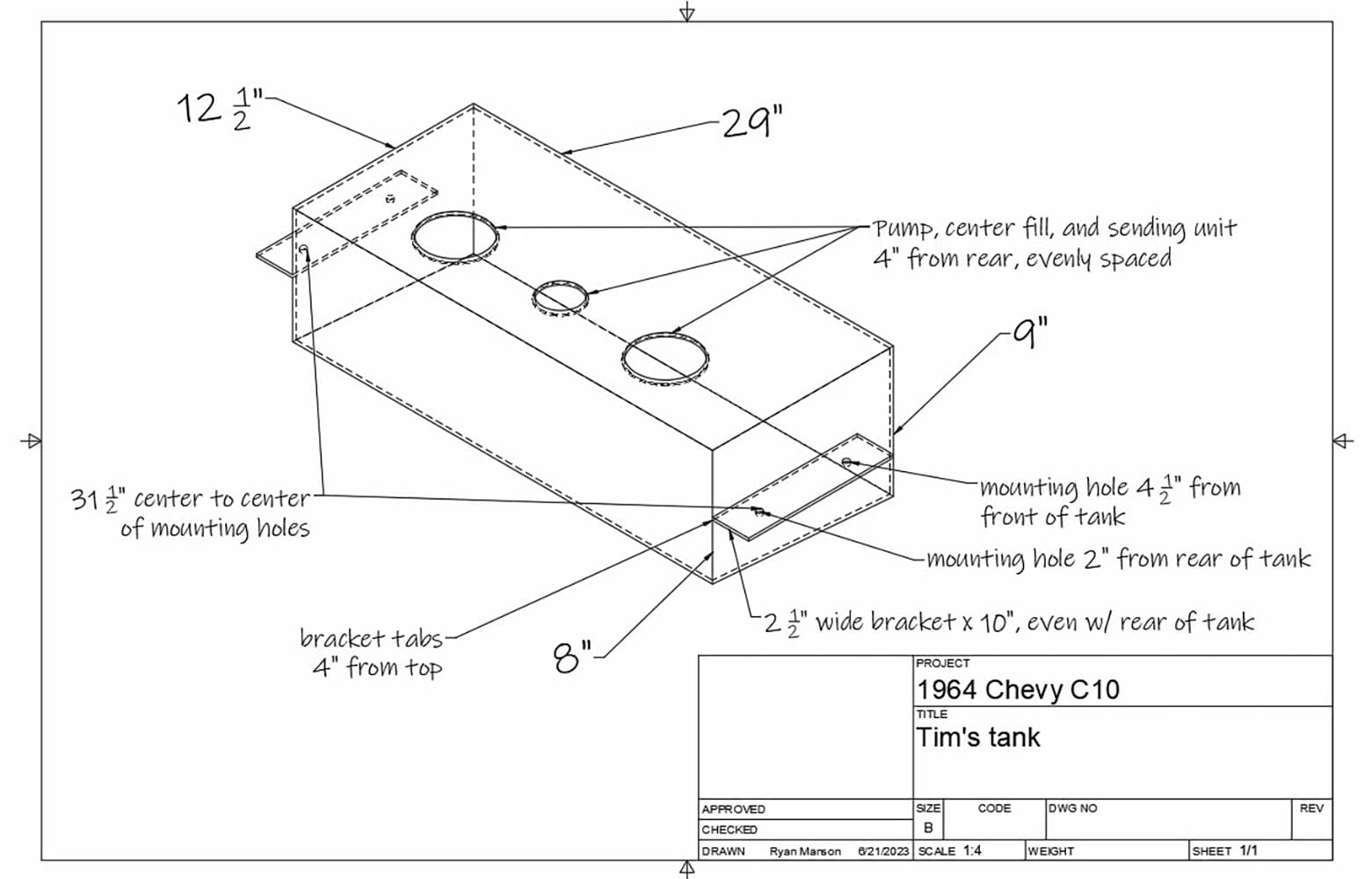
Here’s the blueprint we drew up and sent to the guys at Rick’s Tanks. We used a CAD program to spit out a detailed drawing but the same could be done freehand with a little patience.
While it is possible to purchase what is essentially a bolt-in option for these trucks that relocate the tank out back, our ’64 has previously received a rear suspension upgrade in the form of a KP Components rear frame clip. The resulting difference in rear crossmember locations gave us plenty of room to put a tank, but it would more than likely have to be a one-off affair. With the help of the guys over at Rick’s Tanks in El Paso, Texas, however, it’s a simple manner of taking a few measurements and sending them off to the masters of stainless.
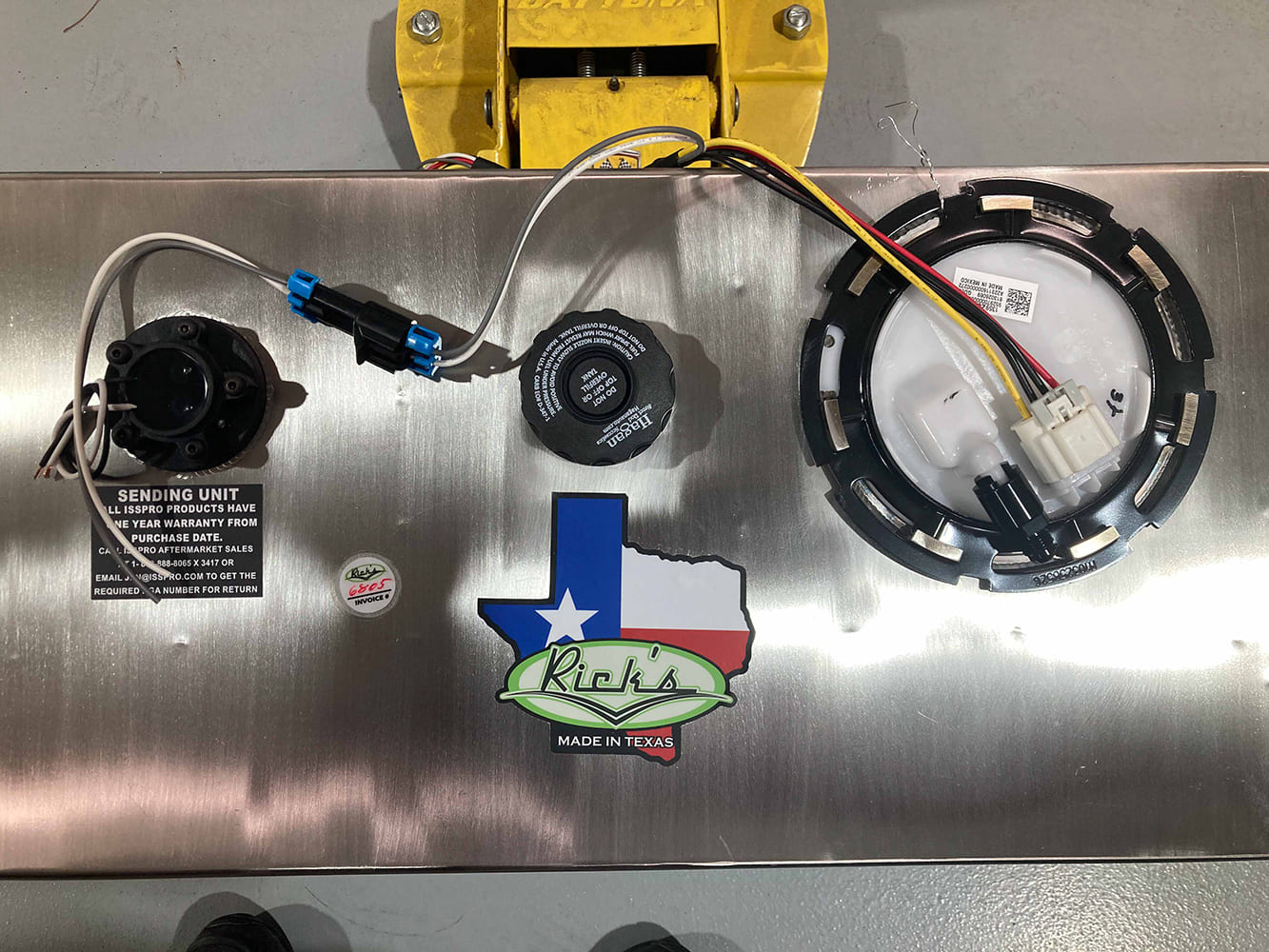
The fuel pump and sending unit came complete with the required wiring pigtails, making integration to the rest of the truck’s wiring nice and easy.
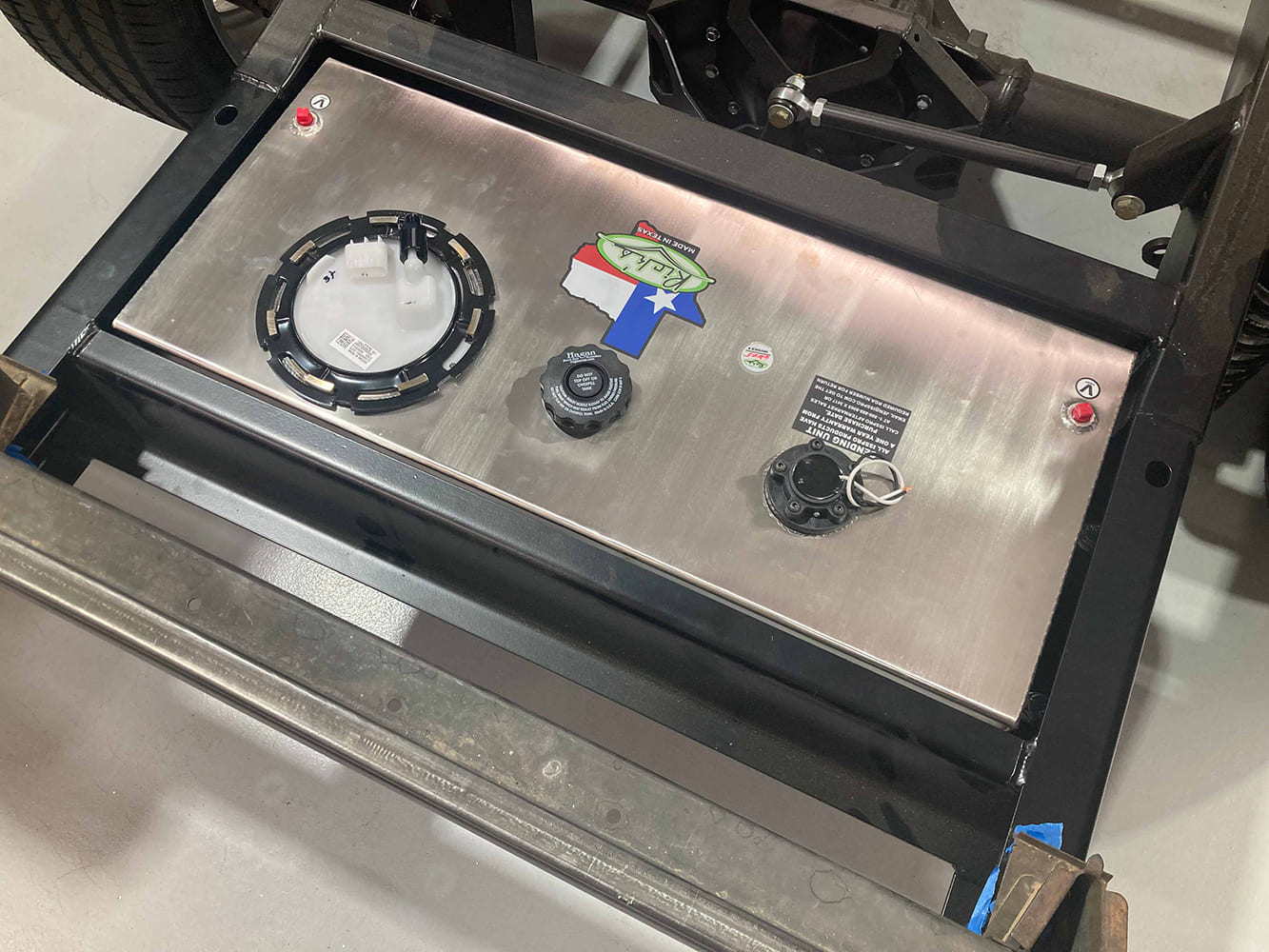
But in addition to moving the tank to an arguably safer and more convenient location, fabricating a custom tank from scratch gives us, the builder, full control of where we would prefer the filler neck, fuel pump, sending unit, vent, and so on. It also allows us to design a tank that mounts in the manner of our preference (from below the frame in this case) for ease of accessibility. A custom tank from Rick’s isn’t simply a box with a few components, but a fully baffled and thought-out component custom built for ultimate performance and reliability. Since we’ll be running a fuel-injected LS engine, it also allowed us the option to spec out the fuel pump, in our case giving us the ability to use an OE 2022 Chevy Camaro electric fuel pump, mounted in the tank with built-in regulator and internal return. This results in a pump that operates efficiently and quietly, increasing the lifespan as well as driver/passenger comfort, while the internal regulator with return negates the need to run an additional line from the return side of the fuel log and back to the tank. It’s the best way to build an LS fuel system.
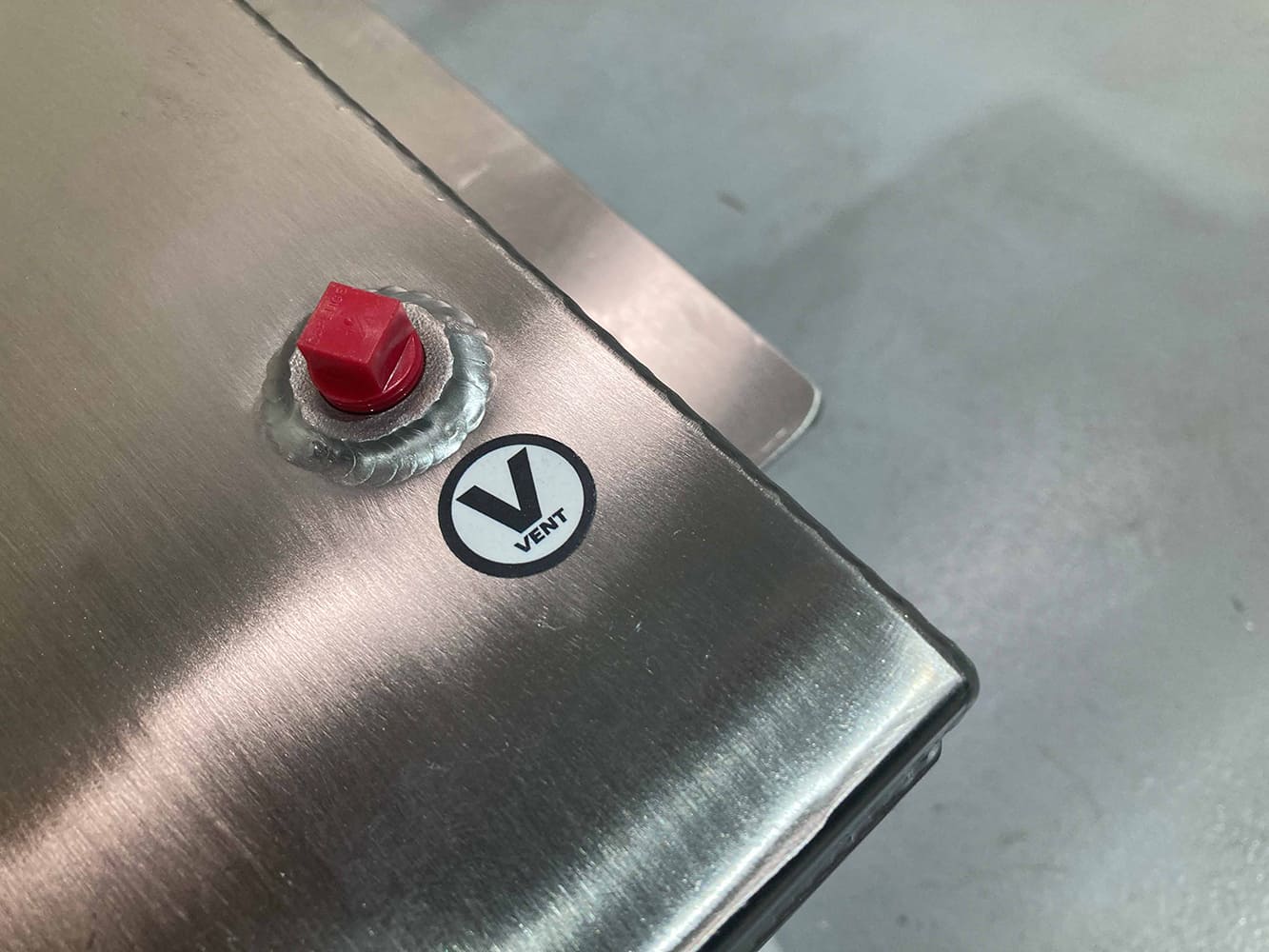
Rick’s Tanks added a pair of bungs for venting purposes, one at either front corner. We’ll use a barb fitting, hose, and a rollover valve mounted above the top of the tank at one of the two locations.
So, if you’re putting together a hit list for the LS fuel system on your latest build, take a close look at the components we’ll be using and the companies involved and see if they have something that might fit your needs. Whether it’s an OE rebuild or a full custom build, there’s never a reason to sacrifice safety or performance for inferior parts! CTP
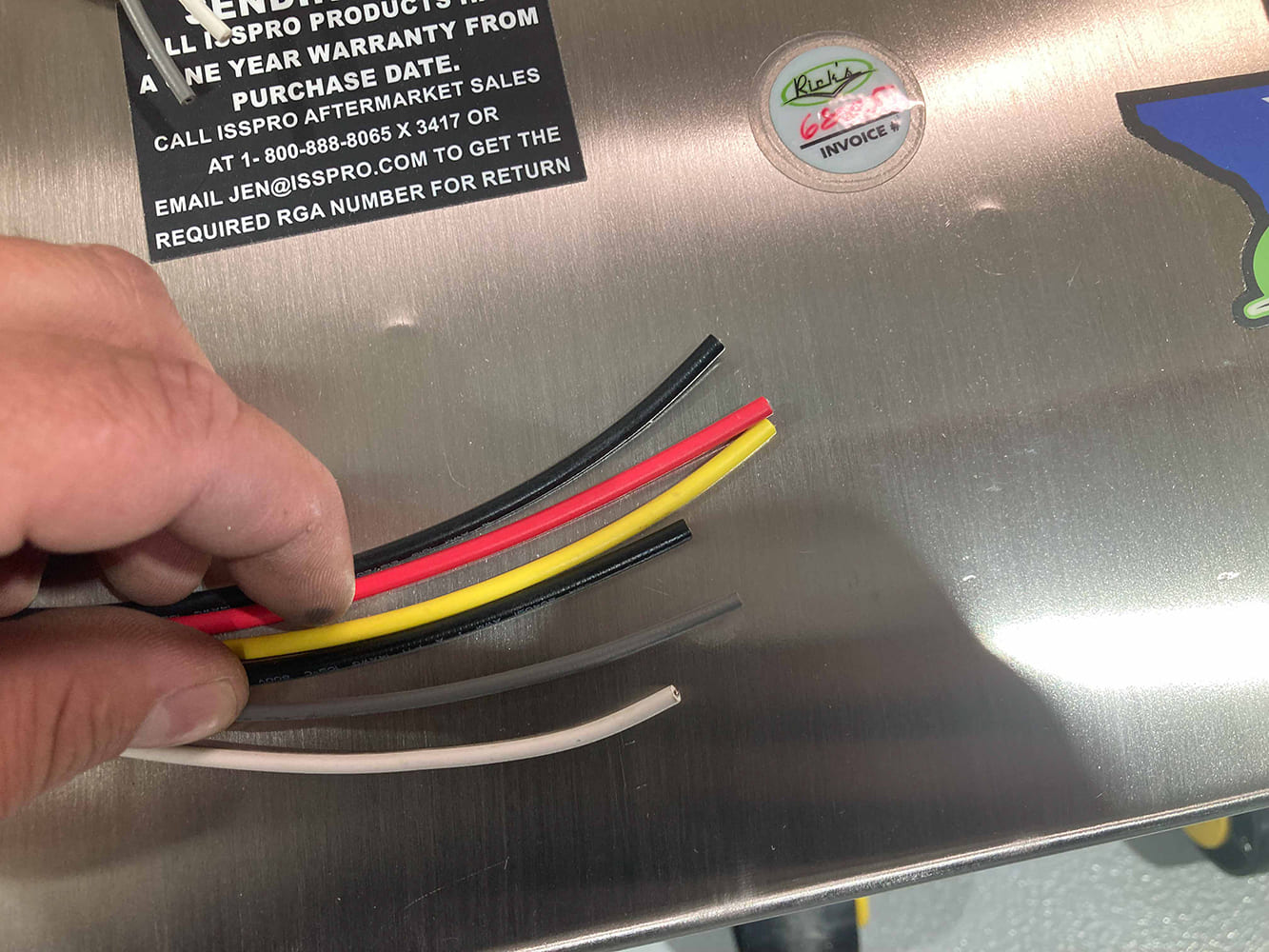
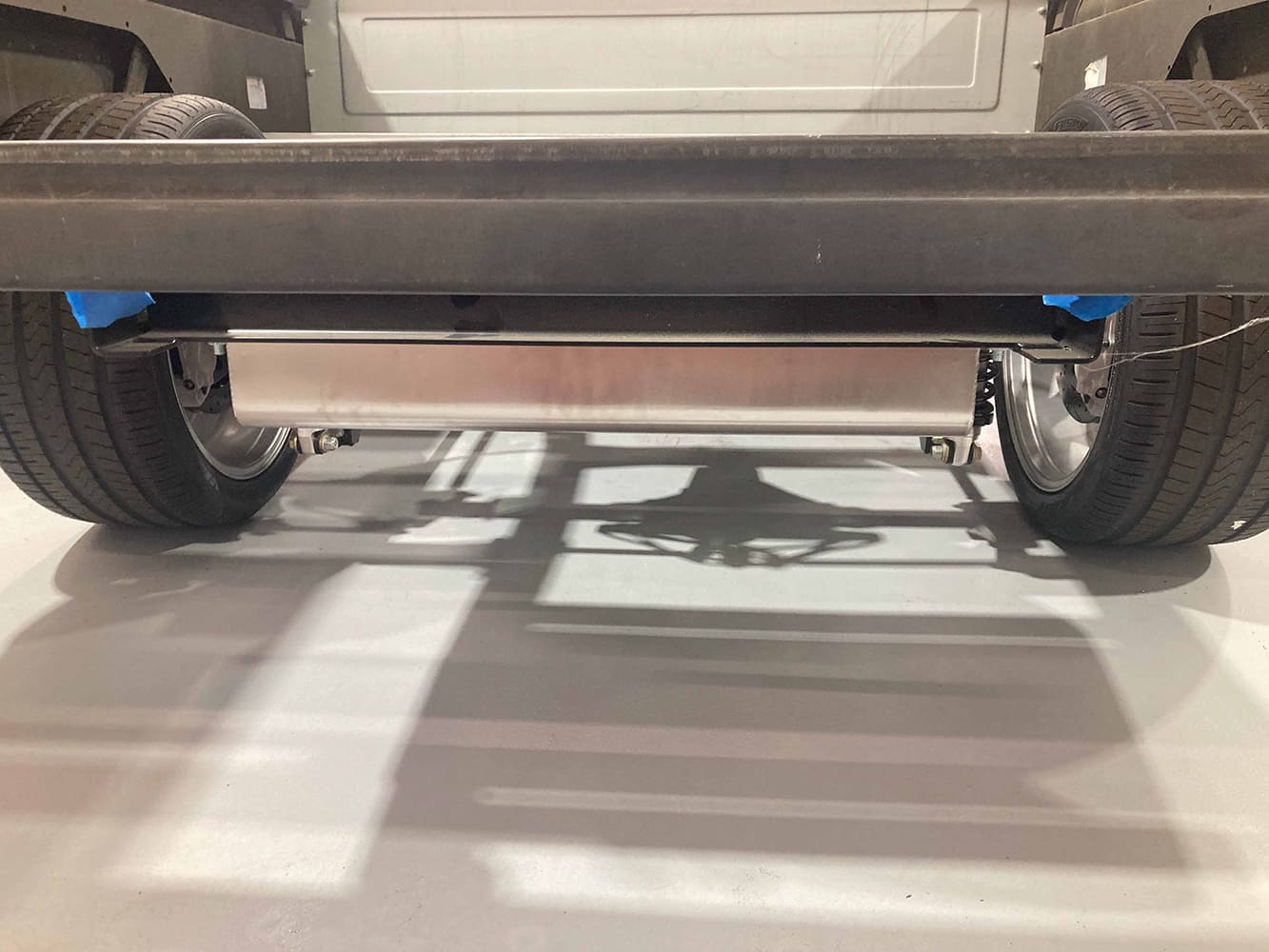
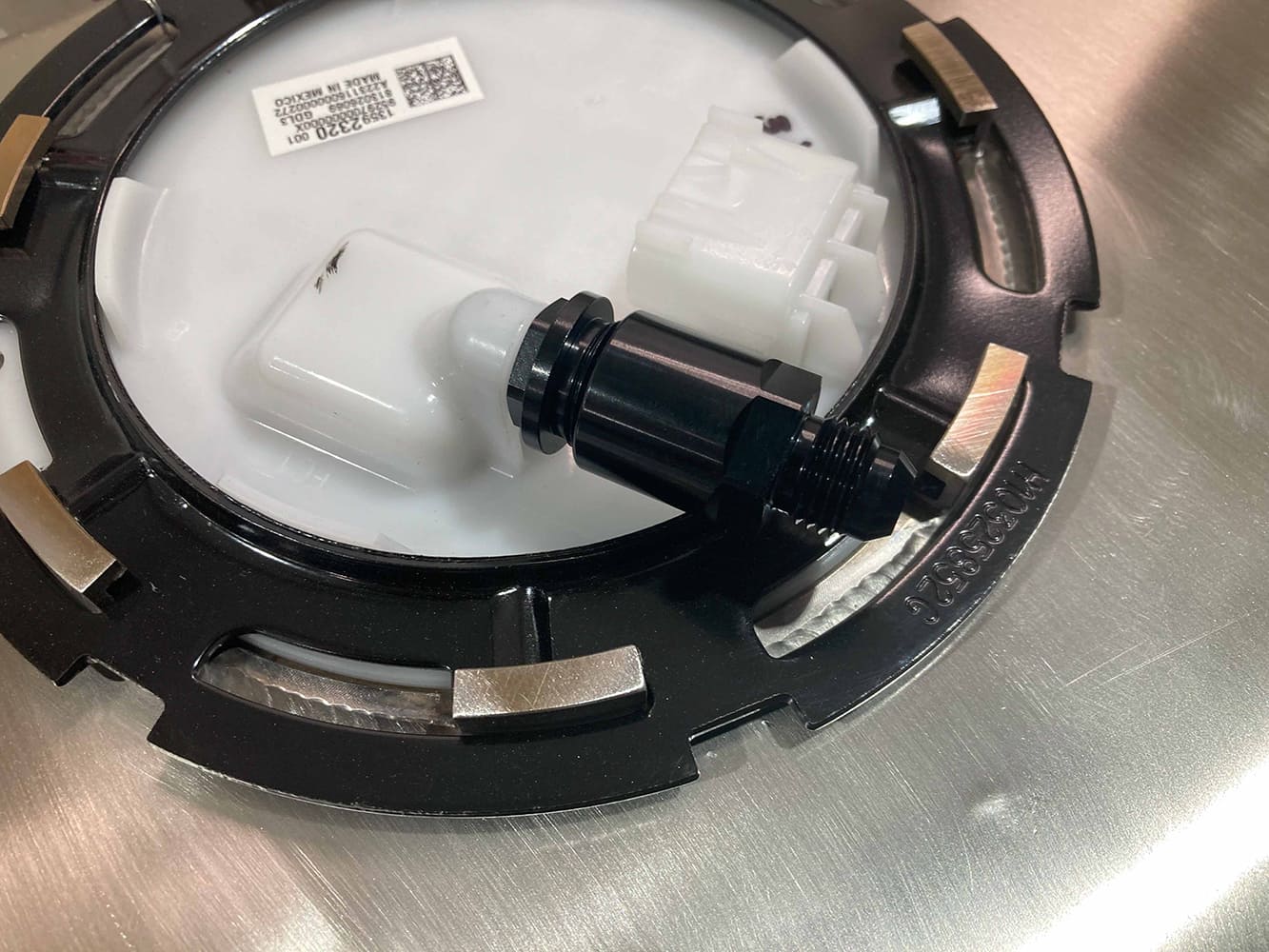
Wiring the sending unit and fuel pump is fairly straight forward. Black and gray wires go to ground while the white wire provides signal to the fuel level gauge. The yellow wire is used only in the stock configuration of the GM fuel pump, so it will not be used in our application, with the red providing 12V switched power to the pump, which will be provided by the EFI’s ECU.Mounted in place between the crossmembers of the KP Components rear frame clip, the extra time we took to draw up our blueprint and the attention to detail that Rick’s Tanks applies to every build paid off in spades; the tank fit perfectly with zero modifications necessary.Viewed from the rear, our tank has plenty of ground clearance and will more than likely disappear behind the stock bumper.The plumbing portion of our fuel system begins at the Rick’s Tanks fuel pump assembly (PN 25550). A 2022 Camaro SS pump equipped with regulator upgrade, corner pickups, harness, and push-lock fitting. This returnless design is capable of supporting up to 550 hp. A GM-style quick-disconnect to AN-6 fitting (PN 28000) will be mated to a section of similarly sized push-on hose.
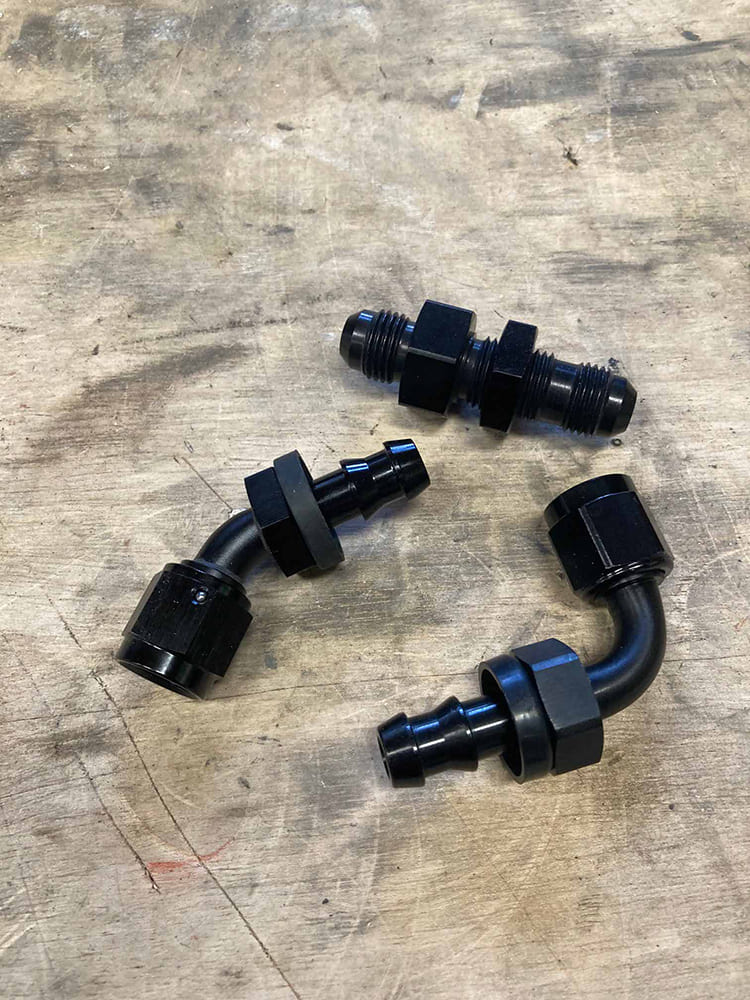
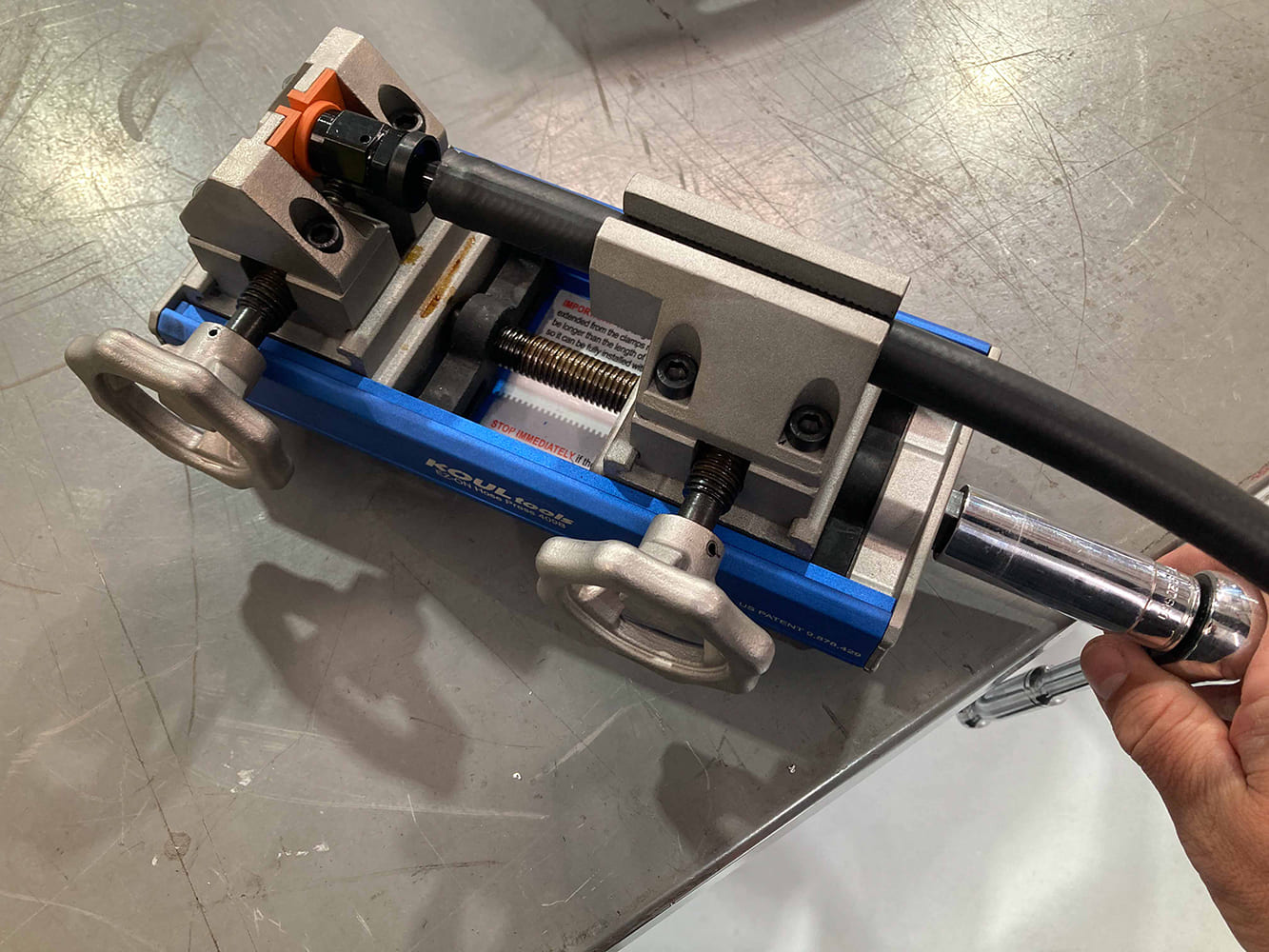
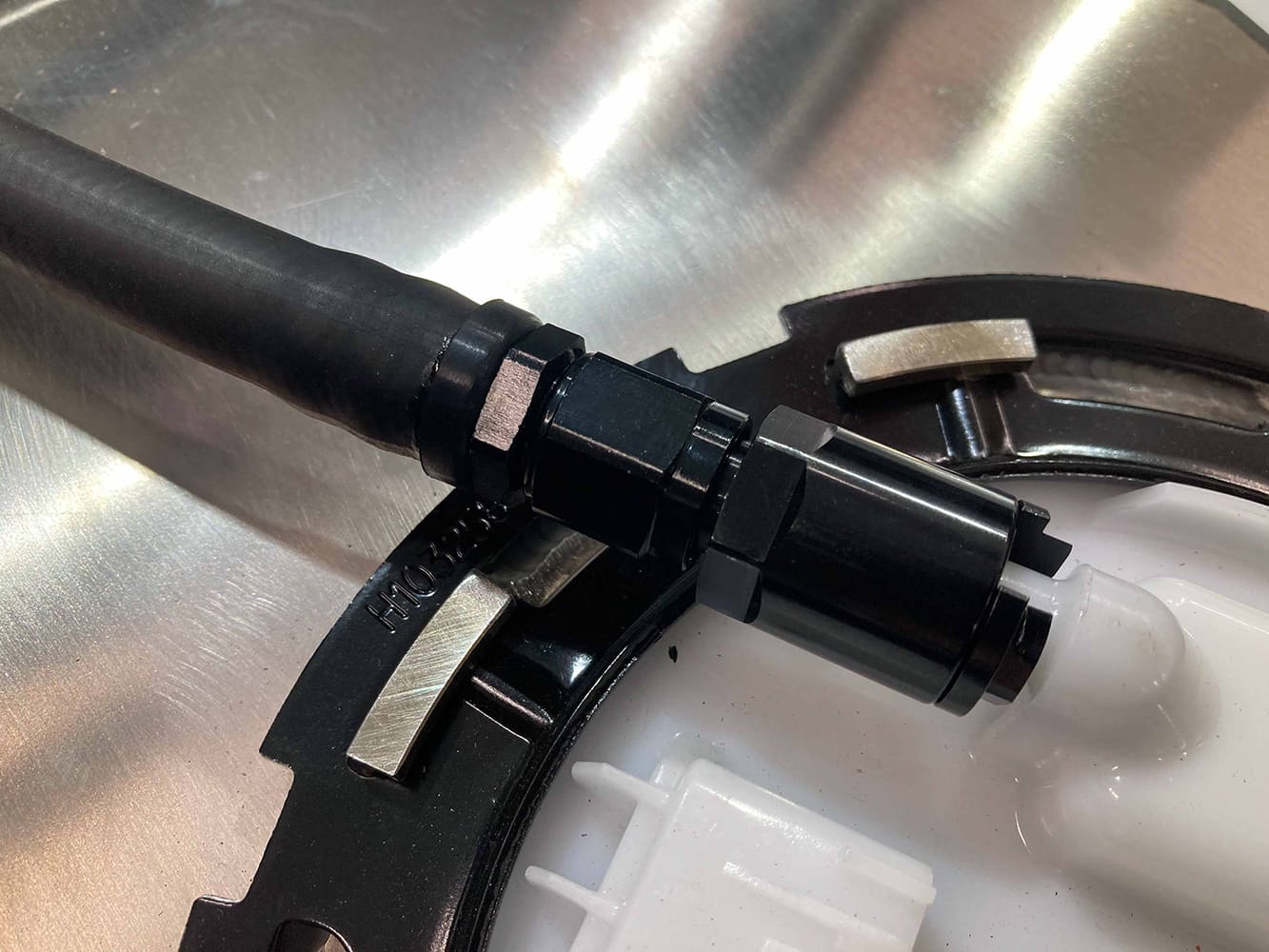
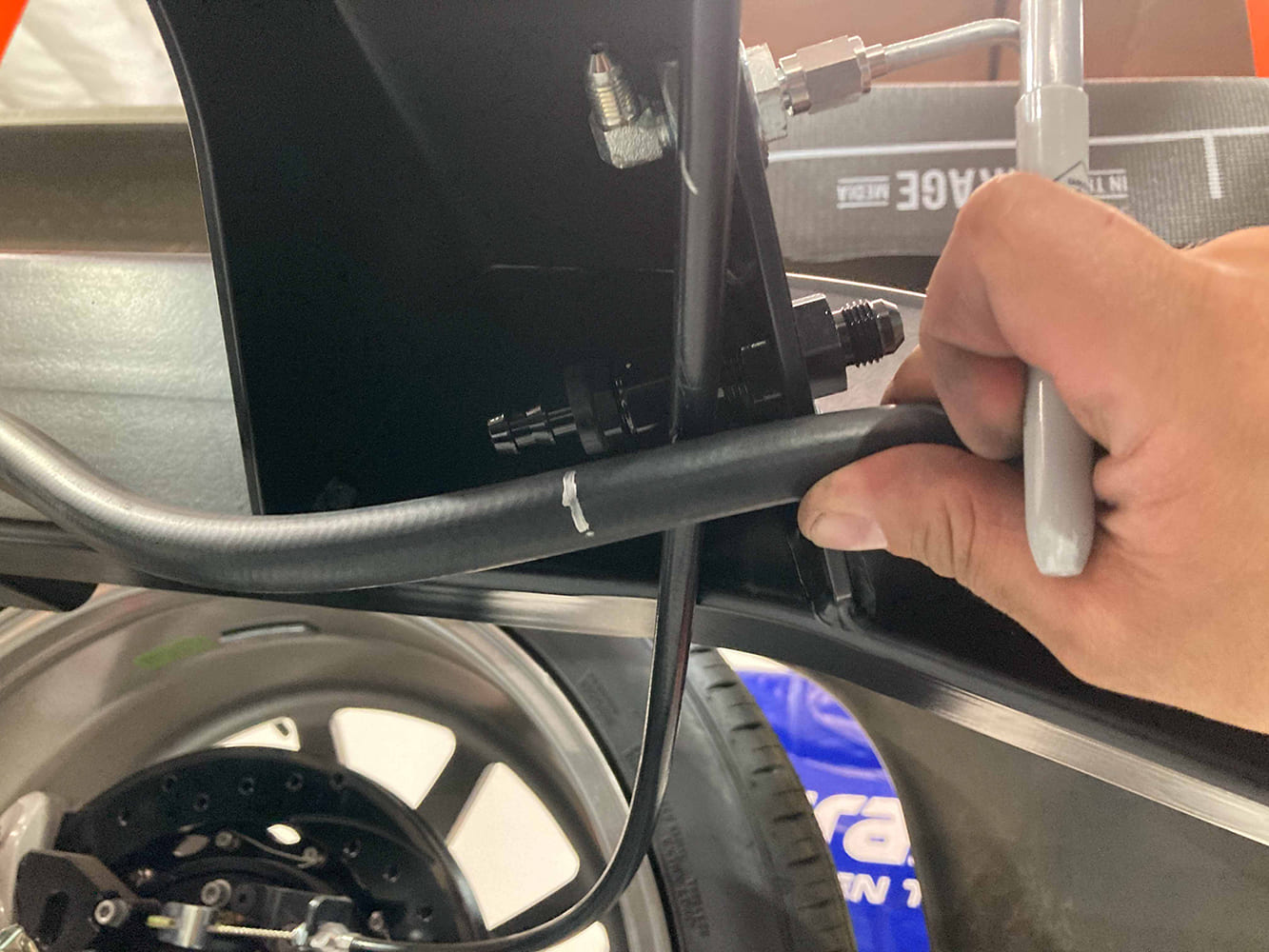
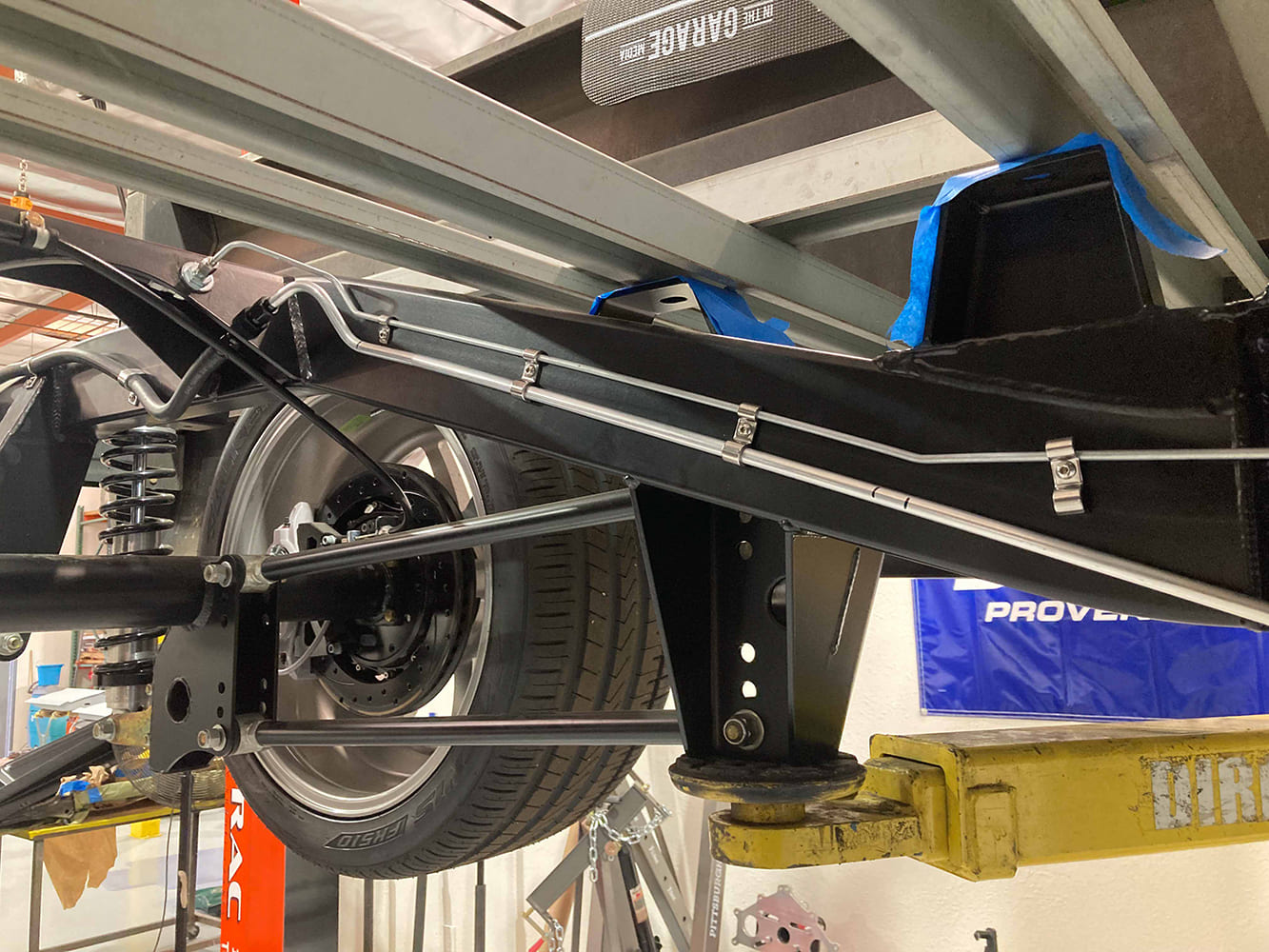
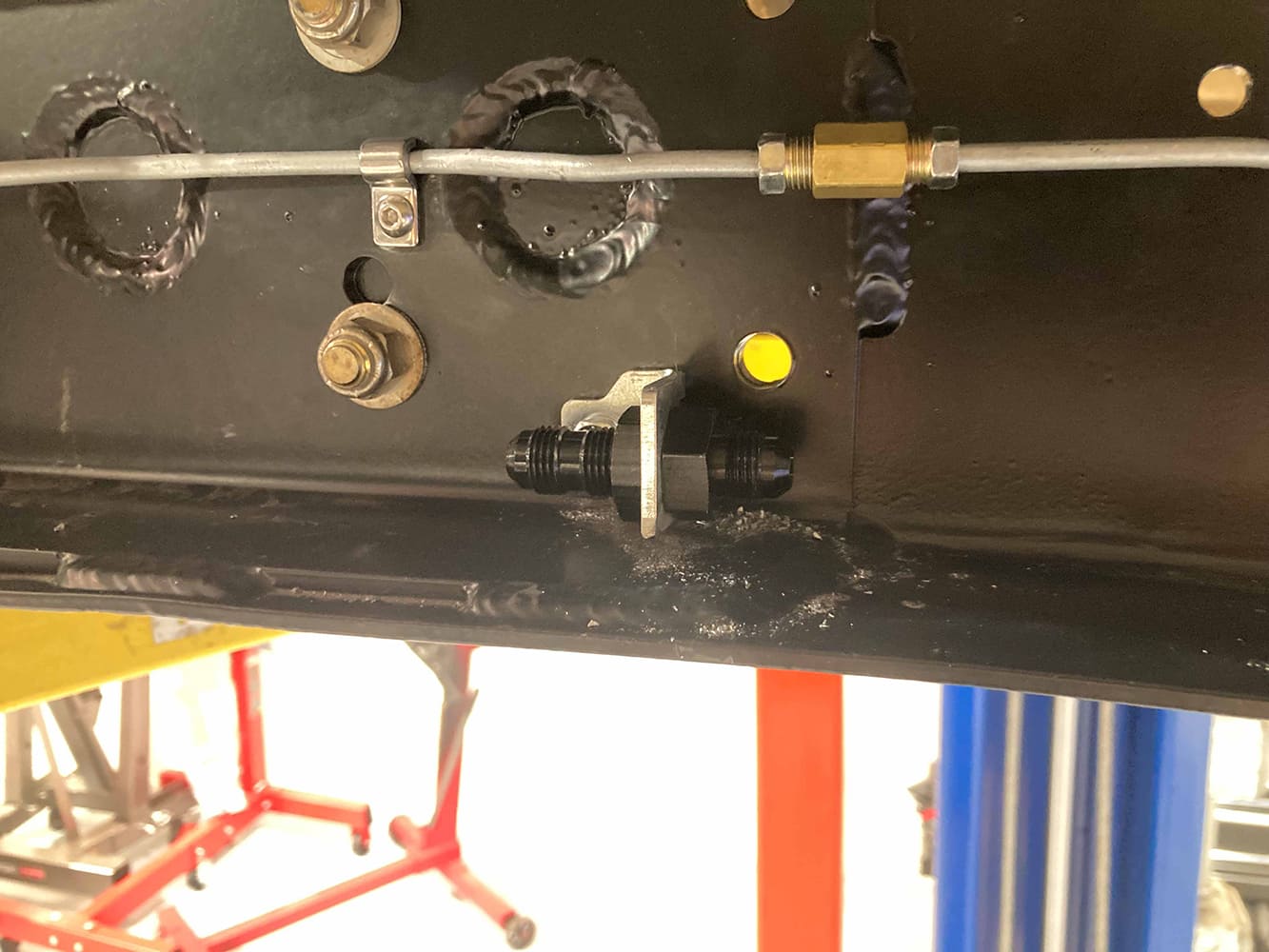
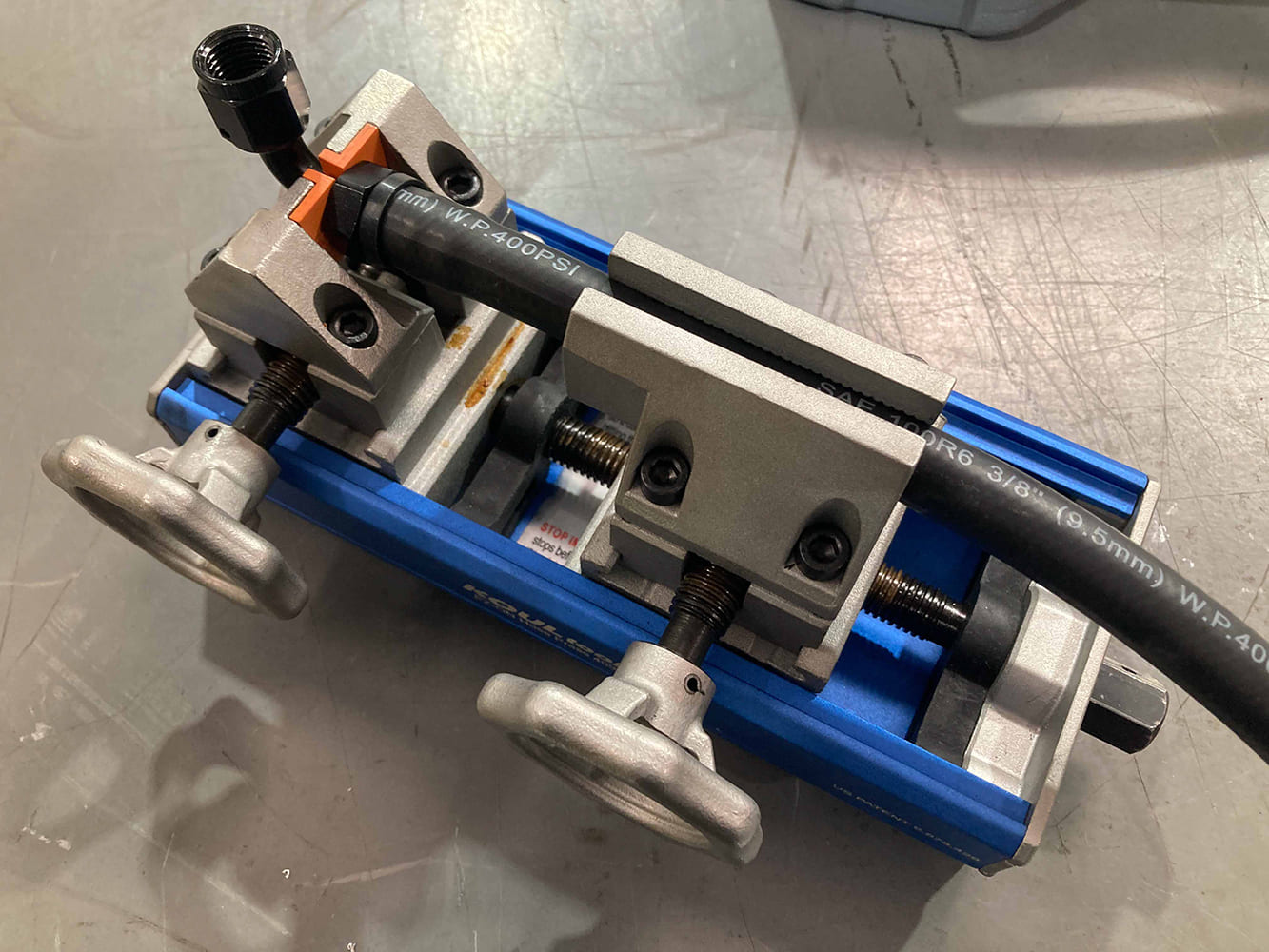
A handful of push-on fittings will be used along with a CPP Complete Aluminum Fuel Line Kit (PN CPUFLK-A) to complete the plumbing system from the pump to the fuel injectors.Push-on hose and fittings are fairly easy to assemble but can be tough without the proper tools. This EZ-ON Hose Press Model 426 from Koul Tools is the best tool that we’ve found to assemble push-on hose assemblies. Simply secure the fitting into the vise, clamp the hose in the traveling carriage, and turn the drive screw to mate the hose and fitting for a reliable assembly every time.Here, we have our first assembly in place and are ready to make our way up the chassis.The short section of hose running from the fuel pump allows easy access to and removal of the fuel pump if the need ever arises. The rest of the route, however, will be accomplished using 3/8-inch aluminum hard line, part of CPP’s Fuel Line Kit. To mate the two, we opted to install a bulkhead fitting at one of the rear crossmembers for a seamless transition. Here, the hose has been marked …
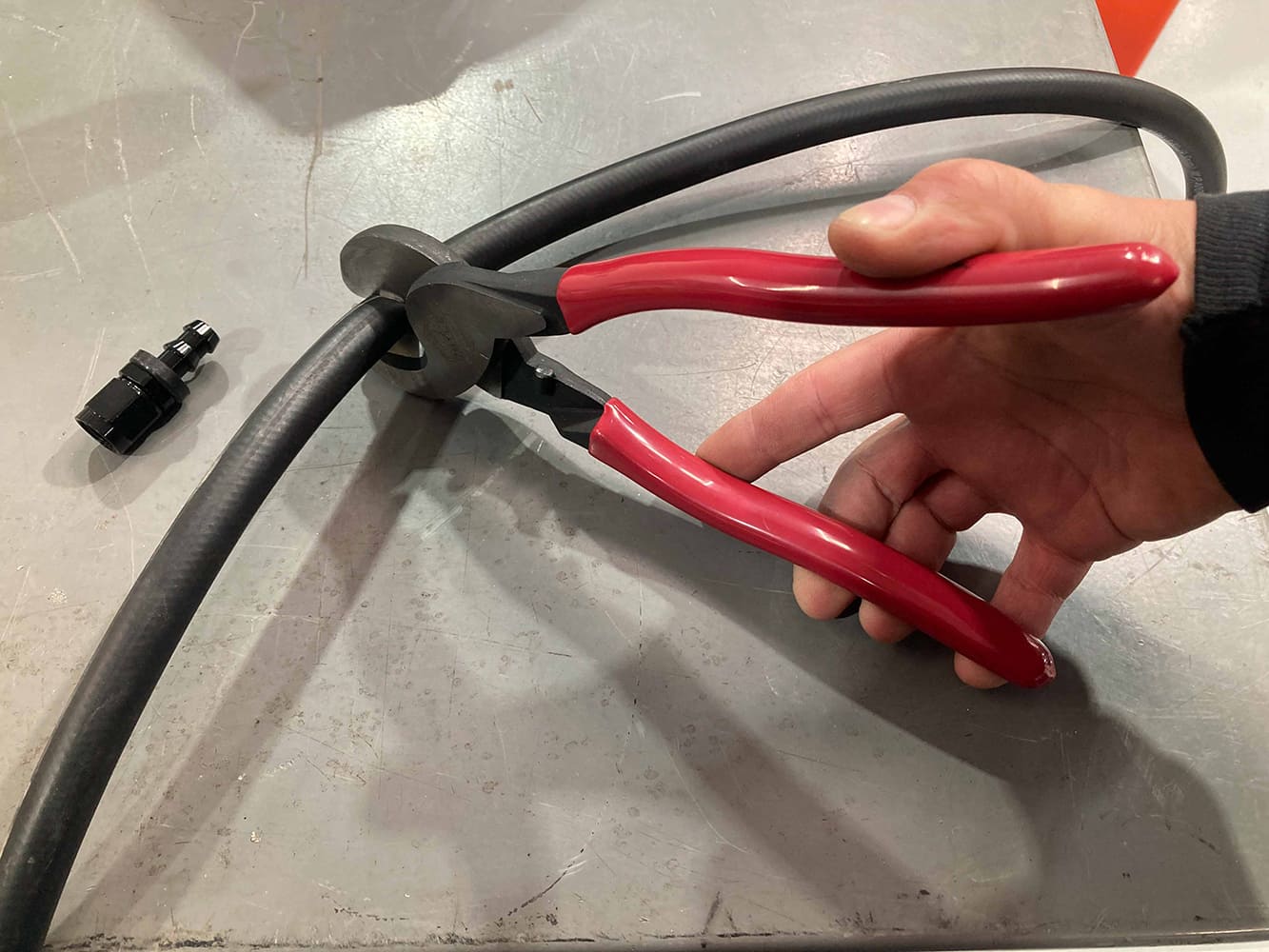
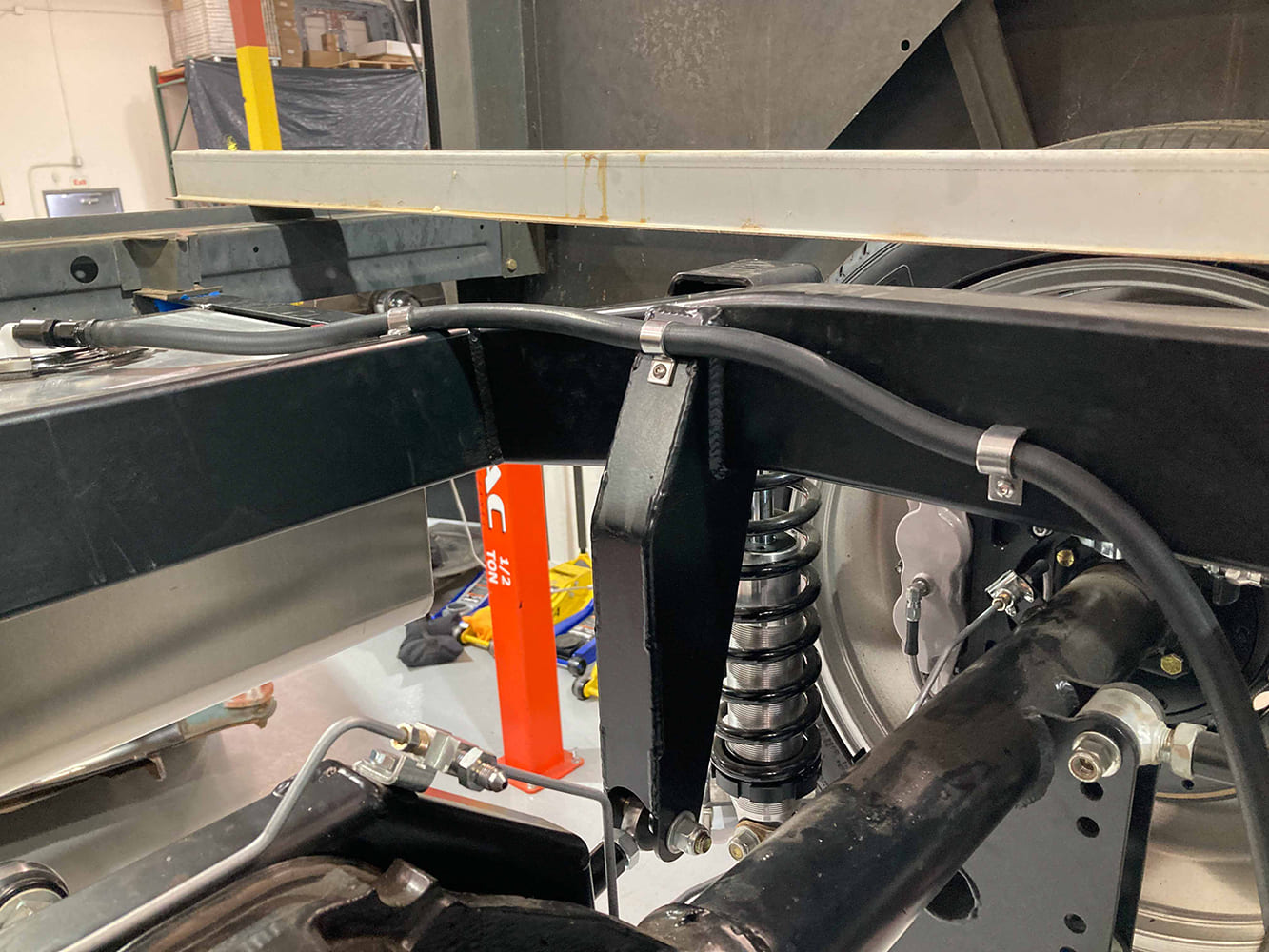
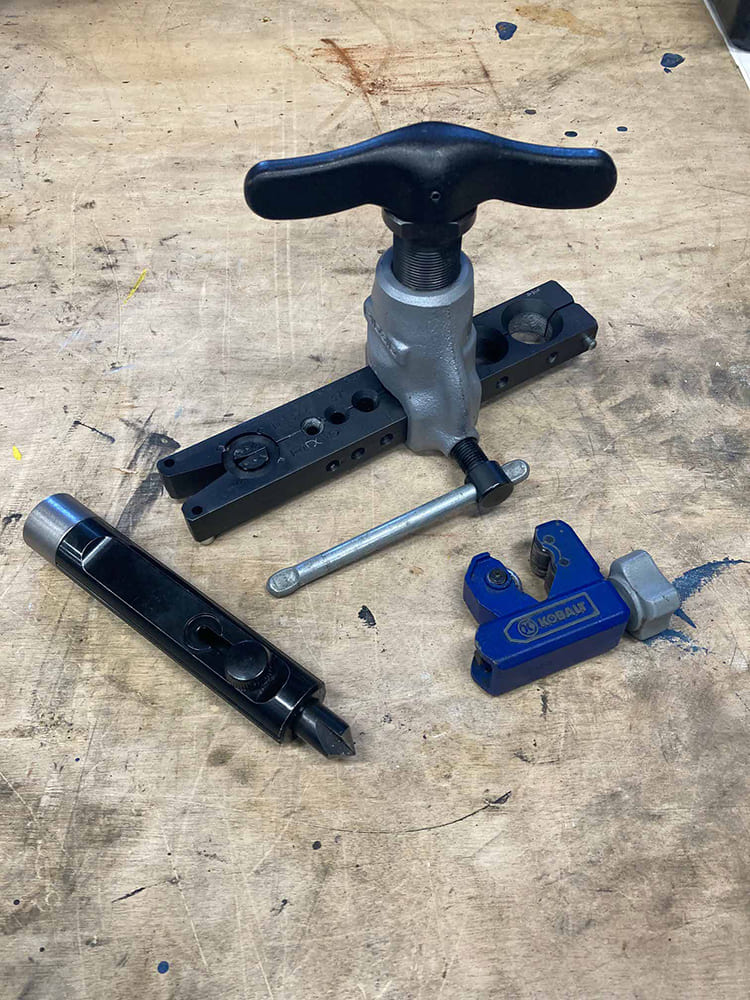
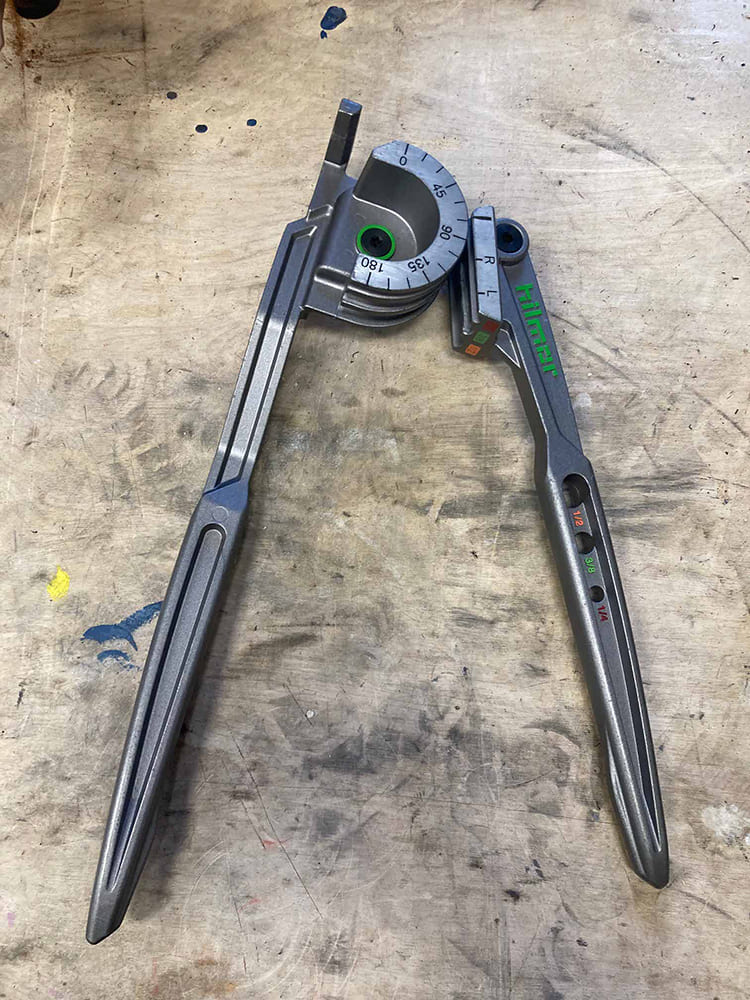
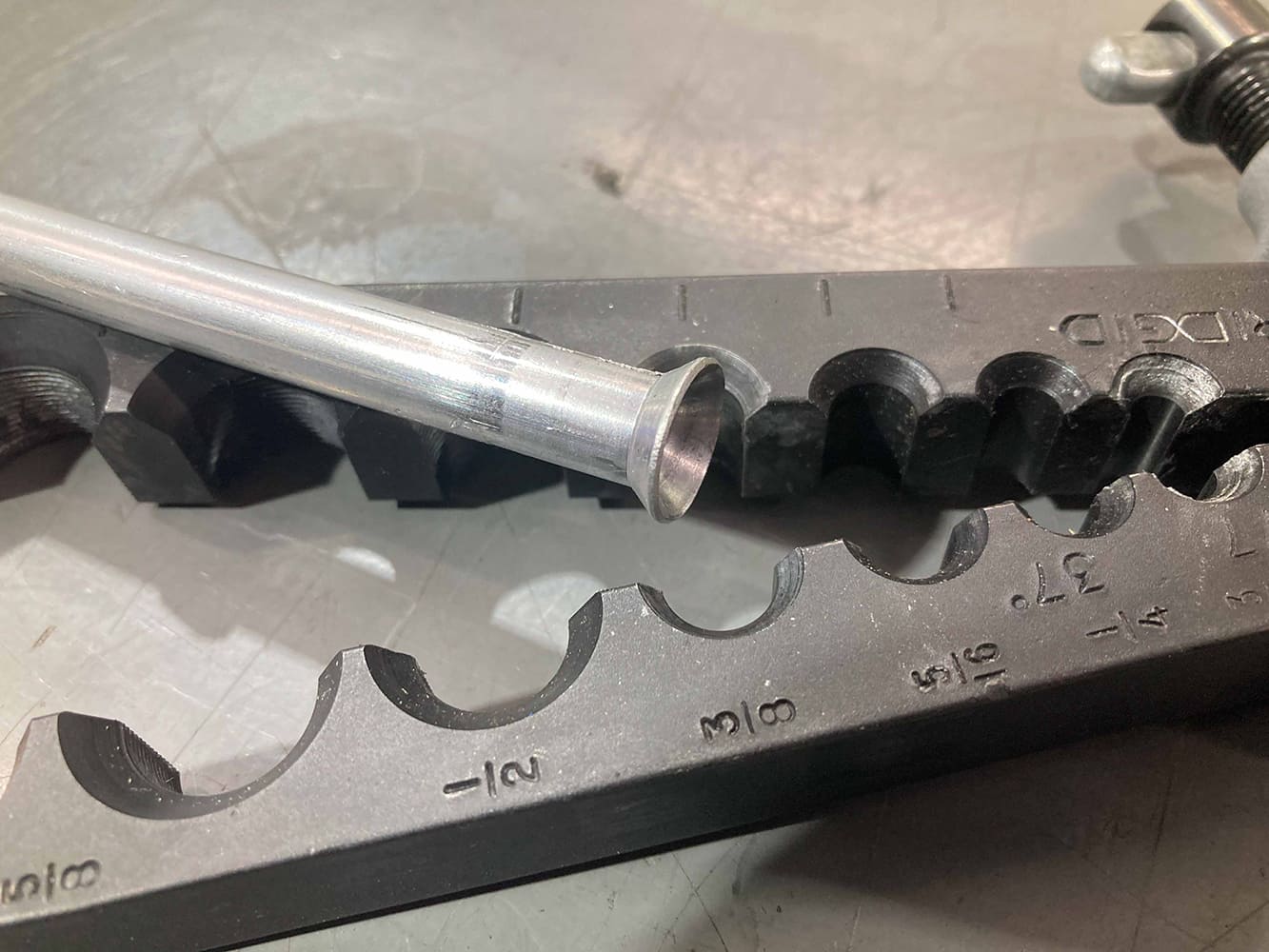
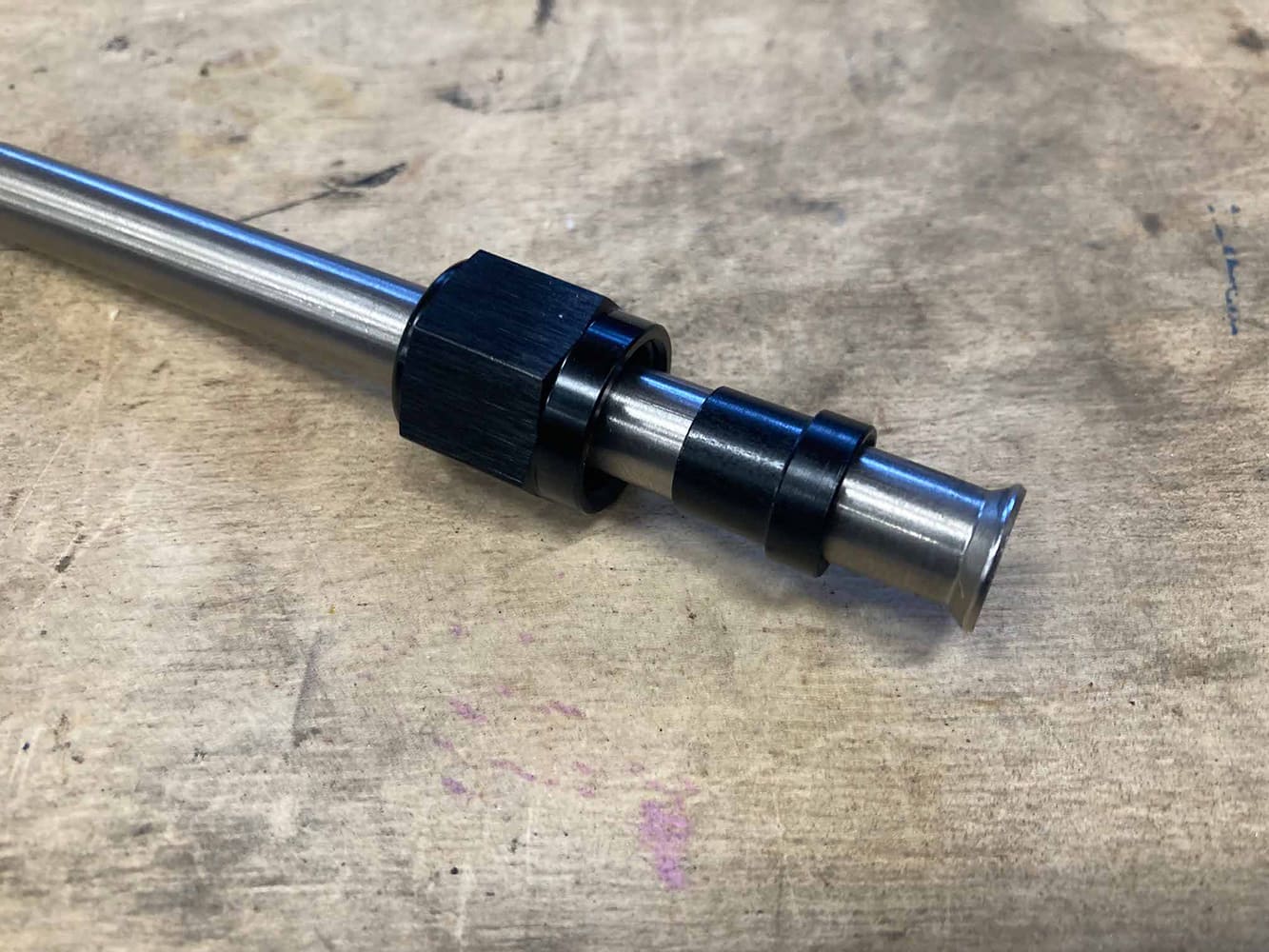
… so that it can be trimmed and a straight AN-6 push-on fitting can be installed.Supporting this section of hose is accomplished by a few line clamps from Kugel Komponents. This ensures the fuel hose will be protected from contact with any rear suspension components and kept well away from the exhaust.Cutting, deburring, and flaring our aluminum hardline is accomplished using a variety of tools; here are the three that we used for this project.Bending the tubing is inevitably necessary, handled mightily by this ¼-, 3/8-, and ½-inch tubing bender.The sealing edge of an AN hardline is a 37-degree flare, formed by the appropriate flaring tool.A nut and sleeve draws the line into the fitting and completes the business end of the sealing assembly.
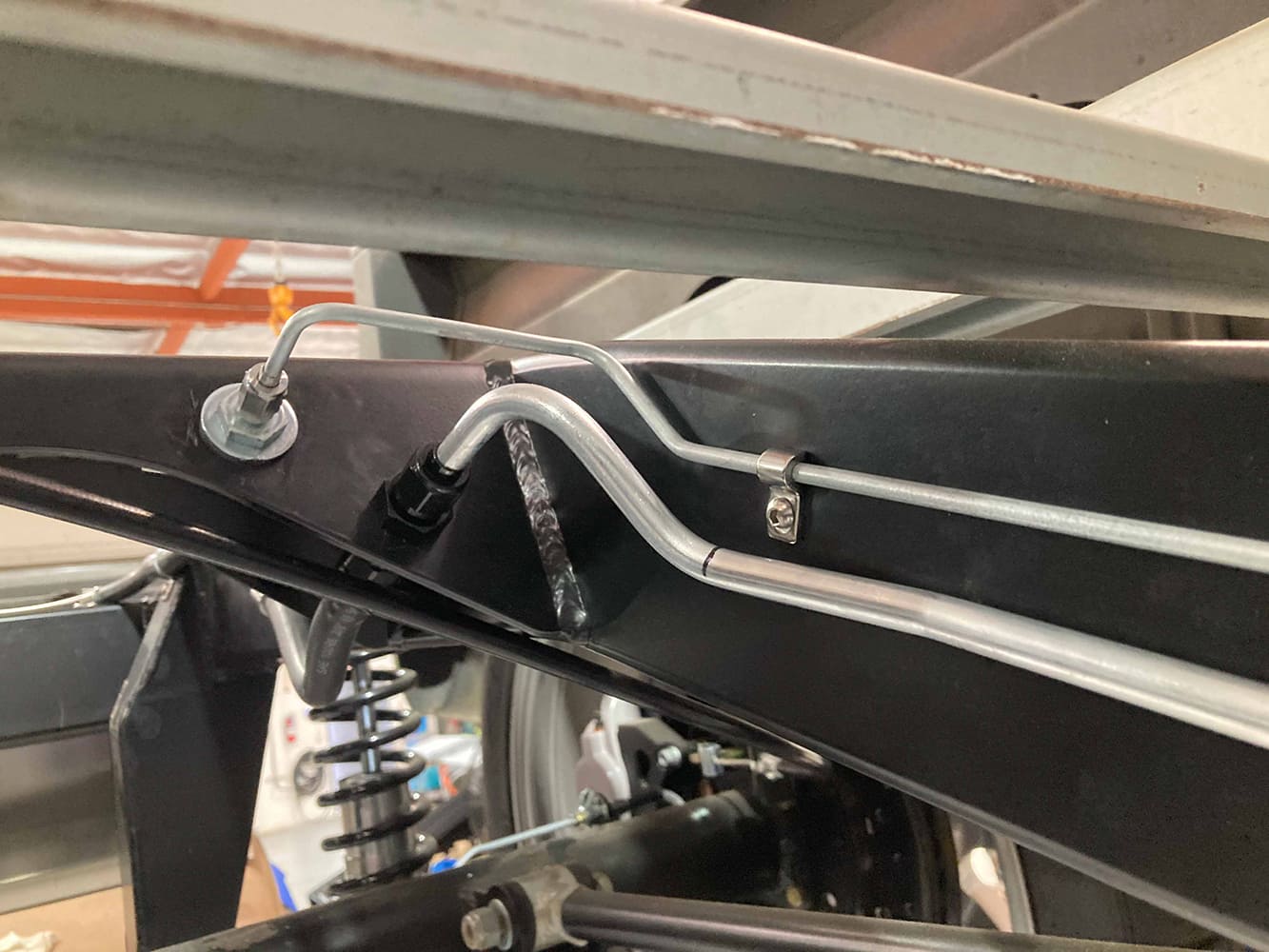
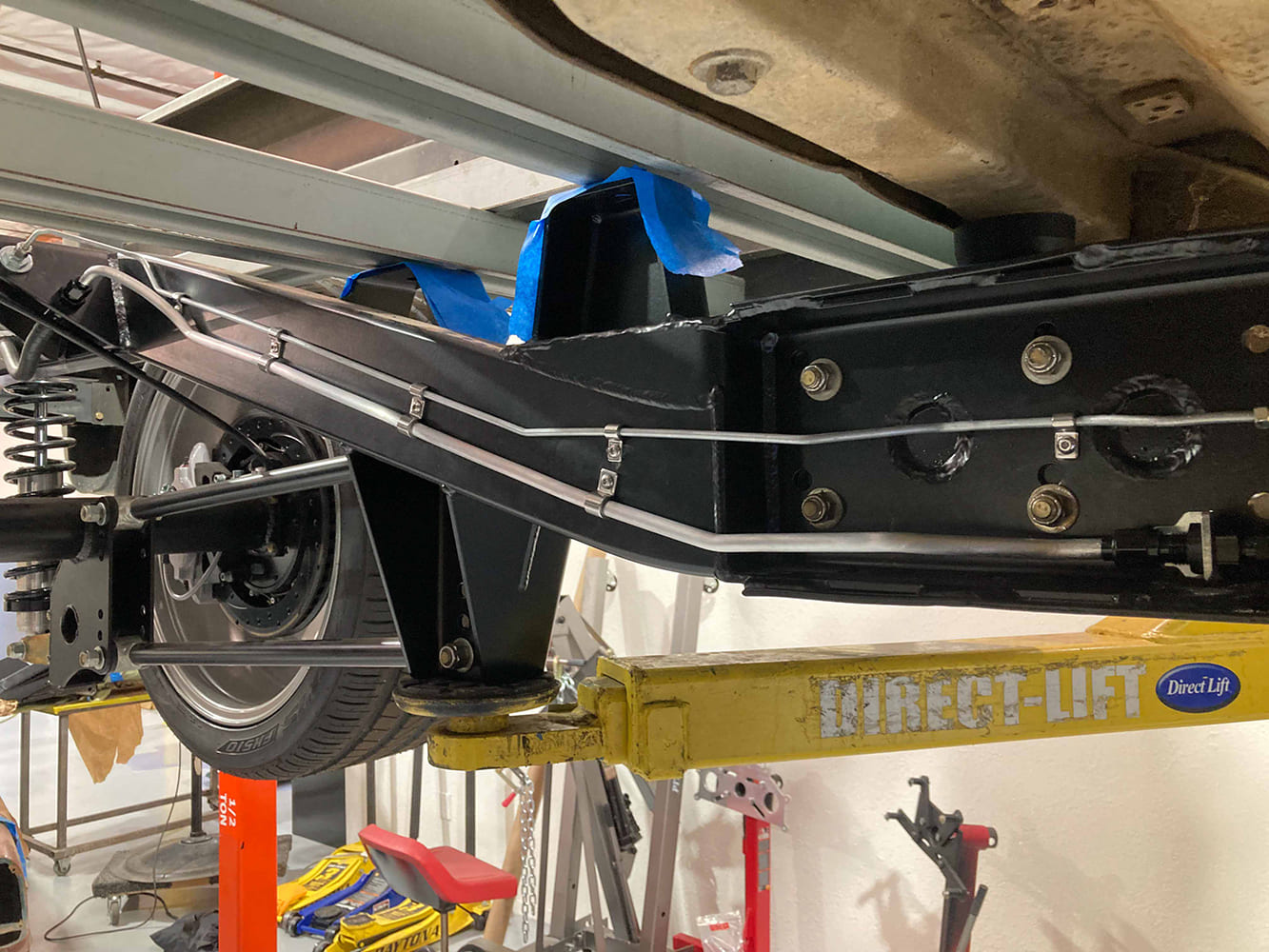
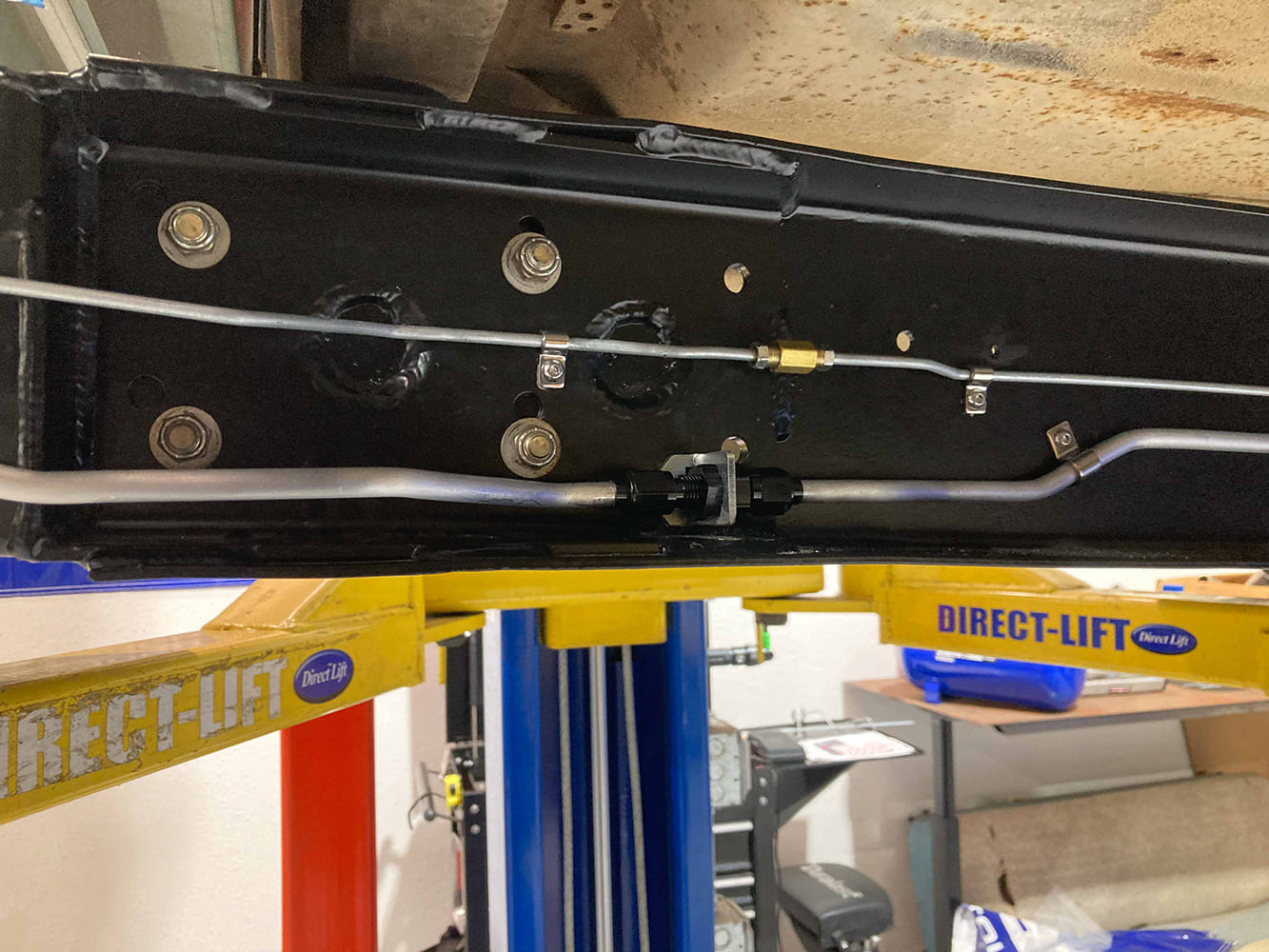
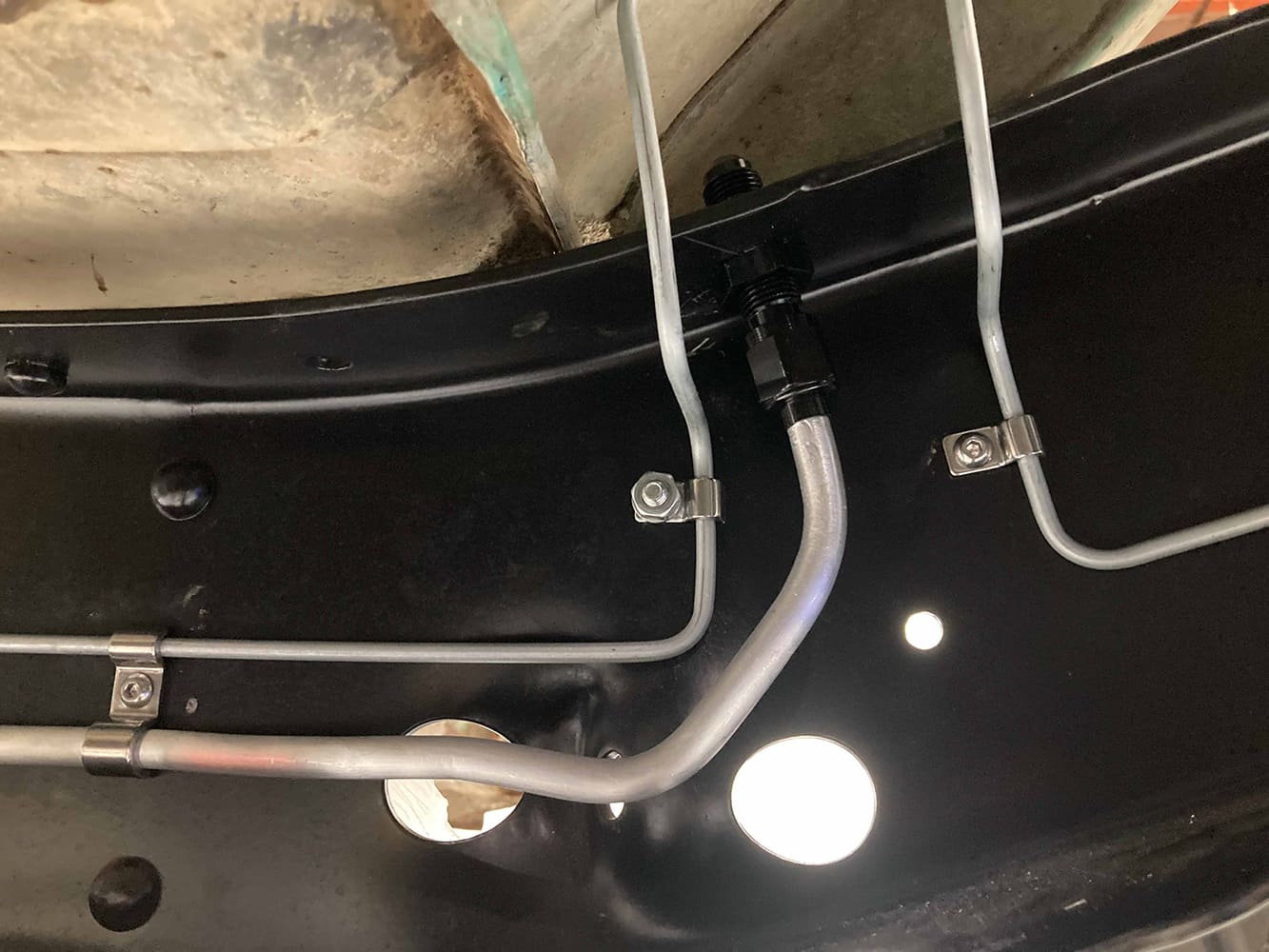
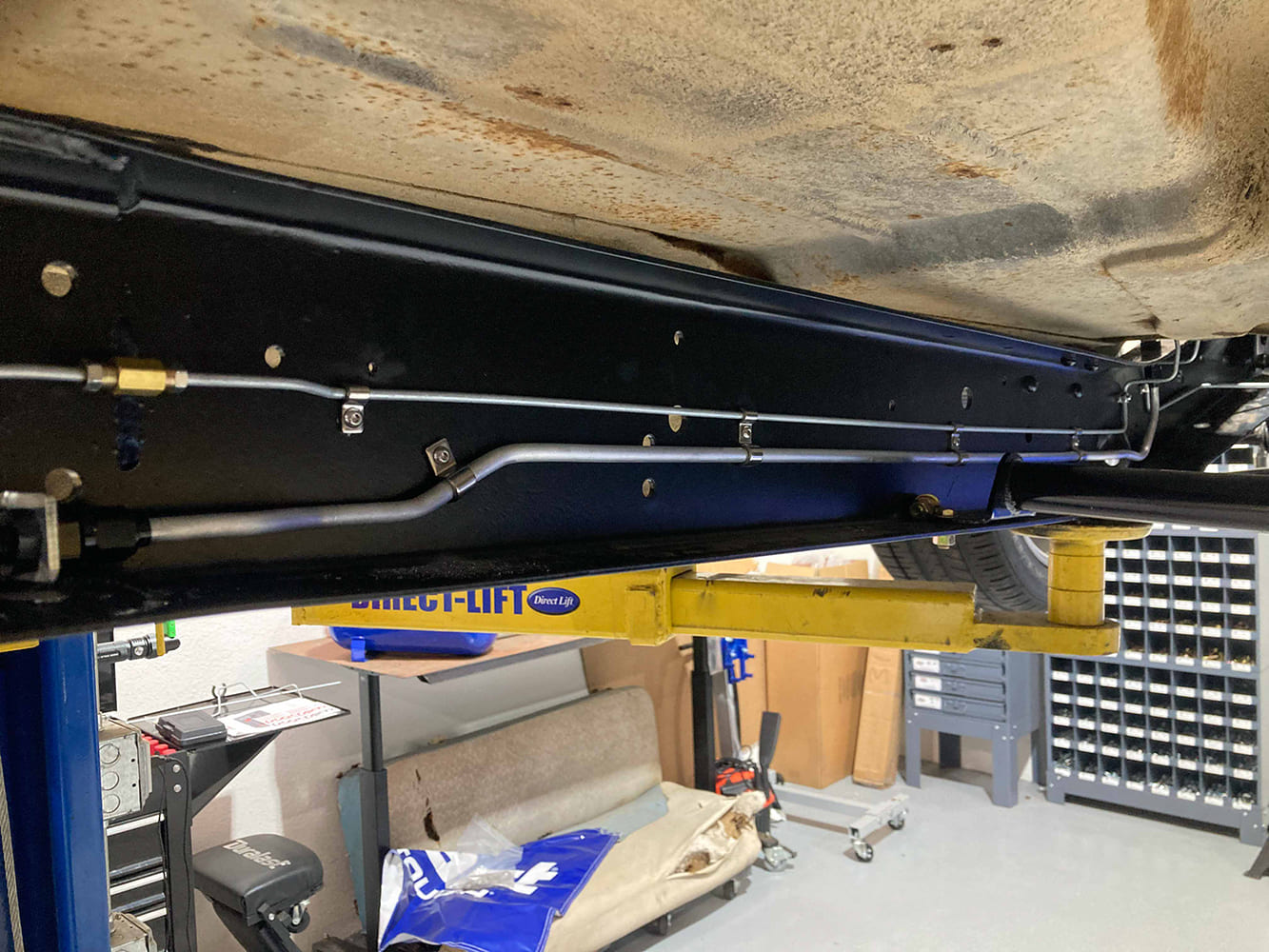
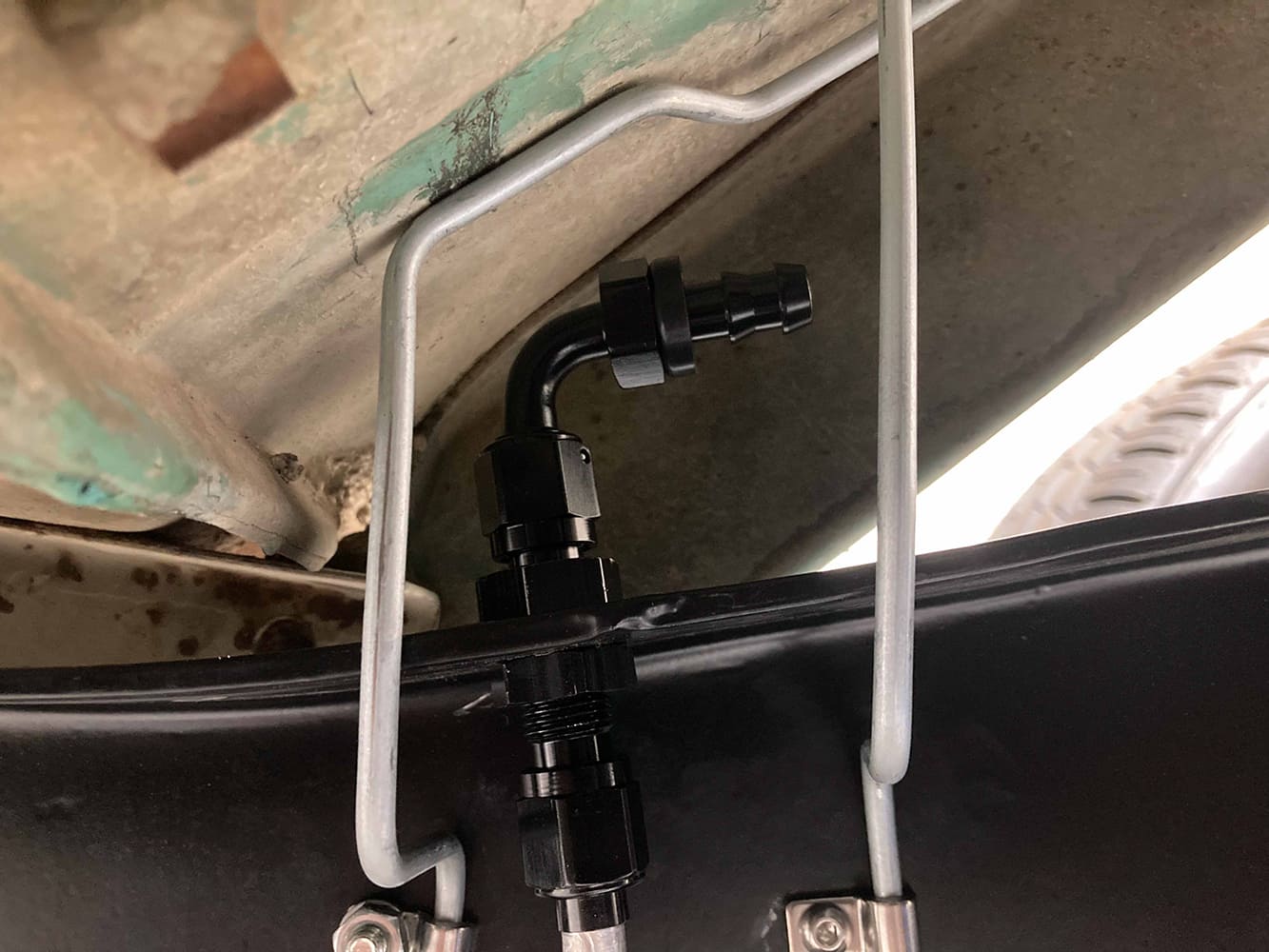
Here, we’ve connected the hard line to the existing bulkhead fitting and added a couple mild bends to get the line tucked against the frame and heading in the required direction.As we travel forward and down the framerail, a variety of Kugel line clamps continue to effectively support our fuel line.Instead of trying to fight an extra-long section of hardline with a variety of twists and turns, we opted to split the entire section into two near the middle of the chassis. Here, another bulkhead fitting is utilized, mounted securely to the frame. Note that we took a similar approach with the brake line.A few more bends and another flare down and we’ve tidied up the rear portion of our hardline handily.Another flare and a couple bends puts the front section up tight against the framerail and on its way forward.Just under the firewall, another bulkhead fitting is used to allow the fuel line to penetrate the top of the framerail and make its way up the firewall, keeping it tucked up nice and tight, away from the exhaust.Here, the front half of the hardline is visible, from bulkhead to bulkhead.At the top of the frontmost bulkhead fitting, we’re going to transfer back to hose, making the remainder of the trek up the firewall and to the fuel rail.
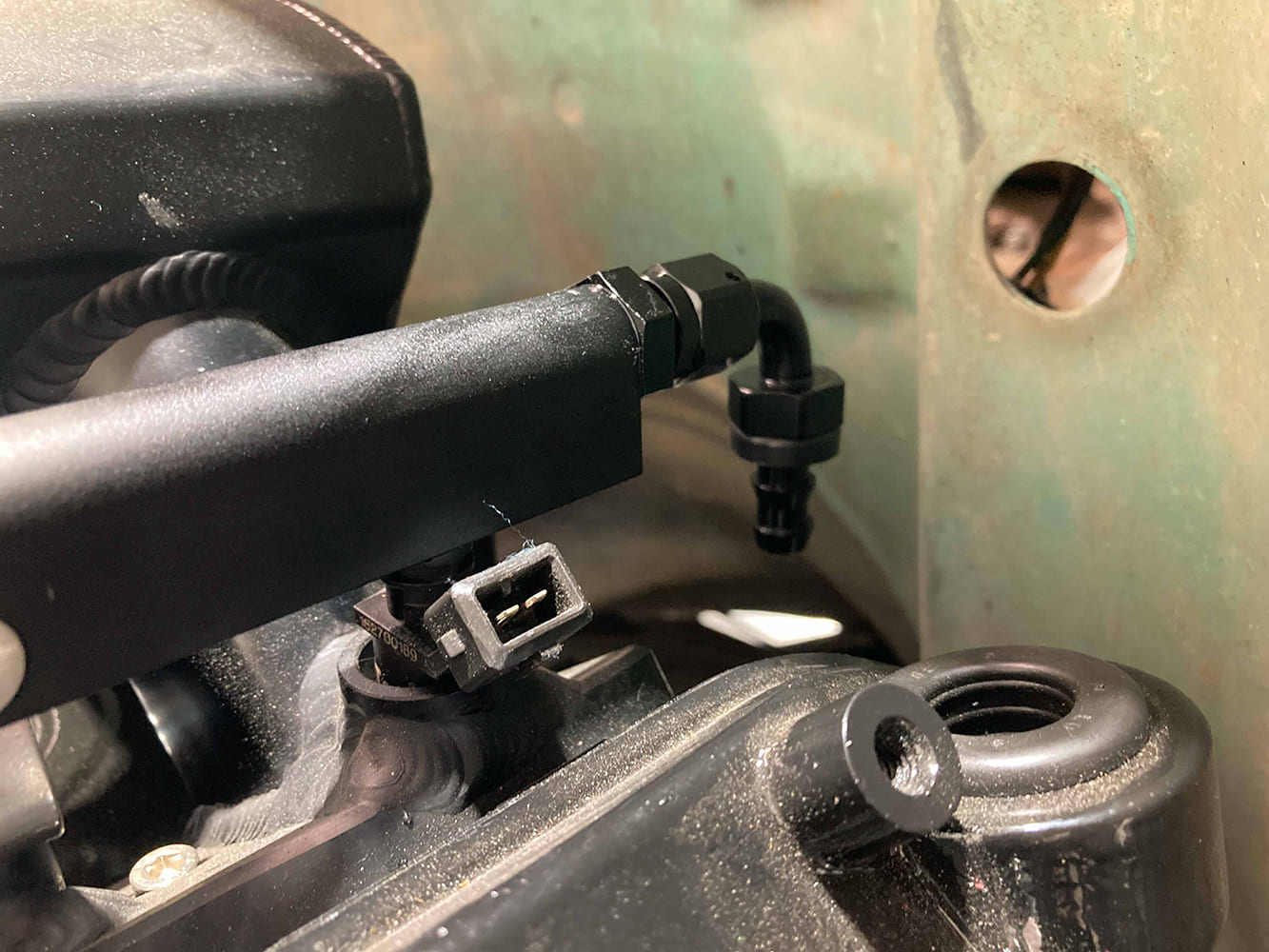
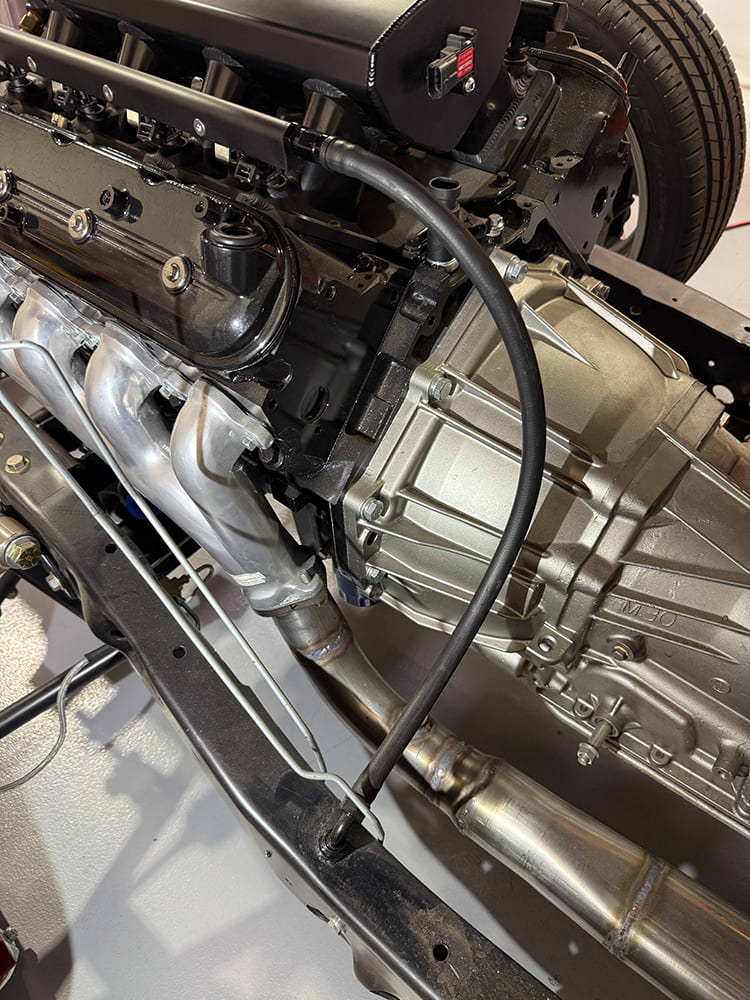
Like the installation of the straight push-on hose fittings, the Koul Tools EZ-ON Hose Press makes quick work of installing 45- and 90-degree fittings.With the cab of our C10 out for metalwork, it’s easy to see the routing of the hose at the front of our fuel system. Once the cab is back in place another couple Kugel line clamps will ensure the hose is safe and secure.
We use cookies to ensure that we give you the best experience on our website. If you continue to use this site we will assume that you are happy with it.